Movie Review: Documentary celebrates the jurist, the icon, the woman with the Rap Name Notorious “RBG”

rbg1

Yes, she’s become a meme, idolized by generations of young American women, imitated to hilarious hip hop effect by “Saturday Night Live’s” Kate McKinnon, “Notorious RBG.”

But the movie “RBG”  just glances at that. But Betty West and Julie Cohen’s documentary gets at the accomplishments that made Ruth Bader Ginsburg deserving of her place on the U.S. Supreme Court, and celebrated for growing place within American culture.

“Celebrated” — that’s the only word for it. It’s a Ginsburg portrait, largely in her own words and almost exclusively those of her fans — her children, college classmates, peers, media figures, old friends, politicians.

She is a shy, quiet opera lover, a “horrible cook,” widow of a much more gregarious (and funny) lawyer-husband, a woman who almost from birth it was said, “She didn’t do small talk. She didn’t go girl chat. A deep thinker,” two old pals declare.

And she and is a boundary breaking legal mind for the ages. College in the Cornell of the 1950s — “Cornell was a preferred school for daughters…They kind of suppressed how smart they were,” facing sexism in Harvard Law School, already a mother, with a husband sick with cancer, and yet she still made The Law Review. Following her husband after he graduated and landed a New York law firm gig, she went to Columbia, getting a law degree that made her almost unemployable in New York.

It was as a Rutgers professor teaching 1960s “Gender and the Law” courses, getting involved with the ACLU Women’s Rights Project. She took as her example, Thurgood Marshall’s approach to finding cases that could change Civil Rights law.

An Air Force woman here — “Nice girls didn’t file lawsuits,” former Air Force officer Sharron Frontiero cracks — another discriminatory law challenged there, and Ginsburg had her start — building the cases that moved America toward equal rights for women.

We hear the audio recording of her first argument before the Supreme Court.

“I ask no favor for my sex,” she quoted (and still quotes) 19th century Abolitionist Sarah Grimke, “all I ask of our brethren is that they take their boot our necks”

“She captured, for the (Supreme) Court, what being a second class citizen was like,” a colleague remembers.

Through a canny collection of cases — some wins, some losses, some focusing on gender discrimination against women, and in one memorable case, arguing for equal “mother’s benefits” for the surviving parent, the father, from Social Security.

“It was like knitting a sweater,” one contemporary says of her methodical case-law approach. All of this led to the day when President Bill Clinton cast out his notion of putting New York Governor Mario Cuomo on the Supreme Court in 1993.

The film uses home movies, testimony from Ginsburg’s confirmation hearings and interviews to build its portrait of RBG.

Senator Orrin Hatch reflects on how much disagrees with her now, and disagreed with positions then, and echoes the admiration he expressed way back then.

We also get a sampling of her highest profile opinions, beginning with the gender discrimination case against the State of Virginia and the state-supported all-male military school, The Virginia Military Institute.

Her children, James and Jane Ginsburg, humanize Ginsburg.

And NPR’s Supreme Court reporter, Nina Totenberg, Ginsburg’s biggest cheerleader, weighs in frequently about how her court persona and the meme version of RBG — underscored by Dessa performing her feminist rap, “The Bullpen” — is in contrast with the shy woman Ginsburg is in person.

Hearing her take apart, representing Virginia, future Solicitor General Ted Olson (on tape) is humbling. Seeing her triumphant return to the school decades later might move you to tears.

Her dissenting greatest hits, most famously in the twisted “logic” of the 2000 presidential election decision, are recounted. They have become more frequent and more biting as a very conservative Court dials back the clock on voting rights and the like in the past 20 years.

Catching the first time she sees SNL’s McKinnon’s hilarious riff on her persona is worth the price of admission. Sober RBG cackles the way the rest of us did the first time we caught “a Third Degree GinsBURN.”

rbg2

“RBG” has the sort of decorum largely vanished from American politics and American life these days. Even the few foes who show up on camera are polite, gracious (in defeat, in Olson’s case) and right on the edge of admiration. Even her polar opposite, Justice Antonin Scalia, vacationed with her and made jovial joint public appearances that never got heated, despite the paper cuts of deathly-serious repartee.

It’s that tone that makes “RBG” worth seeing in theaters, the shock value of seeing people agreeably disagree . No, there are NOT enough dissenting voices in the film, she’s that popular.

But it’s jarring to see the turn the film, and the country take, away from civility, a steady march toward equal rights and the profane, law-flouting death-to-mine-enemies, progress-torching culture we’re moved into.

3stars2

MPAA Rating: PG for some thematic elements and language

Cast: Ruth Bader Ginsburg, Gloria Steinem, Nina Totenberg, Orrin Hatch

Credits:Directed by Betty West and Julie Cohen. A Magnolia/CNN Films release.

Running time: 1:38
Posted in Reviews, previews, profiles and movie news | Comments Off on Movie Review: Documentary celebrates the jurist, the icon, the woman with the Rap Name Notorious “RBG”

Preview, Rudd gets his best dramatic role yet as Moe Berg in “The Catcher was a Spy”

This is one of the great unfilmed “true” stories of World War II, that of the multi-lingual, quiz-show dazzling baseball catcher and coach  Moe Berg’s work as an OSS spy.

An all-star cast, headed by Paul Rudd but including Mark Strong, Sienna Miller, Jeff Daniels and Paul Giamatti, tells the story of Berg’s recruitment, training and espionage work to keep the Germans from developing the A-bomb.

“The Catcher Was a Spy” pens June 22.

Posted in Reviews, previews, profiles and movie news | Comments Off on Preview, Rudd gets his best dramatic role yet as Moe Berg in “The Catcher was a Spy”

Netflixable? “God’s Own Country” isn’t quite Britain’s “Brokeback Mountain”

gods1

If there was ever any doubt, “gaydar” works in the countryside, too.

That’s not much consolation to Johnny Saxby, the bored, drunken heir to the family farm in the fine British melodrama, “God’s Own Country.”

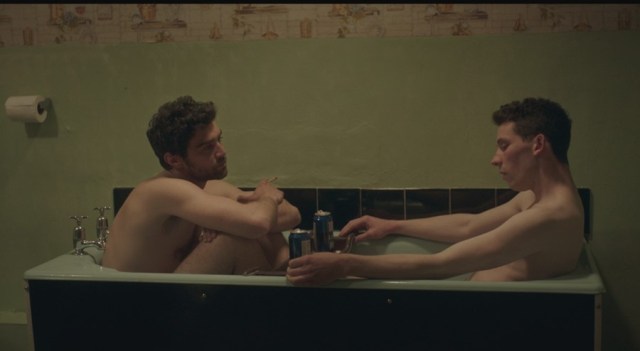
Johnny (Josh O’Connor) a compassionate but unhappy farm “lad” who drinks too much and isn’t shy about getting his hands dirty and helping a heffer have her calf. Not that his tough-talking, barely-walking Dad (Ian Hart) would notice.

“Go easy on the sauce,” is ignored. The son vomits his way through every morning and bickers his way through every chat with his dad and grousing grandmother (Gemma Jones).

Johnny’s a sullen loner who brushes off  his ex, Robyn (Patsy Ferran), who went off to her “posh college” but seems to know and sympathize with his secret. Rough and abrupt encounters in the feed stalls at the cattle auction are his speed. No talking.

“Want to get a pint, or somethin’?”

“No.”

The Saxbys need a farmhand to help out, and the Romanian Gheorghe (Alec Secareanu) was “the only bugger to apply.”

“Gypsy?”

“Please don’t call me that.”


It’s a small, struggling farm, chickens, some sheep, “just a few beef cattle.” Gheorghe is handy with a sheep calving.

But as those cowboys showed us, way back on “Brokeback Mountain,” the lonesome range — even in Yorkshire — can make for unexpected bedfellows.

And spitting. But  first, they’ve got to come to blows, right?

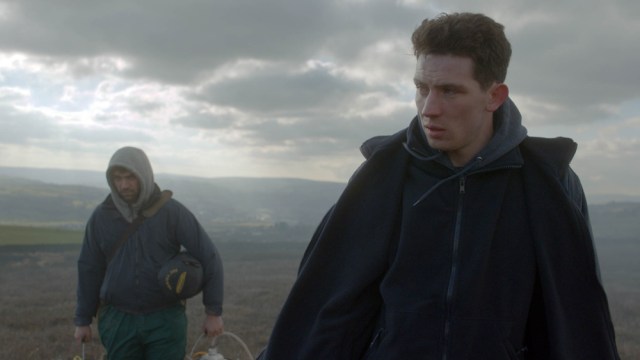
Actor turned writer-director Francis Lee revels in the grimy greys of Yorkshire in early spring, treeless hills covered with stone ruins and stone walls that need repair. The accents are thick, the mud is thicker and the romance could not be less romantic. At first.

“Is beautiful here, but lonely, yes?”

Closeups of the stone chipping and animal husbandry of the farm fascinate Lee almost as much as the rough, muddy and explicit horseplay of gay sex among these people in this setting. “God’s Own Country” is not for those squeamish about seeing the blood and guts and offal of farm work.

One touching moment comes when a lamb dies, and Gheorghe, with skill and care, skins it and puts its coat on an orphaned lamb so that the ewe of the dead one will feed her and care for her as her own.

As the two men bond and share their stories, we see Gheorghe’s sensitivity rub off on Johnny, even as we sense that this affair will be secretive, short and intense, but mostly short.

gods2

There’s a “Duckbutter” approach to the sex scenes, as if they’re new to the screen and everybody needs a primer on “this is how it goes.”

Secareanu has a smoldering presence, and you can see how lonely, bitter Johnny would fall for him even if he doesn’t know how to fall. But as most of us figure out in our teens and 20s, that “not knowing” how to fall in love thing is a ticking time bomb in any relationship. O’Connor (“Florence Foster Jenkins”) has a gawkiness that makes his reach for “unsophisticated” and “bumpkin” an easy one.

Hart and Jones’ crusty presence grounds the picture, and the unsentimental bluntness which they treat everything going on around them — they’re not blind, you know — gives the story a tender, deflated disappointment. There’s no future in any of it.

This melancholy hangs easily on this quiet, not-quite-romantic romance. Lee may rob his picture of some of its warmth in the process, but in not blinking in his approach to “real life,” he’s made a fine companion piece to the classic “kitchen sink” British melodramas of the ’60s and ’70s.

If there isn’t room for sentiment in this world, how can there be time for love?

3stars2


MPAA Rating: unrated, explicit sex, adult situations, nudity,

Cast: Josh O’ConnorAlec SecareanuGemma Jones , Ian Hart

Credits: Written and directed by Francis Lee. An Orion/Samuel Goldwyn release.

Running time: 1:45

Posted in Reviews, previews, profiles and movie news | Comments Off on Netflixable? “God’s Own Country” isn’t quite Britain’s “Brokeback Mountain”

Movie Review: “The Honor List” waters down the teen bonding dramedy formula

honor4

In short-pitch terms, “The Honor List” is “The Bucket List” with teenage girls.

Its genre is teen girls coming of age dramedy. And its worn-down-to-the-nub formula includes pranks and tears and quarrels and boys and trips to the ol’ swimmin’ hole.

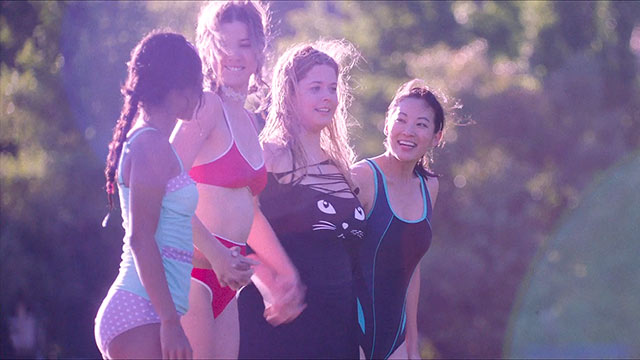
Even its casting is paint-by-numbers. There’s nothing more to be said about creating a quartet of the pretty blonde, the plump blonde, the Asian American and the Afro-Asian teen after Honor, the title character points out how “ethnically,” they make a perfect movie “sandwich,”  a Hollywood casting cliche.

Watch any number of teen comedies or horror pictures,  “Dude” on Netflix for the most recent example, to see other examples of this Hollywood approach to diversity.

Written by Marilyn Fu, directed by Elissa Down, “Honor” is hilariously lacking in edge, tragically short of laughs and exasperating thanks to the thin supply of surprises.

Honestly, it plays like a picture whose agenda was “create a safe space” first, “empower” second, with drama and tension and suspense, pathos and wit all stuff “to be filled in later.” It never is.

Honor, Isabella, Sophie and Piper are Cali-pals when we meet, them, freshman year. Before we have more than a scene or two to get used to them, “Senior Year” pops up.

Class president Piper (Meghan Rienks of Hulu’s “Freakish”) is passed out with a boy in her driveway, unworried that her drunken dad inside the house will notice.

Sophie (Karrueche Tran of TV’s “The Bay”) is brushing off a boy as if she’s already had a lifetime of practice.

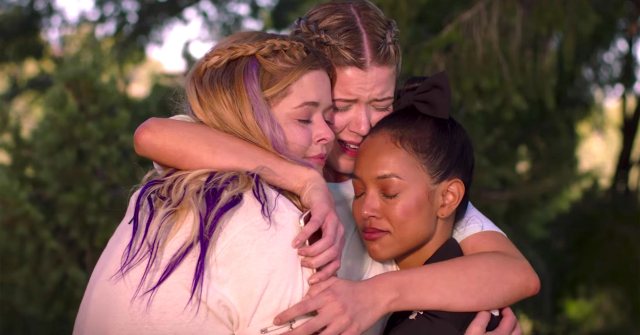
And Isabella (Sasha Pieterse of “Pretty Little Liars”) needs re-assurance from her college-age brother (Ethan Peck, 32 and looking it) that “it’s going to be OK.” Parents splitting up, her left behind at home? No. They’re due at a funeral.

honor2.jpg

Honor (thirtysomething Arden Cho of “Olympus Has Fallen”), a ballerina with big dreams, has died, a lingering illness that none of them knew about. Because they fell out as a quartet years before. She was “our best friend…back when we were ALL best friends.”

Some of the most pointed and poignant scenes in “The Honor List” show the survivors seething at each other (one skips the funeral, there’s drinking at the visitation, etc.) and their classmates back at school, many of whom have the presumption to act as if they knew Honor better. Because, you know, she was no longer friends with her old pack.

One pushy competitive mourner (Its high school, everything is a competition.) suggests they “honor her Japanese heritage” by doing this or that.

“She was TAIWANESE!”

But Honor’s mom has given the girls a mission, and a video. Honor ordered them to finish the bucket list of things they all hoped to do before graduation. It was buried in a sealed paint can (bucket) in the lake. After some reluctance, as each girl is dealing with her own stuff right now, they agree.

The “list” is where “Honor” kicks the bucket. It’s the lamest collection of quests, accomplishments and tasks, all handled without so much as a grin.

“Win a pizza-eating contest,” “Perform at an open mic night,” “Throw a kick-ass party.”

Seriously, if you cannot come up with a better list than that, and if you can’t get a laugh out of a scene where the kids get even with the body-shaming cheerleaders, “Morrisettes,” as in Alannis, you need to workshop that script or call in a co-director who can. Goat-nap the school mascot? Even the dimmest sitcom hack could find a way to make that funnier.

The emphasis is on the “sisterhood,” sans “Traveling pants.” Every girl has secrets, some of them shared with Honor. There are flashbacks and romantic complications. Sophia has made a vow of chastity, Piper has cut a wide swath through the available boys, but Isabella’s brother should be off limits, and Isabella is the hardest on everybody else, probably because her falling out with Honor has given her the most guilt.

The acting isn’t awful, though only Pieterse shows much spark in this quartet. There’s no shame to everyone’s intentions, but there’s no honor in the result, either. “The Honor List” can’t even live up to its bad-pun title.

1half-star

MPAA Rating: PG-13 for crude sexual material, thematic elements, alcohol use, language and brief nudity – all involving teens

Cast: Meghan RienksSasha PieterseKarrueche Tran, Arden Cho

Credits:Directed by Elissa Down, script by Marilyn Fu. A Lionsgate release.

Running time: 1:43

Posted in Reviews, previews, profiles and movie news | Comments Off on Movie Review: “The Honor List” waters down the teen bonding dramedy formula

Movie Review: Nazis chase “The 12th Man” all over WWII Norway

man1

Wartime survival epics are a rich genre unto themselves, and with “The 12th Man,” Norway has one that ranks among the very best.

Give it to run of the mill Dutch director Harald Zwart. He makes his own journey from “Agent Cody Banks” and “The Karate Kid” into the snowy peaks and fjords of Norway pay off with his most impressive movie.

It takes brass to open your picture with this title — “The most incredible events in this story are the ones that actually took place.”

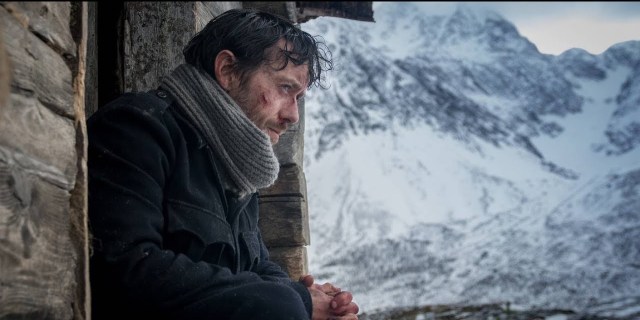
Jan Baalsrud (Thomas Gullestad) is an ex-pat who has trained as a commando in Britain’s Shetland Islands. But when he and eleven other saboteur/commandos sailed a trawler to Norway in March of 1943, everything went wrong. The rest were killed in action, executed on the spot or captured, destined for torture at the hands of the Germans.

Jan alone escaped, urged on by one doomed comrade (in Norwegian, with English subtitles) — “Make sure this wasn’t all in vain.”

Even though he isn’t Errol Flynn, the Rambo of his day, Jan is determined to get on with his mission. But he has a toe shot off in that escape. There’s no chance he can accomplish anything except his own survival, which in itself is a long shot.

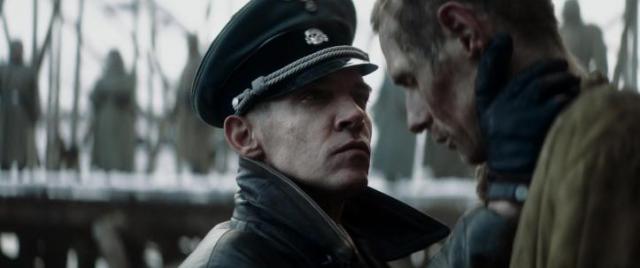
Jonathan Rhys Meyers, back on the big screen and speaking German, is Kurt Stage, the SS officer in charge of tidying all this up. He’s got a spotless record, and he’s not going to let some subordinate (Martin Kiefer) convince him that missing commando drowned in the sub-freezing fjord he plunged into.

“You’re chasing a ghost!”

“Until we find his body, he’s alive!”

Thus begins an obsessive cross-country man-hunt, interspersed with occasional breaks for breaking the Geneva Convention. Stage likes to oversee the torture, personally. Nazis always do.

man2

The narrative Peter Skyaylan scripted here is conventional, emphasizing the extent of Baalsrud’s suffering and the many everyday Norwegians who risked their necks to help this stranger get to Sweden.

“It’s bigger than just me,” Jan realizes. Eventually.

The story’s bravura, “Saving Private Ryan” opening — a nightmare of a beach landing, under fire and under icy water — is merely glimpsed, its details to be filled in much later.

Gullestad, better known as a Norwegian rapper (apparently), suffers mightily, pain and starvation leading to hallucinations, self-surgery and the like. Rhys Meyers is stunningly convincing as a monomaniacal Nazi, the sort of fellow who dunks his prisoners in freezing water to get information from them, getting in the water himself with a stopwatch to see how much they should be able to endure.

But the picture is also packed with grace notes, touching moments of fear and concern with Jan’s helpers, chats with the children of those who take him in, including a smart little girl who knows her geography and meteorology.

“Have the Germans stolen our Northern Lights?” he teases.

“That’s impossible!”

Zwart never shies away from showing the deteriorating state of Baalsrud’s feet, and dwells a bit too much on the various hiding places, impressing upon us how much Baalsrud endured, the many modes of transport attempted, the many innocent lives he endangered as he was carried, by boat, sled, skis, etc., out of harm’s way.

But it’s no spoiler to say the climax of this crackling good yarn is a dazzler –tense, stunning in scale and you’ll-never-BELIEVE-this surprising.

With “The 12th Man,” Norway has a survival saga to rival “Rescue Dawn,” “The Way Back,” and “Unbroken.” And the Dutchman Zwart has a career-making title that could lift him out of the kids-movie ghetto Hollywood long-ago sentenced him to.

3half-star

MPAA Rating: unrated, graphic violence, torture, gruesome injuries and smoking

Cast:  Thomas GullestadJonathan Rhys MeyersMarie Blokhus,  Mads Sjøgård Pettersen

Credits:Directed by Harald Zwart, script by Petter Skavlan. An IFC Midnight release.

Running time: 2:10

Posted in Reviews, previews, profiles and movie news | 9 Comments

Preview, Downcast Kelly MacDonald finds clues and a connection in a “Puzzle” and the partner who can help her solve it

This trailer to “Puzzle” brings so many movies about unhappy women who have lived a life that has crushed their souls. The radiant Kelly MacDonald is that woman here, married, with kids and deep, deep depression that her lout of a husband doesn’t recognize.

Then she finds somebody who, like her, loves to solve puzzles. A team is formed. Irrfan Khan plays a version of the character he played in “The Lunchbox,” a man more deserving of a deep soul than the one that deep soul lives with. Oren Moverman co-wrote “Puzzle,” which opens July 18.

Posted in Reviews, previews, profiles and movie news | Comments Off on Preview, Downcast Kelly MacDonald finds clues and a connection in a “Puzzle” and the partner who can help her solve it

Preview, the NEW “Ant-Man and the Wasp” trailer

Looks goofy, size jokes, etc.

A lot will depend on the villain. A worthy foe of the insectoid duo.  July 6.

Rudd, Evangeline Lilly, M. Douglas, M. Pena, Fishburne and Walton Goggins?

Posted in Reviews, previews, profiles and movie news | Comments Off on Preview, the NEW “Ant-Man and the Wasp” trailer

Netflixable? “Holy Goalie” gives the Beautiful Game a Catholic comic beatdown

holy2

The sports comedy formula doesn’t require that the movie come from Hollywood or be about baseball, football or hoops. All that’s necessary is a gang of plucky underdogs who somehow make it to “the Big Game.”

“Holy Goalie” (“Que Baje Dios y lo vea”) is a Spanish farce about an embattled seminary that forms a team to fight its way into “The Champions Clerum,” for a chance to play the unbeatable Vatican soccer squad in “The Pit,” which as everyone knows, is Vatican soccer’s home pitch.

The movie is comedy of the mostly low-hanging fruit variety, but it’s got laughs. Oh yeah.

Alain Hernández (“Project Rwanda”) is Father Salva, the idealistic Spanish priest who has been chased out of every war zone in Africa, where he’s been running schools, paying blackmail money (out of the Catholic Church’s coffers) to save his students from recruitment to this or that Revolutionary Front’s child soldier ranks. 

Karra Elejalde of “Timecrimes” is Father Munilla in charge of St. Theodosius, where aged priests teach novices theology, church history and how to be priests, and have since the Middle Ages.

But it’s on valuable property, the sort of magnificent stone ruin that developers would love to turn into a parador, a luxury hotel. The bishop (Tito Valverde) has a taste for the finer things and is all set to sell the seminary and move everybody into another one run by the venal and corrupt Cienfuegos (Antonio Durán ‘Morris,’ hilarious). 

It’s Father Salva who decides this is a teachable moment for the young would-be priests. They’ll form a team and win their way to Vatican City, making the case that St. Theodosius must be saved.

You know the drill from here — assemble the squad from “types,” the portly Mexican bumpkin goal keeper, the Brazilian who does “not need to practice, it’s in my blood!”

Brother Simon has some talent, but temptation in the form of a lovely paramedic (Macarena Garcia) has him questioning his commitment. No, the blind priest, the “comically” disabled Ramon (El Langui) and the other elders won’t play. They need ringers.

holy1

I chuckled at the “corrupting” influence of the game on the monastery, at the “ringer” named “Jesus” (Guillermo Furiase Gonzalez) who has to be recruited from an amusingly over-the-top American-style evangelical church, at the endless profanity and trash talk that the players and the priest in charge toss about like a futbol.

“All my life, fleeing from sin,” Munilla whines (in Spanish, with English subtitles), “and suddenly, it’s Hell, Excommunication and JAIL!”

The games get professional broadcast commentary (wisely, much of the action is off camera, we see reactions from priests and fans in the stands instead), there’s match-fixing, water-boarding, rules bending and the like.

And in Vatican City, jokes between the Swiss Guards, a brawl with casino bouncers and a guest appearance by the Popemobile.

It adds up to very little, but as time-killers that help you brush up on your Spanish go, it’s got enough laughs to get by. Almost.

2stars1

MPAA Rating: unrated, with profanity, poop jokes, comic violence

Cast:Karra ElejaldeAlain Hernández, Macarena Garcia, Joel Bosqued, Tito Valverde, 

Credits:Directed by Curro Velázque, script by Mauricio RomeroCurro Velázquez. A DeAPlaneta/Netflix release.

Running time: 1:37

Posted in Reviews, previews, profiles and movie news | Comments Off on Netflixable? “Holy Goalie” gives the Beautiful Game a Catholic comic beatdown

Preview, a pre-Preview of “Ant-Man and The Wasp”

Cute.

Posted in Reviews, previews, profiles and movie news | Comments Off on Preview, a pre-Preview of “Ant-Man and The Wasp”

Netflixable? “The Rachel Divide” examines the identity politics of a racially complex and divisive figure

rachel3

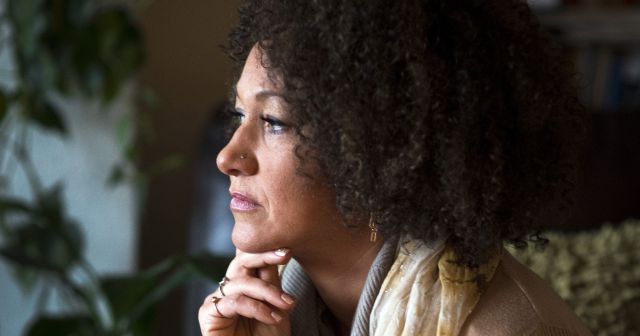
Rachel Dolezal is the white woman outed for pretending to be black, serving as president of the Spokane NAACP, an activist leading protests against shootings in the run up to the Black Lives Matter movement.

That’s the narrative we were fed by media outrage, “Daily Show” and comic sketch show mockery (Maya Rudolph, take a bow).

“The Rachel Divide” shows Dolezal’s life after the media circus, with her two smart, compassionate and thoughtful black sons and the price they all had to pay for her transgressions. Her career — in African American studies academia —  is over. Her community shuns her, and we see her drop her kids off at the airport or the barber shop because she can’t show her face in public, then have an angry black shop owner order her not to park in front.

The film then takes us back to the origins of the controversy, her NAACP leadership, accusations of racist threats in the mail, nooses, hate crimes, that appear to be bogus.

A local TV reporter outed her.

My first thought as all that blew up was I’ve seen this sort of hustle before. I covered Native American organizations in Alaska whose ethnic favoritism in hiring allowed people with laughably minor (and dubious) claims to tribal connections into lucrative Federal jobs that they had neither the competence nor the relationship to “their” community to be effective.

Of course, it’s more complicated than that. Maybe. Surely America’s drift towards “identity politics” had a little something to do with Dolezal being a sort of early adaptor in a culture headed toward a transgender, transracial future.

Filmmaker Laura Brownson follows Dolezal around in her life today, a town “that won’t let me be me,” and an African American community that still wants to keep her at arm’s length. She drives an old car with a cracked windshield, hunting for jobs with no offers coming.

A Spokane journalist admits that perhaps Dolezal made up the racist threats that spawned the expose and backlash. “Perhaps.” But he goes on to add that pretending that isn’t a widely held attitude on the fringe of White Nationalism’s Northwestern stronghold is laughable.

The Howard U. alumna, expert in African American studies and art, hasn’t changed her appearance, the frizzy or dreadlocked hair that was fairly blonde in her teens. She had avoided the media. The film captures her re-introduction to media via “The Real,” a very smart woman who gets schooled by more overtly ethnic TV hostesses of color, and admits she’s a white woman who identifies as black.

And being pregnant, she takes a ribbing over simply being a woman who prefers black men. She cringes.

The best scenes are between Dolezal and her sons Franklin and Izaiah, kids who are more philosophical about what she and by extension they have to endure.

Brownson delivers montages of the loud, colorful and heated debate about Dolezal on TV, which seem hilarious and quaint with the passage of time. I mean, it was three years ago, after all. Ancient history.

Then we see how she grew up. And we get it. This was a family at war with itself, not unlike the country that got so worked up by this. It is an ongoing war, both with her family (lots of adopted black children) and within the country.

“I know who I am. And my kids know who I am…Everybody else?”

Her art — colorful, intensely personal paintings and sculptures — is soulful, accomplished and vividly African and African American.

If you’ve made up your mind about her, it’s hard to see this intriguing documentary changing that made up mind. The movie turned my head, here and there.

But the questions about her honesty linger, along with the notoriety. How’d she get the skin tone, one wonders? The hair goes without explanation, but this still seems like an adaptation too far.

3stars2

MPAA Rating: unrated

Cast: Rachel Dolezal, Franklin Dolezal, Izaiah Dolezal, Jeff Humphrey

Credits:Directed by Laura Brownson, script by Laura BrownsonJeff Seymann Gilbert. A Netflix release.

Running time: 1:44

Posted in Reviews, previews, profiles and movie news | Comments Off on Netflixable? “The Rachel Divide” examines the identity politics of a racially complex and divisive figure