Preview, “Edie” finally tests herself in this OAP Adventure

She waited long enough, living a life which she regards as “so much wasted time.” That’s what prompted Old Age Pensioner “Edie” to slip out and have an adventure.

She’d climb a mountain. Not Everest of the Matterhorn, just one in Scotland. And she’d need a willing and tell-no-tales guide if something went wrong.

Not a big distributor, more a UK general release of the sort we’d only see in film festivals in the US. But I hope we get to see Simon Hunter’s film and Sheila Hancock’s performance here on a big screen.

Posted in Reviews, previews, profiles and movie news | Comments Off on Preview, “Edie” finally tests herself in this OAP Adventure

Netflixable? “Bobbi Jene”

bob2.jpg

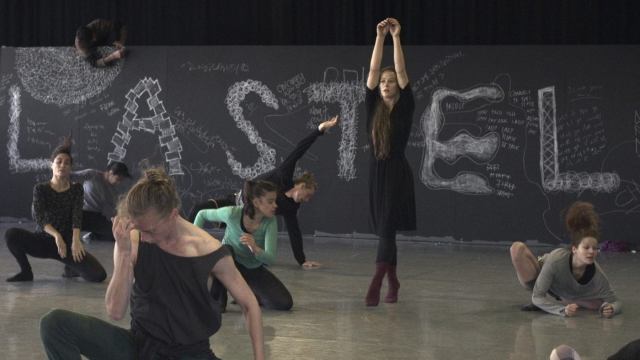
The dancer and title character is nude, contorting, lithe and athletic when we meet her, bending her body in intense, jerky and breathless movement.

“Bobbi Jene” is Bobbi Jene Smith, an Iowan who jumped from Juilliard into one of the world’s most innovative modern dance companies, Batsheva of Tel Aviv. Tall, free-spirited, focused and malleable, she became star, lover and muse for choreographer and company Ohad Naharin.

Why? The evidence on the screen suggests its her fearlessness. Dancers are very free with their bodies, casual in the nudity in their art. But Naharin suggests it’s her willingness to share something else, “juice,” the sweat of herculean effort and intensity that put her where she is.

“He wants to see me drip.”

“Bobbi Jene” is a foreign language documentary by filmmaker Elvira Lind. The “language” here is dance, movement. When we meet her, Bobbi Jene is facing her 30th birthday and quitting one of the best jobs in dance.

It’s not her coming birthday, with 30 being the backside of a dancer’s career. Nor is it the fact that she and Naharin used to be lovers. She has taken up with a much younger man herself, “a kid,” about her age when she was lured to Israel by a genius and his “Gaga” dance movement theories (which have nothing to do with the pop star).

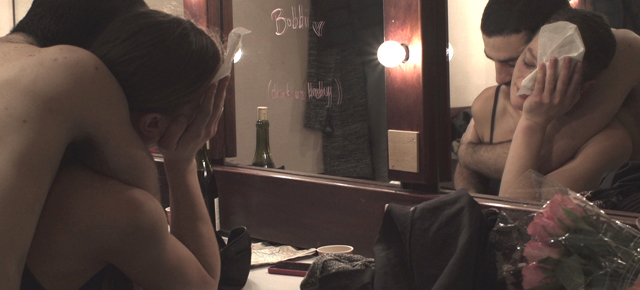
“It’s time to start creating my own work. and to go back home. “Bobbi Jene” rather haphazardly follows her journey, from her final performances with Batsheva, her struggles to get her start back home and some all-access intimate moments as she tries to talk her beau, Or Schraiber, into coming with her back to the States.

She lines up a teaching job at Stanford. But he’s at the beginning of his career, not at the pinnacle.

“You could do a lot of things — dance for Beyonce. We could make our art together. You said you want to go to acting school.”

That could be a problem down the road. For now, Bobbi heads stateside, reconnects with her family — holds her infant nephew for the first time and fends off awkward, working class parent recollections of her “eating problem” and insistence on choreographing and performing pieces in the nude.

The banality of the interviews, the conversations, and the effusive backstage praise after the shows throws the actual performances into sharp relief.

The dance features extended body lines, stretches and reaches in slow motion broken up by bursts of repetitive jerks, turns and twists and rolling on the floor.

The “Gaga” contemporary dance language emphasizes the personal, the cathartic — quasi-orgasmic, frenzied, trancelike performances that push towards some sort of breakthrough. Naharin’s philosophy is that there’s no rehearsing in front of mirrors so that there’s nothing self-conscious about the performer’s search for effects and positions.


bob3.jpg

The dance is interesting. I have to say, the dancer? Not so much. We tend to forget that the focus artists put on their art implies a dull myopia and narcissism. As Bobbi regales guests, especially Laura Dern, at a dinner party Lind and her husband, the actor Oscar Isaac, Smith’s “dance cured me” evangelism runs up against a sort of cornfed unsophistication that Juilliard and years in Israel haven’t polished out of her.

How lucky was she, she’d like to know, finding “a dance company ran (sic) by a straight man who loves women?”

There’s so much given away in that sentence that one scarcely knows where to begin.

Smith comes off best when her dancing is doing the talking.

Lind’s camera doesn’t so much objectify her as zoom in on her physicality, sweating, pushing against an outdoor raquetball wall, tying herself into knots, stripping in front of a paying crowd of aesthetes in her dance-performance art piece “Harrowing.”

Her conversation? Boring.

2stars1

MPAA Rating: unrated, nudity, sexuality

Cast: Bobbi Jene Smith, Laura Dern, Or Scraiber, had Naharin

Credits:Directed by Elvira Lind. An Oscilloscope Labs release.

Running time: 1:38

Posted in Reviews, previews, profiles and movie news | Comments Off on Netflixable? “Bobbi Jene”

Preview, “The Festival” goes for the dark and silly parts of the rock fest experience

Folks behind “The In-Betweeners” rounded up fresh (ish) faces for this riff on what going to Bonnaroo, Coachella or Glastonbury is “really” like.

Jemaine Clement and Nick Frost play the adults here, so make of that what you will.

Posted in Reviews, previews, profiles and movie news | Comments Off on Preview, “The Festival” goes for the dark and silly parts of the rock fest experience

Preview, Naturalism, non-actors and milieu sell “Skate Kitchen”

The Skate Kitchen are the proud, mouthy young skateboarding women who ignore “Promise me, no more skating,” and Jaden Smith is the photographer  interested in their vibe in this Sundance phenom from the people who made the doc “The Wolfpack.”

Visceral, gritty, streetwise, non actors (including, ahem, Jaden). Looks to be releasable.

Posted in Reviews, previews, profiles and movie news | Comments Off on Preview, Naturalism, non-actors and milieu sell “Skate Kitchen”

Book Review: “The Mirage Factory” zeroes in on the three people who “made” LA and the Hollywood Dream

mirage

I’ve read a bit about LA’s infamous victory in “The Water Wars” that ensured this parched pueblo would become the megalopolis it is. And of course, I’ve seen “Chinatown” countless times.

And I’ve read and watched documentaries about D.W. Griffith, his most infamous film, “The Birth of a Nation,” which established Hollywood and the studios there as the entertainment capital of the world.

The PBS “American Experience” film on early LA evangelist Aimee Semple McPherson, the Canadian-born icon of LA’s early turn towards faddish, malleable and upbeat belief systems, is about all I knew about her.

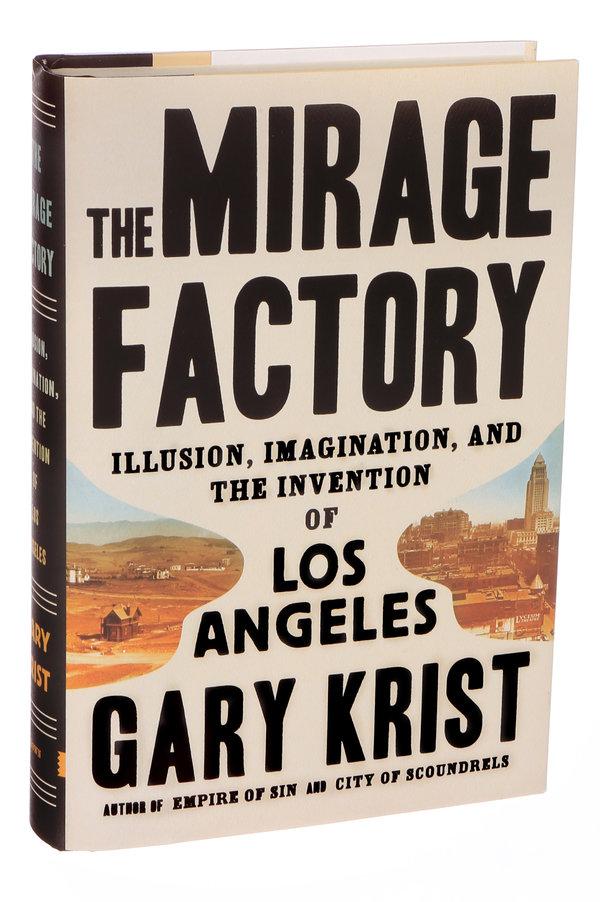
But all three, taken together, chiseled the image of Los Angeles into the public mind more firmly than any Chamber of Commerce pitch ever did. That’s the gist of Gary Krist’s immensely readable “The Mirage Factory: Illusion, Imagination and the Invention of Los Angeles.”

If you love Hollywood history, pre-“Hollywoodland,” pre-“An Empire of Their Own,” it’s the book for you.

The arc of the career of self-taught waterworks engineer William Mulholland, the rise and fall of genteel Kentucky racist filmmaker David Wark Griffith and the fame and pitfalls of evangelist Sister Aimee make for ripe metaphors for a city that should have never been.

Krist’s close-reading of Mulholland’s mono-maniacal heavy-handedness, how every ugly rumor of how Los Angeles “stole” water from the Owens Valley and later the Colorado River (legally, but sneakily), which became fodder for “Chinatown,” is fascinating.

Griffith’s invention of the language of cinema, his creation of a clueless and tone-deaf racist masterpiece (which read the temperament of the country all-too-accurately) and the over-reaches that followed is aptly, compactly summed up.

And his measured take on McPherson, whose generous outreach and charity work tend to be forgotten with all the focus on her mysterious “kidnapping,” and later hubris and suggestions of financial shenanigans, is a welcome one.

Her church survived her, the industry Griffith helped launch is America’s biggest export and the city Mulholland was hell bent on thirst-quenching all live on, in fact and in the global imagination.

Krist’s terrific book goes a long way in explaining how and why.

Posted in Reviews, previews, profiles and movie news | Comments Off on Book Review: “The Mirage Factory” zeroes in on the three people who “made” LA and the Hollywood Dream

BOX OFFICE: “Jurassic” gins up $145, “Incredibles” drops to $84

boxThese of the days of “Jimmy Crack Corn, and I Don’t Care” at the movies.

Studios release middling, juvenile but big and brawny blockbusters, and the critics don’t care.

The movies may stupid money, and the studios don’t care about the critical beat downs, not one whit.

“Solo” hit $200 million Friday,“Solo” hit $200 million Friday, bad reviews be damned.

“Ocean’s 8” will clear $100 million by Monday, maybe Tuesday. Mindy Kaling will be pleased. 

And “Jurassic World: Fallen Kingdom,” cleared $500 million overseas before its first weekend in North America, so the $145 million it’s on track to earn (big Thursday night, huge Friday), means the “flush this franchise away” reviews are but fever dreams of the chattering classes.

The dinosaurs are swallowing a big chunk of the “Incredibles 2” audience. An $84 million weekend is an over-50% drop, not awful for most films, but for Pixar? That’s a big bite. Jack-Jack and family will still be well north of $350 by Monday AM, a $450-500 million U.S. and Canada smash. It’s doing well in China, too, a market Universal has been tailoring its films to and making bank on. Putting the charming Chinese-themed “Bao” cartoon on the front of “Incredibles” gave Pixar a bump there.

“Won’t You Be My Neighbor” is adding screens and should crack the top ten.

Sony, sliding in the “major studio” rankings, is losing screens for their bomb “Superfly,” and it probably will fall out.


Posted in Reviews, previews, profiles and movie news | Comments Off on BOX OFFICE: “Jurassic” gins up $145, “Incredibles” drops to $84

Netflixable? Chloe Grace Moretz is a reporter suffering from a mystery illness in “Brain on Fire”

brain1.jpg

They used to be called “disease of the week,” melodramas about some heroine or hero fighting a strange, usually deadly illness filmed and consigned to the weak midweek time-slots of network TV.

Not all of them migrated to Lifetime.

“Brain on Fire” didn’t get theatrical release, even though at one time Charlize Theron was slated to do it. It still attracted a solid B-list cast, now headed by Chloe Grace Moretz, and made it to the Toronto Film Festival after completion. And now it’s on Netflix.

Susannah Cahalan (Moretz) is barely done narrating her pleasure at having  “my dream job at the New York Post,” at 21 (the real Cahalan was a slightly-more-realistic 24), just finished joking around with her more worldly colleague (Jenny Slate) who calls her “”So bright-eyed I need major sunglasses right now,” with the “get OUTTA my office” gruff-bemused bark of her editor (Tyler Perry) ringing in her ears when it hits her.

She zones out at her 21st birthday party. She glazes over, lies to cover, confesses to “not being myself,” and coughs — a lot.

brain2

Before she knows it, she is “trapped in your own body, lost in your own mind.”

Her musician-boyfriend (Thomas Mann, oh so bland) doesn’t quite take her symptoms seriously.

“Hungover? You’re not PREGNANT, are you?”

In interviews, she seems stoned. Colleagues tease her, but the camera captures “concern.” Of course it does. That doesn’t keep her editor from blowing his stack (Well played, Mr. Perry).

And thus begins the medical mystery — bed bugs, “any history of Lyme Disease?” “Stroke? “Blood clot?” “MRI?”

Filmmaker Gerard Barrett visualizes her growing confusion, sleepless madness and isolation. She sweats, freaks out at the slightest noise and then…convulsions.

The film limits itself to the alarm any of us would feel when we don’t know what’s happening. Meltdowns from her divorced parents (“Do you CARE for her, or not?”), pushing the live-in beau aside, mass confusion and the ripple effects of this disruption — to her life, her love, her career, her family — all are staged with a kind of perfunctory chilliness.

Carrie Anne Moss, playing her mother, plays the most interesting variation of concern. She probes, suspects her child is doing that overwhelmed/stressed-out/flip-out thing she might have seen before. Maybe she’s drinking. Maybe drugs. And then, another seizure and focused, fretful mom kicks in — never quite matching her ex’s (Richard Armitage) testy impatience with the medical establishment.

The lack of answers makes one and all a little crazy, and from the reactions from her family you wonder just what they’ve seen in her behavior before.

There’s a puzzling passivity that plays out among almost everybody else, right up to the moment Cahalan just…loses it. Moretz takes this so far over the bipolar top in these moments you cannot believe the white-suited guys with the straight-jackets aren’t called.

That’s when “Brain on Fire” loses its footing in reality. Colleagues take her tirade indulgently and seriously. Seriously? After that “performance?””

“I’m bipolar.”

“How do you know that?”

“I Googled it.”

Moretz has been an actress to watch since playing the too-wise, supportive little sister in “(500) Days of Summer,” the worldwise female friend of the “Wimpy Kid” crowd and then Hit-Girl to Nic Cage’s Big Daddy in “Kick-Ass.”

This role probably calls for her least subtle work, and we never for a second see this as anything other than a performance. It contrasts too much with the calmly passive-even- after-they’re-scared-witless parents (Armitage’s tirades notwithstanding).

The one “funny” element to the character is her determination to self-diagnose. Susannah corrects every medical professional who offers an opinion with this or that new theory that she’s certain is fact. She keeps Googling.

Barrett doesn’t save Moretz with more effects and moments that show her mania from inside her head. It’s all externals, vexing seizures, tantrums and manic outbursts. Something more like “The Diving Bell and the Butterfly” might have worked.

And the script doesn’t help her by creating more empathy for Cahalan, more connection with parents, boyfriend and medical professionals (unsympathetic, many of them). It all feels so perfunctory, a string of characters with no “arc.”

Compare this to “The Big Sick” or “Lorenzo’s Oil” or any of a legion of similar films, and the emotional disconnect sticks in the craw. Best selling memoir or not, it’s probable that this story, where the mania needs a softer edge, where the confrontations between parents and the Medical Establishment are the real drama, was not really good fodder for a feature film, “disease of the week” or not.

1half-star

MPAA Rating:PG-13 for thematic elements, brief language and partial nudity

Cast: Chloe Grace Moretz, Jenny Slate, Thomas Mann, Tyler Perry, Carrie-Ann Moss, Navid Negahban

Credits:Directed by Gerard Barrett, script by Gerard Barrett, based on the Susannah Cahalan memoir. A Broadgreen/Netflix release.

Running time: 1:29

Posted in Reviews, previews, profiles and movie news | Comments Off on Netflixable? Chloe Grace Moretz is a reporter suffering from a mystery illness in “Brain on Fire”

Weekend Movies: Pans for “Jurassic,” “Catcher,” raves for “Damsel” and “King”

jur1In sports, they call it a “make good” call. You blow your evaluation of one play, and bend over backwards to find a way to benefit the player/team your previous mistake hurt.
It happens in film reviewing, too. When the world embraced Jim Carrey’s “Ace Ventura,” a passably funny/goofy comedy that in any event announced a major new screen star, “Siskel & Ebert” crucified it.

Carrey’s next two films, blockbusters as well, got genuflecting notices from the two Chicagoans on TV. “Mask” might have deserved that, but “Ace 2?” Pure “make good” call.

Same thing is happening with “Jurassic World: Fallen Kingdom.” Generous, indulgent reviews greeted “Jurassic World,” which was crap. It sat with a tomatometer rating in the ’80s for much of its run. Mostly late-filing “me too” critics panned it. Except for me. I was an outlier pre-opening day, a “cut and paste clone of the original.”

The latest sequel is even worse, but other critics, maybe even the ones who called “Jurassic World” “the best sequel in the series,” are back-pedaling. A 51 on Metacritic, 50 on RT at the moment. And falling. Yeah, I am aggregated on all the “most brutal reviews” compilations for that one. So?

This won’t hurt the junk food juggernaut that it is. The overseas receipts (China loves this garbage) are over $450 million already, and it earned $15 million plus Thursday night in North America. It could clear $130 by midnight Sunday. Because it’s this weekend’s “popcorn” event.

Nothing is opening wide opposite “Fallen Kingdom,” but there are alternatives entering limited release. The watchable, conservative and truncated “The Catcher is a Spy” is earning mixed notices (mine is here), “Damsel” is a dark and grimly funny delight, all agree including me, and “Boundaries” is a  just-cute-enough to get by grandpa stoner road trip comedy.

“The King” is further evidence that this is a Banner Year for Documentaries. We’ve have “RBG” and “Won’t You Be My Neighbor” and a pretty good “Always at the Carlyle” so far. Now, an impressionistic portrait of Elvis from Eugene Jarecki. Well-worth digging into. 

“Incredibles 2” should hang onto enough audience to at least give the appearance of a box office race to the weekend. Will it clear $90. Probably.

Posted in Reviews, previews, profiles and movie news | Comments Off on Weekend Movies: Pans for “Jurassic,” “Catcher,” raves for “Damsel” and “King”

Preview, Lea Seydoux and Ewan McGregor let a “Synthetic” Theo James come between them in “Zoe”

It’s science fiction about a near future where compatibility can be ascertained well in advance, in which synthetic people are showing up on shelves and being taught to act more human.’

Ewan and Lea are the couple whose prototype (James) hastens the inevitable in “Zoe.” Rashida Jones also stars in this late July release from director Drake Doremus (“Like Crazy”). 

Posted in Reviews, previews, profiles and movie news | Comments Off on Preview, Lea Seydoux and Ewan McGregor let a “Synthetic” Theo James come between them in “Zoe”

Movie Review: Icelandic Grudges get grim “Under the Tree”

tree1

It helps to remember these people were Vikings, once.

Get past the whole polite and smiling, tourist-friendly, global-financial-crisis exacerbating blondes taking daily dips in the volcanic hot springs, the almost unpronounceable names, the grey-black landscape of lava usually covered by snow.

Iceland is greener than you think — and maybe meaner.

“Under the Tree” is an acrostic essay in grief, repression, guilt and bitterness. It’s all out there in the open, lines being crossed, psychic, verbal and even physical violence suggested, threatened looming. And nobody can seem to stop it.

Agnes and Alti (Lára Jóhanna Jónsdóttir, Steinþór Hróar Steinþórsson) are a married couple with a daughter, living under a glacier that settled on the marriage some time back. When she catches him watching sex on the computer, she is shocked and hurt.

Until she learns it is him having sex with another woman. Doesn’t matter when that happened, or that she interrupted him before he masturbated. There’s no coming back from that. A shouting match leads to separation, the separation leads to more and more frantic stalking, harassment and dragging their little girl’s school into their custody fight.

Alti has a temper, and Agnes holds a grudge like a pro.

Alti’s mom, Inga (Edda Björgvinsdóttir) lost her other son and cannot properly grieve for the bitterness. She takes out her frustrations on the annoying neighbor (Þorsteinn Bachmann) who ditched his wife and took up with a younger woman, Eybjorg (Selma Björnsdóttir), who further annoys Inga with her cycling, exercise togs and the German shepherd she lets roam over the shared backyard of their duplex.

Inga’s husband Baldvin (Sigurður Sigurjónsson) is the reasonable one here, but even he thinks the neighbor’s niggling complaints about a tree that “shades our patio” is too much. 

“That tree is coming down!”

Want to bet?

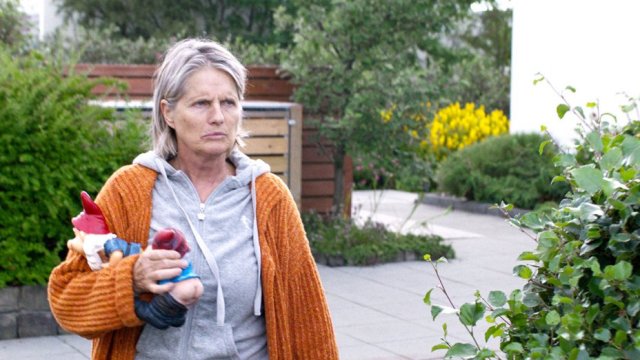
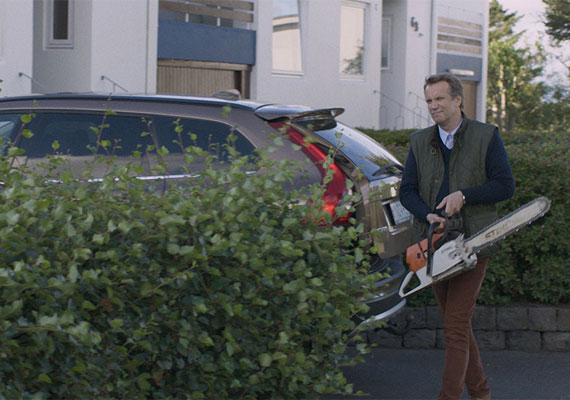
Their feud starts with a certain decorum and escalates, comically and tragically, with each bare-bottomed garden gnome prank, every increasingly intemperate remark, most of them from Inga.

“Just admit what you’ve done, you cow.” Sounds even worse in Icelandic (with English subtitles).

tree2

At every turn, co-writer/director Hafsteinn Gunnar Sigurðsson confronts the viewer with people concerned with rules, manners and decorum, and others flouting them — a heated argument at the apartment building coop meeting over the young couple having noisy, uninhibited sex at all hours, colleagues trying not to see the menacing harassment by a husband chasing his wife into their office, the hapless teachers trying to maintain “rules” and the letter of the law in a community-nation so small everybody knows or is related to everybody else.

It’s jarring and stereotype-smashing, for starters, and just plain disturbing on top of that.

The interlocked scenarios take their share of melodramatic turns, which the average viewer can anticipate too easily, thanks to Sigurðsson hitting the foreshadowing button too hard. But “Under the Tree” is still as disturbing a Scandinavian domestic collapse as we’ve seen in any drama since Ingmar hung it up, lives lived in the open under the midnight sun, but with darkness lurking in the shade, “Under the Tree.”

3stars2

MPAA Rating: unrated, violence, sex, nudity, alcohol, smoking

Cast:Edda Björgvinsdóttir, Þorsteinn Bachmann, Selma Björnsdóttir, Sigurður Sigurjónsson, Steinþór Hróar SteinþórssonLára Jóhanna Jónsdóttir

Credits:Directed by Hafsteinn Gunnar Sigurðsson script by  Huldar Breiðfjörð and Hafsteinn Gunnar Sigurðsson. A Magnolia release.

Running time:

Posted in Reviews, previews, profiles and movie news | Comments Off on Movie Review: Icelandic Grudges get grim “Under the Tree”