Movie Review: Filipino Cops fight their way out of a trap in “BuyBust”

buy1

Nobody goes down quietly in “BuyBust.”

Cops and drug gangsters, enraged slum dwellers fighting to be freed of both, they take their beatings, absorb brass knuckles and bullets, machetes and Molotov cocktails, and refuse to die.

“Adrenalin” pulls them out of the canals where they’ve been held under water, desperation keeps them from giving up on living even as their punches lose their punch and their bodies reach their limit.

The over-long and slow-starting action picture is sort of a Filipino version of “The Raid: Redemption” where the setting is a vast slum and there is no damned redemption.

Set to the beat of the “chick chick chick” of knives jabbing into flesh, it’s a movie where you take the good — long tracking shots through multi-levels of almost non-stop video-game styled mayhem, brutal fights that are more realistic than cinematic — with the half-hearted.

Many a “stage punch” gives itself away, vast volleys of ammunition are expended, but the gunfire isn’t resonant or explosive. And in close quarters, firearms are fired at the ground (no sense injuring actors jammed together in the frame).

Writer-director Erik Matti has made a Duterte era epic of blood and cynicism, a picture that where we’re given heroes but told, scene after scene, not to trust them. And above all, don’t get too attached to anybody.

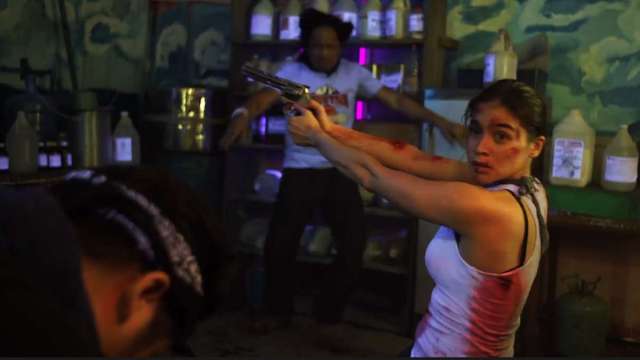
Manigan (Anne Curtis) is a P-DEA cop training to join a new squad. Her old one? Wiped out. It’s made her cynical, untrusting.

“People DIE following orders, too!” she tells her boss (in Filipino, with English subtitles).

This we figure is foreshadowing that will serve her well when her new squad follows a blunt detective (Lao Rodriguez) into the rabbit warrens of Gracia di Maria, in the brutally tough Tondo section of Manila.

They’ve got a “rabbit,” a drug dealer they’re using as bait to get to Mr. Big — “Biggie Chen.” Just another bust in the country’s ever-evolving, ever-lasting drug war.

But as they wade into the maze of shanties, shacks, food stands and funeral parlors — even a packing crate “club” — of the slum, they fall into a trap.

No cell service, no “back-up,” just a dozen or so officers scrambling to escape underboss Chongki’s (Levi Ignacio) minions, and the equally enraged locals, who just want to be “left alone.”
buy2.jpg

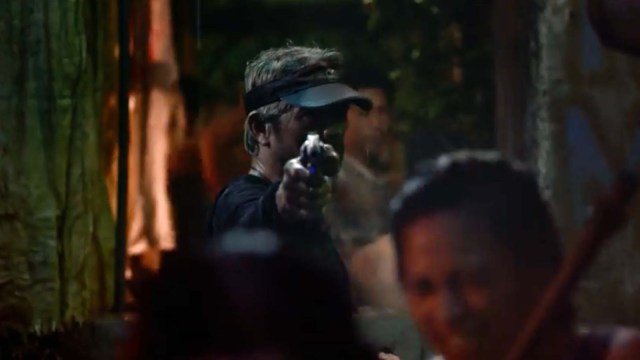
Matti drops his outgunned and overwhelmed cops into a world of clutter and cover, but no safety. Rickety walls made of cloth, no door that could stop a bullet or a mob pushing to get through it, no wall thick enough to provide protection and no help on the way.

There’s a “Judas” in their midst, and a limited supply of ammo. Fights start as shootouts and devolve into swarming brawls, sometimes with meth’d up and armed gangsters, sometimes with the skinny, over-matched but frenzied poor.

The plot is “Who gets it next?” and who will survive the night, standard action beats seen in Westerns, “Zulu,” “Assault on Precinct 13,” scads of films.

The dialogue (smartly subtitled in yellow) is generic, be the line in English, Filipino/Spanish or a patois blended from all three.

“I’m not LEAVING you!”

Matti packs his police squad with a cross-section of life — a married couple dealing with phone calls from annoying children, cowboys, jaded veterans — all of whom pray the rosary, aloud, on their way to the mission.

I kept looking for signs of fascist art influence on the picture — that glorification of the muscular body, The State, the military institutions, uniforms, common since “Triumph of the Will,” even evident in “300.” But this is a Filipino picture politically in marked contrast with The State.

It’s entirely too long, with pacing issues in the opening and popping up here and there as it progresses. And not every fight is convincing, the action choreography is constrained by the setting.

But “BuyBust” is brimming with life, furiously protected and furiously taken, a bracing introduction of Matti and Filipino cinema to the world.

2half-star6

MPAA Rating: unrated, graphic violence in never-ending supply, drug abuse

Cast: Anne Curtis, Lao RodriguezLevi Ignacio

Credits:Directed by Erik Matti, script by Erik Matti and Anton. C. Santamaria. A WellGo release.

Running time: 2:06
 

Posted in Reviews, previews, profiles and movie news | 1 Comment

Netflixable? So what did we miss when we ALL skipped Ryan Reynolds et al in “The Captive?”

captive4.jpg

He’s fretted in the most public, often comic ways, about his Canadian ancestry, his duty to the Motherland.

So it’s only natural that Ryan Reynolds should make a movie with Atom Egoyan. Who’s more Canadian than that?

And it’s about a father who loses his daughter to a pedophile ring. What’s more Canadian than that?

But “The Captive” is a 2014 mystery in the Egoyan (“Where the Truth Lies,” “Adoration,” “Chloe”) style, cryptic beyond cryptic, not playing fair with clues, plot logic and timelines. Shockingly, nobody saw it.

Cassandra, “Cass,” was an aspiring figure skater. She was good, and landscaper dad (Reynolds) and hotel maid mom (Mirielle Enos) were bursting with pride.

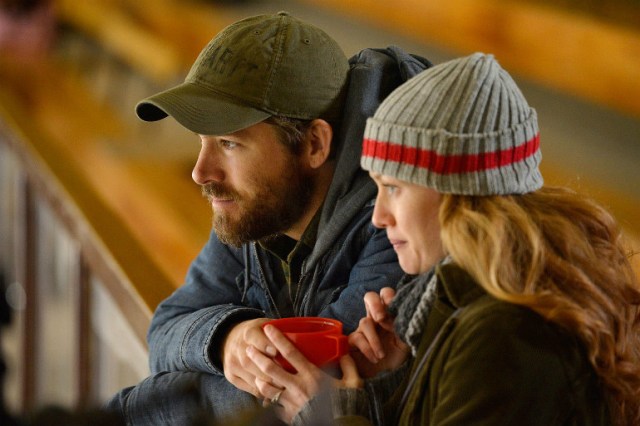
One wintry day’s “pairs” practice skate with her partner goes as well as ever, and Dad stops with her on the way home to pick up a pie at the truck stop. Cass disappears.

captive1.jpg

Egoyan’s story skips back and forth in time, from the job interview of a hot dog detective (Scott Speedman) who wants to join the pedophile/cyber crime detection unit, to the day he interviews, with his boss (Rosario Dawson), the father (Reynolds) whose daughter disappeared. The cops’ questions accuse the father.

“They’ve taken my daughter, and I want to know what you’re doing to help!”

Dad’s enraged and panic-stricken, but his wife goes berserk when he breaks the news to her, a fury of blame and grief.j

Meanwhile, the captor (veteran heavy Kevin Durand) has video feeds of all sorts of CCTV cameras, even in the hotel rooms Cass’s mom cleans, taunting his hostage even as he’s re-assuring her by letting her see her mother, from time to time.

He’s part of “a whole new class of freaks,” the cops suggest. The monster leaves the girl’s mother clues, over the years — a hairbrush here, a baby tooth (in a jewel box) there — IN the hotel rooms she cleans daily.

In the present, eight years after the kidnapping, Cass (Alexia Fast) is resigned to her fate, reasoning with her captor, “protecting” she thinks, her parents by not trying everything she can think of to escape. She is just a beautiful blonde, playing the piano, wondering if he’s “lost interest” in her “now that I’m all grown up.”

The section chief (Dawson) and her detective are now in a relationship.

The kidnapper works for a big-shot developer (Bruce Greenwood) who also heads a charity that raises money for at-risk kids.

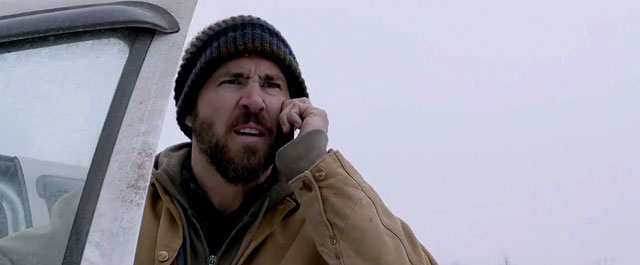
And the father of the victim has lost any faith in the police even though his increasingly frayed wife continues to visit Dawson’s unit boss. Dad has gone off the deep end, sure he’s lost his wife’s love, hellbent on “keeping my eyes open,” certain that he will find his daughter, discover clues on his landscaping treks over Canada’s highways and snow-covered back roads.

In a nutty, illogical and dream-interpretation driven thriller, that’s just the sort of thing that happens.

Dawson makes a convincing, level-headed crusader, testing her new hire’s reaction to child porn on the Internet.

Speedman’s cop is an under-developed “cowboy.”

“Me? I arrest people.”

Enos gives the mom a mania you appreciate, and Reynolds manages both the breakdown and man-taking-action moments he must play with his usual bite and aplomb.

But Egoyan, exercising his passion for melodramatic music in the score, snow in his settings and the ripple effects of a tragedy (Cass’s former partner cannot escape her kidnapping, either) in his stories, refuses to let us connect the dots that must somehow exist only in his mind.

Seriously, if you see the resolution to this coming based on the information the viewer is given by the storyteller, my hat’s off to you.

Only in Canada would an artist this fascinating, home-grown and maniacally uneven continue to draw the subsidies, attention and loyalty from his fellow Canadians, now big Hollywood stars, to get his increasingly unhinged thrillers made.

2stars1

MPAA Rating: R for language and some violence

Cast: Ryan Reynolds, Rosario Dawson, Scott Speedman, Kevin Durand, Mirielle Enos, Bruce Greenwood

Credits:Directed by Atom Egoyan, script by Atom Egoyan and David Fisher. An eOne/Direct TV release.

Running time: 1:52

Posted in Reviews, previews, profiles and movie news | Comments Off on Netflixable? So what did we miss when we ALL skipped Ryan Reynolds et al in “The Captive?”

Preview, “The Little Mermaid” of…The Mississippi?

Shut the front door! A mermaid who doesn’t sing, who doesn’t necessarily want to be “part of your world?”

How did Disney allow this “Little Mermaid” to happen?

AMC theaters will open this period piece “Splash meets Fairy Tale: A True Story”  in the Dog Days of Aug. (Aug. 17)

Posted in Reviews, previews, profiles and movie news | Comments Off on Preview, “The Little Mermaid” of…The Mississippi?

Netflixable? “Going for Gold” takes “Bring it On” Down Under

gold1


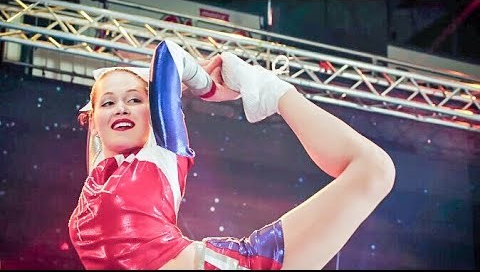
Emma Wilson (Kelli Berglund) is a cute, cocky, high school cheerleader and Air Force brat who has “already learned how to say ‘good-bye’ in six languages.”

That’s what military families face as a way of life — constantly moving, endless transfers to new bases. Dad (Terry Jones) is transferred from California to Australia, which Emma’s inner voice screams about.

“Tell him you have friends here, a life!”

Nothing for it, then, but to bite your lip and accept it. We also serve who cheer and “have a life.”

And there are worse places to land than Australia. I mean, they have cheerleaders Down Under, too.

“We’re just as INTO as you Yanks,” her new neighbor Hannah (Emily Morris) warns her.

We’ll soon see about that.

“Going for Gold” is one of those bland, generally benign teen comedies pop music montages, smiles and fresh-faced cheerleaders pumping fists and throwing down.

Ex-gymnast Emma hangs with Hannah and her shrinking gymnastics team, watching them show off how athletic, confident and competent they are.

“You guys want to see my routine?”

That leads to the girls joining in and experiencing the joys of tumbling, dancing in line, lifts and shaking your groove thing. And when events conspire — the arbitrary nature of gymnastics judging — to get the gymnastics team disqualified for the season, “Hey, I just got this really crazy idea.”

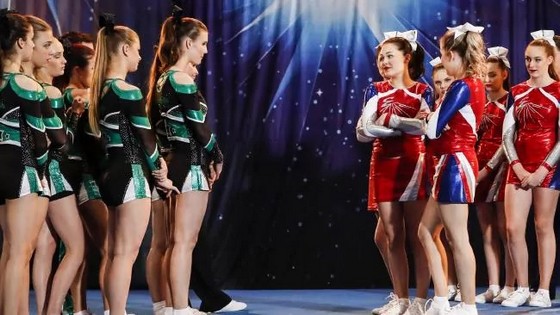
They haven’t even set up shop when Emma discovers the joys of “footie,” Australian Rules Football and they find their arch rivals — ACC — Adelaide Cheer Squad, aka Mean Girls Cheer.

“Cheer battle!”

Truthfully, the cheering/tumbling in this little “Bring It On Lite” is half-speed lame.

So is the “recruit the squad” sequence, beginning with Liam, the footballer who can do backflips. Hip hop dancer, belly dancer?

“Are you guys good?”

“Yeah, of course.”

“Congratulations! You just got great!”

And then there’s fund-raising…

The banter is mild-mannered and cute, the frictions and interpersonal dynamics oh-so-PG. The obstacles? Emma’s reluctance to make new friends, what with her Dad always ready to grab that next promotion and transfer.

New team member Ethan would turn Emma into a “smitten little kitten,” if it wasn’t for that next move hanging over her head.

“Blandness” is what hangs over this mild-mannered Big Contest comedy, bland characters, blase villains, bland situations, friction-free at every turn.

When Coach (Ruth Natalie Fallon) says “The last thing we need is internal drama!” she’s dead wrong. The whitest teen comedy since “The Breakfast Club” could use a little — a LOT — of drama, internal or external.

The jokes — “Coach was on a famous gymnastics team, back in, World War II, was it?” She has the manners of an emu” and the like — wilt.

gold4

There’ve been a number of “Bring it On” imitations since that iconic hit came out in 2000, but it behooves the writer-director-choreographer and casting director to at least refer back to the Kirsten/Gabrielle cheer-off when making a copy.

The cheerleading’s got to be eye-popping, pushing the envelope. The conflict has to be grounded in reality — not necessarily the class-race schism that underlies “Bring it On,” but something with some edge.

Writer-director Clay Glen has a couple of teen gymnastics pics (“The 2nd Chance,” “Raising the Bar” under his belt, so there’s no excuse for not “raising the bar” on the cheer routines. A hint of belly dancing is about as sexy as things get here, and everything plays like a walk-through rehearsal.

The leads are cute but light on screen charisma, with zero chemistry with each other. The finale is a real eye-roller. Harmless enough, but engrossing? Nah.

It all adds up to “Netflixable? Not so much.”

1star6

MPAA Rating: G

Cast: Kelly Berglund, Emily Morris, Terry Rogers, Ruth Natalie Fallon, Daisy Anderson

Credits: Written and directed by Clay Glen. A Marvista/Netflix release.

Running time: 1:28

Posted in Reviews, previews, profiles and movie news | Comments Off on Netflixable? “Going for Gold” takes “Bring it On” Down Under

Documentary Review: “When the Beat Drops,” the dance battle is on

beat1

Many of my favorite documentaries over the years have been works of cultural historiography — films that literally “write the book” on some corner of pop culture that’s outside of my experience or general interest.

My first serious education in hip hop was “Rhyme & Reason.” “Paris is Burning” introduced us all to drag queen subculture’s embrace and impersonation of high fashion. “The King of Kong” packaged video gaming’s prehistory into a tale of hated champion vs. upstart challenger, and “Rize” set the table for how dance culture got from hip hop to krumping and clowning, to twerking.

“When the Beat Drops” peels back the layers of recent dance history, the line dancing “dance battles” first mainstreamed in “Stomp the Yard” and “Step Up” and “You Got Served,” and traces it to the ascendant Capital of African America — Atlanta — and the black gay subculture that created it.

Jamal Sims’ film breaks into chapters focusing on this or that figure in Atlanta line-dancing’s past and present.

It all began, the various practitioners of the back-arching, leg-kicking “buck” dancing say, with the majorette/dance squads of “HBCUs” — Historically Black Colleges and Universities — with Atlanta’s Clark, Spellman, Morehouse, Morris Brown and Spelman at their epicenter.

Football and basketball games brought in not just the athletes of Jackson State, from Jackson, Mississippi. It was the dance squad, the Prancing J-Settes that won the attention, admiration and imitation of young Anthony Davis and his friends.

A plus-size kid who had grown up with little interest in “doing what boys should do,” who knew he was different when he realized Lynda Carter’s “Wonder Woman” was his role model, Davis would watch the “graceful…sassy and sexy” J-Settes, and he and friends would try out what they saw that night, after the game, in Atlanta’s African American dance clubs like Club Traxx.

“Bucking…like a stallion,” was all the rage, and the dance floor and even the parking lot would be the scene of dance battles as young men would throw down, match each other’s moves and try to better them.

Davis founded his own dance team, Phi Phi, which has ruled the roost in Atlanta, hosting and sponsoring competitions, demonstrations and the like, gay teams putting themselves out there in increasingly feminine attire in a conservative, church-based bastion of African American conservatism. “The city too busy to hate” would slowly come to accept its black gay subculture.

Made-up and dressed in matching halter-tops, leggings and boy shorts, groups like Team Mystique and Banji and 3D would dance-off in assorted styles of music — House and Hip Hop.

Official competitions, which Davis and Phi Phi often organize (as they moved away from competing) would feature a category called “Stands” — dance moves a college dance squad like the J-Settes could perform in the limited space, on steps, aisles or in between seats, in the stands of a football stadium or basketball arena.

“Dance in YOUR SPACE,” Anthony, aka “Big Tony,” bellows to his team as they practice choreography, barking out the count as they rehearse their steps.

beat2.png

Dancers talk about the grounding they need in modern dance, jazz dance and ballet and use the nomenclature of those disciplines, even if they never formally studied them.

As “bucking” came to be known as “J-Setting,” named for Jackson State’s dancers and their role in inventing and popularizing it, a new generation of dancers like Lavor and Napoleon (Team 3D) got involved and all of this moved even more out into the open.

As “Napoleon” (Lynel Goodwin) may declare, “When the beat drops, my mission is to take over the world.” When he’s not in dance mode, he’s a school band teacher and non-profit director (Band Room Nation), popularizing marching/dancing bands at high schools across America.

Those profiled talk about getting mugged, harassed and discriminated against, and debate how “out there” they should be when, for instance, they participate in a small town Christmas parade.

Sims has gone for an action-oriented (lots of dancing) and yet intimate, in-their-own-words story which hamstrings his film somewhat. That myopic approach means there’s no outside voice connecting this trend or fad to the larger dance world. It’s just gay black dancers in Atlanta chronicling dance inside their bubble, with no Voice of Cultural Authority saying, “It spread from here to the horizons” or “This will be as forgotten as krumping in a few year’s time.”

Still, “When the Beat Drops” makes for a fascinating dissection of “how these things get their start,” even as the jury’s still out on their larger impact.

2half-star6

fascinating  I did not know that

MPAA Rating: unrated, profanity, sexuality

Cast: Anthony Davis, Lynell Goodwin, Johnny Waters III

Credits:Directed by Jamal Sims. A World of Wonder/LOGO release.

Running time: 1:27

Posted in Reviews, previews, profiles and movie news | Comments Off on Documentary Review: “When the Beat Drops,” the dance battle is on

Netflixable? “Mary and the Witch’s Flower” is an anime eye popping Harry Potter Precursor

witch3

Somebody figured out that what fans of witch and wizard stories revel in is the cornucopia of critters, gadgets, spells and talismans.

Somebody figured out that witches, warlocks and wizards learn their trade somewhere — probably an enchanted, inaccessible school.

And that somebody discovered this long before J.K. Rowling came along.

Mary Stewart’s “The Littlest Broom,” the basis for the Japanime “Mary and  the Witch’s Flower,” was published in 1971. And watching this new-to-Netflix (it had a short Fathom Events theatrical release) film is like taking a peek into the many influences Rowling synthesized into her Potter world.

It’s a lovely looking anime outing — not from Studio Ghibli — that, like Potter, hurls exposition and fresh “Fantastic Beasts and Where to Find Them” at us, from opening scene to last.

The set-up, a girl “mistaken” for a witch, a never-ending string of introductions to the elements of this world, a rescue quest, is straight up “Hero’s Journey” of Joseph Campbell, and absurdly unsurprising. But for any Potter fan longing for a little taste of that sort of thing, it probably fills the bill.

A girl escapes from a mansion, fleeing by broom. But it’s a harried flight, her bag of magic beans spill out and…we cut to years later.

Young Mary (voiced by Ruby Barnhill) is staying with her great aunt in a great house in the English countryside. She’s a tween, a bit of a klutz and lonely. If only school would start!

“Nothing good ever seems to happen in my life!”

But a chance trek into the woods following some cats lets her find bright blue flowers. They are “Fly by Night”flowers, the gardener tells her. They bloom every seven years and the locals also call them “The Witch’s Flower.”

Mary has plucked one. The cats freak out, and fog and lightning and whatnot dust up in the woods. Before you know it, Mary’s discovered a kid-sized broom and the darned thing has whisked her to Steampunk U in the clouds.

Actually, it’s Endor College. Being a redhead, naturally they take her for a witch, a first-year kid. Characters like the Scots-accented broom-handler/wolfman Flanagan (Ewen Bremner), the heavyweight Headmistress Madame Mumblechoo (Kate Winslet) and bigheaded mad scientist Doctor Dee (Jim Broadbent) are sure she’s “a prodigy,” and give her the grand tour — a feast of classes, magical activities and weird things that make magical life easier. They also give her the run of the place.

Only Mary isn’t…a prodigy. It’s just that talismans — the flowers, the broom, a book of spells — keeping dropping her in lap.

When Madame M. finds out, there’ll be heck to pay. That means she’s going after the only boy Mary’s met in Redmanor village, Peter (Louis Ashbourne Serkis, you know who’s kid?). And Mary’s fate is sealed.

“All trespassers will be TRANSFORMED!” That’s the big thing at Endor, Dr. Dee’s transformation experiments. Mary and/or Peter could end up as some caged critter of the Mad Doc’s design.

I love the color palette of anime films, the impressionistic backgrounds, with characters, structures, trees etc. in the foreground drawn in sharp, realistic images. The animation is still, after the advent of computer assistant, jerky — almost by design these days.

“Mary and the Witch’s Flower” isn’t particularly Japanese (a real appeal of these films) and isn’t built out of the most engrossing or exciting script. Studio Ghibli’s “Kiki’s Delivery Service” and “Spirited Away” covered similar ground in a much more interesting way.

Director Hirosama Yonebayashi is best known for animating Western kid lit (His “Secret World of Arrietty” is adapted from “The Borrowers”). He doesn’t have the Hiyao Miyazaki (“Spirited Away”) touch. The screenplays he directs need juicing — more jokes, better sight gags.

But the creatures, settings and gadgets are real eye candy and hold our attention. It’s more for kids than adult anime fans, and there’s nothing wrong with that.

Who knows what child watching today will be the next J.K. Rowling, inspired by all the witchery/wizardry jiggery pokery this world introduces?

stars2

MPAA Rating: PG for some action and thematic elements

Cast: The voices of  Ruby Barnhill, Kate Winslet Jim Broadbent and Ewen Bremner

Credits:Directed by  Hiromasa Yonebayashi, script by Riko Sakaguchi and David and Lynda Freedman (English), based on the Mary Stewart novel “The Littlest Broomstick. A Studio Ponoc/GKids/Universal  release.

Running time: 1:43

Posted in Reviews, previews, profiles and movie news | Comments Off on Netflixable? “Mary and the Witch’s Flower” is an anime eye popping Harry Potter Precursor

The End for Movie Pass is nigh


pass.jpgWhen you’re charging members $9.95 a month to see a movie a day (average price, $10 matinee, $14 and up in the evenings), the word “unsustainable” comes up.

Whatever data mining value there is in seeing what you buy tickets for, it’s not worth dollars per day, scores of dollars a month to any buyer of Movie Pass’s customer info.

Thursday night, “Mission: Impossible — Fallout” fans using MoviePass were screwed.

Out of money. Emergency loan got them back up…but tick tick tick.

Congrats on those who bought in and took them for a ride. But this was never going to work. The jig is up.

The theater chains aren’t going to eat that shortfall. The studios aren’t either. Failing that, how was this ever going to get in the black?

At least they proved that if you make the tickets cheap enough, people of a movie-going age or of a movie-loving disposition (tech/app savvy older film fans) will see EVERYthing out there.

What I’m holding out for is a Regal Beer Pass — your favorite pour at any Regal location (my favorite chain) for a fixed amount. Per month. Stella gets expensive when you see 30 movies a month.

Posted in Reviews, previews, profiles and movie news | Comments Off on The End for Movie Pass is nigh

Preview, “Black 47” could start Ireland’s “troubles” all over again

An epic about the Irish Potato Famine of 1847, and the British role in causing it.

A cast that features Oscar winner Jim Broadbent, LOTR and “Matrix” legend Hugo Weaving, Barry Keoghan and Stephen Rea and Sarah Greene in what has the feel for one of those troubling movies that reminds us it wasn’t so much a religious civil war that tore at Ireland for centuries, it was a class war.

“Black 47” has an Irish opening date (Sept. 18), but somebody will surely pick it up for US distribution — Sony Classics, Samuel Goldwyn, Bleecker Street — one of’em.


Posted in Reviews, previews, profiles and movie news | Comments Off on Preview, “Black 47” could start Ireland’s “troubles” all over again

Preview, Kiwi laughs come fast and furious in “The Breaker Upperers”

It’s such an obvious concept that you feel you’ve seen an “SNL” sketch or two on the subject. Maybe a Matthew McConaughey/Kate Hudson comedy about it.

Professionals who consult with you about a relationship you want to end, and then play-act the perfect way for you to get out of it, no muss, no fuss — disrupting weddings, helping fake your death, “going missing,” at least four black-out gags here gave me a laugh in this trailer.

As it played SXSW and opened in New Zealand, let’s hope Sony Classics or Samuel Goldwyn got hold of “The Breaker Upperers,” from the country that gave us “Flight of the Conchords” so we can see it and laugh at the gags and the funniest version of the Down Under Accent.

Posted in Reviews, previews, profiles and movie news | Comments Off on Preview, Kiwi laughs come fast and furious in “The Breaker Upperers”

Netflixable? “44 Pages” plays like a mission statement for “Highlights” magazine

pages5

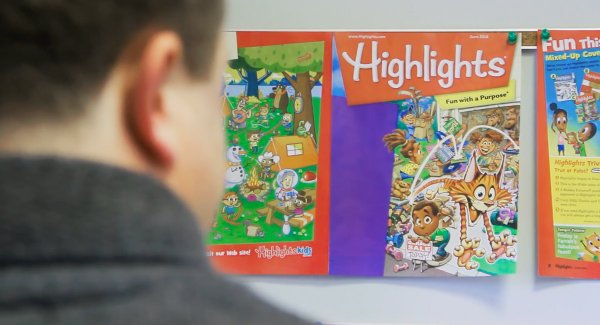
Soft as a plush toy and as edgy as the advertorial for “Highlights for Children” magazine it for all intents and purposes is, “44 Pages” captures the venerable children’s magazine as it prepares to put out its 70th anniversary issue back in the summer of 2016.

Tony Shaff’s dull, conflict-free behind-the-scenes look at the family-owned magazine still found in doctors and dentists’ offices across America, is seen through the lens of the magazine’s own motto — “Fun With Purpose.”

Colorful, with sparkling illustrations and artwork, puzzles, regular features such as the good choice-teaching “Goofus and Gallant” cartoon, features on crafts such as art and cooking, poetry by famous adults and kids who have submitted their work, fiction, a little science — “Highlights” is aimed at creating kids who are “kind” and “curious.

A parade of Honesdale, Pennsylvania editorial staff talk about the history of the magazine, which debuted in 1946,  and its ongoing mission — showing kids “how the world could be and should be.”

They are, editor Judy Burke smiles, “People who love kids, people who love to read.”

They spend a lot of time vetting the pieces for accuracy and “sensitivity,” publisher and heir Christine French Cully smiles.

Everybody smiles at “Highlights,” in the quaint, old small-town mansion that houses editorial, at the vast Columbus, Ohio business offices, where marketing and accounting and the new online version of the venerable publication is housed.

They smile as they speak, very quietly, of the “wholesomeness” and “goody-goody” labels they try to avoid, and the “bubble” they acknowledge they all live in. Redesigns and a new “Highlights” app to reach kids online don’t obscure the words the many employees avoid most assiduously — “conservative, old-fashioned, dated, fusty.”

Headquartered in tiny, rural Honesdale (population under 5,000), it’s a magazine setting the agenda for childhood in America and what kids should be, seemingly trapped in an America that hasn’t existed for 50 years.

The illustrations show black and brown faces, the published poems are always five by girls, five by boys and no picture of a child on a bike is without her wearing a helmet, no image of a family in a car fails to show the proper use of seat belts.

It has the feeling of CYA political correctness, tokenism and a fear of doing anything that will challenge anyone in the towns most like Honesdale, ages 6-12, or more exactly, the parents of their target audience.

The milieu, even editorial meetings, is “Mister Rogers” quiet and soft-spoken. No voice is raised, the endless tinkering and editing away the rough edges raises no ire — even with the contract workers doing a lot of the writing and rewriting, photographing and illustrating.

But avoiding issues of race, religion, environment, “evolution” and “controversy” in general cannot be easy. The occasional staff member glances over her shoulder and almost whispers when talking about everything they and their freelance writers, illustrators and others must dodge — violence, sex, guns, etc.

And looking at all these faces, you understand that they’re not just proving that publishing doesn’t have to be an urban phenomenon, with city sophistication. You see the good-faith effort made to make the magazine look like its readers.

It’s all the more amazing when you notice — as you must — that the entire enterprise is staffed by a sea of white, suburban women, hired from all over America — ages early 30s to late 60s. It’s a self-sustaining monochromatic matriarchy where, seemingly, If you’re not white and not a woman, you need not apply.

They pay all this lip service to children growing up in a very different world from the physical and metaphorical Mayberry this 44 pages-plus-cover/no advertising is still created in, while working in one of the most jarringly racially pure echo chambers in American media.

A trio of white men — art people and the science editor — have small roles and keep their voices down in what is otherwise a high-functioning matriarchy. The magazine, its earnest effort to promote sweetness and light and avoid ruffling any feathers — ANYwhere — reflects that — nothing to offend the sensibilities of little old ladies.

“44 Pages” shows its a jungle in there, a fallopian jungle.

The fact that it’s enduring in print in an era when dead tree publications are withering and dying underscores that they’re doing something right, or that doctors and dentists are slow to abandon subscriptions of a magazine that they believe keeps little kids occupied while waiting for their appointment.

In an age when men keeping women down is a running theme of the zeitgeist, especially in the media, here’s an exception that proves the rule. The descendants of educators turned publishers Garry and Caroline Myers are running  a civil, genteel and most feminine workplace trapped in 1955.

It doesn’t help to think too much about how they maintain this, the “psychological profiles” the staff alludes to having to pass before they join the whitest, most feminine institution this side of the Salt Lake City Garden Club, circa 1939.

There’s a reason media companies — save for Fox News — pursue “diversity” in editorial hiring. You’re limiting your connection to many of the people you’d like to reach when you all look alike, think alike and sound alike.

Filmmaker Schaff, whose documentary “Hotline” was about suicide phone banks, psychic call centers and the like, didn’t create “The September Issue” (about Vogue) here.

pages2.jpg

There’s zero conflict and zero effort by the filmmaker, off-camera, asking questions and prodding his interview subjects into interesting lines of questioning, to challenge the slow-to-change nature of “Highlights” and the culture that created it, depicting the world kids grow up in, their growing sophistication and Highlights as a bulwark against the real world.

There’s implied back-pattiing all around when “Highlights,” in the closing credits, is revealed to have shown an LGBQ family in its pages — in 2017 — decades after say, PBS Kids touched on it.

Shaff’s movie seems to be doing the loudest back-slapping of all.

There’s no addressing the monoculture this mag is created in or how that limits its scope. They bring in focus groups of kids to market research each issue before it hits the stands — little white kids from this not-that-diverse town that they publish it in.

I’d have appreciated even the (film’s) editorial suggestion of  how surprising it is that “Highlights” seems to cover itself in political correctness despite its reluctance to embrace the real world it now exists in. That would have been more interesting than this celluloid press release from “Highlights” corporate.

Whatever the stated higher purpose , however earnest the  apparent good intentions by all involved, Shaff was obligated — on behalf of the film audience — to question the official line pitched here. He just cheerleads, or more to the point, lets the staff cheerlead.

Is there no skeptic — academic, publishing, educator — to question the “Highlights” way, their numbers, their editorial slant? Look at America today, and ask yourself if “Highlights” has succeeded in its 70+ year mission of creating “kind” and “curious” kids. Ask yourself how a lily white enterprise like this might deserve a little credit where it doesn’t it.

Shaff has made a movie that skims the surface, like a “How Magazines are Made” video for kids that no kid will want to sit through and will keep few adults awake.

2stars1

MPAA Rating: TV-Y7

Cast: Judy Burke, Christine French Cully, Lisa Schnebly Heidinger

Credits:Directed by  Tony Shaff. A Gravitas/Netflix release.

Running time: 1:30

Posted in Reviews, previews, profiles and movie news | Comments Off on Netflixable? “44 Pages” plays like a mission statement for “Highlights” magazine