Movie Review: Pettyfer finds Gothic darkness on “Back Roads”

back1.jpg

Watching Alex Pettyfer play scenes in which he’s in psychotherapy in his directing debut, “Back Roads,” the temptation is overwhelming to put the actor himself on the couch.

With this film and his previous one, “The Strange Ones,” a dark, brooding same-sex “Lolita,” Pettyfer isn’t just reaching for the sexually daring and darker-than-dark. He’s torching his heart-throb image and making one question just what he sees in these roles, what makes him want to get these movies made, which his presence in the credit ensures.

“Back Roads” is a turgid Red State Gothic mystery melodrama — without meth, without Southern accents. Working poor lives are depicted in grim degrees of hopelessness, and an entire family bears the brutal burdens of abuse, disruption and abandonment.

Like “The Strange Ones,” it fascinates, repels and at times bores as the pot boils and the plot roils. At least Pettyfer and screenwriter Tawni O’Dell (adapting her novel) manage to hide their twists and deliver the occasional almost-shocking surprise.

“Back Roads” is framed within an interrogation. Harley Altmyer (Pettyfer) is  interrogated by the sheriff (Robert Patrick). “Why did you kill her?”

It’s the pre-cell-phone mid-’90s, and in the film’s one, long flashback, we see the miserable life that put Harley in that spot.

He’s a young man, barely out of his teens, wearing the weight of the world in his eyes and on his shoulders. He’s the guardian of three sisters, their sole provider. Teen sister Amber (Nicola Peltz of TV’s “Bates Motel”) has “started dating.”

“Define dating,” Harley acidly observes. She’s gone bottle blonde, dropping her Daisy Dukes for any boy who might rescue her from her home situation.

Younger teen Misty (Chiara Aurelia) is old enough to know what’s going on and on the verge of open rebellion herself. Only eight year old Jody (Hala Finley) seems savable, the only kid there with a prayer of a normal life.

Why? Mom’s in prison for killing Dad. And Dad abused them.

Harley meets the county social services therapist (June Carryl) in between shifts at the local supermarket. Every minute is a struggle, with Amber in a constant “You’re not the boss of me” rage, the house falling down around him and bills piling up.

He quakes at his burdens and glowers at his mother (Juliette Lewis, letting us see a woman in despairing collapse) as she tries to comfort Jody during a prison visit, and comes to a conclusion.

“You WANT to be here!”

He’s starting to wonder about what happened “back then,” beginning to piece it together. And that’s just another weight piled upon his shoulders.

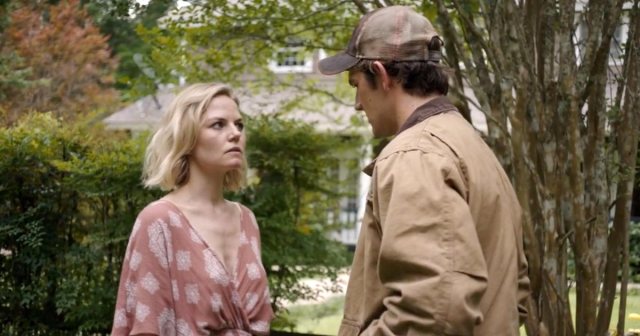
Something about his vulnerability appeals to the neighbor mom Callie (Jennifer Morrison of “How I Met Your Mother”) to a little girl Jody plays with. She chats with him at the supermarket, reaches out to him when he comes to pick up her sister.

They share an interest in the impressionists and a grinding loneliness and hunger. Married or not, she wants him and in the worst, animalistic and brutish way.

The movie’s melodramatic flourishes are many — one overwrought, contrived and extreme situation after another dropped into the stew until it all boils over.

The heat of Callie and Harley’s sexual congress is matched by the fury only two siblings can unleash on each other, Amber’s teen tantrums about what Harley isn’t able to do — provide for them, get her a car. She’s moving on and never looking back, she declares.

“You’ll be living down the road in a trailer, with five kids and no husband,” he spits back.

In the opening scene the sheriff talked about Harley’s rifle, and we see him and most everybody in his family show they know how to use it. That just adds to the dread.

“Back Roads” goes too far and on for too long as sick twist after sick twist shows up until you long for the “normal” of Mama June and Honey Boo Boo. What they were going for is a “Tobacco Road,” a sexualized/sensationalized riff on “Winter’s Bone” — no meth, just abuse, its ripple effects and the differing ways children respond to it.

As a director, Pettyfer shows little style. No, underlighting many of your scenes isn’t inspired. As an actor, he’s mastered brooding and seething and breaking down but nothing lighter.

Peltz makes a fine white trash fury and Lewis has aged into someone perfect for broken matriarch roles like this.

But whatever it wants to say about abuse, its mental, social and sexual impact on its victims, however “daring” it aims to be, “Back Roads” loses in its pursuit of the sordid.

And let’s hope Pettyfer, who has a supporting role in Steven Soderbergh’s “Panama Papers” thriller, “The Laundromat,” has gotten “sick and pervy” out of his system — at least for now.

1half-star

MPAA Rating: unrated, explicit sex, descriptions of violence and abuse

Cast: Alex Pettyfer, Jennifer Morrison, Nicola Peltz, Robert Patrick, Juliette Lewis

Credits: Directed by Alex Pettyfer, script by Tawni O’Dell, based on her novel. A Samuel Goldwyn release.

Running time:
Posted in Reviews, previews, profiles and movie news | Comments Off on Movie Review: Pettyfer finds Gothic darkness on “Back Roads”

Preview, Disney’s “The Lion King” in CGI

Impressive. But still seems like one of the most pointless remakes ever. July 19, James Earl Jones returns as the father of…“The Lion King.”

Posted in Reviews, previews, profiles and movie news | Comments Off on Preview, Disney’s “The Lion King” in CGI

Movie Review: “Write When You Get Work”

write2.png

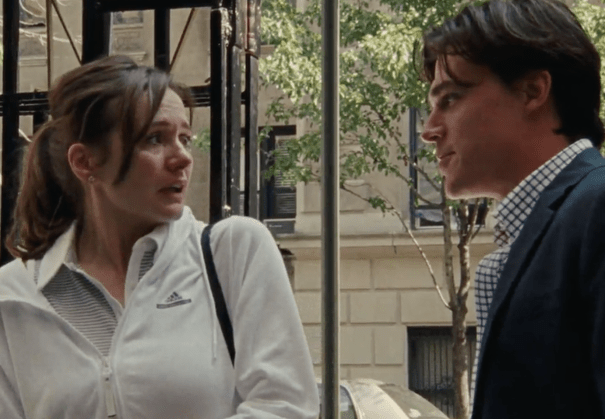
Finn Wittrock of “The Big Short,” “La La Land” and TV’s “American Horror Story,” makes a reasonably charming rogue with his hooks in the girl who got away in “Write When You Get Work,” an amusing-enough “long con”  comedy set among Long Island lowlifes transplanted to the Big City.

Pair him up with with Rachel Keller of TV’s “Fargo” and “Legion,” and make veteran character Brit Emily Mortimer (“Match Point,” “Shutter Island”) as the crook’s “mark” and you’ve got a caper picture that hides its cards and toys with our affections and gets away with it — more or less.

The opening credits show Ruth and Jonny as young lovers — sex on the beach, genuine passion, pregnancy test, Jonny slamming the door in Ruth’s face when she’s delivering the news.

Long Island, right?

“Nine years later” and Jonny’s still not wholly an adult. The petty theft and breaking and entering continues because his ability to hold a “straight” job is still a rite of passage he’s not mastered. Then a major figure in his life dies — his high school coach. Coach was important to Ruth, too. It’s just that they avoid each other at the funeral.

Ruth has straightened out her life, moved beyond Jonny. She’s interim admissions director at a posh girl’s school — Luscinia .

Jonny’s the last thing she needs in her life, as the school’s rich board of trustees and snobby school administrator (Jessica Hecht) already look down their noses at her. Jonny breaks into her flat.

“Could you leave me alone?”

“Those windows are an open invitation!”

And with every intrusive, probing question (he does this to EVERYbody), Jonny grows more determined to inject himself into her life and her work.

Ruth is alarmed. Of course he’s there looking for prey. That’s what predators do. He sees the parents of her students as pigeons and he keeps showing up at work, taking tours and ingratiating himself with the most vulnerable parent-pigeon at Luscinia — Nan (Mortimer).

Her husband’s a hedge fund hustler in trouble with the Feds. And she is in a panic, wanting to hide assets. Prospective Luscinia parent Jonny might be just the guy to help her “hide” cash and jewels, should the worst come to pass.

write3.jpg

Ruth’s suspicions about Jonny may be why she lets him charm/bully his way back into her life. Keep him close enough to figure out his angle. Or maybe she’s still smitten with him, after all the hurt, after all those years.

Of course it’s more complicated than that. Otherwise, she’d call the cops or stalk him and shoot him, right? A clue might be his joke on hearing what her job title is.

“Director of admissions, huh? What are you trying to make them admit?”

Jonny’s got his “boys,” the old gang is still together — a bodega clerk here, a side-hustle waiter or doorman there. Writer-director Stacy Cochran (the Winona Ryder ’90s vehicle “Boys” was a high water mark, as was the ’90s Diane Lane film “My New Gun”) never has an overt “assemble the gang” scene. “Write When You Get Work” is more subtle than that.

The Ruth/Jonny relationship has a simple “You’re still immature” vs. “You forgot who you are” conflict. He’s never outgrown pilfering, she’s “living (her) life with strangers.”

Mortimer makes Nan every entitled Monied Classes apologist, with her “You have no idea what the government DOES to people like us!” Can’t have “the mark” too sympathetic.

Wittrock plays the lighter side of vile, pushing us to root for Ruth even as we wonder about her secrets and wish she’d put up more of a fight. Jonny gets a job as a coat check guy in a club, and right off he’s stealing people’s coats. He’s a crook for life.

And Keller gives Ruth a just-beneath-the-surface street edge that suggests she’s not utterly in the dark about Jonny’s new con. She’s figuring it out, as are we. Her secrets make her subject to blackmail from all sides. How WILL she extract herself from Jonny’s snare?

The dialogue has a light sparkle to it, even as some of the situations seem needlessly contrived. But Cochran has conjured up a caper that’s just clever enough and characters just winning enough to hold our interest long enough to be surprised at the resolution to the puzzle that she conjures up.

Cochran’s gone years and years between feature film projects. “Write When You Get Work” makes one glad she wrote — and got work.

2half-star6

MPAA Rating: unrated

Cast: Finn Wittrock, Rachel Keller, Emily Mortimer

Credits:Written and directed by Stacy Cochran. An Abramorama release.

Running time: 1:39
Posted in Reviews, previews, profiles and movie news | Comments Off on Movie Review: “Write When You Get Work”

“Ralph Breaks” HOLIDAY BOX OFFICE, “Creed II” might reach $60, good enough for third place

ralph2

Hollywood tallies its box office take for Thanksgiving as a Wed-Sunday haul.

With most new releases actually opening Tuesday night. Except for “Robin Hood,” which had paid “sneak previews” Monday evening as well.

Basically, a whole week counts as a “weekend,” then. Yeah. Well.

I wasn’t nuts about “Ralph Breaks the Internet,” Disney’s repetitive sequel to “Wreck-It Ralph.” But it’s heading towards $100 million over five days, thanks to a huge $18 million haul Wed. Deadline.com is projecting a $94 million weekend, but as they habitually underestimate kids’ pictures, that should be a tad low. Overall, reviews for “Ralph” the sequel were good enough that they won’t hurt it at the box office.

“Fantastic Beasts: The Crimes of Grindelwald” is having a very good second weekend and a good (not as good as “Fantastic Beasts and Where to Find Them”) five-day, in the mid-$70s, which will allow it to hold second place this weekend.

A third crowd-please/ticket seller is “Creed II,” which I found to be a recycled drag. An $11 million Tuesday night/Wednesday points toward it hitting the high $50s, maybe $60 million when all the counting is done. “Creed” opened on a Thanksgiving weekend to $29 million, just a couple of years ago. “Brand” is everything, with audiences craving movie comfort food (the familiar, “I’ve already seen this and wouldn’t mind seeing it some more.”).

“The Grinch” will manage another $35-38 million over this holiday, “Bohemian Rhapsody” another $18-19.

“Robin Hood” opening basically Monday will help this piffle on a plate reach $18 million.

“Green Book” is doing a middling $6-7 million in platformed release. Oscar expectations will drive that one into the black, with any luck. I’ll be very disappointed in you if you skip this one. 


Posted in Reviews, previews, profiles and movie news | Comments Off on “Ralph Breaks” HOLIDAY BOX OFFICE, “Creed II” might reach $60, good enough for third place

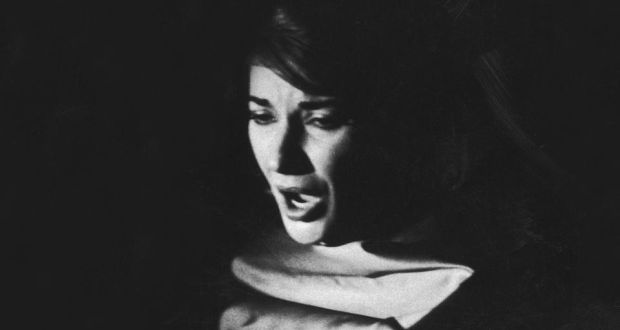
Documentary Review: “Maria by Callas” Gives Us the Diva’s Diva as She Saw Herself

callas

Fame can have a tipping point, that moment where reputation obscures and even subsumes the person behind it.

That certainly happened to Maria Callas, the diva’s diva, as notorious for her artistic temperament and most famous lover, and her outspokenness about both, as she was for her singing.

The Greek-American soprano was an exemplar of “bel canto” singing whose storied career was filled with live performances and studio recordings, most made before the technology that could allow her to be captured, in song, in her unadulterated digital glory.

Aficionados who glory in her art are fewer in number, and great sopranos have come along in the 40 years since her death who push her further into the recesses of legend.

“Maria by Callas” rescues from that “Well, she was great for her time” indifference.

Actor turned documentary director Tom Volf immersed himself in her in her letters and in the public film and video record, voluminous because she spent decades in the public eye, was never interview-shy and was hounded by the press almost everywhere she went, from the early 1950s until her death in the 1970s.

She was, she says in the most extensively quoted interview here, a 1960s talk with David Frost (of “Frost/Nixon”), always Maria, but “the Callas I have to live up to.”

Her posh pan-European accent, part affectation but mostly acquired from learning her art in Greece (she was born in New York) and performing in and living in Europe for most of her life, beautifully sets up the reminiscence that Volf’s film is.

This was an age when “high culture” wasn’t a dirty phrase, when people either knew the difference between great art and accomplished artists and junk culture and pop stars, or aspired to know. Callas became one of the most famous women of her time on the strength of her talent and training.

And when she felt, for reasons she explained and sound perfectly reasonable in her own words — the film is almost wholly limited to her words, her version of events — that she could not perform, could not honor a commitment or continue a performance (onsets of illness, etc.), she came under assault from the culture-covering press of the day.

Volf shows us long walk-and-talk interview — chases really – as Callas emerged from airplanes in those pre-jet, pre-jet bridge boarding gates. She smiled, even when she was firmly and politely insisting “I will answer no questions at this time,” badgered by reporters of many nationalities and of every medium of the day, captured on film as strode, without bodyguards, to a waiting limo.

The genteel interview style of her era is exemplified by Edward R. Murrow’s celebrity interview show, “See it Now.” But even Frost and near the end of Callas’s life, Barbara Walters, as they approached touchier subject matter, knew how to question someone with respect, even when asking about her years-long separation (divorce not being legal in the Catholic theocracy of Italy) from her husband and her relationship with shipping magnate Aristotle Onassis.

Questioned in English or French, Callas didn’t dodge the queries, occasionally allowing a faint flash of temper (her feud with Metropolitan Opera director Rudolph Bing could set her off), often returning to the story of how her mother and later others “forced” her into singing, how she felt true happiness was only available to women who married and had children and how her “art” and her “destiny” precluded that.

She made her glittering life seem tragic, even as she denied her own right to feel sorry for herself thanks to everything her gift and her “destiny” gave her.

No wonder she became a gay icon. Any doubt about that and her place on a pedestal that has included Judy, Barbra and others, is wiped away by on-the-street 1960s interviews with effeminate young men standing in line to grab tickets to a performance at the Met.

But what also distinguishes Volf’s fine film (he wrote a book on her as he was researching the movie) is the way he treats her on-stage life. There’s plenty of grainy footage — home movie quality — of her early stardom, some of it surely captured during dress rehearsals –underscored with hissing tape recordings of Callas in “Norma” “Tosca” or “Carmen.”

And then there are her command performances, concerts without the costumes but with all the theatricality of her onstage presence. They are jaw-dropping marvels, and Volf lets each songs play out in its entirety. No studio gimmicks, no microphone to amplify her –just Callas, perfect tone, perfect pitch, absolute control, making that stunning, almost unworldly sound with just her lungs and voice, and reaching the back row as she did.

It seems inhuman until you hear and see her playfully vamp through the “Habanera” (“L’ amour est un oiseau rebelle”) from Bizet’s “Carmen.”

And at the end, no bows, the rare kiss blown at a particularly enthusiastic audience, she was “embarrassed,” she suggests,whenever adored.

Volf breaks no real new ground on her biography, much chewed-over by others — moving to Greece on the eve of World War II to receive her training, marrying an older Italian industrialist who craved a share of her fame, taking up with Onassis who perhaps had the same designs.

She was so near-sighted that she couldn’t see much while onstage, and wasn’t so much born to bel canto as trained into her by a Spanish singer and teacher in Greece — Elvira de Hidalgo (an old TV interview with her is included).

It’s the product of that training that is the heart of “Maria by Callas,” that voice rescued from historical notoriety, that performing style celebrated and that woman, cultivated and refined, brought back from the dead and the dismissed. With her own words and her own singing, Volf invites us to savor Callas as she saw herself, and lets the evidence of that once-in-an-epoch voice back her up.

3half-star

MPAA Rating: PG for mild thematic elements, some smoking and brief language

Cast: Maria Callas, David Frost, Edward R. Murrow

Credits:Directed by Tom Volf. A Sony Pictures Classics release.

Running time: 1:53

Posted in Reviews, previews, profiles and movie news | 2 Comments

Movie Review: Worst. “Robin Hood.” Ever.

Robin1.jpg

What balderdash. And not the fun kind, either.

A “Robin Hood” where The Sheriff of Nottingham and Guy of Gisborne are TWO different characters. A “Robin Hood” with a Friar Tuck who is not jolly or plump with dietary corruption. A “Robin Hood” with no “Merry Men,” no “Little John,” where Sherwood Forest is an afterthought — at best.

Turning the original English rebel into an icon fighting the global wealth oligarchy, “the people” rallying around him like Antifa protesters (Medieval Molotov Cocktails at the ready), the venal One Percent of East and West in collusion against the rest of us? That’s something I could get behind, or could have been.

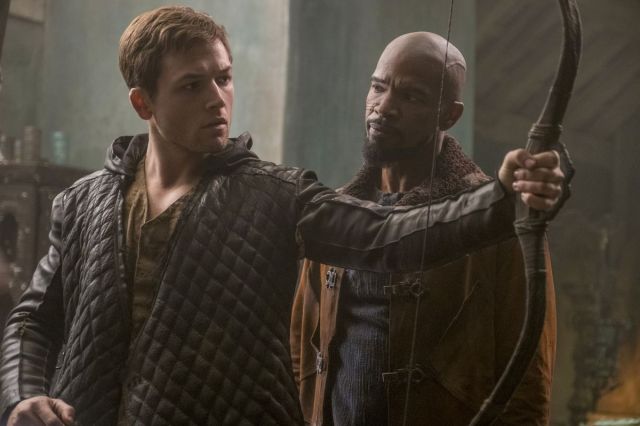
Line up two Oscar winners (Jamie Foxx, F. Murray Abraham) to class up the cast, hire EveryBADMan Ben Mendelsohn as the heavy — I’m OK with that, too.

But so much just feels and plays wrong, tin-eared and foolish. Remember these screenwriters — Ben Chandler and David James Kelly. There’s a reason they have no other credits.

“Forget history,” they have their hero/narrator urge us in the opening. Because they have. This is a Robin out of his own time, shoehorned into ours, and there’s a lot that’s bloody and nothing that’s merry about that.

Their anachronistic, almost entirely humorless and utterly joyless “Prince of Thieves” has pretty much nothing to recommend it.

I should name the costumer who skimped by telling Mendelsohn to swipe clothes from sci-fi film sets he’s been on, who dresses “The Hood” (It’s what they call him back in Ole England) in Ninja-wear. Every armored soldier, every Crusader and Saracen/Moor fighting in the Near East, every Lady of Court, every peasant looks…wrong.

The machine-gun crossbows, Nazi leather overcoats and high explosives make one long for the historical accuracy of “A Knight’s Tale.”

The plot is such a head-scratcher you need to stop head-scratching once you draw blood.

And the callow leads — Taron Egerton and Eve Hewson — give credence to the truism that “Young love is wasted on the young.”

Robin and Marian have a pre-Crusades relationship which Robin of Locksley’s “Draft Notice” interrupts. Years in Arabia later, he leads his men into an ambush, and when they survive it and turn the tide of the Moors and other Muslims, Robin tries to prevent the mass executions that were the by product of Holy War.

Robin is wounded, but bonds to a fierce Moorish warrior (Foxx, who always gives fair value) with an unpronounceable name.

“Just call me John, son of Omar.”

Robin’s return to Nottingham lets these two reconnect. Marian? She’s taken up with Irish labor organizer Will (Jamie Dornan). Just as well, as John the Moor is hellbent on breaking the “rich guys tax the rest of us and send us off to die in their wars” status quo. He needs Robin’s help.

The film gives away its Britishness by including the Catholic Church in that unholy alliance keeping the poor in their place.

“Fear is the greatest weapon in God’s arsenal,” the cynical cardinal (F. Murray Abraham) hisses.

“We want their backs bent and their heads bowed,” growls his underling, the Arch Deacon (Ian Peck).

Hey, remember your Marx — Karl, not Groucho — “Religion is the opiate of the masses.”

Robin and John will attack the “bank of the Crusades,” Nottingham, by stealing the Sheriff’s treasury and emptying the church’s collection plates.

Robin will become The Scarlet Pimpernel, playing the loyal royalist by day, donning “the hood” by night.

The Oppressed People take to him and start nailing hand-stitched leather cowls (hoods) to walls in tribute. That had to run into some serious money.

The Friar (Tim Minchin, almost funny) is trapped in the middle — trying to placate the Sheriff, inspire Will (Scarlet) and Marian, and keep Robin’s secret as he pilfers from the prosperous and flings cash at the poor.

Mendelsohn has little to chew on here. He is the dullest sheriff in living movie memory, and I say that as a Ben M. fan. Hewson is beguiling in her introductory scene (a thief covered in a veil herself) and makes no impression afterward.

Egerton, I fear, will never get a decent review from me. “Kingsman,” “Bad Night at the El Royale,” the list goes on…and grows.

Abraham relishes roles of lip-smacking villainy, and Foxx is so good you wish he was in a better movie.

But a director (Otto Bathurst) with “Peaky Blinders/Black Mirror” TV credits, and two hacks who think machine-gun crossbows, Molotov Cocktails and the like are what the Middle Ages REALLY needed wouldn’t be working on it with him.

1star6

MPAA Rating: PG-13 for extended sequences of violence and action, and some suggestive references

Cast: Taron Egerton, Jamie Foxx, Ben Mendelsohn, Eve Hewson, Jamie Dornan, F. Murray Abraham

Credits:Directed by Otto Bathurst, script by Ben Chandler, David James Kelly. A Summit release.

Running time: 1:56

Posted in Reviews, previews, profiles and movie news | Comments Off on Movie Review: Worst. “Robin Hood.” Ever.

Documentary Review: HBO’s “The Truth About Killer Robots”

rob1

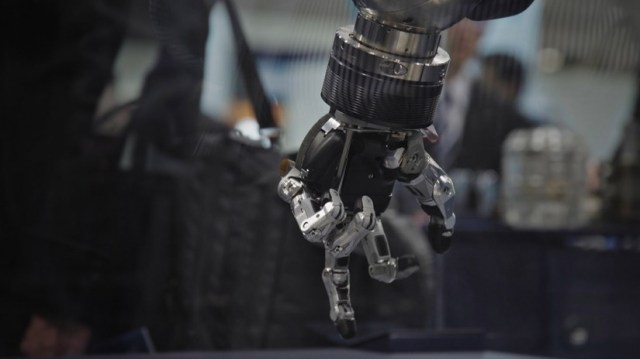
The future we feared is already here in Maxim Pozdorovkin‘s “The Truth About Killer Robots,” an HBO documentary that could have been labeled “science fiction” just a couple of years ago.

The director of “Our New President” and “Pussy Riot: A Punk Prayer” serves up a dry and chilling film of the present, about the robots already killing us and the “efficiency” capitalism that is ensuring that machines displace us.

Death by robot is not just for “Terminator” movies.

Pozdorovkin takes us to Baunatal, Germany, where in 2015 an assembly line robot accidentally killed a 21 year old worker who has not been identified to the public to this day.

We meet Joshua Brown via videos he recorded of himself, letting his self-driving (autonomous) Tesla chauffeur him around, and visit Williston, Florida — where his Tesla drove him under a semi and killed him in 2016.

And Pozdorovkin ventures to China and Japan, and back to the U.S. to show us the factories, trade shows, highways and pizza parlors where robots are taking jobs formerly done by humans, letting us meet the labor force — assembly line workers, promotional hostesses and truck drivers — being replaced by machines.

He breaks his film into chapters — I: Manufacturing, II: Service Sector and III Final Displacement. Using archival interviews of the late futurist and science fiction writer Isaac Asimov, he revisits Asimov’s Laws of Robotics (“A robot may not injure a human being…”), shows how they still drive the idea of “robotic ethics” today, and suggests that maybe they’re being ignored by those inserting these gadgets into our lives.

A clever touch — providing the film with an on camera android narrator who comments on our tech (cell phone, etc.) obsession and notes “You gave us your undivided attention,” and declares, in the PAST tense mind you, that “your advantage in precision was…temporary.”

That last bit comes from the infamous Foxconn cell phone assembly plant in China, which is leading the way in capitalism’s heedless race to first draw its workforce into cities, then displace that work force — by the millions — with machines.

Zume Pizza is a start-up that has machines mastering the art of making and cooking a pizza headed towards that blessed day when “Get the door, it’s Domino’s” has you taking delivery from a machine, too.

Academics and ethicists such as Carnegie Mellon’s Illah Nourbakhsh warn of a world where “every taxi driver in America” is unemployed — overnight (Uber’s self-driving car goal). A law student tests the boundaries of how much of that profession, from analyzing documents to composing briefs, building arguments etc., can be done by machine.

rob2.jpg

Pozdorovkin hints at Western prejudice when he has Japanese (Hiroshi Ishiguro) and Chinese scientists and entrepreneurs pooh-pooh concerns about this changing relationship with machines and interaction with them. We don’t need our memories jogged about what part of the world invented sex dolls.

But “Killer Robots” sets up the debates of tomorrow we have to start having today, the “basic income” idea some propose as a means of dealing with entire classes of the workforce suddenly rendered obsolete by machines.

It impresses upon the viewer the urgency of revisiting Asimov’s Laws of Robotics, with the machine driven “ethics” of deciding who lives and who dies in an unavoidable crash already upon us.

Documentaries can be entertaining and advocational at the same time, and while “The Truth About Killer Robots” (premiering Nov, 26) is more the latter — laying out a scary situation, documenting the ways it is a threat, sounding the alarm without pitching a solution — it draws you in and makes its case for being a movie you need to see, even if it scares you.

3stars2

MPAA Rating: unrated

Cast: Hiroshi Ishiguro, Illah Nourbakhsh, Li Zheng, Leon Gonzalez

Credits:Directed by Maxim Pozdorovkin. A HBO release.

Running time: 1:20

Posted in Reviews, previews, profiles and movie news | Comments Off on Documentary Review: HBO’s “The Truth About Killer Robots”

Preview, Gerard Butler wrestles with a Gaelic Mystery, “The Vanishing”

Shot in Scotland, co-starring Peter Mullen, “The Vanishing” is based on “The Flannan Isle Mystery,” a real event involving lighthouse keepers who went missing at the beginning of the 20th century.

This January release has a hint of “Picnic at Hanging Rock” about it, and the firm hope that we finally have a Gerard Butler movie that we can safely LOOK FORWARD to.

UPDATED — (Roger Moore’s review of “The Vanishing” is here.) 


Posted in Reviews, previews, profiles and movie news | Comments Off on Preview, Gerard Butler wrestles with a Gaelic Mystery, “The Vanishing”

Movie Review: “Creed II,” Originality Zero?

creed3

“You can feel the excitement in this arena tonight,” the boxing broadcaster Jim Lampley lies in introducing the climactic fight finale of “Creed II.”

And because that’s not enough, he launches into “It feels Shakespearean.”

And while one is sure that co-screenwriter Sylvester Stallone secretly believes his “Rocky” saga deserves the comparison, the relentless tedium of the preceding 80 minutes or so drive a stake through that delusion.

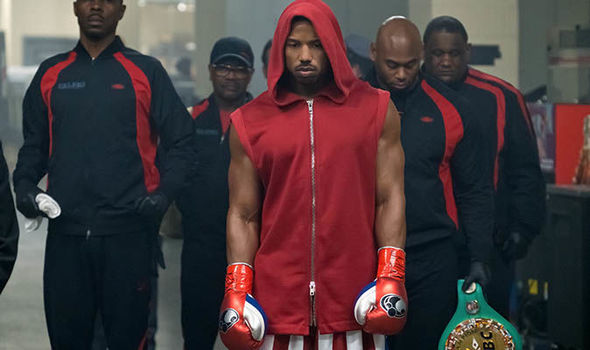
There’s barely an original thought or novel theme in “Creed II,” a movie that wrings more bloody-nose money from the original “Rocky” sequels in recycling characters, themes, fights and situations and putting Michael B. Jordan and Tessa Thompson instead of Stallone and Talia Shire in them this time.

It’s a wearying two hours+ of the same old story, freshened up with a whole fathers-sons-legacy subtext and story beats so over-familiar it plays like bland comfort food– nothing here to challenge the viewer’s digestive tract or mental faculties.

“Creed” was a blockbuster with awards season buzz a couple of years back, and I frankly was mystified. It’s just “Rocky” warmed over, an African American remake of the classic “underdog” story that never — for one millisecond — lets us feel the hero is an underdog.

“Fruitvale Station” director Ryan Coogler delivered a derivative, generic and yes, slick as all get out crowd pleaser, “Rocky” with the grit and rough edges smoothed out. The slickness extended to the cast. No hard-scrabble mug struggling to make it, but the offspring of a rich and famous boxer — two good looking parents. Hell, they named the kid “Adonis,” for Pete’s sake.

No shy wallflower of a girlfriend, either. Tessa Thompson, a terrific actress, is a beauty of the “runway ready/cover girl” variety. “Ebony” certainly thought so, and they aren’t alone.

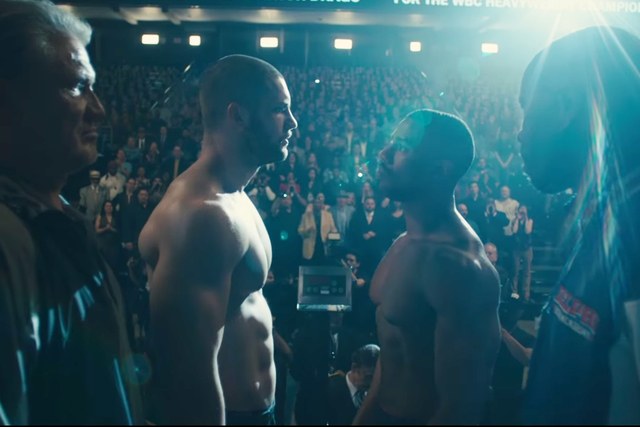
“Creed II” is “Rocky IV” without the Cold War politics, resurrecting Ivan Drago (Dolph Lundgren), the boxer who killed Adonis Creed’s daddy, Apollo. The gimmick, the giant Ivan and Ice Queen ex-wife (Brigitte Nielsen) spawned another Man Mountain Russian. And Viktor Drago (Florian Munteanu) is the biggest threat to newly-crowned champ Adonis, and a reminder of the way his father died in a ring throw-weight mismatch back in 1985.

creed4.jpg

There’s a new director on board, Steve Caple Jr., and he renders the obligatory hype-buildup to the fights bland. Training montages we’ve seen scores of times, almost all of them better than the ones depicted here. Bit players as promoters, trainers, etc., barely register.

The fights are the usual “Rocky” riot of haymakers, the soapy subtexts — pregnancy, nearly-deaf Bianca’s music career, Adonis losing his nerve after a savage beating, Rocky Balboa visiting Adrian’s grave, Adonis visiting his father’s and Phylicia Rashad (as Mrs. Creed, the Mother who Knows a Pregnant Bianca when she sees one) stealing a scene or two because nobody else seems to want possession of them — of only middling interest.

Thompson must be reading her “It Girl” press clippings, because she’s barely present here. She’s been better in literally every other film or TV show I’ve seen her in. They held her interest with a couple of musical performance moments. Jordan loses some of the Young Creed’s Angry Young Man edge. Not all of it. Stallone is just set dressing delivering banalities about the ring being “the loneliest place in the world.”

I liked “Rocky,” but I never developed the undying devotion to it that much of America did upon release, and over the years of sequels that followed. Similarly, I found “Creed” more or less watchable, but thought it a decent genre picture buried under hype and over-the-top praise.

But one thing you can still say about the first three “Rocky” pictures is that Stallone made the character evolve and gave him real pitfalls to face — wealth and fame sapping an athlete’s hunger, problems of working class poverty replaced by the problems of affluence.

Jordan doesn’t have that luxury here, with Stallone just cutting and pasting chunks of the earlier movies into each new script and leaving out the heart. The best line is the elder Drago using his family problems to motivate his basically motherless son.

“He’s why She Left!”

But the talented leads here have options, talent that points to careers that will take them places — different places. If they’re trapped by more mediocre “Creed” sequels, that’ll be on them.

1half-star

MPAA Rating: PG-13 for sports action violence, language, and a scene of sensuality

Cast:Michael B. Jordan, Sylvester Stallone, Tessa Thompson, Phylicia Rashad, Dolph Lundren, Florian Munteanu, Wood Harris

Credits:Directed by Steven Caple Jr., script by Sylvester Stallone and Juel Taylor . An MGM/Warners-New Line release.

Running time: 2:10

Posted in Reviews, previews, profiles and movie news | 8 Comments

Next Screening? “Creed II”

I liked — but failed to love, adore, embrace or foolishly trumpet “Creed” as “an Oscar contender.” Might be why I’m only getting a screening of “Creed II” the night before it opens.

So that put me in the minority of critics reviewing it. Not a wholehearted pan, but a “Rocky” reboot with MUCH BETTER LOOKING stars and zero and I mean ZERO street grit, poverty?

Meh. Not overwhelmed with the “long take” intro to the Big Fight shot, not thrilled with the boxing stuff in general in the first film.

The sequel has a different director, Steven Caple Jr. “The Land” is his indie skateboarding drama that served as a calling card for landing this gig.

Will it be better, or a par, or a chance for fawning critics to walk back their pants-wetting over “Creed?” We shall see.

Posted in Reviews, previews, profiles and movie news | Comments Off on Next Screening? “Creed II”