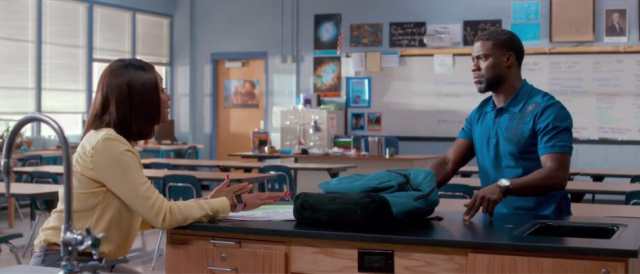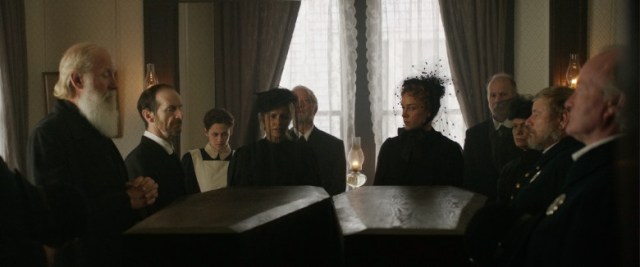
Oh, I am DYING to see this one. Probably need to get around to repenting before I do, come to think of it.
“Hail Satan?” opens in limited release April 19.
Oh, I am DYING to see this one. Probably need to get around to repenting before I do, come to think of it.
“Hail Satan?” opens in limited release April 19.

This might seem an odd moment to be releasing a documentary about the meteoric rise of freshwoman U.S. Representative Ilhan Omar from Minnesota’s Fifth Congressional District.
Forget the fact that the almost-worshipful “Time for Ilhan” was directed by Norah Shapiro. Because the Somali-American Muslim, a groundbreaking politician already, has been outed as an anti-Semite. Right?
I mean, Trump says it. And Fox News. So it must be true.
But Shapiro’s film puts a human face on a woman demonized by the far right and criticized by those reluctant to declare that all Israel — save for its Palestinian non-citizens — walks on water, even in her own party.
We meet her in “Time for Ilhan” braiding her daughter’s hair.
“My mom is PRESIDENT!” the kid says. The mother of three doesn’t so much correct her as want to know how she arrived at that conclusion.
“You have to work hard. And you have to do pushups like boys!”
And there it is.
“Time for Ilhan” is mostly about Omar’s scrappy 2016 race for the Minnesota State House, a black Muslim Somali-American running for a “safe” Democratic seat in the most liberal district in the most liberal corner of Minnesota (Minneapolis).
As such, it is both dated and revelatory. We see the community organizer, most active in the city’s Somali-American community.
In late 2015, she decided that those “voices in my head telling me I can’t” were wrong. “A mother, black, a Muslim woman and a new immigrant” could and should run for a state seat held by the same woman since 1972.
Phyllis Kahn, the longtime representative of a district that has seen a large influx of immigrants added to an electorate that also included a sea of college students, seemed, on a superficial level — “out of touch.”
We see her speaking before the legislature on behalf of a park allocation, for instance. Older, white, more socially conservative.
Omar saw a woman being “comfortable with constituents who are consistently unhappy” as a reason for taking her on in State House District 60B. And we see an entrenched politician letting the brash newcomer get under her skin.
Shapiro’s film documents the endless canvassing, the grass roots democracy of caucuses, a district convention, begging for votes, debating her opponents in the primary (a solidly Democratic district) and leaning on the Somali-American man, Mohammad Noor, who had come close to unseating Kahn one election cycle earlier.
We see the woman who would go on to become the first-ever Somali-American member of Congress inspire college kids (student debt is one of her cornerstone issues), women and Somali women in particular to take control of the race.
But we’re also treated to the ways the deck is stacked against relying on those constituencies. With caucuses running into business hours, only older, activist white retirees are able — most of the time — to stay the course and hold on.
Omar jokes about the button she invented, “I wear a Hijab. I’m a feminist. Deal with It.”
We hear from her sweet-natured husband Ahmed, who allows that “She is the boss around here.”
And we hear about her personal story, a motherless child of the Somali civil war, four years in a refugee camp, allowed into America, but NOT the America of beaches, palm trees, skyscrapers and movie stars — Minnesota.

As Shapiro’s film sums up Omar’s follow-up election, her move to Congress as part of 2018’s “Blue Tsunami,” in just minutes, along with the firestorm of criticism — much of it made up, some of it true but not-quite-messy-enough to warrant describing as “skeletons in her closet,” we’re left with an incomplete picture, considering the headlines she’s generating for her criticism of the Israeli lobby AIPAC.
Is she an Anti-Semite? Might she hold the views her fiercest, most unscrupulous foes ascribe to her?
Probably not. But Israel and its politics and policies toward the Palestinians within its borders are a classic “third rail” in American politics. You don’t criticize Israel without withering pushback.
And seeing her reaction to the first “scandals” attached to her by lying rumor mongers, you do get the sense of how scary being a lightning rod can be and how ill-equipped anybody would be to have her or his entire life dissected, discussed and exaggerated.
She’s almost certainly sticking her foot in it, or at least seems wholly capable of that.
The portrait that emerges in Shapiro’s brisk, revealing (but not all-access) film is of an inspiring figure, a classic American immigrant underdog making good and making her mark in the Melting Pot.
The ugly stuff? Worth looking into, and worth considering the source, too.

MPAA Rating: unrated
Cast: U.S. Rep. Ilhan Omar
Credits: Directed by Norah Shapiro. A Flying Pieces release.
Running time: 1:29

Funny thing about that Cockney bloke, Maurice Micklewhite, aka Michael Caine.
The raconteur you’ve seen on TV chat shows for half a century is pretty much the fellow you get on the printed page. He’s a polished storyteller, great with an anecdote, something you pick up on in his three memoirs, “What’s It All About?”, “The Elephant to Hollywood” and his latest — “Blowing the Bloody Doors Off,” in which he relates “lessons in life.”
“Never do a dangerous stunt on the last day of a picture,” he says. And then explains.
In chapters titled “It doesn’t matter where you start” and “Getting Old and Staying Young,” “Being a Star” and “Don’t Put Yourself above anyone Else” and “Being Decent,” he tells funny little stories — the more well-worn the better — to illustrate an approach to life that’s won him fame, riches and Oscars.
The acting tips, scattered throughout the book, are little nuggets of pure platinum. Actors love adding little “bits of business,” fidgets, mannerisms, tics. Think of James Dean in most scenes, nervous energy captured by fiddly, twitchy performances.
Caine says that once you know how stuff like that drives the editor mad, you eliminate it. Acting opposite the Emperor of Upstaging, Lord Olivier, cemented this view.
“You will usually need to repeat any sequence at least three times: once for a long or master shot, once for the medium shot and once for a closeup. If you fiddle around in the long shot you will have to be able to repeat that fiddle EXACTLY (emphasis added) in every shot — or the long shot will have to be shot again.”
Help the crew help you, in other words. Warn the sound tech if you’re adding a shout at the end of a few lines delivered at a whisper, etc.
John Huston helped him “find” his character in “The Man Who Would be King” with the only direction he got from him. “You can talk faster. He’s an honest man.”
How’d he get his (dreadful) Southern accent in “Hurry Sundown?” Got a tip from Vivien Leigh on the night John Gielgud introduced them in the mid-60s. Say “Four door Ford” over and again, she said. “Foah-doah-Fohd.” Yeah. That happened.
He talks about movies, favorite scenes, “little darlings,” edited out — stinkers. He’s got a long memory for publications that put out “The Ten Worst Michael Caine Movies” and the like, and a longer memory for every warm moment. Even in his advanced years (he turns 86 March 14), he remembers little kindnesses, the lessons his working poor (gambler/drinker dad, plucky mum) imparted, in words or by example.
“Retiring” to Miami in his early 60s, being told to “reinvent yourself as a movie actor,” not a movie star, by Jack Nicholson, what he did with the money from “Jaws 3D” and how he regards film failures — pithy pronouncements delivered with modesty and the confidence of a man who accomplished much, earned much, and got smarter in the process.
“I may not get the girl, but I’m still getting the parts.”
And stayed married to Shakira a very very long time. That’s part of “staying grounded.” That, and the 50 year old cabbie who says, “My grandfather loved you! He saw all your films.”
“Blowing the Bloody Doors Off” has memories his favorites among his “best” films — “The Quiet Man,” “Alfie,” “Sleuth,” “Educating Rita.” They’re slim anecdotes, mostly, and make you wish the book was indexed so you could get a taste for what makes him Christopher Nolan’s good luck charm (he was even in “Dunkirk,” his second shot at playing a WWII Spitfire pilot. I was the first to report that cameo.). His horse “and I did not see eye to eye on ‘Zulu'” which often ended with Caine on his keister, sitting in mud.
He tells stories about George Harrison singing playing “Leaning on a Lamp Post” and more tellingly — “When I’m Cleaning Windows” (a working class classic of taking pride in one’s work) on a ukulele in his living room, on advice about not wearing “suede shoes” when you become a star from John Wayne, upon Caine’s arrival in Hollywood (has to do with what happens when a fan recognizes you at a public urinal) and on his long friendship with the likes of Quincy Jones (they share a birthday, and have shared a joint party celebrating their special day, on occasion) Sean Connery and especially, Connery’s successor as James Bond — Roger Moore.
Caine has a perfect memory for every person who ever encouraged him, who ever tipped him that “You are going to be a star.” Moore, who arrived at that point earlier via “The Saint,” was one of those.
I’ve interviewed Caine several times over the years, and I am sure my name gave me an “in” with making those happen. Every conversation — in person or on the phone, began with gales of Michael Caine laughter on hearing my name — again.
He was full of Roger Moore (as my friends like to call him, “The REAL Roger Moore”) anecdotes, and as unfailingly generous in talking about him as he is about most everybody he describes in his latest book. I’ve reviewed other Caine memoirs, and his gentility and discretion are what you remember, time and again. He won’t “name names” about the biggest jerk/drunk/diva/heel he ever worked with. Might make a mention, won’t burn them, even if they’re dead. OK, director Norman Wisdom (“The Bulldog Breed”) is the exception — “What a conceited, nasty man.” And Hitchcock shunned him until the day he died for turning down “Frenzy.”
But I had one Roger Moore anecdote for Mr. Caine, which we always finish the chat with. Moore came to Orlando as part of his UNICEF Goodwill Ambassador work — public speeches in which his pay went to Audrey Hepburn’s favorite UN charity.
Moore opened his speech to an amusement park suppliers’ convention about how he and Caine were pals, and how they started out together with similar backgrounds, identical accents etc.
“Back then, he was Maurice Micklewhite,” Moore began the joke, “and I was Roger Moore. He changed his name and kept his accent. I kept my name and changed my accent. Michael Caine went on to fame and two Academy Awards. And I,” Moore pauses a beat for comic effect, “stand here before you today.”
Cracks me up every time I think about it. And it has cracked Michael Caine up a few times, too.
That easy laugh and sentimental smile run all the way through “Blowing the Bloody Doors Off” especially in the laugh out loud moments, mostly remembered at Caine’s expense.
There aren’t a lot of stars that are genuinely charming enough that you can say “What you see is what you get.” Caine is one of the last of those. And that goes for his memoirs, too.
“Blowing the Bloody Doors Off: And Other Lessons in Life.” By Michael Caine. 274 pages. Hachette Books.
Liberated and liberating, “Captain Marvel” swoops onto the screen with baggage, expectations and a comic book bragging rights agenda.
It plays like an extension of that age old “Anything you can do, I can do better” Marvel/DC publishing grudge match, parked on the big screen. You’ve got “Wonder Woman?” Here’s “Captain Marvel.”
The films share female empowerment messaging, a Men Can’t Keep Me Down ethos, stars with comparable charisma and a sense of fun. Oscar winner Brie Larson’s engaging turn in the superhero saddle has a generous dose of “The Marvel Touch” — flippant self-awareness, a tendency to hit the jokes HARD and effects that push the CGI envelope.
Jude Law and Ben Mendelsohn provide the requisite Brit Mentor/Brit Heavy presence.
The story? Same old comic book righteous alien come to save us/war between aliens brought home to Earth stuff, filtered through the Avengers universe, leavened with lots of 1995 pop culture references and gags.
By the time Vers, of the planet Kree’s “race of noble warrior heroes” kicks butt and cleans house in a Nine Inch Nails t-shirt, choreographed to No Doubt’s “I’m Just a Girl,” the only proper viewer response is, “What TOOK you so long?”
As on-the-nose as it seems, as much as it drags through the middle acts, as often as Larson gives us the Badass Smirk through hair flopping over one eye, the just-over-two-hour film rarely stops in its tracks.
The twists in the plot are more feints than shocks, but pay attention to the double entendres, the several references to “The Right Stuff” and “Raiders of the Lost Ark.”
Watch the way Larson sprints. She’s Marion Ravenwood/Karen Allen redux — plucky, feminine and ungainly in ways no personal trainer could pound out of her.
Vers (Larson) wakes from a dream, the shattering end of a battle she lost. The blood is blue and the memory faint. Fortunately, as a member of the Kree, her deity — “The Supreme Intelligence” — is there to reassure her that she’ll figure this out.
As Ms. “Supreme” is played by Oscar winner Annette Bening (every Kree sees someone they “most admire” when they’re talking to God), we’re inclined to take her at her word.
Vers trains with her mentor (Law) who lectures that her sarcasm won’t take her far — “Humor is a distraction!” — and they set off with a team of warriors on an extraction mission. They’re to rescue a spy from the clutches of the green-blooded lizard shape-shifters, the Skrull.
The boss notes that “This is the perfect spot for an ambush,” so of course, that is exactly what happens.
And that’s how Vers ends up stranded on Earth, crashing into a Blockbuster video in the middle of the night in the middle of 1995.
Radio Shack jokes, Altavista dial-up Internet service gags, “grunge” and Garbage (“I’m Only Happy When it Rains”) on the jukebox, and damned if Vers doesn’t start to piece together a past that connects her with Planet C-53, aka “Earth.”
Perfect time for Nick Fury (Samuel L. Jackson, looking 30+ years younger) and this new guy, Coulson (Clark Gregg, even younger) to show up with some “questions.” It’s an even better time, it turns out, for the Skrull who were interrogating the captured Vers to wade up on a beach.
Their leader, Talos (Mendelsohn) insists that “She knows more than she knows” and that he’ll help them find whatever it is that will give them the edge in this war with the Kree.
As the S.H.I.E.L.D. guys try to follow “Blockbuster Girl,” whose uniform looks as if “she’s dressed for laser tag,” the Skrull shape-shift their way into that pursuit and the stage is set for the deal to go down.
You’ve got to give it up for the co-writers/directors Anna Boden and Ryan Fleck for wrestling the most complex and copyright-tetchy history of any comic book superhero into something manageable, if a bit ungainly and heavy-handed.
An ex-Air Force pilot (Lashana Lynch) who has history with Vers shares in the slapbacks at male privilege packed into the story. And EveryVillain Mendelsohn gets to show off his comic chops to an almost nonsensical degree. Talos is impressed, for instance, with Vers’ lightning-bolt fists. But you do have to wonder how much “Friends” he’s been watching in his corner of the 1995 Universe.
“Miss Jazz Hands” he calls her, among many other colloquialisms and slips of slang.
Jackson has reached the “Let’s make fun of every ‘one bad mutha’ this guy has played'” stage of his career. He doesn’t have a single serious scene in this movie, which never takes itself seriously. Fury has a weakness for pussy cats which we’ve never known. Until now.
Larson’s dead-weight appearance in “Skull Island” gave me doubts about whether she’d have “The Marvel Touch.” She’s no light comedienne, but she gives the film’s quiet scenes a nice gravitas even if she hits her punch-lines too hard and requires too many close-ups to squeeze in a smirking smile, hair blowing in the Deep Space breeze.
Gemma Chan, Lee Pace and the great Djimon Hounsou have barely enough to do in supporting roles to justify the staggering amount of makeup and costuming Marvel put them through.
Boden and Fleck, whose indie hit, “Half Nelson,” came over a decade ago, find laughs in the simplest places — even if they land on the raised eyebrow, double-takes and shrugs (when lizard-faced alien “science guys” do it, it’s hilarious) with both feet.
They’ve made a cute comic book movie, amusing but forgettable, probably not as culture-shifting as “Wonder Woman” and “Black Panther” turned out to be. But take your daughters to “Captain Marvel.” They’ll be the final arbiters here. Because Disney princess fans are the ones who’ll really be liberated by this rock’em sock’em role model.

MPAA Rating: PG-13 for sequences of sci-fi violence and action, and brief suggestive language
Cast: Brie Larson, Samuel L. Jackson, Jude Law, Ben Mendelsohn, Annette Bening, Lashana Lynch, Gemma Chan, Lee Pace
Credits:Directed by Anna Boden, Ryan Fleck, script by Anna Boden, Ryan Fleck and Geneva Robertson-Dworet. A Marvel Studios release.
Running time: 2:04
I’ll let you know how it goes. I think the embargo’s off Tuesday AM.

Here’s a bracing blast from the past, a time capsule of Jamaican London and the prehistory of hip hop via its dub reggae birth parent.
Franco Rosso’s “Babylon,” a 1980 near-classic that had little in the line of a real release, back when new, is a cult film that’s been cleaned up, restored and fully subtitled for theatrical release.
Because unless you be Jamaican mon, Cho, it be tuff to understan’. We all bomboclaat if we’re not from the Island when it comes to the gloriously musical, dense patois spoken there and here.
Rosso’s film captures a slice of London’s Thatcher era subculture, transplanted Jamaicans working, loving, hustling and — in this film’s circle — hunting for that “fresh” sound, that record with “not one scratch, mon.” Only a tune — “Straight from the J” — that no other DJ has scratched for use as a backing track to sing/rap to will do for the likes of Ital Lion.
That’s the collective fronted by Dreadhead (Archie Pool), with guys like the hothead Beefy (Trevor Laird), trusted lieutenant Errol (David. N. Haynes) and soldering iron wizard Scientist (singer/composer Brian Bovell) all supporting singing mechanic Blu (Brinsley Forde) as they pursue dub battle victories that trace a path to pop stardom, riches and glory.
Not that this “pursuit” is what the film is about. This “life” that Rosso slices is of the world these guys live in — rough hustles and endless hassles by The Man, anti-assimilating anti-social behavior exacerbating the pervasive racism they face every day in every way. Cy
Blu lives at home with a school-skipping little brother his mother (Cynthia Powell) orders Blu to ride herd on.
Blu’s a mechanic who long ago used up his excuses for why he’s late.
“I don’t like monkeys who get too clever in my garage,” his racist boss gripes. Best pal Ronnie (Karl Howman) may be able to get away with not showing up, back-talking. That’s because he’s white.
Ronnie hangs with the Ital Lion crew, their amusing token Cockney reggae expert who doesn’t fit in and gets a dose of what “your kind, Mon. Your f—–g kind” is doing to keep these guys down.
Rosso follows put-upon Beefy as he is disrespected by one and all, only to lose his temper and pull out a knife. His temper and the knives grow through the course of “Babylon.” Dude pulls out a machete at one point.
The hard edge is rubbed off somewhat by many comic moments — Dreadhead haggling with Fat Larry, an Indo-Jamaican producer/hustler who is always trying to max out the sales price of whatever tune he’s got “straight from the J to me!”
“I hear dem tune a good two year…When come dot release, ‘pre-war?'”
The guys get into it with all manner of working class locals, who trot out “jungle bunnies” with their “bloody jungle music” when the arguments start.
The objects of their racist contempt don’t help matters by carrying out muggings, petty theft and vastly increasing the traffic of ganja in 1980 London.
Beefy, at one point, steals a briefcase-sized video camera. But he’s either ahead of the times or clueless. He forgets the SUITCASE sized recorder unit. They’re always stealing speakers from schools, rounding up the pieces to a massive sound system that they use for their performance/battles.
Laird, Forde and Pool give dazzlingly unaffected performances, and Haynes and Howman hold up their end of the picture, too. Every bit part feels documentary real in its execution.
It’s dated, sure, a piece of pre-assimilation history built on music that hasn’t been in fashion for decades and fashion that never quite become “The Fashion.”
“Look, Mon, he’s a walkin’ flag of Ethiopia!”
The story isn’t anything to put on a resume.
But “Babylon” brims over with life in ways that few films of recent vintage could manage, a movie-moment that remembers when “One Love” was enough to end any argument and calm any troubled waters.

MPAA Rating: unrated, violence, drug use, profanity
Cast: Brinsley Forde, David N. Haynes, Trevor Laird, Beverly Michaels, Victor Romero Evans, Archie Pool, Cynthia Powell and Karl Howman
Credits: Directed by Franco Rosso, script by Franco Rosso and Martin Stellman. A Kino Lorber release.
Running time: 1:36

Four academics, experts in their fields, have been summoned to a dingy, cedar-paneled basement office in a remote Chilean astronomic observatory.
Each was exceedingly flattered by the invitation, by a famous scientist legendary for his secrecy.
But when the door is locked behind them, they’re puzzled. And when the video screen on the wall flickers to life, their summoner (Daniel Epstein) tells them that he’s actually dead. He then recites a long list of numbers to them, which some are quick enough to write down.
They must figure out what those numbers mean to possibly stave off what their late science hero regards as they inevitable.
“You will all die at 10 o’clock tonight!”
Welcome to the “Tangent Room,” where only their brains can save Sandra (Lisa Bearpark), David (Håkan Julander), Kate (Vee Vimolmal) and Carol (Jennifer Lila).
Something only theorized about up until now is about to reveal itself. It could be catastrophic for all of them, or only the ones who can’t escape this room, or the entire planet. They just don’t know. But the numbers will tell them.
As Sandra, the token optimist in the quartet reminds them, “The right numbers can solve anything.”
“Tangent Room” is an “Escape Room” variation — basically “Six Actors in search of an author” or “Twilight Zone’s” sci-fi variation, “Five Characters in Search of an Exit.” Only with little in the line of dangerous thrills, and a Big Science Concept at its core — two, actually.
As the pragmatic David and nonplussed Carol argue for finding a way to short out the electro-shock lock that seals the door, the prickly on-the-spectrum Kate reminds the others that “Not all of us will leave this room,” and if she has to whack somebody, she will.

What the four try to reason out is part of “conformative cyclic cosmology,” an opening title told us.
First concept — that the universe, post-“Big Bang,” has reached “the end of expansion.” The explosion that blew everything into being and has been expanding and petering out ever since has petered out.
Second concept — It’s that whole “parallel universe(s) thing that classic “Star Trek” toyed with and “Spider-Man: Into the Multiverse” explored.
Writer-director Björn Engström’s movie leans more towards cerebral drama than edge-of-your-seat thriller. He’s more interested in the ideas these four are wrestling with than the actual wrestling. The four quarrel, apply reason built out of their areas of expertise and bicker some more.
Where things get interesting in terms of tension and actors portraying people (Lila and Vimolmal give the stand out performances) confronted with something so extraordinary as to be almost supernatural, is when characters literally flicker — in the room — jumping about in space AND time.
You’d freak out, too.
It’s a simple, inexpensive effect — digital video jumpcuts that move this character or another around the room in mid-conversation. And the ways the four figure out how to cope with that, to figure which “version” of their multi-verse selves they’re dealing with and why they have actually been summoned here and locked in this room are the best reasons to see “Tangent Room.”
It’s a fairly dry film, otherwise. But if it’s a great compliment to say any movie “makes you think,” hats off to Björn Engström for making a short, smart sci-fi picture that makes you wish you’d stayed in college a few years longer.

MPAA Rating: unrated
Cast: Lisa Bearpark, Daniel Epstein, Håkan Julander, Vee Vimolmal, Jennifer Lila.
Credits: Written and directed by Björn Engström. An Epic release.
Running time: 1:05

Netflix has responded to Steven Spielberg’s reported efforts to ensure that the Academy Awards, for over 90 years the showcase for honoring the best THEATRICAL motion pictures the world experiences in MOVIE THEATERS, makes Netflix play by the same rules as everybody else.
With nominated films such as “Mudbound,” “Beasts of No Nation” (produced elsewhere and purchased for release by Netflix) and Alfonso Cuaron’s Oscar-winning “Roma,” reaching viewers under the Netflix banner, it’s the right time to have this conversation.
Steven Spielberg started it — when word got out that he was preparing to throw his weight around at the upcoming Academy (AMPAS) Board of Governors meeting to ensure that cash-rich streaming services whose product is almost entirely experienced on TVs and mobile devices don’t get to compete for Academy Awards.
Go for the Emmy, which is where you belong, is his argument.
He has gotten the expected pushback. It’s spread far and wide.
Which is fine, but there’s not a lot of discussion of this idea on its general merits.
Movie watching is evolving, something the whole dustup brings to the fore. Theatrical attendance is generally flat to falling in North America, and yet people are still watching movies — Redbox and Netflix, Hulu, Crackle and too many other streaming services to name are proof of that.
But whatever the future of movies, I have been arguing all Oscar season that the minute the Academy gives Best Picture to “Roma,” the game is up for the Oscars. Giving Cuaron the Best Director prize for an indulgent, interesting but far from fascinating or well-acted bore, was bad enough. Hollywood has long shown a willingness to throw theatrical under the bus — home video, shrinking video release windows, etc — but this would underscore that tendency with a slap in the face that would hasten the demise of the magic of seeing a film as a shared experience, with other true believers.
Netflix is changing the rules, and throwing a LOT of money to elbow their way into the spot at the head of the table. They shoved a mediocre melodrama into the Oscar conversation with the muddy-lensed “Mudbound.” “Beasts of No Nation” was a natural Indie Spirit Award contender, had it been a real “theatrical movie.”
“Roma,” with staggering, laughable hype backing it and Cuaron fanatics (normally, I am one) pushing it to the front of awards season conversations, utterly upset the applecart.
If the nominations for “The Ballad of Buster Scruggs,” a lesser Coen Brothers effort, were all we were arguing over here, that’d be cause for alarm. Blank check financing from Netflix, the “Nobody else will make this” script gathering dust in a drawer, which this film and “Roma” have in common, and Netflix’s indulging Big Names and then spending Big Bucks to get them Oscar attention, is changing the rules.
These films wouldn’t have stood a chance in the theatrical marketplace, for a lot of reasons. Overlong and myopic and indulgent top that list. And really, not a lot of people are actually watching the movies — even though Netflix won’t provide streaming numbers — is backed up by the fact that the Academy turned its nose up at them.
Back when cinema was going digital, Spielberg famously came out to me and others declaring he’d cling to celluloid to the end, “even if I’m the last guy shooting on film.” So yes, the Wunderkind is showing his age with this high-handed move.
But Spielberg’s core argument, “They’re not REAL movies” has merit. These movies ARE a part of the cultural conversation, but they’re not part of the Hollywood traditional model, which includes Big Screen showings, movies experienced communally.
Another argument that Hollywood should take VERY seriously is “It is Netflix’s BUSINESS MODEL to KILL THEATRICAL and swallow Hollywood.”
They started out as another revenue stream for other studios, now they want to replace them. Letting them money muscle and bully their way to legitimizing this creation of a monopoly is a mistake.
But as I said, moviegoing is changing, and Oscar needs to adapt to that. The question remains, “How do you do that and not utterly blur the difference between cinema and Teevee?” Because the Emmys, whatever their value, aren’t remotely as prestigious as the Oscars in the EGOT realm.
I’m with Spielberg, mainly because I think this is a conversation that filmdom needs to have. It’s one thing when a documentary earns a token release in theaters to qualify for an Oscar. It’s quite another when a “studio” that turns out more product than most of the rest of Hollywood put together tries to Weinstein/bulldoze its way to prestige that its pictures — ALL of the ones I’ve mentioned looked and felt “small screen” to me, especially the flatly lit and shot, dull “Roma” (a critic friend who saw it in a cinema said he felt he was being “held hostage,” NOT a problem a home TV viewer would experience) — don’t deserve.
A caper comedy/heist hoot about the origins of “Stockholm Syndrome.”
Looks badass and funny, and as Noomi Rapace and Ethan Hawke co-star in “Stockholm,” we have our fingers crossed. We do.
It doesn’t appear to have a release date, but sometime this year, we figure out if this riff on history works.

We meet Steve at what might be his lowest — 60, alone, weeping and brooding. It’s a bottle-by-the-bed/pistol to the head moment.
Steve, played by J.K. Simmons, long ago discovered what the writer Mark Lawrence observed in his “Prince of Thorns” — that “memories are dangerous things. You turn them over and over, until you know every touch and corner, but still you’ll find an edge to cut you.”
Stuck in a darkened home, with only an answering machine and his grimmest recollections for company, Steve is in the middle of what could be a terminal binge of booze and regrets, his outgoing answer message summing him up more than we realize.
“I’m not here.”
The film of that title is a sad and supposed-to-be-touching series of flashbacks brought forth by one answering machine message — tucked in between the “final notice” calls alerting him to the power and water that are about to be cut off.
It’s from his mother. “Karen died,” she says. “She never remarried…I’m sorry.”
From there, “I’m Not Here” takes us into two earlier timelines. Steve wanders the dimly lit rooms, rummaging for stashed bottles and mementos — a child’s bicycle here, an AA sobriety token there.
We see Steve as he (Sebastian Stan is younger-Steve) and pal Adam (David Wexler) drunkenly try out a two-headed stand-up act. It was the night Steve met Karen (Maika Monroe), almost giddy hook-up that led that “romantic” screen romance cliche — a slam against this wall, then that one, dishes and lamp-upending first sexual encounter that is Hollywood shorthand for “heat.”
Getting stuck in an elevator within minutes of their marriage?
“I hope this isn’t a sign.”

It is. Just because they were both tipsy way back when they met doesn’t mean that BOTH of them are trapped in “The Days of Wine and Roses.” Steve’s an alcoholic, and the desultory honeymoon sex proves the old maxim, “Nothing more whets the appetite, and dulls the performance.”
The other timeline for Steve’s flashbacks take him to his childhood, where Stevie (Iain Armitage of “Big Little Lies” and “Young Sheldon”) is closely-supervised by his classic early ’60s mom (Mandy Moore) who teaches him how to properly brush his teeth and the ways of the world as well.
“You’ve got to take better care of yourself, Stevie. You only get one life. Don’t waste it, like I did.”
Helluva thing to tell a kid.
His dipsomaniacal dad (Max Greenfield) dotes on him, plays with Stevie and fights with his mother over his drinking. There aren’t many sights sadder than a boy of eight pouring his dad’s drinks, and trying them for himself.
Stevie is destined for the trauma of divorce court, the boy stuck in the middle between warring adults. And that isn’t even the worst of it.
Co-writer/director Michelle Schumacher (Mrs. J.K. Simmons) lets us swoon at the romance of a young couple swirling around the room — the camera circling them in joy — to “I Melt With You,” and see the connection between Steve and Karen. But it’s the grim aftermath, the “Sunday morning coming down” with Steve waking up after passing out drunk in their son’s bed, that dominates “I’m Not Here.”
Steve, this script suggests, was pre-destined for misery. Children of divorce get divorced themselves, children of alcoholics…
A child pleading to a judge “I want my family back” tugs at the heart, but get used to heartbreak, kid. You’re pretty much bred for it.
The Oscar-winning Simmons broods well. He looks positively hollowed-out here, broken and wishing the liquor would ease his pain or kill him, that he could change at least one of the tragedies that mark his life.
Greenfield and Moore make a convincing, conventional doomed “Mad Men” era couple. Sebastian Stan — Bucky Barnes in the “Captain America” movies– ably gets across a younger Steve unable to shake off, even at that age, his past and his seeming pre-destiny.
Monroe (“It Follows”) has too little to play, her scenes and situations limited to cliches.
And that’s a shadow hanging over the whole film, its myopic main setting and its flashbacks covering familiar tropes of memory the way movies have always imagined them and alcoholism traveling the same arc it always does on screen. It’s a mopey, wallowing in the too-obvious point it never gets around to making.
“I’m Not Here” is never more than a short, morose melodrama whose chief shortcoming is that there’s not more that’s new, that there’s not more “here” here.

MPAA Rating: unrated
Cast: J.K. Simmons, Sebastian Stan, Maika Monroe, Mandy Moore
Credits: Directed by Michelle Schumacher, script by Tony Cummings, Michelle Schumacher A Gravitas release
Running time: 1:17