
A bit squishy and sentimental for Quiver Distribution to pick up.
Jesse Metcalf stars, with Tristan Mays, Micah Gionvanni and Aging like fine but Evil wine Eric Roberts.
April 11, here we go.
A bit squishy and sentimental for Quiver Distribution to pick up.
Jesse Metcalf stars, with Tristan Mays, Micah Gionvanni and Aging like fine but Evil wine Eric Roberts.
April 11, here we go.

Deadline.com and others have been predicting an almost healthy second weekend for “Captain America: Brave New World.”
And “awareness” was so high on Neon’s hyped-to-high-heavens horror tale from Stephen King, “The Monkey,” that “the sky’s the limit” predictions rattled out this week.
But both are seriously underperforming earlier Feb. 21-23 weekend expectations.
“Captain America” was projected to clear $30 million on its second weekend. Easily. And that would have had some quasiness to it, considering it cleared $88.8 million on its Valentine’s Weekend Opening.
But a $3 million or so Thursday turned into a $7.5 million Friday. That led to a $28 million “win” on its second weekend. That’s almost a 70% plummet.
What do we call that “phenomenon”over 70% drop,” kids? That’s “A Tyler Perry Plunge,” named for the once-and-always-Madea, whose movies always took a nose dive on their second weekend.
It may clear slightly more than $25, but say a $7.5. Friday and a $10-12 Sat., with $5 Sunday and it’ll be lucky to get there. And in any event, that steep a drop is a sign that a picture’s appeal is front-loaded, that most everyone who wanted to see it caught it opening weekend, that they’re not going back and that they’re not talking it up (word-of-mouth) to their friends.
Yes, Anthony Mackie, Giancarlo Esposito and Harry Ford are a fine cast to hang this on. No, it’s not “diversity” that’s hurting it. The humorless, rewritten and reshot “Brave New World” is just not very good, and plays as kind of a bummer, which explains the steep decline.
If it bests $25, at least it won’t set the “Marvel Movie Second Weekend Disaster” record that “The Marvels” currently owns. That one fell off 79% on its second outing.
Marvel movies are critic proof, and while less discerning reviewers, and younger and sometimes gutless ones, are reluctant to criticize a movie that’s sure to be a hit, the audience for this one is moving on — in a hurry.

Horror also used to be a critic-proof genre, with even the cheesiest cheese dogs with frights and gore built in sure to open in the low $teens and sequels in popular franchises opening in the $20s.
And Stephen King’s his own horror industry.
“The Monkey,” whose trailer (Deadline.com reported) has been viewed over 100 million times, should waltz to an epic opening weekend.
But a $5 million Friday suggests “The Monkey” will hit $14, maybe a little more, perhaps a bit less. Neon, the distributor, did a lot better with “Longlegs.”
Was anybody actually “sold” by that trailer?
Like “Nosferatu” and for that matter “Longlegs,” “Monkey” is a tale you’re sure you’ve seen before — a “demonic” doll/toy, etc. But unlike “Nosferatu,” it’s artless and heartless. Unlike “Longlegs” there’s no Nic Cage.
It’s a pitiless story of random slaughter on a vast scale, all coming from twin little boys (Christian Convery) winding up that toy absent Daddy (Adam Scott) gave them long ago, with the boys growing up to be Theo James.
It’s meant to be funny and frankly it isn’t. One twin is wracked by guilt, the other bent on revenge. Yeah, a mother shrieking as she runs, pushing a flaming baby carriage, will amuse some. But come on. I doubt if anybody’s cackling at a random airliner dropping from the sky.
“Paddington in Peru” will pull in another $6 million or so, underwhelming for a lightly charming “Third time’s not quite as charming as the first two” kids film. That’ll give it a third place finish.
“Dog Man” is headed for fourth (it should finish its run short of $100) and the Chinese animated blockbuster “Ne Zha 2” will crack the top five.

“The Unbreakable Boy” from the “Wonder” folks, another tale about a plucky disabled child who inspires others, is bombing. It will clear $2 million, not much more. Zachary Levi is box office poison.
As always, these numbers will shift a bit later Sat. and Sunday we’ll have a clearer picture of who earned what. I’ll update this as the weekend progresses.
Greer plays the mother of a teen who killed people in this drama scripted by Brett Neveau and directed by the formidable Mr. Shannon.
Looks like a Greer showcase, with a supporting cast a lot more worthy of her status and talent than that “Best Christmas Pageant Ever” almost-blockbuster.
April 4.


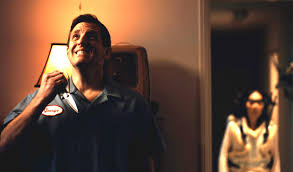
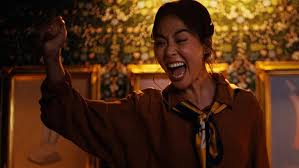
“Trigger Happy” is a bloody-minded dark comedy that at least managed to get the “dark” right.
A stumbling misfire of a satire packed with repellent characters and rarely creative means of murder, it misses on most every level that matters. And while no cast could likely bring this to life, this one doesn’t exactly decorate their resumes with their work in this clunker.
Tyler Poelle plays George, a debt-riddled doofus in a dead marriage and a dead-end job — waiting tables for a bully (Caitlin Duffy) who inherited her mom’s diner.
Wife Annie (Elsha Kim) is an aspiring actress whose aspirations seem limited to landing an info-mercial. Even when she lands one, she’s not contributing. It’s “non-union,” non-paying.
“I get paid in EXPERIENCE!”
At least George has a job. Mikey (Matt Lowe) is unemployed, throwing himself into making and eating pies and growing less attractive by the minute to his hot school principal wife Gemma (Christina Kirkman), who is A) Annie’s bestie and B) cheating with the “hot skiy diving instructor” Tye (Kevin Kreider).
In this alternate universe where the Department of Gun Ubiquity ensures firearms are everywhere, and “required” to get things like health insurance, George sees two ways out. One, he can win the lottery, which he plays religiously. Or two, he can kill his wife, collect the insurance and escape to the Bahamas.
George isn’t creative at all when it comes to ways to unload Annie. He isn’t even all that good at hiding his intentions or frame of mind.
“I have never felt more ‘hinged,'” should convince no one.
About the only shock laugh in director/co-writer Tiffany Kim Stevens’ “romp” comes when a monstrous, dart-gun wielding tween gets what she has coming to her.
The script is minimalist dreck, telegraphing its limited supply of “moves” and botching murders, attempts at murder and fantasizing about murder.
No turn of events or twisted character connects, clicks or delivers anything funny or that even justifies sticking around for the end.

Rating: violence, sex
Cast: Tyler Poelle, Elsha Kim, Christina Kirkman, Caitlin Duffy, Matt Lowe, Kevin Kreider and Tre Hall
Credits: Directed by Tiffany Kim Stevens, scripted by Daniel Moya and Tiffany Kim Stevens. A Gravitas Ventures release.
Running time: 1:26
Well, this is delightful. And kilted. Kudos to Kendrick and Colman for helping David Tennant, Helen Mirren and Brian Cox kick it up a notch at this year’s BAFTAs.


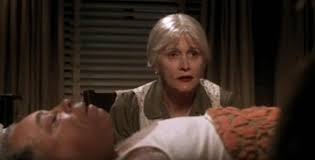

One of the first accomplishments of the then newly-created National Film Registry was to rescue the work of Black indie filmmaker Charles Burnett.
The Registry was Created by the Library of Congress in 1988 and set up to “preserve” as “”culturally, historically or aesthetically significant films.” Burnett’s “Killer of Sheep” was among the first 25 movies deemed endangered and worthy of recognition and preservation. That film stood out in that initital list because it was only ten years old, a little-seen indie film before “indie” was a thing, and was destined to vanish if no attention was called to it and its merits weren’t acknowledged.
Burnett’s still making films and remains almost as obscure as ever. But his small output over the decades has its gems, “To Sleep With Anger” among them.
“The Annihilation of Fish” is the only comedy he’s tried, a serio-comic character study in eccentricity. This slight but sweet 1999 film, a late career highlight of James Earl Jones, Lynn Redgrave and Margot Kidder, all of whom have since died, is the UCLA-trained Burnett’s How to Make an Indie Film primer to the generations of filmmakers that follow him.
Get a script with wildly colorful older characters, roles with range and good dialogue that shows they have something to say. Pitch it to under-employed older actors with names still big enough that they will get the movie financed. That approach got “Annihilation” financed and filmed, although few got a chance to see it when it was finished.
Kino Lorber has restored this film festival darling of the last millenium and given it a limited re-release in cinemas before streaming it so that it might finally find an audience. “Slight” it may be, but it’s well worth a look.
Jones plays Fish, a Jamaican-American retiree who is a handful for any landlord. He’s a sad widower who lacks purpose, he feels. So he “wrassles” a demon almost on a daily basis, creating a ruckus as he shouts and tumbles about on the floor before temporarily vanquishing it by tossing it through a window.
Redgrave is Poinsettia, a San Francisco screwball whose great love is Giocamo Puccini. She swoons in his presence and drowns out performers of his operas as she sings along. She’s tried to marry him, but even in San Francisco, the “groom” must be “corporeal” and not an Italian composer who died in 1924.
These two delusional flakes are destined to connect at the boarding house of a Pasadena fellow traveler. Mrs. Muldroone (Kidder) is a widow obsessed with the spelling of her last name, and with a “weed” her late husband hated but which she cultivates in her immaculately kept garden.
Her “no peculiar habits” question to her prospective tenants isn’t serious. She has a few of her own.
Poinsettia drinks and often passes out in the hallway when she does. Fish gallantly takes her in, and after complaints at the effrontery of that, also noting the “weirdo’s” habit of wrestling with a literal demon, Poinsettia flowers in his presence.
“My loneliness has made me crazy,” she confesses to a card-playing companion who understands and sympathizes with her mania.
“Anybody can see the difference between ‘dead and gone’ and ‘dead and come back,'” he says of her passion for Puccini.
As for himself, Fish might never get over his “wrasslin.” But his daily mantra, delivered in a soft Jamaican patois, may change.
“At your age, why ain’t you dead?”
Lovely Pasadena makes a grand setting for this “Annihilation.” But there’s not much more to this than three lost souls finding comfort in one another, and three accomplished actors — two of them onetime Oscar nominees — sinking their teeth into juicy, colorful eccentrics.
Jones, who experienced a late career revival thanks to theatrical successes and films such as “Field of Dreams,” “A Family Thing” and other roles in the ’80s and ’90s, is in grand form.
Redgrave, decades removed from her “Georgy Girl” breakthrough, similarly had a last hurrah in her as this film and the Oscar nominated “Gods & Monsters” came out the same year.
And Kidder, summoned back from the obscurity that worsened her lifelong mental health issues, was at her best one more time in a film that went unseen when it was new.
Sentiment may be the rest reason to see “The Annihilation of Fish.” But three great performers committing to their parts will always be a pleasure, and the fact that each was beloved by generations makes this dramedy an easy sell for most film buffs.

Rating: R, some sexual content
Cast: James Earl Jones, Lynn Redgrave and Margot Kidder.
Credits: Directed by Charles Burnett, scripted by Anthony C. Winkler. A Kino Lorber re-release.
Running time: 1:48
Ben Mendelson, Normani and Jay Ellis also star in this collection of dark and darkly-funny crime stories set in ’87 Oakland.
Tom Hanks plays a video store owner in this April 4 Lionsgate release.
This looks sweet, a couple of old stoners mending fences and having the last laugh.
It smokes out April 25 (April 30 “previews”), and is basically self-distributed. So maybe it’ll be in a theater near you. Man.
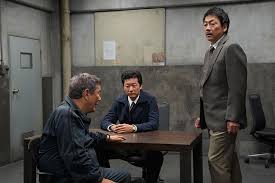
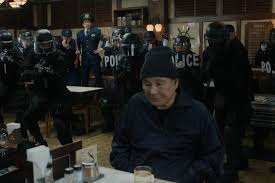
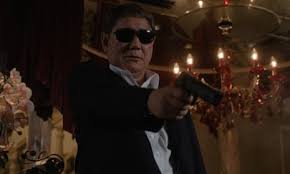
Leave it to Beat Takeshi to ridicule the cinematic elephantiasis that has even the Great Scorsese pushing the limits of how long a night out at the movies should last. And that Brady Corbet “Brutalist” guy? Three and a half hours? Who is he kidding?
And trust the often goofy Takeshi Kitano (his real name) to take down a whole genre of Japanese cinema that made him rich and famous — yakuza hitman stories — and do it in 67 minutes, including credits.
With “Broken Rage,” even the title’s a joke, as the director of “Outrage,” and “Outrage Coda” takes a shot at deconstructing the yakuza killer narrative in a self-aware, fourth-wall-breaking farce. He tells us a tidy, dumb geezer-gun-for-hire story, and then spends the second half of the movie lampooning the conventions, set-pieces, character “types” and ways the time-tested-plans of an elderly trigger man can and should go wrong.
The guy “they call Mouse” (Kitano) is a pot-bellied, bowlegged 70something lump who dresses all in black, picks up his assignments in an envelope left by a mysterious “M” at his regular dining spot, the Cafe Lake.
The proprietor (Takashi Nishina) always asks him who “M” is, and the cagey Mouse always answers “I have no idea.”
As you’d expect, thanks to 1467 hitman movies that preceded it, that envelope contains a photo and the routine of the intended mob victim.
So the wily Mouse dons his black jacket, pants and shades and walks right into a club to shoot up a table packed with young punks. He switches coats, adds a cap and pedals off into the night as the oldest delivery boy in Tokyo. Another guy, with bodyguards with him, must be surveiled at the gym and trapped when he strips to just his tattoo’d birthday suit for a dip outside the sauna.
Careful as he might seem, the Mouse is grabbed by the cops, ID’d in a lineup and beaten until he agrees to go undercover to entrap drug smuggling mobsters. How’ll he join the gang?
Simple. The old man will visit a bar a mob leader (Hakuryû) frequents and “handle himself” in a fight an undercover cop picks with him. Just like that, with not so much as a “check him out,” he’s a mob bodyguard, showing off his killer instincts to his new crew while baiting them into a trap.
Kitano skips over a vast collection of conventions and cliches of such movies, skipping past “wiring” Mouse up, etc., to pretty much wrap that tale up in half an hour.
The “joke” to the first half of “Broken Rage” is Beat Takeshi as a past retirement age “hard” man in the Liam, Bruce, Sly, Mel and Denzel mold. Yeah, he’s too old to be that quick, punch that hard and see danger in a dark parking garage at night whilst wearing sunglasses. It’s funny that we let our action heroes “sell” this lie well into their ’70s.
The second half of the film treats us to a counter-narrative where Mouse goes through the same hit-list and same routine, with one disastrous result after another. Even the cafe chairs collapse under him while he’s picking up his envelopes.
The entire deadpan affair is more reasonably amusing than hilarious, but the pauses in the action, with the screen going to black and “users” of this Amazon streaming movie commenting their complants– “That’s it?” “That’s not a movie” and “On this budget, this is what you get” — are laugh out loud funny.
Yes, movies are getting too long as they’re tailored for a home viewing audience used to binge watching streaming series. Yes, every filmmaker is pitching those streamers, or being lured by Amazon, Hulu or Netflix money.
Takeshi gets it. And when he got that Jeff Bezos money to deliver one of his patented serio-comic thrillers, guess who’s actually the butt of his jokes?
Rating: 16+, violence, drug content, nudity
Cast: Beat Takeshi, Hakuryû, Tadanobu Asano. Nao Ômori, Takayuki Asai and Takashi Nishina
Credits: Scripted and directed by Takeshi Kitano, aka “Beat” Takeshi. An MGM/Amazon Prime release.
Running time: 1:07



A young photographer is shaken to his core when he finally sees the beyond the Mod London surface gloss he so ably captures in “Blow-Up,” a vivid snapshot of a moment in time and a patient, chilling thriller about a murder and a generation unready to face such realities.
Michelangelo Antonioni (“The Passenger,” “Zabriskie Point”), adapting a Julio Cortázar short story, depicts a prelapsarian ’60s of “free love,” easy money, mod fashion, drugs, sex and rock’n roll.
And after slowly and deliberately setting all this up by following the life of rich, greedy, womanizing photographer Thomas — greedy for women (“models”), fame from his arresting images, money and real estate — Antonioni shocks our anti-hero. Thomas realizes, as he blows up a photograph of a couple’s assignation in a park, that he’s captured a murder or attempted murder with his SLR camera. It hits him square in the face that he lacks the ethical, moral and intellectual grounding to handle this awful truth.
He has no idea what the right thing to do is and no sense of responsibility to do it.
David Hemmings had his greatest film role in Thomas, an arrogant bully of a fashion photographer who callously preys on his subjects, and on too-eager wannabes who flock to his studio door. He’s even sleeping with his artist neighbor and pal’s girlfriend (Sarah Miles).
Thomas takes art shots in his spare time, because he wants it all — big paydays for photographing women in sexy poses, fame and “respect” as an artist published in a picture book.
He tools around a London of colorful street-protests carried out by a comical, carefree flash-mob in mime makeup in his new Rolls Royce Silver Cloud convertible — always with the top down, no matter how grey the day. Thomas parks it away from the factory where he’s posing as a worker just to get candid shots of London labor. And he abuses the flashy ride, because it’s come easily to him.
He’s even dabbling in real estate. He has his eye on an undervalued antiques shop in an about-to-gentrify neighborhood.
“Already there are queers and poodles in the area,” he crows to his business manager. This place is about to explode.
That goes for London as well. British youth born during and just after the war are celebrating their newfound affluence and influence. Thomas is cruising among them — clubbing where The Yardbirds (Jeff Beck, Jimmy Page, et al, pre Page’s Led Zeppelin) are playing, throwing away clothes he’s worn once or twice.
But hunting for other candid shots in a London park has Thomas spying on two lovers — a younger woman (Vanessa Redgrave) with an older man. She freaks out when she sees who he’s snapping.
“This is a public place. People have a right to be LEFT in PEACE!”
Not to Thomas. But as she goes to great extremes to procure those pictures, he prints the pictures and starts to notice background detail. Is that…a shooter in the bushes just to the right of them?


Antonioni doesn’t turn this into a detective story with Thomas as amateur sleuth. Our shallow anti-hero crows to his business manager what he’s snapped, that he’s “saved” the intended victim’s life. But Thomas takes no responsibility for showing what he has to the cops, even after it’s obvious that the worst has happened and the criminals are covering up their crime.
The amorality of all that hangs over “the scene” that Thomas still sees, but is no longer swept up in.
The plot of Antonioni’s film was so clever that Brian De Palma paid homage to it with his ’80s thriller “Blow Out.”
The time and place — mod, fashion-mad 1960s “Swinging London” — were so perfectly captured that Mike Myers made comic hay out of it for a string of “Austin Powers” farces.
Hemmings never again reached the level of fame “Blow-Up” promised. He’d enjoy a long career in support of bigger stars with “Crossed Swords,” “Islands in the Stream,” “Gangs of New York” and “Gladiator” among the jewels on his resume.
Redgrave and Miles would have bigger post-“Blow-Up” careers.
Seen today, one appreciates the patience of films from a more self-consciously artsy era, the slow boil Antonioni goes for in setting up his generational moment of judgement.
Modern viewers will raise an eyebrow and grimace at the sexism, ageism and homophobia glimpsed here.The fashions are peak “mid century mod” and kind of timeless when they aren’t hideous.
“Blow-Up” was made for the HDTV/high-resolution DVD/video era. I first saw it at a university film society projected on grainy 16mm. Much of the effect Antonioni was going for, forcing the viewer to only slowly “see” what Thomas’s trained eye eventually discerns in the background of those simple snaps taken in a park, has been lost to home viewers of this classic for generations.
But now this metaphor for a generation about to come of age can be appreciated for what it was, in all its Metrocolor glory. “Blow-Up was a film with something to say whose message resonates even today, over half a century removed from Swining London.

Rating: TV-MA, sexual situations, pot use
Cast: David Hemmings, Vanessa Redgrave, Sarah Miles, John Castle, Peter Bowles and The Yardbirds.
Credits: Directed by Michelangelo Antonioni, scripted by Michelangelo Antonioni, Tonino Guerra and (English dialogue) Edward Bond, based on a short story by Julio Cortázar. An MGM/Warner Bros. release on Tubi, other streamers
Running time: 1:52

 Movie Nation