



“My Man Godfrey” struck a nerve when it opened in the middle of The Great Depression. It’s a nerve that it strikes to this very day.
A movie that presents the idle rich as “empty-headed nitwits,” with even the more self-aware among them admitting “All you need to start an asylum is an empty room and the right kind of people,” was bound to resonate in a country where breadlines and “hobo towns” and high unemployment had settled in and proven hard to shake.
Whatever the message or twists of Eric Hatch’s novel “1101 Park Avenue,” he and screenwriter Morrie Ryskind knew that a film that reminded America “The only difference between a derelict and a man is a job” would play.
It stars divorced couple Carole Lombard and William Powell, who knew how to banter, flirt and fend off flirtation from personal experience.
Comic mainstays Alice Brady (“The Gay Divorcee”), Mischa Auer (“Casablanca”), Eugene Pallette (“Steamboat Round the Bend” and later “Mr. Smith Goes to Washington”) and Jean Dixon (“Holiday”) surrounded the leads.
And former cartoonist Gregory La Cava, fresh off the Claudette Colbert/Melvyn Douglas romp “She Married Her Boss,” directed what would turn out to be his masterpiece — a sassy, satiric screwball farce that earned six Oscar nominations, including the only one screen legend Lombard would ever earn.
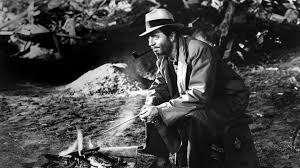
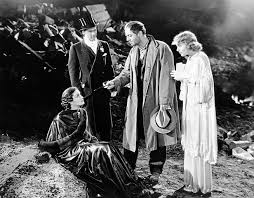
It begins with a “scavenger hunt,” a bunch of over-dressed swells playing a party game at the Waldorf pile into a homeless encampment on a city dump beneath the Queensboro Bridge. That’s where insufferably rude and snobby Cornelia Bullock (Patrick) offends down-on-his-luck Godfrey (Powell) with her “Want to make $5?”
After he’s insulted her and her wimpy date and given her a shove into the ash-heaps, her younger, dizzier sister Irene (Lombard) arrives and tries to explain away the frivolity. A scavenger hunt is just like a treasure hunt, she reassures the dirty but dapper Godfrey.
But “in a scavenger hunt you try and find something nobody wants.”
Charmed, and chivalrous enough to want baby sis to beat Cornelia, Godfrey agrees to be taken to the swank ballroom and showed off to the swells as one of New York’s “forgotten men.”
Irene is so thrilled that she decides to make Godfrey a project, with her his sponsor.
“Do you butle?”
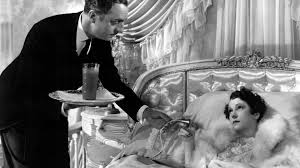
Next thing we know, our “Man Godfrey” has cleaned up, donned the tie and tails of a Park Avenue butler and waltzed into the world of the Bullocks, presided over by dizzy and dipsomaniacal “lioness” Angelica (Brady, an absolute stitch) and ever-grumping old money Alexander (Pallette, who’d go on to become the perfect Friar Tuck in “The Adventures of Robin Hood”).
The plot takes some pretty bland turns in the third act that spoil the film’s perfection. But the hallmark of the then-new screwball comedy genre was the banter, and it flies by in this, perhaps the finest example of the breed.
“Just a minute, sister!” a detective barks at maid Molly.
“If I thought that were true, I’d disown my parents!”
The never-funnier Auer plays the protege of the lady of the house, a Russian musician who sings laments and plays downbeat ditties at the keyboard and does party tricks to earn his keep.
Godfrey has to prove his worth by whipping up a hangover cure that works for the lady of the house, fend off the attentions of Irene, mollify the man of the house and keep Cornelia’s fangs at arm’s length.
“People who take in stray cats say they make the best pets, madam.”
Few comedies of this or any other era are performed with the panache of this one, with the players making scores upon scores of one-liners, insults and casual remarks worth a chuckle.
“See you in church!”
And if you wonder why all of Hollywood mourned Lombard when she died in a plane crash during a war bond drive six years later, watch her manic pixie rich girl here — hair flying, head bouncing with every utterance, the perfect impulsive ditz who might have to take a breath and show she can have a serious thought if she wants her crush to pay off.
“Oh, it’s a lovely view, the bridge and everything – Is it always there?”
And “Thin Man” icon Powell, the drollest and wisest of the ’30s wisecrackers, holds it all together by being the calm in the center of the silly storm, the “forgotten man” who gave even moviegoers looking for Depression Era escape a reminder that a country cannot and should not discard such worthies, especially with so much money in the hands of the idle and often idiotic.

Rating: “approved”
Cast: William Powell, Carole Lombard, Alice Brady, Gail Patrick, Eugene Pallette, Mischa Auer, Jean Dixon and Alan Mowbray
Credits: Directed by Gregory La Cava, scripted by Morrie Ryskind and Eric Hatch, based on a novel by Hatch. A Universal release on Roku TV, etc.
Running time: 1:34


 Movie Nation
don’t know how I’ve missed this one, but I did. Thanks for the rec, it was excellent. The classic reviews are appreciated.