
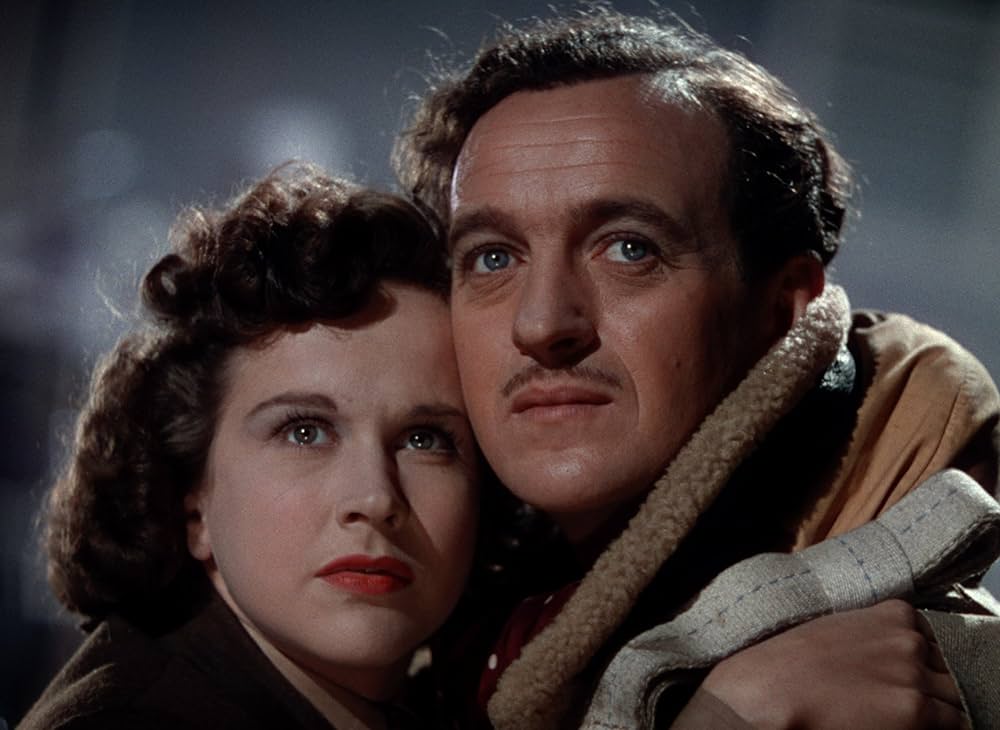
There’s something very attractive about this idea that we go “when it’s your time to go,” and that maybe the hereafter is a bureaucracy we can litigate our way into more time on Earth through.
As fodder for fantasy, that “Heaven Can Wait” plot point was most popular during World War II, when death visited many a family and cinematic comfort food for the grieving and those who know someone who’s grieving resonated with audiences near and far.
It began with playwright and screenwriter Harry Segall’s idea for 1941’s “Here Comes Mr. Jordan,” remade with Warren Beatty and Julie Christie as “Heaven Can Wait” in the ’70s and remade again as a Chris Rock star vehicle, “Down to Earth,” in the early 2000s. There was also “A Guy Named Joe” (remade by Spielberg as “Always”), and of course, that holiday hereafter staple “It’s a Wonderful Life” broadly fits in this same conversation.
But the best version of this “taking heaven to court because it’s ‘not my time'” is British, an aching wartime/casualty-of-war romance starring David Niven, Kim Hunter and Roger Livesey, and written and directed by Michael Powell and Emeric Pressburger — “A Matter fo Life and Death.”
This 1946 film blends the tragic with the screwball, with daft banter and goofy, ever-so-British stereotypes of Brits, the French and Yanks to boot. It is dazzling in realization, a stunning Technicolor production that made the afterlife and pale imitation of life on Earth — the ultimate “British” bureacracy, finger-pointing within it, and a world that’s monochromatic to boot.
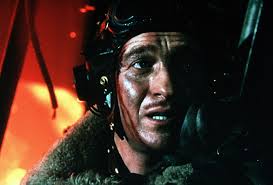
It leaps to a start with an opening scene of a Lancaster bomber pilot (Niven), on flames and “going down” in the fog, his only lifeline a compassionate American Women’s Army Corp (WAC) radio operator (Hunter).
The Brit is antic, almost flippant about death — “Don’t be upset about the parachute, I’ll have my wings soon anyway, big white ones. I hope it hasn’t gone all modern, I’d hate to have a prop instead of wings!”
“June” can’t help but fall in love with such bravado, and Peter the pilot is smitten by her voice. And her reassurances.
“June, are you pretty?” “Not bad.”
Peter wakes up in his flight suit in the surf on the beach near the base where June works. They stumble into each other, instantly recognize their soul mate, and kiss.
During “the war,” they didn’t mess around.
But that romance has a catch. Up in heaven, Conductor 71 (Marius Goring) has noticed paperwork issues. One soul is missing. Tracking it down becomes his mission. “Reasoning” with Peter is his strategy, one arrived at by consulting a dead member of Peter’s crew.
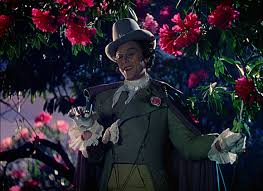
Goring, who’d turn up in Powell & Pressburger’s “The Red Shoes,” plays this “Conductor” as a pre-revolutionary French fop of the first order, not so much a buck passer as a chap who relishes the chance to make his case “down there” for why Peter should come quietly and accept his fate.
“One ees STARVED for Technicolor, up there,” he swans as he swoons over flowers, perhaps the best one-liner in any Pressburger script.
Peter’s in love, and he’s not going quietly. June figures Peter’s communication with this Frenchman is a hallucination, and enlists her pal, Dr. Reeves (Powell & Pressburger mainstay Roger Livesey) to treat him. Dr. Reeves kind of believes the guy, which worries him.
“A weak mind isn’t strong enough to hurt itself. Stupidity has saved many a man from going mad.”
Heaven’s bureaucracy will not be denied, but Peter’s insistence wins him the reprieve of a court hearing in the afterlife. The film’s third act is a somewhat drawn-out “Defending Your Life” court case, another film that draws its inspiration from the idea that heaven is a place where you can take the powers that be to court.
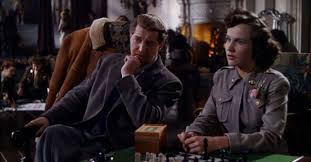
There aren’t many actors who could give Cary Grant a run for his banter like Niven, and Pressburger’s script is decorated with ways for him to show it off — reciting a poem, for instance.
“Give me my scallop-shell of quiet, My staff of faith to walk upon, My scrip of joy, immortal diet, My bottle of salvation, My gown of glory, hope’s true gage; And thus I’ll take my pilgrimage.” Sir Walter Raleigh wrote that. I’d rather have written that than flown through Hitler’s legs!”
Hunter, years before her “Streetcar Named Desire” immortality, is all compassion and emotion as June, buying into Peter’s hallucination, but still hoping Dr. Reeves can “cure” it.
The third act court case is taken over by heavenly protocols, and two powerful performances — Raymond Massey, of Powell & Pressburger’s “The 49th Parallel,” plays an embittered casualty of the American Revolution prosecuting this smarmy Brit, facing off against the man whom Peter gets to defend him. We wonder if Peter has a chance.
“Your smile is not unattractive, sir. Did you use it to enamor this young American lady?”
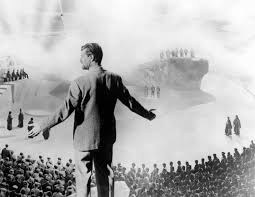
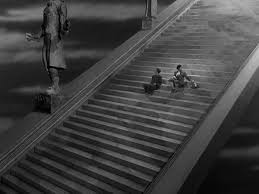
Alfred Junge’s production design is most impressive in the hereafter, with a giant, Busby Berkley-inspired staircase taking our characters on their long walk “up” to eternity. A diverse sea of faces attends the trial — Indians, South Africans, African Americans and Chinese — reminding us it wasn’t just white guys fighting against fascism.
The overlong trial kind of stops the movie in its tracks, but the speechifying fireworks as Massey and his foe make their cases for “The Law” and “Love” in front of judges, bureaucrats and interested (dead) parties, including Puritans, carry it.
The screenplay makes its “love story” sale right in that first scene, just Niven in a mock-up of a burning plane and Hunter trying to keep it together with only the voice of a doomed man to reassure her that it’s going to be all right.
“A Matter of Life and Death” is one of the most timeless classics of its era, a bucket list film for any true film fanatic.
And if you haven’t seen this lovely, funny and moving film, why not let Martin Scorsese make the case for it? He does that, and more, in the new documentary “Made in England: The Films of Powell and Pressburger,” reminding us that much of what was great about the cinema of the ’40s came from the writer/director/producers who called themselves “The Archers” and who rarely missed their target.

Rating: TV-PG, combat deaths, discussion of suicide
Cast: David Niven, Kim Hunter, Roger Livesey, Marius Goring, Joan Maude, Robert Coote and Raymond Massey.
Credits: Scripted and directed by Michael Powell and Emeric Pressburger. A Rank Org/Archers release on Tubi,etc.
Running time: 1:41



