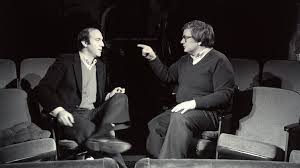
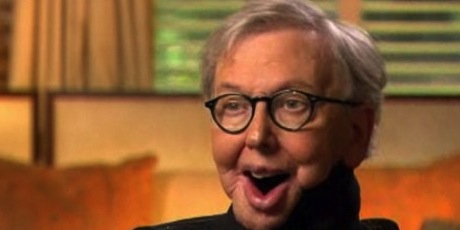
Steve James and Chaz Ebert talk about Roger Ebert and “Life Itself”

ImageHe could be generous and petty, competitive and nurturing, absurdly public and ferociously private.
And given access to a soap box, you could be sure Roger Ebert would scramble on top of it. Quite aside from being America’s most famous film critic, Ebert was a film enthusiast, a critic who championed films in print and on TV, cajoling-begging-demanding that America sit up and pay attention to a movie he loved.
It happened to Oscar winning documentary filmmaker Errol Morris (“The Fog of War”), whose work Ebert championed all his career. And it happened to another documentarian, Steve James, who owes his career to the attentions of Ebert and his TV foil, Gene Siskel.
“Their impact on ‘Hoop Dreams’ (1994) was remarkable,” James remembers. “This was a three hour documentary about basketball and two kids and their families from Chicago, people nobody had ever heard of, and when we got the film into Sundance, we submitted it to distributors. Didn’t hear a peep…But when Roger and Gene reviewed it on the show, during the Sundance Film Festival, they said ‘We really think it deserves wider distribution’ during the review, suddenly, the Sundance showings were sold out and we got distribution.”
That long-ago endorsement made James famous. And it made him the natural choice to make a documentary about Ebert, based on his memoir, “Life Itself,” a film that would, of course, turn out to be about Siskel as well.
After Siskel died and as Ebert faced his own mortality — losing his voice and much of his face to cancer, before finally succumbing in 2013 — James and Ebert discussed documenting the life Ebert described in his 2011 memoir.
“I told him I wanted input, but that I would have final say,” James recalled. “Roger and (his widow) Chaz understood that. But as that one email that he sent me that’s in the movie is the most important.
“He said, ‘This is not just your film, it’s mine.’ I love that. I want every subject to feel that way about a documentary I make with them.”
James captured the last months of Ebert’s life and had access to decades of Ebert TV appearances and his newspaper cronies and college pals. He filmed the movie’s anchoring event, the Chicago Theatre memorial service that drew moviegoers and movie makers, singing Ebert’s praises.
“I’m puzzled by how beloved he seemed to be,” Chaz Ebert says, noting how “beloved” and “critic” rarely turn up in the same sentence. “I think he was extremely likable, down to Earth, charismatic and very funny. But he also could connect with people. He was real. That’s how he did it.
“He only had a competitive edge when he was around Gene Siskel. With others, he seemed very generous – moviegoers, other critics, actors. He didn’t seem to feel threatened by them, and that disarmed people. That’s the kind of guy he was. What you saw with him was what you got.”
That line filmmaker Oliver Stone used about Ebert stands out — he was “Midwestern fair” in his assessments.
As “Life Itself” notes, Ebert became a critic at what James calls “a golden moment,” 1967, as “Bonnie and Clyde” and “2001” were launching American “cinephile culture.” Ebert championed films, first for the Chicago Sun-Times, and then on assorted TV shows paired with Siskel, and James says “helped shape the cinema” over three of the most important decades in Hollywood history. An early adapter to the Internet — Ebert saw the potential in Google so early, and put money into it, that he was invited into its IPO (Initial Public Offering) when the company went public and offered stock — Ebert talked movies, politics and eventually, his illness, on his wildly popular blog.
Even critics who didn’t grow up with Ebert’s decades-long TV presence have been touched by “Life Itself,” an “impressively clear-eyed and deeply moving portrait” (Amber Wilkinson, Britain’s Daily Telegraph).
“I want people to know that he grabbed life with both hands, with gusto and joy, right up to the end,” Chaz Ebert says. “That’s a model for anybody who had good fortune in life, as he certainly did, and then illness, surgeries. He was someone who never lost that gusto.”

Posted in Reviews, previews, profiles and movie news | Comments Off on Steve James and Chaz Ebert talk about Roger Ebert and “Life Itself”

Movie Review: “Tammy” goes all soft and gooey

ImageSay this for Melissa McCarthy. A couple of years into her stardom, and not all that far past the dust-up over critics’ deriding her comic reliance on the sight gag that is her physique, she puts it all out there in the opening moments of “Tammy,” a star vehicle she co-wrote for herself.
From the moment we meet her, Tammy is a slovenly, morbidly obese vulgarian, from the top of her home-dye-job mop to the bottom of her omni-present Crocs.
She’s not just another nametag at Topper Jack’s, the bottom step on the ladder of American fast food. Stuffing her face with Doritos, distracted, she runs her ancient Toyota into a deer. She’s late for work — again — and fired for it.
Her gross and profane “exit interview” is the highlight of the movie. Because whatever those riotous opening moments promise — swearing, food-abuse — “Tammy” and McCarthy have their sentimental side. This is a rude, crude comedy with a hard candy shell on the outside, soft and squishy on the inside.
Tammy catches her husband (Nat Faxon) sort-of cheating with a neighbor (Toni Collette) and tosses a fit. She rants to her mom (Allison Janney), and tries to storm out. But she has no money and no car.
Enter Granny, played by Oscar winner Susan Sarandon. Tammy needs a change of scene. Granny has always wanted to see Niagara Falls. And Granny has an old Cadillac and a few thousand dollars saved up. How hard can it be to get from small-town Illinois to the New York/Canadian border? When you’re an idiot with anger-management issues, pretty hard.
They stumble south into Missouri, where Tammy lets on she’s never heard of the guy the Mark Twain National Forest is named for. But she has heard of the Allman Brothers, when Granny brags that she used to date one of them (“the dead one”).
Much of the pleasure from “Tammy” derives from Sarandon, decades removed from playing someone this uninhibited, learning to let her hair down from McCarthy — a butchered duet of the Allmans’ “Midnight Rider,” a “most outrageous thing I’ve done” confession contest, lots of drinking.
Tammy drinks and drives. And Granny washes her pills down with cheap bourbon, so Tammy’s got nothing on her in terms of “outrageous.”
The joy of McCarthy’s comedy is the way she ignores the fact that she’s as wide as she is tall, even if we can’t. She’s cocky about her sexuality. Hit a bar, a BBQ joint, she thinks she owns it.
“I can get ANY guy in this room.”
When Granny Pearl is pursued by a randy farmer (Gary Cole), Tammy figures the farmer’s son (Mark Duplass) should be a pushover. Not so fast. Indie screenwriter/actor Duplass has a deer-in-the-headlights look about him opposite McCarthy, which undercuts the chemistry the script insists they have.
All Tammy has to do is lose the “ugly inside” and he’ll see the real her, right? And maybe ignore the stupidity that’s as obvious as every sentence she utters.
“I’m kinda like a Cheeto,” she purrs. “Ya can’t eat just one.”
That’s Lay’s Potato Chips.
“Noooo. Me? I love a Cheeto!”
There are health issues, mean drunk moments, a “lesbian Fourth of July party” (Kathy Bates is Tammy’s hip aunt, with Sandra Oh in the mirthless role of Auntie’s partner), a stick-up, jail time.
All packed into a movie, co-written and directed by her husband, Ben Falcone, that’s more sentimental than sloppy silly. Because we all just want to be loved, deep down, right? Especially the more outrageous among us.
It is crowd-pleasing, in its own way, mixing girth gags and slapstick with clueless come-ons.
But for a movie that comes out swinging, “Tammy,” in the end, feels like a pulled punch. McCarthy promises a haymaker she never quite delivers.

Image

MPAA Rating: R for language including sexual references
Cast: Melissa McCarthy, Susan Sarandon, Kathy Bates, Gary Cole, Mark Duplass, Sandra Oh, Alison Janney
Credits: Directed Ben Falcone, written by Melissa McCarthy and Ben Falcone. A New Line release.
Running time: 1:37

Posted in Reviews, previews, profiles and movie news | 2 Comments

Movie Review: “Heatstroke”

ImageA veteran cast not given to overplaying, a competent director and striking desert Africa settings are the chief recommendations of “Heatstroke,” a survival thriller with murder, poaching, gun-running and hyenas as its active ingredients.
Paul, a hyena expert (Stephen Dorff) reluctantly drags his insolent teenage daughter (Maisie Williams) along on safari as he heads back to Africa to track his beloved laughing predators.
Dad, the iPad addicted teen complains, is all about “Hyenas, hyenas hyenas.”
Complicating matters is dad’s girlfriend, Tally, a crisis-hardened Russian search and rescue specialist used to being dropped into the world’s disasters to help out.
Jo is spoiled, rude and acting out, especially against Dad’s paramour.
“I wouldn’t mess with Tally, Jo,” he dad warns. “She’s tough.”
How tough? Since we’ve seen Tally, played by Svetlana Metkina (“Slingshot”, “Bobby”) in the opening scene, battered and bloodied and being chased across the desert by a Cessna, we’ve already figured that out.
Events conspire to put the teen and Tally on their own, with almost no water, in a desperate trek to survive. Gun runners led by the movies’ favorite Nordic villain, Peter Stormare (“Fargo”) are after them. But Tally is no pushover. Like Liam Neeson in “Taken,” she has “particular skills” that could serve them well.
Director Evelyn Purcell, whose decades of credits include “Borderline” and the romantic comedy “Nobody’s Fool” and whose ex-husband is Oscar winner Jonathan Demme, would have been better served doling out more examples of Tally’s survival skills — little “Survivorman” tidbits about getting water, how to ride out a sandstorm, what to do if a scorpion bites you and you have no first aid kit, etc. The few times she does, “Heatstroke” becomes more interesting. The annoying, accident prone and headstrong kid wants to rest more.
“Each hour we walk,” Tally snaps, “we are widening the (villains’) search area.”
But the film is far more conventional than that, relying on a leading lady without a lot of charisma or acting-in-English chops to enlist our empathy and make us her partner as she thinks and hikes her way out of this tough spot.
With villains cribbed from the generations of cheap thrillers that precede it and action scenes that have no novelty to them, “Heatstroke” starts looking like Adam Sandler’s “Blended” more by the minute — a movie the cast signed up for to get a free working African vacation out of it.

Image
MPAA Rating: unrated, with graphic violence, profanity
Cast: Svetlana Metkina, Brad Dorff, Maisie Williams, Peter Stormare
Credits: Directed by Evelyn Purcell, screenplay by Anne Brooksbank and Evelyn Purcell, based on the Hannah Nyala West novel, “Leave No Trace.” A Phase 4 Films release.
Running time: 1:33

Posted in Reviews, previews, profiles and movie news | Comments Off on Movie Review: “Heatstroke”

ImageImage

“Snowpiercer” is a veritable United Nations of sci-fi films. Directed by the Korean Bong Joon-Ho (“The Host”), based on a French graphic novel and with a cast built around Captain America (Chris Evans), Oscar winner Octavia Spencer, Tilda Swinton, Jamie Bell and Song Kang-Ho (of “The Host”), it’s a visceral, exhilarating action satire set aboard a train — the last train, the only train on an Earth that has frozen over thanks to a botched effort to stop global warming.

The politics are as simple as the plot. The train powered by “The Eternal Engine” has to keep moving to keep the last survivors on Earth from freezing. In the front are the rich, the powerful. They have servants, armed protection and control of all the resources. In the back, “The Tail Enders,” “free-loaders” in this society, are fed gelatinous protein bricks, beaten down, abused and misused, constantly reminded to maintain their “pre-ordained particular position.”

“Order” is what this train needs, the martinet Mason (Tilda Swinton, doing a Margaret Thatcher without the polish) barks. It’s what the mysterious Mr. Wilford, “the divine keeper of the sacred engine,” demands.

It has been like this for 17 years, ever since the Earth froze over and life went extinct. The train, a stop-gap built to pierce snowdrifts on a vast track that spans the continents, rattles and hurtles on. But Curtis (Evans), his sidekick Edgar (Jamie Bell) and their guru Gilliam (John Hurt) have other ideas. They plan to lead the latest attempt to storm the engine and take over.

Curtis may say “I’m no leader.” Heroes in movies and the comic books they’re based on often do. And he may “suffer from the misplaced optimism of the doomed.” But when the Front fascists come, measuring tape in hand, and grab a few right-sized children (Spencer if the fierce mother of one of them), the revolt begins.

Bong Joon-Ho stages the bloody brawls, confined to the narrow cars of a very long, very fast train, as thrilling set pieces. They’re little slices of “300” or your favorite samurai or sword fighting movie. This is fast-motion or slow motion slaughter with clubs and axes, in the light or in the dark. The deaths are gory, personal and excruciating.

The quest of the bedraggled tail-enders feels like a bloody “The Wizard of Oz” set on a “Runaway Train,” with each section they assault a revelation.

The anti-hero of “The Host,” Song Kang-Ho, plays an electronic security “specialist” addicted to the drug of choice on this eternal train, opening security gates to cars with food and water, luxury and comfort, hedonism and health care.

“Snowpiercer” was delayed due to a rumored battle over the final edit and running time, and it does tend to dawdle as it rattles toward the climax we can see coming. It’s more an instant cult film than a picture with any prayer of reaching millions.

But for all its lapses in logic, all its lunatic touches, you have to appreciate the sheer audacity of any action movie that starkly lays out the planet’s growing gap between the have-nots, and the “haves,” who stress “order” and “balance” and stability as priorities everyone should share.

“That’s what people in the best place say to people in the worst place.”

Image

MPAA Rating: R for violence, language and drug content

Cast: Chris Evans, Song Kang Ho, Tilda Swinton, Octavia Spencer, Jamie Bell, John Hurt

Credits: Directed written by Bong Joon-Ho, scripted by Bong Joon-Ho and Kelly Masterson, based on the French graphic novel “Le Transperceneige.” A Radius/TWC release.

Running time: 2:06

Posted on by Roger Moore | Comments Off on Movie Review: “Snowpiercer” is exhilarating sci-fi with a sharp satiric bite

Movie Review: “Earth to Echo” is an “E.T.” knockoff that works

EARTH TO ECHO“Earth to Echo” is an engagingly unassuming “E.T.” knockoff, a kids’ movie that serves up a similar alien-with-kids story in “Blair Witch/Paranormal” shaky cam package.
It’s been over 30 years since “E.T. the Extraterrestrial,” so why not?
Disney produced it, but then sold it to Relativity. Cast with cute, likable kids, given a few decent effects and having that found-footage “reality” of “The Blair Witch Project,” it doesn’t have the financial or emotional heft of the mythic “phone home” tale. But it works well enough.
Three tweenage pals are about to be split apart forever. Their Nevada subdivision is being demolished for some sort of bypass. It’s not fair, but what do you do?
Nervous tech nerd Munch (Reese Hartwig), boisterous camera buff Tuck (Brian “Astro” Bradley) and shy, sad-faced Alex (Teo Halm) make the most of their last days together. And when their electronics start going kerfluey and their cell phones start showing this blotch shape, they have purpose. What’s going on, and why is this construction site so…Men in Black-like?
The blotch shape is a map, and that sets the lads off on their bikes for a nighttime scavenger hunt with Tuck capturing it all on his GoPro Hero cam, narrating our story as he does. He likes to upload conspiracy videos to the web. They’re onto one, and how.
First, they find a canister, and then they figure out who’s in it. And then they find other five places on the map that tend to deepen the mystery.
First-time director Dave Green finds plenty of novelty and fun in what is, let’s face it, a pretty derivative script by Henry Gayden and Andrew Panay. The creature is like the shiny, digital owl from “Clash of the Titans.” Adorable.
But it’s the kids and their reaction to this extraordinary encounter that sell this. Communicating with the…thing…is paramount. And what’s their first question?
“Do you eat humans?”
I like the childlike problem solving that goes on and the PG “breaking curfew” edge to the story, which takes the boys all over their corner of the world, into all sorts of places where they could get into trouble — a bar, an arcade, a pawn shop. Oh, and they have to venture into the house of their prettiest classmate, the one none of them have the guts to approach — “manikin girl.”
When she (Ella Wahlestedt) turns out to have a name — Emma — and to be friendly, gutsy and just as curious as the rest of them, there’s another little lift that the movie needs to at least get into the same league as “E.T.”
The no-name cast spreads from the kids to the adults, but the parents find a laugh, here and there. The one grownup most of us will recognize, veteran character actress Mary Pat Gleason, shows up as a biker. Which once you see her and remember the million other movies she’s been in is worth a chuckle. Wahlestedt and the kid who wants to go by the stage name “Astro” stand out among the child actors.
The plot elements swiped from “E.T.” are many, but are given tiny twists that rule out plagiarism charges. “Earth to Echo” has lots of blown opportunities, but developing any single stop on the kids’ night-long adventure would have added minutes to its lean, 91 minute run-time.
And the spooky, nighttime bike ride (handlebar camera) and assorted whiplash-quick action beats serve it well.
Generations removed from Elliot and E.T., there’s no sense kvetching about a new, pale imitation of it, pimped-out for today’s kids. Adults? You’ll be underwhelmed. But remember, we’ve seen worse fake-“E.T.’s” , especially in the years right after Spielberg’s Reese’s Pieces masterpiece came out. And your kids? They will be tickled.
2half-star6
MPAA Rating: PG for some action and peril, and mild language
Cast: Reese Hartwig, Teo Halm, Brian “Astro” Bradley, Ella Wahlestedt
Credits: Directed by Dave Green, written by Henry Gayden and Andrew Panay. A Relativity Media release.
Running time: 1:31


Posted in Reviews, previews, profiles and movie news | 2 Comments

Why are there no black pop and doo-wop acts in “Jersey Boys”?

ImagePlease consider the headline as it was intended, a question which group sourcing may help me answer. If I was trolling for controversy-driven pageviews, I’d have posted “Is Eastwood’s ‘Jersey Boys’ racist?”

Clint Eastwood’s film of the Broadway bio-musical about Frankie Valli and the Four Seasons follows them from 1951 through their 1991 induction into the Rock and Roll Hall of Fame.

And until that induction, where there are a couple of black faces in the ranks of reporters covering the event, this is a racially monochromatic film. Sure, there’s that token gay guy who influenced their career. But how can you cover doo wop vocal groups in the ’50s, pre-Beatles rock and pop, without touching on the desegregation that was part and parcel of that scene? Youth culture trumped conservative desegregated culture, in that regard.

Go to the Wikipedia entry for the group, and it firmly places them within that ’50s vocal group tradition — Four Freshman, the Platters, etc. As they broke big AFTER Elvis, after Chuck Berry, you’d think they might occasionally share a bill with other performers and vocal ensembles, black and white. The film suggests that they were more of a band — playing instruments — so perhaps that explains how I couldn’t find a lot of showbills that make this point. Perhaps booking more than one vocal group wasn’t smart booking back then, and segregation kept guys like Bo Diddley and Jackie Wilson and Sam Cooke off of bills with white acts during this era, as often as not. Overseas, it was a different story.

Frankie Lyman, Little Richard and others shared bills with white acts on the big screen and on tour. Not sure how common that was.

Why not the Four Seasons? Their heydays were early ’60s. They headlined once they had a couple of hits, and they had a lot of hits. Did they never share the bill with black acts as they were coming up, or with lesser known black acts after The Four Seasons were a big deal?

Your typical rock biography of that era is a more integrated affair. The Stones were eager to bring their favorite black acts — their inspirations — to the bill. The Beatles, playing it safe, weren’t known for that.

But look at any Elvis bio-pic, at “Great Balls’o Fire,” at “La Bamba,” at “The Buddy Holly Story” (Buddy Holly accidentally booked into the Apollo). The bills were integrated, young people being more receptive of this idea than their parents.

Which is why the whiter than white “Jersey Boys” calls attention to itself for showing none of the black (and white) street corner singing context that launched them.

By the time Valli, with or without his Four Seasons, was a ’70s lounge act, I wouldn’t expect integrated audiences, integrated show bills. He was appealing to people too young for Sinatra, Dino or Jerry Vale (their parents’ favorites), but fans who grew up in that Italian-American crooner tradition he was trying to be part of.

And there is clear evidence that as an oldies act, Frankie and the Four Seasons toured with black groups in the late 70s through the 80s.

Clint Eastwood took some foolish abuse from Spike Lee when Lee demanded to know where the black Marines were on his Iwo Jima movies. Historically, there weren’t any on the island during the fight.

But here, you’ve got to wonder how or why the director of “Bird” failed to see  the need to pay any regard to these “Jersey Boys'”  musical context, and the vast majority of their vocal group peers. An oversight on Eastwood’s part? Actual historical truth, because perhaps The Four Seasons or their audience wouldn’t stand for sharing the bill with black acts? I am looking for evidence, one way or the other, and not finding enough to reach a conclusion.

The movies and TV stereotype Italian Americans as much as any ethnic group, and among those stereotypes is the suggestion, from “The Godfather” to “The Jersey Shore,” that  this ethnic group is racist. Is Eastwood embracing that the way his movie embraces the talking with the hands, diving into pasta, peacocking in showy clothes, switching from English to Italian stereotypes? I wonder.

Posted in previews, profiles and movie news, Reviews | Comments Off on Why are there no black pop and doo-wop acts in “Jersey Boys”?

Movie Review: Ebert documentary equates a love of movies with a love of “Life Itself”

ImageThere’s a lovely sentiment that the late movie critic Roger Ebert expressed when describing what movies were to him and why this medium that he spent his life covering still mattered.
“The movies are like a machine that generates empathy.” A good film takes you into another point of view, into an alien place and puts you in someone else’s shoes.
Ebert championed such films and those who made them. That’s one reason his death, in 2013, was widely mourned, and why he merits a Steve “Hoop Dreams” James documentary,”Life Itself.” It celebrates Ebert’s life and times, and documents the last months of his battle with cancer-stricken.
That very public death, in which he revealed the extent of his suffering and the damage cancer did to his jaw, robbing him of his speaking voice and much of his face, is another reason for that mourning. He faced the end, online and in public, with guts and grace.
“Life Itself” takes us through Ebert’s career, his drinking years, the “unspeakably romantic” life of newspapering and the Pulitzer Prize that life gave him. Then it pairs the longtime Chicago Sun-Times critic up with cranky crosstown Chicago Tribune rival Gene Siskel, and “Life Itself” turns funny.
Those two Heartland reviewers lorded over the Golden Age of American Movie Reviewing, when every magazine and newspaper had a critic or two and many of them turned up on TV as well. Starting their debate on Chicago public TV, spreading nationwide, then going into syndication and earning big bucks, they became a brand — “Siskel & Ebert” — and every movie studio wanted its wares to wear their “Thumb’s Up.”
Did they dumb down their writing, pander to the TV audience and reduce reviewing to something simplistic, as Richard Corliss (Time Magazine) and others complained? Sure. Were they as testy to each other off camera as they seemed on the show? Anybody who has trolled Youtube for cutting, profane bickering out-takes from their shows doesn’t need testimony from the TV producers they worked with, interviewed here, to know that was true.
“Life Itself” is built on the framework of Ebert’s memoir, with fresh interviews with Ebert (he used a computer voice synthesizer, like Stephen Hawking) and Ebert’s own book-on-tape narration, and gives us the guy behind the critic. Far more beloved than Siskel, he was a “populist” critic whose approachable tastes and style flew in the face of the snobbier Grande Dame of Critics, the New Yorker’s Pauline Kael, who ruled the roost when Ebert’s career began.
The surprises in the documentary are the frankness with which both Ebert and his wife, Chaz, speak of his (and her) alcoholism and lovely passages with the Chicago newspaper barflies who used to regale each other and be regaled by Ebert during the ’70s.
And his early ’60s college newspaper writing, about race and the Civil Rights Movement, is a revelation. The passion and skill with the language were there, from the beginning. He just turned his focus to the movies.
The “balance” of “Life Itself” comes from suggestions that he sold out, was compromised by his access to the people he covered. Several former colleagues discuss his “only child” petulance, as remembered during the years he did the TV show but also evidenced by defiant footage of his last days — hellbent on hearing “Reeling in the Years” by Steely Dan before he’ll sit still for more treatment.
The best interviews are the filmmakers, young ones such as Ava DuVernay (“I Will Follow”) and Ramin Bahrani (“Man Push Cart,”Chop Shop”) who received direct, personal encouragement, and legends such as Werner Herzog and Martin Scorsese, appreciating that even when when he criticized them, he did it gently.
Unlike Ebert himself, “Life Itself” is a bit long-winded. And some of the “final days” footage is hard to watch — unpleasant, and kind of manipulative. Even that approach connects to Siskel, who died a very private death of cancer years before, as if Ebert was having one last “I can do it better” contest his frienemy/co-host.
But in the digital media/movies-on-cell-phones era, “Life Itself” is a grand testament to a life lived loving movies, on screens that were larger than life and were reviewed by a couple of genuine characters.
 ImageImage
MPAA Rating: R for brief sexual images/nudity and language
Cast: Roger Ebert, Chaz Ebert, Gene Siskel, Martin Scorsese, Werner Herzog, Errol Morris
Credits: Directed by Steve James. A Magnolia/CNN Films release.
Running time: 2:00

Posted in Reviews, previews, profiles and movie news | 3 Comments

Movie Review: Spanish period piece shows that “Living is Easy With Eyes Closed”

Image
Antonio is a balding, 40ish English teacher in 1960s Spain. Franco and his fascists are still in power, and the burden of that oppressive rule is felt throughout the culture — nuns quick to slap students at his school, quicker to seize the babies of unwed mothers, cops not afraid of getting rough, either. Comedies and dramas about heroic priests fill the cinemas.
And radio? It’s all Catholic Mass, all the time.
But at night, Antonio (Javier Camara) listens to Radio Luxemburg. He loves The Beatles. He reaches his tween-and-teenage boys by having them learn their English through the lyrics to “Help!” And the kids dig it. He wants to share this with John Lennon, who just happens to be filming the anti-war comedy “How I Won the War” in Almeria. Antonio will take off, on school break, and meet his idol.
“Living is Easy With Eyes Closed” (“Vivir es fácil con los ojos cerrados”) is a picaresque Spanish road-trip comedy with subtexts as serious as a Spanish history lesson. It touches on a Spain where everyone who was “different” lived in fear, where decades of censorship and cultural repression sat bottled up until the day Franco died. Wonder where those outrageous films of Pedro Almodovar came from? It was the cork popping on a vibrant country freed from a dictatorship.
As shy, bookish and unfailingly kind Antonio makes his fool’s errand way to Almeria, he picks up Belen (Natalia de Molina). She needs to get to Malaga, and bachelor that he is, Antonio knows what her little vomiting episodes signal.
The viewer has seen the facility she escaped from, where Belen watched another unwed mother-to-be step up on and jump off a chair, repeatedly, in an effort to induce a miscarriage.
“Better to lose it than to wonder what happens to it.”
Juanjo (Francesc Colomer) is staging his own mini-rebellion in the fasion of millions of teens the world over. He’s grown his hair into a mop top. His bully-cop father isn’t having it, so he’s run away.
The two teens have a ride all the way to the coast, so long as they share Antonio’s passion for the Fab Four. Not a fan?
“Let Mick Jagger drive you!”
Antonio has written John a note which is he certain will get him past movie production security. Lennon’s songs are “life saving songs,” cries for freedom and “help” that the songwriter himself is answering.
Writer-director David Trueba’s “inspired by a true story” film cleaned up at the Goyas — the Spanish Oscars — and it’s easy to see why. It’s visually lovely, and the performances are subtle, sunny and sympathetic. Camara lends a playful touch to Antonio’s Beatle-mania.
Half a century after The Beatles, here’s a film in Spanish (with English subtitles) that reminds us just what that music represented to its first generation of fans — freedom, and a connection with others touched by the same songs, the world over. Lonely, isolated, stiffled by culture? “Help!” was as near as a local record store, or Radio Luxemburg, should the music be banned by the grownups.

Image
MPAA Rating: unrated, with sex, corporal punishment and bullying, cigarettes and alcohol
Cast: Javier Cámara, Natalia de Molina, Francesc Colomer
Credits: Directed by David Trueba. An XLRator Media release.
Running time: 1:48

Posted in Reviews, previews, profiles and movie news | 3 Comments

Movie Review: “Supermensch: The Legend of Shep Gordon”

ImageYou may feel you’re a better person, just for having watched “Supermensch: The Legend of Shep Gordon.” Gordon, personal manager to musicians, celebrity chefs and film royalty such as Michael Douglas and Sylvester Stallone, and friend to everybody, especially the Dalai Lama, is a Hollywood “type” worthy of a documentary by virtue of the way he made his clients his family.

Nurturing, ethical and compassionate, he helped exploited rock groups collect their bookings from shady promoters and club owners, helped exploited black entertainers break the extortionate powers of the “Chitlin’ Circuit” and “invented” the concept of “celebrity chef” — when cooks used to be treated as just “the help” in the dark days of American dining.

A balding Larry David look-alike with a rumpled, unassuming demeanor and an always-ready “seal bark” of a laugh, Gordon reflects on his life’s work and the price of fame. Adoring client Mike Myers, filming Gordon in “take this to heart” close-ups, lets the manager relate “the talk” he gave clients at the height of his fame and influence.

“If I do my job perfectly, I will probably kill you.”

Myers’ engaging documentary about the way Hollywood really works lets Gordon fill the screen with anecdotes, backed up by interviews with his clients, about coming up with the gimmicks and connections that made Alice Cooper an early ’70s “Horror Show” rock star, the way he got Alice’s fame to rub off on his next client, Canadian soft-pop crooner Anne Murray, his dabbling in the early days of indie film distribution and his onetime enthusiasm for drugs, sex and the money to buy a beachfront home on Maui.

He stumbled into managing after abandoning a hoped-for career as a probation officer by checking into the right Hollywood hotel and having a generous supply of drugs, which got him in good with Jimi Hendrix, Janis Joplin and Jim Morrison, which in turn put him on the road with Alice Cooper, working at it until “we were both millionaires.”

Gordon chuckles over what could have been a more guilt-wracked origins story. Yeah, he was a drug middleman, and Janis, Jim and Jimi are all dead. Cooper went through an alcoholic spiral and came out the other side a wrinkled old golfer with long hair and a course-appropriate Bob Hope wardrobe. “Fame” did it. But having a fellow imbiber and sometime supplier of goodies helped. The word “enabler” would be a more frank way of treating the reservations he has about his career. He lured Teddy Pendergrass into the fold by daring him to keep up with him as a partier. Much later, he tried and failed to save Pendergrass from an accident Gordon suggests was “karma.”

Friends, from Willie Nelson to Michael Douglas, talk about his love of the ladies — multiple marriages — his love of children, which he’s never had. Tom Arnold gives lots and lots of testimony.

Gordon has, by his own admission, “spent my life living other people’s lives,” and the flurry of still-photos of parties, concerts, cookouts, hotel rooms and chartered jets backs that up. That level of service to his “family” he traces to the French chef he studied under,

“It’s never about what YOU want.”

But seeing a partial laundry list of his wives and lovers (Sharon Stone is the most famous), we can’t feel sorry for him. And none of them were interviewed for the film.

And thanks to his famous clients, he got cozy with the sage and yet starstruck Dalai Lama, who collects celebrity worshippers the way Billy Graham collected Republicans.

Cooper dominates the first third of “The Legend of Shep Gordon,” and we learn how Gordon put Cooper and Mike Myers together on “Wayne’s World.” Michael Douglas is the main interview subject, the one who calls Gordon a “mensch,” a compassionate guy his friends can rely on.

Stallone, Willie Nelson, basketball coach Don Nelson and Emeril Lagasse sing Gordon’s praises.

Aerosmith’s Steven Tyler labels Gordon a “Jew-Bu,” a Jewish Buddhist, to underline Gordon’s humanitarian nature.

The overall portrait of Gordon that emerges is of a laid-back hustler who never lets you see him sweat, or get tough with the people taking advantage of his clients. A guy who “knows EVERYone,” he’s had a model career, turning favors (“coupons,” he calls them) into good karma for his clients, and clients into the only real family he’s ever needed.

 Image

MPAA Rating: R for language, some sexual references, nudity and drug use

Cast: Shep Gordon, Alice Cooper, Sylvester Stallone, Michael Douglas, Emeril Lagasse, Mike Myers

Credits: Directed by Mike Myers. A Radius/TWC release.

Running time: 1:25

Posted in Reviews, previews, profiles and movie news | Comments Off on Movie Review: “Supermensch: The Legend of Shep Gordon”

Joe Berlinger talks about Whitey Bulger and the Boston media’s role in covering up how he stayed out of jail

ImageDocumentary filmmaker Joe Berlinger is no stranger to the subject of crime. The film that launched his career, “Brother’s Keeper” (1992, co-directed with Bruce Sinofsky), was about a semi-literate New York farmer railroaded into jail for murder. The “Paradise Lost” trilogy, three films about teens known as “The West Memphis Three,” dug into kids accused of killing other kids by prosecutors and local media all too willing to believe they were part of some Satanic cult.
His documentaries, be they about those criminal cases or an oil company behaving badly in the Amazon (“Crude”) are exposes of a broken “system,” civics lessons and pieces of rhetoric, movies with a call to action attached.
“An informed citizenry is a basic function of our democracy,” Berlinger, 52, says.
But informing that citizenry and urging action was trickier in his latest documentary, “Whitey: United States of America v. James V. Bulger.” Writing in The Playlist, Drew Taylor acknowledged “that same strain of antsy, activist spirit” common to many of Berlinger films, even though this time his “target is more elusive and the goal harder to pin down.”
Whitey Bulger, for those not from Boston and unfamiliar with the inspiration for “The Departed,” was boss of the Irish mob in New England for decades. Master of assorted criminal schemes, his hand was seen in many a mob murder in greater Boston. He seemed untouchable, which some attributed to his politically powerful brother, Massachusetts Senate president Billy Bulger. And when he was finally indicted, somehow he slipped away and lived on the lam for 16 years.
“How was this guy allowed to operate?” Berlinger wanted to know. “The victims’ families deserve closure and compensation for wrongful death. We need to understand how our institutions of justice operate so that this sort of thing never happens again.”
Not content with earlier reporting, which took the F.B.I.’s version of how Bulger eluded capture — that Bulger was “an informant,” Berlinger set his sights on the case the defense was never allowed to bring at trial — that Bulger somehow had been granted “immunity” by an F.B.I.
“In their zeal to bring down the Italian Mafia, perhaps a noble objective, they allowed the Irish gangsters to run roughshod through the city.”
Berlinger wondered why the Feds broke their own rule for who to turn into an informant — typically someone much lower on the chain of command.
“If you are targeting the head of the gang, it means the FBI is endorsing and running that gang,” Berlinger says. “Bulger was using his connection to the Feds to eliminate other mobs, his competition.” But Berlinger thinks that it stands to reason that after reigning in the Italian mob, that Bulger would have been next. Instead, he was still on the streets.
“People died. The families of those people deserve answers.”
Berlinger’s film, which gives voice to both the leaked F.B.I. explanation for Bulger’s years of freedom — “Did they leak that he was an informant thinking somebody would kill him, and cover their tracks?” — and others, that Bulger had exchanged protection with a prosecutor whose life was under threat because of years of prosecuting mob cases.
“I’ve been exposed to the argument that the chain of command at the F.B.I. had this institional knowledge that these guys, the Irish mob, were doing bad things,” Berlinger says. “The government decided who should live and get to run a mob, and who should die. It wasn’t just a few bad apples, it was institutional and it wasn’t isolated to Boston.”
The pushback against “Whitey,” the movie, has come largely from the local Boston press, which reported government leaks and, Berlinger says, “bought into the narrative” that the Feds sold. Careers were made, book deals came from it. After a screening of the film in Boston, Berlinger got a taste of that from all those who got book deals, consulting deals and sold a lot of newspaper reporting and fleshing out the government’s version of events.
“There’s been a blind spot to looking at the other possibilities of how he stayed out of prison all those decades,” all of which played out in a trial in which Bulger’s efforts to tell his version of how he dodged the law all those years were thwarted by a judge, Berlinger says.
“To me, it’s the height of intellectual dishonesty to be unwilling, as a journalist, to look at the other side. You’ve made your reputations on this story and you can’t accept the possibility you were misled and got it wrong?”
This time, Berlinger wasn’t making a film trying to free someone wrongly accused. “He’s a brutal killer and deserves to be behind bars,” the filmmaker says of Bulger. He was just looking for answers, digging into what he believes is a larger conspiracy.
But interviewing mobsters, picking at the case of a very dangerous man and the dangerous men he ran with surely posed risks. Did Berlinger ever fear for his life?
“People keeping asking me that,” he says, laughing. “I wasn’t concerned. I had more fear of being sued by Chevron or with what could happen to me in the jungles of Ecuador filming ‘Crude’ than I did making a movie about Whitey Bulger.
“But raising the question about a deeper government conspiracy that allowed him to operate? If anything, I’m afraid of ending up on a government ‘No fly’ list, somewhere, for asking questions about that.”

Posted in Reviews, previews, profiles and movie news | Comments Off on Joe Berlinger talks about Whitey Bulger and the Boston media’s role in covering up how he stayed out of jail