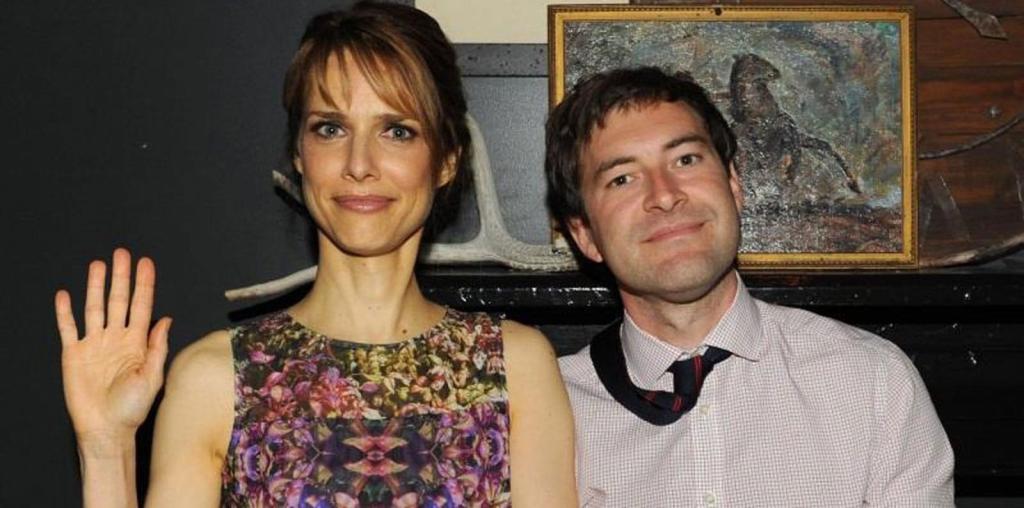
Documentary Review: The strange relationship that develops between “The Paint and the Thief” who robbed her

painter2

One day in 2015, two men went into Oslo’s Galleri Nobel and stole two large photorealistic paintings by Barbora Kysilkova, a lightly-regarded Czech emigre newly-settled in Norway.

There was surveillance footage of the crime, one guy in a hoodie, the other in a stocking cap, taking the rolled up paintings to a garbage can and spiriting them away.

They didn’t get away with it. The men were identified from the CCTV video and arrested. The paintings? Not recovered.

But in the courtroom, waiting for the trial to begin, Kysilkova screwed up her courage and went over to where defendant Karl Bertil-Nordland sat and asked him the two questions that were bugging the hell out of her.

“Why did you take those two paintings,” in other words, “Why me?”

“They are very beautiful.” Everybody’s a critic, and tattoos, drug history and arrest record be damned — “Bertil” knows what he likes.

“What happened to the paintings?”

“I can’t remember.”

Kysilkova may or may not have planned what she was to say next, but “I’d love to make a portrait of you” is what comes out of her mouth.

There is audio of this exchange which underscores drawings that illustrate the unofficial, unsanctioned courtroom meeting. Documentary filmmaker Benjamin Ree (“Magnus”) heard about this and thought  “There’s a movie in that.”

“The Painter and the Thief” is his unusual exploration of art, the artistic temperament, empathy and compassion, a film about the human willingness to “see” and need to “be seen.”

It’s the sort of film you’d never expect to see or expect to be made in the United States. As Ree captures their out-of-courtroom meeting in a coffeehouse, and then sits in as a shirtless Bertil poses, covered in ink (“Snitchers are a Dying Breed”) as Barbora sketches him as they chat, an American might rightly wonder, “Why isn’t he in jail?” The longer the film goes on, the more we wonder.

The painter and the thief are studied and interviewed separately, and together, by Ree. We see the relationship develop, get a hint of each person’s backstory — the haunted painter with a taste for the dark side, the more-articulate-than-he-seems drug addict and petty thief.

An accident interrupts the relationship, and as a DWI is involved, we see Bertil do more time for that than he apparently did for swiping two paintings.

Bertil wonders if this “paint-your-portrait” come-on is “a trick.” Barbora’s Norwegian boyfriend is put-out and wondering if this clingy, “I don’t remember” robber isn’t more destructive to her than she realizes.

“She sees me very well,” Bertil admits (in English, and Norwegian with English subtitles). “But she forgets, I can see her, too.”

But our cynicism about this odd, overly-tolerant and weirdly compassionate pairing, and what having a camera in the room does to alter the dynamic, is given its own test when she reveals the portrait to Beril. He is shaken and moved to tears.

painter1

Things turn even more complicated as the film progresses, with the viewer never quite sure if Bertil is lying, if he sold her paintings and spent the cash on a drug binge. But Barbora is not the naive model of empathy she seems, either.

Bertil’s many injuries from his near-fatal car accident are reduced to body parts, in her field of vision.

“You have big nail holes, from the ROMANS!” She has simply GOT to paint the “stigmata” on his hands.

The film’s muted, Scandinavian tone means there won’t be any explosions. We just see the odd testy protest that she’s avoided asking him directly “What did you do with my paintings?” when he complains that she’s pestering him. And we hear the futile pleading of her “boyfriend” in front of a couples counselor about this “destructive” and “dangerous” thing she’s allowed herself to become entangled with.

What we’re left with is a fascinating glimpse of the myopic mania for “inspiration” of the artist, and a look at a culture where compassion and restitution (apparently) carry more weight than “punishment’ for the thief.

3stars2


MPAA Rating: unrated, profanity.

Cast: Karl Bertil-Nordland, Barbora Kysilkova

Credits: Directed by Benjamin Ree. A Neon release.

Running time: 1:44

Posted in Reviews, previews, profiles and movie news | Comments Off on Documentary Review: The strange relationship that develops between “The Paint and the Thief” who robbed her

Movie Review: Hawkes, Lerman and Ireland shine in “End of Sentence”

Truth be told, “End of Sentence” doesn’t get you, straight out of the gate.

It’s downbeat, and the father-son rift acted out by Logan Lerman and John Hawkes feels contrived, more something dictated by the script and the near archetypes the two play.

But then this story of a sullen, just-out-of-prison son (Lerman, of Amazon’s “Hunters” and the tank movie “Fury”) who wants nothing to do with his doormat Dad (Hawkes of “Winter’s Bone” and “Three Billboards” and “Peanut Butter Falcon”) finds its way to Ireland. It’s where the husband promised to spread his cancer-stricken wife’s ashes when their boy got out of prison.

And even though that road picture/father-son “bonding” premise has a hint of the over-familiar about it, the movie lifts off, finds its heart and wit and transcends its potential.

It happens in a bar, after the quarreling father and son — each has issues, each blames the other for a BIG hidden hurt — have given a lift on their cross-Ireland trek to a bar pick-up (Sarah Bolger) the son has taken a fancy to.

There’s a band in the pub, as is sometimes the case in Ireland, ALWAYS the case in movies set there. And they launch into a song and Jewel joins in on The Pogues’ “Dirty Old Town.”

Clouds are drifting across the moon
Cats are prowling on their beat
Spring’s a girl from the streets at night
Dirty old town
Dirty old town

We’ve seen father Frank’s leeriness about giving her a ride, belligerent punk Sean’s insistence on it and Jewel’s sweet way of consoling a man who has lost his wife, who has started to doubt he’s even the father of this miscreant kid, who realizes that this whole trip is just another instance of somebody imposing what they want, their will, on him.

That moment puts an exclamation point on her kindness, lets her explain why she’s doing it — “You make a girl feel dignified” — and signals an abrupt turn for the better as the movie finally starts upending expectations and reveals its charms.

Producer (“What Maisie Knew”) turned director Elfar Adalsteins, working from a Michael Armbruster (“Beautiful Boy”) script, makes everything that the first act contrives to set up have some little payoff by the finale.

Maybe the opening bursts of hostility, where Sean refuses to let his father visit him in an Alabama prison — only his mother — his muttering to the guard who wonders “Who’s that?” about this man Sean won’t let pick him up at “End of Sentence” that Frank is “Nobody,” still seems extreme.

Maybe the bullying kid, testing and pushing around his old man, seems — in not justified, at least understandable.

A curious, unsettling Irish way in a Dublin bar that provides nothing but more doubts and few answers to Frank’s doubts, and a road trip that has the odd adventure and the occasional bittersweet connection to the late Anna’s past provide the build-up.

But it is Bolger, best-known for her work in the biker gang series “Mayans M.C.,” whose introduction may be sketchy and back-story a tad too pat, whose character raises the stakes and whose turn in a simple, formulaic scene gives “End of Sentence” the life it needs, just with a song.

stars2

MPAA: unrated, mild violence, profanity

Cast: Logan Lerman, John Hawkes and Sarah Bolger.

Credits: Directed by Elfar Adalsteins, script by Michael Armbruster. A Gravitas Ventures release.

Running time: 1:36

Posted in Reviews, previews, profiles and movie news | Comments Off on Movie Review: Hawkes, Lerman and Ireland shine in “End of Sentence”

Mark Duplass on colleague, friend and Mumblecore icon Lynn Shelton

Sweet Variety piece on director Lynn Shelton, getting close to her special contributions to indie cinema.

https://t.co/K42GGS1zci https://t.co/llvNZjsYLj https://twitter.com/Variety_Film/status/1263112382462611457?s=20

Posted in Reviews, previews, profiles and movie news | Comments Off on Mark Duplass on colleague, friend and Mumblecore icon Lynn Shelton

Movie Preview: Nikolaj Coster-Waldau checks into a Hotel for Suicides, “Exit Plan”

You probably wrote their ad campaign, just based on the headline.

“You check, but you never check out.” Very “Hotel California,” in Europe. Without the “f—–g Eagles, man.”

A June 12 release.

Posted in Reviews, previews, profiles and movie news | Comments Off on Movie Preview: Nikolaj Coster-Waldau checks into a Hotel for Suicides, “Exit Plan”

Preview:”Space Force” final Trailer

Netflix puts Steve Carell in charge of “Space Force ” Seems so right.

Posted in Reviews, previews, profiles and movie news | Comments Off on Preview:”Space Force” final Trailer

Documentary Review: A comic and her peers talk about the “Funny Pains” that make memorable stand-up

About six minutes into “Funny Pain,” a stand-ups-talk-about-stand-up documentary focused on Wendi Starling, I thought — “Wait, did she die? Is that what this is, a tribute?”

The Jorgy Cruz film is slap-dash, and seems locked in on Wendi’s life and work in 2015. She rushes her words, frantic, almost exhausting to listen to off-stage. Another sad clue?

And if you know anything about her, what she’s famous for, it’s the “manic, mentally-ill and in a mental hospital” material, riffed from real life, or it’s the “gang rape story.” So thinking she passed away isn’t mean or completely out of left field. Lot of tragedy in the news. Might have slipped by me.

Hearing her breathlessly patter on about “the first time i was hospitalized” and the “I’m so tired” mantra of people who burn the candle at both ends, then listing what she did the last 36 or 48 hours, mention her “black out” drinking and how cocaine used to be a part of her life and her act, then launch into some semi-vicious hatred for the audience (a stand-up ethos) and acknowledging her bipolar tendencies with what her teachers and parents USED to think — “I just get hyper, sometimes” — you think, “messed up.”

How can anybody be that wired and survive? Perhaps exhaustion got her, or worse. She’s had a few series shown in places, well I couldn’t tell you where they aired. “High Land Parking?” “Recycled Babies?” She’d have to be close to 40 now, right? A lot of comics have psychic damage and this insane drive and some don’t get out of there alive if they fall short of their “make it by 35” dreams.

Then the film shows Starling riffing on suicide, onstage and off, and how using that word impacts your involuntary hospitalization and you figure “Yeah, that’s it. This is going to be like a Bill Hicks thing.”

You check Wikipedia for an obit, and hell, she has no page. Sad.

But no, the morbid thoughts just come from the way she comes off in “Funny Pains.” We see her manic and we see her when she’s down. VERY down.

It’s a relief when the film’s last few minutes catch up with her in 2019, co-hosting a sort of sketch comedy dual act, hitting all the podcasts, writing and co-writing, working hard to never use that dated Every Comedian’s Dream cliche — “I just want to get a pilot.”

Still, Starling does kind of recede into the background of her own “film,” which fills a lot of screen time with the thing everybody from Woody Allen to Seinfeld has taught us that comics live for, the group BS session after a show, in a friend’s living room (Shabby chic and IKEA?) or in an empty New York Comedy Club.

With Nikki Glazer and Rick Vos and Yamaneika Saunders and Mehran Khaghani and Krystyna Hutchinson around, even if one or two of them say, with Starling present, how “real” she is and how “brave it is to do a bit” like her more-chilling-than-funny “rape story,” she gets a lost in the mix.

As some of these sessions have people speaking off-mike, and the film’s organizing principle is feeble and we get the idea that the “2019” material was an afterthought, we come back to “slapdash.”

So my apologies to the artist for thinking she was dead. But entrusting your image to director Jorgy Cruz? Maybe not the safest bet.

The biographical stuff, slipping in here and there, has some interesting anecdotes. There are hints of an unconventional childhood, mother abandonment, then lying her way onto a stage in Boca Raton for the first time (by accident) where she used the little she learned watching “Seinfeld” to good enough effect (recreated in a murky blur) that she realized this was where she belonged.

The analysis of when to trot out “sure thing” openers, how to read the room by the degrees of enthusiasm that “sure thing” generates, when an audience is so touristy (maybe not even native English speakers) that this is when you “try out new bits,” new jokes, because “Who cares about them?” at this point, are all interesting and astute takes on the craft of stand-up.

We hear about her “two day jobs” but never what they are. We don’t see enough of her working to get the sense of how she generates material, but she recognized early on that “When I’m talking about super-real stuff, it works.” Hearing her generic New York vs. LA banalities is enough to make you hope something “real” is coming up soon.

She’s self-aware enough to realize she can’t let the “rape story,” the “mental illness” stuff, her acknowledgement of her “black out drunk” years (We even see her giggling drunk, at one point.) become “gimmicky.” What else ya got?

The film is so all over the place that the comedy seems that way, too. “Funny” gets at her various “issues,” but doesn’t have enough good, solid comedy to make us care.

And since she’s already confessed that “I don’t like crowd work (questioning the audience for bits) “because I don’t give a s— about you guys,” we’re starved for some reason NOT to return the favor.

1half-star

Cast: Wendi Starling, Nikki Glaser, Krystyna Hutchinson, Yamaneika Saunders , Jim Norton, Bonnie McFarlane

Credits: Directed by Jorgy Cruz. A Passion River release.

Running time: 1:30

Posted in Reviews, previews, profiles and movie news | Comments Off on Documentary Review: A comic and her peers talk about the “Funny Pains” that make memorable stand-up

Movie Review — “American Trial: The Eric Garner Story”

trial3

“American Trial: The Eric Garner Story” is a righteous cause supported by a very bad idea, but a bad idea (a docu-drama) executed about as well as could be expected.

The “cause” is getting us to take another look at a 2014 case, an unarmed, overweight black man tackled, arrested and put in a choke hold by cops intent on arresting someone for selling loose cigarettes on a Staten Island street corner.

It was, as lawyer, legal scholar and Fox News talking head Alan Dershowitz says, an “alleged offense so trivial” as to beggar belief, with consequences — Garner died from injuries suffered during that illegal (NYPD banned “choke hold”) — that could not have been more dire.

A Staten Island grand jury elected not to recommend prosecution of NYPD officer Daniel Pantaleo, the man who applied the chokehold, and has never released the transcripts of the evidence seen and heard and their deliberations.

If you’ve seen the video of the arrest, four officers surrounding the gigantic, protesting Garner, nobody once saying “I’m gonna have to write you a ticket,” taking the man to the ground to the shouts of “I didn’t do NOTHING, no no no NO NO I can’t breathe, I can’t BREATHE,” a phrase he gasps out eleven times, you can’t ever forget it.

“Excessive force,” you think, at the very least. “I just saw a man murdered” might be a reasonable conclusion, too.

The case, one of a distressingly large number of such cases (continuing to this day) of armed cops killing unarmed civilians, became a national flashpoint. “I can’t breathe” T-shirts made it all the way to the NBA.

Anything that brings attention back to this seeming injustice is justified, right?

But filmmaker Roee Messinger elected to do it via a movie, a “What if there’d been a trial?” take on the case. This is the “very bad idea.” Messinger decided to make a docu-drama, not a documentary.

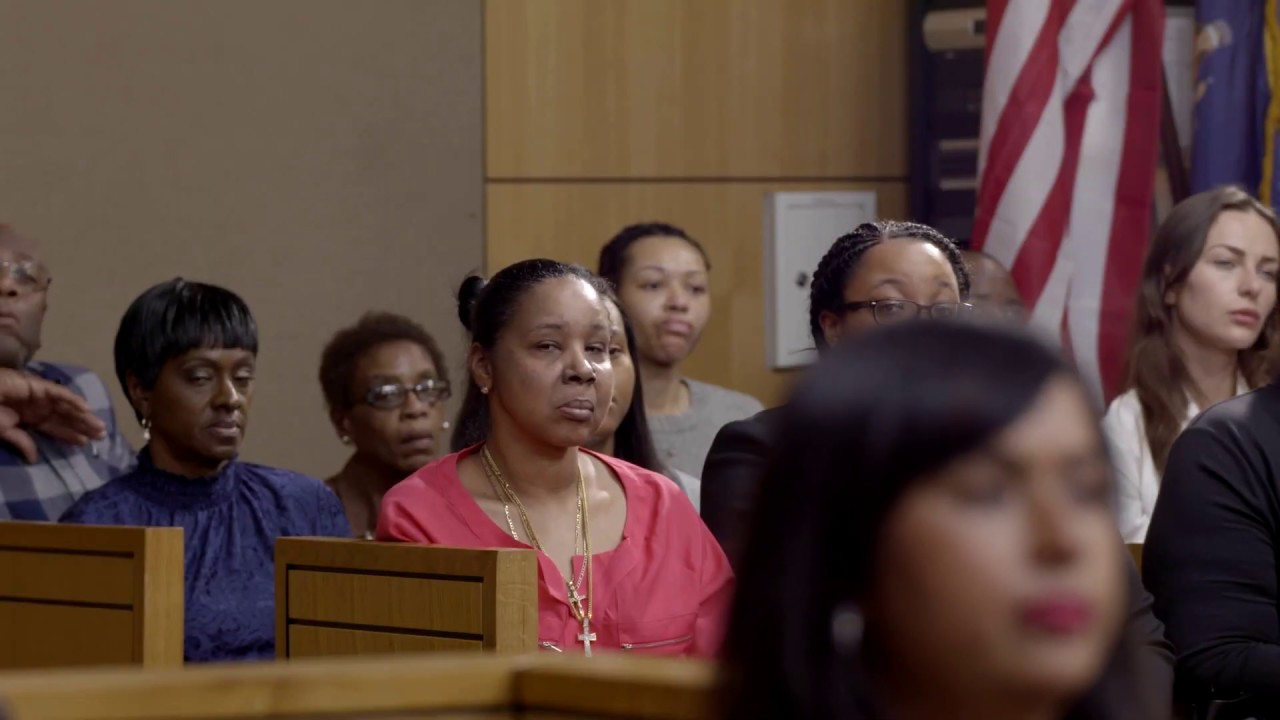
Using the known evidence, attorneys hired to prosecute and defend the case, a lawyer hired to play a judge, real witnesses — Garner’s widow, Esaw, a friend, retired NYPD officers and medical examiners speaking on behalf of the defense and the prosecution, and an actor hired to be Pantaleo (Anthony Altieri) — inventing pre-“trial” interviews and a rented courtroom, Messinger runs a mock trial.

And while that can be a most instructive exercise for training law students, it makes for generally dull and a disastrously deceptive “what might have been” made in pursuit of “justice.”

Blending in actual news coverage of the trial, footage of LeBron James and teammates in Garner “I CAN’T BREATHE” jerseys, then-President Obama speaking out, TV talking heads talking up the subject, just amplifies the crime against objective truth.

If you don’t remember who said what (Republican Rep. Peter King is here), how do we know what was really said, and what’s imagined for the cameras? An opening “nothing was scripted” here explanation doesn’t cover it.

What can we believe?

Compounding the film’s problems is the fact that most of it consists of this mock trial. Legal junkies obsess over big cases — Casey Anthony and George Zimmerman here in my (Florida) neck of the woods, for instance. But like most court cases, this is visually and dramatically dry and dull, with factually defensible testimony and spurious “objections,” cursory opening remarks and perfectly logical and believable closing statements.

You’re here to try decide the guilt or innocence of “Danny,” the actress/lawyer playing the defense attorney intones, “NOT here to decide ‘Black Lives Matter.’ They do.” She quotes Martin Luther King Jr. and Gandhi, too.

I could totally see and hear that happening. But it didn’t. It hasn’t. And “American Trial” seems a blundering attempt to change that fact.

Movies have turned a spotlight on injustices before, and some — the various documentaries on the West Memphis Three, Errol Morris’s “The Thin Blue Line” — have led to justice being done. Such films often include recreations of the crimes being discussed.

But here’s a tip somebody should have passed on to filmmaker Messinger before he rounded up the GoFundMe cash to make “The Eric Garner Story,” which really isn’t” The Eric Garner Story,” by the way.

You want to move the legal system, you stick with the facts and the compelling tragedy and grave injustice those facts support.

Nobody EVER got a new trial, a re-hearing in the bright light of public opinion, via a docu-drama.

1half-star

MPAA Rating: unrated, disturbingly violent video

Cast: Esaw Garner, Alan Dershowitz, Anthony Altieri

Credits: Directed by Roee Messinger. A Passion River release.

Running time: 1:40

Posted in Reviews, previews, profiles and movie news | Comments Off on Movie Review — “American Trial: The Eric Garner Story”

Movie Review: The wear and tear of “The Aerialist” dancer’s life

aerial3

We got a glimpse of the stage dancer’s hard, short professional life in “A Chorus Line.” But for a taste of the serious wear and tear, the brute strength, debilitating injuries and career-crushing ageism facing the women and men in tights and leotards, check out “The Aerialist,” one of the most revealing movies about the dancer’s life ever made.

Gymnast, dancer, aerialist and actress Dreya Weber and her director/ex-husband Ned Farr made this sequel to “The Gymnast,” which captured the dancing and Vegas acrobatics after-life of a former Olympic hopeful Jane Hawkins (Weber).

That film captured Jane at 43 — well-past the average show dancer’s lifespan. In “The Aerialist,” the woman her colleagues nicknamed “The Hawk” is a veritable legend, “the oldest aerialist in rock’n roll,” her neighbor Dan (Stef Tovar) jokes as he gives another life-saving massage. “You know how dumb that sounds?”

She won’t accept that. Jane has rejoined “The Family,” the longtime stage dancers and aerialists who liven up the concerts of rock-pop legend Aurora (Monique Parent) on her “last tour.” This tightknit group, reminiscent of Taylor Swift, Beyonce or Madonna’s accompanying dancers (Madonna’s even called themselves “The Family,” if memory serves), has been together 20 years. All they need to do is rehearse the routines and get in tour shape with choreographer Spencer (Bernard White), and on the road they go — subletting their LA and/or Vegas apartments, traveling the world, one venue at a time.

But Spencer’s short-tempered and panicked, yelling even at his aerial director and friend, Jane.

“It’s fine,” she says.

“It’s not. ‘It’s’ back.”

He’s too sick to carry on. Jane is put in charge of getting everybody ready, but that lasts for just a day as a hot new choreographer with “the vision” shows up. Xavier, “Call me Z” (Kelly Marcus) has zero experience dealing with the safety issues and physical demands of rope, ring and Spanish Web performances. He starts getting people hurt the minute he walks in the door.

The Family is in open revolt. Jane is humiliated and enraged and more physically imperiled than anybody else, being the oldest. Something’s got to give. Does Aurora know about this?

But the generic and only mildly-interesting surface intrigues are not what lift “The Aerialist.” It’s the story of a dancer on her last legs, shoulders and fingers that holds our interest.

Given a lift home by her “Gymnast” aerialist co-star Serena (Addie Yungmee) lets them compare wounds and war stories. Seeing Serena limp off shows Jane as she’s not yet willing to see herself — practically crippled by work she’s barely able to manage any more.

The massages, consultations with a doctor, tape she covers up and injuries she hides from the punk “Z” are an extra level of “performance” that goes into her day.

There’s no HR department in rock’n roll. Z can get away with his snide “back in the day,” cracks, suggesting how dated they and their dancing are, his  “This is no longer The Dinosaur Tour” and “Eat your Wheaties, lose some weight, drink your Ensure” insults.

Some won’t put up with that. Some will. Don’t take that “Family” nickname too seriously. Because business is business, ESPECIALLY in show business. aerial4

The romantic/marital/sexual wrinkles in “The Gymnast” are replaced by those provided by a reporter (Morgan Bradley) demanding that The Hawk “let me IN” to her inner secrets for a too-revealing profile. Others tell the reporter bits of Jane’s story, and Jane herself summarizes her career — a 1980 Olympic hopeful, but the Olympics were boycotted, hopeful again in ’84 and ’88, “But life for me started when I learned how to fly!” — when she can spare a second.

And then there’s the singing star’s daughter (Victoria Meade), a go-fer during rehearsals until Jane finds more appropriate work for her to do.

But the melodramatic script isn’t the draw here. It’s the demanding artistry, the behind-the-curtains peek at how the dancing/flying sausage factory of pop concert tours are pieced together.

What’s worth watching and considering is the athleticism, bravery and calling of the dancers, just needing that next gig, just wanting to hang on to their careers a little longer, just wanting another chance to show “what I did for love.”

stars2

MPAA Rating: unrated

Cast: Dreya Weber, Morgan Bradley, Kelly Marcus, Victoria Meade,Thunderbird Dinwiddie,  Grasan Kingsberry  and Stef Tovar

Credits: Written and directed by Ned Farr. An Indie Rights release.

Running time: 1:4

Posted in Reviews, previews, profiles and movie news | Comments Off on Movie Review: The wear and tear of “The Aerialist” dancer’s life

Movie Review: Once more, into the breech — “The Trip to Greece”

greece3

Steve Coogan and Rob Brydon reunite for one more comic travelogue in “The Trip to Greece,” retracing the steps of the mythical Odysseus in a land steeped in history.

As indeed are our co-stars — retracing ancient steps and an ancient relationship. That’s the joke these four “Trip” movies — the long-standing, easy-going (sort of) hate-love relationship that’s developed over the decades between the relatively famous but insecure funnyman Coogan (“Philomena,” the recent “Greed,” filmed in Greece) and the less-famous, needier and “always on” Brydon (“Blinded by the Light,” “Swimming with Men”).

They first worked together (and with director Michael Winterbottom) on “24 Hour Party People,” Coogan’s first big break in film when it came out in 2002. Brydon also appeared on one of Coogan’s Alan Partridge TV series (Coogan played a hapless, self-important and downwardly mobile chat show host, then DJ, etc.). But it was their semi-improvised rapport-rivalry on Winterbottom’s hilarious “Tristram Shandy: A Cock and Bull Story” (2005) that inspired Winterbottom to pair them up for these travelogues.

Put two funny, competitive comics — with egos and a rich store of celebrity impersonations at their their disposal — in a Land Rover, Mini Cooper or what have you, and send them on “a newspaper travel assignment” to The Lake District of Britain (“The Trip”), and later to Italy and Spain.

They eat, drive, experience relationship or personal crises as they travel from one tony hotel/4-star eatery to the next, bickering and mimicking and competing along the way.

That lengthy prologue feels necessary on this review because that “history,” invented basically for the cameras, is THE running gag in these films, the thing that makes them hilarious to the initiated.

If you don’t know that history or don’t like the prickly Coogan or exhausting Brydon, this isn’t for you. There isn’t enough scenery and history (and there’s a bit) to make this a proper travelogue, even though it is scenic and is historic and there may have been more of “that” in the TV version of this decade of British TV specials-turned-into-feature films for the international market.

I find them hilarious, and I think this fourth and “final” outing in their “trilogy” is the funniest since the first.

The “odyssey” they set out on barely holds their attention as they bring an “Innocents Abroad” disdain to overly-ruined ruins, straight off.

“There’s not to lot to see here, when you think about it.”

They begin in Troy, in Turkey, and trek to Ithaca by sailboat and Land Rover, ferry, on foot and even swimming as they visit the Temple at Delphi, Nestor’s Palace, Pylos, Lesbos, Stagira and the Caves of Diros.

The jokes kick in with a recognition of Coogan’s recent (mild) success playing Stan Laurel in the “Laurel & Hardy” bio-pic. We’re treated to his impish Laurel and Brydon’s wheezing Batman villain Bane in in a “Laurel and TOM Hardy” gag.

The dinner table banter devolves into dueling Roger Moores, Sean Connerys and Dustin Hoffmans, Brydon (a better mimic in most cases) “casting” Coogan as they do.

“Try it AGAIN Steve. I REALLY want you for this part.”

The obligatory reference to the role that Coogan used to worry (in “Tristram Shandy” AND “The Trip” films) would be all he’s remembered for is a shouted “A-HAAA,” Alan Partridge’s signature sign-on. Yes, even in Greece he gets that.

But as they remember Lord Byron’s most proud moment, swimming the Hellespont, Coogan’s left that fear behind.

“Thing you’re most proud of…?”

“My SEVEN BAFTAs (British Oscar/Emmy prizes)!”

“I think the thing I’m most proud of would be my children…”

“Because you don’t have ANY BAFTAs, do you?”

And on and on it goes, Brydon intoning poetry and snippets of “The Odyssey” (or maybe the Roman epic “The Aeneid”) in what he insists is Sir Anthony Hopkins’ voice, but which sounds more like Richard Burton.

They riff through “Mutiny on the Bounty,” make male member “salami” jokes about the naval Battle of Salamis,” and reach for a Bond villain baritone, or Roger Moore as James Bond, every chance either of them gets.

“I think, Mr. Bond, you enjoy staying in the Hotel Lesbos as much as I!”

The little jab of “reality” here is Coogan’s updates from back home about a “Damien Chazelle film” that he’s up for, and the health of his dying father. Brydon, the more settled family man (unlike in one earlier “Trip”), is angling to get his wife (Rebecca Johnson) to fly over and join him after the “assignment.”

That “Who is happier?” contrast has merely to be suggested, as it has been a subtext of all their films. Is the “star” content, or is it the minor star/settled family man?

Coogan revives his “stop motion animation” and “dubbed soundtrack” tricks, Brydon his infamous “little man in a box” voice.

And there’s singing, because of course there is. Here, it’s a definitive rendition of a certain British Olympics film’s title tune, as well as a debate on the falsetto merits of the vocal stylings of Frankie Valli and Barry Gibb.

“Grease is the time, is the place, is the motion
Grease is the way we are feeling…”

Because what else would Rob Brydon hear in his head when Steve Coogan offers him a free trip to the birthplace of Western Civilization?

3stars2

MPAA Rating: unrated

Cast: Rob Brydon, Steve Coogan, Rebecca Johnson, Claire Keelan, Kareem Alkabbani

Directed by Michael Winterbottom, An IFC films release.

Running time:

Posted in Reviews, previews, profiles and movie news | Comments Off on Movie Review: Once more, into the breech — “The Trip to Greece”

Bingeworthy? “White Lines,” from the creator of “Money Heist”

lines1

Sometimes, I swear, it’s like the creators of these limited-run series are paid per minute of screen time that they convince the streamer to give them to tell their story.

A woman learns that her beloved brother — missing for over 20 years — was murdered. She flies to Spain to see the body, and to the isla of sin, Ibiza, the last place anybody saw the handsome young DJ alive.

If feature filmmakers could get to the solution in 100 minutes, what’s the extra incentive for the creator of “Money Heist,” Alex Pina, to spread it over 500?

Yes, another rant about filler, teasing and wasting screen time to get to a story that would be more compelling if told in a much more brisk pace.

But call “White Lines” a guilty pleasure, a decadent dip into Ibiza affluence, drugs, night club/casino turf wars undertaken by rival families, reopening old family wounds, and run-ins with the law. Because every single episode has one or two big grabber moments, even if they’re surrounded by lapses in logic, soap operatic excesses and twists designed to do nothing more than, say it with me, “Drag this out.”

Here’s the first grabber, 40ish Manchester librarian Zoe (Laura Haddock of the “Guardians of the Galaxy” franchise) turns away from the Spanish police inspector who has just told her that they don’t investigate suspicious deaths more than 20 years old, and runs to weep over the mummified corpse of her missing brother.

Axel was supposedly in India, his friends said. But here he is, buried in Almeria, not that far from Ibiza, where he’d become a star DJ. How he died will become clear soon enough. Who did it, or who knows who did it in the focus of “White Lines.”

Zoe was shattered by her older brother’s abandonment. She sends her husband by to Manchester alone, blows off the protests of her retired cop dad (Francis McGee) and starts tracking down those still on the island of Ibiza (filmed on Mallorca) who knew Axel.

Flashbacks to “Manchester, 1996” relate the life and sister Axel (Tom Rhys Harries, last seen in “The Gentlemen”) left behind, and pick up his early days, making his mark and meeting friends and lovers in in Ibiza.

A running gag — everybody and I mean EVERYbody, from monied power brokers to old mates to the families that struggle for real-estate (and nightclub) dominance on the island asks “Do YOU know who killed Axel?” to pretty much everybody else.

Zoe isn’t even there, and unless all these people are lying, they’re wondering the same thing she is. Her showing up just amps up pressure of the uncomfortable questions.

A second repeated gimmick — Zoe Facetimes with the shrink (Maggie O’Neill) she saw for years after Axel disappeared. She’s not just talking about recurring issues. She uses her chats with Yoana to bring us up to date on all emotional barriers she’s breaking through, laws she’s breaking and the “white lines” she’s straying from in her new “be brave” ethos. Kind of a cheat way to “bring the viewer up to date,” but there you are.

She wonders what aging fellow DJ Marcus (veteran character player Daniel Mays, the LAST guy you’d think of as a club DJ, but convincing) knows, what the club-connected/family “enforcer” Boxer (Portuguese actor Nuno Lopes, all silky menace and sexy machismo) might be able to tell her, and what Kika Calafat, of the rich club-owner Calafat clan (Boxer’s employer) might have to say.

Marta Milans of “Money Heist” makes Kika a sexy “wild child” pushing 40, remembering her “first love,” Axel. A hole in her story? Axel seduced her away from another young Ibiza prince of two turntables and a microphone. “First love? Umkay, SECOND love!”

There are other characters, further intrigues. And every episode’s “Well, not seen THAT before” moment adds to the collection of grabbers.

Intimations of incest, a murder with a claw anchor, dogs stoned on cocaine that a dealer has spilled on the lawn, a “white line” he hides by putting a child’s soccer goal on it, an insane car chase (on an ISLAND) hurling cocaine out of an ’80s VW Golf convertible, a torture session or three, a drug trip in a sweat lodge filled with hallucinogen-laced frogs, a harpooning to end a torture session — I mean, you can’t say this doesn’t have a lot of fun or jolting moments.

“Nervous?”

“Yes. To be honest, it’s my first orgy.”

And as dull as the endless trips BACK to the club, to the office ABOVE the club, to beaches, the ancient lookout tower/fortress, to marinas and mansions, can be, as banal as much of the dialogue is, there are pearls that pop out of the filler.

“If you live like a god when you’re 20,” aging DJ Marcus sighs, “how can you be happy after that? Good times are always behind you.”

I appreciate the scattering of laughs, the novel, over-the-top dips into violence (Romanian drug dealers are the scariest) and the sheer loopiness of certain decisions, actions and leaps of illogic. And Haddock conveys a nice sense of pluck, damage and recklessness as Zoe.

I can’t say I think “White Lines” (in English, and Spanish with English subtitles) is “Golden Age of Streaming TV” material. But I can say it kept me around.

2stars1

MPAA Rating: TV-MA, graphic violence, drug abuse, sex, nudity

Cast: Laura Haddock, Nuno Lopes, Marta Milans, Daniel Mays, Belén López Angela Griffin, Francis McGee and Tom Rhys Harries.

Credits: Created by Alex Pina. A Netflix release.

Running time: 10 episodes @ 50 minutes each

Posted in Reviews, previews, profiles and movie news | Comments Off on Bingeworthy? “White Lines,” from the creator of “Money Heist”