Disney Rips off Sci Fi writer. Why won’t they pay up?

One bit of bookkeeping seems to have evaded the Hollywood devouring Mouse when it swallowed 20th Century Fox.

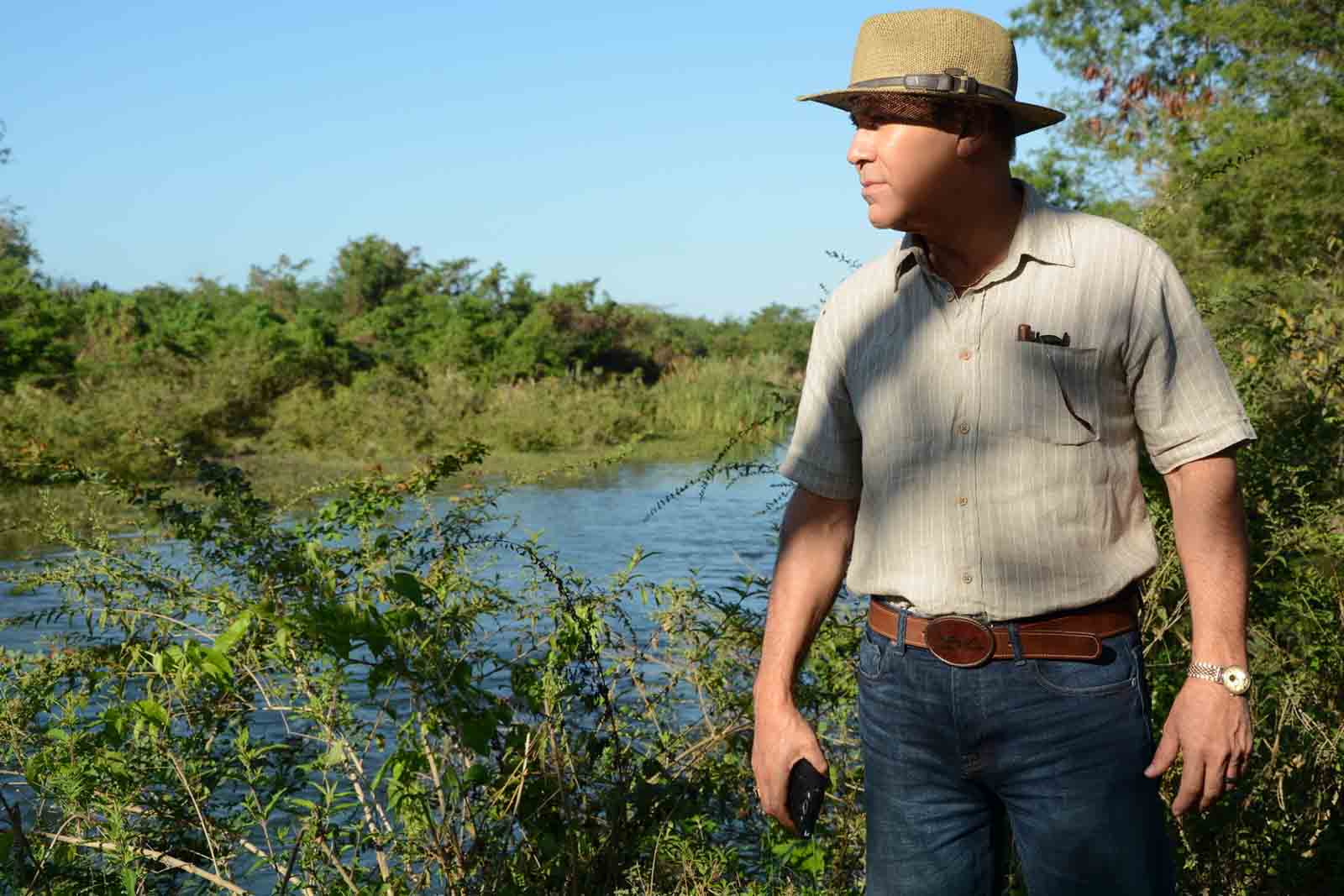
There were these Fox franchises Disney took over the rights to. Those franchises, two of them any way, had led to books — novelizations of “Star Wars” and “Alien” installments. Those books still sell. And Disney has refused to pay royalties to sci fi writer Alan Dean Foster, who wrote many of those novels.

Writers in this genre guard their rights, authorship credits and royalties with the ferocity of the late Harlan Ellison. Foster and the sci fi writers guild are outing the Mouse for ripping him off. Lawyers are involved.

This has been Disney”s brand for decades. The biggest studio, one of the world’s largest and most viable corporations, and they always cheap out on talent. Always.

They’ve gotten Congress to give them exceptions to copyright laws so that they can “protect” Mickey and other “properties” “to infinity and beyond.” But others are denied those protections whenever the Mouse deems it to be in their best interest.

Being big, they’re a lawsuit magnet. You think they’d know better than this. The optics are awful. But every now and then they go as far as flat out ripping somebody off and we read about it when lawyers get involved.

Read on.

#DisneyMustPay Alan Dean Foster

Posted in Reviews, previews, profiles and movie news | Comments Off on Disney Rips off Sci Fi writer. Why won’t they pay up?

Movie Review: Horror in a “South Park” vein — “Attack of the Demons”

Filmmaker Eric Power turns the digital version of that cut-out construction paper style of animation that “South Park” made famous loose on a town-attacked-by-demons thriller, “Attack of the Demons.”

It’s more interesting as DIY animation than as a movie, with inexpressive faces and flat-voiced actors and not nearly enough scripted wit to carry it. Sure, a cute melting skin/peeling-the-skin-off effect and the odd demon beheading can be amusing. But “Demons” is like a blandly-written and drawn horror comic, as lifeless as construction paper.

Barrington is home to a popular Halloween Festival, complete with horror movies at The Tower (theater) and battles of the “horror punk” bands at assorted venues.

Kevin, voiced by Thomas Peterson, is into film and living with his grandmother. Jeff (Andreas Peterson, who also wrote the script) is into “Rodent Rumble” and assorted other video games.

And Natalie (Katie Maguire) is returning to her hometown with her jerky music critic boyfriend Chet and his snide pal Brandon to review a show. They review the small city as well.

“I feel like these waffles are giving me cholera!”

Natalie runs into Kevin and Jeff, people who graduated together but don’t really know each other. Then she heads off to see her favorite band, Teak (“This one’s called ‘Sleeping Trees,’ off our new EP.”). Jeff goes back into the arcade. Kevin?

“Music isn’t your thing? What’s that even MEAN?”

They’re each off on their own when a demon takes to the main music stage, kills and creates recruits (like zombies) and takes over the town. There’s nothing for it but to flee to the mountain, and the old haunted mine, fighting/ducking demons every step of the way.

The immobile nature of the faces takes us back to the early “South Park,” before digitization allowed more malleable mouth-eye-nose reactions. Here, the dull amateurish line readings don’t help.

The friends-making-a-movie vibe that permeates this — Power did the animation himself, guessing the Petersons are siblings — is the most charming thing about “Attack of the Demons.” A wittier script might have allowed that friends DIYing a horror cartoon vibe to translate into something more fun on the screen.

Cast: The voices of Katie Maguire, Andreas Peterson, Thomas Peterson and Eric Power.

Credits: Directed by Eric Power, script by Andreas Peterson. A self-distributed release on Youtube, Vudu and Amazon Prime.

Running time: 1:15

Posted in Reviews, previews, profiles and movie news | Comments Off on Movie Review: Horror in a “South Park” vein — “Attack of the Demons”

Movie Preview: Sawa and Camille Sullivan, Nick Stahl and Summer Howell face a wolf in the woods, “Hunter Hunter”

No, it’s NOT based on the anime series from about a decade ago.

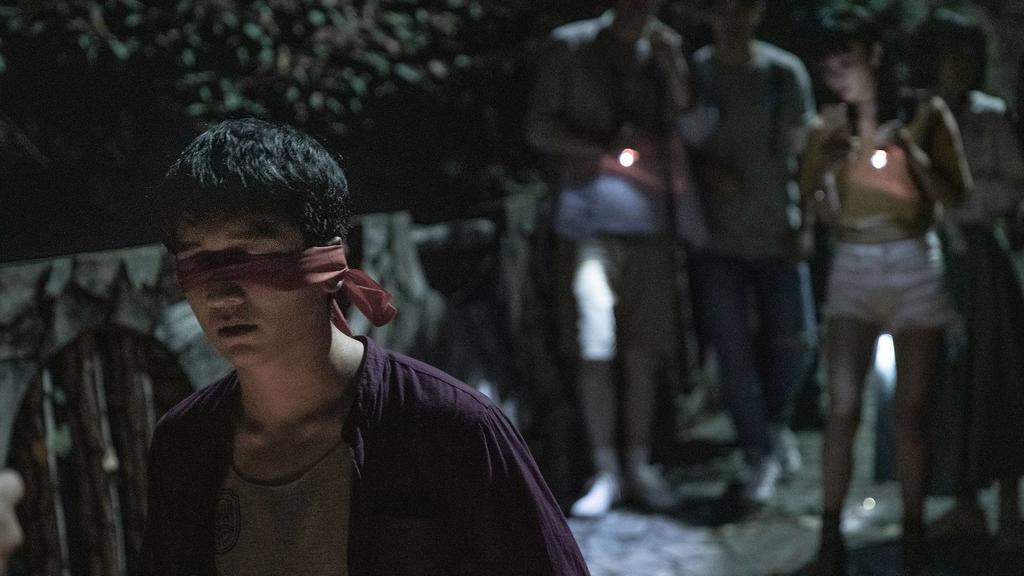
Dec. 18, IFC Midnight unleashes the hounds. Or wolf.

Posted in Reviews, previews, profiles and movie news | Comments Off on Movie Preview: Sawa and Camille Sullivan, Nick Stahl and Summer Howell face a wolf in the woods, “Hunter Hunter”

Movie Review: Strangers, thrown together — “Getting to Know You”

“Getting to Know You” is “Up in the Air” without the air — or airline travel. Or “backpack” speeches.

This light, wistful Canadian romantic comedy clings to its longing and amuses in its awkwardness. Well-cast, well-acted, a touch melancholy and a tad overlong, it’s one of those movies that would have passed me, you and everybody else by if a pandemic hadn’t derailed the global movie-consuming model.

British actress Natasha Little (“The Night Manager”) is Abby, who has flown from London to northern Ontario for a funeral. Rupert Penry Jones (“Black Sails”) is Luke, a Canadian “big city” guy “home” for his high school reunion.

They “meet cute,” late at night, at the “best” hotel in town. The “cute” and memorable part is he’s standing there, wearing a lei, and she’s trying to check in, both of them overhearing two staff members going at it in the office behind the front desk.

“I don’t think it’ll be long now.”

Ahem.

“How long should we give them?”

“About a whole cigarette.”

The terrible service at the Bay Front will be a running gag, rude rude staff members who are more tied up in their own dalliances and melodramatic intrigues than they are in their work. Another running gag? How loud, boorish and indiscreet small-town Canadians are, to a one, in this corner of Ontario.

Abby and Luke? They’re thrown together by this incompetence, two lonely strangers who bond, talk of regrets and find themselves all mixed up in each other’s business.

Because as crushed as Luke was to learn his high school sweetheart married “the paper boy” and brushed off his heartfelt confession of unending love, he’s completely put-out when Kayla (Rachel Blanchard, brash and funny) shows up, drunk, throwing herself at him in his room.

“I haven’t had an orgasm since” is merely the beginning of Kayla’s coital full-court press. She’ll leave her husband and children and run off to New York with her first love!

Only Abby can save him. I mean, “I sympathize, but what can I do?”

That’s where this “Brief Encounter” turns daft. She’ll scare Kayla off, pretending to be Luke’s wife. Only Kayla is too drunk and desperate to scare.

“He loves me more than he loves you, bitch!”

And as pushy and obnoxious as she is, she’s not the worst “old friend” Luke collides with over the next day.

Penry-Jones and Little have a genteel, reserved (they’re both British) chemistry. The laughs come from their collision with assorted Luke classmates, the testier and testier staff at the Bay Front and the preacher/classmate (Duane Murray) who presides at Abby’s late-brother’s funeral.

“It was either this or real-estate — and I was never good on commission!”

Writer-director Joan Carr-Wiggin, who’s been around since “Sleeping with Strangers” (1994), has a sure hand with this material, save for finding a graceful way to exit it. A melancholy sets in when Abby and Luke, two strangers, are left without loopy locals to bounce off of, lie about their “marriage” to on the fly, etc.

But if you’re looking for a little grown-up romance, adults with adult issues and complications that interfere with their chemistry, “Getting to Know You” more than fills the bill.

MPA Rating: unrated, with sexual situations, alcohol abuse and profanity

Cast: Natasha Little, Rupert Penry-Jones, Rachel Blanchard, Duane Murray

Credits: Scripted and directed by Joan Carr-Wiggin. A Gravitas Ventures release.

Running time: 1:43

Posted in Reviews, previews, profiles and movie news | Comments Off on Movie Review: Strangers, thrown together — “Getting to Know You”

Book Review: Nicholson, Polanski, Evans and Towne make “Chinatown” in “The Big Goodbye”

Robert Towne couldn’t structure a script worth a damn, and he kept the fact that he used a collaborator and co-writer a secret from Hollywood.

So his “greatest screenplay ever” or “best script of the ’70s” reputation, based on a screenwriting textbook’s effusive praise for it at the time, is a fraud.

Roman Polanski solicited underage girls for years before Anjelica Huston caught him with the one he was charged with drugging, raping and sodomizing (at Jack Nicholson’s house) in the mid-’70s.

Pretty boy/studio chief/producer wunderkind Robert Evans “wasn’t a reader,” but he was a decent judge of talent (save for Ali McGraw), and held screenings with friends at his palatial hilltop mansion “Woodlands,” took their opinions and molded them into his own. Such a screening was where he scrapped the dissonant score Roman Polanski wanted for “Chinatown” and brought in composer Jerry Goldsmith.

Evans liked to say he “saved” pictures like “The Godfather,” but Coppola never thanked Evans in his many acceptance speeches. And Jerry Goldsmith “saved” “Chinatown” in just a couple of inspired days. Damn.

Once Jack Nicholson got his Oscar for “One Flew Over the Cuckoo’s Nest,” right after “Chinatown,” he stopped choosing challenging material and made it all about “The doe-re-me, doll.” But we knew that.

Sam Wasson’s “The Big Goodbye: ‘Chinatown and the Last Years of Hollywood” is an evocative, detailed account of the milieu “Chinatown” was created in, just after The Manson Family mass murders, just as cocaine was about to take over Tinseltown.

Think of “The Big Goodbye” as “Once Upon a Time…in Hollywood,” with nothing but facts.

It’s a somewhat purple mini-biography of Nicholson’s Jack Pack, the friends he made when he came to Hollywood whom he stayed loyal to for decades, adding “the little Polack” (Polanski) to their ranks when they made what might be the best film of one of cinema’s best decades.

Towne and his lifelong sounding board/collaborator Edward Taylor, “the big mystery reader” (and Raymond Chandler fan) of the two, spent years building the untitled “Chinatown” out of memories of the LA that had mostly disappeared by 1970, but which both remembered from their youth. Towne wrote it for his longtime pal and muse Jack Nicholson, just reaching stardom after “Easy Rider.”

And then Polanski, still devastated by the Manson family murder of his wife, Sharon Tate, was lured back to a city that haunted him by Evans, whose studio made a mint off “Rosemary’s Baby.” Polanski stripped the bloated script down to its private eye basics, “made it make sense” and made damned sure “the girl dies at the end.”

“The girl” was Faye Dunaway, a diva hated on the set, bullied by Polanski, but understood by some of the other actors in the picture. She kept everybody waiting.

Jack? He had to be done by the time the Lakers were on TV. As always.

“The Big Goodbye” is a breezy, quick read — purple passages about “the eucalyptus” and everybody involved’s childhood/parent “issues” aside. Longtime Variety chief Peter Bart, Evans’ Paramount colleague/co-conspirator (the who one read and had taste) is here, very young Anjelica’s infatuation with Jack, Jack’s adoration of her dad, director and “Chinatown” co-star John Huston, all covered as Warren Beatty, Hal Ashby, Harry Dean Stanton and others drift around the edges.

Anecdotes abound, furious on-set fights, Dunaway shrieking when Polanski impatiently yanked out strands of her hair to make a prettier shot, Nicholson and Polanski squaring off over a Lakers’ game that went into overtime. But the many ways Anjelica Huston could be humiliated by her drunken dad whenever she visited the set stands out.

“So…” her father boomed across the (lunch) table to Nicholson. “I hear you’re sleeping with my daughter…Mr. Gitts!”

Wasson is astute in picking out the dates and ways Hollywood “ended” around this time, from “Billy Jack” turning the business into wide releases/make all the money the first weekend, to “Jaws” launching the blockbuster era to Jack’s selling out to play “The Joker,” which drove him, the broken outcast Evans and coke-addled Towne to finally get around to “The Two Jakes” sequel over a decade later.

The overarching theme, a loss of American innocence, connecting the “water theft” scandal of LA history from the movie to the Manson murders and Watergate, fits like a glove.

If you loved “Once Upon a Time,” here’s one of the better books about its context, built around one of the defining films of the era.

The Big Goodbye: Chinatown and the Last Years of Hollywood. By Sam Wasson. 334 pages, $28.95, Flatiron Books.

Posted in Reviews, previews, profiles and movie news | Comments Off on Book Review: Nicholson, Polanski, Evans and Towne make “Chinatown” in “The Big Goodbye”

Movie Preview: A fantasy thriller? “Girl With No Mouth”

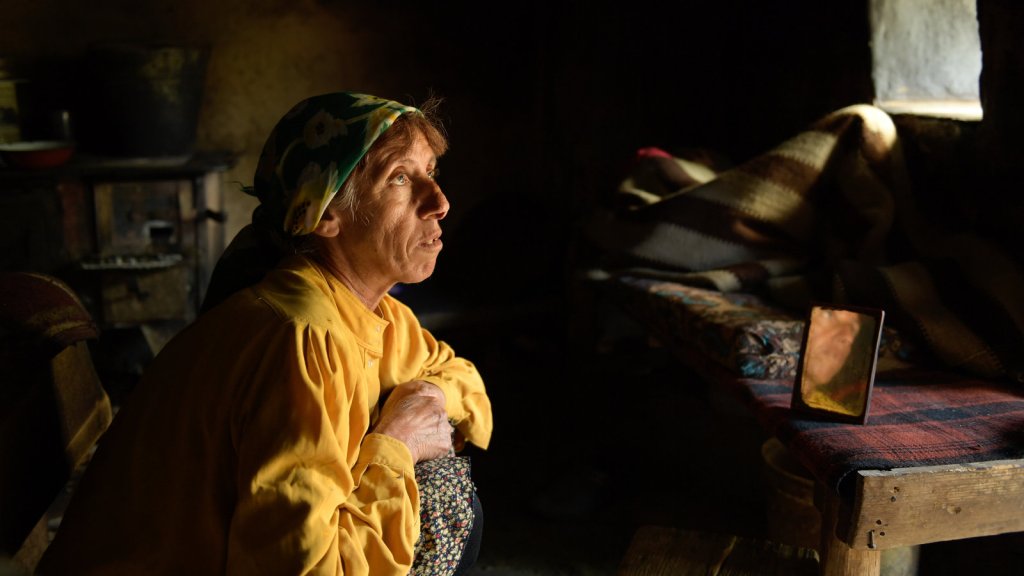
This Canadian indie ooks odd, and promising.

Dec. 8 it streams, VODs and DVDs.

Posted in Reviews, previews, profiles and movie news | Comments Off on Movie Preview: A fantasy thriller? “Girl With No Mouth”

Documentary Review: “Soros” humanizes, explains, celebrates the boogie man of America’s far right

In the last decade of the Soviet Empire, George Soros sent copying machines to Eastern Europe.

People like Václav Havel of Czechoslovakia, Lech Wałęsa of Poland and other dissidents behind the Iron Curtain got them. In that pre-Internet age, photocopying fliers, Western newspaper stories and calls to action was a cost-effective way to spread messages of dissent across totalitarian states.

In violent, racist and fascist 1979 South Africa, Soros underwrote a vast academic scholarship program for Black schoolchildren, reasoning that if anything there was ever going to improve, “educating the Blacks” would be behind it.

When the Bosnian Civil War broke out and with it the Serbian genocide against Muslims in the formerly multi-ethnic states of the former Yugoslavia, Soros charities shipped vegetable seeds and newsprint to the besieged minorities, sponsored concerts and the like, an effort to “let them hang on” until the international community finally took action against the aggressors.

And when the Serbian mass murderers were finally brought to justice, it was an in International War Crimes court backed by charities supported by George Soros.

Lucky and rare is the American who doesn’t have some Fox-addicted relative or high school classmate forwarding a chain letter literally demonizing — pictures with little Devil’s horns drawn on — or just blurting out the name “George SOROS” in the middle of a debate that they’ve realized they can’t win on the merits of their arguments.

He is the far right’s Bond Villain, financially responsible for everything they hate, from “Black Lives Matter” and the mythic “antifa” to COVID19 shutdowns and the pumpkin spice flavoring epidemic.

A quick and cringe-worthy montage of Fox News, Russia Today, Rush Limbaugh, Lyndon Larouche, Anne Coulter and Glenn Beck clips, of Britain’s Brexit backer Nigel Farage and Hungarian strongman Viktor Orban cursing his name open “Soros,” a documentary profile of the Hungarian expat, hedge-fund billionaire and global philanthropist. Such hate-mongering montages also show up later in the film, directed by comedy director Jesse Dylan (“American Wedding,” “Kicking and Screaming”). It’s an ongoing caricaturization.

Then Soros himself appears, a very old man in a plain shirt, telling his story. He re-directs Dylan’s off-camera question about the beginning of his “political philanthropy” (the South African scholarships) and tells his life story — growing up in Hungary during the Holocaust, the ways his father kept the family alive, even if he couldn’t keep the Russians from raping his mother after the Germans were finally driven out.

Academics, journalists, non-profit NGO (non-government charitable) organization chiefs, and no less than THREE Nobel laureates then weigh in on Soros the man, his seemingly sincere motivations and his global impact on pushing the world’s repressive regimes towards more “open societies.”

And any sober-minded person who isn’t brainwashed can only wonder, “What on Earth are those people (Fox addicts) upset about?”

Dylan’s film’s interviews are mostly with people who know Soros, including his children and those in charge of the Open Society Foundation, which he backs, although others are here to take a more detached view of his philanthropy and impact on the world.

Fox’s Tucker Carlson lays out why people mistrust Soros, without accepting responsibility for Rupert Murdoch’s media empire’s anti-Soros mania. Oh no, the death threats and bomb sent to Soros’ house have nothing to do with O’Reilly, Beck and Carlson’s ceaseless “dog whistle” attacks on the Hungarian Jew.

Soros is seen in decades of interviews sampled here, typically promoting books that he wrote as he started spending the billions he’d earned as a high roller, betting on or against banks, businesses and governments heading into or emerging from each financial crisis that he had the foresight to anticipate. He talks of the big influences on his thinking, and what’s shaped his philanthropic philosophy.

He sticks up for minorities, like the one he belongs to that so many right wing critics are so very quick to bring up. And when he donates to support free speech, education, equal rights or what have you in Africa, Myanmar, Hungary or the Middle East, he wants to lead by example.

Soros understands the value of “not simply helping people like you.”

The film doesn’t significantly alter the picture of Soros that has emerged from a “60 Minutes” profile here or a CNN interview there. But those aren’t the media organizations lying about his background, exaggerating his influence or twisting his motives. They aren’t the ones drawing Satan’s horns on his head.

Then again, Nobel laureates, American Civil Liberties Union, Human Rights Watch and NAACP spokespeople aren’t nearly as credible as Anne Coulter, Rosanne Barr and loony Lyndon Larouche to the hopelessly venal and ill-informed.

As America starts the long process of recovering from the racist-nationalist ignorance of the last four years, an intellectual, moral and financial collapse that even Soros didn’t see coming, “Soros” could be a useful film to buy and send to relatives this holiday season.

The Fox-driven hatred of Soros comes off as many of Donald Trump’s tantrums do — “projection.” Fox oligarch Rupert Murdoch is the one not-so-secretly attacking free speech and disrupting free societies for personal gain. But blame George Soros.

Let the people you won’t be able to see thanks to an incompetently managed pandemic and the political ugliness that Donald Trump’s reign unleashed get a light dose of “fact” in place of the ignorance and hatred they’ve been spreading, one ignorant, Anti-Semitic chain letter at a time.

MPA Rating: unrated

Cast: George Soros, Leymah Gbowee, Kofi Annan, Jeri Laber, Leon Botstein, Joseph Stiglitz, Tucker Carlson, many others

Credits: Directed by Jesse Dylan. An Abramorama release.

Running time: 1:25

Posted in Reviews, previews, profiles and movie news | Comments Off on Documentary Review: “Soros” humanizes, explains, celebrates the boogie man of America’s far right

Movie Review: The Alien Predator is after Nicolas Cage…and some other folks in “Jiu Jitsu”

Well, it’s got to be worth a few laughs, right?

A martial arts sci-fi thriller with Nicolas Cage in the Nic Cage role — “He knows I’m crazy. There’s no HONOR in killing crazy!”

Set in Burma, “Jiu Jitsu” was filmed in Cypress, another dividend from that “Cypress: It’s not just for money-laundering any more” film commission campaign.

The first images are of a guy fleeing…something — with these digital Ninja throwing stars “zing zing” zinging by him.

The first words, when this wounded guy (Alain Moussi) is dropped off with the off-the-books U.S. Army group in country, are uttered by a Sergeant who sounds like Lindsey Graham’s less masculine Carolina cousin.

This indie nonsense staggers along, letting us know that our survivor has amnesia, that the Army has him but this other “team” led by Frank Grillo “had” him, that there’s something radioactive in Burma’s “Valley of the Temples,” and the guy’s actual name is “Jake,” and he has a martial artist mercenary girlfriend (JuJu Chan).

Brawls ensue. Tony Jaa is here, and Ricky Yune.

“Who WERE those Jedi Knights who just took out my unit?”

And then, Thank the Maker, Nicolas Cage Himself shows up, in full Dennis-Hopper-in-“Apocalypse-Now” regalia. Who’re you?

“I’m YOU…in a few years, if you don’t get your s–t together!”

“You look puzzled! ARE you puzzled? I get it. I’M PUZZLED.”

Cage is here to explain first, himself, how he gets along, living in a cave.

“I’ve got my hobbies. I make hats outta newspapers. It’s an art…AND a craft!”

He also pulls together all the snippets of story, the misinterpreted locals who fear what shows up every time a six year comet returns to Burmese (Cypriot) skies. Sure, we’ve seen first-person shooter point-of-view footage as Jake escapes one “unit” and stumbles into other. But then there’re all these heads-up infrared targeting shots. SOMEthing is hunting them. All of them.

It’s the Alien Predator who “brought the world jiu jitsu.” And he comes back, every six years, “looking for a fight.”

Only the best Jiu Jitsu warriors will do. A fight to the death, with the fate of humanity at stake. How’s the crazy guy know all this? Remember, “there’s no honor in killing CRAZY!”

The fights are reasonably well-choreographed, the stuntwork not totally obvious. The effects are adequate, there are half-assed “graphic novel” chapter breaks and titles — “The Rabbit,” and the like.

The story? Strictly wakkie nunu.

At least Cage is here for a few laughs. Heck, he’s even given the cleverest martial arts one-liner ever.

“Just remember the one thing you always have with Jiu Jitsu — LEVERAGE.”

MPA Rating: R, violence

Cast: Nicolas Cage, Frank Grillo, Juju Chan, Alain Moussi, Ricky Yune, Tony Jaa

Credits: Directed by Dimitri Logothetis, script by Dimitri Logothetis and Jim McGrath. A Highland Film Group release.

Running time: 1:42

Posted in Reviews, previews, profiles and movie news | Comments Off on Movie Review: The Alien Predator is after Nicolas Cage…and some other folks in “Jiu Jitsu”

Movie Review: War photographer Hugo Weaving wrestles with his past and present in “Hearts and Bones”

There’s a Post-It note on the light on Dan Fisher’s bedside table.

“Home!”

That’s for when he wakes up in a nightmarish sweat, not knowing where he is. Sydney, Australia is home. But when he isn’t there with his partner Josie, Dan is going to places and seeing things that would give anybody nightmares. He’s what we used to call a “combat photographer,” renamed “conflict photographer” for our changed times, when “war” doesn’t quite describe the traumas sweeping the planet, when photographers like Dan shift their lenses from the combatants to the victims, to the collateral damage of conflicts.

“Hearts and Bones” is a touching, earnest account of a traumatized photographer getting to know immigrants from the conflicts he’s covered, one in particular, and how it changes both men’s lives.

The Great Oz Hugo Weaving is Dan, a high-mileage photographer facing up to a coming perspective of his work back home. He’s having fainting spells and nightmares. Josie (Hayley McElhinney of “The Babadook”) drags him to the doctor. “Any head trauma?”

“Mortars, artillery,” he says. You know, the usual. “Land mines, grenades.”

An opening scene has laid out the risks in Dan’s work. He tries to help an Iraqi child who’s survived a roadside ambush that wiped out her family. A working photographer could get killed in these places. And a professional has to give up a little of her or his humanity in trying to stay sane and alive while there.

“I photograph what my conscience asks me to,” he tells an interviewer. Keeping one’s distance, though, is a part of that bargain.

Sebastian, given a soulful humanity by screen newcomer Andrew Luri, has seen Dan’s photos and heard of the coming exhibit of his work. He’s a Sydney taxi driver and a South Sudanese immigrant. He wants Dan to meet his choir. He’d like Dan to photograph them.

Dan keeps brushing him off. Sebastian says Dan was in his village, photographing a massacre. Sebastian wants to see those photos. His family was murdered that day. He wants to see them, but after that, he wants Dan to put them away.

“They always judge us,” he says, “but they never understand.”

First-time feature director Ben Lawrence has a documentary background, and the lighting, blocking and settings here have a documentary reality about them. There’s nothing arty or brisk in the way he tells this story of the crushing burden of both men’s pasts.

Both have pregnant partners. Both have secrets. Emotions run high, memories are “full of holes.” But as Sebastian imposes himself on Dan’s life, each gives the other cause to revisit pasts that they’re trying to forget.

The film reaches for the heartstrings when Dan meets this “choir,” which turns out to be a conflict refugee support group. The men in the group give their homelands as if they’re reciting Dan’s Greatest Hits — “Ethiopia,” “Zimbabwe,” “Congo, “Syria, or what’s left of it.”

The bigger themes come off better than the scene-by-scene logic and flow of “Hearts and Bones.” Dan’s constantly trying to flee these various relationships, run back to work, avoid those heart-to-hearts never finished, dodge digging through all the trauma in all those career retrospective photos.

Luri and Weaving have an easy, not-quite-intimate rapport. You can see why each character would reach for the other, despite the vast differences in their backgrounds and views of the world. Sebastian is Muslim, for instance, who knows he’ll be judged because “for each of us there is an angel to record our good deeds.”

Dan is a self-described “infidel.”

“Angels are not deterred by your lack of faith,” the Sudanese man tells him.

“Hearts and Bones” isn’t particularly graceful in the way it unfolds, and it doesn’t hide one man’s secret well enough or give the other’s the weight it seems to represent.

But some very fine acting, a few poignant scenes and a general earnestness carry it off.

MPA Rating: unrated, still photographs of violence, sex

Cast: Hugo Weaving, Andrew Luri and Hayley McElhinney and Bolude Watson

Credits: Directed by Ben Lawrence, script by Beatrix Christian, Ben Lawrence. A Gravitas Ventures release.

Running time: 1:50

Posted in Reviews, previews, profiles and movie news | Comments Off on Movie Review: War photographer Hugo Weaving wrestles with his past and present in “Hearts and Bones”

Documentary Review: A psychiatrist plumbs the murderous nuances of “Crazy, Not Insane”

We don’t allow ourselves to think too deeply of the most heinous crimes, to look too hard at the ghoulish motives of a Jeffrey Dahmer or even an Adolf Hitler.

“Evil,” we say, as if that covers it, as if that’s enough when all that label amounts to is a decision to not consider pathology, the “how a person got to be that way.”

“Evil,” as Dr. Dorothy Lewis once said in shutting down talk show host Bill O’Reilly, “is NOT a scientific concept.”

She should know. She’s made the study of murderers, mass murderers, from Ted Bundy on down the infamy scale, her psychiatric specialty. And what’s she’s discovered, a link between abuse, brain damage or “abnormalities,” could be changing out understanding of the “monsters” among us.

“Crazy, Not Insane” is the distinction at the heart of the prolific documentary filmmaker Alex Gibney’s latest. It’s his third deep dive doc of 2020. And even though it’s narrower in focus than “Totally Under Control,” his film about the screwups in America’s response to COVID 19, or “Agents of Chaos,” about Trump/Russia collusion and Russian interference in the 2016 presidential election, compared with those works, Gibney’s made a less satisfying film on a more intellectually challenging proposition.

“Murderers are made,” Dr. Lewis maintains, “not born.”

Her decades of work covered sweeping changes in human understanding of the brain and in psychotherapy’s responses to that. Brain scans were brought into the courtroom, by her, to explain the damage this future serial killer suffered when an abusive parent ran over his head, or that abused murderer’s disconnect from reality, thanks to a brain cyst.

“The law has a lot to learn from psychiatry,” Lewis declares. “Instead, psychiatry accepts the law’s definitions” of things like “insanity” and “competence,” as in “competent to stand trial.”

In case after case, many of them in death-penalty-friendly states like Texas and Florida, convicted murderers that in earlier eras we’d have referred to as “barking mad” have been injected or rushed to the chair. Lewis consulted on many of them, most often in service of the defense, and discovered shattered minds and “multiples,” criminals whose multi-personality “dissociative disorder” was so severe that any idea that they knew right from wrong, much less what being executed meant, is laughable.

The killer who saved his dessert from his last meal because he was sure the fellow being executed was another person altogether, and that he’d be around to come back and finish, others whose disconnect from reality was just as vast, keep her awake at nights, Lewis says.

It’s not that she wants them returned to society. “Throw away the key” works its way into several diagnoses. Lewis has struggled to strike a balance between “what we discovered” about a criminal’s pathology “and what the law was willing to accept.”

Much of “Crazy, Not Insane” is Lewis reading from her longhand notes for an upcoming book, or Laura Dern reading her words from previously published work.

We see videotaped prison interview sessions. And Gibney uses animation to flesh out her encounters with “twenty-two serial killers” and “a lot of plain old murderers.”

We hear about the politicization of the death penalty, see her ambushed on the witness stand, unprepared by the tack a defense attorney has taken, hounded for her equivocating way of avoiding absolutes and simple “yes or no” answers.

And a frequent counter to Lewis, Dr. Park Dietz, calls some of her assumptions about the convicted “a hoax,” even as he himself sticks his foot in it as a professional prosecution “insanity defense” debunker.

Maybe he’s jealous because Martin Scorsese and Robert DeNiro didn’t come to him (they went to Lewis) in order for the actor to get a feel for the tics, expressions and interior life of a psychopath when prepping for “Cape Fear.”

Lewis describes her research as “like being a detective,” although the questioning of the many killers she’s interacted with (Arthur Shawcross, Joseph Paul Franklin) is rarely as convincing as the simple brain scans showing marked abnormalities.

That’s an issue with the film, too. Lewis, working with neurologist Jonathan Pincus, wrote “Guilty by Reason of Insanity,” making the case that politically ambitious prosecutors and the baying mobs at executions are in a rush to kill those we should be studying, if not sympathizing with. That’s a hard sell, as indeed is “Crazy, Not Insane.”

But the director of “Taxi to the Dark Side” has once again taken on a complex evil being done in our name, a subject no one really wants to think about, and forced us to consider the many ramifications of making a flippant and terminal judgment on something that demands attention and understanding, in light of what we now know.

MPA Rating: unrated, violent subject matter, profanity

Cast: Dr. Dorothy Lewis, Dr. Catherine Yeager, (attorney) Richard Burr, Dr. Park Dietz and the voice of Laura Dern

Credits: Directed and scripted by Alex Gibney. An HBO Max release.

Running time: 1:57

Posted in Reviews, previews, profiles and movie news | 1 Comment