While that tagline about drive-in theaters could apply to most any film due out over the next few months, it used to be that drive-ins had whole genres of film all to themselves.
“A drive-in movie” pre-dated the home video revolution, but films like “Shortcut” or your below average horror title would find a home in rural/suburban America and make their money by the carload.
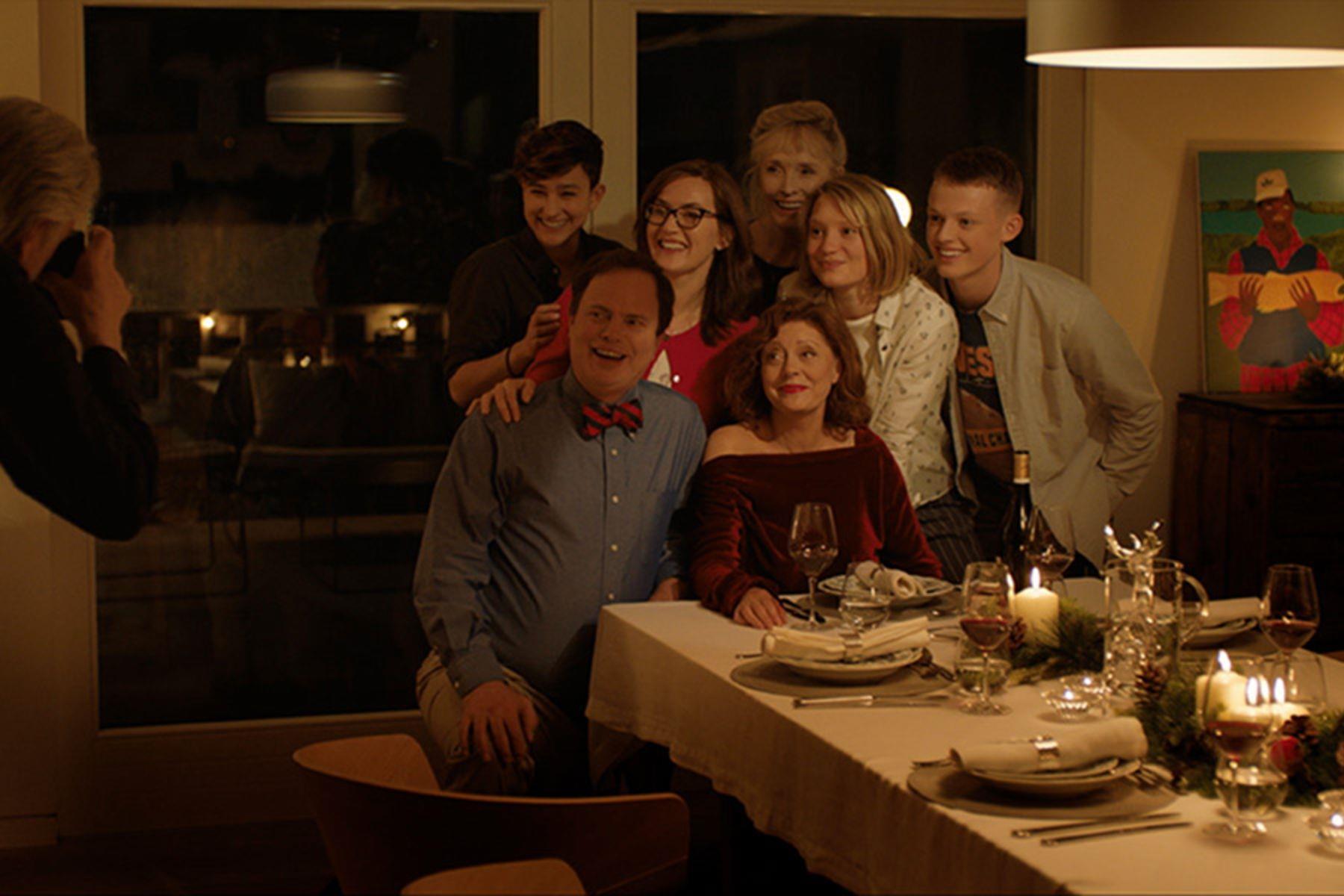
A family gathers at the parents beach house for a not-quite-holiday get-together in “Blackbird,” a downbeat but arresting and intimate melodrama based on the Danish film, “Silent Heart.”
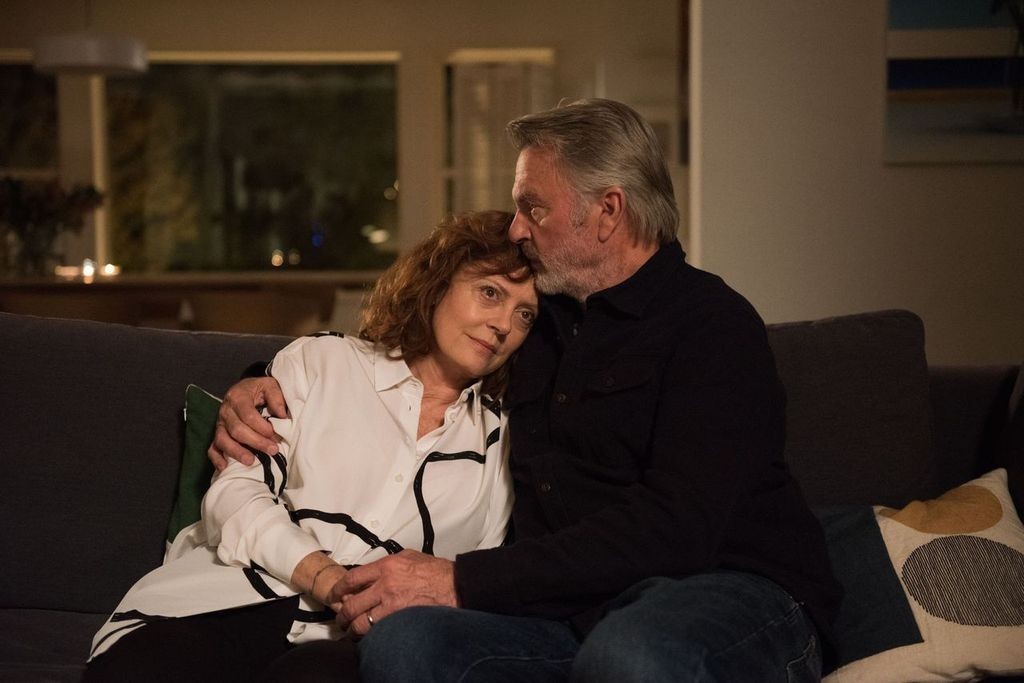
Daughters Jennifer (Kate Winslet) and Anna (Mia Wasikowska) and their families are here for an early Christmas with Mom (Susan Sarandon) and Dad (Sam Neill). They “celebrating” now because mother Lily won’t be around Dec. 25. She’s terminally ill.
And at the end of this weekend, she’ll be taking a drug cocktail that ends her life, while she still has the capacity to do that on her own.
Sarandon’s Lily is a feisty sort. None of this soothing classical music that husband Paul prefers. Oh no. She’s aware of how long it takes her to get a bathrobe on, and doesn’t want to be hovered over as she does.
“Go f—–g DO something,” she barks, for not the last time. Lily is out of patience and almost out of time.
Organized adult daughter Jennifer is aware that she’s in pain, because “She lies just badly enough that you know she’s lying.”
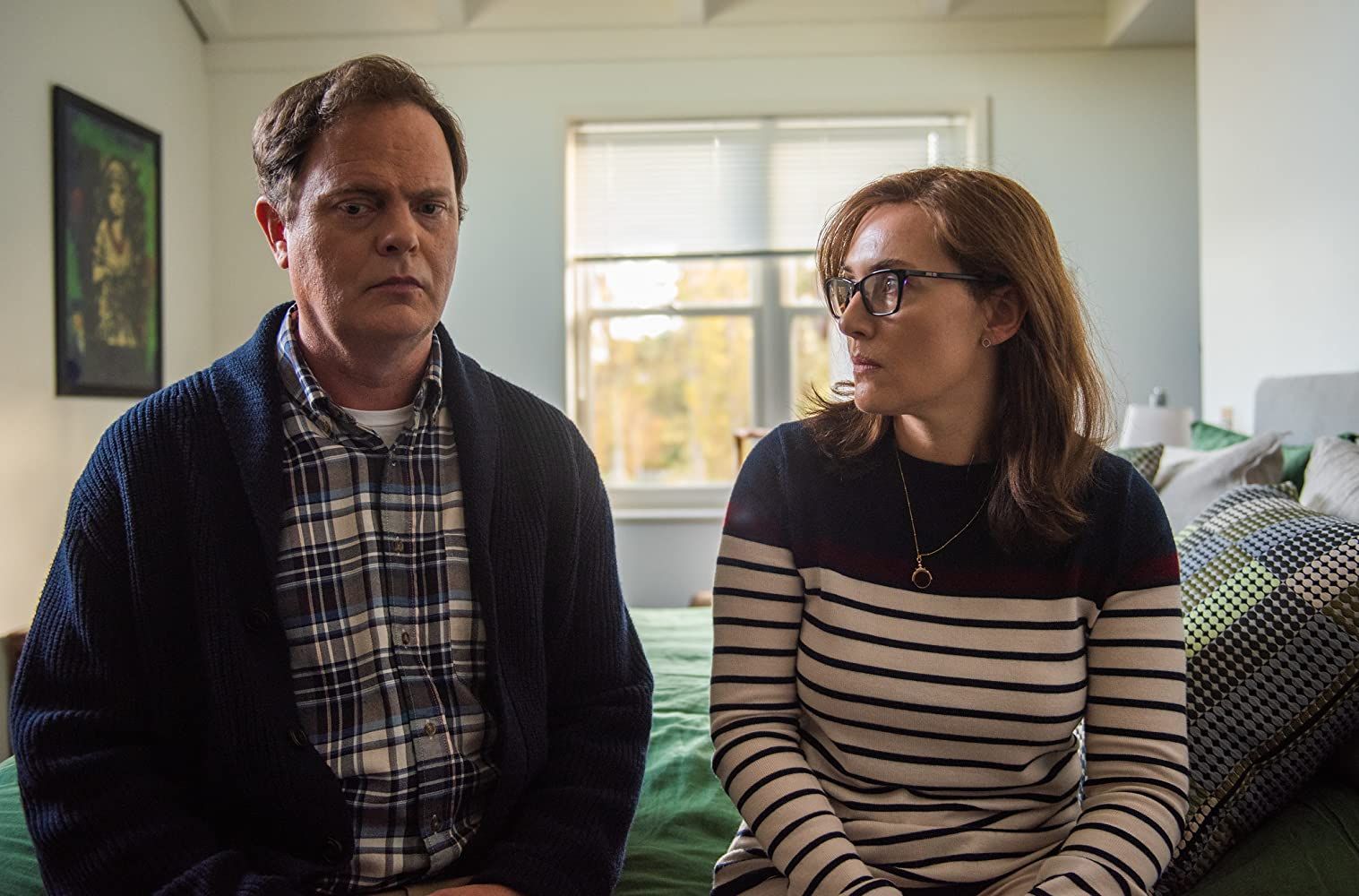
Her pedantic husband Michael (Rainn Wilson) can make historical anecdote small talk with the best of them. Pass the salt.
“You know the Indian independence movement started” with salt protests, he begins. It’s no wonder Jennifer’s testy, “fragile” younger sister Anna calls him “Mr. Dull.”
She has her own issues, which Jennifer lists for her every moment she gets her alone.
Lily’s best friend (Lindsay Duncan) is here for support. But only Jennifer and Michael’s doted-on/nagged to excellence teen son (Anson Boon) has the tactlessness to be direct.
“When’s it happen?” And later, with his grandpa, a stoic pillar of equanimity, he’s even more blunt.
“How’re you going to do it?”
Director Roger Michell (“Venus,”Notting Hill”) cast this well and earns stellar on-the-nose performances from Sarandon, Wilson, Duncan and Wasikowska. Pairing her opposite Winslet turns out to be inspired, as their characters are highly-strung flipsides of the same coin, making for some splendid fights. Each knows where to stick the dagger.
Sarandon’s Lily has the sarcastic bravado common to end-of-life movies of this sort, from “Whose Life is It Anyway?” to “Me Before You.”
“You up yet?” she shouts at the kids. “I’d DEAD soon. You coming down?”
Neill’s Paul might be the most accessible character, simply by virtue of his “get through this with a little ordinary grace” ethos. But how are YOU doing, Paul?
“A little tired of people saying ‘And how are you?'”
The conflicts come from the usual corners, the twists have a pre-ordained feel. But the players, the setting (West Sussex, UK, doubling for Long Island?) and Michell’s sure-handed way with sensitive material get “Blackbird” airborne, and keep it there, from beginning to not-remotely-bitter-end.
MPAA Rating: R for language, some drug use and brief sexual material
Cast: Susan Sarandon, Kate Winslet, Mia Wasikowska, Sam Neill, Rainn Wilson, Bex Taylor-Klaus, Anson Boon and Lindsay Duncan.
Credits: Directed by Roger Michell, script by Christian Torpe. A Screen Media/Fathom Events release.
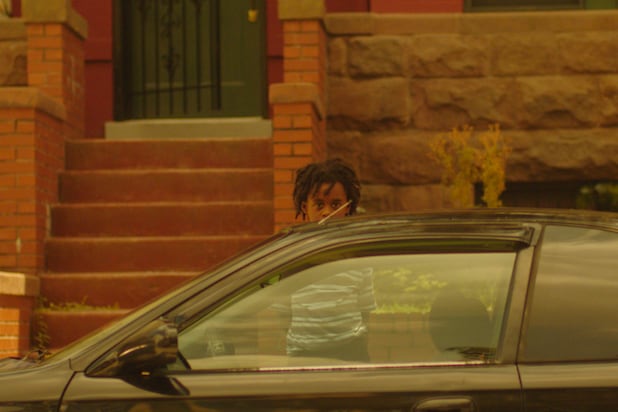
I tend to look askance at movie-making nepotism, but Merawi Gerima’s debut feature, “Residue,” has me rethinking that.
“Residue” is an immersive, impressionistic sketch of a Black DC expat coming home to a place he swore he’d put in his rear-view for good fifteen years before. It’s a memory play steeped in social upheaval, pointed, politically-aware and beautiful to behold.
And among the films it resembles is the model-visits-a-slave-trading fort drama, “Sankofa,” a memorably gorgeous and dark dreamscape, a landmark indie film by Ethiopian-American director Haile Gerima, whom I got to hang with at a film school he was visiting some years back.
So, “Chip off the old block?” Oh yes, and in the most flattering ways.
Jake (Obinna Nwachuwu) shows up on Q Street in his pickup, a mattress in the flatbed, ready to stick around for a while. He’s working on a script about the old hood — “Eckington,” which the callow yuppies moving in and “gentrifying” have re-dubbed “NoMa” (north of Massachusetts Ave.).
A narrator questions Jake, in his head — “Did you sense that our obliteration was just around the corner? You thought a FILM could save us?”
Jake reconnects with his parents (Melody A. Tally and Ramon Thompson). He hooks up with the beautiful Blue (Taline Stewart). And he starts mingling, chatting up the few people who might remember him, asking where his childhood bud Demetrius is.
Nobody wants to talk about that. Not Mike (Derron Scott), and especially not Devonte (Dennis Lindsey).
“Gentrification” is seen at its ugliest here, fake “eviction notice” threats slapped on doors, endless calls from predatory real estate flippers.
And the endless provocations presented “back home” are a genuine threat to Jake, who has flashbacks to the neighborhood violence he witnessed during his childhood, and whose anger management issues will be severely tested by hassling cops, obnoxious urban (white) homesteaders and young bloods out to prove how “hard” they are — when they’re with their gang.
The white folks among them, not picking up after their dogs, “are the decoys,” his mother warns. Don’t take the bait. Don’t give them the chance to call the cops on you.
“How many people do we know whose lives were wasted like that?”
It’s the same with his endless Demetrius search. Dion? “He’s still in.” This guy or that one is “under the concrete.”
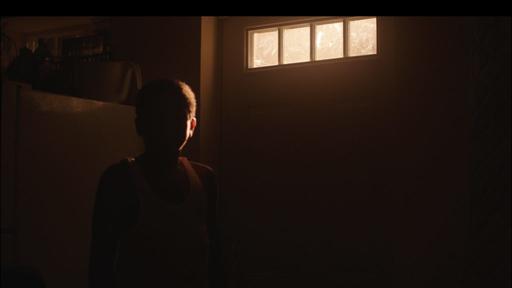
Gerima uses a hand-held camera, tight shots and splashes of dialogue blended in with dimly-lit, sometimes grainy/sometimes blurry flashbacks to create this chiaroscuro.
But the most impressionistic scene is of Jake’s chat with one old friend. They’re in the woods, chuckling and remembering, enjoying nature, Jake apologizing for all the letters he never replied to. An off camera voice barks, “OK, that’s it.” It’s actually a prison visit, sobering and sad and institutional. And it’s just beautiful.
The bleak outlook of this story won’t be to every taste. But “Residue” brings a painful beauty to a real-life “whitewashing” of a city that will never let you look at gentrification from a realtor’s point of view ever again.
MPAA Rating: TV-MA
Cast: Obinna Nwachuwu, Melody A. Tally, Ramon Thompson, Taline Stewart, Dennis Lindsey, Derron Scott
Credits: Written and directed by Merawi Gerima. A Netflix release.
Blanca loves her BMX bike. Mom might arrange a ride share to get her to school, but to Blanca, that’s just to transport her backpack.
She’ll race Señor Uber to school, taking shortcuts, doing jumps and dodging traffic as she does.
And heaven forbid she spies bullying on the school bus she races in that home stretch. Skinny-mini or not, tweenage Blanca (Natalia Coronado) is down to throw-down.
If Mom, a widowed film producer (Silvia Navarro) only knew. She despises and fears bicycles. But she’s a bit frazzled — problem solving, coping with divas on the set, mainly her director (Luis Ernesto Franco).
Mom can never know, but Blanca wants to enter the Big BMX race at the end of the month. Pal Laura (Victoria Viera) figures she’s a cinch to win. Even the boys want tips from her.
“You’re not cut out for it,” she sniffs. But how can she sign up for this dangerous race without parental consent? Wait, Mom’s a producer. Let’s hold a “casting call,” find a guy willing to pose as her dad. It turns out, that drive-share grey fox (Juan Pablo Medina) used to be a movie star. If only his agent (Roberto Quijano) can convince him to “audition.”
From that summary, you’ve guessed exactly where this thing is going. But “Dad Wanted,” aka “Se busca papá” lurches from bizarre twists to rank sentiment so often that maybe you don’t.
“The Big Race” is the finale, sure. But street mime and magic? Driver/actor Beto’s “secret grief?” And that “What’s a non-relative 40something hanging around with a 12-year-old?” “ick” factor’s got to be addressed.
Coronado is an adorably fresh-faced starlet who sulks well, big and small screen veteran Medina suggests the air of a man who “used to be somebody,” but who doesn’t want to “act any more.”
Among the cast-to-be-funnier-and-more-frenetic co-stars, Viera stands out — worldly enough to conjure up a voice synthesizer so she and Blanca can fool auditioners into thinking they’re adults casting a movie, quick to dissolve into tears if an adult raises her or his voice to her.
That audition sequence is far-fetched, but adorable and inventive (hiding the girls via bright lights and a screen, masking their voices).
Little else in “Dad Wanted” stands out. The “wacky” agent isn’t, stern ball-buster Mom may be a Mexican Michelle Monaghan, but has too few fuming moments to play. The sentimental stuff that takes over the third act beggars belief.
It’s harmless enough. Still, the only reason to watch it is if you and/or the kids need to brush up on your Spanish.
MPAA Rating: TV-14
Cast: Natalia Coronado, Juan Pablo Medina, Silvia Navarro, Victoria Viera, Roberto Quijano, Luis Ernesto Franco
Credits: Directed by Javier Colinas, script by Victor Avelar, Paulette Hernandez, Fernando Barreda Luna and Javier Colinas. A Netflix release.
This comes our way Oct. 2. Apparently, Scots super host Craig Ferguson set the house afire doing a co-hosting gig a few years back with Kathie Lee Gifford, and she made sure this movie came of it. Wee bit daft, love the old Triumph “motorcar” they put them in.
Yes, I shamed Vertical into releasing the bloody trailer.
Posted inReviews, previews, profiles and movie news|Comments Off on Movie Preview: Kathie Lee Gifford, Elizabeth Hurley and Craig Ferguson — in Scotland — “Then Came You”
Whatever gifts French writer/director Maïmouna Doucouré brings to the table, “subtlety” isn’t included. Her challenging, provocative hot-button Tween Girls Gone (somewhat) Wild drama “Cuties” (“Mignonnes” in French) slaps you in the face–hard — and not just once but repeatedly.
It barrels through a Senegalese girl’s transition from Muslim immigrant in a patriarchy to twerking, stripper-in-a-rap-video sexually-“woke” in a breakneck fashion.
Doucouré (“Maman(s)” is her best-known credit) grabs “growing up too fast in the West” and rides that message with a vengeance, eschewing smooth, natural transitions in favor of shocks to the system.
It’s as jarring as it is unsettling, crosses lines she doesn’t need her to cross to make her points, and abandons religious hot buttons she seems too timid to wholly engage.
When we meet her, Amy (Fathia Youssouf) is a wide-eyed innocent. She’s 11, dutifully looking after two younger brothers, one in diapers. She is on the cusp of womanhood within her emigre community, listening in on the Muslim women’s ministries’ entreaties to “obey your husbands,” and “fear Allah.”
But her mother (Maïmouna Gueye), keeping the family together by herself, has gotten troubling news. Her husband has found a second wife, and is bringing her back to France to marry and move into their apartment. Mother Mariam had no say, and doesn’t have to articulate the betrayal this feels like.
After all, they left Senegal for Western Europe. Is polygamy even allowed there?
Amy has just absorbed this news when she spies a classmate shaking her groove thing and ironing her long hair in the apartment complex’s laundry room. Amy is transfixed. She watches, admires and envies. She would love to be in with Angelica’s (Médina El Aidi-Azouni) crowd.
They’re a brash, brusque and tightnit quartet that wants to compete in the big dance-off coming up. Amy is entirely too square, too unskilled, too socially awkward and plainly-dressed to crack in with blonde bully Jessica (Ilanah Cami-Goursolas), pushy Coumba (Esther Gohourou) Angelica and Yasmine (Myriam Hamma).
Besides, they’re already a quartet. Sure, she can video them rehearsing. But “I can learn” to dance won’t mean a thing if they don’t alter their lineup.
At home, Amy starts acting out. Her mother understands why she won’t talk to her father on the phone, but is totally unaware she’s stolen an uncle’s phone and her mom’s money, and has utterly immersed herself in the hyper-sexualized Western culture that the Cuties represent. Adults are totally out of the loop with this crowd.
Amy neglects her babysitting duties, hides her new, makeup-and-coochie-cutters/halter top look and makes it her business to imitate her more “mature” peers in every way — flirting with boys, imitating the vulgar displays of underclad music video dancers, and backing up her sisters in her new gang.
Doucouré jerks Amy, and us, through every stage of this transition. One scene, she’s still the demure but curious immigrant. The next she’s Nicki Minaj and Sherri Moon Zombie, a bumping, grinding, pouty-mouthed sex object, totally tarted-up if not quite aware of exactly what it is she’s impersonating.
Youssouf plays Amy as an open-book wonder, eager to “fit in” — numb or just stunningly naive when it comes to recognizing how out of line her behavior is in the culture she’s been raised in.
At several points in the film’s third act her “We-need-to-act-older-than-11” peers recoil, and say “You’ve gone too far” to our heroine. It’s not out of line to think our director has committed the same sin. If a guy had filmed this (As if!), he’d have to hide out in the Polanski Pedophile Precincts of Switzerland.
But it’s not really messaging or Doucouré hitting her points too hard that took me out of “Cuties.” It’s the many abrupt transitions, the too-sudden conversion Amy undergoes, the avoidance of showing stark repercussions within her Islamic community and the unbelievable way Amy comes to understand what she has become and its personal, sexual and moral consequences.
The kid is 11, we keep reminding ourselves. Doucouré seems to occasionally forget.
Doucouré brings a much-needed new perspective and new voice to the cinema. But this doesn’t have the depth or grim impact of a “Kids” (1995) or “thirteen” (2003). And signing on with Netflix, where “M.I.L.F.” and “An Easy Girl” are just the French entries in the streaming service’s race to find a young-younger-youngest sexual “edge,” is no way to pick up one thing her storytelling desperately lacks.