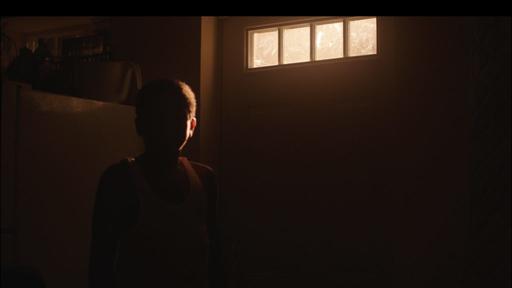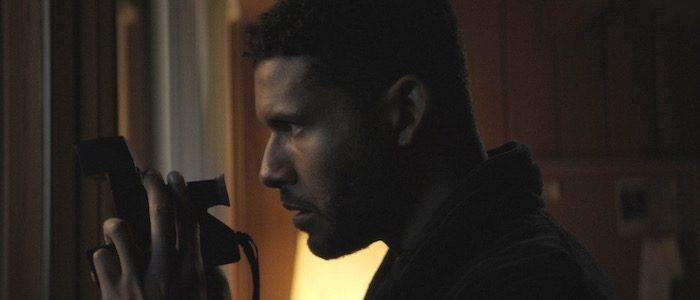
Movie Review: It’s Drew Barrymore times two, as a comedy star and “The Stand-In”

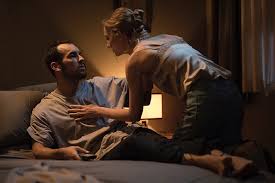
“The Stand-In” has the plot of what could have a Drew Barrymore of twenty years ago.

She plays a comic actress, burned out and strung out, over the whole showbiz thing and ready to stop being a celebrity. And she plays the star’s stand-in, a woman barely getting by on a little luck and no talent.

Drew times two? That’s a winner!

It is littered with cameos from pals, from Jimmy Fallon and Kelly Ripa to Lena Dunham and Richard Kind, playing themselves or bit parts.

Jamie Babbit of “But I’m a Cheerleader” and TV’s “Girls,” directed and veteran British screenwriter Sam Bain (“Four Lions,” TV’s “Ill Behaviour”) cooked up the story, setting and gags.

But in trying to impose a statement on it, we watch in dismay as promising ideas are introduced and passed by on the film’s way to wherever the hell they decide to go instead. A laugh here and there is the best we can hope for, even though Barrymore’s plainly still got the comic goods.

We meet Candy Black at her post-peak/still-a-diva worst, hiding in her trailer snorting this and belting back that rather than face another pratfall-driven comedy, another chance to deliver her catchphrase — “Hit me where it hurts!”

“Pippi Bongstocking” and “Maid in Chattanooga” and “Rocks Off” made her rich and famous…and contemptuous of one and all. Lashing out, cussing one and all is kind of her brand, now. It takes her stand-in (Drew II), begging for the work, to coax her out of the trailer.

But one on-set tirade too many, injuring a co-star (Ellie Kemper) and going viral, ends it all. Years later, Candy’s gone “Grey Gardens,” hiding out in her Long Island mansion, avoiding taxes, still using/abusing, but “over” the whole fame thing.

Court-ordered rehab is just another thing to dodge. Get her agent (T.J. Miller, funnier than usual) on the phone. What was the stand-in’s name? Paula…something?

They find her — living in her aged camper-shell pickup. Summoning Paula they strike a deal. Candy’s all about shucking showbiz and making Shaker furniture, and there’s this carpenter she’s met online. Do rehab for her and she’ll take a job and Paula gets that part of her life back.

Rehab is the first promising, if obvious, twist that “Stand-In” steers away from.

The story instead becomes one of sweet, meek pushover Paula taking on public appearances, an “apology tour” and the “comeback” that Candy, still hiding out and going by her original name “Cathy” now, is refusing to mount.

“All you have to do is say ‘Sorry!'”

Paula (Barrymore with a fake nose and weight-padding) starts out sweet, giving us the Candy the world deserved — somebody a tad more grateful for stardom. But as you might guess, as she takes over more and more of this work and this “life,” she changes.

“You may have made a name for yourself, but I’m the only one doing anything with it!”

Bain’s screenplay has a lot of trouble with transitions, lapses in logic and clumsy changes in tone. Sexting Shaker furniture double entendres with her wood-working guru (Michael Zegen) should have been funnier, but seems off key, even in a movie with a lot of drugs and some darker turns.

That said, the opening tirade scenes are a hoot, Miller is amusing and has agent-sweet talk down cold.

“Buddyyyyyyy, I’m JOKING. I don’t have to tell you that I don’t have to tell you that I’m joking.”

Holland Taylor, playing a film director, and couple of the cameos pay off.

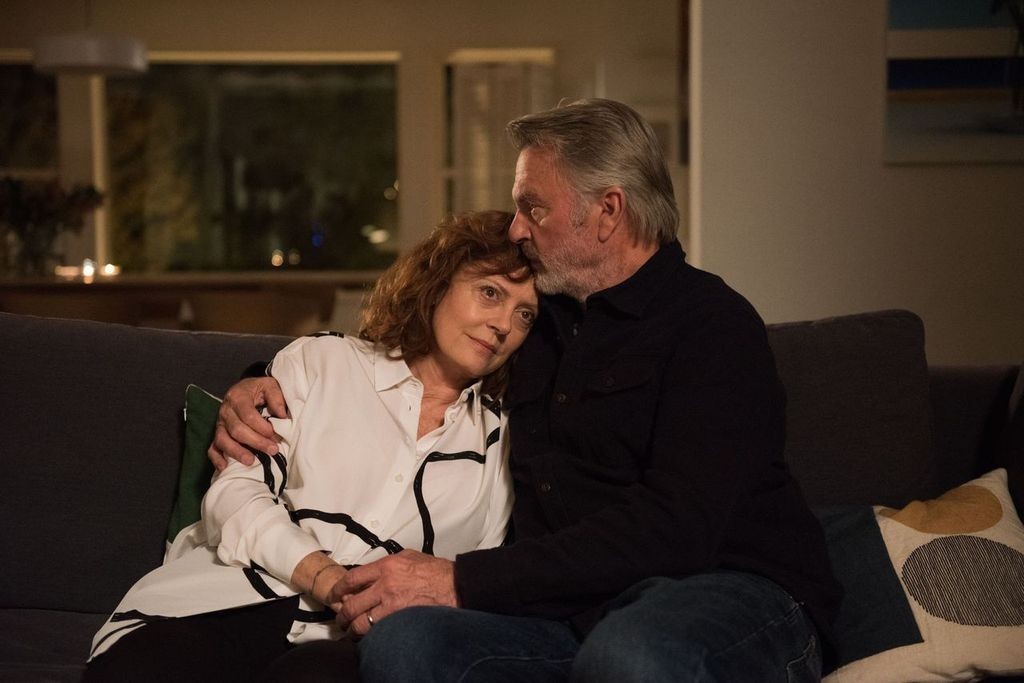
And Barrymore does a fine job of differentiating between Candy and Paula. Funny how strung-out “Candy” looks a lot like the 2020 version of Susan Sarandon.

Drew and “The Stand-In” are just good enough at making us remember that we’ve missed her timing and comic charm. And all this TV work, topped with starting a chat show in a pandemic, is no substitute for seeing her take on a role and making it funny in a feature film.

Well, funnier than this. Drew’s still got it even if “The Stand-In” doesn’t.”

MPA Rating: R for language throughout including sexual references, and for drug use

Cast: Drew Barrymore, T.J. Miller, Holland Taylor, Ellie Kemper, Michael Zegen

Credits: Directed by Jamie Babbit, scripted by Sam Bain. A Saban Films release.

Running time: 1:41

Posted in Reviews, previews, profiles and movie news | Comments Off on Movie Review: It’s Drew Barrymore times two, as a comedy star and “The Stand-In”

Movie Preview: Updating Jane Austen? “Modern Persuasion”

A modern riff on Jane Austen? Alicia Witt, Shane McRae, Bebe Neuwirth, Li Jun Li, Daniella Pineda and Liza Lapira do a version of my favorite Austen novel, the less-filmed (Ciaran Hinds co-starred in the definitive version), playing up “Persuasion” as a comedy. Which it never really felt like.

But let’s what we think Dec. 18.

Posted in Reviews, previews, profiles and movie news | Comments Off on Movie Preview: Updating Jane Austen? “Modern Persuasion”

Movie Review: McQueen’s “Education” ends “Small Axe” series on a quieter note

Steve McQueen’s landmark “Small Axe” series, about the activist years of greater London’s West Indian diaspora, ends up an upbeat yet dramatically thinner and less satisfying than you’d hope note with “Education.”

The finale, set in the early ’70s, when the community, first turned to activism just a couple of years before, took on Britain’s educational system, the racial biases that farmed “problem” or “delayed development” children into schools they labeled “educationally subnormal.”

Immigrant women from Grenada, Trinidad, Jamaica and other former British colonies took on the “system” even as they came up with “Saturday schools” of their own devising, augmenting the outdated and even racist teaching going on in the country’s public schools.

McQueen shows this grassroots work-around and how it impacts the life of a dreamy, distracted boy named Kingsley (Kenyah Sandy). He is enraptured by a first visit to a planetarium, spends hours drawing rockets and hits his knees each night, prays to God that “I become an astronaut.”

But neither he not the school system he’s in are doing what it takes to help him realize that dream.

His parents (Sharlene Whyte, Daniel Francis) are working multiple jobs to raise him and older sister Stephanie (Tamara Lawrance) in working class comfort.

They don’t have to worry about Stephanie, a teen with designs on a career in fashion. Kingsley? He’s distracted, a bit of a cut-up with his friends. Because, you know, he’s 10. He also can’t read. The snickering of his classmates when he’s called on to read aloud doesn’t help, any more than the teacher who barks “Ya big BLOCKhead” at him.

His parents don’t pick up on this. He’s constantly in trouble. Then one day, the head master summons Mum in to sweet talk her into signing off on his reassignment to a “special school” Her boy, “notting but a heap’a trouble” at home, she declares — lazy, TV watching, chores-dodging — will get “the help he needs” with “more attention.”

The Durants School he’s sent to “evaluates” him on arrival, in a group that includes another West Indian child like him and a white girl who barks and meows in answer to every question. That’s the last moment anyone gives him a thought, and the last effort any educator makes to reach him.

Durants and schools like it during the era when Margaret Thatcher was Conservative Education Secretary, on her way to being Prime Minister, were warehouses where lazy, racist and tuned-out teachers often couldn’t be bothered to so much as show up.

The most chilling moment, one that comes after a psychotherapist and activist (Naomie Ackie) has visited the school and witnessed the chaotic conditions there, shows a teacher who has finally showed up for class, only to serenade the little “helpless” cases with the folk ballad “House of the Rising Sun.” McQueen has the plucking, singing actor (Stewart Wright, I think) perform the entire ode to a New Orleans brothel, every verse, missing a note here and there.

“And who knows who wrote that?” he chirps at the end of almost five minutes of killing time. “The Animals. The Animals.” The lump doesn’t know the song pre-dates the Brit rockers by hundreds of years.

The limited drama of “Education” comes from the rising fury of Kingsley’s mother, and the pushback she gets from her carpenter/laborer husband. He isn’t there for the lectures she gets from a local organizer (Josette Simon) who talks about the government reports detailing the racial biases in The System and the ways “educationally subnormal” labels and special schools sideline kids for life and vastly reduce their earning potential and chances of working their way into the middle class. Dad is fine with the kid “learning a trade,” which is all his generation could hope for.

A white school chum of Kingsley’s echoes this when he dismisses the kid’s desire to become an an astronaut. “You can’t have a Black man in space!”

The community activists, pitching in with supplementary teaching on weekends, are shown for who they were — heroes in the struggle identified in most of the other films of “Small Axe” (which takes its name from a Bob Marley song). “Education” was the answer for McQueen and kids in his community aspiring for “the dream” their parents brought with them when they emigrated.

But I was hoping for a bigger punch in the payoff, with Kingsley Smith being some real-life success story like “Alex Wheatle,” the subject of the previous “Small Axe” film, or somebody who grew up to become an activist himself.

The kid is a thinly-developed character. His mother and his sister say “He’s not stupid, he’s very bright.” But we see no evidence of that. We’re shown no reason why, in his wholly-integrated original school, with East Indians and West Indians, white, brown and black children, he is the one who hasn’t learned to read.

The “bullying” teachers are shown and “cultural biases” in IQ tests are explained. Activists point to parents who have to take a more active role in education, and we see evidence of that. But yanking kids away from TV hardly covers that territory.

So while I can see why McQueen would turn to this corner of activism in the rise of West Indian Britons for one episode of a series that highlights street protests against police racism, a West Indian man (played by John Boyega) who makes it his business to integrate the force personally, small business owners and ordinary people radicalized by the racist retrenchment from white culture and white officialdom, I think “Education” comes closest to missing the mark.

It’s brief, but not so much to-the-point as wandering around it for an hour. And while it doesn’t spoil the effect of the whole, it does feel wanting as a finale. It’s the dullest “Small Axe” of the five.

MPA Rating: TV-MA, profanity

Cast: Kenyah Sandy, Sharlene Whyte, Tamara Lawrance, Josette Simon, Daniel Francis and Naomi Ackie

Credits: Directed by Steve McQueen, script by Steve McQueen, Alastair Siddons. An Amazon Prime release.

Running time: 1:03

Posted in Reviews, previews, profiles and movie news | Comments Off on Movie Review: McQueen’s “Education” ends “Small Axe” series on a quieter note

Netflixable? Germans mix it up with German mobsters in a “Christmas Crossfire (Wir können nicht anders)”

Truth be told, I could have done without the German holiday line-dancing in the finale.

There are plenty of times co-writer/director Detlev Buck (“Hands off Mississippi”) tosses a few too many balls in the air — characters to follow, subtexts that add “threads” that we’ve got to keep straight, and we’re not sure that he is either.

And “Wir können nicht anders,” aka “Christmas Crossfire” teases us that it’s going to reach some sort of “Die Hard Yule” climax that truthfully, it never does.

But for a dizzy, violent off-the-wall comic thriller (in German with English subtitles), this isn’t half bad.

Just from looking at her, you can tell that Edda (Alli Neumann) is the sort of fetching fraulien used to getting men to do just what she wants. She’s in tears, her makeup smeared. And poor Sam (Kostja Ullmann) is putty in her presence.

“I only sleep with guys with coats like that when the police are after me,” she purrs, and before he knows it, they’re doing vodka shots, he’s picking up the tab, she’s gone back to his Mercedes camper van with him, shedding clothing as further things transpire.

She wants to go somewhere and he’s driving her. She wants to pull off the road in the woods and have another shirtless go of it. And that’s when he hears the shouting and stumbles out of the van and into a mob execution, which he interrupts the way a college professor (“ASSISTANT professor!”) might.

“I wouldn’t do that.

It sounds no more menacing in German than it does in English.

Next thing we know, he’s on the run with Rudi (Merlin Rose), the would-be victim he just saved and a bit of a myopic ingrate, she’s left the van and lost him and hunting for help and there are all these storylines to follow, plot threads to pick up.

Hermann (Sascha Alexander Gersak) is the vaping thug running the show. He’s got a beef with Rudi over a beautiful woman (Sophia Thomalla), chasing all over BFE Germany with his gang in Dodge Ram pickups while Edda is finding the local cop (Frederic Linkemann) who is piggishly unprofessional and more interested in her than helping her and her “boyfriend” because they have “history” and this dying town is what she fled.

Rudi and Sam? They’re trapped by some older crank with an AK-47 and a date with a sauna.

There’s Christmas decor everywhere. Hermann’s family, led by wheelchair-bound brother Sigi (director Detlev Buck), is having a party and lamenting that they’re heavily invested in a planned redevelopment that’s gone south. And the locals have a reluctant tolerance of the new (African and North African) immigrants who sneak out to cut down Christmas trees on public land or sew up bad guys who get stabbed in a knife fight they have no one but themselves to blame for.

Stabbings, shootings, kidnappings and escapes ensue among the “Verdammte Schweine!” mixed up in all this.

It’s not quite up to the tempo of a screwball farce, although the script has that complexity. The jokes are droll and sly, like Sam hiding behind a tombstone that reads “Died too soon.” For some odd reason, a lot of these hicks are wearing uniforms, and not just the rapey cop.

Ullmann has a bit of Jeff Daniels in “Something Wild” about him, an academic out of his depth, but lost in lust over this libidinous blonde pixie.

“What do you WANT with me? I had nothing to do with this!”

“That’s the problem, isn’t it? No one wants to STEP UP” these days.

Gersak is ferocious and menacing, and Neumann makes Edde beguiling, a bit lost and yet not to be trifled with.

There is no real “Christmas Crossfire” worthy of the title. But it holds your attention as on and on it goes, grimly violent but glibly fun. And remember, if you stay to the end, there’s line dancing.

MPA Rating: TV-MA, violence, nudity, sex, smoking and profanity

Cast: Kostja Ullmann, Alli Neumann, Sascha Alexander Gersak, Merlin Rose, Frederic Linkemann and Detlev Buck.

Credits: Directed by Detlev Buck, script by Martin Behnke, Detlev Buck. A Netflix release.

Running time: 1:45

Posted in Reviews, previews, profiles and movie news | Comments Off on Netflixable? Germans mix it up with German mobsters in a “Christmas Crossfire (Wir können nicht anders)”

Movie Review: “The Planters” dig deep for the quirky

In these troubled times, which are looking more and more like End Times for Hollywood and movies in theaters, it’s heartening to realize that whatever dies, indie cinema will endure. Movies like “The Planters” pretty much guarantee that.

An insistently oddball romp, it was cooked up by two actresses-turned first-time filmmakers, Alexandra Kotcheff and Hannah Leder. It doesn’t amount to much more than some winsome smirks and a chuckle or two, but its mere existence is a delight.

And it was co-written, co-directed and co-stars the daughters pretty well-known Hollywood filmmakers. Even in Indieland, there’ll always be Hollywood nepotism to help the offspring get a leg up.

Martha (Kotcheff) is a poker-faced ponytailed loner in BFE Southern California, bicycling to and from the town’s closed general store (converted into a gift shop), obsessing over snowglobes.

Orphaned, a creature of routines, she supports herself as a telemarketing seller of Clear Breeze air conditioners. As everyone hangs up on her, it’s a good thing she has a side hustle.

Then Sadie Mayflower (Leder) drops into her life. She’s a tad off — more “off” than Martha, anyway — in a dirty wedding dress, with a helmet chained to her head. A runaway bride? Maybe. She’s just “trying to make right with Jesus.”

Martha takes her in and almost instantly almost regrets it. A call to a nearby mental hospital confirms her fears.

“Oh yeah. We’re releasing our patients. Bankrupt…slight case of embezzlement.

The last thing Martha needs — “This is why I don’t ‘do’ people.”

But Sadie is upbeat, and starts coaching Martha on her cold-calls, where she befriends a lonely older man who doggone it, will be the first ever to buy a Clear Breeze air conditioner from her. So Martha confides in Sadie about her side hustle — which involves a shovel, old fashioned candy and cookie tins and trips into the desert, down the beach, beside the railroad tracks.

“I bury treasure for the lucky person who gets to it first!”

Sadie is confused, has hallucinations involving Biblical figures inside the tins (stop-motion clay animated crucifixion and Red Sea parting scenes). And that’s when Martha first picks up on the fact that Sadie is multitudes. There’s more than one person/personality tumbling around in that sometimes-helmeted head.

Kotcheff and Leder play off each other wonderfully — deadpan vs. bubbly, infantile or in one incarnation — profane drunk. The timing in their dueling eccentrics exchanges is quick and quirky.

As odd and mismatched as they are, introducing a third character (Phil Parolisi) doesn’t add much save for stirring the conflict up just a smidge.

As I said at the outset, “The Planters” doesn’t add up to much. But the mere fact that it summons up the oddballery of many a prior indie comedy — the works of Wes Anderson and others — is its best recommendation.

Winning laughs and grins by association is fair play.

MPA Rating: unrated, profanity

Cast: Alexandra Kotcheff, Hannah Leder, Phil Parolisi

Credits: Scripted and directed by Alexandra Kotcheff, Hannah Leder. A 1091 release.

Running time: 1:19

Posted in Reviews, previews, profiles and movie news | Comments Off on Movie Review: “The Planters” dig deep for the quirky

Movie Review: Magical Irish “Wolfwalkers” is the best animated film of 2020

The filmmakers who brought us “The Secret of Kells” and “Song of the Sea” bring another Irish myth to vibrant, animated life in “Wolfwalkers,” an environmental fable about spirits who protect the forests from the Ruin of Man.

The vivid, saturated color palette and thick Irish brogues may be the same. But the setting and the politics are new — Ireland under the thumb of the Puritan “Lord Protector” of England, Ireland, Scotland and Wales, a Cromwellian oppressor of the 1650s.

The heart, action and sophistication of the artwork make this folk tale the best animated film of the year.

An English hunter (voiced by Sean Bean) and his daughter (Honor Kneafsey) have come to Kilkenny so that he can rid the nearby forest of wolves so that it can be cleared and the land worked for profit.

Young Robyn longs to help her Dad, and even has her own falcon and crossbow for the job. But he won’t hear of it. He sets his traps and snares alone.

The Irish kids pick on her for her “fancy dancy accent,” and won’t join her in song — “Wolf wolf, kill the wolf, til all the wolves are done for.”

The locals know that their woods should be preserved, lest the wolves come to town for dinner.

But when Robyn slips away to the woods to spite Dad, she has an accident. And a wolf cub is her salvation. That’s how she meets the shape-shifting girl-by-day/wolf-by-night Mebh Óg MacTíre (Eva Whittaker). Mebh is a spitfire, a sassy Irish dynamo of ferocious energy and voluminous flaming red hair, just like her Ma (Maria Doyle Kennedy of “The Commitments”). And she’s curious about the “smelly townie.”

“Give us a LOOK atcha!”

The child, bless her wee heart, explains the way of things to the townie, in spite of her smell. “I’m no girrrrrrrrrrl! I’m a WOLFwalker!” A mere mention that “the woods are gettin’ smaller by the day” and she sends Robyn home, where the townie tries to convert Dad with her tale.

But the Lord Protector (veteran character actor Simon McBurney) has his plans, and figures he can keep the peace and make Ireland great again if he can just finish clearing the woods, if Bill the hunter just finishes clearing them of wolves.

The animation is simpler, more stylized and far more striking than the Pixar/Dreamworks/Netflix state-of-the-art. And it comes alive in this story of scary wolves, fearful townsfolk, ferocious soldiers and what happens when they’re all hurled into conflict.

There’s an early Disney simplicity to this violent, primal tale, which has a whiff of “Bambi” about it. The Irish magic that co-directors Tomm Moore and Ross Stewart specialize in is illustrated sparingly and beautifully by their team. All of their traditionally-animated movies have the most striking design and stunning chiaroscuro painting style — rich tones, dark shadows, swirling images.

I love just about everything about their work, especially the Irishness of it all. In a year when Pixar and Netflix seemed set to CGI their way into an awards monopoly, Cartoon Saloon and Apple TV’s “Wolfwalkers” seems sure to crash the party, and with any luck they’ll win the Oscar they should have for “The Secret of Kells.”

MPA Rating: PG, violent action

Cast: The voices of Honor Kneafsey, Eva Whittaker, Sean Bean, Maria Doyle Kennedy and Simon McBurney

Credits: Directed by Tomm Moore and Ross Stewart, script by Will Collins. A GKids/Cartoon Saloon film on Apple TV+ (Dec. 11)

Running time: 1:43

Posted in Reviews, previews, profiles and movie news | Comments Off on Movie Review: Magical Irish “Wolfwalkers” is the best animated film of 2020

Documentary Review: Big Brother’s at the door with “Coded Bias” in facial rec tech, “data harvesting”

One of the cleverest touches of “Coded Bias,” the new film from documentarian Shalini Kantayya (“Catching the Sun”) is the faces we see and the voices she chose to give a platform to. The film — about the destructive biases in the algorithms that drive facial recognition and other computer software — is filled with experts and activists tackling this Big Tech/Big Brother coup head on.

And they’re pretty much all women. We go almost an hour into the film when we see and hear from the first male participant, a Hispanic Texas “teacher of the year” school teacher ID’d by buggy/racist software as a “bad teacher.” Almost everybody at the forefront on this war on “weapons of math destruction” is a woman. It calls attention to itself and makes you think about the gender biases in tech and tech journalism in a film about the biases built into the data and the software that culls it.

Kantayya’s film centers on the work of MIT student turned scientist/activist Joy Buolamwini, a young Ghanaian-American who figured out, in school, that the new facial recognition technology that’s sweeping the world — “capturing,” labeling and identifying us everywhere — can’t see Black people worth a damn.

The technology that police departments and ad-targeting companies in the West and the entire government of the People’s Republic of China are buying into, with little to no discussion about the freedom and civil rights implications implied, is buggy and, like a lot of algorithms — biased.

Kantayya takes us to a New York apartment complex that is abusing the tech to spy on tenants and “harass” them — via flawed IDs, in some cases.

“What did the Nazis do? They put tattoo’s on people’s arms,” one outraged tenant complains.

We meet Silkie Carlo of Big Brother Watch UK as she’s handing out fliers warning pedestrians that a green police van parked on the street nearby is capturing their faces, archiving the images and being used to compare with police databases to identify threats.

“Great” you think. An open, international city under near-constant terrorist threat is using the latest tech (Amazon is a leading purveyor) to keep everybody safe! Then you see a 14 year old Black kid in a school uniform surrounded and grabbed by plain clothes cops, searched and finger-printed, ending with not so much as an apology for their “Whoopsie. Wrong lad” from the Bobbies.

Authors of “Weapons of Math Destruction” (Cathy O’Neil) and “Algorithms of Oppression” (Safiya Noble) fill in the myriad ways this harvested “biased” data — facial rec. included — is being used to discriminate, limit lives, decide who gets a job, who deserves a loan, who should be loaned money because odds are they’ll default on that loan, etc.

“Powerful people are scoring (and preying on and oppressing) poor people,” is the upshot. There’s no debating “the black box,” no accountability for its mistakes, biases and flawed finalty as arbiter. And there’s little oversight on these chilling developments until recently, until Joy Buolamwini and others came along to point out the sexist, racist, ableist biases in the data being harvested on a vast scale on every person within reach of a computer or computer-trackable transaction.

We really are, as Carlo demonstrates reading a passage from a famed novel by George Orwell, living in “1984” and barely even realizing it.

But Kantayya’s film gives us hope — scenes of protestors in Hong Kong figuring out that laser pointers blind the facial rec cameras the Chinese state is using to ID and hunt “trouble makers” — Buolamwini, author Cathy O’Neil and others give Congressional testimony that points to the first actions by the US to rein in Big Tech in its pursuit of the vast layers of information necessary to manipulate people into behavior in everything from purchasing to voting.

That makes “Coded Bias” the best “wake up” call documentary of 2020, a movie filled with warnings discussed by the very smart women sounding those warnings, the very smart women doing something about this very real threat.

Cast: Joy Buolamwini, Silkie Carlo, Cathy O’Neil, Tranae Moran

Credits: Scripted and directed by Shalini Kantayya. A 7th Empire Media release.

Running time: 1:30

Posted in Reviews, previews, profiles and movie news | Comments Off on Documentary Review: Big Brother’s at the door with “Coded Bias” in facial rec tech, “data harvesting”

Movie Review: “Love, Weddings & Other Disasters”

There’s a whiff of a half-interesting screen romance in the multi-character episodic rom-com “Love, Weddings & Other Disasters.”

Oscar winner Jeremy Irons plays a stiff, snobby Boston caterer who is “set up” with a “blind date.” The date is played by Diane Keaton, playing a photographer (like Keaton herself). And she is literally “blind.” That’s the gag.

“Are you handsome?” she chirps in that beloved, scattered way of hers.

“No,” he intones. “I’m ancient!”

They go out, under duress. He makes all manner of blunders — from rearranging her furniture to leaving her a note on the pillow in the morning. Perhaps, she fumes, she’s dating “the dumbest guy in history.”

We don’t really find out as that intriguing December romance is lost in the coarse hairs of this Dennis Dugan dog. He’s the sometime actor — he takes a role he’s 25 years too old to pull off, here — turned director of the comedies of Adam Sandler, and he directed and scripted (from others’ story ideas) this meshuga mess of a movie.

Dugan tries — hard — to play it sweeter, but he can’t help but lean into the lowbrow. It’s in his Adam Sandler comedy DNA at this point.

Maggie Grace plays a young woman with catering ambitions inexplicably hurled into a career as wedding planner when the demanding young bride-to-be of the guy who might be “your next mayor” impulsively makes her the fifth wedding planner they’re giving a try — just eight days from the big, splashy wedding.

But Jessie (Grace) has an open secret that everybody in Boston — save for candidate and bride and candidate’s staff — seems to know. She broke up a Boston TV anchor in mid-skydive (his call) and became the viral video “Wedding Trasher” when she dumped him in a lake and floated into/tackled the entire wedding party, standing on a dock.

OK, that’s funny.

Jessie could find love when she hires a bar band (Diego Boneta). It’s underdeveloped and set up as dull, although there’s a musical payoff in it that at least makes this romance worth pursuing.

Then there’s the mayor’s brother (Andy Goldenberg) who has signed on to this “Crash Couples” reality TV show (Dugan plays the host), literally chained to a woman as one of several couples competing to see who lasts longest and wins a million bucks.

Svetlana…or Olga…maybe Natasha? (Melinda Hill) claims to be a Harvard lawyer, but is actually a pole dancer with an angry Russian pimp on her case. Time to tap out and break the chain?

“Don’t be poosy,” she fumes, in worst Russian accent ever.

Andrew Bachelor of “To All the Boys I’ve Loved Before” plays an amphibious duckboat tour guide whose “hysterical history” isn’t actually — unless you count his boner reference to “Betty Ross.” He meets someone he decides is his soulmate on such a tour, and his search for the young woman with a glass slipper tattooed on her neck becomes a Boston cause celebre.

A nice touch? Casting bluesy singer songwriter Elle King as a Greek chorus offering interludes between story threads

A couple of random laughs die of loneliness here. None of the romances are developed and have time to register, much less click. And here’s Dugan, squinting at the cue cards, energetically serving up the awful double-entendres as host of a show no one would watch unless creepy grandpa the host was a LOT creepier and funnier.

Keaton and Irons? They keep their dignity, do their romantic best, enjoy their stay in Boston and cash the check.

Cast: Diane Keaton, Jeremy Irons, Maggie Grace, Andrew Bachelor, Diego Boneta and Dennis Dugan.

Credits: Scripted and directed by Dennis Dugan. A Saban Films release.

Running time: 1:30

Posted in Reviews, previews, profiles and movie news | Comments Off on Movie Review: “Love, Weddings & Other Disasters”

Book Review: “Woody Allen. Apropos of Nothing. Autobiography.”

One thing Woody Allen didn’t cover in his new “the REAL me/my side of things” autobiography is the nearly 20 years he cultivated a mystique by avoiding talking to the press.

It took the scandalous 1992 revelation of his affair with his longtime lover Mia Farrow’s adopted daughter, Soon Yi Previn, to break that spell and put him back in the public eye — uncomfortably — and forced him to start talking to the press again.

I remember the first time I met him, in a small group interview setting, promoting a film for the first time in decades (might have been for “Manhattan Murder Mystery,” though I more clearly recall chatting with him for “Bullets over Broadway”). He looked cowed, deer-in-headlights spooked. He claimed to see no benefit in promoting his pictures, as it never impacted his box office, something he repeated many times in many chats over the years, including the last one, when I got him to reveal his favorite spots in Barcelona for a wire service travel piece related to “Vicky Cristina Barcelona.”

We’ve learned a lot more about him — or think we have — in the years since. The relentless attacks from Mia Farrow, her daughter Dylan and her journalist son Ronan – who may be Woody’s offspring, or Frank Sinatra’s, according to Mia — ruined his reputation and may have permanently derailed his lifetime of releasing a movie a year in his home country.

But the essential works to recall, for me, in approaching “Apropos of Nothing,” his new autobiography, are Mia Farrow’s 1990s memoir “What Falls Away,” about her time with him and the scandal, and the Allen-approved PBS jazz band tour Europe documentary, “Wild Man Blues,” which captured the phobias, on-the-spectrum routines etc. Allen wove into his mystique over the decades — afraid of “entering” parties and crowded places, manic about where the drain was on the floor off the shower.

Farrow’s book declared that a lot of this stuff is just an act. He’d spend a fortune on his frumpy look, those floppy hats and tailored shirts and khakis he’d made his “uniform.” He’d play the simple man of letters and art, chauffeured in his Rolls Royce, ensconced in his penthouse Upper East Side-Central-Park adjacent penthouse apartment.

He sets out to puncture a lot of his own myths in “Apropos.” There’s false modesty about his status as a “genius” or “intellectual” peppered with scores of writer, painter, jazz legend or classical music composer references. He’s just “an anonymous little giggle merchant.”

He says he doesn’t read reviews and never has, and quotes from reviews and mentions his friendship with Time Mag fangramps Richard Schickel and New Yorker critic queen Pauline Kael, who used to call and beg him to hire her friends to do catering or what have you on his productions.

He goes to some pains to list scores of classic films he hasn’t seen, and mention that he never watches his once they’re finished.

And he professes to not care a whit about his reputation, when the entire point of the book is to salvage it from the latest onslaught of Dylan Farrow accusations. Perhaps 25% of “Apropos” is Apropos of Affair/marriage to Soon Yi.

But long before he gets to that, the book gives us a hint of the Woody we might have held onto had he never taken up with a teenager whom he’d allegedly been a father figure to. It’s a funny memoir about his kvetching mother and not-quite-mobster/hustler father, an expanded and allegedly factual account of his “Radio Days.”

Allen doesn’t break into chapters, but rolls through anecdotes, little breaks and bits of advice, big breaks — triumphs and disappointments. I had forgotten who his first wife was, but he is generous to her and especially to Louise Lasser, the manic depressive comedienne he was wed to when his TV writer-turned stand-up career was venturing into theater and the movies.

He litters the page with low-down archaic showbiz/comedy/Brooklyn/jazz slang mixed with snooty pretension, trips to the thesaurus (“Tergiversation” anyone?) and snobby connections between him and America’s artistic elite. It’s meant in fun, and in that way the book reads like his screenplays. I laughed out loud more than twice.

He escaped the draft via “nail biting.” He supplemented his pay for appearing in “Casino Royale” by hustling poker money out of the tough guy cast of “The Dirty Dozen.” Old showbiz tours of the city with New York newspaper “Broadway” columnists before he got famous, reveling in the tony New York eatery Elaine’s for the celeb encounters — “Fellini, a Kennedy, Gore Vidal, Steinbrenner, David Hockney…Simone de Beauvoir.”

“It wasn’t the food, it was the atmosphere. A clean, well-lighted place. Well, a well-lighted place.”

Allen lets us see the ferment which movies like “Broadway Danny Rose” sprang from, the European trip to film his first produced script, the “butchered” “What’s New, Pussycat?” leading to “Don’t Drink the Water.” and he speaks of his passion to be like his true idol — playwright Tennessee Williams.

That’s been an ongoing gripe of mine. His dialogue has sounded more stilted and out of date the older he gets. It’s as if he hasn’t overheard a normal human conversation since the ’70s. His run of more-bad-than-good movies started at about the time “the scandal” broke, and I’ve found it easier and easier to dismiss him — with the occasional “Midnight in Paris” fantasy exception — ever since. Largely based on his “take the vapors” dialogue and the arch ways his actors have to deliver it.

Then there’s all the scandal-explaining he does, puncturing the Farrow narrative, replacing it with his own. But even if you buy his version, the best you can say for him is he’s tone deaf and expects us to be credulous.

Creeping out very young Mariel Hemingway, frankly leering in print over Scarlett Johansson and others — it’s as if he thinks his “lovable lecher” shtick still works.

It doesn’t. And you don’t have to buy into Farrow’s fury to feel that way. He’s made “icky” part of his brand and that’s not aging well.

We may never know the “true” story of what went on between Woody and the Farrow brood. But if she’d lie about who Satchel/Ronan’s real father was, if other evidence of her flaky/needy/clingy connection holds up, if the court-provided evidence of “no molestation happened” but “coaching” did, then somebody other than Ronan Farrow will have to get at that.

As for Allen, perhaps his movies will endure — the best of them — and perhaps more of them will return to TV someday. Perhaps he’s permanently “canceled.” “Apropos of Nothing” gives us just a taste of how we might have felt about the funny dirty old man in his dotage if he hadn’t quoted the poet with “The heart wants what it wants.”

“Woody Allen. Apropos of Nothing. Autobiography.” Arcade Publishing. 499 pages. $40.

Posted in Reviews, previews, profiles and movie news | Comments Off on Book Review: “Woody Allen. Apropos of Nothing. Autobiography.”

Movie Preview: Carey Mulligan and Ralph Fiennes race WWII in “The Dig”

Lily James, Johnny Flynn and Ben Chaplin also star in this Jan. 21 Netflix release.

Posted in Reviews, previews, profiles and movie news | Comments Off on Movie Preview: Carey Mulligan and Ralph Fiennes race WWII in “The Dig”