Netflixable? It isn’t just looks that could kill where “Ava” is concerned

This month’s version of “Assassins who primp” is Jessica Chastain, pale and perfectly put-together murderess for hire as “Ava.”

She’s a woman of mystery whose job is “closing” targets for “management,” getting striking little splashes of blood on that immaculate makeup that’s been a trademark of the genre since Nikita the femme gave birth to it.

Only she’s not a woman of mystery, and that’s the first way this action pic goes wrong. Her resume, pretty much all of it, is splashed in montage form in the opening credits.

That’s after she’s play-acted as driver to a financier (Ioan Gruffudd) and broken every protocol in the book by questioning him instead of just simply “closing” him.

“What’d you do? Why would someone not want you to be alive any more?”

Her end of the bargain? “A good death.” She quotes Croesus, for Pete’s sake.

“Count no man happy until the end is known.”

How that jibes with the high school athlete/junkie/ex-military killing machine the background montage lay out is anybody’s guess. Maybe that’s where “Ava” teeters into self-parody.

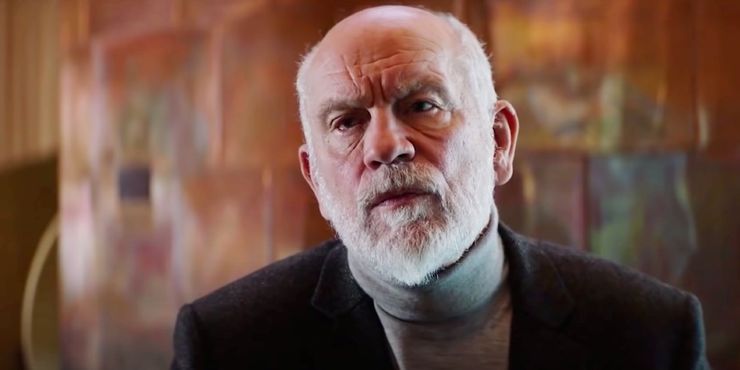
John Malkovich, in a bit of on-the-nose casting, is Ava’s handler, the former agent now handing her assignments and arranging logistics. Yeah, he can still do fight choreography. Colin Farrell is “management,” the promoted-from-the-ranks higher up calling the shots.

And then there’s the messy “past” and home life that’s back in Boston, where Ava’s mom (Geena Davis, who played a female assassin in “The Long Kiss Goodnight”) has angina and her singer/songwriter sister (Jess Weixler, who played Chastain’s sister in “The Disappearance of Eleanor Rigby”) has taken up with Ava’s ex (Common).

Another complication? The mysterious Chinese entrepreneur/bookie (Joan Chen) running a hot night club that Ava finds the time to bust up.

Girlfriend’s got…issues. But she can take a punch and Chastain can take a fall, even if she’s not the best at disguising the throw-weight physics of a to-the-death brawl.

Tate Taylor, the director who made Chastain a star in “The Help” is behind the camera here, and while he’s dabbled in violence with “Ma” and intrigue with “The Girl on the Train,” he’s out of his depth. Not so much as actor turned screenwriter Matthew Newton (“Who are We Now,” “From Nowhere,””Three Blind Mice”). They’ve teamed up to clutter up what is, by genre necessity, meant to be mean and lean.

Setting some of the violence to dreamy synth pop? Not

After that first “closing,” things progress on such a predictable path that the only enticement to continuing is the notion that we’ll get to see many a “good death.”

But…but…those ISSUES.

Here’s a tip. Try not to bore us so much next time.

MPA Rating: R for violence and language throughout, and brief sexual material

Cast: Jessica Chastain, John Malkovich, Common, Jess Weixler, Joan Chen, Diana Silvers, Ioan Gruffudd and Colin Farrell.

Credits: Directed by Tate Taylor. A Voltage Film/Netflix release.

Running time: 1:36

Posted in Reviews, previews, profiles and movie news | Comments Off on Netflixable? It isn’t just looks that could kill where “Ava” is concerned

Movie Review: Sienna and Diego “Wander Darkly” after an accident

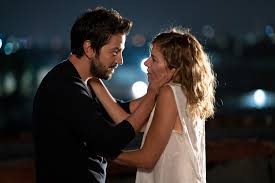
Say what you will about the somewhat hokey supernatural love story that they’re trying to put over in “Wander Darkly.” But Sienna Miller and Diego Luna put on a clinic in screen chemistry in this melancholy puzzle-picture romance.

Writer-director Tara Miele’s debut feature may be unduly concerned with the “puzzle” part. But her leads are stars who light it up and kind of break your heart, and if Luna and Miller aren’t on your short list of “my favorites,” here’s a movie to remind you of your poor choices.

They’re fighting when we meet them, or at least not getting along all that well. Adrienne and Matteo have a new baby and a new house and “We’re broke.”

And SOMEbody just forgot “date night.”

The evening, meeting friends for dinner, is tense and terse — something about the way Adrienne spits out “We’re not married” when people make that mistake. And right in the middle of the “Why are we even together any more?” fight on the way home, they crash.

She wakes up bloodied, confused, chasing a gurney down the hall in the hospital, watching a body slid into a freezer in the morgue.

It is drugs? Is she dead? Or is she merely “concussed,” Matteo’s answer? Because Adrienne is convinced “I died.”

Sounds are muffled and Miele’s camera is canted, flipped, as woozy as Adrienne’s state of mind as she steps out of a corridor and into another location, then another, fades out and wakes up on her own sofa, overhears her mother (Beth Grant, terrific as usual) talking about “taking the baby home with us.”

Adrienne sees Matteo eulogizing her at her funeral, jumps ahead and sees her daughter growing up with her parents.

“I’m dead…What is this, Purgatory?” Only Matteo is there to comfort her, correct her — “You’re confused.

He resolves to “help you remember…I’m gonna tell you our story, OK?”

“Wander Darkly” sees them doing exactly that, stepping into and out of scenes from their not-a-marriage — first date, first kiss, first jealousy. The conceit here is that they’re not just observing their history in the manner of a hundred similar romances. They’re in the situation, as they were then, but commenting on it from within to reinforce his reassurances, or her doubts.

“Hey, I love you.” “No, I was the one who said it first.”

Adrienne gets over her anger at a possible “other woman” — “Even me dying isn’t enough to make you step up.” The “I’m a good ghost” cracks fade away. And as they do, you might feel the picture slipping away, the filmmaker losing the thread or at least getting away from what works — the give and take between her stars.

There are tips and too-obvious clues about what’s really going on here. And Miele drags out the finale, too, trying to bring on the tears.

But Miller and Luna give this romance a history, weariness and testy spark that keeps “Wander Darkly” going even after we’ve guessed what its destination is.

MPA Rating: R (Language|Some Sexual Content/Nudity)

Cast: Sienna Miller, Diego Luna, Beth Grant

Credits: Written and directed by Tara Miele. A Lionsgate release.

Running time: 1:37

Posted in Reviews, previews, profiles and movie news | Comments Off on Movie Review: Sienna and Diego “Wander Darkly” after an accident

Movie Review: A stylized spoof of Canadian history — “The Twentieth Century”

If “satire,” as the playwright/wag George S. Kaufman famously observed, “is what closes Saturday night,” then what are the possibilities of “The Twentieth Century?”

It’s a surreal, expressionistic satire, a camp vulgarization of history. And Hell’s bells, it’s CANADIAN history. “Closes Saturday afternoon?”

Writer-director Matthew Rankin works the Guy Maddin (“The Saddest Music in the World”) side of the cinematic street in this furiously strange riff on the rise of Canada’s dominant political figure of the last century, William Lyon Mackenzie King, or as the syrup-slurping classes to the North sometimes call him, WLMK.

No, I’m not making that up. But Rankin, looking at the gaps in King’s half-century-spanning public career, noticed what is known (white supremacist, a bit late figuring out Hitler, into the occult, never married) and plunged over a cliff in this fanciful, fantastical, stylized and almost totally fictional spoof of a figure who towers over modern Canadian history.

Queen Victoria is quoted, summing up Rankin’s maple-leafed native land — “In happy days as in sad, disappointed you shall be.” And if she never said it, and there’s no such place as “Disappointment Square” in Toronto or Ottawa, more’s the pity.

“May the disappointment keep us safe!”

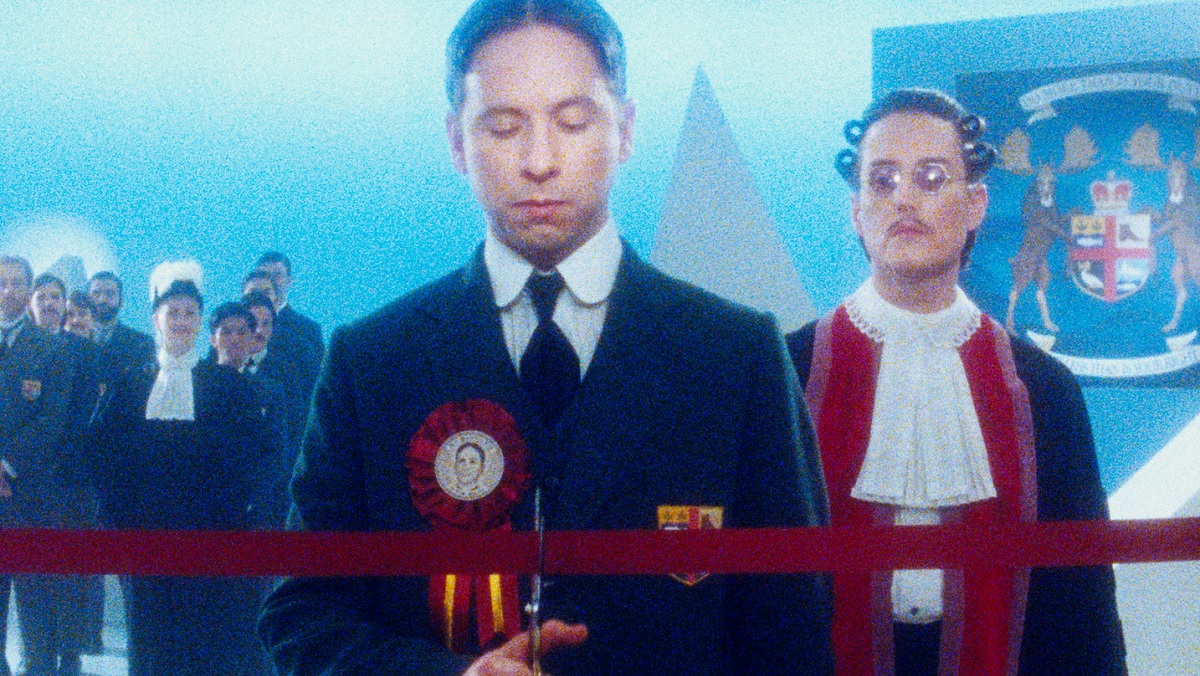
This is Canadian comedy at its loopiest, Second City on Acid — bawdy, transgressive and transgender, and filmed on digitally-augmented sets of serene, expressionistic beauty — all angles and colors, triangular stage monoliths in front of painted (digitally rendered) backdrops.

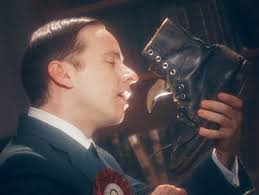
The story compresses King’s formative years into a blur of failed romance, a kinky shoe fetish, bullying by his political rivals and a reputation for do-gooderism that Rankin ridicules to death.

The “spineless milksop” is played Dan Beirne, his domineering, sickly husband-dismissing mother by Louis Negin (Dame Edna’s…brother?), his political and moral role-model and ideal, the angelic and self-sacrificing politico Bert Harper by Mikhaïl Ahooja and the string-pulling Royal Governor General Lord Muto (His real title was Earl of Minto) by Seán Cullen.

Rankin has characters compete for power via a reality-TV worthy series of “competitions” — ribbon cutting (look “statesmanlike”), IDing logs by tree scent and a whack-a-mole game in which the moles are “baby seals,” to show how you identify with “the demented inbreds” who go for that sort of thing.

King visits a tubercular child in the Hospital for Defective Children for inspiration and motivation.

“I happen to believe that politics is about building a better world,” he says. “Help those that cannot help themselves” was the real King’s motto.

This King might marry one of two women, the harp-playing Teutonic goddess and Boer War fanatic Ruby (Catherine St-Laurent) or French Canadian Nurse LaPointe (Sarianne Cormier). The “Wedding Rituals of Toronto” with their “matrimonial sapling” and walk across a (moving, painted floor) ice-filled river is quite the test for true love.

Sexual frustration and implied perversion is treated by Dr. Milton Wakefield (Kee Chan). Milton Wakefield is a modern day politician who is still living, here imagined as a turn of the 20th century sanitarium doctor — and Asian.

The look of this “Century” is dazzling, and the off-the-wall inventiveness impresses — for a while.

But man, does this farce hit the wall or what? The frenetic early scenes in this biography in “ten chapters” lapse into the doldrums before the halfway mark. The zingy lines become fewer and farther between. And the performances, uneven in their comedic effect, run out of gas as well.

Full disclosure, I was never a huge Guy Maddin fan, and he did more wholly-realized versions of this sort of spoof back before digital effects made it all a tad easier.

I’m inclined to cut “The Twentieth Century” slack for sending me on a deep Wiki dive into Canadian history, and the visual inventiveness and perverse camp of it all. But the politics are murky, the satire muddier.

Maddin got there first, and his movies didn’t feel this gassed for the last half hour or more.

MPA Rating: unrated, profanity, sexual imagery

Cast: Dan Beirne, Sarianne Cormier, Catherine St-Laurent, Louis Negin, Brent Skagford, Mikhaïl Ahooja, Seán Cullen

Credits: Scripted and directed by Matthew Rankin. An Oscilloscope Labs release.

Running time: 1:30

Posted in Reviews, previews, profiles and movie news | Comments Off on Movie Review: A stylized spoof of Canadian history — “The Twentieth Century”

Movie Preview: “Monsters of Man” brings the robot war home

It’s a little “Predator,” a bit of “Robocop” and a LOT “Terminator” — metal mercenaries of the not-too-distant future hit a Third World trouble spot.

Mayhem ensues.

Posted in Reviews, previews, profiles and movie news | Comments Off on Movie Preview: “Monsters of Man” brings the robot war home

Movie Review: Lived through it, now “Frau Stern” is ready to end it all

“Living well,” they say, “is the best revenge.” But what would you call living on — outlasting your enemies and loved ones, all your peers, outliving everything except for your memories?

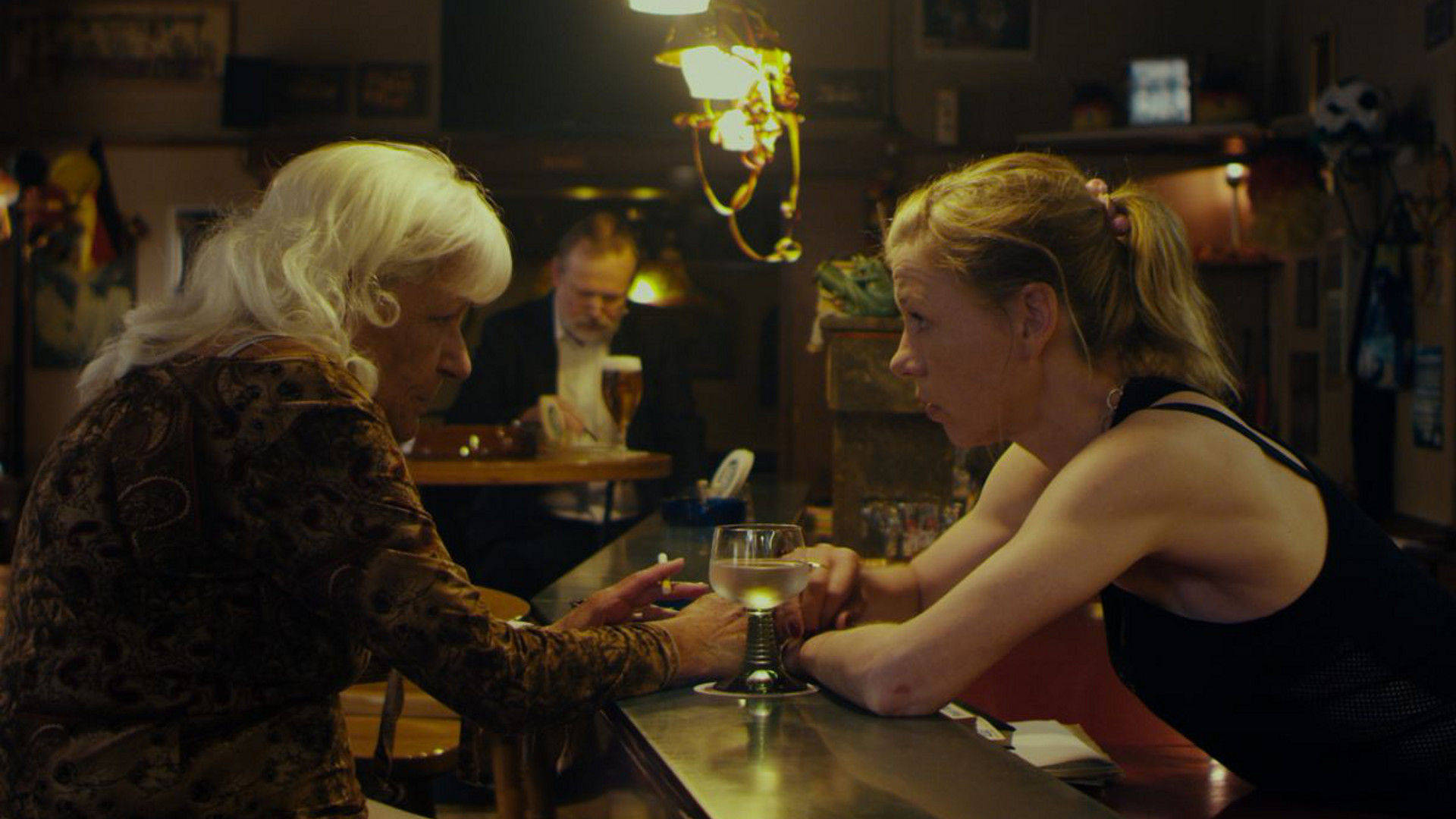
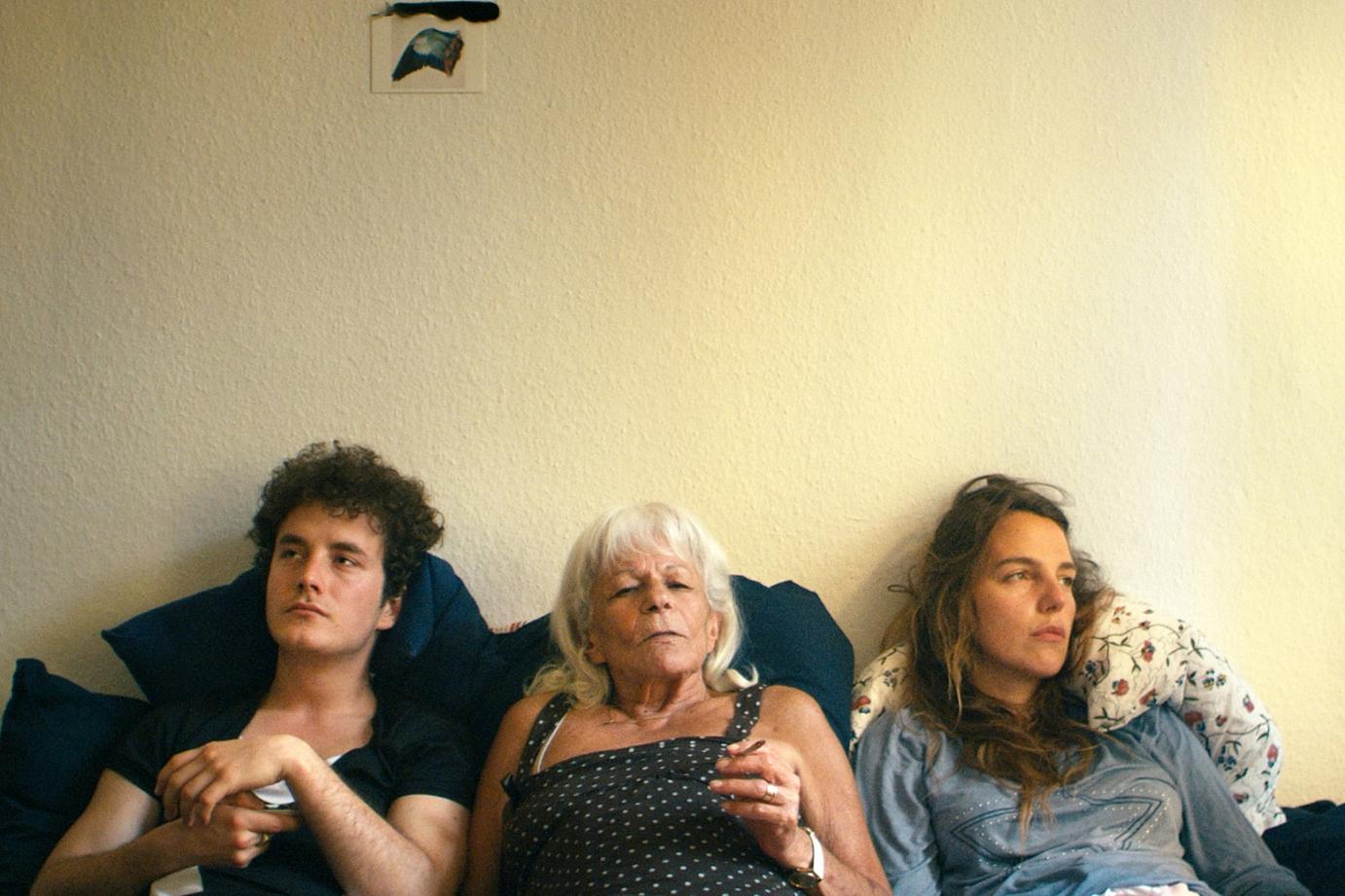
“Frau Stern” is about to turn 90. She has the love and attentions of her daughter, and the adoration and affection of not only her granddaughter, but her granddaughter’s peers — the local bartender, a young hairdresser who comes by for a trim and to check on her, most of them one third her age.

She’s socially active, a tireless smoker and in extraordinary health, her doctor assures her. But Ms. Stern, played by the late Israeli actress Ahuva Sommerfeld in her only screen appearance, has had enough. A Berliner and a Holocaust survivor, she’s ready to go.

“I want to die,” she tells her doctor (in German, sometimes Hebrew, with English subtitles).

“You should stop smoking,” he chortles.

“If you’re not going to help me, I’ll do it myself.

He won’t. Whatever the ethics, he knows the optics, what the headlines will look like — “German Doctor Kills Holocaust Survivor.”

So Frau Stern starts on her single-minded quest, finding a way to stop living on her own terms, to stop remembering because “I remember everything.

As she starts in on the daughter (Nirit Sommerfeld, her real life daughter) and then the granddaughter (Kara Schröder), widening her search for a means to an end to other means and other sources of “help,” “Frau Stern” slyly shifts from being about suicide to about what makes life worth living.

She is inspired and somewhat encouraged by a chat show she checks into, pretentious conversations moderated by the host (Robert Frupp) of “Glory Moment,” a show about ordinary Germans telling the more extraordinary stories of their lives.

Frau Stern has stayed in Berlin despite what “The Germans” did to her and her family. Her granddaughter is dating “The German,” and from all her talk along this line we start to figure she stuck around out of spite, to have the last word.

And now, those who persecuted or stood idly by while crimes against humanity were carried out, have died.

Writer-director Anatol Schuster fills in what looks like a full life. The widow has her “usual” at the bar, her usual bartender to remember it and deliver it, her regular smokes she picks up at the smoke shop, even a favorite convenience market she shoplifts from — just for excitement. Pushy new, young neighbors seem to have sketchy intentions. That’s a fresh challenge.

As she’s asking around about a gun, she has lots of people to consult, modifying her request after answering “What do you need a gun for?” a tad too bluntly. Now, she says “It’s getting dangerous around here.”

That’s the humor in this very dry and somewhat limited character study, the lady’s unflappable resolve and hard-won native cunning.

Schuster doesn’t take us on a long journey, or even the one we think he’s guiding us into when it begins. A brief film like this can endure only so many interludes, and he tries a couple that don’t push the story forward or illuminate characters in any important way.

But Schuster wrote “Frau Stern” specifically for Sommerfeld, and we can see what he saw in her in just a scene or two. She’s a spitfire, a fighter, not a complainer. And as we identify with her, we can either root for her quest, or hope she finds a reason to abandon it. But Sommerfeld ensures that we respect it, even if Frau Stern’s doctor, friends and descendants do not.

MPA Rating: unrated, adult subject matter, profanity, drinking and smoking

Cast: Ahuva Sommerfeld, Kara Schröder, Nirit Sommerfeld, Murat Seven and Robert Schupp 

Credits: Scripted and directed by Anatol Schuster. A Film Movement release on Film Movement+.

Running time: 1:22

Posted in Reviews, previews, profiles and movie news | Comments Off on Movie Review: Lived through it, now “Frau Stern” is ready to end it all

Movie Review: Brits brawl to the death in “Knuckledust”

The signs are all there — a lurid underworld filled with over-the-top violent “villains,” thick London accents, bits of rhyming and pithy one-liners flung about by characters named Rawbone, Hard Eight, Tick Tock and “Not Now, Nigel.”

That punchdrunk title? “Knuckledust?” Some writer-director bloke’s lost himself in Guy Ritchieland for a few weeks punching this one out.

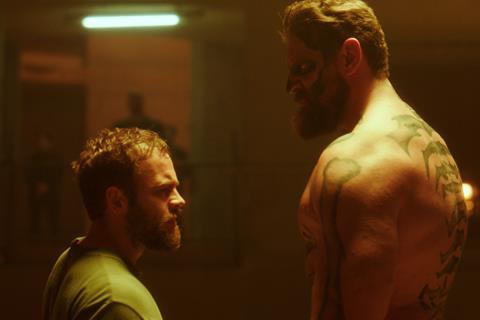
That bloke would be actor turned director James Kermack, and he’s conjured up a bloody, gruesomely violent and ultimately nonsensical story of a bareknuckle “club” where the super-rich wager on assorted brawlers who fight to the death, and which the cops are about to bust up.

It’s got pacing problems and (serious) coherence issues to go along with the Ritchie touches and yet another visual homage to the epic corridor kill-off in the Korean classic “Oldboy.”

Kermack goes for “Sin City” visual cues — neon-lit titles ID the many assorted characters in an opening, where stunning skinny biker and boss Serena (Camille Rowe, whose line readings remind one that directors go deaf in casting sessions) marches into the Church of Herod, her pricey underground fight club just as Tombstone (Guillaume Delaunay) is finishing off the last foe in a mass murderous gladiatorial punchout.

The next bout? It’s got to go a certain way. Hard Eight (Moe Dunford) needs to lose. Serena’s hiring requirements are “hard fighting men, men nobody will miss.” Hard Eight, aka Brody, has somebody who will miss him. Serena will have her killed by hitmen Happy (veteran character actor Phil Davis) and Hot Lips (Matthew Stathers) if Hard Eight doesn’t take the fall.

“You die, or she dies.”

Hint — it’d be a mighty short thriller if a character you went to all the trouble to name “Hard Eight” buys it in the opening act.

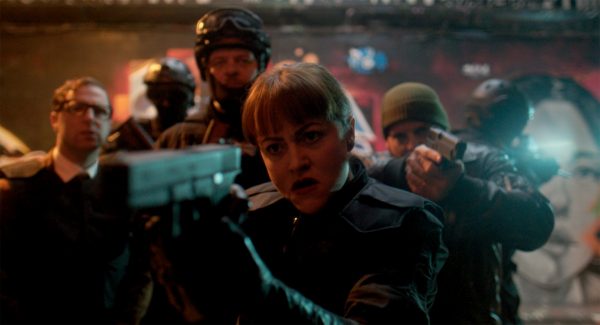
“Knuckledust” is about Hard Eight’s revenge, and the cops — bossed around by Kate Dickie and Jaime Winstone (Yeah, she’s Ray’s daughter.) — who’re raiding this operation in an effort to bring down the richies luring veterans off the street and making them fight to the death.

There are some furious fights, and a few funny moments — such as SWAT showing up with the wrong equipment to break down the door.

“We didn’t bring the ram, ma’am.”

Dave Bibby, as a manic sweater-vested tech nerd Hooper, stands out among the many villains and villains hunting the villains. And Parisian Sebastien Foucan has the tastiest trash-talk, delivered in a French-accented purr.

“I have an ear for guns. They whisper to me…This one is saying, ‘SHOOT me, I’m full.”

Irish actor Dunford acquits himself well here. He’s got the right growl and build for this. He was in “Black ’47,” “The Dig” and TV’s “Vikings,” and heck, you can even hear his voice in Netflix’s animated holiday “Angela’s Christmas Wish.” But you shouldn’t. It’s lame.

“Knuckledust” seriously lost the plot — or made me lose it — late in the second act and for pretty much all of the third. But there’s enough here that maybe you figure Kermack will come closer to the mark next time.

More punchy punch-lines, more tight shots (comedy and violence are best delivered in close-up), quicker cutting.

Guy Ritchie’s got to pass the mantle to somebody, after all.

MPA Rating: unrated, graphic violence, profanity

Cast: Moe Dunford, Camille Rowe, Kate Dickie, Philip Davis, Jaime Winstone, Gethin Anthony, Sébastien Foucan and Dave Bibby

Credits: Scripted and directed by James Kermack. A Samuel Goldwyn release.

Running time: 1:45

Posted in Reviews, previews, profiles and movie news | Comments Off on Movie Review: Brits brawl to the death in “Knuckledust”

Movie Review: It’s Drew Barrymore times two, as a comedy star and “The Stand-In”

“The Stand-In” has the plot of what could have a Drew Barrymore of twenty years ago.

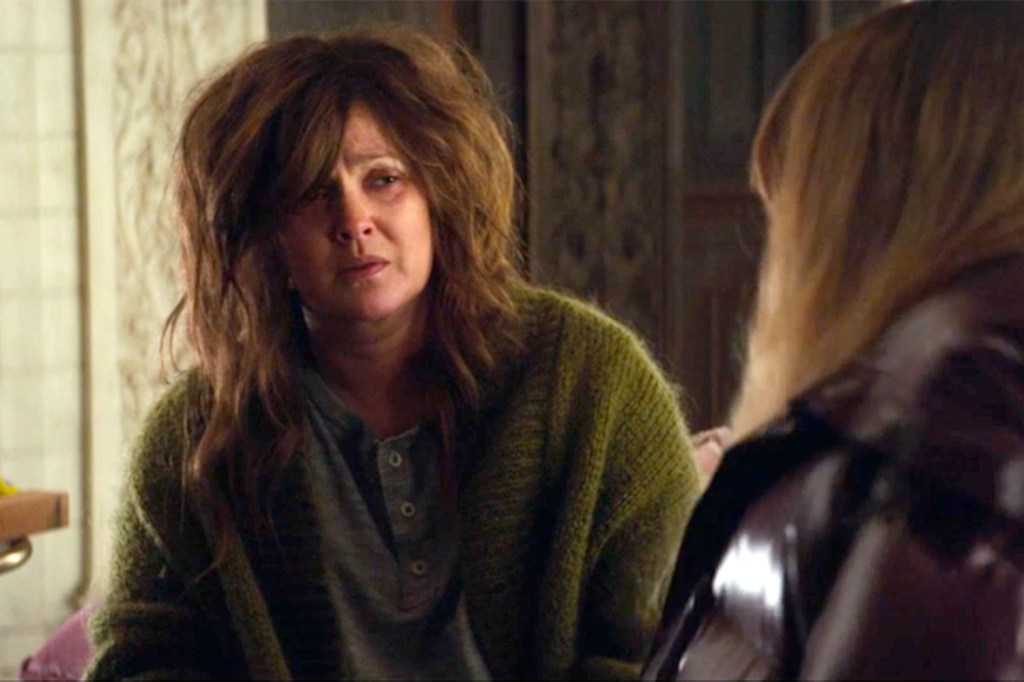
She plays a comic actress, burned out and strung out, over the whole showbiz thing and ready to stop being a celebrity. And she plays the star’s stand-in, a woman barely getting by on a little luck and no talent.

Drew times two? That’s a winner!

It is littered with cameos from pals, from Jimmy Fallon and Kelly Ripa to Lena Dunham and Richard Kind, playing themselves or bit parts.

Jamie Babbit of “But I’m a Cheerleader” and TV’s “Girls,” directed and veteran British screenwriter Sam Bain (“Four Lions,” TV’s “Ill Behaviour”) cooked up the story, setting and gags.

But in trying to impose a statement on it, we watch in dismay as promising ideas are introduced and passed by on the film’s way to wherever the hell they decide to go instead. A laugh here and there is the best we can hope for, even though Barrymore’s plainly still got the comic goods.

We meet Candy Black at her post-peak/still-a-diva worst, hiding in her trailer snorting this and belting back that rather than face another pratfall-driven comedy, another chance to deliver her catchphrase — “Hit me where it hurts!”

“Pippi Bongstocking” and “Maid in Chattanooga” and “Rocks Off” made her rich and famous…and contemptuous of one and all. Lashing out, cussing one and all is kind of her brand, now. It takes her stand-in (Drew II), begging for the work, to coax her out of the trailer.

But one on-set tirade too many, injuring a co-star (Ellie Kemper) and going viral, ends it all. Years later, Candy’s gone “Grey Gardens,” hiding out in her Long Island mansion, avoiding taxes, still using/abusing, but “over” the whole fame thing.

Court-ordered rehab is just another thing to dodge. Get her agent (T.J. Miller, funnier than usual) on the phone. What was the stand-in’s name? Paula…something?

They find her — living in her aged camper-shell pickup. Summoning Paula they strike a deal. Candy’s all about shucking showbiz and making Shaker furniture, and there’s this carpenter she’s met online. Do rehab for her and she’ll take a job and Paula gets that part of her life back.

Rehab is the first promising, if obvious, twist that “Stand-In” steers away from.

The story instead becomes one of sweet, meek pushover Paula taking on public appearances, an “apology tour” and the “comeback” that Candy, still hiding out and going by her original name “Cathy” now, is refusing to mount.

“All you have to do is say ‘Sorry!'”

Paula (Barrymore with a fake nose and weight-padding) starts out sweet, giving us the Candy the world deserved — somebody a tad more grateful for stardom. But as you might guess, as she takes over more and more of this work and this “life,” she changes.

“You may have made a name for yourself, but I’m the only one doing anything with it!”

Bain’s screenplay has a lot of trouble with transitions, lapses in logic and clumsy changes in tone. Sexting Shaker furniture double entendres with her wood-working guru (Michael Zegen) should have been funnier, but seems off key, even in a movie with a lot of drugs and some darker turns.

That said, the opening tirade scenes are a hoot, Miller is amusing and has agent-sweet talk down cold.

“Buddyyyyyyy, I’m JOKING. I don’t have to tell you that I don’t have to tell you that I’m joking.”

Holland Taylor, playing a film director, and couple of the cameos pay off.

And Barrymore does a fine job of differentiating between Candy and Paula. Funny how strung-out “Candy” looks a lot like the 2020 version of Susan Sarandon.

Drew and “The Stand-In” are just good enough at making us remember that we’ve missed her timing and comic charm. And all this TV work, topped with starting a chat show in a pandemic, is no substitute for seeing her take on a role and making it funny in a feature film.

Well, funnier than this. Drew’s still got it even if “The Stand-In” doesn’t.”

MPA Rating: R for language throughout including sexual references, and for drug use

Cast: Drew Barrymore, T.J. Miller, Holland Taylor, Ellie Kemper, Michael Zegen

Credits: Directed by Jamie Babbit, scripted by Sam Bain. A Saban Films release.

Running time: 1:41

Posted in Reviews, previews, profiles and movie news | Comments Off on Movie Review: It’s Drew Barrymore times two, as a comedy star and “The Stand-In”

Movie Preview: Updating Jane Austen? “Modern Persuasion”

A modern riff on Jane Austen? Alicia Witt, Shane McRae, Bebe Neuwirth, Li Jun Li, Daniella Pineda and Liza Lapira do a version of my favorite Austen novel, the less-filmed (Ciaran Hinds co-starred in the definitive version), playing up “Persuasion” as a comedy. Which it never really felt like.

But let’s what we think Dec. 18.

Posted in Reviews, previews, profiles and movie news | Comments Off on Movie Preview: Updating Jane Austen? “Modern Persuasion”

Movie Review: McQueen’s “Education” ends “Small Axe” series on a quieter note

Steve McQueen’s landmark “Small Axe” series, about the activist years of greater London’s West Indian diaspora, ends up an upbeat yet dramatically thinner and less satisfying than you’d hope note with “Education.”

The finale, set in the early ’70s, when the community, first turned to activism just a couple of years before, took on Britain’s educational system, the racial biases that farmed “problem” or “delayed development” children into schools they labeled “educationally subnormal.”

Immigrant women from Grenada, Trinidad, Jamaica and other former British colonies took on the “system” even as they came up with “Saturday schools” of their own devising, augmenting the outdated and even racist teaching going on in the country’s public schools.

McQueen shows this grassroots work-around and how it impacts the life of a dreamy, distracted boy named Kingsley (Kenyah Sandy). He is enraptured by a first visit to a planetarium, spends hours drawing rockets and hits his knees each night, prays to God that “I become an astronaut.”

But neither he not the school system he’s in are doing what it takes to help him realize that dream.

His parents (Sharlene Whyte, Daniel Francis) are working multiple jobs to raise him and older sister Stephanie (Tamara Lawrance) in working class comfort.

They don’t have to worry about Stephanie, a teen with designs on a career in fashion. Kingsley? He’s distracted, a bit of a cut-up with his friends. Because, you know, he’s 10. He also can’t read. The snickering of his classmates when he’s called on to read aloud doesn’t help, any more than the teacher who barks “Ya big BLOCKhead” at him.

His parents don’t pick up on this. He’s constantly in trouble. Then one day, the head master summons Mum in to sweet talk her into signing off on his reassignment to a “special school” Her boy, “notting but a heap’a trouble” at home, she declares — lazy, TV watching, chores-dodging — will get “the help he needs” with “more attention.”

The Durants School he’s sent to “evaluates” him on arrival, in a group that includes another West Indian child like him and a white girl who barks and meows in answer to every question. That’s the last moment anyone gives him a thought, and the last effort any educator makes to reach him.

Durants and schools like it during the era when Margaret Thatcher was Conservative Education Secretary, on her way to being Prime Minister, were warehouses where lazy, racist and tuned-out teachers often couldn’t be bothered to so much as show up.

The most chilling moment, one that comes after a psychotherapist and activist (Naomie Ackie) has visited the school and witnessed the chaotic conditions there, shows a teacher who has finally showed up for class, only to serenade the little “helpless” cases with the folk ballad “House of the Rising Sun.” McQueen has the plucking, singing actor (Stewart Wright, I think) perform the entire ode to a New Orleans brothel, every verse, missing a note here and there.

“And who knows who wrote that?” he chirps at the end of almost five minutes of killing time. “The Animals. The Animals.” The lump doesn’t know the song pre-dates the Brit rockers by hundreds of years.

The limited drama of “Education” comes from the rising fury of Kingsley’s mother, and the pushback she gets from her carpenter/laborer husband. He isn’t there for the lectures she gets from a local organizer (Josette Simon) who talks about the government reports detailing the racial biases in The System and the ways “educationally subnormal” labels and special schools sideline kids for life and vastly reduce their earning potential and chances of working their way into the middle class. Dad is fine with the kid “learning a trade,” which is all his generation could hope for.

A white school chum of Kingsley’s echoes this when he dismisses the kid’s desire to become an an astronaut. “You can’t have a Black man in space!”

The community activists, pitching in with supplementary teaching on weekends, are shown for who they were — heroes in the struggle identified in most of the other films of “Small Axe” (which takes its name from a Bob Marley song). “Education” was the answer for McQueen and kids in his community aspiring for “the dream” their parents brought with them when they emigrated.

But I was hoping for a bigger punch in the payoff, with Kingsley Smith being some real-life success story like “Alex Wheatle,” the subject of the previous “Small Axe” film, or somebody who grew up to become an activist himself.

The kid is a thinly-developed character. His mother and his sister say “He’s not stupid, he’s very bright.” But we see no evidence of that. We’re shown no reason why, in his wholly-integrated original school, with East Indians and West Indians, white, brown and black children, he is the one who hasn’t learned to read.

The “bullying” teachers are shown and “cultural biases” in IQ tests are explained. Activists point to parents who have to take a more active role in education, and we see evidence of that. But yanking kids away from TV hardly covers that territory.

So while I can see why McQueen would turn to this corner of activism in the rise of West Indian Britons for one episode of a series that highlights street protests against police racism, a West Indian man (played by John Boyega) who makes it his business to integrate the force personally, small business owners and ordinary people radicalized by the racist retrenchment from white culture and white officialdom, I think “Education” comes closest to missing the mark.

It’s brief, but not so much to-the-point as wandering around it for an hour. And while it doesn’t spoil the effect of the whole, it does feel wanting as a finale. It’s the dullest “Small Axe” of the five.

MPA Rating: TV-MA, profanity

Cast: Kenyah Sandy, Sharlene Whyte, Tamara Lawrance, Josette Simon, Daniel Francis and Naomi Ackie

Credits: Directed by Steve McQueen, script by Steve McQueen, Alastair Siddons. An Amazon Prime release.

Running time: 1:03

Posted in Reviews, previews, profiles and movie news | Comments Off on Movie Review: McQueen’s “Education” ends “Small Axe” series on a quieter note

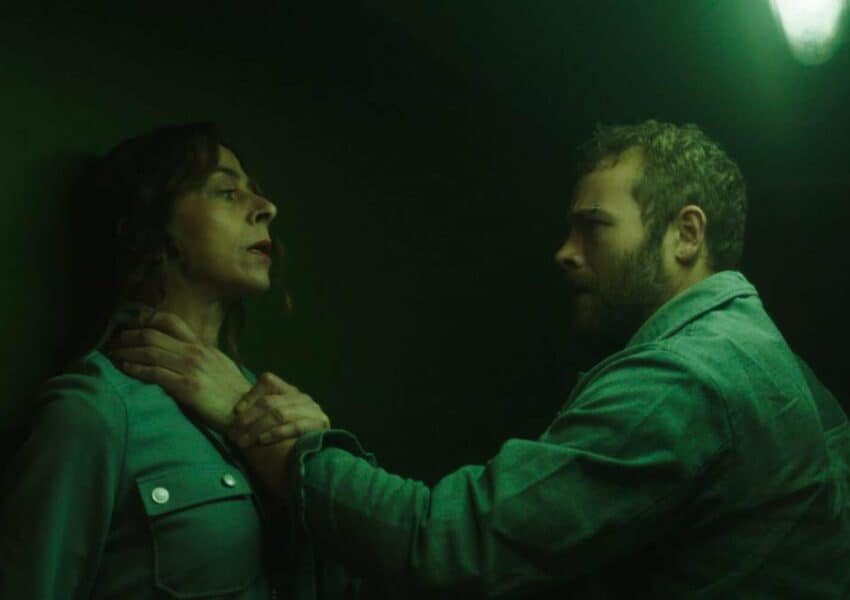
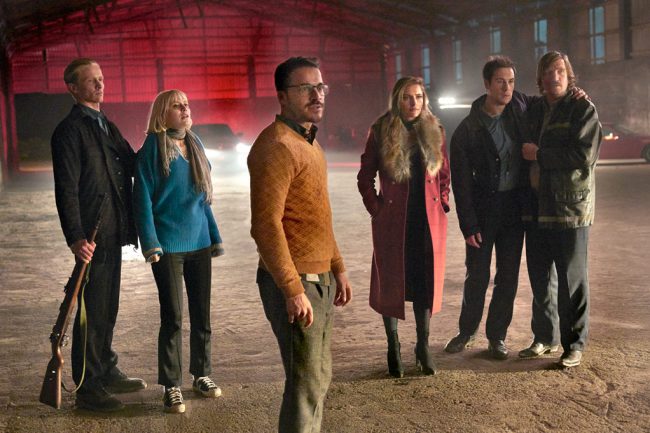
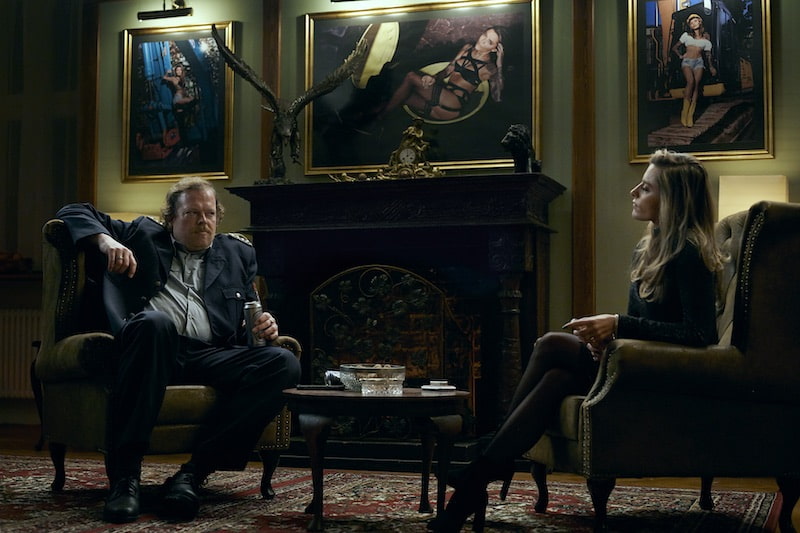
Netflixable? Germans mix it up with German mobsters in a “Christmas Crossfire (Wir können nicht anders)”

Truth be told, I could have done without the German holiday line-dancing in the finale.

There are plenty of times co-writer/director Detlev Buck (“Hands off Mississippi”) tosses a few too many balls in the air — characters to follow, subtexts that add “threads” that we’ve got to keep straight, and we’re not sure that he is either.

And “Wir können nicht anders,” aka “Christmas Crossfire” teases us that it’s going to reach some sort of “Die Hard Yule” climax that truthfully, it never does.

But for a dizzy, violent off-the-wall comic thriller (in German with English subtitles), this isn’t half bad.

Just from looking at her, you can tell that Edda (Alli Neumann) is the sort of fetching fraulien used to getting men to do just what she wants. She’s in tears, her makeup smeared. And poor Sam (Kostja Ullmann) is putty in her presence.

“I only sleep with guys with coats like that when the police are after me,” she purrs, and before he knows it, they’re doing vodka shots, he’s picking up the tab, she’s gone back to his Mercedes camper van with him, shedding clothing as further things transpire.

She wants to go somewhere and he’s driving her. She wants to pull off the road in the woods and have another shirtless go of it. And that’s when he hears the shouting and stumbles out of the van and into a mob execution, which he interrupts the way a college professor (“ASSISTANT professor!”) might.

“I wouldn’t do that.

It sounds no more menacing in German than it does in English.

Next thing we know, he’s on the run with Rudi (Merlin Rose), the would-be victim he just saved and a bit of a myopic ingrate, she’s left the van and lost him and hunting for help and there are all these storylines to follow, plot threads to pick up.

Hermann (Sascha Alexander Gersak) is the vaping thug running the show. He’s got a beef with Rudi over a beautiful woman (Sophia Thomalla), chasing all over BFE Germany with his gang in Dodge Ram pickups while Edda is finding the local cop (Frederic Linkemann) who is piggishly unprofessional and more interested in her than helping her and her “boyfriend” because they have “history” and this dying town is what she fled.

Rudi and Sam? They’re trapped by some older crank with an AK-47 and a date with a sauna.

There’s Christmas decor everywhere. Hermann’s family, led by wheelchair-bound brother Sigi (director Detlev Buck), is having a party and lamenting that they’re heavily invested in a planned redevelopment that’s gone south. And the locals have a reluctant tolerance of the new (African and North African) immigrants who sneak out to cut down Christmas trees on public land or sew up bad guys who get stabbed in a knife fight they have no one but themselves to blame for.

Stabbings, shootings, kidnappings and escapes ensue among the “Verdammte Schweine!” mixed up in all this.

It’s not quite up to the tempo of a screwball farce, although the script has that complexity. The jokes are droll and sly, like Sam hiding behind a tombstone that reads “Died too soon.” For some odd reason, a lot of these hicks are wearing uniforms, and not just the rapey cop.

Ullmann has a bit of Jeff Daniels in “Something Wild” about him, an academic out of his depth, but lost in lust over this libidinous blonde pixie.

“What do you WANT with me? I had nothing to do with this!”

“That’s the problem, isn’t it? No one wants to STEP UP” these days.

Gersak is ferocious and menacing, and Neumann makes Edde beguiling, a bit lost and yet not to be trifled with.

There is no real “Christmas Crossfire” worthy of the title. But it holds your attention as on and on it goes, grimly violent but glibly fun. And remember, if you stay to the end, there’s line dancing.

MPA Rating: TV-MA, violence, nudity, sex, smoking and profanity

Cast: Kostja Ullmann, Alli Neumann, Sascha Alexander Gersak, Merlin Rose, Frederic Linkemann and Detlev Buck.

Credits: Directed by Detlev Buck, script by Martin Behnke, Detlev Buck. A Netflix release.

Running time: 1:45

Posted in Reviews, previews, profiles and movie news | Comments Off on Netflixable? Germans mix it up with German mobsters in a “Christmas Crossfire (Wir können nicht anders)”