They’ve been called “dead teenager movies” ever since Siskel and Ebert gave them that label. And they follow the same formula, the same “rules” the world over — even in Poland.
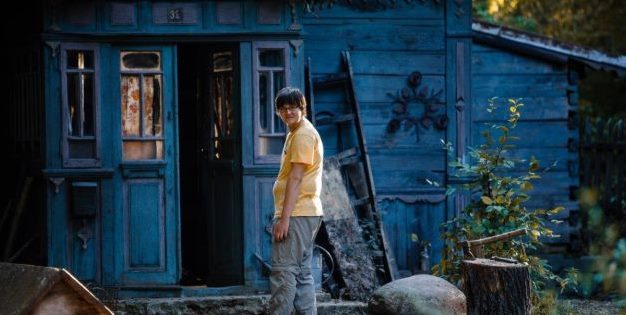
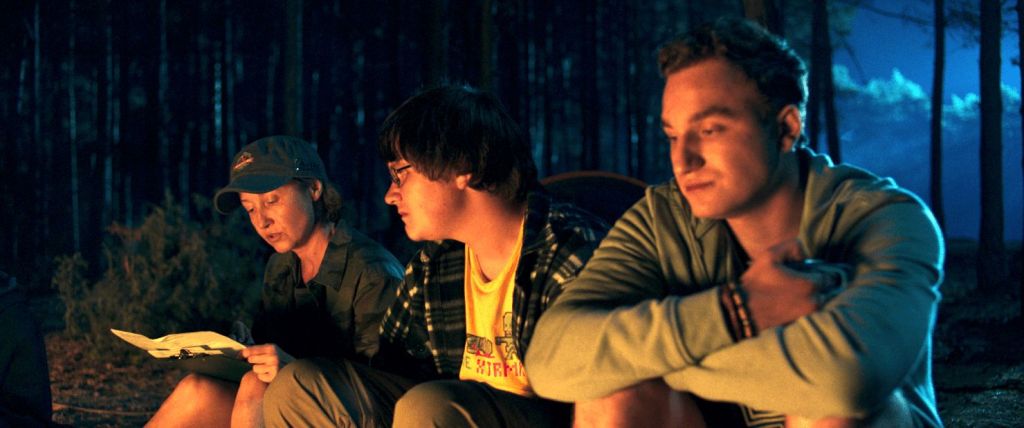
“Nobody Sleeps in the Woods Tonight,” or “W lesie dzis nie zasnie nikt,” is a classic “filmy z martwymi nastolatkami (dead teenagers movie).”
It’s got teens — some of them archetypal “horny teenagers.” They’re in the forest, shipped there by their parents because they’ve become device and gaming and social media addicts.
And there’s something or someone there out to slaughter them, one by one.
The characters are The Usual Suspects — the nerd (Michal Lupa), the self-absorbed Youtube “star” (Sebastian Dela), the bombshell blonde (Wiktoria Gasiewska), the bully who might be projecting (Stanislaw Cywka)and the quiet girl with the Big Secret and the switchblade (Julia Wieniawa-Narkiewicz).
Only the nerd, prattling on about worries, movies and his gaming career, makes much of an impression. And everything he says and does has been acted out 144 times before in other dead teenager movies, most of them in English.
But we don’t watch such films for the surprises. We watch for the creative, twisted and sometimes funny means of slaughter, the nudity, the “sex means a death sentence” familiarity and the jokes — often made by the nerdy “type” who’s made himself an expert on the genre and its immutable laws and rules.
“When groups split up, people die” Julek has observed. As have we. Many, many times. The thing that hamstrings “Nobody Sleeps in the Woods” is that even the jokes about the genre are so over-familiar that we know them (in English, or in Polish with English subtitles) before the set-up line is finished.
The threat isn’t unseen, but viewed in the open mere minutes into the movie. The threat is over-“explained” at some point.
And yes, the kids and their camp counselor (Gabriela Muskala) “split up.”
Any questions? Any doubt who will strip naked, or who will be the Last Camper Standing?
MPA Rating: TV-MA, bloody violence, sex, nudity
Cast: Julia Wieniawa-Narkiewicz, Michal Lupa, Wiktoria Gasiewska, Sebastian Dela, Stanislaw Cywka, Gabriela Muskala
Credits: Directed by Bartosz M. Kowalski, script by Bartosz M. Kowalski, Jan Kwiecinski and Mirella Zaradkiewicz. A Netflix release.
Here’s a fun martial arts Buddhist parable from the late pre-Jackie Chan era, a 1979 jewel that’s been newly-restored in ways that preserve the look, sound and feel of the age of the times, a moment in time caught amid the emergence of Hong Kong cinema.
King Hu’s “Raining in the Mountain” is a period piece with a large cast, an epic mountainside temple setting and a story that is filled with murderous intrigues and hilarious scheming and double-dealing.
An aged abbot (Sun Han) has summoned officials and benefactors to the Temple of Three Treasures to help pick his successor. General Wang (Feng Tien) and his Lieutenant Chang Chen (Kuang Yu Wang) have their reasons for backing this or that candidate.
I don’t know the Mandarin equivalent for “Quid pro quo,” but there’s a little of that in all this, too.
Esquire Wen (Yueh Sun) has more than just an agenda. He wants this rare “sutra” (scripture) that the monastery has in its scripture room. And when his “concubine” (Feng Hsu) and valet sneak off to take a look around and try their hand at picking a few locks, we see just what the rich benefactor has in mind. And the General and Lieutenant pick up on that, recognizing the sexy thief known as “White Fox” (Hsu) in Wen’s employ.
“There’s more to this man than meets the eye.”
What ensues is a near-comedy of intrigues, spying and skulking about with revelations about which of the three scheming candidate monks (Chun Shih, Paul Chun, Hui-Lou Chen) each backs to replace the venerable abbot.
The abbot and his most trusted aides concoct a Zen test or two to see which of the monks is best-suited to guide the temple in the future.
Hu (“Dragon Inn”) spared no expense for costumes, but the film has the unmistakable dated touches that made early Hong Kong cinema instantly recognizable, even with your eyes closed.
The music is largely tinkly Chinese theater comic “effect” sounds, and the soundtrack itself has that distinct tinny tone that the earliest Bruce Lee films sported. The sumptuous lighting and colors, symbolic and tonal depth of the classic Mainland (PRC) cinema developed in the ’80s is far off on the horizon.
The look is well-lit and flat.
This is an attempted “epic” from an industry (filmed in Hong Kong and Taiwan) that was churning out commercial fare on a budget, films often limited (as this one is) to a single main location.
But what Hu gets out of the temple setting is period perfect and heavily populated (many many monks) to an impressive degree And a madcap third act martial arts fight-chase (limited wire work, but lots of trampoline jumps) through forests, along the cliffs of a river, is whimsical with just a hint of grandeur about it.
MPA Rating: Unrated, violence
Cast: Feng Hsu, Yueh Sun, Chun Shih, Paul Chun, Hui-Lou Chen, Feng Tien, Lin Tung, Su Han and Kuang Yu Wang
Credits: Written and directed by King Hu. Now streaming on Film Movement+
Running time: 2:02
Posted inReviews, previews, profiles and movie news|Comments Off on Classic Film Review: “Raining in the Mountain” (1979) blends period detail, martial arts and comedy to grand effect
Homelessness has always been a part of the Christmas story, ever since there was “no room at the inn.” Something about the holiday lends itself to the pathos of those with no family to turn to, no secure place to stay when the weather turns cold and the rest of the society is fretting over celebrations and gifts.
“Hector” is such a story, a tale built around the earthy, working class Scot Peter Mullan, a favorite of Ken Loach, the producers of “West World,” the folks remaking “The Lord of the Rings” and anybody who wants some screen presence that carries “world weariness” about him.
In the title role, he’s a man long “on the road,” hitchhiking around Scotland and England, making treks between Glasgow and London — looking for a meal, a restroom to clean up in and a warm place to sleep.
We meet him as he’s getting an appointment from a nurse, a 60ish man using a crutch in a lifestyle that can ill afford that sort of disability.
He’s been at it for years and years, has his travel companions Dougie (Laurie Ventry) and Hazel (Natalie Gavin) and a spot where they can sleep under cardboard and manage to get by.
But Hector’s close enough to the last place his sister lived that he wants to try and look her up before heading to London for Christmas. There’s a shelter there he’s quite attached to every holiday.
Without a smart phone or computer, one-legged, he hobbles around looking for her with nothing but memories and old, outdated addresses in a dog-eared address book.
Writer-director Jake Gavin sets up several mysteries, the chief of which is one you could ask about any homeless person you meet. What’s Hector’s story? What’s the dark secret that put him here? And what is the urgency of him reconnecting with his family?
Gavin teases out clues as Hector makes an odyssey out of his snowy, rainy tour of the northern UK. A lot of homeless are alcoholics, but “I don’t drink.” We’re spared the American version of homelessness, a baseline of mentally ill people on the streets supplemented by a rising tide of broke people sent there by a collapsing economy. Hazel, a young woman who looks in her 30s and travels with them is another “type.”
“Look at me,” she laments. “I’m not even 18 and my life is already f—-d!”
There’s not a lot of complaining. Movies about those in this situation suggest “choice” as often the cause of their plight. Sure. A friend dies in the cold or some other high risk mishap, ruffians try to rob you of the few things you have, business owners, including a kindly diner waitress, automatically assume the worst.
But Gavin papers Hector’s path with major and minor angels, from the truckers and others (even a guy in a Maserati) who offer him a lift, others who give away rain slickers, food and connive to find a place for him and others to stay.
Sara (Sarah Solemani) is one shelter manager who knows him, but even she doesn’t have any picture of Hector’s “history.” That comes out in tiny drips and dabs.
And through it all Mullan is the weather-worn face of weary depression, resigned to a fate he may have chosen or that may have been thrust on him. He’s been out here longer than we think, and from the ways his search is coming up empty, he may have waited too long to reach back to his past.
“Hector” is also interesting for its portrayal of Britain’s safety net. Even a man in Hector’s position has health care, and even if there aren’t a lot of shelters, there’s a support system. Somehow, I think Gavin has both idealized and whitewashed this subject. No homeless people from other corners of the populace? West Indian? Pakistani or Indian? African?
What we’re given is a character who invites compassion, who makes us hope there’s somebody who cares about him enough to recognize him as kin. And Mullan, our tour guide down this road, is never less than dignified, defeated though the poor man might be.
So we hope and wait and cross our fingers for some lighter moment where Mullan can bend that Scots brogue into a gruff twinkle that he’s let us see in a long and distinguished character actor’s career.
Long before the Kardashians or Trump press conferences, there was hate-watching. And it wasn’t just on TV. It could take place at a cineplex near you.
Pauly Shore brought it to the culture, to the movies and to a Blockbuster Video near you.
Now the 52 year-old star of “Son in Law,” “Bio-Dome,” “Jury Duty” and so many other abominations during a heyday that lasted longer than anybody could have imagined is back — on Netflix at least. That’s a good place for “Guest House,” a Lionsgate comedy about a renter who refuses to leave, the latest “tenant from Hell.”
Type. Casting.
It’s “Pacific Heights” without the edge, “Neighbors” without the fun or laughs. But stick around. A half hour in, his character gets hit with the haymaker we’ve all been craving lo these many years.
Sarah and Blake, played by Aimee Teegarden of TV’s “Friday Night Lights,” and Mike Castle of TV’s “Brews Brothers” are a young couple looking to buy a house. Checking out this roomy ranch-style with a big pool earns a “Shut up and take our money” to the realtor.
There’s a catch. There’s this guy living in the guest house behind the pool. Randy Cockfield (Shore) is hedonism itself, imbibing every drug known to humanity and right in front of them as they poke their noses into the cluttered bordello of collectibles he’s made out of their pool house.
But he’ll be gone in a month and it’ll be fine. Sure.
Randy quickly shows himself to be the poster child for California’s notorious “tenant’s rights laws.”
Somehow, Randy is meant to be charming enough to get them to postpone that “move-out date.” He’s supposed to be engaging enough to sweet talk a cop out of a jam. And Shore, decades removed from his catch-phrases and little hiccuping line readings, can’t manage that. Not for a second.
What Randy has, along with Tommy Lee’s “Sex Swing,” is a lot of stuff that Blake might have dabbled in back in the day. Now, he works at Shredd Industries, a skateboarding company run by a gonzo guy played by Steve-O. But Randy’s offer of a little toke, a little toot, is too much to pass up.
That raucous pool-party/orgie that Randy is throwing that Blake’s supposed to go down and break up? He ends up joining in and getting arrested.
Of course you know this means war.
There’s nudity and drugs and booze and lots of “trust fund kids” and “Go back to Marin County” insults for the Sarah and Blake, who’re plainly buying this place with the help of her Blake-hating Daddy (Billy Zane).
There are cameos by assorted Jackasses, and Chris Kattan and Lou Ferrigno Jr. (Yup.).
And nothing in this raunchy romp through excess registers or delivers a laugh. Shore is still annoying, but funny never figures into it.
Nothing is repeated, so it’s not useful as a drinking game movie either.
It’s just here for those who miss Mitzi Shore’s son on screen, somebody to hate watch for 84 minutes of your life that you will never get back.
MPA Rating: R for strong crude sexual content, drug use, graphic nudity and language throughout
Cast: Pauly Shore, Aimee Teegarden, Mike Castle, Billy Zane, Steve-O
Credits: Directed by Sam Macaroni, script by Sean Bishop, Troy Duffy. A Lionsgate film on Netflix.
“Happy Face” is a challenging, uplifting and life-affirming Canadian dramedy that arrived to little fanfare a couple of years back, but which deserves to finally find its audience as it hits the major streaming services.
It’s about disfigured people in 1990s Montreal finally getting their power back through a hospital encounter group “workshop” that only gets results when it goes off the rails. And director Alexandre Franchi’s story journeys from touching to heartbreaking, shocking to hilarious.
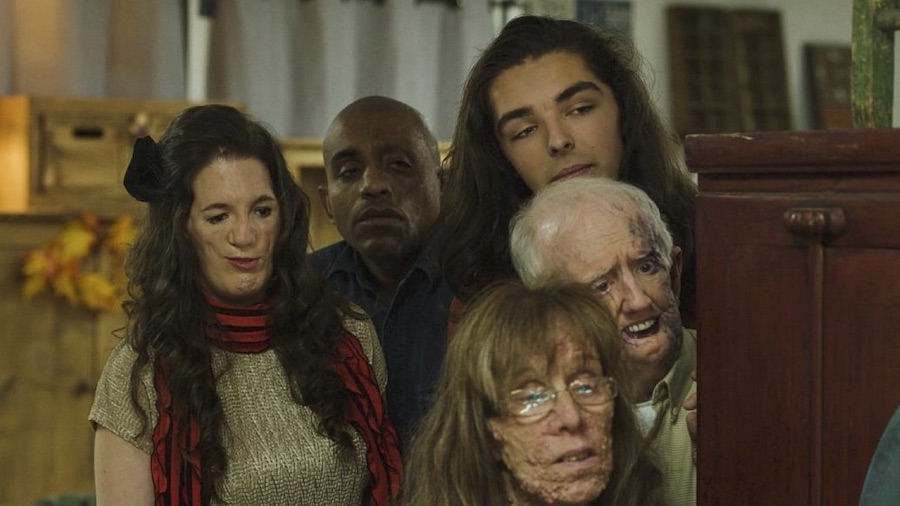
They’re a varied group — a cop scarred in a fire, an aspiring model unwilling to give up the dream despite a facially-deforming birth defect, a cancer survivor who lost his real nose, others with skin conditions, injuries and scars. What they have in common is how society treats them, and how that’s made them withdrawn, depressed and afraid of the world.
They have lost loved ones, or the chance to meet someone, the mere ability to go out in public without being ridiculed or discriminated against.
The counselor leading them through “therapy” is Vanessa (Debbie Lynch-White), once a child model and actress, now morbidly obese and “a second-class citizen, like you” trying to navigate a world eager to “judge me.”
She will instruct her charges in the dangers of “all or nothing thinking” and “catastrophizing,” rehearse them in “Body Language for a Better Connection” and bring them out of the “ugly” shells their bodies have become to them.
The youngest member wears a hoodie, his face contorted and obscured by medical bandages. Sullen Augustine (Robin L’Houmeau) wants to become a better person, but Vanessa and we have our doubts.
“I don’t like imposters,” she hisses at him when she’s had enough.
When we him out of the bandages, handsome, 19 and splitting his time between Dungeons & Dragons and bar pickups, we share Vanessa’s anger. Then we meet his mom (Noémie Kocher), their apartment decorated with modeling shots from her youth. She laments her looks after her breast cancer surgery. She spits in fury about the husband, the boy’s father, leaving her. And the cancer isn’t gone.
“Stan,” who is using his mother’s name “Augustine” in the group, has things to work out. And once he’s “outed” in the group, the failing therapy falls by the wayside, a little Stan-inspired “face your demons” tough love takes over and “Happy Face” finds its heart, its humor and its pathos as Stan finds his true purpose.
The script makes the kid near-clairvoyant (absurdly so) in his ability to “read” the others, their fears and injuries — some self-inflicted. He baits and triggers one and all. But as he wavers over his ability to come to grips with his mother’s condition and sees and hears her at her losing-control worst, his impulsive actions in the group — trashing a restaurant whose staff discriminates, shaming swimmers who ridicule others’ looks — inspire his new friends.
Co-writer/director Franchi (“The Wild Hunt”) stomps through this scenario like a bull in a Montreal china shop, stopping to take us into 1990s D&D culture, making that pre-Internet “avatar” story-telling game a cute analogy for what the disfigured live with every day.
Weaving Wagner’s heroic “Siefried’s Funeral March” from “Gotterdammerung,” made memorable in “Excalibur,” just gives the stunts, breakthroughs and struggle we witness not just a human dimension, but a heroic one.
Unblinkingly grappling with the horrors of life crumbling towards an early, canceros end, using actors with real disfigurements and letting them extemporize on their experiences of the world (via the script) give “Happy Face” much more than entertainment value. It’s the rarest of films that truly allows us to see that world through another’s eyes.
“Wonder Woman 1984 (WW84)” has the air of a watershed movie moment about it.
With Warners and Disney and a pandemic chasing blockbusters out of theaters and onto smaller screens, and even the word “blockbuster” potentially banished from the language, you have to wonder if this woman isn’t heralding the end of the $300 million comic book epic.
Without the widescreen scope, the communal viewing experience with the like-minded and the “fan service” in every gigantic digital effects brawl, every little wink at the fans writ large, what is left?
In the case of “WW84,” the answer is a great big long movie that feels very small.
The most expensive “Be careful what you wish for” fantasy ever made has nods to runaway greed (avarice) and consumerism, a few jokes about ugly ’80s fashions and trends, a backhanded bitchslap at Ronald Reagan and guns and a lot of story beat tips of the hat to “Raiders of the Lost Ark.”
Director Patty Jenkins put a lot on the shoulders of Pedro Pascal as the villain, a con-man/oil scam hustler who isn’t charismatic enough to counter-balance our heroine. Even his maniacal laugh is lacking. Maybe “The Mandalorian” needs his helmet for that.
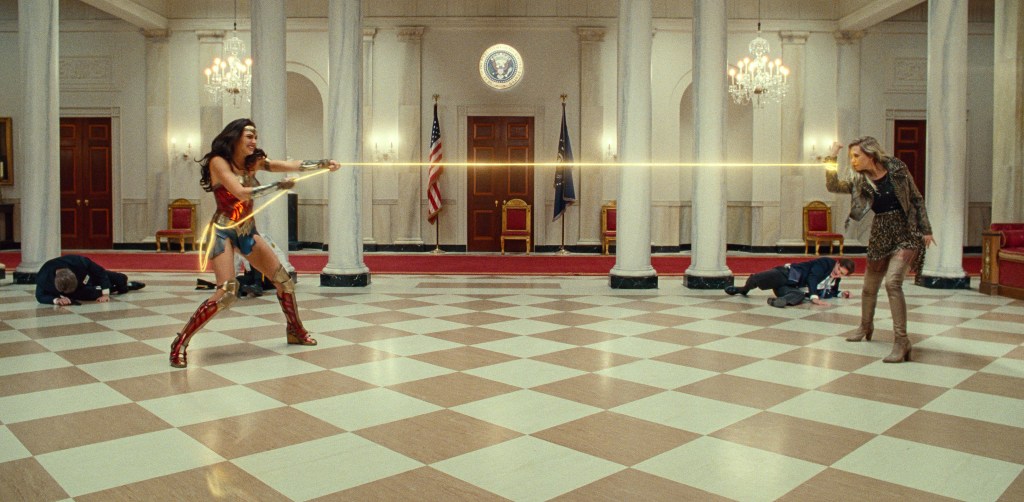
Gal Gadot handles the fight choreography well enough, but either she’s more model than actress or this hit-your-marks-in-front-of-the-green- screen enterprise bored the spark out of the actress playing the title role.
Little girls stand in slack-jawed wonder as Diana Prince/Wonder Woman lassos bad guys and saves the day, and as with the first “Wonder Woman” film, the cast is an emphatic statement on inclusion.
But the often dry script, funereal pacing and generic spectacle of the digitally-augmented set-pieces makes for a movie that’s like “Captain Marvel,” only about half as much fun.
A long prologue from Diana’s childhood teaches the little Amazon (Lily Aspell) that cheaters never prosper. “That is the only truth and truth is all there is,” Mom (Robin Wright) intones. “No hero is born from lies!”
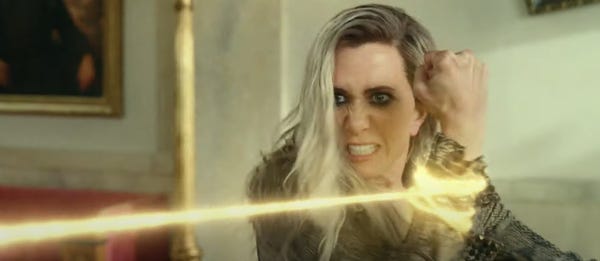
Decades after her World War I interference in human affairs, Diana has taken a job with the Smithsonian where she meets the easily-ignored gemologist/geologist Barbara Minerva. She’s played by Kristen Wiig, pratfalling off her heels, correcting everyone who’s forgotten her name and harassed by every drunk who figures her for an easy mark on her walks home.
That’s D.C. for you. And that’s Wiig when she’s being typecast.
But a mall jewelry store heist that Diana interrupted had this one unremarkable stone that turns out to be a magic talisman. It grants wishes.
And this overdrawn, pyramid scheme TV pitchman Maxwell Lord (Pascal) knows that, and is willing to woo Wiig’s Minerva to get his hands on it.
That’s how he starts changing history, toying with the whole “Genie in a Bottle” quandary. What should you ask if you’ve been granted “three wishes?” Why, an endless supply of wishes, of course!
But before Lord stirs up Wall Street, the Middle East and the Cold War, Diana’s been around that rock long enough to think an upspoken wish. That’s how her dead WWI fighter pilot boyfriend Steve (Chris Pine) shows up in 1984, marveling over jet airliners, Pop Tarts and parachute pants.
“Does everybody parachute?”
Diana sees the mayhem unleashed and pieces together what caused it, which sends her and Steve half-pointlessly to Cairo (a stolen two-seater jet gets them there) and back to scenic Washington, nicely showcased here as she shows Steve the sights.
Only a showdown with villain Max and power-drunk Barbara will do.
Points about sexual harassment and the rush of sudden empowerment (Minerva wants to be like Diana), and the revenge that follows are among the many obvious sidebars “WW84” takes.
But that material at least relates to today, as on the nose as this opening bit of post-Trump voice over narration.
“Sometimes you can’t see what you’re learning until you come out the other side.”
That said, I think I can sum of this bloated, two and a half hour immersion in superpowers and half-hearted ’80s nostalgia with one comparison.
Remember what “Captain Marvel” crashed into when she showed up in 1995? It was a Blockbuster Video, and yes, it got a BIG laugh.
The biggest sign we’re meant to notice in that DC mall that bad guys rob? J.C. Penney. That’s not funny, that’s just sad. And that’s this somewhat dispirited “blockbuster” in a nutshell.
MPA Rating: PG-13 for sequences of action and violence
Cast: Gal Gadot, Kristen Wiig, Chris Pine, Pedro Pascal, Robin Wright, Connie Nielsen and Lily Aspell
MPA Rating: PG-13 for sequences of action and violence
Credits: Directed by Patty Jenkins, script by Patty Jenkins, Geoff Johns and Dave Callaham. A Warner Brothers release.
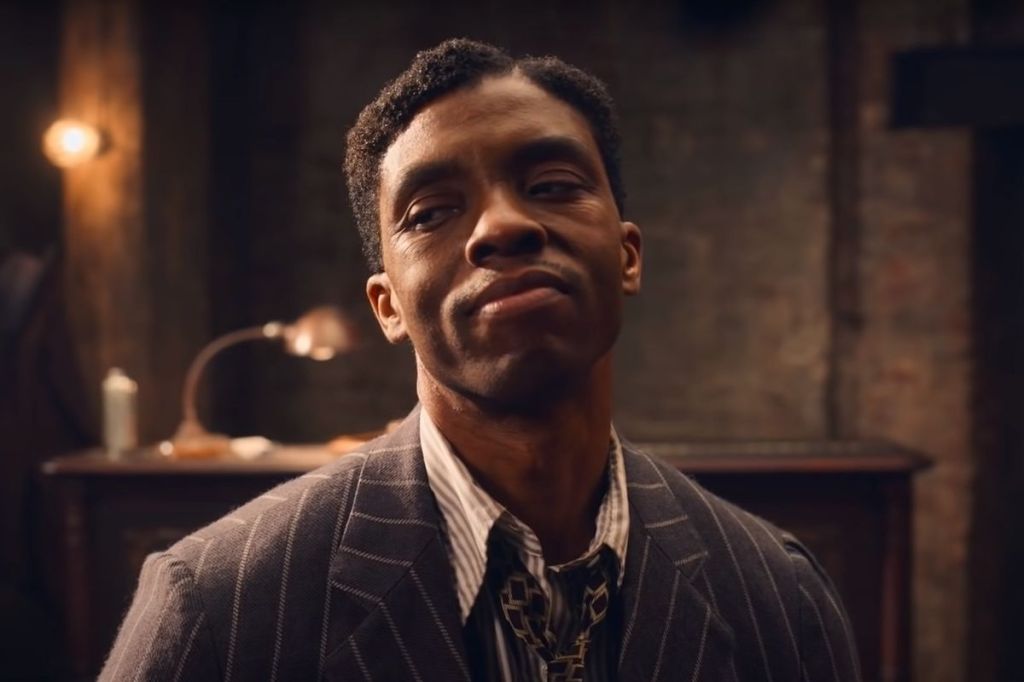
“Ma Rainey’s Black Bottom” comes to Netflix with all its poetry, theatricality, fire and guts intact.
It’s always been a showcase for the right cast, and stage and screen director George C. Wolfe and stars Viola Davis and Chadwick Boseman more than do justice to August Wilson’s most approachable, entertaining play.
Awash in African American history, grievance, fury and the blues, a viewer — remembering how “Fences” and “The Piano Lesson” beat it to the screen — might fairly wonder “What took so damn long?”
Wolfe, one of the great stage directors of our time but a generally pedestrian screen director (“Nights in Rodanthe,” “The Immortal Life of Henrietta Lacks”) opens the show up even as he brings the action, arguments and Big Themes right into our face.
And Davis and Boseman do the rest, with the Oscar winner milking Wilson’s greatest female role for all it’s worth and Boseman making us sad at all he was and all we lost much too soon, all over again.
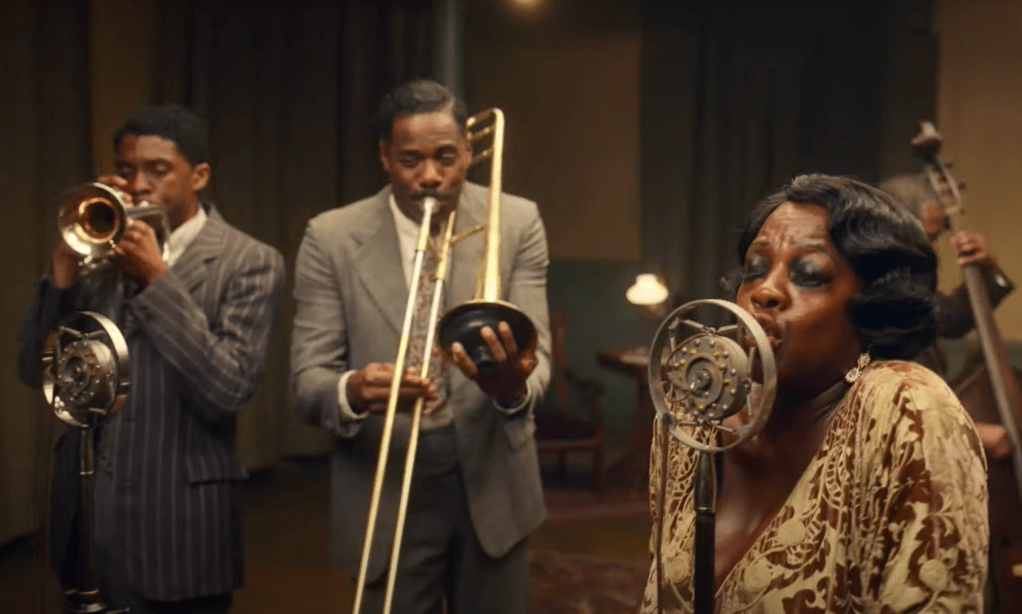
A late 1920s recording session in Chicago is the crucible that grinds these characters together. The historic Ma Rainey (Davis) is an older jazz singer, already a legend in some quarters, and well paid for it on her many tent tours of the South. She’s not shy about flaunting it, or about showing off her latest girlfriend (Taylour Paige). And she’s got no patience for recording studios, the white man (Jonathan Coyne) who runs it or the manager (Jeremy Shamos) who begs her to cut a few sides.
But here she is, at Hot Rhythm Records, ready to record a few songs. Maybe they won’t be the songs Sturdyvant (Coyne) wants. Maybe they won’t be performed the way Irvin (Shamos) believes would turn them into hits. As they have to be cut in one take in this pre-mixing board/tape-or-digital-recording era, things are more likely to be tense than fun.
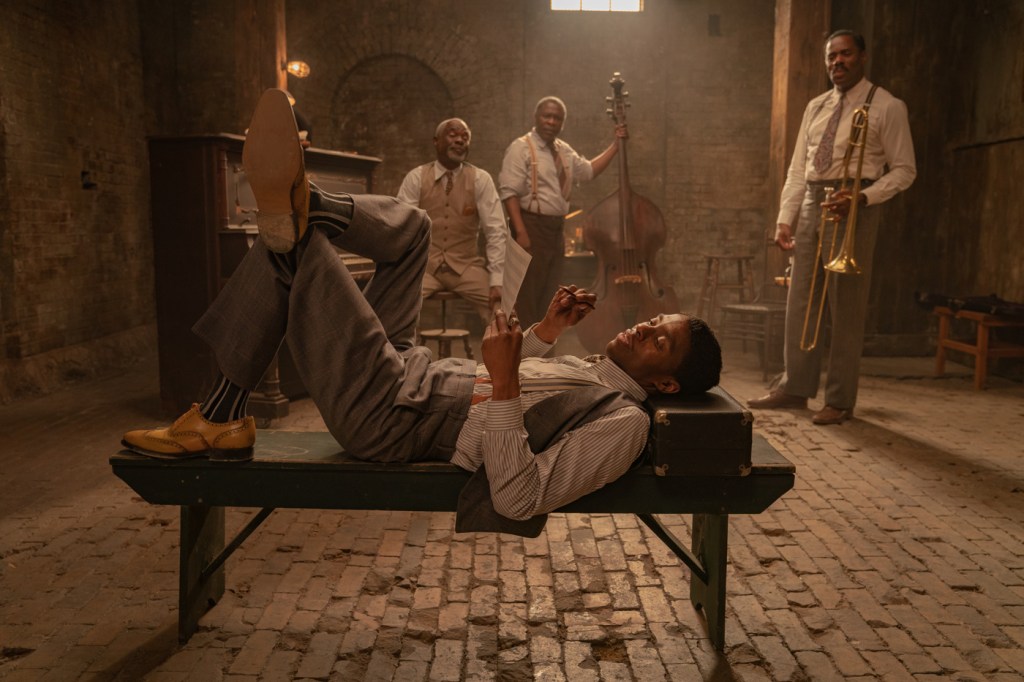
And then there’s the band, led by conservative trombonist Cutler (Coleman Domingo) but fired by hot new trumpeter Levee (Boseman). Whatever the imperious, insecure and ever-tardy “Mother of Blues” has on her agenda, the bickering that goes on in the band room is next-level heated.
Levee’s annoyance with “old jug band music” and fondness for dance tempos and solos rub Cutler the wrong way.
“This ain’t one of them ‘hot bands,'” he grouses. Levee needs to remember his place, that he’s in an “accompanist band.” What Ma wants is what Ma gets.
Levee wants to play his own songs, or at least his own arrangements. He’s ready to start his own band. And he’s been making eyes at Ma’s latest, Dussie May (Paige). Nothing like a hot day in a recording studio to bring the resentment, disappointment and competition to a head.
Michael Potts is Slow Drag, the reliable bass player. The delightful Glynn Turman (co-star with Davis of “How to Get Away With Murder” and famous for “A Different World”) is Toledo, the bookish, folksy old piano player. He’s the philosopher of this ensemble, a bit put out at Levee’s bragging and upset-the-apple-cart behavior.
“That’s the trouble with colored folks, always trying to have a good time.”
Levee talks a good game, all “If my daddy hadda knowed I’s gonna turn out like this, he woulda named me Gabriel!” But it doesn’t take much scratching to bring out the burdens he and the rest of them carry in lives circumscribed and threatened because of race.
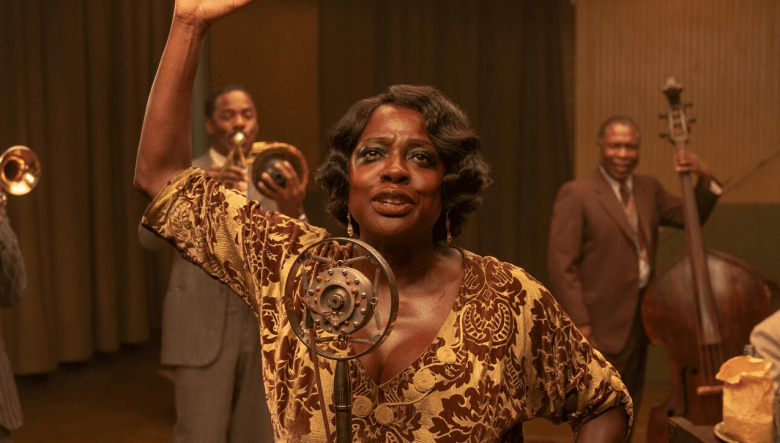
Davis, dressed down, channeling a call to perform and a life of grievance and humiliation, makes Ma a diva we can identify with — masking insecurity with assertions of “MY way” control.
“I ain’t doing nothing without my Co-Cola!”
She delivers the story’s bigger theme with somber resignation in between takes of recording her signature song, Ma Rainey’s “Black Bottom.”
“White folks don’t understand about the blues. They hear it come out, but they don’t know how it got there.“
Everybody here absorbs the music in August Wilson’s ear, the poetry of the lines and the history and psychology he touches on through them.
Davis may have to lip-sync the songs, and the play’s darkest turn still feels abrupt, if dramatically defensible. But “Ma Rainey” honors Wilson and plays in this year of strife and division like THE African American Blues, reminding us of the origins of the musical genre, the singers and players who embodied it and the suffering of “how it got there.”
MPA Rating: R, sex, fisticuffs, profanity
Cast: Viola Davis, Chadwick Boseman, Coleman Domingo, Michael Potts, Taylour Paige, Jeremy Shamos, Dusan Brown, Jonathan Coyne and Glynn Turman
Credits: Directed by George C. Wolfe, script by Ruben Santiago-Hudson, based on the play by August Wilson. A Netflix release.
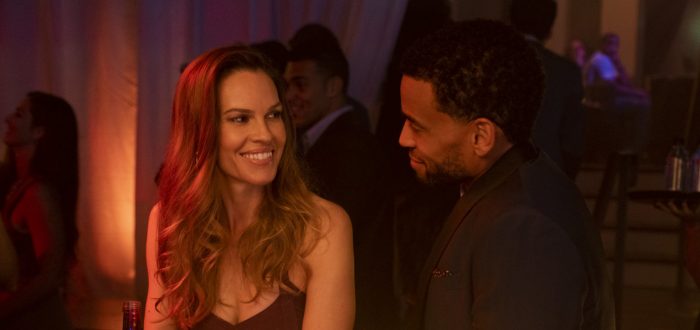
Oscar winner Hilary Swank adds “femme fatale” to her resume with “Fatale,” a torpid, twisty thriller in the “Fatal Attraction” mold.
But watching Swank play sexually aggressive, chemically off and ruthlessly violent can’t help but remind the savvy viewer how much better Glenn Close, Sharon Stone, Kerry Washington and others were as sexually assertive women with a hint of predator about them.
Michael Ealy is the successful sports agent whose marriage to a high flying LA realtor (Damaris Lewis) has seen better days. Workaholics, we figure. She’s lost interest or has somebody else on the side is his guess.
A weekend in Vegas, partying and networking with the NBA puts him in the path of Val (Swank). He sees her brush off one come-on. His biz partner (Mike Colter) has yanked his ring off for the night, so she sees him as someone not unlike herself — “an unaccompanied adult.”
A little liquor, a little dance, a little get-this-guy-out-of-his-pants.
But whatever regrets he may have as he tries to slip out the door in the AM, she’s not hearing them. She’s locked his phone in the room safe.
“I’m not done with you.” Oh, if Derrick only knew.
Back home, a “date night” of guilt cooking and getting “reacquainted” with wife Traci ends with a break-in. And who shows up to their swank LA McMansion to investigate but Det. Val. Let the suspicions, cover-up and turn towards a famous Hitchcock thriller’s plot commence.
Ealy’s played both sides of the predator/prey sex thriller formula, and still so underplays everything that you wonder if he’s got any setting other than “simmer.” He was better as “The Perfect Guy.”
Swank’s more comfortable playing cold and cunning — not prone to panic — than at anything else Val is supposed to bring to the table. Damaged, desperate, sexy without warmth all feel shortchanged in her flat performance.
The David Loughery script — he wrote Ealy’s “The Intruder” — wins points for attempted twists, but frankly they don’t build suspense or deliver shocks, so what’s the point?
The most interesting element to “Fatale” is its portrayal of that widely-held view of cops — that their real expertise is in knowing what they can get away with. But that’s not enough to put it over.
MPA Rating: R, violence, sex
Cast: Hilary Swank, Michael Ealy, Mike Colter and Damaris Lewis. Credits: Directed by Deon Taylor, script by David Loughery. A Lionsgate release.



















 Movie Nation