John Brown’s Kennedy Farm HQ outside of Harper’s Ferry, West Virginia. #moviesinspiretravel
It’s about 8 miles from the town, and a tiny place that Brown, played by Ethan Hawke in the wonderful “The Good Lord Bird,” packed himself and 21 other men, along with two Brown daughters, in prep for his assault on the arsenal at Harper’s Ferry.
Lindsey Morgan, Jonathan Howard and queen of low budget sci-fi Rhona Mitra are the stars, with James Cosmo, Alexander Siddig, Daniel Bernhardt, Cha-Lee Yoon.
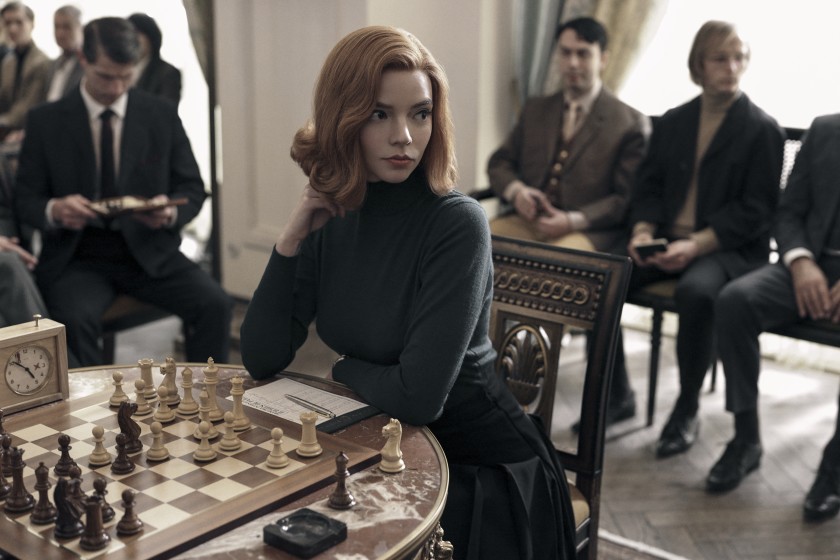
There’s a set of the jaw, a mercenary narrowing of the eyes in Anya Taylor-Joy that hisses “relentless.” It’s reminiscent of Natalie Dormer’s ravenous gaze, although less sexual.
She can soften it a little, as she did in “Emma.” But it’s always there, in “Thoroughbreds” or “Peaky Blinders” and it’s what makes the limited series “The Queen’s Gambit” seem tailor-made (sorry) for her.
In this adaptation of the late Walter Tevis’s novel (his “The Hustler” and “The Man Who Fell to Earth” were also made into films), she’s a chess prodigy, an “intuitive” champion utterly myopic about the world she lives in and the life she’s eschewing to keep her eyes on the prize, and the board.
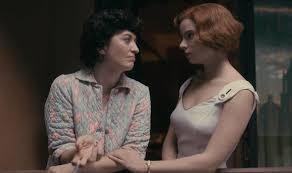
Family may fail her — her mad mathematician mother (Chloe Pirrie) may have even expected to end Beth’s life the day her childhood ended, when her mother died in a Kentucky car crash that Beth survived. And the couple that eventually adopts her (Marielle Heller and Patrick Kennedy) don’t support her passion, and can’t even stay together for her sake.
Her one friend childhood friend at the orphanage (Moses Ingram) might let her down. And the chess players she runs into, afoul of and tumbles into bed with will never be up to snuff.
Beth Harmon won’t let any of them stand in her way, and Taylor-Joy lets us see the unworldly, naive but heartless Beth calculate the costs-to-benefits transaction that every relationship in her life represents. She’s even relentless in her vices, the ones that either aid her rise, or point to its obvious pitfalls — booze, pills.
Scott Frank’s series takes us from young Beth (Isla Johnson) picking up the game from the custodian (Bill Camp) at Methuen Hall, and picking up a lifelong tranquilizer habit from a facility that in the ’50s and ’60s drugged the kids in its charge.
The older Beth remembers falling in love with “the board, all the world in just 64 squares.” Alone in the world, with chess “I feel safe. I can control it. I can dominate it.”
She isn’t self-aware enough to understand the instability that comes with the brain one has to have to conquer this game. Her mathematically-published mother should be at least a cautionary lesson for her — in literary (and dramatic) cliche terms. But no.
Her inexorable march into and through the man’s world of 1960s chess takes up much of “The Queen’s Gambit.” Win after win, men (Jacob Fortune-Lloyd, Harry Melling, others) taking her lightly because she’s learned the game without knowing about “ratings,” rankings and tournament etiquette and protocols.
Movies on the subject have covered covered the mind-crushing mania that this ancient and inscrutable game generates (again, cliched) — “Searching for Bobby Fischer,” “Pawn Sacrifice”). “Gambit” goes deeper into the chess, especially when Beth finds a foe worthy of her talent (Thomas Brodie-Sangster of the “Maze Runner” movies).
But that “relentless” march quality means the series telegraphs its chapters, even as it bogs down in the late ’60s, tourneys, “Russians,” crises of confidence and every predictable drink-Ripple-from-the-bottle pitfall along the way. That makes it drag, not always, but more than you’d like.
There’s just a little humor, much of it of the female empowerment variety. And creator-director )and writer of two episodes) Frank, a wonderful screenwriter (“Out of Sight,” “Logan,””The Lookout”) allows the odd perfectly-composed shot to call attention to itself.
Some of the co-stars (Camp) seem shortchanged, while Heller, an actress, writer and director (“Beautiful Day in the Neighborhood”) and Brodie-Sangster at least get to make enriching impressions and contributions.
But this is Taylor-Joy’s quest and march, and we see Beth’s monomania mature her as an actress over seven episodes. She marches into the frame, lets us see the girl acquiring a poker-face and developing killer instinct and gamesmanship.
And she sashays out of the frame, dancing by herself (’60s pop) with regret never furrowing her brow, even in that rare moment when she figures out what “longing” feels like. First scene to last, she makes this a character with her nose to the ground as she sniffs out weakness and vulnerabilities, in all the men she faces off with, and in herself.
MPAA Rating: TV-MA, sex, alcohol and drug abuse, smoking, profanity
Cast: Anya Taylor-Joy, Bill Camp, Marielle Heller, Moses Ingram, Thomas Brodie-Sangster
Credits: Created and directed by Scott Frank, based on a novel by Walter Tevis. A Netflix release.
Kathryn Winnick also stars in this thriller, which has hints of “cult” if not “OCcult” in it.
“Wander” streams on Dec. 4.
Posted inReviews, previews, profiles and movie news|Comments Off on Movie Preview: Aaron Eckhart is out for revenge, can Tommy Lee J or Heather Graham talk him out of it in “Wander”
Here’s a no-budget Canadian thriller that comes oh-so-close to being the “Little Horror Engine that Could.”
“Halloween Party” almost gets by on just-enough character development, a workable plot — if they’d stick with it — and Classic Canadian Comic Banter.
It “almost” makes you forget how long before writer-director Jay Dahl (“Boyclops” and “There are Monsters” were his) makes us wait before even trying to scare us.
We have to forgive the generally blase means of killing off coeds and frat bros. We must shrug off that the killings are off camera.
And let’s not mention how it starts promisingly, picks up steam, and then sort of stumbles to a halt for a long stretch leading into the final act.
Coeds Grace (Amy Groening, yes related to Matt) and Zoe (Marietta Laan) are chatting away, looking at Zoe’s vacation photos, when a virus pops up on Zoe’s computer.
“Hello, Grace,” it says, in graphics anyone who sees it will say, “Hey, that looks like Nintendo!”
Before she can blurt out “How’d it know my name?” the “meme” has asked her to type in “Your greatest fear.” And she’d better do it in like 40 seconds. Or ELSE.
“Your greatest fear will come true!”
Grace beats the clock, but when the viral virus demands the same of Zoe, she’s slow on the uptake. An ’80s computer generated witch accompanies the words “Your worst fear is coming to get you!”
As Zoe’s fear was “pig people,” and every “greatest fear” in the movie has a back story, we have an idea of what’s coming.
Grace? As long as she types in “vagina spiders” quick enough, her doom can be postponed.
The cops (unseen) don’t buy this, so Grace does what heroines always do in horror movies. She visits Nerd Central. That’s where Spencer (T. Thomason), long-nicknamed “Special” as in “special needs,” begins their deconstruction of what they’re dealing with.
These early scenes of electronic sleuthing, investigating and reasoning out the supernatural thing they’re up against are the film’s best. That’s partly because of the snappy and snippy exchanges between them, and between the campus “bros” who tolerate but look down on “Special.”
“This where the roofies party’s at?” “Yo, broheem, looking SEXUAL.”
Their investigations take them to the library, where there are clues on film. NOT on a DVD, or even a VHS, either. Got to check out a projector and a screen as well.
“How did folks WATCH stuff in ‘The Old Days?'” “Seriously, people were just ANIMALS before Netflix.”
If this snark had continued all the way through “Halloween Party,” if the cute nursing student/nerd “relationship” had played around a lot more with the “Will they f—?” 1980s movie formula that Spencer tactlessly lays out of out-of-his-league Grace, “Halloween Party” could have been the horror sleeper of the season.
Even the unwieldy story and cheesy effects could have been assets, not liabilities.
As it is, this “Party” comes ever so close for ever so short a period of time, and then rims out.
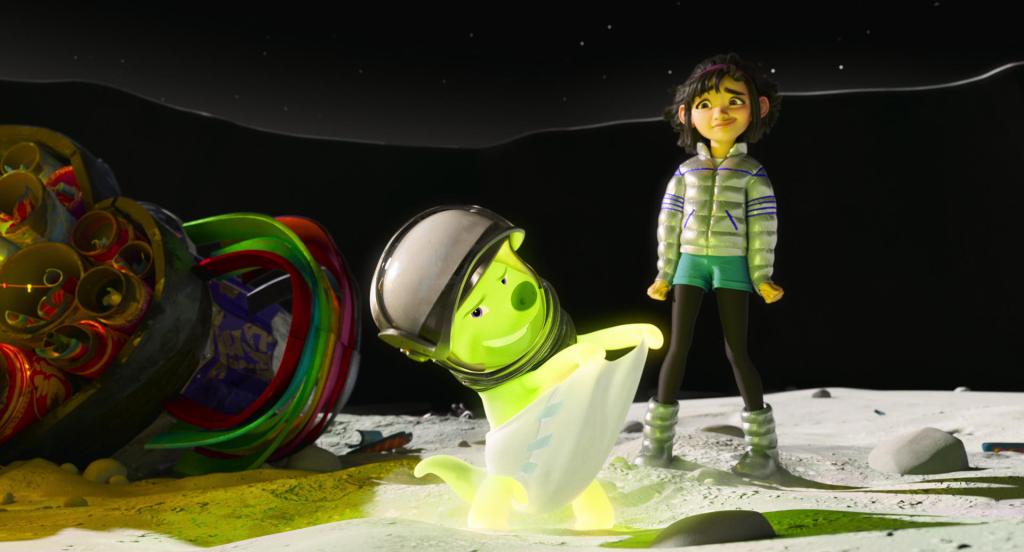
East meets West in the lightly charming children’s lunar fantasy “Over the Moon,” a Chinese-made Netflix movie that puts a modern Hollywood spin on a Chinese folk legend.
The animation, from “Kung Fu Panda” veterans Pearl Studios of Shanghai, is first rate, the songs pleasant if not particularly memorable.
The story? It’s a real “kitchen sink” affair, a “Mulan,” “Maleficent” and “Tron” mashup stuffed with science and silliness and oh-so-many-cute-sidekicks.
Is there a McDonald’s toy tie-in with this release in China, as of this month the world’s number one movie market?
Little Fei Fei grew up with her eyes on the skies, hearing her mother’s version of the story of Chang’e, the Goddess of the Moon, and Hou yi the archer. Theirs was a great love, but there were immortality pills and they were separated and Chang’e is doomed to spend eternity on the Moon.
“When she cries, her tears turn to stardust.”
Oh, and a giant space dog (a chow, of naturally) takes bites out of the moon each month, which accounts for the phases.
Years pass, songs come and go, and Fei Fei (Cathy Ang) becomes a motherless teen, running the Yanshi City bake shop with her dad (John Cho).
But this new woman in Dad’s life (Sandra Oh) triggers Fei Fei’s jealousy and memories of “the perfect family” that they were. As they make preparations — and moon cakes — for the annual Moon Festival, Science Girl plots and plans to build a rocket to take her to the moon.
She will prove Chang’e is real, that Mom’s stories were true, and revive her father’s memories of Mom, banishing Mrs. Zhong (Oh) forever.
The first sidekick is Bungee, Fei Fei’s pet rabbit. The first flashes of comedy come from Mrs. Zhong’s “rambunctious” son, tweener Chin (Robert G. Chiu). He’s convinced he has a super power. He can run through anything — walls, etc.
“No BARRIERS!” is his catchphrase.
When Fei Fei makes her lunar attempt, naturally “annoying” Chin stows away. The rocket has promise, but a teenager’s limitations in terms of planning. Luckily, there’s a little magical intervention from the Goddess herself.
But about that Goddess (Phillipa Soo of “Hamilton”). She’s not what Mom described. She’s hardly “alone,” and not doing much crying. She’s a pop diva, with an audience of loyal “fans,” sort of a Chinese Katy Perry or Rihanna in space, or Zeng Keni singing in English. Not a shrinking violet, in other words.
“I’m the light every night in your world,” she sings. Worship me.
Fei Fei meets her, and Chang’e has just two questions. “Where’s my gift?” And “What butcher cut your hair?”
Chinese Mean Girls are the meanest.
Fei Fei’s quest changes and that “proof” and “bring back our perfect family” priority tumbles away as she encounters “Biker Chicks” on Tron-cycles (literally giant “chicks), and a blobbish former “court jester” banned from court for being a motor-mouthed nervous talker who sounds like Ken Jeong.
Co-director Glen Keane is one of the major animators/designers of Disney’s recent classics — the Beast from “Beauty and the Beast,” “Pocahontas,” etc. Every character in this is well-conceived, visually. There’s even a “Kung Fu Panda” styled sketched and water-colored fantasy sequence, relating the story of Chang’e and Hou yi.
But “Over the Moon” is all over the place in terms of themes, plot and such. The film is much more interesting and fun on Terra Firma, capturing the routine of baking moon cakes, the banter of big family dinners celebrating the Moon Festival (listen for Margaret Cho and Kimiko Glenn there), maglev trains and the wonders of childhood.
The script allows for one emotional moment and just a couple of real laughs, as well as a few chuckles.
It’s not quite up there with Netflix’s lovely holiday offering from last year, “Klaus,” even if it is several steps above the studio’s animated “miss” “The Willoughbys.”
But it’s a pleasant kid-friendly diversion on a par with Pearl’s “Abominable,” and in a year when animated films aren’t heading to theaters or coming out at all, it might even be an Oscar contender.
MPAA Rating: PG
Cast: The voices of Cathy Ang, Phillipa Soo, Ken Jeong, Sandra Oh, Margaret Cho and John Cho.
Credits: Directed by Glen Keane and John Kahrs, script by Audrey Wells and Jennifer Yee McDevitt. A Pearl Studios film, a Netflix release.
Running time: 1:40
Posted inReviews, previews, profiles and movie news|Comments Off on Netflixable? Animated “Over the Moon” marries Chinese animation and sensibilities to Hollywood storytelling
Edgar Allan Poe’s “The Masque of the Red Death” has been on a lot of people’s minds of late. Lucky, affluent people gathered for a masked ball, sickening and dying? Yes, it sounds like all manner of conservative “Super Spreader” events.
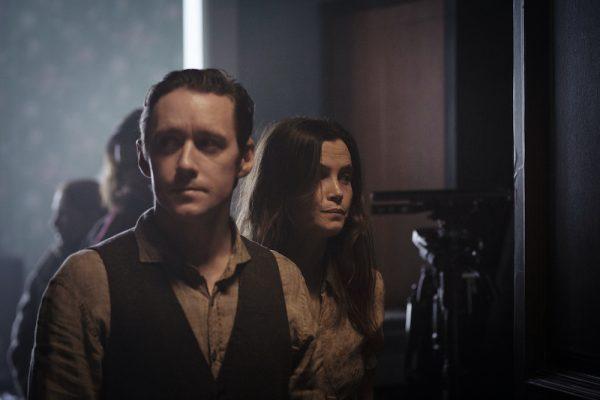
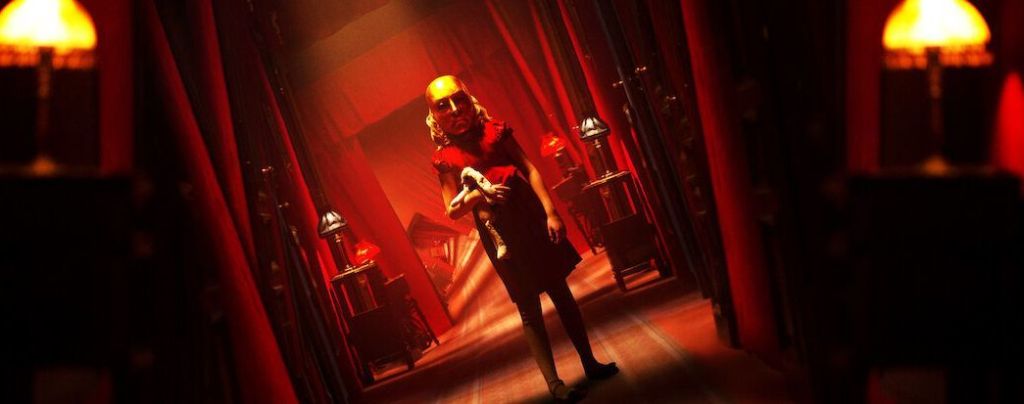
The Norwegian writer-director Jarand Herdal takes that basic premise and puts it in a post-apocalyptic setting with “Cadaver (Kadaver),” a thriller about guests invited to the last hotel for dinner and a show.
As even a passing knowledge of Poe, the briefest acquaintance with horror or the damned obvious title gives away where this is going, the pleasure in this thriller comes from tone, tricks, committed actors and execution. The writer-director, making his feature film debut, ensures that those come off with style.
Some sort of nuclear event — the old newspapers blowing down the ruined streets in perpetual gloom or rain aren’t clear — has brought on End Times. Accident during heightened tensions, or attack, it doesn’t matter. Bodies are everywhere as people die of starvation some months after the disaster.
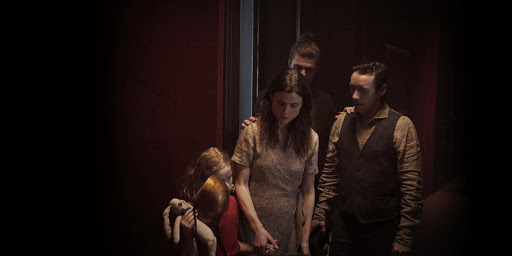
Actress Leonara (Gitte Witt) and husband Jacob (Thomas Gullestad) navigate this world of doom, where every closed door opens onto a fresh horror — a suicide, a desiccated corpse — with their ten year-old daughter Alice (Tuva Olivia Remman).
The adults take turns bucking each other up (in Norwegian, with English subtitles).
“We have nothing left.” “We have to hang in there. We have each other. We have Alice.”
In an every person for himself world, peril is everywhere, especially in the dark. Despair rules the daylight.
And then, a break, a lifeline. A barker advertises “dinner and a show” at The Hotel. Dress up, regain your humanity, if just for a night. How do they have food? How could there still be a staff? Don’t look a gift theatrical horse in the mouth.
But…your daughter. “This show isn’t for children.” Please, she’s an actress’s daughter. Look at the horror around you. What could shock or scar her now?
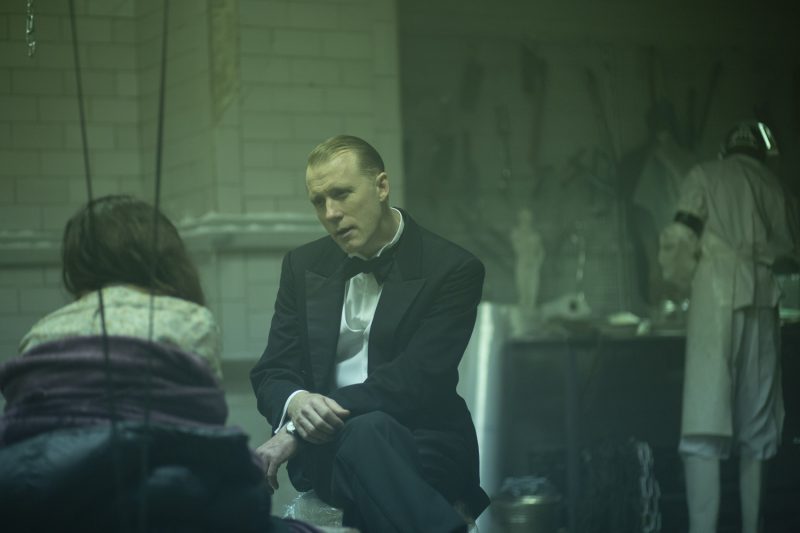
Mathias (Thorbjørn Harr) is the maître d’ and MC for the evening and their “first time guests.”
“Forget the world outside,” he urges. Eat, drink, enjoy, escape.
He presides over a vast wait staff and busy kitchen. And the show? You’re a part of it, everyone and everything you see will be “theater.”
It’ll be like “Tony & Tina’s Wedding,” with bickering and sex and oh, a little murderous violence.
See what I mean about “We know where this is going?”
Of course, Alice-the-wandering-child is separated from the parents. They’re hurled into a frantic search, “mid show,” for their child, through scores of rooms, kitchens, convincing themselves “It’s not real” right up to the point they know it is.
“Cadaver” relies too much on tropes and coincidences. But it succeeds or fails on the back of the performances, and they’re quite good. Witt in particular gets across a smart, dogged woman of the theater who isn’t falling for this or that and isn’t leaving without her daughter.
Harr gets across a sort of End Times louche. life, love, hope, the essentials of humanity, are but abstract concepts now. Doom does that to a guy. And when that takes hold, you don’t fear death, but you lose any sense of morality and humanity.
“Cadaver” is gorgeous to look at — the ruined city reminded me of that classic British post-nuclear thriller “Threads” — and well-played, but predictable enough to amount to a mixed bag of a thriller. Still, at under 90 minutes, it gets to its point and makes its impressions in a near rush, and wastes none of the viewer’s time doing it.
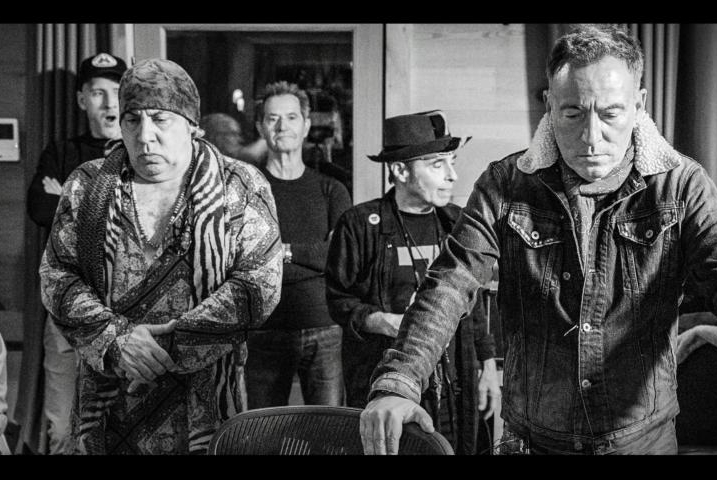
Somewhere early on in Bruce Springsteen’s latest “gather musicians in my barn to cut a record” documentary, “Bruce Springsteen’s Letter to You,” the big question he invites us to ask of him becomes clear.
What becomes the pop star in winter?
Not just literal winter, of the “Hey guys, it’s SNOWING” exclamation from The Boss as “Jersey weather” Jersey winter sets in around them on his farm, in his recording studio barn in his beloved New Jersey.
Do you go on the road and stay there, like Willie and Dylan? Do you try your hand at other forms of writing, or keep composing songs for a shrinking fanbase? Have you worn out your ability to reinvent yourself, or do you keep looking for new frontiers?
Springsteen may have run through every single one of those options. And yet he remains the consummate artist who “must be heard.” In the words of the fiction writer Harlan Ellison, “I have no mouth and I must scream.”
As Springsteen, reciting from his poetic/quasi-pretentious liner-notes-run-amok narration, sets up each song in the set — reflecting on this friend from his first band (The Castilles) passing, on others he’s lost, on “the debt I still owe my Freehold (NJ) brothers-in-arms,” on how “pop was always a raucous meditation,” his “45 year long conversation” with The E-Street Band, both a finely tuned motor and an outfit that can still “float like a butterfly, and sting like a bee” — you can’t help but wonder if there’s a better venue for this conversation, this “letter.”
Sure, he’s proven all he ever needs to prove, and then some, on the road. He’s dominated Broadway. Sold millions of records in his day. But this film and his last one, a doc about a C&W bend in the road on his musical journey (“Under Western Stars”) feels stiff, stale, self-serving and self-conscious.
Of course it’s in black and white. But at least he’s not wearing an ill-suited cowboy hat.
The songs are a pleasantly-forgettable collection in the usual Springsteen keys and time signatures and sound awfully similar to earlier works in his restless Jersey soul canon.
He and the band are doing what they love to do, in a low-impact/less-effort “comforts of home” way. It’s “not a job, it is a calling” he narrates, “a vocation.” But in the arid air of a recording studio the music loses its life, the “conversation” with the audience is absent and the “letter” really does feel like a letter — a little over-familiar, a bit long-winded.
“I took all the sunshine and pain,” he sings, rhyming it with “happiness and pain,” stretching the Big Noun in the title tune an extra syllable or two, as he is wont to do.
“I sent it in my Le-HE-ter to you.”
He preaches from Book of Pop Revelations, “life in 180 seconds or less,” and sings “As Ben E. King’s (“Stand by Me”) fills the air, baby that’s the power of prayer.”
There’s a little interplay with the band, a few “notes” after this or that take of the tunes.
“Roy (Bittan) don’t play it up higher, just don’t play it so LOW.”
But there’s a lot more narration than banter. Ho. Hum.
The idea of anybody staying friends with people you’ve worked with half a century is a miracle. And we all get old, reflective and sentimental, Sundance. No shame or dishonor in that.
“We’re taking this thing til we’re all in the box,” is Springsteen’s toast as they wrap things up. An artist’s compulsion to keep making art is to be revered.
But if you’re known for being the world’s greatest live act, maybe that’s how you present your new songs to the faithful (he had a hand-picked “audience” for “Under Western Stars,” in the barn) — in a roadhouse, drinks clinking and conversation murmuring, hoots or muted applause road-testing every single song, a “narration” that’s more improvised and less self-conscious.
He’s not the head-case Dylan became, not the sell-out Jimmy Buffett perfected, not an oldies act like every contemporary that doesn’t fit those first two comparisons.
Is there no one in his time-tested circle who can tell him, “Yeah, let’s get the band back together, but go out among THE PEOPLE when we do?”
MPAA Rating: unrated, alcohol
Cast: Bruce Springsteen, Little Steven Van Zandt, Roy Bittan, Max Weinberg, Nils Lofgren, Patti Scialfa, Jake Clemons, Garry Tallent.
Credits: Thom Zimny, script.narration by Bruce Springsteen. An Apple TV+ release.