
A Dec. 1 music doc about The Pogues? Julian Temple directed? Johnny Depp “presents?”
Time to stock up on the Guinness then.
A Dec. 1 music doc about The Pogues? Julian Temple directed? Johnny Depp “presents?”
Time to stock up on the Guinness then.
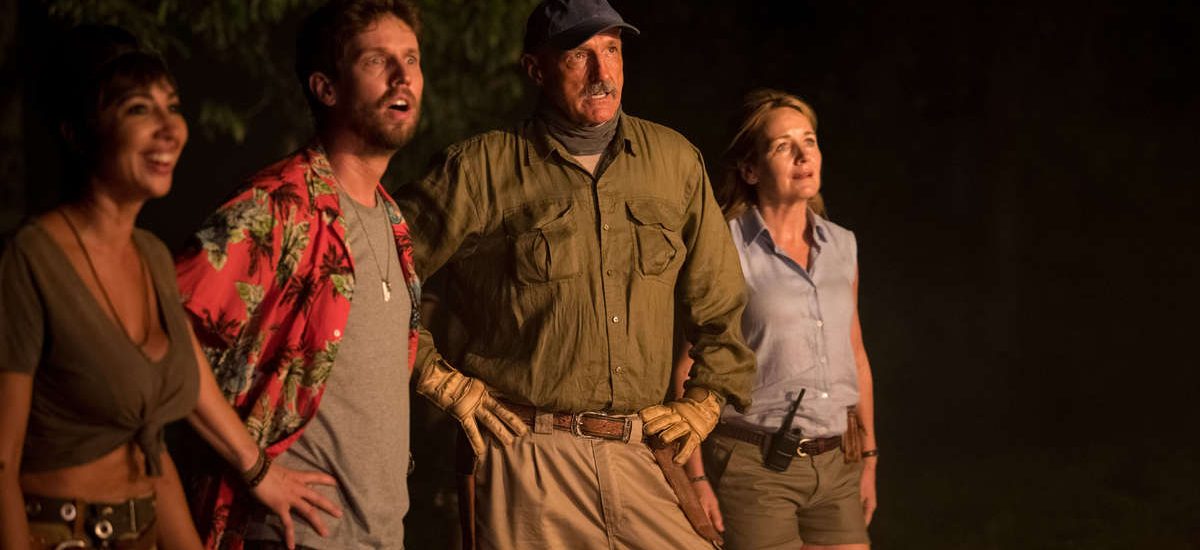
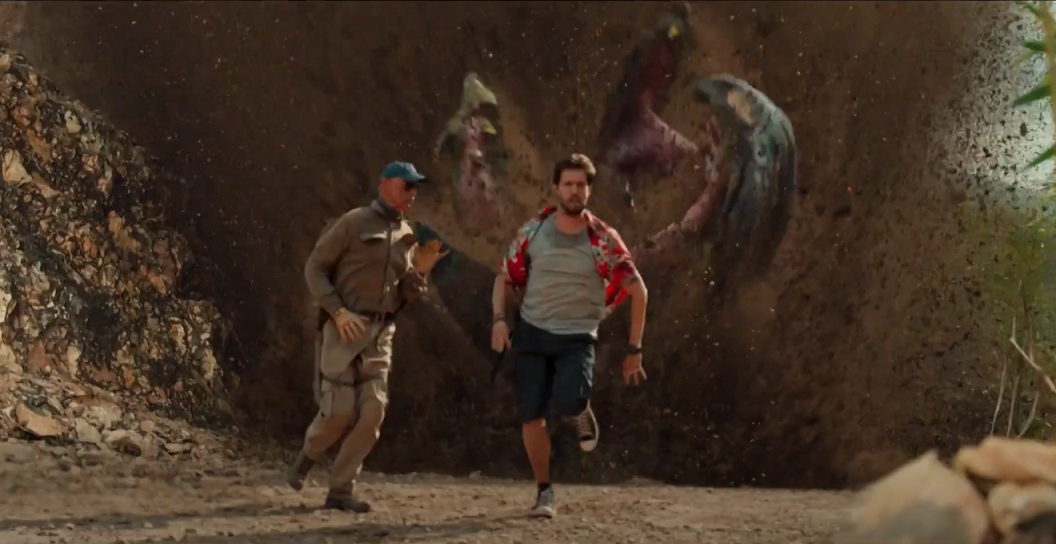
It’s been thirty years since the earth shook in the remote desert Southwest, since giant worms hunted by sensing human footsteps, since gun nut survivalists proved to be a town’s salvation.
“Tremors” inspired half a dozen sequels and even a TV series at one point. But here’s another, “Tremors: Shrieker Island,” because giant “graboid” worms and Michael Gross have to eat.
Unheralded sequel specialist (“Jarhead: Law of Return,” “Death Race 4,” “Bulletproof 2,” and on and on) Don Michael Paul helms this desultory special effects slaughter, with “genetically altered” graboids picking up a collection of “slackjacked hipster hunters from Silicon Valley,” and only that Burt Gummer “legend” (Gross) standing between them and annihilation.
With those odds, I must say, I don’t like our chances.
Caroline Langrishe and Jon Heder play scientists who lose a local worker on their research team to something that cannot exist, but does. So they ask the biologist/extreme-hunting-experience entrepreneur (Richard Brake) running an Ultimate Hunt on an adjacent island off Thailand, what he’s up to?
“Imported” graboids, genetically altered. They shriek. Damn. Just call this “Shrieker Island.” The movie writes itself. Or it should have. Genetically alter that.
There’s mistrust and money involved, so the science team may be fighting not just fast-breeding shrieking monsters, but the hunting party. It’s a good thing Dr. Welker (Langrishe) has sent Jimmy (Heder) to find her ex, a guy who’s “not just a legend, he’s a super hero in some circles.”
“Destiny’s a bitch,” the old hermit Gummer mutters. Indeed.
The script is a collection of catch-phrases and one-liners masquerading as character detail.
“I don’t get women. Too many moving parts.”
“They reproduce asexually? That’s no fun.”
The effects? Competently-rendered digital monsters and big explosions, and littler ones — small charges meant to show the worms blowing up the ground they race under.
Cassie Clare plays a badass archer/hunting guide who slings insults along with her arrows. Heder hangs on to his “gee whiz” “Napoleon Dynamite” image — at least in his profanity-free speech.
And Gross chews through the scenery the way a graboid plows through volcanic island topsoil.
If you want a scary, tense and hilarious movie about giant worms eating desert California, rent the original “Tremors,” directed by Ron Underwood, starring Kevin Bacon, Fred Ward, Michael Gross and Reba McEntire. No “Shrieker” necessary.

MPAA Rating: Rated PG-13 for creature violence, language throughout, some gore and suggestive/drug references
Cast: Michael Gross, Cassie Clare, Jon Heder, Caroline Langrishe, Richard Brake, Jackie Cruz.
Credits: Directed by Don Michael Paul, script by Brian Brightly, Don Michael Paul. A Universal 1440 release on Netflix.
Running time: 1:42



“Blackjack: The Jackie Ryan Story” is a slow motion train wreck about a slow-motion train wreck of a basketballer.
That doesn’t mean that this story of a Brooklyn playground “legend” who never got out of his own way when it came to realizing his hoops potential isn’t interesting, here and there. There’s a decent performance or two, and a time-honored “redemption via sport” formula that has, on occasion, worked.
But as our lurching lead lumbers through middling on-court action, as we grimace at veteran heavy Robert Davi’s version of an Irish American priest, with every “Never saw THAT coming” blast of melodrama, “Blackjack” rolls craps.
Greg Finley, a character actor since childhood (“The Secret Life of an American Teenager”), seems awfully earthbound to be a basketball prodigy approaching his late 20s expiration date. He’s a burly presence on the court, and when guys like sportswriter Peter Vescey (Geoffrey Cantor) describe the “most perfect jump shot you ever saw,” we aren’t fooled. We’re practically looking at a middle school set shot.
“White men can’t jump” indeed.
Jackie grew up in a big, racist New York Irish family, headed by Big Jack (David Arquette), a short tempered construction worker who disdains any sport that isn’t football. Basketball? “Monkeyball” he calls it. His son is destined to “grind it out just like the rest of us.”
We don’t see the kid’s high school hoops skills that New York media hyped into a “white Michael Jordan” label, and eventually eulogized as “one of the biggest wastes of talent in the history of basketball.” Antonio Macia’s script narrows its focus to what amounts to Jackie’s last best shot, the weeks before and after a tryout — at 28 with the (then) New Jersey Nets.
Jackie drinks too much, smokes too much, cusses too much, has too many tattoos and horses around with his disreputable pal and co-worker Marty (James Madio, whose career dates back to “Blossom” and “Hook”). Can Jackie clean up his act long enough to impress Rick Carlisle and the Nets?
The return of old girlfriend Jennie (Ashley Greene of the “Twilight” saga) motivates him. She played in the day, too. Can she get him into NBA shape? She can’t even get him to stop talking about his NBA signing as a done deal.
“Floor seats, FLOOR seats” he promises and/or threatens everybody who hears about his dream. Dude can’t stop smoking and partying, and is so irresponsible he can’t even get a credit card, but OK. Sure.
We know that didn’t happen, so the only mystery here is how close he got and how good he might have been. Actor turned director Danny Abeckaser (“First We Take Brooklyn”) is painted into a corner, a leading man lacking the charisma to make the off-the-court scenes pop, and who plays the game — at 28 — the way Jackie plays it now, like a sharp-shooting fiftysomething.
Sports junkie Michael Rapaport plays a Nets assistant coach (unbilled). But Arquette, Greene and Moise Morancy, playing a neighborhood rival who made it to the NBA give the most interesting performances, with Morancy saying out loud what any basketball savvy viewer must think.
Jackie’s hype and endless “second chances?” They’re ” because you’re white.” Having worked at a newspaper where J.J. Reddick got more ink than everybody else on the Magic put together when he played here, I can totally see that.
That would have been an interesting story thread to follow, as we’re treated to a montage of Ryan’s NYC media hype in the film’s opening credits. What we get instead is a stumbling story about a more obnoxious “Rudy” we don’t like enough to root for, and who never shows us the game that all the fuss is about.

MPAA Rating: unrated, much profanity
Cast: Greg Finley, Ashley Greene, James Madio, Geoffrey Cantor, Moise Morancy, Michael Rapaport, Robert Davi and David Arquette.
Credits: Directed by Danny A. Abeckaser, script by Antonio Macia. A Gravitas Ventures release.
Running time: 1:38
The Big Guy makes a movie for Netflix , slated to stream Dec. 23. Looks bleak.
A little cartoon theology coming to Disney+ on Christmas Day.


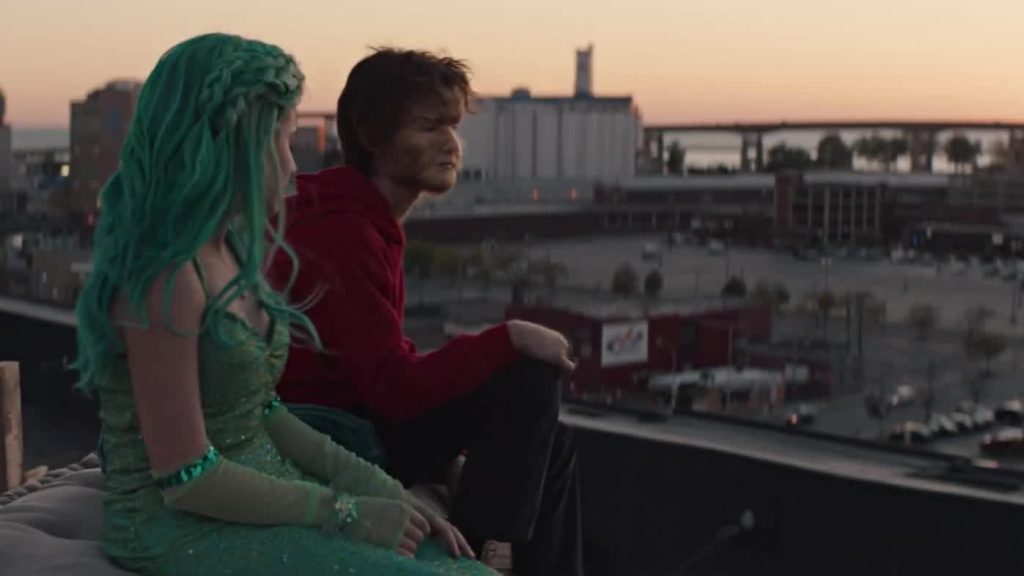


“The True Adventures of Wolfboy” is “Teen Wolf” with some edge, a wistful fable that tends towards the melancholy.
It’s not about THE wolfman of myth. There are no farmers with torches and pitchforks, no midnight howling at the full moon. There’s just a lonely, scrawny bullied kid trying to find out who and what he is, longing for the mother he never knew.
Jaden Martell of “St. Vincent” is Paul, who starts in the bathroom mirror muttering his mantra — “I’m normal. I’m just a regular kid. I’m just like everyone else.”
The first clever twist in this tale from a screenwriter for “Legion” and a Czech making his feature directing debut is what it doesn’t show. Yes, Paul is bullied when his Dad (Chris Messina) takes him to the carnival. Yes, this “safe, inclusive” private school Dad enters him in might improve his quality of life. But we never see that.
We just meet the thirteen year-olds who taunt his father with the observation that he must’ve had sex with a dog. Dad’s at a loss for life advice for his “special” boy. “Show some dignity.” And whatever you do, “Paul, don’t run.”
But Paul does, and with his crested private school uniform jacket on. Thus begin his “true adventures.”
John Turturro is the carnival operator who seems sympathetic — at first. “That is…some kind of beautiful” he says when the kid removes the stocking-mask he wears to hide the fur. But Mr. Silk has an eye for the main chance, a billing — “The Dangerous DOG BOY” — and a promise. He’ll help the kid get to Pennsylvania, where a mysterious birthday present originated, if the boy will join the show.
The present? It’s a map, with an inscription, “When you’re ready, there is an explanation.”
But the carnival’s not the story they’re telling, either. Paul flees that as well, and not without revealing something a lot of unhappy 13 year-olds dabble in.
The next “chapter” in his adventure is “Wolfboy Meets Mermaid.” He falls in with teen dancer/lip-synch performer Aristiana (Sophie Giannamore of “Transparent”)) and sees her bubble act at a sort of Island of Misfit Toys bar-nightclub. He’s just met her and not-quite-addressed why her mother calls her “Kevin,” when Aristiana’s pink-haired, eyepatch-wearing pal Rose (Eve Hewson of “The Nick” and “Tesla” ) abruptly picks them up in her ancient van for that trek to Pennsylvnia.
Gas money? No worries. Lemme borrow that MASK. The quest has wheels, for a while, and armed robbery. Now there are cops and the carnie-wronged Mr. Silk after him, to say nothing of Paul’s Dad.
The parable here is heavy-handed and a little haphazard. It’s about the kids “who don’t fit in,” basically “The Greatest Showman” without songs or Hugh Jackman. Characters and means-to-an-end are introduced and dispensed with before we can commit to them.
Any one of these quest-threads — “transitory entertainment business” (carnival) convenience store hold-ups, “underworld” of gay or “special” young people — would have made for a more succint, if far more conventional movie.
Martell is quite good at this “lonely, disturbed boy” thing, as he proved in “Defending Jacob,” “The Book of Henry” and “St. Vincent.” Messina is sympathetic, Giannamore has hints of a spitfire and Hewson’s Rose is devil-may-care far beyond the pink hair and eye patch supercials.
The resolution isn’t as picaresque as the movie that precedes it, but good actors are brought in for that, too.
All of which makes for a movie that lopes along, introduces characters which make an impression or two, and then kind of fizzes away in the finale.
This “Wolfboy’s” adventures leave a sweet aftertaste, even if we realize it isn’t exactly a meal, or even a full portion of dessert, when we think about it.

MPAA Rating: PG-13 for mature thematic content, drinking, some strong language, sexual references and violence – all involving teens.
Cast: Jaeden Martell, Chris Messina, Sophie Giannamore, Eve Hewson, Stephen McKinley Henderson, Chloe Sevigny and John Turturro
Credits: Directed by Martin Krejcí, script by Olivia Dufault. A Vertical release.
Running time: 1:28
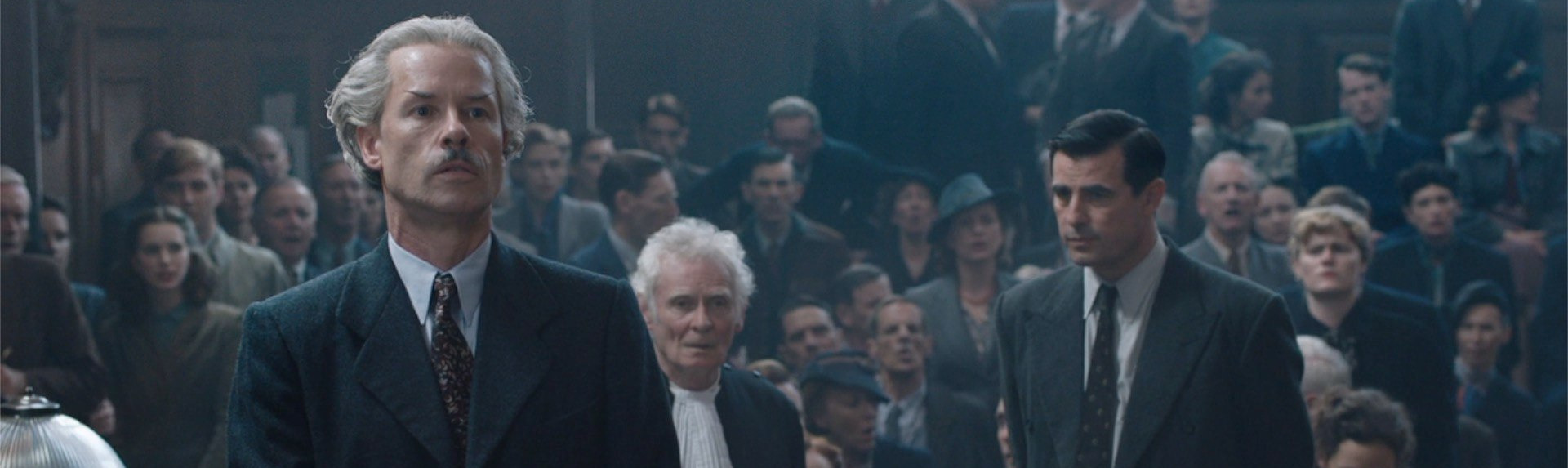
It plays like a fable, but the bulk of this bizarre story of World War II, Nazi art thefts and those who helped with the stealing is true.
You can’t make this stuff up. Or in this case, you don’t need to.
Stuntman and producer Dan Friedkin, making his feature directing debut, renders this case of Han van Meergeren and Vermeer in broad strokes (sorry), struggling to turn what could have been a dark (or darkly comic) fable into a “ticking clock” thriller.
But the generally straightforward approach serves his cast well, and provides a rare tour de force for Guy Pearce, who is always good, especially when he has a role that requires a certain flamboyance.
Pearce is van Meegeren, an artist, art lover, art dealer and slippery swell laying low in his native Netherlands as if he’s expecting a shoe to drop.
Claes Bang (“The Square”) is a “Dutch Jew in a Canadian uniform,” a former tailor and jazz fan turned resistance fighter, now a Canadian officer trying to track down Nazi collaborators.
One of the key points of stress in this multi-handed script is that between those who “fled” Holland, to Britain, plotting a return to power after liberation, those who stayed behind and fought, as Joseph Piller (Bang) did, and those who “did what we had to” in order to survive, like Piller’s wife (Marie Bach Henson). She kept the company of German soldiers.
So did van Meegeren. Apparently. What Piller wants to find out is if this insanely valuable painting by “The Master of Delft,” Jan (Johannes) Vermeer van Delft, which wound up in the collection of Reichsmarschall Hermann Göring, was stolen, and from whom.
As Piller is Jewish, those noting his passion for the case figure the fact that the artwork was stolen “from Jews” further motivates him. As the people jumping to this conclusion are non-Jewish, and under suspicion for collaboration with the Anti-Semitic enemy, you can see why he’d get his back up.
But his prisoner is a mixture of unctuous charm and white-haired menace. And even though the State Police are hunting for him as well, he’s not cooperating.
“I find that in life, as in art, it’s always best not to spoil the surprise.”
We sense we’re being set up for a game of cat and mouse, and we’re not wrong. When van Meegeren wonders about his own “redemption,” and perhaps the captain’s secret need for it as well, we wonder if that’s a parallel the script will play up. Not really.
Piller interrogates van Meegeren and those who knew him, with an old Resistance friend (Roland Møller) there to provide muscle and menace. A cocked pistol is quite the incentive. Eventually, they have to hide their prisoner from government officials who’d love for van Meergeren to carry his secrets to his grave.
And that’s when he starts bargaining — an internment with good light, canvas and oils, access to “my assistant,” who is also his lover and model (Olivia Grant).
Through monologues and flashbacks, the painter and art lover tells his story. Meanwhile, events outside are conspiring to bring this all to a head and this “traitor” to trial.
Public firing squads are a common sight. So yes, the stakes are high. What will be van Meergeren’s defense?
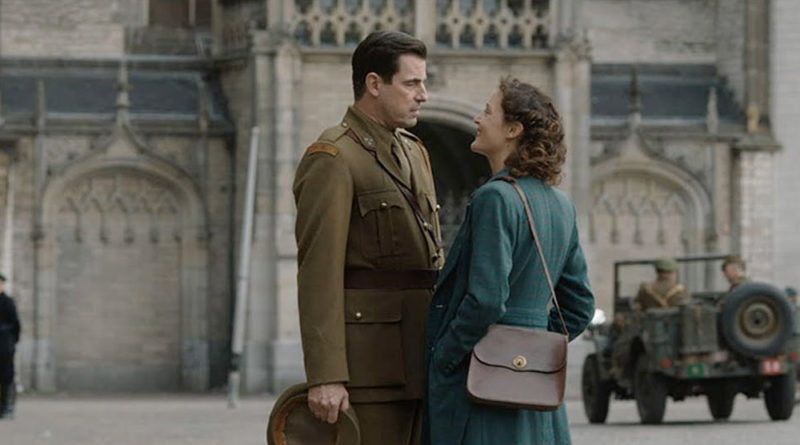
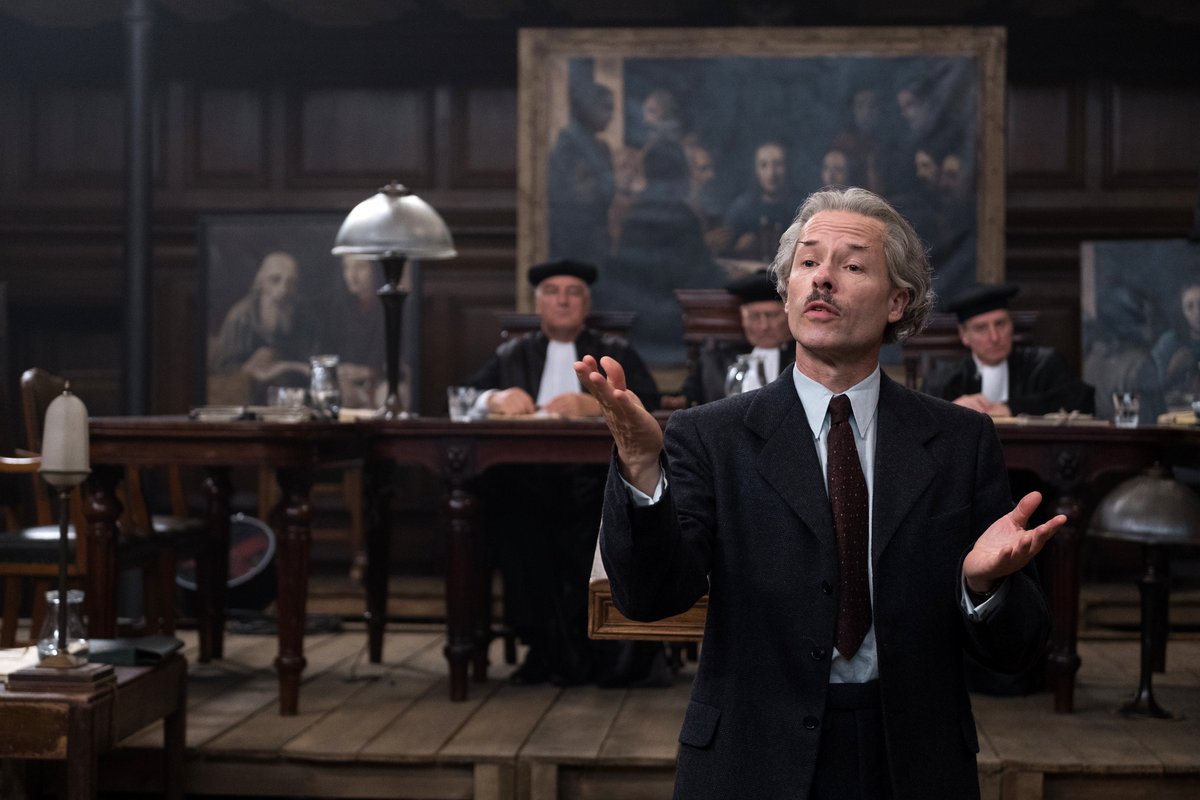
The period detail and immersion in the art of the Dutch Masters creates the color palette of “The Last Vermeer,” and sets its tone.
And all of it — the strife in Piller’s marriage, the government intrigues, literally chasing van Meergeren at one point — is but the canvas for Pearce to paint his portrait of the duality of man, the shared guilt of those who seemed to thrive under Nazi Occupation, a guilt van Meergeren seems to not understand.
Pearce makes him ramrod-straight in posture and ever-the-epicurean about his tastes in art, and people and whisky. We can believe he dealt with the Nazis, and we can believe he figured he could outsmart them as we wonder if he’s outsmarting Piller, or even himself. Even with a firing squad at stake, Pearce’s van Meergeren is slow to panic, reluctant to lower himself to ask for help.
What an interesting pigeon-hole Bang has um, painted himself into. He’s now made three films set in the world of art –“The Square,” “The Burnt Orange Heresy” and “The Last Vermeer.” Something about him says “at home in the world of art and its pretenses.” Perhaps he should have a word with his agent.
The cat-and-mouse stuff, the “discoveries,” aren’t the hardest plot points to detect, nor are the under-developed distractions Piller has thrown in front of him.
But the courtroom finale, eating up much of the third act, is a corker. And Pearce holds our focus, still or animated, chewing up a scene or so underplaying it he’s still the center of attention.
Like the Great Master he is, he knows how to grab the eye and hold its focus, with or without a menacing mustache.
MPAA Rating: R for some language, violence and nudity
Cast: Claes Bang, Olivia Grant, Vicky Krieps, Marie Bach Henson, Roland Møller and Guy Pearce
Credits: Directed by Dan Friedkin, script by Mark Fergus, Hawk Ostby, James McGee, based on the book by Jonathan Lopez. A Sony TriStar release.
running time: 1:53
A Ryan Murphy romp about theater “types” who show up to right a wrong in a right wing Indiana town that has a problem with same sex prom dates.
Tracey Ullman is here, you betcha. Coming to Netflix
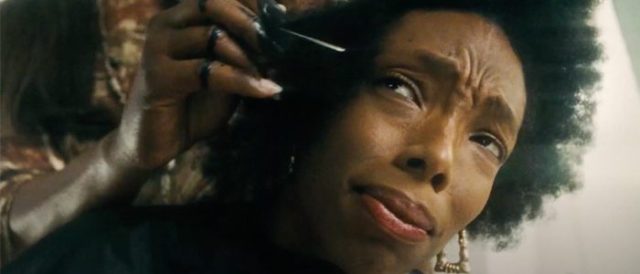
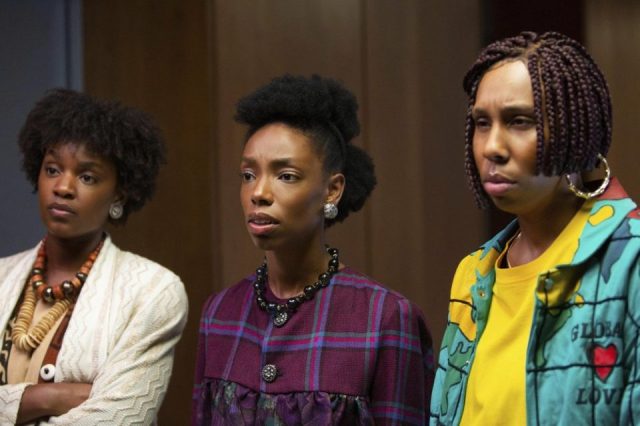
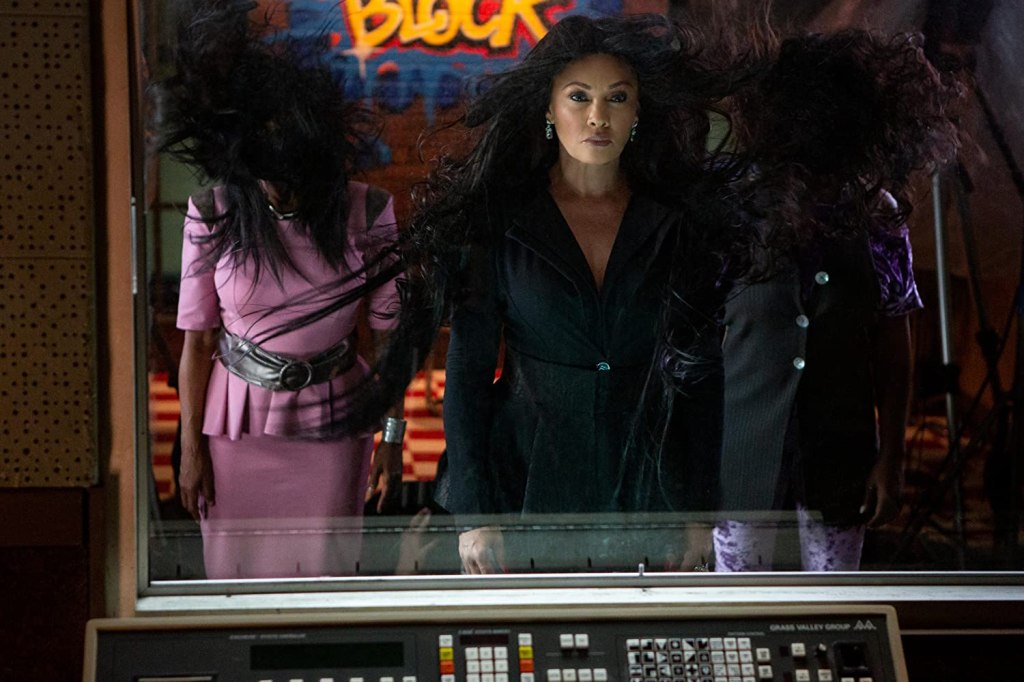
Writer-director Justin Simien has more experience in satire (“Dear White People”) than horror, and a better handle on lighthearted lectures than laughs.
Which is to say, so what if this supernatural satire “Bad Hair” is more about the message of the monster than the monster itself? It works.
And that monster? African American women’s hair, that one bit of “Black Girl Magic” that requires…assistance. Simien serves up genuine torture porn about what women with naturally kinky hair, “as nature intended, go through to Be Like Beyonce’.
Anna Bludso (Zaria Kelly) learned this lesson in childhood, that “relaxer” accident administered by her step-sister. She wears the scars of it into adulthood as she (Elle Lorraine of “Insecure”) struggles to fit in at Culture, a Black MTV facing major changes in Music Television in 1989.
All Anna wanted to be was on-air talent. But it was the hunky receptionist (Jay Pharaoh), the guy she sleeps with on the sly, who got that gig.
But her tinted-glass ceiling may be about to shatter. The pre-“woke” Woke workplace that Black Pride Preacher Edna (Judith Scott) presided over has a new corporate boss Grant (James Van Der Beek) and a new EVP of programming, former-model and “influencer” before that was a thing, Zora (Vanessa Williams, perfection).
Out goes Edna, and Zora — as intimidating and probably conniving as she is — hears out Anna’s pitch for a show that sounds exactly like “Total Request Live,” before that was a thing. They’ll go all-in on “hip hop and this new jack s—.” This makeover could fulfill bossman Grant’s vision.
“If this succeeds, it could change popular culture!”
Anna, behind on her rent and more bubbly than sexy or confident on camera, has one thing holding her back — her hair.
“Sisters get fired for less than that every day,” Zora purrs. To be “one of MY girls,” she’s got to “flow.” More precisely, her hair does.
The “creamy crack” (hair relaxer) won’t cut it. She needs to go for broke (literally) and go all-in on this new thing — “the weave.” And no weaver but Virgie (Laverne Cox of “Orange is the New Black”) will do.
The scariest scene in this “horror comedy” is the (slightly) exaggerated torture of picking “her,” how Virgie describes the hair that will be the New Anna, and weaving it in.
“My sources are exclusive.”
And her methods? “Essential oils” and curved needles more commonly used for surgical stitches? Exquisitely painful.
Simien sets up Anna’s new path as a contrast to the foster family of African American folklore professors (Blair Underwood. Michelle Hurd) who raised her. She may see eerie similarities between her story and a folk horror tale about “The Moss-Haired Girl.” Anna may wonder about what Zora’s weave, and that of a pop star (Kelly Rowland) who has extended her Janet Jacksonish music video career with her weave, have cost them.
But she will not know the “full” story until she’s gotten hers.
There’s just a hint of the delicious bitchiness of this office culture that Simien captures, and perhaps could have brought in a female co-writer to fluff up. The women are all “sister to sister” until the urge to backbite overwhelms them.
Williams, reviving her “Ugly Betty” edge, plays a character who’s a comment on her persona and her screen career. Fair-skinned and “beautiful” by “European” standards, Zora doesn’t sound like any of the music-savvy African Americans who are now her minions.
Zora’s attempt to leap into an argument with an enraged Social Justice Warrior Princess may be the funniest line Williams ever said. And it’s only a single two-letter “word” that Ms. Elocution and Poise plays as if it’s her first-time ever saying it out loud.
“Yo yo yo.”
Sister please.
Simien’s film has a cluttered feel, and in trying to steer clear of archetypes, he robs us of the satisfaction of a clearly-defined villain mentor vs. the more high-minded one. Zora may take credit for ideas and covet the spotlight Anna craves for herself, but she’s doing what the righteous but imperiously snobby Edna never would — hear Anna out, give her a chance to rise.
The “hair” with a murderous mind of its own is more funny than scary.
“Bad Hair” and its follicles are on their firmest ground just poking at the prejudice, pressure and unnatural (but admittedly lovely) beauty that women feel compelled to pursue to get noticed, get ahead and get theirs. The supernatural element feels unnecessary, save for the finale.
Still, hair that promises to deliver super powers, but that comes with supernatural trade-offs? That’s a killer concept and a satire that almost writes itself.

MPAA Rating: unrated, violence, sex, profanity, smoking
Cast: Elle Lorraine, Laverne Cox, Jay Pharaoh, Yaani King Mondschein, Usher Raymond, Blair Underwood and Vanessa Williams
Credits: Written and directed by Justin Simien. A Hulu release.
Running time: 1:42
This Netflix drama pushes a lot of the right buttons, and parking a screen legend in it is very smart.


