We always knew how Bruce Willis would spend his celebrity dotage — Shakespeare in the Park, maybe a spirited farewell tour as “Bruno” with his band.
OK, maybe we didn’t. But seeing him in — BARELY in — C-movies like “Hard Kill” is just another reminder that some guys can’t let go, can’t change a lifetime of piss-poor movie choices and don’t know, the way Garbo and Cary Grant did, when it’s time to “close the door” and leave with their screen image intact and immortal.
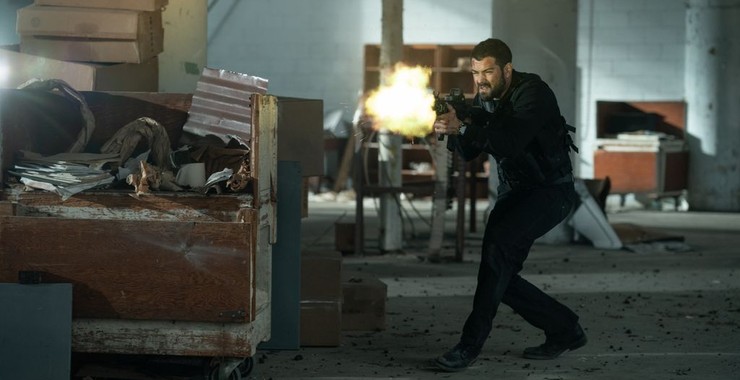
“Hard Kill” is a garbage thriller made because the producers had access to an abandoned factory complex, a lot of tac gear to dress their color-coordinated “terrorist” minions in and Bruce Willis’s name.
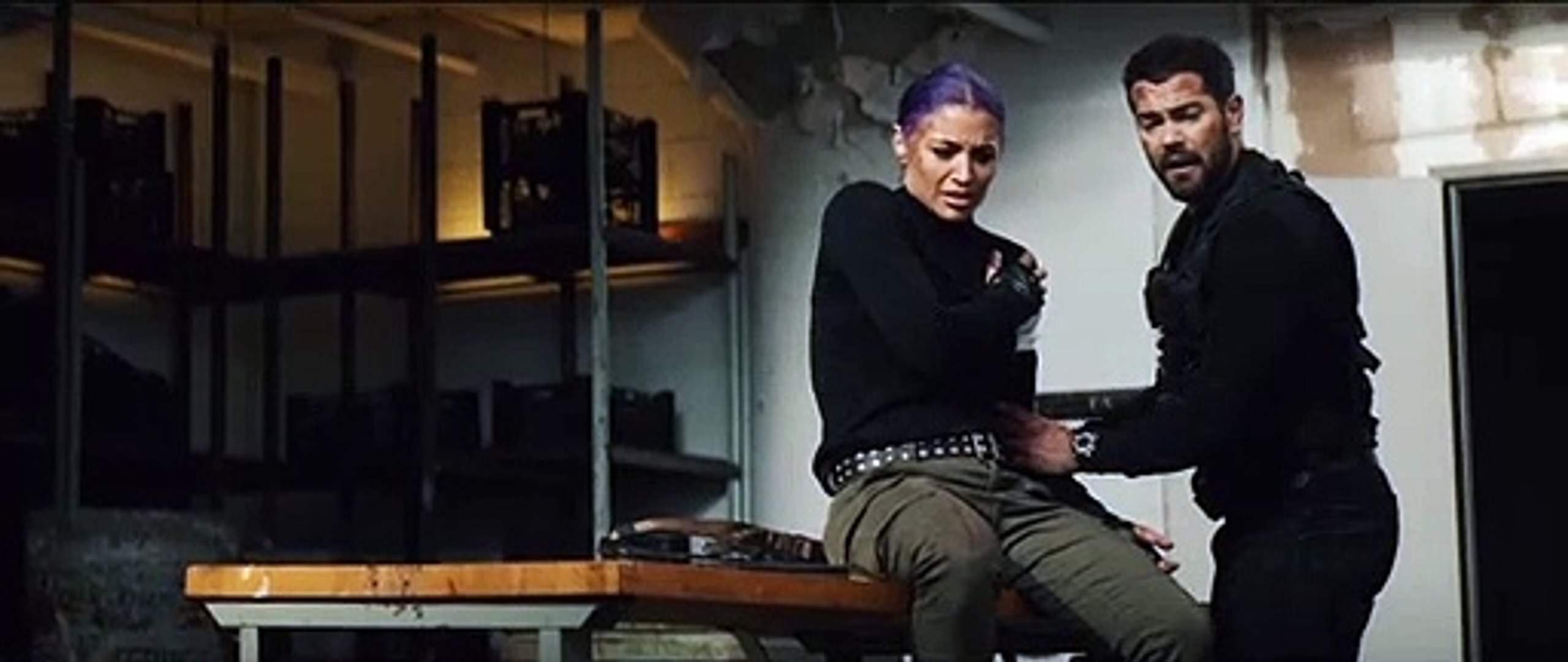
Willis plays Chalmers, the billionaire ex-military chief of a tech empire who hires/tricks an elite mercenary team led by Derek (Jesse Metcalfe of “Desperate Housewives” and “Chesapeake Shores”) and Sasha (WWE minx Natalie Eva Marie) into helping him recover not just the story’s “MacGuffin,” a magical artificial intelligence gadget that “in the wrong hands” could doom us all.
And it’s in the wrong hands, those of the terrorist named “The Pardoner” (Lamest villain name ever, lamely played by Sergio Rizzuto).
Another thing in the wrong hands? Chalmers’ daughter Eve, the tech genius behind his Charterhouse Industries, is being held hostage. And I didn’t have to look up Lala Kent, who plays her, to realize she’s a no-talent, either a model or reality TV creation.
The fights and shootouts are fine, basically commandos taking out one helmeted minion after another.
The dialogue is limp as week-old Ramen, and the performances give “perfunctory” a bad name.
Willis? He’s just a wizened, pistol-packing bald guy who used to spend his holidays flying to LA, “having a few laughs,” a very long time ago.
MPA Rating: R for violence and language throughout
Cast: Jesse Metcalfe, Bruce Willis, Lala Kent, Natalie Eva Marie, Texas Battle and Sergio Rizzuto.
Credits: Directed by Matt Eskandari, script by Joe Russo and Chris LaMont. A Vertical release on Netflix.
For my money, the best action picture on Netflix right now is a grim combat thriller set in the bombed-out ruins of the Iraqi city, “Mosul.”
It’s an intimate “Blackhawk Down” meets “Saving Private Ryan” tale of a mission and “attrition,” grizzled professionals battling the murderous “on a medieval scale” soldiers of ISIS, or “Daesh” as they’re called in the Middle East.
The film feels like you’re trapped in a first-person-shooter video game where the stakes are real, the learning curve is steep and the peril — house-to-house fighting where every building is mostly ruined, and a potential threat. It feels like you’re in Mosul, when they filmed it in Morocco. And it’s so inside the combat zone and the culture — Arabic is the only language spoken — that it plays like an Iraqi war memoir, even though this “inspired by true” events tale was written and directed by the guy who scripted “The Kingdom” and “World War Z.”
“Mosul” is set in the last days of the city’s “latest” occupation, when Daesh is “fleeing.”
“Do THEY know that?” Major Jasem (Suhail Dabbach, in a breakout performance) growls.
He leads the Nineveh SWAT team, what’s left of it. They’ve survived the various occupations, they still have enough men and battered Humvees to carry the fight to Daesh. They show up just as young policeman Kawa (Adam Bessa) has fired his last round in the firefight that saw his unit — including the uncle who got him the job — all but wiped out, pinned down in a ground floor storefront.
Jasem sizes him up and brings him aboard. There’s no arguing. Just take your uncle’s hat, change shirts and you’re “one of us.”
He has no idea of “the mission” these guys are on in the “wrong side” of Mosul. But he can use a gun, and he’s kept himself alive.
“Lift your weapon and keep your eyes open” are Jasem’s only instructions.
Matthew Michael Carnahan’s story is a journey through the inferno of a city that could be Warsaw in 1945, Beirut in 1979 — bombed-out, littered with corpses, rife with murderous snipers who “punish” civilians trying to flee the dying remnants of Daesh.
It’s a movie of gritty details and jaw-dropping surprises. The well-equipped SWAT commandos keep small pickaxes and chisels with them. Yes, they can be weapons, but their main use it punching holes in walls so that they can shoot through them.
They work their way down streets, through hallways, with the worn remnants of well-taught and much-used military precision. But when Kawa sees what they’re clearing this one corpse-ridden apartment complex for, he’s a bit taken aback. As are we.
It’s midday, and their favorite “Kuwaiti soap opera” is on. They had to find a building with power and a working TV.
That’s a rare light moment in an otherwise relentless tale of hunt and be hunted, ambushes, with every firefight reducing their number.
Kawa is young, but a quick study.
Jasem is jaded, but hopeful. He rescues children when he can, pays to impose them on families (they rob the dead of their cash at every turn) and urges them to care for the child so that “the rebuilding” can begin. Every room that they stop in, he stoops to pick up trash, tidy up, as if for that eventuality.
“We have to rebuild everything,” he sighs. “But first, we have to kill every one of them.”
They can’t ask for help, for reasons that are both clear and obscured. “Don’t talk about the Americans, we’re beyond that” is the extent of Jasem’s politics, until he has to haggle with one of the Iranian “militias” that’s come in, an enemy “faction” fighting on their side. Jasem and his team bicker with the Persian commander (Waleed Elgadi) over history, British vs. French occupation, the works.
And when these little grace notes — tense as they are — end, there’s more blood, more street-level strategizing, anything to further this rogue unit’s “mission” which Kawa doesn’t want to know about until he absolutely has to.
No one in their right mind would want to go there, but for the viewer, “Mosul” is a combat thriller that passes on an appreciation of professionalism and patriotism in a different language, in different uniforms, but with a universal focus on “mission” and “hope.”
A friend pointed me to an Internet appreciation of this “lost” 1972 Terrence Malick-scripted road comedy, a movie partially-filmed in a city where I used to live — Knoxville, Tennessee.
“Deadhead Miles” is a loosely-organized, largely-improvised long-haul trucking tale that ventures from the Tennessee/Virginia line to the desert Southwest. Oddly enough, when I was living in Knoxville, Ridley Scott came through scouting for this road picture he was about to shoot about two women on the lam in a T-bird. He ended up limiting that one to the desert Southwest and environs. Perhaps some Knoxvillian warned him about “Deadhead Miles,” which was shelved, then barely released (Drive-ins, maybe?) and lost.
As hard as it was to get any movie made in the late ’60s and early ’70s, you saw more than one version of this pseudo-existential road picture during that era, this one riffing on “Easy Rider.” “Odd” and “indulgent” misfires were everywhere as Hollywood tried to figure out the new formula for success. Robert Altman’s nearly-unwatchable “Brewster McCloud,” “C.C. & Company” and loads of B-movies came out with a “quirky” bent, the romance of the open road their only organizing principle, a “name” or two in the credits and limited audience appeal.
Sam Peckinpah’s “Convoy,” Eastwood’s “Every Which Way But Loose” and assorted TV series and C.W. McCall’s novelty hit song “Convoy” celebrated the modern loner “cowboys” behind the wheels of tractor trailers. Steven Spielberg sent that genre up with “Duel.”
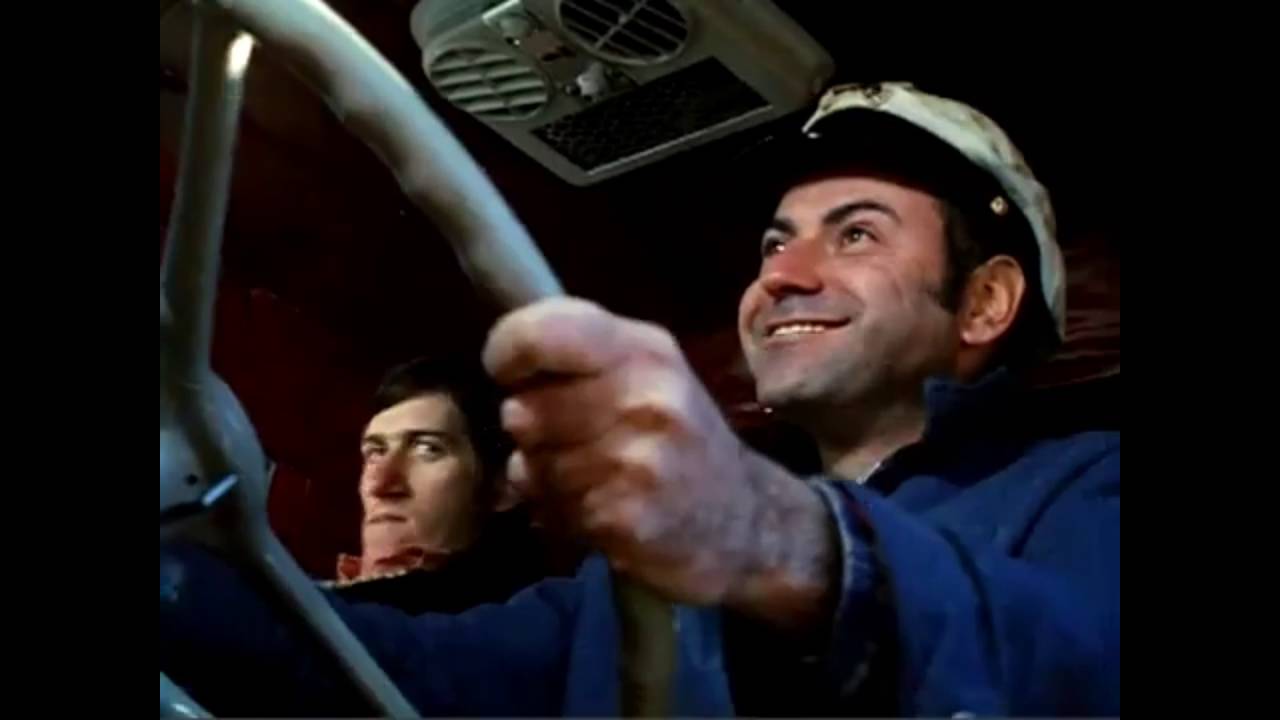
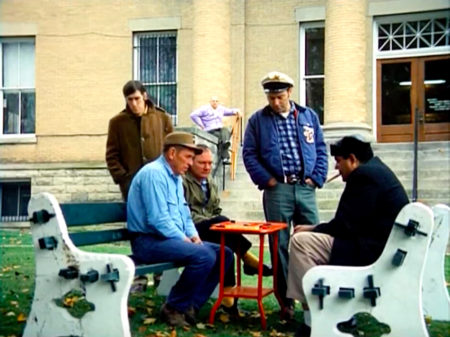
“Deadhead Miles” — that’s a trucking term for empty (no profit, lost money) trips between loads — begins with a simple but labor-intense hijacking organized by Durazno (veteran character actor Oliver Clark), a guy with some unknown beef with the trucking industry. He and his crew stage a crash, tear-gas a trucker and Cooper (Alan Arkin, beginning a long career disappearing act from his ’60s peak) is their designated driver.
The rig is repainted, re-licensed, re-labeled and run down the road so that they can sell its cargo — thousands of carburetors. That’s what ran American cars before the magic of “fuel injection,” kids. The unsellable load is bad enough. But when Cooper slyly ditches the gang (Avery Schreiber is among the character actors in it), he’s on his own.
Until, that is, he’s badgered by a couple of hitchhikers and their dog. He’ll only take one, so Paul Benedict (“The Jeffersons”) it is, his somewhat boon companion for a cross-country odyssey to New Mexico.
“It’s hard work,” the hitcher remarks, making small talk. “What you mean is that it ain’t IN-ter-estin’ work,” Cooper replies, in perhaps the only Southern drawl in Alan Arkin’s (eventual) Oscar-winning career.
Roadhouses where they run into the likes of fellow drivers like “The Duke of Interstate 40” (Hector Elizondo, a decade before “Pretty Woman”), surface roads lined with farm stands, Double Bubble Cola and Schlitz signs, a stop at a drive-in to watch “Samson & Delilah,” a bizarre brothel (a hooker tied to a wood stove, so she can’t flee), an overnight encounter with a rolling brothel (a Ford “woody” wagon with a naked “road whore” advertising her wares), they see it all.
Cooper lets “bennie take the wheel” (popping uppers to stay awake), and brags about getting out of tickets (which he never does) every time the cops pull him over.
“Ok, Buddy, you’re gonna see a man step in a bucket of s–t and come out with his SHOES shined!”
The direction, by drive-in trade mediocrity Vernon Zimmerman, is competent, but haphazard and pedestrian. If you’re looking for something resembling a Terrence Malick script here, good luck. The road and caper comedy tropes served up include double crosses, bungled efforts to unload the carburetors and an encounter with a trucking myth — a helpful repair in the middle of nowhere by a ghost (Bruce Bennett) dressed in cowboy black, driving a jet-black rig.
If Malick researched this trucking script, my guess is that it began and ended with listening to country music radio in the “Phantom 309” “Six Days on the Road” era. Dave Dudley, who sang that last classic, sings several songs on the soundtrack.
The best you can say about “Deadhead Miles” is that it’s a fascinating Alan Arkin-tries-to-improv-a-movie artifact, indulgent and screwy and not funny, not profound — with cameos by George Raft, Ida Lupino, Loretta Swit, Charles Durning and future Bond villain Richard “Jaws” Kiel dressing up the roadside tour of America before the Oil Embargo and the completion of the Interstates turned us into the highway monoculture you see today.
MPA Rating: R, nudity, sexual situations, profanity
Cast: Alan Arkin, Paul Benedict, Oliver Clark, Avery Schreiber, Hector Elizondo, Charles Durning, Loretta Swit, George Raft and Ida Lupino
Credits: Directed by Vernon Zimmerman, script by Terrence Malick. A Paramount release on Youtube.
“Everything is copy,” the late novelist, screenwriter and filmmaker Nora Ephron preached. Anything that happens to you or someone you know, everything that you overhear — fair game for a creative person. Especially one who’s “blocked.”
That might describe Allison, the character played by Aubrey Plaza in “Black Bear,” a sexy and edgy deep dive into “creatives” and their creativity, and conflicts we can see from a long way off because introducing stress into a situation is how you get drama out of it, on or off the screen.
Allison has rented a room in a couple’s house in a lakeside forest. Gabe (Christopher Abbott of TV’s “Catch-22”) picks her up and proceeds to ask a lot of questions and admits, eventually, to doing more research on their “guest” than he initially lets on.
She’s a movie director. She used to be an actress.
“People sort of stopped hiring me,” she says, explaining the switch because he’s asked. Because she’s “difficult?” “Maybe I’m just not attractive enough” is easier for her to own.
Once at the house, the third party — Blair (Sarah Gadon of last year’s run of “True Detective”) is pregnant, outspoken in her feminism and unfiltered in her reaction to Allison’s opinions (she alternately embraces and mocks feminism). A little wine, which Allison indulges in over Gabe’s objections, loosens everybody’s tongue.
The filmmaker is “waiting for something meaningful to happen to me.” Does she mean in her personal life, or her creative one? Because with the way Blair and Gabe start going at it, it’s obvious both could happen, and at the same time.
We know where this little third-wheel situation is going long before the metallic bickering delivers that line, worn out in “the other woman” tales since the beginning of time, is uttered.
“I SAW the way you were looking at her!”
And after the melodrama — contrived, preordained, sexual — has played out, the second movie begins, the movie about the making of a movie called “Black Bear.”
On a set filled with attractive film professionals unprofessional enough to let their flirting, hooking up and indulging get in the way, Gabe is now the filmmaker manipulating his distraught, diva wife (Plaza) by pretending to be carrying on with “the other woman” (Gadon) in this lakeside house in a forest where black bears roam.
“Write what you know” they tell you in creative writing classes, and actor turned writer-director Lawrence Michael Levine (“Wild Canaries”) is better prepared than most to turn the camera back on the people making the movie.
The intimacy of an indie film set, with a small — usually young because they’re cheaper to hire — crew, creates its own sexual tension. And filmmakers aren’t shy about lying, seducing or bullying their actors to get what they think they want out of them.
Plaza makes good use of her reputation for deadpan. But she doesn’t let us see Allison’s wheels turning. Is she giving in to passion, truly at a crossroads and lost, or is she just playing everybody to get a rise out of them and stir up something she can “use?”
That cinematic sage Val Kilmer, in his new memoir “I’m Your Huckleberry,” gives away the secret of why so many people in the acting/filmmaking profession are magnets for discord, divas and drama queens on and off sets, in and out of marriages. They feed off it, need it. It’s their “normal.” That’s what Levine taps into here.
Gadon plays two quite-different characters in the movie and the movie-with-a-movie, and makes both fascinating. Abbott makes Gabe an argumentative reactor in the first act, a cruel puppeteer in the second and is believable in both guises.
It’s not the neatest film-dissecting-filmmakers story, with rough edges, lurches in tone and trite tropes and dialogue. But the characters make us wince in recognition and the situations, even the ones we know are coming, are real enough to cringe over.
And all along, we ponder if anything and everything we see might be happening because somebody is playing somebody else, just for effect.
MPA Rating: R for language throughout, sexual content, drug use and some nudity
Cast: Aubrey Plaza, Sarah Gad, Christopher Abbott
Credits: Written and directed by Lawrence Michael Levine. A Momentum release.
Sometimes, you have to wonder if anybody in Netflix acquisitions even bothers to look over a lot of the junk they buy.
Sometimes, you realize that content providers know this and slide quick-and-junky projects in under the door that way. Just slap “Christmas” in the title, and you’re in.
Sometimes, you wonder why four screenwriters would want their names attached to anything as lame as “The App That Stole Christmas.”
A crew of bit players, newcomers and obscure rappers showed up for work on this 63 minute toss-off, a movie with no laughs, no wit and nothing to recommend it.
It’s about Felix (Jackie Long), whose company created a “time thieving app that keeps people apart.” That’s not how he advertises “Bomazon.” But with its animation (amateurish, like the acting) and “buy this/order that” instant gratification, everybody’s hooked on it.
Not that Felix or his hair salon-owner wife (Diane Howard) are enjoying it. They’re glued to their phones, ignoring their son and shrugging off his dad (Miguel A. Núñez Jr.) who lives with them, and who remembers when Felix “played outside” as a boy, and when he “made things with his hands” — durable, wooden toys father and son would whip up in Dad’s workshop.
Felix has a Come to Jesus moment, via rapper JayQ. “Life as you know it” is about to change, the stranger says. Sure enough, Felix has an accident, and he wakes up from his coma in a giant rustic cabin, some busy folks in red and green costumes and the sounds of “Rudolph the Runny-Nosed Reindeer” on the soundtrack.
Say what now?
Our workaholic has to pitch in making toys for a Megyn Kelly-triggering Santa (J. Anthony Brown) and “learn” the error of his ways before he can wake up back home.
The acting’s bad, the dialogue a clutter of cliches, banal affirmations, half-hearted jokes and vocalized pauses — those words all of us use while we’re trying to think of what to say. “You know what I’m saying?” Filler like that should never show up in a script, and this script is almost ALL filler.
Looking for an inclusive Christmas movie after seeing “Jingle Jangle: A Christmas Journey?” This isn’t it.
MPA Rating: TV-G
Cast: Jackie Long, Ray J, JayQ, Diane Howard, J. Anthony Brown, Miguel A. Núñez Jr., Anthony McKinley and Julia May Wong
Credits: Directed by Monica Floyd, script by Peter John, Monica Floyd, Miriam Bavly and Jenifer Rapaport. A Netflix release.
He’s pretty, she’s prettier, a gorgeous under-filmed Pacific isle location, a true story about a tradition of service members doing humanitarian work — “Operation Christmas Drop” has all the ingredients of a lightweight Christmas romance of the “fun for the whole family” school.
But its perfunctory script does little more than move characters from point A to point B. The writing has all the charm of an Air Force procurement budget and sets up no romantic sparks, so the leads are left on their own. And the location — Guam, and its surrounding atolls — is rendered so Air Force Base generic that I honestly wondered if they shot two days of second unit there, and filmed the rest in Pensacola.
Kat Graham of “Vampire Diaries” and “All Eyez on Me” stars as Erica, a Congressional aide working for a no-nonsense Congresswoman (Virginia Madsen) who needs to find “efficiencies” and savings in the military budget. In other words, she’s looking for a base to close.
A newspaper article picturing an Air Force pilot in a Santa hat playing a ukulele suggests “Guam.” Erica finds herself giving up her holidays and flying out to inspect the base, which seems to be spending taxpayer money and using military planes and crew on a charity.
She’ll also have to check out “Major Eye Candy in the Santa Cap.”
That would be her tour guide, the pilot who put his base in the Congressional bullseye. He’s not a major, but a Captain. Andrew (Alexander Ludwig of TV’s “Vikings”) will try to distract the Congressional hatchet-lady, Code Named “Blixen,” and explain how this 70 year tradition of making low-altitude supply drops of Christmas cheer isn’t done on the taxpayers’ dime.
Their first exchanges, delivered with a smirk or a smile, are totally geared to generating friction. She is a “bean-counter,” a “condescending pencil pusher.” He’s just a pretty boy “with a big heart and a nice smile.”
The dialogue is a bland blather of “putting it in my report” and “Does that line work on all the girls?”
The “local color” consists of beaches, snorkeling, shots of Andrew’s Jeep cruising the coastal road and the barely-glimpsed natives they’re helping.
Don’t chase that gecko out of your bungalow, Miss. It’s good luck. And CGI.
There’s nothing here to hate, but even less to love. The titular holiday tradition — the flights — is impressive and lump-in-the-throat righteous. But that seems to have given everybody in the production the excuse to phone it in.
Erica meets Andrew not on the tarmac, setting up her officious efficiency and the obstacles to saving the base and romance. No. They meet on the beach. I guess that necessary transitional scene got slashed. This sort of obvious boner happens more than once. Rare is the movie that does a worse job at hiding its budgeted shortcuts.
The Hallmark Channel, Netflix, Hulu and everybody else will carpet bomb us with Christmas movies this holiday season. There’s little sense wasting 100 minutes on stale fruitcake like this.
MPA Rating: TV-G
Cast: Kat Graham, Alexander Ludwig, Virginia Madsen, Trezzo Mahoro and Bethany Brown
Credits: Directed by Martin Wood, script by Gregg Rossen, Brian Sawyer. A Netflix release.
“Just What We Wanted” is a compact and quietly compelling German drama about a couple teetering towards a break-up because of their desperate desire to have a child.
Ulrike Kofler’s film, based on a Peter Stamm short story, wrestles with what people do when they start to grapple with a changing concept of the detailed plans they’ve built their entire lives around, and how a marriage where this is the core of their shared experience together is frayed when that connective tissue breaks.
All that is set up and laid out in the opening scene, coping with the bad news that their latest attempt at a pricey fertility clinic has failed. The doctor supervising their treatment quietly suggests “rethinking” things as they juggle which credit card can withstand the payment for this latest throw of the dice.
But the whole point of Alice (Lavinia Wilson) coping with endless expenses and contractor issues is that they’re building a house, one big enough for their planned family.
Niklas (Elyas M’Barek) can apologize, make the most tentative suggestions about other options, but that’s to no avail. The disappointment is still too fresh. Maybe a vacation to an Italian isle will do the trick.
That’s where they’re roomed right next door to a noisy, fractious family of their fellow Germans. Boundaries break down as their little girl (Anna Unterberger) gets underfoot, especially with Alice, the loud, gregarious father Romed (Lukas Spisser) chats them up and Christl (Iva Höpperger) the often-topless mom (Germans, amIright?) shoves her amateur astrology at them as a couple and her semi-careless parenting at Alice in particular.
What might have been an intimate healing/decision-making vacation turns into a broadening schism as Alice struggles with her pain, her husband “noticing” the half-naked blonde next door and the pesky but adorable child that reminds her of what she can’t have.
As the brittle union starts to crack, we wonder if the temporary “neighbors” and their “good life” will be the force that finally tears Alice and Niklas apart.
Wilson underplays Alice’s increasing uncertainty, and she and M’Barek are convincing as a loving, supportive couple and as one where that support erodes as it endures its most severe stress test.
Editor-turned-first-time director Kofler keeps the tension on simmer and gradually draws us into the most intimate rifts marriages can face. German reserve — Alice doesn’t tell Niklas she watched him watching the outdoor love-making of the boors next door — cracks a little on the tennis court, breaks in heated exchanges with contractors and erupts when wife and husband blurt out exactly what they think — never a good idea.
Kofler can’t avoid the melodramatic minefield that the third act serves up, but she deftly humanizes the calamities that play a decisive role in how this fraught, understated Scenes from a Marriage turns out.
MPA Rating: TV-MA, nudity, adult themes
Cast: Lavinia Wilson, Elyas M’Barek, Anna Unterberger, Lukas Spisser and Iva Höpperger
Credits: Directed by Ulrike Kofler, script by Ulrike Kofler, Sandra Bohle and Marie Kreutzer, based on a short story by Peter Stamm. A Netflix release.
County music icon and national treasure Dolly Parton’s having a moment, thanks to being a paragon of tolerance and exemplar of COVID vaccine philanthropy.
So there’s no being churlish about her new holiday Netflix musical, “Christmas on the Square.” None.
The choreography — Debbie Allen directed the film and oversaw that — sparkles in a few big production numbers.
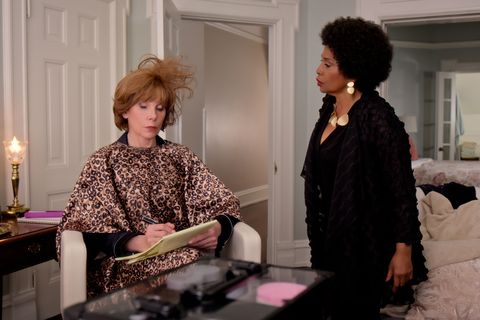
We forget what a big voice comic actress Jenifer Lewis has, and that she can sing. We don’t remember Treat Williams sang in the film of “Hair.” And while we’re always being reminded that Christine Baranski can sing (“Mamma Mia!”), it bears repeating that she could make a script consisting of a “Do No Remove This Tag” mattress label funny.
And if Saint Dolly — I am NOT using that sarcastically — wants to cast herself as a singing bag lady/angel, we GO with it. Got it?
The vast majority of musicals are packed with pleasant-enough/instantly-forgettable songs. “Square” falls into that category. And the “book” here is a play that I dare say never progressed beyond small town community theater/holiday “church” productions.
It’s a “Wonderful Life,” with songs, a heartless, rich FEMALE villain and an angel already has HER wings. That’s it.
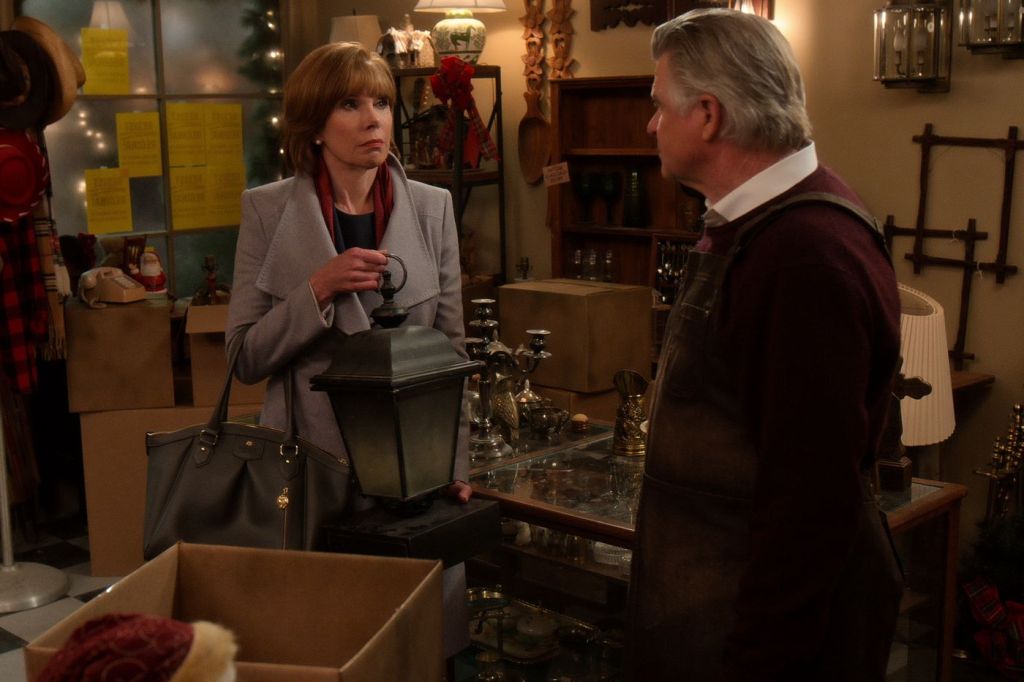
Baranski plays the “wicked witch of the middle” (not Oz’s “East” or “West”) in tiny Fullerville, a postcard/soundstage-perfect village that she’s decided would be better off bulldozed to make way for her planned Cheetah Mall. Mass evictions ensue.
“Who’d do that during the holidays?”
“Rich people…with TAX breaks!”
As the town rallies to “resist” her high-handedness, led by Preacher Christian (Josh Segarra) and the wife (Mary Lane Haskell) he’s hoping to start a family with, old friends (Lewis) and old flames (Williams) aren’t enough to sway /Regina/Cruella’s lust for redevelopment. Even a possible cancer diagnosis won’t sway her.
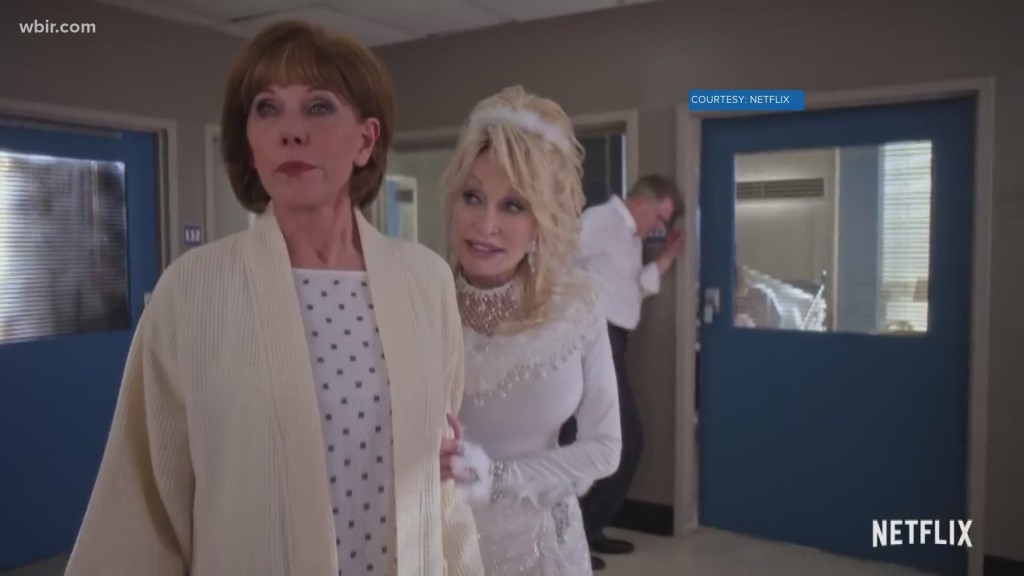
Dolly’s the angel who tries to help her “change,” by gentle nagging, haunting and singing.
“Everybody needs an angel…” “Oh my God, I DO have a brain tumor!”
“Looking at life in the rear view mirror reveals your destiny…” “I hope if I have another hallucination, it won’t be wearing rhinestones!”
Parton’s hand in the script, beyond the music, might be the story’s Christian message of charity and the directness and squeaky clean nature of the songs — a church “resist” rally where everybody poor-mouths Regina with “rhymes with ‘witch'” lyrics.
“Christmas on the Square” isn’t much, but what’s here is a pleasant enough time-killer, which is more than you can say about the vast majority of holiday-themed Hallmark/Hulu/Netflix et al fare this season. Holiday “classic” it may not be, but Dolly always has been and deserves our thanks and attention accordingly.
MPA Rating: TV-PG
Cast: Dolly Parton, Christine Baranski, Josh Segarra, Mary Lane Haskell, Treat Williams, Jenifer Lewis,
Credits: Directed by Debbie Allen, script by Dolly Parton and Maria S. Schlatter, based on Schlatter’s stage play. A Warner Media/Netflix release.
What insipid, digitally-augmented elvish drivel is this?
Rhetorical question, like asking “Who let the Dogs Out?” Because unimaginative kids’ comedy would be complete without A) a belch or two, B) fart jokes and C) a “zany” montage set to that kid-friendly sing-along.
We’re talking “The Christmas Chronicles Part Two,” the one where Kurt Russell as Santa is joined by Goldie Hawn as Mrs. Claus, a partner so faithful that it’s about time they renamed the workshop town “Mrs. Claus’s Village.”
“That’s uh, not been finalized yet.”
This “kids save Christmas” tale brings back young “true believer” Kate (Darby Camp) , accompanied by the son (Jahzir Bruno) of the guy (Tyrese Gibson) is her mom’s new fella. Jack (Bruno) tags along when not-as-little-as-last-time Kate flees Cancun, because that’s where the united families are spending a most un-Christmas like Christmas.
Kate plays right into the hands of Elf-Gone-Bad Belsnickel (Julian Dennison), a gadget and gas-the-elves villain who wants to get back at Santa for banishing him from the village and his tribe. He’ll steal the Christmas Star with his drones, gas canisters and “gravity glove” and make the old bearded guy bend to his will.
The Veil of Borealis that conceals the “real” North Pole and powers the 300,000 shops there, the whole operation is in jeopardy. There’s nothing for it but for Santa, the few healthy reindeer left and the kids to travel to Asia Minor (Turkey) where Saint Nicholas got his start, consult with the “wood elves” there (Malcolm McDowell is their chief) and bring back the Spirit of Christmas.
“This is worse than I thought. We just opened a tear in the fabric of time!”
Chris Columbus, the director responsible for the early, weaker “Harry Potter” pictures directed and co-wrote this. Never would’ve guessed. Ahem.
There’s an interlude where Mrs. Claus tells the story of Saint Nicholas and folds him into the toy maker/joy-bringer that Santa became that is the better movie hidden in all that high-tech treacle.
Here’s the highlight — Santa and a ticket agent played by Darlene Love serenading Logan Airport’s irate, snowbound passengers in the not-terribly-distant-past with a sax-heavy “Spirit of Christmas.” Yeah, that’s really Kurt singing and it’s fun. And yes, even that goes on too long.
Aside from that, this is more a contraption than a movie — all Santa logistics (the hallmark of many a crappy kiddie Christmas movie), effects and digital sets, elves and other creatures.
“Christmas isn’t about where you are, but who you’re with.”
Even during a pandemic, that message matters. Spending Christmas with this sequel makes you realize why almost every Netflix holiday film is padded to reach that magic two hour mark. It’s Netflix as babysitter, nothing more.
MPA Rating: PG
Cast: Kurt Russell, Goldie Hawn, Darby Camp, Julian Dennison, Jahzir Bruno, Kimberly Williams-Paisley, Darlene Love, the voice of Malcolm McDowell, and Tyrese Gibson
Credits: Directed by Chris Columbus, script by Chris Columbus and Matt Liberman. A Netflix release.
Running time: 1:52
Posted inReviews, previews, profiles and movie news|Comments Off on Netflixable? “The Christmas Chronicles Part 2” is two hours of the holidays your kids will never get back