In “Tiger Within”Edward Asner plays a Holocaust survivor who takes an interest in and eventually takes in a runaway, a Midwestern teen punk who drew a swastika on her leather jacket for shock effect.
The product of a broken home, Casey (newcomer Margot Josefsohn) was told the Holocaust is a “myth” by her drunken, disinterested mother. So old Samuel is here to teach her otherwise, and share a few 90something profundities with the obnoxious, angry-at-the-world 15 year-old.
“Your Mom is wrong,” is the first. “Nazis make bad company” is another.
She spies his tattoo, so at least “that’s something we have in common.”
Her utter ignorance of Jews, the Holocaust and history in general suggests she’s not just been kicked out of every school she attended back in Ohio, but that she’s been under a cultural rock her entire life.
That makes “Tiger Within” something of an R-rated primer, an “After School Special” on some very serious subjects — aimed at a teen audience. And like much of this stumbling, wrong-footed effort, it’s just…off.
The entire enterprise, written by Gina Wendkos and directed by Rafal Zielinski, begs the question, “Did you folks think this through?”
-An opening title suggests the time frame is “a number of years ago.” That feels like an afterthought, like something a film distributor gave them as a reason for not picking it up. Making a period piece involves more than visiting a vintage punkwear store and taking away everybody’s cell phones. The cars are modern. They didn’t shoot this as a period piece.
But that’s the only way to make this Midwestern punk runaway with a swastika on her back run into a Holocaust survivor who lost his children in the Death Camps. Samuel would have to be 100+ for that math to work in the 2010s.
We see the kid put on a train and sent to her father, but she departs from an Amtrak station in the sun-kissed mountains of the desert Southwest, not far from Los Angeles.
There are little grace notes in Asner’s German-accented performance, truisms in the dialogue.
“You heading to church?” “Temple, yes.” “Sorry. I keep forgetting the difference.”
“So should everybody!”
The scene where they meet, a kid with a swastika on her jacket curled up against a tombstone Samuel visits to lay a rock on the memorial to his wife, should have been a winner. It falls flat.
Josefsohn makes a perfectly plausible crude, unfiltered and clueless teen. But cutting straight to her job in as a sex-worker is jarring. No friends, never had a boyfriend, never heard of the Holocaust but she figures out to land a “safe” sex work job in massage, at 15? OK.
Casey, like the film itself, feels out of her time — an early ’80s torn-fishnets, tattoo-covered jerk (again, 14 or 15) who’d be a lot more naive about everything, not just history and Jews (“I’ve never met one before.”), no matter what magazines she’s read.
Samuel gets her into school, and being the first person to take an interest in her, makes Casey more open to other people. So let’s graft a first junior-high crush onto this, the most “After School Special” touch of all.
But again, we’ve already seen her as a punk sex worker. So…
Whatever its scattered virtues, “Tiger Within” never shakes that “didn’t think this through” vibe, poor choice of titles included.
They’ve sunk everything they have into their latest “fixer upper.” It’s a big, remote manor house in Spain, and it’s their biggest project, if not their first.
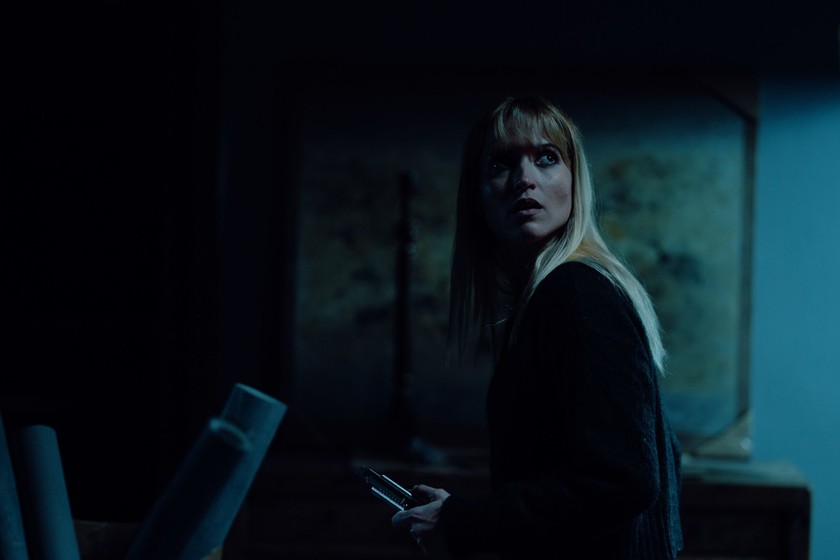
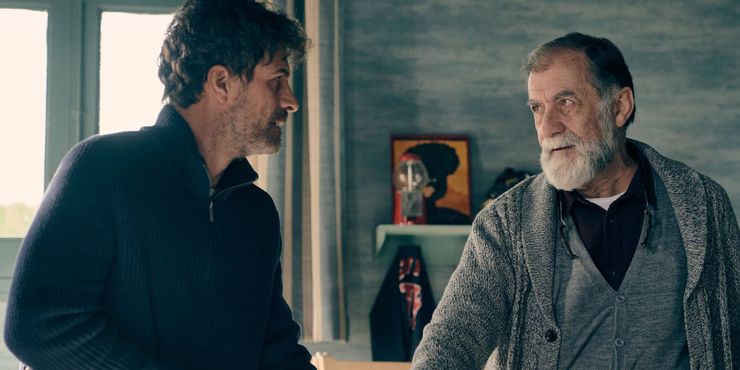
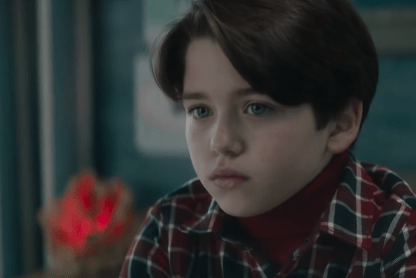
But their angel-faced son Eric (Lucas Blas) is spooked. His toys are switching on by themselves. And he’s hearing things, “voices” in his head, in radios, in the walkie talkie he uses to keep in touch with Dad (Rodolfo Sancho) and Mom (Ana Fernández).
And that shrink (Beatriz Arjona) they’ve called in? She’s not getting answers to her “What do the voices want?” queries.
“I’m not allowed to tell you,” Eric mumbles (in Spanish with English subtitles.
But the static-filled whispers go on, Eric draws pictures of what he hears and the flies — the FLIES! They’re always buzzing around.
When one flies into the psychotherapist’s ear on her static-filled drive home, that’s all she wrote. And she’s just the first grisly fatality in “Voces,” retitled “Don’t Listen” for North American Netflix.
This latest H-Horror (Hispanic Horror) film is a real kitchen-sink ghost story. As in the script throws in everything but the kitchen sink.
Flies, scratchy voices, apparitions, a father and daughter team of scientists investigating that big, old house and…wait for it — The Spanish Inquisition even figures in.
It’s an ungainly affair, not at all a graceful film. We lurch from the kid hearing the voices to a shocking death or two, a brief mention of EVP (Electronic Voice Phenomenon) when the parents see this writer and expert on the subject (Ramón Barea) interviewed on TV and before you know it, he’s been dragged out there, with his sonic engineer daughter (Belén Fabra) for a little infrared camera/microphones all around investigating.
Because Dani (Sancho) is hearing dead people. Does that mean they’re not really dead?
“You’re clinging to something that can’t come back.”
I tend to like haunted house tales built around “investigations” — the “experts” shocked and awed by encountering the reality of the supernatural, often for the first time. But “Don’t Listen” left me cold. And the deeper we get into “explanations” that are more just revelations about the house’s past, the duller it gets.
A surprise twist or two is nice. But the many people with a hand in feeding ideas to screenwriter Santiago Díaz and director Ángel Gómez Hernández missed the obvious and break a couple of cardinal rules of horror.
They set up stakes, and then remove them by killing off somebody we’re supposed to care about in the first act. And then they expect us to shift alliances and root for the investigators, who aren’t remotely as engaging as say the daffy ghost hunters of the “Insidious” movies.
It’s nicely shot and cut together, but the disconnect from the characters makes “Don’t Listen” too easy to tune out.
MPA Rating: TV-MA, graphic violence
Cast: Rodolfo Sancho, Ana Fernández, Ramón Barea, Belén Fabra and Lucas Blas.
Credits: Directed by Ángel Gómez Hernández, script by Santiago Díaz. A Netflix release.
A supernatural thriller also starring writer/director Derek Ting, it’s about ancient “dust” conferring superpowers. And we’ll see exactly what that leads to in January when “Agent Revelation” (formerly titled “Agent II”) comes our way.
Wait, didn’t “Ip Man: The Finale” come out just last year?
Ip Man, that martial artist who never fails, the movie hero with more farewell tours than Cher, is back for “Ip Man : Kung Fu Master,” a solid set of martial arts brawls in a plot stitched together with soggy Ramen noodles.
Whatever resemblance these films have to the real life of “The man who taught Bruce Lee” is somewhat incidental, if not downright accidental. But the real Ip Man (Yip Man, “Man” being his name) was a policeman in Foshan in the 1930s. And that’s the jumping off point for this Dennis To “Fists of Fury.”
The most famous alumnus of the Wing Chun school of kungfu is a captain in the years between the Japanese occupation of Manchuria and the Sino-Japanese War, which began in 1937.
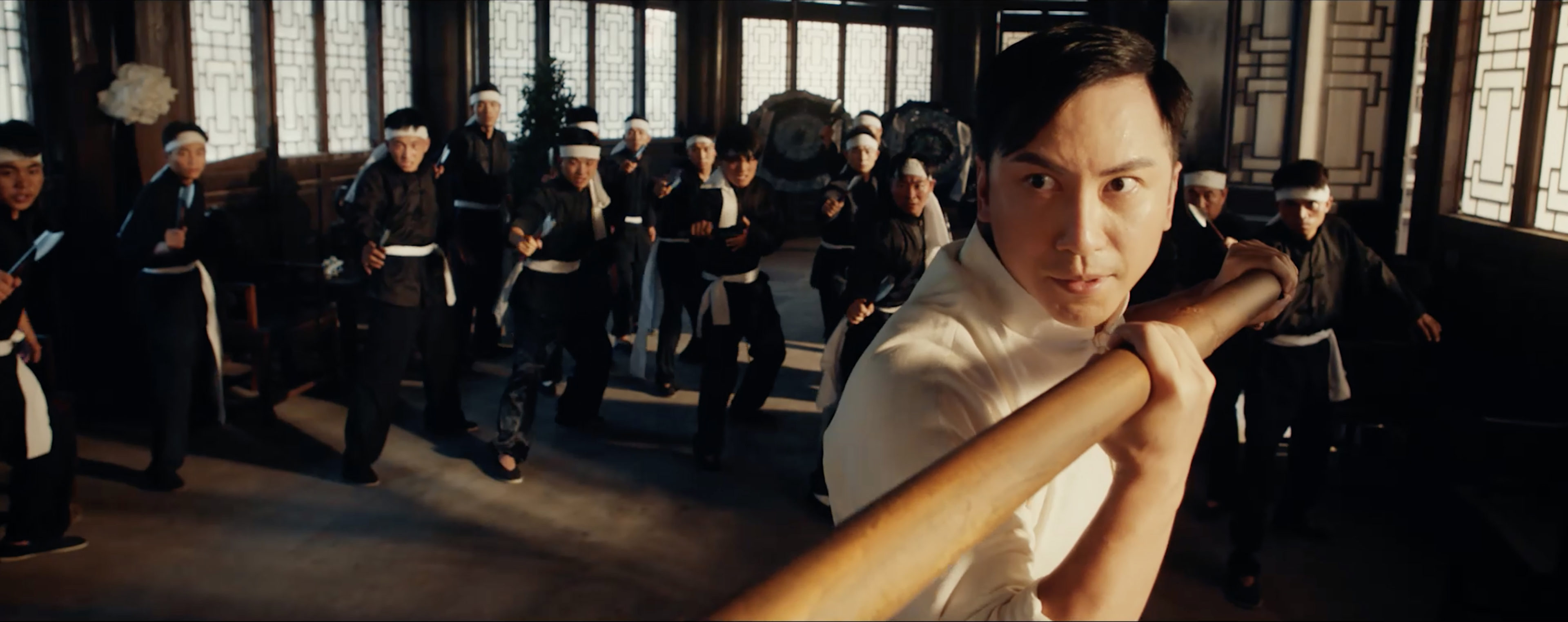
Foshan (just north of Hong Kong) is a city all but run by the Axe Gang and its charismatic, briarwood-pipe smoking leader, San Ye (Michael Wong). Our captain takes his force’s “Protect the people, vanquish crime” motto seriously. There’s nothing for it but for him to march into the courtyard of the multi-story house where San Ye plays Xiangqi with one of his subordinates, and beat the hell out of the hatchet-and-axe-wielding “Axe Gang” minions who don’t want their boss arrested.
Axe murderers vanquished, San Ye comes along quietly. He is described as “honorable,” a “patriot.” He’s just killed somebody who is collaborating with the Japanese, smuggling opium to the masses.
Which is why San Ye dies in custody. The chuckleheaded chief, under the thumb of the Japanese — who haven’t yet invaded — fingers Ip Man for the murder.
Nothing for it but to grab the family, lay low with this mysterious “uncle” and master of Wing Chun (Dongfeng Yue) they just met, conjure up a “black knight” mask and fight the real enemy — the Japanese.
I’ve dropped in on an Ip Man or two over the years of this franchise, which started in 2008. There’s a lot of Chinese jingoism in this incarnation.
“If all Chinese were like you, we’d only be trampled by others,” Ip Man hisses (in Mandarin with English subtitles). “We Chinese would rather die than surrender!”
The Japanese make cartoonish villains, the sorts who show up in bad movies and want to stage a “martial arts…exchange.”
Because “They are not equal to our karate!”
To owes his career to the fact that he looked like martial arts star Donnie Yen, the original “Ip Man.” The replacement Ip is more competent than charismatic.
Like everybody else who works the martial arts movie trade, co-writer/director Li Liming builds his film around set-pieces — axe murderer mayhem, a mid-childbirth (for Ip Man’s wife) throwdown, a “rescue” of Fan Ye’s feisty, kungfu-fighting daughter (Wanliruo Xi) and a Sino-Japanese bout in the ring.
The script’s a mess, the fights solid (a little wirework, not much) and the costumes — black minion-wear, Japanese black leather overcoats (Nazi iconography) — first rate.
Only one moments stands out, though, a little over-the-top Japanese cruelty, deserved, all historical things considered. That involves “executing” a dead man by firing squad, shooting the ropes that hold up his coffin so that it’ll crush a child plucked off the street for this demonstration.
That Sino-Japanese hatred just doesn’t let up. Sadly, the movie’s one long let-down.
MPA Rating: unrated, violence, bloodshed
Cast: Dennis To, Michael Wong, Wanliruo Xi, Dongfeng Yue
Credits: Directed by Li Liming, script by Shi Chingshui and Li Liming. A Magnet release.
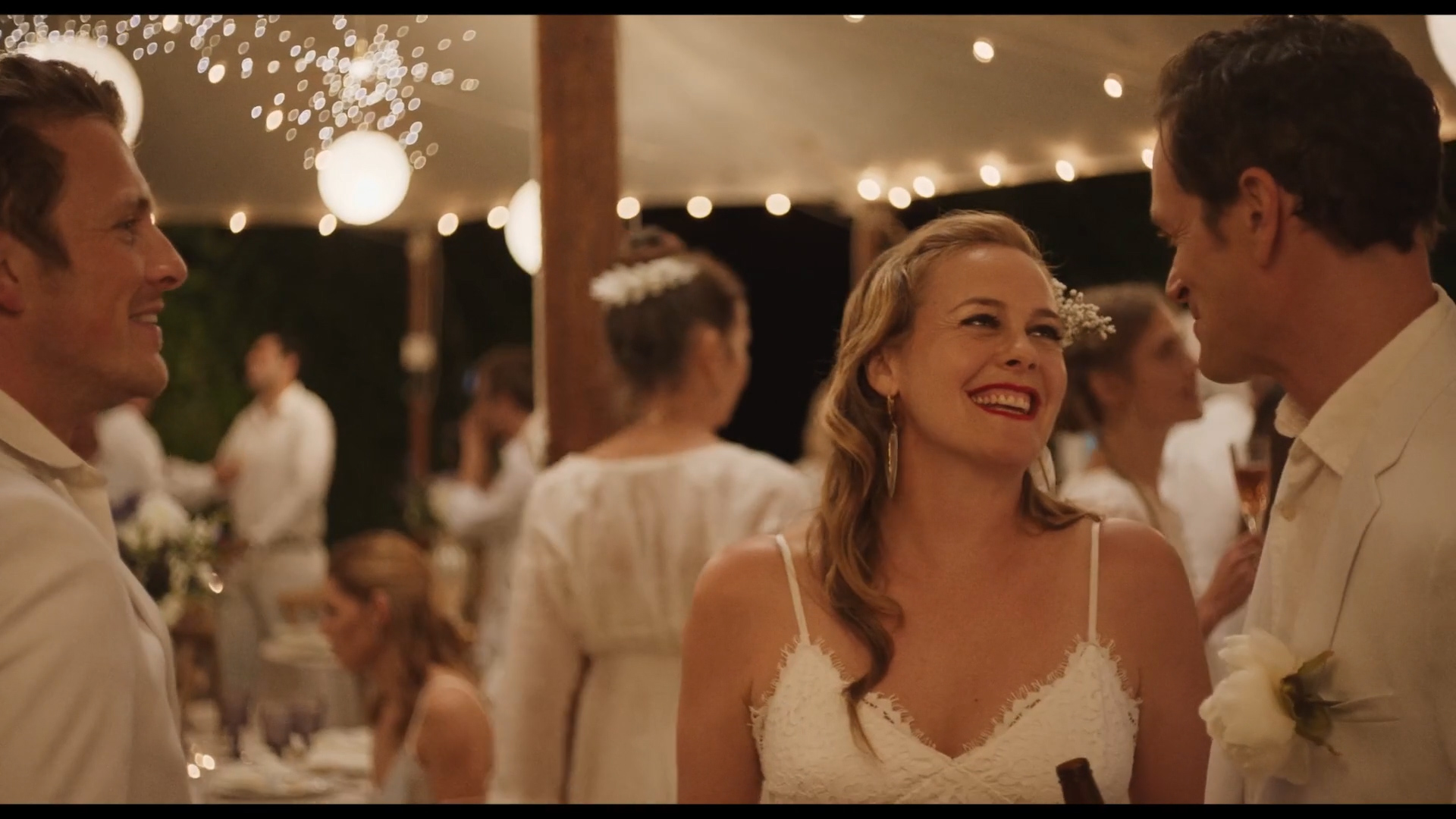
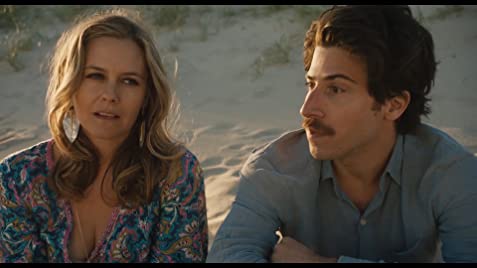
Alicia Silverstone has her best big screen role in ages in “Sister of the Groom,” a “big fat Jewish wedding” comedy in which she has the title role, but which she apparently had to soldier through in the last stages of laryngitis.
She plays Audrey, just turning 40, proud mother of twins, still so embittered by the stomach they left her with ten years before. The mere touch of her round, stretch-marked belly by husband Ethan (Tom Everett Scott) makes her recoil and shriek.
“I HATE MY BODY!”
She’s struggling to relaunch herself as an architect — the career she never quite got off the ground before the babies came. And now she’s got to pour her 40-year-old body into a dress that flatters her for her brothers’ wedding, moved up to fall on “Jewish Valentine’s Day,” the “Holiday of Soulmates.”
She’ll meet rich-developer little brother Liam’s French bride-to-be. Clemence (Mathilde Ollivier) is a willowy, vain demanding pop-star-in-the-making. Liam (Jake Hoffman) is utterly in her thrall, and that’s bound to rub Audrey the wrong way in this wedding at their family’s old home on Long Island, which Liam bought and plans to live in after the wedding, after renovations.
Husband Ethan and Audrey’s dad (Mark Blum) keep the piece as the French folk — Ronald Guttman is father of the bride — prove to be a bit rude, a tad coarse, and unapologetically demanding. There are Israelis on that side of the family, too. Thus, an Israeli rabbi has been flown in.
The house their late mother adored will be renovated, but not via Audrey’s submitted plans.
“We’re thinking, it’s better not working with family.”
As the slights cross into humiliations and the insults spread from the challah to the chuppah, Audrey and Clemence cross the line from putdowns and testy exchanges to open warfare.
The situations set us up for a funnier movie than Amy Miller Gross gets out of this material. Old flames, drugs, ruined dresses all rude new in-laws piled on top of “This is 40” take-stock moments should have produced more laughs. There aren’t a lot of overtly Jewish wedding comedies, so novelty works in Gross’s favor, just not enough.
The assorted heart-to-hearts play well, and Silverstone still shows some (limited) comic chops. But there’s no flow, no scene-topping-scene build-up of laughs, heart, etc.
Having characters watch “My Best Friend’s Wedding” at one point isn’t helpful. Leaving the sole profundity expressed here to die of loneliness is a sin.
“It’s the people who trigger us most who are our greatest teachers.”
Write this one off as a “nice try,” and too bad about the laryngitis Ms. Silverstone.
MPA Rating: R for language, drug use, some sexual content and brief nudity
Cast: Alicia Silverstone, Tom Everett Scott, Mathilde Ollivier, Mark Blum, Jake Hoffman, Ronald Guttman, Julie Engelbrecht, Noah Silver and Charlie Bewley
Credits: Scripted and directed by Amy Miller Gross. A Saban Films release.
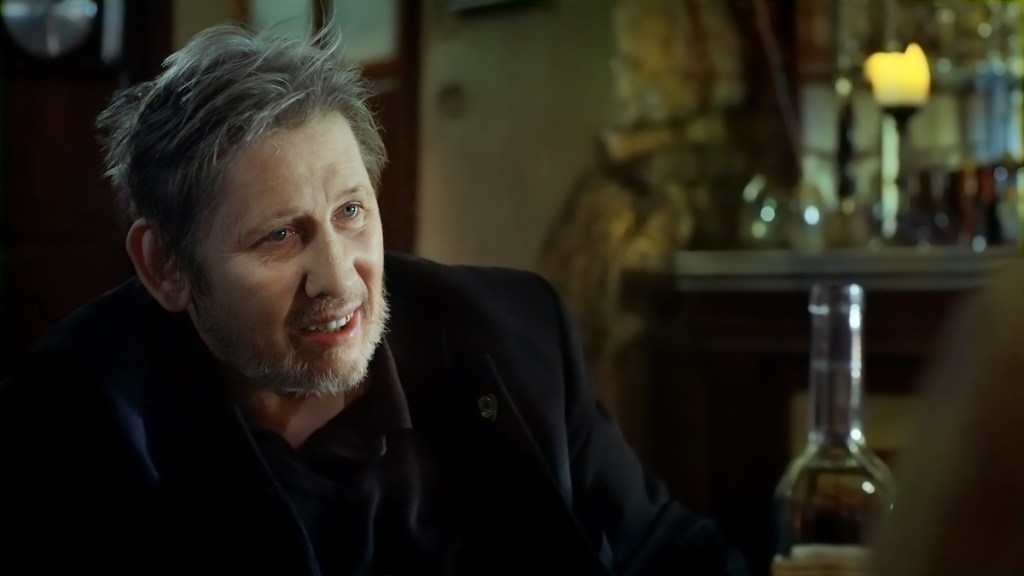
The voice is one long never-sobered-up slur, and the appearance — wheelchair-bound, face in need of spittle, spilled-booze or what-have-you removal — frighteningly like another modern icon.
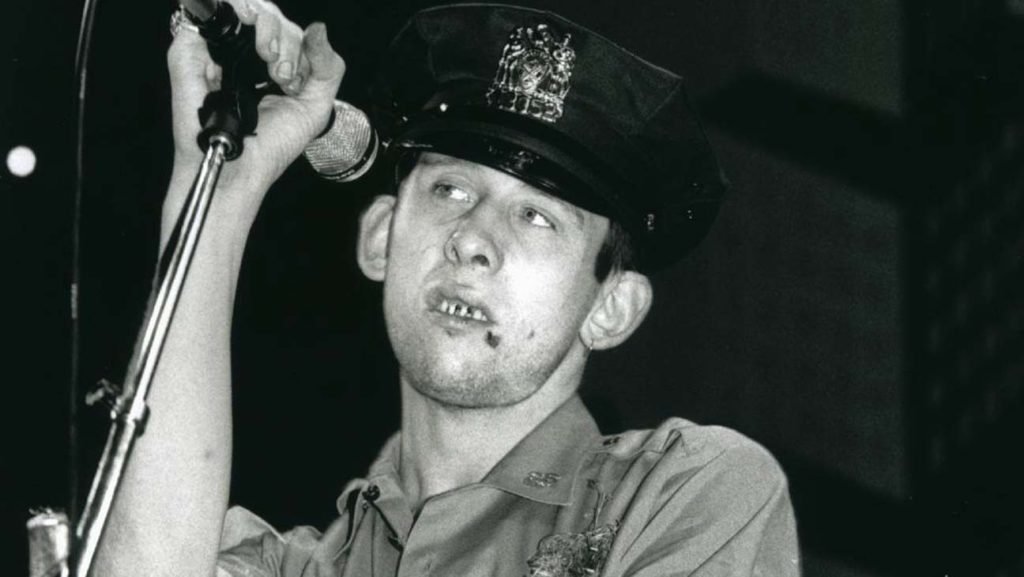
Can it be that Irish singer singer, songwriter Shane MacGowan come has come to a “Stephen Hawking after a bender” stage in his life?
The on-the-nose title of Julien Temple‘s documentary portrait of The Pogues frontman, poet, argument-against-English/Irish dentistry and infamous Tipperary tippler is “Crock of Gold: A Few Rounds with Shane MacGowan.” Temple takes the endless brush-offs, barks of “stop INTERROgatin’ me” and insults. He summons MacGowan friends like Johnny Depp to pitch in and try and coax answers out of the crusty curmudgeon.
That merits a “Y’think I didn’t sleep tru dose ‘Pirates’ movies?” To which Depp, also in his cups, slurs back “You think I didn’t?”
“Yer so cute y’make me SICK, actually!” Roars of hiccuping laugher all round.
Yes, a lot of what we’re hearing is smart, sarcastic, passionate and profound. And a lot of it isn’t about his life’s pursuit of the “Crock’o Gold.” It’s the other kind of “crock.”
And oh my, do they all go through “a few rounds” in every sense of that phrase.
Using animated and live-action flashbacks to MacGowan’s childhood in Tipperary (He was born in the UK to Irish parents and spent his early years on a family farm in Ireland.), an extensive archive of decades of TV interviews, chats with his father Maurice and journalist-sister Siobhan, a Pogues biographer and a bandmate, Temple teases the man’s story out of him over two lively, subtitled (mostly) hours.
From an early age, he was exposed to Irish Nationalist writing, thinking and music. He idolized Brendan Behan and Dan Beard, James Mangan and James Joyce, and NOT W.B. Yeats, Bob Geldolf or Elvis Costello. Oh no.
He claims his first nervous breakdown hit him at age six and his first beers and whiskeys, offered by the adults surrounding him, at three.
Mental institutions, dry-outs, he claimed to be “sending up the stereotype” of the tipsy “Paddy” when he was the staggering, slurring sometimes-brawling embodiment of it.
“The oldsters thought, ‘If ye give’em enough when they’re young, they won’t get out of hand with it when they’re older.'”
And yet he was “The Man Who Saved Irish Music,” the one performer to give its sentimental “diddley aye” ballads and jigs “a kick in the arse.”
He had to go back to Britain to reinvent the sound, take up the cause of Irish suffering and the subjugation of Northern Ireland, and find his way back to the faith of his childhood.
“Roman Catholic mass is one the most beautiful experiences a human being can be subjected to.”
He was an avid punk fan and published a fanzine (“Bandage”) before writing songs and taking the stage with The Pogues because “in punk, it didn’t matter if you were ugly.”
MacGowan launches into long, informed discourses on Irish history and the Irish diaspora, noting “There are 45 million people in America who should still be in Ireland.”
And he freely admits that the thing he loves about the Irish poets and writers he idolizes is partly the work of the likes of Flann O’Brien, and partly their fearless/careless way with whiskey.
Temple, who’>s been connected to film and the punk scene since the ’70s, gets what he can out of MacGowan, and leans on older interviews and others to fill in the missing bits, to place the man on the pedestal earned by his body of work — not just the sentimental, biting hits such as “Fairytale of New York” or “And the Band Played Waltzing Matilda.”
Temple’s made a fascinating film that sets the record straight — in a lot of slurred words — about MacGowan while he’s still able to do it. Because, let’s be blunt, he’s in pretty rough shape. Claims on his Wikipedia page that his wife Victoria makes about his sobriety seem laughable when we see her sitting in as he knocks a few back with Depp.
And if Temple needs an idea for his next doc, he should re-watch “Crock of Gold.” There’s a fascinating psychological profile of Johnny Depp’s fanboy efforts to become drinking buddies with famous drunks, punks and journalists alike, and then produce docs about them. A Temple “INTERRogation” might do the newly-canceled star a world of good, at this point.
Cast: Shane MacGowan, Johnny Depp, Siobhan MacGowan, Gerry Adams, Victoria Mark Clarke, Ann Scanlon and Maurice Mac
Credits: Written and directed by Julien Temple. A Magnolia release.
Running time: 2:04
Posted inReviews, previews, profiles and movie news|Comments Off on Documentary Review — Slushed, sauced and sarcastic — “Crock of Gold: A Few Rounds with Shane MacGowan”
Every year a Top Ten film list is an exercise in memory, judgement calls and hair-splitting. A critic wanders the wilderness of four cinematic seasons like Diogones with his ancient Greek lantern, searching for “an honest man,” or in our case, a worthy film — ten of them.
A plague year, where the bigger news was in films and festivals canceled, postponed, “buzz” reduced to a more widely scattered collection of isolated critics (less “critical mass” than usual) and studios staring at the futility of even bothering to push and promote “for your consideration” makes 2020 in “great films” feel like 2020 in sports — an asterisk season (Sorry Lebron, Dodgers, et al).
My first thought when asked about 2020 by that first friend and then second colleague wondering “What’s on your list?” was why bother?
A big reason to remember a film is the experience of watching it, and being in a cinema with an audience is a bigger part of that than one realizes. I remember seeing “Tenet” in a Tampa cineplex, and other than that…
I recall tiny IFC dominating the summer box office with titles that just enough people ventured into theaters to see to make them worth releasing, the no-budget “Capone” with Tom Hardy that gained much needed attention simply every major picture abandoned May, and the rest is mostly a blur of home-screened cinema — studio releases, Netflix, Hulu, Film Movement et al kind of swirling into a blur.
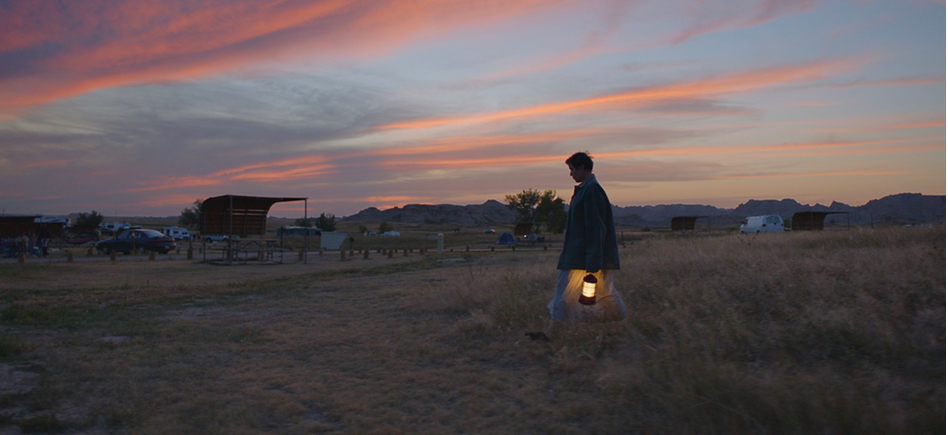
But seeing the image of Frances McDormand’s “Fern” with her own lantern, looking for a life beyond homelessness “on the road” in “Nomadland” made me dig back and realize there were worthies rolling out in a variety of ways all year long, from “Saint Frances” to “News of the World,” “First Cow” to “Billie,” “Invisible Man” to “Ma Rainey’s Black Bottom.”
So let’s have a look, shall we?
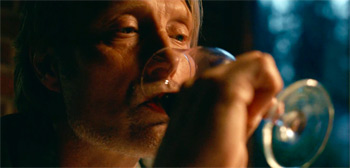
“Another Round” reteams Danish director Thomas Vinterberg with his “Hunt” muse, Mads Mikkelson. It’s a beautifully-acted tale of friends facing a loss of lust for life, middle-aged sadness, and it’s also an almost jarring take on alcohol, its use and yes benefits — and the latent alcoholism that is at the risky end of that road. Mikkelson even dances like everybody’s watching but he’s too tipsy of exultant to care.
“The Father”features Anthony Hopkins in a wrenchingly emotional film of a pla, an old man facing the dementia that makes him paranoid, panicked and confused. Is Olivia Colman the daughter trying to get him used to the idea of moving into a “home,” or Olivia Williams? French playwright and director Florian Zeller shows us how the old man sees things, and the quiet heartbreak that witnessing this in a loved one has on family.
“Wolfwalkers” is another magical Irish animation from Tomm Moore, who brought us “The Secret of Kells.” The best animated film of 2020 is a Cromwellian period piece about English dominance forcing a clearing of forests, clearing them of wolves as a part of that, and the shapeshifting Irish forest creatures who might have a say in all that. Gorgeous. Not giving this film the Oscar would be a bigger crime than the robbery perpetrated on “Kells.”
“Beasts Clawing at Straws” is the year’s best thriller, a smart, topical and violent Korean tale so complicated you almost have to become a movie critic to follow it, get into and “just go with it.” “Take notes,” in other words. Mobsters and femme fatales, pain and desire and loneliness and being broke punch you in the face and slap you around in Kim Yong-hoon’s breakout film.
“Red, White and Wasted” is the stand-out doc in a year of dazzling documentaries. Why? It’s about America today, a MAGA era portrait of Orlando area dead-enders and the ways they live, work and distract themselves from lives of noisy, not quiet, desperation. Sam Jones and Andrei Bowden Schwartz embed with their subjects, show us their mores, trials and troubles, the careless lives of people who don’t have enough going for them to have a f— to give. Every weekend, they gather to drive their modified beat-up Jeeps and pickups through mud, wave their Confederate flags and drink, talk treason and mate.
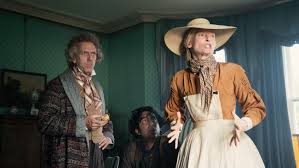
“The Personal History of David Copperfield”is that rarest of birds in a sad, stressful year — a couple of hours of giddy Dickensian escape. Armando Ianucci’s take on a Charles Dickens classic revels in wordplay, knockabout silliness and intricate plotting. He’s made a film that isn’t just a Dickens adaptation, but an uproarious appreciation of the entertainer and Original Social Justice Warrior Dickens the writer became. Stunningly funny all-star cast, sumptuous locations. Glorious.
“Nomadland” is another terrific take on “Where We Are Now,” an understated drama about moving into a van and living a migrant life when all the other options run out. Frances McDormand and David Strathairn are perfectly cast as modern day Okies — “Grapes of Wrath” nomads who sleep wherever they can park, scrape by and rationalize their experience with “freedom” and “self-sufficiency” and “seeing America” bromides. Chloé Zhao’s film is of its time and timeless — a story of a broke subculture coping in ways uniquely American.
“Bull” is another intimate story of “forgotten” America, of rodeo clowns and trailer parks, manual labor that you’re aging out of doing and a teenage girl who sees even that limited life as a vast improvement in her prospects. Flawless, lived-in performances by Rob Morgan and Amber Havard make it a flesh-and-blood walk-a-mile-in-their-shoes experience. Annie Silverstein has made what is essentially this year’s “The Rider,” the film that “announced” Chloé Zhao and launched her into “Nomadland.”
“Emma” showcases new “It Girl” Anya Taylor-Joy (“The Queen’s Gambit”) in a timelessly silly, sexy and smart Jane Austen adaptation that reminds us that there’s no such thing as “Too Much Jane.” Among the year’s many splashy debuts by female filmmakers, Autumn De Wilde’s sunny revisiting of Austen’s pluckiest, most empowered heroine stands out. Nothing beats a good period piece for escapist fun.
“News of the World” is, yes, another period piece and another movie about “Who we are now.” This sublime Paul Greengrass Western parable is built around Hollywood’s EveryAmerican, Tom Hanks. It parks him in post-Civil War Texas, an ex-Confederate officer who makes a living “performing” the news to villages and small towns where newspapers are rare. As he tries to escort a freed hostage girl raised by the Kiowa through a racist, unreconstructed rural America, he comes to see journalism’s place in the task of healing and reforming the sometimes willfully misguided, and the unrepentant bullies who like them that way. Lovely, understated, cutting and poignant.
————————————————————————————————————————————–
As the ranks of reviewers have swelled in the internet era, most of these lists have taken on a gutless “Top 23…plus here’s nine more” cast. And while there’s no need to stick to a hidebound “ten,” that’s sort of the whole bloody point, Oscar nominee inflation or not.
But most critics who compile such lists cheat by piling on “I also considered” or “also loved” strings of titles at the end, and I’m no better.
I could and will do an entire Top Ten documentaries, because from “Zappa” to “Coded Bias,” “The Social Dilemma” to “Desert One” and “Billie,” there are scores of terrific ones this year.
Films I’d love to have squeezed into this Top Ten include Sorkin’s “Chicago Seven,” the Gloria Steinem biopic “The Glorias,” “The Call” (best horror film), “Mosul,” “Two of Us,” “The Devil to Pay,” and several others.
Considering the sort of annus horribilis 2020 has been, one for the record books, I for one have been grateful for the escape of movies, even if I couldn’t see most of them in my favorite multiplex. I hope you found a few to distract yourself as well.
It’s about time the French got around to their own “Step Up” movie. Not that they credited the American creators of those movies or built “Break” to be a part of what we’d call the “Step Up Universe.”
So here it is, “Break,” aka “Step Up: Saint Denis,” a break-dancing/dance battle movie with little dramatic embellishments, good dance scenes, including aerial work (Spanish Web, etc.), and an endlessly-recycled “plot” that exists solely to get us to the next dance, set up the quarreling dancers/soon-to-be-lovers.
Amazingly, seven writers want a piece of the credit for that.
Director and co-writer Marc Fouchard, making his feature film debut, hits us with his first interesting wrinkle right at the start. Two climbers, hanging from lines, “dance” over, with, and around each other on the wall of an abandoned French high rise.
But they’re better dancers than climbers. Somebody attached their lines to something rust, and rust gives away. Luce (Sabrina Ouazani) breaks loose, and partner Julien (Maxime Pambet) can’t hold her to keep her from falling.
But she lives. We see in the neck brace in the hospital. And when she gets out, she holds no grudge. Lover/partner and guy who dropped her Julien is still in the picture. There’s this big competition coming up, after all.
But Luce has this idea that her biological father, whom she’s never met, visited her while she was unconscious. Her mother (Camille Japy) takes a “neither confirm or deny” stance, and throws in “Let’s have a little getaway to Brittany!”
Luce steals Mom’s phone and figures this out. Years of deception and lying, undone by one call from a Hotel Monte Carlo. But it’s not in Monaco. Oh no. It’s in the “bad side of town,” Saint Denis. Luce blows off Brittany, gives Mom a “got to study” cover story and sets out to check in at the place — a dump upstairs from a cafe — and check out the clientele to see which one might be her Dad.
The guy cleaning the cafe turns her head with his “dance like nobody is watching you” routine. He is Vincent, a rougher version of lithe, facially-stubbled Julien. No kidding, they could be relatives.
As Luce snoops around — the hotel has a sketchy office where rehabilitated convicts check in and get chewed out — it’s Vincent (Kevin Mischel) intrigues her. First he denies that she saw him dancing, then he allows that “there are dancers all around here” and finally he admits “I quit dancing.”
What is his secret? When he suggests Luce check out this dance “school” in a former factory space, she drags Julien along for “lessons” that basically amount to watching how they break in Saint-Denis.
Semi-colorful characters know Vincent’s “secret,” and don’t give it away, among them the guy in the wheelchair, Malik (Slimane Nebchi), who knows French breakdancing history — a story about US breakdancing videotapes making it to France, playing back too fast thus the “faster” French dancing that we see in the film. The wild-haired Wiki (Salomon Azaro) earned his nickname for being a repository of every breakdance move known to Wikipedia.
There are a couple of moments where Luce lets us see the fear of re-injury, either through the neck-straining lifts off the floor or climbing, Cirque du Soleil fashion, up the Spanish Web for aerial routines.
There’s a little “This guy must be my real father” searching.
The off-hours “dance battle” scene, competitions that would ready Luce for her BIG competition, are French language (with English subtitles) versions of every dance battle movie ever.
“That’s ‘battle.’ You either get up or you GIVE up!”
And of course, there’s realizing the dude who dropped you needs to be dropped so that Luce and Vincent can uh, “heal” each other. Something along those lines.
This isn’t a script. It’s a very popular, over-used screen plot app.
Ouazani is an arresting presence, believable as the object of working class Saint Denis objectification, and as somebody tough enough to fight her own #MeToo battles.
Mischel is OK, Pambet basically identical in looks and performance — both playing variations of a tad “put out” by Luce’s behavior.
The dance, with its aerial component, is lovely. But it isn’t enough to render a movie with no surprises into something worth your time.
MPA Rating: TV-MA, sex, profanity
Cast: Sabrina Ouazani, Kevin Mischel, Hassam Ghancy, Maxime Pambet, Camille Japy and Salomon Azaro
Credits: Directed by Marc Fouchard script by Marc Fouchard and François-Régis Jeanne. A Netflix release.
“Hunter Hunter” is a nasty little piece of work, a thriller that points us in obvious directions and takes its time getting to its destination.
But nasty. If the object of horror is “to horrify,” this predators-become-prey tale delivers and finishes with a flourish you won’t soon forget.
Devon Sawa and Camille Sullivan play parents/partners who’ve made a life in the woods of Manitoba circa 1990. Joe supports them by trapping, and he’s teaching what he knows of the woods and the hunt to their twelve year old daughter Renee (Summer H. Howell).
But one morning walking the trap line, they find a leg — all that’s left of the raccoon the spring trap caught.
“It’s back.” Renee says what Joe won’t say. A wolf that stalked them some while back must have returned. Anne has to drag it out of him when they get back to the cabin.
“It’s attracted to us,” she decides. “We’re its steady food supply,” because they provide the trapped prey and their cabin full of fleshy white meat humans. She’s anxious to get Fish & Wildlife on the case, but Joe — third generation trapper, on this land which they may not have a clear claim to,and macho man of the forest, won’t hear of it.
“Fish cops gonna do what I can’t?”
He will pack up traps and his scoped hunting rifle, read the signs and hunt the hunter. No daughter tag-along this time.
“First get used to animals that run,” he counsels. “Then you can hunt the ones that chase!”
Writer-director Shawn Linden (“The Good Lie”) deftly lays out the dynamics of the family, Anne’s realization that “the world has passed us” and their way of living by. She can’t feed her child, he can’t support them on the falling price of pelts, and a trip to “town” has her pining over real estate ads and envying normal families walking their kids to the school bus.
Joe has to lie about dangers that they face just to keep from losing the argument and the only way of life he knows. What do you think he does when he gets a shot at their stalker, only to see what the canine was chowing down on when he missed?
It’s a human forearm and hand.
Linden’s separated his protagonists. He’s raised the stakes, with Dad out on a stalk that just turned deadlier. And Anne can’t even fetch water from the river without a justifiable freak-out over the noises she hears in the underbrush.
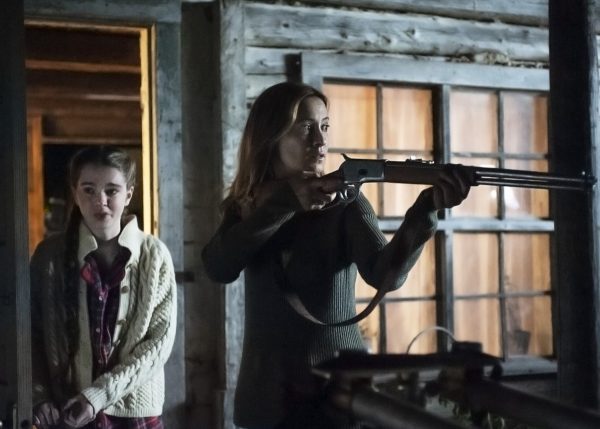
Renee may be her Daddy’s girl and know how to shoot his old lever-action Winchester .22. But she’s still a child, and children are prone to panic and scream as they do.
And like Mom, Renee has reason enough to scream soon enough.
Linden addresses the cruelty implicit in trapping, the suffering it inflicts and how kill-your-own-meat isn’t for every sensibility. The local wildlife officers (Lauren Cochrane and Gabriel Daniels) are more interested in what this family is doing out in this dense forest than in the wolf Anne says they’re threatened by.
Linden also makes the most of the “period piece” aspect of all this. “Sat phones” haven’t yet been displaced by cell phones, “yuppies” are invading the wilderness — and endangering the wildlife with their clueless ways. There’s no calling for help out here.
And something that isn’t a wolf has come into these woods and killed, so Joe, “stronger than any animal in this forest,” had better prove it.
“Final Destination” and TV’s “Somewhere Between” alumnus Sawa is quite convincing at the primitive man of the woods, confident in his skills, choosing his wolf-and-other-killers hunting gear — traps — with care.
Sullivan (“The Disappearance”) gets across the callouses one has to develop to live a life this hard and brutal, but also the more sensitive mother she always has to hide.
And Linden, while hard-pressed to take this anywhere we don’t see from a mile off, manages several tense moments and scenes with real suspense, before delivering a finale that’s a grim, teeth-gritting corker.
MPA Rating: unrated, violence, profanity
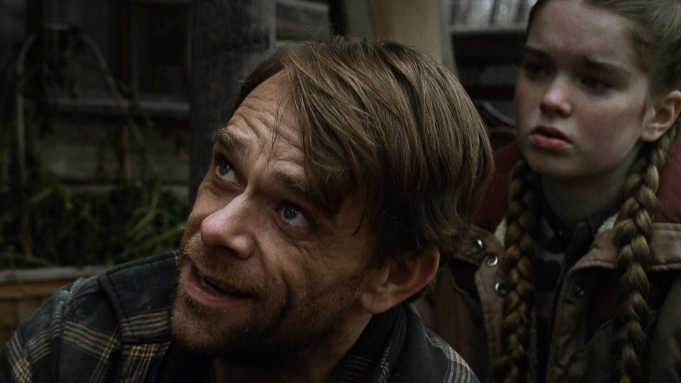
Cast: Camille Sullivan, Summer H. Howell, Devon Sawa, Nick Stahl, Lauren Cochrane and Gabriel Daniels
Credits: Scripted and directed by Shawn Linden. An IFC Midnight release.