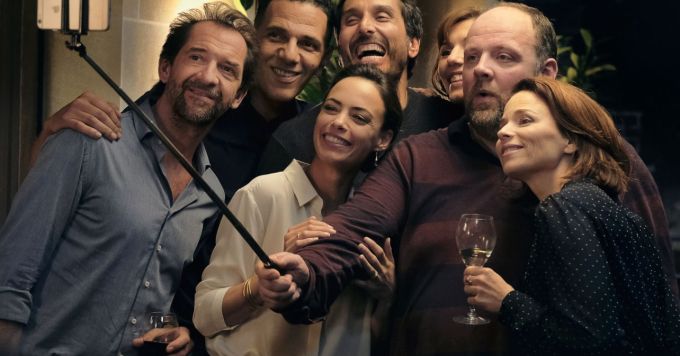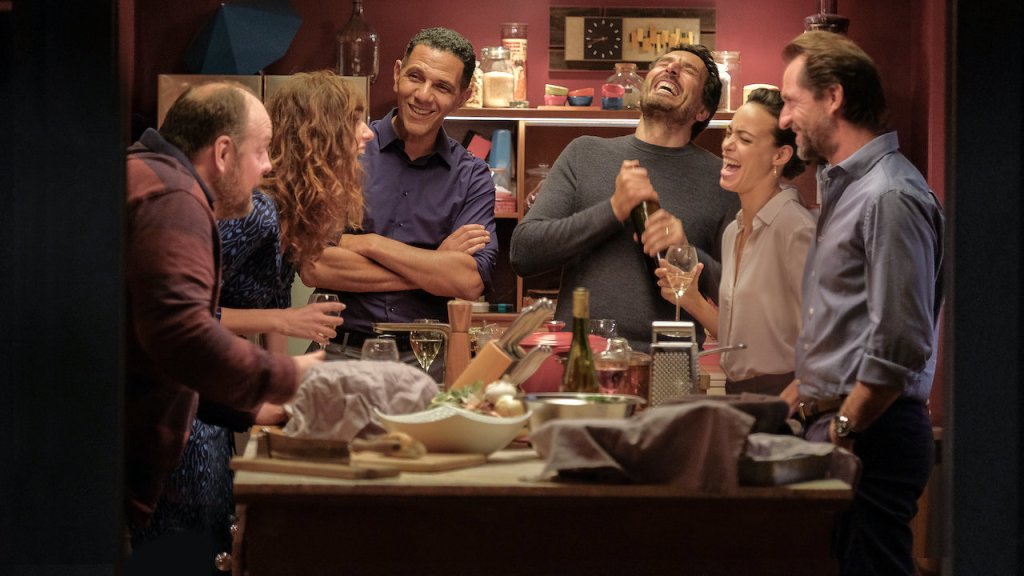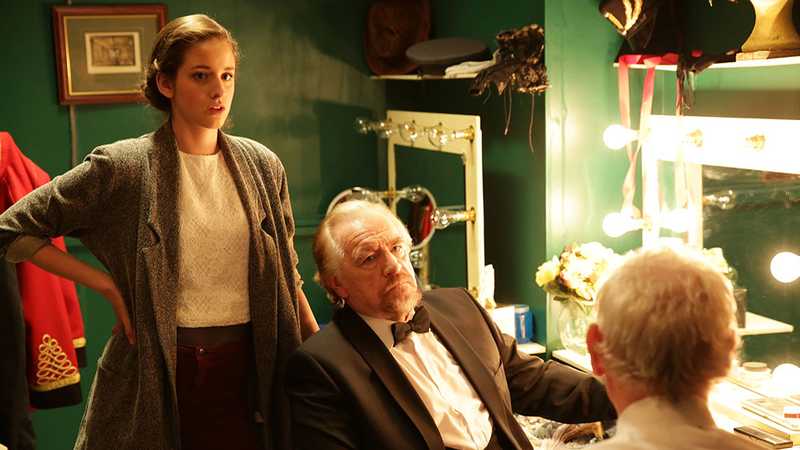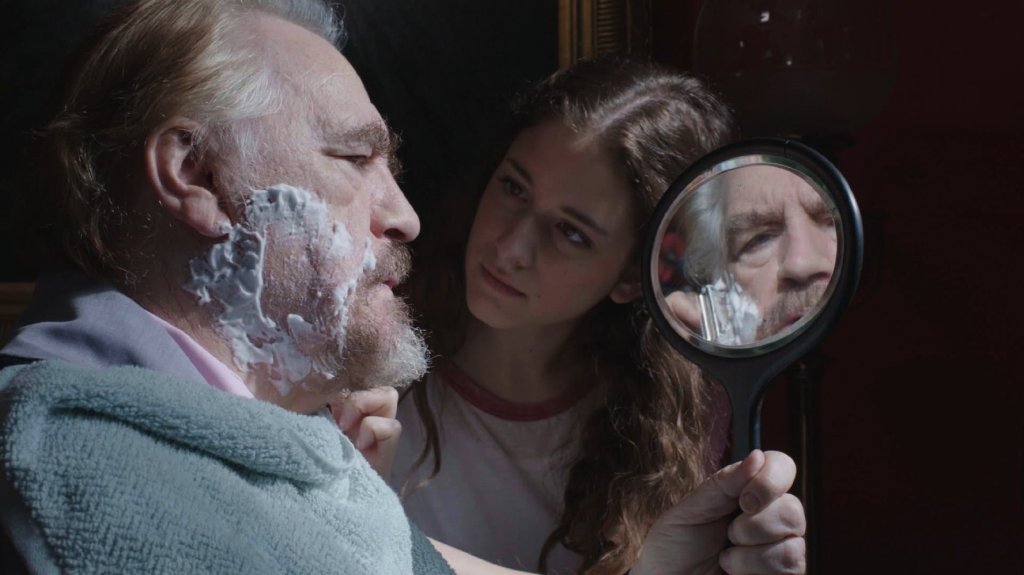


An Orlando-made dramedy that takes us back to the Hurricane Charley hit starring John Amos is the opening night premiere. That’s the trailer to “Because of Charley” above.
Karen Allen and Isabella Rosellini will appear, via Zoom, for A & As after “Starman” and “Blue Velvet,” respectively.
The 2021 edition of the Florida Film Festival will feature 161 films from 31 countries, movies shown at Maitland’s Enzian theater or streaming, with midnight movies, food films, music films — everything you love about film festivals, tailored to your COVID-19 precautions.
Our world isn’t “back to normal,” but here’s a sign we’re getting there.
I stumbled into “detectorists” when it hit Netflix some years back. But the streaming service had just the first two seasons of it, and while I binged it and absolutely adored it, I never got around to writing about it.
Coming back to the series after a third season of it brought things to a nice conclusion just renews its charms and makes the case for the best British “limited comedy series” since “Fawlty Towers,” or “Black Adder.” The best series are the ones whose creators know when they’ve done enough, with just enough episodes polished to as near perfection as they can make them to make them sit on the memory forever and ever.
Mackenzie Crook was probably best-known in America for being — along with short, balding Lee Arenberg — the scrawny half of Pintel and Ragetti, memorable recurring scurvy dogs in the “Pirates of the Caribbean” films.
But the veteran British comic actor and sometime writer really made his mark when he conjured up a quintessentially English comedy about the oddballs who put on headphones, sweep the ground and “hunt for treasure” or at least antiquities in the fields, hills and forests of Blighty.
It’s a forlorn farce of quiet reserve and delicious melancholy, a satire of a nation of “hobbyists” and a twee spoof of not-quite-toxic male bonding at its most elemental. There’s romance and reward, rivalry and secrecy, but most of all loneliness in these 19 episodes about the lives and metal-detecting passions of our two heroes, Andy (Crook) and Lance.
Crook created the series as a star vehicle for himself, and wrote most of the episodes. But as good as he is in it, and as droll as the writing always is, his master strokes are in casting, an entire “Island of Misfit Toys” of English eccentrics, beginning with Andy’s foil, Lance. If there is a British character actor who less embodies anyone you ever knew with the dashing moniker “Lance,” it is Toby Jones.
Jones has played Marvel villains and MI6 functionaries (“Tinker Tailor Soldier Spy”), professors, diplomats and Truman Capote. “Loneliness” comes through in much of his work, with hints of wit and resentment that the tall guy with more hair always “gets the girl.”
That’s Lance in “detectorists,” a quiet working-class fussbudget who drives a forklift by day, immerses himself in all sorts of nerd arcana, motors a 1978 Triumph TR-7 constantly in need of a tune-up, reads and watches quiz shows by night and gears-up for metal detecting with Andy on weekends.
They chat about history, who did what on which quiz show, and women. Andy lives with smart, sarcastic school teacher Becky (Rachael Stirling) and is finishing up archaeology studies, but is every bit as hapless as Lance when it comes to the fairer sex.
Lance is divorced from the flighty Maggie (Lucy Benjamin, daft and deliciously hateful here), who lives with the man she left him for and still uses Lance without a hint of pity.
But Lance, a bit of a poet and a stumbling mandolinist, is the one who sums up their quirky “hobby,” which they refuse to let anyone call “treasure hunting.”
“It’s the closest you’ll ever get to time travel.”
Through the series, with its romantic ups and downs and many near-misses and triumphs, we meet “detectorists” even more eccentric than Lance and Andy. There’s the president of their Danebury Metal Detecting Club,Terry (Gerald Horan, a delight) and the screwy, literate, might-have-buried-his-wife-in-the-paddock farmer Bishop (David Stern) whose land they’re sure has a Saxon king’s burial ship somewhere on it.
Then there are the rivals, the mirror-image pretentious nerds (Simon Farnaby, Paul Casar) they label “Simon & Garfunkel” for obvious reasons — riddling every conversation with “Bridge Over Troubled Water” and “Mrs. Robinson” and “Scarborough Fair” cracks — which neither academic twit gets.
Series creator Crook –a bug-eyed, hangdog sightgag — layers in metal detecting jargon, makes fun of the junk that’s mostly what they turn up (“buttons” through history is a recurring joke) and teases us with what they’re just missing — the “Saxon hoard” of coins and jewels just beyond their detectors’ range, the outline of the Saxon ship still visible in the grass growth, a Viking-era jeweled piece that would be any British detectorist’s Holy Grail.
“The Holy Grail is the Holy Grail of treasure hunting.”
“If you’re going to be pedantic the Ark of the Covenant is the Holy Grail.”
The “heroes” are badly-flawed, socially-awkward blokes who tamp down their one-upsmanship when they’re together, are secretive and duplicitous with rivals and the women in their lives, but never to each other. And underscoring every episode is a Celtic folk lament by singer songwriter Johnny Flynn, “I’llllll be yer TREA-aaaa-sure.”
There are moments in this understated show that approach the sublime. “detectorists” is by turns mournful and sad, wistful funny and, by default “twee.”
It’s quirky series with dry jokes, simple running gags, simpler sight gags and a sense of English creature comforts and sentimental modesty about it. The resigned celebratory suggestion after finding a “hammered” (hand-minted English coins of yore) — “The pub?” A simple, comfy reply — “Go on, then.”
If you’re treasure hunting for a show that’s short, bittersweet, droll and ironic, that knows when to make a bow and exit, you could do a lot worse than “detectorists.”
MPA Rating: TV-14, profanity
Cast: Toby Jones, Mackenzie Crook, Rachael Stirling, Gerald Horan, Simon Farnaby, Aimee-Ffion Edwards, Paul Casar, Lucy Benjamin, David Stern and Diana Rigg.
Credits: Created by Mackenzie Crook. A BBC4 production on Roku, Apple+, Amazon, etc.
The first hurdle one must clear is imagining a universe in which a four hour recut of “Justice League” needs to exist. But within the infinity of the multiverse, that’s a moot point.
“Zack Snyder’s ‘Justice League'” is a detailed, back-storied origin story with another origin story built in, an opera in effects and comic book movie conflict. It is slow — even when it isn’t playing out in slow motion.
Ponderous? Sure. Bloated? Oh yeah.
But one thing that’s obvious with Zack Snyder’s “finish the movie I started” version of a project that tragedy saw him turn over to jocular Joss Whedon. As “content,” this is pure gold, an HBO Max windfall. And that’s the perfect place to experience it, a “Godfather Saga” or “Lord of the Rings” or “Harry Potter” weekend but for the Superman/Batman/Wonder Woman/Batman and Flash set.
It’s been three and a half years since the Whedon-finished streamlined “Justice League.” I had to glance back over my review of that one to see why so much of this new version seemed different. Because it is.
Whedon’s lighter touch is mostly gone, along with his two hour run time and his reducing the role of Cyborg, which infuriated actor Ray Fisher (understandably). The digital effects have been cleaned up, with a shiny, bristling Steppenwolf (voiced/mo-capped by Ciaran Hinds) now a visually formidable foe.
But thank heaven for Ezra Miller‘s Flash, who has a romantic white knight moment (with Kiersey Clemons) to rival the best emotional punches Christopher Reeve landed many “Supermen” ago.
“Wonder Woman, think she’d ever go for a younger guy?”
“She’s 5000 years old, Barry. They’re ALL younger guys.”
All this gloom and murk and exposition, here’s a rare hint of comic book comedy.
Gal Gadot‘s Wonder Woman is more badass than she’s been in her stand-alone movies, Jason Mamoa makes the most of his few chances to show brawny wit, Ben Affleck seems almost droll as Batman this time out.
“This is Alfred…I work for him.”
Little dollops of heart intrude on the effects, battle royales, epic digital sets and godlike alien staff meetings between Steppenwolf and his bosses, DeSaad and Darkseid (Did James Cameron name those two?).
Amy Adams‘ Lois Lane and Diane Lane‘s Martha Kent sell the sadness of the loss of Clark Kent, Henry Cavill, Amber Heard, Billy Crudup (Flash’s dad) and Joe Morton (“father twice over” to Cyborg) make decent impressions.
Of course, there are too many characters to track and do justice to, too much clutter in the derivative and silly story about aliens invading — Steppenwolf and his ParaDemons minions (Cameron could’ve named them, too.) — in search of Horcruxes, Infinity Stones or uh, “Mother Stones” that will allow universal omnipotence and an end to life on Earth.
Cyborg’s origin story puts him front and center in this, reducing a lot of others such as J.K. Simmons (Commissioner Gordon), Jesse Eisenberg (Lex Luthor), the voices of “Superman’s” father figures, Joe Manganiello and Heard to glorified cameos which show up, all the way through the “epilogue.”
Yes, this beast has big, long “chapters” to it. And an epilogue.
All of which add up to a “movie” that’s a lot closer to “content” than to cinematic art, or a movie that inspires, thrills, touches or moves, or a “movie” in the sense of a coherent story told with urgency.
But it’s often gorgeous to look at, and taken as a transitional film, one that moves this universe onto a streaming platform that needs it and the proper home for a filmmaker like Snyder (a thrilling “300,” a passable “Watchmen,” a decent zombie movie and…all sorts of this), “Zack Snyder’s ‘Justice League'” services the fans and just as importantly, the investors, who also “can’t get enough” of these characters, no matter what universe they occupy.
MPA Rating: R for violence and some language
Cast: Ben Affleck, Gal Gadot, Jason Momoa, Amy Adams, Ray Fisher, Diane Lane, Connie Nielsen, Joe Morton, Jeremy Irons, J.K. Simmons and Henry Cavill.
Credits: Directed by Zack Snyder, script by Chris Terrio. A Warner Brothers/HBO Max release.
The first words that come to mind when we think of the late Audrey Hepburn probably do her a grave disservice.
As the film critic Molly Haskell argues in the new documentary about Hepburn, “chic” and “fashion icon” and any word associated with her extraordinary appearance — the eternal Euro-gamine — might bring her instantly to mind. But “she so exceeds” mere descriptors like that, even if that’s how we remember her.
Helena Coan’s “Audrey” is a lovely gloss on a lovely, but too-short and too-troubled life, one of the last legends created in Golden Age of Hollywood studios (Paramount), an actress whose mystique outlived her and whose decade of charity work ripples ever outward, nearly 30 years after her death.
As great artists like to trace their training to this teacher who learned from Liszt or that one who studied under Stanislavsky, most famous UNICEF children’s charity ambassadors trace their involvement back to Hepburn — either directly, like her recruits Peter Ustinov and Roger Moore, or indirectly a generation later (Jolie, etc).
In her own words — generously sampled here in voice-over from radio, TV and filmed interviews — Hepburn reminds us that her great love, her first love was dance. Her realizing that World War II had taken her prima ballerina dream from her, then thinking “I was never very good” when she transitioned to musical theater, we get a hint of just how fortunate she and film fans are.
No mere dancer and few dancing actresses can make any great claim of fame. Hepburn, who danced in a few films in her time, became immortal through cinema, an actress with a dancer’s lightness and grace.
Friends, family, even descendants who barely knew her (and descendants of those who photographed her) sing her praises in “Audrey.” Colleagues such as Richard Dreyfuss (“Always”) and Peter Bogdanovich (“They All Laughed” speak glowingly of her work, and no-nonsense critic Haskell is here to state the obvious.
“You couldn’t take your eyes off of her” in person or on the screen.
Coan’s movie is most reliant on family and mid to late life connections from her personal life — her Roman and later Tolochenaz (Switzerland) neighbors. There are a lot more people who worked with her in film still around than the couple included here.
Coan’s film is more concerned with the broader strokes of her career, and the mostly-lovelorn life she experienced, from childhood until the last years before her death in 1993, when cancer took her at just 63.
So there’s no film-by-film breakdown of her movies, just the highlights — “Roman Holiday,” “Breakfast at Tiffanies,” a little “My Fair Lady ” We get instead lots of sweeping generalizations about her gift and her enduring appeal, an anecdote about saving the song “Moon River,” another about her panic at being dubbed in “My Fair Lady.”
I’ve read a biography or two about her, and don’t recall any that out and out called her parents, who split when she was six, upper class fascists — dyed-in-the-wool Nazi sympathizers.
Dutch-Belgian aristocrats, they doubled down on their beliefs when they shipped her from boarding school in London into Holland shortly before the Germans rolled through the Low Countries and occupied the continent for the next five years. Worried about what the Luftwaffe would do to Britain, they bet on the wrong horse.
She often repeated the story of how malnourished she and the other children of her Dutch generation were, and how that made her ripe for recruiting to UNICEF in the ’80s.
The film’s focus on that unloved childhood and her two marriages that turned sour underscores the ways she must have been unhappy, especially after her early retirement from films. But it also limits the film’s chance to show us the many magical moments she created on the screen.
At least we’re treated to a nice sampling of those images where the petite, pan-European, multi-lingual pixie with the elegant “line” to her frame — one that designers from Givenchy onward glorified — achieved something like onscreen perfection.
MPA Rating: TV-14
Cast: Audrey Hepburn, Richard Dreyfuss, Molly Haskell,
Emma Hepburn Ferrer, Sean Hepburn Ferrer, Peter Bogdanovich
Credits: Directed by Helena Coan. A Universal release on Netflix.
“Piola” is an interesting, downbeat coming-of-age in hip hop tale set in Quilicura, a neighborhood of Santiago, Chile.
It’s a film of rapper wannabes, a kid with a kid of his own and a girl testing the limits of her single-mom with bad decisions that have consequences.
Writer-director Luis Pérez García creates a tale that begins in lazy aimlessness, with a lot of characters, that boils down to three kids and a moment of purpose, a day that ends with the hope that maybe tomorrow some of this will sort itself out.
It’s rough around the edges and melodramatic. But “Piola” — a colloquial term for “quiet” and “ignored” — manages to be likable within the borders of its limitations.
Martín (Max Galgado) is obsessed with his music. He’s saved up for gear, cuts tracks in his apartment and even gets kicked out of school for rapping (profanely) the state of the ‘hood, as he sees it. He’s so into this dream that he’s dodging his parents’ pleas for him to pack, as they’ve hit hard times and are facing foreclosure.
Martín prefers hanging with his boys, hitting parties and wandering the junk yard. Which is where he finds “the gun.”
Sol (Ignacia Uribe) is the apple of her mom’s (Paula Zúñiga) eye, but distracted from her schoolwork, soccer, Mom and everything else by this older tattoo artist she’s into. It doesn’t matter that he’s got another girlfriend. She grabs any opportunity she can to cut out of school to be with him. Mom doesn’t know that until the day their beloved Boxer runs off.
And Charly (René Miranda) is a rapper/hype man from Martín’s crew, De La Urbe (“Of the City”). He’s always late, poor and struggling to talk his baby mama into letting him see his child. Hanging with his boys is a way to avoid thinking about his limited future, a denial they all have in common.
First-time feature director Pérez García dips into these lives, following the boys into a party, where they get into a fight, and a convenience store, where a fellow stoner is all that stands between them and swiped food and drinks, and the police.
Sol’s world is more limited. It’s just her, her mom and this 20ish boyfriend who likes having a teen side-chick.
The only thing they all have in common is losing themselves in whatever music they’re into — the isolation of ear buds.
A running thread through “Piola” is a line Martín raps, first to his class, then in the song that spins out of that “People in this city don’t know how to be happy.”
It’s not like he has the answers. The “aimlessness of youth” has rarely been as bluntly portrayed as it is in “Piola.” Life lessons such as not putting things off until the last minute, meeting your responsibilities and “half of life is just showing up” haven’t sunk in yet.
Pérez García tries to organize this not-wholly-random collection of scenes and lives fated to intersect with “chapters” — “Martín finds a gun,” “Car Accident,” etc. While some of those chapters give away exactly what’s to come, others defy expectations, the tropes of “I just want to be a rap star” stories.
The Chilean angle is unusual, too. If there’s a serious selling point to this streaming service, it’s in the vast swaths of international cinema Netflix exposes you to, if you look for it.
“Around the world with Netflix” isn’t just a punch line. I can count the number of Chilean, Nigerian, Malaysian and films from too many other countries I’d seen on one hand before streamers made Caribbean, South American, African, Southeast Asian and other cinema — films that rarely reached US theaters — readily available.
“Piola” isn’t great cinema, but it is perspective-puncturing in that regard, an intriguing peek into lives like ours, and distinct from our own, and thus a film well worth a look.
MPA Rating: TV-MA, violence, drug use, profanity
Cast: Max Galgado, Ignacia Uribe, René Miranda and Paula Zúñiga
Credits: Scripted and directed by Luis Pérez García. A Netflix release.
The Greek island of Andros became so self-sufficient, so connected with shipping and commerce, that the locals took to calling it “Little England.”
But with so many of its men at sea — captains, mates and crews for the many vessels registered there — that left a lot of “sea widows” behind to carry on the business of life. That’s where novelist and screenwriter Ioanna Karystiani and director Pantelis Voulgaris find drama and tragedy, a world of hurt and shattered dreams all under the roof of the tyrannical matriarch Mina.
Mina (Aneza Papadopoulo) and Stavvas (Vasilis Vasilakis) have two lovely daughters. Orsa (Penelope Tsilika), the oldest, has secretly fallen for the sailor Spyros (Andreas Konstantinou).
They have a great love and grand plans. He will ship out as a mate, and come home a captain, and when he returns in that cap, “We’ll get married that same day,” he assures her (in Greek, with English subtitles).
But Mina, the wife of an ever-absent captain herself, has status and money and the time to do her research. She has found Orsa a match so that they will “not lose face.” Orsa is inconsolable, but her mother insists she has marriage all figured out.
“It’s much better for women not to marry men they love,” she reasons. That way, when they stray, cheat or disappear at sea “it won’t hurt as much.”
Orsa will marry handsome captain Nikos (Maximos Moumouris). It’ll be a loveless marriage, but that’s that. Poor Spyros will have to learn about it in a letter at sea, and not one from Orsa.
But Mina’s not done with him. Once he makes captain, she has a younger daughter, Moscha (Sofia Kokkali). Bubbly and impulsive, she’s already fallen for a young teacher from England. Mina has that hapless man shipped home, and makes her match.
We have to decide, which is nastier — Spyros going along with this “revenge” marriage, or Mina keeping Moscha in the dark about him being Orsa’s great love?
Voulgaris, an elder statesman of Greek cinema (“Happy Day,” “It’s a Long Road”), gives this sad saga enough period detail to make it a romantic tragedy with just a hint of the sweep of history around it. The story begins in 1930 and climaxes after World War II.
We hear of Greece’s invasion on the wireless and through gossip, see the way Greek shipping pitched in with the Allies and faced the perils of the U-Boat perils of the Battle of the Atlantic.
The sisters have children, their men come home just often enough to ensure that. Eventually even the patriarch returns.
Will the wounds Mina opens ever heal?
The narrative is straight-up melodrama, and has just enough forward momentum to hold our interest. I was more struck by the vivid sense of a place and a time Voulgaris conjures up — beaches and ruins, old houses, traditions and marriages to near strangers which may or may not grow warmer over the decades and long separations.
“Little England” is better at conjuring up this world than resolving its issues, but the actresses, like the women of Andros, earn our sympathy (“The shrew,” the sisters call their mother.) and hold our interest as the island itself makes us long for a “bucket list” visit.
MPA Rating: unrated, violence, smoking, profanity
Cast: Penelope Tsilika, Sofia Kokkali, Aneza Papadopoulo, Andreas Konstantinou, Maximos Moumouris and Vasilis Vasilakis
Credits: Directed by Pantelis Voulgaris, script by Ioanna Karystiani, adapted from her novel. A Corinth Films release on Film Movement.
That minx Kristin Davis. Just when you think she’s settling into being the Hallmark Channel and Netflix’s middle-aged Christmas Movie Queen (“A Heavenly Christmas,” “Holiday in the Wild,” “A Knight Before Christmas”) she goes all SHOWtime on us.
Ok, maybe not the full Showtime. But certainly more “Sex and the City” than “A Lifetime Original Movie” — racy, sexual, violent.
“Deadly Illusions” is an overwrought, over-sexed potboiler about a novelist with writer’s block whose new nanny seems to be the answer to her childcare dilemma, and her fervid, possibly fictional over-the-top dreams.
For Mary (Davis), Grace (Greer Grammer, you-know-who’s daughter) goes from “exactly what you need to get you through” this last book, all “I have nothing to worry about with her,” to someone who ingratiates herself with her two kids and may be seducing her husband (Dermot Mulroney) and Mary as well.
Or is it all in her book-planning/novel-writing, lost-in-her-paranoid imagination head?
Shanola Hampton plays the best friend who urges Mary to hire a nanny, and the one who sounds the alarm of what might be going on with the pushy, eager-to-please blonde Mary puts on the payroll.
Writer-director Anna Elizabeth James lurches between hokey predictability and just plain bizarre scenes as she staggers towards a finale that never looks anything but “inevitable.”
The instant bonding between harried writer who needs “me time” to knock off a novel in a popular series is just nuts.
First day on the job, and Mary is taking 20ish Grace bra shopping? I mean, isn’t that a second week on the job ritual? So confused.
Moments like that aren’t passed off as research, or even clumsily-handled “fantasy.” Sex and seduction scenes, showers and swimsuits by the pool? They’re uhhh PLOT points, right?
Screenwriting isn’t as easy as some make it look, and this script, which dives into an over-explained third act and a hilariously over-the-top finale, is just awful.
A careful reading of our writer-director’s resume reveals that she usually gets “story” credits, not “Deadly Illusions” needed help that James did not get.
Anything that rescues Kristin Davis from Christmas romance movie hell can’t be all bad. But “Deadly Illusions” comes too darned close.
MPA Rating: R for sexual content/nudity, some bloody violence and language
Cast: Kristin Davis, Greer Grammer, Dermot Mulroney and Shanola Hampton
Credits: Scripted and directed by Anna Elizabeth James. A Voltage film on Netflix.
I’m not usually a fan of horror anthologies. Getting a consistent style, tone and general quality can be tricky when you’re dealing with egos and nobody is truly “in charge” to enforce standards.
Lucky for me that my aversion to the genre has never sunk to the level of a “fear.” Because nobody’s come up with a name for such a phobia yet.
“Phobias” is an anthology of five tales, tied together by a linking story, written and directed by former child (and “When a Stranger Calls”) star Camilla Belle, actress/director Jess Varley, Joe Sill (“Stray”), Chris von Hoffmann and Maritte Lee Go. And although uneven in chills, it’s a cohesive, consistent in tone and generally interesting collection of tales built around obscure “phobias.”
There’s “Robophobia,” starring Leonardo Nam as a bullied programmer contacted — online — by some AI entity which longs “to be a part of your world,” and use its access to data and “the grid” to “help” our hero deal with abusive neighbors, street thugs and the like. Sill directed this opening story, which has a couple of hair-raising moments.
An unidentified online presence that knows your name, what you’re wearing, what your neighbors are like, that you take care of your invalid father, and your BANK balance?
Maritte Lee Go’s “Vehophobia” shows us a young woman (Hannah Mae Lee) whose boyfriend just dumped her, and the murderous reason why, and why her car is suddenly acting up on her.
Belle’s “Hoplophobia” explores the PTSD of a single-mom cop who accidentally killed a kid, von Hoffman’s intriguing story “Ephebiphobia” puts a middle school teacher at the mercy of children who figure she’s wronged them and Varley’s gory “Atelophobia” gives us singer/actress Macy Gray as a perfectionist architect interested in giving herself a few structural and cosmetic “renovations.”
The connecting story is generic in the extreme. And none of the individual segments is developed deeply enough to show us the full feature on that one chapter that might have been. Well, maybe “Robophobia” and “Ephebiphobia” do.
Some of the script “problem solving” is effects-driven and lazy. We don’t need a psychotronic manifestation of an entity for the world wide web to feel threatening. We see the segment titles, but your average viewer isn’t going to know what this or that “phobia” is, and the segments are more vaguely connected to that fear than is readily apparent.
Did they mean for viewers to watch this on TV, pulling out their phones to look up “definitions?”
On the whole, though, this segmented movie isn’t bad. Still not a big fan of the genre, but “Phobias” works as often as not, and that’s saying something.
MPA Rating: R for violence including some disturbing material, language throughout and some sexual references
Cast: Leonardo Nam, Hannah Mae Lee, Martina García, Ross Patridge and Macy Gray
Credits: Scripted and directed by Camilla Belle, Maritte Lee Go, Chris von Hoffmann, Joe Sill, Jess Varley. A Vertical release.
“Food Club” is a Danish tale of downcast ladies of a certain age who leave staid Denmark for a foodie holiday in sunny Italy for a taste of “la dolce vita.”
Thin on laughs and light on life lessons, it is as edgy and “out there” as its title. Even the setting lacks the “exotic” of “The Best Exotic Marigold Hotel,” with Italy too long the place of escape for hidebound northern Europeans looking for a taste of “Enchanted April.”
Marie, Vajna and Berling have been friends since their “seize the day” teens. Now pushing 70, they’re having trouble tearing off the time for their annual get togethers.
Vajna (Kirsten Lehfeldt) is a matronly retired school teacher, still sipping wine by her late husband’s grave years after his death.
Berling (Stina Ekblad) doesn’t “dress her age,” or act it. That puts a strain in her relationship with her daughter, who’d just once like a “traditional Christmas” meal at the house of the woman who refuses to let her kid call her “Mom” or her grandkids call her “Nana.”
But Marie (Karoline Hamm) is the impetus for our story. She’s always “too busy” for their get-togethers, having given over her life to her family, her husband and the accounting firm they run together. When Henrik (Peter Hesse Overgaard) rolls his eyes at the holiday trip their children give them for Christmas, we can see it coming.
“Marie, we need to talk,” (in Danish with English subtitles).
He’s taken up with a younger woman and she is humiliated. Maybe Mrs. “Too Busy” will take that food, wine and sun vacation. Maybe she can talk Vajna and Berling into joining her.
They soon find themselves in a vintage Italian convertible in Puglia, the less expensive, less-filmed (no Clooney lakeside villas here) region on the “boot” of the country. Alessandro (Michele Venitucci) will be their host and guide through the traditional foods, wines and olive oils that will change their cooking and maybe their lives.
Veteran Danish TV director Barbara Topsøe-Rothenborg and screenwriter Anne-Marie Olesen surround our trio with “types” — the annoying, over-traveled, gluten-averse younger “foodies” who drop the line “at your age” at every opportunity, and the relatively younger single man (Troels Lyby) that the ladies “compete” for.
Each is due her own epiphany about what’s keeping her from living her “best life.” Those insights are as novel as “moving on” or finally mastering the ability to taste the difference in Italian olive oils.
The laughs are supposed to come from the idea that one likes a little pot, here and there, and never leaves home without her vibrator, and the others get into her salty, f-bomb dropping “DTF” frame of mind as they try to win over a man. No, there’s no need to identify who partakes in what, as the script is that predictable.
The best advice, no doubt ignored as this film was being conceived, is “air for the tone and message of ‘Italian for Beginners,'” Lone Scherfig’s minor classic of this “Danes stop being melancholy” genre of 2000. They didn’t have to remake it, copy it or pay homage to it. They just needed to watch it, see how it works and set their bar higher in tailoring this picture for an older audience.
“Food Club” isn’t offensive, cumbersome or bad, exactly. It just lacks the novelty and spark of life it needs to be “exotic” and romantic. There’s nothing new or even charming, at this point, in rounding up older actors and putting them in a pretty place, showing them a lot of delectable dishes and showing us how much they enjoy them.