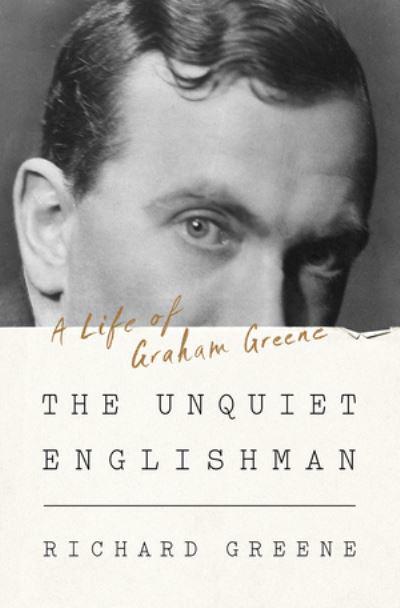
Book Review: A new take on the oft-filmed novelist/screenwriter Graham Greene — “The Unquiet Englishman”

In the last weeks of his life, a visitor urged the British novelist, playwright, screenwriter and poet to look back over his storied career and take pride.

“A few, yes, are good books,” the author of “The End of the Affair,” “The Quiet American” and “Our Man in Havana” allowed. “Perhaps people will think of me from time to time as they think of Flaubert.”

That might very well be true on this side of the Atlantic, with America’s eagerness for all things “new.” But in Britain and much of the world, English-speaking or otherwise, Graham Greene remains a fascinating figure, a Catholic contrarian, a hard-drinking, womanizing ex-spy, the greatest novelist never to win the Nobel and someone whose reputation was such that he was called on to literally intervene — through journalism, fiction and passing on “messages” from government to government — in the 20th century crisis zones where so much of his work as centered.

Canadian Biographer Richard Greene (No relation apparently, although he leaves that out along with Greene’s actual birthday. And Haiti is NOT on the “east side” of Hispanola. And Hemingway’s Sloppy Joes is in Key West, not Havana ) takes a solid stab at boiling this extraordinary life into 500 pages, when Greene “completists” have taken as many as three volumes to try and get it all in.

There are also volumes of his correspondence, memoirs by friends, colleagues, ex-lovers or the offspring of ex-lovers out there as well. What Richard Greene seeks to do is recover all that ground in summary form, turn out fresh or at least the best anecdotes and dive into the reasons we still think of Greene as “a Catholic writer” and the ways he turned his research treks to Sierra Leone, Kenya, Russia, Vietnam, Panama, Haiti, Mexico, Spain, Czechoslovakia, Paraguay and elsewhere into fiction.

We read of how he sought out danger, suffered manic depression and suicidal tendencies and put himself in harm’s way in conflict zones of Central America, how he eviscerated dictators, from Papa Doc Duvalier in Haiti to Stroessner in Paraguay, and lauded others — Castro of Cuba, Trujillo of Panama.

He loathed American meddling, British heavy-handedness and in Vietnam — French stupidity — in the “post colonial world.” He seems to have been a lifelong America-hater, despising the consumerism, dictator-coddling and arms-exporting that spiked after WWII (where he served in MI-6) and peaked with “that fool Reagan” in the ’80s.

Greene the biographer isn’t the first to see Greene the journalist/novelist as “prophetic.” “Our Man in Havana” arrived minutes before the final act of the Cuban Revolution, coups and interventions followed his fiction hither and yon. He toured the upheaval of Central America brought on by Reagan Era policies of arming and (mis) training reactionary government or insurgent forces, and called attention to it at every turn.

Had he lived longer than 1990, he’d be the perfect guest in our glib TV “talk-news” era, pointing out how any “crisis at the border” was created by Reagan and his minions in the ’80s.

But movie lovers remember the many works of his that made it to the screen. There are 89 versions of his stories, books and plays, as well as his original scripts, currently listed on IMDb.

“Ministry of Fear,” “The Fallen Idol,” “Travels with My Aunt,” “Our Man in Havana,” “The Comedians” and perhaps his best-known adaptation in this country, his Vietnam bungling “Quiet American” leap quickly to any cinephile’s mind.

He wrote “The Third Man” for Carol Reed, one of the cinema’s acknowledged masterpieces, a script that Reed and on-set, Orson Welles, added to in making it the classic it remains to this day. Greene roughed out the novel for the script, then polished it for publication. It’s also been turned into a radio and later TV series over the years.

He didn’t dabble in comedy much, but “Our Man in Havana” is one of the triumphs of his, Reed’s and Alec Guinness’s careers. He wrote the novel and with Reed, turned the script into a textbook in droll, dark satiric screenwriting.

His focus on the world’s trouble spots, the geopolitics and religious persecution and differing victims in such places, earned those locales their own name — “Greeneland.” Leper colonies and new forms of slavery, oppressed Africans, South Americans and Asians, persecuted Catholics, homosexuals and others, all found something of a champion in a writer whose “heroes” were flawed, guilt-ridden or oppressed themselves.

“Happy endings” were not his thing.

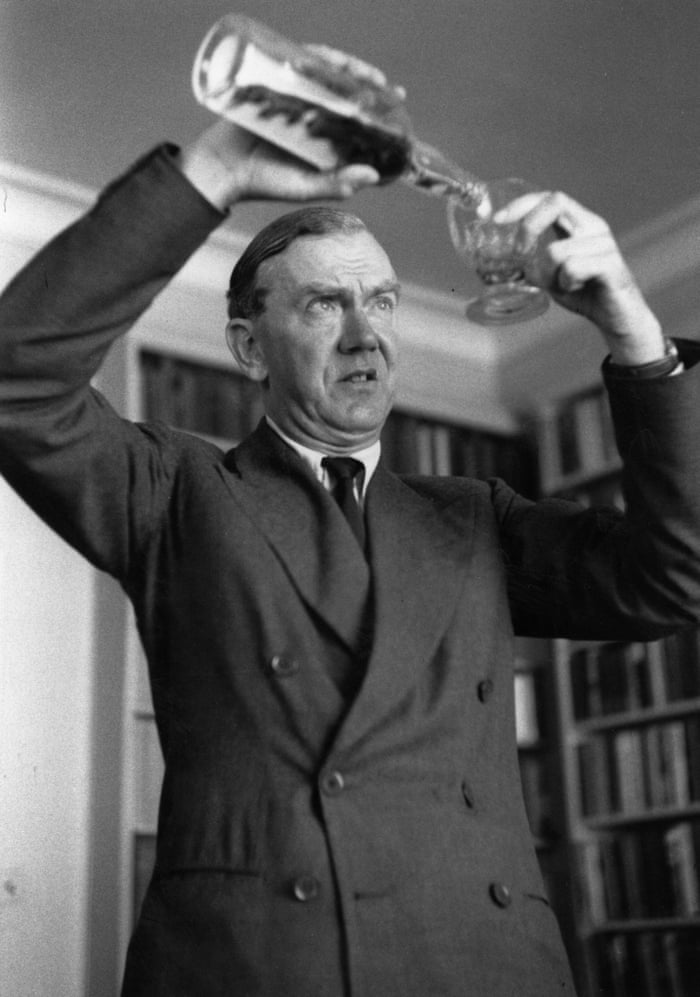
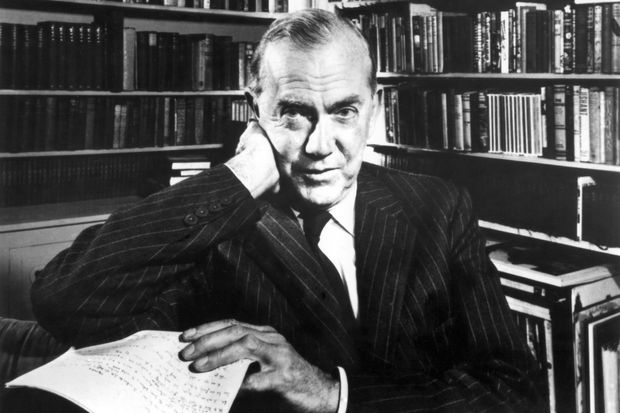
His love life — he was married, and simply moved on from that family early on, supporting them in growing comfort even as he carried on affair after affair with married women, adding homes on the Italian isle of Capri, Paris and Antibes — is easier to understand (perhaps) when you notice that he cut a dashing figure to the end, resembling “Downton Abbey/Legion” star Dan Stevens in his younger days. (Above left).

He was a “voyeur of violence” who courted controversy — “What fun is there in working if one doesn’t go too far?”

And unlike any author anyone can name, he pursued a form of social justice via the high regard the Russians, Cubans and Catholic countries of the world held him in. Want me to speak there? Release X, Y or Z imprisoned writers. He observed, listened, won over and often after a visit (to Castro, for instance), would challenge this or that dictator or state to address this, stop that or free political prisoners.

“A reputation is like a death mask,” he joked. But Greene used his, on many occasions, to good purpose.

It’s a remarkable life, even if you’re not a lifelong resident of Greeneland, even if you’re not sure how well his distinctly 20th century privilege, values, politics (a leftist) and prose will age.

The Unquiet Englishman: A Life of Graham Greene, by Richard Greene. W.W. Norton & Co., 507 pages plus indexes. $40.
Posted in Reviews, previews, profiles and movie news | Comments Off on Book Review: A new take on the oft-filmed novelist/screenwriter Graham Greene — “The Unquiet Englishman”

Movie Review: “Last Call,” too late for rehab

There are messy movies and shambolic comedies, and then there’s whatever the hell “Last Call” is supposed to be.

It’s a “back to the old neighborhood” dramady almost guaranteed to give you a hangover. I’m on my third aspirin already, and I haven’t had a drop.

Unlike everybody else in this boozy, lazy, unfunny “redemption” tale about the “success” who “got out” of Darby Heights (Upper Darby, Philly), went Ivy League, but never lost his “Jersey Shore” loving edge.

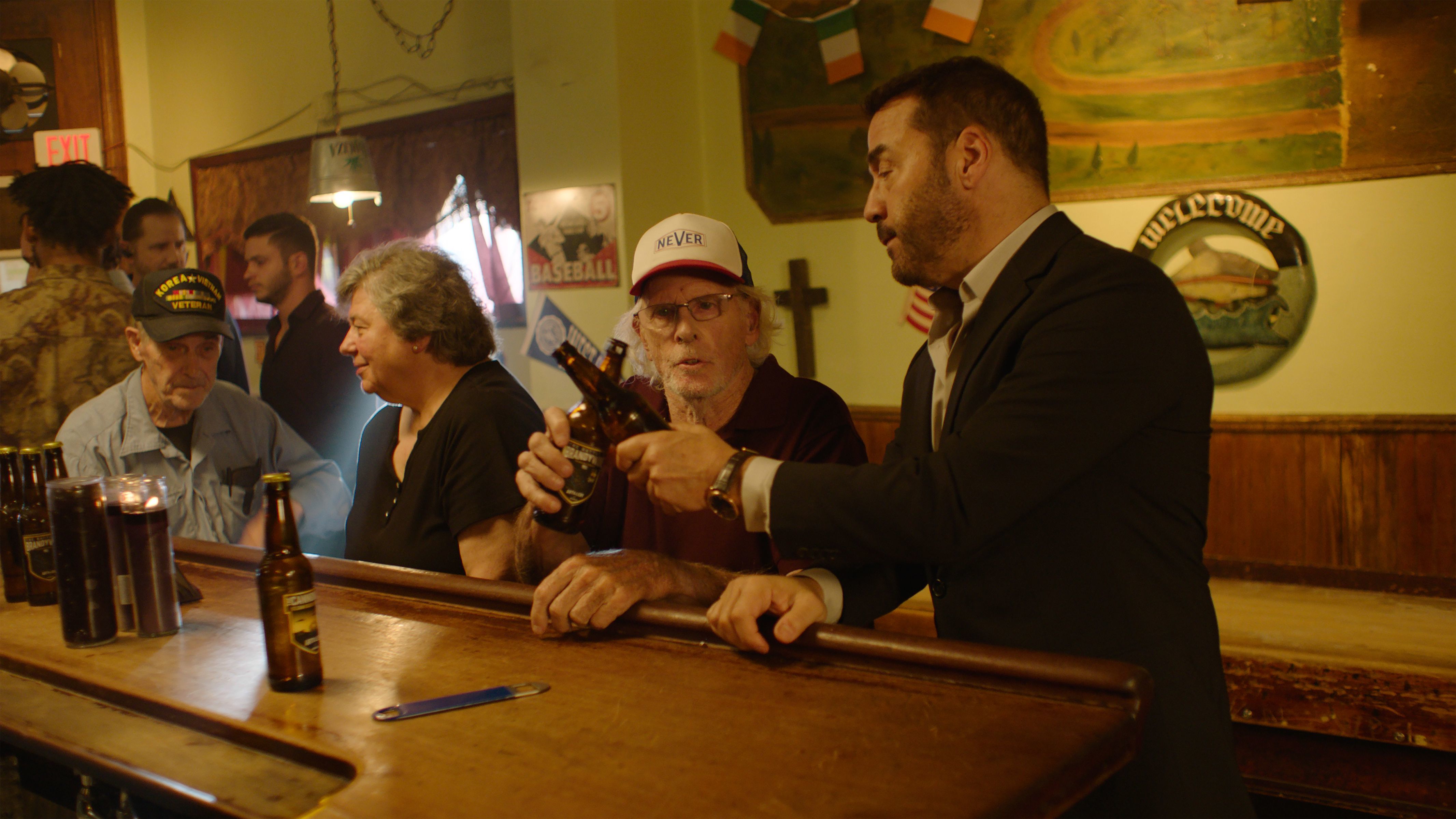
Jeremy Piven is Mick Callahan, 50ish and single and working for an unscrupulous Italian-American developer (Garry Pastore) who wants to build a casino in the old ‘hood.

Mick, supposedly a high roller with a top-end desk job, is arm-twisted into getting names on a petition to get the locals, most of whom he’s known since childhood, to stop putting “Casi-NO” signs in their yards.

He’ll have to work that in around his mother’s wake. She’s gone, and now there’s just his aged dad (Jack McGee), another “mick” running another Irish bar, Callahan’s Pub. He’s third generation, but without Mick to float loans to save the place or quit his job and run it, “The Bucket” isn’t long for this world, steady clientele (Bruce Dern as “Coach”) be damned.

Because Mick’s no-good muscle-bound lady-killer “big brother” (Zack McGowan) is headed back to prison, and on a bit of a bender as he braces for that eventuality.

Back to the Heights means Mick might run into his childhood crush, Ali (Taryn Manning of “Orange is the New Black” and “Hustle & Flow”) and her kvetching, cooking, cussing Greek mom (Cathy Moriarty, in rare form).

As they guzzle through Mick’s Mom’s wake and its endless elbow-bending aftermath, Mick collects those signatures and we wonder not so much if he’s sold his soul, but if he has the cash and wherewithal to buy it back.

The script was co-written by a real-estate developer, not that you can tell (cough cough). It’s a picture more wrapped up in ensemble and semi-seedy milieu than in anything that makes sense.

Trite and cliched redemption stories always go down easier with Irish stereotypes and toasts, right?

“If yer’gonna lie, lie for love. If yer’gonna steal, steal a heart. If yer’gonna cheat, cheat death.

Piven dials down his “Entourage” cock-of-the-walk persona so much here that he gives us nothing to hang onto. Mick is presented as loud, still tough, still able to hold his liquor, still single and still pining for the still-single girl next door.

None of that plays. For the first time since he was John Cusack’s perpetual second-banana, Piven’s boring.

Every movie in this vein has to have “the boys” you grew up with. Jamie Kennedy plays one of those. There are old grudges about Little League brawls, sexual conquest contests, a blowsy tart roughly their age (Betsy Beutler) and dreams of a group vacay to “Tha SHORE.”

And at every juncture, with every scene (save for the tippling priest hearing confessions in a phone booth at the bar at the wake), “Last Call” grates. The script is tone deaf and the direction (Paolo Pilladi settling some ancient Italian grudge against the Irish, apparently) incompetent.

It’s the sort of picture where a supporting “villain” (Kresh Novakovic) lines up a pool shot, fully expecting the dunce behind the camera to notice he’s still rolling even though he’s lining up to poke the 6-ball with his cue, and keep that out of the frame

The dunce doesn’t.

“Pop” is fixing up the boat in the driveway for crab fishing, pulling huge chunks of fiberglass off a Swiss-cheesed junkyard prop. Alert viewers can see motor’s been pulled out of it, and that the boat in the water later looks nothing like this.

Not that anybody should be paying that much attention to this. The headaches “Call” induces are real, even if you don’t enjoy the libations it usually takes to earn them.

MPA Rating: R for crude sexual content, pervasive language and some drug use

Cast: Jeremy Piven, Taryn Manning, Zack McGowan, Jack McGee, Jamie Kennedy, Cheri Oteri, Kresh Novakovic, Garry Pastore, Cathy Moriarty and Bruce Dern.

Credits: Directed by Paolo Pilladi, script by Paolo Pilladi and Greg Lingo. An IFC release.

Running time: 1:42

Posted in Reviews, previews, profiles and movie news | Comments Off on Movie Review: “Last Call,” too late for rehab

Deadpool-by-the Sea?

In a passing glance, I thought this was Spiderman on a Catamaran. Which makes sense in an onomatopoeia sort of way.

But no, this Texas cat in my Florida marina rocks Deadpool to scare off gulls, pigeons and other wrongdoers.

Yes, it is very “f—–g fog–” on the Florida Space Coast this am, as Mr. Pool would say.

Always thought of the Pool as more of a cutter-rigged ketch superhero myself. @vancityreynolds care to clarify?

Posted in Reviews, previews, profiles and movie news | Comments Off on Deadpool-by-the Sea?

Movie Preview: “Shiva Baby”

This looks like a hoot. Coming very soon from IFC.

Posted in Reviews, previews, profiles and movie news | Comments Off on Movie Preview: “Shiva Baby”

Movie Preview: Let’s try this again, shall we? “The Suicide Squad,” aka “Suicide Squad 2”

Yeah, Margot Robbie’s back. Oscar winner Viola Davis is here.

But Idris, Cena, Alice Braga, Joel Kinnamon, Jai Courtney, Peter Capaldi and Michael Rooker? UP grades, my dears. UPgrades.

This looks ultra violent and James Gunn funny/cool. Aug. 6.

Posted in Reviews, previews, profiles and movie news | Comments Off on Movie Preview: Let’s try this again, shall we? “The Suicide Squad,” aka “Suicide Squad 2”

Movie Review: Canadian summer camp wars — “Boys vs. Girls”

“Boys vs. Girls” is an homage to those wacky/edgy kids summer camp comedies of yore, a “Meatballs” for a new generation…or rather it might be if it hadn’t been such a limp biscuit.

It’s a period piece send-up of such films with barely a laugh in it. “Edgy?” It’s “DeGrassi” with menstruation jokes.

It starts with a hint of promise, but never gets out of the gate.

The one chuckle I had was in the outtakes under the credits, and what do we say about outtakes in most comedies, kids? That they’re almost always a sign of comic desperation.

Camp Kindlewood has not-quite-thrived run as a boys-only July/girls-only August summer get-away for kids, and the older kids who act as camp counselors there. “Boys vs Girls” is about the summer of 1990, that first summer that they went “coed.”

Narrator Dale (Eric Osborne) is a high school kid and counselor who doesn’t know what “coed” means. Seriously. But he and BFF Ben (Jesse Camacho) and the other lads have to learn new rules, now that it’s not just “be our true selves” boys acting boyish time.

Camp director Roger (“Whose Line Is It?” comic Colin Mochrie) lays down the law.

“No more naked morning dips…No more peeing wherever you happen to be.”

Girl narrator Amber (Rachael Dagenais) is head female counselor, fated to spar with Dale and you-know-how-that-will-end.

“That’s Tiffany (Samantha Helt),” she tells us. “She thought penicillin was a fashion statement.”

There’s a surfer dude himbo counselor (Tim Dowler-Coltman) and a would-be B-boy (Romeo Carere) who can’t freestyle to save his Canadian whiteboy life.

On the other side of the gender divide we have the knife-carrying Goth-girl (Michala Brasseur) and Miss Eager to Please (Nia Roam) who swoons over the B-Boy.

The boys and girls first square off in “training” for that first coed summer, but things get really out of hand when the coed crews of campers show up, taking the “feud” to the next level.

Except things never come close to “out of hand.” The genders square off in a British Bulldog match, leaving the poor boys at a loss.

“They have GIRL parts! What do we grab onto?”

“The…gender NEUTRAL parts!”

The “pranks” are so lame you know it’s intentional, but none of Canada’s Bright and Pretty Young Things can play “irony” in a way that lands a laugh. Camacho, of TV’s “Insomnia” and “Locke & Key” tries for over-the-top and finds a dirty chuckle or big guy sight gag or two.

Everybody else? Hired for their nearly perfect looks and eagerness to spend extra hours in the makeup chair to complete that perfection.

The ’80s fashions and hairstyles are on the money. So? That matters as much as the imitation ’80s synth pop on the soundtrack (Pat Benatar was the only “original artist” I recognized).

Writer-director Michael Stasko didn’t have much luck with low-budget sci-fi (“The Control”), and sadly has no eye or ear for comedy either. The movie’s scattering of raunchy touches — camp “skits” on what “toxic” boys are really like and how ditzy girls get over their first “period — don’t have novelty or any comic bite.

The acting ranges from indifferent but cute to “At least he looks right at home, outdoors in all that makeup.”

The two veteran comics in the cast, Mochrie and “Kids in the Hall” alumnus Kevin Macdonald (as the drinking, pill-popping camp caretaker) have nothing funny to play. Until the outtakes.

And those outtakes? They hint at a picture that might have been aiming for an R-rated rudeness, an idea that was almost abandoned, but not quite. Every coarse and crude moment feels like a punch that Stasko pulled or that his cast didn’t have the stomach to deliver.

MPA Rating: unrated, sexual humor, profanity

Cast: Rachel Dagenais, Eric Osborne, Michala Brasseur, Nia Roma, Romeo Carere, Jesse Camacho, Samantha Helt, Shaun Benson, Kevin McDonald, Colin Mochrie

Credits: Scripted and directed by Michael Stasko. A Dot.film release.

Running time:

Posted in Reviews, previews, profiles and movie news | Comments Off on Movie Review: Canadian summer camp wars — “Boys vs. Girls”

Movie Review: If the barkeep says “The bar’s closed,” you’d better listen in “The Oak Room”

The latest beta test of the Screenplay Cliches Bot is titled “The Oak Room,” a moody, talky, stunningly-dull and hilariously-trite “thriller” mostly set in a bar — a couple of bars — in remote, snowy Ontario.

Cliche #1? “Bar’s closed.” This overused situation and utterly worn-out line is trotted out more than once in this “I’ve got a story” tale.

Tell me you haven’t heard this before, ANY of these “I watched a couple of movies, time for me to write my own SCREENplay” Cliche Bot excretions.

“I don’t want any trouble.” “You’re not from around here, are you?” “Let’s see you talk your way out of THIS one!” “Don’t play games with me, kid!”

“I’m sorry, have I BORED you?”

Rhetorical question, in this case.

“Oak Room” is a bad “memory play” committed to film, practically a spoof of the genre, only too witless to make that claim. A parade of cliches uttered by “types,” it is tedium itself.

Guy in a hooded arctic jacket and face mask walks into a just-closed tavern. Bartender threatens him with a baseball bat. Guy takes the mask off and it’s “Stevie” (RJ Mitte) a “kid” who hasn’t been around these parts in years. The barking barkeep (Peter Outerbridge) unloads a dozen rounds of invective and threats straight out of the SCB (Screenplay Cliches Bot), about debts, a funeral missed, ashes stuffed in the old man’s old tackle box.

But Stevie’s “got a story.” And he tells it. It’s a flashback, and there are flashbacks within the flashback. It’s about another guy walking into another bar.

Stevie allegedly skipped town for college, but Mitte (“Breaking Bad”), who looks like Will Forte and talks out of the side of his mouth like Carl Spackler in “Caddyshack,” makes the guy seem “simple,” or at the very least “on the spectrum.”

He tells this wordy flashback involving another closed bar, another winter night and two guys (Martin Roach, Ari Millen) talking back and forth in a verbose scenario not unlike the one Stevie and Paul are acting out, one that includes its own flashback.

There’s a threat of violence lurking around the edges of both tales, but what the filmmakers were really interested in here isn’t action — it’s monologues in dimly-lit bars. Endless monologues. Childhood-on-the-farm memories. Barfly tells his “hitchhiking” story to the bartender.

And Stevie keeps adding details in that “I forgot” and “I messed up” because “I told you the ending first.”

Barkeep Paul speaks for himself and everybody who takes a gander at “The Oak Room” when he growls, “If I’m this bored with the ending, why should I wanna hear the BEGINNING?”

Director Cody Calahan (“Vicious Fun,” “Let Her Out”) does nothing to speed things along or give anything that happens any urgency. The actors never lift their characters, situations or dialogue out of the mud of a road traveled way too many times to count.

And, making his feature film screenwriting debut, Peter Genoway? Make him fill out any contracts on future films online. There needs to be a “Are you a bot?” box rider at the bottom of the page. Because this cut-and-paste cliche collection could have been written by a machine.

MPA Rating: unrated, violence, alcohol abuse, profanity

Cast: RJ Mitte, Peter Outerbridge, Ari Millen, Martin Roach, Nicholas Campbell, and David Ferry

Credits: Directed by Cody Calahan, script by Peter Genoway. A Gravitas Ventures release.

Running time: 1:28

Posted in Reviews, previews, profiles and movie news | 2 Comments

Netflixable? Japanese Father has to figure out “Any Crybabies Around?”

The mythic Japanese Namahage demon is a sort of twisted, monstrous “You’d better watch out, you’d better not cry, better not pout” character meant to give little children character and “good ethics” as they grow up.

In the corner of Japan where this practice lives on, men show up with horrific masks and costumes of straw and come bellowing into family events — often a tiny tyke’s birthday — shouting a child’s name and “Any naughty boys/girls here? Any CRYbabies around?”

Scares the daylights out of the kids, as the adults laugh and squeal and take video and photos. Seems pretty messed up to Western eyes, I have to say. But parents anywhere might get a little perverse pleasure out of it.

It’s just that in Tasuka’s case, that “character” and “good ethics” lesson never took. He’s still going around with the his Oga Peninsula Namahage Preservation Society, still scaring kids. But Tasuka (Taiga Nakano) is married, with a new baby Nagi. And he’s nobody’s idea of an adult — an inattentive screwup, tactless and clueless with his wife, Kotone (Riho Yoshioka). He laughs things off so much that she’s reached her “You’re not thinking at all” limit.

He’s off, leaving her with the baby one more time as he does his Namahage schtick with the boys, not picking up on her brittle dismay. And when she turns on the TV, there’s proof of his irresponsibility for the whole country to see. A live feature report on the tradition is interrupted by a drunken Namahage streaker. We don’t have to see the break-up or legal filing to know who was in the mask (and nothing else) or what followed.

“Any Crybabies Around?” is a dramedy about this hapless, childish can’t-hold-his-drink Peter Pan, picking up his story two years later when he realizes he wants to get back what he’s lost.

Writer-director Takuma Satô takes us on an odd odyssey from Tokyo back to Oga, through Japanese “apology culture” rituals, showing the limited value of that through wounds that cannot be healed with just words.

Nakano gives Tasuka this blank stare that perfectly suits a guy that bad things just happen to. He’s run over in company soccer games, avoids drinking and yet gets stuck taking care of a colleague who gets hammered and can’t get herself home.

That’s who he is — put upon, yanked about, attacked in a bar merely for spilling somebody’s drink.

Telling his story to that co-worker, leaving out the embarrassing bits, seems to steel his resolve. Nobody thinks of him as a grownup? He’ll go home, win back the ex and “be a father.” But things back in Oga? Complicated, his old pal Shiba (Kanchiro) warns. The ex is working as a “hostess” in a local “bottle service” club. One step above prostitute.

His understanding mother doesn’t give him much chance, and his brother is utterly dismissive. The ex? She just wants to know about child support and alimony.

And then there’s the older man (Toshirô Yanagiba) who has been trying to keep the Namahage tradition alive. He’d like to share his mountain of hate mail with dopey Tasuka.

“I’ll keep apologizing until I’m forgiven,” won’t get you far among these people.

“Any Crybabies Around?” (in Japanese with English subtitles) has a big, fat metaphor sitting right here for all to see, some good performances and local color. The tradition depicted is fascinating, funny and macabre.

But the film feels incomplete, a 110 minute movie that doesn’t quite finish its story even though it meanders through the middle acts to the payoff. The finale is poignant and packed with meaning, but feels unearned and frustrating. There’s a lot more to “growing up” and being responsible than just getting over being a “crybaby.”

MPA Rating: TV-MA, violence, alcohol abuse

Cast: Taiga Nakano, Riho Yoshioka, Kanichiro 

Credits: Scripted and directed by Takuma Satô. A Netflix release.

Running time: 1:48

Posted in Reviews, previews, profiles and movie news | Comments Off on Netflixable? Japanese Father has to figure out “Any Crybabies Around?”

Movie Review: Bullying as a romantic thriller — China’s Oscar contender “Better Days”

“Better Days” is a searing indictment of bullying culture and China’s insanely intense college admissions system, all tucked into a sadly compelling romantic thriller.

The added-attention of an Oscar nomination gives a welcome boost to a movie much of the world missed in late 2019, but one well worth enduring and embracing.

“Enduring” because Derek Tsang’s film has a relentless quality, heartbreaking twists all the way through its multiple anti-climaxes ending. It almost outstays its welcome as it flips back and forth about how it resolves itself.

But “Better Days” is worth embracing because of its downtrodden leading characters, their compelling story and the brutality they endure from a Darwinian academic and social culture’s winner-takes-all system.

A Hong Kong production shot in Chunkging, it tells the story of Chen Nian (Zhou Dongyu), a petite, mousy teen in a huge high school where every class drills kids for their senior exams, where every wall is adorned with slogans — “No Excuses,” “The Smart Always Find Ways” — where every teacher is a cheerleader and if that’s not enough, there are chanting pep rallies to reinforce cultural dogma.

“I will not fail my parents!” (in Mandarin with English subtitles) “I will not disappoint my teachers!”

Chen Nian is studious and smart, a walking endorsement of “meritocracy.” She is poor. Her single mom (Wu Yue) is locally infamous, hustling grey market goods, unsafe knock offs and the like.

“When you graduate from college (after excelling on the admissions exam) we’ll escape from this hellhole.”

Pressure? A little.

But then a classmate hurls herself off a balcony in front of everybody. As the other kids gawk and take cellphone shots, Chen Nian weeps and drapes her jacket over the body. They were deskmates. And when we see the mountain of books piled in front of each of them on that desk, we understand.

Except that’s not the whole picture. There’s a mean girl posse led by Wei Lai (Zhour Ye). And from the relentless way they go after Chen Nian after she meets with the cops, we understand the hell that these kids endure, not just from the system but from each other.

The bullying of Nian quickly escalates into assault, but the young cop (Yin Fang) who interrogated her after her deskmate’s death proves to be well-intentioned and ineffectual. Mean girls have parents and minions who back them to the hilt, at least in the movies.

It’s when Chen Nian’s compassion shows itself again that she finds a protector. She calls the cops when she sees a boy being beaten, and is slapped around herself for her trouble. Xiao Bei (Jackson Yee) is nothing if not gallant. He will repay her. A brittle relationship forms between the teen punk living on his own and neglected Nian (Mom has to go on the lam).

“Do you like me?” he wants to know.

“What is there to like?”

We watch Nian suffer by day but get a break from the after-school assaults after this connection is forged. But something about the tough guy should be a warning. His “I always get even in the end” means that the Mean Girl and her Posse wars will only get worse.

Actor turned director Tsang — he did “Soulmates” — fleshes out Jiu Yuexi’s novel with spirited montages of the pressure-cooker school and the grim routines of the life of students there. Who has time to be bullied or do the bullying?

But that’s the way of it, parents, teachers and cops agree. “You’re either a bully, or you’re bullied.”

Even the death of a classmate faces a circumscribed investigation, because the kids “can’t spare more time. Exams are coming.” A giant digital clock at school counts down the days. Parents show up, drop to their knees and beg teachers, and when that fails, they shriek at their kids and whale on them in front of the entire school.

With every hope of social mobility riding on the Chinese ACT/SAT, everyone feels the strain.

Two of China’s brightest young stars set off sparks in this bullying variation of the French classic “Breathless,” with its bad boy, the “good” girl, violence, love and eventually crime entering the story.

As I mentioned above, the third act tends to go on and on, twisting and twisting in on itself, undercutting the flashback structure (A teacher — Chen Nian? — looks back on 2011.) or making that something of a teen-fantasy-about-our-future interpretation.

“Better Days” may open with a disclaimer about this “worldwide” problem, which bullying is in our social media age. But as savage as that is here, it’s the unbearable pressure of “the system” that sticks with you. Social strata as grimly defined as Dickensian England and entire families living or dying by how the smartest kid does in these soul-crushing tests make “The Chinese Way” to global success not one many would be willing to emulate.

MPA Rating: unrated, violence, smoking

Cast: Zhou Dongyu, Jackson Yee, Yin Fang, Zhou Ye, Wu Yue and Huang Jue

Credits: Directed by Derek Tsang, script by Wing-Sum Lam, Yimeng Xu, Yuan Li and Nan Chen, based on a novel by Jiu Yuexi. A Well Go release.

Running time: 2:15

Posted in Reviews, previews, profiles and movie news | Comments Off on Movie Review: Bullying as a romantic thriller — China’s Oscar contender “Better Days”

Netflixable? A “Bad Trip” that goes a prank or two too far

If Hollywood is going to give screenwriting Oscar nominations to “Borat” movies, brace yourself for pranks, pranks and more pranks pictures.

“Bad Trip” is more at the “Bad Grandpa” with Johnny Knoxville end of the practical joke pictures spectrum. A little edge, a few confrontations with angry rural America, waaaay too many bodily function/bodily fluid gross-out gags.

There are a few scattered laughs, but the big take-away from this how easy it is to make Tiffany Haddish a gangsta nobody recognizes, and how how EVERYbody is scared of Tiffany Haddish when she goes gangsta.

The “plot” is just two minimum wage drones (Eric Andre and Lil Rel Howery) who take a road trip in a pink Crown Vic from suburban Tampa to New York.

Chris is chasing high school crush (Michaela Conlin) to an art opening there, and they have a few days. So why not take the Blue Highways there?

But that Crown Vic with the “Bad Bitch” vanity plates and “Bad Bitch” scrawled across the rear window? It belongs to Trina (Haddish), the inmate/thug sister of Bud (Howery). And when she escapes prison, she “ain’t tryin’ to KILL nobody.” Only she is. And she keeps showing their pictures and pix of the car in diners up and down the Eastern seaboard, shocking one and all with her loud threats and imprecations of violence.

Haddish, in corn rows, neck tattoos and coveralls, is recognizable. But nobody does. She’s that frightening. Even when she’s asking random strangers — including a cop — “You want a baby mama?”

She storms into Bud’s phone repair shop in her debut scene, bulls her way behind the counter and empties the register, warning “real” costumers “You didn’t see NOTHING” and “I REMEMBER faces!”

They believe her.

Andre is the headliner here, staging flip outs, gas station “accidents,” an “I met a GIRL” production number utterly disrupting a mall, and a zoo enclosure guy-in-a-gorilla-suit rape gag.

Oh my.

He gets kicked in the mall, enrages people left and right in a country music bar, gets cussed on golf courses and in diners, and leaves a lot more folks shocked, dismayed and concerned than furious.

Lucky him.

There’s a hint of America’s shared humanity (Black folks, and some white folks try to “help”), and bigger doses of the country’s racial divide. But the “poke the bear” bits fall well short of Sacha Baron Cohen’s most “out there” antics. And while there are scenes which seem realistic, too many others leave you questioning, “Ok, I KNOW those folks see the cameras on that bus/capturing that mall dance number,” etc.

Howery is basically his straight man for much of this. Well, save for the faked (editing suggests the “bystanders” knew this was fakery) car crash and the Chinese finger-trapped penis gag.

And then there’s the pals’ recreation (in front of real people at a charity reception) of “White Chicks,” made up and dressed up like Shawn and Marlon Wayans in that black-men-as-white-women comedy, remembering to “think white thoughts” and starting conversations with the unsuspecting patrons of this gala with “I’m going to see Megyn Kelly give a TED Talk later.”

Yes there are laughs, but a lot more cringes without giggles.

But every time things go wrong, lame or too gross, here’s Haddish stealing a police car by TEARING THE DOOR off, crashing (literally) an art opening and scaring Elderly White America into eight more years of voting Republican.

MPA Rating: R (Pervasive Language|Drug Use|Crude Sexual Content|Some Graphic Nudity)

Cast: Eric Andre, Tiffany Haddish, Lil Rel Howery, Michaela Conlin

Credits: Directed by Kitao Sakurai, script by Dan Curry, Eric André, Kitao Sakurai. A Netflix release.

Running time: 1:24

Posted in Reviews, previews, profiles and movie news | Comments Off on Netflixable? A “Bad Trip” that goes a prank or two too far