Movie Review: Roy Andersson ponders the futility of “infinity” — “About Endlessness”

There’s nothing for it but to call the contemplative Swede Roy Andersson’s “About Endlessness” the fourth film in his “trilogy” about the futility/banality/hopelessness of life, “Living,” which supposedly ended with. “A Pigeon Sat on a Branch Reflecting on Existence.”

And if you’re reading beyond that first paragraph, that must mean you give a damn about this philosopher filmmaker’s brooding collections of tableaux, characters illustrating whatever point he wants to make about human existence under the perpetual “dream like” gloomy grey of Swedish interiors and exteriors.

So I won’t limit this review to “only Andersson could contemplate infinity and get across the idea of its endless tedium in a mere 76 minutes of screen time.” While I like the challenge of his self-conscious cinema, I find the urge to go glib every time I encounter one of his films almost too hard to resist.

My take on “Endlessness” is that he’s illustrating the banality of existence and how it distracts us from perhaps appreciating life on its own terms.

As the weeping man on the Stockholm street tram whines to one and all in the film, “I don’t know what I want.” Who does?

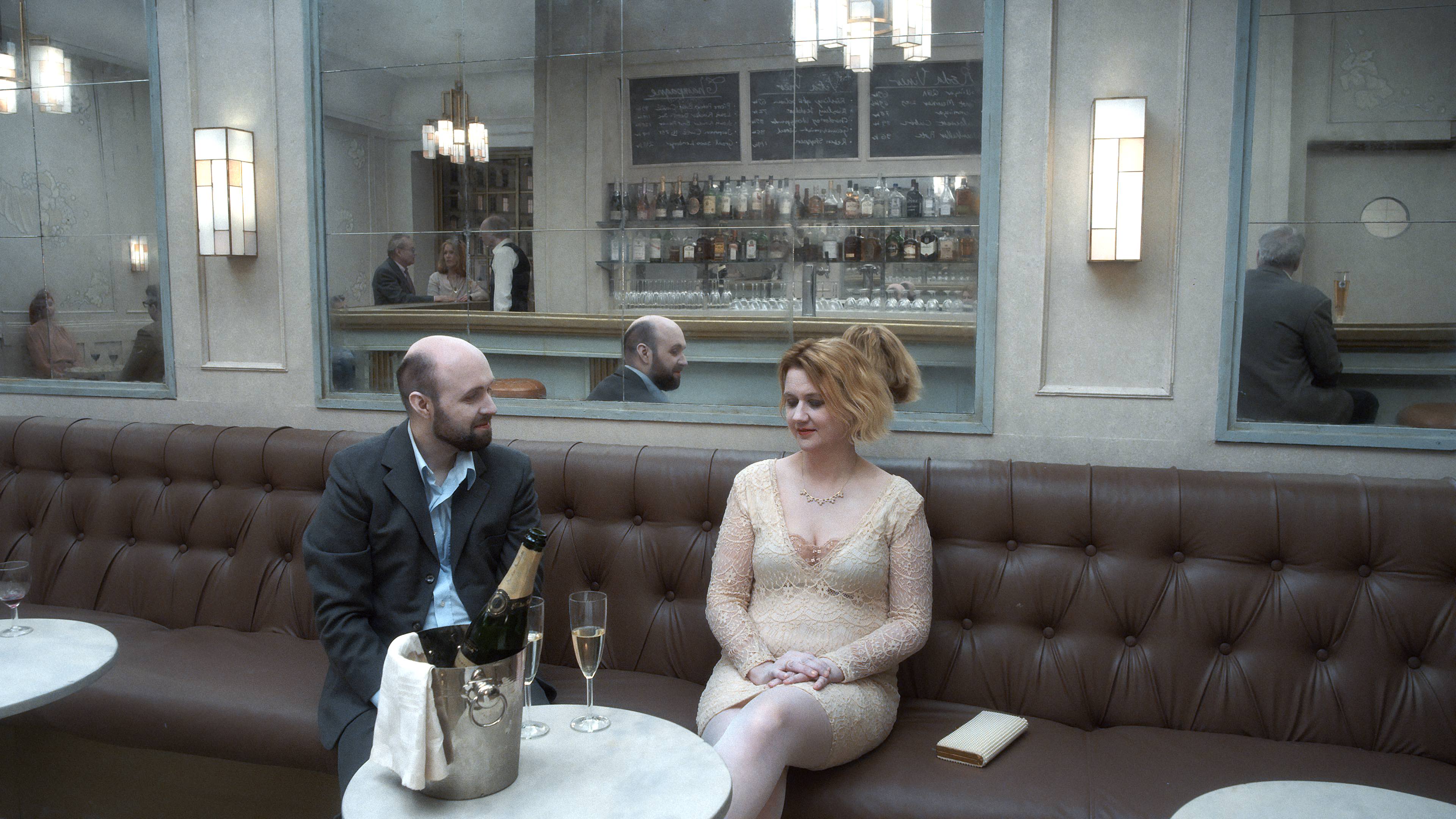
Using a little irony and just a smidge of drollery, Andersson makes this Deep Thought argument via vignettes about blind dates that don’t show up, a woman who “doesn’t expect anyone to meet her” at the train, an irritable, hard-drinking dentist and Adolf Hitler (Magnus Wallgren), ” “a man who wanted to conquer the world and knew he’d fail.”

The linking device in all of this is a couple, floating in the clouds over a ruined city, with a female narrator (Jessica Louthander) introducing the various tableaux with “I saw a man who did not trust banks, and keeps his savings under his mattress” or “I saw a woman communications manager incapable of feeling shame.”

A man’s car breaks down in a striking piece of wilderness, mountains behind him, geese flying overhead. But he’s stuck, as are we all, bogged down — facing some fresh aggravation instead of stopping to take in the beauty. Same with the tippling dentist who won’t look up from his drink at the “marvelous” snowy Christmas season scene unfolding outside the bar window.

A distracted waiter overpours wine all over a white table cloth where his customer, who has just walked in from his latest brush-off in some decades-long grudge against a man he knew long ago, finally is focused on “the now.” And yet even that’s a mess.

A “sad” mandolinist who “lost his legs to a land mine” plays “O Sole’ Mio” on a public sidewalk, perhaps musically lamenting that we never see the sun here. Andersson’s films all share the same color palette and thus even the exteriors have a whiff of soundstage about them.
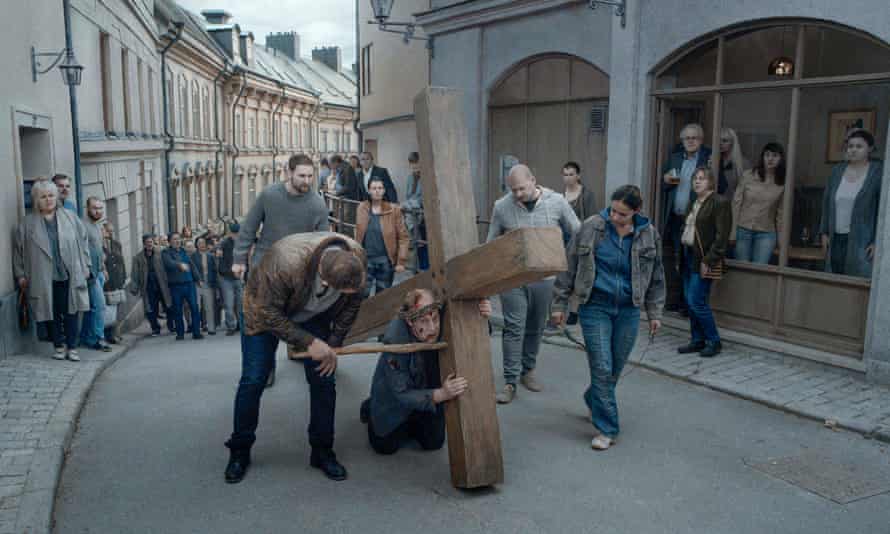
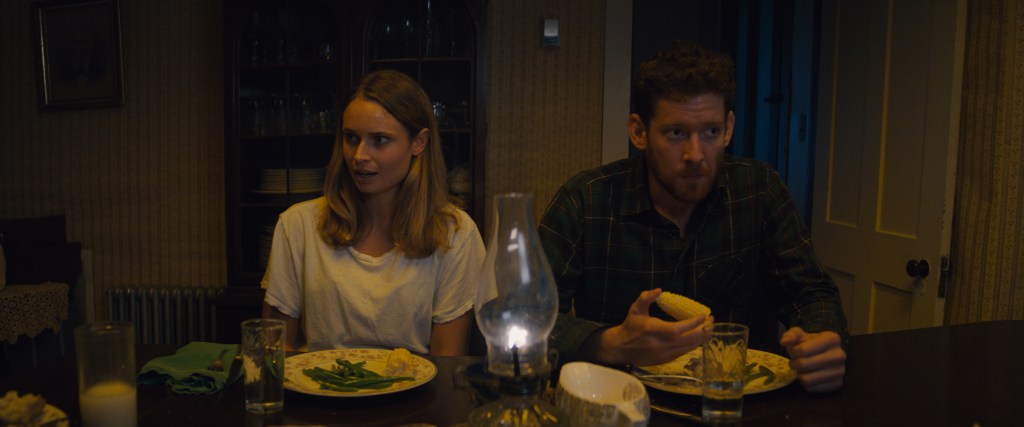
The stand-out story thread here concerns a priest (Martin Serner), who is having a recurring nightmare. He is flogged, kicked and taunted as he is forced to carry a cross up a narrow street.

“Crucify! Crucify!” the Swedish punters shout (in Swedish with English subtitles).

As he relates this to his wife and later a shrink, he has two questions. “What have I done to them?” Yes, that’s the lone instance of “humor” here, and if you wonder why Swedish comedies aren’t exported the way their Strindberg/Bergman worshipping dramas are, there’s your answer.

The priest gulps sacramental wine before facing his congregation, tearfully muttering the same second question he’s asked his wife and his therapist.

“What am I to do now that I’ve lost my faith?”

The shrink may be making Andersson’s point in “About Endlessness” when he suggests one be “content with being alive.”

As that, like Andersson’s latest lovely but dense and ponderous film, isn’t much help to the suffering person it is spoken to, it’s as good an analog for the movie and its musings as any.

MPA Rating: unrated

Cast: Martin Serner, Tatiana Delaunay, Jan-Eje Ferling, Magnus Wallgren, narrated by Jessica Louthander.

Credits: Scripted and directed by Roy Andersson. A Magnolia release.

Running time: 1:16
Posted in Reviews, previews, profiles and movie news | Comments Off on Movie Review: Roy Andersson ponders the futility of “infinity” — “About Endlessness”

Movie Preview: The Franchise that Won’t Die — “Resident Evil: Wrong Place, Wrong Time”

No Milla Jovovich? No “Resident Evil.” Raccoon City or not.

Posted in Reviews, previews, profiles and movie news | Comments Off on Movie Preview: The Franchise that Won’t Die — “Resident Evil: Wrong Place, Wrong Time”

Movie Review: Sinister, strange and “Lynchian?” “Honeydew”

Let’s trot out that $7 word we use for movies like “Honeydew” — “obscurant.” As in “Let’s control the release of information, futz around with the frame, the soundtrack and the editing to see if we can lure folks into the mystery.”

But here’s the cheaper description — “twisted,” “creepy,” and “seriously unsettling.”

It’s a vague David Lynch variation on the sort of films Sid Haig has shown up in over the decades — strange for strange’s sake, and kind of sick.

Devereux Milburn uses every trick in his ’70s-cinema-inspired-book to tart up this threadbare 75 minute horror thriller into a 107 minute evening gown.

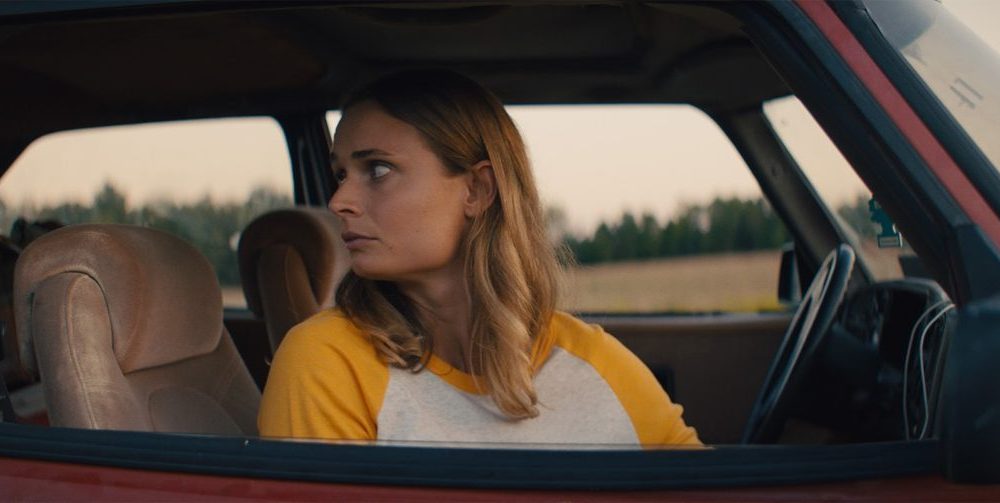
Malin Barr and Sawyer Spielberg are a mismatched couple heading into the New England countryside so that she research some sort of wheat disease that’s killing cattle. Rylie’s a Phd candidate in botany.

The ill-tempered, distracted mutterer in the driver’s seat of their ancient Saab? Sam is a “waiter/actor” with memory issues and a restricted diet. Rylie’s the one doing the restricting.

They get lost when they lose their cell phone GPS signal, get chased off their unpermitted campsite in the dark. And then the Saab dies, as they were wont to do.

There’s nothing for it but to hoof it to something Rylie spies in the darkness.

“What, the light?”

“No, the darkness SURROUNDING the light.”

Sarcasm is wasted on Sam.

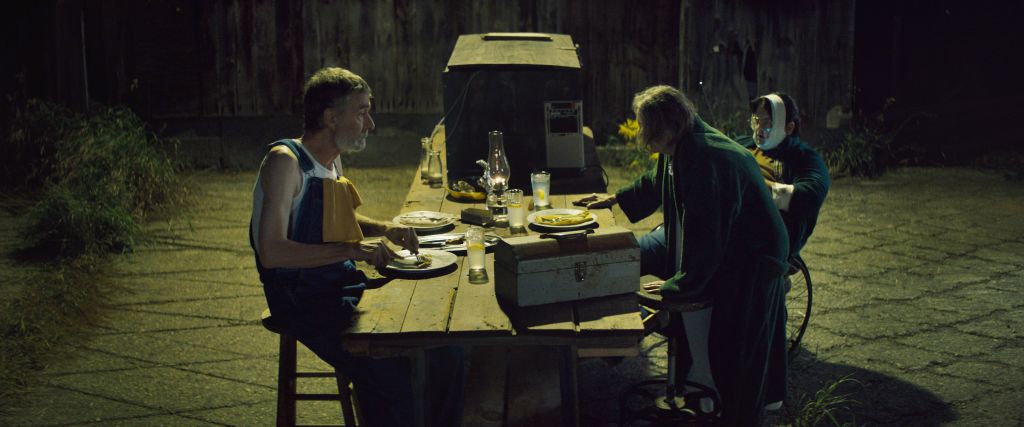
Every encounter they’ve had with the locals has been bizarre, but that’s nothing when compared with the dotty little old lady (Barbara Kingsley) who “Where are my manners?” them through her door, feeds them and lets them wonder just what the hell is going on around here.

There’s no cell service. Her landline only goes so far as “Pete,” an aged peer she summons to give them a jump-start. The family photos on the walls show aged Karen pushing around Cousin It in a wheelchair, and her son (Jamie Bradley) is mute, bandaged and morbidly obese.

“He might look like a chunky monkey now, but time was he’d come in at an even 400!”

Writer-director Milburn hurls every ounce of “technique” he can think of at the screen to dress up this “trapped in the dark” tale into something flashier.

The split-screens, screen wipes and moaning, layered, chanted incantations sound-effects and electronica score scream “70s Cinema.” The random XCU edits and gruesome closeups of bloodied bear traps and weird injuries have “David Lynch” written all over them.

But whizbang editing aside, it’s a slow slog of a movie with a seriously obvious destination.

In his first leading role, Spielberg — you know who’s son — proves adept at acting really annoying. The Swedish-born Barr is properly immersed in her role, such as it is.

There’s just not enough movie surrounding them to make “Honeydew” worth your trouble.

MPA Rating: unrated, blood, sex, profanity

Cast: Sawyer Spielberg, Malin Barr, Barbara Kingsley, Stephen D’Ambrose, Jamie Bradley

Credits: Directed by Devereux Milburn, script by Dan Kennedy and Devereux Milburn. A Dark Star release.

Running time: 1:47

Posted in Reviews, previews, profiles and movie news | Comments Off on Movie Review: Sinister, strange and “Lynchian?” “Honeydew”

Netflixable? A three-handed mystery-thriller from India, “Irul”

Today’s journey Around the World with Netflix lets us see how an Indian team approaches the classic “three hander,” the time-worn stagebound thriller with only three principal characters.

“Irul” is a chatty, twisty and overwrought “dark and stormy night” tale that almost drowns in its cornball theatricality. But like all such tales, it can be fascinating in the ways a different culture approaches dramatic conventions and claustrophobic screenplay problem solving.

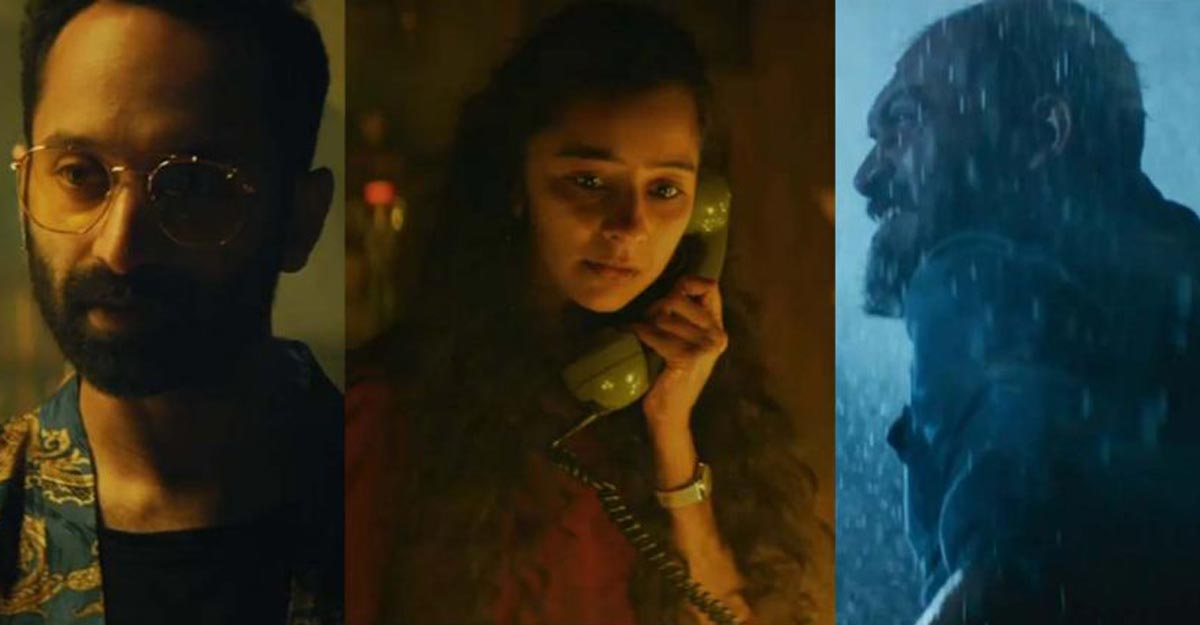
Soubin Shahir is Alex, a novelist with a hit murder mystery on the shelves. Darshana Rajendran is Archana, his steady date, a big time lawyer who is addicted to her cell phone.

One dinner date interrupted by an endless succession of calls later, she lets him guilt her into a weekend getaway. “No cell phones,” he decrees, and she agrees (in Malayam with English subtitles, or dubbed).

Then that “dark and stormy night” sets in, the car breaks down in the middle of nowhere on a stunningly scenic and twisty mountain road that “Top Gear” and “The Grand Tour” should take note of. Nothing for it but to hike to a nearby mansion in the downpour and call for help.

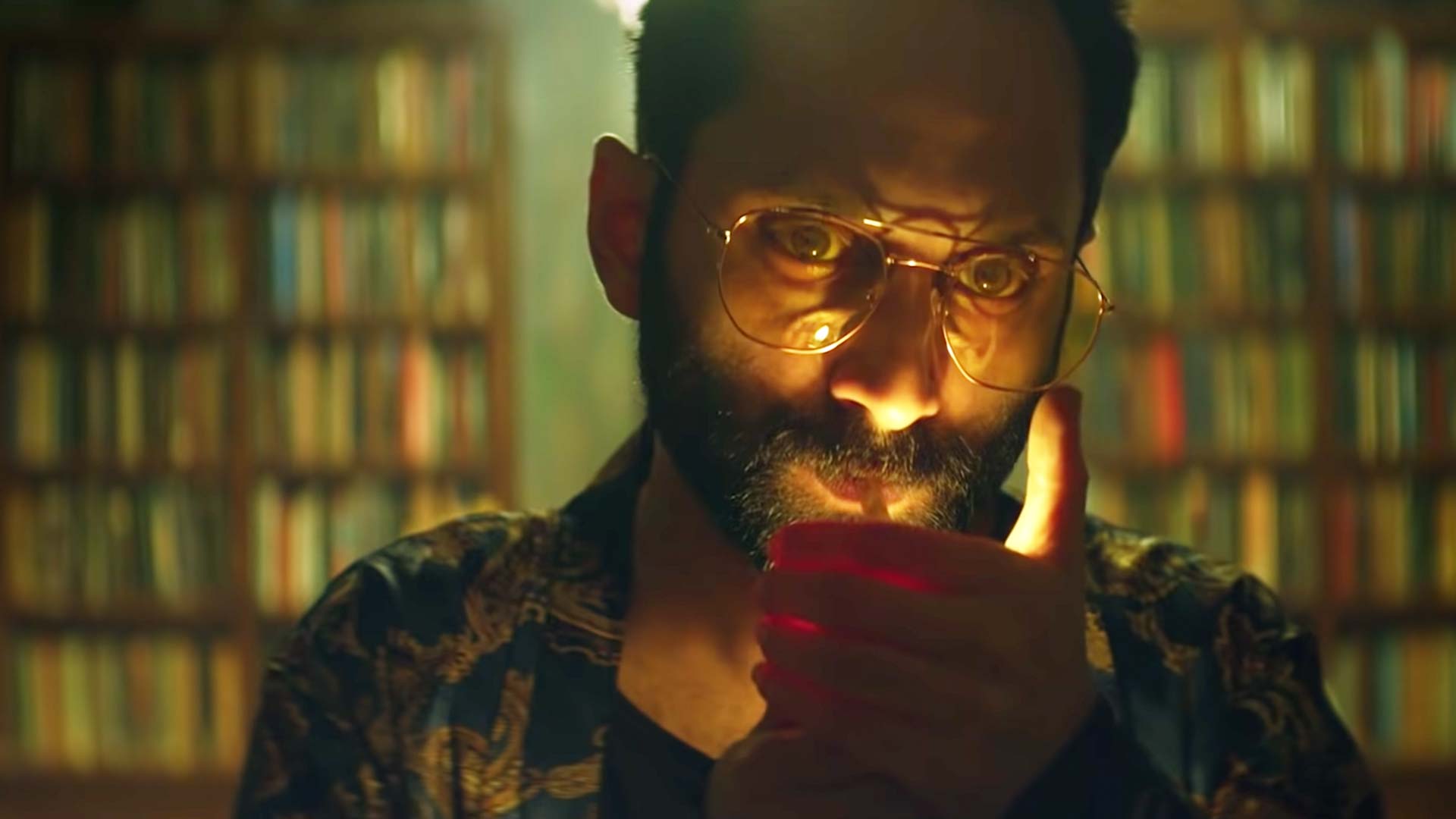
Nobody answers the pounding on the door, or the ringing doorbell. They’re all but resigned to look for a Plan C when a tall man (Fahadh Faasil), answers, dramatically sucking down cigarettes in his elegant bathrobe.

Got a cell? A landline? Can we use it? What’s your name?

“As your host, I reserve the right to ask questions!” And no, the land line is down and “I don’t believe in cell phones.

“How convenient,” our couple must wonder — in Malayam or English or any language where common sense and theatrical conventions are spoken.

Let the evening’s intrigues begin. The power goes out, as does the cork.

“In vino veritas,” the shady host purrs as he pours out a little truth serum.

Damned if he doesn’t know Alex’s book. And before you know it, we’re in a heated discussion of serial killing, justice, “facts” vs. “truth” and lawyers — “who convert lies to truth for a living.”

Game on? What’s everybody hiding?

The incessant dialogue, dithering through the obvious, is wearing and the first sign this movie isn’t going to amount to much. Rajendran’s Archana is forced to blabber away constantly, and in the most inane way.

Car’s broken down, “Alex, should we call for help?” YA THINK?

Things go further awry, “Alex, should we call the police.” “Alex, we should DO something!” “Alex!” “ALEX!” “ALEX!”

Is she worried she or the viewer will forget the protagonist’s name?

The chatter doesn’t paper over the logical holes in the script, the far-fetched spin on a most conventional plot set up. Anything that we don’t see coming in this story trips us up because it is the least logical solution to the mystery placed before us, as in “That’s ridiculous.”

And the coda is downright laughable.

Still, there’s enough here that “Irul,” which means “darkness,” would be a fun, moody movie for a screenwriting class to pick apart and try to workshop into something better.

MPA Rating: TV-MA, violence

Cast: Fahadh Faasil, Soubin Shahir, Darshana Rajendran 

Credits: Directed by Naseef Yusuf Izuddin, script by Sunil Yadav, Naseef Yusuf Izuddin, Obeth S. Thomas, Anaz Bin Ibrahim and Abhiram Pothuval. A Netflix release.

Running time: 1:31

Posted in Reviews, previews, profiles and movie news | Comments Off on Netflixable? A three-handed mystery-thriller from India, “Irul”

Movie Preview: Jonathan Rhys Meyers goes Conrad — “Edge of the World”

June 21, Meyers brings one of the obscure legends of British colonialism, Sir James Brooke, to life. His visit to 1849s Borneo inspired “Lord Jim” and “The Man Who would Be King,” tales of a white man ruling native kingdoms, which is what he did.

Politically correct? Not a chance.

Posted in Reviews, previews, profiles and movie news | Comments Off on Movie Preview: Jonathan Rhys Meyers goes Conrad — “Edge of the World”

Movie Preview: Andrew Garfield’s an influencer who goes “Mainstream”

Maya Hawke’s his protege, with Jason Schwartzman also in the cast.

IFC has His Coppola’s latest, “Mainstream.”

Posted in Reviews, previews, profiles and movie news | Comments Off on Movie Preview: Andrew Garfield’s an influencer who goes “Mainstream”

Netflixable? Sad, scenic “Keeping the Bees” shows a Turkey we never see in the movies

“Keeping the Bees” is a Turkish drama set in the little-filmed northeastern region of the country, in the southern edges of the Caucasus Mountains.

It’s a downbeat parable about a local woman (Meryem Uzerli) who comes home from Germany, where she lives and was educated, only to find herself trapped in a place where she no longer fits in.

The trap? Her dying mother (Sennur Nogaylar) has but one wish.

“Take good care of my bees.” Mom lives just long enough for Ayse to complain that is “my biggest fear,” something she never got over growing up there. “I can’t do it,” she declares, in Turkish with English subtitles.

But what’s a daughter to do? Mom dies and Asye is on the phone, barking in German, trying to tidy up affairs there before settling into bee keeping duty in the Motherland.

“I can overcome my fear,” she assures one and all.

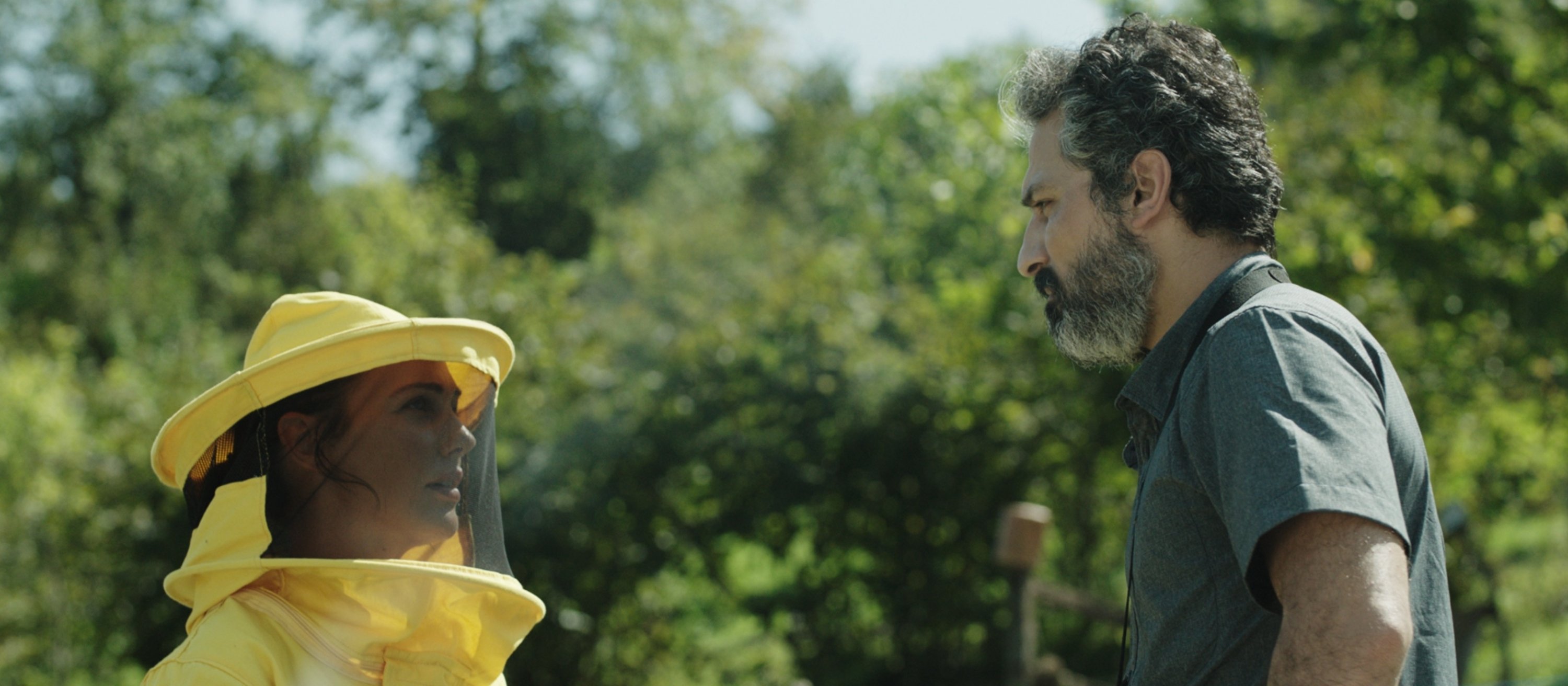
She’s got Mom’s loyal assistant Ahmet (Hakan Karsak) to help teach her the inscrutable ways and peculiarities of “Caucasian bees.” The fact that it’s a wet year means there’s no honey money coming. But college gal from the Big German City has her internet. None of your superstitions, thank you very much. She finds a Buckfast variety of bee “that can see in the rain.”

“English bees,” Ahmet sniffs. That’ll never work.

She wants to paint the hives pretty colors for her webpage advertising.

“Caucasian bees” are finicky about that, he warns.

As she’s dealing with Ahmet’s backtalk and facing the resentment of her stuck-in-Turkey-for-life sister Mine (Burcu Salihoglu), the weather improves and her plans start to show promise. And then a Caucasian Brown bear shows up and Ayse’s life and this whole world is tossed about.

The endangered bears are “untouchable” here, the wildlife cop Ilker (Feyyaz Duman) warns.

But plainly, these late night wreck-every-hive raids are not part of Ayse’s business plan. We can see how pissed she’s getting, no matter how charming the hunky Ilker is. Something’s got to give.

Writer-director Eylem Kaftan has a little fun with Ayse’s phobia, letting her flip-out when a bee gets in her bee suit. And there are comic possibilities at how angry she gets at this bear, which the wildlife folks have named “Chestnut” and have an affection for.

But Kaftan takes things into the realm of magical realism, as Ayse dreams about her phobias, her mother’s possible connection to the bear, or the curse that Ayse herself might have brought down on them all by taking over her mother’s hives and disrespecting the bees.

“She shows up, so does the bear,” Ahmet gripes.

The film’s attempts at lightness fall by the wayside as Ayse deals with the guilt of doing the unspeakable to the “untouchable” Chestnut, and bad karma blows her way.

But “Keeping the Bees” is still a lovely film, with a kind of Caucasus folk serenity about it. It’s not “Honeyland” gorgeous and bee-centric. But the scenery is striking and Uzerli, a staple of German TV, makes a fascinating if not entirely sympathetic and amusing “fish out of water” in this world of Caucasus mountains, bees, bears and people.

MPA Rating: TV-14

Cast: Meryem Uzerli, Feyyaz Duman, Hakan Karsak, Burcu Salihoglu, Sennur Nogaylar

Credits: Scripted and directed by Eylem Kaftan. A Netflix release.

Running time: 1:33

Posted in Reviews, previews, profiles and movie news | Comments Off on Netflixable? Sad, scenic “Keeping the Bees” shows a Turkey we never see in the movies

Classic Film Review: “Waterworld,” that’s right “WATERworld”

Is the world rediscovering a lost masterpiece as it flocks (via Netflix) back to “Waterworld?”

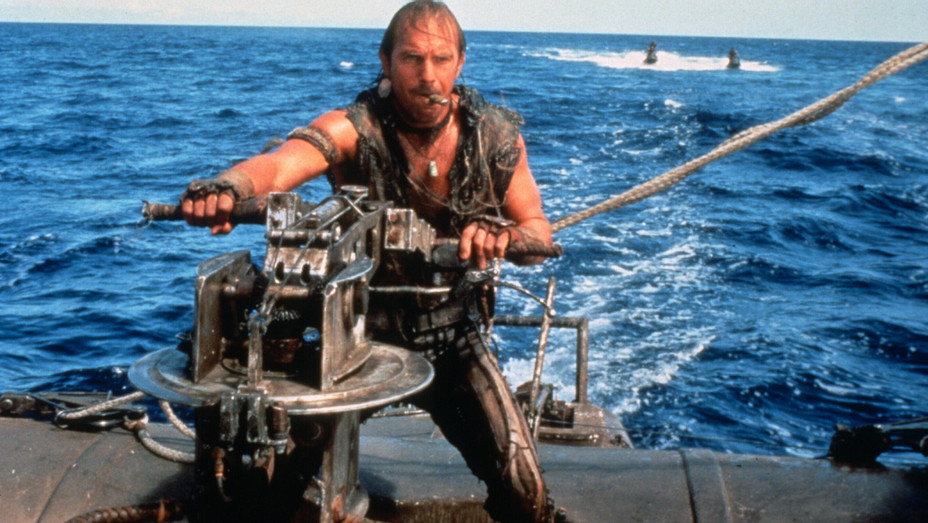
Maybe that’s going a bit far, but revisiting this film, which I found fun and often thrilling upon its initial release, is a reminder of what epic movies used to look like, what real ambition could be in an action film and Lord Almighty, was Kevin Costner the Douglas Fairbanks of his day, or what? A man before the mast, because we all look more macho on a sailboat.

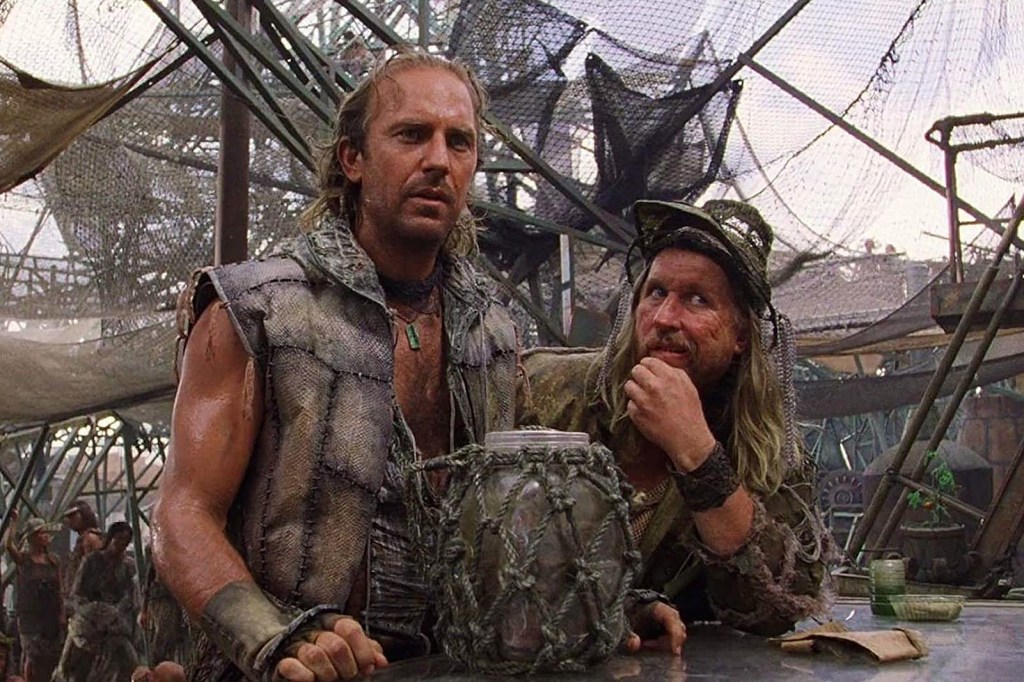
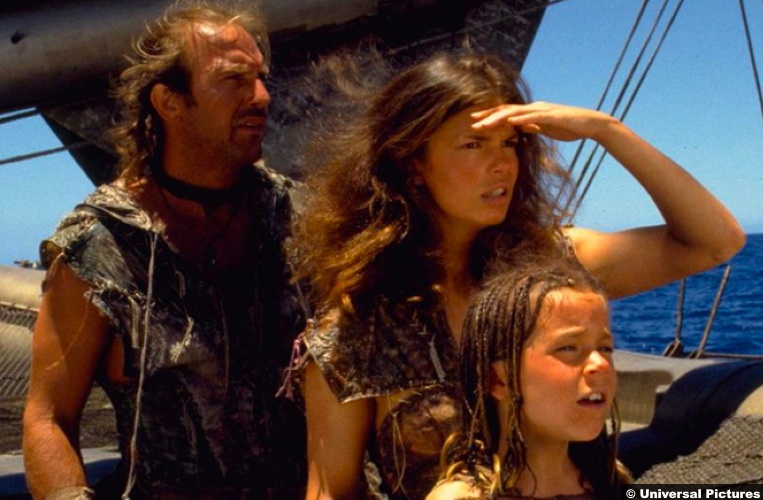
He’s the Mariner, a hero with an anti-social attitude, a bitching trimaran and uh gills in a future where climate change (this came out in 1995) has flooded the planet and left its survivors floating around on scavenged boats (Fiberglass, man, even the apocalypse can’t kill it.) and pontoon atoll villages.

The biggest “boat” of all? It’s home to the “smokers,” jetski goons led by the one-eyed Deacon, played by Dennis Hopper as if this would be the last time he’d ever get to go this crazy on celluloid.

“You know, I thought you were stupid, friend. But I underestimated you. You are a total freaking retard!”

Queue “maniacal laugh.”

It was a troubled production, way over budget. Tina Majorino and Jeanne Tripplehorn almost drowned early in the shoot when the stunt trimaran they were on sank. Every review brought that up, including mine, filed several newspapers ago and thus lost. Rewatching it, you don’t have to consider that. But even back then, I thought this was a stitch. I’m a sucker for sailboat movies.

When you’re going big, that’s a risk. I interviewed the late Gregory Peck just as this was about to come out. He was making a farewell tour of “An Evening With Gregory Peck,” and I mentioned the film in light of Peck’s own experiences making “Moby Dick” at sea with John Huston in the ’50s.

“Well,” he chuckled, “I could’ve told them. But where’s the fun in that?”

What’s still glorious about the film 26 years after its release are its action beats — as thrilling as anything ever shot at sea. Chases, sea battles, an air attack (Check out the more famous half of Tenacious D playing a pilot.), and Costner, one of the few action heroes then or now able to stand tall amidst the mayhem and register as heroic, one man against the ugly edges of what’s left of mankind.

His quest? Get “the prodigal girl” (Majorino) to whatever this “map” tattoo on her back has as its destination. But first, he’s got to be talked out of his rational solution to an on-boat water shortage.

“Toss her over the side.”

Director Kevin Reynolds and the production team immerse us in this soggy, aged and worn-out universe of sail, salt water, two-stroke gas engines and something mythic that no one living can remember seeing — “dry land.”

It’s “Road Warrior” at sea, with recycling, soil preservation and “Sailing is more righteous than anything that runs on gas” messaging, and an awful lot of gun, knife and harpoon play.

Great lines?

“If I let you outta here, you’re taking us with you!” Jeanne Tripplehorn’s motherly Helen barks at the Mariner, who is drowning in a cage sinking in a sewage lagoon and thus unable to haggle.

“Sure,” Costner’s Mariner gulps.

“Nothing’s free in ‘Waterworld!'”

“Don’t just stand there, kill something!”

“What’s that cousin’s name, Chuck? Maybe he doesn’t answer to Chuck. Call’em Charlie, or Charles.”

“Look, it’s the gentleman guppy.”

“Wanna cigarette? You’re never too young to start.”

The script, by Peter Rader and David Twohy, is jokey and kind of all over the place in terms of the “logic” of this world. Don’t let yourself get caught up in the math, the actual depth of the seas if all the ice melts, the amount of time it would take for humans to grow gills, nonsense like that.

Just lose yourself in adventure, the scale, the sarcastic scope of Hopper’s villainy and the sardonic “reluctant hero” all this rides on.

“Waterworld” is prophetic, cautionary and agenda-driven. It’s also epic and a damned entertaining ride, all two hours and 15 minutes of it.

MPA Rating: PG-13 for some intense scenes of action violence, brief nudity and language 

Cast: Kevin Costner, Jeanne Tripplehorn, Tina Majorino, Zakes Mokae, Michael Jeter and Dennis Hopper.

Credits: Directed by Kevin Reynolds, script by Peter Rader, David Twohy. A Universal release (now on Netflix).

Running time: 2:15

Posted in Reviews, previews, profiles and movie news | 1 Comment

Movie Review: “Voyagers” travel to the dark side of humanity

Writer-director Neil Burger (“The Illusionist,” “Divergent”) serves up a great big “Lord of the Flies in Space” sci-fi allegory in “Voyagers,” a bleak thriller about human nature’s toxic side, unleashed on a long space voyage.

It’s not terrible, but it’s not nearly as hopeful as he might have intended. As our young crew of colonists give in to their violent urges and all the dark tendencies hard-wired into humanity, it’s hard not to see this parable too clearly to let yourself enjoy it.

If the past few years have taught us nothing, it’s a creeping despair that the human race ever could get its act together to fend off climate catastrophe and organize, finance and commit to sending a “select” crew to start life on another world. Voting for sociopaths, violently resisting the common good, giving in to every whim and shortsighted impulse, there’s nothing Burger shows us here that really provides “escape.”

How’s that not Life Under Covid with the unmasked, the anti-vaxxers and the anti-democracy traitors among us?

A few decades into the future, Earth has begun its death spiral. Whatever scrambling the planet does to stave that off is immaterial. An Elon Musk mindset has taken hold. We must send humans to a suitable substitute planet to ensure that the species survives, even if Earth doesn’t.

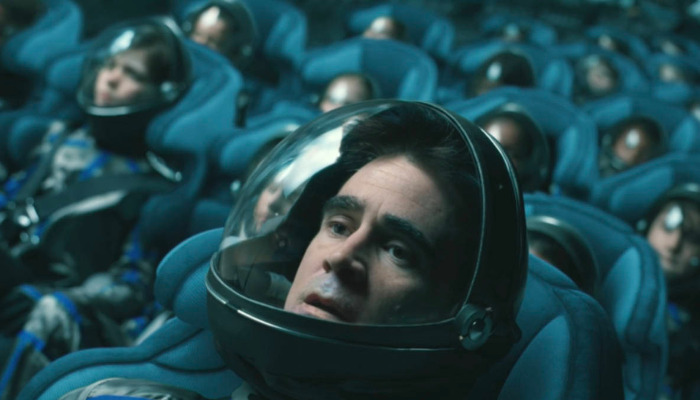
It’s an 86 year journey away, meaning three generations will live and serve on a ship traveling there, reproducing through artificial insemination, noses-to-the-maintenance/food-growing grindstone from life to death. To make this work, that first gen has been raised without any contact with life on Earth, genetically selected and incubated for their tasks.

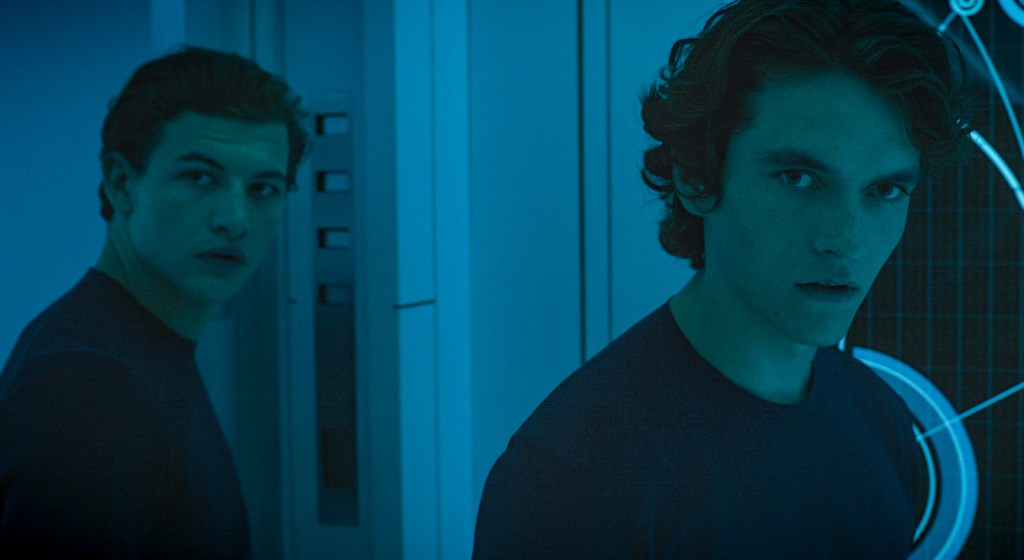
They’re packed off as tweens, with mission planner Richard (Colin Farrell) along because “someone should be there to raise them.” But “10 years later” the smartest among them Chris (Tye Sheridan) has figured out something’s amiss. And his friend Zac (Fionn Whitehead) is just hotheaded enough to suggest they act on it.

They’re being drugged. It’s “in the program.” Individuality, aggression, joy and sexuality have been tamped down. A quiet, efficient and sterile ship life for the crew of 30 is the result.

It’s “the only way to deal with living like this,” Richard counsels. But “We didn’t ask to be here” is the first indication that they’re eschewing “the blue” drug and carrying on as their true selves.

Zac aggressively comes on to the medical officer Sela (Lily Rose Depp), wrestling and goofing off spreads and then the inevitable communications breakdown hits, requiring a spacewalk.

Insulating these folks from Earth life means nobody’s seen “2001: A Space Odyssey” or any of the other films to use that emergency as the inciting incident.

The ship is also making creepy noises — thumps and gurgles. Has something latched onto the spacecraft?

Our Humanity in a Microcosm experiment blows up in all the usual ways — hormones, aggression, bullying, anti-social revolt and fatalism blow up in a post-puberty rush. They blow past “high school cliques” and go straight into murderous nihilism.

Chris, Sela, Phoebe (Chanté Adams) and a couple of others can’t reason with an increasingly unhinged Zac and those who would follow their Dear Leader right off a cliff with smiles on their gullible faces.

The performances, actors playing stock characters, are passable if not terribly compelling. The production design is first rate. But we see every single story beat coming at us like a comet we’ve been expecting for years.

Burger may be saying something important and pertinent to life today in “Voyagers,” but he’s saying it in such obvious ways that there’s little pleasure in this seriously derivative thriller. We know what’s coming, and knowing that, the viewer becomes a nihilist right along with Make Our Spaceship Great Again lemmings.

And what’s the nihilist’s motto? “There’s no point, nothing we can do about anything, so why bother?”

MPA Rating: PG-13 for violence, some strong sexuality, bloody images, a sexual assault and brief strong language

Cast: Tye Sheridan, Lily Rose Depp, Fionn Whitehead, Chanté Adams, Madison Hu, Archie Madekwe and Colin Farrell.

Credits: Scripted and directed by Neil Burger. A Lionsgate release.

Running time: 1:48

Posted in Reviews, previews, profiles and movie news | Comments Off on Movie Review: “Voyagers” travel to the dark side of humanity

Movie Review: Sam Harris steps out in “Ham: A Musical Memoir”

Hey, you can’t say you weren’t warned. I mean, it’s right there in the title.

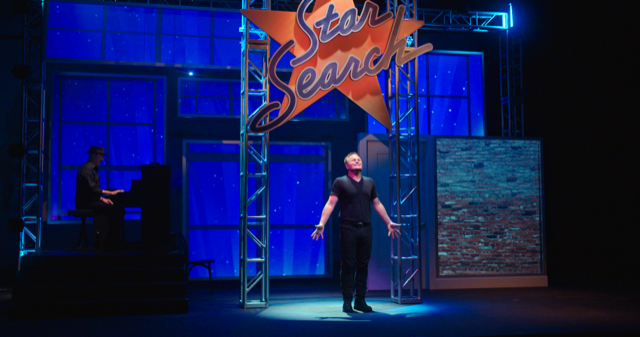
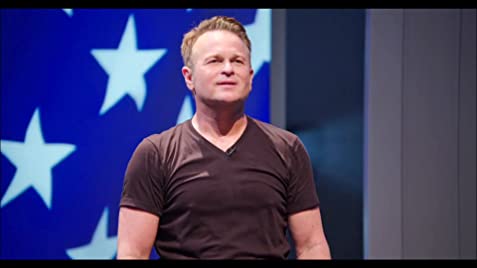
Broadway star, “Star Search” alumnus and LP-selling machine Sam Harris looked back over his greasepaint spattered life and recognized what anybody who makes it in the musical theater has to own.

He’s a ham. He’s a belter, a big-voiced Ethel Merman for the Stage of Our Age. And as he says in “Ham: A Musical Memoir,” which he adapted for this one-man (plus singing accompanist) show, you’d better not step into his spotlight unless you want to get stepped on. Even if you’re a little boy co-star, as he recalls in this film of a performance of that show.

“I’m an ooooopen book,” he sings. And a “Ham,” he adds, in the show’s title number.

Is it possible you’ve never heard of the guy? Sure. The shows he’s starred or co-starred in, aside from touring revivals, haven’t generally ventured from Broadway into common currency.

His “pop” LPs aren’t radio fodder. Truthfully, we don’t have to see the many glimpses of his aged, seemingly Midwestern audience to know he’s biggest in the Clay Aiken/Michael Buble/Andrea Bocelli belt, “Branson” here we come.

And he got his big break on a TV show that was popular, as he reminds us, long before the now-decrepit “American Idol” ever made its bow. Ed McMahon hosted “Star Search,” and a generation of country, pop and Broadway singers (Timberlake and Spears, Usher and LeAnn and Beyonce and Christina among them) became bigger names than him thanks to it.

“Ham: A Musical Memoir” is kind of generic as well. Shows like this, particularly the ones with song and (a little) dance in them, are basically extended versions of the famous monologues from “A Chorus Line.” Gay guy from Flyover America discovers his sexuality, struggles with it, finds his home in the theater and steps out of the shadows and into the spotlight.

Suicidal thoughts, “shame,” self-awareness, pride and triumph eventually follow.

Where Harris sets himself apart is in the self-effacing humor he embraces and the see-my-life-through-a-Broadway lens gags that follow from that.

He was a song and dance man from birth, he tells us. It doesn’t matter than he grew up in Sand Springs, Oklahoma, where “gay” wasn’t tolerated even after is wasn’t illegal. He can see that, now. Little League to impress his school band-director dad?

“Auditions– I mean TRYouts,” didn’t go well. They stuck him in “right field, that’s upstage left, house right.”

Harris, accompanied by Todd Schroeder, an upright pianist at an upright piano on a mostly-spare stage set, relates his life story in a breathless self-effacing patter, just like every “one man show” or “one woman show” of this type you’ve ever seen.

He breaks out a Carol Channing impersonation, relating how he inculcated “the show must go on” ethos from show people like her. There’s an original song or two, “Over the Rainbow,” his “Star Search” number — made for vocal histrionics — and snippets of “South Pacific” numbers (his stage debut as a kid) and his own spin on “Rain on My Parade.”

The glory in a simple, formulaic “musical memoir” like this is how familiar this ground has become, how the “you’re not alone” and “It gets better” messaging is reinforced with every new incarnation of this well-worn path through “My Wonderless Years.”

He’s on dicier ground when he recalls his teenage exposure to the African American “side of the tracks” in his hometown, and feels the need to impersonate the preacher he saw there.

But again, he knows his audience. That awakening will play in Branson. A show that’s just “theatrical” enough, just triumphant enough, just “look how far we/I’ve come” enough for Middle America’s comfort zone isn’t going to offend when its hero has an epiphany about America’s most oppressed.

MPA Rating: unrated, profanity, discussions of suicide, sexuality

Cast: Sam Harris, Todd Schroeder

Credits: Directed by Andrew Putschoegl, script by Sam Harris, based on his memoir. A Global Digital release.

Running time: 1:52

Posted in Reviews, previews, profiles and movie news | Comments Off on Movie Review: Sam Harris steps out in “Ham: A Musical Memoir”