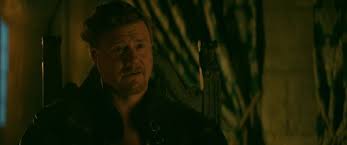
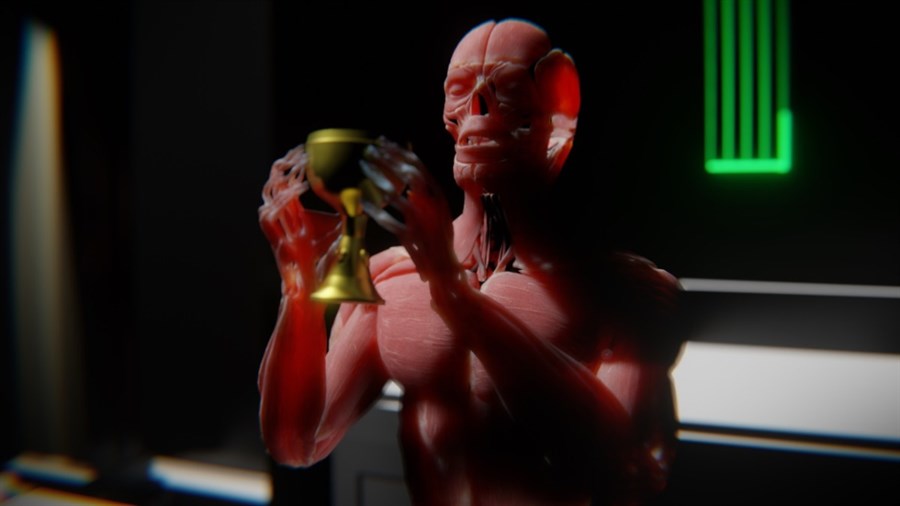


Documentary Review: Could the Meaning of Life be revealed by “A Glitch in the Matrix?”

People who’re seriously down the rabbit hole on any given subject are fascinating specimens, and often make for engrossing magazine profiles, book-length studies or documentary dissections.

Chess fans or “The Shining” fanatics, Scrabble buffs or orchid thieves, we never tire of taking a hard or merely wry look at those who only come up for air to share a bit of their obsession with we merely curious mere mortals.

Rewatching Rodney Ascher‘s “Room 237,” about seriously absorbed close-readers of Stanley Kubrick’s film of Steven King’s “The Shining,” I wondered how many of those interviewed in it, those on the conspiracy buff end of the spectrum, have been institutionalized since that film came out in 2012?

With “A Glitch in the Matrix,” Ascher’s found another subculture from pop culture to dive into, people who have taken a thought experiment a lot further than most of us would deem sane — “What if humanity and the whole of our existence is but a vast, complex computer simulation?”

It’s been kicked around a lot over the decades, and with people like tech genius Elon Musk and America’s Astrophysicist Neil DeGrasse Tyson giving it lip service or credence, fans of the “The Matrix” movies have started to extrapolate that maybe these twenty year old films are holy text, a warning or at least a hint of what might really be going on.

Ascher’s documentary is a deeper dive than most of us would ever care to take into this, filled with testimonials from those so obsessed and paranoid that they prefer to be interviewed as digitally-animated avatars, or speak by phone from the prison where they’re being held for murdering their adoptive parents.

But it’s fascinating as a deconstruction of pop culture history and way of looking at how thinkers have looked at the world, from Plato’s parable about “The Cave” to the entire canon of sci-fi writer, futurist and in the end, madman Philip K. Dick.

Using snippets from panel discussions Tesla/Space X mogul Musk participated in, clips from the many movies and series made from Philip K. Dick’s stories (“Blade Runner,” “A Scanner Darkly,” “Minority Report,” “The Man in the High Castle”), fresh interviews with academics, thinkers and video-game junkies deep into what I’d call a “digital theology,” Ascher ponders the thesis Musk presented publicly and echoes in frequent half-winking tweets.

At some point, Musk says, extrapolating the sprinting advancement of video games from Pong to whatever VR sim world fans are deepest into today, “games will become indistinguishable from reality.” And others, echoing that, suggest the nature of technological civilizations might be that at some point, we get tired of doing things andf lose ourselves in play-acting/simulating that we or avatars we create and control are doing them.

Yes, that’s the premise of a few “Star Trek” episodes. But what if it’s already happened and some advanced entity, computer or civilization is running one and we’re in it?

The more fancifully-inclined interviewed here scrutinize the “synchronicities” in their lives — little coincidences that suggest to them that a computer is reading their thoughts and extrapolating scenarios that foretell a relationship renewed or a next meal you didn’t realize you craved.

The anchor voice in “Glitch” is the mysterious Dick himself, appearing at a 1977 French symposium and giving a speech about how “we’re living in a computer-programmed reality,” how his dreams and snatches of what he recalls from being under anesthesia tipped him to this “reality” and informed his seriously out-there fiction.

“If you think this world is bad,” he famously joked, “you should see some of the others,” implying that he’s seen them, if not actually visited them.

Some have taken that long (with longer pauses for translation) speech as proof of Dick’s growing paranoia and mental illness. But this Big Idea was out there already, and not just in classic “Trek” episodes. Douglas Adams conceived his “Hitchhiker’s Guide to the Galaxy” in the early spring of 1977. a radio series that morphed into books, a TV series and a feature film (sampled in “Glitch”), comical fiction which suggested that the Earth was a multi-million year science experiment, conceived by a computer, to come up with the Meaning of Life. “Tron” went inside a video game and gave characters digital lives there.

“The Matrix” movies absorbed that from the zeitgeist, folded it into a video game or digital simulation that Keanu and Carrie Anne, Laurence and Hugo performed, lived and died in and fought to escape.

And some people, like the “Glitch” subject interviewed by phone with the unmistakable sounds of a prison in the background, used that “reality” to try and explain their descent into murderous madness.

I found the “Matrix” movies eventually-tedious eye candy when they came out, but “A Glitch in the Matrix” succeeds in making the argument that they could be as appealing as “Avatar” or “Star Wars” as a universe and way of thinking one could lose himself (all of the obsessives interviewed here are guys) in.

“Glitch” becomes as repetitious as “The Matrix” in its own right, and some of this can’t help but come off as a filmmaker indulging the slightly or greatly deranged…again.

But the documentary, like the idea behind it, makes for a fascinating thought experiment. And a few years down the road, maybe it’ll be worth revisiting to wonder if more than one interview subject has wound up in an institution.

MPAA Rating: unrated, adult situations, discussions of violence

Cast: Nick Bostrom, Joshua Cooke, Erik Davis, Paul Gude, Elon Musk, Neil DeGrasse Tyson and Philip K. Dick.

Credits: Directed by Rodney Ascher. A Magnolia release.

Running time: 1:48
Posted in Reviews, previews, profiles and movie news | 2 Comments

Movie Review: “A Nightmare Wakes” and Cures Insomnia

So many movies about Mary Shelley and the writing of “Frankenstein,” and yet there’s always room for another bad one.

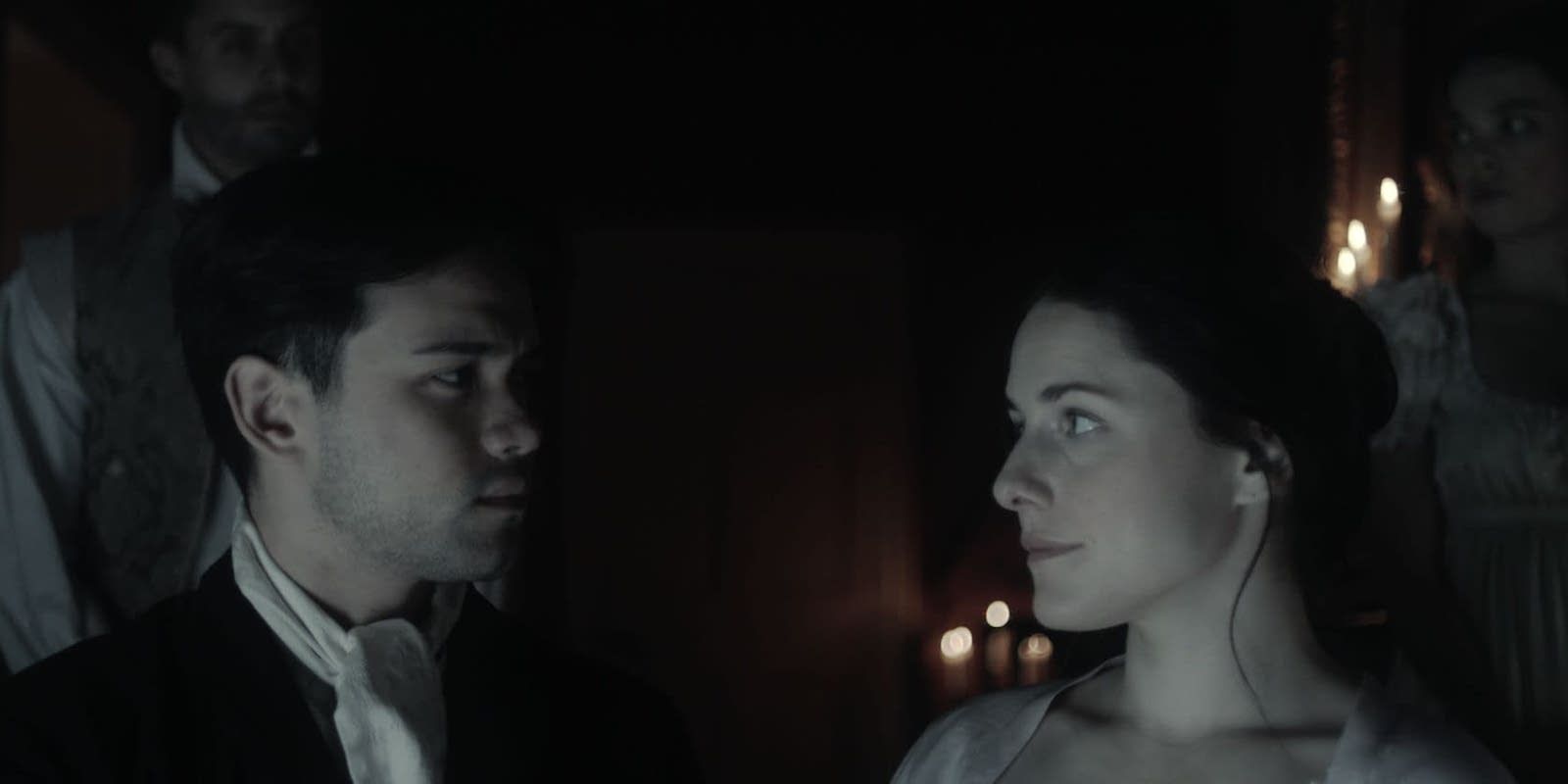
“A Nightmare Wakes,” coming entirely too soon after the bigger budget/name cast “Mary Shelley,” or for that matter “Gothic” and the all-star “Rowing with the Wind” in the ’80s, is a version of the Frankenstein creation myth that makes one wonder how the writer, wife of poet Percy Bysshe Shelley and confidante of Lord Byron, ever had the time.

What with all the bad, dimly-lit sex, the dead babies and the bloody soap opera that swirled around their circle, her adulterous lover-later-husband sleeping with her half sister, impregnating his not-yet-ex-wife, Byron coming on to anything with two legs I mean.

Who, even today, could keep it all straight? Aside from Shonda Rhimes?

Not writer-director Nora Unkel, alas, losing herself trying to turn an overfamiliar story, of Lord Byron’s teasing “best ghost story by firelight” “competition, his doctor and pal Polidori coming with the first famous vampire story and Mary S. topping it with ” It’s alive… It’s alive, it’s moving, it’s alive, it’s alive, it’s alive, it’s alive, IT’S ALIVE!”

I mean, she could see the screenplay possibilities, even back in 1818.

That’s when Mary (Alix Wilton Regan), the man who made her “the other woman” Shelley (Giullian Yao Gioiello) and her half-sister Claire (Claire Glassford) summered in Switzerland with Byron (Philippe Bowgen) and Dr. Polidori (Lee Garrett).

Even if you can’t remember all the particulars, the basics stick to you, film by Gothic film. Percy’s haunted and lusty, Byron’s the doomed life of the party, Polidori’s got a great idea for a genre-launching novel (“The Vampyre”). Mary Shelley? She’s the one with the nightmares, haunted by lost babies and blood and lives that might be retrievable after death, with the right application of…science.

Unkel films much of the story in a period piece murk, crafting a short thriller that seems to waste more screen time than it can afford. Staring out onto the lake, wading in the lake, rejecting Percy’s sexual advances, submitting to others, and on and on.

There’s little here recognizable as “Frankenstein in the Writing,” just a hint of a scene or two from the novel (not the bowdlerized films of it) coming to Mary, and the odd shot of her tipping quill into ink and scribbling furiously on the page.

She may “feel like Michelangelo chipping away at a block of marble.” That doesn’t mean we’d want to watch a movie of her doing that.

“It was on a dreary night of November,” she intones more than once, in love with that line from the finished book, a masterpiece polished by one of the great poets of the day — her husband.

Whatever it is most of us want from this story — little tastes of recitation by candlelight raising the hairs of the back of the neck would be grand — aren’t here. And no repetitious shots of Mary’s sex life or her visions of bloody eyes, bloody nightclothes and bloody hands make up for it.

This “Nightmare” all but put me right to sleep.

MPAA Rating: unrated, sex and blood

Cast:  Alix Wilton Regan, Giullian Yao Gioiello, Philippe Bowgen, Claire Glassford and Lee Garrett.

Credits: Scripted and directed by Nora Unkel. A Shudder release.

Running time: 1:31

Posted in Reviews, previews, profiles and movie news | Comments Off on Movie Review: “A Nightmare Wakes” and Cures Insomnia

Movie Review: A Car Thief gets more than He Bargained for in that Toyota “4×4”

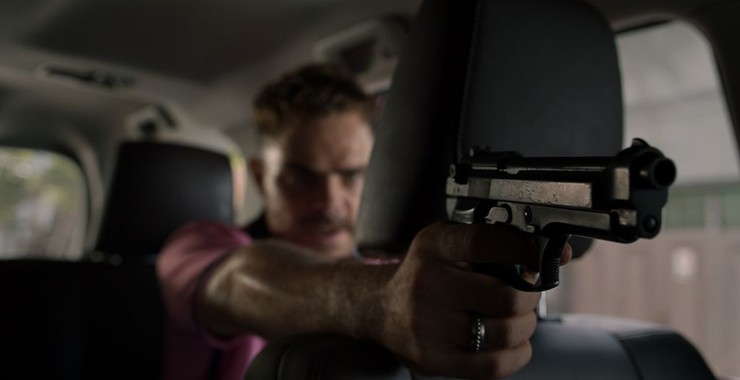
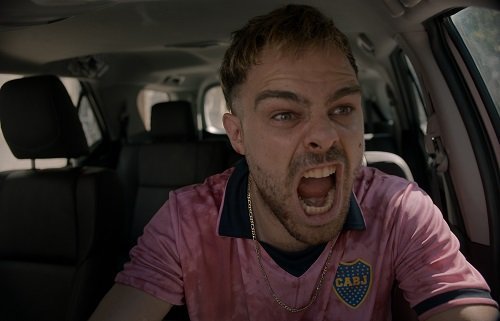
Men watching “4×4” might breathe a sigh of relief when Ciro, trapped inside a locked-and-bulletproof Toyota Highlander, reaches into the glove compartment and consults the owner’s manual.

Women viewers? We know you’re going to roll your eyes, so just get on with it. I mean, the guy’s been stuck inside this inescapable SUV for over two days. And after kicking and shooting at windows, dismantling doors, tearing up carpet and what not, this accomplished car thief finally does what no man ever wants to do.

He reads the owner’s manual. Sure, he ends up chewing on a few pages of it, because he’s dying of thirst and starving. But you and me, we all get the joke.

“4×4” is an Argentinian thriller that is simplicity itself — just a thief, trapped in a car he just tried to steal, harangued and lectured by the owner of the Toyota, who occasionally calls in to see how Ciro (Peter Lanzini) is doing and remind him of the “28” robberies, burglaries, kidnappings and stolen cars he’s endured in his crime-ridden corner of South America.

Dr. Enrique (Dady Brieva) has, we realize, had enough — MORE than enough. And this modified SUV, with bullet-proof tinted windows that no one can see into, soundproofed so no one can hear screams or gunshots, is designed to be Eddie Izzard-look-alike Ciro’s coffin. Maybe.

Director and co-writer Mariano Cohn has to, by rights, open this story up in the third act. But for much of the film, it’s just Ciro suffering (he injures himself), dehydrating, freezing (the doctor controls the AC, etc), trying to reason his way out and considering the mess of a life he’s had that put him in this spot.

“This place is full of poor people, with laws made by rich people and FOR rich people,” he rationalizes (in Spanish with English subtitles). Damned if he’s going to change. But man, has he screwed up and big time.

The minimalism works well in the early acts, and even the preachy finale — with its civics and socio-political debates built in — doesn’t wholly break the spell of “4×4.”

If nothing else, you’ll pick up your owner’s manual and give it a glance after seeing this one.

MPAA Rating: unrated, violence, profanity

Cast: Peter Lanzani, Dady Brieva

Credits: Directed by Mariano Cohn, script by Mariano Cohn, Gastón Duprat. A Red Hound release.

Running time: 1:31

Posted in Reviews, previews, profiles and movie news | Comments Off on Movie Review: A Car Thief gets more than He Bargained for in that Toyota “4×4”

Movie Review: A portrait of “True Mothers” is Japan’s “Best International Feature” entry at the Oscars

The “comedy of manners” is a long-established tradition of Western fiction. Jane Austen collected a lot of posthumous Oscars mastering that genre.

The “tragedy of manners” is less common, limited to the occasional “Remains of the Day.” But if any culture has the potential to claim it as its own, it might be Japan’s. A nation of rigid social norms and manners rendered into rituals, it’s fertile ground for Japanese fiction writers and filmmakers.

“True Mothers” is a long, somber Japanese tragedy about childbirth and adoption, and an object lesson in apology culture. Characters are wronged and do wrong, disappoint and let each other down. And nothing can be done about it and no one can move on with his or her life until that apology comes.

Filmmaker Naomi Kawase (“Sweet Bean”), adapting a novel by Mizuki Tsujimura, tells us two mothers and one child, breaking each story out separately in two long flashbacks, tying the women at a couple of intersections in their stories.

We meet doting mom Satoko (Hiromi Nagasaku) as she quietly sings to her little boy Asato (Reo Sato), who is brushing his teeth. It’s his first day of kindergarten, and she and husband Kiyokazu (Arata Iura) have planned their day around walking him to school.

She’s a stay-at-home mom, he’s a watch-checking office drone. But they’re a team and this kid, in his suspenders and cap, will have every advantage they can give them.

A call from the school later that same day interrupts that. There was a playground accident. Asato is blamed for it. He denies it, but Mom broods and frets over who to believe, how to gently question the teachers. She even calls the mother of the other little boy.

The woman she calls is taken aback that she hasn’t called to apologize, and dumps a blunt “settlement” demand, doubling down on her rudeness. An apology might fix this, but is it merited?

As she ponders this, Satoko takes us back to her courtship and the difficulties she and Kiyokazu had getting pregnant. He frets about this in a drunken bar confession with a colleague, professes to be less “obsessed” with having children, and even goes so far as suggest “divorce is an option,” offering her a way out. It’s a medical problem on his end and he feels humiliated.

They reluctantly turn to adoption, dealing with some fairly draconian conditions that “Baby Baton” demands — one spouse will have to give up their career, the child must be told he or she is adopted, etc.

After all that, now they have the added shame of wondering if their is pushing other kids off the monkey bars? To top it all, Satoko has been fielding with hang-up calls. Finally, the caller speaks and she says she’s the birth mother and she wants her child back.

That points us to the sadder story of teenaged Hikari (Aju Makita), a shy Nara schoolgirl who fell for the first guy to take an interest in her, swooned at her first kisses and wound up pregnant, to her family’s eternal shame.

Well, at least the boy apologized. But that’s perhaps the last thing that goes right for her.

Kawase and her players tell these interfolding stories with great sympathy and compassion, leaving little twists and bits of mystery for the viewer to pick up on as we’re immersed in lives that are tested by this pregnancy, this childhood and the ongoing repercussions of giving up a baby for adoption.

With Japan’s sagging birthrate, “True Mothers” has greater cultural significance at home than it does abroad. But the universal elements of this story are touching, no matter where you live.

The sedate, baby-steps storytelling style won’t be to every taste. “True Mothers” is a melodrama with 90 minutes of story awash in 139 minutes of movie.

Kawase holds our interest by letting us see the unexpressed pain of characters generally too well-mannered to express loss, shock, outrage and resentment out loud. That won’t entertain everyone who meets these “True Mothers,” but there it is.

MPAA Rating: unrated, adult subject matter

Cast: Hiromi Nagasaku, Arata Iura, Aju Makita and Reo Sato

Credits: Directed by Naomi Kawase, script by Naomi Kawase and Izumi Takahashi, based on a novel by Mizuki Tsujimura. A Film Movement Release.

Running time: 2:19

Posted in Reviews, previews, profiles and movie news | Comments Off on Movie Review: A portrait of “True Mothers” is Japan’s “Best International Feature” entry at the Oscars

Movie Review: Plague and witches meet in “The Reckoning”

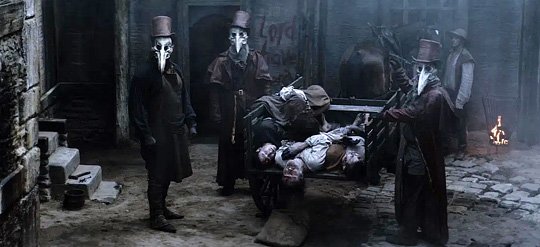
The interminable horror period piece “The Reckoning” is a picture out of its time. It’s a Restoration plague, swirling amidst witch hunters, witch trials and positively Medieval punishments.

Let’s give Neil Marshall (“The Descent”) and his team the benefit of the doubt and call that “the point” of it all. A great infectious calamity like a contagion brings out the primitive in us all, or at least the most deplorable among us.

Abandon humanity and human progress — science, however primitive — for “witch finders” and superstition, mob rule and conspiracies.

Sound familiar, anti-vaxxers, “COVID is a hoax” folks? History is but a distant mirror.

But this movie, a gruesome, grim, grinding, and bumping and-grinding (got to have sex scenes) affair with period detail and anachronistic dialogue, is never less than a chore to get through.

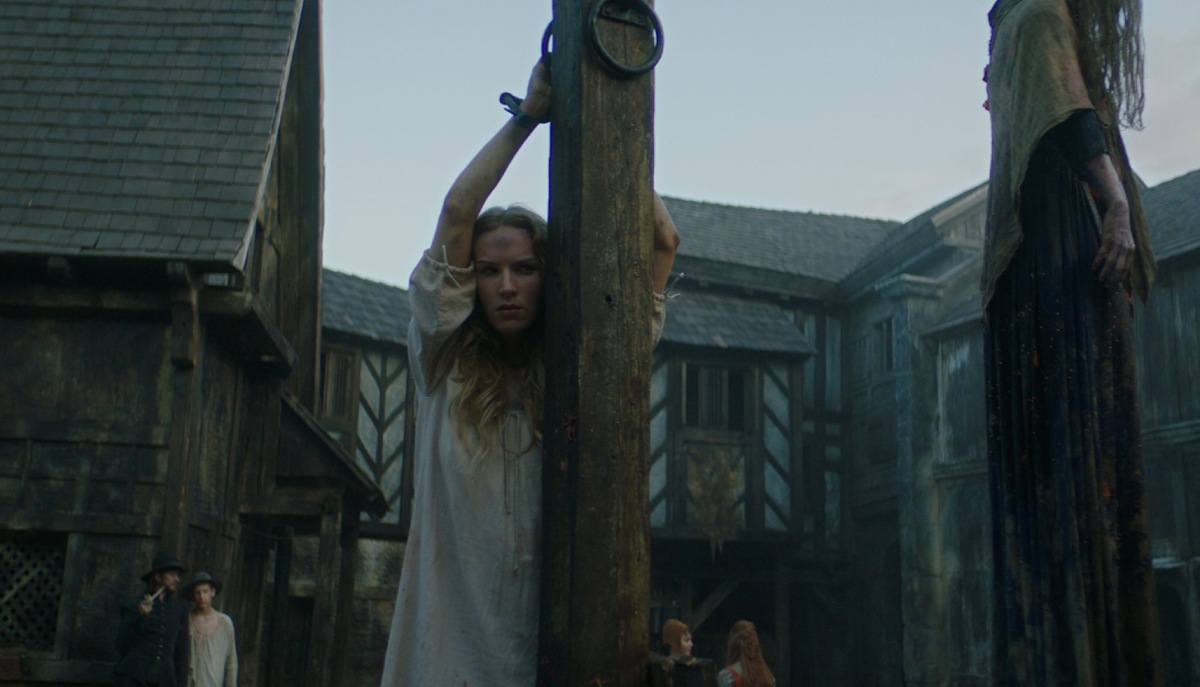
In 1665, the time of “The Great Plague,” and English town is ravaged, but a farm family (Charlotte Kirk, Joe Anderson) is socially distancing and weathering it well enough. Still, there’s a baby on the way and crops to sell, so Joseph goes to town to sell it.

That’s where he runs afoul of a harlot (Emma Holzer) and his nefarious landlord, the Squire (Steven Waddington). One poisoned drink later and he’s showing symptoms.

And when he fears for his family back home, there’s nothing for it but the noose, leaving poor Grace to dig his grave in the rain and cut his body down and bury it.

The Squire’s master plan seems murky to us, but Grace can only imagine what it is he’s truly after, and what he’s willing to do — attempted seduction, accusations of witchcraft, the works — to achieve it.

“You’ll pay for this, harlot!”

That brings in Moorcroft (Sean Pertwee), the greatest “witch finder” of them all. England’s no longer Catholic, but here’s a British version of The Inquisition in one man, a veteran of trumped-up charges and burnings at the stake, someone Grace and everybody else is familiar with.

An interesting touch. Moorcraft keeps a burn victim who survived the stake (Margit Bárdos) in his employ, as a murderous bodyguard.

“Never doubt the virtue of our task!”

With such forces arrayed against her, what chance does Grace have? Might these visions of her dead husband and mother in her prison cell hold the key?

Is Satan available?

Everything director Marshall and his team do here seems designed to drag this out, from the ridiculous afterthought of numbering the days Grace is imprisoned with intertitles — Day 1, she’s locked up, Day 2, she’s whipped, Day 3, the Rack! — to the ruminations of the witch finder.

A habit of bad horror — if you’ve got a fetching leading lady, give her a few sexual moments. Consorting with the Devil, anyone?

The tale’s turn towards revenge is too tepid and comes entirely too late. The most creative killing involves minor supporting characters.

And the whole tedious affair makes one wish they’d gone to less trouble making a bad movie with tame villains, an uninteresting lead and confused (Was this recut to play up “the plague?”), scattered story.

All that lovely period detail gone to waste.

MPAA Rating: unrated, graphic violence, sex

Cast: Charlotte Kirk, Steven Waddington, Joe Anderson, Sean Pertwee, Emma Holzer, with Ian Whyte as The Devil.

Credits: Directed by Neil Marshall, script by Edward Evers-Sweindell, Charlotte Kirk and Neil Marshall. An RLJE/Shudder release.

Running time: 1:50

Posted in Reviews, previews, profiles and movie news | Comments Off on Movie Review: Plague and witches meet in “The Reckoning”

Movie Review: Did the Proud Boys/Boogaloo Boys ruin “Fight Club?”

The answer to that rhetorical question headline is “Yeah, pretty much.”

David Fincher’s brutal, sprawling fever-dream of Incel America can seem prescient, 22 years after its release.

It crossed over into cult status sometime before the lunatic right embraced its anarchy, toxic masculinity and division of huMANity between those who submit to the pain of life and embrace violence as a means of changing it, and “snowflakes.”

“You are not special. You are not a beautiful or unique snowflake.”

“Fight Club” embedded itself in the culture with its swagger, bravado and catch phrases.

 “The first rule of Fight Club is: you do not talk about Fight Club. The second rule of Fight Club is: you DO NOT talk about Fight Club!” 

Watching the film now, post Jan. 6 2021, it’s hard to see in the same visceral if seriously troubling way it washed over us all on first viewing. The satiric, stumbling narrative still stings, but the sting is no longer particularly funny.

It felt 30 minutes too long in 1999. It plays closer to “interminable” now.

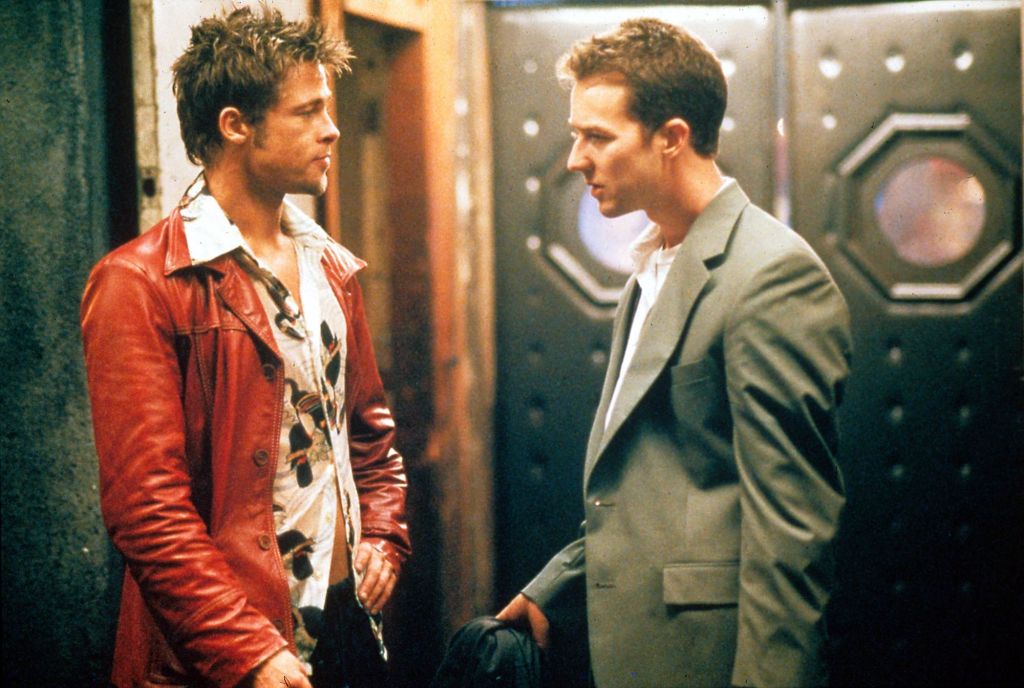
Edward Norton’s insurance recall assessment agent, drowning in a pitilessly amoral job that reduces his life to frustrating air travel, soul-crushing car accident analysis and an IKEA-furnished “nest” at home, is by most measures Incel Patient Zero. No, he’s not unattractive, morbidly obese and living in the cliched “Mom’s basement.” But Incel he is, so numbed that he starts crashing support groups — testicular cancer to TB — just to “feel” something, to unload his suppressed Life of Tears.

Meeting a fellow support group crasher (Helena Bonham Carter at her Goth-punk sexpot best) doesn’t help. But this swaggering hunk Tyler Durden does. He’s “don’t give a f—” America incarnate — all bravado and attitude, willing to take a punch and more than willing to deliver one.

Whatever else once-and-always pretty boy Brad Pitt has done on the screen, this is the role that defines him. And who is he defining? Tyler’s a craft soap maker (Holocaust allusion) and banquet waiter who pees in the soup he serves the well-heeled.

Tyler Durden is still walking among us, refusing to “socially distance,” that “ass without a mask.” He is quick to trigger, quicker to feel dismissed, quick to turn violent. He is an icon to just the sort of people who ruined this movie, the ones who filled (more than one seat each) a commuter train I took in Orlando a year or so ago — uniformed and uniformly obese pasty-faced Proud Boys on their way to a Trump rally. I was taking the same train to see the Baby Trump balloon. Go figure.

When The Narrator of Many Fake Names (Norton, often speaking to the camera) and Tyler Durden invent Fight Club as a release for the similarly-disaffected, Tyler is the one who gets the girl. The Narrator finds himself surrounded by Incels, the emasculated looking for masculine meaning — pain, honor, glory, belonging to something larger than themselves.

Last summer’s riots, with much of the rioting organized by masked and tac-geared-up Boogaloo Boys, was “Fight Club’s” coda, an epilogue to the organized mass destruction that the Project Mayhem offshoot of Fight Club delivers in its finale.

I think David Fincher and novelist Chuck Palahniuk were prophetically reading the tea leaves rather than “inspiring” the cretins who adopted this movie as their ideal. Scorsese didn’t invent the mob, but his mob pictures provably influenced mob behavior, mores and social acceptance. That’s where “Fight Club” sits — a socially prescient social hot button film that was a magnet for disaffected, struggling white guys who wanted to see an idealized, buff and quotably flippant version of how they imagined themselves.

“We are all part of the same compost heap,” Durden aphorizes. “I see all this potential, and I see squandering. God damn it, an entire generation pumping gas, waiting tables; slaves with white collars. Advertising has us chasing cars and clothes, working jobs we hate so we can buy shit we don’t need. We’re the middle children of history, man. No purpose or place. We have no Great War. No Great Depression. Our Great War’s a spiritual war… our Great Depression is our lives. “

The film tapped into what was, 17 years later, to make Trump president and 20 years later would lead to the sacking of the capital.

Aside from prophecy, how’s the film hold up? The grimy design, runway ready gaucherie of Durden’s look, attire and that Camaro convertible he peels off in for his airport exit is all of a piece. It’s ugly-beautiful.

The performances are spot-on, a hallmark of Fincher’s pictures. Norton’s reputation for immersion in a part predates this film, but it was chiseled in stone after it.

The narrative? It’s a tad sloppy and ambling. The picture unravels in pretty much the way the narrator does, with a third act that feels inevitable and unearned, “just right” and ridiculously “on the nose.”

And while there are jaw-dropping surprises along the way, the picture’s look and tone give away the biggest “twist,” then and now.

I remember wincing at what I thought were its flaws, way back when. Seeing “Fight Club” again, post-Jan. 6, they stick out more.

Cult films are seldom great films, they just connect with a corner of the audience more intensely than was intended, elevating their status.

That’s “Fight Club.” And appealing to the wrong sort of cult just makes that clearer.

MPAA Rating: R for disturbing and graphic depiction of violent anti-social behavior, sexuality and language

Cast: Edward Norton, Brad Pitt, Helena Bonham Carter and Meat Loaf.

Credits: Directed by David Fincher, script by Jim Uhls, based on the Chuck Palahniuk.  A 20th Century Fox release.

Running time: 2:19

Posted in Reviews, previews, profiles and movie news | Comments Off on Movie Review: Did the Proud Boys/Boogaloo Boys ruin “Fight Club?”

First look — Edgar Wright’s “The Sparks Brothers” doc looks at “the best British (band) ever to come out of America”

First time I ever saw “Saturday Night Live” this band with Hitler on keyboards appeared. I thought it was another comedy element of the show. This film just premiered at Sundance.

Posted in Reviews, previews, profiles and movie news | Comments Off on First look — Edgar Wright’s “The Sparks Brothers” doc looks at “the best British (band) ever to come out of America”

Not saying I’ve been doing this a long time, but…

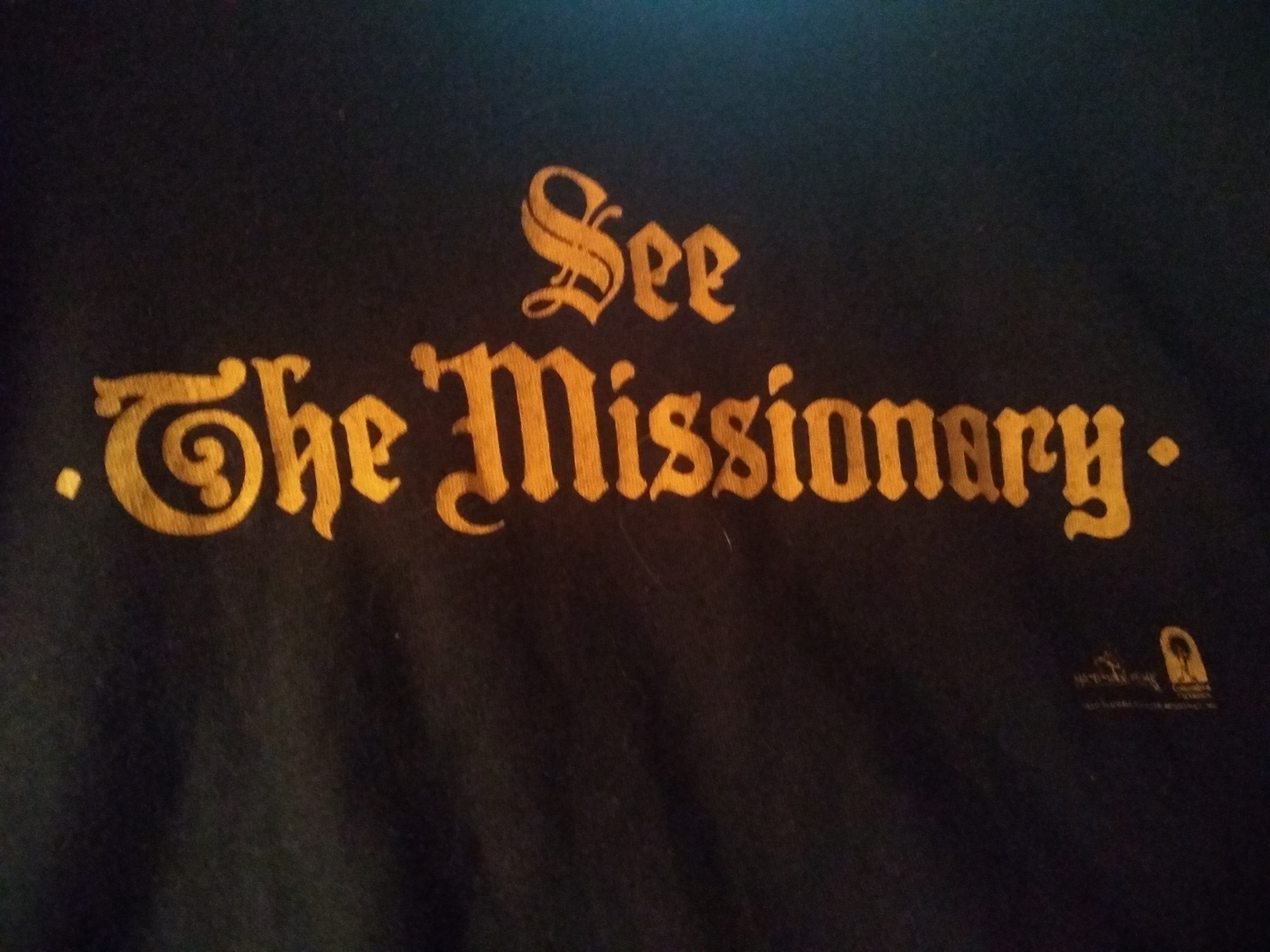
I see this stacked in my “warm clothes” collection at my mother’s place in frigid N.C., a studio-provided turtleneck from the days when critics were critical, films were shot on celluloid and Michael Palin might be just the priest to comfort fallen women.

The message on back…

Posted in Reviews, previews, profiles and movie news | Comments Off on Not saying I’ve been doing this a long time, but…

Movie Preview: A Shelley dreams up her “Frankenstein” — “A Nightmare Wakes”

Shudder has this one, which starts streaming Feb. 4. Creepy?

Posted in Reviews, previews, profiles and movie news | Comments Off on Movie Preview: A Shelley dreams up her “Frankenstein” — “A Nightmare Wakes”

Movie Review: “Happy Cleaners” and the burden of Korean-American expectations

Good storytelling skates by on the tension between what we see, read or hear unfold, and what we hope or fear might happen as the tale unfolds. Dickens or “Dumb & Dumber,” it’s all about meeting or willfully defying our expectations, great or otherwise.

“Happy Cleaners” is a Korean-American immigrants and their children drama, a story of the Korean dream transported to America and burdens passed from generation to generation. It’s a movie built on expectations that it lets us cling to, even if we fear the filmmakers have no intention of giving we the viewers our wish or their characters an easy way out.

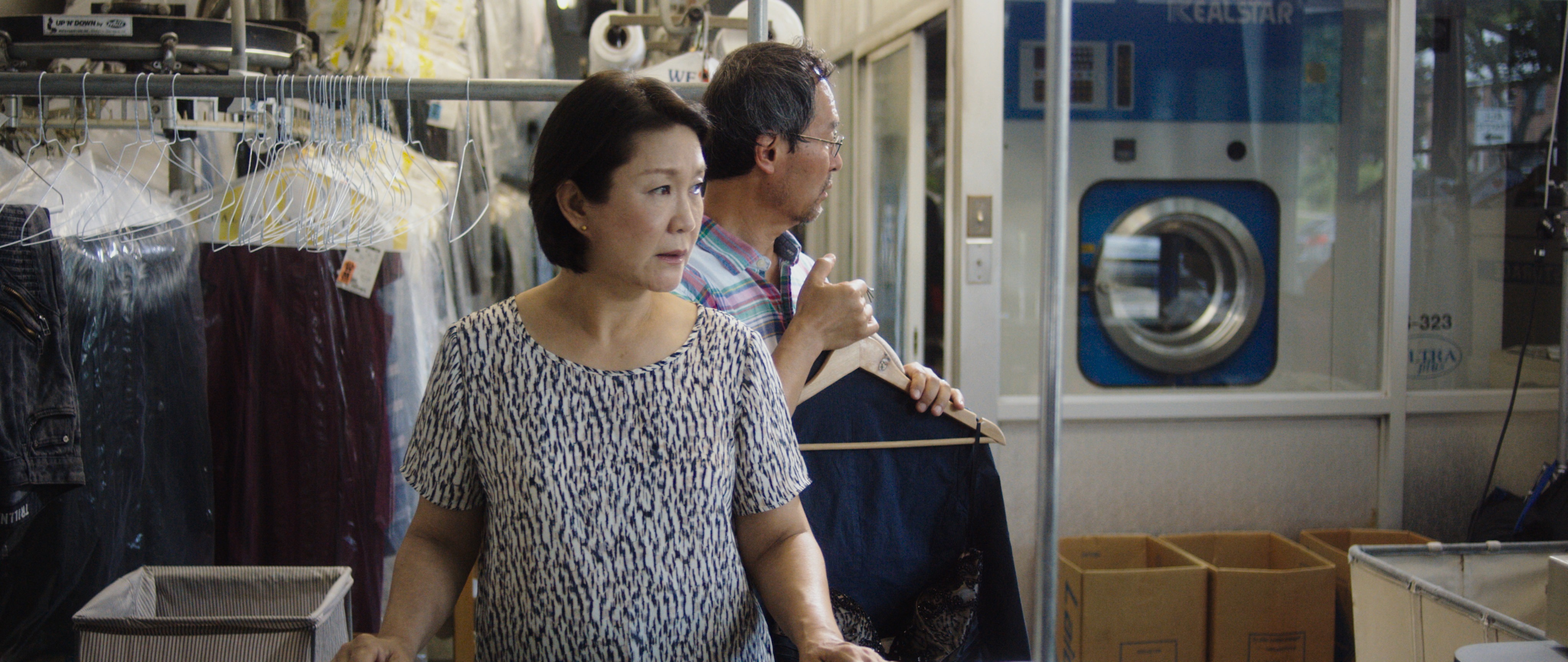
It’s about a Flushing, N.Y. dry cleaning business run by first-generation immigrants. Mom (Hyang-hwa Lim) is the driven one, Dad (Charles Ryu) is somewhat hapless, clinging to his pride and his masculinity in the face of a lifetime of hard, low-margins labor.

Their daughter Hyunny (Yeena Sung) is a nurse, resigned to how they are, propping up their struggle as best she can. Son Kevin (Yun Jeong) is in open rebellion. He’s dropped out of college, abandoning Mom’s dream of “a medical degree.” He’s into food, works in a food truck and longs to try his hand in Los Angeles.

“It’s not my fault you work this this,” is how a lot of their arguments end, followed by Kevin storming out.

The sexism here is masked in “traditional gender roles,” with the petulant, indulged son refusing to carry the weight of what his family wants and the daughter left to pick up the slack.

Hyunny is in love, but she’s furious that beau Danny (Donald Chang) is letting his own family’s struggle — they have a liquor store — put his education, and any future he might have with Hyunny, on hold.

“Are you gonna work like this forEVER?”

It may be pragmatic, but it’s certainly not helpful of Mom to weigh in on that, in Korean (with English subitles).

“Break up with him immediately.”

The dry cleaning business is a struggle, with equipment failures, a new landlord and the debts of a previous business gamble — a restaurant venture years before — still hanging over them.


Danny may seem buried under responsibilities and Kevin all-too-eager to shed his, but Hyunny, the “success” in this story, hears herself parroting her parents’ work-ethic mantra, one that you can also hear in the Korean American drama “Minari.”

“Anything is possible if you work your ass off.”

It was always thus. It takes a generation or two for newcomers to America to realize that while much is indeed possible here through hard work, “anything” is an overreach. Some never stop struggling and never get their heads above water. Some drown.

First-time feature co-writer/directors Julian Kim and Peter S. Lee create character “types” and then set out, with the aid of a pretty good cast, to upend our expectations of these people and what would appear to be their fate — good or bad.

Lim’s Mom is brittle, judgmental but no harridan. She’s never so outspoken that Kevin won’t come back after storming out, and Kevin is never so angry that he can’t see himself back under their roof, learning cooking tips from Mom and when she visits, Grandma (Jaehee Wilder).

Dad is close to pitiable, cowed by a jerk landlord or irate customer, deferring to his wife but stoically staying on task and maintaining their current course, even if the ship is taking on water.

Sung’s Hyunny is the character many of us will identify with, straddling the middle ground between her parents’ “work hard and it’ll work out” notions and Kevin’s realizations that this life isn’t worth repeating. She’s just as trapped and smart enough to realize that, even if her lashing out is only at her overwhelmed boyfriend.

The arrival of “Happy Cleaners” at almost the same time as the Oscar-buzzed “Minari” (Feb. 12) reinforces “Tiger Mom” and “work hard” cultural stereotypes, and the stories sync up on with a “gamble everything for a chance to get ahead, even if you fail” theme as well.

The honesty of these stories, and 2017’s “Gook,” is filmmakers’ staring without blinking at the generational schisms, the ongoing sting of “YOU people” racism and the inevitable realization that whatever parents went through to get them here, the expectations they saddle their kids with don’t always pay off with achievement. Sometimes, their only benefit is giving you the courage to defy them.

MPAA Rating: unrated, profanity, smoking

Cast: Hyang-hwa Lim, Yun Jeong, Yeena Sung, Charles Ryu, Donald Chang and Jaehee Wilder.

Credits: Directed by Julian Kim and Peter S. Lee, script by Julian Kim, pat Kim and Peter S. Lee. A Passion River release.

Running time: 1:38

Posted in Reviews, previews, profiles and movie news | Comments Off on Movie Review: “Happy Cleaners” and the burden of Korean-American expectations