There’s a bracing cynicism to “Materialists,” the latest anti-rom-com from the writer-director of “Past Lives,” Celine Song.
“Dating is a risk,” her heroine, the professional matchmaker Lucy declares. And marriage?
“Marriage is a business deal. And it always has been.”
Jane Austen couldn’t have said it better, although she never quite put it this bluntly.
But this very modern, very Manhattan slap of “reality” about the nature of coupling has a few things going against it that make far less satisfying than Song’s previous wistful statement on “love.”
For starters, it’s not romantic. It toys with rom-com conventions, throwing in a “meet cute” and a production designed wedding or two. It’s got the “poor” but oh-so-pretty guy our heroine left for being “broke,” and the chic, handsome and “Tribeca penthouse” rich charmer who “checks all the boxes” as a rival.
But blasts of realistic but clumsily handled melodrama stop us short of connecting with all this. The insurance actuarial table treatment of male/female “types” that might make a good match, and the medical solutions to adding to a man’s “market value” would make Aristotle Onassis and generations of Hollywood power-broker dwarves chuckle.
And then there’s Song’s choice of romantic ideal. Whatever canny reason for having our cynical, pragmatic marriage broker deliver her smiling pronouncements in a flat, kittenish whisper behind the less than wholly expressive face of Dakota Johnson, that so lowers the stakes that it’s hard to care.
Will lonely matchmaker Lucy end up with “It” leading man of the moment Pedro Pascal, or perma-tossled, still-boyish Chris Evans?
Lucy is a failed actress pulling down $80K a year who has turned her head-turning beauty into a recruiting tool for Adore, the matchmaking agency for the rich-and-near-rich she works for. She is celebrated by her all-female-staff colleagues and her boss (Marin Ireland, just seen in “Dope Thief”) for her success rate. She makes “friends” with her female clients.
She should be celebrated for being so well turned-out every day, and being able to dress that well and live in Manhattan on $80,000 a year.
A simple walk down the street gets a little eye contact from just the right sort of client, and a proferred business card when he thinks she’s returning his flirt.
Lucy has just gotten her ninth female client to the altar, and the film’s funniest business has a parade of bridesmaids and others encircling her at that wedding, ready to take the plunge because they’re thin, educated and polished New York career women desperate to couple up and who have a specific set of criteria they figure they “deserve.” And Lucy has the magic touch.
Jokes among the lovelorn — “”You’re not ugly. It’s just that you don’t have money.” — and montages of darkly comical client interviews and not-comical-at-all phone chats with unsatisfied men and women underscore the entitlement one and all feel.
The men are downright hateful in their notion of “high quality women,” translated as much younger, beautiful, but educated and sophisticated and comfortable in a world awash in money. The women are just as shallow — about height, education and salary requirements.
“I’m trying to settle,” Lucy’s toughest client, the pushing-40 New York lawyer Sophie (Zoe Winters) complains. But nobody’s settling for her.
That opening wedding is where Pascal’s version of Matthew McConaughey rakishly overhears his way into Kate Hudson’s (Lucy’s) life. Harry’s brother is the matchmade groom at this wedding, and overhearing the flock of bridesmaids and Lucy’s “find the love of your life” pitch has Harry intrigued — not in her services, but in her.
Her task is to grab this tall, dark, rich and handsome “unicorn” as a prospect for one of her paying clients. Harry’s task is to sweep her off her feet.
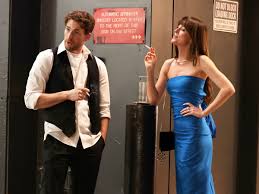
But there’s a reminder of her youthful look for love past at the party. Catering waiter John (Evans) is a struggling, 40ish stage actor ex, the guy Lucy struggled with before recognizing she “can’t act” but she did know “a lot about dating,” and had a knack for setting couples up.
As they share an outdoor smoke and he admits that yes, he still has that beater Volvo and yes, he’s still sharing a flat with a couple of other slovenly actor guys at an age when that dream is past its expiration date.
Will Lucy land her “unicorn,” for herself or one of her paying customers? Will she flashback her way back into John’s arms, or simply remember she hated herself for hating him for “being broke?”
Johnson may “check off the boxes” in a role that requires beauty and allure with a whiff of box office “value.” But she isn’t the best at getting across the longing Lucy is trying to package in connecting people with “your nursing home partner and grave buddy,” “the love of your life.” Any number of 40ish romantic starlets would have done a better job at making that swooning sales pitch, or at selling the ache that must set in for having let yourself get this cynical.
Evans, clinging to “boyish” in this turn, and Pascal are so on-the-nose that it’s as if Song put as much imagination into casting as she did to character names. “Lucy,” “John” and um, Hispanic “Harry?” Really?
Ireland sets the brittle “all business” tone for a movie whose rare light moments are merely here to set up the conventions Song is mocking. And when Song takes a shot at making a statement on a grim risk all dating women face in the world of men, it’s so heavy-handed that it stops the picture cold.
“Materialists” is dry and ironic and “honest” while laying bare the hopes that we all cling to that love isn’t really as materialistic as she’s saying. But the rare air of the artificial, archetypal world she sets out to make her big statement in leaves the viewer grasping for not just a breath of fresh air, but hope.
And as perfect as Johnson might be as that elusive “ideal,” casting her is just another reminder that she’s a few shades shy of the alluring warmth her few attempts at rom-coms and romances have demanded of her. This is a sale she was never going to make.
Rating: R, sexual situations, profanity and smoking
Cast: Dakota Johnson, Chris Evans, Marin Ireland, Zoe Winters and Pedro Pascal.
Credits: Scripted and directed by Celia Song. An A24 release.
Running time: 1:54
























 Movie Nation