
Damn girl.
Emma Thompson and Mark Strong also star in this May 28 release.
Damn girl.
Emma Thompson and Mark Strong also star in this May 28 release.
Finding a family friendly film involving animals and kids that co-stars living, breathing critters is proving more difficult with each digital upgrade that comes down the CGI pike.
It’s not just digital chipmunks any more. If you can talk Harrison Ford into co-starring with a digital dog in “Call of the Wild,” there’s no point in asking what animated squirrel co-star Disney has cooked up for its adaptation of “Flora & Ulysses,” which I will be reviewing shortly.
That makes this Indonesian dramedy, “June & Kopi,” a genuine throwback — emphasis on “genuine.”
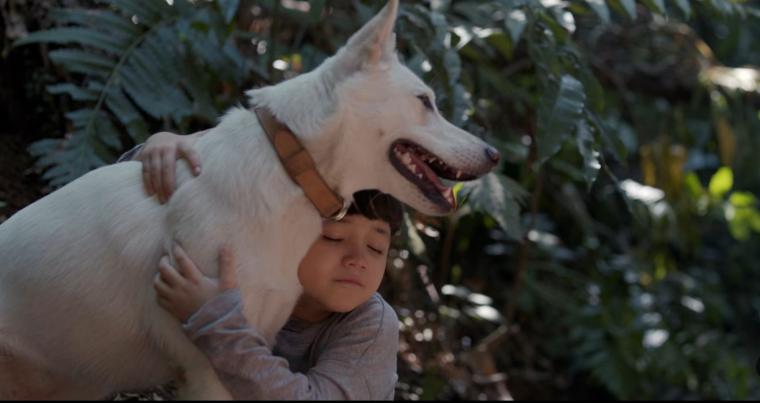
It’s about two dogs — one of them front and center — who play a big role in a family’s life, especially in the safe upbringing of their adoring daughter. The dogs are real, real smart and real cute. You and your kids don’t have to be able to read subtitles to see what they do, and that June the White Swiss Shepherd and Kopi, her grey pitbull (I think) pal, are very very good dogs.
Aya (Acha Septriasa) is the one who finds and names this dog she finds in the first month of summer “June.” She has no collar, and as we’ve seen her chase chickens and be chased by rowdy tweenage boys, we know she’s lost.
Aya is so petite that you wonder if she’s a teen, but no. She’s married and a professional. When she brings the dog to their upscale home, there’s another dog there. Kopi is smart as a whip, able to open and close doors and respond to commands. He’s also there to shake hands when the husband (Ryan Delon) gets home.
As June has been left in a room which she pretty much trashed, husband Ale is ready to be rid of her. They’ve gotten a hint she isn’t good with kids, as well. But the room June trashed was “the baby’s room.” There is no baby. A framed ultrasound tells us there almost was one.
What is the dog doing by sniffing at Aya and giving her the attentive whimper-growl? She’s telling Aya to take another pregnancy test.
“June & Kopi” is that kind of movie. Little canine miracles like that abound. And as their little girl (Makayla Rose Hilli) is born and starts to grow up, June comforts her and becomes her inseparable companion.
Don’t even THINK of taking a vacation without that dog, unless you want the two of them to break out and track the family down and save the day. Again.


This story is so simple that it could have been filmed without dialogue like that French film “The Fox and the Child.” Images, visual clues and the dogs expressive faces and eyes tell the unadorned story.
All we get from the dialogue is that Aya is a comic book creator who is unemployed because she can’t come up with a decent idea (until the dog shows up), and that Indonesia is still pretty patriarchal, as Ale puts his foot down several times about “that dog” only to melt when that dog saves the day.
I don’t want to oversell this because this story is small-child-simple, slim-to-trite. There’s barely enough shepherd slapstick to go around. But it is surprisingly touching. And if you’ve got pre-school kids, they can follow “June & Kodi” without understanding one language or reading subtitles in another.
Seeing smart, soulful, well-trained dogs do their thing on the screen could make younger viewers reject any film that tries to use digital animal substitutes. And that would be a good thing.

MPA Rating: TV-14
Cast: Acha Septriasa, Ryan Delon, Makayla Rose Hilli
Credits: Directed by Noviandra Santosa, script by Noviandra Santosa and Titien Wattimena. A Netflix release.
Running time: 1:30
This is an easily defended set of nominations for best original and adapted screenplays.
Quibble with “Borat Subsequent Movie Film” if you want, the omission of “Mank.”
But “Judas and the Black Messiah,” “News of the World,” “The White Tiger,” “One Night in Miami,” “Promising Young Woman,” “Sound of Metal,” “The Trial of the Chicago Seven,” “Ma Rainey’s Black Bottom,” even “Palm Springs,” hard to find fault with any of those.”
No, “Da Five Bloods” and “Mank” weren’t dazzling scripts. “Nomadland” was and is.
The complete list is here. https://www.hollywoodreporter.com/amp/news/wga-awards-original-adapted-documentary-film-nominations-revealed?__twitter_impression=true
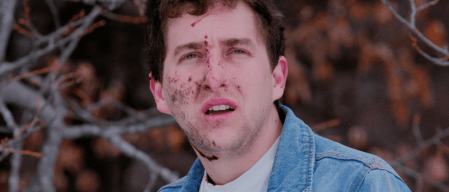
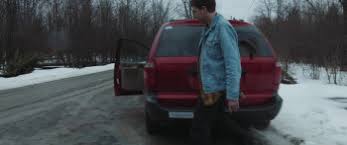
You can’t review a movie based on the degree of difficulty in getting it finished. Even if it’s “Fitzcarraldo.” Ok, maybe if it’s “Fitzcatraldo.”
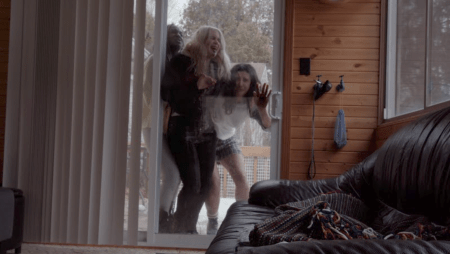
The Canadians who filmed “Death Trip” suffered for their art. Characters run into the snow in shorts and shirtsleeves. The wrestle and pummel each other on the snowy surface of an iced-over lake.
You can see their breath and their goosebumps. Even Canadian actors would have to be cold performing that.
But to bend a phrase, once they’ve suffered for their art, it’s our turn.
“Death Trip” — stupid misnomer of a title, BTW — is a stumbling, obscurant stab at horror littered with logic lapses, inexplicable violence, flash-forwards and gore.
Some years back, a bunch of American indie filmmakers built a genre out of characters who talk and talk and talk, jokey, relationshippy films that even included a few stabs at horror. “Baghead” and “Creep” were the two best known “mumblecore” horror titles.
Director/co-writer James Watts and co-writer/star Kelly Kay, making their feature filmmaking debut, may have invented a variant on that genre — “prattlecore.” Honestly, nobody in this movie ever seems to shut up, until the bloody finale, that is.
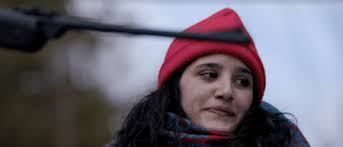
Four Montreal friends head off the a “cottage” “in the North,” out in the country. It’s winter, a great time for Kelly (Kelly Kay), Tatyana (Tatyana Olal) and Melina (Melina Trimarchi) to pile into Garrett’s old Dodge Caravan for a little wilderness partying.
Garrett (Garrett Johnson) is taking three women and a lot of booze to the nondescript ranch house his granddad just died in. There’s a lot of kvetching about who actually sleeps in the bedroom where Grandpa died. Garrett, being gallant, lets Kelly take that hit.
But bumps in the night notwithstanding, that’s not what this thriller is about, any more than it’s about a “Death Trip” to a “remote cottage in the woods.” The “trip” is “meh.” The cottage is in a village. There are neighbors, including a young woman whom the gauche, drunk and unfiltered city slickers peep at as she changes clothes with the curtains open.
“Her Dad killed her mom,” is the gossip. Maybe. Maybe not. Will we find that out the hard way?
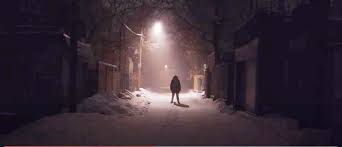
Kelly is the cute blonde we saw having sex in a bathroom mid-party in the film’s opening scene. Her spooky walk home is the first red herring this red herring festival serves up.
Melina likes the booze, the weed, and has no boundaries or real inhibitions. Her pal Tatyana is Black and notes that “White people are crazy all the time,” and gets no pushback for that.
“Flash forwards” used to be super rare, and even though they’re a lot more common these days, in films like “Death Trip,” showing this character covered in blood or that one staggering across the ice with a hammer is just a spoiler very early in the film.
“Death Trip” doesn’t have a good scene until the third act, when the loud, mouthy out-of-towners are invited to a party with locals the same age. That sequence of scenes has genuine suspense — fear of date rape, suicide, fistfight, murder orgy all cross the mind as it plays out.
“Anything could happen” is how you pull viewers to the edge of their seats. “Nothing happening but people prattling on” is the perfect way to kill the mood.

MPA Rating: graphic violence, drug abuse, sex
Cast: Kelly Kay, Tatyana Olal, Garrett Johnson, Melina Trimarchi
Credits: Directed by James Watts, script by Kelly Kay and James Watts. A Gravitas Ventures release.
Running time: 1:41
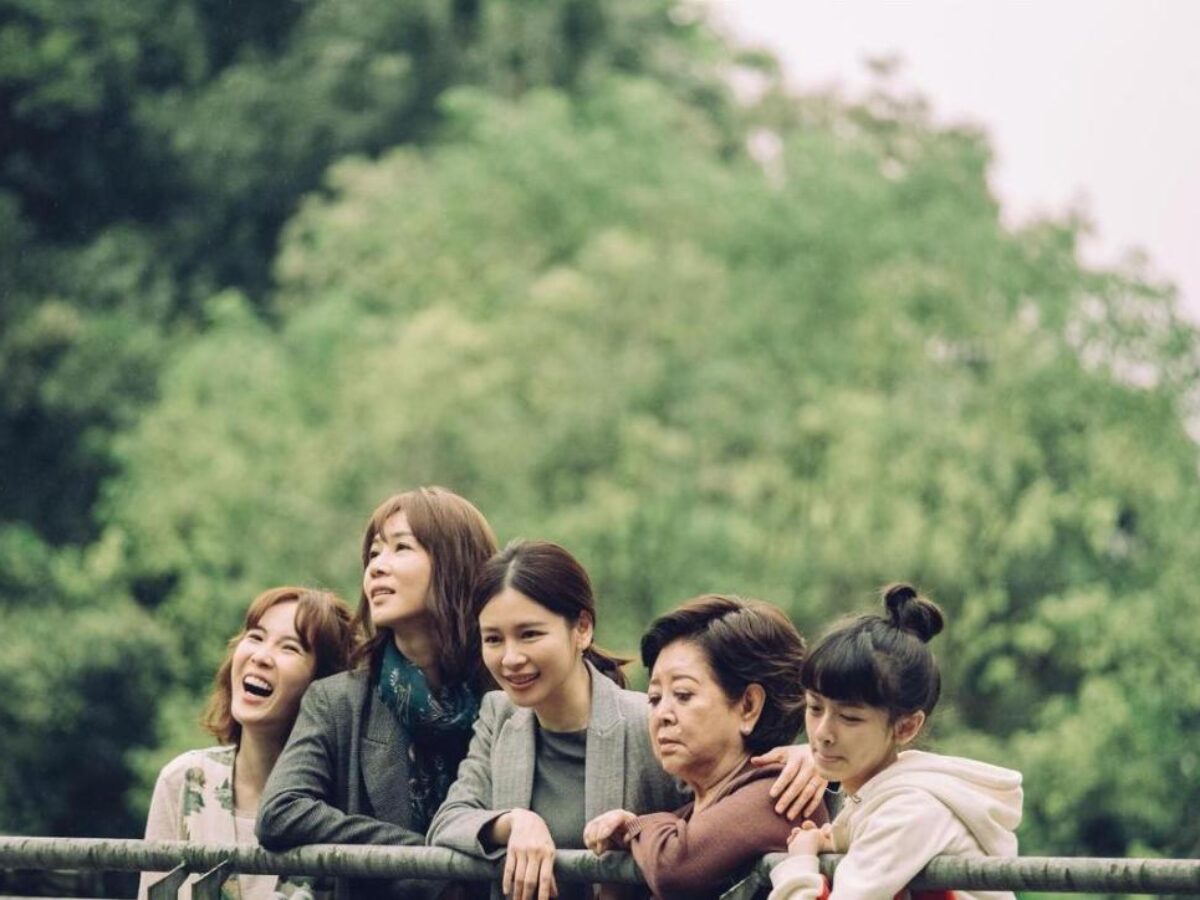
“Little Big Women” is a most watchable dry-eyed weeper about a family of Taiwanese women coming to grips with death, disappointment, and divorce, and those are just the “Ds” in their litany of woe.
“Woe” is a bit strong here. “Downbeat” is a better descriptor for this immersive, well-acted, soapy and sentimental Taiwanese melodrama.
Everybody knows Mrs. Lin (Shu-Fang Chen). Her name is on every vendor’s lips as she walks the seafood market, selecting velvet shrimp, eels, milkfish and a lobster. She runs up a big bill.
Yes, she’s buying for a restuarant.
She has a regular taxi driver, and a favorite maudlin ballad she sings karaoke to on her rides (Installed in the cabs there, apparently).
And today is her “big day.” She’s turning 70 and her daughters have arranged a banquet.
That makes this the perfect day for her to hear from a husband she hasn’t spoken to in decades. And he’s calling from the hospital. He picked “today,” Mrs. Lin’s siblings later joke, “on purpose.” Because she has no sooner stopped in than he coughs, wheezes and dies.
Not going to spoil her party, she grouses. Daughter JiaJia (Ke-Fang Sun) runs the restaurant, and has gone to a lot of trouble. Daughter Yu (Vivian Hsu) is a plastic surgeon, and is coming with her husband and their smart cookie teenage daughter Clementine (Buffy Chen). And oldest daughter Wangching (Ying-Hsuan Hsieh) has given her last dance class of the day and is on her way.
Mom’s resentments don’t exactly melt away at this sudden death, but the daughters are torn. One has actually been in touch with Dad, just a bit. One has just been told she has cancer. “Divorce” floats around the family like cigarette smoke, which is a really good way to get cancer.
And Mom wants to know about this woman, Mrs. Tsai, who dropped her soon-to-be-late husband off at the hospital. How long had she known him? What’s their connection? Will she come to the funeral?
The Joseph Chen-Chieh Hsu (he also makes his feature directing debut) and Maya Huang script takes us on a trip through Taiwanese traditions, fads and rituals. The family debates what sort of funeral to have, Ms. Tsai may have an opinion on that. If it’s in a religion the family doesn’t belong to, rituals will have to be rehearsed, a priest arranged.
Clementine, being the youngest, is our surrogate here — asking questions about the granddad she never knew (flashbacks prompted by family memories fill us in), what they’re going to do and what they have to do first.
“A wake is not fun,” Granny tells her (in Chinese with English subtitles), but it is the first step in repaying “a debt I owe” her late husband, she tells her daughters and granddaughter.
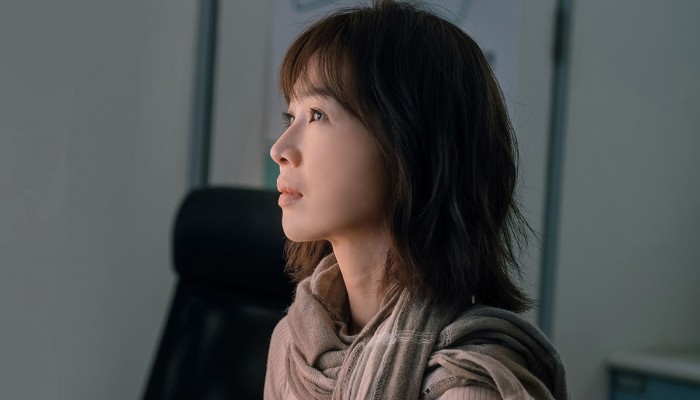
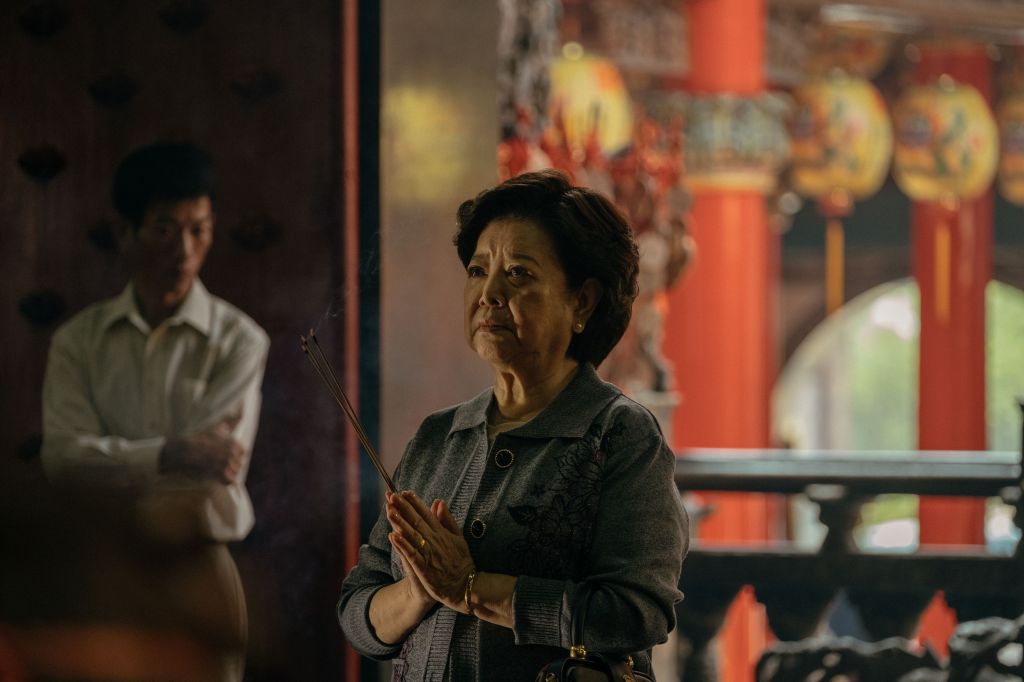
I like the messy lives explored here, with every character having complications that are both a product of their upbringing and their response to it. We figure out which daughter is the most responsible for Mom, which is most like “Dad” and which is the most frustrated with how life has turned out.
Hsu is the most familiar actress in this cast (to me), but Chen has been a sturdy presence in Taiwanese since the ’60s. They’re all subtly expressive performers.
Despite the sadness and flashbacks — too few to truly flesh out the father, a ne’er do well womanizer — this is no “Joy Luck Club.” There’s little of the daughters weeping over how hard Mom has had it. Because Mom is a hardcase and doesn’t invite tears of sympathy.
Lacking even a hint of a light touch, it’s no “Farewell” either.
But “Little Big Women” is a perfectly watchable genre melodrama, an old-fashioned “women’s picture,” with sentiment, intricate relationships, intrigue and not-too-heavy-to-take heartbreak.

MPA Rating: TV-14
Cast: Shu-Fang Chen, Ying-Hsuan Hsieh, Vivian Hsu, Ke-Fang Sun and Buffy Chen
Credits: Directed by Joseph Chin-Chieh Hsu, script by Joseph Chen-Chieh Hsu and Maya Huang. A Netflix release.
Running time: 2:03
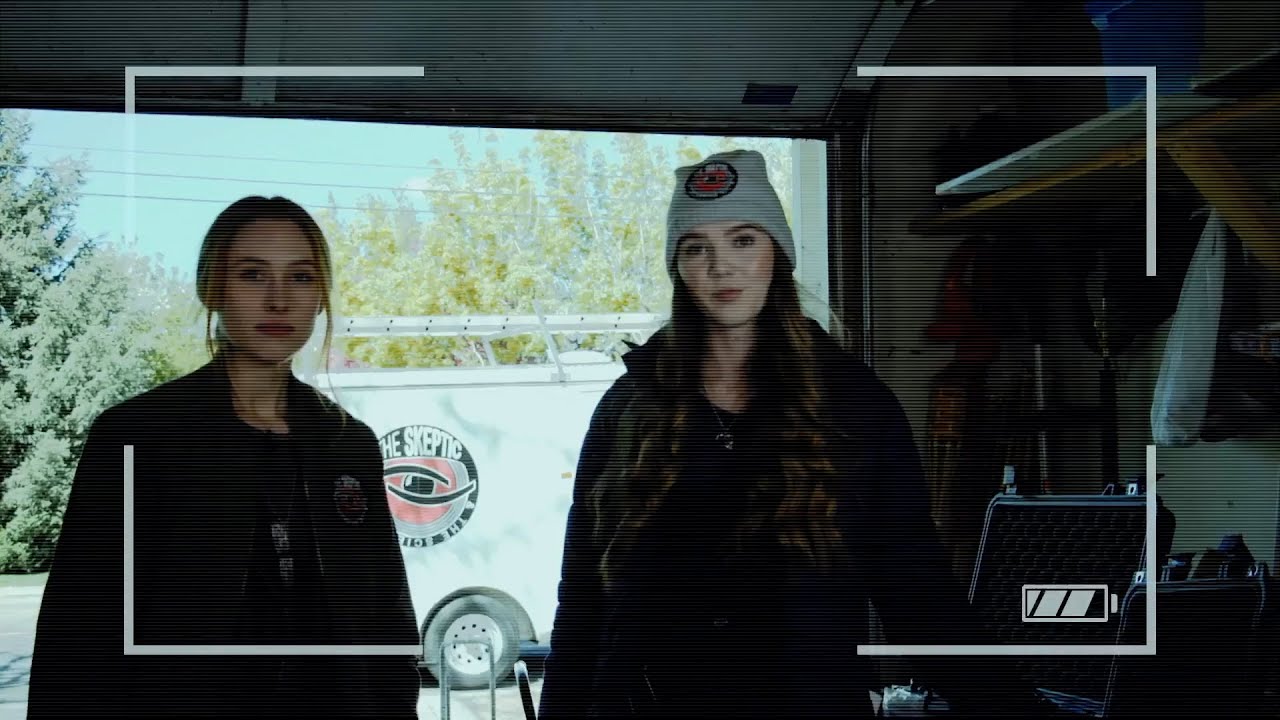
Good thrillers make you work to figure out what’s going on and assume you’re smart enough to do just that.
Bad thrillers explain, explain and over-explain, as if you’re even dumber than the folks who made them.
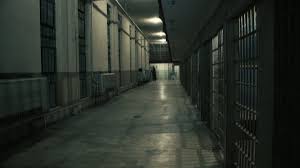
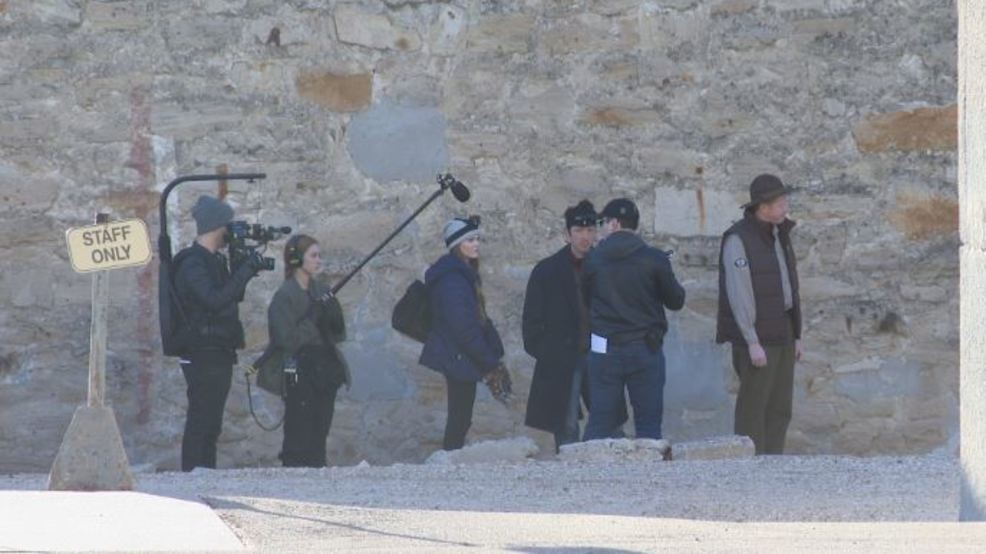
“Paranormal Prison” has a great location — a closed penitentiary in Boise, Idaho. It’s got a time-tested concept, a paranormal Youtube show comes in to “Blair Witch”/reality TV the place one last time before it’s torn down.
But half of its paltry 70 minutes of screen time are spent “explaining.”
There’s “scientist” Sarah (Paris Warner, who looks like a college freshman), who explains her imaginary ghost detecting gear, ad nauseum, as the episode of the show, “The Skeptic and the Scientist.” unfolds. The sound mixer Ashley (Corynn Treadwell) explains the origins of her thoughts about the supernatural, stemming from her time in combat. Sarah explains her own connection to the subject.
A tour guide for the prison, a retired guard (Easton Lay) explains the history of the place, explains why they “don’t want to be in here after dark” because “there’s no lighting.” When there is, and that’s plainly the whole point of the show’s visit to the place.
And in the third act, after an hour of failing to deliver frights, we’re treated to flashbacks “explaining” the logic of what this or that character from earlier remembers (as do we), spoon-feeding us earlier scenes that might help get them out of a perilous situation.
Trust fund doofus Matthew (Todd Haberkorn) is director and star “skeptic” of the show, quick to dismiss anything they run into as this guard walks them through the cell blocks, Death Row, solitary (“‘Siberia,’ everybody called it.”), the deathly-dangerous laundry room and the Death House, with its “hang and drop” room.
Those four roses blooming out-of-season outside? They’re connected to the legend of a racist serial killer suffragette (Only in Idaho, right?) who haunts the place. You smell roses? You’re in trouble. If a rose in that bush outside goes missing, watch out.
So naturally somebody has to say “I smell roses.” It’s as inevitable a line as “It’s awfully quiet in here.”
The script plays as “typed” more than written. The line-readings sound like just that — readings, flatly intoned by a cast not quite up to acting on camera. Yet.
And the “frights” cooked up by director Brian Jagger? Not worthy of the name.
My advice? Don’t do the crime — streaming this — if you can’t do 70 minutes of hard time.

MPA Rating: unrated, seriously tame
Cast: Paris Warner, Corynn Treadwell, Todd Haberkorn, Easton Lay and Brian Telestai
Credits: Directed by Brian Jagger, script by Brian Jagger, Randall Reese. A Gravitas Ventures release.
Running time: 1:11
What are they selling here, aside from the obvious?
We will see what we see when we see it.

Of all the mob hits and Mafia massacres you’ve read about or seen dramatized in the movies, nothing compares to a Capo eyeballing a kids’ soccer team, then arranging for them to meet with “an accident” during their trip to Venezuela.
They were Canadian. And the reason that happened? The Montreal Sicilian mob needed a means to smuggle cocaine into the country. Who’s going to dig around searching the bodies of dead children?
That’s the cold-blooded crime at the heart of “Mafia, Inc.,” a gritty Canadian mob saga about two families, tied to each other through haberdashery and blood.
Director Daniel Grou (TV’s “Vikings”) and screenwriter Sylvain Guy (“Louis Cyr”) crafted a workmanlike saga out of the non-fiction book of the same title by André Cédilot and André Noël. There’s nothing flashy about retelling this mostly-“true” story. A long flashback shoved into the second act makes the tale unfold more clumsily than gracefully. But the violence, waiting for more violence and intrigues make this a compelling, highly-watchable account of corruption, murderous mob ambition and family ties in French Canadian Quebec.
Veteran Italian character actor Sergio Castellitto plays Franceso Paterno, boss of a Montreal crime family looking for an opening to ensure his legacy and wealth for another generation. A planned bridge connecting Sicily and mainland Italy in the early ’90s seems to be his answer. With mob-connected politicians and a mob-friendly government, an “investment opportunity” promises to allow Mafia money laundering on an epic scale on the multi-billion Euro project.
He needs to keep a low profile, keep the peace between rival gangs in Montreal. He’ll divvy up territory among bikers, Irish, Lebanese and and others, reduce the violence and streamline the flow of drugs.
But promoting made-man Vince (Marc-André Grondin of “Goon”) above his own son Giacomo “Jack” Paterno (Donny Falsetti) creates hard feelings. We know blood’ll be spilled over that, sooner or later.
Vince Gamache may have his own history with the family. But there are other ties. Vince’s dad (Gilbert Sicotte) is longtime tailor to the Sicilian-Canadians. And Francesco’s youngest son (Mike Ricci) is in love with the tailor’s daughter, Vince’s sister Sofia (Mylène Mackay) and plans to marry her.
The long-codified tropes of Mafia movies pepper the script. But these conventions, rituals and the like aren’t fetishized here in the manner of too many ollywood films. We aren’t buried under such details.
The most colorful supporting player is Tommy (Antonio Iammatteo), the pushy, greedy informant whose mob nickname is “Yap Yap.”
The violence is sometimes abrupt, sometimes set-up and slow marched across the screen, but always horrific.
And yes, the (nameless) cops are watching. But with mob-tied figures in government in Italy and Canada, how many steps will the Mounties be behind our villains? Two? Three?
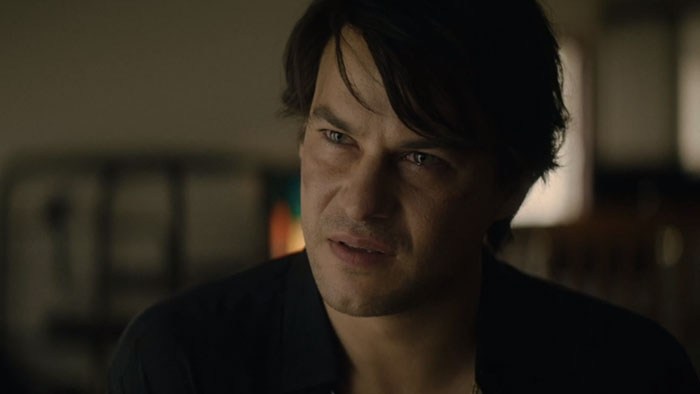

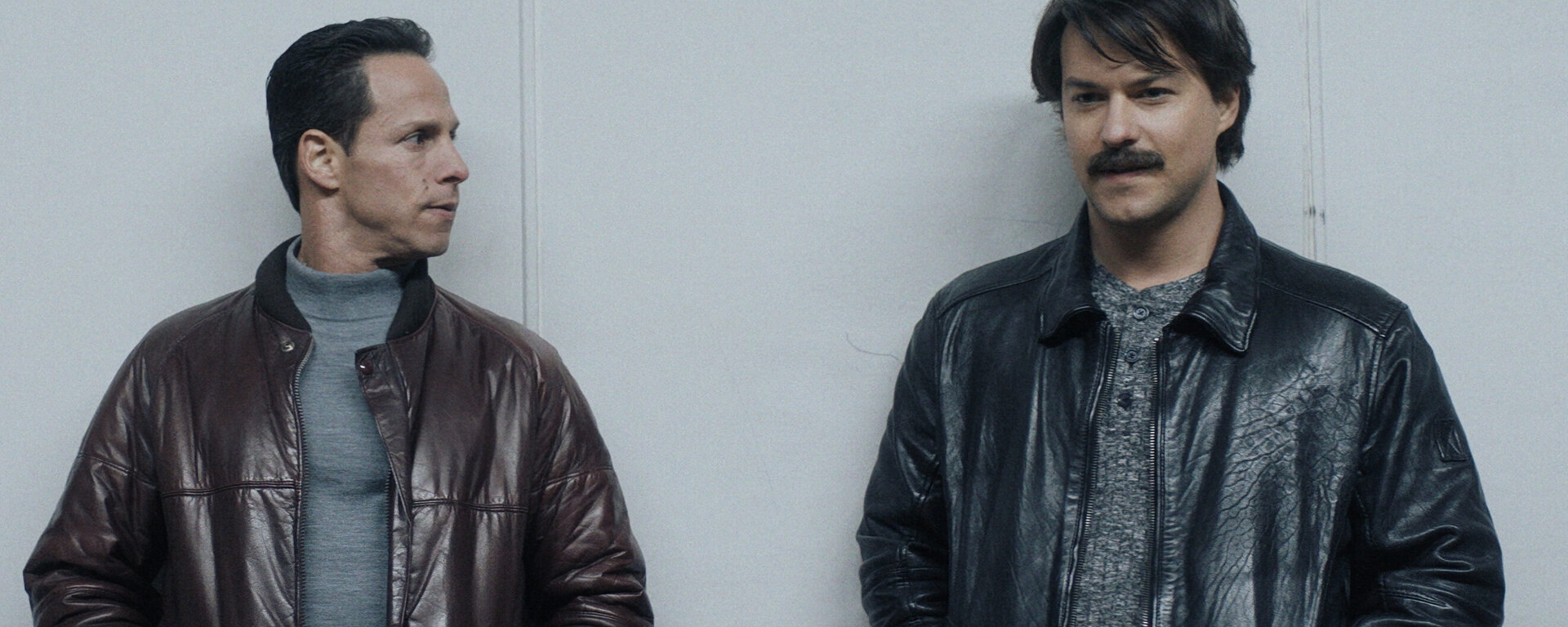
Castellitto gives Francesco a silky veneer that makes his explosions of temper all the more alarming. He’s played Enzo Ferrari on the screen, has been in films all over the world (“Chronicles of Narnia,” “Mostly Martha” seen here). But this is a character he can really tear into.
Grondin’s take on Vince has a bracing heedlessness to it. Documentaries on the mob always remind us that these guys aren’t rocket scientists. Native cunning fights a mental tug of war with recklessness, risky impulsiveness. Grondin lets us see this guy struggle to be crafty, a man only at his sharpest when raw instinct has to take over.
The best thing about the script and direction is that we rarely get too far ahead of it. We think we see what’s coming, but you never know.
Much of the appeal here, the film’s only real novelty, is its setting. These are Canadian monsters, seemingly out-of-place, running roughshod over their countrymen the way the Yakuza alarm and shock well-mannered Japan.
Watch “Mafia, Inc.” and you’ll never buy into the maple-syrup/hockey-mad “nice neighbors to the North” stereotype again.
MPA Rating: unrated, graphic violence, nudity
Cast: Sergio Castellitto, Marc-André Grondin, Mylène Mackay, Gilbert Sicotte, Antonio Iammatteo
Credits: Directed by Daniel Grou, script by Sylvain Guy, based on the book by André Cédilot and André Noël. A Film Movement Plus release.
Running time: 2:23



“The Yin-Yang Master: Dream of Eternity” is an effects-and-exposition-stuffed character-cluttered Chinese martial arts fantasy — heavy on the fantasy, light on the martial arts.
Dammit.
But rather than let the collage of images above suffice, I suppose I should give you more of a taste of what it’s like lest you invest two hours and twelve minutes of your time unwisely.
There are these priests in ancient Never Never China charged with defending against the Evil Serpent, “the first of all evil things,” whenever it rears its viperous head.
The assorted priests are summoned to the Imperial City to defend it against serpent skullduggery and other demons.
Two of the priests meet cute — and hostile. But you just know a bromance is aborning whenever Qing Ming (Mark Chao) throws down with Boya (Allen Deng),
“You talk the way you fight. Without thinking!”
They’ve all taken on “the austere duty of saving lives,” so they cast protection spells and cope with magical portal incursions into the city and infighting and suspicion in their ranks when people are murdered.
They conjure and fly and fight and meet on digital soundstage dreamscapes, camera circling them as they get profound or romantic or sarcastic.
“Are you saying I’m stupid?” “Sure am!” “Aren’t you the clever one?” “I will NOT be mocked!”
There are these guardians they’re teamed up with to supposedly “capture demon energy.” Is this based on a video game? Anyway, the guardians are whimsically-named Mad Painter, Crimsons Bird, White Tiger, Black Tortoise and Blue Dragon.
“Just my luck. Of all the guardians, I get the Blue Dragon.”
Yup, just your luck.
The effects are fine, although some of the digital landscapes are more convincing than others. The acting is generic and black, more a matter of makeup and costume and slo-mo digital fight choreography than “performance.”
It’s not thrilling, not romantic and lacking either, not much fun at all.
The priest and demonic deaths are impressive, even though the script is such a hash one is inclined to be culturally insensitive and call it “nonsense.”
MPA Rating: TV-14, violence, a little blood
Cast: Mark Chao, Allen Deng, Ziwen Wang, Jessie Li
Credits: Scripted and directed by Jingming Guo. A Netflix release.
Running time: 2:12


