Movie Review: Keke and SZA live through “One of Them Days” that’s not quite “Friday”

With Moms Mabley, Tiffany Haddish and Mo’Nique as my witnesses, I swear Hollywood could’ve gotten a funnier movie out of Keke Palmer by just setting up a camera in front of her whilst she texts, tweets and blurts whatever comes into her head aloud that the dead-comedy-walking “One of Them Days” provides.

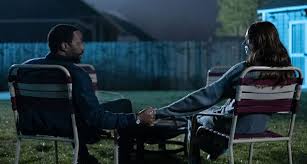
It’s a lumbering stiff “buddy picture” with a “Friday” set-up. Just Keke (“Nope,””Pimp”) and Oscar-nominated singer/songwriter (for Original Song “All the Stars” from “Black Panther”) turned overripe actress SZA playing 30ish roomies trying to cope with being broke, Black and trapped “in the cycle” of working poverty “in the hood” in L.A.

As Dreux and Alyssa, they make mistakes about men, debt, which mobsters you don’t cross and white girl privilege over the course of a single day when the rent is due.

Waitress with “business school” cred Dreux (Palmer) has a big interview and a chance to go corporate with her chain restaurant employer. But her artist and “painter…of houses, portaits…and makeup” roomie of seven years Alyssa (SZA) lets her libido get the best of her as she passes on the rent money for well-endowed lover Keshawn (Joshua David Neal) to give to the no-nonsense/no AC/”stanky water” Baldwin Village complex landlord Uche (Rizi Timane), who is African and is taking no more excuses.

“He’s an ENTREPRENEUR” is no excuse when Mr. Good-in-Bed Keshawn skips off with their money, thanks to Alyssa’s gullibility.

The clock is ticking on their last day with a (leaky) roof over their heads, and they have to cope to bad hair and little time for the complex’s gay hairdresser to save the day, a “Payday Whenever” loan scam, a crazy homeless sage (Katt Williams) who warns them away from this “lifetime” debt, Keshawn’s brawny new lover Berniece (Aziza Scott) serving up ass-whuppings, and a gang leader named Lolo (Amin Joseph) who’s lost a very pricey pair of Air Jordans, which the girls might have just sold to Lil Rel Howery.

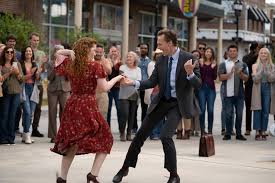
There are funny (ish) bits here — selling their blood plasma and facing a first-time plebotomist, forced to greet the world in donation-box clothing, the “white girl” (Maude Apatow) integrating their complex and shoving the double standards on fit-for-habitation housing, police and fire response down the Black folks’s throats and that “if you have a job, an arm and a leg the system will approve you” payday lender (Keyla Monterroso Mejia) who laughs at their credit scores and barks at the two roommates for being “Too OLD to not know how credit works.”

But mostly, this is a slow-moving parade of “WTF is MY CAR?” and “Girl, I TOLD you not to park there” gags between the mismatched roomies. I’m a longtime Palmer fan, and she’s almost never been this dull. She and SZA needed an edgier script to sparkle.

This picture, whose previews, promos and TV ads promised pace, patter and potential, adds up to the first major disappointment of the new cinema year.

Rating: R, violence, profanity, sexual situations

Cast: Keke Palmer, SZA, Amin Joseph, Katt Williams, Maude Apatow, Aziza Scott and Joshua David Neal

Credits: Directed by Lawrence Lamont, scripted by Syreeta Singleton. A Columbia Pictures release.

Running time: 1:37

Posted in Reviews, previews, profiles and movie news | Tagged , , , | Comments Off on Movie Review: Keke and SZA live through “One of Them Days” that’s not quite “Friday”

Movie Review: Different century, new setting, same old “Wolf Man”

Universal futzed around with rebooting its classic werewolf horror franchise “Wolf Man” for years, and delayed releasing the latest finished film as well.

Perhaps they were hoping more time would pass and we’d all forget the many other incarnations of the man-becomes-werewolf trope. Fat chance.

We all remember how this goes, right? People find themselves in werewolf country. Somebody gets bitten. That somebody wants to bite, too.

“Saw” veteran Leigh Whannell’s “original” take on this hairy, hoary and downright moldy horror staple fails to reinvent, reboot or truly re-launch anything. Pretty sure we’ve seen the werewolf as monster-villain and werewolf as “hero” twist before.

Folding in a Native American tradition of a “hills fever” that turns one into “Face of the Wolf” introduces little that’s interesting and nothing that’s important.

The Pacific Northwest setting, where a widowed father (Sam Jaeger) lectures his young son (Zac Chandler) on the ways of the woods, and the dangers, culminating with son Blake (Christopher Abbott) returning to those woods decades later with his journalist wife (Julia Garner) and wee daughter (Matilda Firth) doesn’t alter the inevitability of it all.

“My job as Dad,” Blake tells the kid he named Ginger,” “is to keep you safe.”

Ginger’s job? “To read your mind,” to anticipate Dad’s directions for keeping her safe.

There’s your foreshadowing.

Put a troubled marriage in peril the minute the arrive in the woods of Oregon, briskly toss them into an over-the-top accident with a moving truck as they trek north to clean out Blake’s “finally declared dead” Dad’s off-the-grid farm. Have Blake slashed by the claws of the not-quite-seen “beast,” with wife Charlotte (Garner of TV’s “Ozark” and “The Assistant”) forced to cope with his injuries, his “transformation” and the threat still growling outside threat.

Try not to guess all that happens, because rare RARE mild jolts aside, this picture’s as clockwork as my Citizen watch.

Garner gives us a taste of what facing the shock of “This can’t be REAL” looks like. The child actress never gets across the requisite terror of their peril.

And Abbott, of “It Comes at night?” He’s just another guy in (CGI) hairs arms and furry face trying to maintain his humanity, his loyalty to his family in the face of attack from his “new” pack/species.

Suffice it to say that Whannell and horror producers Blumhouse are more at home with ghostly, “Insidious” horror, and tactile threats from Jigsaw than with this underwhelming, predictable, everything-but-vampires homage to Universal Studios’ horror legacy.

Rating: R, gory violence, profanity

Cast: Julia Garner, Christopher Abbott, Sam Jaeger, Matilda Firth and Ben Prendergast

Credits: Directed by Leigh Whannell, scripted by Leigh Whannell and A Universal release.

Running time: 1:43

Posted in Reviews, previews, profiles and movie news | Tagged , , , , | Comments Off on Movie Review: Different century, new setting, same old “Wolf Man”

David Lynch: 1946-2025, RIP

“Eraserhead,” “The Elephant Man,” “Blue Velvet,””Wild at Heart,” “Twin Peaks,” “Mulholland Drive,” “Lost Highway,”  “The Straight Story,” an unforgettable attempt at “Dune” — nobody did weird like David Lynch.

The Maverick ‘s Maverick iconoclastic filmmaker died today. He was 78.

Many people I interviewed — Rossellini, Loggia, Watts, etc — who worked with him would share stories about his instinct for “odd. ” Kyle MacLachlan verified one of the funniest, Lynch walking into a morgue set on while filming “Twin Peaks” as the florescent lights were shorting out, flickering. 

“Aaaaahhh, leave it,” Lynch told the fretting grips trying to fix a bizarre, quirky touch that it brought to the scene.

For years, he insisted film distributors print the following in bios to the press kits for his movies

“David Lynch, Eagle Scout, Missoula, Montana.”

On brand. Pithy and perfect. An apt epitaph, too.

Watch one of his films in tribute. Another great way to remember him? This performance, the best thing in Spielberg’s “Fabelmans.”

Posted in Reviews, previews, profiles and movie news | Comments Off on David Lynch: 1946-2025, RIP

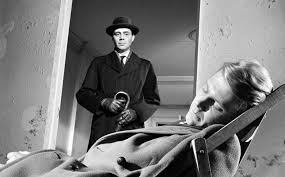
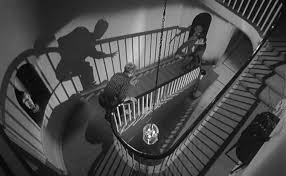
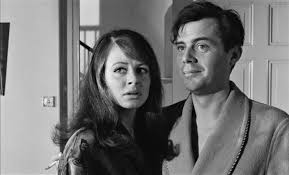
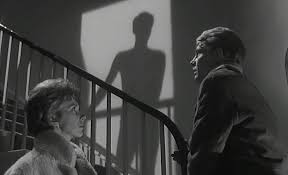
Classic Film Review: Brit Noir, Warner Bros. style — “They Made Me a Fugitive (I Became a Criminal)” (1948)

Here’s a flashy, violent British film noir in the classic Warner Bros. fashion, an on-the-lam thriller set in the postwar U.K. underworld where a war hero pays the price for going wrong.

“They Made Me A Fugitive,” the film that the Brits saw as “I Became a Criminal,” is a terrific showcase for Trevor Howard, Sally Gray and Griffith Jones, as sadistic as bad guys came in the Blighty cinema of the day.

The title on both sides of the Atlantic was meant to conjure up memories of “They Made Me a Criminal,” a proto-noir Warner Bros. hit starring John Garfield back in 1939. The Internet Movie Database lists the film under its 1948 British title — “I Became a Criminal” — with its heavily-cut U.S. (original release) running time (1:18). Suffice it to say, those “restored” 23 minutes matter.

Jones, of “The Face Behind the Scar,” plays a gang leader who runs his contraband smuggling operation out of a funeral home, conveniently advertised with the huge letters “R.I.P.” attached to the roof. Our deadly but dapper leader’s name is a tad on-the-nose — “Narcissus,” aka “Narcy.”

Narcy figures their hide-the-cigarettes, nylon stockings and even drugs in coffins operation is missing something. That’s why he’s recruited “Clem” Morgan (Howard), an RAF pilot who escaped from a German POW camp during the war only to crawl into a bottle once back home.

“He’s got class,” Narcy growls to his minions. “We need a bit of that in our business.”

Morgan, in his cups with his “fiance” Ellen (Eve Ashley) when Narcy finds him at the pub, has no idea the extent of Narcy’s villainy — the drugs, the fact that he’s sweet on Ellen. It takes that first burglary, where the sober and suddenly moral (no drug smuggling for him) Morgan mouthes off one time too many for it all to come crashing around his ears.

He’s framed for running over a cop, tossed in prison and only somewhat wised-up when Sally, the chorus girl (Sally Gray, fiery) Narcy dumped for Ellen visits him in stir. Damned if Morgan doesn’t effect an escape (brushed over) and set out on a cross-country trek back to London to have his revenge.

Director Alberto Cavalcanti, billed simply as “Cavalcanti,” was a Brazilian expat who started his film career in France, made movies across many genres as journeymen filmmakers often did back then. He did romances (“Affairs of a Rogue”), a pretty good Dickens adaptation (“The Life and Adventures of Nicholas Nickelby”) and durable thrillers such as “For Them That Trespass” and “I Became a Criminal.”

He and the production team give us a gritty world of postwar privation and violence, populated with colorful chorines — lots of backstage at the music hall scenes — femme fatales and one sadist who isn’t above beating women when he isn’t ordering his thugs to murder.

“They Made me a Fugitive” doesn’t really get on its feet until Morgan slips out of prison while working on a road gang. He eludes a nationwide manhunt and stumbles into a wealthy country wife (Vida Hope) with “the whole damned world and his dog after my skin.” She agrees to help him, provided he does her “a service…I want you to shoot my husband.”

A testy, interrogatory exchange with an overnight trucker who picks him up and constant radio updates of his progress build suspense. Will he get to Sally before Narcy starts killing off her and others who “know” about the frameup?

A cop (Derek Birch) warns her that Narcy will “slit that pretty little throat of yours from ear to ear,” as if she doesn’t know “you’ve stuck it out just a few inches too far.”

Howard, a last minute casting replacement, establishes the tough guy edge that would serve him in decades of military and later authority figure roles. Gray renders her “Mata Hari” figure in unsentimental shades. And Rene Ray, Mary Merrall, Jack McNaughton, Charles Farrell and others perfectly populate this cinematic underworld.

Film buffs will note that future “Dr. Strangelove” Russian ambassador Peter Bull has the chewy mob informant role. And that portly, gruff underworld club manager? That’s Disney cartoon voice, “The Time Machine” and TV’s “Family Affair” co-star Sebastian Cabot.

I was a tad underwhelmed by the opening acts of “They Made Me a Fugitive,” but pretty much bowled over by the breathless, shadowy film noir that breaks out at roughly the midway point. Howard’s flinty, furious way with a line, Griffin’s violence-is-how-I-panic mania, Gray’s sober-minded sizing-up “what kind of man” Morgan is before lighting his imprisoned fuse, all take this picture to a fever pitch that can only end in mayhem.

Drugs, alcoholism, torture and mob executions give this film noir a most unBritish (for the period) edge.

No, fight choreography wasn’t a thing back then. But we buy into the life-or-death stakes this crew tangles into and never let our sympathies get out of hand, because “They Made Me a Fugitive” doesn’t let Mr. “I Became a Criminal” off the hook for the bloody, murderous mess he’s got himself into.

Rating: TV-PG, violence

Cast: Sally Gray, Trevor Howard, Griffith Jones, Rene Ray, Mary Merrall, Jack McNaughton and Peter Bull.

Credits: Directed by Alberto Cavalcanti, scripted by Noel Langley, based on a novel by Jackson Budd. A Warner Bros. release on Tubi, other streamers.

Running time: 1:41

Posted in Reviews, previews, profiles and movie news | Tagged , , , , , , , | Comments Off on Classic Film Review: Brit Noir, Warner Bros. style — “They Made Me a Fugitive (I Became a Criminal)” (1948)

Movie Review: Zombie Apocalypse is the least of This Cali Hamlet’s problems — “Hemet, or the Landlady Don’t Drink Tea”

The line between a “Z-movie,” a “zero stars” on the one-to-four-star scale, and a very bad one-star C or B movie usually comes down to intent.

Did they set out to make a film this awful? Was their motivation or agenda twisted? Or was this simply the best they could manage?

“Hemet, or the Landlady Don’t Drink Tea” is a comical abortion, an ever-misfiring farce built around the landlady from hell and how she abuses her tenants in the middle of a “bit off his leg” zombie apocalypse.

Liz, played by screenwriter Brian Patrick Butler in less-than-Rupaul-flattering drag, is a bully with an apartment complex, a mean old lady who figures she’s holding all the cards in tiny Hemet, California, now that the zombies are an ongoing menace.

Toe her line, accept her abuse and her ever-changing rules, rent-rates and privileges, and she’ll just insult you. “Resist the autocracy” she’s set up, with the sheriff (Randy Davison) and his minions at the property owner’s beck and call, and “You’re evicted” might be the least of your problems.

Tenants range from waitress Rosie (Kimberly Weinberger) to “tree hugging, Burning Man-loving, Chewbacca looking” “hippie” Howie (Pierce Wallace), with put-upon Black renter Martin (Merrick McCartha) a near bystander and mouthie “bath salts” wingnut Gary (Matthew Rhodes) the quickest to string together perjoratives to label the others.

One thing they might all agree on is that abusive landlady liz “is just beggin’ to be made into a lampshade.”

Liz? You don’t scare her. You don’t impress her. You can’t “change” her.

“Peace and love, buttcracks! Catch you on the flip!”

That’s the way screenwriter Butler treats dialogue — dopey patter consisting of run-on word-salad sentences fired-off for comic effect. The more alliteration, the better.

Cops are “criminal killing clutch-cannons,” zombies are “’28 Days Later’ maniacs.”

Rants about the cost of living in California, hippies protesting for “zombie rights” and the “genocidal maniac” who just bullied his way into a “third term” in the White House are pretty much the only entertainment value here.

The novelty of Butler’s drag performance wears off quickly. The amateurism of most of the players would have been more forgivable with a script that showed a bit more wit or, you know, effort.

But all Butler, director Tony Olmos and the rest of the cast and crew were shooting for is a cultish comedy with a few laughs, undercooked politics and undigested zombie victims. There’s no arc to the story and little that you’d call funny or ambitious or politically pointed.

“So bad it’s good” is a tricky target to hit. The fact that they missed the mark, and not by a narrow margin, isn’t a cardinal sin. It’s just the best argument for giving this one star, and not “zero” stars.

Rating: TV-MA, violence, sex, profanity

Cast: Kimberly Weinberger, Merrick McCartha, Aimee La Joie, Pierce Wallace, Matthew Rhodes, Nick Young, Randy Davison and Brian Patrick Butler as Liz Topham Myrtle.

Credits: Directed by Tony Olmos, scripted by Brian Patrick Butler. Bayview Entertainment release.

Running time: 1:29

Posted in Reviews, previews, profiles and movie news | Tagged , , , , , | Comments Off on Movie Review: Zombie Apocalypse is the least of This Cali Hamlet’s problems — “Hemet, or the Landlady Don’t Drink Tea”

Netflixable? Ex-cop Scrambles Up and Down and all around Paris “Ad Vitam”

The Latin title “Ad Vitam” doesn’t translate to “over the top,” which might be the biggest letdown in this brisk — once it gets going — French action picture.

A star vehicle conceived by Gullaume Canet, (“All Time High”), a star since “Tell No One” and “Love Me if You Dare” came out twenty years ago, it’s designed to show off his own fitness and dazzling stunt work as an ex-cop is chased up and down and all around Paris, through Versailles — and over it.

Franck is the son of a climber, whose “Ad Vitam” (for life) dictum he’s lived by, and which explains why we meet him hanging from ropes over Basilique du Sacré-Cœur on Montmatre when we meet him. He and a team are dangling and rappelling up and down one of the great landmarks of Paris, inspecting and documenting structural cracks and the like.

When Franck almost meets with an accident that isn’t an accident, he chases down the goon who tampered with his lines. The villain is rescued by one of those big, omnipresent Mercedes vans that all the best bad guys — in or out of government — motor about Europe in. Franck knows what’s up.

His very pregnant wife, Leo (Stéphane Caillard of “The Take” and “Get In”) has an idea of what’s going on. They come home to a ransacked apartment. It’s the second ransacking in the past few weeks. He used to be a cop. What’s he got that “they” want?

Because Leo used to be with the elite GIGN (tactical) unit herself. She knows Franck was sacked and that the reasons for it eat at him. He’s got something he hides on the roof of their apartment building, accessible only through their window, climbing up a gutter and clambering between chimneys. It’s a “key.”

When one last ransacking by ninja-clad commandoes with masks, police armbands and a relentlessly vicious leader (Johan Heldenbergh, terrifically vile) ends with Leo kidnapped and Franck facing an ultimatum, he’s in a mad dash to recruit ex-comrades in arms (Nassim Lyes), dodge the police who believe he’s committed a murder and fend off the “bad” agents who want that damned key.

Cameraman turned director Rodolphe Lauga — he shot “The Transporter” TV series — is saddled with a cumbersome script that stops the picture cold as we’re treated to an ineptly-long, montage-filled flashback about how Franck met Leo — at the Academy — their training, early assignments and obvious attraction.

Eventually, we know, they’ll get around to what this “key” is hiding. But Lauga and Canet, co-writers of the screenplay, take a movie-numbing long time to show us that.

They atone for that with a fight/trick/chase/shoot-out finale that has to be seen to be believed. Franck’s got mad parkour and climbing skills. But that’s not all he’ll show off trying to save his two-fisted wife, his life and his reputation.

“Ad Vitam” is competently shot and cut and works well enough for long enough stretches to recommend. But equally long stretches of training and graduation and karaoke celebrating kill its momentum.

And that chase at the end is like “Mission: Impossible” played for laughs. I mean, I love sight seeing over and around Paris as much as the next guy, but come on.

Rating: TV-MA, graphic violence, profanity

Cast: Guillaume Canet, Stéphane Caillard, Alexis Manenti, Zita Hanrot, Nassim Lyes and Johan Heldenbergh

Credits: Directed by Rodolphe Lauga, scripted by Guillaume Canet, David Corona and Rodolphe Lauga. A Netflix release.

Running time: 1:38

Posted in Reviews, previews, profiles and movie news | Tagged , , , , , , , , | Comments Off on Netflixable? Ex-cop Scrambles Up and Down and all around Paris “Ad Vitam”

Movie Review: Teen Temptress, Femme Fatale, or Victim? “Nahir”

“Nahir,” a brooding, glamourized and sexed-up account of a notorious Argentine murder case, is a mystery thriller that aims for engrossing and immersive that never falls short of quite watchable along the way.

Screenwriter Sofia Wilhelmi and director Hernán Gu

erschuny take great pains — with flashbacks and flashbacks within flashbacks — to show us several versions of the title character’s account of what happened the fateful night in which she allegedly killed her allegedly abusive lover.

We’re treated to backstory which dissects the aloof and mysterious teen beauty who either planned a crime of lover’s revenge, carried it out and took some pains to cover up her involvement, or didn’t. Not in the ways the earliest versions of her account of that fateful night played out, anyway.

Valentina Zenera plays Nahir as a vain beauty confident in her allure, even at her (seen in a flashback) quinceañera. Nahir dreams of riding the premiere float at Gualeguaychú’s famed carnival parade and riding that to fame as a model.

Not that she says much of this out loud. Nahir is depicted as inscrutable, controlled and controlling. All the boys fancy her and no one gets more of her attention, and manipulation, than 20 year-old Federico (Simon Hempe).

Nahir says they’re broken up. Then they’re together. As the narrative jumps back and forth from “before the crime” (in Spanish with English subtitles) to “after the crime,” we see both their torrid affair — “torrid” at least in his eyes — and her “No, we weren’t dating” way of describing it to her friends and eventually to the cops.

Because one night, Federico rides his motorbike to his doom.

We see how Nahir takes the “news” of his death. “Poker-faced” barely does that reaction justice. We watch the early questioning, the tear she tries to summon up or fake with a tissue.

And we learn that Nahir’s adored and adoring Dad (César Bordón) is a pistol-packing police officer. If there’s one thing that’s become accepted wisdom the world over in recent years, it’s the idea that police in most any country all consider themselves experts in one thing — knowing what they can get away with, and how.

When Dad says “I’ll get you out of here…I’m working on it. You’ll be home by New Year’s,” Nahir believes it. Is it because of what she knows, or what she knows that he knows?

As we see Nahir’s (perhaps) ex-beauty queen mother (Mónica Antonópulos) primp and prep her for a pageant and for a TV prison interview, we pick up on the dynamic of the household and the narcissism of our heroine.

“No crying,” Mom insists before her interrogation. Or did she? Federico’s come-ons are punctuated with a macho “I get anything I want.” Dad wasn’t shy about showing his pistol to would-be stalkers who stare at Nahir in crowds. His icy “princesa” never betrays any emotion at any of this.

The court case reveals more than just the lovers’ exchanged “love of my life” texts. Protesters demand “justice” for Federico, but witnesses paint a more complicated picture of their on-and-off romance. And as her situation isn’t quickly resolved — one way or the other — and her “story” changes, we wonder what really happened.

I like the way the story’s jumps backwards and forwards in time to wrongfoot the viewer. We’re given just enough information to decide on guilt or innocence, and then new information is brought to light. Think again.

Now on Amazon Prime, “Nahir” was longer when it played in Argentina, and reviews of this “true” story there weren’t the best. Perhaps it’s tighter, as the Prime cut of the film is 14 minutes shorter. Or perhaps Argentines are more invested in the story and uninterested in the doubts “Nahir” suggests.

Zenere, underplaying in ways that hint at the character’s similarities to Amanda Knox — accused because she underreacts to news of a murder — makes her character believably guilty or possibly innocent. And whatever verdict, she ensures the narcissistic Nahir is never seen with a hair out of place or eye shadow and earrings that aren’t perfectly matched, even behind bars.

Rating: TV-16, violence, sex, profanity

Cast: Valentina Zenere, Simon Hempe, Mónica Antonópulos and César Bordón

Credits: Directed by Hernán Guerschuny, scripted by Sofia Wilhelmi. An MGM release on Amazon Prime.

Running time: 1:48

Posted in Reviews, previews, profiles and movie news | Tagged , , , , | Comments Off on Movie Review: Teen Temptress, Femme Fatale, or Victim? “Nahir”

Classic Film Review: Accept no Substititute for this Suspsense Masterpiece — “The Wages of Fear” (1953)

Stanley Kubrick was among the most famous filmmakers to assert that if you can’t tell what’s happening in a film — the emotions and motivations of the characters and the point of it all — with the sound turned off, that film and filmmaker have failed.

“The Wages of Fear,” Henri-Georges Clouzot’s masterful thriller about desperate men taking on a desperate job, is a case in point.

A tale from the edge of civilization about the sort of men trapped there, of Big Oil (American) imperialism and how cheap life is to them, it remains a study in nail-biting suspense over 70 years since its mid-1950s release.

The fact that it’s in French, Spanish, Italian, a little German and English suggests it is the images, the archetypes and cinematic semiotics that will tell this story. With or without subtitles — a restored print that the streamer Tubi is offering now has none — the archetypal casting, washed-out and desolate black and white cinematography (by Armand Thiraud) and pulse-pounding editing by Madeleine Gug, Etiennette Muse and Henri Rust underscore the international image language that cinema was always meant to be.

Yves Montand stars as Mario, a French dead-ender in remote Las Piedras (The Stones), South America, a dusty, dry and mountainous land we assume is Venezuela. Or Bolivia or Peru. Las Piedras is a two-street/one airstrip village that was changed when an oil refinery was built at the end of the pipeline there.

“Wherever there’s oil, there’s Americans.” Mario growls.

None of the many men from many nations trapped there has the money to fly out, but Mario clings to his Old World dash, no matter how soiled his suit, and his memories of Paris and fierce desire to return. He keeps his “lucky” Metro (subway) ticket as a talisman, hoping he’ll get to ride that again.

The arrival of a bribing tough, Jo (Charles Vanel, who first appeared on screen in 1912) gives Mario somebody new to hang with among the Brits, Americans, locals, and the Nazi salt mines survivor Bimba (Peter van Eyck) and the jolly Italian baker Luigi (Folco Lulli) who lounge aroung Pepito’s store and cantina.

Linda (Véra Clouzot, the director’s wife) is the star attraction there. The beautiful waitress and scullery maid only has eyes for Mario.

A deadly blowout and fire at a Southern Oil Co. well 300 miles away kills many, but as the cynical local SOC rep (William Tubbs) sees it, it creates opporunity for the locals, especially the Euro-drifters. O’Brien promises to “manage” the locals and the press with a “blame the victims” strategy. And he’ll get that well fire out on the cheap, loading two trucks with unstable nitroglycerin and paying $2000 a man to the four men who will slowly drive it cross country 300 miles in 24 hours.

A cursory driver’s test/contest puts Jo and Mario and Bimba and Luigi behind the wheels of two hulking five ton trucks. As they putter along at 6, 7, 10 or recklessly as much as 40 miles per hour, facing engine trouble, extreme terrain, road blockages and the like, we’ll soon find out who’s really tough, really clever at working problems out on the fly, and who isn’t.

Like “Sorcerer,” its most famous remake (Netflix attempted a more modern one last year), the original film, based on a novel by Georges Arnaud, takes its sweet time establishing the “Treasure of Sierra Madre” milieu and the rough, characters trapped there. William Friedkin went to all the trouble to showing us “how” his drivers ended up at the (jungle) ass-end of the world, with “Sorcerer” backstories showing crimes that put the lot of them on the lam.

Clouzot lets his casting — the dashing singer just-then-turning-actor Montand, crusty Vanel, van Eyck suggesting to 1950s audiences that there were “good Germans” and Lulli’s sad, equally desperate gregariousness — do that for him.

I loved the jungle quest nature of “Sorcerer,” with that locale setting up its iconic rope-bridge-in-the-rain sequence. But Clouzot’s dusty, sunbleached South America (the South of France, actually) could be just as challenging. Rear projection shots of the driving aside, the actors make us feel the tension, the seething resentments and the greed they experience behind the wheel, or fleeing from the truck when their nerves get the better of them.

Mario freaks out over Jo’s temerity behind the wheel and puts his own foot on the gas pedal. Luigi seems like an Italian pushover until we see him in a tight spot. And there are plenty of those, with frequent reminders that nitroglycerin was never something you wanted to shake in liquid form.

This film’s lore includes the leading men getting very sick from the work conditions of the set, and American censorhip when “Wages” was released in the U.S. Nobody in official Eisenhower Era 1950s America wanted union-busting, life-wasting greed in the form of Big Oil and its most devoted minions depicted on screen.

But we’d miss that today if Clouzot hadn’t gone out and told us what’s now accepted fact. There are companies that will do anything for a buck, including figuring out how many people they can afford to kill before it impacts their stock price. It isn’t just oil companies operating that cynically.

“The Wages of Fear” feels both quaintly “period” and bluntly modern, which is one reason it’s THE bucket list film for action cinema fans. This is a classic that reminds us of the compromises we all make, and the math we’re all capable of when we’re desperate enough.

That’s universal, something anybody speaking any language can see and understand, with or without subtitles, with or without admitting it to themselves.

star

Rating: TV-14, violence, nudity, profanity, smoking

Cast: Yves Montand, Charles Vanel, Folco Lulli, William Tubbs, Véra Clouzot, Dario Moreno and Peter van Eyck.

Credits: Directed by Henri-Georges Clouzot, scripted by Henri-Georges Clouzot and Jérôme Géronimi, based on a novel by Georges Arnaud. A Cinédis releasee on Tubi.

Running time: 2:29 or 2:35

Posted in Reviews, previews, profiles and movie news | Tagged , , , , | Comments Off on Classic Film Review: Accept no Substititute for this Suspsense Masterpiece — “The Wages of Fear” (1953)

Movie Review: Wild West Dinklage chases Juliette Lewis into “The Thicket”

“The Thicket” is a Western built on archetyepal characters pursuing one another through a forbidding and unforgiving archetypal Western landscape.

It’s a wintry fin de siècle “manhunt” for a young woman, and another woman gang-leader named Cut Throat Bill who kidnapped her. “Thicket” is a new, modest-budget indie film version of “The Searchers,” “Big Jake,” “The Missing,” and any other saga about men (and women) on horseback hunting others who have taken hostages.

The violence, the beautifully forbidding Alberta winterscapes and the presence of Peter Dinklage, Juliette Lewis, Leslie Grace and Arliss Howard recommend this generic horse opera. But archetypes clanging up against the cornball indulgences — missteps taken in dozens of similar films — kind of undo it.

We’re treated to a bloody inciting incident at a ferry across an icy river, a fight in a brothel to rescue a woman (Grace) sex-trafficked into working there, a stand-off at a fur trading post/saloon and a shootout at a snowbound cabin in the woods. But we roll our eyes over coincidences, worn out tropes of the genre and the way characters — even unschooled ones — quote the Bible, Shakespeare and Latin to each other for effect.

It’s the early 20th century, and a remote farm has lost its parents to “the smallpox.” Young Lula (Esme Creed-Mills) and older brother Jack (Levon Hawke) bury them, and wait for grandpa (Guy Sprung) to show up, burn the place down to disinfect it and take them to another relative.

They never make it. A motorbiking madwoman in leather helmet, goggles and furs has rounded up her gang. Scarred, “ugly” and quick to anger, Cut Throat Bill (Lewis) threatens one and all at that ferry with “You afraid of me?”

Taking a shot at her doesn’t help. Grandpa’s entirely too old to save his “We don’t want no trouble” for AFTER taking that shot and adding a scar to Bill’s collection.

The wipeout that follows leaves Jack staggering back to consciousness only to realize Lula’s been taken.

At a nearly lawless nearby town, “Jones” (Dinklage) and Eustace (Gbenga Akinnagbe) are scraping together a living by burying shooting victims. Not paying them is just the start of the trouble for the alderman (Ryan Robbins) who taunts and threatens the diminutive Jones.

“Ain’t exactly a fair fight there, stubs!”

Jones and Eustace are soon on the run themselves when Jack talks them into tracking down Bill for the bounty on her head so that he can free his sister. “Searchers” style warnings that Lula is already “probably not the sister you remember” suggest her fate — raped, kept as Bill’s lover for a bit, etc. — don’t deter Jack.

So the hunt is on.

But alderman Bailey (Robbins) deputizing sibling goons (James Hetfield of Metallica plays one) to hunt down Jones and Eustace for what they did to him when he thought he’d get away with a few “midget” jokes and cheating them out of their money. The hunters are themselves hunted.

Chris Kelley’s script, based on a novel by Joe R. Lansdale, serves up a few “End of the West” touches — the motorbike we see the masked Bill ride in on, the motorized wagon Jones and Eustace cross the Northern West in, without a Sheetz or other filling station in sight.

But the idea here, as in “Big Jake” and in the “Yellowstone” prequel series “1923,” is to remind us how lawless and violent the region could still be, even after it was settled, tamed and Henry Ford, Thomas Edison and Alexander Graham Bell “modernized” it.

This picture seems a bit out of its time. The weather-worn churches and villages too tiny for the railroad to bother with are terrific details. But the “smallpox” could have been later-arriving Spanish Flu, and certain other touches might have made all this tie together better and seem more firmly of its day.

Characters behave rashly, often in ways that defy their self-interest. Jones turns out to be a man with a colorful past and “particular skills.”

Lewis leans into the scars and the life that gave them to her character, making her a worthy foe.

“Yewww thank I’m purty, don’t ye?”

The charismatic Dinklage ably plays a new version of the cynical, cool and confident rider of the range.

At one point, these two antagonists meet and drink and compare notes on how society treats the “ugly” and the “short.” That scene has solid acting and a little emotional heft. But like more than a few other turns, it makes little sense logically and narratively.

Like Tarantino’s “The Hateful Eight,” director Elliott Lester, cast and crew have some stunning snowbound settings, a smattering of hard-boiled Western prose, some tough guy/tougher broad stand-offs and a lot of shooting.

Nice try and all that. But there’s just too much that hobbles this horse opera to let it gracefully unfold and canter off into the snowy sunset.

Rating: R, graphic violence, rape, profanity

Cast: Peter Dinklage, Juliette Lewis, Levon Hawke, Esme Creed-Mills,
Gbenga Akinnagbe, Leslie Grace, James Hetfield and Arliss Howard.

Credits: Directed by Elliott Lester, scripted by Chris Kelley, based on a book by Joe. R. Lansdale. A Tubi release.

Running time: 1:45

Posted in Reviews, previews, profiles and movie news | Tagged , , , , , , | Comments Off on Movie Review: Wild West Dinklage chases Juliette Lewis into “The Thicket”

A Snow Day is always a movie day, but not to a Cocker Spaniel

A Cocker never forgets her first snowfall.

“Tell me more about this ‘Iditarod’ of your Alaska days, Dad. Where do I sign up?”

Posted in Reviews, previews, profiles and movie news | Comments Off on A Snow Day is always a movie day, but not to a Cocker Spaniel