
“The exchange, “You’re putting in your own septic?” “I think I can handle it” is horrific enough to the average home or single wide owner.
June 1, this bad boy becomes accessible to mere mortals everywhere.
“The exchange, “You’re putting in your own septic?” “I think I can handle it” is horrific enough to the average home or single wide owner.
June 1, this bad boy becomes accessible to mere mortals everywhere.
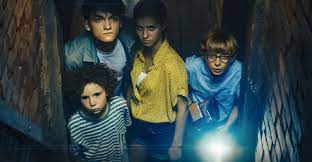

“The Strange House (Das schaurige Haus)” is a screwball German mystery-dramedy about kids in search of who is haunting this house some of them have moved into, and why.
Something or former someones are “possessing” two brothers, new kids in town, at times. Who are they, what are they, and what might they want from this life that their last one lost?
There’s not a lot to this, and if you’re looking for straight-up frights, you’ll be let down. But I laughed more than once at these kids trying to get answers for the unexplainable.
The neighbors give the new family — mother Sabine (Julia Koschitz), littlest son Eddi (Benno Rosskopf) and teenaged Hendrik (Leon Orlandianyi) — a Slovenian version of The Stink Eye when they show up in their Jeep XJ, with all their family possessions packed into a trailer Mom is towing. And it’s not just because they’re “Krauts” moving into the Slovenian border country (with Austria).
They’re moving into a house that “looked less crappy online,” Henrik notes, even as the icky realtor (Michael Pink) gives them the hard sell. There’s salt in front of every door, “for the snails,” the realtor assures them. And darned if there aren’t a lot of those. Bug-nut Eddie notices.
Their next door neighbor greets them with an unfriendly “Let’s see if you last longer than the others (in German with English subtitles, or dubbed).”
But as Mom has a research job in the nearby mountains’ caves, there’s nothing for it but to make the best of it.
Then little Eddie stats sleepwalking. He starts muttering in Slovenian as he does. He makes markings on Henrik’s walls. And when the flashlight hits the kid’s eyes, they’re black — a dead “We’ve moved into a haunted house” giveaway.
With Mom distracted and away most of the day, Henrik starts fishing around for answers, dodging or trying to dodge the local bullies as he does. Nerdy Fritz (Lars Bitterlich) might
Fritz is a shrimp, a bit prone to fainting but a handy guy to know. Who do you know who speaks Slovenian? Ida (Marii Weichsler), who is Hendrik’s age, does.
“He lives in the Polzmann house and his brother’s possessed by a ghost,” is Fritz’s cute, quick and matter-of-fact summation. There’s nothing for it but to figure out who is speaking Slovenian through the child and what connection they have to the haunted Polzmann house, where a tragic murder-suicide happened 40 years ago.
Seances and questions of the undead, nosing around town, all that comes into play as they try to piece together what this ghost (ghosts) want and what they’re trying to tell them.
Hendrik and Ida piece together the puzzle, and struggle with teen chemistry as they do, with Fritz providing the comic relief as these children do all their digging and sleuthing out of the reach of the adults who won’t believe them, or who have something to hide.
It’s lighthearted and as horror movies go, something of a “Goonies” lark. But low expectations and having pre-teens to watch this with (the target audience) won’t leave you too disappointed.
If you have to watch this in English, be aware of this. The dubbed version scrubs out the testy Slovenian prejudices, their Hitler-inspired antipathy for “Krauts,” who once invaded and occupied their country. These aren’t “Kraut” kids in the English language version, but “city kids” that the locals despise on principle.

MPA Rating: TV-MA, frights and threats of violence
Cast :Leon Orlandianyi, Marii Weichsler, Lars Bitterlich, Benno Rosskopf, Julia Koschitz and Michael Pink.
Credits: Directed by Daniel Prochaska, script by Marcel Kawentel and Timo Lombeck, based on a Martina Wildner novel. A Netflix release.
Running time: 1:40

No one in Hollywood would dare make a movie about a 25-30 year old actor taking up with an infatuated girl of 16. Not today. That’s the sort of thing that makes career-ending headlines when it happens off screen.
But “Spring Blossom” was written and directed by its young star, Suzanne Lindon, so it is seen almost exclusively from her character’s point of view.
She’s 21 and can still pass for 16, and is the daughter of actors, so she not only has a leg up in the business, but is plainly sophisticated for her age. And she’s French, growing up in a society that outsiders see as more “adult” about such things when perhaps that’s just a sign of patriarchal sexism, which also explains why they’re a bit late to embracing #MeToo.
But that “point of view” is the most important consideration of this wistful “romance,” a movie by a very young woman about what might draw a teenage girl to an older man who catches her eye.
Her character, Suzanne, is just social enough to sit in with her friends and overhear their gossip about school, boys and what not. But she’s not listening. She gets invited to parties, but goes so rarely that it’s a surprise when she finally shows up for one. Where she’s bored with a beer in her hand.
“I’m tired of everything.”
But there’s a handsome actor (Arnaud Valois) rehearsing a role just down the street from where she lives. He is bearded, rides a Vespa and smokes Gauloises Blondes as he chews his morning jam and bread at the cafe next to the theater. We don’t have to hear an interior monologue about what gets her attention, it’s all of that — the romance of his profession, the lure of “adulthood,” and a means of acquiring that all-important French label ahead of your peers.
“Sophisticated.”
In a pubescent rush, Suzanne starts learning how to wear makeup and plotting ways to put herself in the path of the mysterious Raphael. His scooter has an oil leak? On NO! How will he get to the cafe, to work and at the same time every day she can park herself in front of him?
We’ve seen her sweettalk her mother (Florence Viala) into a later curfew. But now she’s asking Dad (Frédéric Pierrot) the most awkward question he’s probably ever gotten from her.
“Do men prefer girls in skirts or pants? (in French, with English subtitles).
Next thing you know, she’s in the shortest skirt she can find and has struck up conversations with the actor. He is charmed, maybe smitten, and perhaps he’s even aware of what’s going on here. We notice, as she does, that he’s not kissing her on the cheek, but on the neck. He starts planning his day around seeing her.
And when he shares the overture to his favorite opera with her via headphones at “their” cafe, they fall into a perfectly choreographed seated-dance to its rapturous rhythms and melody.
But here’s something else we know about Raphael. He’s a bit bored with his world, too. As exotic as it can seem to an outsider — Suzanne sneaks into their rehearsals — acting in repertory can be a drag.
And the show The Constant Players are rehearsing? Strindbergh’s “Miss Julie,” about a girl’s infatuation with an older, engaged servant in the household.


Whatever is going on here, it’s chaste enough that the creepiest things about “Spring Blossom” are the search engine terms on its IMBb page and some of the faintly-icky comments there from non-critics who have seen it.
As a filmmaker, Lindon uses flights of fancy to capture Suzanne’s frame of mind, dancing down the middle of the street at this “first love,” studying how to attract a man’s attention in the most innocent ways, but drawing the line…at getting on his Vespa.
“My parents would kill me.”
She is secretive, guarded. And Raphael is cagey about declaring his state of mind as well. No dancing for him, but Valois suggests a couple of options as Raphael kisses her hand and, more flirtatiously, her neck. The more politically correct path might be he’s just using her to get deeper into “Miss Julie,” to experience the sensitivities of his character and the dilemma he’s in.
There’s a delicacy we feel in every scene in the film. When you’re directing yourself, viewers can’t say “She’s objectifying the character,” because sometimes, a teen changing clothes or breakfasting in her underwear is just a teenager being herself around her family.
Lindon takes these various licenses she gives herself and her movie to conjure up something thoughtful, tender and coming-of-age insightful in “Spring Blossom.” It’s not titillating and not particularly deep, either. But it allows the rest of the world to look at this relationship and see it for what it is, what it might be and what it shouldn’t be, and maybe take a breath before jumping to any more conclusions about it.

MPA Rating: unrated, adult subject matter
Cast: Suzanne Lindon, Arnaud Valois, Frédéric Pierrot, Florence Viala
Credits: Scripted and directed by Suzanne Lindon. A Kimstim release.
Running time: 1:13
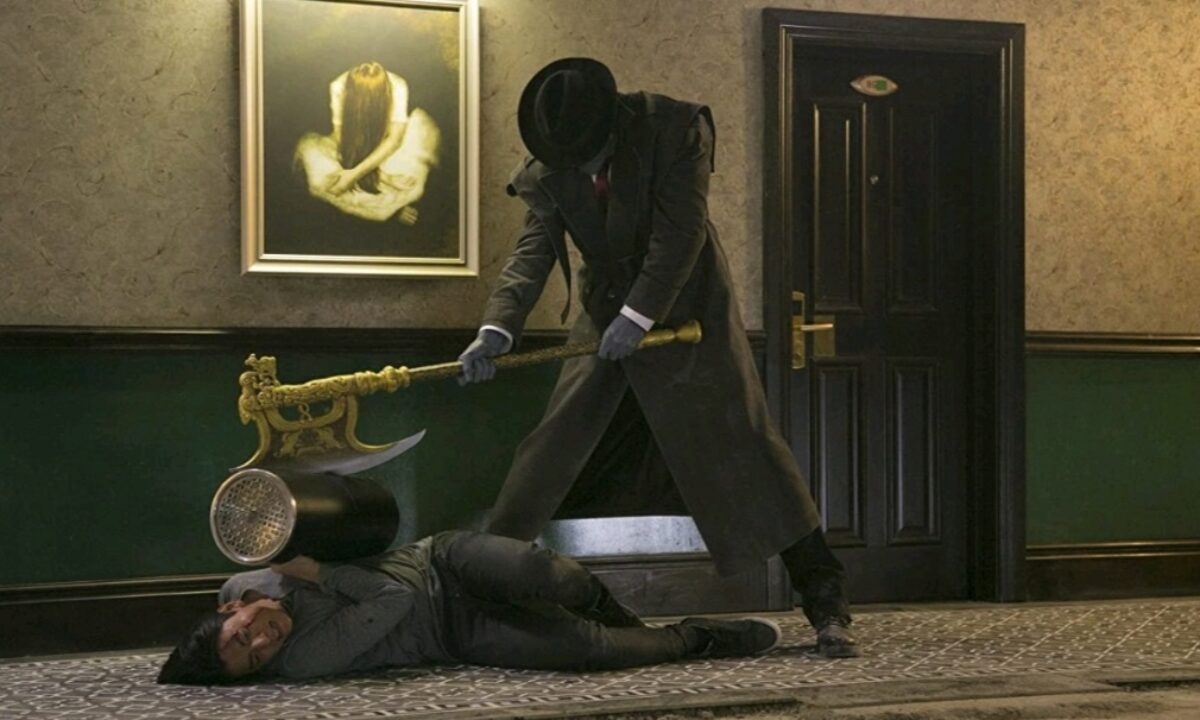
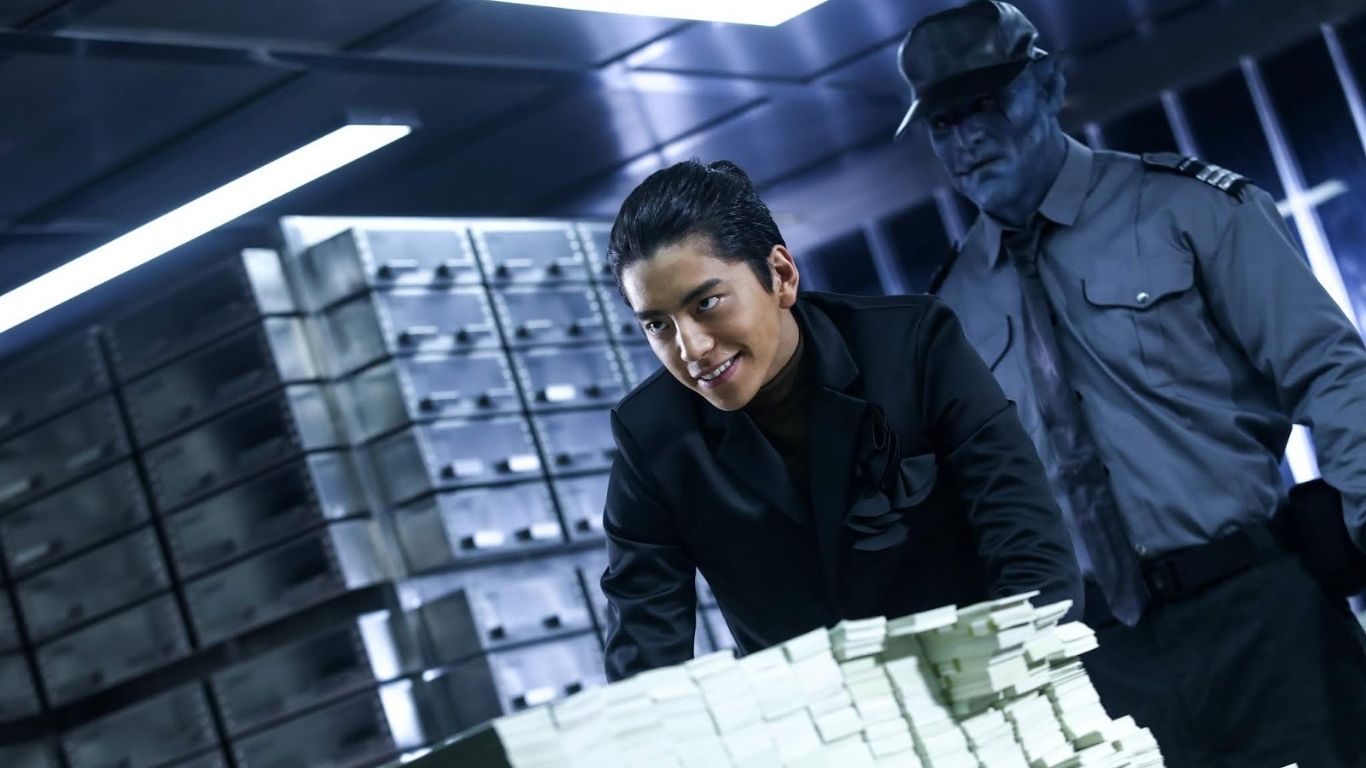
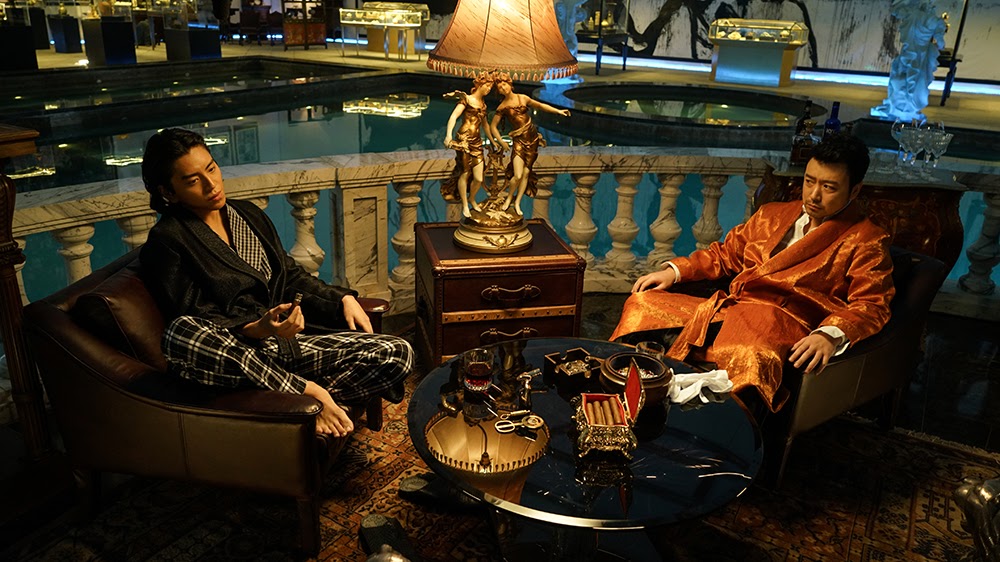
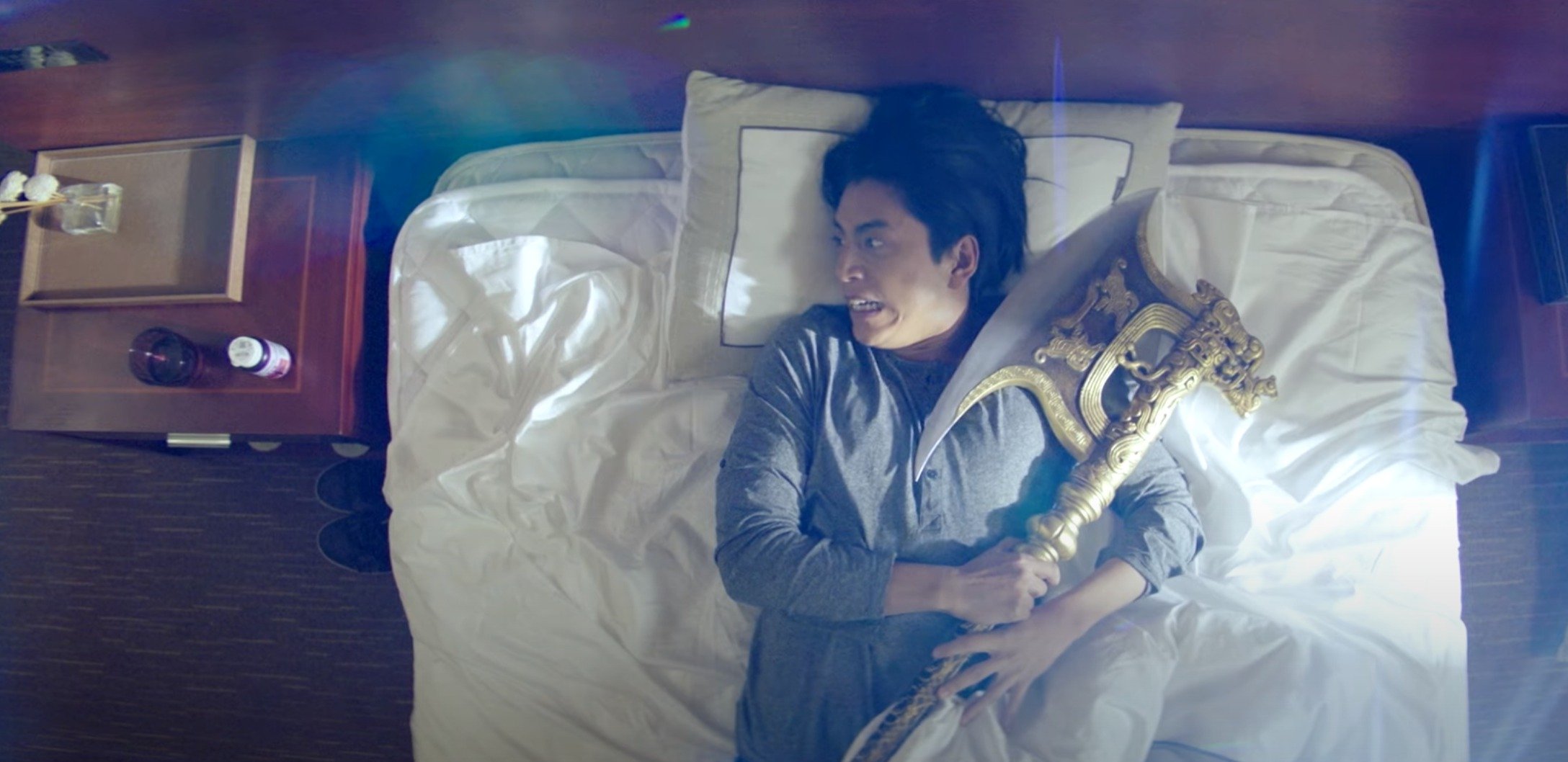
Some seriously “special” effects and a curious time and mind-bending story are the selling points of “Super Me,” a high-gloss Chinese wish fulfillment fantasy. It’s about a guy who learns to manipulate his nightmares into dreams that grant him his heart’s desire.
But what did fairytales and parables teach us about ill-gotten gains? They’re a double-edged sword.
We get to the “swords” part pretty quickly, but first we’ve got to meet the guy who finds himself slashed and stabbed by them nightly. Sang Yu (a mugging, bug-eyed Talu Wang) is a struggling, starving writer whose insomnia has reached the critical stage.
He’s sat in on lectures on the id and the ego and dreams, consulted therapists and specialists and a shaman. Their opinions and expertise become a sleep-deprived blur.
“What is a schizophrenic? (In dubbed English, or Mandarin with subtitles) It’s someone who’s seen what he’s not supposed to.”
He’s a screenwriter who can’t break through, can’t face his landlord or his bullying agent, San (Coa Bingkun). His nightmares have demons slashing and punching him through walls and windows, and it’s getting so bad he can’t distinguish reality from dreams.
Are others seeing him lifted off the ground and bloodied, without seeing what’s doing this to him?
He’s ready to end it all, but this foodcart operating philosopher reminds him that “Wishing for death reminds us that we’re alive.” All he’s got to do is assure himself “This is all a dream,” and he’ll awaken.
And with that knowledge, he starts to fight back. That’s how he hangs onto the sword that half-impales him in one night terror, how he steals an ancient battle axe in another. He starts pawning these dream “gifts,” then starts plotting dreams that put him in museums, bank vaults and the like. He wakes up richer, if a bit rattled, after each nightmare.
There’s this singer (Song Jia) he obsessed about in college, now depressed and trapped in a coffee shop she can’t sell. He begins to buy his way into her attentions, and into her affections. She’ll be more impressed if he’s not just rich enough to buy her shop and a Maserati, but a successful screenwriter, too.
But somebody’s going to have to pay the piper. And as his dreams start to come back around to giving the demons that haunt him the upper hand, “reality” catches up as well.
The look of Zhang Chong’s (“The Fourth Wall”) film is more impressive than the hard-to-follow “Inception-ish” story or the acting. Wang and Bingkun plays things broadly, Jia plays one note and their character’s actions don’t make a whole lot of sense in a plot that feels as if clues and explanations were left out.
Maybe there’s an East/West schism in the way this scans and processes that tripped me up, or I’m missing the Freudian/Jungian implications in what’s presented. But I never picked up on why this is happening, “Why him?” and what exactly these “demons” represent.
That makes for a very good looking wish-fulfillment fantasy that doesn’t translate, with or without subtitles.

MPA Rating: TV-14, violence, profanity
Cast: Talu Wang, Song Jia, Coa Bingkun, Wu Gan, Kiven Lee
Credits: Directed by Zhang Chong, script by Zhang Chong and Zhang Dongdong. A Netflix release.
Running time: 1:42
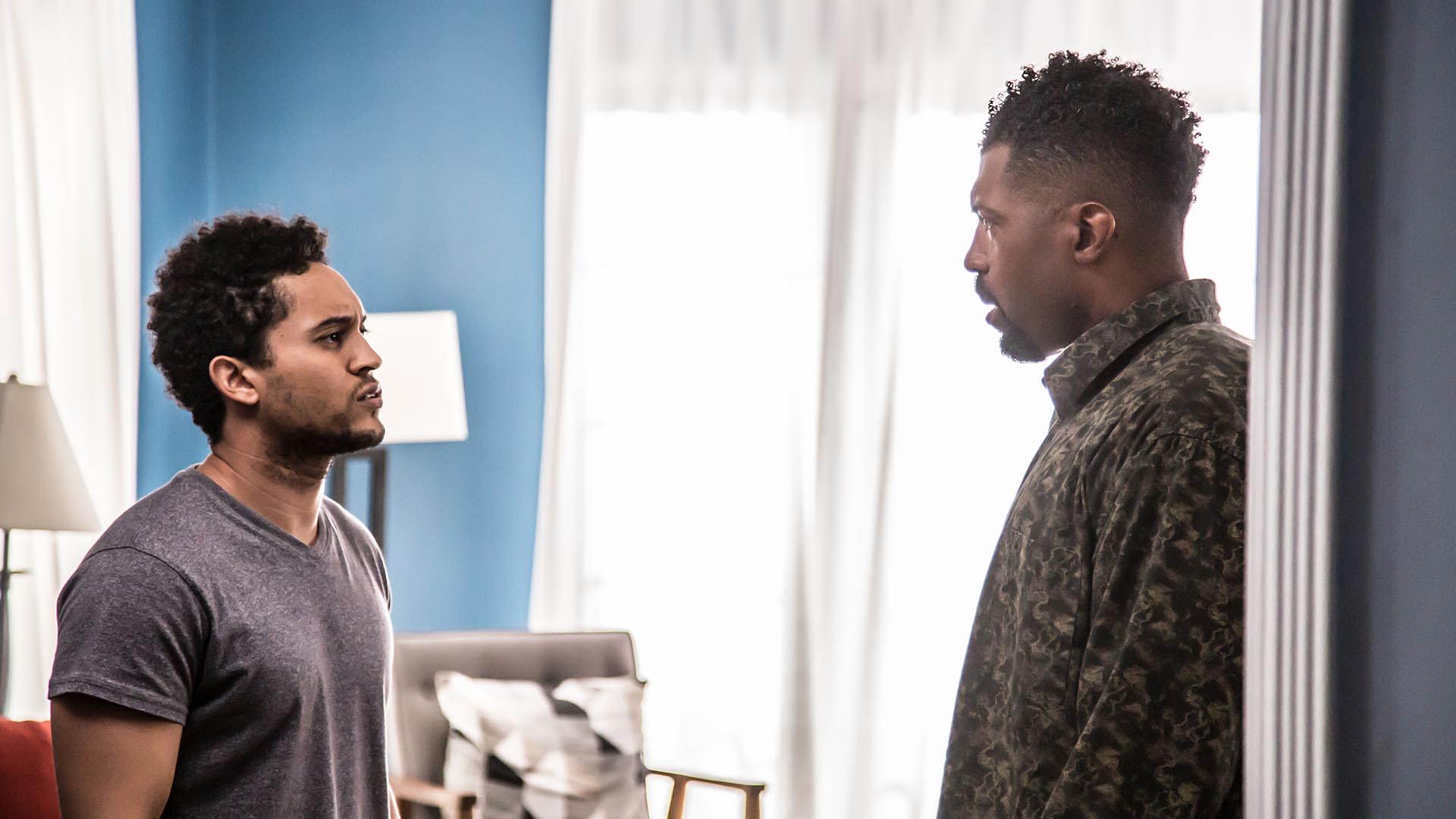
A tepid attempt to graft agoraphobia onto the weary “indie filmmaker trying to get a second film made” comedy, “Welcome Matt” neither delivers laughs nor insights to an illness a lot of people think about as a pandemic winds down.
The jokes are gassed, the characters bland and the unanswered question that hangs over it, first scene to last, is “Who cares?”
We meet Matthew Hillard (Tahj Mowry) as he’s shooting on the beach in LA, a comedy hilariously-titled “Life’s a Beach,” which one day will be finished and referred to as “‘Clerks’ on the beach.”
Problem one, scene one, first page of dialogue. Nothing remotely cute, funny or even interesting happens in the “film within a film.” Not a promising start.
But damned if the film school dreamer didn’t get that feature made, get a little famous, and wind up shut in, refusing to leave his apartment, trying to summon up a follow-up film and give the illusion everything’s fine on his social media when nothing is.
Why? We just know the reason will be a killer. Eventually.
Matt’s girlfriend (Adriyan Rae) is over it, and her need to go out gives away that she’s cheating on him.
His film school buddy, first-film producer pal (Aaron Grady) is ready to cook up “Life’s a Beach II.” Matt’s not having it.
“You ever seen ‘Clerks II?'”
“I don’t think ANYbody’s seen ‘Clerks II.'”
“My point exactly.”
Bringing him hookers doesn’t help. Yeah, it’s that kind of lame, with broad takes on an audition that turns out to be with a psychotic actor, an “intruder” (Deon Cole) who turns out to be a stoner washed-up stand-up who wants to “co-write” a film with him, and so it goes.
Everybody in town knows who he is, everybody wants a piece of that, nobody cares about his “problem.”
Of course his Facetiming Mom (Jazsmin Lewis) signs him up for in-home therapy sessions with a weeper of a counselor (GG Townson).
As the comic attempts “tough love,” as the producer “leaks” the sequel to the press, as the manipulative ex tries to finagle her way into “Life’s a Beach II,” as the therapist says “I think we’re making progress,” we drift towards The Big Revelation.
No nice way to put this, but “Welcome Matt” is cinematically still-born, “comedy” that barely fits the broadest definition of the word. It clumsily mishandles the “serious” stuff — relationships, “get some help,” etc. — so badly that therapist Lisa isn’t the only one almost moved to tears.
Scenes die of oxygen starvation, characters behave like script archetypes with no visible signs of life, and Matt isn’t the only one eye-rolling his way through this. The selection of photos from this online suggest that this was trimmed rather severely, to which I can only whisper “Thank God.”
A comic co-writer is rarely a bad idea. And in this case, maybe a little more research than googling “agoraphobia” was in order.

MPA Rating: unrated, profanity
Cast: Tahj Mowry, Deon Cole, Adriyan Rae, Aaron Grady, Malik S, GG Townson
Credits: Scripted and directed by Leon Pierce Jr. A Gravitas Ventures release.
Running time: 1:32

A brisk, bracing opening straight out of “The Stand,” only set to Elvis and Elvis covers, sets the tone.
“Army of the Dead” is going to be jaunty, and because there’s little new that can be done with zombies, that’s a good thing. More “Zombieland” than “World War Z,” probably the safe play.
But no sooner have I scribbled “Zack Snyder rediscovers his first, best destiny” in my notes than “Army of the Dead” grinds to an almost-complete halt. A stumbling, lurching narrative, long bursts of exposition — explaining this or that variation on a zombie theme — and a general lifelessness to every scene not involving slaughter condemn Snyder’s latest take on George A. Romero’s “Dead” to tedium.
It’s a heist picture with “the undead,” who have taken over Vegas (Hah!) and are about to be nuked. But there’s $200 million tax-free in a vault there, and only survivors of that zombie outbreak are desperate enough, and possess the necessary skills, to get in there and grab it for the Japanese oligarch (Hiroyuki Sanada) who stashed it in a vault and already collected the insurance on it.
“Easy peasy Japanesey,” he cracks.
The Medal of Freedom winner, a hero of the outbreak, who is now a short order cook is who the oligarch hires. Scott (Dave Bautista) could use the cash, as could everybody else he assembles for his “team” in the slowest, lamest “assemble my team” sequence in action film history.
Ella Purnell, Ana de la Reguera, Omari Hardwick, Raúl Castillo, Theo Rossi, Nora Arnezeder, Garrett Dillahunt, Matthias Schweighöfer and Tig Notaro, play a collection of “types” who emphasize “inclusion” and action film cliches — the German safecracker, the Latino Reddit zombie-killer/influencer, the oligarch’s untrustworthy “security expert,” the lesbian chopper pilot/mechanic (Notaro) who can fly them out (cleverly recast and re-shot when the actor originally in the film tested positive for #MeToo violations).
Oh, and let’s not forget the daughter (Purnell) who never forgave Scott for shooting her mom/his wife when she went undead. She’s here to save a fellow detainee at the refugee camp where Vegas survivors are being held.
Yes, their presence in the camp has been totally politicized.
Notaro gives the picture a welcome if half-hearted comic touch as the team fights/schemes and bargains its way past the zombie subculture towards the twin towers — Sodom and Gomorrah — and their big payoff. No other supporting character is fleshed out enough to develop an impression.



Snyder, who first gained fame for his Romero reboot “Dawn of the Dead,” renames the undead a couple of things — “alphas” and “fast ones” and “shamblers” — and made a movie paced like the latter. This ungainly, overlong (Pilot for a TV series?) beast never gets on its feet and up to speed after that jaunty intro.
This is “Escape from New York” where nobody is cool enough to make us care, where the stakes are low and the pace is slower than slow.
A trio of screenwriters can’t find a clever line of dialogue to save their skins, so the score is peppered with Elvis and morose covers of “Bad Moon Rising,” “This Is the End,” etc. because that’s what we do in post-production to juice up the juiceless — “Forrest Gump” that sucker.
There’s little of the political subtext that gave earlier zombie pictures intellectual heft, no “Zombieland” whimsy, just gory deaths ever-so-slowly achieved, and soap operatic “Walking Dead” character dynamics.
“Tell me this isn’t some insane way to reconnect with your daughter!”
Maybe this is Zack Snyder’s “first, best destiny” as a filmmaker. But when he can’t even get through a formulaic zombie picture without crawling, maybe he was never destined to deserve final cut.

MPA Rating: R for strong bloody violence, gore and language throughout, some sexual content and brief nudity/graphic nudity
Cast: Dave Bautista, Ella Purnell, Ana de la Reguera, Omari Hardwick, Hiroyuki Sanada, Raúl Castillo, Theo Rossi, Nora Arnezeder, Garrett Dillahunt, Matthias Schweighöfer and Tig Notaro.
Credits: Directed and photographed by Zack Snyder, script by Zack Snyder, Shay Hatten and Joby Harold. A Netflix release.
Running time: 2:28
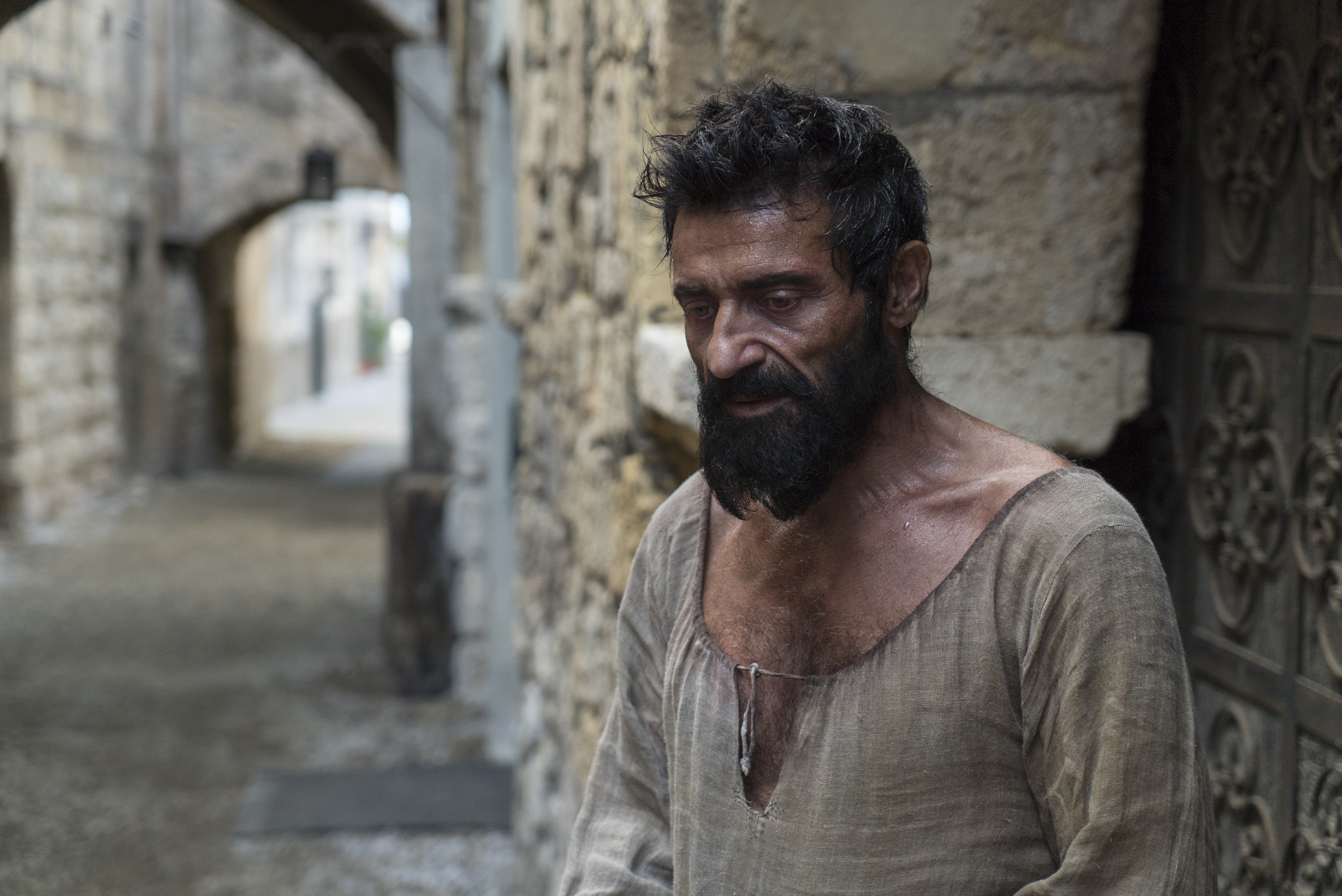


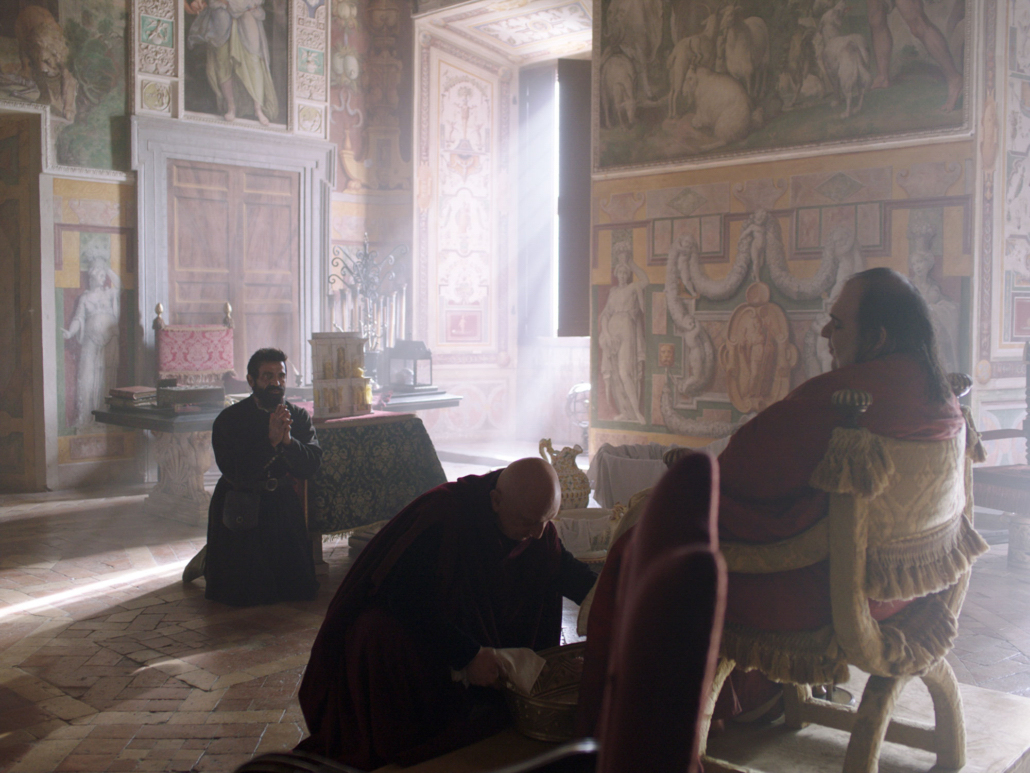
The great Russian filmmaker Andrei Konchalovskiy’s remarkable third act “comeback” in the West began with an allegorical Life of Michelangelo, a Russian-Italian co-production titled “Il peccato” or “Sin.”
The director of the ’80s masterpiece “Runaway Train” had decades in the cinematic wilderness. But he followed 2019’s “Sin” with “Dear Comrades!” And if it wasn’t for the fact that he’s 84, we’d be heralding him as a “hot new talent” emerging from slumbering post-Soviet cinema.
“Sin” is a fascinating take on the greatest Renaissance sculptor and one of the great figures in all of art, Michelangelo Buonarroti. Famously “brilliant” and as the Pope labels him here, “a scoundrel,” but “a divine scoundrel,” he was the finest artist among Italy’s Holy Trinity of art contemporaries, Leonardo and Raphael being his rivals.
This is a markedly different look at the man, played with a twitchy verve by Alberto Testone. He’s as grimy and whiney and intense as Charlton Heston portrayed him in “The Agony and the Ecstasy.” But this Michelangelo is profane and paranoid — manic at times — a mere mortal pulled in different directions by two warring families and the Popes they put in power for their benefit — the Medicis and the Della Roveres.
We meet him trapped in Rome, where “every step I take, a priest, pilgrim or prostitute” is in his way — never satisfied, never finished with his painting of the Sistine Chapel. He ventures back to his native Florence where his mooching family spends his commissions> And then he’s off to a long sojourn in Carrara, supervising the extraction of the famed “white as sugar” marble that he would carve into statues for the tomb of Pope Julius, famously remembered as “The Fighting Pope.”
But as Julius (Massimo De Francovich) dies and the decadent Medici Pope Leo (Simone Toffanin) steps in, that commission is back-burnered.
Money and contracts change hands, no one is happy and most miserable of all is the artist himself, sure he’s being spied on, poisoned, haunted by “assassins” in every shadow.
Glibly put, this Michelangelo is every contractor you’ve ever hired to paint, roof or renovate your house — overbooking and lying about it, pushing deadlines and taking money and crying like a New Testament martyr (here in Italian with English subtitles) every time you complain.
Michelangelo frets about the Inquisition, “the Hounds of the Lord,” they call themselves, “the Bitches of the Lord” he hisses. He rages at the plagiarizing and glory-stealing Raphael (Glenn Blackhall), attacks his long-suffering, duplicitous aide Peppe (Jakob Diehl) and begs the quarrymen to be quick but careful with his Carrara marble, including the massive block everyone calls “il mostro, the monster,” which we know will be carved into his masterpiece.
A manic egomaniac, control freak and genius is overextended, and we watch him — like “Fitzcarraldo” — labor over his quixotic dream, juggling creditors and assignments every step of the way. That’s the metaphor here, the great artist laboring to put himself in a position to create a statue for the ages, squandering years of his life and his sanity in its pursuit.
“My every project goes beyond my strength,” he complains, and Testone and Konchalovskiy let us see it and feel it.
But as he fends off this creditor or that Pope or menacing Medici, he is watching — the daughter who could be his Madonna, the hands of bejeweled wealth and age, or youth or labor, his trademark as a sculptor.
It’s a gritty, lived-in film that feels like a smelly, life-is-nasty-brutish-and-short for anyone not in the ruling classes depiction of the Renaissance — beautiful and painterly even in it’s ugliness.
And Testone, wearing the weight of the world and his Herculean tasks in every haunted, furrowed-brow moment, never lets is forget the stakes, even when “Sin,” like Michelangelo, becomes more and more bogged down by the mortal sin — vanity — that “the monster” becomes.

MPA Rating: unrated, violence, sex, profanity
Cast: Alberto Testone, Massimo De Francovich, Nicola Adobati, Jakob Diehl, Simone Toffanin
Credits: Directed by Andrei Konchalovskiy, script by Andrei Konchalovsky and Elena Kiseleva. A Corinth Films release.
Running time: 2:14
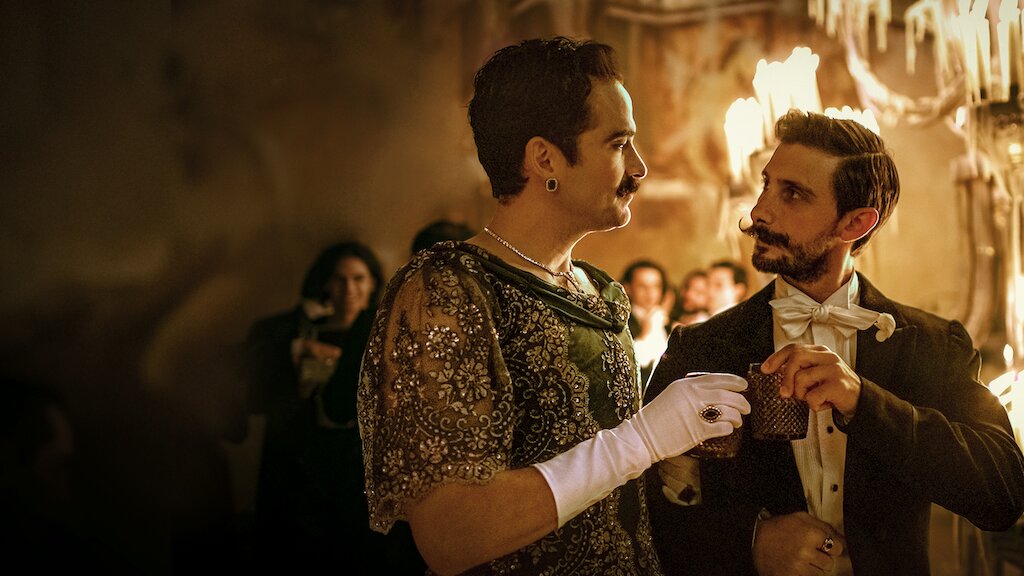
Their eyes lock in across the darkened room. They share a smile, and as their finely-waxed mustaches meet, they kiss.
“The Dance of the 41 (El Baile de los 41)” is Mexico’s “Age of the Not-So-Innocent,” a beautifully baroque period piece about a signature political/sexual scandal for a culture wrapped up in Latin machismo.
It happened in 1901, a “raid” on a private club that ensnared many of the country’s shakers and movers — Congressmen, bankers, the son-in-law of the president — generations of men in the exquisite beards and mustaches of the day, cross-dressed and dancing at a gala ball.
“Dance” tells the story of this exclusive “club,” whose members donned blindfolds, stripped off their shirts and confessed to their fellow practitioners of “Socratic love,” “Soy maricón.”
The story begins with the marriage of the Ignacio de la Torres (Alfonso Herrera) to Amada Diaz (Mabel Cadena) The groom, freshly appointed to Congress, becomes “the nation’s son-in-law” as Amada is President Porfirio Diaz’s daughter.
But whatever political advantages having him in the family entail, in the bedroom it’s instantly obvious that all isn’t as promised in the bedroom. Ignacio has to fake his way through it.
Meeting a colleague in government, Evaristo (Emiliano Zurita) confirms it. Yes, gaydar predated radar. And then we see him at his “club,” home to the “late night dinners” that keep him away from home and his increasingly frustrated and then furious wife.
“Tell your wife that we ladies LOVED her dress,” the other members cackle.
The strained marriage drives “El Baile,” but its life is this club where Ignacio can be himself, and doesn’t hesitate to. But amidst the hedonism, the drinking and orgies, staged operas and ribald pantomimes, initiations (for Evaristo, “Eva”) and figuring out what all these candlelit bathtubs are for, Ignacio commits a cardinal sin for the many powerful and married members. He falls in love.
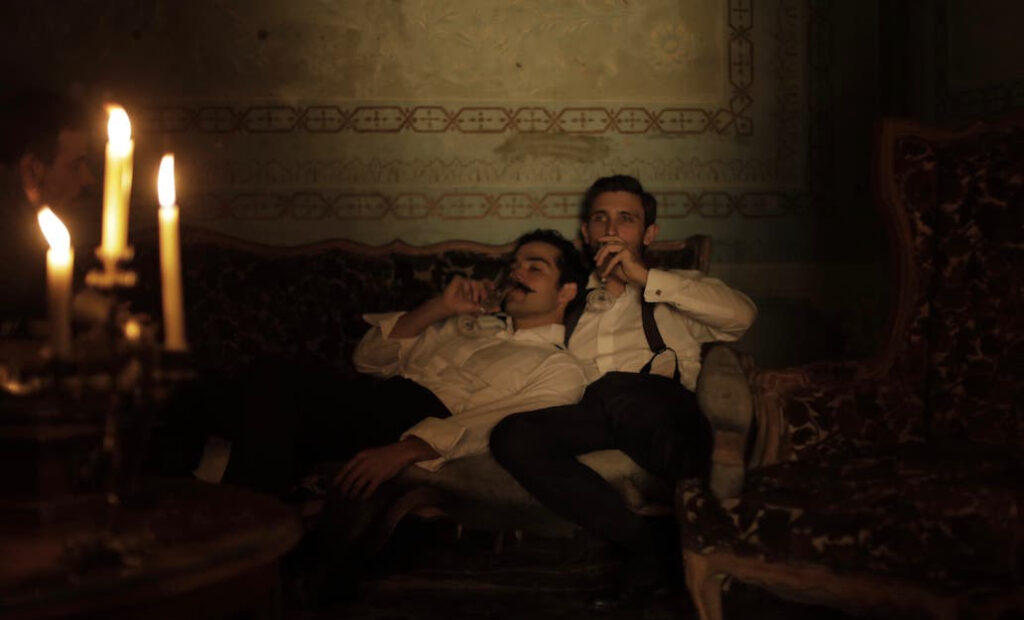

“Dance of the 41” is a gorgeous, ornate and tragic romance that seems filmed and acted at arm’s length. We can’t embrace the characters of their plight, because the dry treatment ensures nobody is that sympathetic, no one is obviously worth rooting for.
The performances, save for Cadena, who brings hurt and fire to Amada, have a bloodlessness about them that hampers our connection to the characters.
The victim here is Amada, the one lied to, mistreated and gaslit by a husband who insists she has health and sleeping problems as he moves out of their bedroom. Ignacio may be derisively called “Nachito” by the bride’s military man brother, with a lamb left behind as a taunt at one point. But he’s a bit of a bastard, and impossible to feel sorry for as presented here.
Amada is likewise problematic, high-born and determined to make a go of this even if she has to burn his world down around him to keep up appearances.
Coming twenty years after “Y tu mama tambien,” “Dance of the 41” seems curiously cautious and tentative, aside from the orgy and sex scenes and the fact that it “outs” a Congressman and son-in-law of a long-serving Mexican president.
What’s served up is dry history that neither judges nor commits to what might be “tragic” in this story, which is understandable, given the principals.
That takes “Dance” into the realm of that Martin Scorsese movie I referenced earlier. Like “Age of Innocence,” this melodrama feels preserved under glass, an emotionally barren account of a “scandal” and its (briefly shown) aftermath, regarded from afar without much sympathy for anybody involved.

MPA Rating: TV-MA, sex, nudity
Cast: Alfonso Herrera, Emiliano Zurita, Mabel Cadena, Fernando Becerril
Credits: Directed by David Paplos, script by Monika Revilla. A Netflix release.
Running time: 1:39



“Ferry” is a straight-up old-fashioned “mobster grows morals” thriller from The Netherlands, a movie that doesn’t surprise but does what it does with efficiency and a hint of style.
And I don’t think it gives too much away saying that this Cecilia Verheyden film, script by Nico Moolenaar and Bart Uytdenhouwen, is an homage to “Miller’s Crossing,” because it is.
The title character (Frank Lammers) is a hulking “enforcer” for Amsterdam mob boss Brink )(Huub Stapel). When Brink’s counting room is robbed and his son is killed, Ferry is the pitiless tough he sends to “The South” for answers, and revenge.
“I want you to find them, and I want you to shoot them.”
“The South” is where Ferry came from, the poorer trailer park corner of Holland that doesn’t make it onto the windmills and wooden shoes postcards, a region far removed from the hip, touristy, sexually and pharmaceutically-liberated Amsterdam.
The script is sort of a mobster procedural. See what resources Ferry calls on to get his first lead, see where he goes to get some names. And in this case, check out the past he was running away from.
The opening scene shows his traumatic but toughening trailer park childhood, where he and his sister had to stick together under an abusive alcoholic’s manufactured-housing roof. Now, he’s catching up with that estranged sister (Monic Hendrickx), mainly because her husband (Raymond Thiry) was an old running mate.
Ferry embeds himself in a trailer park and waits. Danielle (Elise Schaap) is the damsel he rescues at the carnival, the neighbor he flirts with in the park and a woman who makes him wonder if there’s more to life than the one he’s been leading. He even starts to feel guilty about his sister, who is dying and all he wants is information from her husband.
The “investigation” isn’t deep or canny, the violence isn’t anything fancy. Tell me who you worked with, tell me who you’re working for, and no, there’s not much chance I still won’t shoot you if you do.
Lammers has a sort of Oliver Platt look with a Michael Shannon vibe. His Ferry learned from the school of hard knocks. He isn’t educated, sophisticated or even overly cunning. Brute strength, bulk and revolvers with a willingness to use them covers for a lot of disadvantages when it comes to life-or-death situations.
Schaap’s high-mileage Danielle is very pretty woman who started out in the hole and got beaten down every time she crawled out of it. I like that she’s not self-pitying, although her interest in her “rescuer” seems more primal than realistic.
Film buffs will catch the references to “Miller’s Crossing” even if nobody else does. That makes this a B-movie with a little something extra. What’s more important is that it’s a B-movie that works.
MPA Rating: TV-MA, violence, drug abuse, nudity
Cast: Frank Lammers, Elise Schaap, Huub Stapel, Monic Hendrickx and Raymond Thiry
Credits: Directed by Cecilia Verheyden, script by Nico Moolenaar, Bart Uytdenhouwen. A Netflix release.
Running time: 1:46
Paul Sorvino, Lorraine Bracco, Ashley Benson, Aldis Hodge, Penn Badgley, Shiloh Fernandez, Luis Guzman, William Fitchner, Val Killer and Ewan McGregor are the stars of this June 18 release.


