
Amy Irving is among the stars of this Anne Hu film, about a kid with dyslexia whose rural Chinese family and the culture around them learn about how that doesn’t need to limit the life the little girl has ahead of her.
Coming soon.
Amy Irving is among the stars of this Anne Hu film, about a kid with dyslexia whose rural Chinese family and the culture around them learn about how that doesn’t need to limit the life the little girl has ahead of her.
Coming soon.

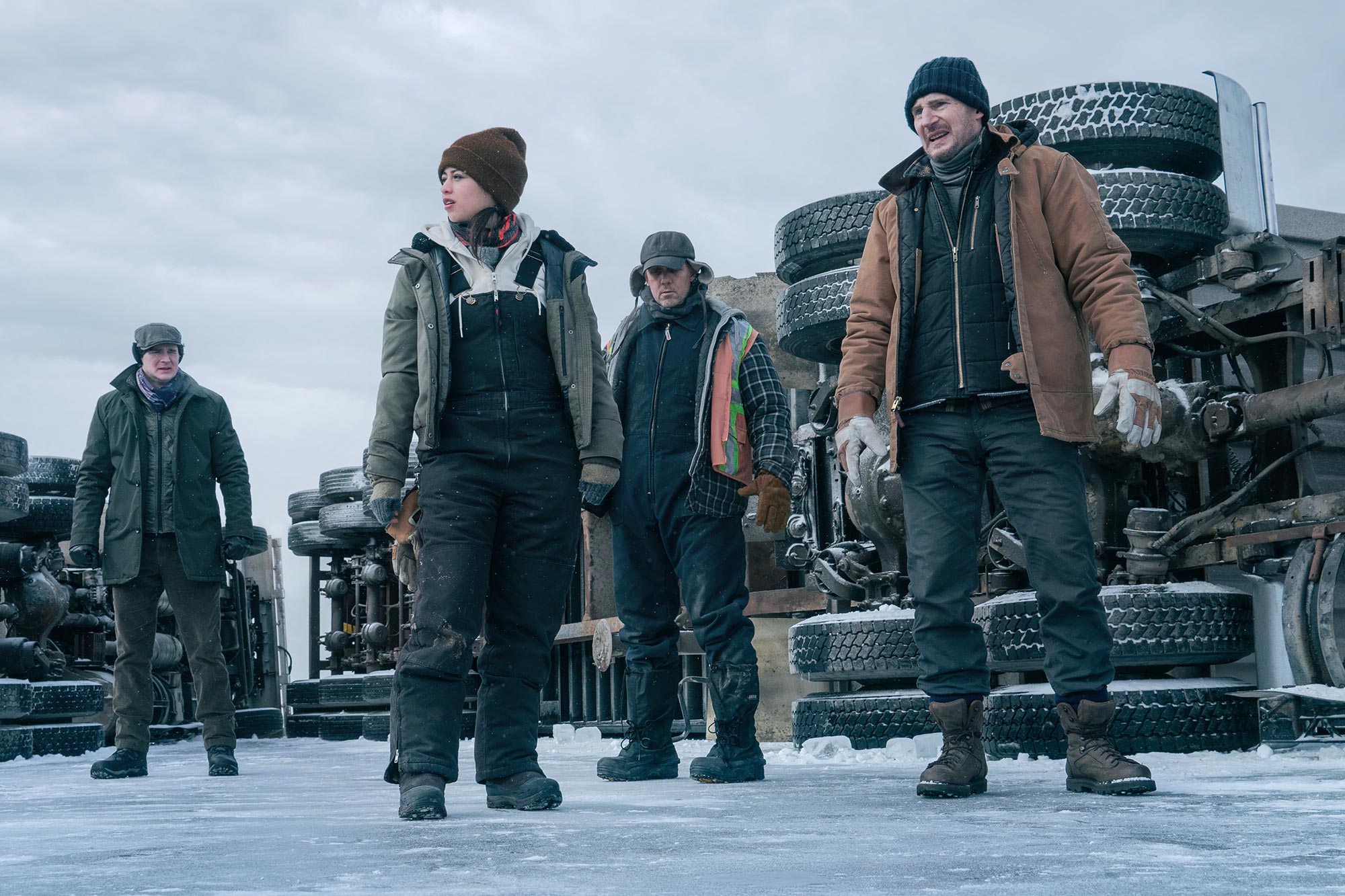

You watch enough reality TV, you know this. Ice road trucking is damned dangerous without throwing in much melodrama.
So all this villainy, these snowmobile chases, ice truck bumper cars and what not that “The Ice Road” serves up? A bit of gilding the Liam Neeson lily, right?
It’s another action picture for Mr. Neeson, another set of “particular skills” are trotted out. And as TV has covered most of the “work the problem” of doing this dangerous driving, coping with mishaps, breakdowns, tragedy and deadlines, I guess we can forgive the farthest fetched stuff that piles on in the third act.
But truth be told, “Ice Road” goes a bit wrong, right from the get-go. An action film fan sees a digital explosion knock over a digital dump truck closing the Katka diamond mine in Northern Manitoba, and the heart sinks. That doesn’t bode well for the rest of the movie.
But as a rag tag trio of truck drivers on a “suicide mission” trying to transport gear miles and kilometers over a not-quite-wholly frozen lake, a not-weight-rated bridge, etc., real trucks and real stunts take over and in that regard, at least, it’s not half-bad.
Laurence Fishburne is the guy who assembles the team, which includes First Nation rebel Tantoo (Amber Midthunder), fresh out of jail, and newly-fired North Dakota siblings Mike and Gurty (Neeson and Marcus Thomas).
Everybody’s got a story, but the only one really explained is Mike and Gurty’s. Mike’s brother is a vet with mind-numbing PTSD, but hangs onto his diesel repair skills like the last piece of the old “him” he has left.
They need to get these wellheads — at least one of them, on three separate trucks (“triple redundancy”) — to the mine to drain out the methane gas that blew the place up and will asphyxiate the survivors trapped down below. The drivers need to manage this within “the oxygen window” those men (Holt McCallany is their leader) have left.
There’s an insurance guy from the mine company (Benjamin Walker) along for the ride, here to act as a surrogate for the audience, to have frozen lake “pressure waves” and the like explained to him (and us). And he’s there to state the obvious.
“You’re out of your minds, all of you!”
Things go wrong in a hurry, drivers try to “work the problem” using their skills and knowhow, and still people die. Will this all be in vain?
You know the answer. You can figure out the villains (one was George’s nemesis on “Seinfeld”) and even predict who gets punched in the mouth, if not exactly when.
Neeson is in solid form, villains do their villainy and the sassy lady driver copes with anti-Native racism with her smart mouth and her fists, to fun effect.
This genre of road adventure has a rich history, from “They Drive by Night” to “Wages of Fear” to “Sorcerer,” desperate people driven to do a deadly job of driving” and paying for that with their lives.”
“Ice Road” summons up memories of its antecedents, here and there.
But that ridiculous over-the-top third act, topping even the odd operating-on-ice physics of “The Ice Road,” tends to take the air right out of the Jonathan Hensleigh film’s tires.

MPA Rating: PG-13 (Sequences of Action & Violence|Strong Language)
Cast: Liam Neeson, Laurence Fishburne, Amber Midthunder, Holt McCallany, Marcus Thomas and Matt McCoy
Credits: Scripted and directed by Jonathan Hensleigh. A Netflix release.
Running time: 1:49

Some films achieve “classic” status and even become pop culture shorthand, but eventually find themselves dismissed as overly-earnest, “of its time,” or even “self-parody.”
More than one Stanley Kramer production of the ’50s on into the ’70s has suffered that fate. A self-conscious/socially-conscious filmmaker, it’s hard to think of anybody in the modern cinema that who would own that label — maybe Spike Lee, and perhaps one day Jordan Peele.
Kramer took on “Inherit the Wind” and “On the Beach” and “Judgement at Nuremburg,” “Guess Who’s Coming to Dinner” and “Ship of Fools” as a director. He produced the disaffected generation on wheels B-movie classic “The Wild One,” the Hollywood Blacklist-bashing Western “High Noon” and “The Caine Mutiny,” a myth-busting stage drama that took a sober look at the officer classes of the WWII US Navy.
All those social ills exposés, Holocaust remembrances, cautionary anti-nuclear war parables and pointed looks at American racism became Kramer’s reputation.
Dropping in on “The Defiant Ones,” recently screened on The Grio TV, I was struck by filmmaking qualities one forgets when a film ages into a classic so archetypal as to be beyond criticism out its time.
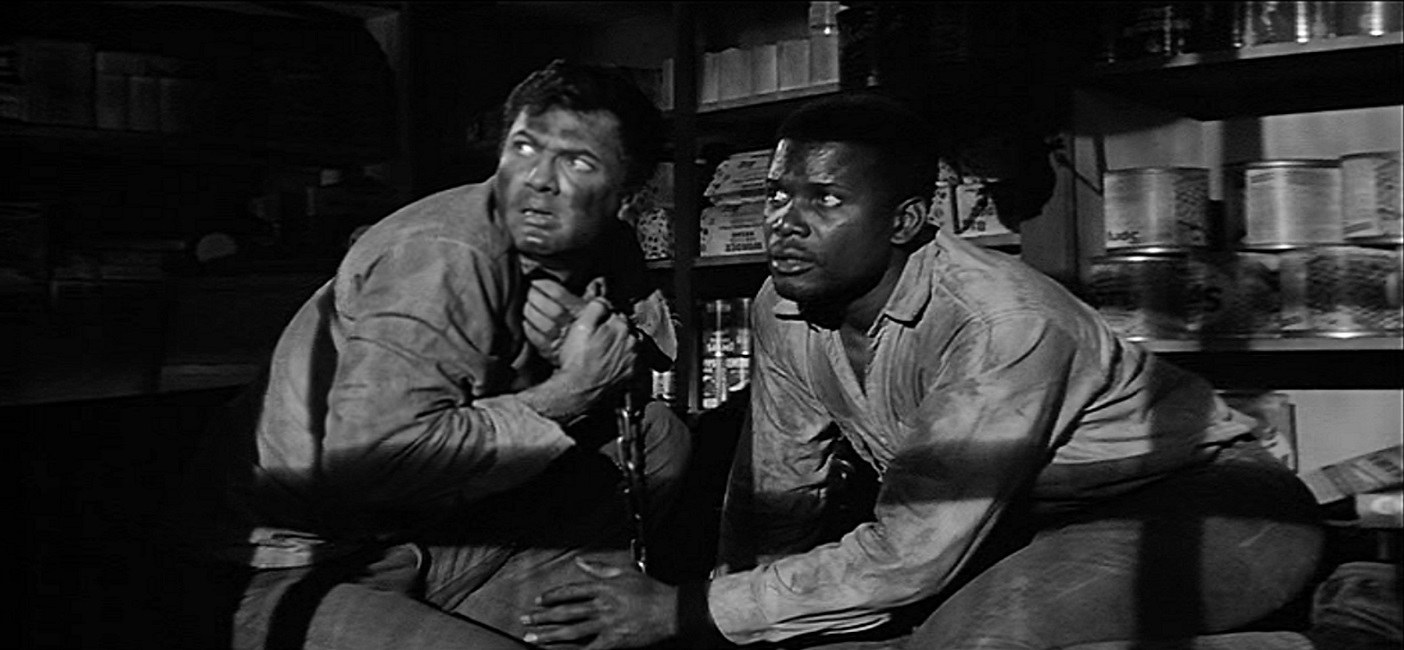
This is the movie that made Sidney Poitier an icon, but Tony Curtis was never taken that seriously as an actor, which explains some of the reason “Defiant” slipped into “dismissable” in some quarters.
It’s a lean racial allegory that preaches without ever seeming preachy, a beautifully shot (one of its Oscars was for Sam Leavitt’s B&W cinematography), well-cut time capsule of America at the birth of the Civil Rights Era.
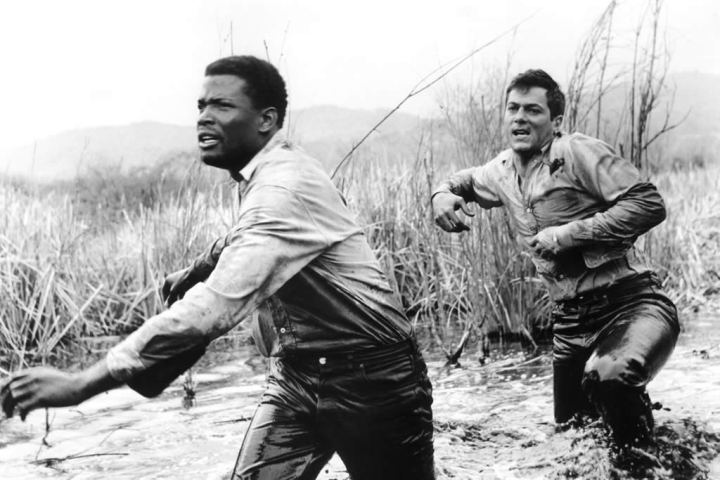
Whatever star power and “message” appeal it had then, what makes it timeless is its “men on the run” story — two convicts, chained-together, on the lam from Southern justice.
No, it almost never looks like The South. They filmed it in the treeless mountains of Southern California, on backlots and sound stages, faking “swamps” and the like when needed.
The set-pieces — crossing a “raging” (not really) river, crawling out of a deep mud pit, fending off and then captured by the enraged white men of a local town, the single farm mother (Cara Williams) and her son that they stumble upon — can play as predictably corny.
But that on-the-run-in-chains narrative still zips by, and the script, with its get-past-racism-to-find-each-other’s humanity subtext, still pops.
“How come they chained a white man to a black?”
“The warden’s got a sense of humor...They’ll probably kill each other before they go five miles.”
Theodore Bikel’s sheriff character, “up for reelection,” has a hint of a drawl and a pre-Atticus Finch lawyer-turned-lawman notion of justice. He’s not a caricature when he might easily have been one. The script and the humanity Bikel brought to many characters over a very long career, make this guy out of step with his “posse.” He wants these men taken alive, and won’t let others even think about “mob justice.”

Here was a movie that took on the N-word head-on, with Curtis’s racist armed robber using the slur, and the standard defense — the assorted words thrown at white people in response in that day. Poitier’s hard-bitten “Ever heard those used with ‘in the woodpile'” might have opened a few eyes, if not minds, in 1958.
“I ain’t gettin’ mad, Joker. I been mad all my natural life.”
Poitier crackles with gimlet-eyed fury in what became a defining role for him. He didn’t play “angry” very often. Grace, dignity and intelligence were his brand.
Curtis managed to hold his own in a similar temper, first scene to last.
On-the-run stories put us in the dilemma with the characters, second-guessing their choices, using everything we’ve ever seen in such stories (“Cool Hand Luke” stands out) to guess what our criminal anti-heroes will do to get to “freedom.” One is desperate to go north, the other hellbent on heading “south.” Guess who wants to go where?
The film has a not-cynical-enough reporter (Lawrence Dobkin), a racist goon (Claude Akins) in conflict with an older, tougher local (Lon Chaney, Jr.) who won’t let a lynching stain his town’s conscience, the inhumanity of a search-dog trainer (King Donovan) and state trooper (Charles McGraw) in conflict with the sheriff, too many places for America’s moral quandary over the issue of race to be debated.
This could have been “All the King’s Men” or “Twelve Angry Men” and it never manages to be that tough.
But Kramer gets a message he felt America needed to hear and probably still needs to hear on the screen in an artful, just-edgy-enough and still-entertaining film that retains its claim as a “classic,” at least in part thanks to how deeply it’s burrowed itself into the culture.

MPA Rating: “approved,” violence, racial slurs
Cast: Sidney Poitier, Tony Curtis, Theodore Bikel, Lon Chaney Jr,. Charles McGraw, Cara Williams, Lawrence Dobkin and Claude Akins
Credits: Directed by Stanley Kramer, script by Nedrick Young, Harold Jacob Smith. A United Artists release.
Running time: 1:36
A July 7 doc about “cat fanciers?” Ok.
The Sharkfin Soup fetish that is pointing “Jaws” towards extinction, courtesy of the inventor of “Torture Porn.”
July 13 “Fin” comes to Discovery +.
This has a life and wit and energy to it that grabs you. Slam poets as performers in a street musical, “Summertime” opens July 9, expanding the following week.
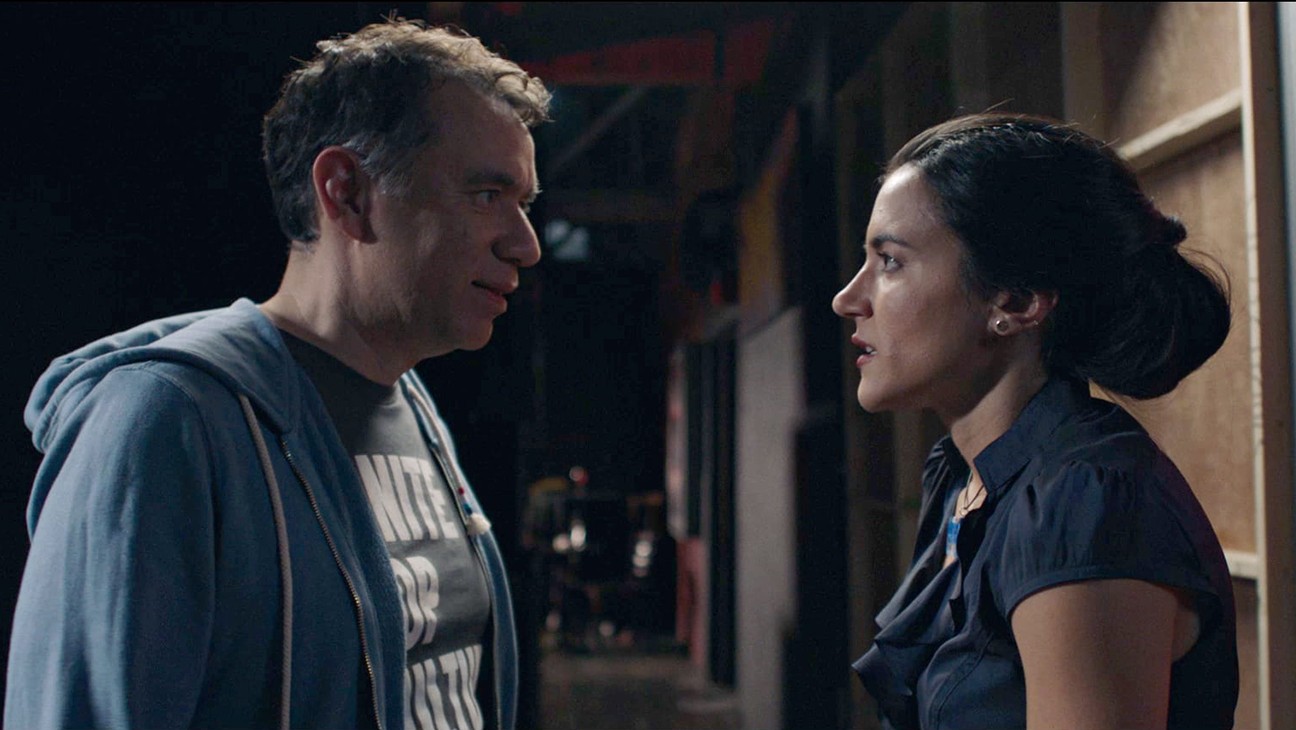
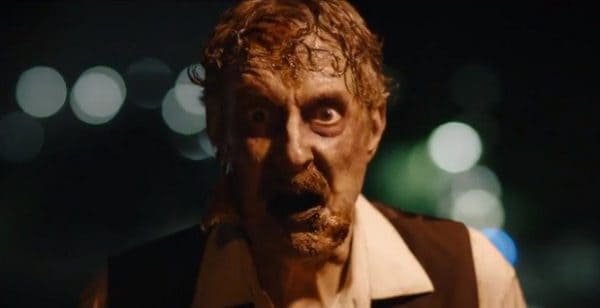
Showbiz is littered with “make your deal with the Devil” allegories, a lot of them with Harvey Weinstein as the punch line.
And that’s what the horror comedy “Too Late” toys around with, that “You came into this with open eyes” proviso attached to every horror tale about “what I had to do to get my start in show business.”
More a cute idea for a horror comedy than one that pays off with laughs, “Too Late” is about an “assistant” who works for a comedy “legend” who turns out to be a monster, and not in the Scott Rudin sense.
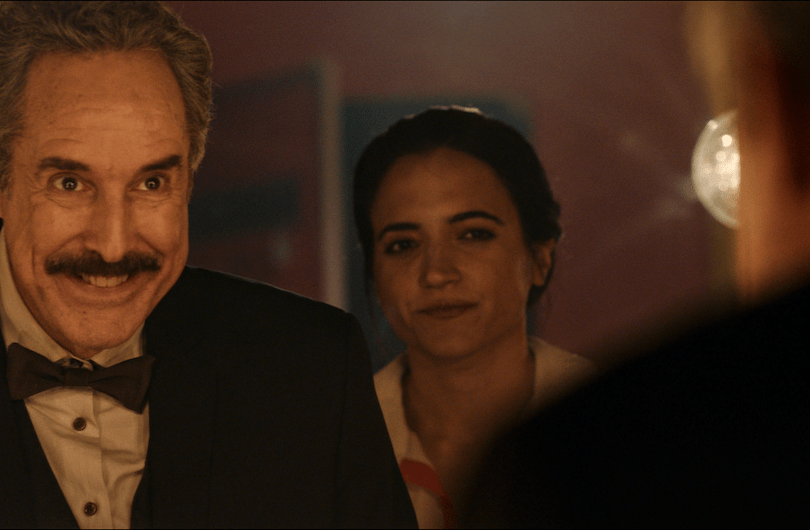
Vi, short for Violet (Alyssa Limperis, a bit player making the move to leading lady) works for Bob DeVore (Ron Lynch), a grizzled “entertainer” who hosts and books a night club variety series that’s both a star showcase and a place where up-and-comers hope to land their big break.
Violet does menial things like stock Bob’s backstage bar, hoping to make contacts through him that will take her places. She scribbles ideas into an omnipresent notebook, something the other comics there recognize as “You’re a comedian.”
But Bob is an ungenerous C-list jerk, never introducing her, always berating her after using her for everything he finds too unpleasant to deal with himself.
That’s why she also books her own stand-up showcase, never appearing on stage, just providing “a spot” to comics who want to work on their act, polish new material, or even “get discovered” at the coffee shop where “The Death of Comedy” takes place.
Violet’s somebody comics feel the need to kiss up to, even harass, to get on stage at “Too Late.” The women (Kimberly Clark, Mary Lynn Rajskub) are fine. But the guys aren’t above crossing lines, getting abusive or drunkenly angling towards sexual assault. That’s when she gives them their wish — that coveted “spot” on Bob’s show.
Bob even meets them in his well-appointed dressing room afterwards. That’s where he will kill and devour them.
Violet? She’s knows this. That’s how bad she wants a leg up in show business, she sets up (“deserved it”) comics for “dark of the moon” dining where they’re the main course.
“I could make things happen for you!” is Bob’s go-to promise. If only she keeps his secret, sticks with him and toes his line.
Her first qualms about what she does arrives in the person of charming comic Jimmy (Will Weldon). He’s funny, she clicks with him romantically. If only she can keep him away from Vampire Bob.
Directed by D.W. Thomas and scripted by Tom Becker, “Too Late” gets in some amusing stand-up bits about “birth control shoes” (Clark’s bit about women’s footwear that sends non-sexy signals) and the like. As whole though, the film is more light in tone than laugh-out-loud funny.
Bob’s monster make-up is worth a smirk. His lines? Not even that. Perusing his centuries of family photos is almost amusing. Wait, vampires can’t be photographed! Rules are rules!
But the film does a great job of immersing us in a tiny corner of the West Coast comedy subculture — seedy, self-contained, with sometimes arrogant, sometimes talented and always desperately needy stand-ups struggling to work their way up the “paying gig” ladder.
At this level, stand-up is “going on between trivia nights and music open mikes” in bars with disinterested listeners. Self-esteem is hard to come by in this world, especially for Violet, whose roomie (Jenny Zigrino) is constantly ordering her to “value yourself.”
Others, without prompting, ask the hard question. “Why are you booking but not performing?”
The answer is obvious in our leading lady’s presence. Limperis is lightly engaging, but not an outgoing, magnetic or charismatic performer. When a cross Bob barks “Maybe you’re funnier than I thought,” he’s reading a scripted line, not reacting to anything he or we have seen in “Too Late” that suggests that’s the case.
Limperis doesn’t have the presence or comic (or straight woman) chops to carry this.
The presence of Fred Armisen in a bit part, playing the long-suffering lighting director, suggests a “Portlandia” kind of deadpan was what the wits behind the camera were going for. Unfortunately, “Too Late” is more “dead” than “deadpan.”

MPA Rating: unrated, grossout horror violence, drug abuse, profanity
Cast: Alyssa Limperis, Ron Lynch, Will Weldon, Kimberly Clark, Brooks Weldon, Jack De Sena, Jenny Zigrino, Mary Lynn Rajskub and Fred Armisen
Credits: Directed by D.W. Thomas, script by Tom Becker. A Firemark release.
Running time: 1:19
July 6 home video plays host to “evil has a new queen.” https://youtu.be/V-I4XuPlNVo
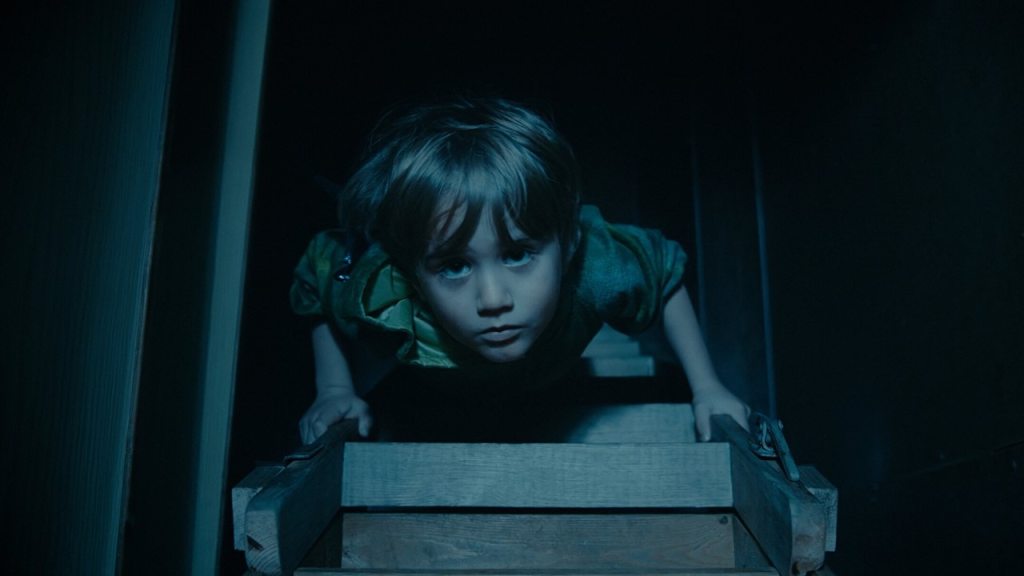
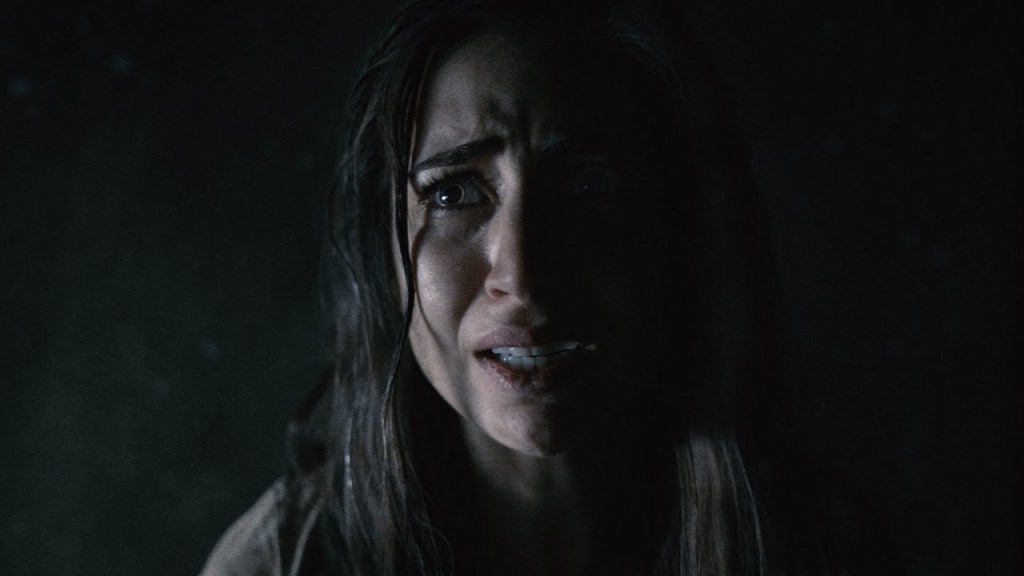
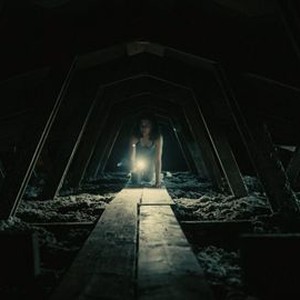
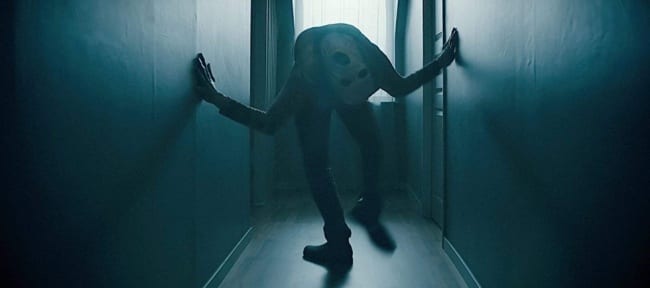
That first encounter with your new neighbors, after you’ve bought that new-to-you house, is always a little fraught. Especially when this is their introductory line.
“You know what happened there, right?”
No. And where were you BEFORE we made our offer?
“The Evil Next Door” is a perfectly conventional, somewhat serviceable Swedish horror tale in the haunted house genre, the “something is after our kid” subgenre and the characters-yanked-out-of-the-frame, monster-skitters-around-upside-down school of effects.
It finishes with a nice flourish even if everything that comes before is “seen it before” overfamiliar.
A new family moves into a new house in the suburbs. Shirin (Dilan Gwyn, a dead ringer for Imogen Poots) is newest of all. She’s the new woman in Fredrik’s (Linas Wahlgren) life, and new to motherhood. As they’re picking out this new place, little Lucas (Eddie Eriksson Dominguez) puts two-and-two together and wants to know if she’s to be his “new mommy.”
Shirin hems and haws something like a “yes.” But she has no answer to the five-year-old’s followup.
“Does that mean you’re going to die, too?” Photos of him with his bald mother tell us that story.
The new place is a duplex with an empty half next door. And right from the start, Lucas picks up on something. Doors open by themselves when he’s the only one around. Whispers come from the walls.
As a prologue has shown us a previous “event” in this “inspired by true events” tale, we know what’s coming. Sadly, that goes for pretty much everything about “The Evil Next Door.”
The mechanics of such movies demand that A) Fredrik be out of town working, on weekends, leaving “mother” and child alone, that B) Shirin get hints that something is going on with the kid, who’s bragging about his “new friend” at pre-school, who is talking…to SOMEone, when he doesn’t think she is listening.
Thus, Fredrik doesn’t take Shirin seriously when she raises mild alarm, — “Something is seriously F—ed up around here!” And he and starts to blame her for the fact that his little boy is getting traumatized and physically hurt when Dad isn’t around.
Predictable as it is, the effects and co-writers/directors Tord Danielsson and Oskar Mellander serve up and how they serve them deliver some decent hair-raising moments. It’s just that the movie leading up to them is so generic as to defy accusations of plagiarism.
So many B-movies have used this very plot that “The Evil Next Door” is pretty much in the horror movie public domain the moment it opens.

.MPA Rating: unrated, violence, horrific images, profanity
Cast: Dilan Gwyn, Eddie Eriksson Dominguez and Linus Wahlgren.
Credits: Scripted and directed by Tord Danielsson, Oskar Mellander. A Magnet/Magnolia release.
Running time: 1:28

“Security” is an Italian mystery stuffed with enough characters — each with a “secret” — that it’s a wonder Stephen Amidon‘s novel wasn’t turned into a limited streaming series instead of a movie.
It’s a wholly Italian tale — in Italian, with English subtitles. But its British screenwriters and director mean that any commentary it slyly makes on Italian “justice” is almost certainly intentional and cleverly cutting. A film of CCTV cameras, a tendency to rush to judgment and off-season small-town gossip, indiscretions and politics, it can’t help but bring to mind the infamous Amanda Knox case, even though there’s no murder and the resemblance is more in its callous disregard for “truth,” or police vigorously pursuing clues, no matter where they might lead.
The title refers to something that’s the biggest concern of the rich of tony Forte dei Marmi, a beach city at the foot of the Apuan Alps. That’s why so many of them have Roberto Santini (Marco D’Amore) on their payroll. He’s an insomniac who always seems to be on the job, checking the beachside, doorlocks or the scores of TV cameras that watch over mansions in the off-season, fielding calls from the well-to-do who winter in Barbados.
“Security” is also what Santini’s wife, Claudia (Maya Sansa) is selling. She’s running for mayor, focused on appealing to wealthy donors and playing to their fears of “undesirables” and “invaders.” Yes, “dog whistle politics” is an international thing.
A teenager (Lavinia Cafaro) popping up on one of those cameras, beaten and bloodied, is our “mystery” here. What happened, who did it, and where was it done?
The carabinieri are a collection of Italian cop stereotypes –immaculately turned-out, stylishly groomed and uniformed, utterly disinterested in “the case,” which they insist is “closed” because of what they interpreted as a “confession” from the girl’s father (Tommaso Ragno), an aged outcast who has a “history” of sex crime in the town.
Santini, without anything resembling jurisdiction or governmental sanction, digs into his videos, wonders what’s been erased from those videos, starts interrogating people and tries to piece together what really happened and what the rich and the lazy cops are covering up.
Henceforth, almost every “break” in this “case,” aside from the girl changing her story and exonerating her father, comes from Santini, a native son of Forte dei Marmi who knows the history and the gossip, and is part of that gossip as well.
He’s got an ex (Valeria Bilello) whose 20ish son might be implicated. That “ex” might not be as “ex” as we first suspect.
He’s got a teen daughter (Gaia Bavaro) who is a classmate of the victim, a kid with her own troubled connection to that family and someone in what amounts to a full revolt against her parents. She’s having a fling at school, and it’s not with a classmate.
And Sabatini’s wife’s political sponsor (Fabrizio Bentivoglio), ridiculously rich with a phobia about being touched, was throwing a party the night of the crime. What will the cameras show about that?
Can Sabatini keep personal prejudices, biased hunches and the like out of his thinking as he tramples privacy rights — as a private security consultant/guard — in pursuit of “the truth?”

The co-writer and director of this is Peter Chelsom, whose best credits have been more comic (“Funny Bones,” “Hear My Song,” “Serendipity”), but who gives these fascinating, tainted characters room enough to make impressions and lets the mystery slowly unravel.
The commentary on Italian justice has to do with conclusions leapt to long ago, something we see happen all over again. The rich play by different rules, the locals have long accepted it and the police and courts are mere functionaries, easily dismissed by the wealthy.
Sabatini? He’s playing outside the rules, “private” security who can look at any video he wants, without legal standing. If there’s one thing the story lacks, it’s overt pressure on this compromised character to do what his paying masters tell him.
“Security” isn’t brisk enough to be a thriller, and the stakes never seem that high. But it walks that tightrope between intriguing and “Well, we HAVE to see how this turns out” without ever losing the plot or turning boring.

MPA Rating: TV-MA, violence, sex, nudity, profanity
Cast: Marco D’Amore, Maya Sansa, Gaia Bavaro, Valeria Bilello, Silvio Muccino, Fabrizio Bentivoglio, Tommaso Ragno
Credits: Directed by Peter Chelsom, script by Amina Grenci, Michele Pellegrini, Peter Chelsom, Tinker Lindsay, based on a novel by Stephen Amidon. A Sky Cinema/Netflix release.
Running time: 1:59

 Movie Nation