
An Oct. 15 release. Doesn’t look like much, but maybe…
An Oct. 15 release. Doesn’t look like much, but maybe…
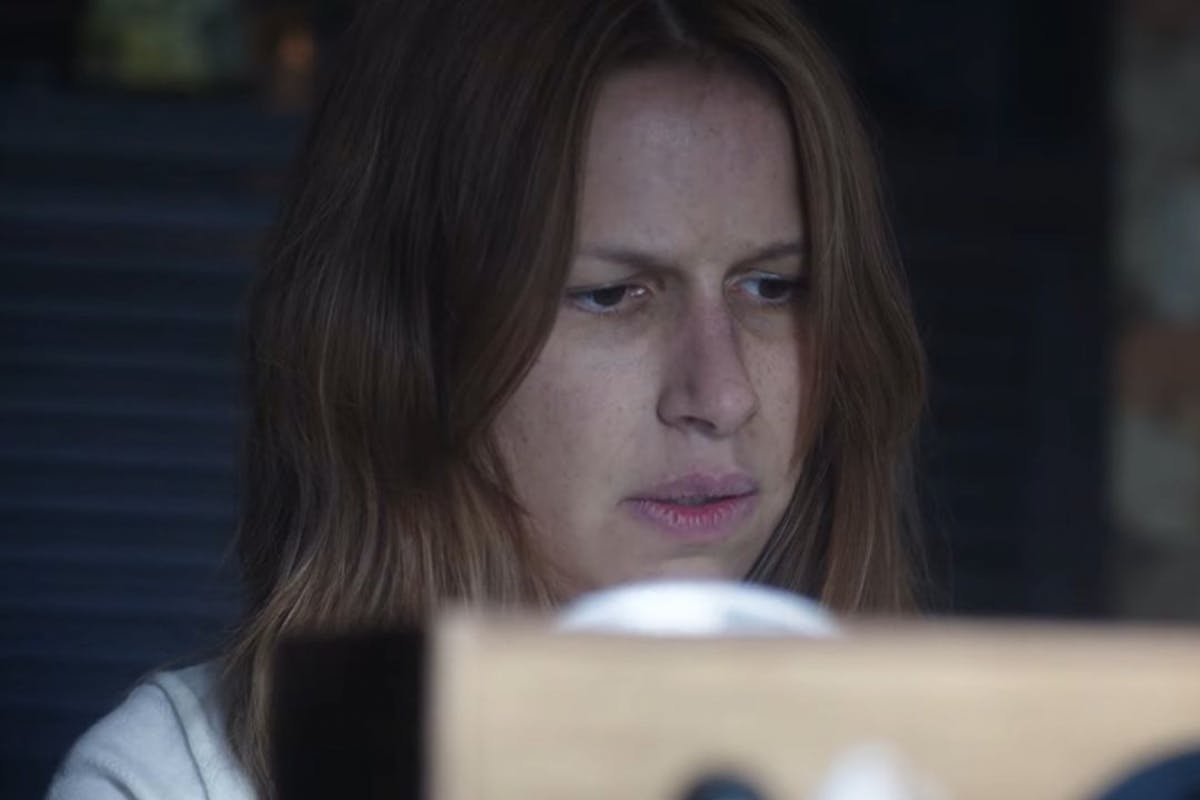
How much should one give away about “Post Mortem,” this six episode Norwegian series set in a funeral home and a nursing home in Skarne, a little town where the running gag — among cops and morticians alike — is that “no one ever dies in Skarnes?”
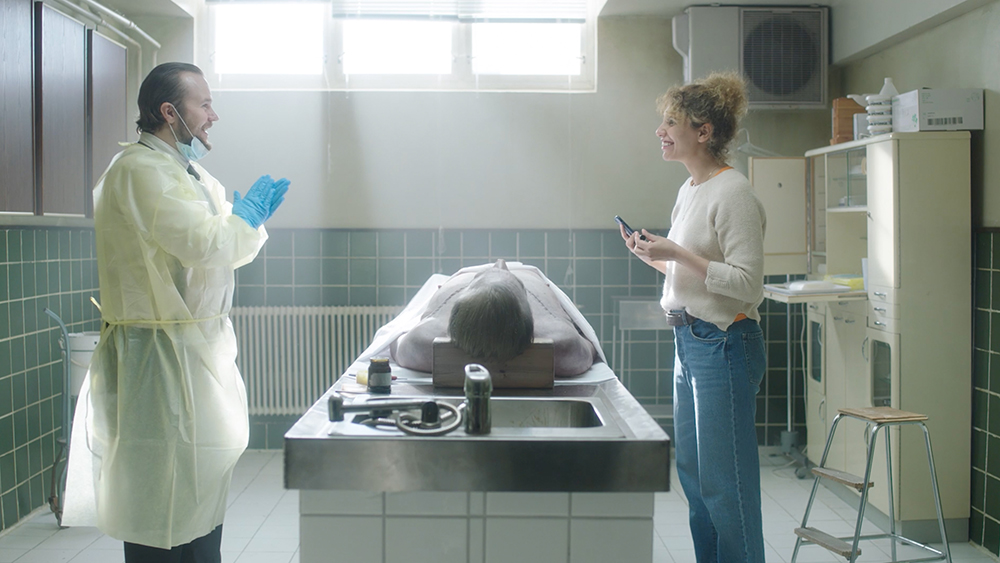
Saying “It’s ‘Six Feet Under’ meets ‘True Blood'” is stretching things a tad. Because it’s just not as interesting or engrossing or darkly funny as either. But yes, there’s a character who turns up as a corpse in the opening scene, and then wakes up, just after a coroner has joked “We declare Live Hallangen (the undead woman’s name) open for business!”
As Live (Kathrine Thorborg Johansen) does not sputter the Norwegian word for “BRAINS!” upon awakening after that first incision, we guess “Oh, vampire,” even though the script tries ever-so-hard to hide the obvious.
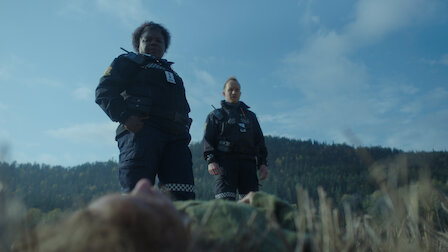
Live doesn’t know how she showed up, stiff as a board, in a field outside of town. The cops (Kim Fairchild and André Sørum) do nothing to disavow the local joke that Skarnes would be “the best place to commit a murder because” of the lazy” police.
The chief, Judith, fusses over “natural causes” and dismisses every suggestion otherwise because of “budgetary” considerations involved in an autopsy. When Live turns out to not be dead, Judith offers her most heartfelt apology.
“In our defense, you looked really dead!”
Reinert, her subordinate, frets over who they call to get the body. Because this isn’t “NCIS,” Judith scolds. There’s no calling an ambulance (money). Reinert is reluctant to summon the only funeral parlor in town. Because he recognizes Live. She’s the daughter of old Arvid (Terje Strømdahl) and sister of fellow mortician Odd (Elias Holmen Sørensen). That would be an awful way to give her family this terrible news.
It’s just that the old man takes it well. Or well enough. It’s Live’s awakening on the autopsy table that chills him to the core. What does he know?
And whatever Judith says, Reinert’s sure some crime was committed that put Live out in the middle of a field, seemingly dead. As Live gets a few flashes of her memory back, the long process of piecing together what happened begins, and the series settles into her finding clues, evading detection and adjusting to her new hyper-sensitive hearing and her ability to see veins pulsing beneath the pale Norwegian skin of pale Norwegian necks.
Did I mention Live works in a nursing home? With her sister-in-law, Rose (Sara Khorami)? Who’s trying to have a baby with Odd?
Petter Holmsen’s series peaks with that first episode, and I’d go so far as to say that it peaks in the first couple of scenes in that episode. Everything that follows is about the tedium of a small town where “nobody dies,” the struggles of keeping a funeral parlor in the black when there simply aren’t enough corpses to turn to cash and Live’s efforts to either adapt to her new life cravings, or fight them off, and keep “lazy” cop Reinert from figuring out what’s really going on here.
The best moment for me with the obvious financially-strapped glee that the morose, broke Arvid lets show when he gets that first phone call from the police.
Johansen makes an affecting lead, trying to play cagey and cracking under the strain at the same time. And Sørensen has his moments as a guy wrestling with a funeral business that stretches back five generations — to 1914 — and yet has only survived due to a Trump level cooking of the books and dodging of debts.
Yes, there are political jokes (in Norwegian, with English subtitles, or dubbed into English).
The problem is that the dark humor isn’t humorous enough and the darkness too light to hold interest on its own. The series empties its clip in the opening episode, and little that follows reloads it.

Rating: TV-MA, violence, profanity
Cast: Kathrine Thorborg Johansen, Elias Holmen Sørensen, André Sørum, Kim Fairchild, Sara Khorami and Terje Strømdahl
Credits: Created by Petter Holmsen. A Netflix release.
Running time: six episodes @:44 each

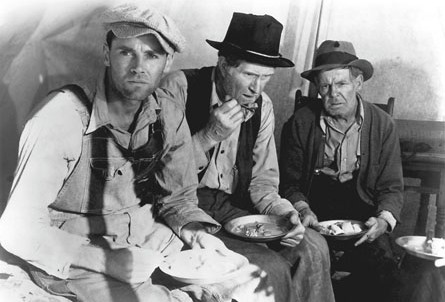
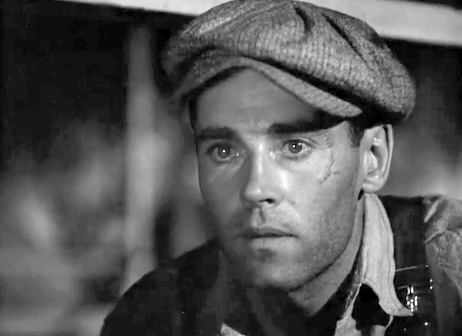
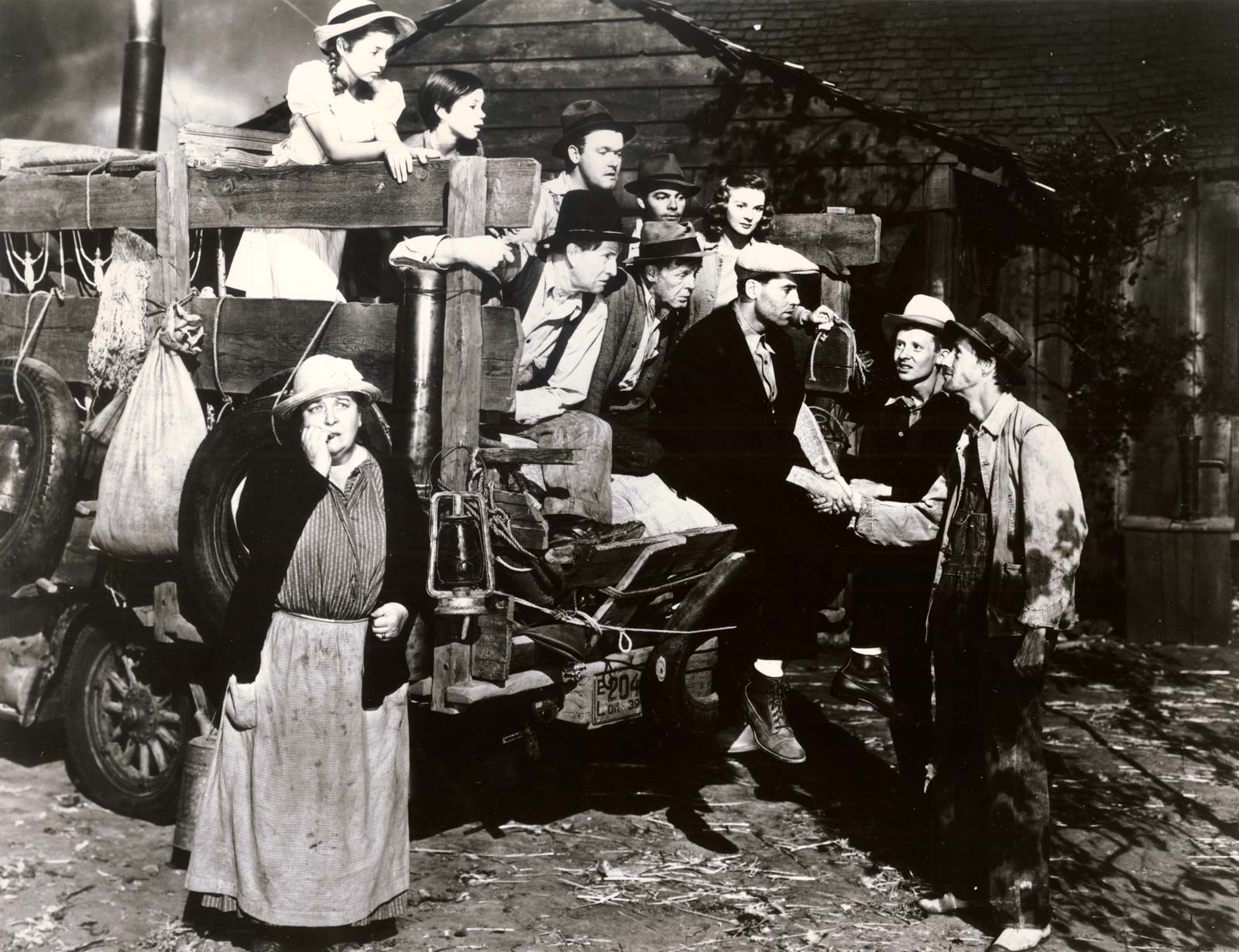
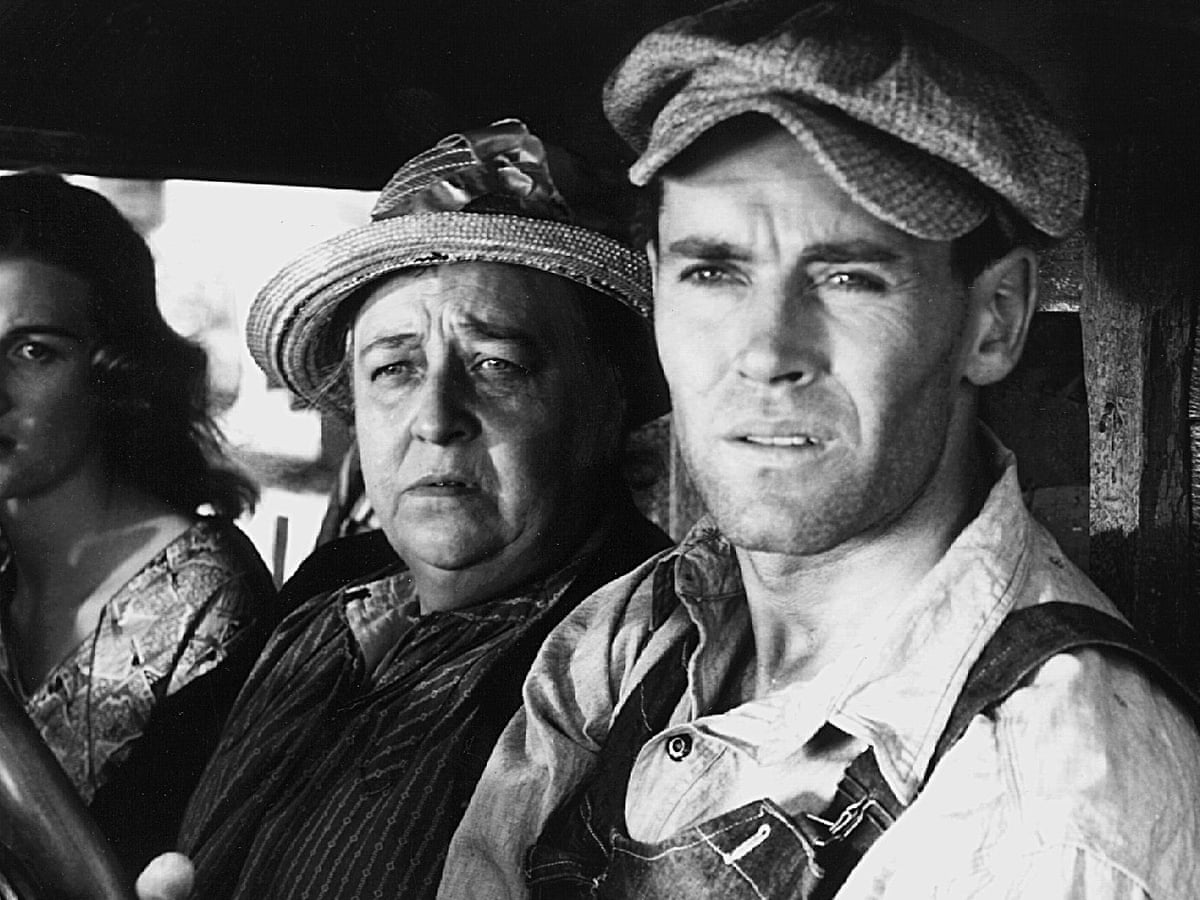
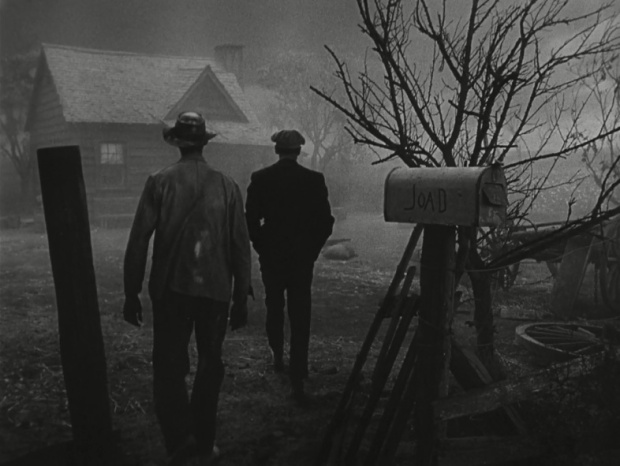
John Steinbeck wrote “The Grapes of Wrath” with a mixture of outrage and pity, a novel with a stark, almost Biblical warning embedded in every page.
John Ford’s classic film leans towards the sentimental, but he kept some of Steinbeck’s fury — just enough to make this, in my mind, the only Labor Day movie that matters.
We romanticize the past, and nobody was better at that than Ford. But in 1939, he was making a movie in the latter stages of a global financial crisis and the tail end of a national disaster — the Dust Bowl. He couldn’t have known this movie would stand the test of time and earn rebroadcasts every year when we kick back, crack open a cold one and forget what Labor Day was all about. He made a movie about his “present,” with oppression and predatory capitalism and widespread intense poverty and hardship, people starving while others lived lives as far removed from that as escapist screwball comedy millionaires.
I remember bawling my eyes out when my family watched it on TV as a child. But sentiment and tragedy aside, here’s what I’m taking away from watching it again this Labor Day.
We can’t confer sainthood on everyone who lived through the Great Depression and the Dust Bowl that just made it worse.
Steinbeck’s book and Ford’s film reminds us there were plucky survivors and sad-eyed cynics who just gave up. There were good Samaritans and folks without a hint of pity for another person’s struggle.
We’ve always had an awful, self serving or self-deluded minority struggling to keep The People down.
There were miserly oligarchs who exploited a bad situation with no compunction or humanity. And there were always cops — state police and their heartless cheerleaders (right wing mobs) of the day — willing to back up the monied and keep “The People” in their place.
“What’d you do in the first place?”
“I talked back.”
Timely? Timeless. That what a movie that still has something to say to viewers 81 years after it’s release is.
Worth chewing on as you’re moved by Ma Joad’s (Jane Darwell) plight, that of her boy Tom (Henry Fonda), the very human, “touched” and Christ-like Jim Crasy (John Carradine) and everyone else we see in this film, crafted in a way that has haunted generations who knew something of the want depicted in it, and generations griping about having to wait on their delayed iPhone to come in.
This one opens Sept 17.
November 12 Netflix gets into the Reynolds, Rock and Gal G action biz with this one, which has a whiff of a Reynolds film here, a Dwayne Johnson outing there, and the Bruce Willis all star actioner “RED.”
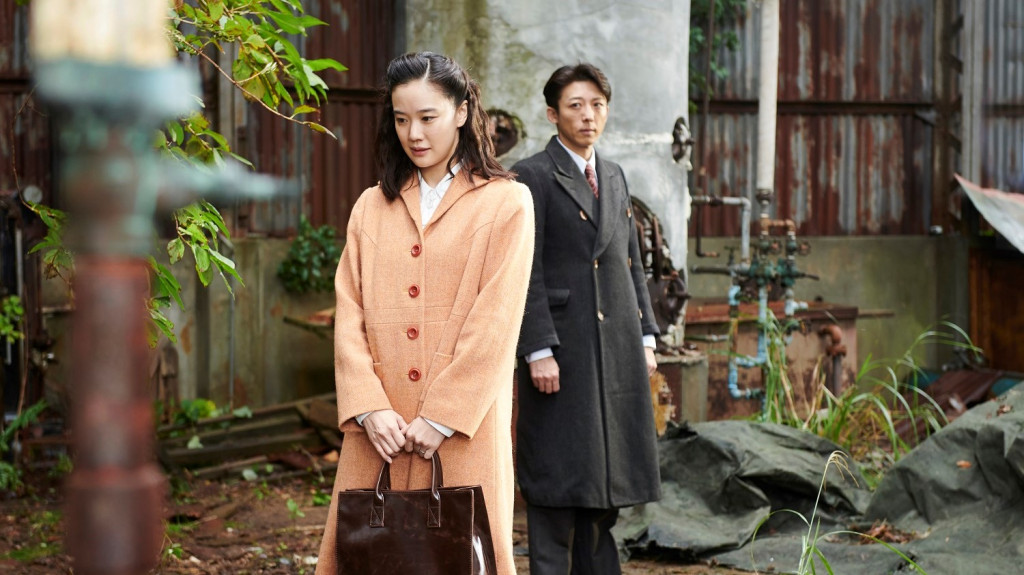
“Wife of a Spy” doesn’t traffic in most of the tropes of the espionage thriller. The espionage takes place off-camera. There are no shootouts, and the closest thing to a chase is a bit of the old “I think we’re being followed.”
Kiyoshi Kurasawa’s understated thriller is about trust and how it is the ultimate test of a couple’s connection, about the seemingly simple but fraught logistics of plotting an escape from a fascist police state, and about feeling morally out of step with your homeland.
Considering Japan’s long history of cinematic World War II denialism — the days when a movie like “The Last Emperor” or any film related to “The Rape of Nanjing” were banned — it’s a remarkably frank film that gets at the heart of questioning nationalism in general and “My country, right or wrong” in particular.
Yû Aoi has the title role, that of Satoko, the trusting, adoring wife of Yusaku Fukuhara (Issey Takahashi). He’s a Kobe fabrics importer/exporter, and the film opens with the arrest of a British business associate of his.
“What has Japan become?” the portly Brit protests. It’s 1940, and at least for the moment, Japan isn’t at war with any Western country.
A childhood friend Taiji (Masahiro Higashide), now an officer in military counter-intelligence, stops by and ever-so-politely confronts Yusako with his association with the accused.
“You must choose your friends,” he warns (in Japanese, with English subtitles). “Times are changing.”
In the streets of Kobe, on the docks — everywhere it seems — formations of troops are parading or marching off to ship overseas, to China, which Japan invaded years before, or to Indochina. Japan forces France to allow it to occupy the French colony after Dunkirk.
The people crowd the streets as they pass chanting “Banzai!” But not Yusako. A wiry, confident man of means, he strikes us as a cool customer. No, this British fellow isn’t a spy, he laughs.
At home, Yusaku films himself, Satoko and his nephew Fumio (Ryôta Bandô) in short, silent melodramas using his Pathe 9.5 mm camera. They show these arty potboilers to their friends.
But Yusaku is cagey, and there’s a distance between him and his submissive but more Westernized and thus less passive wife. She’s concerned about his travel plans to Japanese-occupied Manchuria, the “Settlers’ Paradise” that Japan renamed Manchukuo and which its Kwantung Army runs, encouraging Japanese immigration in the creation of what their fascist friend Hitler would later call “living space.”
Yusaku’s blather about “opportunities” there placate Satoko. Or do they? And when he returns, he’s even cagier than before. He’s seen things, awful things.
She fears for her marriage, and her mutual friendship with the suspicious Taiji plants further seeds of doubt. Is she the wife of a spy?


The conflicts here are mostly conflicting loyalties, and Aoi and Takashi manage a brittle, careful couples’ waltz around what he might be doing and her thoughts about his close association with a Brit, and plans to travel to America, which he saw, briefly, as a sailor years before.
“But they’re our enemies,” she protests. Not his, he insists. “I’m a cosmopolitan!”
That pose grates a bit in an era where bigshots of business around the world are pursuing pan-national agendas and acting without regard to “national interests.” But with the ggift of hindsight and guessing what Yusaku has learned, we buy in.
Will Sakoto?
The screenplay sets up expectations, and then sets out to upend them. We’re invited to over-estimate one spouse and underestimate the other. We see the bond grow as they scramble to turn their Yen into “metal” — jewelry you can take on a trip, one that might be permanent.
Kurosawa — “Tokyo Sonata” is still his best-known film in the West (and no, he’s not related to Akira Kurosawa) — tries to tell an expansive, saga-length story on a budget, taking the characters on into World War II. That leads to anticlimactic moments in what plays as an epilogue that rather dull the impact of the film’s true climax.
Similar movies set in Germany (“13 Minutes,” “Sophie Scholl”) managed far more suspense and pathos.
And the English speaking bit players seriously let down the film. I could round up more convincing actors at any regional theater in America.
But Kurosawa has made a period piece with believable characters and intrigues that generally avoid melodrama. The stakes are human-scaled and deathly personal. And the script and players ensure that we ride out the same conflicting loyalties and emotions that they do, forcing ourselves into their shoes and never letting hindsight give us an easy way out.

Rating: unrated, torture
Cast: Yû Aoi, Issey Takahashi, Ryôta Bandô, Masahiro Higashide
Credits: Directed by Kiyoshi Kurosawa, scripted by Ryûsuke Hamaguchi, Kiyoshi Kurosawa and Tadashi Nohara. A Kino Lorber (Sept. 17) release.
Running time: 1:56
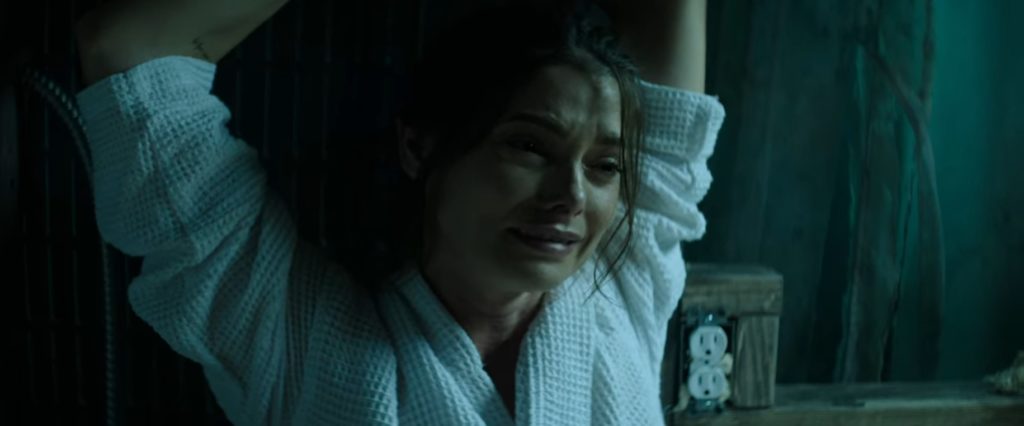

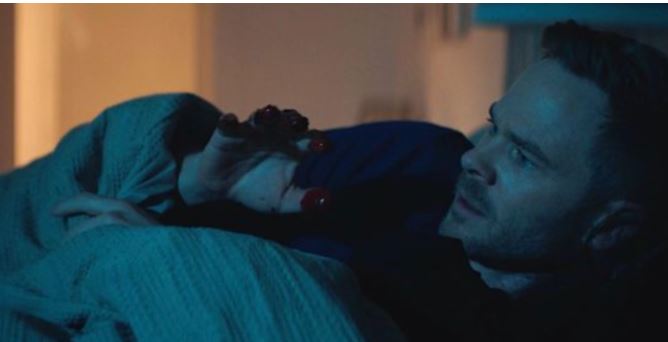
“Aftermath” is a sluggish, convoluted domestic horror thriller that can’t be rescued by a fierce turn by its leading lady, “Twilight” alumna Ashley Greene.
If you can make it to the ridiculously drawn-out and absurd finale — and Rotten Tomatoes has its running time wrong, it’s close to two hours — you’ll witness a good actress giving her all even when things go from straining credulity to nonsense.
Greene plays Natalie, a clothing designer struggling to get her marriage to Kevin (Shawn Ashmore of TV’s “The Rookie” and “The Ruins” and “Darkness Falls”) back on track after a “betrayal.”
They’re in counseling.
She’s struggling to get her designer dress shop open. He’s quit college, taken up working with a biohazard crime-scene cleanup team (Travis Coles and Jamie Kaler) prone to making wisecracks about a suicide victim creating “a Jackson Pollock on the wall” of their latest job.
And that’s when Kevin gets a really good deal on a house. That suicide wasn’t just a guy eating a pistol. He murdered his wife first. Despite her doubts, the fact that he didn’t consult her before starting the process, and despite the “disturbing” history of the house, Natalie goes along with this “fresh start.”
They move in, their dog starts whimpering at closed doors and bumps in the night. Because the dog ALWAYS knows. And Natalie starts seeing things and hearing other things, a “slender, pale” figure slipping into the house, using the restroom.
“Pump the BRAKES on the melodrama!” her husband barks. But he’s wondering about the strange things going on, the bizarre subscriptions that turn up at their door, the firebomb somebody tosses into their car.
Sharif Atkins plays the skeptical cop, Britt Baron is Natalie’s easily-spooked sister, Diana Hopper is the cute and flirtatious coed Kevin shares a class with as he heads back to school,
Paula Garcés is the sister of the previous owner and Alexander Bedria is her husband.
Yes, I’m leaving a few others out. It’s a seriously cluttered tale, as far as excess characters are concerned.
And yes, you can tell from the extensive cast that some effort was made to trick the viewer, or at least throw us off the scent and keep us from guessing where this is going. Screenwriter Dakota Gorman tries to have her horror, and her psychological thriller, too, and doesn’t let “plausible” slow down her type-type-typing.
“Aftermath” plays around with the mistrust in the aftermath of an affair and ghosts that horror convention suggests linger in the places where their lives ended. But Gorman gets lost in trying to rationally explain all of this while losing track of all that.
A savvy viewer’s first eyerolls turn up long before Kevin’s “Pump the brakes” crack, and continue apace through the thoroughly conventional climax.
Perhaps the filmmakers’ grasp exceeded their reach, or maybe neither screenwriter nor director could see what a mess it was before the camera rolled. Either way, it’s an untidy, unfocused and unsatisfying thriller that won’t gild anybody’s resume.

Rating: TV-MA, violence, sex, profanity
Cast: Ashley Greene, Shawn Ashmore, Britt Baron, Sharif Atkins, Diana Hopper, Travis Coles and Jamie Kaler.
Credits: Directed by Peter Winther, scripted by Dakota Gorman. A Netflix release.
Running time: 1:54
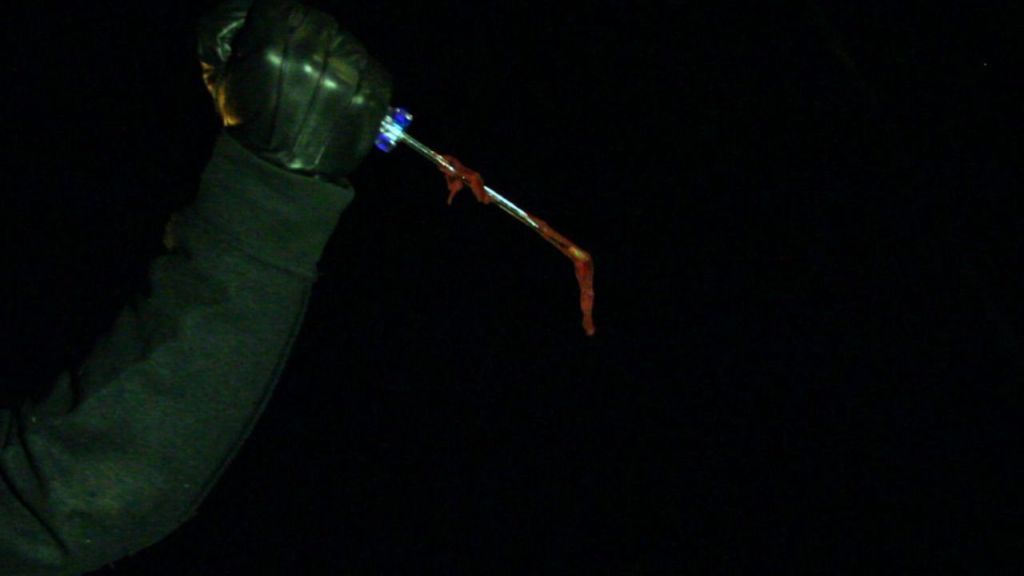
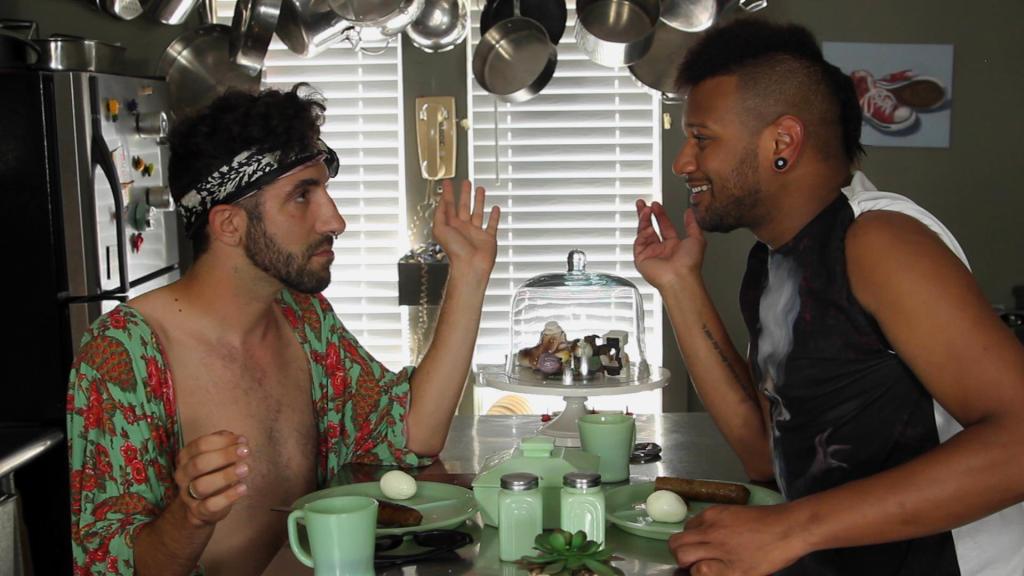
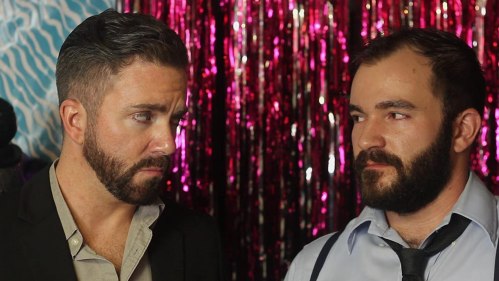

If it’s late enough — and “Death Drop Gorgeous” is nothing if it’s not a “Midnight Movie” — and you’re tipsy enough, I suppose there might be a few giggles and grins in this death in a drag club slasher comedy.
Emphasis on “I suppose.”
Written and directed by a threesome, with amateurishly broad acting and stereotypical drag queen bitchiness interrupted by gruesomely explicit violence involving knives, a screwdriver and the last thing any man would want caught in a meat grinder, it might have looked promising on paper.
I found it all a bit much and 100 minutes of nothing at the same time.
The serial slaughter takes place in and around a Providence, Rhode Island drag club — The Out House. And who would’ve guessed Providence was this lurid? Oh. Right. Brown.
The club is run by a dese-dem-dose but LGTBQ-friendly goombah nicknamed Tony Two Fingers (Brandon Perras), with a stage that plays host/hostess to the likes of Rosebud Cianci, Lindsay Fuckingham (subtle), Tragedi, Audrey Heartburn and the queen of the hop, Janet Fitness (Matthew Pidge).
The elder-statespronoun of the parade is Gloria Hole (Michael McAdam), long in the tooth, dated in her act and despised by all.
Aspiring queen Brian (Christopher Dalpe) and close-friend and sometime bartender Dwayne (Wayne Richard) are the bystanders to all the mayhem that begins with a junkie lured into a car and callously poked with a screwdriver, his “blood drained” according to the detectives (Michael J. Ahern and Sean Murphy) assigned the case.
The detectives figure they have “a serial f–killing vampire with a taste for blood.” And even the detectives give off an overt gay-couple vibe here. We meet them as one is tidying up the other’s messy devouring of an éclair.
Again, subtle.
The funniest stuff here is the backstage dressing room digs that the queens dish out.
“If you’re gonna have two faces, at least make one of them PRETTY.” “I douched for THIS?”
Writers-directors (and co-stars) Ahern, Dalpe and Perras conceive an entire described world revolving around the drag club, with such eateries as “Papa Fagarti’s up on the hill.”
The murders — most of them humdrum, save for the bloodspurts — earn reactions of deadpan shock from those who find the bodies — “Damn, he had GREAT abs!” — and pseudo-zingers from the detectives, shaking their heads over the killer “shredding (the victim’s) meat and potatoes like that.”
Poor pacing always throws pedestrian performances into the foreground, and “Death Drop Gorgeous” is overrun with those as it plods along on ill-fitting heels.
Yes, the assorted queens have cute enough acts, and the drag shows — lip synched to original songs composed for the film — are the most professional thing in this.
But is it worth staying up for a midnight showing, spending for the drinks etc. you’d have to imbibe to dive into its vibe? Honey, no.

Rating: Unrated, graphic, gory violence, nudity, sex, profanity, drug abuse
Cast: Paul Bohn, Wayne Richard, Christopher Dalpe, Michael J. Ahern, Sean Murphy, Brandon Perras and Michael McAdam
Credits: Scripted and directed by Michael J. Ahern, Christopher Dalpe and Brandon Perras. A Dark Star release.
Running time: 1:44
This November release stars Judi Dench, Jamie Dornan and Ciaran Hinds, a coming of age tale set during Ireland’s “troubles.”
Outstanding.
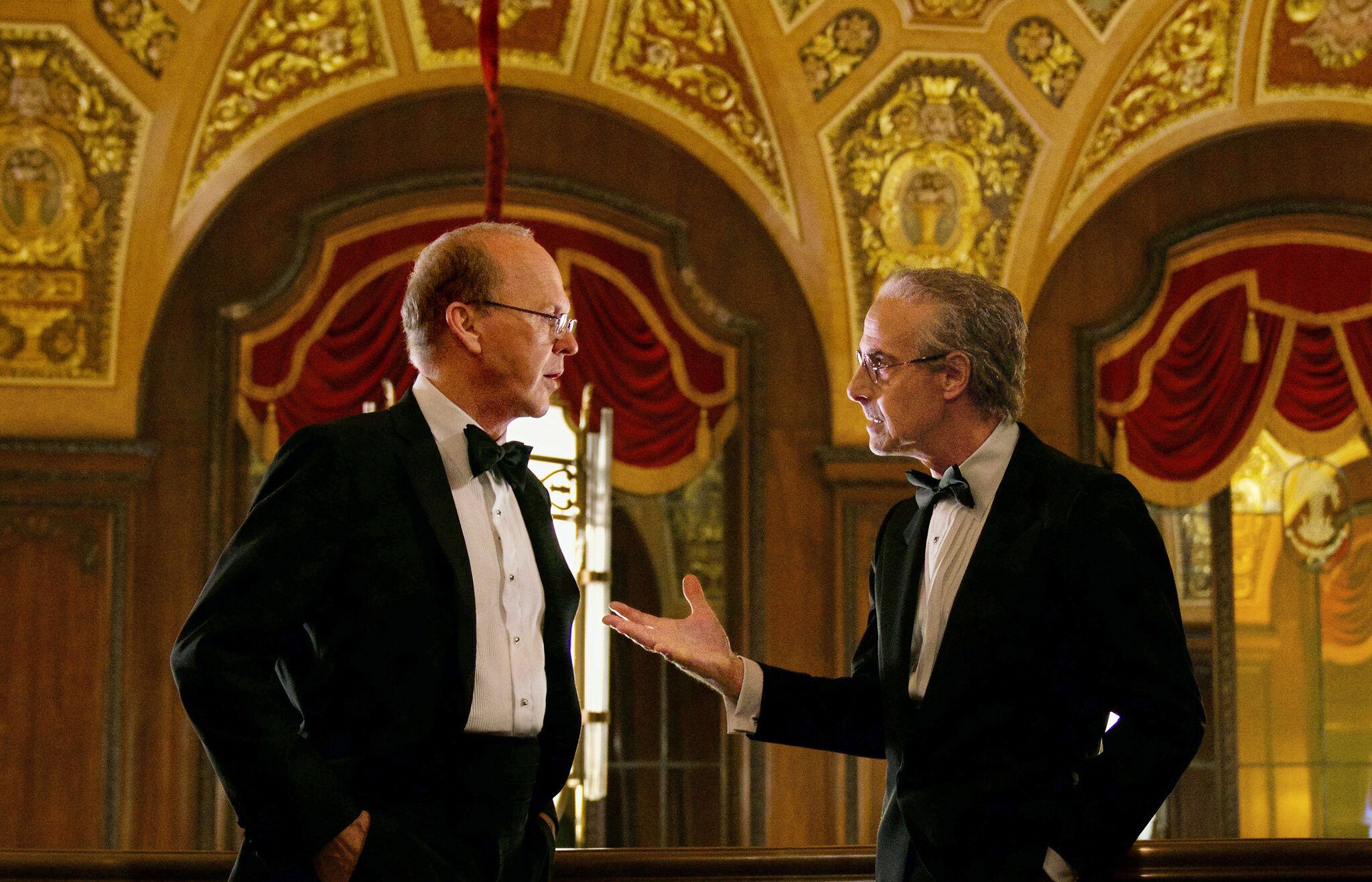
A quiet, somber and downbeat story of 9/11 victims and efforts to get their survivors to sign onto a blanket compensation plan, “Worth” takes on “importance” thanks to its subject matter and its A-list cast.
Michael Keaton and Amy Ryan play the attorneys authorized by the Bush Administration to negotiate and recruit widows, children and other survivors to forgo lawsuits and settle for a cash payout. And Stanley Tucci plays one survivor/activist who pushed back at their number-crunching and tried to inject humanity into the considerations.
The “names” lend extra gravitas to a movie that doesn’t really need it. Their real “worth” in this Sara Colangelo (The Kindergarten Teacher,””Little Accidents”) is in showing as a simple journey from officious compassion to genuine empathy. The picture and the characters portrayed are almost myopic, buttoned down and narrow in their focus to “save the airlines, etc. from lawsuits” task. These very good actors show us lawyers — some of them anyway — discovering their humanity.
Keaton plays Ken Feinberg, a rich, DC-connected lawyer who, with his partner, Camille Biros (Ryan), specializes in fending off class action suits via mass settlement schemes on big cases on everything from Agent Orange to Big Asbestos.
We meet Feinberg as he’s teaching at Georgetown Law, prodding his students into discussing “What is life worth? The question actually has an answer and that answer is a number.”
Keaton, affecting an accent that fades as the film progresses, never lets this flippant, glib lawyer slip into caricature. Feinberg’s a sharp cookie, a professional, but a man with blinders that he puts on to avoid letting any case turn “personal.” Others may attack him because “to you we’re just numbers,” and have a point. But he’s no monster.
When 9/11 happens, Ken and Camille use their connections to land the “special master” role in setting up and running a compensation commission designed to save airlines and various corners of government from the lawsuits that would, Bush, Ashcroft and assorted Republicans are sure would “wreck the economy.” The lawyers will work pro bono, because this is something they “can do to help.”
“Worth” shows the clumsy, heavy-handed first steps they take, their first meetings with victims’ families, the “dispense reasonable payments” plan that operates on a financial formula built on insurance companies’ actuarial tables. That isn’t going to fly.
“My daughter’s life is worth as much as anybody in a ‘corner office!'” “He’s just hear to shut us up so we don’t sue!”
Tucci plays Charles Wolf, who lost his wife on 9/11 and who organizes other victims in pursuit of compassion, humanity and “fairness.” Tate Donavan plays the true villain of the film, a lawyer for the rich who wants to ensure that the survivors of the rich are the ones who get the lion’s share of the payouts.
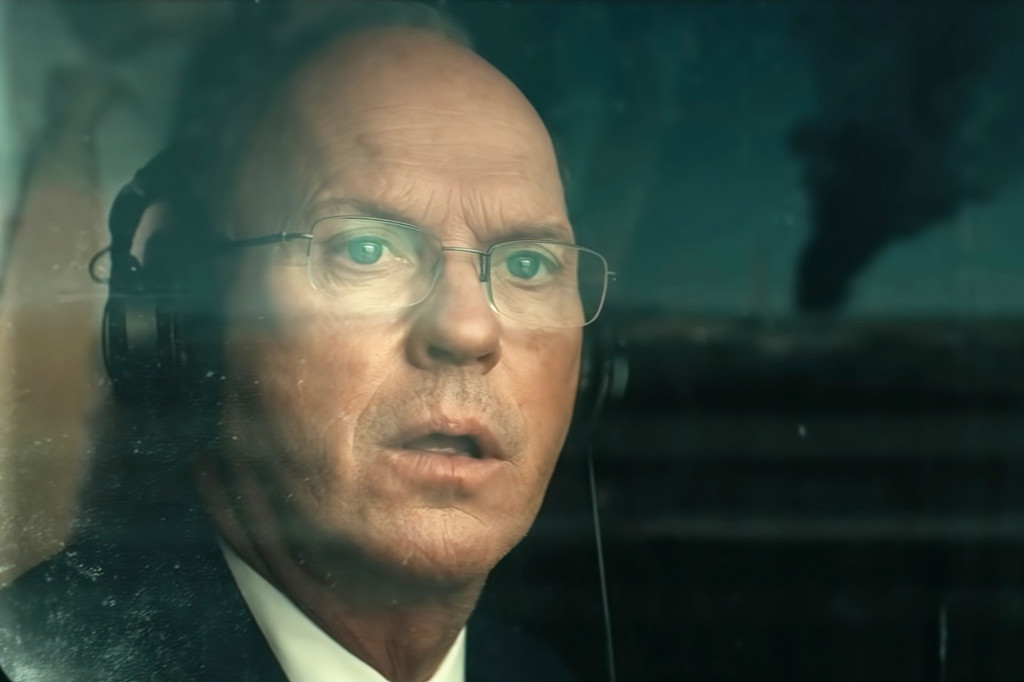
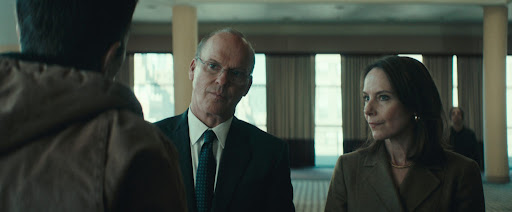
The built-in pathos of any tale of 9/11 applies here. To turn the story into something that doesn’t drown in numbers and montages of tearful interviews with widows and family, “Godzilla” screenwriter Max Borenstein focuses — somewhat — on the conflict between the deadline-oriented lawyer and the “give these people their due” and “listen to their stories” survivor/activist. To do that, he leans on the two men’s (perhaps true) shared love of opera, which is the first thing in the movie that feels trite and cliched.
“Worth” can feel ungainly, at times. The film tends to stagger through the middle and late acts as Ryan has far too little screen time as the partner who “sees the light” first, and likewise Shunori Ramanathan is given short shrift as she ably plays a new attorney who narrowly escaped being in the World Trade Center on Sept. 11, 2001 and is thus even more inclined to humanize what their work with still-grieving families.
I like Borenstein’s depiction of the “messy” lives that “don’t fit into the mold” that Feinberg’s formula was designed to apply — a fireman with a secret second family, a gay couple living in a state where homosexual civil unions weren’t recognized, which makes the surviving partner another “mold” breaker.
But it is the film’s stars who convey the larger message of “Worth.” We see adults with serious disagreements acting like adults, trying to ignore the “get re-elected” politics of the mostly-off-camera Bush Administration officials, and find compromises.
Sad to say that adults in positions of authority acting like adults — diplomatic, courteous — is the most refreshing historical artifact resurrected in “Worth.” There’s just enough screaming, name-calling and throwing drinks at the “blood money” lawyers to remind us that’s a lot more common in America these days.

Rating: PG-13 for some strong language (profanity) and thematic elements
Cast: Michael Keaton, Amy Ryan, Stanley Tucci, Talia Balsam, Shunori Ramanathan and Laura Benanti
Credits: Directed by Sara Colangelo, scripted by Max Borenstein. A Netflix release.
Running time: 1:59
Little Accidents, The Kindergarten Teacher
Godzilla screenwriter
Rating: PG-13 for some strong language (profanity) and thematic elements
Cast: Michael Keaton, Amy Ryan, Stanley Tucci, Talia Balsam, Shunori Ramanathan and Laura Benanti
Credits: Directed by Sara Colangelo, scripted by Max Borenstein. A Netflix release.
Running time: 1:59


