Classic Film Review: Stephen Frears makes John Hurt an assassin, Terence Stamp “The Hit” (1984)

The only thing I remember about “The Hit” is how much Siskel & Ebert raved about it back in the day, that “day” being 1985.

An Island Pictures release that didn’t make it to “the provinces,” especially the province I was living in at the time, it stands out today as the movie that illustrates “casting against type” better than most any title one can name.

It stars John Hurt and Terence Stamp, but with the always-wounded-looking, so fragile, so-very-British Hurt (“Alien,” “Contact,””Midnight Express” and “Heaven’s Gate”) as the hired killer, and veteran tough-bloke Stamp (the Christopher Reeve “Superman,” “The Limey,” just seen in “Last Night in Soho”) as his ever-so-Zen target.

Death? “It’s just a moment. We’re here. Then we’re not here. We’re somewhere else… maybe. And it’s as natural as breathing. Why should we be scared?”

I’ve been a Stamp fan forever, and I dare say he smiles more in this one movie than in any ten other films he ever made. And grinning Willie Parker, beaming in the opening scenes, a witness protection star in court (a young Jim Broadbent plays the questioning barrister), grinning even more after he’s kidnapped in Spain ten years later, instantly becomes one of Stamp’s finest screen creations.

Stephen Frears (“Philomena,””Victoria & Abdul”) made an auspicious theatrical feature film debut with this nervy, violent and reflective “road picture,” a tale of two hit men, their mark and a “witness” they nab along the way as they make their way from southern Spain to Paris.

The cleverest touch in Peter Prince’s script is one of the most memorably menacing “running gags” in all of cinema. As the criminal compadres Willie “grassed” (ratted out, squealed on) are led from court, they serenade him with a song Vera Lynn made famous during “The War.”

“We’ll…meet again…don’t know where…don’t know WHEN…”

It’s the first thing that comes to Willie’s mind when smiling Willie figures out who’s grabbed him and taken him from his life of comfort and luxury outside a small town (Almodóvar, Córdoba) in the sunbaked south where he’s been laying low.

The four Spanish toughs he tried to fight off weren’t the real culprits. Willie almost knows their fate before they do. This officious, short and silent man in Cuban heel boots, a linen suit, cigarette and Raybans was calling the shots. That makes Willie sing — “I know we’ll meet again…some sunny day!”

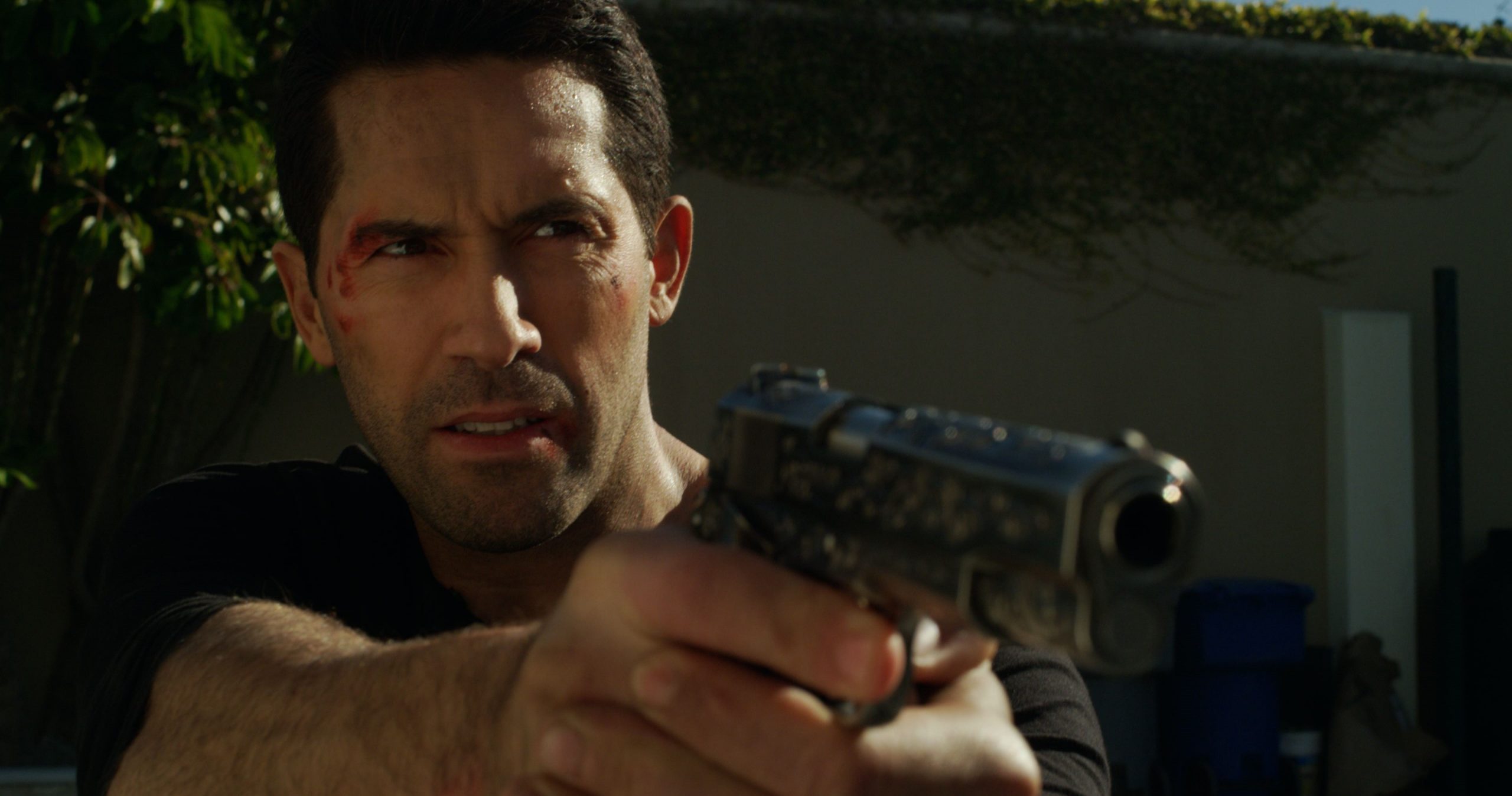
Braddock (Hurt) the mostly-silent stranger is called. He has a young, mouthy punk of a protege (Tim Roth, barely of shaving age here) in tow. Braddock blowing up most of the blokes who first grabbed Willie wasn’t the subtlest move. They can hear about the nationwide manhunt that’s begun on the radio, but only Willie speaks Spanish. They can see the photos on the newspapers, which only Willie can read.

They’re taking him to Paris, and that news contributes to Willie’s Most Relaxed Condemned Man Ever manner. He smirks and runs through the possibilities, the fact that their current car is known to the police (Fernando Rey of “The French Connection” has almost no lines as their stoic pursuer), that there’s a hard border crossing into France to be managed.

“I’m sure true love will see us through!”

The assassin is silent. The kid protests, “You’ve got nothing to smile about mate, if you knew.” “If I knew?” Willie turns to his executioner. “He thinks I don’t know.

Their odyssey will require another car, more murders, another kidnapping (Laura del Sol), and another victim who isn’t quite so mellow about what she is sure will be their shared fate. Maggie fights and schemes and will not go quietly.

What this classic film captures is a sunny, sleepy pre-European Union Spain, with bad roads, tiny towns and cantinas that the world had passed by, and the most breathtaking scenery of any hit man thriller.

Hurt’s killer-of-few-words is a classic type, not new to the genre but almost definitive thanks to his poker-faced portrayal. “The kid” apprentice is also a type. But the smiling, laid-back and at peace with it all victim is something new, and Stamp gives Willie charm and an infuriating passivity.

We don’t need Maggie’s rages to come to that conclusion. This guy either knows something will break his way if he picks his moment, or truly is at peace with his fate.

Everything about “The Hit” is archetypal and genre-defining. “The Hit” prefigured John Woo’s “The Killer” and those two 1980s movies reset the template for the genre.

And looking at it nearly 40 years later, what stands out is the moment-in-time perfection of it all. Hurt was having his big cinema moment, but this cast him against type. Stamp was starting a comeback that has carried on, almost to this very day. Roth announced he was ready for the spotlight.

And TV director Frears showed himself as a filmmaker to be reckoned with. “Prick up Your Ears” and “My Beautiful Launderette,” “Sammie and Rosie Get Laid,” “Dangerous Liaisons” and “Dirty Pretty Things,” “The Van,” “High Fidelity” would follow, making him one of the most accomplished British directors of his generation and the best British filmmaker never to have a damned thing to do with Harry Potter.

Rating: R, bloody violence, profanity

Cast: John Hurt, Terence Stamp, Laura del Sol, Tim Roth, Fernando Rey, Bill Hunter and Jim Broadbent.

Credits:Directed by Stephen Frears, scripted by Peter Prince. An Island Pictures/MGM Video release on Tubi, Amazon and other streamers

Running time: 1:38

Posted in Reviews, previews, profiles and movie news | Comments Off on Classic Film Review: Stephen Frears makes John Hurt an assassin, Terence Stamp “The Hit” (1984)

Movie Preview: One last trailer for “Uncharted,” as Tom Holland goes all Marky Mark

This looks properly cheesy, if not as funny or fun as one might hope. Sometimes they don’t give away the store in the trailer, tho. So there’s hope.

“Uncharted” the treasure hunt thriller opens Feb. 18.

Posted in Reviews, previews, profiles and movie news | Comments Off on Movie Preview: One last trailer for “Uncharted,” as Tom Holland goes all Marky Mark

Movie Review: “The Translator” carries guilt with him when he returns to his native Syria

“The Translator” has made a nice life for himself in Australia, using his multi-lingual skills for government entities and journalists, married and, since he’s from Syria, relieved to have escaped a past of justifiable paranoia and danger.

But when the Arab Spring breaks out in his home country, a journalist pal urges Sami Najjar to join him in covering it. Sami finds himself facing that past, still wracked by the guilt over how he got out and those he left behind. To them, he is a “hider,” someone who has never taken a stand, always “hiding behind the words of others.”

Rana Kazkaz and Anas Khalaf’s gripping, engrossing film is part thriller, part history lesson and somewhat melodramatic as it takes us into the secrets of Sami’s past, the fraught situation he finds himself in back in Syria and the blend of gratitude, relief and resentment he faces from the family and friends he reconnects with there.

Because we’ve seen snippets of what Sami and Syria went through in childhood, a 1980 outbreak of protests against the Syrian dictatorship. He saw his father dragged off, never to be seen again. He say his slightly-older brother Zaid fight to free him while Sami stood terrified.

And we have an idea of how the adult Sami ended up in Australia. Something happened during the 2000 Olympics in Sydney, an athlete questioned about Syria’s abrupt decision to decree that the son of the former dictator take over after the death of his father, a “translation” that made Sami persona non grata back home.

Ziad Bakri gives us a Sami who considers his words and actions with care, but who is conflicted about what he left behind and what he owes the friends and family in Damascus. He has a new life and a lawyer-wife (Miranda Tapsell). They’re looking at houses.

And this journalist friend and sponsor (David Field), the man he appears to owe much of this new life to, is showing him video of the Arab Spring (2011), which has spread from Tunisia to Egypt and now Syria.

“It’s my job to verify,” Chase says. And Sami reluctantly agrees to accompany his friend, to risk slipping across the border from Lebanon to document the popular uprising against a dictatorship that is all most of those there, young and old, have ever known. Sami also figures he might be able to help his brother Zaid, now an activist who has disappeared into government custody.

But when violent events on the ground put Sami on his own, he must rely on his brother’s ophthalmologist wife, Karma (Yumna Marwan), a defiant woman who can’t always hide her contempt for him. He must hide with his sister, LouLou (Sawsan Arshid), who caresses his Australian passport as if it’s the Holy Grail. And Sami must face everything that happened to get him out, and all the guilt he still feels about being the “hider” Karma and others label him.

“The Translator” never fails to hold our interest as we’re taken into street protests, witnessing what appears to be Sami’s growing sense of responsibility in the face of futility. The “international community” was reluctant to act against a heavily-armed, Russian-backed dictatorship. Sami is no journalist, but he’s been around it long enough to see ways he can help.

The story’s “secrets” are concealed somewhat clumsily, and that coupled with a sea of unfamiliar faces and character names — Syrian and Australian — can leave the viewer unmoored, a little lost.

Wait, what did I miss?

And the film’s climax is nothing if not high stakes melodrama. Every major figure from Sami’s childhood will return to help or haunt him, every misstep he took to find sanctuary in Australia will come back to slap him in the face.

But “The Translator” delivers a fascinating new take on the immigrant experience, reminding us that the faceless masses flocking from east, south and Middle East to this or that Western shore aren’t coming on a whim. There’s persecution, life-and-death danger in speaking out and staying, and the risks are just as great for those who flee.

When Karma cynically predicts the future, we’re reminded of how rare it is for dictatorships to fall in popular uprisings. Places like North Korea and Syria, Russia and China, may never be free, because Karma reminds us, “violence will always win.”

Rating: unrated, violence

Cast: Ziad Bakri, Yumna Marwan, David Field, Sawsan Arshid and Miranda Tapsell

Credits: Directed by Rana Kazkaz and Anas Khalaf, scripted by Magali Negroni. A Launch release.

Running time: 1:45

Posted in Reviews, previews, profiles and movie news | Comments Off on Movie Review: “The Translator” carries guilt with him when he returns to his native Syria

Netflixable? “Aileen Wuornos: American Boogeywoman” is trash, and not the good kind

Labeling “Aileen Wuornos: American Boogeywoman” as “trash” gives this fictionalized, sensationalized and generally incompetent take on America’s most infamous female serial killer credit it doesn’t deserve. “Trash” suggests there might be something “fun” to it.

This pseudo-serious “reclaiming” of Wuornos from the Oscar-winning portrait that “Monster” became, from her ongoing tabloid and website infamy, is more garbage than trash.

Ashley Atwood, with the aid of makeup and prosthetics, plays Wuornos in a deranged night-before-her-execution film interview with a Brit (Hamish Sturgeon) probably meant to be documentarian Nick Broomfield. And in the film’s most accurate touch, Peyton List, far shorter than Oscar-winner Charlize Theron, plays the young Aileen on her first trip to Florida, when she seduced and was briefly married to a Deland “yacht club commodore” three times her age in 1976.

Writer-director Daniel Farrands, who plies the trashy side of the cinema tracks (“The Haunting of Sharon Tate,” “The Murder of Nicole Brown Simpson”), filmed in and around Marina del Rey, which can pass for Daytona Beach. Sort of. But that’s as much effort as he made in the name of “accuracy.”

He puts Wuornos in the biker bar “where she enjoyed her last beer” years before the infamous Last Resort opened. He puts the smitten old sailor Lewis Gratz Fell (Bell) on a sailing yacht design that’s about 30 years off. He has Aileen telling tales, lying about murders that predate her 1989-1990 spree, which led to her conviction and execution in 2003.

And he lets the pre-execution Wuornos speak with a thick Southern drawl, in the interview and in voice-overs where she talks about this strange interlude in her life — as a hot-tempered prostitute who befriends a young woman (Lydia Hearst) on a “private beach” (no such thing in Florida) and then seduces and marries her rich father.

Wuornos grew up in Michigan. She had no drawl.

The woman’s awful childhood is hinted at. But what the film dwells on is her sordid way of making enough money to live on and a hair-trigger temper, evident in the film a dozen years before her most violent side showed itself.

The older Wuornos is smirking, self-satisfied, eating up her notoriety. The younger one sticks up for herself to such a degree that everything triggers her — not just abusive “johns,” sexual assault-minded barflies, but a dress store clerk who rubs her the wrong, snobby way.

Jennifer Tell (Hearst) sees her as “a hero to all the girls” for cold-cocking this jerk or that would-be abuser. Aileen first starts to see herself that way, the film says, in 1976.

List is “out there” and credibly violent in the role. But there’s nothing to the performance but that tough, two-fisted surface. The older Aileen may protest of her life of abuse, but the younger one gives little hint of the tragedy of her childhood, the damage or the miles.

As someone who chased the production of “Monster” all over the real locations future “Wonder Woman” director Patty Jenkins filmed on, who watched filming in the “real” Last Resort, who didn’t recognize Theron on set the first two or three times I saw her in character, and who interviewed Theron, co-stars Christina Ricci and Bruce Dern, I think there’s validity in the intent of “American Boogeywoman.”

“Monster” changed names and fictionalized a lot, too. “Reclaiming” Wuornos, stripping her of notoriety and all the things attached to her “legend” is a worthwhile goal. Even sending up her image — which seems to have been the intent here — would have been fair.

And List’s take, superficial as it is, might have amounted to a good jumping-off-point for a portrayal of the murderer.

But this hack filmmaker wasn’t the guy to find anything lofty or seedy, honorable, amusing or even interesting in this grim tale. This clumsy, heartless cut-rate production never rises from garbage to the level of trash.

Rating: R, violence, drug abuse, sex, partial nudity, profanity

Cast: Peyton List, Tobin Bell, Lydia Hearst, Hamish Sturgeon and Ashley Atwood

Credits: Scripted and directed by Daniel Farrands. A Voltage Films/Netflix release.

Running time: 1:25

Posted in Reviews, previews, profiles and movie news | Comments Off on Netflixable? “Aileen Wuornos: American Boogeywoman” is trash, and not the good kind

Documentary Review: Considering a primal trend in horror — “Woodlands Dark and Days Bewitched: A History of Folk Horror”

“Woodlands Dark and Days Bewitched” is a documentary about the history of “folk horror,” a film of almost breathtaking thoroughness in exploring what that term means, the shared pagan stories that span the globe and inspired it, and the movies in cultures all over the world that have spun out of this tradition.

If you’re a fan of the genre, which takes in films from “The Wicker Man” and “Midsommar” to pretty much anything with a witch, demons, shape-shifters or a rural setting, settle in for sometimes brilliant, often pithy explorations of where or that piece of folklore, these traditions and all those films came from. Maybe watch “Woodlands Dark” in chunks, as it is an awful lot to take in and you won’t want to miss much of its over three hours of study.

Writer-director Kier-La Janisse begins with the British obsession with the genre, with fans, journalists and experts of various persuasions placing the boom in the genre — it dates from near the beginning of cinema, but really hit its stride in the 1970s — within cultural tradition and historical context. We learn about the literary forebears who invented it (think “Legend of Sleepy Hollow” among others).”

And then the documentary expands, like the horror genre it’s about, to envelop the planet. Not many cultures aren’t represented in the movie’s vast survey of global folk horror cinema.

As its core, folk horror is a “return to the Olde Ways” friction between rural and urban, something that emerged when many first fled for the cities during the Industrial Revolution, but which blew up again as people abandoned cities in the Earth Day (US) and “back to the land” youth movements of the ’70s.

As tropes of the genre are trotted out in their many different forms, film scholar David Howard Ingram lands what I thought was the money shot. These movies are about times long past, times recently past and times right this minute. They’re about “modern” aka “urban” people and their educations, their belief in science, vs. “traditional” people, be they from rural Britain, Appalachia or anywhere mask mandates and vaccinations not ordained by their cult leader are protested and avoided.

“‘We don’t go back,'” Ingram says, quoting a man-of-science in an obscure horror film sampled here. That’s “the fundamental tension of ‘folk horror,'” this notion that returning to ancient, generally pagan rituals, traditions and superstitions is not in the cards for the modern people (the viewer’s surrogate) often trapped in “Midsommar,” waylaid by “The Witch” or “other” folks fearing this “tradition” or that belief.

We track through the decades in which “witches became cool again” in the culture, and on screen, when “The Candyman” made his bow or “La Llorona” first sheds her tears in Old Mexico…and Japan and other places which have a “mother who drowned her own children” legend.

This film is a crash course in this corner of horror, and a must-see for fans or even those curious about the many ways this pull towards the pagan manifested itself over in movies over the decades. A pretty good chunk of the horror coming out now spins out of “The Babadook” or “Witcher” or assorted witch hunters and primal sacrifices, with Netflix and Amazon full to the brim with offerings in the folk horror genre in film or limited series form.

But being this long and broad in scope, “Woodlands” can’t help but feel repetitive — exhaustingly-so.

It’s fascinating to see the similarities folk myths share among many cultures, the ghosts, shape-shifters and witches of Britain and Japan, Czechoslovakia, Brazil, Mexico, Russia and North America. A

Yet at some point, as the movie see-saws between clips and references to celebrated and/or popular and iconic films — “The Wicker Man,” “Lair the White Worm,” “Midsommar” and “The Amityville Horror” — and more obscure titles like “Hex” and “Edge of the Knife” and “A Field in England,” it all starts to seem like a contest between the scores of interviewed filmmakers, genre obsessive authors, festival organizers and the like.

“Ah, but HERE’s one YOU’VE never heard of.”

And as the film goes on and on, through its second and third hours and starting on its fourth, the broadening definition of “folk horror” takes in titles that make you scratch your head while leaving out this obvious “Indian burial ground” title (“Poltergeist”) or skipping over that folklorish found footage blockbuster “The Blair Witch Project.” At times, it’s so broad as to seem almost meaningless as a subgenre.

There are dazzling experts who plainly know their subject, and a giggling critic, a stumbling Brit who refers to a title as “the Uber text” or a particular subgenre, and this other bloke who insists we credit him — insists REPEATEDLY — with coining the term “folk horror,” when as he himself admits it pre-dates him using it by nearly a century.

None of which should scare you away, especially if this genre is your jam. But take seriously that suggestion that you don’t immerse yourself in “Woodlands Dark and Days Bewitched” in a single sitting. Taken all at once, the film’s aesthetic, informational and entertainment virtues lose a lot of ground to “Right, we GET it” and “Why didn’t you edit this to something more compact and less repetitious?” attitudes.

Rating: nudity, violence

Cast: Alexandra Heller-Nicholas, Alice Lowe, Piers Haggard, Robert Eggers, many others

Credits Scripted and directed by Kier-La Janisse. A Shudder release.

Running time: 3:14

Posted in Reviews, previews, profiles and movie news | Comments Off on Documentary Review: Considering a primal trend in horror — “Woodlands Dark and Days Bewitched: A History of Folk Horror”

Classic Film Review: Kurosawa’s early cop thriller, “Stray Dog (1949)”

Stumbling across any Akira Kurosawa film you’ve missed is an unexpected delight, and the film noir “Stray Dog” has the added pleasure of being an early showcase of the director, his muse — Toshiro Mifune — and his other rep company regular, Takashi Shimura.

It’s a police procedural as fascinating for its depiction of post-war Japan as it is for the acting of then-rising star Mifune and the growing artistry of its legend-in-the-making director.

The future director of “Rashomon,” “The Seven Samurai,” “Ran” and “Yojimbo,” whose “The Hidden Fortress” provided the template for “Star Wars,” shows a flair for montage, superimposing immaculately-composed images to capture the frenetic mind of a rookie cop (Mifune) who loses his police-issued pistol.

Kurosawa treats us to cagey interrogations and breathless chases, and cleverly co-scripts and stages a police trap at a Yomuri Giants baseball game, all in a post-war thriller where characters start burnishing/rewriting the nation’s history by referring to WWII veterans of the Imperial Japanese armed forces as the “post-war generation.”

That’s how the sage homicide Detective Sato (Shimura) describes green Detective Murakami (Mifune) when they’re assigned to work together. Murakami lost his gun, and in his frantic search for it, tails and then arrests the fence (Noriko Sengoku) whose hands it passed through.

He spends days, dressing down in his stained and tattered old army uniform, working the back alleys of bombed-out Tokyo, hoping to attract the attention of illegal gun sellers.

When ballistics confirm it’s been used in a shooting, Murakami writes a letter of resignation, so deep is his shame. But his boss tears it up, shaking his head.

“Bad luck either makes a man, or destroys him.” He’s giving the rookie an experienced partner to help solve the growing list of shootings and track down the “bad guys.” That fence could be their key to a hidden corner of the gun smuggling underworld.

Sato “hates the bad guys,” but Murakami — a man with his own demons and flaws — is more “modern” and liberal in his thinking.

“They say there’s no such thing as a ‘bad man,’ only bad situations,” he muses (in Japanese with English subtitles).

“We can’t forget the many sheep a lone wolf leaves wounded,” Sato counters. And as they work through suspects, on up the ladder towards the “stray dog” who has become “a mad dog,” the stakes rise around them and Murakami’s mania for breaking the case and getting his man grows.

Kurosawa quickly grasped the conventions of the police procedural, and left a firm Japanese imprint on the genre in conjuring up this tale. Murakami consults with ballistics and takes part in crime scene investigations even as he takes on more and more guilt over what his Colt automatic pistol is being used to do.

The pacing is more sedate, and scenes such as the search for the gun amidst the shops, food stalls, gamblers, hookers and hustlers of Tokyo’s underbelly go on much longer than Hollywood, which made several versions of this sort of story in that era, would have allowed.

The “occupation era” of Japan is glimpsed in the American style nightclubs with Japanese takes on the scantily clad chorus line of showgirls, the neon bedecked nightclubs (the “Blue Bird” is one), the value of a “rice card” (food rationing ID) and the general lack of automobiles or air conditioning in this sweltering summer.

This was Mifune’s third film for Kurosawa, and there’s a growing comfort level that informs his performance. Kurosawa is making him a star, yes. But the trust evident in scenes in which Murakami breaks down, in which the “star” assumes complete deference to the older cop he’s assigned to and in the startling close-ups that show us the rookie’s deteriorating state is already making Mifune the icon he would become in “Rashomon,” “Seven Samurai” and beyond.

That “trust” and “comfort” is also evident in the way Kurosawa turns so much of the narrative over to Shimura’s Sato. While the actor would go on to many other Kurosawa films, the director would showcase him in the wistful masterpiece “Ikiru” just a couple of years later.

Shimura might be most-remembered for his place in the Godzillaverse. But “Ikiru” is almost certainly his best role and his finest performance. Kurosawa gave him that spotlight right after “Rashomon” made the actors’, the director’s and indeed Japanese cinema’s reputation in the rest of the world.

Rating: violence, profanity

Cast: Toshiro Mifune, Takashi Shimura, Keiko Awaji, Noriko Sengoku and Yasushi Nagata

Credits: Directed by Akira Kurosawa, scripted by Ryûzô Kikushima and Akira Kurosawa. A Toho release on Tubi, Amazon, other streamers

Running time: 2:02

Posted in Reviews, previews, profiles and movie news | Comments Off on Classic Film Review: Kurosawa’s early cop thriller, “Stray Dog (1949)”

Movie Preview: Netflix gives Madea a comeback — “Tyler Perry’s A Madea Homecoming”

These movies ran their course, and then some, and then some more, in theaters.

But Tyler Perry’s funniest creation still gets another shot, this time on a streaming service.

Cash that Netflix check, T.P.

“A Madea Homecoming” streams Feb. 25.

Posted in Reviews, previews, profiles and movie news | Comments Off on Movie Preview: Netflix gives Madea a comeback — “Tyler Perry’s A Madea Homecoming”

Movie Preview: A Ghostly time travel tale — “The Long Walk”

A helpful ghost can take a man back to the moment his mother died, fifty years before.

Feb. 18, from Yellow Veil.

Posted in Reviews, previews, profiles and movie news | Comments Off on Movie Preview: A Ghostly time travel tale — “The Long Walk”

Netflixable? Turkish “My Father’s Violin (Babamin Kemani)” tugs at the heartstrings

Today’s Around the World with Netflix outing is a novel experience — for me, anyway. It’s a Turkish tearjerker.

Sentimental and often uncertainly so, “My Father’s Violin (Babamin Kemani)” touches on issues of abuse and poverty, family schisms and family obligations and the struggle of the street musicians of Istanbul to make an honest lira while hassled by the cops.

This is all set against a backdrop of classical music and affluence in a film that presents Istanbul in its best possible light — glossy, cultured, cosmopolitan and historic. It’s all a tad heavy-handed; the sentiment, one character’s resistance to it and the kid-friendly, chamber of commerce-approved image burnishing.

But as with many Around the World with Neflix offerings, give us 100 minutes and we’ll give you a taste of Turkey.

A widowed father (Selim Erdogan) and his irrepressible eight-year-old daughter Özlem (Gülizar Nisa Uray) kick around the city’s scenic squares and parks, playing folk music on fiddle, Bağlama (lute), clarinet and darbuka (drum). Father Ali Riza plays with three old friends, Özlem sings and dances and delivers the sassy patter as she passes the hat.

Their impromptu concerts often end in footchases. Apparerently, this sort of entertainment is banned in Turkey.

After the shows, Ali instructs the kid on their shared instrument — the violin — and passes on life lessons.

“Every person has their own melody,” he teaches (in Turkish with subtitles, or dubbed into the language of your choice), “if you just take the time to listen to it.”

This life of genteel poverty — the kid doesn’t go to school, the guys basically live together communally — isn’t long for this world. You don’t have to have seen “La Boheme” to know a tubercular cough when you hear Ali Riza wheeze into a handkerchief.

Ali Riza’s only hope is to approach this famous violinist, Mehmet Mahi (Engin Altan Düzyatan) in town for a series of shows. Those fantastical stories Ali’s been telling the kid about the scars all over his body, and how her “uncle” rescued him from this or that? That uncle really exists, even though he left Turkey decades ago and became a veritable André Rieu in Italy, a fiddler leading a showy string orchestra.

But there’s bad blood between the brothers. We can sense it when Ali notes that “we both became musicians.” “Violin VIRTUOUSO” Mehmet corrects him. Yes, he’s haughty, has no interest in this long-lost sibling and even less interest in taking on the guy’s little girl, seeing as how Ali’s dying.

“I’m busy” seems unnaturally cold, as does Mehmet himself. Reviews of his concerts often make notice of his ego, “hogging the spotlight.” His former-pianist Italian wife (Belçim Bilgin) puts up with that diva behavior. But she’s taken aback by his refusal to care for his dying brother’s child.

And when that sad day comes and a social worker takes Özlem, only the promise that “We’ll take her” from the surviving members of Ali’s quartet — unrelated, and thus unable to adopt her themselves — convinces Mehmet to do the very minimum. He signs for her, planning to hand her over to the guys, only to discover his legal obligation will include social worker visits, and that there’s no getting out of this easily.

It’s up to cherubic, excitable Özlem to win his wife Suna over, and eventually Mehmet himself, forcing him to hear her “melody” as she tunes him into his own.

The generic no-gift-for-parenting scenes aren’t played for laughs, and don’t do much in the way of giving the picture heart, either. Writer-director Andaç Haznedaroglu may be taking her shot at making the Turkish “Annie,” with this redhead belting out Turkish folk tunes and dancing. But Maestro Warbucks never stops leaving her and us cold.

The music of Bach, Mozart et al, in concert or simply on the soundtrack, makes “Violin” play as more highbrow than it is. It’s a simple orphan-wins-over-grinch tale, and Haznedaroglu and Düzyatan cannot make it pay off.

“My Father’s Violin” is downbeat, grumpy and sad when a heaping helping of cutesy was called for.

Still, the music is glorious. And the glimpses of Turkish life — crossing bridges along the Bosporus lined with fishermen trying their luck, squares filled with locals and tourists eager to hear live traditional music, lush concert halls and the posh house where the visiting virtuoso and his wife stay — are illuminating, if anything resembling an edge is mostly polished away.

The kid is adorable, busking for bucks, sleeping with her “father’s violin,” wrestling a beggar lady who steals her tips. That’s actually the edgiest thing in the movie, and unfortunately so. The hustler-beggar’s attire and the way she sports a plastic baby doll as begging prop suggests she is a Roma (called Romanlar in Turkey) stereotype.

It all adds up to a formulaic picture that has the gloss of Western cinema — which also tends to sugar coat reality — but not the polish or obligation to show us grit or even much that passes for sensitive.

Rating: TV-PG

Cast: Engin Altan Düzyatan, Belçim Bilgin, Gülizar Nisa Uray and Selim Erdogan

Credits: Scripted and directed by Andaç Haznedaroglu. A Netflix release.

Running time: 1:52

Posted in Reviews, previews, profiles and movie news | 2 Comments

Today’s DVD donation? A Harriet Tubman documentary comes to Georgetown, SC

Roger DVDSeed spreads a little more cinema to libraries far and wide today, with a MovieNation donation — thanks to IndiePix — of this recent Harriet Tubman documentary.

The beneficiary? The downtown library in historic Georgetown, SC, on the Low Country coast. A city littered with churches, land once covered with plantations where enslaved African Americans grew rice and kept the one percent of their day living the Life of Nero, now has a little Critical Race history thanks to a film about one of the icons of the Abolition movement.

And just in time for Black History Month!

You’re welcome! And remember, Georgetownies, it’s for inclusion in your collection, not “resale.”

Remember, donate your DVDs to your local public library.

Posted in Reviews, previews, profiles and movie news | Comments Off on Today’s DVD donation? A Harriet Tubman documentary comes to Georgetown, SC