Movie Review: Liam Neeson, still tough when seen under “Blacklight”

At this reductivist stage of his career, does Liam Neeson even need to “take a meeting,” look at a script or sign on the dotted line?

It’s not like he’s just remade “Taken” in every movie since 2008, but every CIA, ex-CIA, FBI, ex-FBI or ex-con he plays dresses the same, scowls the same and has identical “particular skills.” The odd digression from formulaic genre action pics arrives as just that — odd. None of us know quite what to make of it.

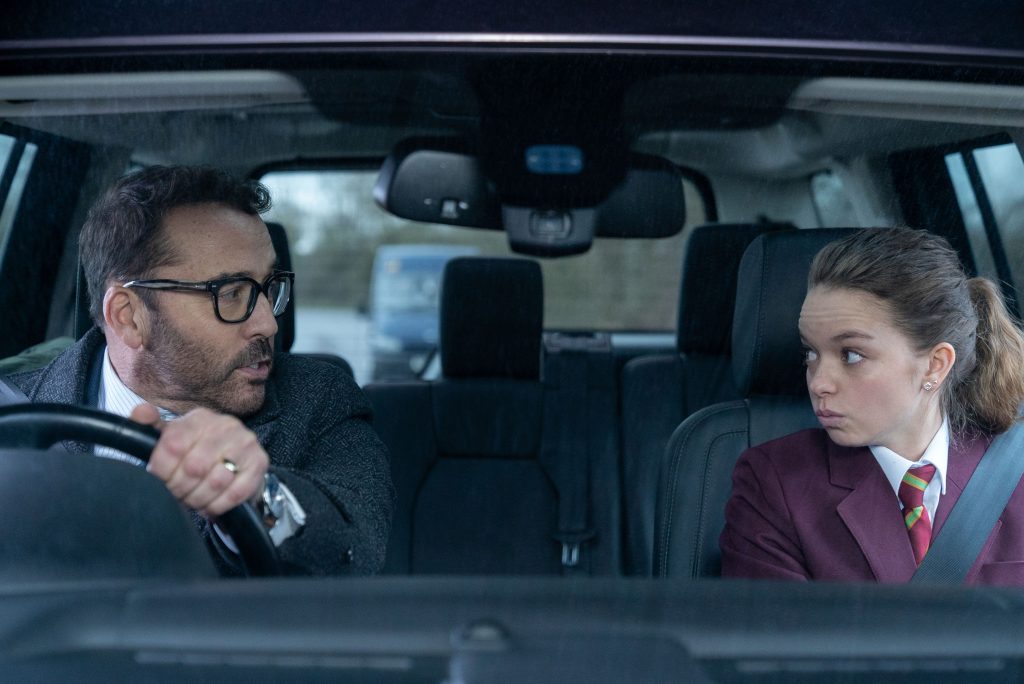
Reviewing his movies along this path from his late 50s to age 70 (this coming June) is challenging because the siren’s song of reductivism calls to us — well, me — too. I’d love to just post the latest version of the above-photo, say “It is what it is,” and “those who like this sort of thing might find this the sort of thing they like,” to paraphrase pioneering critic Abe Lincoln.

But no. Duty calls.

In “Blacklight” Neeson plays Travis Block, a veteran FBI agent whom you call when you need the man to get you or an endangered uncover agent out of a jam. We meet as he blows up a lot of stuff to distract Confederate flag-fetishist yahoos who have figured out they’ve been infiltrated, and threaten to overwhelm the outgunned local Southern law enforcement to lynch the lady.

Agent Block is the trusted “fixer” for an FBI chief (Aidan Quinn) who seems to be running his own “make America Nazi friendly” op. We’ve seen an outspoken AOC-style Congresswoman assassinated in another opening scene.

There’s a rogue agent (Taylor John Smith) who knows about this super secret death squad operation trying to get the attention of a reporter (Emma Raver-Lampman) at the website Washington News Cycle (the single clever turn of phrase in this script).

Thugs working for that crypto-fascist FBI chief are silencing people like this reporter or that agent.

Will Agent Block finally get to step back, retire, be the doting granddad to his “check the perimeter” obsessed pre-school grandchild (“You’re making her PARANOID Dad!” her mom, played by Claire Van der Boom, complains.)?

Nah.

Neeson always gives fair value in these woebegone, quick-and-dirty actioners. But closing in on 70, the fakery meant to show him brawling or driving too fast and what not isn’t that subtle.

Quinn seems too bored to give this villainous turn much effort, as were the screenwriters, who don’t make that revelation anything resembling a spoiler. We know pretty from the get go that this guy’s a power mad Federalist Society fascist.

After the over-the-top slaughter of “Cop Shop,” co-writer/director Mark Williams practically sleep walks through this — filler scenes, a talkathon through the middle acts, an anticlimactic finale.

The money on the screen was spent on a few action beats and Neeson. Nobody else in this passes for a “name,” and it’s probably to their advantage that none of them make an impression.

But whatever advantage there was to keeping his name out there and his Hollywood quote up has gone South for Neeson at this point. About one in five of these films has anything of a redeeming value in it. The other four are just more “Where’d YOU come from?” complaints from the baddies he’s snuck up on, and more “You’re gonna need more MEN” threats from the ex-boxer who grows a little more grandfatherly and a tad less badass with each passing year.

Rating: PG-13 for strong violence, action and language

Cast: Liam Neeson, Aidan Quinn, Emma Raver-Lampman, Taylor John Smith, Claire Van der Boom.

Credits: Directed by Mark Williams, scripted by Nick May and Mark Williams. A Briarcliff Ent. release.

Running time: 1:44

Posted in Reviews, previews, profiles and movie news | 2 Comments

Movie Review: A grieving mother sees a new neighbor as someone who was “Here Before”

Let’s not think too much about the resolution to Stacey Gregg’s haunting “Here Before.” It’s too pat to feel satisfying after all that we’ve invested in that’s come before it.

But what we’ve seen and settled into up to that climax is another sublime performance from Andrea Riseborough, one of the subtlest and most expressive actresses working today. Playing a mother who carries on with her life, her marriage and with raising her teen son after the death of her younger daughter, Riseborough (“The Grudge,””Battle of the Sexes”) gives us documentary-real grief, the kind that you’re supposed to shoulder and soldier through without anybody else seeing it. She makes us understand that grief is a form of haunting.

Laura is in a place where she won’t even let herself be triggered. Finding a tattered pinwheel in her wintry, over-grown Northern Irish garden might give her a moment’s pause, a reverie. But she’s so compartmentalized her thoughts of Josie that she limits her flashbacks to silent memories of adjusting the child’s hairband.

Son Tadgh (Lewis McAskie) may be ruder than usual, and sleepwalking on occasion. But husband Brendan (Jonjo O’Neill) is more about keeping a wary eye out for how his wife is taking it than examining his own feelings.

Only Laura is rattled, in only the most subtle ways, when new neighbors move into the other half of their bedroom community duplex.

“Wee girl puts me in mind of Josie, that’s all.” Megan (Niamh Dornan) resembles the dead girl, and a couple of times, when they’re alone and then when she’s over to dinner, she startles Laura with things she seems to recognize in this strange new town. Serving her a fishsticks sandwich leaves Megan puzzled.

“Are you gonna do the ketchup face?” Josie liked her ketchup drawn in as a smiley face on her sandwiches.

The conflict that’s set up here is between Laura and her family, with Tadgh particularly furious at what he thinks is going on, Laura and Megan’s mom (Eileen O’Higgins) and Laura and her own fragile psyche.

Is she imaging this connection, this ghostly reincarnation that’s moved in next door? And if she isn’t, is she prepared to accept some supernatural explanation?

Riseborough underplays every moment Laura lives through in this spare, moody, perpetually-overcast drama. She not just a mom, living in the reality of keeping their lives going. She’s a woman struggling to do the most basic things to put unbearable grief behind her, wearing a brave face for husband and son.

The grief, “It gets in there and won’t go away,” she explains as more than one person in this compact tale starts to wonder if she’s losing it. Only her mother-in-law seems wholly sympathetic.

“If she’s with you, that’s your business.”

Veteran British TV writer Stacey Gregg, making her feature writing/directing debut, maintains a glum tone throughout “Here Before,” occasionally flirting with spooky, sometimes leaning towards sinister.

Yes, she finds a way to resolve this mystery that makes sense — barely. But she wisely makes this ghost story without ghosts, horror tale without frights, something subtler, more real and disturbing in its own way.

And it helps that “subtler” and “real” are the specialties of her leading lady, who makes Laura as convincingly broken as she is tonally and most assuredly Irish, right to the bone.

Rating: R, for language (and violence)

Cast: Andrea Riseborough, Jonjo O’Neill, Niamh Dornan, Lewis McAskie and Eileen O’Higgins

Credits: Scripted and directed by Stacey Gregg. A Saban release.

Running time: 1:22

Posted in Reviews, previews, profiles and movie news | Comments Off on Movie Review: A grieving mother sees a new neighbor as someone who was “Here Before”

Douglas Trumbull, 1942-2022

One of the undisputed masters of special effects during the celluloid film era has passed away.

From “2001” to “Star Trek: The Motion Picture,” with “Blade Runner” and so many other titles added for impact, if it looked other worldly and spectacular, chances are Trumbull came up with the effects.

The future wizard of FX and “Close Encounters” genius was second generation Hollywood, the son of “Wizard of Oz” FX man Donald Trumbull.

There’s imagery in films like “Brainstorm” that will pop your eyes out, even today. That was the movie Natalie Wood was about to finish when she drowned.

He invented stuff and directed a cult film that may be Bruce Dern’s finest hour, the sentimental and moving environmental epic “Silent Running.”

Posted in Reviews, previews, profiles and movie news | Comments Off on Douglas Trumbull, 1942-2022

Netflixable? Canadian Sikhs laugh and cry and come apart just a little bit — “Donkeyhead”

“Donkeyhead” might be the best indie dramedy on Netflix right now.

Intimate and funny, touching and set in a place and a subculture mainstream cinema never ventures — the Sikh community of Regina, Saskatchewan — it’s great example of “write what you know” and “don’t overreach.”

Writer/director Agam Darshi created a star vehicle for herself, and gives plenty of scripted room for her co-stars to shine in this story of a scattered family facing their patriarch’s impending death in the snow-covered house they all grew up in.

Mona (Darshi) lives with and cares for her grumpy, cancer-stricken dad, rides her bike in the snow, drinks a bit and inhales a bit and carries off a weekly assignation with a married man (Kim Coates).

And if she’s feeling particularly worthless, she’ll look over the letter that arrived with the advance for a book she never finished, an advance paid out a dozen years ago.

After Dad (Marvin Ishmael) delivers his latest “You should get married, become someone else’s problem” to his 30something “writer who doesn’t write,” he has a stroke. It’s time to “call your family,” his doctor declares, gently at first, and then more firmly a second time.

Mona the “failure” has to summon her married real estate entrepreneur brother Rup (Huse Madhavji), married-doctor/sister Sandy (Sandy Sindhu) and “golden boy” London doctor Parminder (Stephen Lobo) for a bedside death watch.

She has to fend off or surrender to the pushy Sikh aunt (Balinder Johal) who wants to bring the gigantic book of scriptures and much of her congregation into the house for Paath, praying over the sick man.

Words will be exchanged, old wounds redressed and new ones opened as Mona, or “Manjit,” wrestles with what became of her life in the face of all the “success” of her siblings. Everybody needs to “let go,” some more than others. You can guess who’s deepest in denial.

“Why don’t we see how he does before planning a funeral?”

Not every scene sings, but Darshi gets laughs out of a taxi ride with a fellow distracted, music-video-watching Desi who sees cash for his catering business in the return of the prodigals, and pathos out of every intervention and sad moment of grappling with their father’s fate.

Lobo, playing “Dad’s favorite,” stands out among the supporting players, giving us a convincing take on “the empathetic one” among the siblings, reminding us that even the empathetic have their limits. And veteran character actor Coates, just seen in “See for Me” and TV’s “Van Helsing,” is nicely cast against type as a professional man, and a cheating husband.

“Donkeyhead” has heart and humor in nicely matched doses, and is good enough that you hope Darshi has another movie in mind as a follow-up, and that Netflix has the sense and Canadian dollars to let her make it.

Rating: TV-MA, sex, profanity, smoking and drinking

Cast: Agam Darshi, Stephen Lobo, Sandy Sindhu, Huse Madhavji, Marvin Ishmael, Balinder Johal and Kim Coates

Credits: Scripted and directed by Agam Darshi. A Netflix release.

Running time: 1:45

Posted in Reviews, previews, profiles and movie news | Comments Off on Netflixable? Canadian Sikhs laugh and cry and come apart just a little bit — “Donkeyhead”

Movie Preview: Pixar serves up Bowie for old/new time’s sake in “Lightyear”

An animated action comedy coming to screens, large and small, this June. Chris Evans and somebody voicing a robotic cat are featured. And Keke Palmer, Taika Waititi, James Brolin…

Posted in Reviews, previews, profiles and movie news | Comments Off on Movie Preview: Pixar serves up Bowie for old/new time’s sake in “Lightyear”

OSCARS: Out Out, Damned “Macbeth,” “Gucci” rolls snake-eyes, and other snubs

First Oscar thoughts, well HEY, they nominated Ciaran Hinds for “Belfast.” And Judi Dench! Pair up two scene stealers, let’s see if it pays off.

And there’s Kirsten and Kristin and Jessica Chastain, LOADED Best Actress and Best Supporting Actress fields.

There’s Denzel, but no Best Pic, best director love for “Macbeth?” Plenty of Oscar attention for “King Richard,” and Will Smith finally gets his shot at the big brass ring.

Andrew Garfield was MUCH better in “The Eyes of Tammy Fay” than in that instantly-forgotten “Tick tick…BOOM.”

“CODA” becomes the little picture that could, “Drive My Car” makes noise outside the Best International Feature category, and “Don’t Look Up” elbows its way in.

“House of Gucci” got almost no love at all. Lady Gaga hype smothered that, I figure.

Kathryn Hunter, embodying all three “witches” in “Macbeth,” and Cairtrona Balfe (“Belfast”) can be considered acting snubs. “Cyrano” did about as well as “House of Gucci.”

While “Power of Dog,” “Belfast,” “West Side Story” and others clean up.

I’d call “Drive My Car” and “CODA” the big winners, four and two nominations and in the conversation for good.

It’s been hard to work up any enthusiasm for the Academy Awards during the Pandemic Years. They always seem trivial and self-congratulatory, never more so than with the even more insipid than usual “announcement” ceremony this AM.

Going to do a few running counts here to see where everything stands, and update this as the AM progresses. Looks like “Dog” pulled in seven, as did “Dune,” which cleaned up in the tech categories. “Belfast,” “West Side Story” and “King Richard” nabbed six nominations.

They hand these statuettes out this year, at the 94th Academy Awards, on March 27 on ABC.

The full list of nominees is after the break.

Continue reading

Posted in Reviews, previews, profiles and movie news | Comments Off on OSCARS: Out Out, Damned “Macbeth,” “Gucci” rolls snake-eyes, and other snubs

Movie Review: “Fabian” witnesses Germany “Going to the Dogs”

The potent warnings about about how societies descend into fascism are scattered throughout “Fabian: Going to the Dogs,” a German drama about the people, attitudes and conditions of 1931 Weimar Germany, based on a novel published as it was happening.

Nazis aren’t seen that often in the movie, about a young ad-man’s romantic despair, distress at the decline of a friend and unemployment. He side-eyes the occasional goons, always traveling in groups, practicing random acts of intimidation. He and we glimpse the political posters papered over a somewhat anarchic, decadent Berlin. Radio reports of anti-Semitic diatribes by the fringed, uniformed political party’s leadership are sampled.

And late, very late in the third act, a seemingly responsible, educated older academic uses the word “order,” as in something the country desperately needs to restore, thanks mostly to over-dressed SA dandies kidnapping diners in crowded restaurants while everybody else either pretends not to see, or wishes someone would “do something” about this.

But in “Fabian,” such overt, chilling messaging is scattered throughout a three hour long movie. The metaphors — diners listening to (playerless) player pianos, carrying on via auto-pilot as all this is going on, a real suicide that foreshadows national, cultural suicide, the expedience of pursuing fame by prostituting oneself while love is left to languish — are equally scattered.

In a film this long, with so many conversations, so many unhurried searches, flirtations, interventions and languors and enough cigarettes sucked down to sink the Bismarck, all the distractions from the Big Theme do is make one mutter, “Gott im Himmel, get ON with it! Get to the POINT!”

Tom Schilling is the title character, a 30something WWI vet given to bar hopping at the cabarets, smoking a lot of ciggies and being late to work and with his rent. His rich, entitled pal Labude (Albrecht Schuch) may be in grad school, waiting for his thesis on am 18th writer to be accepted. But at least he’s out there, trying to organize workers into unions, agitating for change.

Whatever the Nazis, Socialists and Communists want individually, what they all scream for is an end to the Social Democrats, the status quo. Not that any of these minority parties could ever come to power, oh no. Ahem.

“I don’t believe reason and power will ever unite” to stop them, Fabian muses (in German, with English subtitles). He’s a writer, collecting anecdotes, phrases, observations in his notebooks as he prowls the night and stands in the unemployment line in the day. We see him dismissed from his ad writing job in the worst “You think you’re too smart for this work, let’s find out” ever.

But one night he meets the young “film industry lawyer” Cornelia Battenberg (Saskia Ronsendahl). And on a long, leisurely wander through the (carefully chosen, to reflect age and post-WWI decay) streets of Berlin, they chat and flirt and find out — eventually — that she’s the new tenant in his homey apartment house.

He doesn’t tell her until after the sex, of course.

Cornelia is pretty enough to be in films, not litigating contracts for them. And she knows it. A producer has his eye on her, which could be “their” lifeline, should he choose to “keep” her, with Fabian running out of cash and all.

That’s the big moral compromise at the heart of this tale of exhausted, avoidance-driven decadence. Fabian may invite homeless vets to join them at lunch in cafes, chat up his fellow veterans of “The war, the damned war” in lines. But he’s doing nothing more than taking notes.

Everybody is waiting on someone unseen to “DO something” about all this. And no one does. Maybe those guys in the brown shirts and jack boots have some ideas.

Filmmaker Dominic Graf, who directed and co-wrote the adaptation of Erich Kästner’s twice-filmed “cinematic” novel (he was best known as a children’s lit author, “The Parent Trap” was based on one of his books), saved a lot of money on sets and period recreations by limiting the light in the Weimar era nightclubs and rooms (throw pillows in a pool of light) and using unretouched and uncolorized documentary footage of the streets and people on them to capture the Berlin, 1931 effect.

A tram here, a car there, a little attention to wardrobe, and contrasting haircuts (a Hitler/Himmler buzz was the dead give-away somebody was a Nazi) and we get an idea of what this world looked like.

But “Fabian” fails to immerse us in that world, and being as leisurely as a limited series in its pacing, loses the urgency of what to later audiences can only be a “cautionary” tale. The video cinematography is grainy and 1990s TV quality.

Brothels and “kept women” and transvestites aside, it never feels all that decadent. And their world never feels as if its alarmingly spinning towards its doom, both of which may be precisely the point Graf was going for.

It’s just that dawdling this much, spreading your incidents over this much time, makes for somewhat dull cinema, with our “searching for himself” hero (Schilling looks a bit like a German Andrew McCarthy) losing track of what’s important in a smoke-screen of his own creation.

Rating: unrated, violence, sex, nudity, constant smoking

Cast: Tom Schilling, Saskia Ronsendahl, Albrecht Schuch

Credits: Dominic Graf, scripted by Constantin Lieb and Dominic Graf, based on the novel by
Erich Kästner. A Kino Lorber release.

Running time: 2:56

Posted in Reviews, previews, profiles and movie news | Comments Off on Movie Review: “Fabian” witnesses Germany “Going to the Dogs”

Black History Month — a Bonanza of Sidney Poitier movies on TV

Channel surfing this evening after laboring through a three hour picture on Weimar Germany, I stumble across one of this month’s many broadcast offerings of Sidney Poitier films, the best way to honor a screen icon whose noble life off the screen was highlighted when he passed away last month.

I’ve seen “Edge of the City” before, but never reviewed it as a “classic.” And I missed the first few minutes this time, so I will have to get around to it later

But it struck me how one way many of us ignored in looking at the Oscar winner’s legacy is worth remembering as Movies!, The Grio, ThisbTV and others broadcast his movies this month.

He was a role model and a paragon of representation and much more to Black America. White folks of my parents’ generation saw him in a similar but different light.

In movies like the working class “Edge of the City” and “Lilies of the Field” and ” The Defiant Ones,” he played characters who reminded working class white America that they/we have a lot more in common with working Black folks than the divide and conquer fat cats who pull the strings.

Pair him up with Curtis or Cassavettes or Paul Newman (“Paris Blues”) and you see absolutely no difference between them and him, as a character of the same class, with the same goals and struggles, with the added burden of misguided racism stoked by The Man.

And here was this classy guy with an eye on the Big Picture, the Reasonable Black Man who doesn’t kowtow but supports, makes the extra effort to befriend, who gently forces his costar/characters to acknowledge his humanity, if that’s something they’re reluctant to do.

Even in films like “Guess Who’s Coming to Dinner,””Paris Blues” and “Lilies of the Field,” something more interesting is happening. He is accepted as equal, if not morally superior in some ways. Lots of films such as “In the Heat of the Night” put him on that intellectual and moral high ground. “Acceptance” and “equality” are normalized.

Consider yourself invited and challenged to take another look at Poitier this month, via the movies that are served up to remind us of what a Bahamian-American original he was.

Posted in Reviews, previews, profiles and movie news | Comments Off on Black History Month — a Bonanza of Sidney Poitier movies on TV

Next screening? Coming of Age just as Germany is unraveling, “Fabian: Going to the Dogs”

Another “timely” tale for our troubled era, based on a popular German novel about growing up, partying and carousing, during the “Cabaret” era Weimar Republic, as the Nazis were polishing their jackboots.

This one opens Friday.

Posted in Reviews, previews, profiles and movie news | Comments Off on Next screening? Coming of Age just as Germany is unraveling, “Fabian: Going to the Dogs”

Netflixable? A Spanish Civil War survivor hides out in “The Endless Trench (La trinchera infinita)”

The Spanish Civil War is the one modern conflict that never seems to run out of lessons to pass on to us. The intimate, epic-length Spanish drama “The Endless Trench” is one of the best illustrations yet of what being on the losing side in a fight against fascism can be like.

It’s a fictional film based on something that really happened in Spain in the 1930s. As the German, Italian, Catholic Church and Texaco-backed Falangists of Francisco Franco gained the upper hand, death squads traveled far and wide, executing Republicans or people with any suspicion of having harbored leftist views.

Many fled the country. But that wasn’t the only way of surviving this slaughter, and the decades of fascist rule that followed.

Higinio (Antonio de la Torre) hears the trucks roll into his small town. His new bride Rosa (Belén Cuesta) is awakened by the thunder of jackboots, the pounding on doors. But panicked or not, all isn’t lost. Higinio dug out a little hiding place, and that’s where he lays low as troops rush in, toss the joint and threaten Rosa, ignoring her pleas (in Spanish with English subtitles, or dubbed) that “He never hurt anyone. He shouldn’t be on a list!”

When the troops storm into the next house, Higinio attempts an escape. A neighbor (Vicente Vergara) rats him out, they struggle, and the bullets fly as our victim flees into the night.

He dives into an abandoned well, where others “on their list” hide, leading to an “I could see ALL this coming…Bullets don’t solve anything” political debate, standing knee-deep in water as Civil Guards storm by, shooting others on the run.

The wounded Higinio can’t get away, which might ensure his and the under-scrutiny Rosa’s safety. It’s back to his hidey hole. For years, as it turns out.

Three directors and two screenwriters contrive an epic story of survival, paranoia, bravery and cowardice. “The Endless Trench,” which takes its title from a surreptitiously dug escape route Higinio starts on, changes locations and with that, changes the dynamics of their relationship.

Rosa feeds him, hides him and wants something like a life, which their circumstances seem to preclude. He is forever erring on the side of paranoid caution. That neighbor, Gonzalo, really has it in for him. And we hear just enough of Gonzalo’s story to understand why that is, right or wrong.

An endurance contest begins, World War II starts and as the Allies plunge into their global war against fascism, that becomes Higinio’s hope. –“Wait for the Allied victory.” Surely they’ll come for that murderous rat Franco, afterwards.

But as years pass, and more years after that, the story that started so harrowing grapples with paranoia that grows, rather than subsiding, and something like despairing resignation sets in. It can be heartbreaking.

De la Torre, of “Marshland” and the Uruguayan political terror thriller “Twelve Year Night,” gives us a “hero” who never seems heroic. His cagey turn makes us wonder about Higinio’s “innocence” in a neighbor-against-neighbor bloodletting, and we question his manhood as he sees what his wife, who loves him as passionately as he loves her, must endure. But we never fret over Higinio’s cunning.

Cuesta (“Holy Camp!,” “Party Town”) has the more robust role. We don’t just see the physical evidence of what Rosa must endure, Cuesta makes us feel it. She married a man in troubled times, and life pretty much just stops. She stoically keeps them going, working as a seamstress. But she wants a baby. She wants to see the sea. Cuesta lets us see the resignation that Rosa is the first to embrace.

Being conditioned by Hollywood, I kept waiting for something distinctly Spanish — probably involving a knife — to transpire between Higinio and his Javert, the relentless Gonzalo, given a dogged self-righteousness by Vergara.

Some of the episodes that put Higinio on high alert and make us fear for him come from expected quarters. Others are straight-up melodrama. But the evolving interpersonal conflicts keep “The Endless Trench” on the move.

We don’t know what’s coming, don’t know how much Higinio is responsible for his fate and can only guess if his story arc will give him, his enemies or us any satisfaction, when all is said and done.

Don’t be daunted by the running time, here. This is an intimate epic that alarms as it sprints out of the gate, settles into a lingering tension and even as it is winding down, manages to keep the viewer frightened and on tenterhooks. That’s what living under a fascist regime is like.

Rating: TV-MA, graphic violence, sex, nudity

Cast: Antonio de la Torre, Belén Cuesta and Vicente Vergara

Credits: Directed by Aitor Arregi, Jon Garaño and Jose Mari Goenaga, scripted by Luiso Berdejo and Jose Mari Goenaga A Netflix release.

Running time: 2:27

Posted in Reviews, previews, profiles and movie news | Comments Off on Netflixable? A Spanish Civil War survivor hides out in “The Endless Trench (La trinchera infinita)”