
Netflixable? Gay Dutch writer searches for herself in “Anne+”

“Anne +,” titled “Anne+ : the Film” on Netflix, is a Dutch journey of queer self-discovery that travels the vast distance between point A and point B.

Yes, that’s sarcasm.

It’s another light dip into a gay culture, this one in enlightened, liberal Amsterdam.

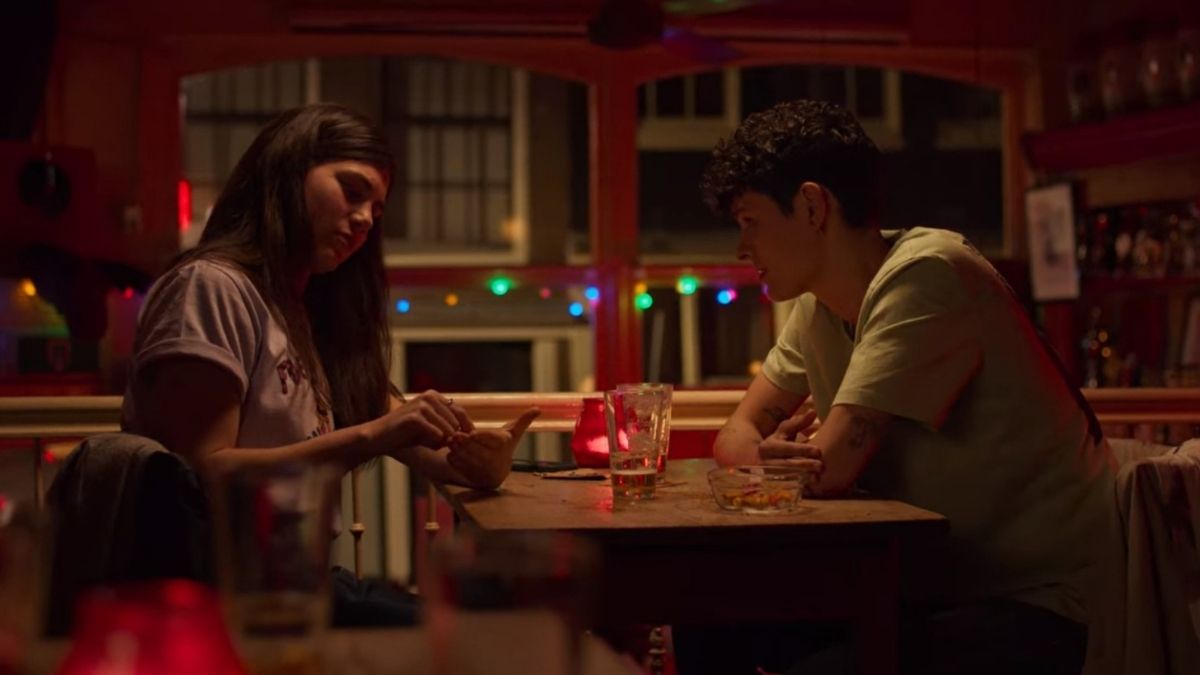
We meet a somewhat aimless 20something lesbian who struggles with a long distance relationship, a rambling, unfocused novel that she somehow got a book deal for despite needing a writing coach — assigned by the publisher — to write it, and mastering the whole new pronoun thing in the shifting sands of on-the-spectrum sexuality.

Well, that’s kind of comforting. It’s not just straight people who have trouble keeping pronouns um, straight.

Did Anne (co-writer Hanna van Vliet of “Quicksand”) get her book deal because the publisher thought she was cute? Maybe. Is she unsure about moving to Montreal with her lover, Sara (Jouman Fattal)? Maybe. Is she rattled and turned-on by the seriously boyishly butch drag performer Lou (Thorn Roos de Vries)? Maybe. Did she ever come out to her Dad? Maybe.

The most universally relatable thing about “Anne+” is the confusion and panic over the direction many of us haven’t figured out we want our lives to take in our 20s. That’s Anne in a nutshell.

She has her community, a close circle of friends, a nice house that she and Sara got even though Anne has no visible means of support. Was it her book advance?

And she has questions — about herself, herself and Sara, about Montreal.

The most interesting sequence in this Valerie Bisscheroux film is Anne’s dabbling in the world of drag, shown here as evolving into something more sexuality-spectrum fluid, and yet still fun. Anne doesn’t wear makeup — until she’s dolled up like a girlish man.

“Drag is about reclaiming your space,” Lou coaches one and all in Dutch with subtitles, or dubbed into English. “You’re always being looked at….Turn it into a positive!”

But even that part of “Anne +” feels a tad overfamiliar. This isn’t a movie about coming out or finding one’s tribe, place in the world, career or calling. Anne’s confusion may be more basic, something suggested by the first time she has sex with Lou. If a male-impersonator with a strap-on rocks your world, maybe you have bigger questions to consider.

Her book is to be about “gender identity,” “being queer” and “relationships.” Whoa. Stop the presses…in 1979.

Even the requisite nudity/sex scenes contrasted with “walking the canals, pondering” sequences seem something of a cliche.

And anyone with any experience of gay lifestyles or queer cinema could decorate Anne & Sara’s house — drawings and paintings of female nudes and disembodied genitalia. Gosh, who hasn’t been to a party there?

“Anne+” isn’t unpleasant to sit through. A couple of sequences — the “big argument” and “the talk” with Dad (Hein van der Heijden) stand out. His “Is this a ‘tea’ talk or a ‘whisky’ talk?” may be the truest, most heartening line in it.

But as queer “finding oneself” dramas go, it’s routine, recycled and as even the Dutch must admit, “algemeen,” “generic and undemanding.

Rating: TV-MA, nudity, explicit sex

Cast: Hanna van Vliet, Jouman Fattal, Thorn Roos de Vries, Jade Olieberg

Credits: Directed by Valerie Bisscheroux, scripted by Maud Wiemeijer, Valerie Bisscheroux and Hanna van Vliet. A Netflix release.

Running time: 1:35
Posted in Reviews, previews, profiles and movie news | Comments Off on Netflixable? Gay Dutch writer searches for herself in “Anne+”

Movie Review: “Uncharted” travels the primrose path to tedium

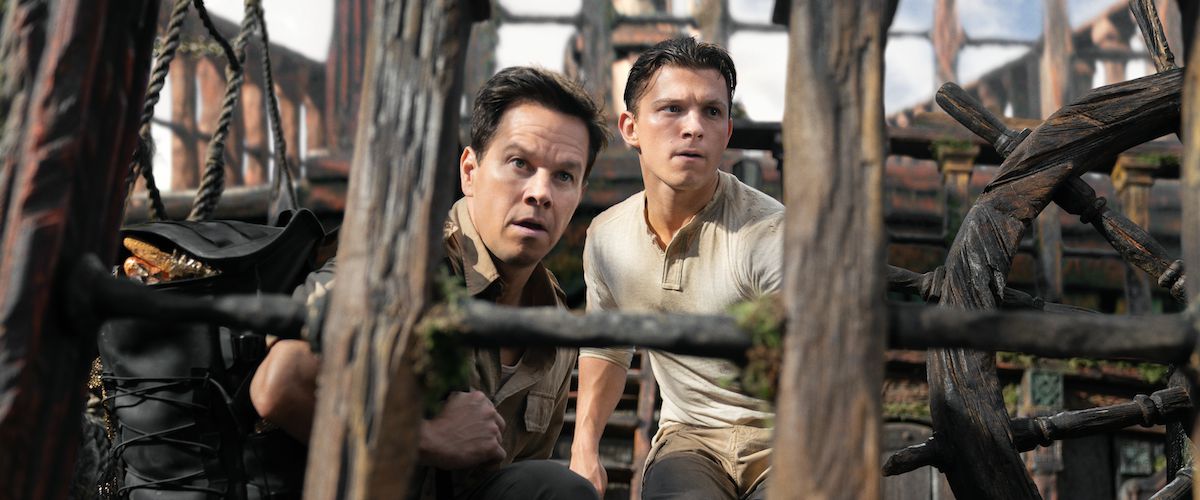
Tom Holland the laws of physics both take a licking and keep on ticking in “Uncharted,” Sony’s big screen adaptation of the Sony video game starring Sony’s Spider-Man.

Holland’s kinetic turn as the young pickpocket/historian and bartender turned adventurer is emphatic proof that it’s not just digital effects and stuntmen in that spider suit.

But the movie? It’s as edgy as a Scooby Doo mystery, as plausible a “National Treasure” mashup with “Pirates of the Caribbean.”

Let us all pause whilst Disney, which owns those last two properties, hires a screenwriter for that idea.

“Uncharted” co-stars Mark Wahlberg as the guy who might have “the key” to Magellan’s lost treasure, but who was probably cast because he’s one of two action stars who doesn’t tower over the diminutive Brit leading man. (The other? JCVD.)

Yes, there are billions in gold that the Portuguese explorer working for Spain Ferdinand Magellan found and didn’t live long enough to bring home in history’s first circumnavigation of the globe. No, the gold part isn’t true, but never mind.

When he was little, Nate Drake and his older brother Sam dreamed of tracking it down. But being orphans in Boston, fat chance of that. Sam went off on his own in his teens. Nate, the younger sibling “with pirate blood” (they think they’re descended from the first British circumnavigator, Sir Francis Drake) went to New York and mastered the light fingers that get the attention of Victor Sullivan (Wahlberg).

Actually, he knew about the kid because he met his brother. Now, he’s out to steal this golden crucifix that doubles as the key to the lost treasure. Sullivan needs a hustling, ballsy pickpocket who can hold his liquor so that they can split the $5 billion allegedly buried inside whatever those keys unlock.

You know the drill, endless “Da Vinci/Tombraider/Raiders/National Treasure” clues, an auction disrupted, a mad hunt through Barcelona and the South Pacific, because booty calls.

The complications are the heir to an ancient Spanish banking dynasty (Antonio Banderas unleashes his perfect growl), his treacherously sexy lieutenant (Tati Gabrielle) and the equally athletic, self-serving and sexy Spanish “partner” (Sophia Ali) in Nate and Vincent’s enterprise.

It begins with a “falling out of a cargo plane” set piece that we get back to later. Holland’s Nate battles gravity, and logic, and wins. Bugs Bunny Physics at its finest. And that’s not even the finale.

Barcelona always photographs well, rarely more beautifully than in this Reuben Fleisher film.

But damn, is this movie stupid and dull or what? The plot is cut-and-pasted from a half dozen other movies. Every line is more banal than the one that preceded it. A good example, the billionaire banker never travels anywhere without his vintage Mercedes 300 Gullwing. He takes the time, as it’s loaded on the cargo plane, to tell a minion “Be sure not to scratch it.”

Banderas should be chasing Oscars, starring in dramas and romances and comedies, not taking Sony’s bottomless bank for reciting the obvious.

Holland is perky enough, but the may be the most sexless role of his generally neutered career. And Wahlberg, without a good script, funny lines or a great director to insist he raise his game, only occasionally achieves “adequate.”

There’s nothing wrong with popcorn pictures that blend history and action, even if the history is bent beyond recognition and the action is as implausible a Bugs Bunny or Captain Jack Sparrow cartoon.

But the cartoon should be fun and funny, not just a collection of recycled bits from a game and a bunch of other movies.

“Video games make lousy movies” has been a truism since SEGA, and while there have been nearly tolerable exceptions, “Uncharted” isn’t one of them. And Holland may very well do a lot of his own stunts, but he’d be better served picking his own scripts.

Rating: PG-13 for violence/action and language

Cast: Tom Holland, Mark Wahlberg, Sophia Ali, Tati Gabrielle and Antonio Banderas.

Credits: based on the Sony Play Station videogame. A Sony/Columbia release.

Running time: 1:50

Posted in Reviews, previews, profiles and movie news | Comments Off on Movie Review: “Uncharted” travels the primrose path to tedium

Movie Preview: Another offbeat “romance” that changes gears — HARD — “Fresh”

Sometimes, avoiding the “dating scene,” recognizing that maybe “You don’t need a man in your life” can be good advice.

Particularly if Daisy Edgar Jones’ character “connects” with a guy like the dude Sebastian Stan plays in “Fresh.”

This horrific take on dating today…and letting him cook for you… opens in theaters and on Hulu March 4.

Posted in Reviews, previews, profiles and movie news | Comments Off on Movie Preview: Another offbeat “romance” that changes gears — HARD — “Fresh”

Movie Review: Let’s hang out in the Unabomber’s cabin with “Ted K”

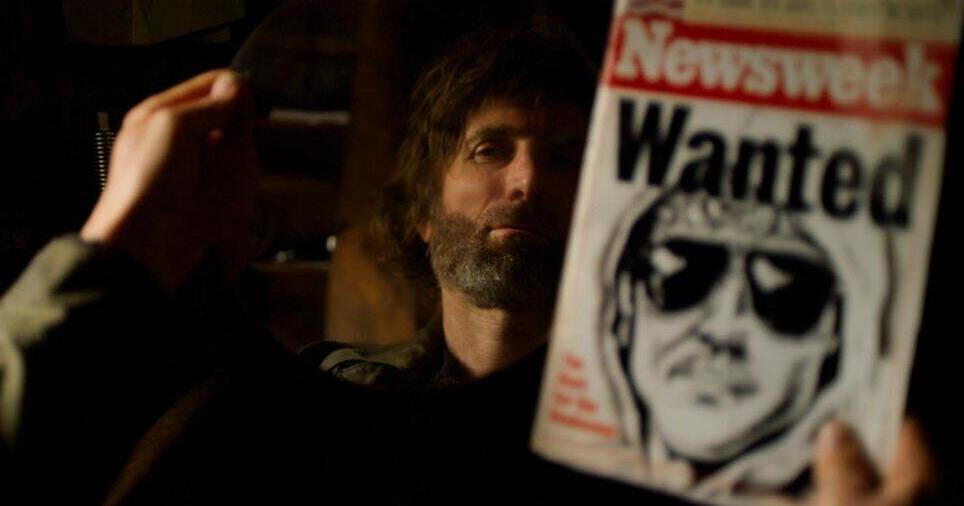
Sharlto Copley takes us inside the head of infamous, murderous crank Ted Kaczynski in “Ted K,” a straightforward and yet surprisingly disturbing look at the man the FBI labeled and hunted as “the Unabomber” for some 17 years.

What’s surprising about this account isn’t his methods, his cunning and his amoral, horrifically random selection of targets. It’s how relatable the South African Copley (“District 9”) makes this monster.

The classic “dangerous, disturbed loner,” Kaczynski moved to a 120 square foot cabin he and his brother built in the mountains outside of Lincoln, Montana. A math prodigy who entered Harvard at 16, he checked out of the human race early on. In Montana, he worked odd jobs without much success or enthusiasm, hunted for meat and cadged cash off his mother and brother for years as he pioneered a version of the “off the grid” lifestyle others have emulated since.

And whatever state he moved to Montana in, the solitude and the escalating “disruptive sounds” and “destruction” of technology all around him, from oil exploration and lumbering to yahoo motocross biking and snowmobiling drove him off the deep end, vowing revenge and keeping a journal of his grudges, his plans and his bombings in a numerical code.

Director and co-writer Tony Stone built his script out of Kaczynski’s endless writings, his letters to the editor, his phone calls with his increasingly estranged and eventually alarmed family, and out of his infamous newspaper-published “manifesto.”

And Copley brings the articulate, twisted and deranged writings to life.

From the first scene, when Ted K” breaks into a mountainside chalet — busting through the wall with an axe, not through a window or door — Copley makes us forget this isn’t a documentary. Bearded, tetchy and wild-eyed, socially awkward in even the most innocuous situations, his Kaczynski must have been a trial for the locals, many of whom seem to know him and treat him as sane when they had to know that Illinois transplant wasn’t right in the head.

We see him ranting at “evil jets,” passenger and military, shooting at oil company helicopters hauling explosives to do sonic geologic prospecting for oil. As Stone plays up every disturbance to the quiet of nature, from snowmobiles to sawbills, we start to get it. And maybe we kind of see what turned this off-the-IQ charts/on-the-spectrum oddball into the ticking time bomb he became.

His turn to violence is horrific in its topicality, as we see deranged outliers all over North America arm for war and threaten their own enemies lists of grievance. “Violence,” Kaczynski notes, is condemned. But “history shows it does work.”

Stone’s film tilts us towards Ted K’s point of view as the public radio listener/bomb-maker whistles Beethoven’s “Ode to Joy” when he commits his first acts of vandalism.

He was around decades before social media took the hit for some of society’s ills, but here he was in the ’70s and ’80s, declaring that he and we needed to “stop technology before it’s too late,” before it develops ways to “control our behavior.”

Stone doesn’t turn this nut into a hero or even a “mad prophet.” Like Timothy McVeigh and Eric Rudolph, the Unabomber takes the coward’s path to revenge on perceived, unwarned “enemies” — making bombs.

There are plenty of scenes of Kaczynski ranting and over-sharing to his mother about his inability to socialize and meet a woman, and blaming her for it. We see him vehemently chew on a phone company functionary over the “thefts” their clunky pay phones in Lincoln subject him to and fail to respond to neighborly efforts at humor or a sympathy.

Despite moments of normality, when he hides his arrogance, his hair-trigger temper and his brutish sexism, we wonder how anybody could have ever given him a lift, offered him a job or let him volunteer sorting books at the local library.

Copley performance explains that. He never makes the man charming or appealing. But he humanizes this murderer, strips him of his “boogeyman” status and lets us ponder what might have been had family, neighbors, medicine or the state had enough cause or the common sense to intervene, or at least cut off the cash he needed to buy guns and gunpowder.

Rating: R for language, some sexual content and brief nudity

Cast: Sharlto Copley

Credits: Directed by Tony Stone, script by Gaddy Davis, John Rosenthal and Tony Stone. A Neon release.

Running time: 2:00

Posted in Reviews, previews, profiles and movie news | Comments Off on Movie Review: Let’s hang out in the Unabomber’s cabin with “Ted K”

Movie Review: Not really a hit man, still “Too Cool to Kill”

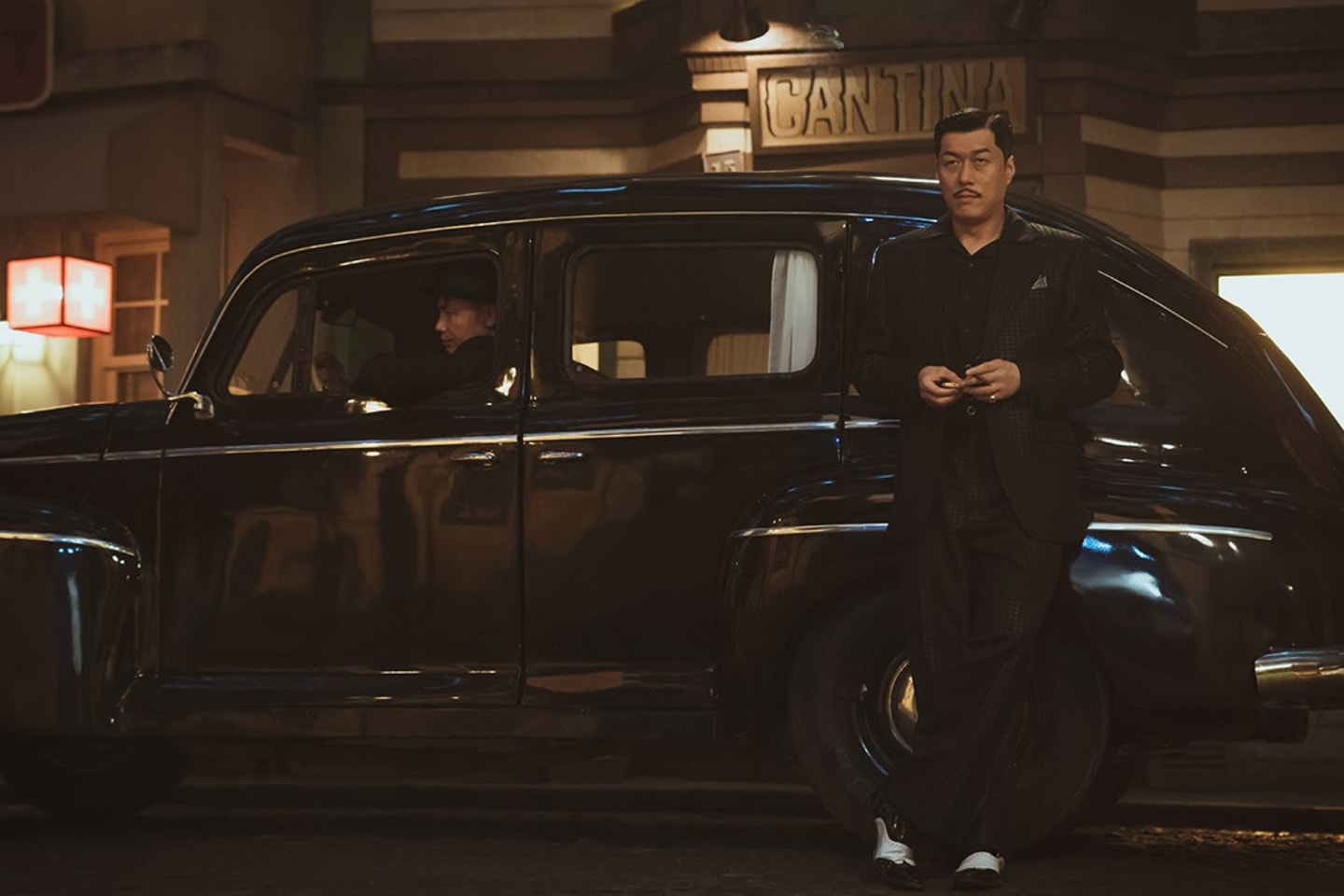
“Too Cool to Kill” is a gonzo pastiche of genres, a goofy, gorgeous and almost deliriously dizzy send-up of everything from “El Mariachi” to pretty much every gangster movie John Woo ever made.

And God knows, we all love John Woo.

It’s like a Coen Brothers version of a Tarantino tale — without the wanton bloodshed or prolific profanity.

A soundstage-bound farce from China, writer-director Wenxiong Xing’s romp is based on a 2008 Japanese film, “The Magic Hour.” But it steals from and pays affectionate homage to a score of other pictures and a lost way of of making movies as it does.

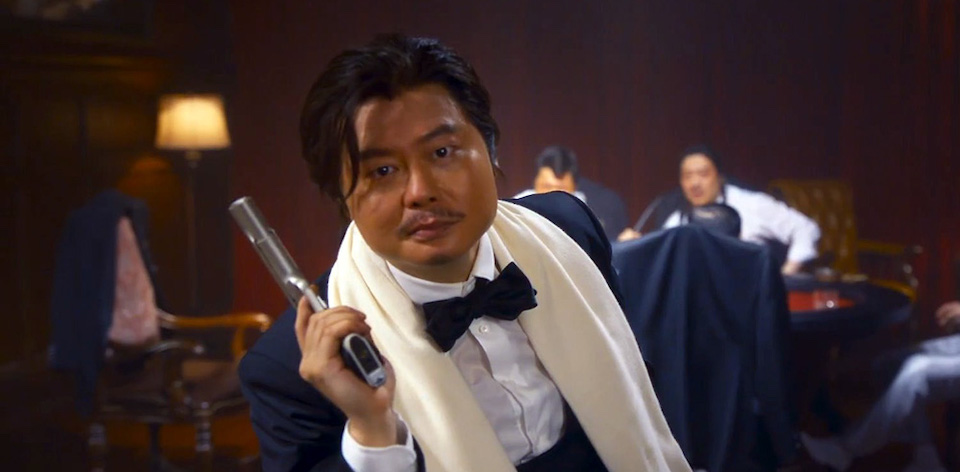
The set-up? In a netherworld of fashion and cars from the ’40s through the ’60s, with the movie-making technology to match, a mobster named Mr. Harvey (Minghao Chen) survives an assassination attempt. He’d love to meet, or maybe get his hands on the infamous “Karl the Hit Man.” But first, he’s got to shut down this dopey film he’s financed.

His idea might have been to seduce and even marry the star, Milan (Li Ma). But her director brother Miller (Lun Ai) is sure to serve up another flop. And as Milan has rejected every overture, well, money is money. Itt’s curtains for the cinematic siblings.

Except the star knows how to roll like a femme fatale. She picks up on this desire to meet “Hitman Karl.” She knows him, she says. Give her ten days and she’ll bring him to you.

“TOMORROW, it is!”

That’s how she latches on the hapless, hammy extra Wei Chenggong (Xiang Wei), a bug-eyed, over-enthusiastic ham with a beaverish grin. The actress and her director brother pitch their new “hit man” movie to him. He’ll play…Karl. There is no script. And he’ll never see the camera or crew, just “extras” and co-stars like Ms. Milan. He will “freestyle” (improvise) his scenes in this “new way of filming.”

Thus is our fake “hit-man,” a born ham, given free license to make up gestures, movements and lines as he goes, stunning the mobsters (Dayong Zhou plays Mr. Harvey’s lieutenant, Jimmy) with his manic bravado, confusing them when he figures he can do replay the scene better.

“Sorry. Let’s go AGAIN!”

He brings his own props, improvises a deliciously menacing, over-the-top bit of licking the blade of the Big Boss’s letter opener and disarms one and all with a Hollywood flourish, EVEN in the second take — when they know where he keeps his gun.

A hit man with his finger poised to give Mr. Harvey the worst ear flicking of his life isn’t to be trifled with.

“I don’t believe you can flick me to death!” Yes, that’s funny in Chinese with English subtitles.

Xiang Wei (“Another Me”) turns out to be a gifted physical comic, sliding across desks, shamelessly mugging and carrying on like a “walk on” nobody who’s just landed his big break. He is a riot, pretty much first scene to last. Everybody else has only to react for much of what he does to be funny.

Director Xing keeps this picture on its feet and on the movie. That’s despite the limited number of settings, all of them soundstages, with even the driving sequences using old fashioned rear projection. “Too Cool to Kill” never feels stagebound as it recreates a sort of British seaside town in the early ’50s — “Lying Town” where Rick’s Cafe and the Red Lobster Inn reside.

Every sequence has gags that just kill, situations that are a hoot in the making.

I’d suggest you make a game out of all the movies given a nod here (“Yojimbo,” “Singing in the Rain,” “The Killers”), in scenes recreated, costumes mimicked and the like. But that might make you miss a laugh or 33.

And even though the third act disappoints after what’s come before, Xiang Wei never does. There isn’t a lot of call for actors to pretend to be really bad at what they do. Wei may have cornered the market.

“Wait! WAIT! I’ve prepared a dance to show my PAIN!”

Rating: unrated, comic violence, some of it bloody

Cast: Xiang Wei, Li Ma, Lun Ai, Dayong Zhou and Minghao Chen

Credits: Scripted and directed by Wenxiong Xing,  based on the Fuji (Japanese) movie “The Magic Hour.” A Well Go USA release.

Running time: 1:49

Posted in Reviews, previews, profiles and movie news | Comments Off on Movie Review: Not really a hit man, still “Too Cool to Kill”

Next screening? A Unibomber gets his start, “TED K”

Sharlto Copley dives into the pathology of the math prodigy turned hermit who unleashed terror from a tiny shack in the woods of Montana.

Posted in Reviews, previews, profiles and movie news | Comments Off on Next screening? A Unibomber gets his start, “TED K”

Movie preview: ” Doctor Strange in the Multiverse of Madness | Official Trailer”

This is heavy on exposition, a trailer explaining the Doctor’s state of mind and course of action.

Eye popping, of course. Cerebral? Cumberbatch lends it that.

Easter Eggs? It wouldn’t be a Marvel trailer if it didn’t have a few of those.

Posted in Reviews, previews, profiles and movie news | Comments Off on Movie preview: ” Doctor Strange in the Multiverse of Madness | Official Trailer”

Movie Review: A Wiccan has a Reckoning at his High School Reunion: “King Knight”

Some comedies get bonus points for merely existing, for the simple fact that somebody thought the idea of a Wiccan, a witch running his own coven, being outed as his high school homecoming king and voted “most likely to succeed” would be funny.

No, he’s not the Goth Gone Wild/social misfit/”free thinker” and rebel we associate for this fringy and funny (Are we allowed to laugh at it?) belief’s adherents.

That’s “King Knight” in a nutshell, a movie in which this tattooed, garlanded witch married to a witch Jesus figure has his “walkabout” and faces his past and his moment of truth — at his high school reunion.

Scripted, acted and edited on that sliding “Napoleon Dynamite” deadpan scale, it’s filled with the ad hoc DIY Wiccanry rituals, practices and healing herbs and spells that Thorn (Matthew Gray Gubler of “Criminal Minds”) and his wife Willow (Angela Sarafyan of “Westworld”) instruct their coven of eight (including themselves) in.

It’s got a handful of laugh-out-loud gags, lines and reactions. But mostly, owing to the slack pace and thin collection of one-liners, it lets down a game cast playing a broad collection of eccentrics, true “believers” shaken by this revelation about their leader and prophet.

All isn’t well in the coven, with the gay tow truck driver and his partner postal worker and pretty much every other couple dressed in black (or white) having romantic troubles.

Thorn and his smarter, potion-and-herb prescribing (RN) wife, hear them out, offer counsel and “traditional” cures.

But as he impatiently reboots his emails, waiting for that next order for his line of homemade bird paths, Thorn is getting these persistent notes from another woman. Is he cheating? Considering it? He always deletes them.

Willow wonders what’s off about him. He keeps bringing up starting a family, and he’s acting a little shifty.

“Have you been taking those male enhancement pills? The ones from the gas station?”

No. Opening his email reveals all. She is shocked and appalled way beyond that “I don’t know who you are” thing. He was a poster boy for the kids who picked on her and pretty much everybody else in their coven in high school. His defense is Renaissance Faire/Wiccan, but weak.

“Beneath cloaks of Ralph Lauren, blood flows in their veins–just like the rest of us!”

As he faces shunning at home and in his coven, Thorn — his real name is “Thornton! It might as well be CHIP!” — must walk and wander, open his third eye and face his past.

The framing device is a sort of explainer, not quite a documentary but a tale narrated by Thorn, Willow and Thorn’s spirit guide, “the coolest wizard of them all,” Merlin (“Twin Peaks” and “How I Met Your Mother” alumnus Ray Wise).

Tarot cards introduce chapters — “The Lovers,” “The Hermit.”

And the most deadpan sequence of all is the presented-without-comment survey of “our traditions,” from the “Morning Cleanse” and “Beltane” to “May Baskets” and “Vow Renewals.”

Who knew Wiccans were so big on making happy couples?

A lot of the one-liners are of the crude “I’m glad to know I’m more than just a hole to you” variety, low hanging fruit of the stoner comedy school.

Is that the intent here? Sit around with Snoop, smoke and imbibe and giggle at the dorkiness and sheer inanity of these suburban “good witches” (no dark magic or “drinking babies’ blood”) and their cosplaying?

Maybe. Stone cold sober, “King Knight” is a bit of a sweet-spirited grind, funny intent delivering funny moments that are so scattered the picture never gets up a comic head of steam.

Rating: unrated, profanity, sexuality

Cast: Matthew Gray Gubler, Angela Sarafyan, Andy Milonakis, Kate Comer, Emily Chang and Ray Wise.

Credits: Scripted and directed by Richard Bates Jr. An XYZ release.

Running time: 1:21

Posted in Reviews, previews, profiles and movie news | Comments Off on Movie Review: A Wiccan has a Reckoning at his High School Reunion: “King Knight”

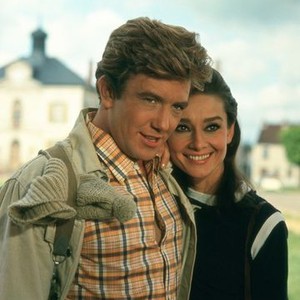
Classic Film Review: Hepburn and Finney, MGs, Mercedes and Alfas, “Two for the Road” (1967)

Channel surfing Valentine’s Day lured me back into “Two for the Road,” a sophisticated and sweet “road comedy” that altered the genre for half a century afterward.

Sure, “It Happened One Night” was the Ur film of this genre, dating from over thirty years before. But Stanley Donen’s sleek, smart take on a romance seen through the years in a montage of their drives around “the continent” is what a film fan sees when one closes one’s eyes and imagines “the definitive road picture.”

I’ve seen it many times, mostly in chunks as it’s on many of Ye Olde Movie Channels I drop in on. I always joke that “Let me check again.” Because I still can’t believe Albert Finney would ditch Jacqueline Bisset for the regal human clothes hanger that was Audrey Hepburn.

But “Jackie,” as she’s called in the movie, a traveling companion in the early “hitchhiking” episode of the history of this couple to be, caught the measles. So grumpy architect Mark is fated to be with Joanna (Hepburn), for better or worse.

The pairing of the rising star Finney with the long-established (and a few years older) Hepburn works swimmingly, because to paraphrase what people always said about Astaire and Rogers, “She gave him class, and he made her younger.”

Hepburn isn’t exactly an ingenue here. But she’s pretty bubbly and madcap, something we hadn’t seen her attempt since “My Fair Lady,” and mostly much earlier.

The couple — hitchhiking as they first meet — share a ride with a crowd in a VW Microbus, tour in a 1950 MG-TD (which catches fire, spoiler alert), travel later with obnoxious American friends (William Daniels and Eleanor Bron) and their insufferable daughter crammed in a Ford Country Squire, successfully age and trade up to a Mercedes 230 and always make their way through France (mostly), taking in the pre-EU/pre-superhighway era scenery as it was meant to be experienced.

They drive the paper-roadmap blue highways and pigpaths in the great motorcars of the ’50s and ’60s. Renaults and Citroens and Opels pass them, and when Mark gets a new red British ragtop to replace the torched MG, that’s a sign he’s reached a midlife crisis cheating episode.

The situations — lost keys, spoiled brats, rushed tours of cities (Chantilly), car trouble, fights, flirting and seductions, fine French dining, French price gouging, and foreshadowing the life they’d lead together in the future — have become road picture cliches.

The dialogue is crisp and light, with the occasional cutting line drawing blood.

“Just wish you’d stop sniping!” “I haven’t said a WORD.” “Just because you use a silencer doesn’t mean you’re not a sniper.”

Joanna is the queen of “I LOVE you” and mistress of “I HATE you.” Mark gives her reason for both.

Mark is bossy in ways no modern woman would tolerate this side of a Promise Keepers convention would stand for today.

“The trouble with women is they try to label you – put you in a pigeonhole. What they don’t realize is – the only thing that fits in a pigeonhole is a pigeon.”

“Two for the Road” underlines virtually every single rule that every single romantic comedy must follow to work, starting with “You’ve got to ROOT for them as a couple,” even as everything comes apart, to some degree, in virtually every era of the relationship. That’s one thing most rom-coms get wrong, and if Netflix’s teen romances have an Achilles Heel, it’s that.

“Road” is like a time capsule now, back when travel was more seat-of-the-pants than planned by Expedia or Costco, when credit cards were for the rich, the Riviera wasn’t overrun, when gender roles were more rigid and restrictive — but loosening — and cars were a lot less reliable, and a lot more stylish.

Love this, and yes it still holds up. But damn, it’s a pity about that MG.

Rating: unrated, “ruined virgin” innuendo, mild profanity

Audrey Hepburn, Albert Finney, Jacqueline Bisset, William Daniels, Eleanor Bron, Claude Dauphin

Credits: Directed by Stanley Donen, scripted by Frederic Raphael. A 20th Century Fox release.

Running time: 1:51

Posted in Reviews, previews, profiles and movie news | Comments Off on Classic Film Review: Hepburn and Finney, MGs, Mercedes and Alfas, “Two for the Road” (1967)

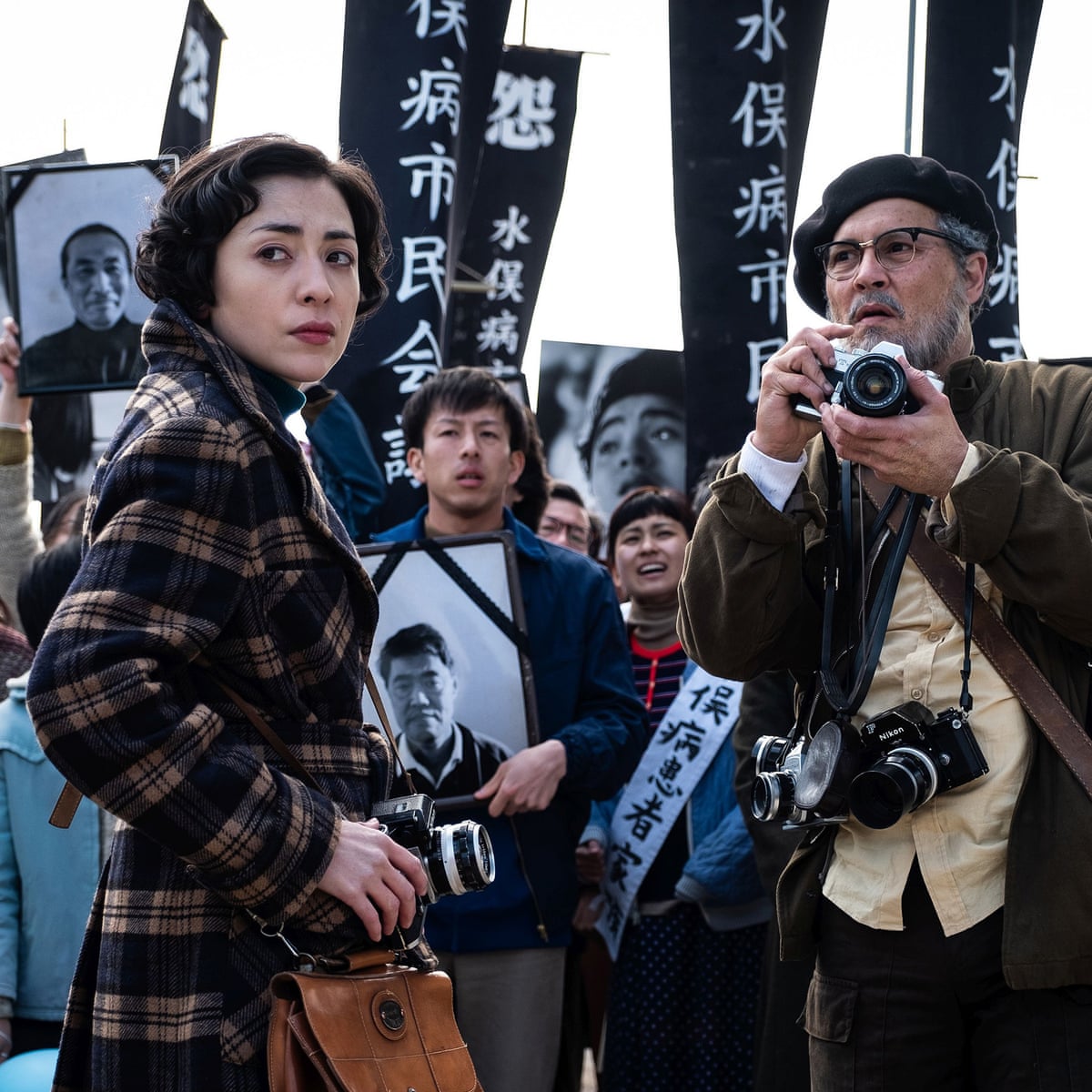
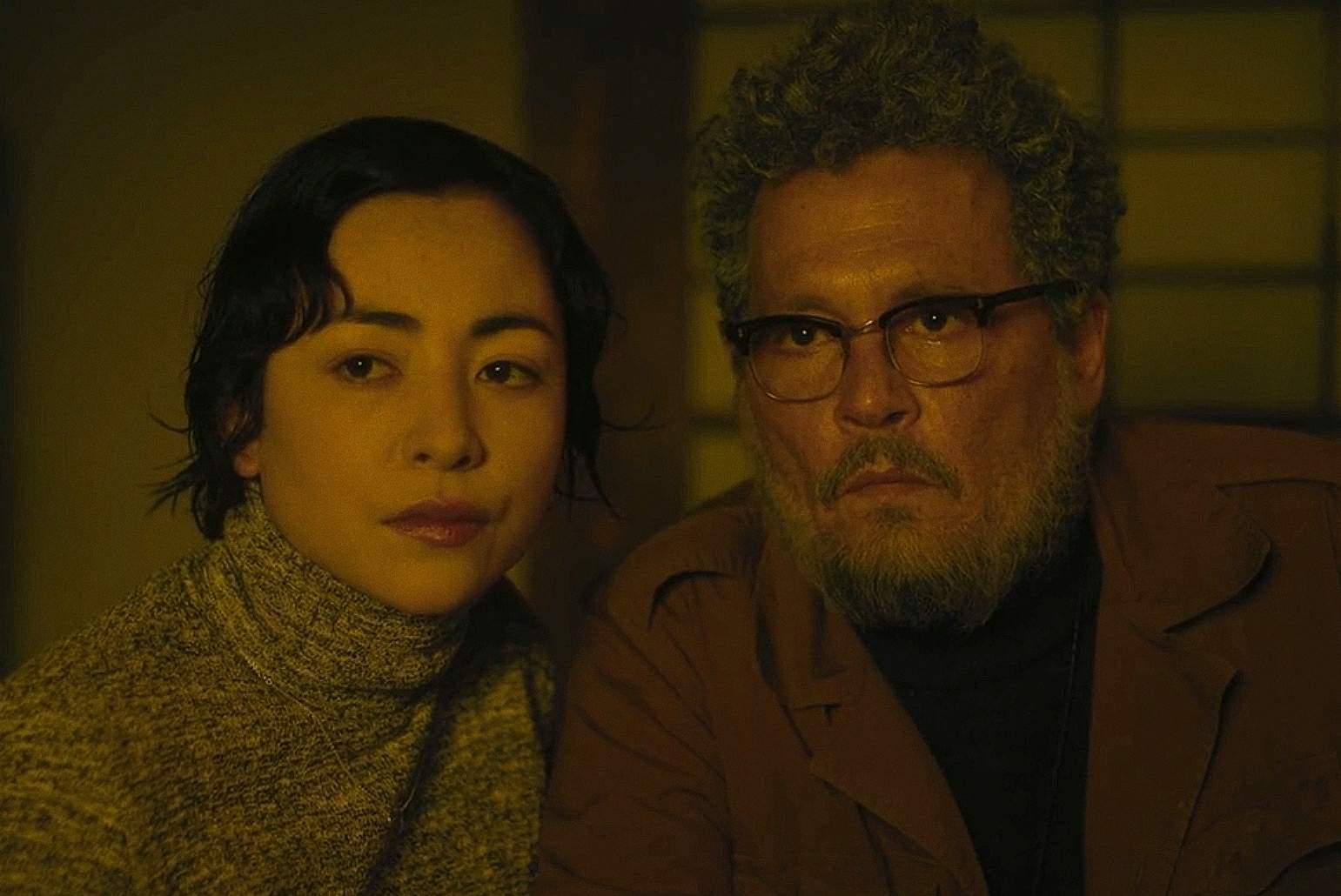
Movie Review: Depp’s Photojournalist exposes a Japanese Environmental scandal and Cover-up — “Minamata”

It may be simplistic in the way it covers an infamous mass industrial poisoning and cover-up, in tidying up the untidy “relationship” part of the story.

And “Minamata” may star Johnny Depp, an actor given to making drunks “cute,” and someone who has “fallen from grace” and lost much of his career due to a messy divorce and a British court deciding he was an abusive drunk during that marriage.

It was filmed as a planned release by another studio and abandoned, probably because of Depp’s legal troubles and ongoing court battle with Amber Heard.

But “Minamata” is far too worthy a film to go unreleased. It’s still a fascinating, moving and pretty much by-the-book true account of what happened to the Japanese villagers who lived too close to a chemical plant that dumped mercury into the sea where they got their fish.

Like Love Canal, New York and Bhopal, India, Minamata is a town whose name became infamous thanks to a major corporation’s callous attitudes towards pollution and human life. The Chisso Corp. dumped mercury into the bay for decades, and for a decade and a half covered up what they knew they were doing to people who ate fish there. The film is about the struggle to get the world to pay attention in the pre-Internet media provincialism of the 1960s and 70s.

The locals noticed their pets sickening and dying of this “cat dancing disease.” They saw birth defects in their children and adults developing tremors and life-shortening health issues. But in media-controlled “rapid growth” post-WWII Japan, the government refused to act and the company kept on covering up and refusing to acknowledge its guilt.

It wasn’t until a legendary photographer/photo-essayist, W. Eugene Smith was talked into visiting that the story became a global scandal.

Depp plays Smith as the beret-wearing iconoclast that he was, something of an alcoholic burnout when we meet him in 1971. His Life Magazine editor (Bill Nighy) has lost faith in him for all the usual journalistic burnout movie reasons — flouting deadlines, alcoholic unreliability.

“Don’t waste what time you’ve got left,” the editor hisses as he escorts Smith to the door.

But Smith agreed to do this short Japanese commercial for Fujifilm, and the translator on that endorsement, Aileen (Minami, of “Vision” and “Battle Royale”) mentions this awful thing going on in Japan. That’s the last place the ex-combat photographer wants to go. Still, there’s a pitch even a “dumb–s” editor couldn’t turn down.

Once there, Smith is immersed in village life, trying to pry photographs out of people who don’t want to rock the boat, who fear Chisso and their government and who feel a personal shame in letting themselves or their children be photographed.

Local activists (Hiroyuki Sanada among them) know that “if we make a noise loud enough,” the company and the government “won’t have a choice” in terms of hearing them out. That’s where Smith comes in. If only he could photograph some of the faces.

“Seeing what’s going on behind the eyes, it’s an empathy thing” he explains to one caregiver.

As Smith and the translator visit protests and befriend victims, sneak into the heavily guarded “company” hospital, as Smith is dragged in to meet and be charmed by the company chairman (Jun Kunimara), as the police harassment and beatings begin, with Smith drinking from a handy flask or brown bag all along the way, we wonder if this “noise loud enough” will ever be turned into the photographs that will shake the world.

Depp’s probably played too many drunks for his own good — professionally or legally. This one is charming, almost cute but plainly haunted.

“You hands shake,” a local notes. “Do you have Minamata disease?” “No, I just drink a bunch.”

Minami’s not given much to play with, and her English enunciation is a bit tough to plow through at times. Sanada gives us a blast of righteous fury, and Nighy’s just here for the curmudgeonly chewing outs.

But the victims are sympathetically-portrayed by a wide selection of actors (Akiko Iwase and Ryô Kase stand out). And co-writer/director Andrew Levitas (“Lullaby”) gives his stars the proper heart-breaking set-up for “the shot” that the name Minamata is famous for.

I had never seen the photo, but the name of the town lives on, in updates to the tragedy (the Japanese government is well-practiced in denial, when it comes to WWII or corporate crimes) and in documentaries like “The Cove,” where one can wonder why the Japanese keep killing dolphins in their waters because they’re contaminated by mercury.

“Minamata” doesn’t have the punch or paranoia of “Silkwood.” But I’d say Levitas, Depp & Co. have delivered a “message movie” with as much pathos and righteousness as the pollution lawsuit drama “Dark Waters.” And at least this one isn’t about a heroic lawyer.

Rating: R for language (profanity) throughout

Cast: Johnny Depp, Minami, Hiroyuki Sanada, Akiko Iwase, Ryô Kase, Jun Kunimura and Bill Nighy.

Credits: Directed by Andrew Levitas, scripted by David Kessler, Stephen Deuters and Andrew Levitas. A Samuel Goldwyn release.

Running time: 1:51

Posted in Reviews, previews, profiles and movie news | Comments Off on Movie Review: Depp’s Photojournalist exposes a Japanese Environmental scandal and Cover-up — “Minamata”