Movie Review: An elderly Brazilian faces racism in his “Memory House”

Cristovam sits, blank-faced but concentrating, as he’s lectured in the boss’s office.

He works in a dairy. They’re having to cut back. The country is in “crisis” and when we figure out that country is Brazil, we get it.

But the white boss is relating meaningless platitudes mixed with bad news in German. In this part of “The South,” you’re more likely to hear Bavarian beer hall music than sambas. The folks who run the Kainz dairy came from Germany, cling to their lederhosen and lord it over the natives.

“We came from Europe to bring innovation.” They “invested in many people here.” But Cristovam (Antonio Pitanga) needs to take a pay cut.

When we later see him stripping out of his anti-contamination suit, we can tell this 20 year veteran of the company, who moved to their headquarters plant in the South from a dairy in the north that they closed, is the only Black man in the workforce.

As the boss’s German words are translated, Cristovam expresses concern.

“As an old Black man, who would he get a better option?” the boss grouses to his secretary.

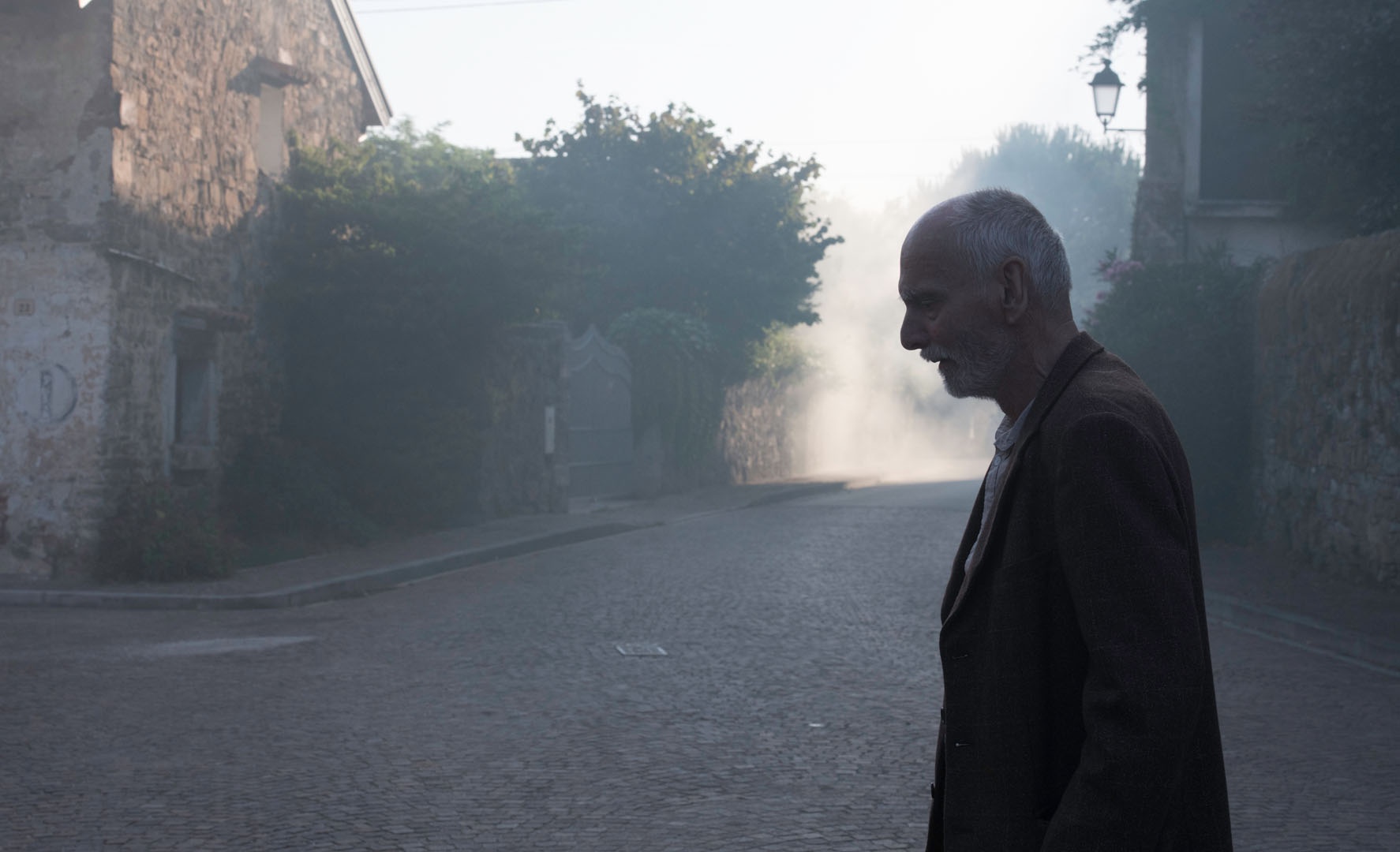
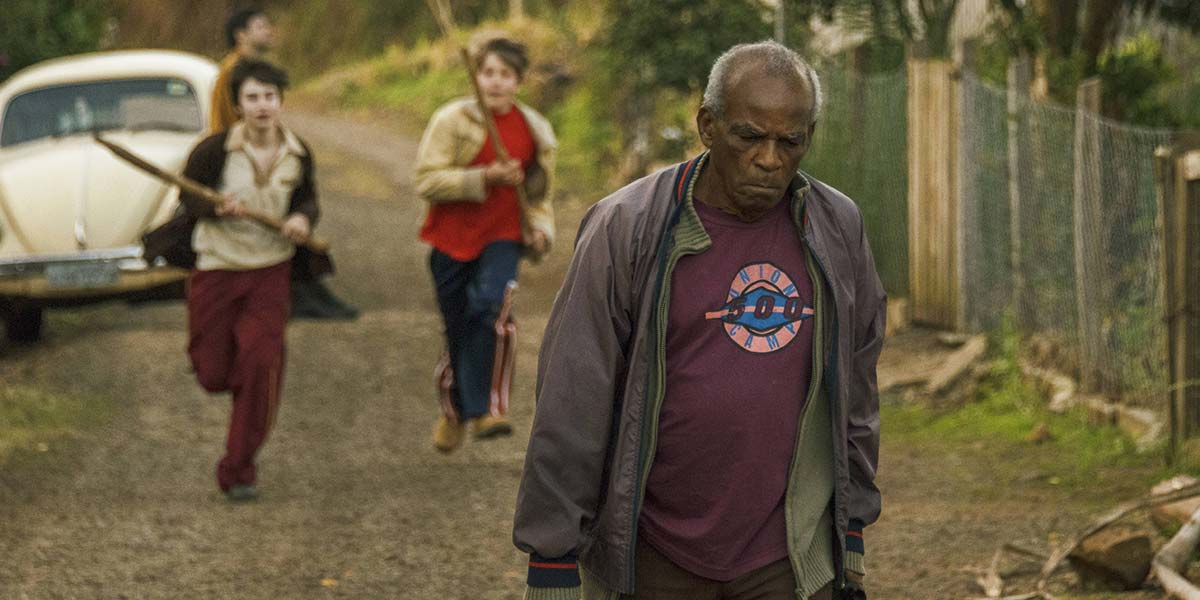
Still, when Cristovam walks home to his ancient shack in the woods, we can see his overhead is low. It’s just him and his little three-legged dog. Perhaps he’ll get by in his “Memory House.”

Co-writer and director João Paulo Miranda Maria serves up a limited-dialogue parable of racism, cultures clashing and the violence that ripples from that in this film. Using limited dialogue, just a handful of characters and behavior that ranges from intolerant to monstrous cruelty, he parks Traditional Brazil squarely in the path of outsiders-with-a-different-agenda Brazil. It’s not so much about “Why things are the way they are” as a more cautionary take on how bad they could get.

Cristovam dines in a local restaurant with Alpine decor and finds himself at a chilling “independence from those lazy, corrupt people from the north” rally, one hosted by a plump German-speaking dumpling who’d have been right at home in front of a crowd in the Fatherland in 1938. Cristovam is urged to sign the speaker’s petition.

Cristovam’s not kept out of the local beer hall, where the oompah music plays and the almost entirely-white clientele plays billiards and flirts with the Brazilian hustler Jenifer (Ana Flavia Cavalcanti). Old fashioned Cristovam questions her choices, to no avail. When he meets her mother (Aline Marta Maia) he’s on surer ground. He thinks.

But his simple life is constantly under threat. Some locals harass him, and cruel teens shoot his dog with their pellet gun. They return, relentlessly. They break into his shack, and older versions of this Hermann Goering division abroad curse and threaten him.

Something’s sure to snap. Eventually, Cristovam will go further than bringing his traditional antelope horn instrument to disrupt the beer barrel polkas. With masks and jungle tribe spears in his simple home, you just know somebody’s going to get hurt.

Director Maria and his co-writer Felipe Sholl conjure up a mystical, primitive world that Cristovam embraces through his animist Carnaval costumes and that horn.

The story isn’t so simplistic as to suggest him summoning ancient avenging gods to protect him. But with all the jaguar references and imagery, that’s certainly in his hero’s mind.

I could have done without the cause-effect “abused-becomes-an-abuser” “traditionalist” scene, and some story threads are left dangling, something a movie with so few incidents and so little dialogue can ill afford.

But “Memory House” has an understated power running through it that’s undeniable and unsettling. With so little that’s independent-minded coming out of Brazilian cinema these days, Maria has found a niche well worth exploring and schisms few others dare to talk about.

Rating: Unrated, violence, sex, nudity, profanity

Cast: Antonio Pitanga, Ana Flavia Cavalcanti, Aline Marta Maia, Sam Louwyck, Soren Hellerup

Credits: Directed by João Paulo Miranda Maria, scripted by João Paulo Miranda Maria and Felipe Sholl. A Film Movement+ release.

Running time: 1:34

Posted in Reviews, previews, profiles and movie news | Comments Off on Movie Review: An elderly Brazilian faces racism in his “Memory House”

Netflixable? A lovelorn/laughlorn Italian sequel, “Still Out of My League (Ancora più bello)”

Hey now, that’s not cricket.

But it’s pretty much par for the course. You make a moon-eyed youth romance, it’s popular enough to inspire a sequel. Even in Italy that means you end with a (spoiler alert) “to be continued.”

“Out of My League” was a somewhat charming but thin Netflix release of the summer before last, an Italian “Fault in Our Stars” or “Me Before You” about a plucky young wallflower (Ludovica Francesconi) who longs to find love, some super-hunky guy.

She had a plan, a way with witty wooing words, and a timetable. But all along, she has this other thing driving her. Marta has mucoviscidosis. another name for cystic fibrosis.

By the end of that film, she had new hope and and a new beau, the stalked-until-he-relented Arturo.

“Still Out of My League,” the sequel, has Marta narrating that “nothing much has changed,” except for the fact that she dumped Arturo because they had very little in common save for the physical thing.

“I dumped HIM,” she insists to one and all, in Italian or dubbed into (British-accented) Englush. “Why does no one believe me?”

The sequel also loses Marta’s “five questions game,” her PA system at the supermarket come-ons and frankly, a lot of its charm.

Her new artist/dreamboat beau, Gabriele (Giancarlo Commare) is really into her, and jealous. It’s not going to help things when he takes a 10 month job in Paris, with her waiting for a lung transpant.

The “glass half full” girl has a brusque new doctor who doesn’t sugar-coat her doom, and her refusal to let the disease limit her life.

She still has “my two guardian angels,” her gay BFF roommates, Federica (Gaja Masciale) and Jacopo (Jozef Gjura). And her old pal Giacomo (Riccardo Niceforo), aka “Gollum,” is still hanging around their corner of Turin.

Which is handy, because the sequel has a whole lot more of her friends’ love lives and somewhat less of hers. It’s just that none of their stories are developed all that deeply, so that’s a problem.

Fiery redhead Federica’s poker hustling gets her a job as an on-staff hacker at a tech firm run by the handsome Mauro (Giorgio Lupano). Not that she’d notice, being gay and all. Not that he cares, being a sexual harasser, or so she’s told.

Jacopo is hellbent on finding somebody but suffering from FOMO — until he spies a hunk whom he can’t say for certain is gay.

Gnome-like Giacomo? He tumbles into bed at a party with an equally drunken super-hot influencer (Jenny De Nucci) who digs his company between the sheets, but won’t go “public” with him.

All the while, Marta is dealing with a long-distance affair, a jealous lover and a disease that’s running down her life clock with every passing day.

A couple of nice moments pop up — a little pathos and a moon-eyed romantic speech.

But as the focus drifts off Marta and those it shifts to aren’t developed enough to be all that interesting.

Sure, it’s “to be continued.” But the second movie in what I guess is now a trilogy doesn’t have enough entertainment content to warrant “to be continued.” If they had drama, romance and funny scenes and lines to work with, everybody involved would have been better off serving them up here.

Will “Still Out of My League,” an inferior sequel, scare away potential viewers of the third film, titled “Always Out of My League,” if my Italian is correct? It just might.

Rating: TV-Ma, sexual situations, near nudity, profanity

Cast: Ludovica Francesconi, Giancarlo Commare, Gaja Masciale, Jenny De Nucci, Riccardo Niceforo, Giorgio Lupano, Jozef Gjura

Credits: Directed by Claudio Norza, scripted by Roberto Proia and Michela Straniero. A Netflix release.

Running time: 1:54

Posted in Reviews, previews, profiles and movie news | 3 Comments

Movie Review: Slovenia’s Oscar submitted drama, an old man remembers “Sanremo”

We meet him hitchhiking down a cobble-stoned street, then asking a young woman if he can borrow her bike. He just needs to go home and feed his dog.

“It’s just down here a little bit, on the left,” he says (in Slovenian with English subtitles). A woman relents and takes her husband’s bike to ride along and bring her bike back when the old man gets home.

But he can’t quite manage a bike any more, so he walks it. He keeps saying “Just down there.” He stops to take a little wade in the river.

That’s when the van shows up, uniformed staff tumble out and “Bruno” founds himself fetched. It’s back to his small town nursing home for Bruno (Sandi Pavlin).

“Sanremo,” Slovenia’s entry in the Best International Feature competition for the Academy Awards, is an understated essay on old age, the shrinking world and declining memory that comes with it.

Bruno forgets things, that he doesn’t live in his old house anymore, that his dog Rexy is long gone, that wife Stefanija passed away years ago. He walks off, from time to time, lost in a reverie or mistaken errand he remembers he needs to finish.

He says “I just arrived here today” when he strikes up a dinner conversation with the attractive woman (Silva Cusin) whom we’ve noticed loves standing under the sprinklers on the grounds of the timeworn but well-kept assisted living facility. Whatever they once were, each is somewhat lost in the mists of their minds.

But listen to Bruno light up when he talks about Sanremo, a festival he used to attend down on the Italian Riviera. It’s just that Dusa — we never hear her tell him her name — isn’t interested in the past. “What can you do? Each day is a new day.” So sure, talk about Sanremo.

“How do we get here? How do we get there?”

Not a lot happens in “Sanremo.” Themes and “plot” are as limited as this elderly couple’s horizons and expectations. But it’s a lovely character study in a minor key.

There’s a lot of forgetting and just the tiniest hint of remembering in this odd courtship. He asks to join her at dinner, gives his name and she doesn’t offer hers. He assume familiarities and she stops him short.

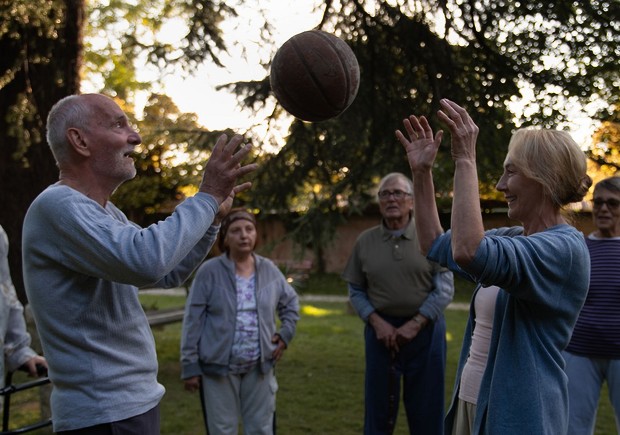
They’re together for art class, cutting up photos for collages, and exercise with the other residents, tossing a basketball around.

Bruno only tosses it to Dusa. Dusa only passes it back to Bruno.

And every now and then he wanders down the street, into the woods. Dusa’s wanderings are weather related. She’ll stand in the sprinklers or step out into the snow in her nightgown, heedless of whatever reasons one used to have for not doing that. Unprompted, she sings, softly and beautifully, tunes that he remembers.

One thing North American viewers will be struck by is the endless patience of the staff. Another might be the absence of TV and the preponderance of activities — piano recitals, a field trip to help pick grapes, for instance.

“Sanremo” is so thin on plot and incident as to flirt with tedium. But writer-director Miroslav Mandic (“I Act, I Am”) sets a tone that draws you in and makes you ponder the twilight years and what, aside from inertia, gives one the will to go on and the desire to get up in the morning.

We all have our bottom line.

And it asks the two most important questions that hang over every senior in assisted living and elder care, even if nobody really wants to know the answers.

“How do we get here? How do we get there?”

Rating: unrated

Cast: Sandi Pavlin, Silva Cusin, Mojca Funkl

Credits: Written and directed by Miroslav Mandic. A Film Movement+ release.

Running time: 1:29

Posted in Reviews, previews, profiles and movie news | Comments Off on Movie Review: Slovenia’s Oscar submitted drama, an old man remembers “Sanremo”

Netflixable? The World’s Ending and We’re Still Distracted — “Don’t Look Up”

Adam McKay made his mark behind the camera for Will Ferrell’s greatest comic hits — “Anchorman,” “Step Brothers” etc. But with “The Big Short,” an all-star romp that explained and sent up the shortsighted Wall Street types who wrecked the economy in 2007-8, we had to start taking him more seriously. He has insights into the culture, politics and American Way that are worth hearing out, and he isn’t shy about rendering his civics (“Vice”) or economics lessons in farces.

“Don’t Look Up” shows us he’s been reading his glowing reviews a little too eagerly.

It’s an another all-star comedy, with Oscar winners Leonardo DiCaprio, Jennifer Lawrence, Meryl Streep, Cate Blanchett and Mark Rylance in its ranks. It’s a satire about a Big Subject — the ways nothing gets done in the face of great planetary crises thanks to money, know-nothing politics and a shallow, ignorant and easily-distracted culture that can’t focus on anything big because trivia, optics and “clicks” control our attention spans.

McKay’s just as “right” about his target as ever. But the tone of this “Deep Impact/Wag the Dog” mashup is off. It veers towards strident, and as the clutter gathers around it, it drifts into dull. The jokes dry up and only a few members of his cast are veterans of “let’s make this funnier on the set” filmmaking.

Yes, Jonah Hill’s the funniest player in it, but Blanchett and Streep — thoroughbreds in any genre — give him a run for his money.

A beautifully-conceived first act mimics the openings of “Armageddon” and “Deep Impact.” Kate (Lawrence), a solitary Phd candidate in astronomy, sees something during her telescope session, charts it through a few frames, and lets out a little squeal of delight. The observatory fills with classmates and their nurturing professor, Dr. Mindy (DiCaprio) and they celebrate Comet Dibiaski, named after Kate of course.

Then Dr. Mindy leads the class through the flight path math, and he stops short. He sends everybody home as he and Kate have their first freak out. It’s heading towards Earth, and it’s big.

McKay’s homework shines in the scenes that follow. Mindy and Kate have to reach out from their Michigan State U. lab (a top-ranked astronomy school), get confirmation from a Subaru telescope (yes, the car-maker sponsors telescopes worldwide) and get the head of the Planetary Defense Coordination Office (“A real place” a screen title reminds us) on the phone.

Dr. Teddy Ogelthorpe (Rob Morgan, having a Netflix December) is no-nonsense, “extinction level event” alert and let’s “schedule the school field trip (get our scientists to the White House)” and break the “planet killer” news to the president.

Kate needs a moment. “I gotta go get high.

That should set the tone for the rest of the movie, with the science folk, not-used-to-dealing-with-politicians or uneducated laymen or TV chat show ditzes, hurled into a White House where everybody’s on a different power trip, especially the president’s shallow chief-of-staff. He (Hill) also happens to be her son.

“Thanks for dressing up” is the lightest of his insults to the disheveled scientists.

Streep plays a president obsessed with optics, a “troubled” Supreme Court appointment and sinking poll numbers, fretting about “If this breaks before the mid-terms, we’ll lose Congress.”

That’s McKay’s first misstep. Common “Wag the Dog” sense tells us that this is precisely the “change-the-subject/rally-the-nation” distraction President Orlean needs. How’d she miss that? Oh. Right. TFG.

“They’re not even smart enough to be as evil as you’re giving them the credit for,” Kate decides, at one point.

It takes a while for our Palin-meets-Hillary president to come around, with Dr. Mindy staring in slack-jawed disbelief at her “sit tight and assess” brush off, and anger-mis-manager Kate flipping the “Are you f—–g KIDDING me?” out. They have to go to the press and meltdown on a chat show that is the meanest takedown of Michael Strahan and Mika Brzezinski (Tyler Perry and Blanchett) you could imagine. He’s bubbly and dizzy, she’s even shallower and hot-to-trot. “On our next show…”

“Don’t Look Up” points us towards the technological “options” we hear about with every asteroid “near miss,” but filters them through American politics and the fizzy dreams and schemes of a cellphone billionaire (Mark Rylance, with bleached teeth, channeling Joe Biden’s impersonation of Musk-Bezos-erberg).

In other words, don’t get your hopes up.

The bulk of the movie is a blend of spot-on take-downs — President Orlean’s stage-managed, spectacle-packed grave TV announcement that plays like a send-up of an infamous “Mission: Accomplished” moment — and meandering distractions.

We see the ways the “message” is mishandled by “The Media,” leaving the door open to crackpots, every one of whom has a YouTube/Instagram megaphone to scream lies and sew doubt.

Some supporting players score big. Ariana Grande plays a self-absorbed pop starlet whose break-up and make-up with another pop star is a global distraction. But let her be the first to jump on the “Look up and see for yourself” vs the “Don’t Look Up” science-denying nutoisie and she’ll write you a hit to publicize it.

Chris Evans plays a movie star whose latest film is timed to capitalize on the day of the collision, Himesh Patel is Kate’s online “journalist” beau who instantly sells her out and goes for an “I Slept with a Lunatic” book deal. Look for Patti Lupone in the frequent montages of TV/social media coverage as a gum-snapping rube selling shovels online “because we gotta dig in.”

And Ron Perlman shows up as an unfiltered, mercenary “American hero” badass selected to fly a re-commissioned space shuttle into the comet to blow it up. He’s at his bellowing, blustery best here.

There’s no point in adding Timothee Chalamet as a dopey Sk8er Boi who comforts Kate after she’s become a meme and the most hated woman in America, thanks to her on-camera meltdowns and the comet that bears her name.

McKay nails the life-cycle of “scandal” and “emergency” in American public life, skewers a lot of easy targets and loses the thread more often than he should. But dark comedies like this are hard to pull off because if you lose your nerve, it’s just a joke, and if you don’t, your movie sinks into despair.

DuckDuckGo the phrase “movie satires” and you’ll see a few examples that worked, and scores and scores that never had a chance.

Opening with “Network,” stumbling into “War Machine” but ending “On the Beach” just doesn’t play, making this a morose misstep for a filmmaker who was on quite a roll.

Rating: R, Language Throughout (profanity), Graphic Nudity, Drug Content, some Sexual Content

Cast: Leonardo DiCaprio, Jennifer Lawrence, Rob Morgan, Meryl Streep, Tyler Perry, Timothee Chalamet, Jonah Hill, Mark Rylance, Ariana Grande, Cate Blanchett and Ron Perlman

Credits: Scripted and directed by Adam McKay. A Netflix release.

Running time: 2:18

Posted in Reviews, previews, profiles and movie news | Comments Off on Netflixable? The World’s Ending and We’re Still Distracted — “Don’t Look Up”

Movie Review: Where the wild crackpots are — “Wolf”

We can all pretty much agree that if the time comes to mount a “serious” new werewolf movie — or reboot the twinkly “Twilight” franchise — that George MacKay’s your guy.

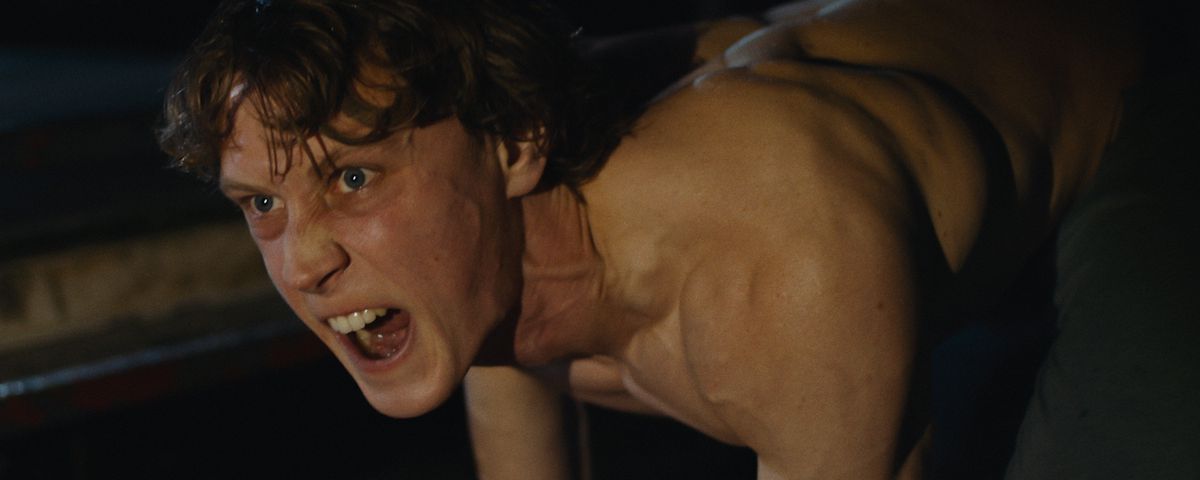
The “1917” star got into spectacular shape, took his lessons with a movement coach seriously and if there’s ever been a human special effect more convincing as Canis lupus than MacKay, I’ve not seen her. Or him.

So you’ve got this documentary-real realization of “a boy who thinks he’s a wolf” at the heart of “Wolf,” the debut fictional feature of Nathalie Biancheri. And there’s a vague and poorly-realized satiric point of it all — sending such a young man to join other young men, and women, who think they’re horses, parrots, a lion, a German shepherd (That’s AlSAtion to you.) and a duck in an aversion/conversion therapy clinic.

There’s the point of it, the satiric target with the bullseye wr large. And while the picture misses that target, by and large, there’s still a whiff of “If this had been a hit, they’d be adding letters to the ever-lengthening acronym” of gender spectrum/body “dysphoria. Because God forbid somebody should feel left out, feel “unseen.”

I found it helpful to lie back and think of J.K. Rowling as young Jacob (MacKay) is put under the care of Dr. Mann (Paddy Considine) and his “good cop” colleague (Eileen Walsh) at some remote British compound where such special cases gather for therapy that includes dancing “like normal people” and cages, restraints and torture.

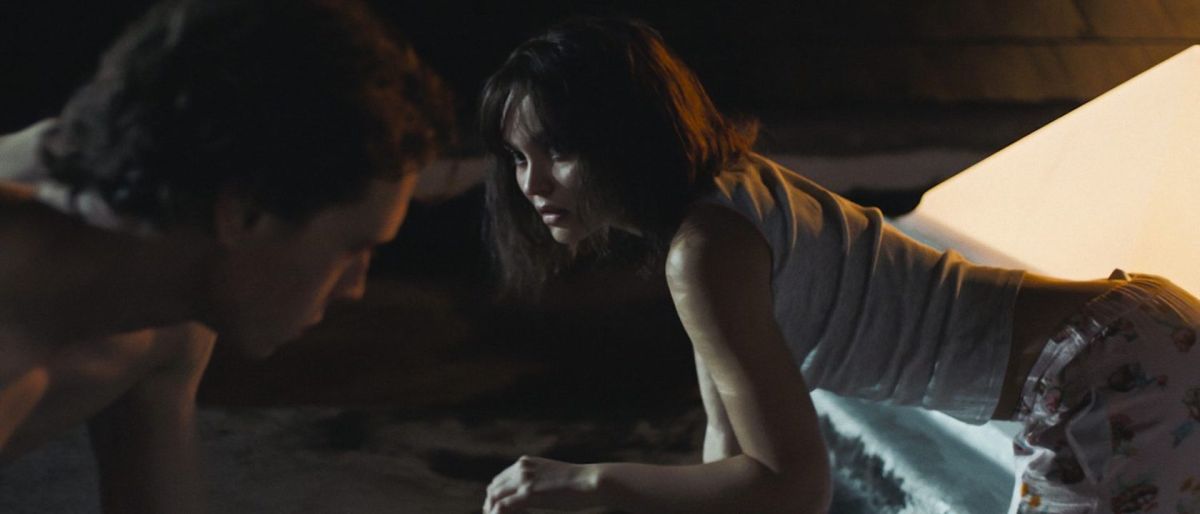
Rowling, who’s stuck her foot in it repeatedly over her complaints about the shifting nature of female gender identity and “trans-phobia” would appreciate the ironic Next Frontier on what legitimate critics and intolerant cranks alike figure is “the next logical step” in how a person “identifies.” TheHarry Potter novelist might approve of this film, whose “hero” meets a “wildcat” (Lily-Rose Depp) who makes him consider giving it all up for love, and whose villain (Considine) is a classic “compassionate in public, sadistic in private” doctor offering “treatment” to people so afflicted.

There’s a joke about “Am I allowed to say ‘afflicted’ about this now? Because I was when I started writing this review.

MacKay’s Jakob gets into a classic “One Flew Over the Cuckoo’s Nest” war of wills with the unbending Dr. Mann. Depp’s Wildcat turns into the classic “delusions she’ll give up for love” as we get a sense that one of them really believes what he’s doing, and others locked in there are maybe a little less committed.

For Jakob, “It’s not about surviving, it’s about surviving as me.”

MacKay’s immersion in the character is a fascinating thing to behold, even if the Players around him are “types” and “tropes,” and the revelations about them pro forma.

Biancheri keeps her film unnerving and anxious via the judicious use of extreme close-ups, hand-help sequences and off-in-the-head editing.

Considine’s “I’ll deal with it,” hands-on can-do doctor is the most interesting character in the piece, someone so sure of himself he knows that his round patients will fit in whatever square holes he shoves them into.

The many scenes involving therapy, cruel punishment, acceptance and sexual titillation and are mostly showcases for MacKay’s genre-busting turn as a guy who’s taken a great improv “character” entirely too far.

“Wolf” is thought-provoking, to be sure. And it makes you wonder if the filmmaker is about of bounds for holding satiric attitudes that were fine when she started shooting and might seem dated and inflexible a few years later.

I found the whole thing more tiresome than intriguing, and wouldn’t recommend it unless you threatened me with being locked in a cage with MacKay in character. Now THAT would be scary.

Rating: R for some abusive behavior, sexuality, nudity and language (profanity)

Cast: George MacKay, Lily-Rose Depp, Paddy Considine, Mary Lou McCarthy and Eileen Walsh

Credits: Scripted and directed by Nathalie Biancheri. A Focus Features release.

Running time: 1:39

Posted in Reviews, previews, profiles and movie news | Comments Off on Movie Review: Where the wild crackpots are — “Wolf”

Movie Preview: Silverstone, a Tsunami and Sharks? “The Requin”

I could have added “and the Kitchen Sink.” That’s alliterative enough. And accurate. This lost-at-sea-in-a-beach-cabana thriller has, um, it ALL.

Coming soon.

Posted in Reviews, previews, profiles and movie news | Comments Off on Movie Preview: Silverstone, a Tsunami and Sharks? “The Requin”

Movie Review: An early history of Islam via “The Lady of Heaven”

“The Lady of Heaven” is a faith-based historical drama that relates the early history of Islam through a series of bedtime stories a woman tells a little Iraqi boy who’s just been orphaned by ISIS fanatics.

The idea is to use the tragedy of that child (Gabriel Cartade) as a parable for a “different Islam” than the one he’s seeing play out right before his eyes. Laith watches ISIS militants accost his mother over their desire for him to become a “soldier” someday soon, accuse her of heresy and his late father of letting him learn “an infidel’s song” they hear him singing.

Later, ISIS thugs storm into his house and murder his mother in front of him. He barely escapes their clutches and is rescued by a soldier (Oscar Salem) who brings him home. To comfort little Laith, the soldier’s mother (Denise Black) tells him of the pious and kind daughter of Muhammed, Fatima, who advocated tolerance, forgiveness and kindness and is presented here as an alternate path Islam might have taken after her father’s death.

The film’s point of view is one we hear often in the West. It’s the argument that ISIS, radical fundamentalists, Saudi Wahhabists and suicide bombers sanctioned by other sects have hijacked Islam and turned it into a global brand for violent intolerance in the name of religion.

Following the example of Muhammed’s flesh-and-blood daughter could change that.

The most daring thing about “The Lady” is that is comes right out and makes the case that this “hijacking” happened from the start. Is that just Westernized spin, or does any sober reading of the conflict in which Islam was born show it as preaching “peace and harmony” while waging jihadist invasions and conversion by force of arms?

That’s a fascinating minefield to walk into, because as the flashbacks to the seventh century in mother Bibi’s story make clear, preachers and lieutenants in Muhammed’s retinue proclaim they will “protect all — Muslim, Jew and non-Muslim” when they come to Medina, and the viewer can plainly see that they mean “Except for, uh, the PAGANS.”

Pagans here are depicted as eat-the-hearts-of-our-enemies fanatics hellbent on smothering Islam in the crib. As the Arab-on-Arab religious wars begin, violence all but takes over a movie about “The Lady of Heaven.”

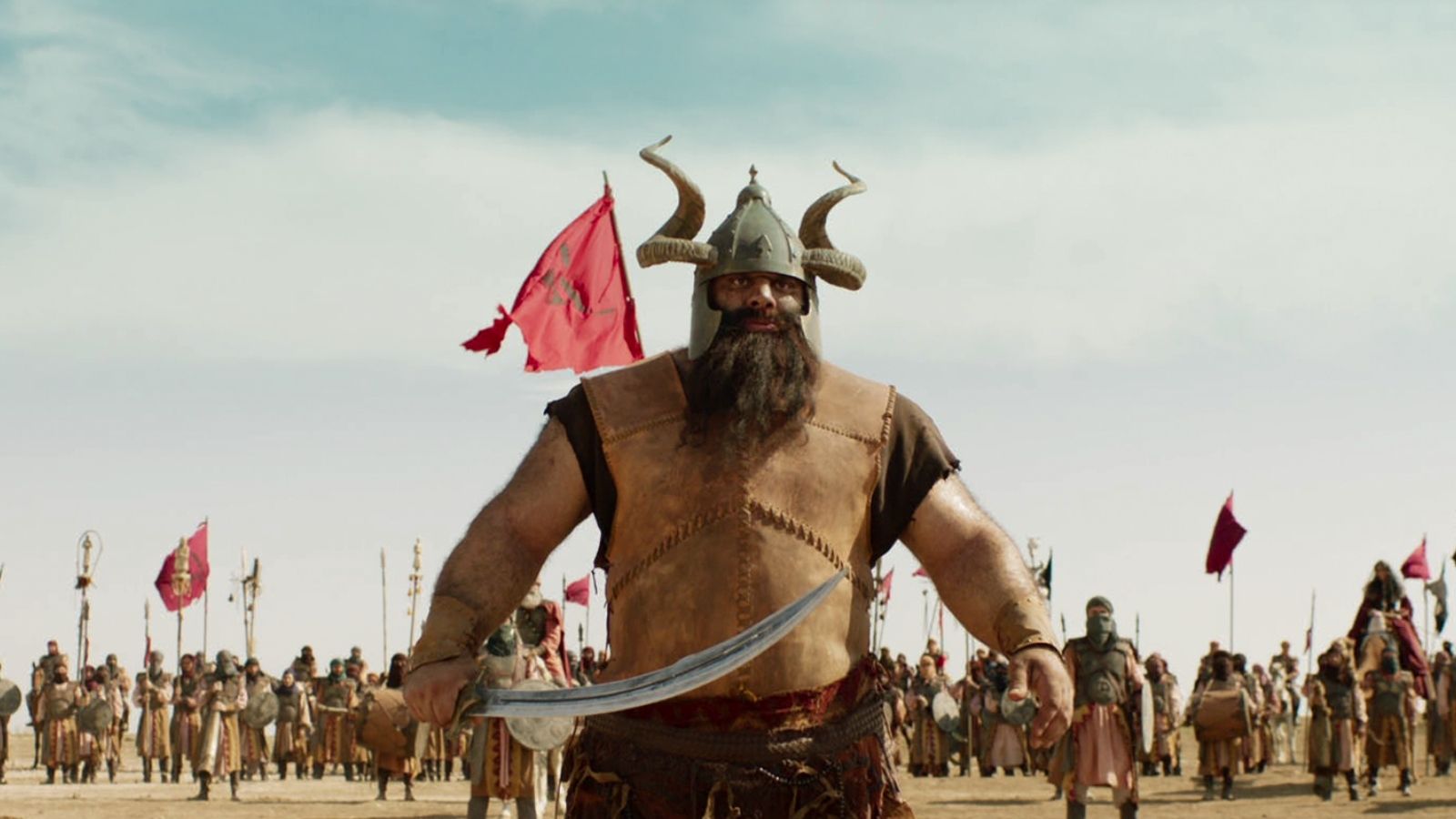
We see Muhammed’s movement come closest to collapse in the Battle of Uhud, where single combat with a Goliath-sized giant is just the opening salvo, and his soldiers lose heart when they think he’s been killed. That battle is “Gladiator” bloody, as any fight with razor sharp scimitars would be.

The mass executions, with conversions to Islam sparing some condemned to death, that accompanied Muhammed’s conquest or “liberation” of Mecca is left off camera. We just see his followers circling the Kaaba, the holiest place in Islam and allegedly built by the prophet Abraham (Ibrahim) and predating Muhammed’s faith by centuries.

One break from the strife and violence concerns Fatima’s marriage. Muhammed gives her to his chosen successor, Imam Ali. Her requested dowry? Not cash, but “Intercession for sinners, so that they might enter heaven.”

Shockingly, the rumor that Muhammed’s third wife Aisha (also digitally rendered) poisoned him is depicted in one of Bibbi’s stories. That plays as something straight out of Greek mythology, not the founding myth of a modern religion.

And there’s no sugar-coating the bloody-minded and treacherous power struggle to control the movement that began years before Muhammed’s death and exploded after his passing.

The Kuwaiti London-based Sheikh Al-Habib wrote the script, which is heavy on history woven into anecdotes, thin on the preaching that would “convert” Laith into a love-thy-enemies/tolerate others exemplar of the New Muslim. As for narrative drive, let’s just say a lot of combat, shouting matches, intrigues and backstabbing passes before our eyes without a whole lot of organization.

This Islamic history as parable may play as “new” and intriguing to the uninitiated, but the movie’s something of a muddle.

“The Lady” is so much in the background of many of these homilies Bibbi passes on that it’s hard to see little Laith taking heart or renewed faith in the religion of his birth from these stories. His mother was named “Fatima,” so that helps.

But watching and hearing these sometimes-confusing anecdotes and the revolving cast of characters as a non-Islamic Westerner, one has to marvel at the popularity of any faith that seems this Byzantine, tribal, vengeful and violent. Of course it’s not like Christianity hasn’t spilled a lot of blood with its adherents waving the bloody shirt as vigorously as those of any other faith.

I feel safe saying “The Lady of Heaven” is respectful and not obviously Islamophobic, and while it pays lip service to non-violence, the filmmakers don’t go overboard trying to make the religion’s founding myths less violent than history tells us they were.

It’s hard to make out much that would pass for an “agenda” in this production by the British-based Enlightened Kingdom. As much strife as there is about interpretations of Muhammed, his biography, death and the struggles over his succession, I’m not deep enough into the subject to ascertain a Sunni or Shia bias.

Eli King is the credited director. Is he the Australian-born Egyptian actor, or some other Eli King? That’s not clear. With Islam’s reputation for intolerance of not just criticism, but filmed depictions of its early history, I shouldn’t be surprised if that’s a nom de plume.

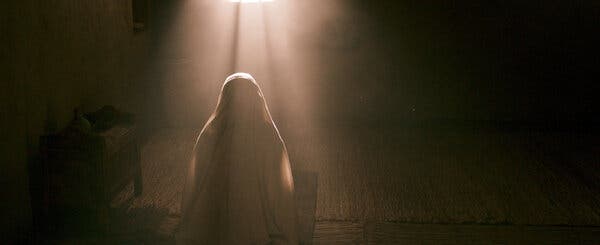
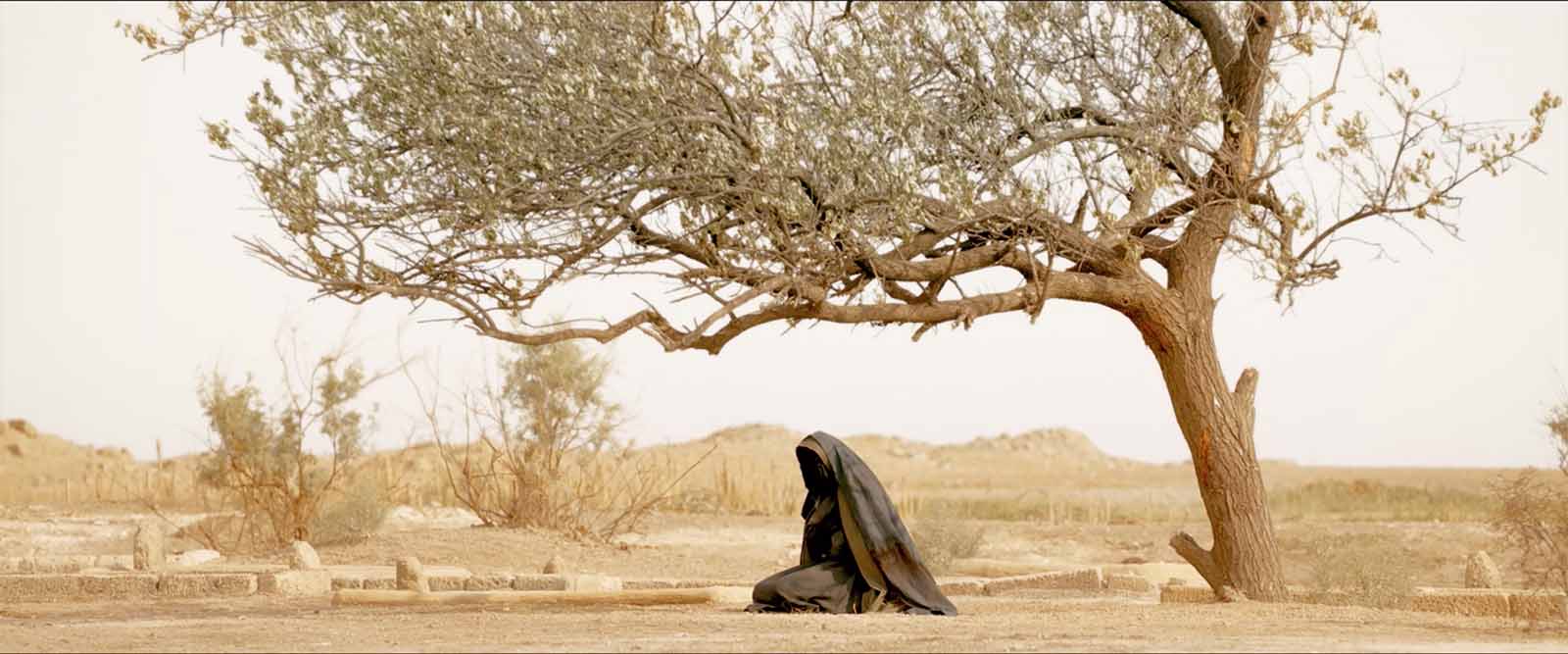
What is known is that the production got around Islamic edicts about “idolatry” or literal depictions of Muhammed, his family and chosen successor through digital trickery and simple camera angles. A Jim Henson’s Creature Shop veteran was brought in to consult on that. Figures such as The Prophet and Fatima are seen in shadows, from behind, totally-covered in a burqa and gloves, or played by soft-focus digitally-altered actors.

Yes, we see their faces, a cinematic first. The effects are pretty impressive if the acting isn’t.

Let’s hope no one gets the Salman Rushdie/Charlie Hebdo treatment over this, as no expense was spared to avoid offense in that regard. I haven’t read of any threats of violence.

Still, Pakistan tried to ban social media mentions of the film and online access to its trailer. Iran’s news agency has pushed a boycott of “The Lady,” which was filmed in the Republic of Georgia and London.

It’s rated R, as it is every bit as violent as “The Passion of the Christ,” although few have as much of a passion for making violence visceral and personal as Mel Gibson.

With scores of faith-based films about Christianity hitting movie screens every year, the sheer novelty of “The Lady of Heaven” makes it worth seeing, just as background on a religion most of us outside the Middle East know very little about. That’s where the film excels, even if the many obstacles the production had to get around distracted one and all to the extent that they somewhat botched the messaging.

Rating: R for strong/bloody violence

Cast: Denise Black, Oscar Salem, Gabriel Cartade, digitally altered actors portraying Muhammed, Fatima, Aisha and Imam Ali

Credits: Directed by Eli King, scripted by Sheikh Al-Habib. An Enlightened Kingdom release.

Running time: 2:21

Posted in Reviews, previews, profiles and movie news | 5 Comments

Movie Preview: Guy Ritchie’s Jason Statham reunion thriller — “Operation Fortune”

This 2022 release is a heist thriller with a hint of caper comedy, yes?

Ritchie brings in a few stars-to-be, and a cast of established stars and “geezers” in his parlance, including Statham and Aubrey PlazaJosh HartnettCary ElwesBugzy Malone and Hugh Grant.

An odd video format, but pop it on full screen and you’re golden.

Posted in Reviews, previews, profiles and movie news | Comments Off on Movie Preview: Guy Ritchie’s Jason Statham reunion thriller — “Operation Fortune”

Netflixable? Sandy Bullock’s fresh out of the joint for committing “The Unforgivable”

Honestly, I don’t think Sandra Bullock‘s die hard fans are going to be bothered by the things movie critics are (rightly) picking at in her latest, “The Unforgivable.”

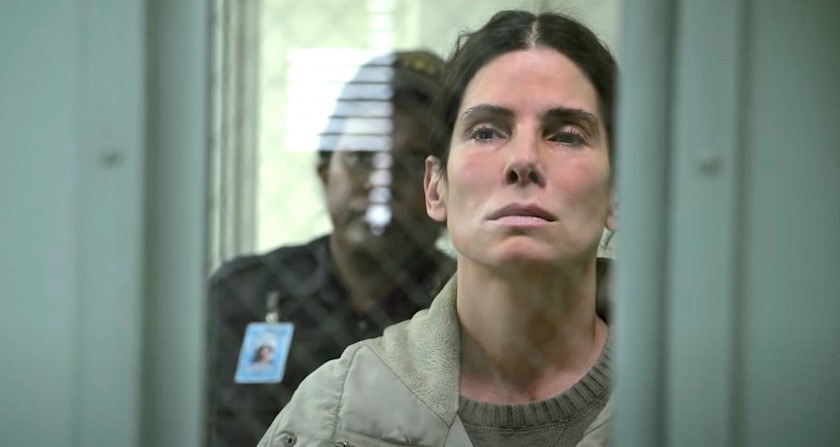
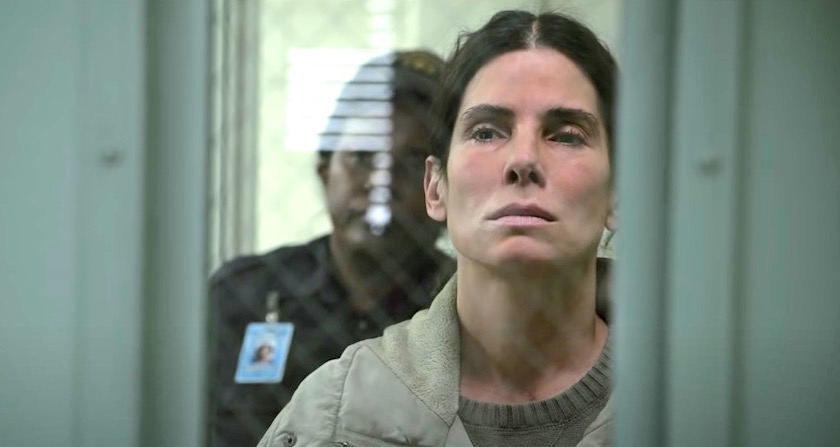
She dresses down to play an ex-con “cop killer” trying to start over, but trying harder to get back in touch with the baby sister who went into foster care and then was adopted after her arrest. It’s a tale with mystery, pathos, interesting twists, a harrowing scene or two and a serious toe-to-toe shout-off with her fellow Oscar winner, Viola Davis.

The story takes tried and true elements and upends them. And the onetime “America’s Sweetheart” gives us a taste of toughness behind those about-to-cry eyes. The character has a temper that flirts with “bipolar.”

This star vehicle might have been intended to be awards bait, but that was always going to be a stretch. The only hint that it’s a “vanity project” is Bullock’s basically shaving 20 years off her age to play the big sister who went to prison, and not the girl’s mother (far more plausible).

And there’s one big melodramatic twist too many — or two or three — so there you go.

It’s about the ripples that spread from a moment of violence, reverberating over the years, never leaving anyone involved “whole” ever again. Well-cast, just gritty enough, it’s not half bad, all things considered.

“Unforgivable” begins the day Ruth Slater gets out, picked up at prison by her no-nonsense parole officer (Rob Morgan, superb). He bluntly lays out her “10 commandments,” starting with “no drugs or alcohol, no guns, no” associating with felons.

“No contact with the victim’s family” is another. She’ll “always be a cop killer,” he reminds her. She should keep her head down and start her life over.

But she can’t do that. It’s not just that the job she had lined up as an itinerant carpenter/house remodeler is yanked from her. Somebody “called or visited,” she figures. Probably that somebody who we saw watch her leave prison, one of the sons (Tom Guiry) of the kindly sheriff she killed 20 years before.

There are harassing phone calls at the halfway house. This guy is determined to wreak some sort of revenge on her, and is hellbent on talking his brother (Will Pullen) into joining him.

“We gonna let this GO?”

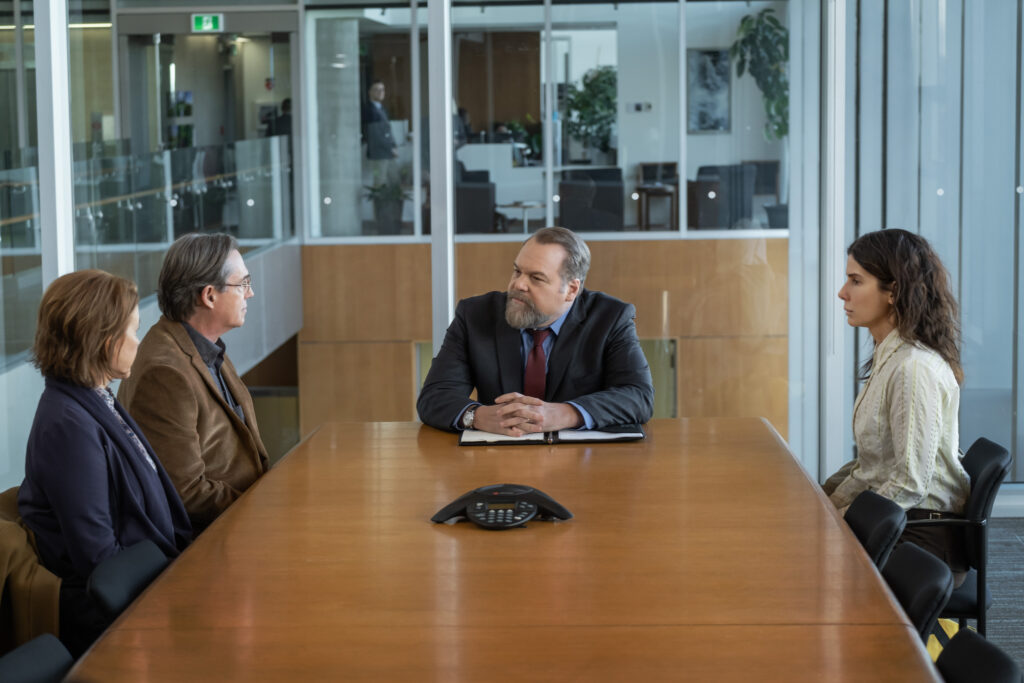
Another twist involves Ruth’s return to the “murder house,” her former home in the country where a couple of lawyers (Davis and Vincent D’Onofrio) have moved, renovating the place as they do.

Meanwhile, the once-traumatized sister (Aisling Franciosi) is taking anxiety medication, but has become a promising college piano soloist. Her parents (Richard Thomas and Linda Edmond) never mention her life before age five. Only her sister (Emma Nelson) is curious, and Katherine has no memories to share, just the odd dream that leaves her in the dark about her past.

The story takes place in Seattle, so naturally Ruth’s fall-back job is gutting salmon. Naturally, there’s another guy on the line (Jon Bernthal, terrific) who is sweet on her, as sullen and standoffish as she is. Naturally, there’s a minefield of “parole violations” she must negotiate.

And of course there’s rough stuff with her fellow halfway housemates. But the story doesn’t tumble into those tropes. It’s about Ruth’s journey, her guilt, her secrets and her burden.

German director Nora Fingscheidt (“System Crasher”) keeps “Unforgivable” rooted in reality, no matter how many elements get added to the mix. Well, more or less.

All sorts of issues and themes are touched on or brought to mind by this story — the rough justice cops reserve for crimes against their own, the terror of adoptive parents being faced with a blood relation/bad influence from their child’s history, the racial inequities of and cruelty of “the system,” which Davis and D’Onofio’s character is quick to remind us about.

Bullock’s performance, giving us theatrical flashes of rage, isn’t bad and represents a nice reach for her. She’s still got a gift for making a connection with the audience and jerking the tears. Davis and D’Onofrio, Morgan and Thomas have impressive showcase acting moments.

But whatever the three credited screenwriters were able to conjure up, the story makes more sense on several levels if Ruth is a mother and not a big sister. It’s not just the age thing. The novelty of making them siblings and hiding that for much of the first act requires more explaining than it should. The tie that binds is a much easier sell for a mother and child.

And the whole sheriff sons’ revenge subplot is believable but forced and melodramatic, a complication the story doesn’t need to find its emotional center. This would have worked as a drama without shoving thriller elements in as an afterthought.

Yet in my view, the good outweighs the eye-rolling here. For a genre picture, “Unforgiveable” is surprisingly offbeat. It settles into dramatic rhythms, and then shocks you with violence. It leans into some tropes while flipping others.

Bullock gives us an old-fashioned star turn at the center of an equally-celebrated supporting cast and gives a young woman director from her mother’s homeland a big break. Call “Unforgivable” a mixed bag, but an intensely watchable one.

Rating: R, violence and profanity

Cast: Sandra Bullock, Vincent D’Onofrio, Viola Davis, Aisling Franciosi, Rob Morgan, Richard Thomas, Linda Edmond, Will Pullen and Jon Bernthal

Credits: Directed by Nora Fingscheidt, scripted by Peter Craig, Hillary Seitz and Courtenay Miles. A Netflix release.

Running time: 1:51

Posted in Reviews, previews, profiles and movie news | Comments Off on Netflixable? Sandy Bullock’s fresh out of the joint for committing “The Unforgivable”

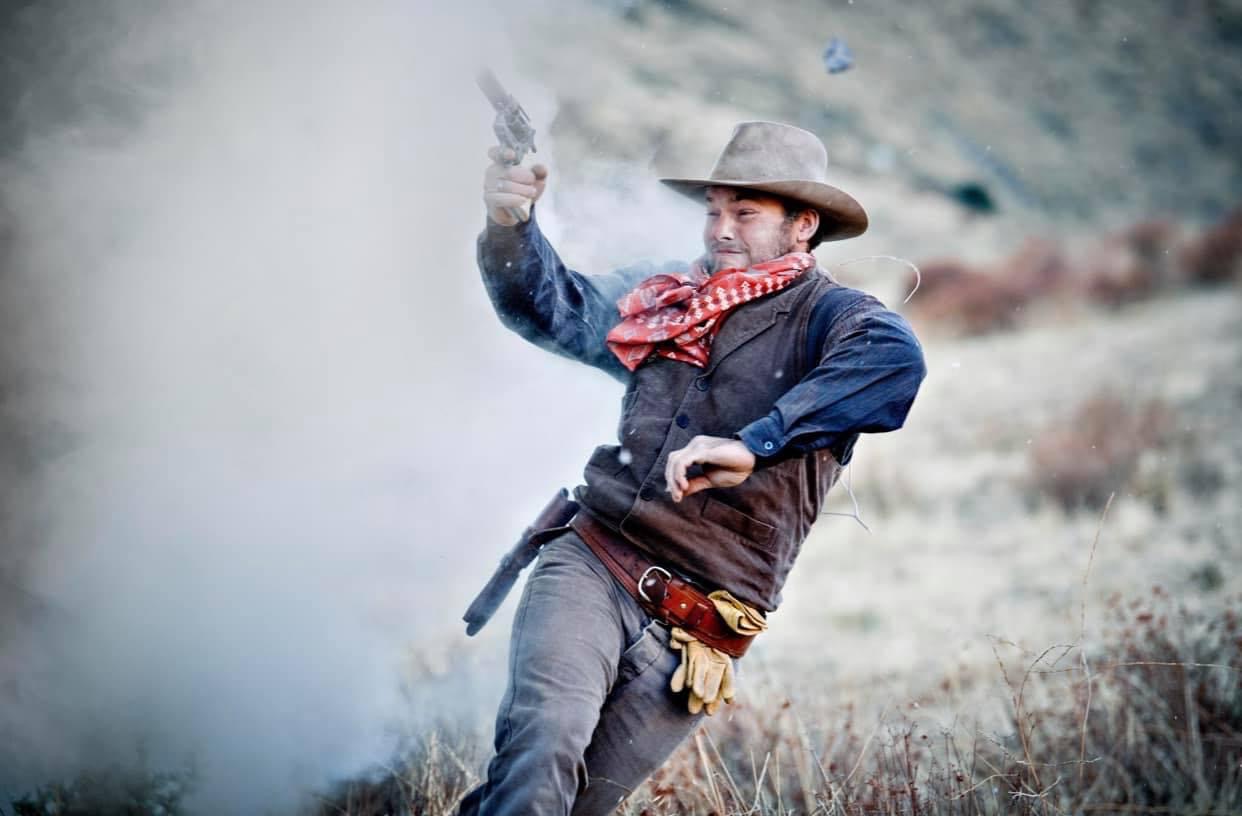
Movie Review: Ol’Cuss Bruce Dern shows up for one “Last Shoot Out”

If you’re determined to conjure up a new Western, you could do worse than borrowing from a couple of classics.

Start by throwing in a stagecoach and its assorted passengers from the Ur Western, “Stagecoach.” Stage your climax, drawn out “Mexican Stand-Off” style, straight out of “Rio Bravo.”

Be to sure add that burning question of every “Let’s give the good guys as easy an easy out” screenwriter in the genre.

“Got any dynamite?”

And fill the screen with “types” — an ancient freight waggoneer, a crack shot old coot, a whole family that’s gone bad and a young gun that scares even them.

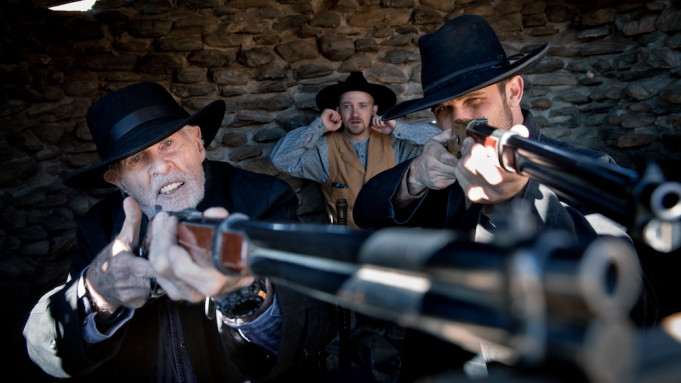
“Last Shoot Out” doesn’t exactly live up to the promise of its title. The shoot-outs are pale imitations of even the lamest B-Westerns of late era syndicated TV — “Guns of Paradise” comes to mind.

The plot is straight-up formula, the dialogue either cornpone without the polish or tin-eared and anachronistic.

I don’t think we ever heard Hank or the Duke, Mitchum or Randolph Scott complain, “I think I’m concussed!”

Still, it’s a well-costumed and properly set sagebrush stand-off with a mostly-unknown cast, but with two well-known villains.

Screen legend Bruce Dern is the patriarch of the Callahans, “a pretty rough bunch” one and all agree, and Dern — the villain who famously killed John Wayne in “The Cowboys” — always gives good value, even in his twilight years.

Cam Gigandet plays his tougher, older son.

And as is the way of low-low budget fare, the “names” have limited scenes (shot in a few days) and less to say and do than the unknown leads. Pity.

Skylar Witte plays the bride, fleeing marriage into a clan that she realizes gunned-down her daddy. Peter Sherayko is Red, the freight wagon driver who spies her, down to her dust-covered bloomers, out on the trail. And Brock Harris is a “kid” named “Billy,” fast with a gun and notorious for that, a passenger

They face fast-gin Sid (Gigandet) and his man Twigs (Jay Pickett) over Jocelyn, the runaway bride. Somebody’s gun is sure to be shot right out of his hands. Before anybody can say “This ain’t over,” we realize this ain’t over.

There’s nothing for it but to dash to Ryker’s Station, a stage-coach stop, to hole up and get the escapee onto a northbound coach. There’ll be one coming along in a week, well after the south bound one breaks down and driver and his two passengers join the Rykers (David DeLuise, Keikilani Grune) and the bride and her protectors as the Callahans, egged on by the gutless groom, Jody (Michael Welch) bear down on them — repeatedly.

Wait for it. Wait. Wait...”Got any dynamite?”

The first fatal flaw to pop up is the “five days earlier” and “two days later” and so on inter-titles that show up on screen. A compressed time-frame sets up a ticking-clock thriller, with rising suspense as the heroes try to run out the clock and the villains try to beat it. Think “3:10 to Yuma” and the like.

Director Michael Feifer and screenwriter Lee Martin serve up a slow jam of a Western with no “jam” to it. The picture walks when it should sprint, or at the very least canter. It’s deathly slow.

The topline cast is a pretty tepid bunch, the “drama” strictly pro forma. Brock Burnett plays a cowardly clothing salesman coach-passenger who doesn’t want to “get involved, everybody else, womenfolk included, is quick to declare her or his firearm bonafides.

The action, the actual shoot-outs, are weak tea. There’s little drama or suspense to these scenes, and even the violence can seem arm’s length removed. Characters with alleged military experience have never been taught or at least seen other Westerns where the phrase “COVER me” came up. Everybody’s a crack shot and yet most are reluctant to shoot, even to pin down the riflemen picking off this or that character. Not that many good guys have to worry about that.

The whole affair has a very consistent look, as if every scene was filmed at about ten in the morning. One twilight exchange of fire has outside footage that doesn’t match the harsh broad daylight piercing the cracks in the walls and roof of Ryker’s Station.

If you want to get your stars out to that remote coach station, you have to give them a shed to shoot from, so that they don’t dehydrate or get too much sun. Dern’s getting on up there, after all. The man guest-starred on “Gunsmoke,” for Pete’s sake.

But at least he’s in here, ornery as ever, giving fair value even if his dialogue isn’t quotable in the least. If this turns out to be his last Western, his “Last Shoot Out,” the old coot does what he always has. He gets out unscathed, never embarrassing himself.

Rating: PG-13 for violence and bloody images

Cast: Brock Harris, Skylar Witte, Peter Sherayko, Jay Pickett, David DeLuise, Caia Coley, Keikilani Grune, Larry Bestpitch, Larry Poole, Cam Gigandet and Bruce Dern

Credits: Directed by Michael Feifer, scripted by Lee Martin. A Lionsgate release.

Running time: 1:26

Posted in Reviews, previews, profiles and movie news | Comments Off on Movie Review: Ol’Cuss Bruce Dern shows up for one “Last Shoot Out”