
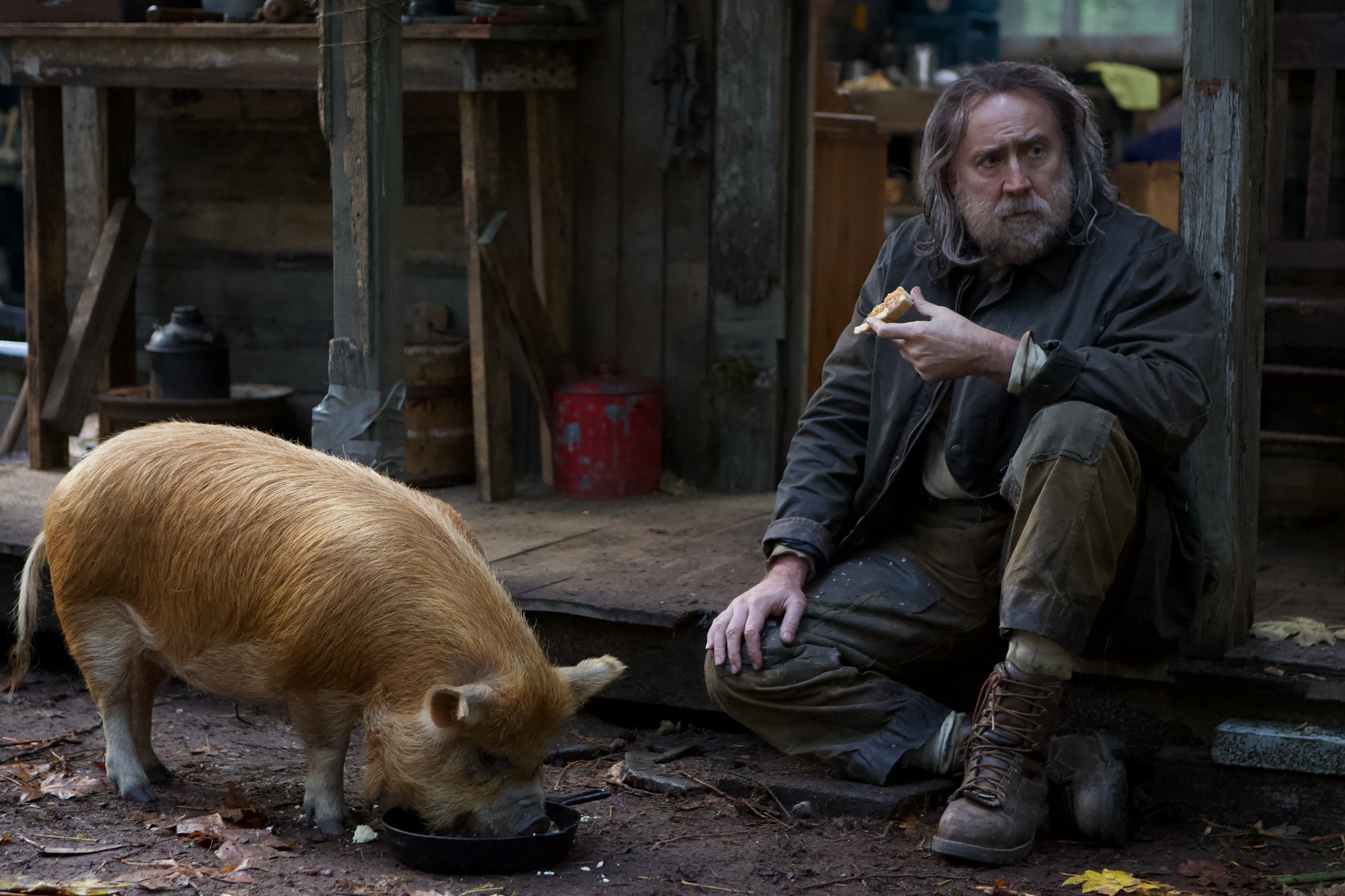
This send up of Cage’s rep, image and last dozen years of career choices, not all of them “Pig,” could go either way…great or not so much.
What do you think, based on this first teaser?
This send up of Cage’s rep, image and last dozen years of career choices, not all of them “Pig,” could go either way…great or not so much.
What do you think, based on this first teaser?
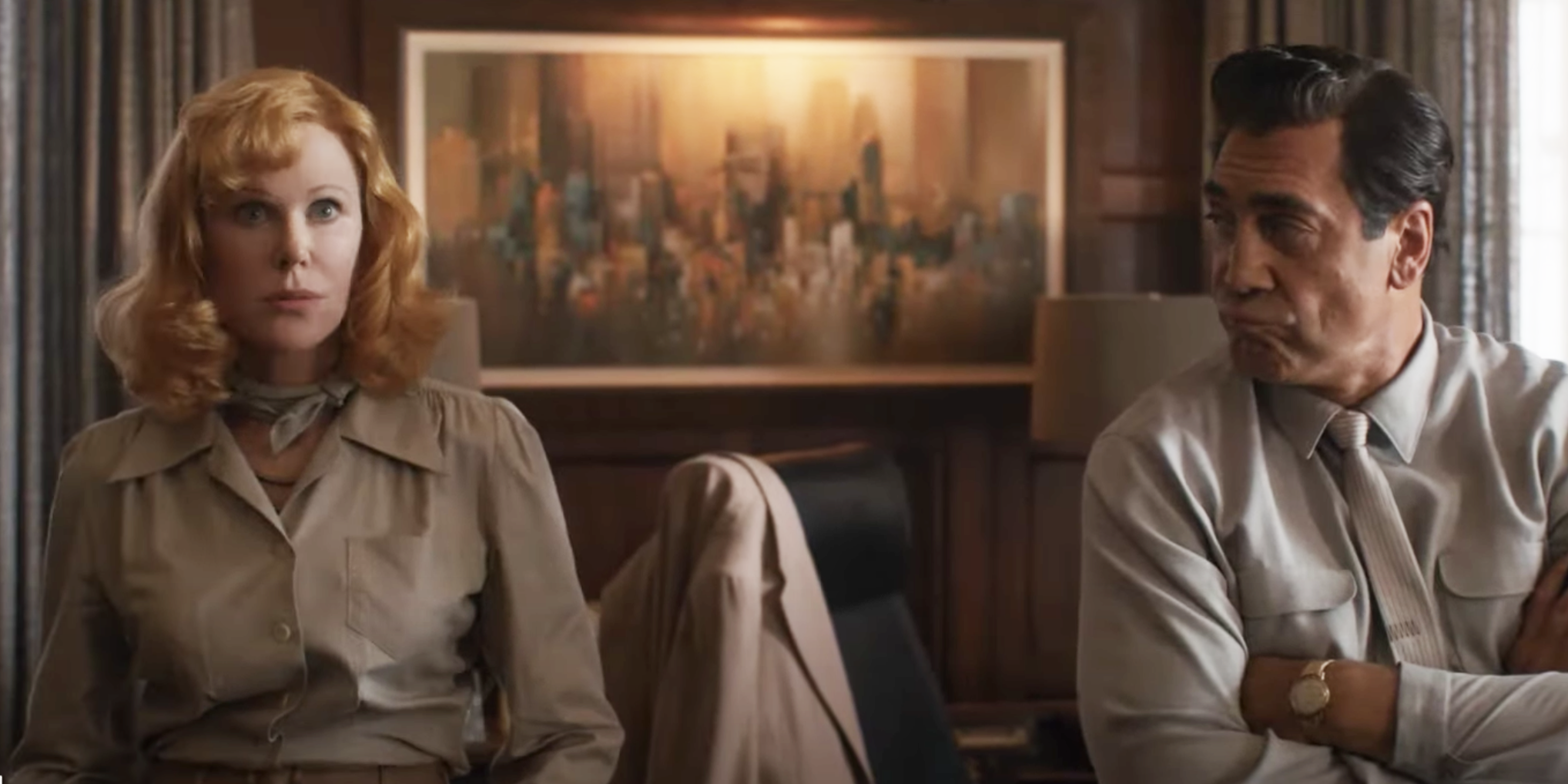
Of all the “reconsiderations” that this fall’s glorious crop of big screen biographies has imposed long-held preconceptions, none more alters our view of its subjects than “Being the Ricardos,” Aaron Sorkin’s revival of the “I Love Lucy” of myth and upending of the picture many still carry of its combative, married stars.
It’s a brisk and snappy recreation of one hellish early 1950s week when scandal, “Unamerican” politics and sponsorship worries might have ended that insanely-popular program, just a couple of years into its culture-changing run.
Sorkin and Oscar-winner Nicole Kidman take us through Lucille Ball’s on-set perfectionism about blocking, logic and timing of the physical comedy that made her a legend, and her fears that her dashing, younger Cuban-American co-star and husband, Desi Arnaz (Oscar winner Javier Bardem) was cheating on her.
Sorkin and Bardem illuminate the open secret that Arnaz was the power behind the queen, a savvy businessman, his wife’s biggest booster and her fiercest defender, called on to help her fight off the revelation that she was once “a card-carrying communist.”
“Back then, it wasn’t considered any worse than being a Republican” she might complain. But back then, conservatives feared communists rather than cozying up to Russia, not that anybody misses Sorkin’s point or doubts that this very dry line could have crossed Ball’s lips.
And a stellar supporting cast headed by Oscar winner J.K. Simmons and Nina Arianda (TV’s “Goliath”) as the battling on-and-off-the-set actors playing the neighbors, Fred and Ethel Mertz, along with Tony Hale as the long-suffering writer/executive producer of the show and Alia Shawkat as the sassy/funny writer who still feared offending “the boss” (Lucy), get across the idea that a very small and elite corps was responsible for turning whatever CBS was putting on the air funny.
Linda Lavin plays Shawkat’s Madelyn Pugh (Davis) as that writer much older, remembering that show and “that week.” Sorkin’s framing device is the time-honored phony documentary, with survivors of the production of the series and CBS-TV back then played by Lavin, Ronny Cox and others, recount the series, the crises of Lucy’s communist ties and Desi’s skirt-chasing and their bosses, the stars, who were “either tearing each other’s heads off or tearing each other’s clothes off.”
Flashbacks show us both that one fraught week, from table reads through Friday night performance when “I Love Lucy” was filmed (not “taped” as one character says), straight through, in front of a studio audience. Other flashbacks show us how the brassy “Queen of the B” movies Ball met and bowled over the band leader Arnaz, and a string of pivotal moments in their lives and careers that made them TV superstars, just when it looked like Hollywood was done with them.
Sorkin’s famed, endlessly-quotable dialogue, delivered in talking-over-one-another crosstalk flurries, was meant for this material, the melodramatic behind-the-scenes lives of very funny, clever and biting show folk.
“Lucy” co-stars William Frawley and Vivian Vance (Simmons and Arianda) got all their mutual loathing — OK, most of it — out of their systems at table reads of the scripts.
“Is she talking to me?” “Are you DRUNK?” “It’s 10 o’clock in the MORNING…Of course I am!”
Ball, a funny woman boosted by her future husband’s pinpointing her great gift, as “kinetically gifted,” scares everybody, never more so than when she’s cracking a joke in the deadliest deadpan in show business.
“I’m hazing you, Don,” she tells a new director (Christopher Denham) at a rehearsal. “It’s just my way of saying…I have no confidence in you.”
But when the chips are down, the fractious TV “family” circles the wagons amid the panic and stares down the network (Clark Gregg, of course) and cigarette company sponsors over the REAL issue.
“You can’t have a PREGNANT woman on television!”
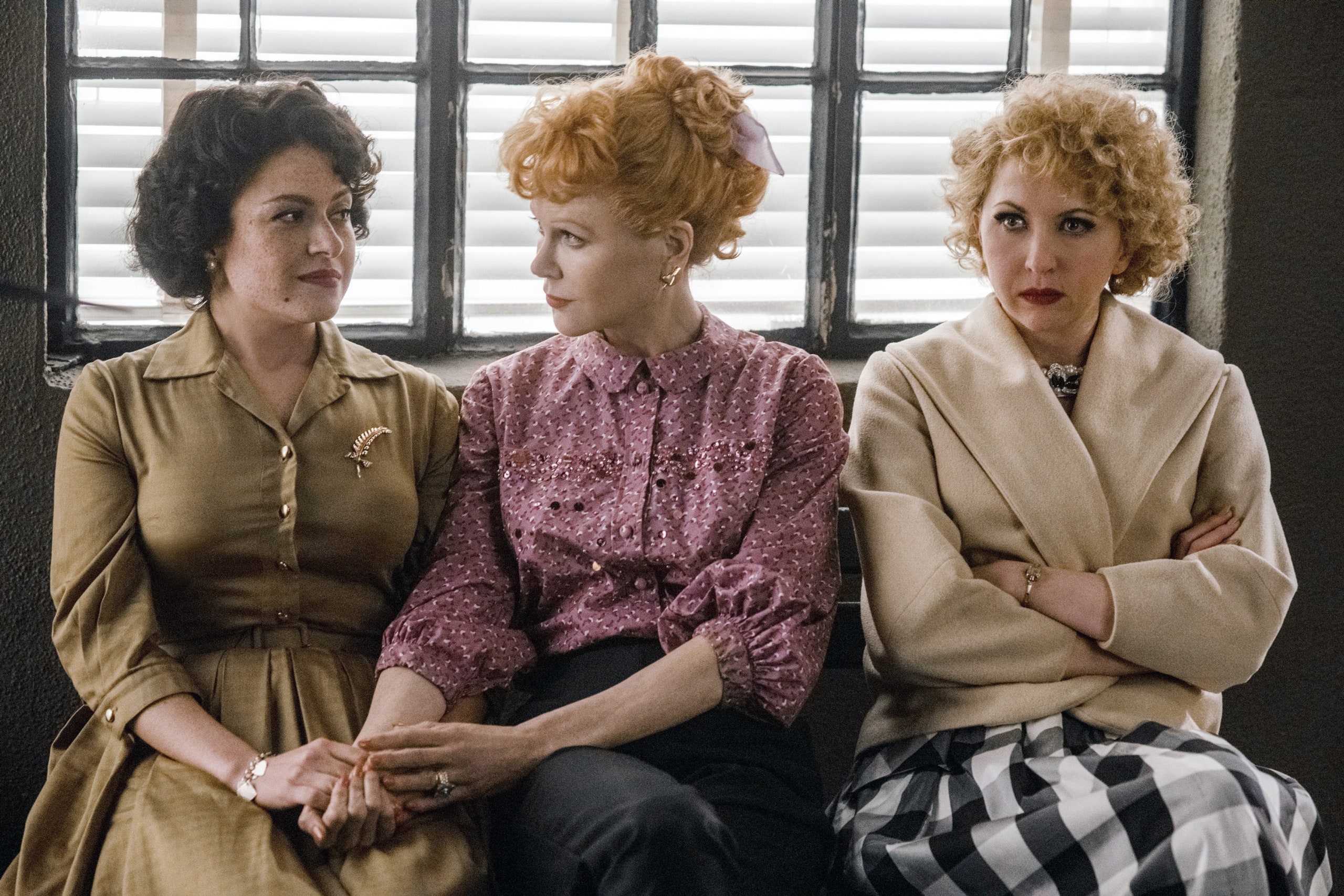
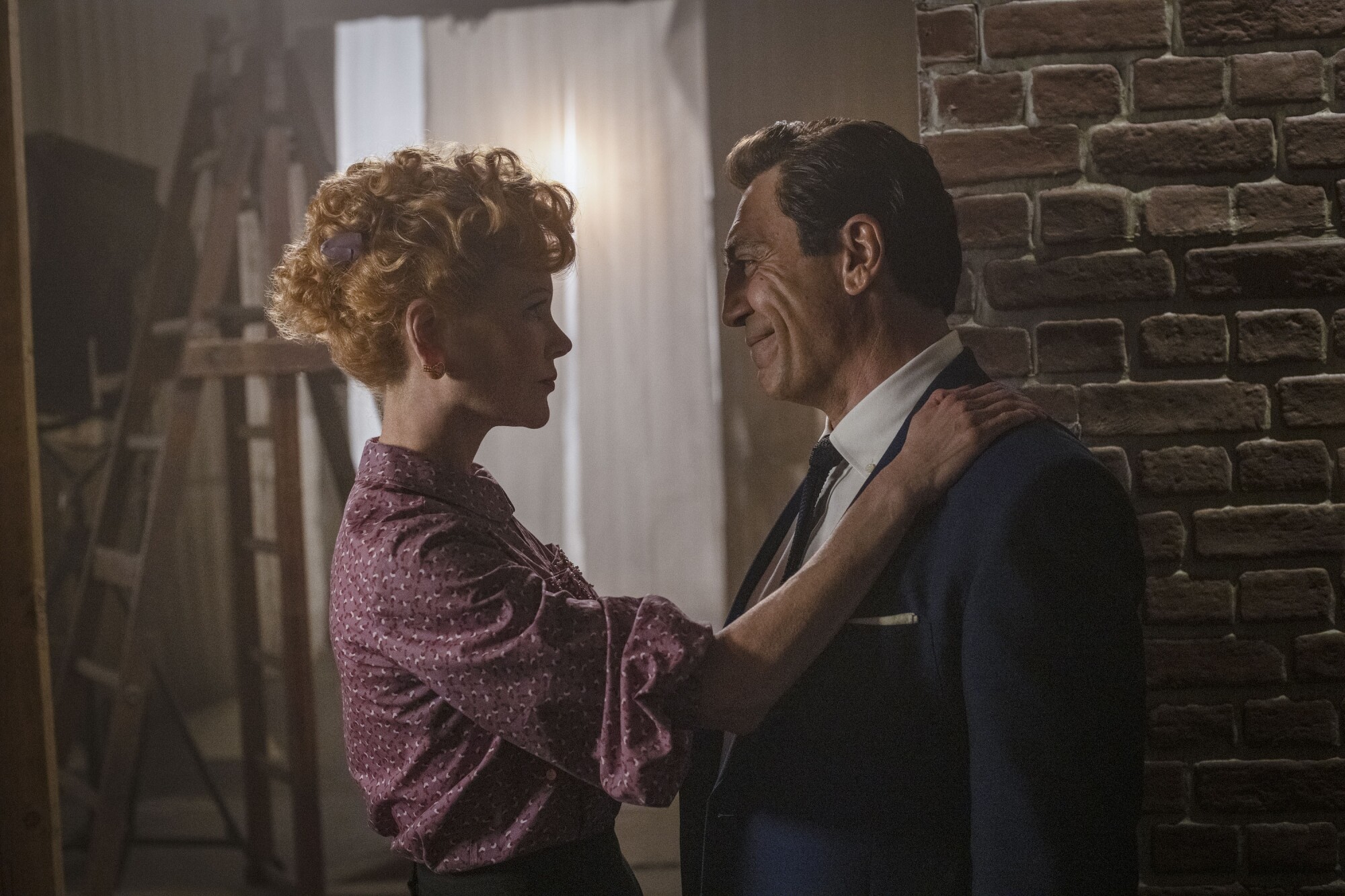
It takes longer to buy into Kidman’s Ball than it does Bardem’s Desi, despite the fact that like Ball she’s a great screen beauty and Bardem more ruggedly handsome than pop idol pretty, like Arnaz. Her performance — voice, posture, tamped-down temper and “gag” perfecting master craftswoman who “sees” the finished scenes and comic bits, and their fixable flaws, in black and white — is so brilliant that she makes Lucy stomping on grapes hilarious all over again.
Ball was funny “in her bones,” as they say. Every line barbed, every zinger perfectly-timed and absolutely intentional. Frawley takes an embattled Lucy out for a morning drink to buck her up at his favorite semi-seedy across-the-street bar.
“What’re you having?”
“I’ll take a tetanus shot!”
But Kidman’s turn is mostly a technician’s take on this supposedly singularly chilling star, infamous for her temper, ego and mistreatment of her inferiors.
Bardem’s Desi is lived-in, a performance. He sings, he dances and his Desi improvs his way out of accusations about his infidelity, “manages” his wife’s “commie” problem and drops hints about the reasons he and his politically-connected family had to leave Cuba decades before Castro’s revolution.
Sorkin keeps this compressed history on the move for the most part, although some of the idylls and reflections slow the picture’s sprint to a saunter.
The tsunami of smart banter is backed by a smoky drums and bass jazz score and filmed in the dim lighting of soundstages, the dramatic spotlit pools of darkness of Ciro’s nightclub, underlit homelife and office-scenes and ever-raining nighttime exteriors (in Southern California, no less).
Sorkin’s achievement rivals the reinvention of Richard Williams, father-promoter of the Williams sisters in “King Richard.” We knew Ball was smart-playing-dumb and demanding and awful to “the hired help,” with tales of her being banned from airlines (only some of them true) and the like. Sorkin and Kidman her Lucy “motivation,” and a softer, support-her-cast-and-crew side.
Anyone who’s read much about this couple, that show and their impact knows Arnaz and their shared Desilu Studios perfected the three-camera sitcom, that they produced some of the most popular shows of the era and as a final bow before selling out, got this little series called “Star Trek” on the air. Bardem and Sorkin give Desi a share of the spotlight, seriously human flaws and even a chivalrous side.
However much you know about these people and this subject, Sorkin shines a light in dark or unjustly-ignored corners of their epic story. And he makes obvious the strain and burden of “Being the Ricardos” into a film that’s witty and bittersweet, a biopic that like “Spencer” and “King Richard” forces us to take another look at public figures we think we know and consider them anew.

Rating: R for language
Cast: Nicole Kidman, Javier Barden, J.K. Simmons, Nina Arianda, Tony Hale, Linda Lavin and Alia Shawkat.
Credits: Scripted and directed by Aaron Sorkin. An Amazon Studios release.
Running time: 2:12
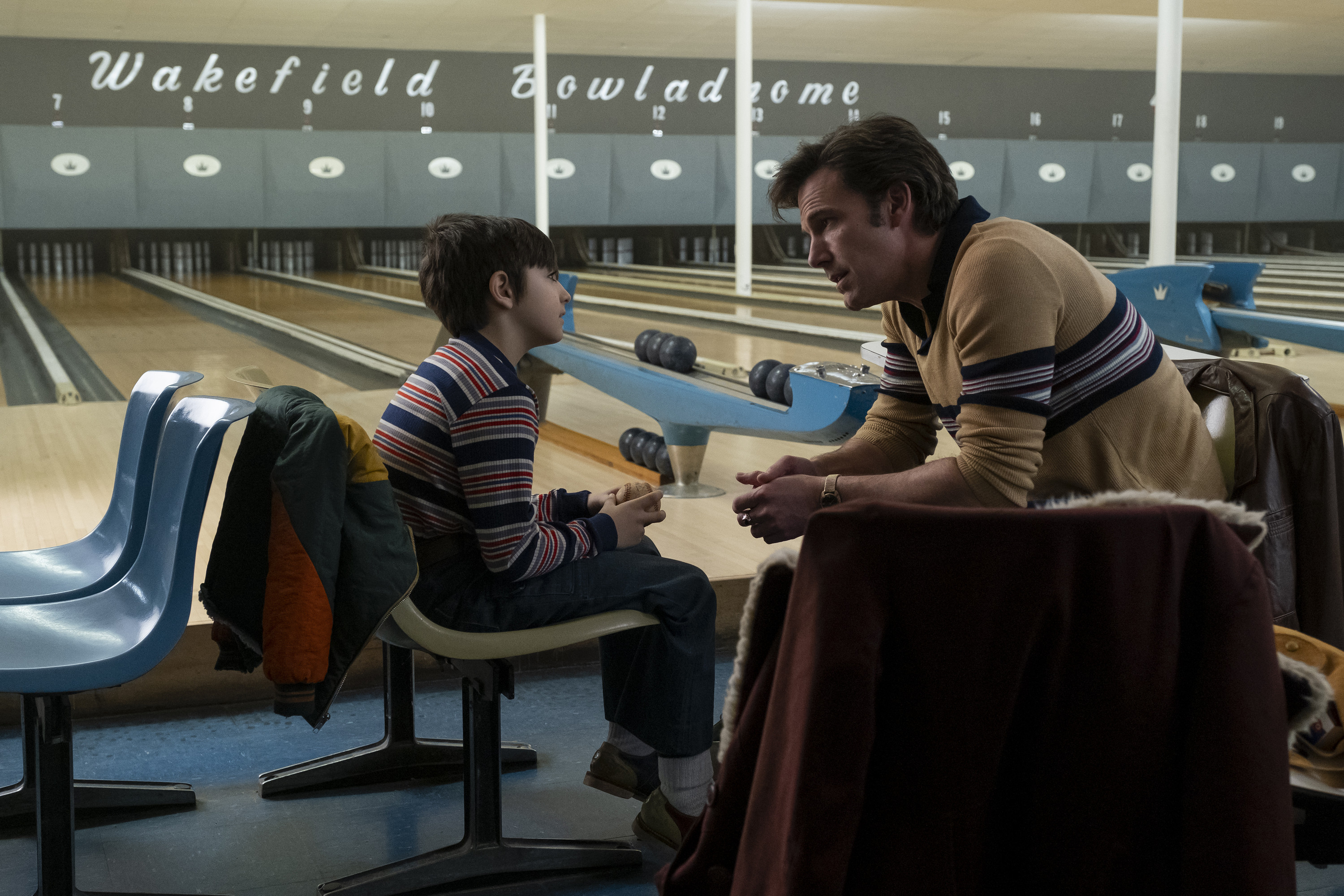
A fatherless kid and future writer comes of age in the working class Long Island of the ’70s and ’80s, mentored by an autodidact uncle in “The Tender Bar,” a film based on a memoir by J.R. Moehringer.
It makes a fine vehicle for Ben Affleck, as the bartender-sage father figure, and for Tye Sheridan as the kid who gets into Yale and gets published. Both actors giving their warmest performances in years in a film by a director who’s lost his fastball, and can’t get his curve over the plate much either.
Whatever George Clooney saw in this tale of a kid “raised” by an uncle because his father is a drunken, self-absorbed lout of a disc jockey, he and Oscar-winning screenwriter William Monahan, — utterly lost without his screenwriting crutch, heated cell-phone arguments (“The Departed,””Body of Lies”) — are barely able to assemble this, with “memoir” their sole organizing principle.
Starting at point A (1973) and at point C (the early to mid 1980s), with both ends of a flashback working towards the middle, the film blows its “Eureka!” moment, loses track of its central relationship and fills the screen with life lessons and waypoints so banal as to make one grateful you’ve never heard of the book it’s based on.
“When you’re 11 years old,” our adult narrator (Ron Livingston) tells us in the weariest “Wonder Years/Goldbergs/Everybody Loves Chris/Arrested Development” fashion, “a guy could use an Uncle Charlie.”
In 1973, little J.R. (Daniel Ranieri) and his mom (Lily Rabe) are doing what “everybody” in their family does — “moving back home” to her parents’ house in Manhasset. She’s a single mother who’s just been evicted again, bitter about “going back” and refusing to call the place “home.” Her retired, whimsically disconnected Dad (Christopher Lloyd) takes it all in not-quite-insulting stride. His house is “overrun with aunts and cousins,” a riot of noise, relationships and crusty, bluff sentiment, all a reflection of grandpa.
But never-married Uncle Charlie (Affleck), spirits purveyor at the family bar — The Dickens — sees this as his moment to step up. Like everybody else in this family, he talks to the kid like an equally foul-mouthed adult. He sizes up J.R.’s lack of sports acumen, his need to find his “it,” whatever “it” is, and makes his promise to “never lie to you.”
He’s the one who warns J.R. about looking “for your father in the radio,” where the kid can hear “The Voice,” the New York D.J. who fathered him, is never there for him and can’t be bothered with child support. “Don’t look for your father to save you.”
As Charlie sends J.R. on “smokes” runs, sets him up with sodas at his book-covered, barfly-friendly Dickens watering hole, he sets out to teach the kid “The Male Sciences,” where to keep “your butts” (cigarettes), your “stash” (emergency money in your wallet), what to do with your liquor (“Hold it.”), to learn the essentials such as “how to change a tire and jump a car” and to “always take care of your mother.”
Before too long, J.R. settles into the books Uncle Charlie points him to “if you want to be a writer,” and the bar jargon, how to “back up” (order a drink for) his colorful, friendly fellow barflies (Max Casella, Michael Braun, et al).
Concurrently, the story jumps ahead to “I wanna be a writer” J.R. (Sheridan) as he’s heading to Yale, attending Yale, falling for the wrong woman at Yale (Briana Middleton) and in the film’s most eye-rolling touch, chatting up a friendly Irish priest (Billy Meleady) on his train rides to and from New Haven.
Every now and then, “The Voice” (Max Martini) comes back into J.R.’s life.
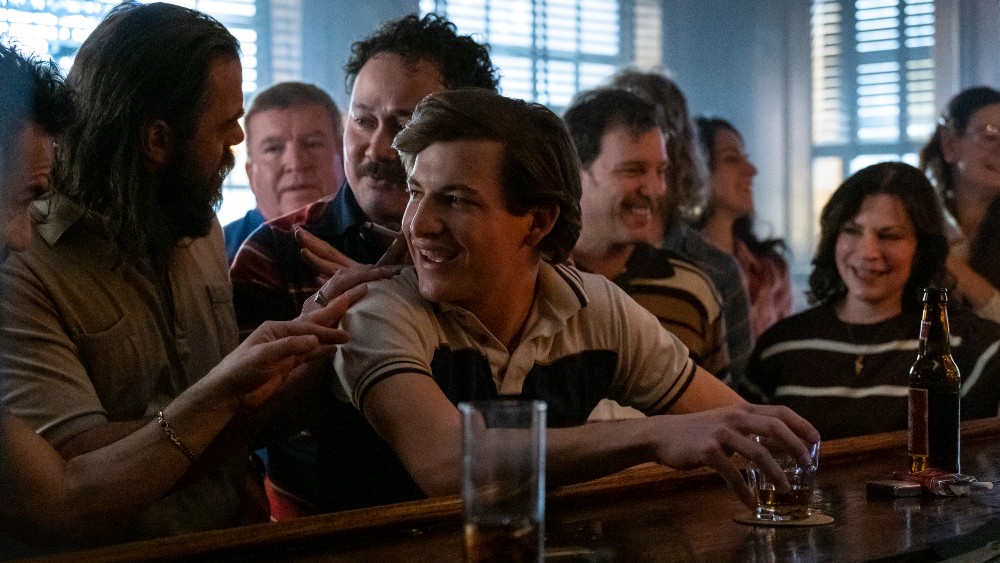
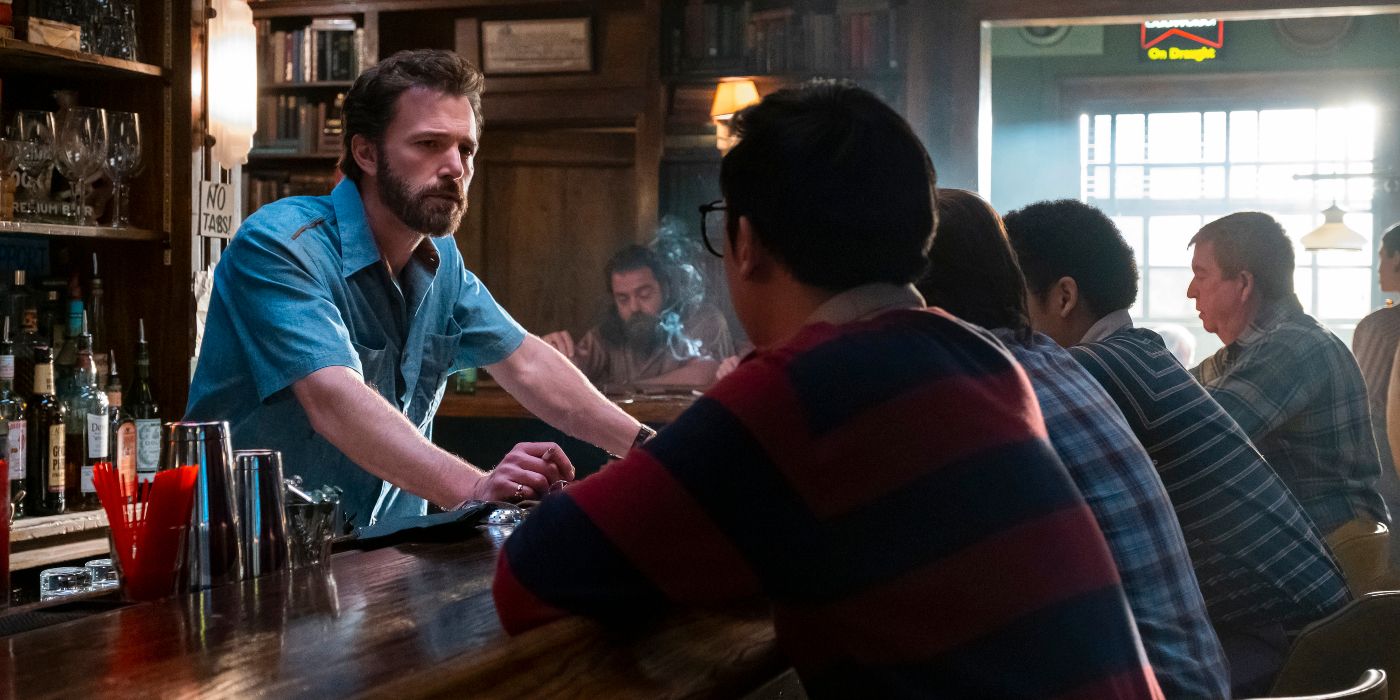
Clooney walks us through the waypoints and pivotal moments of J.R.’s early years with barely enough emphasis for us to have those “Wonder Years”/movie memoir cliche “That’s when I first realized” epiphanies.
Clooney half-heartedly makes points about how nothing changes in Manhasset. Fashions? A little. Relationships? Rarely. But for some reason, the cars and music never do. It’s all a hazy blur of condensed memory, being “stuck” in a rut somewhere, but still sloppy for a period piece.
We get little sense our hero is “special,” aside from an early push towards reading and a first-job-out-of-Yale with the New York Times. The “writing” and “talent” aren’t present, the distinct voice indistinct in the extreme.
But a sweet scene or light touch here and there brings us right back. Grandpa didn’t raise bookish kids by accident. Uncle Charlie has two very human Achilles heels and even the memoirist’s limitations are laid out as “I’m writing a novel” when everybody tells him publishing is “leaning towards memoirs.”
So? Write what you know, surf the wave.
Affleck finishes off a pretty good acting year that won’t earn him much credit (“The Last Duel” bombed, this isn’t a box office or awards contender). He makes Charlie colorful, dutiful and a fond remembrance of a guy who put a kid on the right path.
Young Ranieri is properly wide-eyed and angelic, and Sheridan gets to smile, something his career has rarely afforded him the chance to do.
And the setting is a Bar of the Sentimental Imagination, where even the alcoholics have a charming literary color about them.
As undemanding and shambolic as it is, “The Tender Bar” takes you in with warm afterglow and some winning, “I’d like to have a drink with that guy” moments. But even Amazon should see that after “The Midnight Sky,” “Catch-22,” “Suburbicon” and “The Monuments Men,” Clooney’s a Hollywood icon best parked in front of the camera, not behind it.

Rating: R for language throughout and some sexual content
Cast: Ben Affleck, Tye Sheridan, Lily Rabe, Daniel Ranieri, Briana Middleton, Max Martini, Rhenzy Feliz, Max Casella and Christopher Lloyd.
Credits: Directed by George Clooney, scripted by William Monahan, based on the memoir by J.R. Moehringer. An Amazon Studios release.
Running time: :1:44

Icky in that “Human Centipede” way, as excruciating as any torture porn thriller, and damned ridiculous by the time all is said and done, the Spanish thriller “Dos” or “Two” sets up a simple, nasty problem and fails to engage us in helping the trapped couple solve it.
Two people wake up, naked and lying on top of one another in bed. He doesn’t know her. She doesn’t know him.
And the reason they can’t “disengage,” get up and sort this out is that they’re stitched together at the abdomen.
Sexy.
Furious minutes of mistrust open this relationship. Neither wants to be the first to give out a name.
“Who ARE you?” “Who the F— are YOU?” (in English, or in Spanish with optional subtitles).
Precious minutes slip by as her rage at “Why did you DO this to me?” is slow to abate.
“Tranquila,” sister. Think for a second. Who in the name of Santiago would do this to himself, just to hurt you?
They question each other, test out getting up and cope with immediate concerns — pain relief, thirst, hunger, bathroom breaks. And they try to figure out who did this, who is “watching” them (pain pills, etc., mysteriously appear whenever the lights go out).
Sara (Marina Gatell) wonders if her hateful husband is capable of this. David (Pablo Derqiui) is cagey about his work, his dating history and anybody he can think of with a motive to hurt him and this person he doesn’t recognize.
There’s volatile chemistry between the stars, but little urgency to what’s going on. The nature of the wound and how it connects them seems to shift to meet the needs of camera blocking. Yes, at some point, the fact that they’re nude and attractive 30somethings trumps the pain and terror of their situation. And every so often, the ugly wound is looked over, fresh injuries are suffered, fresh clues point them to some counter-measures to whoever did this awful thing to them.
Three people had a hand in the script to actress-turned-director Mar Targarona’s film, three writers who take on a “Saw” level puzzle and make solving it less important than each character’s seeming guilt over what they’re not revealing make us wonder “Did they bring this on themselves?”
It makes for a dull, illogical thriller that’s an excruciating 71 minutes, and not excruciating in a good way, either.

Rating: TV-MA, violence, nudity, sex, profanity
Cast: Marina Gatell, Pablo Derqui
Credits: Directed by Mar Targarona, scripted by Cuca Canals, Christian Molina and Mike Hostench. A Netflix release.
Running time: 1:11
This opens February 4.
Halle Berry, Patrick Wilson, Michael Pena, Donald Sutherland, the world’s ending and “Don’t Look Up” is no laughing matter to Mr. “2012” and “Independence Day,” Roland Emmerich.

The wrestling empire that is WWE dives even deeper into movies with “Rumble,” an animated film that they made through Paramount Animation, and had slated for theatrical release earlier this year.
“Rumble,” based on a graphic novel about a world where towering, monstrous kaiju wrestlers fight for “the Big Belt,” makes its way to audiences via Paramount+ instead.
It’s a good-looking, mindless romp aimed at the children of all ages who watch professional wrestling. Formulaic and silly, it might not be reason one to subscribe to the Kevin Costner network. But there are a couple of laughs and lots of utterly ridiculous “action” in the octagon where the Big Boys play.
“Are you ready to go out there and look RIDICULOUS tonight?” our coach asks our hero at one point.Yes. Yes he is. Why? Because “We do not CARE!”
That’s the stance Rayburn Jr. (Will Arnett voices him) has to take when the career-loser, son of a wrestling legend, is recruited by the daughter of his late father’s coach, Winnie (Geraldine Viswanathan), to get serious about the sport by learning to “dance” in the ring.
Winnie the coach’s big idea is to toss in paso dobles, pirouettes and the odd pas de deux with all the piledrivers and suplexes that wrestlers live by, even the 40 foot tall versions.
Wrestling-crazed Stoker-on-Avon has never been the same since the famed Coach Jimbo and his star kaiju Rayburn disappeared years before. A new local champ emerges, but Tentacular (Terry Crews) wins the title and promptly announces he’s “taking my talents to Slitherpool,” to wrestle “for someplace that matters.”
Stoker will lose its stadium unless Winnie can find somebody and train him to be the champ who saves their rep and the stadium that bears her dad’s name. That “somebody” turns out to be her dad’s most famous wrestler’s son.
Rayburn and Winnie have to bond and come up with tactics that will transform a career loser into a phenom and do it all before their beloved stadium becomes a parking lot.

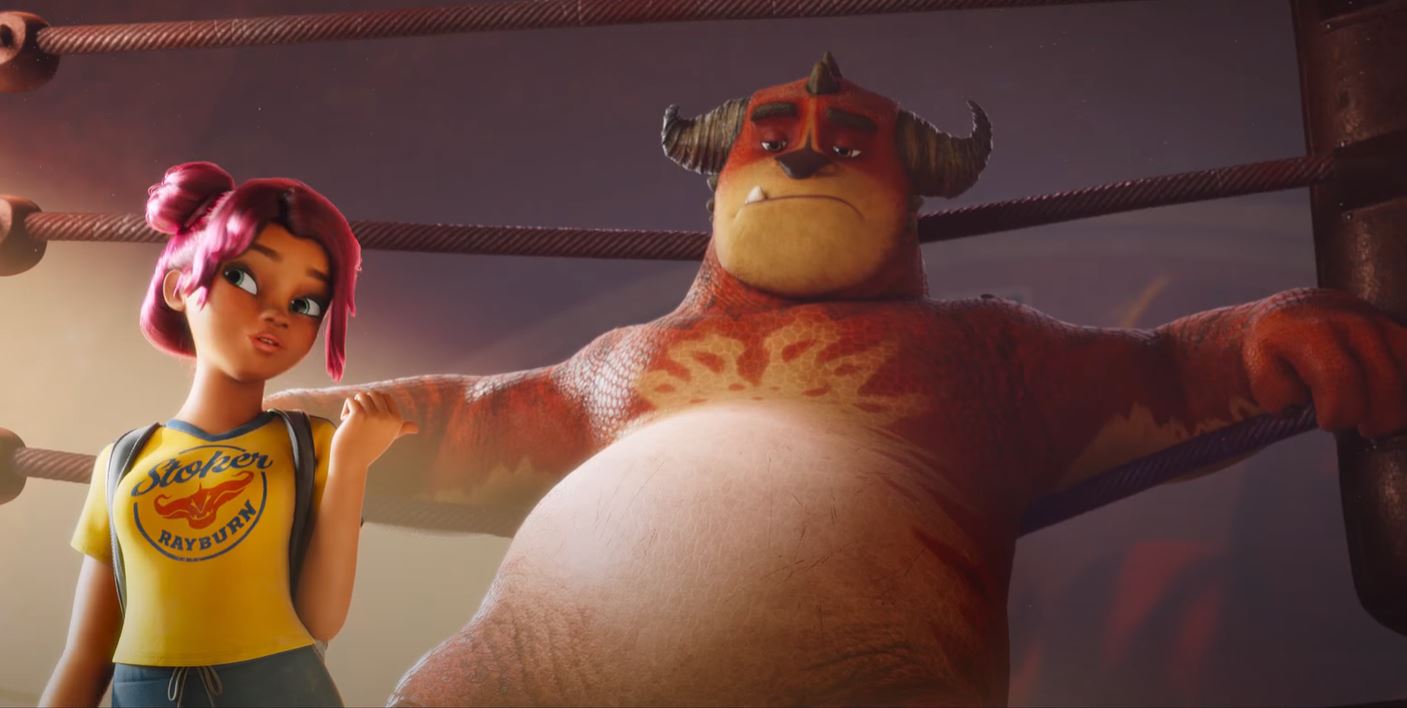
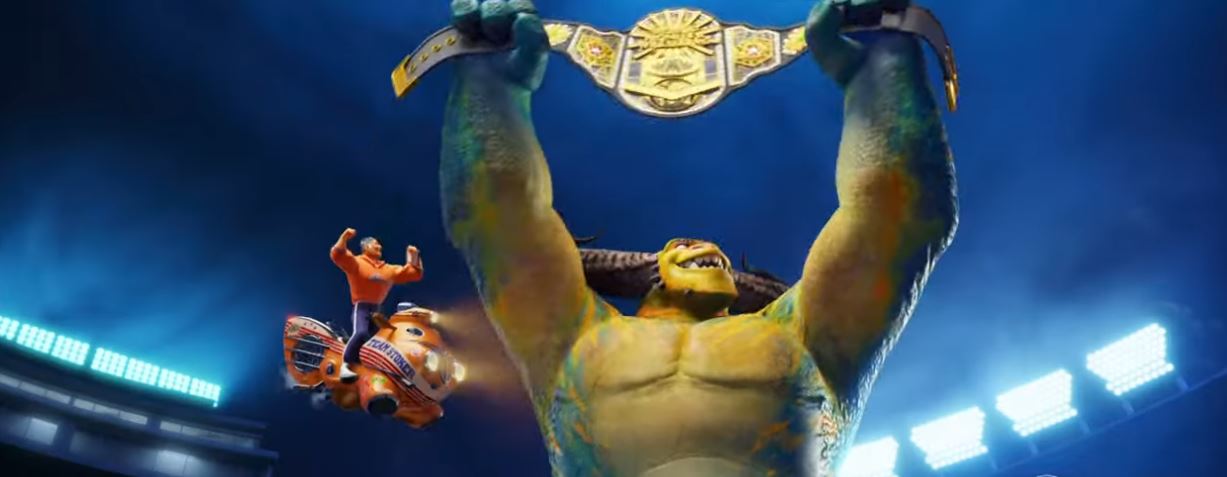
Whatever the Rob Harrell graphic novel has going for it, this script envisions an entire world that revolves around wrestling, with fanatical fans taking on all the rituals and body paint tributes of hockey and football fans.
The cleverest touch? Having the matches called by the insufferable Mark Remy, voiced by the insufferable Stephen A. Smith of ESPN. Dancing in the ring?
“This is HARDLY wrestling. Y’all know that, right?” The character complains and complains, until our hero starts winning. Then he changes his tune, just like Stephen A.
“I’m not sayin’ I’m wrong.‘ Because I’m never wrong. But…”
Jimmy Tatro voices the monster who is color commentator for the matches. And who introduces the combatants in the ring? Michael “Let’s get rrrrready to RRRRRumble” Buffer, of course.
Arnett and Crews, two very funny guys, don’t pay off as funny characters because the script doesn’t have many jokes that land. Tentacular has just won the Big Belt. What’ll he do?
“I’m going to an unnamed theme bar!”
Kids may get into the “action,” but for me there was one sight gag and one sight gag only that pays off. One of the beasts eyes the Prop that Made Wrestling What It Is Today — a folding chair. Great! It’ll turn the tide of the match. Unless of course he’s miscalculated the impact of something that small on wrestlers this large.
Aside from that, and the “get knocked-down, get back up again” messaging, there’s nothing to “Rumble.” Hard to see it as ever being a theatrical release contender.
Rating: PG, slapstick, innuendo
Cast: The voices of Will Arnett, Geraldine Viswanathan, Terry Cruz, Jimmy Tatro, Ben Schwartz, Tony Danza, Fred Melamud and Stephen A. Smith.
Credits: Directed by Hamish Grieve, scripted by Hamish Grieve, Matt Lieberman and Alexandra Bracken, based on a graphic novel by Rob Harrell. A Paramount+ release.
Running time: 1:34
This is an altogether more interesting list than the half-hearted Golden Globes glob dumped earlier this
AM.
Lots of love for “Licorice Pizza,” “Belfast,” “CODA…”
But I have to say, honoring out a somewhat hamhanded turn by Lady Gaga and more or less ignoring the rest of “House of Gucci” is simply falling for hype. She’s over the top, and not any better than anybody else in it. And nobody is talking up Pacino or Driver, with good cause. Jared Leto also earned a nomination. You couldn’t even tell it was him, bit that wasn’t a subtle turn https://www.salon.com/2021/12/13/little-known-donor-helped-fund-capitol-riots-is-now-facing-probe_partner/ either.
No Ridley Scott nomination for either “Gucci” or “Last Duel?” Oh well.
The Critics Choice Awards are handed out by what started life as the Broadcast Film Critics Association.
Take a look.
BEST PICTURE
Belfast
CODA
Don’t Look Up
Dune
King Richard
Licorice Pizza
Nightmare Alley
The Power of the Dog
tick, tick…Boom!
West Side Story
BEST ACTOR
Nicolas Cage – Pig
Benedict Cumberbatch – The Power of the Dog
Peter Dinklage – Cyrano
Andrew Garfield – tick, tick…Boom!
Will Smith – King Richard
Denzel Washington – The Tragedy of Macbeth
BEST ACTRESS
Jessica Chastain – The Eyes of Tammy Faye
Olivia Colman – The Lost Daughter
Lady Gaga – House of Gucci
Alana Haim – Licorice Pizza
Nicole Kidman – Being the Ricardos
Kristen Stewart – Spencer
BEST SUPPORTING ACTOR
Jamie Dornan – Belfast
Ciarán Hinds – Belfast
Troy Kotsur – CODA
Jared Leto – House of Gucci
J.K. Simmons – Being the Ricardos
Kodi Smit-McPhee – The Power of the Dog
BEST SUPPORTING ACTRESS
Caitríona Balfe – Belfast
Ariana DeBose – West Side Story
Ann Dowd – Mass
Kirsten Dunst – The Power of the Dog
Aunjanue Ellis – King Richard
Rita Moreno – West Side Story
BEST YOUNG ACTOR/ACTRESS
Jude Hill – Belfast
Cooper Hoffman – Licorice Pizza
Emilia Jones – CODA
Woody Norman – C’mon C’mon
Saniyya Sidney – King Richard
Rachel Zegler – West Side Story
BEST ACTING ENSEMBLE
Belfast
Don’t Look Up
The Harder They Fall
Licorice Pizza
The Power of the Dog
West Side Story
BEST DIRECTOR
Paul Thomas Anderson – Licorice Pizza
Kenneth Branagh – Belfast
Jane Campion – The Power of the Dog
Guillermo del Toro – Nightmare Alley
Steven Spielberg – West Side Story
Denis Villeneuve – Dune
BEST ORIGINAL SCREENPLAY
Paul Thomas Anderson – Licorice Pizza
Zach Baylin – King Richard
Kenneth Branagh – Belfast
Adam McKay, David Sirota – Don’t Look Up
Aaron Sorkin – Being the Ricardos
BEST ADAPTED SCREENPLAY
Jane Campion – The Power of the Dog
Maggie Gyllenhaal – The Lost Daughter
Siân Heder – CODA
Tony Kushner – West Side Story
Jon Spaihts, Denis Villeneuve, Eric Roth – Dune
BEST CINEMATOGRAPHY
Bruno Delbonnel – The Tragedy of Macbeth
Greig Fraser – Dune
Janusz Kaminski – West Side Story
Dan Laustsen – Nightmare Alley
Ari Wegner – The Power of the Dog
Haris Zambarloukos – Belfast
BEST PRODUCTION DESIGN
Jim Clay, Claire Nia Richards – Belfast
Tamara Deverell, Shane Vieau – Nightmare Alley
Adam Stockhausen, Rena DeAngelo – The French Dispatch
Adam Stockhausen, Rena DeAngelo – West Side Story
Patrice Vermette, Zsuzsanna Sipos – Dune
BEST EDITING
Sarah Broshar and Michael Kahn – West Side Story
Úna Ní Dhonghaíle – Belfast
Andy Jurgensen – Licorice Pizza
Peter Sciberras – The Power of the Dog
Joe Walker – Dune
BEST COSTUME DESIGN
Jenny Beavan – Cruella
Luis Sequeira – Nightmare Alley
Paul Tazewell – West Side Story
Jacqueline West, Robert Morgan – Dune
Janty Yates – House of Gucci
BEST HAIR AND MAKEUP
Cruella
Dune
The Eyes of Tammy Faye
House of Gucci
Nightmare Alley
BEST VISUAL EFFECTS
Dune
The Matrix Resurrections
Nightmare Alley
No Time to Die
Shang-Chi and the Legend of the Ten Rings
BEST COMEDY
Barb & Star Go to Vista Del Mar
Don’t Look Up
Free Guy
The French Dispatch
Licorice Pizza
BEST ANIMATED FEATURE
Encanto
Flee
Luca
The Mitchells vs the Machines
Raya and the Last Dragon
BEST FOREIGN LANGUAGE FILM
A Hero
Drive My Car
Flee
The Hand of God
The Worst Person in the World
BEST SONG
Be Alive – King Richard
Dos Oruguitas – Encanto
Guns Go Bang – The Harder They Fall
Just Look Up – Don’t Look Up
No Time to Die – No Time to Die
BEST SCORE
Nicholas Britell – Don’t Look Up
Jonny Greenwood – The Power of the Dog
Jonny Greenwood – Spencer
Nathan Johnson – Nightmare Alley
Hans Zimmer – Dune
April 8, this one opens in a cinema near you.

Well, Lady Gaga got some love, voters remembered Jessica Chastain’s Tammy Faye Baker turn.
And they think “Dune” and “Power of the Dog” are best pic worthy.
Wait, these guys lost their TV deal in a corruption, racism and sexism scandal. Do they even matter any more? Or matter even less than they used to?
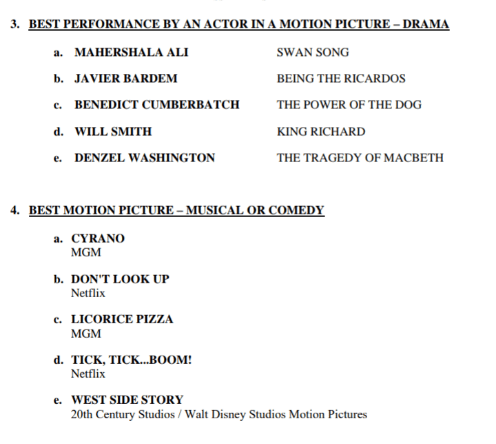
“Don’t Look Up” doesn’t belong on this list, no “Respect” but love for “Cyrano?”
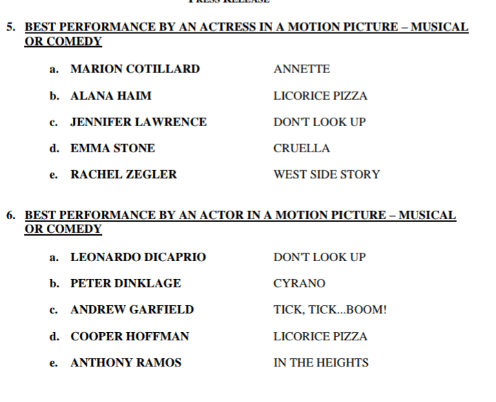
“Annette” is wholly forgotten, hard to summon up much love for “I’m the Heights” either.
Dinklage!
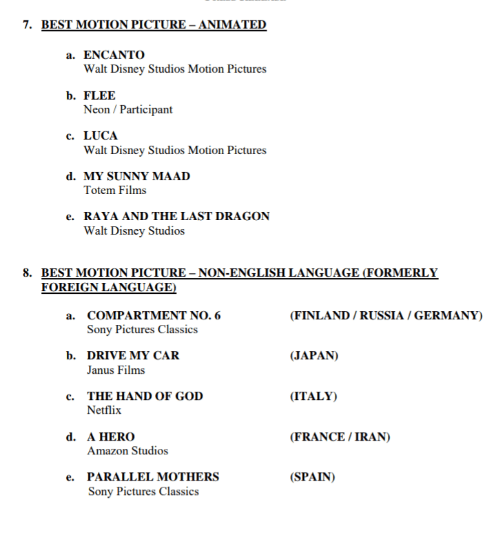
Weak animation field, Almodovar has to have the inside track on best foreign language film in that group.
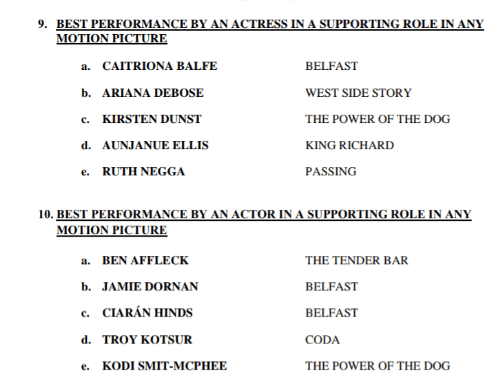
DeBose and Ciaran Hinds, or do they love Ben?
Are we even paying that much attention to the Globes noms now? So many questions.

Two lists that look the way the Oscar field might, but no love for Ridley Scott?

So that’s all they recognized from “Respect,” not that it’s all that. But that “musical or comedy” field is pretty thin.
The TV field is even less relevant, simply because the “Globes” don’t influence the Emmys.
Remember, these clowns lost their TV show. So this all the oxygen I’m giving them. They went through the motions, so did I.
Ho hum, Golden Globes. Ho hum.
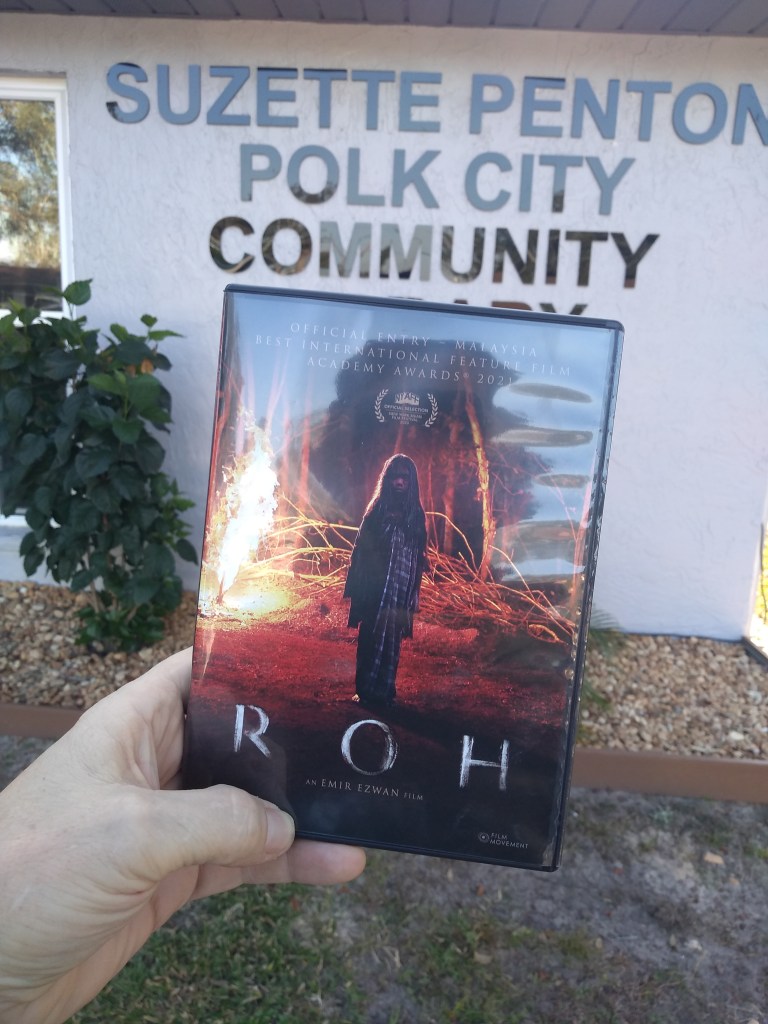
MovieNation, spreading cinema throughout the land, one DVD, one poorly framed pic and one small town or city library at a time.
This year, I’ve donated DVDs to libraries in West Va., Va., NC, SC, Ga. and scattered corners of Florida, bringing subtitles to the masses is my motto, Johnny Appleseed style. Call me “Roger DVDseed,”copyright pending. A dozen libraries, maybe 40 DVDs in all. Let’s hope the good folks of Polk read my review before passing this one by. Judging from the sheriff here, a little culture wouldn’t hurt.


