
HBO Max has this Lana Condor/Cole Sprouse star-crossed love affair, also starring Zach Braff, set for streaming release March 31.
Not a giggle in the trailer, but it could be sweet and special effective.
HBO Max has this Lana Condor/Cole Sprouse star-crossed love affair, also starring Zach Braff, set for streaming release March 31.
Not a giggle in the trailer, but it could be sweet and special effective.

“Autumn Girl” is the “Mrs. Maisel stumbles into ‘All About Eve'” Polish musical biography you didn’t know you needed until it showed up in your Netflix queue.
A few songs, a few laughs, a little sex, a lot of sexism — it’s one of those frothy “It shouldn’t work but it does” pictures, largely thanks to the charm, sass and sex appeal of its star, Maria Debska.
Debska plays Kalina Jedrusik, the real-life “Autumn Girl” of Polish pop and Polish TV in the early ’60s. Writer-director Katarzyna Klimkiewicz parks Debska, as Jedrusik, in a shiny, candy-colored fantasy version of Iron Curtain Poland and lets her sing, dance and strut like the queen bee this 1960s diva was.
Somebody labeled Jedrusik “the Polish Marilyn Monroe,” and when we meet her, she’s kind of let that go to her head. Sure, she’s living in socialist apartment flats and shopping at department stores where cloth is the hot seller (not finished fashions), just like everybody else.
But she’s a star! She’s on TV! Kalina’s not putting her Skoda in “drive “until she’s got her lipstick just right, traffic light be damned. And she’s sure as shooting not waiting in line like everybody else if she has any say in the matter.
Kalina has a writer-husband (Leszek Lichota) and a young, handsome lover (Bartlomiej Kotschedoff) living with her under the same roof. She wears her dresses tight and low-cut, smokes like a chimney and her cute bob haircut is the style to steal. All the ladies say so, well, except for the ones who want everybody to wait their turn.
But there’s this new Party Member/boss at the TV station. Ryszard (Bartlomiej Kotschedoff) used to do Polish summer stock with Kalina, back in the day. And she doesn’t remember him. When he comes on strong, asking/ordering her to dinner with “the new boss,” she rebuffs him and not nearly as gently as she might have.
Next thing she knows, her “lateness” is an issue, “the people” are outraged at her sexiness, and she’s out of a gig. Kalina and we are about to remember that “cancel culture” was invented the moment the phrase “black ball” was coined. She is persona non grata every place she might sing and perform. She turns to vodka and bitterness, shaken, not stirred.
The great novelty of this film, in Polish with subtitles or dubbed into English, is how Kalina sees her life coming apart in production numbers — a restaurant where everybody dances around her, their smile-free faces mimicking the tight-lipped fury she herself sings (in Polish) through.
She laments her plight, cautions her unhearing, would-be womanizer boss and equally faithless husband (An open marriage?) to “Let go of the lust,” and longs for the day when can sing and own her “sexiness” on TV again.
The film, titled “Bo we mnie jest seks” in Polish, follows a predictable story arc. Sadly, some of benchmark “Big” moments we know are coming are production-designed and production-numbered right out of their potential impact. Supporting players’ storylines are underdeveloped, and the cabaret-ready tunes aren’t going to keep any Broadway composer up at night, even the ones who speak Polish.
It’s never quite as playful as that opening title, “This may or may not have really happened.”
But Debska is a delight in this part, blowsy and brassy, cute and careerist, a comrade in her element, thriving under socialism because the Party let her be a star. She lets us see the light go out in her life when the spotlight is yanked away, and lets us hope she’ll have a comeback number, with just the right slinky dress and choreography to match.

Rating: TV-MA, nudity, smoking, drinking and profanity
Cast: Maria Debska, Leszek Lichota, Bartlomiej Kotschedoff, Krzysztof Zalewski and Katarzyna Obidzinska
Credits: Scripted and directed by Katarzyna Klimkiewicz. A Netflix release.
Running time: 1:46
Beware the Clowns of March!
Premiering on the Ides of March.
“What did you get us INTO?”
Let that be a lesson to you, kids.
“Exploited” exploits its way into our hearts tomorrow, March 11.
A famous Broadway actress (Leo) has her final curtain call interrupted by the news her son (Jake Weary) has died. This mystery thriller, also starring Bella Thorne, comes our way March 18.

In film buff slang, “Felliniesque” conveys a a lot of cinematic shorthand in just a single word. It can mean a self-conscious artist self-conscious about her or his self-consciousness. The word is almost synonymous with existential angst and cultural ennui.
And since the term most quickly summons up memories of “La Dolce Vita” or its bookend, “8 1/2,” there’s a lightness about it — self-criticism as cultural criticism, most often with an amused, arm’s length take on decadence and society’s shortcomings.
That “lightness” means it’s not the perfect fit in describing Israeli filmmaker Nadav Lapid’s angsty social satire “Ahed’s Knee.” The title may echo Eric Rohmer’s pre #MetToo older-man/teen-girls cringe comedy “Claire’s Knee.” But Lapid (“The Kindergarten Teacher”) is grappling with something more elemental about an artist’s role in society and his own place in an increasingly reactionary and groupthink-authoritarian Israel.
A Palestinian teen named Ahed Tamimi, whose family has suffered deaths and imprisonment at the hands of Israeli occupiers, lashed out at a soldier and had the temerity to slap him. The video became an international stink as Israel threw the kid in prison.
“Ahed’s Knee” begins with a disorienting, stream-of-camera-in-extreme-close-up musical audition session for a movie about her. Israeli (not Palestinian) actresses — Ortal Solomon, Neta Roth and Mili Eshet — sing “Welcome to the Jungle,” show off expensive dental work and the tear in their leggings at the knee, don wigs and hurl themselves into the part for a jaded filmmaker, “Y” (Avshalom Pollak) and his casting director.
We hear an actor, playing the part of a government official, grouse that Ahed — who faced house arrest — “should have gotten a bullet in the knee” because THAT would have kept her in the house, “arrested.”
And maybe we see what Y sees in that moment. The very idea of some privileged, acting-schooled Israeli Jew playing this icon of Palestinian resistance to oppression is patently offensive. Then again, maybe that’s not crossed Y’s mind...yet.
As he sits in a small plane en route to the town of Sapir for an afternoon screening of one of his earlier films at a local library, we pick up on Y’s discontent. The son of artists, his collaborator/screenwriter mother has cancer. When he talks, he mutters (in Hebrew) about the “dumbing down of this country” thanks to “censorship,” message-control, leading to a populace that “revels in its stupidity.”
He downloads all this simmering concern on the young, perky culture ministry functionary (Nur Fibak) who welcomes him, briefs him on the town, the desert region (Avra) it is in and how the evening’s screening and Q&A will go. She smiles prettily and makes lots of eye contact. The leather-jacketed Y, stubbly and 40something and single, takes on a familiarity with her that whispers “chemistry” or hints at least that he’s interested.
But there’s this form from “the ministry,” the list of subjects he’s allowed to speak about (and get paid for). She chirps on about “the sea,” life, love, “Jewish immigration,” and Y grouses about “no mention of the occupation, conflict” and the like.
There’s a crisis of conscience in play, and we sense a tirade to come. “Ahed’s Knee” is about that day in Sapir, from arrival to screening to debating that “approved” list of topics and the State of the State of Israel, where an artist might well feel the walls of free expression closing in on him thanks to decades of corrupt, thought-controlling reactionary rule.


Lapid’s storytelling style here includes odd interludes — a driver (Yoram Honig) takes the filmmaker to his room, pausing to show him the rotting result of a failed deal with the Russians over the bell pepper harvest, pausing again for a little sing-along and dance-along to Bill Withers’ ironically-used “Lovely Day.”
Y relates an anecdote from his national military service days that musically sends up the homoerotic nature of military service (more dancing) and underscores his point about how “off message” unapproved thought and talk are suppressed, beginning with that heady dose of military indoctrination.
“Felliniesque” kicks in with the seriously roundabout way Lapid gets to the story at hand and the various, occasionally daft interludes. I can’t say it all fits together neatly or that it all contributes to the narrative in a particularly helpful, streamlined way. But it’s easy enough to make sense of.
Pollak, a veteran of film sets in front of and behind the camera, wears his RayBans and five-day stubble like a movie-making egoist, imposing himself — conversationally — on women he doesn’t know, like the small plane pilot who transports him, interrupting a power ballad singer rehearsing with her bassist in a Sapir garage, and the captive, somewhat star-struck Yahalom (Fibak) escorting him around, hearing him out and professing sympathy for his anti “censorship” ethos, perhaps because she has some carnal interest in him.
Lapid’s film ambles along, never straying far from its path but dawdling and stopping for distracting little bits of business — one of the actresses auditioning for him calls to obnoxiously lobby for the part, that pause at the bell pepper farm, a couple of somewhat aimless thinking/ phone-chatting walk-abouts in the Avra desert.
“Ahed’s Knee” isn’t as sexy, satiric and light as its Felliniesque opening promises. But Lapid manages to make a lot of points about the creative person’s life in modern Israel, the sensitivities triggered and the moral quandary a thinking Israeli finds her or himself in. The writer-director does a decent job of cloaking a sermon about artistic freedom in a tale of an artist at an intellectual crossroads and a man fixated on the fate of “Ahed’s Knee.”

Rating: unrated, profanity, violence
Cast: Avshalom Pollak, Nur Fibak, Yoram Honig, Ortal Solomon, Neta Roth and Mili Eshet
Credits: Scripted and directed by Nadav Lapid. A Kino Lorber release.
Running time: 1:49
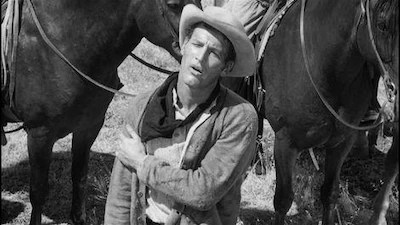
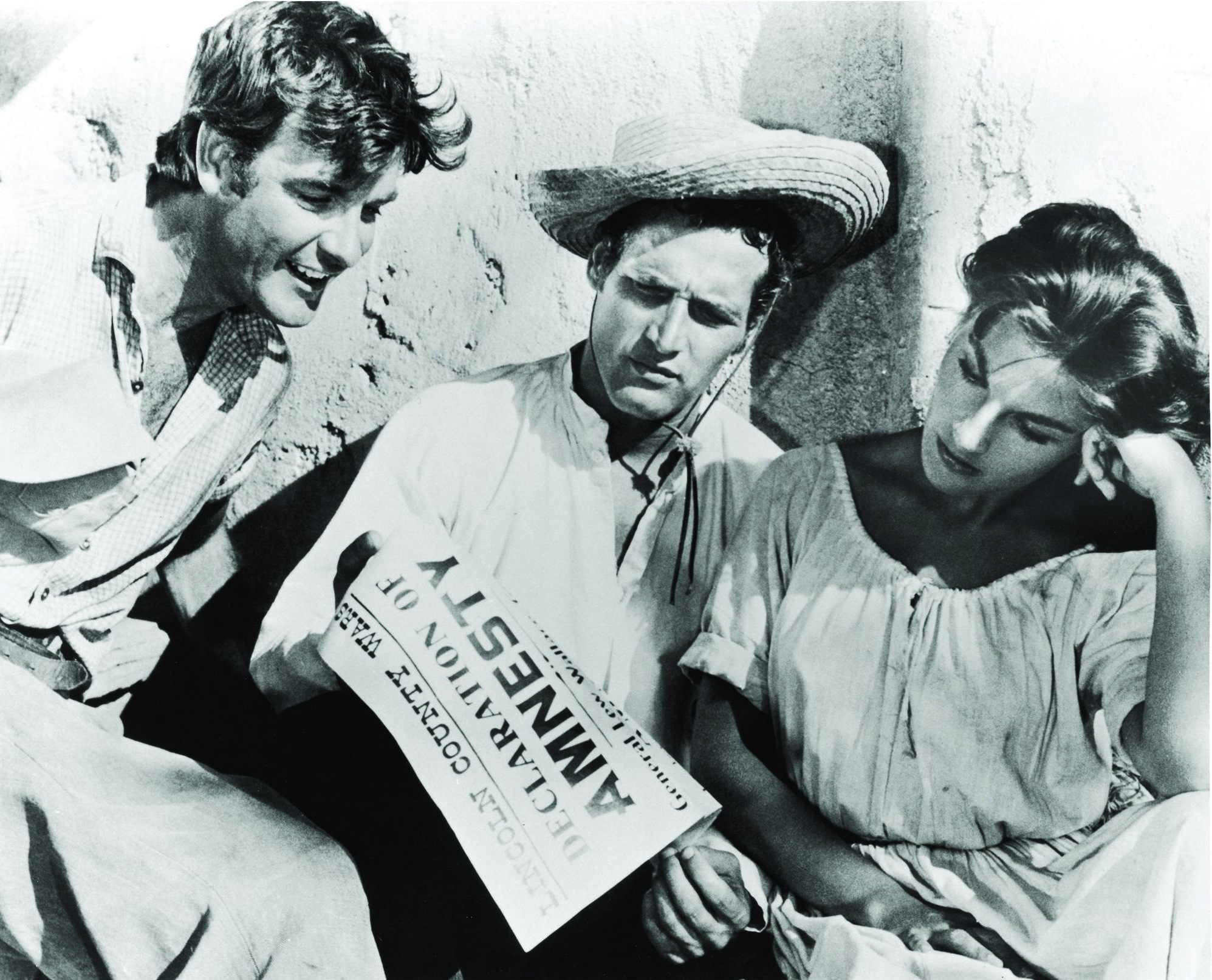
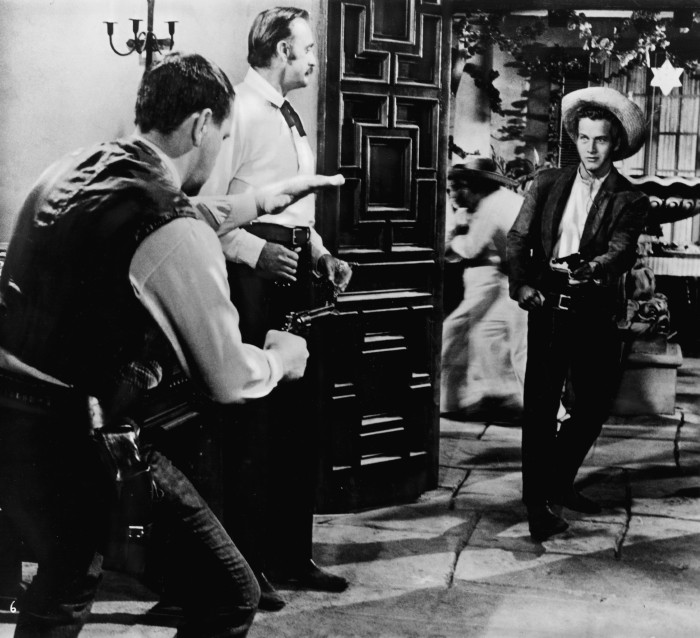
“The Left Handed Gun” has a distinct pride of place in Paul Newman lore.
He’d already risen to stardom, not nearly as quickly as Brando, but quick enough to earn the envy of his life-long rival, Steve McQueen.”Somebody Up There Likes Me” pretty much ended Newman’s days of bit parts on TV and supporting roles on film.
And here he was, the lead in a star-vehicle Western, the “pretty boy” of the moment, his increasingly famous bright blue eyes dulled down in black and white. But more than anything else, this film and Newman’s movies of this era cemented his reputation as a serious actor.
He’d played Billy the Kid on TV three years before he stepped in front of the camera for Arthur Penn, whom he’d once acted for on the anthology series “Playwrights ’56.” Now Penn was making his major motion picture directing debut, and Newman would perfect his take on The Kid.
It wasn’t until later researchers looked hard at the most famous photograph of William Bonney and realized it was an inverted negative that the fact that Billy was actually right-handed became established. So there’s no faulting Gore Vidal, who wrote the teleplay that Newman had starred in, and helped expand and flesh it out, with screenwriter Leslie Stevens, for the big screen.
What was novel about the TV treatment and this later film is how unsentimental it is about Bonney, romanticized for 75 years, largely thanks to his name and youth. Watching “Gun” again, I was reminded of the ad campaign for Sam Peckinpah’s even gloomier take on the character, played by Kris Kristofferson in 1973’s “Pat Garrett and Billy the Kid.”
“Billy the Kid was a Punk.”
Newman’s “kid” carries a grudge all the way to his grave in this film. Taken in by the rancher Tunstall (Colin Keith-Johnston), a kindly Scotsman who took pity, put trust in Billy and turned him into a reader, Billy makes it his short life’s work to avenge Tunstall’s murder by law enforcement put up to it by his rivals.
There’s nothing sentimental about this Old West. Billy goads men that were a part of the conspiracy into gunfights, and kills others who stand in his way with barely a hint of righteousness in his revenge.
The striking thing about the movie is catching Newman just before “star clout” kicked in. He may have gotten his former TV director on board, but he played up “the kid” nature of his character just by denying himself the vanity of a horse that wouldn’t make him look so short. Watch the first time he mounts up in the movie. It’s like a tween climbing a tree, scrambling to do it quickly just to minimize any chance of “You man enough for that there hoss?” derision from the other cowhands. Check out the much shorter horse he rides as “Butch Cassidy,” in comparison.
His performance is wound-tight yet subtle, boyishly antic and just mature enough to let us see the character’s realization that he’s done wrong or made a fatal mistake.
But what really stood out on this re-viewing was the superb support Newman got from future Western icon John Dehner, turned into a wholly-logical and perfectly understandable Pat Garrett, the old running mate turned lawman who hunts The Kid down. Vidal’s take on the character is sharp, and all the best Garretts are descendants of this one. Dehner plays Pat as patient-and-understanding, but accepting of the fact that The Kid has earned his fate and he’s the one to make him meet it.
Dehner played many a heavy in Westerns and authority figures in other films and on TV, and later earned his own measure of immortality with a hilarious send-up of his booming, owlish Western persona as a comic villain in James Garner’s “Support Your Local Gunfighter.”
Denver Pyle’s most famous big screen role was in Arthur Penn’s greatest film, “Bonnie and Clyde,” released nearly ten years later. As in that film, he’s a lawman here.
And James Best almost left his bit player/character actor career behind after his flinty, empathetic turn as Billy’s fellow cowhand, friend and conscience, Tom Folliard. Best was never able to establish himself as a “name” star or leading man. He’s most remembered for his role as the hapless sheriff on TV’s “Dukes of Hazzard” twenty years later. He retired to my corner of Florida, spending most of his last years as a Space Coast celebrity.
There’s nothing flashy save for the performances in Penn’s debut feature. If anything, the first act seems rushed, with character development and detail skipped over. Television directors had to work quickly and TV screenplays had to be brisk and truncated. It takes a while for a style and patience to settle in.
It may not stand out the way “The Left Handed Gun” did when it hit the screen in ’58, a bracing counterpoint to the tsunami of formulaic “Manifest Destiny/Code of the West” Westerns that came before it on the big screen, and the generic Western fare already flooding TV, which it would continue to do into the late ’60s. The action sequences are blunt instruments and the grace notes tend to overwhelm them.
But the performances still crackle with understated modernity, giving us a West of not just sagebrush, saddles and stereotypes, but of real people, ruthless and impulsive, cunning and careless, actors playing folks who never let on that they know how this many-times-told story is going to end.

Rating: approved, violence
Cast: Paul Newman, John Dehner, James Best, Lita Milan, Denver Pyle, Hurd Hatfield, Colin Keith-Johnston, Martin Garralaga, Wally Brown and Paul Smith
Credits: Directed by Arthur Penn, scripted by Leslie Stevens, based on a Gore Vidal TV script. A Warner Brothers release available on Amazon and most any streaming platform.
Running time: 1:42
It’s good to see JA found Jesus and cleaned up his potty mouth. And stopped casting relatives.
April Fool’s…is when this comes to Netflix.
Looks like he’s hoping to get a little Brit drollery into this farce about making a sci fi B movie action sequel under lockdown.
Could go either way.
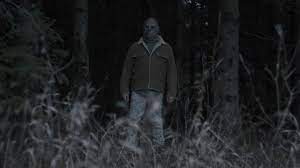

If writer/director/producer/cinematographer/editor and composer Adrian Langley can’t make sense of his muddled thriller “Ash & Dust,” what hope do we mere mortal viewers have?
I mean, kudos for wearing all those hats at once, chief. But all those extra voices you might have had on the set could have told you, “Wait man, this doesn’t make any sense.”
It’s a murderous tale of rural North America, all about the killing people will do to get their hands on this anachronistic box, whose contents we’ll just leave a mystery because that’s what Mr. Langley does.
“Ash” begins with a wintry woodlands chase and execution set in the horseback pursuer/over-under shotgun past.
“Y’can’t outrun fate,” our killer tells his frontier victim before grabbing a box that looks a hundred years more modern than it should.
A century or more later, a guy whose dog gets mauled and killed digs that perfectly-preserved wooden box up whilst burying his pet. He makes the mistake of getting a coin from that box appraised, and all of a sudden a whole daisy chain of killers and relatives-of-killers set upon him, his wife and anybody else they think might have an inkling of where that box is.
We see a thug (Nick Biskupek) and his moll snort cocaine off the box. But that’s not what’s in it.
We see the thug’s nephew (Blake Canning), with a pregnant wife or girlfriend, join in the shenanigans, asking for “work.”
“You know what we do?”
A guy’s shot, left for dead and survives. A laconic loner cop (Kayla Meyer) walks onto various crime scenes and ponders ponders ponders whatever the hell is going on here and whoever the hell it is that’s doing it.
There’s a whole hierarchy of folks — one with an eyepatch, one with a British accent — who want that box, and as most aren’t called by name, I’ll decline to try and look them up. See the credits below for the names of the cast, whose performances range from indifferent to inept.
It’s a difficult movie to get a handle on partly because the timeline seems to jump back and forth. That cop/sheriff wanders upon a crucifixion in a snow-covered field, the young guy drives up to a house in what looks like early fall and inside that house, we see snow out the windows and characters’ breath fogs up as they engage in a little lick the pistol barrel sexual foreplay.
Back and forth it goes, with even its “revenge” motto — that Confucius quote about when you embark on a journey of revenge, remember to “dig two graves” — seeming totally wrong. The first murders and tortures we see have nothing to do with that. Greed is the engine that drives this story, or would if it had any wheels on it.
Simple as it is, “Ash & Dust” lurches between incoherent and shout-at-the-screen mess and there’s barely a minute that’s worth sitting through the other 83 minutes of it for.

Rating: unrated, graphic violence, sexual situations, profanity
Cast: Michael Swatton, Kayla Meyer, Simon Philips, Nick Biskupek, Olivia Tilly, Blake Canning and Anne-Carolyne Binette
Credits: Scripted and directed by Adrian Langley. A Blue Fox release.
Running time: 1:24



A tragic accident of war is remembered in the quiet and wrenching Danish World War II drama, “The Bombardment,” a film about the day the RAF came to destroy Copenhagen’s Gestapo headquarters and hit a nearby school as well.
Titled, “The Shadow in My Eye (Skyggen i mit øje)” in Denmark, writer-director Ole Bornedal’s film hews to classic disaster movie formula, following several story threads — the lives of those who will be thrown together on that fateful day in the last months of the war.
Frederick (Alex Høgh Andersen) is a working class lad who joined the wrong side, something his enraged father never lets him forget. He’s in the HIPO, Denmark’s secret police, collaborators with the Gestapo who often do the Germans’ dirty work for them. He’s conflicted, but realistic enough to know “the war is lost” and “I’m a dead man.”
Teresa (Fanny Bornedal) is a nun, a teacher at the French Catholic School, so upset at what she’s seen in this war that she questions her faith.
Eva (Ella Josephine Lund Nilsson) is a student, as are cousins Rigmor (Ester Birch) and Henry (Bertram Bisgaard Enevoldsen). He’s witnessed another bloody accident at the start of the film, a wedding party strafed by an RAF Mosquito as they drove to the ceremony. Henry has stopped speaking due to the trauma, and his sister and her friend Eva have little luck getting him to talk again.
There are Danish Resistance fighters, many being rounded up as the Gestapo and HIPO close in, even with the war going so badly for the Axis elsewhere. These fighters know that they only thing that will spare those not already rounded-up and being tortured is a raid on a commandeered Shell Oil building in the center of the city where they Gestapo and HIPO hold prisoners as “human shields” against an air raid.
Some of those Resistance prisoners even know that the RAF has reluctantly agreed to carry out that raid.
Bornedal sets his film in the normalcy of civilian life — families eating and quarreling before school, where the children of Nazi officers inject anti-Semitism into lessons, gently-corrected by the less anti-Semitic nuns. But “Bombardment” is weighted with the doom that the Resistance, the jackbooted HIPO “traitors” and the nervous aircrews prepping for a deadly, little-margin-for-error rooftop level air raid, “Operation Carthage,” that they all know is coming.
I was convinced during the film’s first act that Bornedal (“Nightwatch”) had over-reached, included too many storylines and sidebars. It’s hard to keep everything and everyone straight in your mind and their place in the story.
The troubled, questioning nun is into self-flagellation as she seeks evidence of God in the middle of mass murder.
“We’re not 15th century Jesuits,” her prioress (Susse Wold) scolds her, in Danish or dubbed into English.
Sister Teresa also has dangerous interactions with the traitor Frederik. Young Henry struggles to recover his speech with little effective help from a bullying doctor. The RAF crews are flying in guilt, as they know about their previous mistaken strafing. And more and more Resistance members are picked-up and tortured or summarily executed.
But the sound of “ticking” on the soundtrack takes us into the crowded cockpits of those two-seat bombers, into the school and inside the infamous Shell Building as the picture thunders towards a climax.
“Bombardment” pulls you in, and like the worst videos from Russia’s murderous invasion of Ukraine, doesn’t flinch from showing us the heartbreaking slaughter of war and its frantic-search-for-survivors aftermath.
If you’ve seen other Danish films set during World War II, you’ll know that they generally adhere to a couple of basic narratives. There are stories of the plucky little country’s defiant Resistance to the murderous, morally bankrupt invaders. And we get versions of the oft-repeated account of how they smuggled most of the Jews living there out of the country before the Germans could seize them. Here’s a movie that shows us that not all Danes were righteous, that reminds us that the “neutral” Danes were occupied as a protectorate.
I was struck by how current and topical it all feels. There are still air attack accidents that hit wedding parties and schools and the bad guys are still in the habit of using “human shields” and compiling hit lists of those who resist tyranny.
The flying scenes, bathed in rain and fog, are quite convincing and the delayed fuse (“time bomb”) explosions are more grimly realistic than theatrical.
And the faces of the rescuers, the weepy, frantic parents and the victims will leave you gutted, no matter how numb we’ve all become to the horrors of war and its grisly body count.
Rating: TV-MA, torture, graphic violence
Cast: Alex Høgh Andersen, Fanny Bornedal, Ester Birch, Bertram Bisgaard Enevoldsen, Alex Figueiredo, Casper Kjær Jensen and Olaf Johannessen
Credits: Scripted and directed by Ole Bornedal. A Netflix release.
Running time: 1:39

 Movie Nation