Movie Preview: A Mother and child from New York’s bottom dream of life “Topside”

This March 25 was a film festival darling and now earns a commerical release March 25.

Posted in Reviews, previews, profiles and movie news | Comments Off on Movie Preview: A Mother and child from New York’s bottom dream of life “Topside”

Netflixable? Noomi is back in Sweden on a dangerous war mission — “Black Crab”

“Girl With the Dragon Tattoo” made Noomi Rapace one of the unlikeliest action heroines the screen has ever produced. She’s tiny –5’4″ — and when she cinches up a belt around her puffy polar jacket in her latest action thriller, “Black Crab,” she shrinks even more.

But there’s no questioning her fight scene/firefight/f-up-the-bad-guys bonafides at this stage. It’s impossible to pick just one film where we totally buy into this diminutive dynamo kicking ass and emptying clips.

“Black Crab” is a standard-issue “suicide mission” combat team picture. Call it “Guns of Navarone” on skates or “The Dirty Swedish Half Dozen,” this Adam Berg thriller, based on a Jerker (Stop LAUGHing) Virdborg novel hews to the traditions and tropes of the genre and is only really surprising in how they botch the anticlimactic ending.

There’s talk on the radio of a “civil war,” which mother Caroline Edh (Rapace) tries to distract her tween daughter Vanja (Stella Marcimain Klintberg) from as they drive out of the city.

But the war is upon them in a flash as they’re stopped, the kid is spirited away and Mom is abducted and stuffed back into camo.

Some time later, whatever is going on has devastated Sweden with “The North” gaining the upper hand in whatever pan-Scandinavian conflict (Instigated by Russia?) has turned Ole against Olaf.

Edh is summoned to meet a fatalistic commander (David Dencik), who mutters a poem about this “time without mercy” (in Swedish with subtitles, or dubbed) as he addresses this team he’s assembled. “The war is lost” unless these folks can get these cannisters to a lab behind enemy lines.

Bombs? Computer viruses? Biological ones? Nobody’s told. All of them (Jakob Oftebro, Dar Salim, Ardalan Esmaili, Aliette Opheim, Erik Enge) have been selected for their soldiering skills, and their relationship to Sweden’s winter pastime. They can all skate.

With the “archipelago” thinly iced over, they can skate over 100 kilometers, island-hopping as they do, and make their delivery to a military facility and “save the day.”

As we’ve seen the mass hangings, the trigger-happiness of the conscripts and their pitiless way of dismissing the starving refugees that this conflict has created, we’re allowed to wonder if “the good guys” here might be anybody worth fighting for. Carolina Edh bristles at the mission until she’s told where her daughter is. Do this and you can see her again.

The film’s obstacles include the usual power struggles within the group, a chain of command that includes people who can skate but know nothing of the terrain, close contact with the enemy, etc.

There are falls through the ice, helicopter gunships tracking them through the dark and snowsuit-clad warriors from “the North” dogging their every step or glide on those long distance track-race skates.

Music video and commercial director Berg stages decent firefights for our warriors on their quest in his debut feature. And the production design team creates a convincing snowy apocalypse for them to pass through, from frozen ferries and ice-entombed victims of the war to the Bond film finale where the film’s climax and anti-climax are set.

The soldiers are an unglamorous lot, with no hint of the swagger Hollywood bestows on such commandos. They’ve bought into the propaganda, some let their personal concerns trump their mission and all develop a sort of instant mistrust that seems right for a group of strangers in an endless conflict hurled into a job that all but ends their chances of getting out of this war alive.

But “Black Crab” — the name of their mission, its password and a description of what they’re doing, sidestepping the lines to get to their destination — seriously missteps when it throws in a drawn-out epilogue when a tidier film would have covered the same ground with the same results at the end of the quest narrative.

The anti-climax is an afterthought and it doesn’t play worth a damn.

Noomi is good, the supporting “types” perfectly serviceable, the look — that killer image of combat team skating into the darkness from their base as it is being bombed to bits — arresting. But that ending? It’s a bust.

Rating: TV-MA, violence and lots of it

Cast: Noomi Rapace, Jakob Oftebro, Dar Salim, Ardalan Esmaili, Aliette Opheim, Erik Enge and David Dencik

Credits: Directed by Adam Berg, scripted by Adam Berg and Pelle Rådström, based on a novel by Jerker Virdborg. A Netflix release.

Running time: 1:54

Posted in Reviews, previews, profiles and movie news | Comments Off on Netflixable? Noomi is back in Sweden on a dangerous war mission — “Black Crab”

Movie Review: Racism and Witchcraft are undergrad tests at this college — “Master”

Mood and message are paramount in Amazon Studios’ “Master,” a tale of institutional racism masquerading as a horror-on-campus thriller, instead of the other way around.

First-time writer-director Mariama Diallo goes for a “Get Out” parable, wound up in the ingrained racism of brick and ivy academia. And if her reach exceeds her grasp, it’s still a thought provoking drama that doesn’t quite cut it as a thriller.

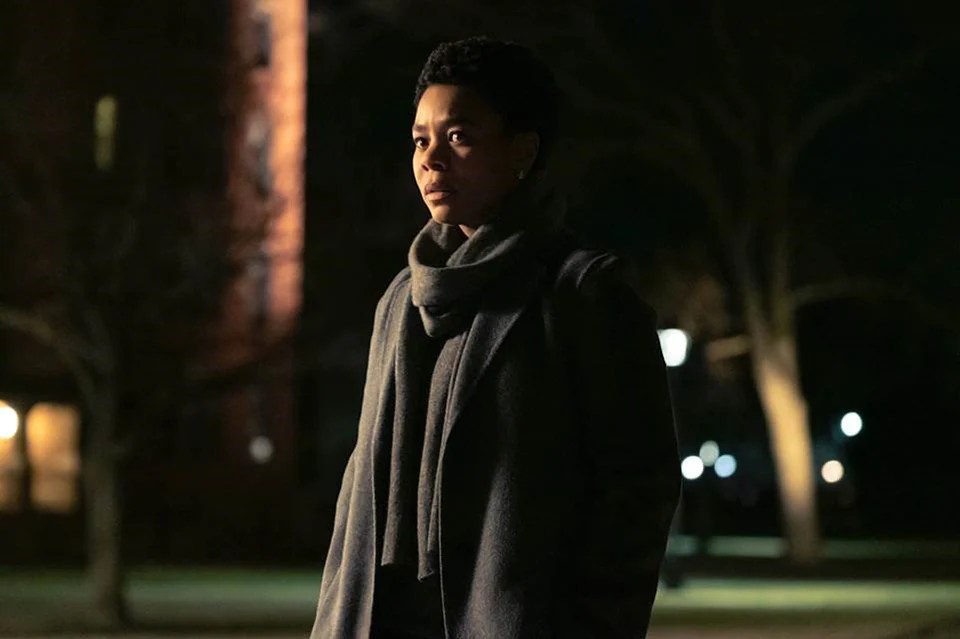
Reginal Hall (“Girl’s Trip”) is Gail Bishop, the first African American house “Master” at storied Ancaster College. She’s a tenured professor climbing that last rung on the college’s ladder, not merely teaching classes but presiding over, guiding and advising the young ladies of Belleville Hall.

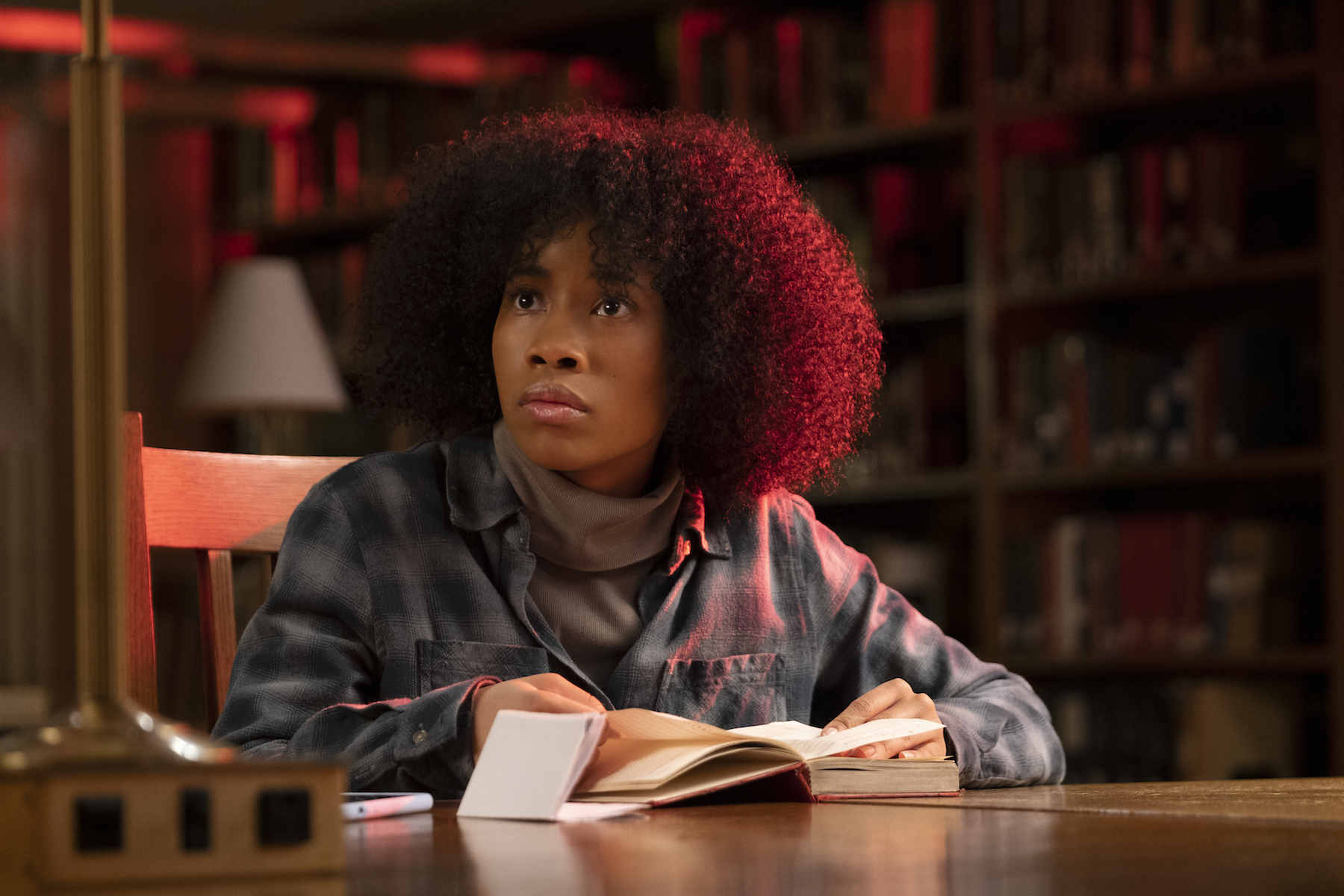
One of those coeds is Jasmine (Zoe Renee, graduating from TV’s “The Quad”), a wide-eyed African American freshman over-achiever from the West Coast.

Jasmine arrives to the news — perhaps just a form of hazing — that she and her roommate (Talia Ryder) are bunked in a haunted room. Somebody there died. There’s this tradition of a “witch trial” victim who roams the campus, picking “one freshman every fall” to be dragged by her “to Hell.”

“You’re gonna have to try a lot harder than that to scare me.”

But Jasmine and we can see that surface acceptance might be the best she can hope for from the skinny, partying fashion statements (Anna van Patten, Ella Hunt, Noa Fisher) of roomie Amelia’s circle.

Her first test academically comes from an American lit professor (Amber Grey) striving for tenure, who wears her hair in statement-braids and sees everything through the lens of race. Her bond to the “first Black master” at the college is of an “us sisters are an endangered species on this campus” variety.

All of the women are struggling to “belong” and fit-in, with Amber coping with youthful uncertainty about her mores — “never have I ever” games, alcohol-soaked parties, privileged come-ons from the college hunk (Will Hoffman) — if not her academics.

If Jasmine doesn’t think there’s a “race” angle in Nathaniel Hawthorne’s “The Scarlet Letter,” “it’s not there,” no matter what her professor insists.

Gail finds herself the minefield as her colleagues — Talia Balsam plays the department chair, Bruce Altman a tenured liberal college who must have grown up never knowing any Black folks — pick thei words carefully around her, struggling to avoid saying the wrong thing. They can’t help but treat her as a “token” in their ranks.

And both Gail and Jasmine are spooked by apparitions, spectral shadows and random encounters with the very old Puritan-dressed (Mennonites?) community outside the exclusive college’s hallowed walls. Jasmine is particularly rattled as her sleep disorders give her vivid nightmares and make her wonder just how supportive that roommate and those classmates are.

Diallo introduces a lot of ideas, which she wrestles with for long stretches until she recalls that this is supposed to be a horror movie. Thus we get another Jasmine nightmare, another creepy walk or jog in the dark with Gail.

There are moments that play as alarming, but the players make it a reach to believe that any of these women seem all that scared by what is happening or what they think is happening to them.

Everybody’s much more concerned with what this story is “saying.” Situations, shot selection, characters and those playing them easily get across the idea that each feels “targeted” on this campus — a furtive scowl from the otherwise-outgoing dining hall matron, the dream-or-not-a-dream admission from Amelia that “I hate you” that Jasmine is sure she heard.

Snatches of dialogue like that become Diallo’s somewhat arbitrary, self-conscious and pointless “chapter” titles on this stroll through college rites of passage and supposed chills.

Everything here is borrowed from scores of other movies — the witching hour at “3:33 am,” the research into the libraries old newspapers and school archives to figure out the earlier victims of “this witch” or whatever is going on here.

At some point, blunt statements of what this is all about and a “stolen from the headlines” cultural appropriation accusation are shoehorned in. But “Master” never shakes the feeling that we’re seeing a collection of tropes and ideas that never come together in a coherent narrative.

The “message” comes through loud and clear, but the film feels like an assignment.
“Film us a ‘Get Out’ in academia, and be sure to cover X, Y and Z”. As a filmmaker Diallo never lets us forget she’s checking off boxes on her class essay’s list of required topics and tropes.

Rating: Rated R for language and some drug use.

Cast Regina Hall, Zoe Renee, Talia Ryder, Anna van Patten, Noa Fisher, Talia Balsam, Bruce Altman and Amber Grey.

Credits: Scripted and directed by Mariama Diallo. An Amazon Studios release on Amazon Prime.

Running time: 1:38

Posted in Reviews, previews, profiles and movie news | Comments Off on Movie Review: Racism and Witchcraft are undergrad tests at this college — “Master”

Classic Film Review: “Dingo” (1991) with Colin Friels and Miles Davis comes back to life

Jazz trumpeter Miles Davis didn’t do a lot of acting in his 65 years of hard playing, hard living and siring “Birth of the Cool.” But filmmakers knew that burning intensity and hoarse-whispered inscrutability would pop off the screen if they could just talk him into signing up.

Aside from a “Miami Vice” episode, the one screen performance of note in Davis’s career was in a Franco-Australian jazz dramedy, “Dingo,” which came out the year Davis died (1991). Like the Outback dog of its title, its a bit unkempt and undisciplined. But this mild-mannered fantasy makes a sweet-spirited love letter to Outback life, Paris and the enduring cool of jazz, as Miles Davis played it.

In 1969, a boy in dusty Poona Flat, Australia’s answer to BFE, interrupts arm wrestling with his mates with a “Didya hear that?”

He’s picked up on the sound of a muted trumpet, a harbinger of the jetliner that passes overhead, causing everybody in this town to convoy out to the airport. A big transport with “TNT” painted on it lands. And out steps this hep cat in long hair, rose-colored glasses and toting a metallic pink trumpet.

Somebody on board had an impulse, decided this was “an interesting place” among all the other many “interesting places” he’s been.

“My name’s Billy Cross, and if you don’t mind, we’d like to play something for you.”

Cross’s band opens up, right there on the tarmac. And little Johnny Anderson’s life will never be the same. He is gobsmacked.

“You seemed tuned to us,” a sympathetic Billy whispers. “If you ever come to Paris, look me up.

Over twenty years later, Johnny “Dingo” Anderson (Colin Friels of “Darkman” and “Dark City”) practices his horn, listening to it echo across desert valleys. He’s an itinerant fence-mender, handyman and “dogger.” He sets steel traps to kill dingoes, which kill ranchers’ sheep.

He has a wife (Helen Buday) and two little girls, whom he catches up with in between long, dusty work trips. But he gets his ya ya’s out on the stage fronting a country pop jazz band, Dingo and the Dusters. And he keeps his dreams alive by writing Outback essays to his idol over in Paris, stories of how a “three-legged dingo is the worst kind.” He’s survived a trap, learned to sense them and being three-legged, can really only feed on slow domestic sheep. He’s a monster of the ranchers’ (and Johnny’s) creation. And as we see in the movie, one in particular has mastered the art of springing the traps.

The movie meanders a lot, showing us that limping, cagey dingo, introducing that childhood pal (Joe Petruzzi) who grew up to be a successful yacht broker, who still pines after Dingo’s wife Janie. Is she tempted?

But the money sequence is the film’s third act, when the student impulsively takes off in search of his inspiration.

Dutch-Australian director Rolf de Heer never made much of a dent in the North American cinema, making documentaries and the Outback folk comedy “Ten Canoes.” “Dingo” features a little Australian life, the tough and unpleasant work Dingo Anderson does for a living, roaming from ranch to ranch in his ute, with his camper trailer (caravan) and trust cattle dog in tow.

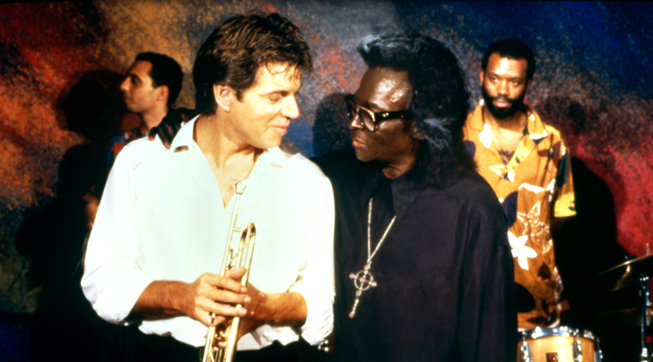
But de Heer’s gift to the cinema might be this film’s portrait of a reclusive jazz legend, years since his last live performance, taking an interest in this kid he inspired and long-time pen pal who has come to Paris to cut it or get cut.

The set-up is borrowed from “Moscow on the Hudson” and other films that used this trope — a jazz player/jazz fan’s pilgrimage to see if he has what it takes.

The music, by Michel Legrand and Miles Davis, leaning hard on Davis’s ethereal, echoey muted trumpet runs, gives “Dingo” the feel of a fantasy, a dream this Outback laborer has and then lives. It’s a beautiful score.

And for all the charms of Friel’s turn in the lead role, it is Davis that you can’t take your eyes or ears off of in their scenes together. He was always a little scary, with a cultivated intensity that Don Cheadle captured in playing him in “Miles Ahead.” He stared people down, even when he wasn’t pulling a gun on them for whatever reason he dreamed up.

Friels and de Heer serve up a Miles Davis who can be sweet, supportive and kind, in addition to seriously intense.

I think the script was going for some sort of analogy between the three legged dingo and Billy Cross/Miles Davis, reaching for a metaphor about Johnny and Billy’s fateful connection long ago, and the role each has to play in the others’ story. I don’t think they got there.

But Davis and Friels, the Outback and the out-of-this jazz by Davis, Legrand and (playing a musician friend of Billy’s) jazzman and actor Onzy Matthews makes “Dingo” worth tracking down and Dark Star gives it a new cinematic lease on life.

Rating: PG

Cast: Colin Friels, Miles Davis, Helen Buday, Joe Petruzzi and Bernadette LaFonte

Credits: Directed by Rolf de Heer, scripted by Marc Rosenberg. A Dark Star re-release.

Running time: 1:49

Posted in Reviews, previews, profiles and movie news | Comments Off on Classic Film Review: “Dingo” (1991) with Colin Friels and Miles Davis comes back to life

Netflixable? A Home Invasion might lead to a “Windfall” — or not

Windfall” is a talky, dramatically-flat hostage thriller that’s probably best-appreciated as the most reliable sort of genre piece you can film under a pandemic lockdown.

It’s not particularly suspenseful and not remotely original. But three pretty good actors gather together for a few rich vs. poor, winner-take-all economy and personal responsibility debates, which is just the sort of stuff you haggle over with your kidnapper — in B-movies, anyway.

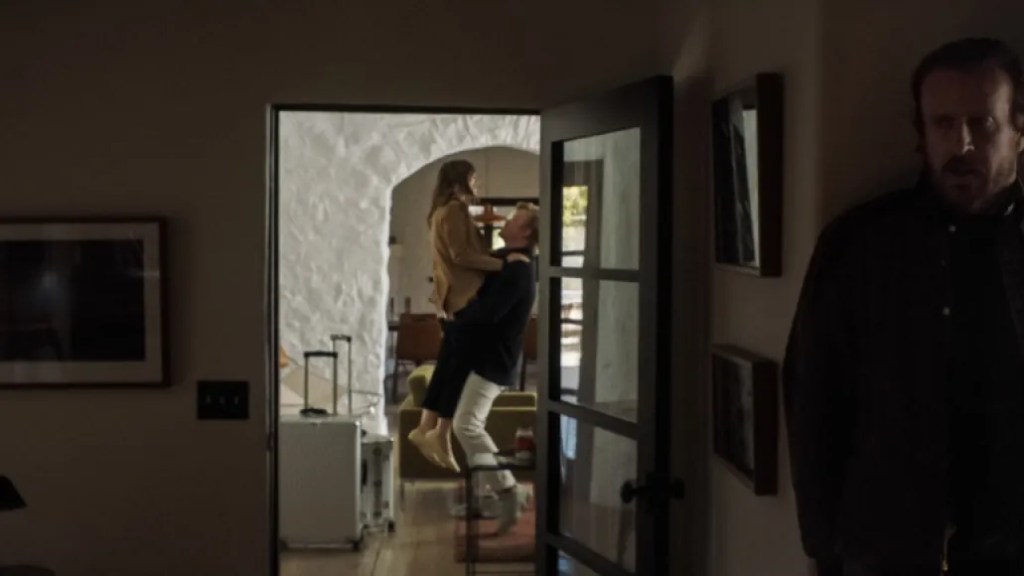
It begins with some promise. Jason Segel sips orange juice and surveys all that’s at his feet — a luxury hacienda in a remote orange grove right on the edge of the California desert. He gives little away in his expression, and truth be told, we don’t notice his attire until he steps in the posh walk-in shower, unzips his fly, and urinates. That juice glass he throws against a wall? That seals it.

This nameless character is here to loot and rob. And somehow, this expensive, beautifully-stocked getaway has no security system that could foil him.

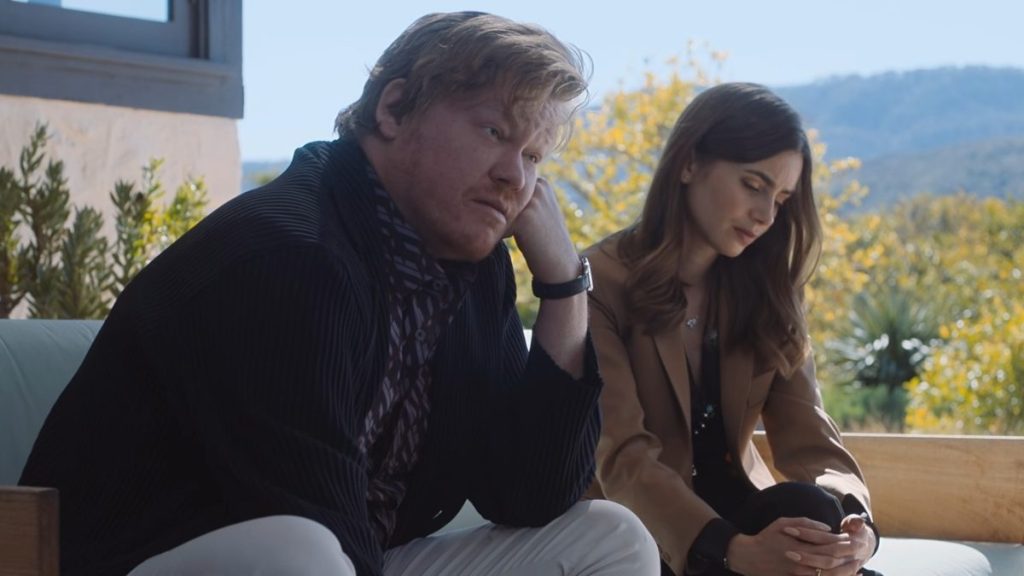
He’s barely stuffed enough into his pockets to make it worth his trouble when the owners arrive. They’re here for a romantic weekend, and we gather that he (Jesse Plemons) is rich and kind of famous for it, and she (Lily Collins) is his apparently adoring trophy wife.

The husband is calm, barely containing his arrogance and attempt to control the situation.

“You’re not the kind of guy who’d hurt anyone…” “Oh? You already know what kind of guy I am?”

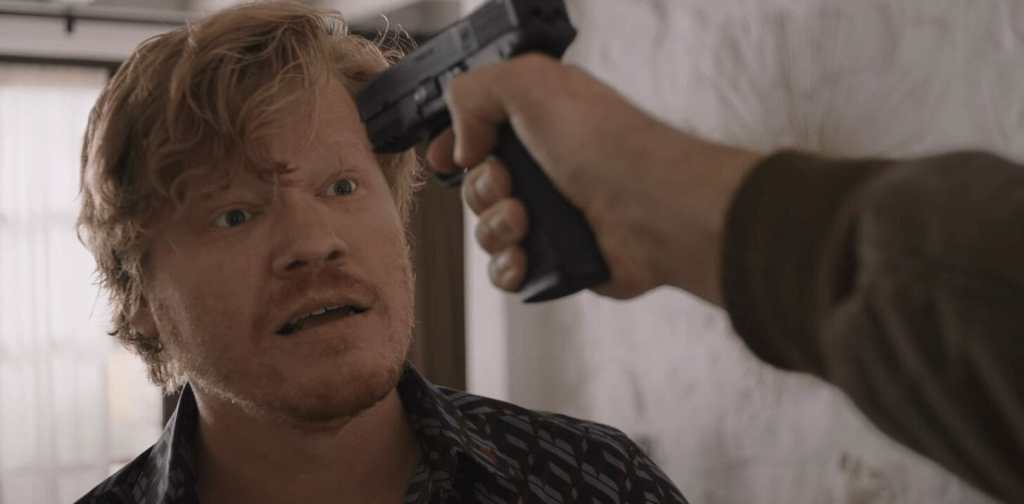
The robber is more the sort who gets right down to business, gets his hands on all the ready cash on hand, the Rolex watch, trashes their phones and “barricades” them in their sauna so that he’ll “have a head start” when he makes his getaway.

But he and we have heard some lies. Making his exit, he spies one more. No, he won’t be leaving. No, they’re not getting off that easily. And that means this is going to take a while.

Segel was one of those with a story credit here, so this thriller without many thrills is sort of his idea. He’s always a convincing Everyman, but we kind of want and expect this fellow to have more overt signs of disturbance or grievance. God knows the husband does.

Plemons is quite convincing as a comfy, soft “fat cat” who has the money to live the higher-than-high life of the one percent, with all the perks and privileges he figures he’s earned. Yeah, he’s going to unload on “lazy freeloaders” who don’t have it as well as he does, and he sells that ethos with ease.

The wife? She’s hearing “get CLOSE to him” suggestions from her husband, something that will make the intruder less likely to harm them. Collins has the least to work with and thus becomes the dullest among the three “types” that this cast is assigned to play.

Everybody here has “secrets,” and as they haggle, bicker, debate and watch “The Three Amigos” on the state-of-the-art outdoor cinema on the back patio, we start to learn them.

No, they’re not as interesting as all that, and no, not every question we have is answered. The former is a problem and the latter isn’t the “air of mystery” asset that this movie needs to come off.

“Windfall” isn’t bad. It’s just predictable and dully inconsequential.

Rating: R for language throughout and some violence.

Cast: Jason Segel, Lily Collins, Jesse Plemons

Credits: Directed by Charlie McDowell, scripted by Justin Lader and Andrew Kevin Walker. A Netflix release.

Running time: 1:32

Posted in Reviews, previews, profiles and movie news | Comments Off on Netflixable? A Home Invasion might lead to a “Windfall” — or not

Next screening? A “Doc Brown” (time travel) experiment goes wrong, resulting in “Madelines” all in a line

This is an interesting spin on that sci fi trope, and it comes out way April. 1.

Posted in Reviews, previews, profiles and movie news | Comments Off on Next screening? A “Doc Brown” (time travel) experiment goes wrong, resulting in “Madelines” all in a line

Movie Review: A “Baker’s” “Cheaper by the Dozen” on Disney+

Another “Cheaper by the Dozen?” With an inter-racial couple and their huge but “no, not a cult” family, tested by racism, mistrust and sudden affluence?

Sure, why not.

And no, that’s not a ringing endorsement for Disney’s latest reboot of the kid-filled/kid-friendly frolic that was the book by Frank B. Gilbreth Jr. and Ernestine Gilbreth Carey, the basis of many a movie since first hitting the screen in 1950.

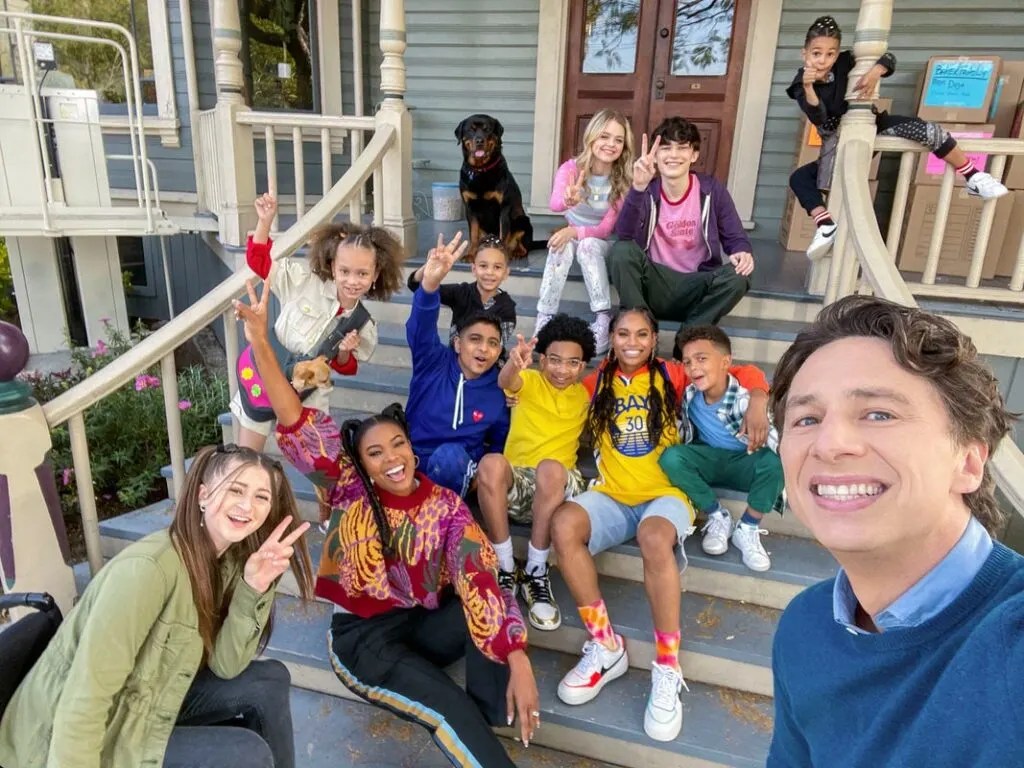
This Gabrielle Union/Zach Braff vehicle has a few laughs but seriously misses the point of how comical the logistics of managing such a brood can be. It includes some tetchy moments dealing with racial profiling and what White folks don’t know about “how to raise Black kids,” and stumbles clumsily as it turns away from the “struggles” of the family and falls into McMansion affluence.

But it’s harmless enough, even if it barely rises above background noise for parents and kids distracted by whatever else is going on while you watch it.

The Kenya Barris and Jenifer Rice-Genzuk scripted take on “Cheaper” opens with an eight minute voice-over montage that skips through the no fault divorces and meet-almost-cute that brought this Baker Bunch together. Paul is a college drop-out who took up restaurant work to support himself, his new wife (Erika Christensen) and their baby, which led to Baker’s Breakfast, the breakfast-all-day restaurant he and his “unpaid exploited infant workforce” run after his divorce.

Zoey was the also-newly-divorced from a pro footballer mom who came in as a customer, demanded breakfast off the lunch menu and suggested the whole “breakfast all day” thing to the guy she was destined to fall for. Their “meet cute” was her dropping that “unpaid exploited workforce” line.

As they join families, and then have two sets of twins themselves, and take in his “rehab” bound sister’s troubled teen (Luke Prael), well that makes a dozen Baker’s and Bakers by proxy.

There’s always preschool mayhem afoot among “the littles” in this mob, inattentively watched by “free” babysitter Kate, the ex-wife. And the older kids are settling into personalities which could point to conflict — basketball-obsessed Deja (Journee Brown) who is all about being her rich jock biological father’s (Timon Kyle Durrett) kid, smart and nerdy DJ (Andre Robinson) who has nothing in common with that biological father, “playa” Indian adopted godson Haresh (Aryan Simhadri), the would-be “influencer” (Kylie Rogers), the wheelchair-bound punk rocker (Caylee Blosinski).

But the kids are largely an under-developed “workforce,” here.

It’s a story that could stand some updating, and here deals with much more modern concerns such as post-divorce childrearing, keeping track of anybody old enough to be dating in a more sexual era and acceptance and tolerance. This last issue bursts to the fore when Paul’s idea for a “hot, sweet and savory sauce” makes them rich.

Yes, they move on up, to a de-luxe McMansion in the ‘burbs. That’s handled so perfunctorily that one wonders why all the “pitch” to venture capitalists and distractions of “franchising” wasn’t dispensed with altogether. Why not just have the Bakers win the Lotto? Not that this would be any funnier.

As their new community and new neighbors profile then, idm is.

the family has to learn to listen to one another, to recognize the strain of acquisitive “success” and figuring out how one steps back from that.

The conflicts here often feel drawn from real life but are introduced purely as plot devices. “My two dads” cheer the hoops star from the stands, leading to a funny-only-to-tiny-tots dad “dance-off.” The “troubled kid” is suspected of stealing and the new rich neighbors are all racial profiling “Karens,” no matter what their actual names are.

The adults involved are sitcom and big-screen comedy/dramedy veterans and make the few funny lines land. Union’s “spitfire” persona meshes well enough with Braff’s dweeby baggage.

But while all the topicality and inclusion here makes the picture modern, none of the new material is rendered in funny tones.

The premise of the book, and the first film made from it (in 1950, a “Cheaper” we see the Bakers watching on TV) is that dad fancies himself an efficiency expert, “experimenting” on the proper logistics of managing a family this large. Abandoning that, when you’ve set up shop in a family-operated restaurant, was a mistake. Because there’s little that’s “efficient” and plenty that could be amusing about herding roughhousing kids with just a couple of sets of eyes, and serving the lyric in the process.

The efficiency of this approach to the material is basically just blanding it down to look like every other “big family” comedy ever filmed. “Cheaper” in this case plays like a TV pilot, one that could use a lot more laughs.

Rating: PG for thematic elements, suggestive material, and language

Cast: Gabrielle Union, Zach Braff, Erika Christensen, Timon Kyle Durrett, Journee Brown, Andre Robinson, Aryan Simhadri, Luke Prael, Christian Cote, Sebastian Cote, Kylie Rogers, Mykal-Michelle Harris, Leo Abelo Perry and Caylee Blosinski

Credits: Directed by Gail Lerner, scripted by Kenya Barris and Jenifer Rice-Genzuk, based on the novel by Frank B. Gilbreth Jr. and Ernestine Gilbreth Carey. A Walt Disney release on Disney+.

Running time: 1:47

Posted in Reviews, previews, profiles and movie news | Comments Off on Movie Review: A “Baker’s” “Cheaper by the Dozen” on Disney+

Movie Review: “Alice” isn’t your household slave any more

One of the toughest decisions facing anybody involved with a movie is recognizing “Well, Hell, somebody beat us to it” and knowing when to throw in the towel.

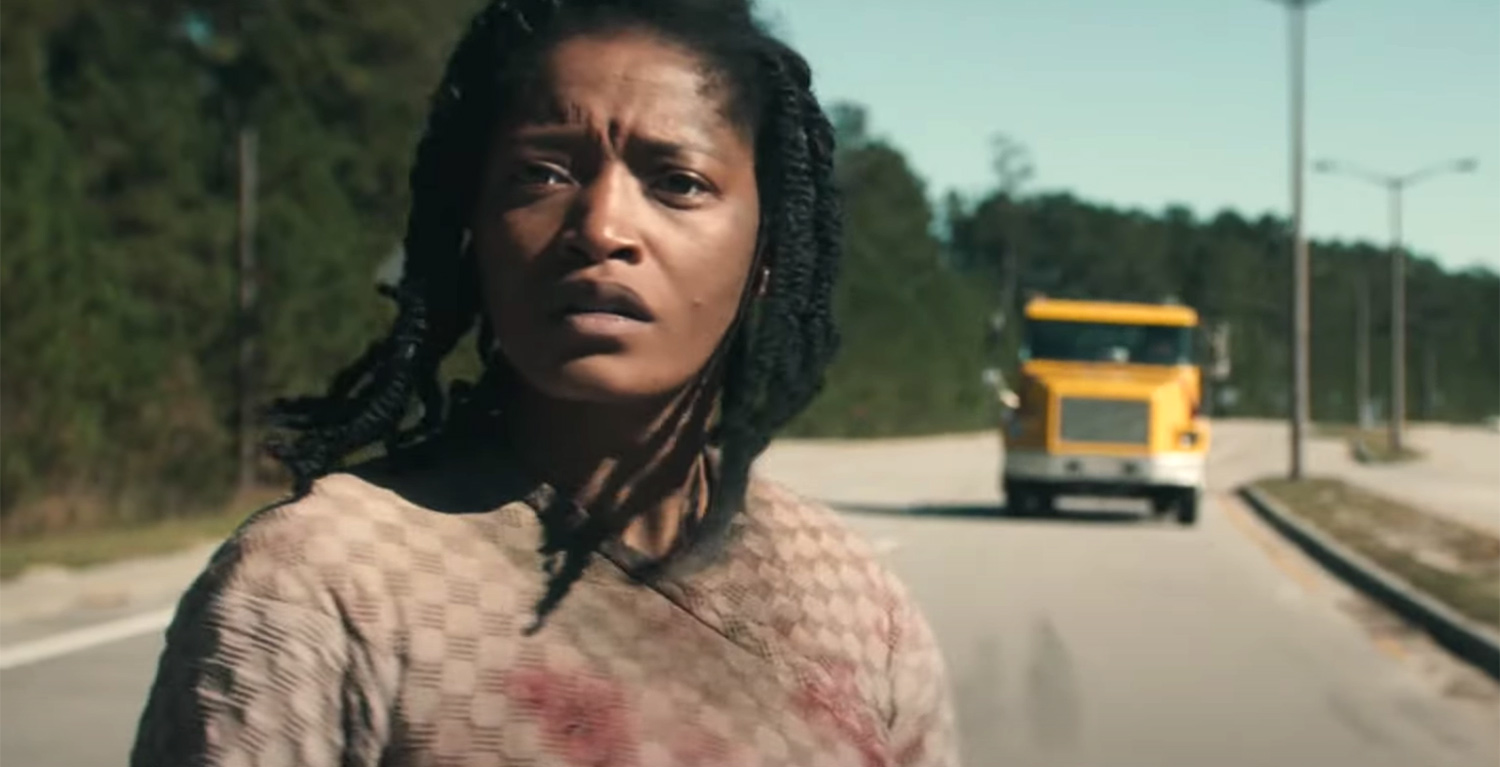
The Keke Palmer enslaved woman’s revenge thriller “Alice” went into production as Lionsgate’s Janelle Monáe vehicle, “Antebellum” announced its release date back in 2020. That’s a lot like plowing on with “Infamous” when the fanfare over “Capote” is just starting to build, and the writing’s on the wall.

As in, “Well, they’re not the same movie, but they’re damned close. Who’s going to want to see that twice?”

“Alice” opens, like “Antebellum,” with a vicious depiction of enslaved life on a Georgia plantation. Mister Paul (Jonny Lee Miller) rides his “domestics” hard, and as a lay preacher, inveighs upon them to “be fruitful,” multiply and increase the size of his enslaved “property” holdings — with mates of his choosing, of course.

House “domestic” Alice (Palmer, the “Akela and the Bee” star who reinvented herself with “Pimp”) has been secretly married to Joseph (Gaius Charles) when Mister Paul, a brute too-quick with the whip, informs Joseph that he’s to be married/mated with a slave from a nearby plantation. That’s what triggers one last furious effort to fight their way free by both Alice and Joseph.

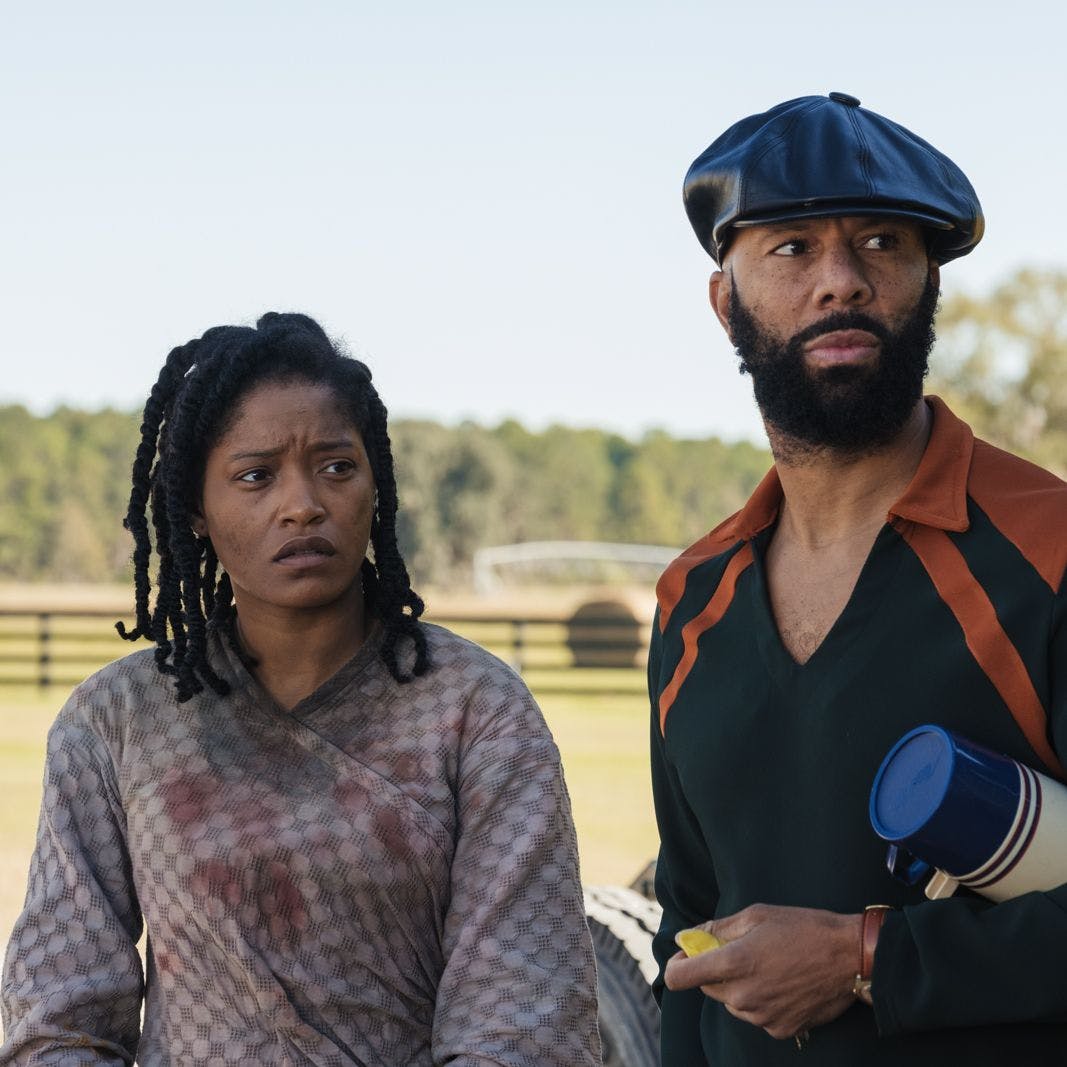
Only Alice is able to gouge her way out, sprint through the Spanish Moss-covered forest and…almost get run over by a tractor trailer on a Georgia Interstate in 1973.

Sure, we had a clue, with her picking up a copy of her mistress’s Tolstoy’s “Anna Karenina” and holding it up to a mirror to compare herself to the heroine depicted on the cover. That novel was first published, in Russia, in 1878. Every American, save for the stupidest and the political cult who still embrace him, can manage that historical math.

Alice finds herself in future shock, with Diana Ross on the radio and on the cover of the “Rolling Stone” and Pam Grier at her “Coffey” “Jet” magazine cover icon action icon peak. With some understanding from the understandably confused truck driver (Common), Alice gives herself a rushed lesson in 100 years of civil rights, a Pam Grier/Angela Davis afro and the resolve to track down anybody from that plantation (Alicia Witt) who needs confronting and can give her some answers.

Because like “Django Unchained,” she’s hellbent on going back and having her revenge.

The best one can say about the heartbreaking opening act is that the Antebellum South might be where the phrase “The cruelty is the point” might have originated.

The best one can say about Alice’s blaxploitation era revenge fantasy is that it doesn’t play.

And despite Palmer’s investment in the title role, there’s little more to add about “Alice” except that it shows up two years too late, even less logical, and a lot of budget dollars short of “Antebellum.

Rating: Rated R for some violence and language

Cast: Keke Palmer, Common, Jonny Lee Miller, Gaius Charles and Alicia Witt.

Credits” Scripted and directed by Krystin Ver Linden. A Roadside Attractions release.

Running time: 1:40

Posted in Reviews, previews, profiles and movie news | Comments Off on Movie Review: “Alice” isn’t your household slave any more

Netflixable? Seen “Dog?” Don’t miss “Rescued by Ruby”

Here’s the novel touch to “Rescued by Ruby,” an utterly adorable hero dog tale based on a true story.

Director Katt Shea and her team include outtakes of the gorgeous rescue border collie mix “Bear” who has the title role in their film. We see the patience and good humor it takes not just to train a dog, but to train and then film one to be a star who hits her or his marks.

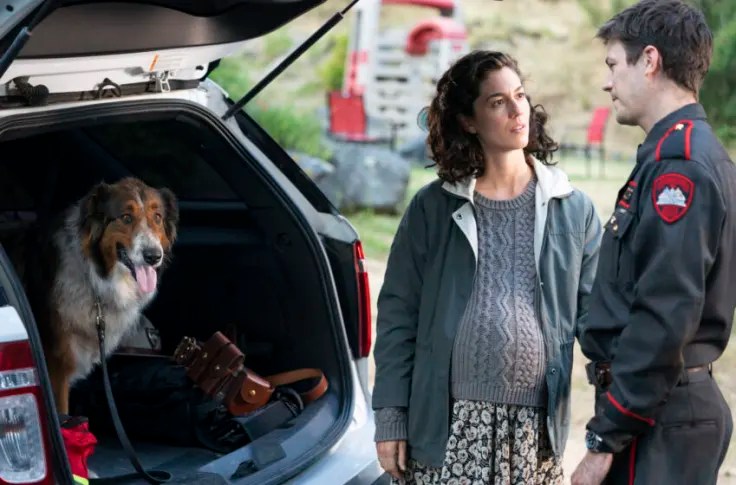
“Ruby” is another “Who saved who?” t-shirt of a dog story about a short-attention-span Rhode Island state trooper (Grant Gustin) who dreams of taking his “protect and serve” duties to the ultimate — by joining the K-9 unit. But the officer (“Party of Five” alum and veteran character actor Scott Wolf) who runs that team keeps telling him “I don’t see it.”

Maybe he senses the fact that Trooper Dan O’Neil’s selling point on all this to his teacher/new-mom/and newly-pregnant wife (Kaylah Zander) is about the raise in salary. O’Neil just isn’t worth the risk, not when K-9 dogs are German Shepherds imported from Europe at a cost of $10,000 each.

O’Neil’s Hail Mary is to get his own dog, train it and try out for the squad. As $10,000 doesn’t grow on trees, to the shelter he goes.

Ruby has been there past her “put down” date, a smart but undisciplined and unruly mess who isn’t even house-trained. People keep taking this beauty home only to have her trash their house or run away. She prefers the company of Pat (Camille Sullivan) at the shelter.

Can this not-really-a-dog-guy with the big hat turn that train wreck of a canine into a search and rescue star?

Director Shea (“Nancy Drew and the Hidden Staircase”) and screenwriter Karen Janszen tinker with the formula for moist-eyed-dramedies starring dogs in a couple of cool ways.

Wolf’s K-9 chief shows us what is expected of such a dog and its teammate, stopwatch tests seeking objects, people and human remains. Spirited Ruby is sure to have trouble with even the simplest five-minute “stay” command.

This comes after the O’Neil has to trial-and-error his way through books, Youtube tutorials (director Shea plays the dog expert in the black hat) and simple desperation in order to civilize Ruby for living with her new family.

There isn’t much new under the sun in these movies. Show us a few sequences seen from (low, handheld camera, slightly distorted lens) the dog’s point of view. Deliver a lot of mishaps and hijinx.

The ending is always a real get-choked-up moment if they do it right. Shea, Janszen, Gustin, Wolf and especially Bear trainer Tiffany Wall (Who’s a good girl? YOU are!) pull it off with family-friendly panache.

Rating: TV-G

Cast: Grant Gustin, Camille Sullivan, Kaylah Zander and Scott Wolf

Credits: Directed by Katt Shea, scripted by Karen Janszen, based on a short nonfiction story by Squire Bushnell and Louise DuArt. A Netflix release.

Running time: 1:30

Posted in Reviews, previews, profiles and movie news | Comments Off on Netflixable? Seen “Dog?” Don’t miss “Rescued by Ruby”

Movie Review: Switching bodies and kicking ass in Korea — “Spiritwalker”

The chases are pulse-pounding and the fights and shoot-outs — in streets and bars, hotel suites and inside a BMW SUV — are visceral, almost epic.

Just don’t let the fact that the Korean body-switch thriller “Spiritwalker” is confusing on a whole new level throw you. When your hero is literally switching bodies, left and right, literally every time his watch reads “12,” when the bodies he leaves — bad guys, to a one — stick around and return to the action later, when there’s some inconsistency to who exactly we’re looking at, rest assured you’re not the only one confused.

It probably all makes more sense in writer-director Yoon Jae-Keun’s head. It’s been ten years since his last film (“Heartbeat”). From the looks of “Spiritwalker,” he’s been writing and rewriting this thing that whole time, folding in more complications all the while.

A man (Yoon Kyesang) wakes up, bloodied and battered, after a car wreck. “Where am I? WHO am I?”

The homeless guy (Ji-hwan Park) rummaging through his wrecked SUV can’t help with that. But at least he called an ambulance. With no memory of his identity, a bullet wound, a photo of a pretty woman in front of a landmark Seoul church, he has the vague sense that maybe he shouldn’t wait in the hospital long enough to be interrogated by the cops sends him on his quest.

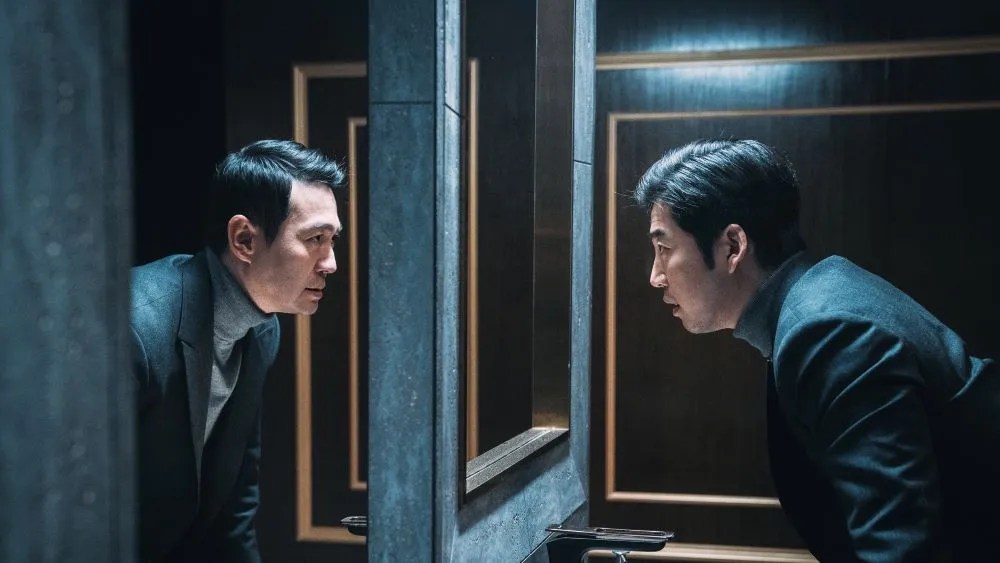
A few “OK, try to forget this detail” moments hit us straight away. No, that bleeding shoulder isn’t treated, not that we can see. Time passes very strangely in this film’s reality, as “Ian” or “Yoo” or “Baik” or “Jee” or whoever this dude is passes from person to person every time whatever watch he’s wearing tells him it’s 12 o’clock. That’s a lot of 12s.

People recognize him in this or that guise. Some are puzzled, some afraid and some come after him, pistol, hammer and tong. Depending on who he is, he might reflexively have mad “fighting back” martial arts skills. But sometimes it takes a moment or three to summon them up.

And reloading any of the pistols he fires in shoot-outs is a rare afterthought as whoever this guy is pursues whoever that woman Jina (Ji-hwan Park) is, and she either recognizes him warmly or (depending on his guise) pummels and threatens to kill him.

That hobo, who stole his car’s “black box” data and video recorder? He’s a hapless helper and comic relief bystander to all the mayhem to come.

It’s hard to say much about the acting, as our writer-director isn’t wholly consistent in who is “playing” the lead. Sometimes, the body switch is obvious, mostly we’re seeing Yoon Kyesang, who sees whoever he is supposed to be “now” in this or that mirror. Most viewers outside of Korea won’t recognize the leads and various fresh bodies inhabited or villains introduced. Lots of TV credits and films little known outside of the Peninsula among them.

But for all the body switheroos, the “MacGuffins” here are as commonplace as every other thriller you’ve seen in the past thirty years and the villains just as generic.

Well, one bad guy gets good and stoned and makes rash decisions accordingly, so that’s kind of novel.

Mostly, Yoon keeps his energy and attention on getting his characters to their next switch, their next fight or chase. The film’s loose grasp of time, gun magazine capacity and severity of injuries can’t all be written off to the biggest MacGuffin here, so “Spiritwalker” can play like a “Crank” with a hint of the supernatural.

But it’s still a fun ride, even if it’s hard to keep up with who the body-switched “star” might be.

Rating: unrated, lots of violence, drug abuse

Cast: Yoon Kyesang, Ji-Yeon Lim and Ji-hwan Park.

Credits: Scripted and directed by Yoon Jaeo keun. A Well Go release.

Running time: 1:48

Posted in Reviews, previews, profiles and movie news | Comments Off on Movie Review: Switching bodies and kicking ass in Korea — “Spiritwalker”