
This looks terrific, intrigues involving Israeli occupation security forces getting Palestinians to rat on each other
March 4, from IFC.
This looks terrific, intrigues involving Israeli occupation security forces getting Palestinians to rat on each other
March 4, from IFC.


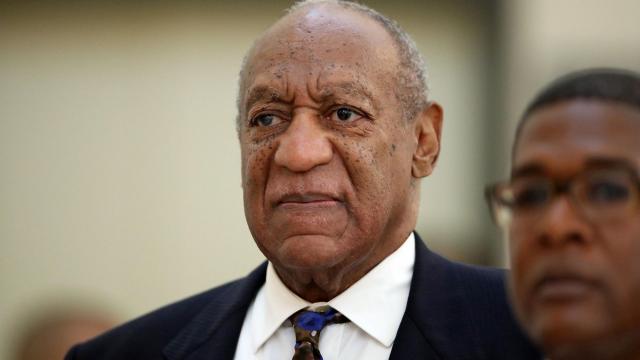


Bill Cosby was an artist who “changed the world,” “America’s Dad,” an icon of stand-up comedy, a breakthrough TV performer with Emmys and Grammys and national recognition in every field he moved into.
He was a tireless education activist in front of the camera, and a behind-the-scenes activist who not just broke barriers, he opened doors for others — forcing the integration of the film and TV stunt-performer industry.
And “He was a rapist who had a really big TV show once.”
Comic-turned-filmmaker W. Kamau Bell’s “We Need to Talk About Cosby” is a cultural history lesson, a work of biography, and in the tradition of “Surviving R. Kelly” and “Allen v. Farrow,” an expose of a famous person whose private persona can only be described as monstrous. For decades, the most famous Black entertainer in America drugged and raped women — scores upon scores of them.
Bell’s four-part Showtime series unfolds as biography, marking the Philadelphian’s early years, his showbiz breakthrough as an emulator of comic pioneer Dick Gregory who found the way to success and riches in America was to become “Raceless Bill,” with “family friendly” stand-up. His don’t-talk-about-race credo saw him rewarded with multiple TV series that were landmarks of their time.
But all the way through this Showtime series, in every episode as Cosby launches his career, first tastes fame, and then reinvents himself again and again, there were victims and pieces of evidence that kept coming out, a sexual predator “telling us who he was” on stage, on TV shows and in interviews. The signs were there, Bell shows us and Cosby-watchers and others tell us, suggestions of criminal activity and the attitudes that led to it, the “rape culture” that only #MeToo put into the public eye.
His story became the most precipitous fall in American public life.
Bell interviews victims, co-workers, academics, entertainment historians, psychotherapists, lawyers, journalists, the researcher/curator of “Hamilton’s Pharmacopia,” an expert on “drug facilitated sexual assault,” and shell-shocked fans.
The series firmly places Cosby at the pinnacle in the history of American comedy, and as a Black role model whose omni-present face and voice made him an icon of generations. And Bell asks the hardest question, one that comes up whenever Roman Polanski, Michael Jackson, Picasso or Woody Allen’s names are mentioned.
“Can you separate the art from the artist, and should you?”
“Talk About Cosby” is rich in detail and thorough in the breadth of interviews Bell conducted. The generous sampling of TV and film appearances includes not just samples of Cosby the performer, but cringe-worthy interviews with Larry King, clips of Charlie Rose and Matt Lauer “reporting” on a story that should have made them blush.
There’s a tsunami of facts, achievements often lost with the passage of time — a CBS TV special Cosby hosted, “Black History: Lost, Stolen or Strayed,” that presents what’s been criticized as “uncomfortable” “critical race theory” way back in 1968.
Every episode is filled with achievements and the acclaim and respect that every bad thing Cosby ever did took away from him. And every episode has little clues, hints that maybe “Doctor” Cosby’s Ed.D. wasn’t earned, other signs — his infamous stage routines about “date rape drugs” like Spanish Fly — that maybe the public and African America in general shouldn’t have kept him on that pedestal for so long. The series makes it clear how easy Cosby made it for us to assume his midlife “America’s Dad” guise was just a reflection of his real life.
The first hint that he might not be what he’s seemed was his evolving into Black America’s public scold. That made his “hypocrisy” an easier target when the whispers turned into court cases.
Bell hands interview subjects a notebook PC that to play back incriminating stage routines, interview revelations and even a damning episode of “The Cosby Show” in which he leers about his special “people, they get all huggy-buggy” after sampling his special barbecue sauce. Bell questions interviewees about what “Dr. Heathcliff Huxtable’s” Cosby-selected profession was on “The Cosby Show” — an OB-GYN. His office?
“It was in the basement of their townhouse…Ohhhhhh.”
His manner of manipulation, of using his “power,” is explored. He “mentored” some of his victims, especially when he had the most popular TV show in America. Some of Cosby’s enablers are named, the “serial philanderer” label is examined and the phrase “a LOT of people knew” pops up.
And there are endless, repetitious accounts of how this power figure at the top of the entertainment industry would lure powerless women, offer them drugs or sneak those drugs into their drinks, then heartlessly shame the women with “you got so drunk” and “This was between you and me” threats the morning after.
The series’ thoroughness and the repetition of the predator’s modus operandi can make the outrage feel earnest but somehow muted, with Bell speaking for many in how deflating and disheartening learning all this has been. Despite the many interviews with victims, there are fewer big emotional punches in this series than you’d expect, given the life-altering nature of the crimes.
“Talk About Cosby” is missing an interview with the pivotal figure who brought Cosby down — the outspoken stand-up comic Hannibal Buress — who may want to move on from that October 2014 club appearance, but whose absence is felt. That’s where some of the outrage that the series is missing might have come from.
But by generously sampling Cosby’s greatest hits, by praising Cosby’s philanthropy, Bell masterfully builds us up in between damning indictments. He reminds us of the “monument to Black excellence” that was “The Cosby Show,” its cast and even its set, and of Cosby’s place at the center of American culture. Remembering how high the man rose, how trusted he and his “brand” became makes his fall more disheartening, the reluctance to believe his accusers and the whispers easier to understand.

Rating: TV-MA, graphic discussion of rape, profanity
Cast: Bill Cosby, Gloria Hendry, Lili Bernard, Victoria Valentino, Michael Jai White, Jemele Hill, Michael Dennis, Jelani Cobb, Gloria Hendry, Gloria Allred, Doug E. Doug, Linda Kirkpatrick, Lise-Lotte Lublin, Michael Coard, Rolando Martin, W. Kamau Bell
Credits Written, directed and narrated by W. Kamau Bell. A Showtime release premiering Feb. 6.
Running time: Four episodes @:58 minutes each.
This one comes to theaters Feb. 4, Friday, and streams/downloads/VODs Feb. 8.
David Blue Garcia directs this reference the old/chainsaw in the new reboot/sequel.
Great cell phone “cancel culture” joke.
Check it out. Feb. 18, Leatherface is reborn on Netflix.

When it comes to gumshoe cinema, I have a pretty high tolerance for the cornucopia of cliches that are the bread of butter of of the genre. “Kiss Kiss, Bang Bang,” “Rogue’s Gallery,” anything based on a Raymond Chandler novel or sending up “Chandleresque” and I’m in, at least for a while.
“Last Looks” is such a film, but one with baggage that may not have even crossed the mind of TV and film screenwriter Howard Michael Gould (“Cybil,” “Home Improvement,” “The Jeff Foxworthy Show,” “Mr. 3000”) when he wrote the novel that he later turned into a screenplay.
It’s an everything-but-the-kitchen-sink dramedy about a disgraced cop reluctantly-recruited to clear a TV star, a plummy-voiced Master Thespian who is A) foreign, B) a “black-out drunk” and C) accused of murdering his wife.
It stars Charlie Hunnam as a dropped-out/off-the-grid, hipster survivalist beardo who works the case from the seat of an ’80s vintage 10-speed bicycle. But when you cast Hollywood’s most celebrated anti-Semite as actor Alastair Pinch, when you let him drop lines like “It was good enough for Wacko Jacko (pedophile Michael Jackson),” when you immerse our gumshoe in the murderous “the star always gets off” corruption of “the Sh–ty of Angels,” what are you really saying about co-star Mel Gibson?
That makes the picture a form of moral relativism that probably wasn’t the intent of Gould, certainly not of journeyman TV and film director (“Brockmire,” “Veep”) Tim Kirkby. “Last Looks” invites you to ask yourself, “In light of everything ELSE we know about Hollywood, is ol’Mel all that bad?”
Gibson makes a lark out of the entire experience, all Van Dyke beard and ever-so-British twinkle, with every Received Pronunciation syllable rolling off his tongue like The Great Barrymore or the Greater Olivier at his vampiest.
He is glib. He is flip. Alastair drinks on the set of his popular TV show, “Johnny’s Bench,” which has him dropping the dipsomaniacal Brit act to sling an Oklahoma accent. He is all “I was drinking absinthe” when he decided that this was the night he’d “teach Stevie Wonder how to drive” anecdotes.
Alastair doesn’t seem like the sort who’d murder his wife. Then again, he doesn’t seem the least bit upset that this has happened, that their little girl (“America’s Got Talent” also-ran Sophie Tatu) is motherless.
Former star LAPD detective Charlie Waldo has to be dragged out of his recluse-in-the-mountains (Banning, California) life, limiting himself to “100 things” as his possessions, living off the land and meditating with a pet chicken in his Airstream . He was tempted by his ex (Morena Baccarin of “Deadpool”), threatened by a cop (Clancy Brown), generic thugs and a newly-made marijuana tycoon (Jacob Scipio). And still ou’d have to wonder why he’d take this case.
But all Alastair has to say is “What SAY you, detective?” in that accent, and our bearded anti-hero is on board. Sort of.
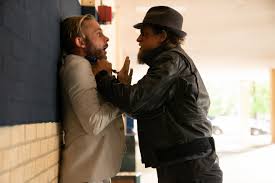
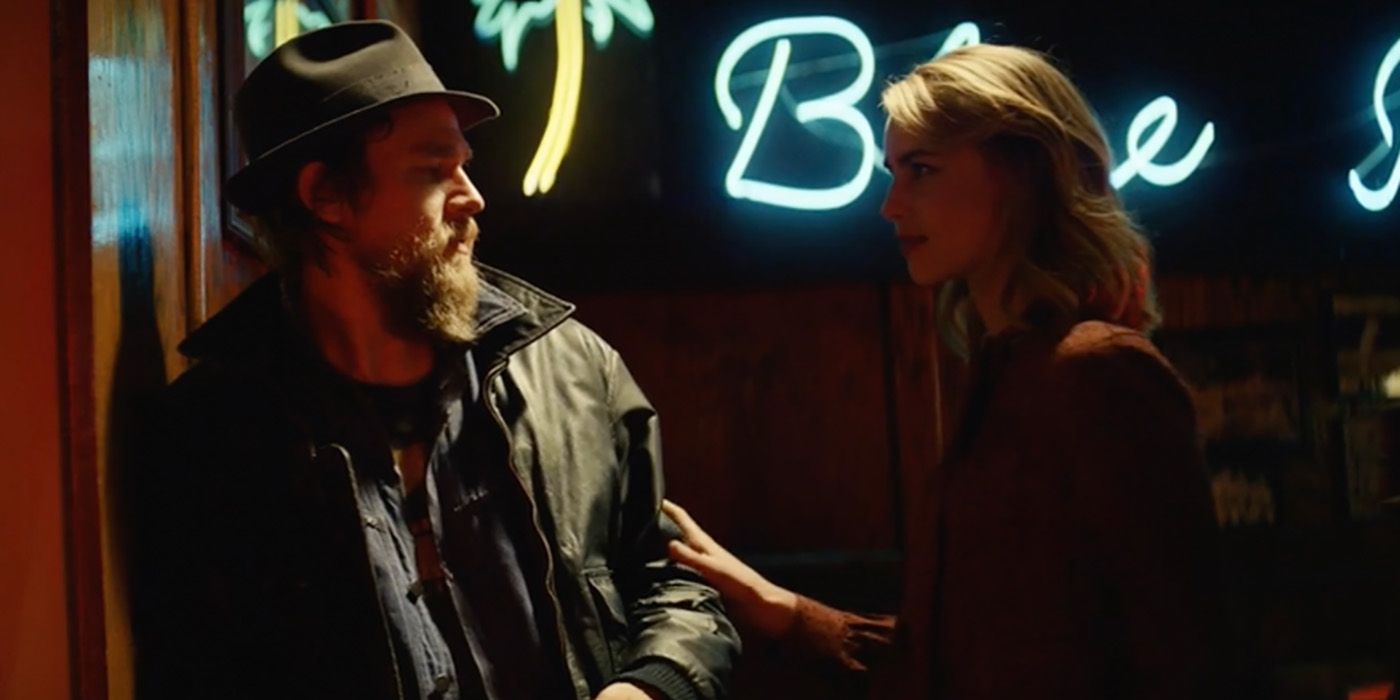
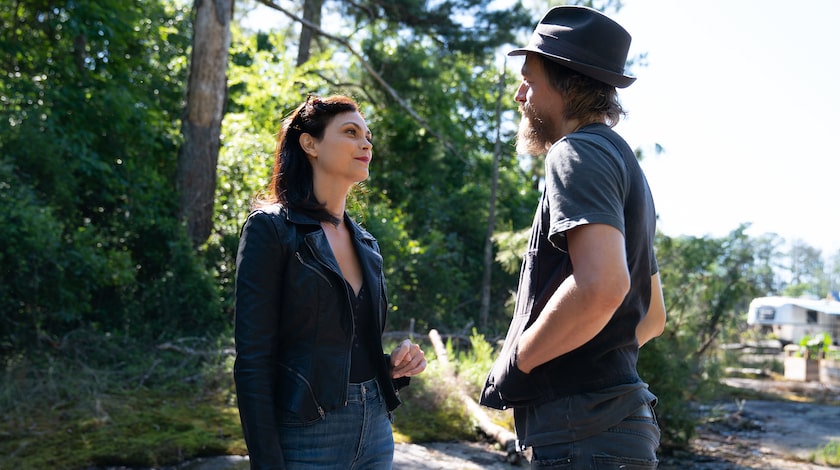
The plot is a tangle of storylines, alternate suspects, femme fatales and dead-end subplots which add up to little that isn’t obvious or that makes much sense.
The supporting cast has its stand-outs. Throw in Rupert Friend (“The Young Victoria”) as the oily, multi-tasking network chief, Robin Givens as his take-no-prisoners legal mouthpiece, Lucy Fry playing a runway-ready kindergarten teacher, with a cameo by Method Man and a glorified cameo by Dominic Monaghan as a seedy lawyer.
The entire concoction never amounts to much, but Hunnam makes an agreeable fictional detective stereotype thanks to his scruffy look, his ability to shrug off the many beatings such characters endure and Charlie’s “car with character” (that ten-speed).
But that brings us back to Gibson, who was Twitter-trending just last week as assorted folk noted that if “The Jews run the world/media/Hollywood” as anti-Semitic America (and the deranged Brit who took all those hostages in Texas) seem to think, “Why haven’t they/we canceled Mel Gibson?”
While the movies might be B-pictures, by and large, Gibson’s still working. “Last Looks” is no “Boss Level” or “Fatman,” and isn’t as high-minded as “The Professor and the Madman.” Not that any of them were all that. He has six movies in the can prepping for release, three movies and a TV series in production or pre-production.
A big chunk of the movie-going audience pays him no mind, but plenty of fans never quit on him, here and abroad.
So here’s what we can conclude about “Cancel Culture” when it comes to popular conversative figures caught being bigots. There IS no cancel culture. Gibson works a lot, just never in anything all that good, rarely in anything that could be called an “A picture,” rarely with a co-starring cast of any repute and rarely in a movie that earns much attention, or deserves it.
Whatever his baggage may bring in terms of name-recognition for your film, we read “What is this movie REALLY saying about/doing-for Mel Gibson” every single time out. His notoriety is sentencing him, every movie he makes and everybody who chooses to work with him — in front of or behind the camera — to movie purgatory.
Which is all “Last Looks” deserves.

Rating: R for pervasive “language” (profanity)…and violence
Cast: Charlie Hunnam, Lucy Fry, Morena Baccarin, Dominic Monaghan, Robin Givens, Clancy Brown, Jacob Scipio, Method Man, Rupert Friend and Mel Gibson
Credits: Directed by Tim Kirkby, scripted by Howard Michael Gould, based on his novel. An RLJE release.
Running time: 1:50

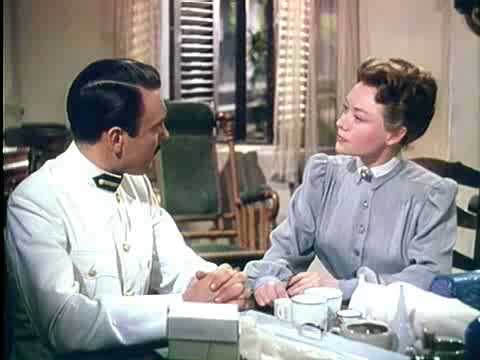
One can almost see the wheels turning in the ancient and esteemed British production company, The Rank Organization, the interoffice muttering that leads to inter-office memos and then to major — or minor — motion pictures.
“Oy! What’s this? United Artists has a big, fat hit on its hands with ‘The African Queen?’ What have we got the rights to, that story that predates the (C.S. Forester) novel that one came from?”
That would be “The Beachcomber (The Vessel of Wrath),” which had already been made into a British film back in 1938. Somerset Maugham published the story, about a tipsy but sturdy man of the tropics named “The Honorable Ted,” and the sparks he set off with the willful and pious spinster missionary lady — a teetotaler — and their life-and-death “tests” in the “uncivilized” world, back in 1931.
Forester’s novel about a jungle river adventure involving a tipsy but sturdy riverboat skipper of the tropics named Charlie Allnutt, and the willful and pious spinster missionary — also a teetotaler — was published in 1935.
No, they’re not the same. But…
The most famous version of “The Beachcomber” starred Charles Laughton and Elsa Lanchester. But the 1954 version, with Robert Newton, Glynis Johns and others, was in glorious Technicolor, reason enough to check it out whilst scrolling the “classics” menu of assorted streamers.
It’s dated, sexist, racially patronizing and downright cringe-worthy at times. But one of the few British women directors of the day was behind the camera. And where else can you find a future Bond villain and “Halloween” hero in blackface?
Donald Sinden plays Gray, the aristocratic young man sent to be the new “Resident,” the crown’s governor, on a Raj-era island somewhere in the Indian Ocean (Sri Lanka, then called “Ceylon,” was where the exteriors were filmed). He is warned that his predecessor in the job “shot himself.” But it’s too late to turn back now.
Gray meets his head clerk, Tromp (Donald Pleasance, the first Anglo actor in blackface here, and not the last), and the priggish local pastor (Paul Rogers) and medical man, and his equally priggish sister (Glynis Johns).
Gray barks out orders in that pidgin English so popular during The Raj, or at least in movies about The Raj. And he hears his first words of warning about the only other countryman on this island of Barru, “The Honorable Ted.” It isn’t long before the tatty, tipsy Ted (Newton, the definitive “Long John Silver”) makes his introductions.
After a meal with the missionaries, who “take only water,” Ted figures Grey needs “a proper welcome from the white population” of the place. He proceeds to drink the man’s liquor, confess that he earns the family stipend “by staying out of England,” and make an offer that “any time you feel like a little bit of fun” to the young, crisp-uniformed bureaucrat.
Before you can say “Pip pip” Ted is stirring up pith-helmeted officialdom with his dissolute ways, busting up a bar after corrupting a local “girl” half or even one-third his age.
Oh yes, that’s cringe-worthy. Every scene with some native beauty hanging all over the pasty-sweaty Newton might have been worth a laugh back then, but more stern condemnation today, “consent” or not.
Fear not! Ted’s reckoning is coming, foretold by the missionary and delivered, as justice, by the new “resident” after many Ted transgressions. The locals marvel that “a white man” faces the same justice they do, months of hard labor, for busting up a bar.
The heart of the story here is the mutual contempt shared by Ted and Sister Martha, and the ways that iciness melts. No, it’s not terribly convincing as a plot point, but the screenwriter — director Muriel Box’s husband, Sydney — did the best he could with what he had to work with.
There are some splendid outdoor scenes — a crocodile attack, natives managing their boats, an elephant as pack mule and major plot point.
The picture clocks in at a brisk 82 minutes. That leaves just enough time for the viewer to figure out who in the cast is a native of India or Ceylon or Asia, and where you’ve seen the blackfaced Pleasance (“The Great Escape,” as Blofeld in “You Only Live Twice” and the doctor hunting his worst patient in “Halloween”) or the plummy-voiced and blackfaced Michael Hordern (“Gandhi,” “The Missionary,” “Lady Jane” and one of the most beloved narrators of his day) before.
It’s a curiosity, and an artifact of a seriously tone-deaf era in cinema when it comes to race. And truth be told, aside from the drunk scenes, there’s not a lot of lightheartedness to it.
But “Beachcomber” is worth catching for Newton and Johns’ performances, for the action beats and for the cringyness of it all, a film that reminds us of the way no one British questioned British colonialism — at least not in the movies — for a very long time, and that blackface didn’t truly disappear until after Alec Guinness had one more go of it in “A Passage to India,” some 30 years after “The Beachcomber” tried to cash in on its “African Queen” appeal.

Rating: Approved, violence, lots of drinking, smoking
Cast: Robert Newton, Glynis Johns, Donald Sinden, Paul Rogers, Donald Pleasance, Auric Lorand and Michael Hordern
Credits: Directed by Muriel Box, scripted by Sydney Box. A Rank Organization release, on Tubi, Amazon, etc.
Running time: 1:22
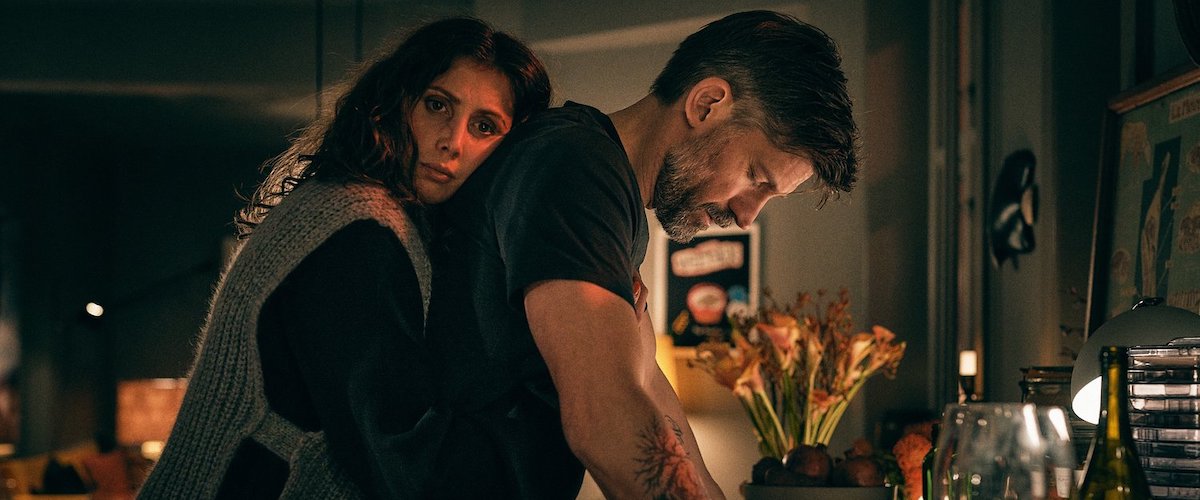
A chef and his new lady-love pursue his dream of his own restaurant and their very own “Michelin star” in “A Taste of Hunger,” a Pinteresque Danish melodrama as frosty as flash-frozen ginger.
It’s built around “Game of Thrones” hunk Nikolaj Coster-Waldau and Katrine Greis-Rosenthal (“The Command”), who have chemistry but little heat in carrying this tony, stylish story of life in a high end Copenhagen eatery.
What’s “Pinteresque” here is the way their story is told, out of order (like “Betrayal”), in a shuffled succession of brittle chapters that take their titles from elements of “taste” — “Sour,” “Sweet,” “Heat,” “Salt” and the like.
We see them crackling through a night at their poshly-appointed, over-staffed Malus Restaurant, with the short-tempered perfectionist Carsten humiliating a cook for not remembering that “the only way the chef knows good food from bad” (in Danish with English subtitles) is “TASTING.”
There’s a Michelin star at stake, as there was one suspicious “solo diner” in their seatings for the night, a dead giveaway a Michelin critic/judge has made a stop. “A Taste” takes us back to how the chef and his inspiration, co-owner and cheerleading “I want it all” wife Maggie first met — a “meet cute” at another meal the perfectionist tossed aside to start over on. We see their ensuing family lives, the monomaniacal neglect that endangers the marriage and the children it produces, and surf through their panic over that pivotal night, the measures Maggie is willing to take to earn a “do over” from the make-or-break Michelin man.
A Michelin star can “the portal to paradise, or the road to ruin,” one of Carsten’s mentors tells him. Trained in Japan, the Dane is master of every infused, gelled and nitrogen flash-frozen trend in modern gastronomy. But it takes Maggie to focus him, master the presentation on the plate and ensure the place’s pampered, exclusive vibe.
Just looking at Malus, one can see their business model is nuts and that not getting the Michelin seal of approval and cachet could be the end of them.
“What do we do now? Open a McDonald’s?”

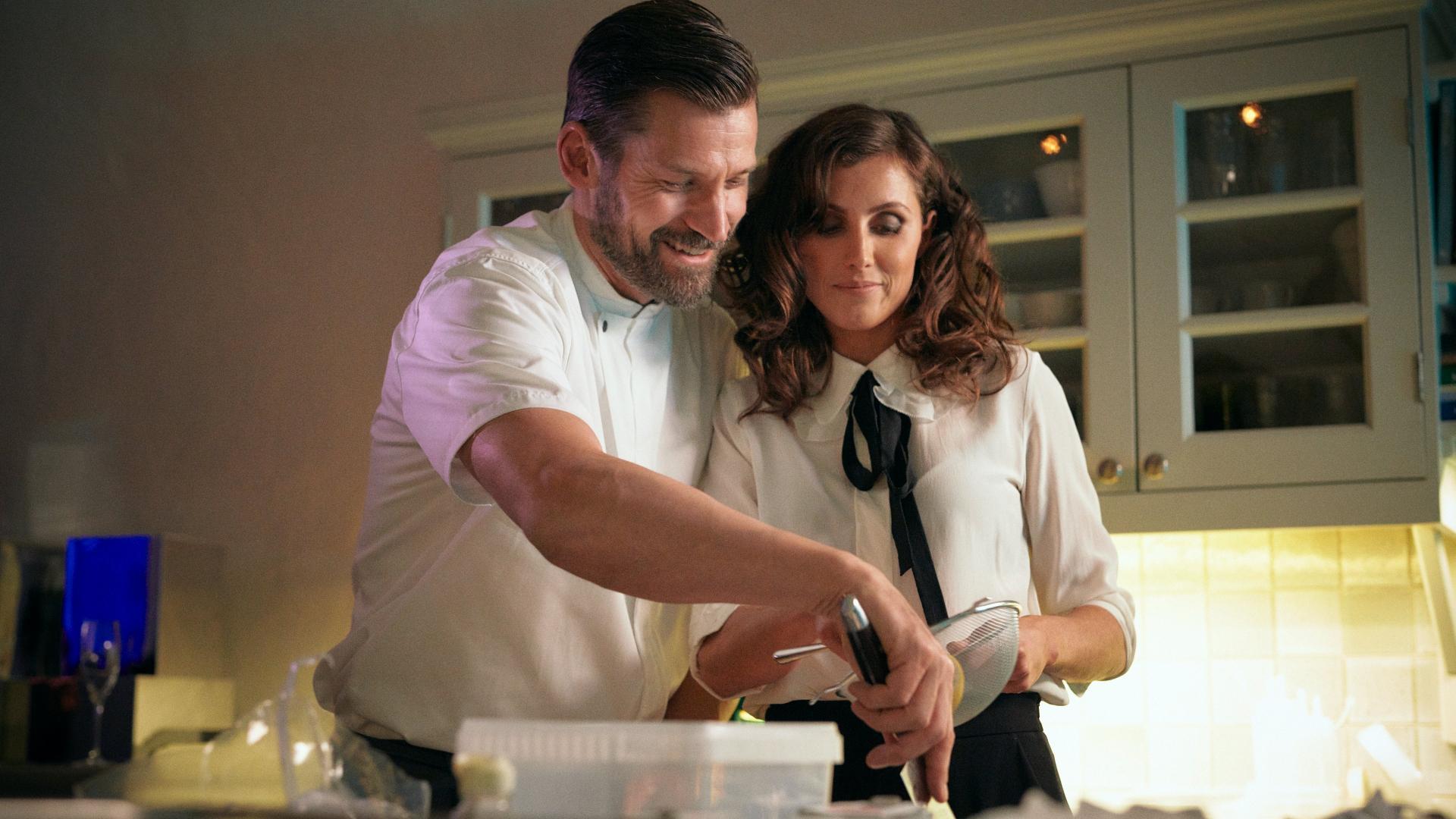
I was more interested in this story than invested in it. Telling the tale out of order reveals stresses that will either break them or bond them as a couple. There are no other real options as for outcomes.
Coster-Waldau masters the posture of the master chef, the Emeril lean-in-so-close-your-nose-almost-touches-the-food thing. He’s most convincing in the snappish meltdowns, which happen more because we know the stress such high-stakes chefs live under than due to any motivations we see on screen.
Greis-Rosenthal brings coy sexiness to their “meet cute,” making Maggie another version of that blunt-to-the-point-of-coarse “modern woman” trope, someone who gets what she wants because she says what she wants and she’s beautiful enough to be certain of never getting turned down.
But the two of them don’t do much to set off sparks together. The picture has warm flirtation, but no sexual heat. The domestic scenes have a perfunctory formality that makes what we’re watching feel pre-digested.
Yes, there are surprises and a scene crackles, here and there. But the tony haute cuisine milieu can fool you into thinking that there’s more to this than the chic, perfectly-presented appetizer this is.
Rating: unrated, sex, profanity
Cast: Katrine Greis-Rosenthal and Nikolaj Coster-Waldau.
Credits: Directed by Christoffer Boe, scripted by Tobias Lindholm and Christoffer Boe. A Magnolia release.
Running time: 1:44
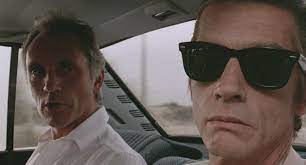
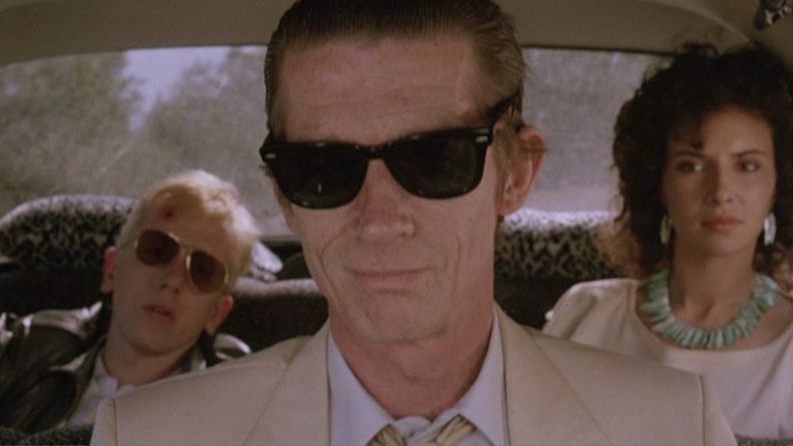

The only thing I remember about “The Hit” is how much Siskel & Ebert raved about it back in the day, that “day” being 1985.
An Island Pictures release that didn’t make it to “the provinces,” especially the province I was living in at the time, it stands out today as the movie that illustrates “casting against type” better than most any title one can name.
It stars John Hurt and Terence Stamp, but with the always-wounded-looking, so fragile, so-very-British Hurt (“Alien,” “Contact,””Midnight Express” and “Heaven’s Gate”) as the hired killer, and veteran tough-bloke Stamp (the Christopher Reeve “Superman,” “The Limey,” just seen in “Last Night in Soho”) as his ever-so-Zen target.
Death? “It’s just a moment. We’re here. Then we’re not here. We’re somewhere else… maybe. And it’s as natural as breathing. Why should we be scared?”
I’ve been a Stamp fan forever, and I dare say he smiles more in this one movie than in any ten other films he ever made. And grinning Willie Parker, beaming in the opening scenes, a witness protection star in court (a young Jim Broadbent plays the questioning barrister), grinning even more after he’s kidnapped in Spain ten years later, instantly becomes one of Stamp’s finest screen creations.
Stephen Frears (“Philomena,””Victoria & Abdul”) made an auspicious theatrical feature film debut with this nervy, violent and reflective “road picture,” a tale of two hit men, their mark and a “witness” they nab along the way as they make their way from southern Spain to Paris.
The cleverest touch in Peter Prince’s script is one of the most memorably menacing “running gags” in all of cinema. As the criminal compadres Willie “grassed” (ratted out, squealed on) are led from court, they serenade him with a song Vera Lynn made famous during “The War.”
“We’ll…meet again…don’t know where…don’t know WHEN…”
It’s the first thing that comes to Willie’s mind when smiling Willie figures out who’s grabbed him and taken him from his life of comfort and luxury outside a small town (Almodóvar, Córdoba) in the sunbaked south where he’s been laying low.
The four Spanish toughs he tried to fight off weren’t the real culprits. Willie almost knows their fate before they do. This officious, short and silent man in Cuban heel boots, a linen suit, cigarette and Raybans was calling the shots. That makes Willie sing — “I know we’ll meet again…some sunny day!”
Braddock (Hurt) the mostly-silent stranger is called. He has a young, mouthy punk of a protege (Tim Roth, barely of shaving age here) in tow. Braddock blowing up most of the blokes who first grabbed Willie wasn’t the subtlest move. They can hear about the nationwide manhunt that’s begun on the radio, but only Willie speaks Spanish. They can see the photos on the newspapers, which only Willie can read.
They’re taking him to Paris, and that news contributes to Willie’s Most Relaxed Condemned Man Ever manner. He smirks and runs through the possibilities, the fact that their current car is known to the police (Fernando Rey of “The French Connection” has almost no lines as their stoic pursuer), that there’s a hard border crossing into France to be managed.
“I’m sure true love will see us through!”
The assassin is silent. The kid protests, “You’ve got nothing to smile about mate, if you knew.” “If I knew?” Willie turns to his executioner. “He thinks I don’t know.“
Their odyssey will require another car, more murders, another kidnapping (Laura del Sol), and another victim who isn’t quite so mellow about what she is sure will be their shared fate. Maggie fights and schemes and will not go quietly.
What this classic film captures is a sunny, sleepy pre-European Union Spain, with bad roads, tiny towns and cantinas that the world had passed by, and the most breathtaking scenery of any hit man thriller.
Hurt’s killer-of-few-words is a classic type, not new to the genre but almost definitive thanks to his poker-faced portrayal. “The kid” apprentice is also a type. But the smiling, laid-back and at peace with it all victim is something new, and Stamp gives Willie charm and an infuriating passivity.
We don’t need Maggie’s rages to come to that conclusion. This guy either knows something will break his way if he picks his moment, or truly is at peace with his fate.
Everything about “The Hit” is archetypal and genre-defining. “The Hit” prefigured John Woo’s “The Killer” and those two 1980s movies reset the template for the genre.
And looking at it nearly 40 years later, what stands out is the moment-in-time perfection of it all. Hurt was having his big cinema moment, but this cast him against type. Stamp was starting a comeback that has carried on, almost to this very day. Roth announced he was ready for the spotlight.
And TV director Frears showed himself as a filmmaker to be reckoned with. “Prick up Your Ears” and “My Beautiful Launderette,” “Sammie and Rosie Get Laid,” “Dangerous Liaisons” and “Dirty Pretty Things,” “The Van,” “High Fidelity” would follow, making him one of the most accomplished British directors of his generation and the best British filmmaker never to have a damned thing to do with Harry Potter.

Rating: R, bloody violence, profanity
Cast: John Hurt, Terence Stamp, Laura del Sol, Tim Roth, Fernando Rey, Bill Hunter and Jim Broadbent.
Credits:Directed by Stephen Frears, scripted by Peter Prince. An Island Pictures/MGM Video release on Tubi, Amazon and other streamers
Running time: 1:38
This looks properly cheesy, if not as funny or fun as one might hope. Sometimes they don’t give away the store in the trailer, tho. So there’s hope.
“Uncharted” the treasure hunt thriller opens Feb. 18.
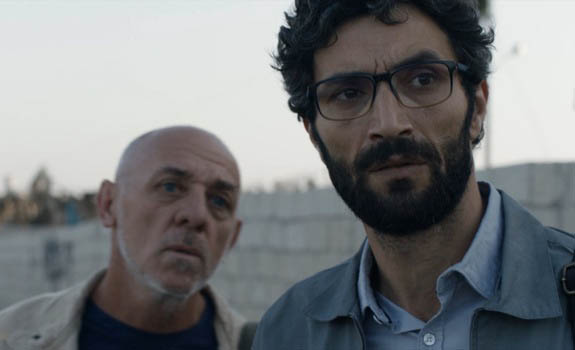
“The Translator” has made a nice life for himself in Australia, using his multi-lingual skills for government entities and journalists, married and, since he’s from Syria, relieved to have escaped a past of justifiable paranoia and danger.
But when the Arab Spring breaks out in his home country, a journalist pal urges Sami Najjar to join him in covering it. Sami finds himself facing that past, still wracked by the guilt over how he got out and those he left behind. To them, he is a “hider,” someone who has never taken a stand, always “hiding behind the words of others.”
Rana Kazkaz and Anas Khalaf’s gripping, engrossing film is part thriller, part history lesson and somewhat melodramatic as it takes us into the secrets of Sami’s past, the fraught situation he finds himself in back in Syria and the blend of gratitude, relief and resentment he faces from the family and friends he reconnects with there.
Because we’ve seen snippets of what Sami and Syria went through in childhood, a 1980 outbreak of protests against the Syrian dictatorship. He saw his father dragged off, never to be seen again. He say his slightly-older brother Zaid fight to free him while Sami stood terrified.
And we have an idea of how the adult Sami ended up in Australia. Something happened during the 2000 Olympics in Sydney, an athlete questioned about Syria’s abrupt decision to decree that the son of the former dictator take over after the death of his father, a “translation” that made Sami persona non grata back home.
Ziad Bakri gives us a Sami who considers his words and actions with care, but who is conflicted about what he left behind and what he owes the friends and family in Damascus. He has a new life and a lawyer-wife (Miranda Tapsell). They’re looking at houses.
And this journalist friend and sponsor (David Field), the man he appears to owe much of this new life to, is showing him video of the Arab Spring (2011), which has spread from Tunisia to Egypt and now Syria.
“It’s my job to verify,” Chase says. And Sami reluctantly agrees to accompany his friend, to risk slipping across the border from Lebanon to document the popular uprising against a dictatorship that is all most of those there, young and old, have ever known. Sami also figures he might be able to help his brother Zaid, now an activist who has disappeared into government custody.
But when violent events on the ground put Sami on his own, he must rely on his brother’s ophthalmologist wife, Karma (Yumna Marwan), a defiant woman who can’t always hide her contempt for him. He must hide with his sister, LouLou (Sawsan Arshid), who caresses his Australian passport as if it’s the Holy Grail. And Sami must face everything that happened to get him out, and all the guilt he still feels about being the “hider” Karma and others label him.
“The Translator” never fails to hold our interest as we’re taken into street protests, witnessing what appears to be Sami’s growing sense of responsibility in the face of futility. The “international community” was reluctant to act against a heavily-armed, Russian-backed dictatorship. Sami is no journalist, but he’s been around it long enough to see ways he can help.
The story’s “secrets” are concealed somewhat clumsily, and that coupled with a sea of unfamiliar faces and character names — Syrian and Australian — can leave the viewer unmoored, a little lost.
Wait, what did I miss?
And the film’s climax is nothing if not high stakes melodrama. Every major figure from Sami’s childhood will return to help or haunt him, every misstep he took to find sanctuary in Australia will come back to slap him in the face.
But “The Translator” delivers a fascinating new take on the immigrant experience, reminding us that the faceless masses flocking from east, south and Middle East to this or that Western shore aren’t coming on a whim. There’s persecution, life-and-death danger in speaking out and staying, and the risks are just as great for those who flee.
When Karma cynically predicts the future, we’re reminded of how rare it is for dictatorships to fall in popular uprisings. Places like North Korea and Syria, Russia and China, may never be free, because Karma reminds us, “violence will always win.”
Rating: unrated, violence
Cast: Ziad Bakri, Yumna Marwan, David Field, Sawsan Arshid and Miranda Tapsell
Credits: Directed by Rana Kazkaz and Anas Khalaf, scripted by Magali Negroni. A Launch release.
Running time: 1:45

 Movie Nation