

Movie Review: Mothers and Daughters “Hatching” Horror

The harbinger couldn’t be clearer or more simple.

A crow crashes into a window of the “lovely everyday life of an ordinary Finnish family.” It gets in the house, wreaks havoc of vlogger/influencer/ever-smiling-mom’s designer glassware and chandelier. Teen daughter Tinja corrals it to free it outside. And smiling mom gently takes it from her and snaps its insurance-busting neck.

How do you say “Uh oh” in Finnish?

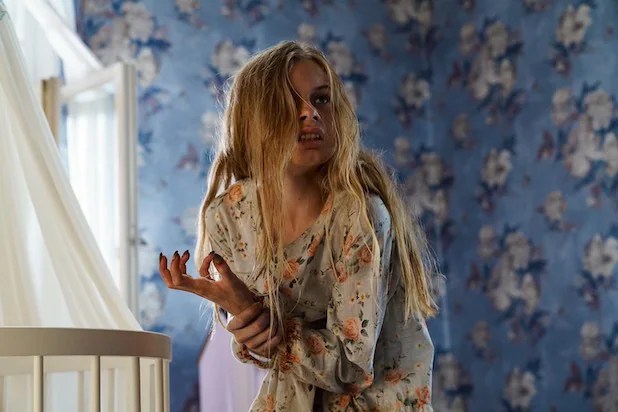
Here’s a horror tale of dysfunction and disorder visiting “lovely everyday life,” of parental pressure, gymnastics and of an egg — the wrong egg — brought home for “Hatching.”

Tinja (Siiri Solalinna) is the locus of this tale, a child who learns much too much from her domineering, self-absorbed, image-conscious mother, played with a Stepford grin by Sophia Heikkilä.

Mom has her selfie stick always at the ready and her website up and running. Her family seems like mere cast members in this latest time-filling/ego-feeding passion. Tinja is more co-star than daughter.

“We had a really authentic moment there,”Mom coos (in Finnish with subtitles). “People LOVE them!”

Whatever demands her coach (Saija Lentonen) makes on Tinja, the mere hint that she won’t be quite ready to compete in an upcoming meet sends Mom into parallel-bars-until-your-palms-bleed overdrive. She’s counting on the “drama” that contest will provide, and hellbent on providing her viewers a happy ending.

Tinja is struggling to find her own moral footing in all this. When she finds another injured bird, screeching in the forest, it’s a mixture of pity and Mom’s heartlessness that drives her to kill it. She finds an egg, and feeling guilty at what she’s just done, takes it home to hatch.

The egg grows and grows, and when it hatches into an avian avatar for Tinje’s raging id, she mothers it and hides it from her neglected, lashing out little brother (Oiva Ollila), her checked-out and submissive Dad (Jani Volanen), the new neighbor girl (Ida Määttänen), a fellow gymnast of greater skill, and even Mom’s “special friend” (Reino Nordin), an artist and craftsman she makes little effort to hide from her family.

“Hatching,” titled “Pahanhautoja” in Finnish, is a sins-of-the-mother creature feature parable played out in blunt, gruesome strokes in director Hanna Bergholm’s film, based on a script by Ilja Rautsi. Mother acts out in ways good and bad, daughter tries to copy only the good, but her new “offspring,” the one she sings the same creepy “Alli” the “orphan child” lullaby to that was sung to her.

Whatever imprinting that song left on Tinja, we can only guess how it’ll play out with her resentful, unrestrained little brother. A whole future horror movie could spin around him.

The effects emphasize the “icky” aspects of raising a bird — think “regurgitation” — and the violence is mostly an off-camera source of fear and dread.

There’s a folk tale quality to all this in that no one reacts in a way a viewer could take to be “normal” considering the awful and extraordinary things that are revealed. An animal corpse dropped on a table by a child, motherly “coaching” that is plainly child abuse and a monstrous doppelganger for their sweet and passive teen merit barely so much as a double-take.

We have little doubt who the real monster is, but even she isn’t particularly frightening in a scary movie sense. The “gotchas” seem to lack the big editing/soundtrack/shock value kick that they merit.

But any horror movie that comments on something more than teenagers shouldn’t be left alone at an empty summer camp or with a baby sitter not up to Jamie Lee Curtis standards is worth embracing, even if we feel the need to consider what’s going on at arm’s length.

Rating: unrated, violence, mostly off-camera, profanity

Cast: Siiri Solalinna, Sophia Heikkilä, Jani Volanen, Oiva Ollila, Reino Nordin, Ida Määttänen and Saija Lentonen

Credits: Directed by Hanna Bergholm, scripted by Ilja Rautsi. An IFC Midnight release.

Running time: 1:26

Posted in Reviews, previews, profiles and movie news | Comments Off on Movie Review: Mothers and Daughters “Hatching” Horror

Movie Review: Belgian siblings discover Primary School Hell on the “Playground (Un Monde)”

A nightmare of childhood comes to vivid fly-on-a-wall life in “Playground,” a candid and wrenching account of childhood bullying from writer-director Laura Wandel.

In 72 hellish, sometimes heartbreaking minutes, this Belgian film — shortlisted for Best International Feature at the Oscars — lays bare the Darwinian laws of recess and its impact on victims, bystanders and the teachers and school administrators, seemingly helpless to cope with the cruel rite of childhood, even when it involves a kid almost twice the size of his peers.

It begins with a warm embrace, tearful Nora — played by Maya Vanderbeque in a performance of open-hearted wonder — holding on to her reassuring older brother, Abel (Günter Duret). Saying goodbye to Dad (Karim Leklou) repeatedly is no help. She is all but inconsolable at the shock of this new thing — school.

Not to worry. Her big brother is there.”I’ll see you at break (recess),” he assures her (in French with English subtitles). But the point of “Playground” is that he cannot be there. Abel is small for his age, and a goon nearly twice his size has decided to pick on the weakest in the herd.

Abel has his own problems.

The fact that Nora tries to cling to Abel at recess and lunch, that she’s slow to make friends, just exacerbates the situation. The pitiless hazing grows worth, Nora sticks her nose in it and Abel has to fight on her behalf, too. He is overmatched.

His threats to his kid sister demand her silence. This is after she’s figured out that most of the teachers don’t care or are ineffectual at intervening.

Telling Dad can “only makes things worse,” Abel insists. Nora’s not blind. She sees that with her own eyes. Nothing is done with the bully Antoine except forcing a tepid apology out of him.

Wandel makes her debut feature tense and fraught with peril simply by neither over nor understating the problem. A big playground, where non-serious sand-tossing fights can break out at any moment, the harsh judgments of the mean girls at lunch, kids who gravitate to cruelty because they’ve never learned to be kind, that’s a lot for a teacher to monitor.

The veteran educators practically turn a blind eye. Only Nora’s younger teacher (Laura Verlinden) hears her and tries to reassure her that ratting out the bullies and protecting her tortured (head dunked in the toilet, stuffed into a dumpster) brother is something she should be doing.

The humiliated Abel just resents her for it. But as this goes on, the toll it takes on their relationship is nothing when compared to the permanent damage it may be doing to his psyche.

And this “just kids being kids” tormenting grows more violent and dangerous the longer it goes on. We fear for Nora, for Abel’s safety and for his mortal soul.

Wandel lets us overhear the misinformed gossip of kids, the “sick girl” who wound up buried beneath the sandbox, the judgment that “all footballers are racist” when the kid making that claim doesn’t understand the word, the “your dad doesn’t have a real job” stigma, the social shunning, name-calling and the childish lashing out in response.

“Playground” is so vividly-detailed that it could be triggering to anyone whose childhood wasn’t ideal. And even if you don’t get ugly flashbacks from it, you will marvel how any of us get through this hazing rite of passage without permanent scars or long-term psychotherapy.

Recess, we’re reminded, isn’t for the timid or faint of heart.

Rating: unrated, violence, bullying

Cast: Maya Vanderbeque, Günter Duret, Simon Caudry, Larua Verlinden and Karim Leklou.

Credits: Scripted and directed by Laura Wandel. A Film Movement release.

Running time: 1:12

Posted in Reviews, previews, profiles and movie news | Comments Off on Movie Review: Belgian siblings discover Primary School Hell on the “Playground (Un Monde)”

Movie Preview: “Collecting Sound,” Podcasting and waiting tables in LA — “Poser”

“Lives of quiet desperation” have become cosplayers, podcasters and legends in their own minds.

“Poser” looks provocative and sexy and dreamy and Oscilloscope Labs has it. So that means “June 3, this one is what I’m gonna see.

Posted in Reviews, previews, profiles and movie news | Comments Off on Movie Preview: “Collecting Sound,” Podcasting and waiting tables in LA — “Poser”

Netflixable? Misfits aim to become “Metal Lords” of their high school

If you want to know what the cool kids are watching this weekend…

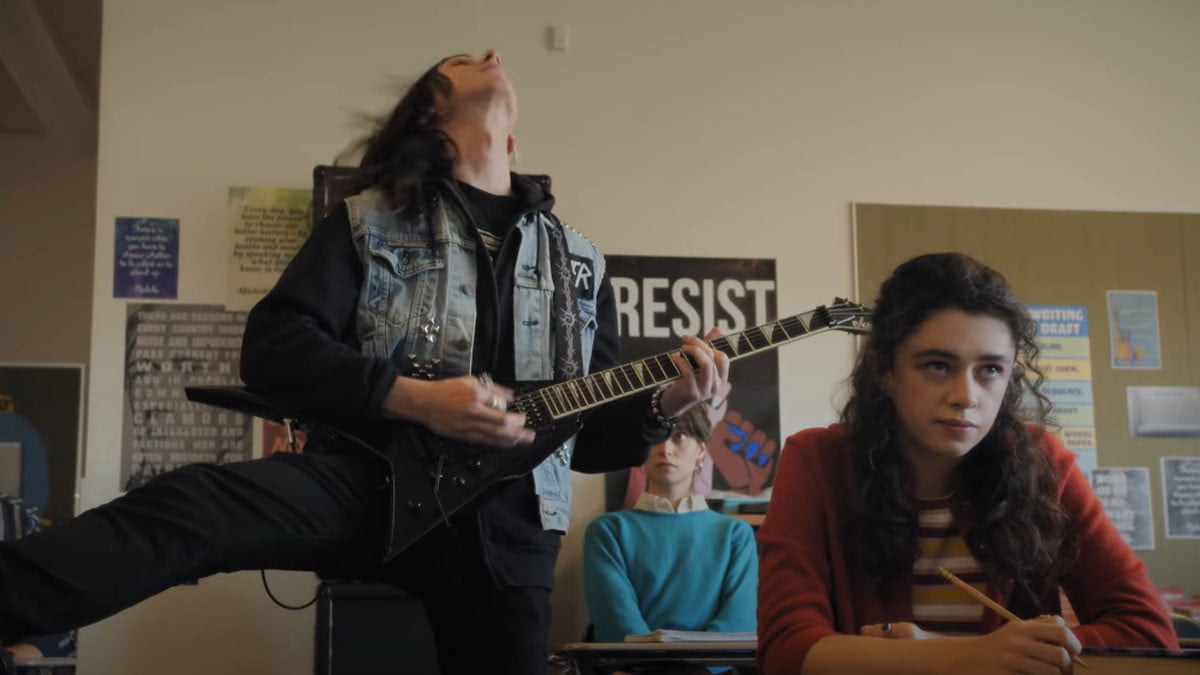
Well, white suburbanite teens with a taste for heavy metal, if nobody else, should go all “School of Rock” over this seriously transgressive high school comedy called “Metal Lords.”

It’s “post death/doom metal” served with a side of cheese, and it’s laugh-out-loud funny.

What cheese would pass muster as “metal” with the headbangers? Something English — Black Bomber, Tesyn or maybe Stinking Bishop?

The idea is to take on the assorted cliches of such comedies and see if they can be upended or least turned inside-out here and there. That’s a recipe for hit-or-miss, but as I say, I laughed.

Dweeby Kevin (Jaeden Martell of “It,” “Knives Out” and TV’s “Defending Jacob”) has two qualifications for being in the start-up band named Skullf–ker. He plays a snare drum in Glenwood Valley High’s marching band, and he’s best friends with long-haired fellow misfit and metalhead Hunter (screen newcomer Adrian Greensmith).

Rich kid Hunter — his dad’s a plastic surgeon — will sacrifice everything and spend any amount –of his dad’s money — to achieve heavy metal glory.

“If we dedicate ourselves to metal we will OWN this school!”

But a hapless drummer and a would-be shredder doth not a metal band make, right? Well, aside from Darkthrone, Hate Forest, et al.

And while Hunter can shred like a Malmsteen in the making, Kevin, in marching band “just to get out of PE,” is utterly lost behind that Peart/Bonham sized drum kit. They need some competent “bottom,” a bass player.

Enter the medicated Scottish lass (Isis Hainsworth, a hoot) whose anti-clarinet meltdown in the middle of marching band practice is the most “metal” thing in the movie. That’s not Emily’s instrument. The cello is. She is, of course, destined to make Skullf–ker coed.

Director Peter Sollett, musically as far afield as one can get from “Nick & Norah’s Infinite Playlist,” and “Game of Thrones” creator and writer D.B. Weiss do their damnedest to avoid getting around to the obvious.

Kevin’s Kumbaya misfit mantra, “Why can’t we all not fit in together?” must be ignored. There’s teen drunkenness and carnal knowledge and betrayal and drugs and rehab and everybody uses Scottish Emily’s favorite c-word.

Yeah, “School of Rock” meets “Game of Thrones,” that’s what they were going for. Not that they get there in any sort of explicit sense. But it’s still funny.

As genre cliches go, it’s OK to let the bully be the biggest jerk among the jocks. But why not have the rich-kid insipid pop band leader Clay (Noah Urrea) turn out to be nice, and not just their hated “Battle of the Bands” rival? Why not have his band’s drummer into drugs, prompting both genuine concern for his health from Clay, and a tug of war over Kevin’s services?

Because Hunter’s assigned homework to his pal — Black Sabbath, Pantera, Judas Priest — is quick to pay off. Kevin/Martell looks at home behind the kit, and if these kids aren’t playing their own instruments, they’re close enough for rock’n roll, at least as it’s served up in a Netflix movie.

Stay through the closing credits to see what I mean, “War Pigs.”

There are shots at Hunter’s “metal,” rebellion and Dungeons & Dragons lifestyle from his sneering single dad (Brett Gelman). “Incel action figures” may be the funniest description of D & D ever.

The sexism the guitarist displays at how “completely gay” the idea of a girl joining their band is opens him up to ridicule for the hilariously homoerotic imagery in heavy metal posters, album covers, makeup and stage attire.

And if you’re going to have a tipsy hallucination moment-of-conscience in a hot tub with a hottie, who better to advise you than Rob Halford (Judas Priest), Tom Morello (Rage Against the Machine), Scott Ian (Anthrax) or Kirk Hammett (Metallica)?

It doesn’t all work and doesn’t entirely come together. And metal isn’t everybody’s cup of tinnitus. But throw enough Netflix money at it and you get thoroughbred credits (check out Joe Manganiello in the third act) in front of and behind the camera and a cheerful “Let’s flip-off the parents” attitude.

Which is about as “metal” as this streaming service gets.

Rating: R for language throughout, sexual references, nudity, and drug/alcohol use – all involving teens

Cast: Jaeden Martell, Isis Hainsworth, Adrian Greensmith, Sufe Bradshaw, Brett Gelman and Joe Manganiello.

Credits: Directed by Peter Sollett, scripted by D.B. Weiss. A Netflix release.

Running time: 1:38

Posted in Reviews, previews, profiles and movie news | Comments Off on Netflixable? Misfits aim to become “Metal Lords” of their high school

Movie Review: Spy games bring out “All the Old Knives”

https://wp.me/p30FOE-kh

The gold standard for spy thrillers isn’t Sir Ian’s Fantastical Mr. Bond, James Bond. That label belongs to the gritty, patient and “real world/real consequences” human-assets spycraft as depicted in the novels of John LeCarre of “Tinker Tailor Soldier Spy” and “The Russia House,” “Spy Who Came in From the Cold,” etc., screen adaptations so distinct and numerous as to constitute their own genre.

My favorite work of his is one that new film “All the Old Knives” resembles. “Smiley’s People,” built around LeCarre’s alter ego, the British plodder George Smiley, was turned into a TV series that emphasizes what the book is all about.

It’s just this old office drone, summoned back to “The Circus” (MI-6) to set one last trap that might “turn” his nemesis, code-named Karla. The miniseries is just Sir Alec Guinness as Smiley, a blank-faced fussbudget, tracking down old colleagues and gently prodding their memories with deliberate, probing questions, never giving away the game, always circling around this or that subject over and over again, always asking for just a hint more.

So anybody expecting Chris Pine to show off gunplay and other bits of derring do as CIA spook Henry Pelham in “Knives” is sure to be disappointed. But for those who like memory games, mental traps and trip-ups, “moles,” red herrings and genuine suspects, it’s a rare treat.

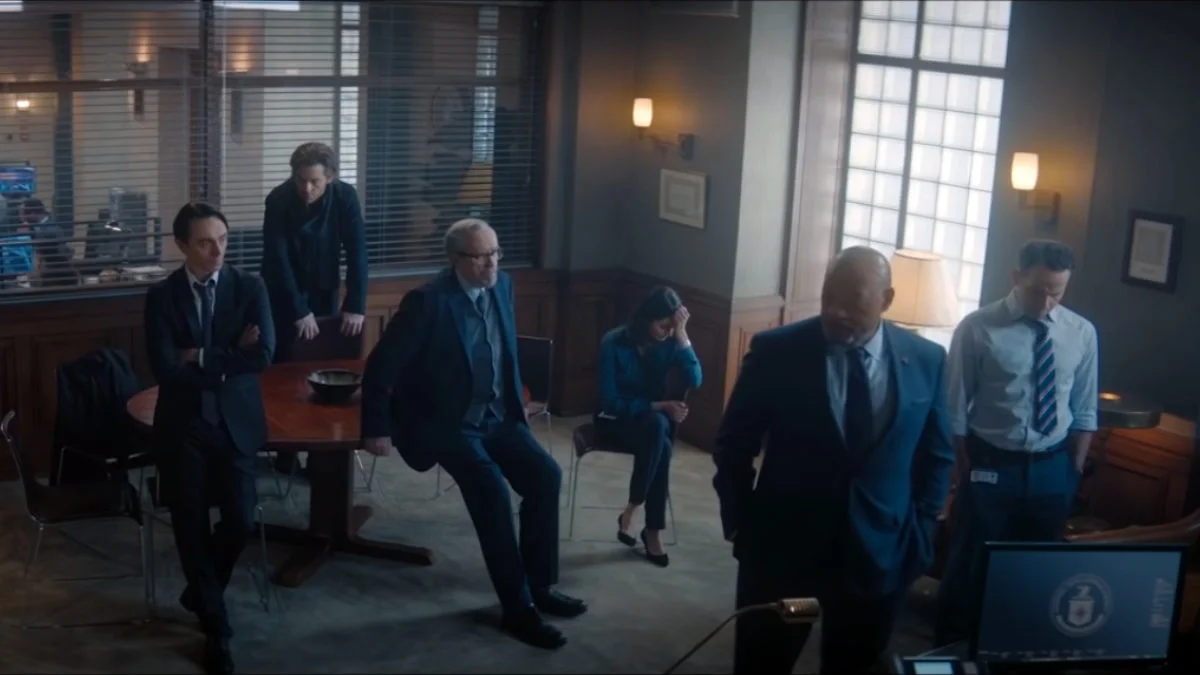
Pelham has been summoned by his old Vienna Station chief (Laurence Fishburne) to get to the bottom of something we’ve seen in the films opening. There was a hijacking at Vienna airport that ended badly. No one came out alive, and no intelligence service personnel came out of it looking good.

Years have passed, and one of the hijackings planners has been captured. He says there was an inside-station source that helped the hijackers and this adds yet more shame to this major intelligence failure.

“We can’t afford the embarrassment of a prosecution,” the boss declares. Pelham must go over the list of suspects, all of whom he has history with. He must eliminate the guy who committed suicide and grill the retiree in London (Jonathan Pryce), looking for inconsistencies in his story.

And he must face a former lover because “I’ll know if she’s lying” when he “interviews her.”

Thandiwe Newton is Celia, happily married and settled in tony Carmel-by-the-Sea. But eight years before, she was on station and deep into a relationship with Henry, who had recently arrived from Moscow Station.

Henry’s London and Carmel interviews — friendly and fraught — are intercut with snippets of that horrible hijacking, scenes inside the plane with its terrified passengers and inside Vienna Station, where meetings, theories and solutions are discussed and where staff duck out to check “sources” in person or by phone.

Something that went down that day will give away the culprit.

Director Janus Metz (“Armadillo,” “Borgs vs. McEnroe”) and screenwriter Olen Steinhauer, adapting his own novel, lean into a conceit of movies of this genre — “total recall.” Celia’s memories of that day long ago are detailed, almost beyond belief. So are the more defensive recollections of her mentor, Bill (Pryce).

Pine’s Henry goes easy and he goes hard. There’s sentiment involved, fragile memories of an affair that ended in the aftermath of the hijacking debacle.

He compliments Celia. “You got out clean,” meaning from the Agency. “No one got out clean after (flight) 127,” she confesses.

The leads serve up their best poker faces when we and perhaps they know the stakes, with that whole “embarrassment of a prosecution” proviso suggesting whatever is determined, this will be resolved right now.

Newton’s having a grand run in her career’s second act, and she brings pathos to this situation, a great love from her past who is here not to just catch-up, but accuse her of treason. She brings heart to Pine’s performance as well. Stripped of the action hero requirements that dominate his career, here he’s just a guy upset at what he might know or find out about this great love from his past. She makes that “one you don’t get over” credible.

There’s an inevitability to such movies, an expectation that expectations will be tripped up, and “All the Old Knives” manages those third act twists with skill, if not sizzle.

But for a movie built on probing conversations, details and relationships, it’s pretty good. Not in the LeCarre class, but imitation is the sincerest form of spycraft flattery.

Rating: R for sexuality/nudity, violence and language.

Cast: Chris Pine, Thandiwe Newton, Laurence Fishburne and Jonathan Pryce.

Credits: Directed by Janus Metz, scripted by Olen Steinhauer, based his novel. An Amazon Studios release on Amazon Prime.

Running time: 1:41

Posted in Reviews, previews, profiles and movie news | Comments Off on Movie Review: Spy games bring out “All the Old Knives”

Documentary Review: Remembering an Epic Musical: “Fiddler’s Journey to the Big Screen”

You don’t have to be a big fan of “Fiddler on the Roof” to get a kick out of “Fiddler’s Journey to the Big Screen,” the warm and lighthearted documentary remembrance of this 1971 film. But if you see this “making of” film, it might change your mind about this Broadway blockbuster and the effort it took to bring it to the big screen.

“Journey” is a celebration of not just the two icons of the cinema most famous for realizing this adaptation, the celebrated director Norman Jewison and legendary screen music composer John Williams. It highlights the cinematographic canniness of Oswald Morris, the director of photography, and the uncanny skills of production designer Robert F. Boyle in “recreating the lost world of East European Jewry.”

Director Daniel Raim (“Harold and Lillian: A Hollywood Love Story”) finds all these ways to charm and delight us, by having the three little-known actresses who played some of Tevye’s daughters — Rosalind Harris, Neva Small and Michele Marsh — remember this landmark part of their lives, still able to sing their numbers from the show on camera. For good measure, here’s Broadway lyricist Sheldon Harnick singing “Sunrise, Sunset” and joshing “What, you’re not crying?” to the film crew visiting him at home.

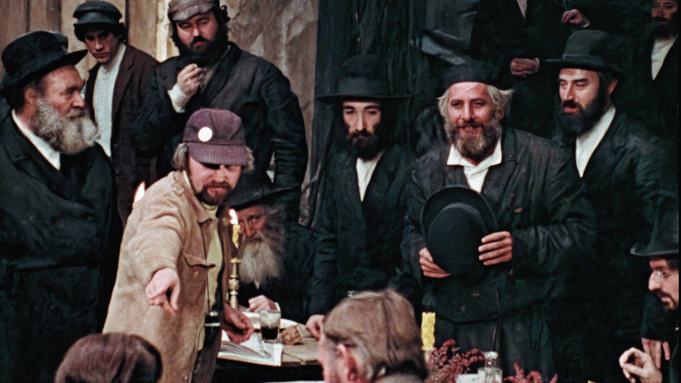
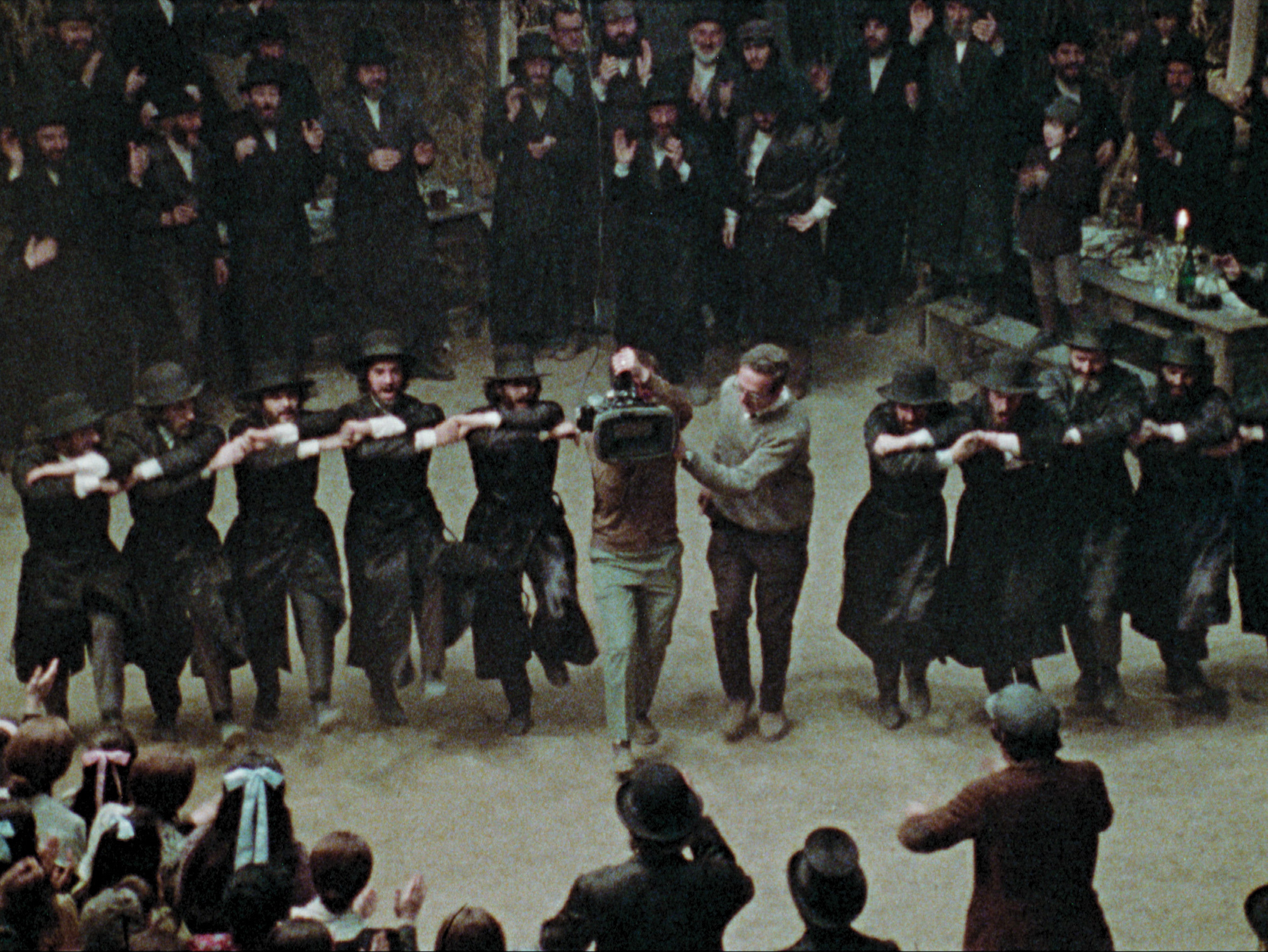
Blending fresh interviews with all of those mentioned, along with archival chats with the film’s Israeli star, Topol and on-the-set footage of Jewison, working with his director of photography and directing his big, village-sized cast, Raim recreates the world “Fiddler” was made in through the memories of those who made it. “Journey” gives us the thinking behind the production and the era — “West Side Story” to “Jesus Christ Superstar,” with the biggest hit of them all, “The Sound of Music” — that gave birth to this iconic film.

They had to go to Yugoslavia to build a convincing end of the 19th century Russian shtetl, and let the brown earth, unpainted buildings and photographs by photo-documentarian Roman Vishniac determine the “real” look of such a place in such a time that Boyle would recreate, right down to building the first wooden Jewish synagogue — as a set — seen in Eastern Europe since the Holocaust, conjuring up “an Old World relic of quiet grandeur.”

Williams recalls walking the Lekenik (then Yugoslavia) sets, timing out steps as musical beats to make the Jerry Bock stage musical’s score fit the locations — a barn with a hayloft for “If I Were a Rich Man,” for instance.

And most fascinating to film buffs, “Fiddler’s Journey” gets a handle on its filmmaker, who made light Hollywood comedies (“Send Me No Flowers”) and Cold War farces (“The Russians are Coming, The Russians are Coming”), socially relevant dramas (“In the Heat of the Night,” “And Justice for All,” “The Hurricane”), “Fiddler” and “Jesus Christ Superstar” and “Moonstruck.”

The Canadian Jewison repeats his oft-told story of “always wanting to be Jewish,” growing up in Toronto, which fired his enthusiasm for bringing history, loss and suffering to this story of “family” in a time of turmoil and change, in musical form.

I’ve been a big fan of Jewison’s forever, but “Fiddler” is one of those movies that I rarely finish when I stop by it, channel surfing. It’s stunningly-detailed in its recreation of a lost time and place and that always stops me and makes me watch for a bit. A couple of production numbers dazzle even today, and the gorgeous cinematography reminds one of the glories of celluloid. But only a couple of performances seem stand up, with Topol’s broad gestures (he wasn’t alone) still seeming scaled for the stage. There’s simply no “star power” to it.

Maybe it’s the almost mournful tone of much of “Fiddler,” the unthinkable cruelty behind pogroms and the insular nature of the culture threatened by anti-Semitism, the arcane gender attitudes and the fact that more tunes are wistful and somber like “Sunrise, Sunset” than bracing and full-blooded like “Tradition” and “If I Were a Rich Man.”

But there’s a reason the film endures and the play earns revivals, big and small, far and wide. It speaks to people the world over.

And when “Fiddler’s Journey” opens (April 29), you can see the effort it took to bring a Broadway phenomenon, with its career-defining performance by Zero Mostel as Tevye, to the screen with a cast of mostly-unknowns, a Canadian “goy” behind the camera and a lot of perfectly-costumed, perfectly-housed peasant folk living what they never knew would be their last days in the only home they’d ever known.

Rating: unrated

Cast: Norman Jewison, John Williams, Michele Marsh, Neva Small, Rosalind Harris, Sheldon Harnick, Kenneth Turan, narrated by Jeff Goldblum.

Credits: Directed by Daniell Raim, scripted by Michael Sragow and Daniel Raim. A Zeitgeist Film, a Kino Lorber release.

Running time: 1:28

Posted in Reviews, previews, profiles and movie news | Comments Off on Documentary Review: Remembering an Epic Musical: “Fiddler’s Journey to the Big Screen”

Movie Preview: Mark Rylance sucks at golf as “The Phantom of the Open”

Novice duffer named Maurice Flitcroft takes a whack at the British Open. He was a crane operator at a shipyard, one of those places with lots of hyphens in the name — Barrow-in-Furness. And at 46, he decided to take up golf, and at the highest level, too.

If you want a touch of whimsy and dreaminess in a bloke who “shot the worst round in the history of the open,” you couldn’t do better than Mark Rylance.

Sally Hawkins plays the faithful, plucky love of his life, and “couldn’t do better than” fits there as well.

All this June 3 release needs to do is manage the fun of “Greatest Game Ever Played” and daft ambition of “Eddie the Eagle.”

Because there’ll always be an England, you know. Keep calm and carry on topping the ball — worm burner — sending it skittering into the gallery, the first available sand trap or — best case scenario — the rough.

Posted in Reviews, previews, profiles and movie news | Comments Off on Movie Preview: Mark Rylance sucks at golf as “The Phantom of the Open”

Movie Preview: Eva Longoria and Fam go through “Digital Detox” — “Unplugging”

Longoria and Matt Walsh play a married couple — with a tween daughter — who take off for the middle of nowhere to get away from their phones and reconnect with their lives, nature and each other in “Unplugging.”

Of course, as any “Texas Chainsaw” fan will tell you, get far enough away from the interstate and the things and the people can be awfully weird.

Keith David and Lea Thompson also star ion this late April comedy.

Looks like it has a few laughs. Maybe.

Posted in Reviews, previews, profiles and movie news | Comments Off on Movie Preview: Eva Longoria and Fam go through “Digital Detox” — “Unplugging”

Netflixable? Soccer Hooligans are Big Time Crime in Poland — “Furioza”

“Furioza” takes us inside the criminal world of Polish soccer hooligans, showing us a gang that has moved beyond brawling and stealing an opposing team’s flag and into providing muscle and transport for the drug trade.

It’s a brutally violent, long and somewhat disorganized saga, sort of a Polish riff on the Italian underworld tale “Gomorrah” in tone and subject, if not in setting. This story has a conventional plot set in an unconventional subculture and milieu — soccer fandom and the drug trade of the port city of Gdynia. But there’s a messiness to that plotting that renders it a bloody, visceral and yet unsatisfying ramble between rumbles.

After a scene-setting intro that’s sort of a half-assed framing device — the frame is “closed” or explained midway through the picture — we meet a tough broad cop, Dzika (Weronika Książkiewicz), who grew up on the mean streets with two brothers. Kaszub (Wojciech Zieliński) stayed with the hooligan gang that calls itself “Furioza,” tattooed brutes who bully and beat up rival soccer fans in stadiums, or on the train on the way to or from matches. Dawid (Mateusz Banasiuk), his younger sibling, got out and became a doctor.

Dzika’s privy to police investigations into the branching out the gang has done as it devolved into a full-fledged criminal organization.

The “honor” of such hooligans ordains pre-arranged brawls with rivals in the forest, where the police can’t reach them and endless tests of strength, toughness, savagery and loyalty. But it’s no longer just loyalty to each other and “the team.” They’re in business with the thuggish smuggler/nightclub owner Antman (Szymon Bobrowski) and the grandfatherly big boss of the whole enterprise, Polanski (Janusz Chabior).

Dzika arm-twists the doctor, who seems traumatized and triggered and not nearly tough enough to pass muster with Furioza. She wants him to return to the gang to “save” his brother and help the cops get the goods on the big bosses and on Furioza’s savage co-leader, Golden (Janusz Chabior), nicknamed for his favorite tooth.

Dzika’s boss may preach (in Polish, or dubbed into English) that “A thug will always remain a thug,” but can Dawid or for that matter Dzika prove him right?

A lot of what we see here is familiar from other films (mostly British) about European soccer hooliganism. Director and co-writer Cyprian T. Olencki takes pains to go beyond the duffels stuffed with baseball bats, chains and machetes to show us Polish variations on a theme.

Furioza bargain with team management, and physically threaten their own players after a loss. They’ve institutionalized the rites of their vocation — planned brawls, uniforms of their own, matching tattoos. They’ve even come up with ways to throw the cops who lie in wait for them off their trail when traveling to away games.

Dawid, who might have never fit in with this lot, can still be handy in a punch-out. He is a doctor, after all, and the fights produce life threatening injuries.

Then there’s the gruesome, bloody-minded extortion of the drug trade — betrayals, double-crosses, torture, dismembering “snitches” and moving drugs through the port into Poland and as far afield as Ireland.

Olencki has a hard time figuring out whose point of view he wants the viewer to share. Dawid is the obvious choice as the viewer’s surrogate, but he isn’t in the opening scenes and we lose track of him for much of the movie.

That “half-assed framing device” is merely a commuter train set piece for a lot of beatings, showing just how psychotic Golden is, but with an antagonist who is only in that framing device and nowhere else in the film.

Brother Kaszub drifts into the picture late and while the performance has presence, the character’s utility in the story is hit and miss. Dzika and then her boss eat up screen time with office politics and the frustrations of running a special investigations unit that never seems to get close to Mr. Big and Mr. Bigger.

And of course Dzika and one of the brothers have history…and chemistry.

As an immersive experience, “Furioza” gets the dirty, bruised and bloodied job done, showing this sign of the Decline of Western Civilization that began with soccer fandom and has less to do with the sport the longer it goes on.

But the dawdling pace, meandering story and drifting point of view blunt this hooligan tale’s impact and pull its punches. It’s a “Clockwork Orange” without a social message, a hooliganism expose without much of a point, something the frustrating finale only underscores.

Rating: TV-MA, graphic violence, drug abuse, sex, nudity, profanity

Cast: Mateusz Banasiuk, Weronika Książkiewicz, Mateusz Damięcki, Łukasz Simlat, Wojciech Zieliński, Szymon Bobrowski and Janusz Chabior.

Credits: Directed by Cyprian T. Olencki, scripted by Cyprian T. Olencki and Tomasz Klimala. A Netflix release.

Running time: 2:12

Posted in Reviews, previews, profiles and movie news | Comments Off on Netflixable? Soccer Hooligans are Big Time Crime in Poland — “Furioza”

Movie Review: Sex, and maybe love follows in “Paris, 13th District”

They label the neighborhoods of Paris “arrondissements,” which translates as bureaucratic “districts” but in French sounds ever-so-sexy. Whatever one thinks of Notting Hill, Hyde Park, Buckhead, Park Slope or Silverlake, the allure of romance in this or that arrondissement checkmates those pieces of geography with just word and a roman numeral.

“Paris, 13th District,” titled “Les Olympiades, Paris 13e” in French, is an erotic romance from Jacques Audiard, of “Rust and Bone,” “The Sisters Brothers” and “A Prophet.” Because nobody puts this French baby in a corner, or cinematic pigeon-hole. Based on the short stories of Adrian Tomine, it’s a loosely connected love triangle of people — native French, Taiwanese-French and African-French — hooking up, connecting and disconnecting in the XIIIe arrondissement of the world’s most romantic city.

Uneven, mostly unified by erotically-charged sex scenes, a dreamy score by Rone and the sumptuous black and white cinematography of Paul Guilhaume, “Paris” very much wears its “short stories” origin in the telling. But the filmmaker, three co-screenwriters and Tomine tie them together for a story of love in the age of sex, Tinder, “hook-ups” and all the things in modern life that disconnect the two.

Emilie, played by newcomer Lucie Zhany, is a call center operator used to playing a part. As Maryline Dumot, the 20something Taiwanese-French pixie is certain of her salesmanship, and her sexual allure.

“I’m irresistible,” she tells new roommate/lover Camille (Makita Samba). And so she has proven. Camille may bear the name of a famous French courtesan of literature, but he is not just a man of letters — he’s a teacher of French planning to pursue a doctorate. He has appetites.

Emilie was looking for “a girl” roommate, but when the guy with the “girl’s name” shows up, she rolls with it. In an instant she’s hitting him with “What is your love life like?” queries, and he is batting the ball back across the net in ways that ensure they end up ruffling the sheets.

She is brusque, direct and someone who knows what she likes sexually. As their “roommate” arrangement instantly transforms to something coital, she rebuffs him with a “You’re falling in love with me (in French, with English subtitles).” He’s quick with an “I’ll watch out,” but she is serious.

And it turns out, when he reestablishes his distance, she’s the one who turns jealous, snippy and “obnoxious.” Camille moves out and moves in with a sexy teacher (Oceane Cairaty) he’s had the temerity to “bring home” with him. Poor Emilie!

Nora (Noémie Merlant) is a sex worker from Bordeaux. Her performances online as “Amber Sweet” were a side hustle. But at 33, after ten years at her uncle’s real estate firm, she’s in Paris to study law.

Her classmates are at first dismissive of this “old” lady. But some recognize her. She sees to that when she dons Amber’s tartwear and blonde wig for a campus spring break party. Her recognizing “admirers” lead to ridicule.

Shamed and rattled, she returns to real estate work, where shockingly she winds up working with Camille. Even not knowing her past, he is fated to figure out if her sex appeal was strictly an online thing, or if his beautiful colleague is an uninhibited as her alter ego.

And what’s she spending her commissions on? She’s dropped back online, to the old site where she used to perform. She’s paying good money to chat up a near doppelganger, the “new” Amber (Jehnny Beth), a woman she reveals her secrets to, and who reveals her secrets to Nora…for a fee.

No one comes off as particularly “happy” in these interconnected stories. Camille, being literary, insists that the heat of “first attraction” fades, which is why he’s quick to tell Emilie, at least (among his conquests) that “I don’t want to be a couple with anyone.” But life with his books by Rousseau seems empty, even if childish Emilie’s “rules” for their relationship incompetently confining.

“I pay to live with you and bear you” may be the best kiss-off (Camille to Emilie) you never thought of.

Nora is the “every sex worker has a story” trope modernized for the Internet hook-up age. She, like Emilie, has had something that “stunted” her growth emotionally. Unlike Emilie, Nora has a true confessor, somebody she will bare her soul to — for a fee.

Aside from visits to his newly-widowed father and aspiring stand-up sister, Camille is the least-developed character here. We’re never sure what drives him, other than the standard “men catting around” cliche.

Emilie’s interior life is glimpsed only through her surgeon sister, who judges her, and little hints that she’s on-the-spectrum in terms of social signals, tact and emotional adjustment, despite intimations that she’s quite smart.

I can’t say that all of this ties up as neatly as one might like, despite the satisfying way one character comes to grips with herself and the abrupt ways others seem to manage that as well. But Audiard has conjured up a fascinating snapshot of love in the age of easy, online-assisted sex. “Paris, 13th District” feels both authentic and thanks to its dreamy setting, as romantic as only affairs in the City of Love can be, whether they involve courtesans or college students.

Rating: R for strong sexual content throughout, graphic nudity, language and some drug use

Cast: Lucie Zhany, Makita Samba, Noémie Merlant and Jehnny Beth

Credits: Directed by Jacques Audiard, scripted by Jacques Audiard, Nicolas Livecchi, Léa Mysius and Céline Sciamma, based on the short stories of Adrian Tomine. An IFC release.

Running time: 1:45

Posted in Reviews, previews, profiles and movie news | Comments Off on Movie Review: Sex, and maybe love follows in “Paris, 13th District”