
Celine seems to be having a moment. Couple of pictures feature her or her music in the storyline.
Celine seems to be having a moment. Couple of pictures feature her or her music in the storyline.


The director of “The Torture Club” and “Love Disease” is back for another dainty dip into the deep end of Japanese kink with “Sexual Drive,” a droll triptych of food, sex and perverse manipulation.
In “Remembrance of Things Past,” Marcel Proust’s narrator lapses into memories at the mere scent on a madeleine cookie. Kôta Yoshida’s characters, in three stories, connect food to sexual arousal via a provocateur who encourages them to do just that.
It’s something of a dark comedy, a “Tampopo” with little of the savory sensuality and few of the laughs.
The stories are named after foods — Nattō, Mapo Tufu and Ramen with Extra Back Fat. In each, our seemingly omniscient instigator, Kurita (Tateto Serizawa) forces those he confronts to consider the sensuality of the food they’re eating, considering eating or that they watch a loved one eat.
Kinky.
In Nattō, a suspicious husband (Ryô Ikeda) is slowly driven to tears and fury when he meets Kurita, the man who admits to having an affair with his wife. We hear Kurita’s gruesome detail-oriented description of their meeting — she’s a nurse who treated him — and see his obscene fixation of the sticky, smelly soy concoction that she eats for breakfast. And we join the husband in his growing despair and shock, if not in his revulsion that turns towards arousal.
Mapo Tofu puts Kurita in the path of a driver (Honami Satô) with anxiety issues on her way to buy some spicey tofu that’s on sale at a nearby market. Kurita doesn’t approve, as he used to live in the corner of China where this super-hot dish was invented.
“It’s red, like lave, and makes your tongue hurt!” This “family safe” bargain version is a compromise Akane shouldn’t make. As he seems to know much of her life history, perhaps that’s right. As she hit him with her car, and neither we nor she can see how that happened, we can ponder what’s really going on here, and what corner of kinkiness Kurita will claim this time.
And in “Ramen with Extra Back Fat” the “other woman” is stood up for her date with a married man (Shogen) and stops by a greasy spoon noodle shop where “talking isn’t allowed,” and there’s only the sound of men slurping the fatty, garlic-dosed noodles and the scent of sweaty men devouring that fragrant comfort food.
Her lover is led there, by phone, by Kurita, who narrates how the evening went for her in the most salacious terms. She wanted “a bowl of ramen that would satisfy her desires,” as Mr. Married Man was too busy for her this night.
The performances throw a few outsized (culturally appropriate) reactions to these situations at us, even as we’re invited to wonder how we’d respond to such baiting. Serizawa’s Kurita makes a fascinating anchor figure through it all — not much to look at (he’s a self-described “stroke” victim in the first story), but into the pleasures of the flesh, and not in any conventional way either. He’s provoking those he encounters to think of themselves, their diets and the food choices of their lovers in erotic terms.
This three-part picture is more interesting than titillating, a film best appreciated as a semi-sordid slice of interior lives in a culture that worships good manners and may or may not have invented pornography, but certainly perfected it in either case.

Rating: unrated, frank sex talk
Cast: Manami Hashimoto, Ryô Ikeda, Mukau Nakamura, Honami Satô, Tateto Serizawa, Shogen, Rina Takeda
Credits: Scripted and directed and Kôta Yoshida. A Film Movement release.
Running time: 1:11

We don’t see the moment she first caught his eye. But she did. And we see how he instinctually conspires to literally “bump into” her.
He is young. She is younger. And in a flash he’s turned his “rude” bump into a come-on that ends with Faruk insisting that Mona take his phone number. He’s so smooth and confident that he does this before he can even get her name.
She lies about being a dropout. Perhaps because he obviously is. But as we’ve seen his 18ish womanizing ways, we wonder if she’s old enough to even realize she’s taken the phone number of not just a player, but a potential predator.
Because winsome, girlish Mona (Sumeja Dardagan) is just in ninth grade, and the daughter of wealthy, probably corrupt bureaucrats intent on shipping her off to Canada. And Faruk (Pavle Cemerikic) isn’t just a hustler. He’s mixed-up with some seriously shady folks in Sarajevo. Is this “grooming,” or love at first sight?
“The White Fortress,” titled “Tabija” in Bosnia Herzegovina, is a wistful, aching romance with a hint of menace about it. Well-acted and deliberately-paced, it presents us with not just two young lovers straining against all that they don’t have in common to be together, but a relationship we never question even as we know we should.
Because Faruk doesn’t just live with his grandmother, watch World War II documentaries and old Yugoslav war films, help his uncle with his scrap metal business — the long civil war, decades ago, created a lot of scrap — and chase skirts. He and his pal Almir (Pavle Cemerikic) run errands for a local gangster, the mostly-unseen but widely-feared Cedo. And chief among those errands is taking prostitutes to their appointments.
Our one hope for Faruk, and young Mona, is a simple act of arm-twisted chivalry that puts him in hot water with Cedo and underscores the danger we sense in Mona associating with the kid. When he shows up to take Minela (Farah Hadzic) to a suburban customer, he’s on his scooter. She insists he take her in a taxi.
That sets off a chain of events that could doom him, Mona and their affair, if what the thug figures he’s now “owed” is pricey enough.


Writer-director Igor Drljaca’s Oscar-submitted drama captures a country of haves and resigned, hustling have-nots. Mona’s life of school, studying English, and a luxurious house with parents who despise one another is contrasted with Faruk’s half-ruined apartment complex where he lives with his grandmother, his endless hustles and side hustles.
He leaves his scooter to take Minela by taxi, a tire is stolen from the bike, and maybe more. Extra cash for that, and the colorful shirts he likes means another hustle, another chance to get in Dutch with Cedo, another peril for Mona because Cedo needs “a girl.” And we’ve seen Minela’s fate.
As their back stories are filled in, we get a hint that maybe Faruk wasn’t always of this underclass, that maybe he had more potentially in common with Mona than we thought. But knowing her age and knowing his associations, we fear for her and what he might be capable of.
Drljaca gives this simple story just enough melodrama to get by, and frankly it could have used more. But it is an engrossing portrait of romance in a beautiful place not-that-many-decades removed from a genocidal civil war. There are ruins and history and a populace still impacted and corrupted by that history, people on edge about the possible return of the “bad old days.” Faruk and Mona’s fraught affair is engaging and sometimes moving, and a fascinating peek into how others live and how scars are carried by generations that came after a cataclysm.
Rating: unrated, sexual situations, off camera violence, smoking, profanity
Cast: Pavle Cemerikic, Sumeja Dardagan, Jasmin Geljo, Kerim Cutuna, Ermin Bravo and Farah Hadzic
Credits: Scripted and directed by Igor Drljaca. A Game Theory release.
Running time: 1:29
Sigfried Sassoon, WWI “shellshock” survivor, closeted gay man, great poet. “Benediction” was scripted and directed by Terence Davies (“The House of Mirth,” “A Quiet Passion,””The Deep Blue Sea”).
Coming soon.
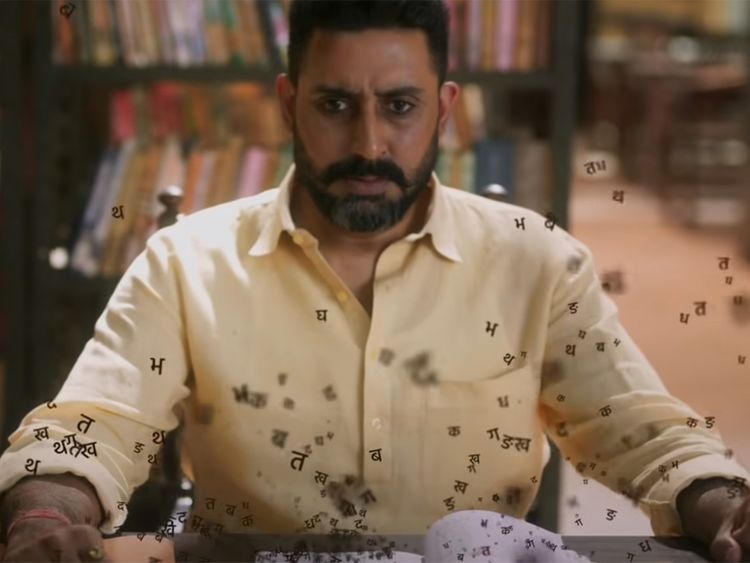

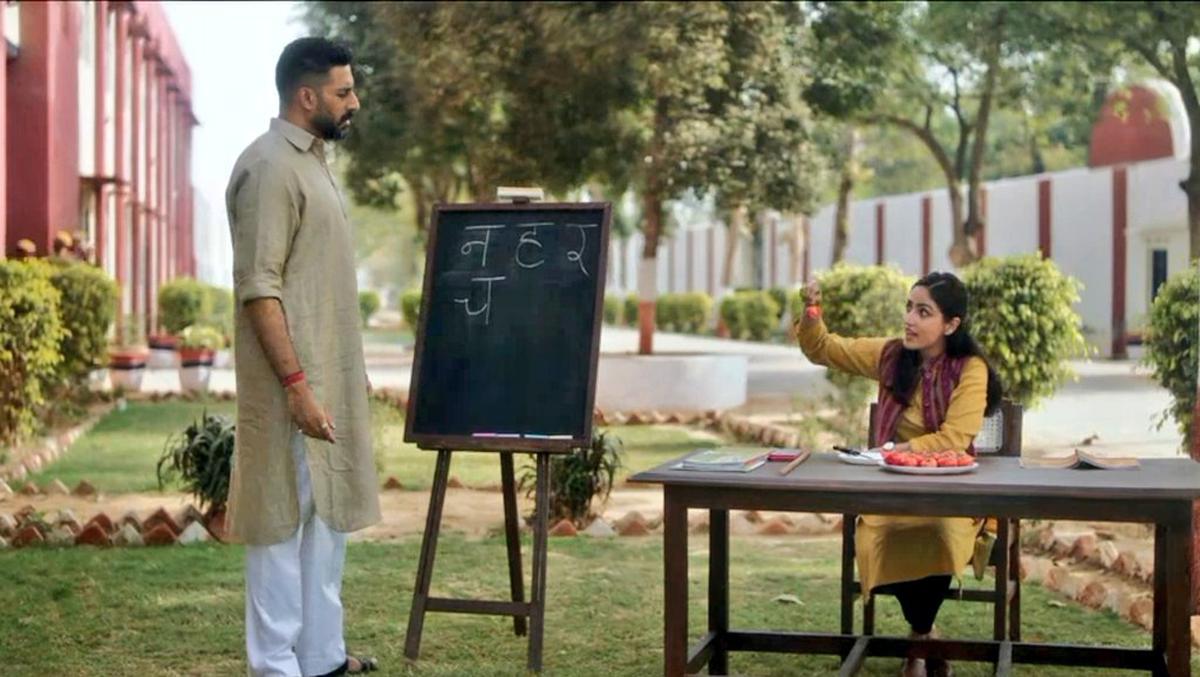



You’ve got to get yourself into a Bollywood headspace when settling in for “Dasvi,” an Abhishek Bachchan star vehicle about an ignorant Indian politician who goes to prison and sees the light — and gets his GED.
Be prepared for how handsome the lead is and how beautiful his co-stars are.
Brace yourself for subtitles. Whatever India’s relationship with English, much of the movie, like most of everyday discourse, is in Hindi.
Expect a couple of song and dance numbers, and a LOT of musical montages as our under-educated hero, a disgraced chief minister of his state, learns about the Hindi and English languages, math and chemistry and Indian history on his journey to enlightenment.
And count your blessings when considering that the typical Bollywood (style) musical never tells a simple story in the 75 minutes necessary when two to three hours, sometimes more, will do.
“Dasvi” is only two hours and five minutes long. Lightweight.
But even as it drags, as is inevitable in something so light that’s stretched out beyond reason, it manages clever touches, funny characters and witty exchanges as it imparts its lesson about the importance of education to a thoughtful, considered and compassionate life.
And Bachchan (“The Big Bull,””Husband Material”) is dashing, first scene to last in this journey from arrogant, caste-favored mustache-twirling villain-for-life to humbled man who learns from “gurus” — his fellow prison inmates — what an educated, cultured and qualified person needs to know to govern a gigantic, complex country like India.
Kickbacks, political favors, adoring crowds organized by his staff and travel in Mercedes SUV convoys are the life of Ganga Ram Chaudhary, the latest in a family of politicians to serve as chief minister in Harit Pradesh.
He’s never learned anything but how to grift the system and exercise his privilege, because that’s what “the chair,” his job, requires. “The Chair rules” is all he’s needed to know.
But a teacher recruitment/kickback scandal brings him down so abruptly you’d swear this movie would be over in an hour. Sure, he’s able to appoint his meek, known-nothing wife (Nimrat Kaur) to his job before he’s hauled off. No, he won’t bow to enter the tiny door to the prison where he’s to serve his sentence.
“I never bow! I would rather lose my head than bow” to enter prison.
But once inside, his special treatment includes delivered meals and a private room with an office, computer and phone. He just might be able to run his political empire from there.
Only meek little Bimla develops a taste for power herself. Once she stops sleeping through legislative sessions, that is.
And the new prison superintendent (Yami Gautam) is all over Chaudhary, and the sycophantic warden (Manu Rishi Chadha) whom the disgraced politico appointed to that job. His privileges end, and it takes a good while — and a song and dance or two — for him to figure out a way out that doesn’t involve feigning illness or bribes.
“Dasvi” — the title translates to “tenth,” which might be Chaudhary’s place in the family succession, or any number of others things as it is not explained — is most impressive in the long sequence of study sessions where our anti-hero learns about his country’s history, literally dreaming he’s intervening in this incident or that one involving Gandhi or other major figures on India’s 20th century history.
His gurus — the dwarf inmate named Ghanti (“Bell,” played by Arun Kushwah) and the prison librarian, nicknamed (say it aloud) Rai Bareli (Danish Husain) among them — are engaging characters who could have used a few more scenes.
Instead, the film sets up the wife’s political treachery (sabotaging his education for political gain) and the superintendent’s obvious chemistry with this “problem” inmate, who may be doing this GED thing as just a stunt to get out of prison labor.
Given the sort of upbeat, frothy and chaste samosa Tushar Jalota’s debut feature is, that “chemistry” plays as a non-starter.
Bachchan is good enough in the lead — charismatic, blustery, aloof and when need be, funny — that many of those shortcomings don’t matter.
It’s not classic “Bollywood” and never more than simply on a par with much of the comic film fare coming out of India these days — pleasant, but kind of bland, jaunty but meandering, lacking the pace and the edge to set itself apart from the rest.
But it’s just like Netflix to finance something India would formerly have had to travel to a cinema to see, a light but socially conscious comedy with songs and dances to break up the civics lesson.

Rating: TV-14
Cast: Abhishek Bachchan, Nimrat Kaur, Yami Gautam, Manu Rishi Chadha,
Danish Husain and Arun Kushwah
Credits: Directed by Tushar Jalota, scripted by Suresh Nair and Ritesh Shah. A Netflix release.
Running time: 2:05
Touchy feeling for an”Thor” trailer, but it pushes some buttons. Funny ones.
That “Guardians” Pratt guy and Natalie Portman are on board. July.


“Marvelous and the Black Hole” is an endearing, sometimes amusing coming-of-age tale of teen angst, grief and prestidigitation.
It was conjured up by first-time feature director Kate Tsang, a writer of children’s TV (“Adventure Time,” “Steven Universe”) who transfers some of that absurdist whimsy to a story of an angry, motherless child finding an outlet when she meets a kids’ party magician.
This makes a fine vehicle for Nickelodeon starlet Miya Cech (“The Astronauts,” “Are You Afraid of the Dark”). Her Sammy has a biting, foul-mouthed bitterness, a child still mourning her lost mother and quick to lash out and use everything at her disposal, including her psychotherapy sessions, against her father, for instance.
“Dr. Klein says you’re mostly damaged from Grandma,” she sneers, when he lays out her choices of summer — a summer camp that she describes as “prison” and archival Army films footage depicts as a boot camp, or “community college classes.”
Dad (Leonardo Nam of the “Fast and Furious” franchise) seems distracted and depressed, perhaps not paying his older game-addicted daughter Patricia (Kannon) or Sammy enough attention, grasping at a new lady love (Pauline Lule) to fill the void in his own life.
The sisters are quarrelsome in the most vicious way, with Patricia turned into a “narc” as far as Sammy is concerned. But there’s nothing for it. “Prison” is out. “Intro to Small Business” it is.
Sammy is unfiltered and rude to pretty much everybody, a sullen, reject-the-world smoker at 14, unpleasant almost 24/7. After standing out as a brat in class, she stumbles into an overly-helpful older woman (Rhea Perlman of “Cheers,” “Matilda” and “Sunset Park”). Next thing the brat knows, she’s being dragged into a daycare as “assistant” to “Marvelous Margot” as she puts on her magic act for little kids.
Can the cynical teen find an “outlet” through the magic of the little old lady and her “Gathering of Scoundrels,” her little club of small-time local magicians?
Tsang finds lots of ways to insert playful fantasy into this fairly straightforward story.
The magician’s act has storytelling in it, a little nature parable with a bunny, flowers blooming out of her jacket and the like. Sammy’s nighttime ritual is listening to an old tape of her mother’s fanciful Princess of the Moon bedtime story, recreated in Sammy’s mind as a black and white silent film in the style of the vintage Asian sword and sorcery fantasies she likes to watch.
Perlman brings an easygoing charm to Margot, a character who feels both screen-written and real, a pragmatic working woman with a hint of “genuine” magic about her. She isn’t some “solve all of Sammy’s problems” lifeline, just a mother figure with a little to pass on — and receive — about “family” and “direction” and “making an audience feel something.”
There’s not a whole lot to this, but Tsang injects a lot of visual variety, and a few laughs, into “The Black Hole” that Sammy must magically extract herself from.
Rating: unrated, profanity, teen smoking
Cast: Miya Cech, Rhea Perlman, Leonardo Nam, Keith Powell, Kannon, Paulina Lule and Jonathan Slavin.
Kate Tsang. A FilmRise release.
Running time: 1:22
A “doomed first love” thriller from the tinder box of Europe?
“Tabija” was this country’s Best International Feature Oscar entry and opens on Friday.
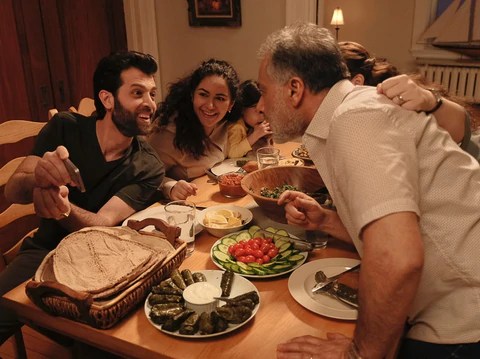
“Peace by Chocolate” is a charming, almost achingly-sweet fish-out-of-water comedy about Syrian Civil War refugees adjusting to life in small town Canada. Considering the family business they try to establish — chocolate making– “sweet” is pretty much a given.
We meet the Hahdad family just as things reach their nadir. Syria has descended into chaos, and after the bombing of his chocolate factory, patriarch Issam (Hatem Ali) has to listen to med school son Tareq (Ayham Abou Ammar) and agree that it’s time to flee.
Three years later, Tareq lands in grinning, friendly Nova Scotia, the first member of the clan relocated to wintry Antigonish, a remote town where the people are warm and even if the weather rarely is.
There’s a hang-up with his sister’s visa which keeps his father and mother (Yara Sabri) back in Lebanon, waiting. But Tareq isn’t going to let them get discouraged or all his efforts to get them out be in vain. He fibs.
“No mommy, there is no cold in Canada,” he assures them (in Arabic with English subtitles).
Metaphorically speaking, he’s absolutely correct. The grinning 50something locals who greet him tell him “Welcome home,” the resettlement terms include government stipends to help them stay afloat until they get on their feet. All Tareq has to do is find a med school that will take his credits and master the local lingo.
“How’s she gon’ by, eh?”
When his parents arrive, Issam is at a loss. He speaks no English, has only one real skill and his efforts to make suggestions to the local chocolatier (Alika Autran) are misunderstood, at best. It’s all he can do just to exercise control over his family — stepping on Tareq’s hopes, putting all the responsibility for their lives on his English-speaking son, who can’t get into medical school even if his father would let him chase that dream.
Helpful local sponsor Frank (Mark Camacho) tastes Issam’s homemade sweets, which used to be “The finest chocolate in Syria,” and hits on a plan. Issam will make and sell his chocolate in the church market. But that leads to more complications and seems to push Tareq’s medical hopes further into the background.


Director and co-writer Jonathan Keisjer’s debut feature skips over the serious conflicts and struggles of this story — fleeing a war zone, three years in a Lebanese refugee camp — and lowers the stakes in this “based on a true story.”
There’s a hint of strife as the brand they label “Peace by Chocolate” both promises to bring fame and money to the family and the town, and put the hapless local shop owner out of business. Even that “drama” is kept on simmer.
The film is more about the son’s struggle to follow his passion, given guidance and encouragement by the first fellow Arab he meets, a surgeon (Mark Hachem). Issam’s dependence on Tareq, made more burdensome by the father’s “secret,” weighs on his son’s conscience, even as Tareq adopts Western values and sees self-fulfillment in a path that breaks him free of his “traditional” father’s stubborn demands.
Western viewers can experience the dissonance of seeing obvious solutions — Mom and sister Alaa (Najlaa Al Khamri) can learn English and help with the business so that Tareq can ease Canada’s acute doctor shortage. But in an Islamic patriarchy, that will never do. And widowed sister Alaa isn’t willing to Westernize, even if it means it lets her pull her and her little girl’s own weight.
What we’re left with is a conflict that’s somewhat contrived and watered down in that adorably Canadian way. There’s no overt racism or hostility to immigrants shown. Everybody’s just too darned polite for that.
It’s still a sweet, feel good film, hitting the broad strokes of the family’s story, which include a wildly popular candy that complements the Canadian donut addiction, and Tareq’s status as a poster-boy for the immigrant experience, engagingly put on display with every public speech and TV appearance.
“Hello, Canada! Thanks for having us!”

Rating: unrated, mild profanity
Cast: Ayham Abou Ammar, Hatem Ali, Yara Sabri, Mark Camacho,
Mark Hachem, Najlaa Al Khamri and Alika Autran
Credits: Directed by Jonathan Keijser, scripted by Jonathan Keifser and Abdul Malik. A Level 33 release.
Running time: 1:36

 Movie Nation