The only wide release of note this weekend was the Liam Neeson Alzheimer’s action pic “Memory,” and despite delivering much of what was promised, it only earned $3.1 million on its opening weekend.
The family audience continues to dominate movie ticket sales with the animated “Bad Guys” scoring another $16 million, and the partially animated “Sonic the Hedgehog 2” pulling in another $11.3.
The “Fantastic Beasts” Dumbledore sequel may yet justify a final installment in this series. It earned another $8.3, may hit close to $100 million In North America (maybe not);and has done well enough overseas.
A $6 million or so weekend would be a grand second weekend for “The Northman” had it cost less. Still glad they gave Eggers the money and that something definitive and thoroughly entertaining was put on film about Vikings.
The last weekend “Everything Everywhere All at Once” had its last weekend alone in the “multiverse” multiplex, after “Spider Man” and before next weekends “Doctor Strange”sequel and added another $5.5. it is about to become A24’s biggest hit ever.
No such luck with Lionsgate’s “Unbearable Weight of Massive Talent,” which lined into another $3.92 million. Not a bomb, but not the hit they all hoped for. Cage isn’t a big screen draw any more.
“The Lost City” added another $3.4, “Father Stu” added another $2.2, “Morbius” added another $1.1 and those bombs were joined by the horror tale “Hatching” which bombed in limited but wide enough release.
Roger Michell, the South African-born British director of theater, film and TV, passed away without notice (“undisclosed”) last fall, before his final two filmed works — one of them a new documentary about Britain’s longest reigning queen — were released.
But the director of “Notting Hill,” “Venus,” “Hyde Park on Hudson” and “Enduring Love” could not have arranged a finer, more representative curtain call that what turns out to have been his final feature.
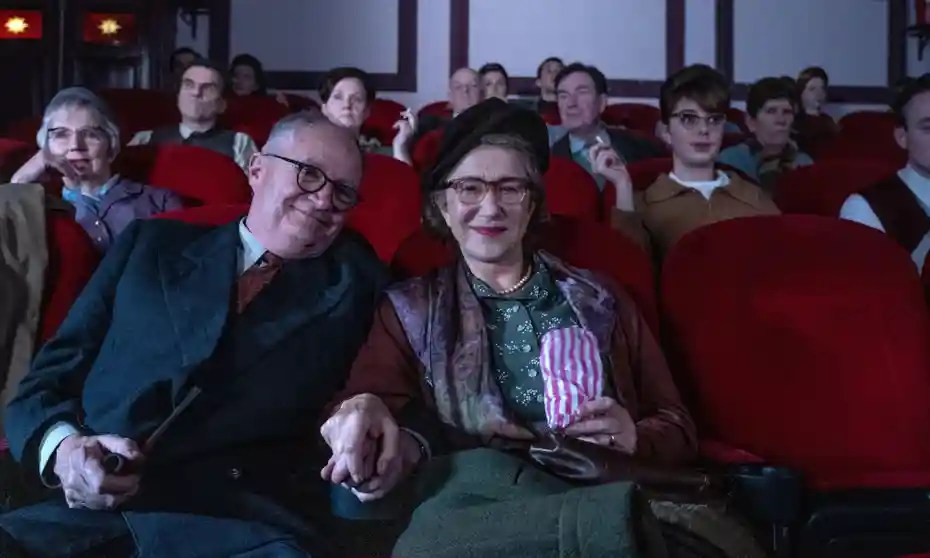
“The Duke,” a remembrance of notorious British crime — the theft of a famous painting for political purposes in the 1960s — begins as a lighthearted caper comedy and then transforms into something almost magical, an essay on grief, old age and community, the shared humanity of a simple working man’s turn of class conscious phrase — “I’m not me without you.”
A simple, sentimental story told with panache and cast to perfection, it’s entertainment with heart, and allows a director who once turned his back on a James Bond movie to bow out with a winner.
Two scenes tell you its tone. In the first, our thief, an ever-protesting OAP (old age pensioner) played with extra twinkle by Oscar winner Jim Broadbent, leans down, squints and regards the famous painting of The Duke of Wellington by Francisco Goya, which he’s just nicked from Britain’s National Gallery. He tells his son (Fionn Whitehead), “It’s not very good, is it?”
Granted, the grumpy gadfly Kempton Bunton had greeted the recent news that the British government acquired the masterpiece for £140,000, as the “toffs” “spending our hard-earned money on a half-baked portrait by a Spanish drunk of a Duke who was a bastard to his men and who voted against universal (British) suffrage.” So he’s not exactly unbiased.
And in another scene, the crack 1960s British coppers bring in a handwriting analyst to tell them about the “international criminal gang” that stole “The Duke.” They’re convinced “Italians” nicked it. She tells them the hand-written ransom note is British, working class in origin, that it reveals “a poor education,” that the note composed by “an autodidact.”
“Car mechanic?” Scotland Yard’s finest wants to know.
That’s how this lighthearted romp goes, an elderly (disabled, it turns out) retired bus driver, griping about Britain’s means of paying for TV programming — the “television license” — fights The Man through the press and attempts at addressing Parliament.
His embittered, repressed wife (Oscar winner Helen Mirren), housecleaner to a local posh (Anna Maxwell Martin), is no support, muttering about his endless attempts at playwriting and his embarrassing willingness to go to jail over the damned TV license, which he figures pensioners should get for free.
“My wife always supports me,” he quips to the postal police who show up to enforce the TV license thing, “in private.“
And then Kempton goes off and steals a painting from a hilariously insecure pride-of-the-nation museum. Protest is protest, he figures.
“Rome wasn’t burnt in a day,” Kempton cracks. “How you do eat an elephant? One bite at a time!”
Michell, working from a wry script by Richard Bean and Clive Coleman, tells this story in shades of working class grit and fading “class loyalty,” with a touch of 1960s cinematic pizazz — split screen “caper comedy” editing set to a jazz and jazz pop score that includes a little Herb Alpert & the Tijuana Brass.
Broadbent has played plenty of “toffs” in his time, but always seems more naturally a working man with a Dickensian touch — putting on airs, attempts at eloquence beyond his station. He looks right at home with a homemade megaphone, railing against the TV license, losing a taxi driving gig because he wouldn’t charge a disabled WWI veteran or sacked from a bakery gig for sticking up for a co-worker.
Kempton Bunton is a leftist Don Quixote without a horse, a Robin Hood in his own mind.
Michell and company mine the story’s mother lode — the trial. The estimable Matthew Goode plays Bunton’s barrister, a wealthy lawyer who happened to be married to the Queen of the British theater, Dame Peggy Ashcroft. Goode lends a misty-eyed idealism to Queen’s Council Jeremy Hutchinson, a man who knows how to feed straight lines to a born performer and natural wit — Kempton Bunton — in the form of questions.
“The Duke” isn’t an award contender of any note, and the older cast and period piece nature of it rule out box office glory. But it’s adorable, finding laughs (look for the Bond joke in the finale) and connecting with shared sentiments. It’s one last feather in the cap of a filmmaker who always touched as he entertained, who often wore his heart on his sleeve and made damned sure his actors did as well.
Rating:R for language and brief sexuality
Cast: Jim Broadbent, Helen Mirren, Anna Maxwell Martin, Fionn Whitehead and Matthew Goode
Credits: Directed by Roger Michell, scripted by Richard Bean and Clive Coleman. Sony Pictures Classics release.
Today’s “Around the World with Netflix” film is a lot like its lead character, a young Amish man in search of his identity, his place in the world. “Rumspringa” follows this lad on that teenage walkabout amongst the sinful temptations of the modern world, and has just as much trouble figuring out who and what it is as he does.
This German film anchored among the Pennsylvania Amish but mostly-set in Berlin begins as a “fish out of water” comedy, lightly mocking the quaint Amish reactions to air travel, convertible cars and raves. But it’s too respectful and tentative to go all-in on mockery. So it turns sensitive and sentimental.
In losing its nerve, it’s neither fish nor fowl, dramedy nor comedy, an is doomed to wander across your Netflix screen like a pilgrim in the comic/cosmic wilderness, a picture with a purpose, but no rewarding way of fulfilling it. It feels like work.
Jacob (Jonas Holdenrieder) is packed off “to the Old Country” to find himself, and with the help of the genealogically-thorough family Bible, meet lost lost kin — a Mennonite uncle, for starters.
But being polite to this gorgeous Berliner (Gizem Emre) in the taxi line leads to losing his “sack,” his luggage. No cash, no clothes save for the ones on his back, no family Bible. He dashes off in pursuit of that stuff and misses the uncle, there to pick him up.
A taxi ride into town ends with an honest confession — “I’m Amish,” he says (in German, or dubbed into English). “My people believe that money has no value!”
In his straw hat and homemade clothes, he may be “Vintage! Retro! Old school!” to the gay trend setters. But he won’t allow photos — “It’s vanity!” And he mistakes a straw-hatted chin-bearded hipster as a fellow buggy-rider, a savior who can solve his predicament.
Alf (Timur Bartels) wants little to do with this “stalker.” But his “save the planet” sometime girlfriend (Tijan Marei) is ALL about the Amish. “Those guys live REALLY sustainably!” So Alf is shamed into helping Jacob track down his luggage, house him and guide him into decadent, partying Berlin.
The elements to a broad farce, something like the Amish portion of the teen comedy “Sex Drive,” are introduced and allowed to wither and die.
Jacob’s ingrained sexism — “But cooking is for WOMENfolk!” — and delicacy about matters young people talk about frankly is brought up, and the jokes just don’t land.
His eagerness to “experience” this time in his life is touched on, is mentioned but not followed through on.
“I went to school for eight years. My Daddy says ‘You’ve learned enough!”
A cute sight gag — he takes on a job as a vegan cafe’s delivery boy — on skates — to search for the missing bag and the beautiful art taste maker (Emre) who accidentally took off with. No joke comes from it.
All the while, the two young men — Jacob and Alf — fall into romantic crises, wondering if each has found “the one” and if their lives with change course, and exactly how they’ll know this is happening. That plays as flat as most of what surrounds it.
Jacob’s “questioning” his destiny, which his father laid out on his departure — Go, have your rumspringa, “come home, get Baptized, marry and grow a beard” — pops up as a here and there afterthought.
I think director and co-writer Mira Thiel wanted to get a comedy out of this, and either lost her nerve or she and her cast just don’t have the knack. An Amish farce showing us partying, sex and and getting stoned should be like shooting a fish-out-of-water in a barrel. This feels like a comedy that never gets past sensitivity training.
Rating: TV-MA, nudity, sex, smoking, profanity
Cast: Jonas Holdenrieder, Timur Bartels, Gizem Emre and Tijan Marei
Credits: Directed by Mira Thiel, scripted by Nika Heinrich, Oskar Minkler and Mira Thiel. A Netflix release.
A family haunted by suicides past and present wrestles with Camus’ “the only serious question in life” in “All My Puny Sorrows,” a somber and biting new adaptation of Miriam Toew’s book, filmed by the director of “Saint Ralph.”
Two of Canada’s finest, Alison Pill and Sarah Gadon, play artistically-inclined sisters, raised “in the community” of Mennonites scarred by whatever that upbringing denied them when their father (Donal Logue) took his own life in the most emphatic way one can — stepping in front of a train in the filn’s opening scene.
Elfrieda or “Elf” (Gadon of “True Detective”) is a celebrated and beautiful concert pianist. Yolandi or “Yoli (Pill, of “Vice” and TV’s “Star Trek: Picard”) is a novelist parsing out her latest book, fearing she’s “peaked” before 40 and that it’s all downhill from here.
“All My Puny Sorrows” is built on their debates over Elf’s latest suicide attempt, and her determination to make the next one permanent. The two bicker and banter as only sibling’s who’ve been through it can — joking about one’s “placement” in the suicide note — with flashbacks revealing the controlling, smothering nature of “the community,” their soulful father and loving but blunt mother (Mare Winningham) trying to cope with gifted children whose talents predestine them for greater things.
Elf fumes over nurses and others in the hospital for “equating intelligence with a desire to live,” while Yoli tries to lighten the mood. “Do you have any desire to rejoin the world? Thinking of reasons to stay alive?”
Elf’s “You have a low grade understanding of despair” seems a low blow. Yoli’s marriage has ended, her new lover is an insensate dullard and her teen daughter (Amybeth McNulty) does what teen daughters do — punishes and judges.
Such movie (“Whose Life is It Anyway,” “‘night, Mother” both based on plays) are cursed with an interminable “terminal” quality, which “Puny Sorrows” tries to overcome with literature and music — quoting poets (Philip Larkin), glimpsed concerts, suggesting Camus’ question can be intellectualized and rationalized.
There’s no judgement here, not from the sister, the hospital shrink (Martin Roach) or the mother.
“You carry a lot of sadness, and for that I am sorry” Mom apologizes — to Yoli, not Elf. Neither sister seems to be in the healthiest place.
Director Michael McGowan, whose specialty is downbeat, musing movies about meaning and/or mourning (“Still Mine” and “One Week” preceded “Saint Vincent”), gives “All My Puny Sorrows” a blue-grey cast that matches the mood. It looks and feels fatalistic and Scandinavian.
The acting can be measured and restrained — with Winningham’s mother keeping it all together, realistic about the gifts and shortcomings of raising children in “the community” and carrying the guilt of that. Pill and Gadon’s sisters have their understandable meltdowns under their individual strains.
“All My Puny Sorrows” never quite escapes the burden of its genre. The literary framework artificially raises the tone of the discussion, but heavy helpings of voice-over narration weigh on it with a gravitas that is already implied and need not be pounded into our ears, scene after scene.
That said, it never quite lapses into glib or draining, the way most screen treatments of this subject and this debate do. And while it’s not for everyone, intellectualized, rationalized, justified and emotionalized, it’s still an honest enough treatment of an imponderable question, the only one that matters, according to Albert Camus, “whether to kill yourself or not.”
Rating: Rated R for language and brief sexuality
Cast: Alison Pill, Sarah Gadon, Donal Logue, Mimi Kuzyk and Mare Winningham.
Credits: Scripted and directed by Michael McGowan, based on the novel by Miriam Toews. A Momentum/eOne release.
You read that and you almost don’t need to see the trailer to this Searchlight pic coming to Hulu in June.
All you could possibly have a question about is if “Fire Island” is a period piece about say, the birth of a Gay Mecca, or if it’s a contemporary romance/bacchanal.
The latter would seem to be the case. Looks riotous and..sensitive.
The repeated Russian invasions of Ukraine have resulted in several notable films that have looked at this “situation” through sad, angry and even ironic eyes. And many of them have been acquired by Film Movement so that we can see them all in one place.
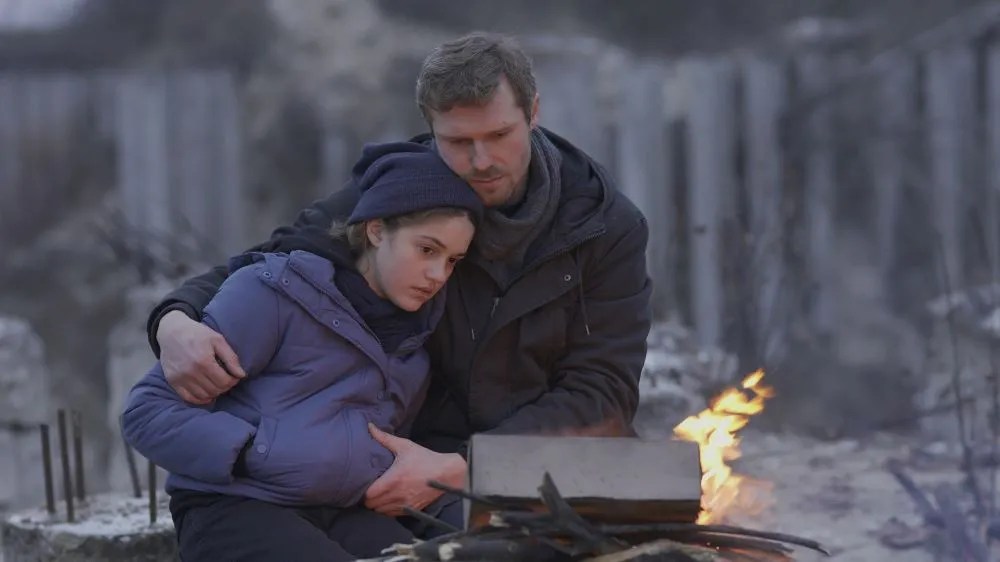
In “Reflection,” a Ukrainian surgeon, his daughter, ex-wife and the ex’s new husband cope with the last Russian assault on the Black Sea state, back in 2014. Writer-director Valentyn Vasyanovych (“Atlantis,” “Black Level”) uses irony, horror and a sober-minded, unspoken acceptance of “this is the way our lives are now” to tell a quiet, harrowing story of one extended family’s experiences of the war.
Serhiy (Roman Lutskyi) brings a present and flowers to a birthday outing for his tween daughter Polina (Nika Myslytska). She bubbles with delight as her father, mother (Nadiya Levchenko) and step-father (Andriy Rymaruk) watch her her suit-up, and then join in the mayhem of a short and splattered paint gun battle.
There’s an observation window for adults to watch the action. Polina, not really reading the room, takes her hit and feigns real injury and death to her mother’s “Not funny at all” scolding. Serhiy is a surgeon dealing with wounded the military hospitals cannot handle. Andriy, the step-dad, is a commando about to go back into the field. And Mom is worried sick about all of this.
The child parrots what the stepfather’s said about “If somebody doesn’t go” (in Ukrainian with subtitles) the war will “come home to us” to her father. Perhaps that unjustly shames Serhiy, because when next we see him, surgeon is in an army ambulance, lost on the unmarked snowy backroads with a comrade st the wheel and wounded men in the truck with them.
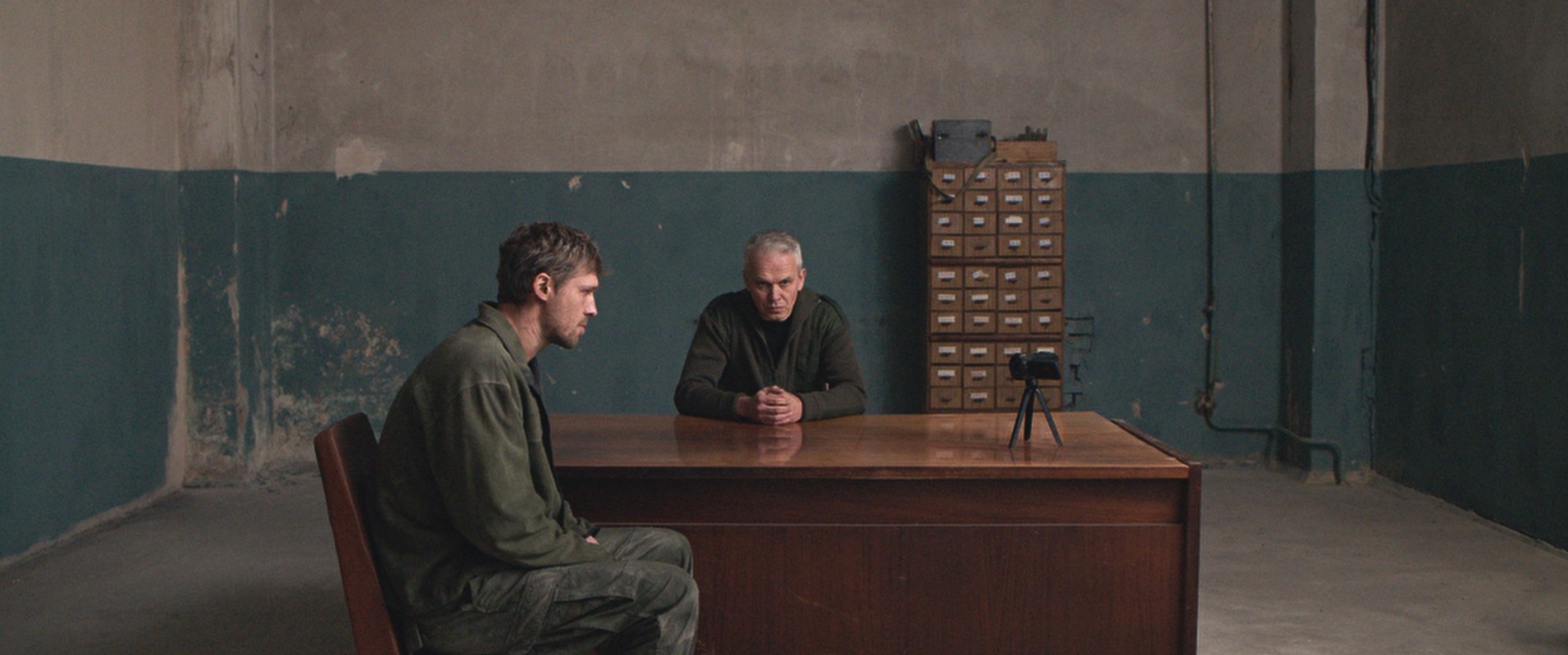
One wrong checkpoint later, everybody else is dead and Serhiy meets the Russian (Ighor Shulha) who runs the prison where he’s to be kept. The warden seems interested in the fact that he’s a doctor and curious about whether he was conscripted “or volunteered.”
“Check him,” the mild-mannered sadist quietly orders, and just like that, Serhiy is tortured. His life then becomes a series of interrogations where he’s the doctor relied on to tell the torturers if their victim has passed out, or is dead.
The direct horrors end for Serhiy and he struggles to adjust to a return to “life,” where jogging can get you attacked by now ownerless roaming packs of wild dogs and his ex-wife and daughter are wondering if Andriy will come back.
“Reflection” is shot in shades of overcast gray or pools of light in nighttime gloom.
Vasyanovych is a stylish filmmaker of few words and long, deliberate takes. The ride in the ambulance, climaxing with a shooting and a wreck and Serhiy’s jogging encounters with crazed canines are “action” sequences here. The torture scenes — like everything else, lit, staged and blocked in the center of the frame and acted out without a lot of editing — are drawn out enough to make one grimace and squirm.
A giant garage door at the facility slowly opens, and a big truck with “Humanitarian Aid from the Russian Federation” backs in. It’s actually one of Putin’s “cover up our casualties, cover up our crimes” rolling crematoria.
A bird flies into Serhiy’s apartment window, leaving a grim outline on it that haunts Polina, because here’s a tragedy that is directly in front of her, one she can relate to.
The acting is buttoned-down, for the most part, even the interrogation scenes. There’s little bravado and nothing like sadistic glee from “villains” who know what they are.
The Russians here are insensate brutes, “following orders” or not, monsters doing what they’ve done for a hundred years of state-sponsored terror and oppression.
And the scars they leave behind are glimpsed every day, in every “reflection” of life being lived by those traumatized survivors they leave behind.
The old saying that times of great stress and trauma produce great art is being proven with understated minor masterpieces from Ukraine like “Dombass,” “Bad Roads” and “Reflection.” Here’s wishing they didn’t have to endure that, and hoping that they can get back to the business of making Eastern European sitcoms again, and soon.
Rating: Unrated, graphic violence
Cast: Roman Lutskyi, Nika Myslytska, Nadiya Levchenko, Andriy Rymaruk and Ighor Shulha.
Credits: Scripted and directed by Valentyn Vasyanovych. A Film Movement release.
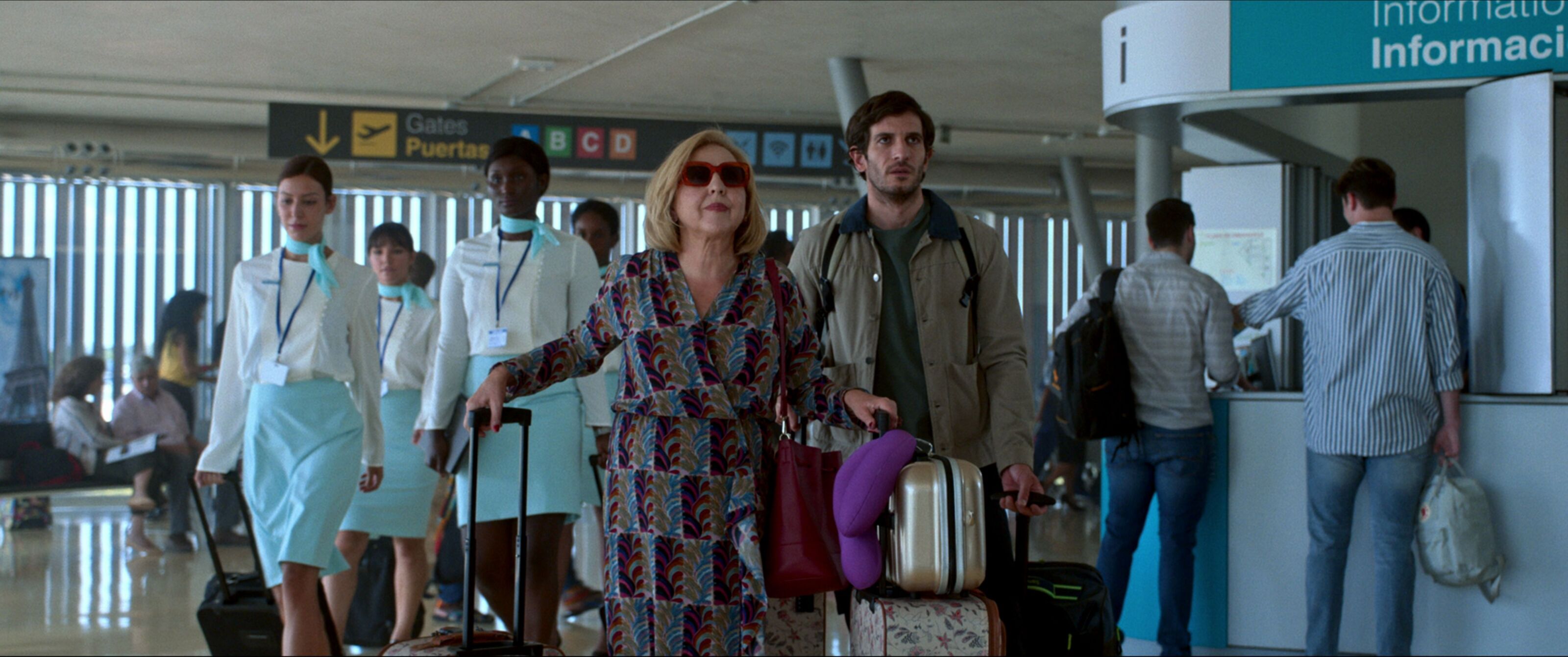
The striking scenery of Mauritius is the chief selling point of “Honeymoon With My Mother,” a downbeat romantic comedy that tends toward dull.
It’s as if the film’s frothy opening — a wedding interrupted by a romantic who hurtles into the ceremony in his vintage Ford Capri, sweeping away the bride as Pat Benatar’s “We Belong Together” blasts out of his radio and the soundtrack — leaves not just the groom at the altar, but the viewer as well.
The movies and TV show this sort of thing all the time, but can you imagine the hurt, shock and shame of that? “Honeymoon” invites us to, and it parks the entire overlong rom-com under a cloud.
Jose Luis (Quim Gutiérrez) is left holding the bag — an expensive ceremony that empties out, leaving just him and a couple of family members forced to cope with all this catered food and a band that won’t stop playing and a priest who reminds him (in Spanish with English subtitles) “I still have to charge you.”
Yes, the bride ran off with the rehearsal dinner DJ. And then there’s this honeymoon she insisted on, resisting Jose Luis’s pleas for a more reasonable “fjords” cruise. It’s “the best resort in Mauritius,” and as much as his mother Mari Carmen (Carmen Machi) argues for a refund, the travel agent is no more understanding that the priest.
Nothing for it but for him to go, and for her to travel as his “wife” on a jetliner filled with other honeymooners, most of whom look like the woman who just dumped him.
As the script abandons the ex and the DJ as plot points, you might wonder how the hell they got 110 minutes of movie out of Jose Luis moping, bickering with mom and slowly coming back to life — with a cute “adventure tour” guide (Justina Bustos) as motivation? I’ve already watched “Honeymoon with My Mom” — titled “Amor de madre” in Spain — and I’m still wondering.
The snarky, jump-to-conclusions desk clerk (Yolanda Ramos) tries to wring a few laughs out of the odd couple, who don’t do a good job of pretending to be what they’re not. Dominique Guillo plays a lounge lizard who takes a shine to Mom, who’s in a marriage to a self-absorbed dullard (Juanjo Cucalón), aka Jose Luis’s dad.
Drinking game scenes, getting “lost” and extorted at the wrong rum bar, an arrest and a stumbling flirtation with the out-of-his-league blonde tour guide, with virtually no scene feeling like the “lift” this thing needed, don’t end up providing any relief from the tedium of it all.
But, you know, the scenery’s nice.
Rating: TV-14, lots of drinking, pot smoking, some profanity
Cast: Carmen Machi, Quim Gutiérrez, Justina Bustos, Dominique Guillo, Juanjo Cucalón and Yolanda Ramos.
Credits: Directed by Paco Caballero, scripted by Cristobal Garrido, Adolfo Valor. A Netflix release.
Posted inReviews, previews, profiles and movie news|Comments Off on Movie Preview: The Next Gen Stoner Comedy? “Good Mourning,” with Machine Gun Kelly, Megan Fox, Pete Davidson and Danny Trejo
“The Polka King” is one of those titles you scroll by because you’re sure you’ve seen it, even if you haven’t.
It stars Jack Black as a loveable, generous but criminal con artist, a real person who used other people’s money to “make music, bring joy.” Change the accent from Polish to Texas and drop the polka band and it’s a lot like “Bernie,” without the whole murder and cover-up thing.
There was a well-traveled documentary based on the guy, Jan Lewan. And the trailer to this movie tells so much of the story and its colorful characters it can make you think you caught this comedy when Netflix unleashed it back in 2018.
Well, that’s my excuse anyway. I was as shocked as anybody that I hadn’t gotten around to it.
Black, co-stars Jenny Slate, Jason Schwartzman and a seriously wound-up Jacki Weaver make this guy worth rooting for even if the can’t-miss movie does miss, here and there, as it covers some fairly predictable ground. It bubbles to life even as it is never quite achieving liftoff.
The story dates from 1990s Pennsylvania, with Polish Jan (Black), ex-beauty queen American wife Marla (Slate) and Jan’s first original musical collaborator Mickey (Schwartzman) telling their back story to one of the legions of little old ladies and gents who packed Elk Lodges and Sons of Poland halls all over blue collar America to hear The Polka King and his band.
Jan is the biggest cheerleader for the “land of opportunity,” where “nothing happen without you believe!”
Jan believes. But pragmatic Mickey hears from his fixed-income/tightwad elderly relatives the crux of the band’s problem. Their trapped-in-time audience won’t pay for a ticket that will cover their expenses.
“Band too big,” “booking fees, too small.”
They can sell merchandise at shows and Jan can peddle Polish nostalgia at a strip mall gift shop that Marla runs. But Jan is delivering pizzas to and the like to make ends meet. And his increasingly shrill mother-in-law (Weaver) is barking “get realistic, get a stable job.”
Jan figures his “25 year plan” to “build empire” doesn’t allow for that kind of concession, and Marla is in his thrall and can’t see “writing on wall.”
But a solution might be to get their fans to “invest” in Jan, the band and his “empire.” He offers “promissory notes” to such backers, promising a whopping 12 percent return. He gets enough backers that he’s able to pay the band, beef up the show and deliver spectacular entertainment at senior citizen’s prices.
He’s delusional, of course, buying air time for DIY TV commercials, setting up his own polka record label and dreaming of the day “we get TV show, like ‘Sonny & Cher.'”
Of course it all depends on friends getting other friends to invest. It’s a Ponzi scheme, something pointed out to Jan by the Pennsylvania SEC investigator (JB Smoove) assigned to his case.
“No worry, I stop. I no know!” is all it takes for Jan to reboot the enterprise, to add “Jan Lewan Tours of Europe” and a pierogi shop to his portfolio.
“In Poland, everybody do bribes,” he queries the SEC guy. “You do bribes?”
No, he doesn’t. But that doesn’t mean Jan won’t resort to that to pave the way for getting rich and famous, making others dreams come true and getting his tour group “audience with the (then Polish) Pope.”
“Polka King” is a movie with the occasional giddy high — that “Pope” moment — a few predictably touchy and even more predictably touching scenes, and a lot of pleasantly goofy polka music by this America-loving, gregarious and generous goof who just wants to take care of people — his family, his fans, and his employees.
Schwartzman underplays his voice-of-practicality partner in crime — who is actually in the dark on these chained and padlocked filing cabinets and Jan’s mysterious “books.” Slate’s Marla is equally delusional, craving identity and generally more passive and less interesting than you’d figure a role written for Jenny Slate would be.
But Weaver, as the “I always KNEW something was up” raging, mistrusting mother-in-law, brings the heat and the laughs to her testy turn.
It’s Black’s movie, and his polished stage-mugging is used to great effect, just as his general likability will have you rooting for this not-quite-victimless-crime and the open-hearted, if devious, criminal behind it.
How Jan kept all those “investors” happy has to be one of the great books-juggling acts this side of Bernie Madoff. His secret, as Black suggests in every scene, might have been his charm.
You meet Jan Lewan and you ask him, “Is it pronounced ‘Yan’ or ‘JAN?'”
“Whichever you want,” he replies. And when you insist, he insists. He’s that eager to please, to fit in, to “be just like you.”
The film’s striving immigrant subtext kind of overwhelms the knowledge that somewhere down the line, a lot of people are going bust over this guy’s hustle. When Black’s Jan says he’s doing it because “I play the polka music for the smiles,” you believe it because he believes it.
And even when shoe drops and the music’s over, you can’t help but root for the lovable, grammar-mangling, old-lady-fleecing mug.
Rating: TV-14
Cast: Jack Black, Jenny Slate, Jacki Weaver, Jason Schwartzman, Vanessa Bayer and JB Smoove.
Credits: Directed by Maya Forbes, scripted by Maya Forbes and Wallace Wolodarsky. A Netflix release.
Check out the look, tone music and graphics to the “true story” about an entrepreneur who cleaned up an oil spill and created a place at the table for himself and all who followed.
June 10, we’ll see if the movie measures up to this inspired, witty trailer.
















 Movie Nation