
British? Check. Welsh and overcast? Check and check again.
Twee? Oh my yes.
June 17 Focus Features starts to roll this one out.
British? Check. Welsh and overcast? Check and check again.
Twee? Oh my yes.
June 17 Focus Features starts to roll this one out.

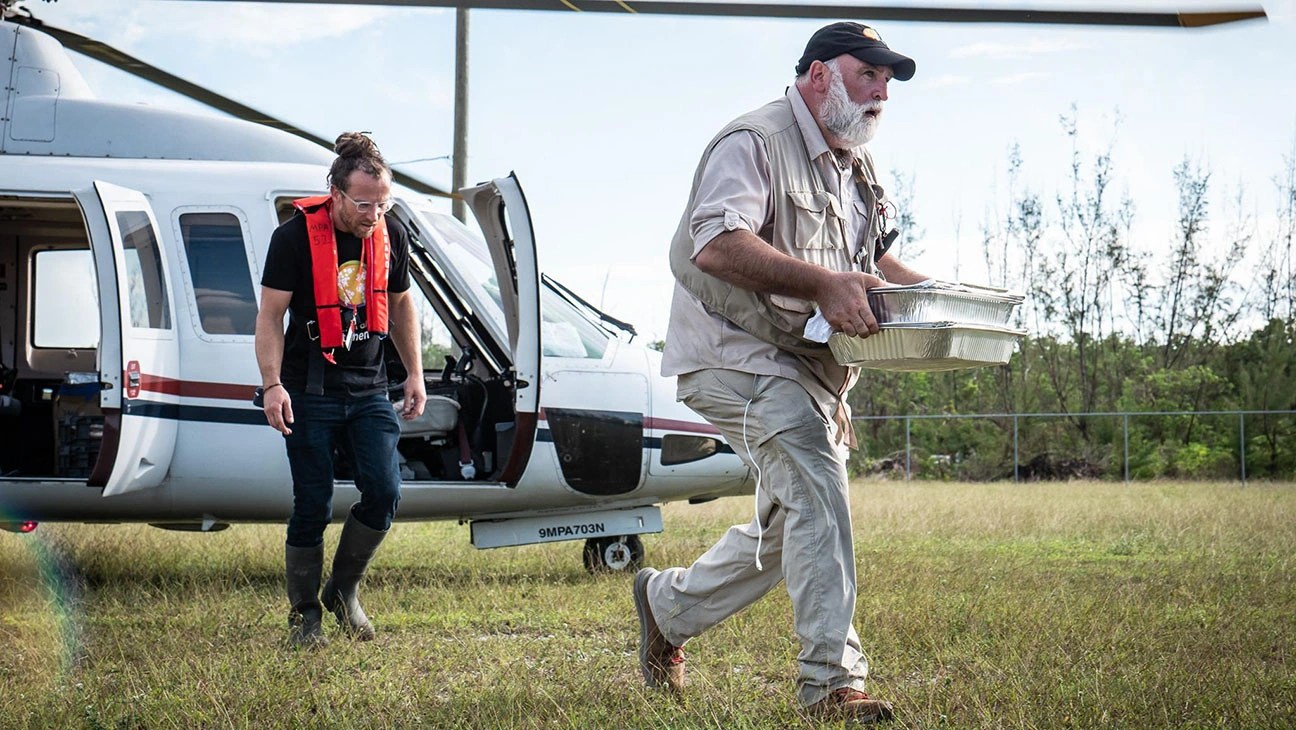
The closing image of “We Feed People, Ron Howard’s uplifting documentary about Chef José Andrés and the righteous work he and the non-governmental-organization charity he helped found, World Central Kitchen, is a kicker, one of documentary cinema’s great story-in-a-single-shot punchlines.
The vehicle the Spanish born D.C. restaurateur is driving and talking about his work in — on this occasion, getting food to people locked-down by COVID — sputters and quits.
“Oh s–t!” the gregarious Andrés bellows. “We ran out of gas!”
Driving on “e” for “four hours” will do that, he admits as he lights up a cigar and decides what to do next. He’s so into the work he’s pioneered, showing up in disaster zones and feeding the masses, “making sure food is an agent of change,” talking up the WCK, that he forgot to gas up.
“Chefs operate in chaos” his fellow WCK team members have warned us. We’ve seen enough Gordon Ramsay and “Iron Chef” TV shows to know that already. Here. an empty gas tank is just another chaotic obstacle to overcome.
Starting 12 years ago with the Haitian earthquake, the beloved celebrity chef turned his intense focus on hunger, not just haute cuisine. He kept his charity’s organizing principle simple.
“People are hungry” in these extreme situations. “You cook. You feed them.”
“We Feed People” follows Andrés and his staff through their steep-learning curve. They showed up in Haiti with no plan, just a little cash and a notion of what was required to get a lot of people fed, and quickly. Andrés laughs at his Michelin star ego being put in check when the smiling Haitian women helping him cook let him know that he was fancy-chef’s-hat overthinking his treatment of local ingredients. WCK had to master cooking “what the locals would love to eat” in every new situation.
So maybe that Catalan sailor’s stew will work here, or maybe beans pureed the Haitian way would better comfort the shellshocked survivors.
He maxed out his credit cards buying food, “worrying about paying for it (through donations) later,” in battling the “botched response” to the Puerto Rican crisis brought on by Hurricane Maria. But there, he and his team figured out how to network chef-to-local-chef, cook-to-cook, to find big kitchens still operational and food trucks that could be brought in to cook the ingredients they helped him source all over the ravaged island.
At a volcano in Guatemala, another hurricane in the Bahamas, dealing with COVID shortages at Navajo Indian reservations and helping to feed migrant farm workers during the pandemic, we see WCK team members pitching in with, and asking for or giving assistance to the Red Cross (“the big brother in natural disaster relief,” Andrés calls them, not in an Orwellian way), the Salvation Army and the Federal Emergency Managements Agency (FEMA).

FEMA officials under the disgraced former president Trump tried to label Andrés a “hustler” working for profit there, which gets his back up. No, he’s not taking a penny.
He loses his temper, now and again, at disorganization or team members who ignore the lessons of earlier disasters and might, he fears, start a food riot.
Mostly though, Andrés bubbles over with enthusiasm, leading like a cheerleader with his sleeves rolled-up, supervising the cooking himself.
“You want a plate?” he asks small boys near one disaster kitchen site. “Come on. I cook it. It’s good!”
He ‘s just eschews the name “chef,” although everybody on his team can sound like a loyal kitchen crew, with their “Yes, chef” responses to his orders. To strangers he’s working with or serving who don’t recognize the garrulous man with a film crew following him, he’s just José
“I love the word ‘cook,‘” he says. In Spanish, “‘cocinero’ is a very romantic image — on the stove, with the fire.”
And for all the widening efforts of WCK — working towards “empowering local” businesses and cooks with better access to food, all the inspiration he took from mentor Robert Eggers, who ran the D.C. soup kitchen where Andrés, all the demands of family and celebrity and “business,” that’s the picture that emerges of the only real rival to Dolly Parton among America’s most righteous and famous.
He’s a cook. You’re hungry? Let’s see what we can whip up for you — 500,000 of you a day, in Puerto Rico at one point.
But maybe leave somebody else in charge of gassing up.

Rating: some profanity
Cast: José Andrés, Maisie Wilhelm, Nate Mook, Joe Biden, many others
Credits: Directed by Ron Howard. A National Geographic release (May 27 on Disney+, NatGeo.com)
Running time: 1:29

For those keeping score at home, I called it. Netflix getting into the Victoria Justice business was a smart play for both parties. Give her suitable, wholesome, flirty and sassy parts and she’ll deliver and Netflix will be the richer for it.
“A Perfect Pairing” is a nice step up from her first film for Netflix (“Afterlife of the Party”) and a big step in the right direction for fixing her Hallmarkish brand with the streaming service.
The Doris Day of Netflix is a perky, quick-quipping young Latina.
In “Pairing,” she plays a wine broker, someone who lines up wineries for her importing firm and lands contracts with tony restaurants to be their exclusive supplier. Lola may not run the place, but even the insufferable boss (Craig Horner) has to see her as his star. Lovelorn Lola — she’s divorced — will go to great extremes to close a deal.
She’s tipped about an Australian “hobby” winery owned by a Fortune 500 CEO that may be ready for the big time, and is ready to pull the trigger when a back-stabbing colleague (Lucy Durek) steals her thunder. The boss just smirks at this “lesson learned.” Cue Lola’s quit-in-front-of-the-entire-office “Norma Rae” speech.
“I would rather sell margueritas in a can at a suburban SEVEN ELEVEN than spend another minute with you!”
She’ll set up her own business, play up her heritage and use her contacts and “moxie” to make Salud Imports a success. That means she’ll gamble on an AirBnB visit to Oz to be near enough to the elusive Hazel Vaughn (Samantha Cain) to make her pitch.
That elaborate set-up is just here to send Victoria Justice Down Under, park her on remote (but verdant and mountainous) Waratah sheep station, where she ends up having to hire on as a “jillaroo,” a stockhand “because we don’t have cowboys in Australia.”
Hunky Max (Adam Demos) runs the place and he’s one jackaroo short. As it is one of the businesses CEO Hazel owns, a family ranch where she takes a sabbatical every year, Lola shifts from tourist who just made a failed pitch to the boss, to the female stockhand, a “jillaroo,” who’ll help them get through shearing season.
“I pay attention,” she declares. She’ll do the “grunt work, hard yakka,” because she does not quit and “I do not fail.”
We’ll see about that.
Screenwriters Hilary Galanoy and Elizabeth Hackett — team “Falling Inn Love” and “Love Guaranteed”– may be no one’s idea of the new Nichols and May. But they give Justice the situations, and possibly even the funny lines — although Justice makes the best stuff sound improvised — to succeed.
Lola instantly attempts a livestock ranch no-no. She wants to name the sheep.
“Meryl SHEEP? Calista FLOCKhart? BAArbra Streisand!”
A feel-good movie of the Hallmark Channel persuasion — and that’s all this ever aims to be — only requires good looking and compatible leads, a lovely location and in this case, lots of local color in the form of Oz folkways and Oz slang
Lola must learn her “blunnies” (boots) from her “barneys” (bar fight), what it means to be “up the duff” (pregnant, used re: sheep) and how to endure the local cuisine.
“What exactly IS Vegamite?”
Justice makes a fine fish out of water, generating just enough PG-13 lust at the shirtless Max, whose superpower is a ready supply of inspirational aphorisms.
“When it comes to hard work, some turn up their sleeves, some turn up their noses and some don’t turn up at all.”
I don’t know, maybe it’s watching two little girls grow up adoring”Victorious” and recognizing comic timing that wouldn’t abandon her as an adult that has me rooting for Justice. There’s a niche she fills here, one that Netflix was wise to go after — chaste, low-cost Hallmark Channel romances.
“A Perfect Pairing” does exactly what a simple feel-good romance should do, and Justice gives us a heroine worth rooting for. The “low hanging fruit” jokes land, and the situations — a campfire sing-along, a bar dance-and-sing-along to Aussie band Jet’s one-hit “Are You Gonna Be My Girl?” followed by a boozy “barney” — adorably embed Justice with amusing Oz cliches.
It’s not that ambitious, but it’s perfectly executed by Justice, her little-known supporting cast and veteran TV director (“Crazy Ex-Girlfriend”) Stuart McDonald.
I’d say it’s good enough that maybe Ms. Justice can start a little arm-twisting — get her studio to spend a little more on writers, co-stars, etc. That’s how Doris did it.
If they’re smart, they’ll see this “Perfect Pairing” as the first of many.

Rating: TV-14, alcohol, sheep dung gags
Cast: Victoria Justice, Adam Demos, Luca Asta Sardelis, Natalie Abbott, Emily Harea, Antonio Alvarez, Lucy Durek, and Samantha Cain.
Credits: Directed by Stuart McDonald, scripted by Hilary Galanoy and Elizabeth Hackett. A Netflix release.
Running time:
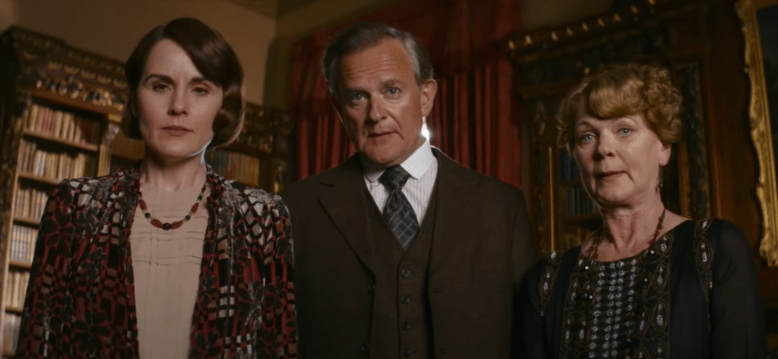
Making a better sequel did not allow the second “Downton Abbey” movie to overcome COVID depressed turnout, as “Downton Abbey: A New Era” managed a robust $18 million opening weekend, down from the first big screen treatment of the BBC/PBS soap opera.
The first “Downton” earned $31 million when it opened in a pandemic free era, hot on the end of the TV series.
That means “Doctor Strange” and his “Multiverse” win one more weekend before “Top Gun” shoots him down. Another $27-28 million will have been added to its tally by midnight Sunday.
“The Bad Guys” are biting off another $5 million+, clearing $75, fated to fall short of $100 before “Buzz Lightyear” takes down everybody in June.
“Sonic 2” is still making bank, adding nearly $4 more this weekend.
“Men,” the latest from A24, only managed $3.5, just enough to overcome the latest weekend take of the studio’s biggest performer ever. “Everything Everywhere All At Once” added another $3, clearing the $50 million mark – $52 by midnight Sunday.
Everyone’s viewing tolerance is different. Everyone has a different limit, how long she or he or we will sit through a streaming series, waiting for something — ANYthing — interesting to happen.
I got three hours into the new Amazon series “Night Sky” by first-time series creator Holden Miller before I took an irritated break to start this review.
It’s a series pitched to critics with a long string of “Do Not Reveal” edicts about its plot particulars. Here’s what they’re worried about.
This is a low-heat, flat-toned, limited effects science fiction Big Secret mystery movie whose “streaming series” stretchmarks show in every damned episode. As that’s a common complaint I have of drip-drip-drip-cliffhanger streaming storytelling, I am obliged to watch more just to see if anybody involved gets to the point, or again ANYthing interesting.
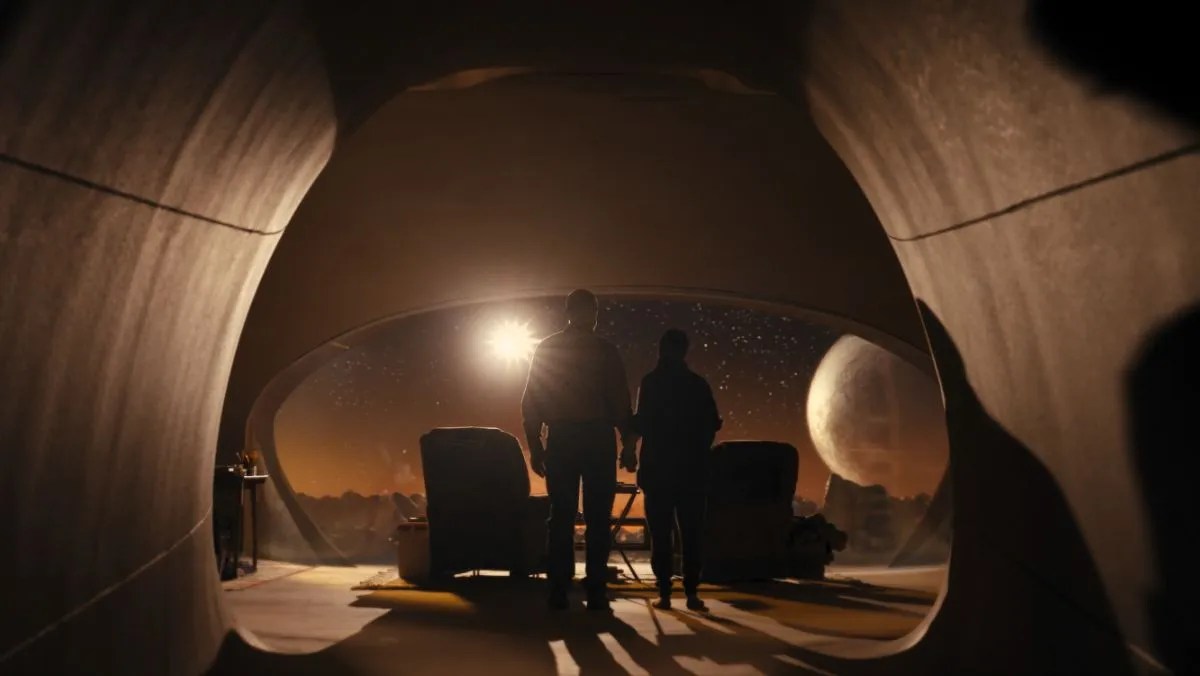
The series’ saving grace is casting Oscar winners Sissy Spacek and J.K. Simmons as an old and getting infirm/forgetful couple in small town Illinois, people who are “special” because of their secret. Tucked away in a tunnel beneath their tool shed on the outskirts of Farnsworth (the inventor of TV) Illinois is a futuristic observation room, a glimpse of the cosmus.
But what they’re about to find out is that it’s some sort of ancient portal, allowing travel in space and perhaps in time.
That’s a little vague for much of the series, as our “saving grace” couple are joined by an ever-growing crew of characters which require shifts in points of view. Among those is a younger version of Irene and Franklin.
There are plot threads that have a hint of Kurt Vonnegut about them, but the Big Secret –the series’ sole hook — is never remotely that sophisticated. The dialogue never rises up to the level of faux profound.
“I knew it was a sex dungeon” is as witty as this stiff gets.
The mother and daughter in the Argentine Andes (Julieta Zylberberg, Rocio Hernandez) are guardians of another ancient portal inside an old chapel. Well, the mother is. The daughter’s about to find out some things. Elderly Irene and Franklin’s grad school granddaughter (Kiah McKirnan) has her own story, and Irene and Franklin’s annoying and nosey new neighbor Byron (Adam Bartley) is spending too much time trying to figure out the standoffish couple next door. As I type this, another point-of-view has been introduced, that of a nursing home nurse (Beth Lacke) with a temper and a grudge.
As a stranger (Chai Hansen) pleading “amnesia” turns up in Franklin and Irene’s tunnel, it’s safe to assume his arrival and quest has a back story that must be filled in, too. First, Irene has to read a little W.H. Auden him to help him recover.
“Jude” seems not at home in this world.
All these characters, all this “mystery” and the only thing that registers are our stars and leading characters, facing a shrinking and uncertain future, grieving over what they’ve lost but still losing themselves on their trips underground to gaze upon “the Night Sky.”
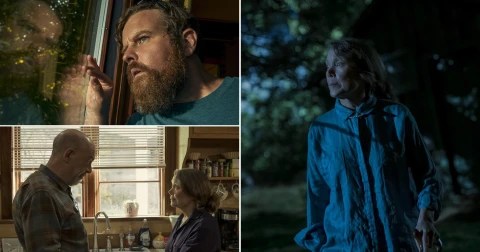
In acting terms, Spacek plays Irene as curious, concerned, caring and enfeebled. Simmons’ Franklin is doting with her, crusty and standoffish with most others. That’s all well and good, but it contributes to the flat tone of this action-starved/slow-starting/characters-adding exercise in time sucking.
There’s barely a half-assed effort to “explain” what’s going on, the why and how and to what purpose. Any “tech” digressions are more to tease things out than to drive this towards “answers,” a solution and the ever-elusive conclusion.
The Argentine characters speak English in Argentina, Spanish to each other elsewhere, an example of a show with no real “rules,” or efforts to follow them.
The “payoffs” to all this start to pay off in episode five, but calling those a letdown would give letdowns a bad name. The flashbacks merely fill in little pieces of backstory and are passed along as begrudgingly as everything else in this teasing “spoiler alert” without the spoilers.
I adore Spacek and Simmons, but not enough to sit through that final two hours of “Night Sky,” expecting a miracle.

Rating: TV-14, violence, profanity
Cast: Sissy Spacek, J.K. Simmons, Chai Hansen, Kiah McKirnan, Julieta Zylberberg, Rocio Hernandez and Adam Bartley.
Credits: Created by Holden Miller. An Amazon release.
Running time: Eight episodes @:55 each.
Well, nobody’s done a genie movie in forever.
And this trailer? That’s some serious eye candy.
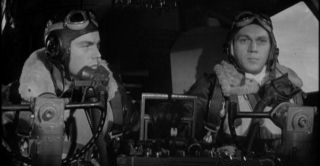

The “Money Shot,” and that’s really the only way to describe it, in the WWII bomber drama “The War Lover” gives us something no other Steve McQueen movie dared to show.
In the first B-17 mission depicted in the film, McQueen’s Captain Buzz Rickson is calm, collected and all business on an air raid. Then the bombs are released and um, so does “Buzz.” McQueen gives us an orgasmic eye-roll behind that mask. The character literally gets off on the thrill of combat and the killing his bombs do.
This was two years before “Doctor Strangelove” made that martial/sexual kinky connection more overt, but here it is, in one of the lesser known McQueen movies.
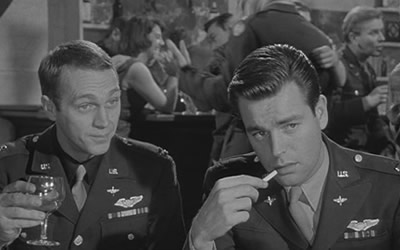
That moment isn’t repeated in the film, and McQueen never played a character as twisted, amoral and cruel as this one, a man who manipulates crew, including his more level headed co-pilot, Lt. Ed Bolland, played with romantic dash by Robert Wagner.
The film, based on a John Hersey novel, hangs on this central conflict with McQueen and Wagner as ego and id dueling inside their Flying Fortress, symbolically-named “The Body.”
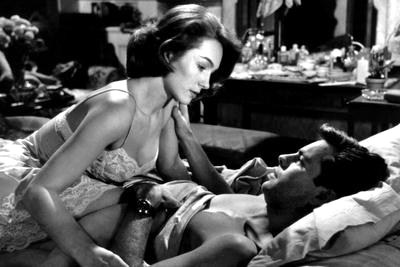
They’ll quarrel over crew, who should stay and who should be transferred out, and over a woman. Shirley Anne Field plays a version of the local lover who isn’t the chaste dreamer of earlier movies in this setting and of this genre. She invites Ed upstairs, and pretty much on the “first date.” They live together when he isn’t on duty and locked-down on base.
The semi-psychotic Buzz plays god games with his crew, recklessly risking all their necks on a low altitude flyby (a “buzz”) of the base to show his displeasure at a leaflet-dropping mission they’d just completed. A tiny miscalculation and he could kill them all and put his base out of commission, and that barely merits a scolding from the CO.
But Ed’s showing his independence, in the cockpit, with the rest of the crew and in town. If he’s got a lover, Buzz must have her.
I remember seeing this movie on TV as a kid and being jarred by two things. McQueen NEVER played genuine bad guys, on TV or film. “Conflicted” “good bad men” sure. Individualists to a one.
But here, he’s repellent. Any excuse the viewer makes for his behavior seems inadequate. And the script’s suggestion that the Army Air Force wouldn’t have busted him, no matter his skills as a pilot who hits his targets, seems off. Plainly he bullies his crew, which is why he kicks one member out.
Hollywood at the time ordained that even the irredeemable must be ennoble themselves by the finale, but that lands flat, too.
And then there’s the state of British special effects. Many combat films were shot in black and white years after the Technicolor et al Revolution simply to make it easier to use actual stock footage of fighters attacking bombers. It was cheaper.
But as you can see in “The Dam Busters” and other war-in-the-air thrillers, the Brits lagged well behind Hollywood in terms of state of the art effects. Models carelessly doused in lighter fluid represent crashing planes, and the stock footage never seamlessly fits in with nicely-detailed aircraft interior and exterior shots of gunners trying to chase off fighters.
The few actual flying scenes remind us there were plenty of air-worthy B-17s around 17 years after World War II ended.
Howard Koch, who had a hand in “Casablanca,” “Sgt. York,” “The Sea Hawk” and “Letter from an Unknown Woman,” was one of Hollywood’s all time greatest screenwriters. If this script feels like it pulls its moral, sexual and violent punches, that must have been because he was running up against the mores of the day and a director (Philip Leacock, best known for his later TV work) without the status to push back at studio and star efforts to water it down.
But “The War Lover” still has merits — its vivid, foggy nighttime black and white (DP Robert Huke did David Lean’s “Great Expectations,” Bond’s “You Only Live Twice” and superior air combat thriller “The Battle of Britain”) recreations of wartime London and the nerve-wracking nature of every mission to every “just doing my bit before going home” member of the crew who isn’t off in the head, a “War Lover,” in other words.

Rating: Approved, combat violence, sexual situations
Cast: Steve McQueen, Robert Wagner, Shirley Anne Fields, Ed Bishop
Credits: Directed by Philip Leacock, scripted by Howard Koch, based on a novel by John Hersey. A Columbia Pictures release on Amazon, Tubi, Movies! and other streamers and specialty channels
Running time: 1:45


Every now and then as we travel “Around the World With Netflix,” one gets the idea that the streaming service is impacting global cinema in ways that aren’t the healthiest.
Watching formulaic romantic comedies from Peru, Italy, Brazil, Germany and The Netherlands, it seems obvious that either Netflix is dictating that “content” created anywhere fit the expectations of the North American marketplace, or local filmmakers in those countries are seeing what “sells” and pandering to the same lowest-common-denominator that most Hollywood filmmakers find themselves chasing.
“F*ck Love Too (F*ck de liefde 2)“ the sequel to the Dutch rom-com “F*ck Love” of 2019, is so bland and generic that it could be from anywhere.
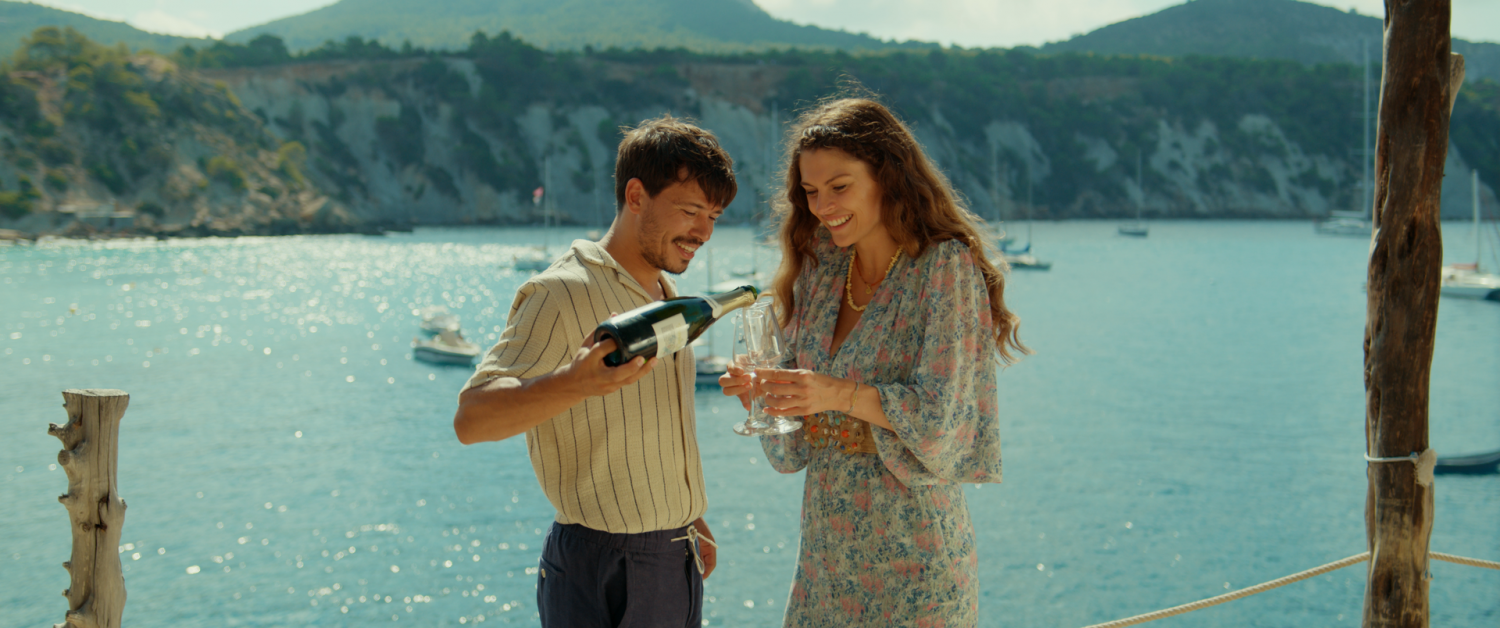
The title is far and away the raciest thing about it. It’s closer to a PG-13 rom-com than an R-rated sex farce. Take away ritzy Ibiza, one of two settings, and the story could take place anywhere.
And the dull collection of characters struggling with marriage, babies, commitment and “love” are mostly a lost cause for the mostly-Dutch cast trying to make them interesting.
Hollywood’s had a hard time rediscovering the secret to writing and filming sharp romantic comedies. “F*ck Love Too” lets us see they’re exporting that malady, because plainly it’s contagious.
Lisa (Bo Marten) has come to the conclusion that traveling the globe with rich Dr. Jim (Géza Weisz) isn’t all she wanted.
Her narcissistic womanizing ex Jack (Edwin Jonker) has remarried and wants to sell their house. Oh, and he’s made his wife and another woman pregnant at the same time.
Kiki (Nienke Plas), the Samantha of “Sex and the City” maneater in Lisa’s circle of friends, has decided to give up the carnal life and get married, so she and bridesmaids Lisa and Angela (Bettina Holwerda) are off to Ibiza, where Lisa’s childhood pal Noah (Dorian Bindels) just happens to have a couple of seaside houses he rents out, and an ongoing crush on Lisa.
Back in Holland, their mutual friend Bo (Yolanthe Cabau) may have finally had it with her hapless husband Said (Maurits Delchot), even though he’s the father of their two children. Might this music biz A&R woman be distracted by a new rapper (Kraantje Pappie) at her record label?
Nobody in this is relatable or likeable enough to invest in. Jonker and Delchot make the strongest impressions in the cast, merely by playing the most outlandish characters in this. But even Jack and Said come off every bit as Hollywood homogenized as everyone and everything else in “F*ck Love Too.”
Four screenwriters shoehorn comedy into the script through coincidences — Jack’s wife and mistress have the same OB-GYN — gauche cell phone behavior (the OB-GYN has animated phone chats while his patients are in the stirrups, Said photographs Lisa’s dead granny and drops his phone in the casket) — PG-rated hook-ups with an Ibiza gigolo and a growing pile of evidence that Jack is perfectly piggish.
His advice to bestie Said, who wants to win Bo back?
“Send her a d*ck pic. Women love that sh*t.”
In Dutch or dubbed into English, that’s still not much of a laugh. And that goes for the entire film, which appears to have been filmed by separate crews and separate directors in the Netherlands and Spanish Ibiza locations.
Not that the sequences mismatch. They’re each as bland as day-old porridge, with all the sex appeal of an unsolicited “d*ck pic.”
Rating: TV-MA, some nudity, profanity, alcohol abuse
Cast: Bo Marten, Yolanthe Cabau, Bettina Holwerda, Nienke Plas, Géza Weisz, Edwin Jonker, Maurits Delchot and Kraantje Pappie
Credits: Directed by Appie Boudellah and Aram van de Rest, scripted by Appie Boudellah, Shariff Nasr, Sergej Groenhart and Mustapha Boudellah. A Netflix release.
Running time: 1:33
A tipsy drive in the North African desert, an accident and.. recriminations.
McDonagh did “Calvary” and “The Guard” and is nobody’s idea of “the lesser McDonagh brother, even if his sibling did “Three Billboards Outside Ebbing, Missouri.”
Evangelos Odysseus Papathanassiou was born in Greece, sought pop stardom in Paris before his mastery of synthesizers got the attention of major film studios.
As Vangelis, he scored “The Bounty,” “Blade Runner,” “1492,” “Alexander” and this film, whose opening is such a perfect synthesis of image, motion, memory and emotion that it became a touchstone and then a cliche and finally a cultural punchline. It’s that ingrained in any filmlovers’ psyche.
Honestly, I remember seeing this film in a preview in Charlotte, NC, and just weeping at how perfect this is.
Well done. Rest in peace.

 Movie Nation