
A Syrian chocolatier flees to Canada? Sounds cute.
This one opens April 29, and I’m getting to it shortly.
A Syrian chocolatier flees to Canada? Sounds cute.
This one opens April 29, and I’m getting to it shortly.
You can search high and low, making your “Around the World With Netflix” journey, and never have much luck disproving the premise of Albert Brooks’ political farce, “Looking for Comedy in the Muslim World.”
The odd not-that-amusing rom-com from Indonesia, attempts at sentimental humor from Turkey, this search goes on and on simply because comedies in Turkish, Persian, Arabic or what have you are rare. But every now and then, just as you’re ready to give up this unicorn hunt, a surprise pops up.
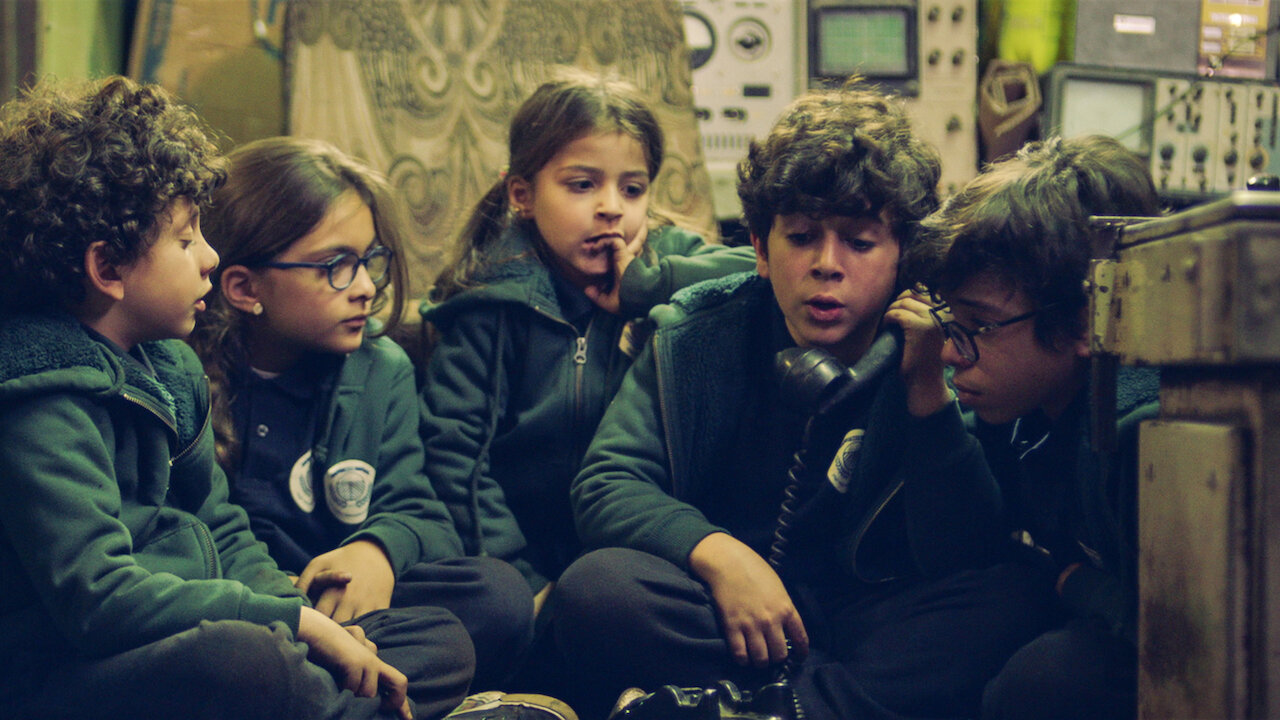
“Apple of My Eyes” is a goofy Egyptian kidnapping kids comedy with a hint of “Ransom of Red Chief” about it, until the grandmothers take over and something like “Going in Style” sets in.
The laughs come from the arch, loud, nagging and incessantly babbling characters — grandmothers, incompetent kidnappers, outraged parents and hapless police — and from what they say as they babble.
Other jokes come from cultural mores. Even “lowlife” kidnappers “respect the age” of their elders, even when those elders are obnoxious, noisy, self-righteous grannies demanding the release of their kids, and willing to haggle over the ransom “like this is a street market.”
The opening establishes the routines of a few characters — braying, bossy Aabla (Dalal Abdulaziz) bullies the son she talked into getting a divorce, but dotes on little Hassan, her grandson. She can’t bear to see him catch the bus to the exclusive Manchester International School the six year-old attends.
Hassan can’t bear the thought of being packed off to visit his other granny just as the classmate he crushes on, Farida, has her birthday party.
Kiki (Mervat Amin) is another grandmother, somewhat less interested in her daughter and grandchild. We catch her, dolled-up at the tail end of her latest all-night party with friends and menfolk. No, she’s not that interested in babysitting today.
The point becomes moot as the school’s bus is hijacked by an armed gang that apparently is aiming to branch out the family business. It’s the patriarch’s idea. And as they carelessly use their real names around the five privileged children, let them see their faces and take in their abandoned factory lair and even allow the kids to outfox them and escape long enough to describe where they are and the landmarks they passed getting there by phone, that patriarch is the last to figure out that he and his lads are in over their heads.
“Maybe we should’ve stuck with stealing cars,” old Radwan gripes, in Arabic with English subtitles.
The movie is cute enough when it’s just the enterprising moppets vs. clumsy but just scary enough kidnappers. It’s only when grandmothers Aalba, Kiki, Aida and others take over, and when they consult their elder, Mrs. Suhier (Enaam Salousa), “the Colonel’s widow,” that “Apple of My Eyes” takes off.
They’re skipping past the cops, figuring out the clues and riding around with very old, very deaf and very careless-driving Mrs. Suhier in “The Colonel’s” ancient Jeep they track down the children…and are promptly taken hostage themselves.
This Sarah Noah comedy is at its best when it’s most manic — entitled, well-heeled parents shouting at administrators, cops and each other, grandmothers nagging their kids and their grandkids’ kidnappers, and each other.
When the grandmothers take over the movie, and the kidnapping (their “negotiations” are a stitch) and the cooking during the kidnapping, “Apples” hits its stride and more or less maintains it, even though the energy in the picture flags quite a before the finale. Jokey James Bond and “Mission: Impossible: music underscores some moments of the caper.
And of all the ransom exchanges the movies have cooked up over the century of cinema, the one screenwriter George Azmy delivers here is the cleverest, or would be if they’d developed and milked that sequence of all the laughs it promises.
Still, blown chances aside and paced fast or stumbling into slow, “Apples” is never less than cute and often pretty funny.
If Netflix keeps this up as a streaming option, perhaps they’ll provide English language credits so I can identify more characters and the actors playing them by name.

Rating: TV-PG, mild peril, gunplay
Cast: Dalal Abdulaziz, Mervat Amin, Riham Abdel Ghafour, Ragaa Al-Gidawy, Enaam Salousa
Credits: Directed by Sarah Noah, scripted by George Azmy. A Netflix release.
Running time: 1:31
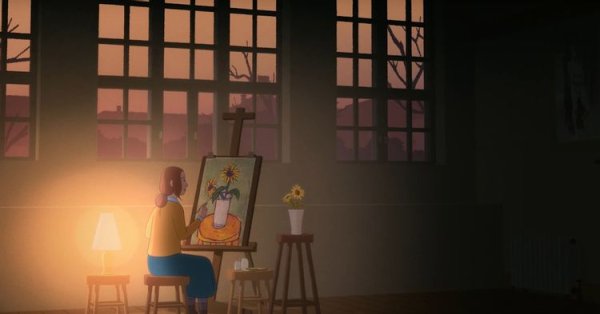

Not every animated biography of a painter will have the ambition and artistry of “Loving Vincent,” but if you’re going to the trouble of telling the story with painting — even digital painting — it seems as if you should at least try.
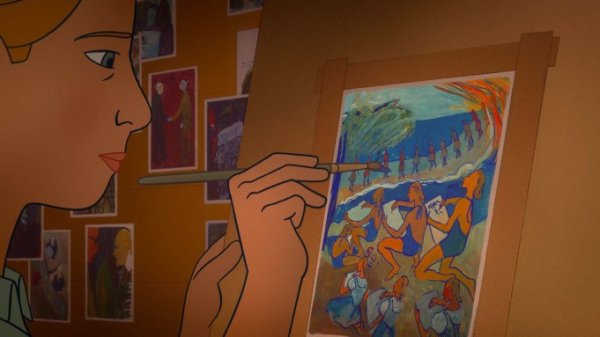
And if you’re pitching your tale as the life of someone whose 769 “Life? Or Theatre?” paintings tell the tortured story of her family, and taken together have been described as “the first graphic novel,” you at least owe it to the subject to mimic her style more than the drab and downbeat “Charlotte,” a new film about the young German painter and Jewish Holocaust victim Charlotte Salomon.
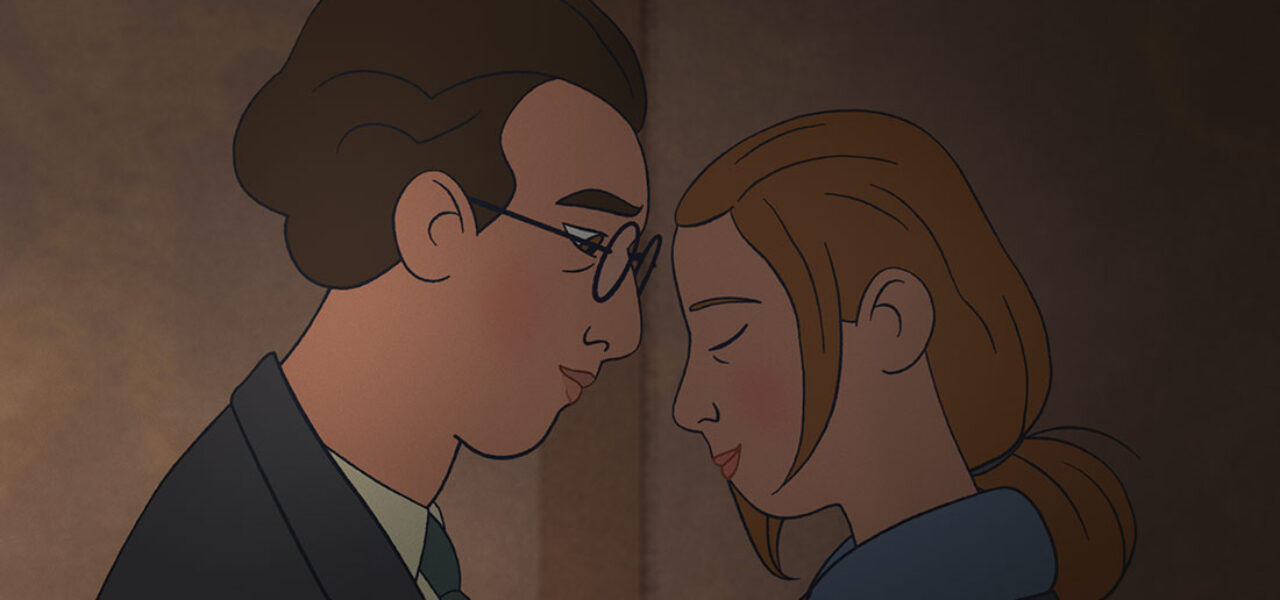
Animators Tahir Rana (TV’s “Welcome to the Wayne”) and Éric Warin (“Leap!”) give us a cursory overview of Salomon’s life from the mid-1930s to 1943, showing her as a witness to the horrific rise of Naziism, affluent enough to escape it and talented enough to show the world glimpses of it as a backdrop to her family’s own tortured history.
Here are Brown shirt thugs busting up an operatic recital and a growing tide of anti-Semitism that invades even academia. Charlotte visits the Nazis’ infamous “Degenerate (Jewish) Art” exhibition, endures Kristallnacht and rides out the beginning to of the war, sent to live with a wealthy friend in the South of France.
An A-list voice cast tells her story, with Keira Knightley in the title role, Eddie Marsan as her Berlin doctor/father and Helen McCrory as her singer/stepmother. Jim Broadbent and Brenda Blethyn voice her grandparents, the first family members to flee to exile, first in Italy, then after an abrupt invitation from an American expat (Sophie Okonedo), to Nice and southern France.
Knightley has to use her voice make Charlotte an interesting character when the understated animation fails to bring her to life. Saddled with banal dialogue pointlessly laden with “Großmutter” and “Großvater,” the only German words her character uses, Charlotte comes off as colorless, and given the notoriety Salomon’s life story has taken on, we feel we’re seeing a very adult tale watered down for the medium.
Her stepmother had designs on Charlotte becoming a “cutter,” a seamstress and tailor. But Charlotte turns her fashion school skills towards fine art, even gaining admission to art school.
As the nightmarish rise of the Nazis puts greater and greater restraints of her ambitions and her family (Dad is hauled off and beaten), she begins a torrid affair with an older man (Mark Strong), her mother’s voice coach and a World War I veteran.
Taking refuge on the Cote d’Azur, she takes another lover and copes with her increasingly embittered and unpleasant grandfather — “You’re not in this world just to PAINT, Charlotte!” and learns of her family’s darkest secrets, although some of those are left out of the film.
Most animated films give us a reason they’re animated, although Richard Linklater’s fanciful “Apollo 10 1/2,” like his similarly rotoscoped “Waking Life,” pushed the boundaries of that. “Charlotte,” despite the occasional simulated watercolored interstitial, never makes that case on artistic grounds.
And while not all Holocaust sagas are created equal, an uncensored, grim realities and all treatment of Salomon’s life would certainly be novel enough to warrant the telling. That’s a case “Charlotte” never makes.

Rating: unrated, violence, nudity, adult situations
Cast: The voices of Keira Knightley, Jim Broadbent, Mark Strong, Sophie Okonedo, Brenda Blethyn, Sam Claflin, Henry Czerny and Eddie Marsan.
Credits: Directed by Tahir Rana and Éric Warin, scripted by Erik Rutherford and David Bezmozgis. A Good Deeds release.
Running time: 1:32
If DreamWorks had any sense of humor they would’ve opened this animated caper comedy on…Good Friday.
But no, we’ll have to wait until NEXT Friday to see how well suited Sam Rockwell, Awkwafina, Richard Ayode, Zazie Beetz, Anthony Ramos and Marc Maron can be in animated form.
Well, you’ll have to wait. I’m catching a preview of “The Bad Guys” this AM, the day AFTER Good Friday. .

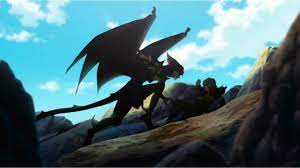

Animation has long been used to teach the concepts of religion to new followers, so it’s not absurd, in principal, that Ryuho Okawa would minister to the masses via anime in “The Laws of the Universe: The Age of Elohim.”
But the prophet and founder of “Happy Science” must be counting on a lot of uncritical eyeballs and ears greeting his pan-theistic messaging with minds untainted by say, exposure to the Many Myths and Faiths and more importantly, the many movies this religious anime goulash was concocted from.
“Age of Elohim,” set hundreds of millions of years ago in Earth’s past, features a universe of competing, space faring races of species ranging from human or elvish to simian, feline and reptilian, all engaged in a struggle of good “vulnerable” races vs. bad “aggressive” ones.
It’s stereotypical at best, Japanese-style racism at its worst.
Film fans will note the imagery and ideas cribbed from everything from “Battlefield Earth” to “The Chronicles of Narnia,” with crab-soldiers from “Starship Troopers” tossed into the salad at one point.
That’s pretty much the theology our Japanese guru is selling, too. “The primordial Buddha of the Universe” assigns gods to rule planets and star systems, with Lord Elohim the ruler of Earth. Characters speak of “the Supreme Truth of God.”
An Amazonian warrior Yaizael is sent from Vega in Wonder Woman gear with a magical samurai sword to help defend the many diverse immigrant (from elsewhere in space) and reincarnated races of Earth from the simian/reptilian minions of the evil blonde mastermind Dahar, Mr. “I won’t go EASY on you, just because you’re a girl.”
Just when things look their bleakest, the bearded Amor shows up looking suspiciously like the guy on every crucifix the world over, with his winged warrior (archangel) Michael.
So Jesus (as one of the many insipid “Ooooo oooo ooo, ahhhh ahhhh ahhhh, uhhh, uhhhh, uhhh” choral ballad/hymns says) saves the day? Preaching “diversity” and “love for all races?”
C.S. Lewis was a Buddhist?
Is Okawa a John Travolta fan? Because you know he didn’t stop with “Battlefield Earth.” He must’ve watched “Michael” as well. And “Narnia.”
The animated vistas, depicting an Olympus-mythic Earth that looks like EPCOT built in the age of the Pharaohs, are impressive. The action is TV anime generic and underwhelming. And the story is cut and paste rubbish, with dialogue that…loses something in translation.
“Of all the different types of people, I despise YOUR kind the most!”
The mix-and-match theology I’ll let you make your own mind up about. One tip though. Having a lot of movies under your belt really pulls the curtain on this Japanese “Oz the Great and Powerful,” a prophet who plainly plumbs the outer reaches of Netflix for his version of the wisdom of the ancients.

Rating: PG
Cast: English language voice cast not credited
Credits: Directed by Isamu Imakake, scripted by Sayaka Okawa, Ryuho Okawa. A Freestyle release.
Running time: 1:59

A quick tech rundown before the star arrives at the Enzian Theater in Mainland. “Star Trek: The Voyage Home” and then a q &;a with Wild Bill.
Good times.

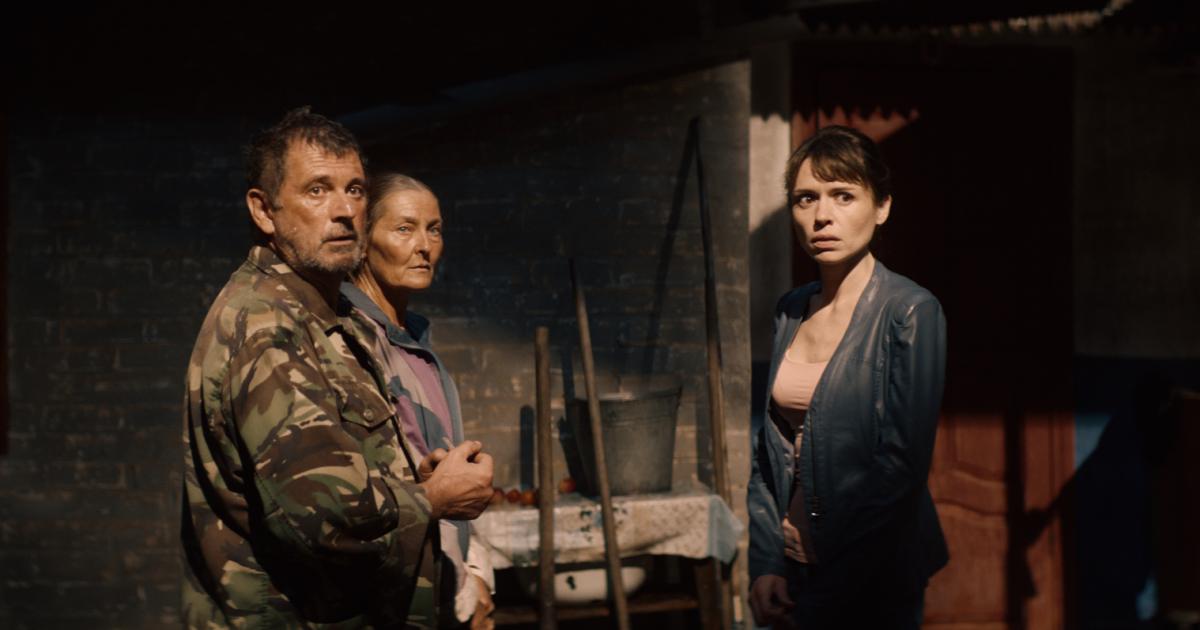

No less an authority than the Kyiv Independent says that for outsiders to truly “understand what’s going on in Ukraine,” the best entre to the situation might be from a couple of recent movies filmed there.
The award-winning “Donbass” which I reviewed earlier, is a dry satire on the fraught nature of Russia’s earlier assaults on Ukraine, often by proxies passed off as the “Russian” speaking minority of the country rising up against Ukrainian nationalism, labeled “Nazis” by Moscow for wanting to be free of Russian domination.
“Bad Roads” covers similar ground with less of a satiric slant, showing us the cost to the Ukrainian psyche of being subject to an invader’s agenda and the ugliness that accompanies foreign occupation — particularly at the hands of Russian troops.
Both of these movies are being released in North America by Film Movement.
In “Bad Roads,” the Oscar-submitted, more pointed and straightforward of the two films, five loosely-connected episodes tell a story of dehumanizing checkpoints, children growing up rudderless and often parentless, not knowing the difference between love and the occupiers’ idea of sex (gang rape), and the collapse of values that infects every corner of society and leaves no good deed unsuspected or unpunished.
A hapless and tipsy school headmaster (Igor Koltovskyy) brings the wrong ID to an army checkpoint, and spends a frantic few minutes trying to explain, to call home and get his wife to vouch for him and to find common ground and common acquaintances with the (apparently Ukrainian) guards. Pleas of “What are you going to do to me?” (in Ukrainian and Russian with English subtitles) and “I’m a FRIEND” to the commander (Andrey Lelyukh) fall on somewhat deaf ears. The commander’s a menacing martinet, short and short tempered.
The drunken headmaster sobers up at gunpoint in the midst of a rising threat level that started with a simple blunder. But he finds something resembling courage when he think he sees one of his female students in a nearby army dugout.
“What are you DOING to us?”
Teen girls talk about boys and sexual experience and crushes on men in uniform as they cadge cigarettes outside a convenience store.
A grandmother (Yuliya Matrosova) later nags one of those girls (Anna Zhurakovskaya) at a bus stop in twilight, with the girl’s angry refusal to listen to anything the old woman says, threatening to “gas myself” if that gunfire in the distance has killed the young soldier she’s taken a fancy to.
“They’ll make mincemeat of us when they retreat,” Granny warns. She knows.
And then there’s the film’s longest sequence, that girl professing her love to a brutish soldier, assaulted and passed along, defending herself with words and opinions as her “I love to torture!” captor brags about his college education, his contempt for this child who professes her love for him, shoving a gun barrel into her mouth and demanding, “Look, are you Jewish by any chance? Gays and Jews are behind all the problems of the world!”
“No gays or Jews ever did anything to me,” she counters. Unlike this brute with a Kalashnikov.
And then there’s the final vignette, hinted at in the previous one. A motorist (Zoya Baranovskaya) accidentally hits a chicken that’s run across the road just as dark settles in. A city woman, she offers to pay for it or its care (it’s only injured) only to have the mistrusting farm owner (Oksana Voronina) change her tune from rude to predatory the moment cash is mentioned.
Her contemptuous son (Sergei Solovyov) is summoned, and now our righteous rural folks start a game of “Let’s see how much we can extort out of this lady who did the right thing?”
War dehumanizes one and all in Natalya Vorohbit’s film, adapted from her play. Generations of life, economic progress, tolerance and values are ground asunder as Russia pulls the rest of the Soviet Empire back down to her alcoholic, brain-drained kleptocratic dictatorship.
Vorohbit pays attention to one episode more than all the others, and that turns out to be the one that is circuitous and the most melodramatic.
Some of “Bad Roads” is hard to watch for its violence and muddying the moral waters between love and rape. All of it has a chilling pallor, seeing as how much of Western civilization is imperiled to the point of one bad election pointing us all towards this sort of hellish future.
Vorozhbit opens up her play just enough to make it cinematic, without losing the power that these disparate stories from a combat zone carry. One watches it with the hope that some day she’ll get to make another, and that Ukrainian cinemas will be open to show it, if they’re still standing.

Rating: unrated, violence, rape, profanity, smoking
Cast: Igor Koltovskyy, Anna Zhurakovskaya, Andrey Lelyukh, Yuliya Matrosova,
Zoya Baranovskaya, Oksana Voronina and Sergei Solovyov
Credits: Scripted and directed by Natalya Vorozhbit, based on her play. A Film Movement release.
Running time: 1:45
This American indie film hits theaters May 27.
I’ll have to poke around a bit and figure out who is behind it, as it has a whiff of prostheltyzing about it.
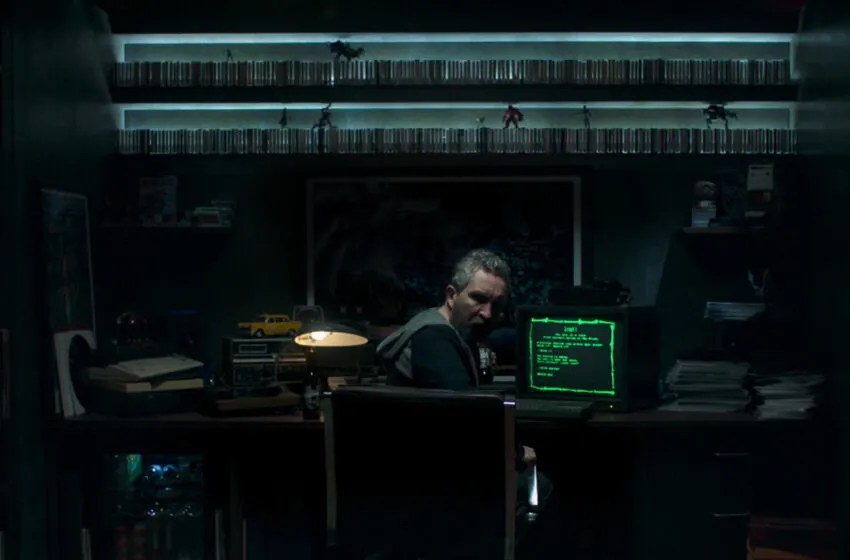
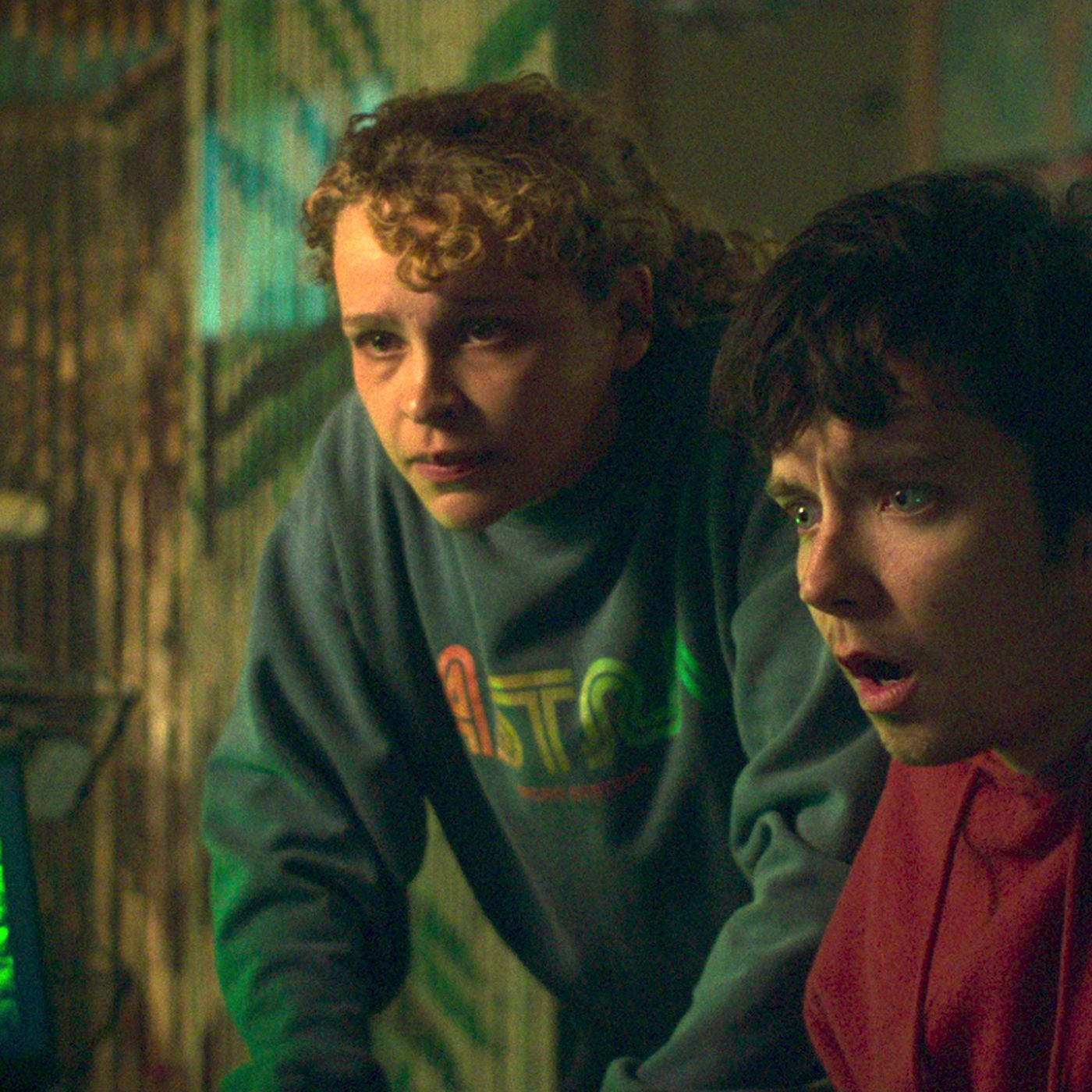
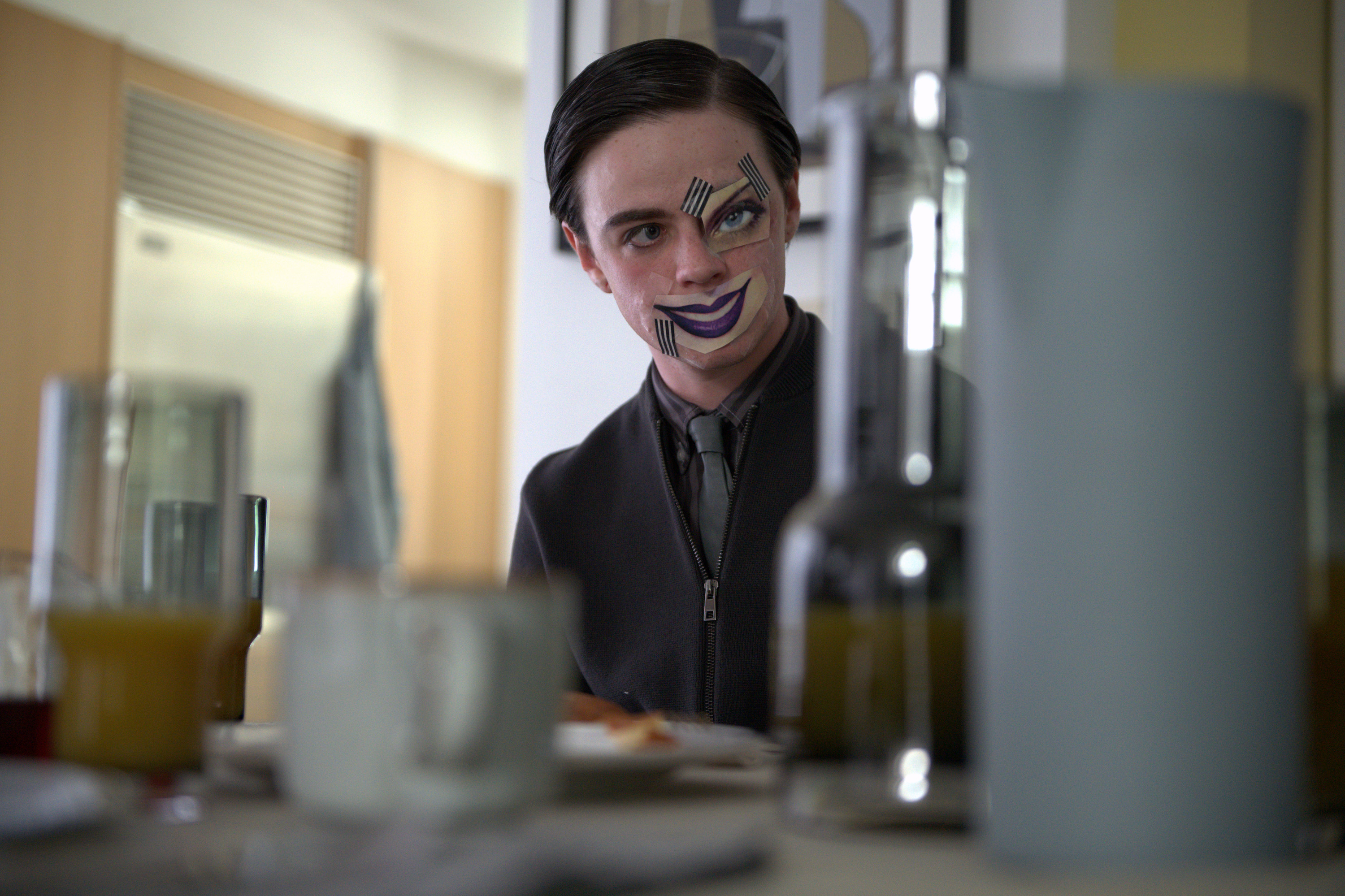
Although I can’t go all-in on “Choose or Die,” I will say that there’s a lot to be said for a horror movie with clever twists, a top flight cast and a witty consistency to its conceit.
A vintage game from the “dial up” era of the pre-Internet is picked up, in bootleg form, by a “collector.” Once the tape-source code is downloaded and those unforgettable yellow luminous graphics of MacIntosh/Compac era computing boot up, the game — which promises a huge cash prize to the winner — proceeds to take over the player’s reality.
The lights, the decor, the labels on your beer bottles (“Look Behind You!”) become a part of the “Curs>r” game’s universe, and its puzzle.
And innocent bystanders? They’re just fodder for the game’s choices. Say the collector (Eddie Marsan) has an out of control son (Peter MacHale) and game-hating wife (Kate Fleetwood) who are engaged in one long, never-ending screaming match.
“His tongue, or her ears? Choose or Die!“
And that’s just the opening scene.
The bulk of the story takes place some time after that, after game-designer Isaac (Asa Butterfield) and his working poor ex-classmate Kayla (Iola Evans) stumble into “Curs>r” and Kayla becomes its next player, facing one “Sophie’s Choice” after another.
The not-really-a-couple survive long enough to break down the game, investigate its origins and seek the usual absurd horror movie “explanations” for what’s going on as they face their fate — one horrific dilemma after another.
It’s a tale largely dictated by formula, and while the ugly choices themselves are grim and gruesomely novel, this isn’t a horror film you dig into for its surprises.
But that “consistency of concept” hook is a hoot. The ’80s vintage game is voiced by none other than Robert Englund himself, Mr. Freddy Krueger reminding players that “Reality…is CURSED.”
Collector Hal is obsessed with all things ’80s, to the irritation of his family. But young Isaac drives a butt-ugly ’80s vintage Fox Body Mustang. And then when and Kayla set off on their quest, their journey is tracked, early ’80s driving video game graphic style.
One character is trapped inside an apartment, pleading for help from another via phone as the would-be helper sees the victim being stalked through a PacMan graphic maze.
The Liam Howlett score isn’t just shrieking strings and horror jolts, but electronic beeps and bleeps and blurts.
“Choose or Die” is too perfunctory and too short to get into the meat of ’80s manias, and spends entirely too much time explaining how “Curs>r” came to life.
The frights here lean more toward excruciating bits of torture — this victim eating glass, that one facing a face full of syringes — than suspense, though there are a couple of decent dollops of that, too.
If one was looking for formulaic horror destined to turn into a Netflix film franchise, this might be it. And shortcomings aside, that wouldn’t be the worst thing.
Rating: TV-MA, graphic violence, profanity, suggestions of drug abuse
Cast: Iola Evans, Asa Butterfield, Kate Fleetwood, Ryan Gage, Joe Bolland and Eddie Marsan, featuring the voice of Robert Englund.
Credits: Directed by Toby Meakins, scripted by Simon Allen. A Netflix release.
Running time: 1:25
A satire of interconnected vignettes — sketches — tied together in a loopy, bloody-minded State of France farce of a story, “Bloody Oranges” won’t be to most tastes.
Discerning its meaning and what the filmmaker and his uninhibited, Comedie Francaise-spangled cast had it mind for their “targets” isn’t always obvious.
But if you’re down for a dark comedy with gynecology, sex, kidnapping and rape, humiliations, suicide, French politics and subtitles, do read on.
There are four basic interconnected stories here commenting, in a broad sense, on French tradition, liberties and comforts at odds with conservative austerity, “advertised” values and hypocrisy.
A provincial rock dance contest is judged by a quarrelsome sextet of judges, trying to be inclusive, “diverse” and politically correct, and failing miserably. I mean, do you give extra credit to the “disabled” dancer, who “walks with a limp?” Is she actually “disabled?” Can they even agree on that?
No. One judge’s screeching condemnation assures them that “no,” they cannot. They are “still that backward in 2020.”
The favored couple, cutely named Laurence (Lorella Cravotta) and Olivier (Olivier Saladin) are old school “Rock Around the Clock” dancers, retirees. It turns out they’re in financial trouble — outspending their pensions — and really do need to win the contest’s top prize to have anything to pass on to their children.
The lawyer Alexandre (Alexandre Steiger) has to keep his naked paramour from messing up his legal robes in a bit of post-coital teasing. “Nooner” or not, he’s determined to come off as respectable.
Because Alexandre would love to impress the finance minister Stephane (Christophe Paou) and his “team.” Stephane and his handlers are batting away press questions about “offshore money” and the nature of his marriage, while bandying ideas like ending school lunch programs for the children of the unemployed as they try to decide what’s “unpopular” enough to tax.
“What if we tax abortions (in French with English subtitles)?”
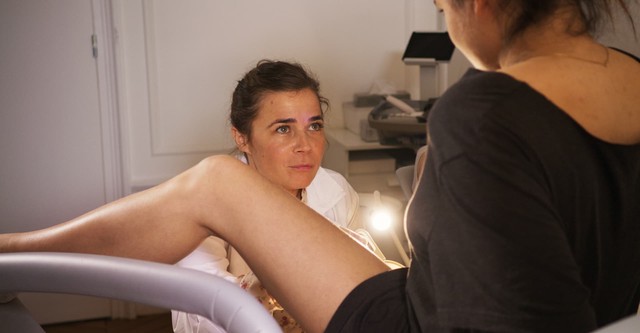
Young Louise (Lilith Grasmug) is getting a checkup from her amusingly blunt gynecologist (Blanche Gardin) who is more than happy to answer the 16 year-old’s queries about sex — “Very disappointing,” the first time — birth control and her genitalia.
The good doctor is helpful enough to whip out a mirror for Louise as she sits in the stirrups.
“Isn’t it pretty?“
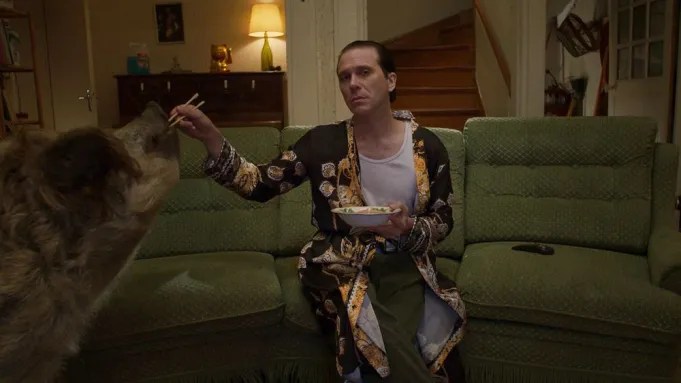
Louise is destined to lose her virginity at a teen beer bust. Stephane the Finance Minister wants to finish a day of puffy TV interviewer questions, posed photos and image management with his wife with what sounds like a Cawthorne/Lady G orgy. But car trouble puts him in the company of a nut (Fred Blin) who keeps a pet pig he feeds via chopsticks. Alexandre will join his family for his mother Laurence’s birthday and not notice credit card problems that get in the way of Father Olivier picking up the check.
And that dance-off that’s on the horizon’s stakes grow even higher.
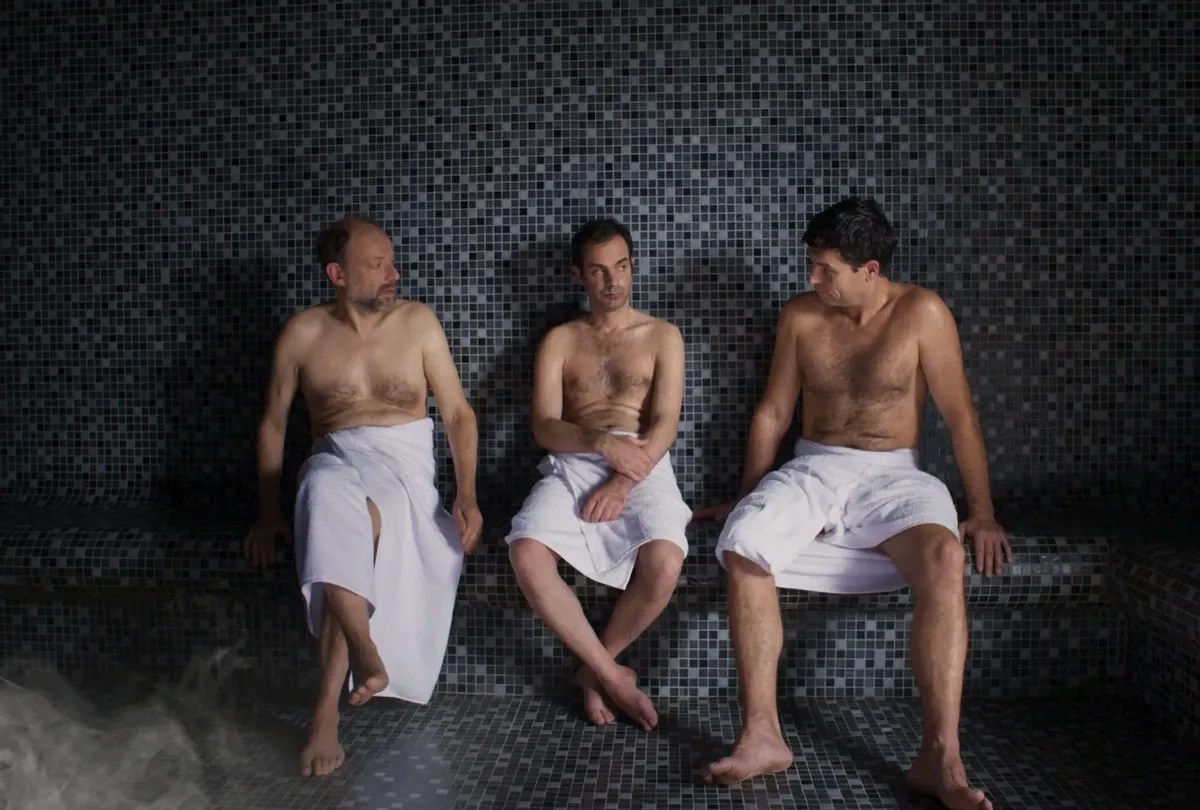
Director and co-writer Jean-Christophe Meurisse “Apnée”) is probably something of an acquired taste, even in France. His broad swipes at provincialism, suggesting that the French will bring politics into and argue about just everything, the phony moralizing of the allegedly “conservative” and the state of justice in a country roiled by many of the divisions common throughout “The West” don’t always land.
“Bloody Oranges” begins by talking us to death in the manner of any given French drama, melodrama or comedy, only to get past the preliminaries and get down to the dirty, bloody business of the third act.
One character — a hateful, sexist, foul-mouthed cabbie — has a couple of scenes seemingly to illustrate the point that the working classes can be boorish louts. Others have a single scene, and the ever-bickering dance judges may blurt out political and politically-incorrect political correctness, but none of them truly register as characters or as comic conceits.
The big shots hoisted by their own petard messaging feels very Comedie Francaise, as does the absurdist kinky shtick of that silk robe/Angora sweater wearing pig lover (sans banjo). The actor who plays that character is in the legendary French acting ensemble.
Abrupt turns towards revenge for slights and assaults real or simply invented are the film’s only dramatic saving graces, as little in the first two acts would be worth more than a black-out scene at an improv show.
And the dark stuff is seriously dark, as in hard to watch and straight up vengeance fantasy visceral.
Taken as a whole, the film is the quintessence of “mixed bag,” with some sketch situations, characters and performances commanding our attention, and others just sort of drifting by, “connecting” the disparate stories but accomplishing little else.
Let’s just say it edits down into a gonzo, seriously transgressive 90 second trailer that doesn’t represent the movie, not all of its “Bloody Oranges” being equally bloody, offensive or pointed.
Rating: unrated, graphic violence, sex, nudity, drug abuse, profanity
Cast: Alexandre Steiger, Christophe Paou, Lilith Grasmug, Fred Blin, Lorella Cravotta, Olivier Saladin and Blanche Gardin.
Credits: Directed by Jean-Christophe Meurisse, scripted by Yohann Gloaguen, Amélie Philippe and Jean-Christophe Meurisse. A Dark Star release.
Running time: 1:45

 Movie Nation