

Documentary Review: The Deadhead creed, hit the road with the band and a “Box of Rain”

Let’s face it. PBS is never going to produce an “American Masters” documentary on The Grateful Dead. But personal essays like “Box of Rain,” movies about the fan experience, the phenomenon of the “family” — their tribal, migrant fanbase — point to a serious blindspot on the Brit soap opera-obsessed Public Broadcasting Service.

If Deadheads aren’t an “American Experience” waiting to be remembered, I don’t know what is.

Lonnie Frazier’s “Box of Rain” isn’t definitive. It doesn’t have Grateful Dead music or concert footage in it. There’s a Dead-ish twangy score that could have been made by “the family” in “the parking lot scene,” the musical street fair/festival/market fans nicknamed “Shakedown Street.” She and her interview subjects skate past the druggy nature of the culture, underplaying it to a disingenuous degree. And they downplay the tragedies at Dead shows. More than a few concerts were marred by fan deaths.

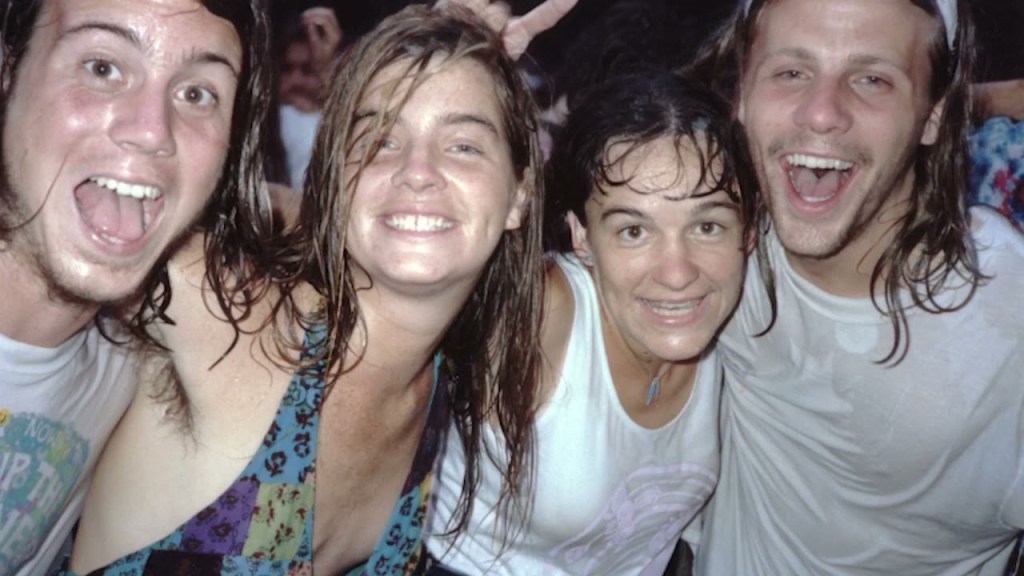
But this warm, embracing little film — catching up with old friends from “the road,” remembering epic road trips following the band, chatting with other, even-more-devoted fans and even the director of another Deadhead documentary — vividly creates a sense of the community that the band inspired, with its own economy, values and shared creed.

“I Need a Miracle,” aka “Who’s got tickets to the next show?”

Frazier personalizes the Dead by saying her first show, an ’80s cross-country trek as a teen in her Chevette, “saved my life.” A victim of gang-rape, she’d figured out the small town in Maryland where she grew up was “not my home.” At a Dead concert at Red Rocks in Colorado, she found a new one.

Frazier and her friends found themselves in the ongoing cosplay counterculture of the 1980s, a world that was “the opposite” of that “Valley Girl, big hair Reaganomics” era. Here was Woodstock — tie-dyed, turned-on and dropped-out and touring — sometimes taking over for several shows cities and towns all across America in the middle of the “Greed is Good” decade.

“The worst day on tour still beats the best day at work,” one fellow traveler enthuses. They’d pile into colorfully-decorated VW Microbuses, camp out and live hand to mouth for days, weeks or months on end, traveling from venue to venue because this “electric Dixieland” “jam band” never put on the same show twice, never played a song the same way twice. Before the concert began, and after it ended, the parking lot “Shakedown Street” (a Dead tune) kept the musical/fraternal good times going.

Here’s wheelchair-bound James LeBrecht, seen in the documentary “Crip Camp,” marveling at the acceptance, the pre-Americans with Disabilities Act wheelchair-access (handmade ramps and platforms built by fans and the crew).

Filmmaker Brian O’Donnell, who filmed his own years-in-the-making Dead-and-their-fans-on-tour documentary, is leaned on to categorize the fanbase. There were “The spinners,” dancers in the audience who twirled through shows “like whirling dervishes,” first song to last, “the tapers” who’d use band-provided audio feeds to cassette-record every show, “the listers,” fans who kept meticulous set lists of every concert, and so on.

Older fans demonstrate the dervish spinning thing with tie-dyed capes. Others recall that one “magic” moment or concert that distilled the experience for them.

“The music of life,” one aficionado calls their jams, because “life is improvisational.”

Not having access to the Dead’s music seriously undercuts the motivation for this devotion. But there’s a four hour Netflix “Long Strange Trip” doc, and others, to cover that.

There’s a chuckling admission that sometimes shows were musical “trainwrecks” due to the nature of the improvisations that they built their shows on, or in my case — a terrible sound mix at the Minneapolis Metrodome.

And there’s recognition that after the band’s “Touch of Grey” Top 40 hit, a rougher, dumber and more drunken element started filling the shows, suggesting that the best days had passed.

“We got to see America” following the tours, one fan says, “the good, the bad and the ugly.”

But there’s no denying the cultural phenomenon that developed around the Dead, one of almost cultlike devotion, with priorities out of step with the rest of society.

I got my first job in media because the other top candidate — my fellow summer intern at a public TV station — told our supervisors he’d “pass” on the gig because “I’m hitting the road with the Dead.”

Our long-haired bosses looked genuinely disappointed — at not being free enough to go along with him, at having to give the job to somebody who wasn’t willing to take similar risks for what “Box of Rain” reveals was a youthful adventure-of-a-lifetime experience.

Movies like “Box of Rain” and the Rick Springfield fan doc “An Affair of the Heart” may not give us the complete experience, sharing the music that so enchants fans that they devote huge chunks of their lives to the performer and the concert experience provided.

But the Deadheads were the generation-defining inventors of this long-term phenomenon. Without Deadheads, there are no Parrotheads, or Phish Heads. Without Deadhead stickers, a VW van is just an antique.

In or out of the tribe, Deadheads were every bit as emblematic of the American Experience of the ’80s as pastel suits and trickle down economics. “Box of Rain” might be too narrow in focus to pass broadcast muster, but PBS should consider this a gauntlet-thrown, and this time the glove is florescent and tie-dyed.

Rating: unrated

Cast: Elizabeth Abel-Talbott, Kelley L. Condon, Brian O’Donnell, James LeBrecht, Joey Talley, Tim Zecha and Lonnie Frazier

Credits: Directed and narrated by Lonnie Frazier. A Mutiny release.

Running time: 1:18
Posted in Reviews, previews, profiles and movie news | Comments Off on Documentary Review: The Deadhead creed, hit the road with the band and a “Box of Rain”

Tonight’s screening? Liam Neeson is a hitman with “Memory” problems

Guy Pearce as a Fed. Thursday night as your opening.

Love that Liam.

Posted in Reviews, previews, profiles and movie news | Comments Off on Tonight’s screening? Liam Neeson is a hitman with “Memory” problems

Netflixable? “Hey! Sinamika” is a Tamil/Bollywood musical take on a Spanish rom-com

Who’d ever guess that buried beneath the Bollywood musical romance “Hey! Sinamika” there was an Argentine rom-com one third shorter, screaming “Aye, no puedo respirar!”

This “Around the World with Netflix” marathon is an Indian romance about a woman who longs to be free of over smothering, jabbering, clingy but cute husband, which flips the gender of the spouse-who-wants-out from the 2008 Spanish language comedy “Un novio para mi mujer,” “A Boyfriend for my Wife.”

It’s in Tamil (mostly) and is set in the cities of Chennai and Pondicherry. And it’s comedy that begins with a “meet cute,” turns quickly to “This maddening man, how can escape him?” and lapses into “This maddening movie, will they ever get to the bloody point?”

Because there have to be production numbers, dance/song solos and a love duet or two. They have to dazzle and they most certainly do — a stunningly shot wedding dance in tribute to a bride, a rough-and-ready long-take street rap-song about a guy finding his voice.

Sure, the lyrics are…puerile, “a she plucked from my roots and poured water on my shoots” loses something in translation. Perhaps.

And the love story, while involving lots of sweeping our leading lady (Aditi Rao Hydari) off her feet — literally, has no kissing, no skin and zero heat — even with a hired seductress making this a love triangle — because chastity is Old School Bollywood.

But if you’ve never set aside an afternoon or evening — or both — to sit through a classic Bollywood romance, here’s a less-than-awful updating of the formula that sucks up just about as much time.

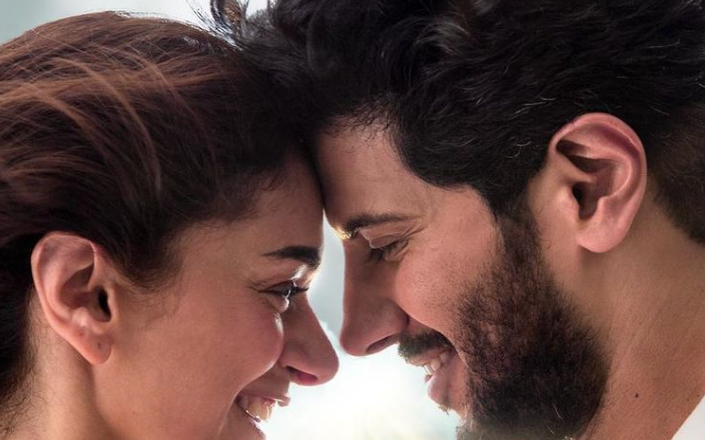
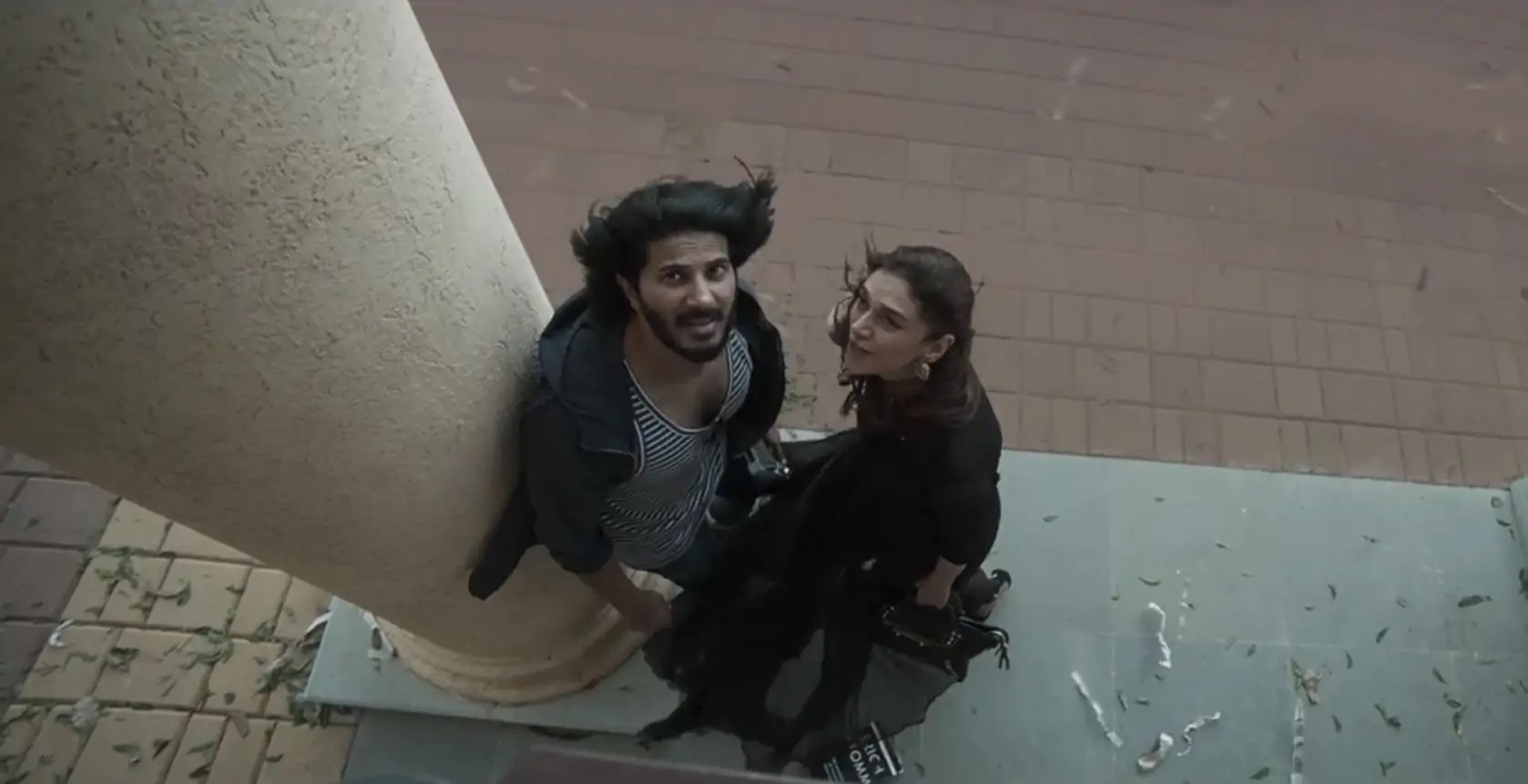
Dulquer Salmaan plays Yaazhan, who tries to impress the pretty lady (Hydari) who shows up at the same seaside cafe one morning. Their “meet cute” begins with the dashing Yaazhan stumbling as he tries to get the waiter to tell him where the coffee beans came from — “Only the best places, sahib!” — and climaxes with a sudden wind squall which she then saves him from.

“Trust me,” she says, and he does. It turns out, she’s a “paleotempestologist.” She studies weather, its history and impacts on structures and people. He’s a software engineer who “just lost my fourth job,” and a bit of a gourmand. As they begin a flirtation, with musical accompaniment, she drops this bomb.

“If I married someone like you, I’d spend half my life at the gym!”

BAM. They’re married. Indian movies may go on eternally, but when it comes to marriages, there’s no messing around.

Two years pass and Yaazhan’s breathless, nonstop patter has driven Mouna to distraction. He is literally shoving food in her mouth, even in the shower. He picks out her clothes for her. He is the hovering, over-attentive house husband from hell.

Colleagues coach her on how to provoke a divorce, to no avail.

Mouna begs her boss for an out of town assignment — working with designers on a building project in Pondicherry. Yaazhan surprises her by showing up and joining her there.

We get her, and we get it. We hate this guy, too.

This movie might never be a target for a Hollywood remake because there are WAY too many psychological terms bandied about for Yaazhan’s “controlling” behavior. But he’s smitten and he seems to mean well.

And then there’s the highly unscrupulous couples counselor Dr. Malaravizi (Kajal Aggarwal) who lives and practices next door. Mouna consults with her, over the objections of the Dr.’s receptionist, who pleads that “Happy couples come in, unhappy ones depart.”

That’s actually the funniest thing in the movie and a gag worth repeating, a bit player worth building up and having some fun with. But no.

Mouna gets the doctor to “take an interest” in her man with the goal of seducing and tripping him up and busting up this suffocating marriage.

But when we meet two of Mouna’s Pondicherry pals who do radio, we jump thirty minutes ahead of this slow-slower-slowest narrative and figure, “That’s where Yaazhan’s manic, breathless patter belongs — Isai 103.5 FM, Joy knows no end here.”

It may seem I’m giving away a lot of plot, but there’s a LOT more where that came from, confrontations with a phony yogi, role reversals and backlash and counter-backlash over who doesn’t love whom. When your movie covers 150 minutes of screen time, there’s plenty of room for exposition, even if you limit the number of characters.

Does this central love triangle have enough to it to carry a movie that long? No, it does not.

The production numbers — I counted five or so, with musical montages too –aren’t filler, padding out the run time. They’re the main reason to see “Hey! Sinamika.” It’s all the soapy, maudlin, repetitive melodrama and never-quite-funny annoyance scenes that make the film an ordeal.

The leads are beautiful specimens of humanity and set off sparks in their meet cute moment. But never again. The genre almost ordains limits on “chemistry.”

There’s a lighter, funnier, sexier movie in this material. But it was probably the one already made in Argentina, without the cool dance numbers.

Rating: TV-PG

Cast: Dulquer Salmaan, Aditi Rao Hydari, Kajal Aggarwal

Credits: Directed by Brinda Master, scripted by Madhan Karky, based on the Argentine film “Un novio para mi mujer” by Juan Tararatuto and Pablo Solarzby A Netflix release.

Running time: 2:27

Posted in Reviews, previews, profiles and movie news | Comments Off on Netflixable? “Hey! Sinamika” is a Tamil/Bollywood musical take on a Spanish rom-com

Martin Scorsese’s The Film Foundation launches a free online streaming series of restored films

This is pretty cool. Scorsese’s 32 year old film preservation nonprofit is going to be sharing restored films via it’s website, starting May 9.

The first film will be an early work by Michael Powell and Emeric Pressberger, “I Know Where I am Going,” from 1945.

Marty S is a huge Powell fan.

Details are at the link below.

https://www.film-foundation.org/rsr-press-release

Posted in Reviews, previews, profiles and movie news | Comments Off on Martin Scorsese’s The Film Foundation launches a free online streaming series of restored films

Movie Preview: Don’t you dare pick up “The Black Phone”

Looks like “It.”

Child abduction.

With black balloons. Not red ones. And a more overtly Satanic clown.

So of course it’s by the Son of Stephen King.

The phone calls from other victims hook has a whiff of a Korean horror movie I saw a few years back.

June 24.

Posted in Reviews, previews, profiles and movie news | Comments Off on Movie Preview: Don’t you dare pick up “The Black Phone”

Movie Review: Lovesick lady seeks the “Good Life” in The Old Country — Greece

On a good vacation, time seems to stand still. You lose track of the days, the deadlines, the impending day of departure.

“Good Life” is movie about such a getaway that mimics that stasis. And as anybody knows, “time seems to stand still” isn’t something we look for in a movie.

It’s a downbeat romantic comedy that summons few laughs, even if it manages to deliver a little romance, even if it does a passable job of passing a coastal town in South Africa off a a quaint Greek village.

Hey, any port will do in a pandemic storm, right?

South African casting director turned writer-director Bonnie Rondini excels in her specialty, populating this picture with a diverse selection of South African actors and some passably authentic looking and sounding Greeks (everybody speaks English, mostly). But the picture’s limp story, indifferent direction and static pacing do it in.

Olive (Erica Wessels) is a 30something Cape Town dental hygienist with her mind on love, even when her hands are cleaning some little old man’s teeth. She’s checking her messages constantly, hoping to close the deal with this on-again/off-again guy who might be “the one.”

But John dumps her, by text, and that’s that. Getting “back out there” is a struggle. Disapproving snipes from her recently-widowed mother (Jennifer Steyn) are no help. The shock of how quickly John moves on rattles Olive further. In the middle of a snippy exchange with her mother and family friends over “How did you come to South Africa,” Olive has her answer.

Mom and Dad fled Greece “after the coup.” Dad still has a house there. There’s even an aunt Olive’s never met. No, Mom will “never go back.” That settles it. Olive will “get away,” go see the old house in the old village, over mother Athena’s testiest objections.

That’s also the vibe Olive picks up on in the tiny seaside town. A man tells her where the house is…or was. But the old bitties of the village won’t sell her mosquito netting or anything else that will allow her to camp on the house’s ruins. And nobody will speak to her about her parents, the past or their history there.

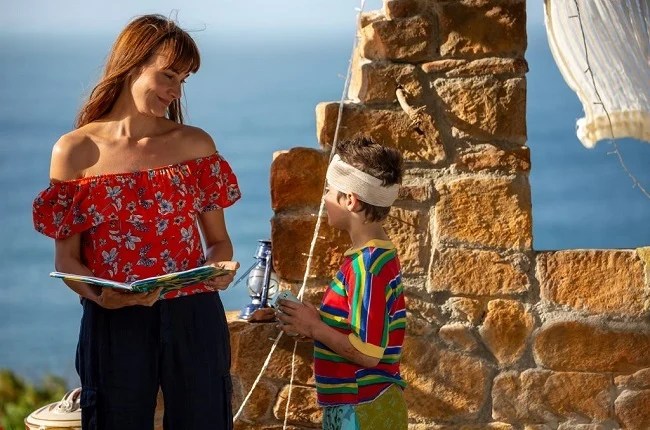
An Albanian refugee (Caleb Payne) boy is her sole confidante, go-between with the merchants and advisor. He’s seven years old.

“The village has given you the evil eye,” he declares, and considering the tea-leaf reading, spitting in her presence and gossip (in Greek) in her absence, Olive has to assume he’s right.

Too many movies have already been made about a lovelorn woman finding a hot younger Greek lover that it’d be a shock if Rondini didn’t provide one (Sven Ruygrok). It plays as a perfunctory invention here. The entire movie’s a collection of cutesy cliches and Greek stereotypes.

Lazy bureaucrats, tribal locals, a love-hate relationship with tourists and other outsiders are all trotted out in this cut-and-paste screenplay.

There’s little spark to any of the performances, even the ones meant to twinkle. Like its heroine, “Good Life” starts out “stuck” in South Africa, and too little changes when she moves to Greece.

Rondini does her best to give the picture “local color” — an octopus fished out of Homer’s “wine dark sea,” a town square that feels utterly Mediterranean.

But there’s not enough “color,” jokes, romance, surprises or incidents — just the occasional accident — to animate this still-life.

Rating: unrated, adult situations, smoking

Cast: Erica Wessels, Sven Ruygrok, Caleb Payne, Robyn Scott, Jennifer Steyn and Nicky Rebelo

Credits: Scripted and directed by Bonnie Rodini. A Level 33 release.

Running time: 1:45

Posted in Reviews, previews, profiles and movie news | Comments Off on Movie Review: Lovesick lady seeks the “Good Life” in The Old Country — Greece

Movie Preview: A Gen Y skewering “Whodunit” — “Bodies Bodies Bodies”

It’s “Girls Gone Wild” meets Pete Davidson.

Let’s play a game, somebody died and ohmygodohmygodohmygid who did it, you guys?

Aug 4, from A24

Posted in Reviews, previews, profiles and movie news | Comments Off on Movie Preview: A Gen Y skewering “Whodunit” — “Bodies Bodies Bodies”

Classic Film Review: One of the Great Labor Documentaries is restored — “The Wobblies (1979)”

“The One Big Union,” they called it, an organization that would represent every worker laboring for “The Man.” Unlike the “skilled labor” guilds of the earlier American Federation of Labor, it would take in everyone, including the the extreme exertion “unskilled” jobs — farm labor, lumberjacks, longshoremen and miners. It would be a union whose work actions and strikes were meant to not just exercise some control over their work days, their wages and their safety It would struggle to gain outright ownership of the industries where the workers toiled.

The One Big Union would rattle “ownership” in America’s rapacious “gilded age” and threaten capitalism itself if it succeeded.

“The Wobblies” is a classic labor documentary from 1979, a film that gets back to the core meaning of the film genre — “to document,” to have history recounted by those who actually lived it. Filmmakers Deborah Shaffer and Stewart Bird interviewed the dying out members and eyewitnesses to the actions and struggles of the Industrial Workers of the World, “The Wobblies,” and let these old men and women speak of the idealism, desperation and determination that drove America’s most radical labor movement, which came to life in 1905 and then disappeared, after 20 years of strife, scapegoating and bloody attacks from America’s defenders of the status quo.

The newly-restored film is a reminder of the varied styles and formats of documentaries before PBS an Ken Burns codified and formalized these films into academics and “experts” and actors reading letters or performing speeches of the figures represented.

What that looks and sounds like is a tapestry of testimonials, on and off camera, recreating an era of child labor and the murderously callous reign of America’s first oligarchs — Rockefeller and Ford, Carnegie and J.P. Morgan.

“I can hire one half of the working class to kill the other half,” financier Jay Gould sneered.

And so he could. In an era where workplace safety was deemed an unnecessary bother, when giant lumber companies could strip America’s forests with a remote workforce they could underfeed and house under deplorable conditions, when mining disasters were a simple “cost of doing business” worth no one’s attention, when hired cops and militia could be relied on to mow down longshoremen striking for an eight hour day, capitalists and capitalism were literally killing much of America, and getting anybody to care was a near impossible struggle.

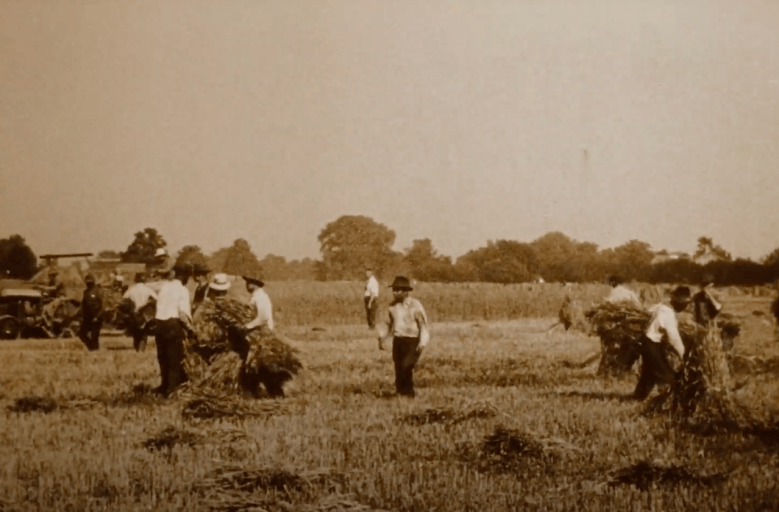
“The Wobblies” uses archival silent films, still photographs, posters and performed recitations to recreate the labor ferment that boiled over from the late 1800s into the early 20th century. Interviews then hammer home what the Wobblies — their nickname may have come from Asian workers’ inability to say “I.W.W.” — represented, an impatience with the pace of reform and change.

“Work, good wages and respect” was their credo, witnesses recount.

“Free speech” battles erupted as the right to organize and protest was assaulted from Minot, North Dakota and Butte, Montana to Everett, Washington and Lawrence, Massachusetts, site of an early Wobbly unionizing success.

A hostile press and a political system bent towards the whims of the celebrated robber barons, who would quickly call for and receive lethal assistance in attacking and imprisoning labor organizers and shooting strikers was what the Wobblies were up against.

“Shakedowns” from railroaders hired to transport farm workers and lumbermen from site to work site via boxcar were common, abuse on the job and across industries was common. The Wobblies vowed that they wouldn’t just take a punch waiting for a passive public and blind-eyed government to act. They’d punch back.

The lack of experts interviewed here leaves the film with an implicit, sympathetic bias, but also deprives it of academically underscored proof of the context all this struggle took place in. World War I and the first “Red Scare,” the birth of the Soviet Union,” took place just as as the Wobblies were on the rise. A refusal to condemn or support the war, or to call off strikes during the conflict, added to heated pushback, attacks and image tarring by the press and government.

The “bomb throwers” label slapped on every labor movement since the Haymarket Square Riot was unjustly attached to the Wobblies from their birth and on into the age of animated film.

Clips from Ford-sponsored silent cinema cartoons depicting IWW organizers as rats and even an early Walt Disney (he hated unions) effort, “Alice’s Egg Plant” remind us how quick conservatives were to tie labor to the brand new boogeyman — communism — and smear workers’ rights organizations with that.

“The Wobblies” is a bracing, enthusiastic film, with many an old Wobbly recalling mottos, chants and even songs.

One remembrance ends with words he recalled his sympathetic father passing on to him. A worthy cause with worthy goals, the old Wobbly remembers his old man saying. “But it’s just a dream. It’ll never happen.”

Rating: unrated

Credits: Directed by Stewart Bird and Deborah Shaffer. A Kino Lorber re-release.

Running time: 1:29

Posted in Reviews, previews, profiles and movie news | Comments Off on Classic Film Review: One of the Great Labor Documentaries is restored — “The Wobblies (1979)”

Movie Review: The Cruelest Coquette — “Anais in Love”

A generation ago, “Amelie,” the cheerful fantasy about a Paris coquette’s charmed life, became quite the five-time Oscar nominated punching bag, hated for its adorable and adorably-optimistic heroine.

Coquettes got a bad name in the cinema after that. Gamines took it on the chin.

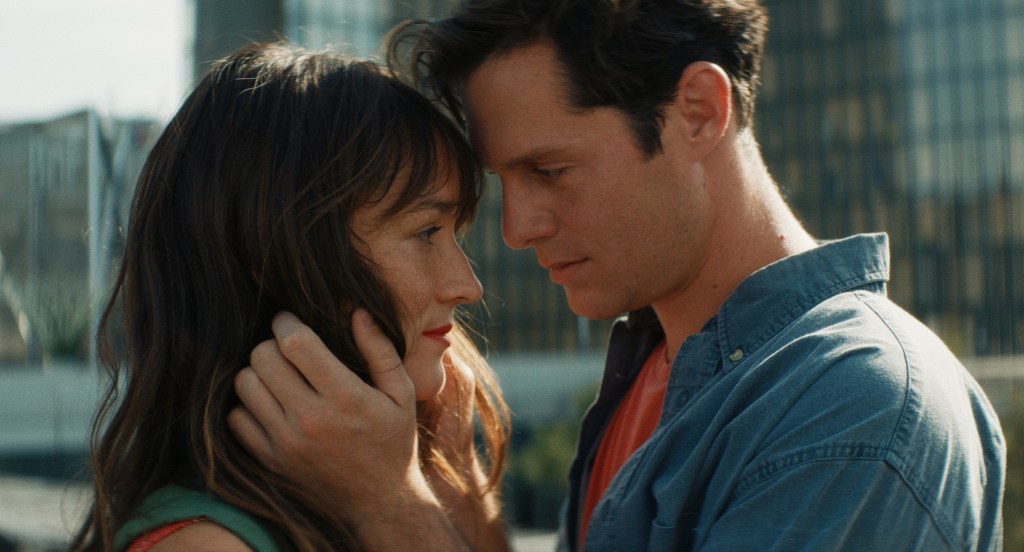
Actress turned director Charline Bourgeois-Tacquet has her revenge on Audrey Tatou and the all the gamines, coquettes and Parisian pixies the cinema has produced with “Anaïs in Love,” an amusing/maddening little exercise in pixie-puncturing.

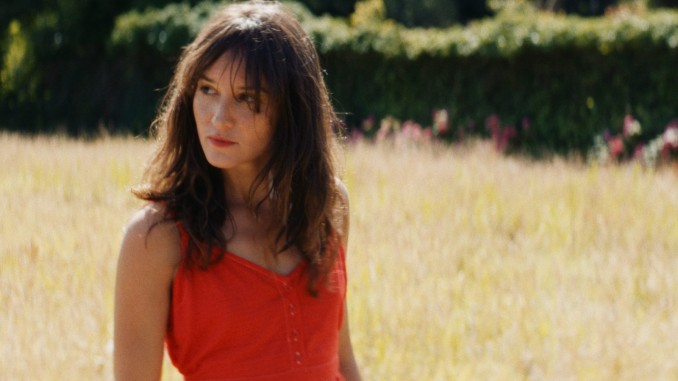
Bourgeois-Tacquet’s star and titular muse is Anaïs Demoustier, far enough over 30 to not seem a natural fit for this childish, impulsive, cute and quirky college coed who sets hearts aflutter and creditors, lovers and landlords’ teeth on edge.

Anaïs bolts, late, into her flat, insisting to her landlady that “I HATE being late” (in French with English subtitles) as she dashes from room to room, checks the time repeatedly and chatters on about the lover who just moved out, how unsuited she is for marriage, how she wants to truly feel and understand passion and love and how she’s “not a thief,” she will catch up on her rent.

She sloppily installs a smoke detector — which falls on the landlord — and voila, she’s gone! Off to a party where she can’t go upstairs until somebody’s willing to ride with her, her bike and the increasingly crumbled flowers she brings for the hostess in an elevator. Because they spook her.

She’s a graduate student, and that elevator mate, 50ish Daniel (Denis Podalydès), is an academic a bit smitten by her “carefree” ways — stretching out a wrenched knee (she climbed the stairs rather than ride the elevator, sticking him with her bicycle) mid party, etc. More on him in a moment.

Because POOF, she’s off to the movies with the sullen ex Raoul (Christophe Montenez), only she’s late and they’ve missed it. Fiddle dee dee. And by the way, I’m pregnant. Do you think I should have the “vacuum treatment” here (in Paris) or back home where I can see my family OB-GYN?

Raoul’s “Wait, WHAT?” is met with an “I’m just unlucky, I guess.” Bad luck, missing a week’s worth of birth control pills.

Everything just washes off Anaïs like that — thesis requirements for her paper on how “passion” was portrayed in 17th century French lit, the unemotional, sexually-flatlining affair she starts with Daniel, even the news that her mother’s cancer has returned.

When she helps her brother, who fears he’s killed his traveling girlfriend’s hyperactive pet lemur by giving him a Xanax, we realize ditziness runs in the family.

But the moment her salmon-like attention turns away from Mom (Anne Canovas), Anaïs focuses her obsessive gaze not on Daniel or her schoolwork or her obligations, but on Daniel’s longtime love, a famous writer, Emilie (Valeria Bruni Tedeschi).

Might that be the solution to our heroine’s lack of focus and passion? An older woman? Or a menage a trois? Like, you know, her possible literary namesake, Anais Nin?

Bourgeois-Tacquet finds droll laughs in Anaïs’ inane over-sharing, questioning and self-absorption. Her “By the way, I’m pregnant” bombshell gets a scolding from a dismayed ex, prompting her to storm off with “You’re too violent in your inertia!”

Daniel’s “I love my life and don’t want to change it” plea prompts her to spit “Bourgeois cliche!” at him.

Emilie is puzzled by all these times she runs into this girlish “fan,” but her “What do you want from me?” doesn’t phase or even interrupt Anaïs in her running list of suggestions, desires and delusional self-analysis that means they should be together.

And every time you turn around, this “stuck” childish woman is doing something else that makes you roll your eyes — lying left and right (“I never lie!”), lighting candles, just as she told her landlord she’d done when she almost set her family’s house on fire as a child, setting off the smoke alarm mid-lovemaking, smashing the smoke alarm rather than figuring out which button to punch and irresponsibly renting out her flat to Korean tourists while she goes home and travels to a symposium to get closer to Emilie.

Yeah, it’ll all work out. Sure.

It’s not a bon bon or a comic delight. But Bourgeois-Tacquet and her muse Demoustier give coquettes, gamines and manic pixie dream girls (a Hollywood staple) the kind of butt-kicking all those people who misguidedly hated poor Amelie for decades ago longed for.

Pretty? Flighty? Sexy? Adorable? Of course. But it takes a lot of work by a lot of stupidly-compliant enablers to let this sort of free spirit run roughshod over every psyche she meets. One gets the feeling that her “gather ye rosebuds” expiration date is here, no matter how things work out for her by the closing credits.

Rating: unrated, sex, nudity, profanity

Cast: Anaïs Demoustier, Valeria Bruni Tedeschi, Denis Podalydès, Xavier Guelfi and Anne Canovas

Credits:Scripted and directed by Charline Bourgeois-Tacquet. A Magnolia release.

Running time: 1:38

Posted in Reviews, previews, profiles and movie news | Comments Off on Movie Review: The Cruelest Coquette — “Anais in Love”

Netflixable? A dark “State of the Polish Union” comedy, “The Land (Kraj)”

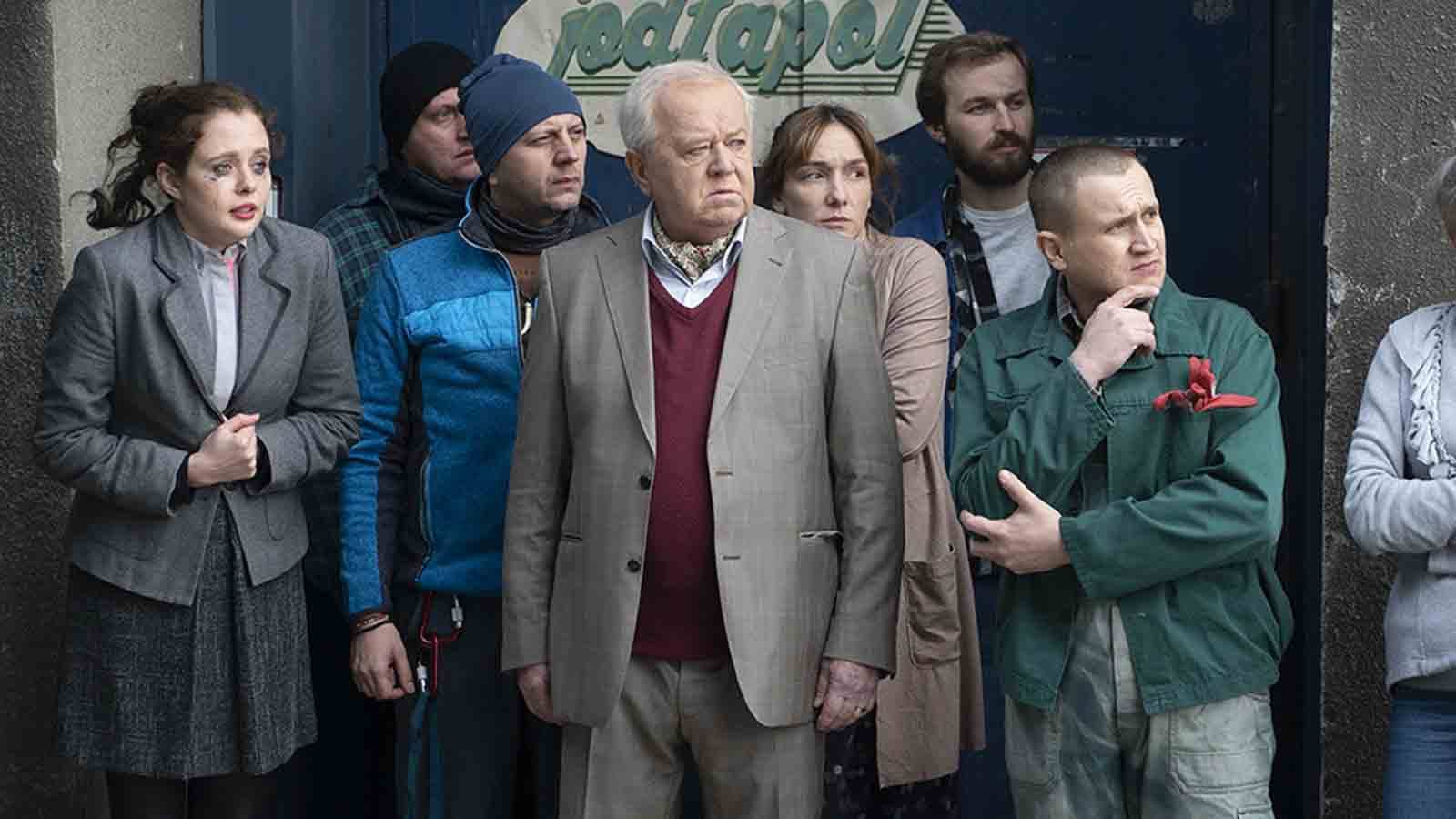
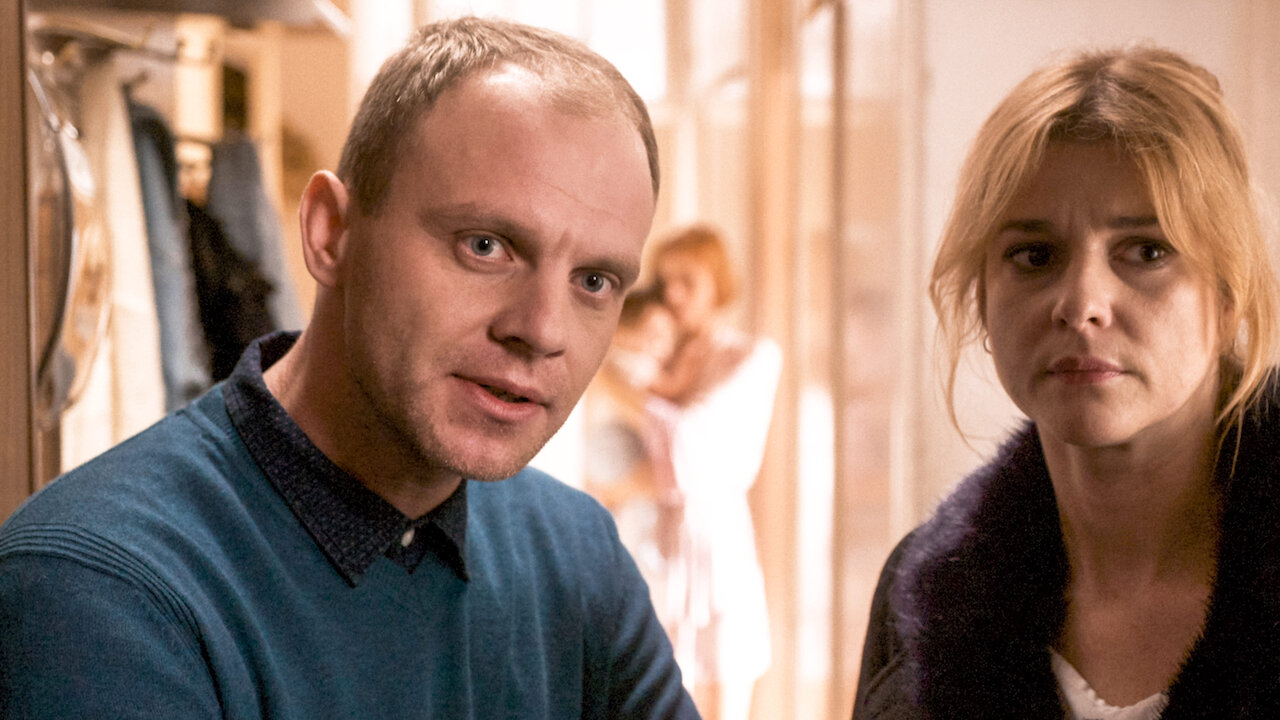
Four Polish filmmakers teamed up for the vengeful and funny “State of Polska” anthology film, “The Land,” a dark episodic comedy about people lashing out, using or abusing the law and punishing each other personally for their unhappiness.

This Around the World with Netflix outing tells six stories with varying degrees of well-acted morbid wit, delivering jokes that find their often-grim punchline and hit it hard, time and again.

A grizzled, seen-enough cop (Krzysztof Stroinski) hectors his shrugging partner about the stream of reckless speeders passing in front of their cruiser, neither of them wanting to get out in the rain and enforce the law.

“They don’t read books,” the old officer grouses, in Polish with English subtitles. “They have no imaginations.” They can’t imagine, for instance, the consequences of their carelessness.

A crash in front of them forces him to take action, and since it involves a BMW driver, and “I would kill EVERYone in a BMW. I’d kills the drivers of older BMWs TWICE,” has been part of his tirade, just you wait.

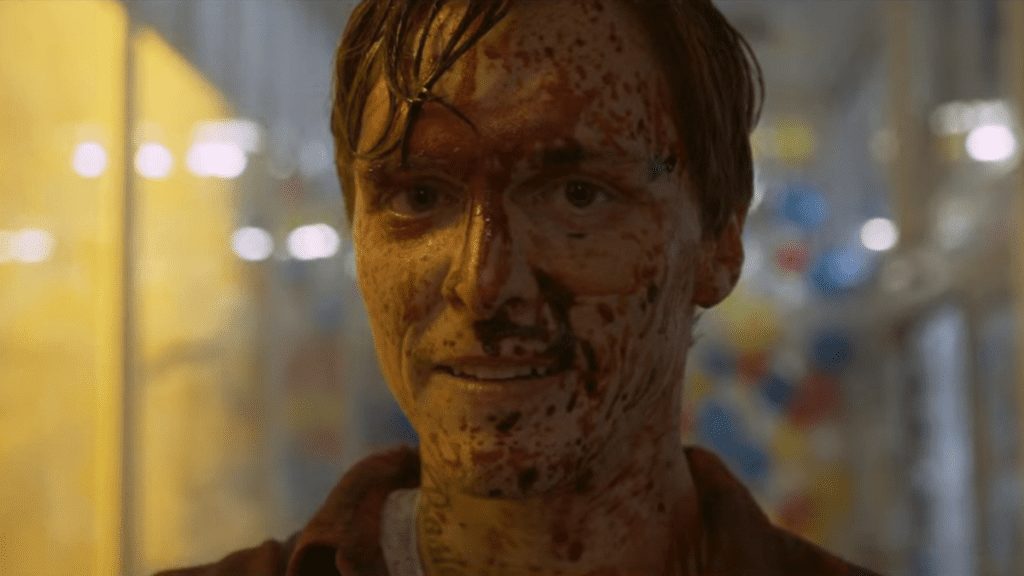
A harassed young construction worker (Tomasz Wlosok) took his baby to work that day, and is getting chewed-out on the phone by the baby’s mom as he shops. A careless bump in the aisle — him looking at his phone as another shopper looks at his — leads to one of those just-long-enough lapses, and his baby disappears.

He frantically searches the aisles, runs to the sounds of any crying child, chased and hounded by the store’s security guards. Nobody believes him when he thinks he’s spied the culprit and his infant in the checkout line.

But maybe coming after a frantic dad still wearing his tool belt isn’t the smart play here. Hammer time!

A family schemes to kill or blackmail a tax auditing team that visits their factory, a gauche bullying young bureaucrat takes over a government art gallery run by a young woman (Joana Niemirska) he once deflowered, a couple of neighbors in troubled marriages tit for tat their way into an all-out fireworks war one holiday night and a passive aggressive young nudist (Daria Polasik-Bulka), single mom and squatter faces off — dancing naked — with the owners of the apartment she refuses to pay rent for or vacate.

That old saying “Everybody’s dealing with something” is never spoken, but that’s what we’re into here — a lot of characters blithely unaware of how their taken liberties and transgressions are impacting those around them get them into “situations” with each other.

Tax auditors scare a factory owner into a heart attack and prank the eavesdropping relatives who are planning to poison or otherwise harm them, seemingly justifying their treatment. Simple errors of judgement escalate into a bottle rockets/roman candles shootout on Polish Independence Day. And a belligerent speeder “with no imagination” can’t understand how racing and causing a crash might impact a cop with a personal connection to such a road tragedy years before.

Not every piece in “The Land,” titled “Kraj” in Polish, has what I’d call a neat and tidy moral or object lesson. The nudist is plainly a head case and nobody is willing to deal with her on a mental health level, the factory audit story is on morally shaky ground no matter how it turns out and the gallery tiff doesn’t really add up to much.

But for anybody who doubts the Poles can take a joke, tell a joke and go seriously dark when in search of laughs, “The Land” and filmmakers Veronica Andersson, Filip Hillesland, Mateusz Motyka (who did the best segment, “Supermarket”) and Maciej Slesicki (who did three) clear up that misunderstanding with style, carnage and explosions.

Rating: TV-MA, graphic violence, sex, nudity, profanity

Cast: Adam Bobik, Joanna Niemirska, Daria Polasik-Bulka, Bartlomiej Nowosielski, Paulina Masiak and Tomasz Wlosok

Credits: Directed by Veronica Andersson, Filip Hillesland, Mateusz Motyka and Maciej Slesicki, scripted by Maciej Slesicki, Veronica Andersson and Mateusz Motyka. A Netflix release.

Running time: 1:43

Posted in Reviews, previews, profiles and movie news | Comments Off on Netflixable? A dark “State of the Polish Union” comedy, “The Land (Kraj)”