Netflixable? In “The Takedown,” the French can’t pull off the cop/buddy picture

Bad news/good news time.


Bad news, Justin Lin finally decided the high price of (Vin) Diesel was reason enough to bail out of the “Fast and Furious” franchise. He quit “Fast X.”

Good news, Louis Leterrier, director of the tighter, meaner and occasionally more realistic car chase “Transporter” movies, has been signed to take over.

Bad news, “The Takedown,” Leterrier’s latest cars and cutesy cop buddy picture, made for Netflix, pretty much sucks.

Good and bad news? “Fast 9: The Fast Saga,” and most of the recent of the Lin-helmed car cartoons kind of sucked, too. So the early take on “Fast X” is kind of a (car) wash. Lin or Leterrier, how good could it be?

“Takedown” reteams Omar Sy , French star of “The Intouchables,” who’s turned up in the “Jurassic World” and “X-Men” franchises, with Laurent Lafitte, whose French films (“Tell No One”) have rarely made it to North America.

They played cute and mismatched cops in “On the Other Side of the Tracks” ten years ago. Now, they’re still mismatched but re-teamed for a big case involving murder, drugs and guns and racist French fascists, because they have those, too.

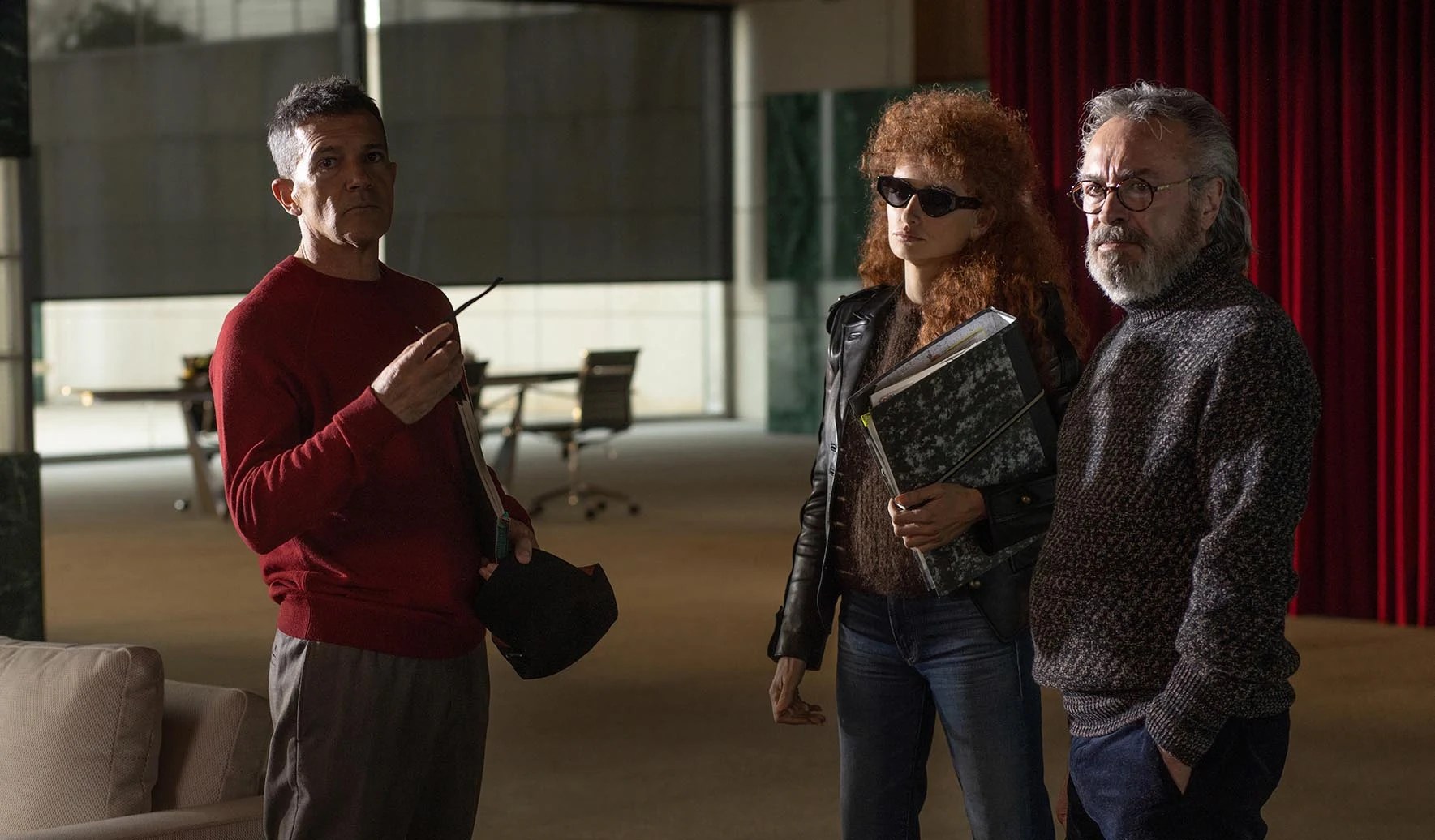
Ousmane Diakité (Sy) rose to become a star of French policing, a two-fisted tough-guy criminal division chief whom the force wants to use in recruiting films as the “face” of French law enforcement. Their first TV ad is a cartoon using him, which irks him no end as they’re plainly using him to pretend they’re more diverse than they are.

François Monge (Lafitte) is a dashing, to-the-manner-born elitist and womanizer whose family connections could only get him to the level of “captain.” Nobody wants to work with him, and he’s so unscrupulously on-the-make that he beds his assigned department psychotherapist in his opening scene.

Ousmane’s introductory scene has him trying to single-handedly bring down a criminally violent “monster” street fighter in an underground (literally) prize fight.

Finding half a corpse dangling from a high speed train entitles Monge to a share of the case, when it turns out he was A) shot first and B) on some new hyped-up drug that makes its addicts relentless and almost impossible to bring down.

So Monge and his superior, Diakité, set out for the provinces from when this decapitated corpse came, to mingle with the “traditional” local “patriots” who are fans of this white nationalist mayor (Dmitri Storoge) who just might be France’s fascist future.

Monge insists that the lovelorn single-dad Diakité hit on the female local cop (Izïa Higelin) they’re assigned to work with, with awkward consequences.

The banter (in French, or dubbed into English) is of the “That was SMALL of you,” “That was small of YOU” put-downs exchanged over public restroom urinals, “barbeque” jokes about the state of a (full frontal nude) half-corpse and the like.

The comedy comes from the rich and tactless Monge’s inability to question people without creating a scene (“Hey, I can be SENSITIVE.”) and the two-fisted Diakité having to try and punch his way out of messy situations.

The leads are engaging, but not nearly as much as they and the film they’re in assume they are.

There’s one big and showy cross country car chase and a bunch of brawls, generally involving the mouthy, prove-how-tough-I-am Diakité. The best effect in this is reconstructing — in 3-D slo-mo — how a motorcyclist came to be shot and sheared in half by a high speed train.

Those minor highlights will have to do because as timely as the plot and the predestined villain seem to be, as an action comedy the plot is preordained and the characters the simplest of archetypes. Everybody does pretty much what you expect them to do when you expect them to do it.

So yes, Leterrier may turn out to be the perfect “Fast X” filmmaker after all.

Rating: TV-MA, gruesome violence, played for laughs, profanity

Cast: Omar Sy, Laurent Lafitte, Dmitri Storoge and Izïa Higelin

Credits: Directed by Louis Leterrier, scripted by Stéphane Kazandjian. A Netflix release.

Running time: 2:00

Posted in Reviews, previews, profiles and movie news | Comments Off on Netflixable? In “The Takedown,” the French can’t pull off the cop/buddy picture

Movie Preview: “Cordelia” wonders if he’s a suitor or a menace in this Brit thriller

Antonia Campbell-Hughes has the title role, with Joel Fry, Aline Armstrong and Johnny Flynn, who might be the threat, in this paranoid thriller. “Cordelia” comes our way May 20, via Screen Media.

Posted in Reviews, previews, profiles and movie news | Comments Off on Movie Preview: “Cordelia” wonders if he’s a suitor or a menace in this Brit thriller

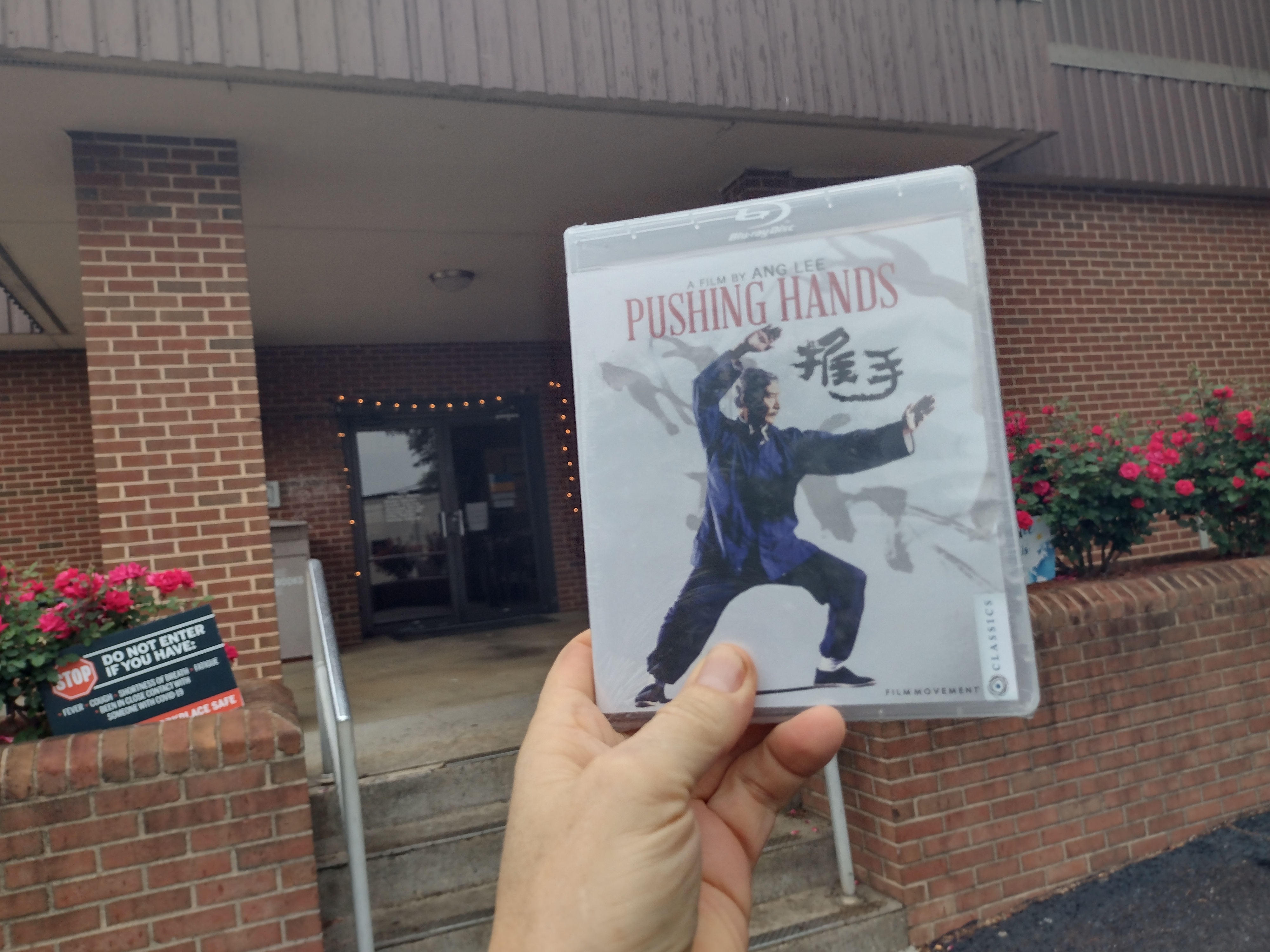
Today’s DVD donation? Halifax, Va. discovers the traumas of a Belgian school’s Playground”

This engrossing drama about bullying and its impact not just on the boy directly subject to it, but to his sister, stay at home dad, family and a school bureaucracy helpless to handle it has a lot to offer…and subtitles. It’s in French. Let’s hope tiny Halifax, Va. is up for it.

Playground” is a challenging, rewarding and sometimes heartbreaking film, well worth checking out.

That’s the job of MovieNation, spreading fine cinema across the land, one DVD, one public library at a time.

Remember to donate your DVDs to libraries. Even if they already have the title in their collection, they can sell your donation at the book sale and raise money for their work, a vital part of a functioning democracy.

Posted in Reviews, previews, profiles and movie news | Comments Off on Today’s DVD donation? Halifax, Va. discovers the traumas of a Belgian school’s Playground”

Movie Review: Indie drama gives us a “Glimpse” of the Surveillance state’s private sector excesses

If there’s one thing the pandemic lockdown taught us, it’s that some filmmakers had ideas that turn the restrictions and limitations of that time into dramatic scenarios.

“Glimpse” combines disparate, isolated characters, hidden camera CCTV footage and rising paranoia about just what “they” know about us and can do to invade our privacy for a short, not remotely satisfying thriller. It’s pretty good as a proof-of-concept, evidence of just what sort of compelling story you can tell with self-isolated actors, limited locations and a clever conceit to hang it all on. But that’s all it is.

Three people (Ashley Nicole Black, Erin Darke and Raúl Esparza) work from home, staring at their computers as they watch — via CCTV — the lives unfolding in what appear to be three ordinary if somewhat upscale homes.

One couple, a real estate agent (Carrie Preston and Michael Emerson) are sweating out his latest job interview in their suburban designer McMansion. A professional woman (Krysta Rodriguez) is trying to control her temper at her live-in lover’s (Van Hughes) guitar-picking indolence. And a mother (Alysia Reiner) patiently helps her kid with Spanish homework until her husband (David Alan Bashe) comes home and they can make out like horny teenagers — again.

Their “spies” are eating delivered food, playing with toys, rolling their eyes at their boring jobs monitoring these folk, whom they find themselves shouting at their screens about as their subjects accept flawed relationships and bore the hell out of those “watching” them.

The “spies” also swap phone calls.

“I thought you said this was legal.

“I’m not arguing ETHICS with somebody who’s doing the same UNETHICAL thing I’m doing!”

They have only the vaguest notion of what they’re doing, and they have little idea who this rich, leisure-loving tyrant (Janet McTeer) is whom they’re working for.

And then, a masked “intruder” slips into one of those houses, just out of sight of the couple one spy is supposed to be monitoring. That sets off a whole chain of increasingly frantic calls as the underlings try to come up with an “ethical” answer to this dilemma.

You’re spying on people who might be in danger. Do you warn them? And if so, how?

That promising thriller or comic thriller premise is pretty much frittered away by TV veteran (“Smash,” “Law & Order,” “NYPD Blue”) Theresa Rebeck, serving as writer-director here.

She has a few interesting characters, a competent cast, decent (Georgia?) locations and a hot-button “issue” subject with serious dramatic or comic dramatic possibilities. But the film just lies there.

Suspense is frittered away, jokes aren’t landed, the spied-upon underreact in mostly bizarre, uninteresting and unnatural ways to the threats that become increasingly obvious to them.

And the resolution, the over-explained but inadequate “explanation” for all this wrongdoing and manipulation is never more than underwhelming.

McTeer has a nice “You can’t quit, I OWN you menace,” but there’s little pathos to the victims or ethical dilemma guilt to the perpetrators.

Rebeck has her proof-of-concept. She just doesn’t do enough with it.

Rating: unrated, profanity

Cast: Janet McTeer, Carrie Preston, Alysia Reiner, Ashley Nicole Black, Raúl Esparza, Michael Emerson, David Alan Bashe, Krysta Rodriguez, Van Hughes and John Preston 

Credits: Scripted and directed by Theresa Rebeck. A Gravitas Ventures release.

Running time: 1:14

Posted in Reviews, previews, profiles and movie news | Comments Off on Movie Review: Indie drama gives us a “Glimpse” of the Surveillance state’s private sector excesses

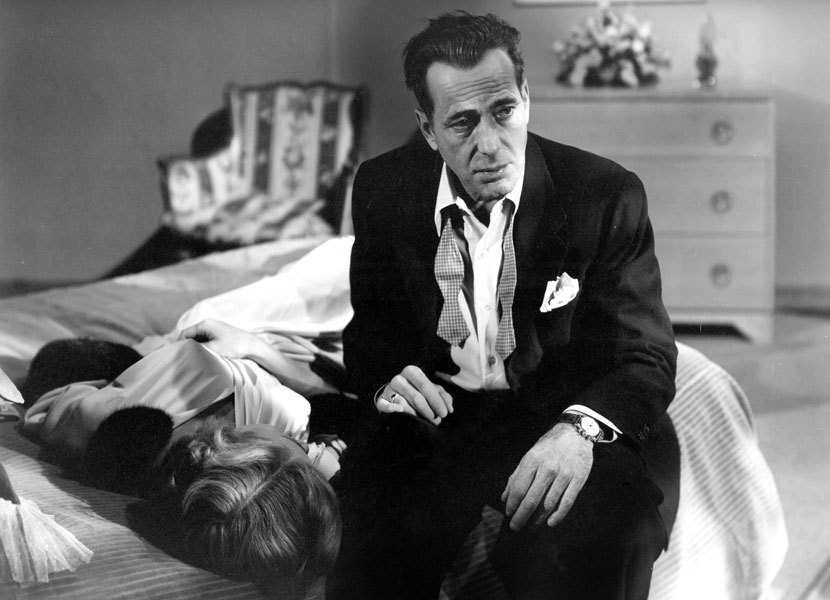
Classic Film Review: Bogart’s glib, mean and scary in Nicholas Ray’s “In a Lonely Place” (1950)

The great thing about Bogart was that he never lost that nasty edge that gave him a career, even as he transitioned from heavies to leading men. There’s a hint of Fred C. Dobbs, Duke Mantee and Roy Earle in many a character in his post-“Maltese Falcon”/”Casablanca” years, especially the film noirs.

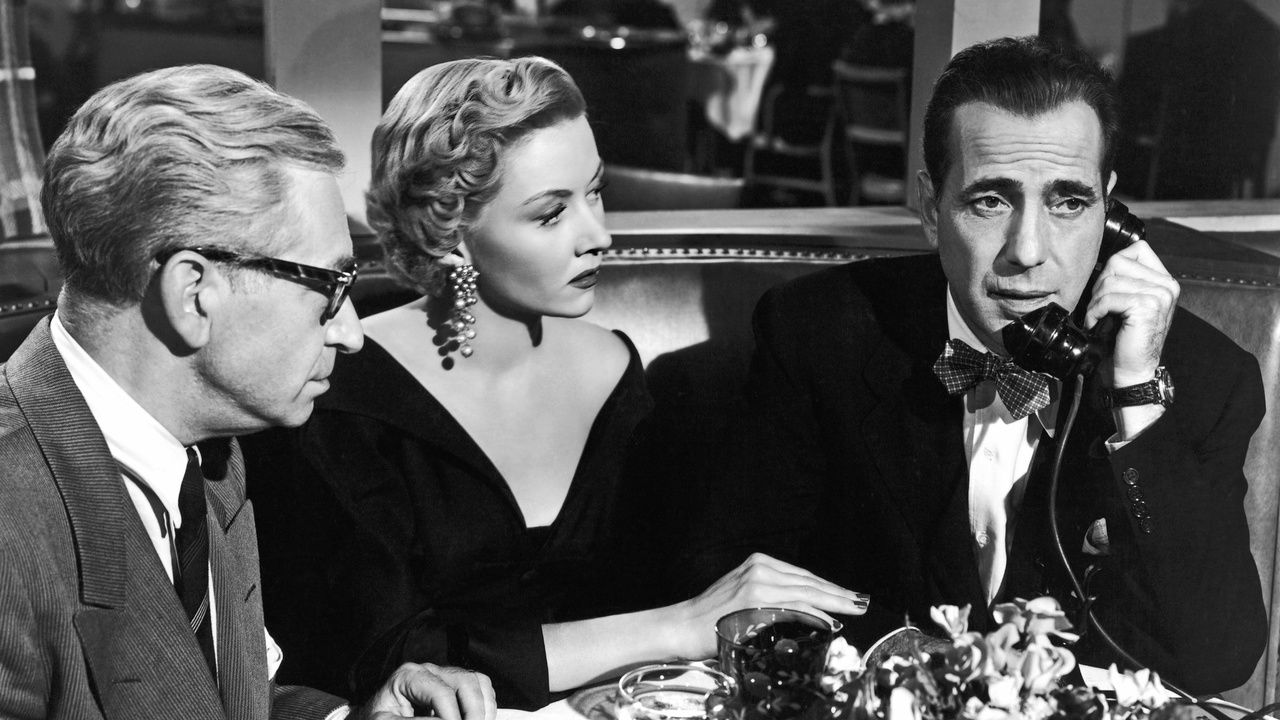
Nicholas Ray made great use of the “real” Humphrey Bogart — polished, an upper middle class prep-schooled New York sophisticate — and let him tap into his mercurial menace for “In a Lonely Place,” an early Ray triumph and a classic noir that stands among Bogart’s best.

Considering the guy played Sam Spade and Philip Marlowe, that’s saying something.

“In a Lonely Place” casts Bogie as a cynical, cruel screenwriter in need of a hit and utterly unconcerned about a young hat-check girl who is murdered after his careless treatment of her in prepping a script.

Dixon Steele hasn’t had a hit “since the war.” He’s never lost his favorite table at the post dinner club Paul’s, but his professional desperation has done nothing for his hair trigger temper.

His long-suffering agent (Art Smith) has a can’t-miss assignment lined up, adapting a pot-boiler novel. Even that can’t keep Dix from punching a studio chief’s son who gets on his nerves, and in public no less.

He’d best call it a night, read this book and start giving the director ideas about what he’ll do with it in the morning. Only Dix has hit the lazy, dismissive stage of his writing career. He can’t be bothered to read this romance. The hat-check girl at Paul’s read it. He’ll tempt, cajole and pay her to come by and tell him the story of it.

Just a couple of years into his directing career, Ray had already established a knack for pitiless thrillers with a hint of sentiment about them, and a determination to give female characters agency and actresses showcases for that agency.

Martha Stewart –– no, not THAT Martha Stewart — had only a dozen or so screen credits. But as the pretty, unschooled and enthusiastic reader Mildred, she pops right off the screen

“Oh I think it’ll make a dreamy picture, Mr. Steele. What I call an epic.”

“And what do you call an epic?”

“Well, you know – a picture that’s REAL long and has lots of things going on!”

Their scenes — with wide-eyed Mildred gushing through the novel’s romance and suicides — and Steele airily correcting her mispronunciation of the title character’s name, “risqué” and other words — crackle, and set us up to appreciate every woman who appears on the screen.

From the starlets who flirt with Steele — “Do you look down on ALL women, or just the ones you know?” — to the African American singing pianist (Hadda Brooks) and the grumpy cleaning woman with her ever-dangling cigarette — Ray frames them and lights them all like stars, and lets them shine.

That sets us up for the mysterious neighbor, witness to some of the night’s events and destined to become Steele’s lady love and new obsession. The legendary Gloria Grahame wasn’t yet a legend in 1950, although she was fated to be on every American TV every Christmas, having made a vivid impression in “It’s a Wonderful Life.” But the smart, flinty blonde of “The Big Heat,” “Macao,” “The Greatest Show on Earth” and “Odds Against Tomorrow” gives us a preview of her future glory here.

Failed actress Laurel Grey exchanged probing glances with her dashing neighbor, noticed “the girl” he brought home and even when he callously sent Mildred into the night without calling her a cab, dangerous in LA even in 1950. If she heard Mildred’s over-enthusiastic “acting” of the novel (she screams “Help, HELP HELP” at one point.), she never tells the cops.

Laurel falls for “the suspect.”

Mildred left that apartment and wound up dead in a ditch. And when an old Army subordinate (Frank Lovejoy), now a police detective fetches Dix for an interrogation by his chief (Carl Benton Reid), they’re both put off — if not downright shocked — by the jaded screenwriter’s joking reaction to the helpful, innocent young woman’s death.

“Why didn’t you call for a cab? Isn’t that what a gentleman usually does under the circumstances?”

“Oh I didn’t say I was a gentleman. I said I was tired.

He’s not even that put out at being a suspect.

“I’ve killed dozens of people…in pictures.”

“In a Lonely Place” briskly takes us into the romance that begins despite all the evidence of Steele’s cavalier cruelty and bad temper, and a police investigation driven by the cops’ reaction to Steele’s almost inhuman disdain for a death his uncaring actions caused.

Bogart makes this guy dangerous beyond the flashes of violent temper that he displays even to the “popcorn salesman” director who wants to give him a big break. Grahame, in what can best be described as “The Lauren Bacall role,” deftly journeys from smitten to devoted to recognizing the trap that this monster might be, even as Laurel refuses to let the cops know she’s starting to have her doubts.

That cop who looks like a very young Peter Graves? That’s James Arness, the future Matt Dillon of “Gunsmoke.” The flower shop employee who makes a movie star impression hosing down the sidewalk is African American character actor Davis Roberts in an early role. Hadda Brooks is so good in a single scene that you lament that the racist era she came up in limited her acting/singing career to just a handful of credits.

The dialogue by Andrew Solt and Edmund North (Dorothy Hughes gets a story credit) sizzles and stings, and even lapses into florid. With our anti-hero being a screenwriter, you’d expect nothing less.

“I was born when she kissed me. I died when she left me. I lived a few weeks while she loved me.”

Ray and Bogart skillfully navigate this noir as it veers from murder investigation to romance to study in high functioning bipolar “creative type,” a man whose charm is tinged with violence.

And none of it would work if Bogart didn’t make us believe, first scene to last, that Dixon Steele is narcissistic bad news, a jerk who causes incidents and accidents and is somehow always the victim, a woman-beating hothead worth fleeing, with or without a murder rap hanging over him.

Rating: unrated, violence, smoking

Cast: Humphrey Bogart, Gloria Grahame, Art Smith, Frank Lovejoy, Martha Stewart, Jeff Donnell, Carl Benton Reid and Robert Warwick

Credits: Directed by Nicolas Ray, scripted by Andrew Solt, Dorothy Hughes and Edmund H. North. A Columbia release on Tubi, Amazon, other streamers.

Running time: 1:34

Posted in Reviews, previews, profiles and movie news | Comments Off on Classic Film Review: Bogart’s glib, mean and scary in Nicholas Ray’s “In a Lonely Place” (1950)

Movie Preview: Vanessa Redgrave lends gravitas to a distaff take on Neverland –“The Lost Girls”

Making Wendy a bigger deal in this story has been a thing for a decade or more. “The Lost Girls” promises to be the most Wendy centric version yet. June 17.

Posted in Reviews, previews, profiles and movie news | Comments Off on Movie Preview: Vanessa Redgrave lends gravitas to a distaff take on Neverland –“The Lost Girls”

Movie Review: The exquisite simplicity of “Petite Maman”

“Petite Maman” is a memory play for children, a children’s fantasy for grown-ups.

The latest film from Céline Sciamma, who gave us the Oscar-winning “Portrait of a Lady on Fire,” is an understated and distinctly adult look at childhood, death and remembrance. It’s a ghost story spun around a trying time for an eight year-old who loses her grandmother, and whose mother disappears, perhaps to sort out her grief. Nelly is left to deal with this unexpected desertion pretty much by herself, as her father is vague and evasive about what’s going on.

And at that moment, as Nelly searches the woods near the home her mother grew up in, looking for a play “hut” Mom once built, she meets a little girl her age, with her looks and her mother’s name. As Dad clears out his in-laws’ home by himself, Marion becomes a playmate and Nelly’s window into her family, her situation and her future.

Joséphine Sanz and Gabrielle Sanz are the sisters cast as eight year-olds who could be twins to anyone seeing Nelly and Marion together for the first time. They’re in sync, joining in games, collaborating on finishing a hut Marion has already started, play-acting in a murder mystery they outline and then improvise, with Nelly as both the murder victim and the “inspector” grilling Marion, the suspect.

The film’s first scenes have established that Nelly is self-composed and mature beyond her years. She had befriended a number of women in her grandmother’s nursing home, and she kindly bids each goodbye as her mother (Nina Meurisse) stoically packs up her mother’s things.

Mother “Marion” is largely silent about her loss, putting on a brave but emotionally-blank face for her child. Her underreaction to this loss had me wondering if she was staff at the home, or some grief-numbed end-of-life caregiver. But no, this woman just lost her mother.

Going to clean out her parents’ house prompts questions from her little girl, not all of them of the banal how-she-grew-up nature.

“Does it upset you, being here,” Nelly wants to know (in French with English subtitles)?

This stranger Nelly meets doesn’t just look and sound like her. She is also self-sufficient, a “free range” kid whose mother (Margot Abascal) lets her use the stove to heat milk for porridge, play by herself in the woods and take Nelly on an inflatable raft out on the nearby lake with no adult supervision.

Others see Marion, who plainly isn’t a literal “ghost.” But she is someone Nelly, who doesn’t shed any more tears over her granny’s death than her mother, needs to process what’s going on in her life, with her parents and with her own absent mother in particular.

Sciamma tells this quiet, cryptic story with limited dialogue and spare usage of music. The setting is late fall, and the girls’ play can be upbeat and timeless — no wasted hours watching or interacting with a “screen” — but there’s a shadow hanging over it.

“Petite Maman,” whose “Little Mother” title lets us know that this “mystery” isn’t really what the film is about, is so thin on details that it invites the viewer to speculate and ruminate over grief and the losses that go along with the death of a parent — a childhood rendered more distant and disconnected, a future that can feel as unmoored as a kid’s first bad case of separation anxiety.

It’s a slight film, but as befits something as introspective and spooky as this, it’s not delicate or dainty. Nelly, Marion and we come to recognize that there is a psychological burden even when you don’t feel the weight of what you’ve lost, merely its absence.

Rating: PG

Cast: Joséphine Sanz, Gabrielle Sanz, Nina Meurisse, Margot Abascal and Stéphane Varupenne

Credits: Scripted and directed by Céline Sciamma. A Neon release.

Running time: 1:12

Posted in Reviews, previews, profiles and movie news | Comments Off on Movie Review: The exquisite simplicity of “Petite Maman”

Netflixable? “40-Love” stumbles in love and laughs, if not tennis

What a tin-eared foot-fault of a comedy “40-Love” is.

Built around ineptly sketched-in characters not saved by the actors playing them, stumbling through scene after illogical and painfully-unfunny-but-meant-to-be-funny scenes, the number of actual laughs it produces you can count on one hand and the groans it generates will leave you hoarse.

But when you’ve cleverly titled your tennis romance “40-Love,” like other feature films and too many short films to count, it’s kind of all uphill from the start.

It’s about an “on the spectrum” 20something math nerd inexplicably named “Beek” (Jasjit Williams, sort of Josh Peck the Next Generation) who is sure that he has the formula “in my head,” the percentages and geometric angles, to turn a top tier Russian tennis star (Alena Savostikova) nicknamed “the Android of Destruction,” into someone who can beat her nemesis at the Big Tourney.

Fired from his burger-flipping job, conveniently inheriting cash from his similarly mathematical aunt, Beek will trek cross-country to New York where the “American Tennis Championships” are almost sure to feature his obsession, Lois Kuzenkova, against her nemesis “Lourdes” in the finals. He figures he can get close enough to coach Russian Lois to glory.

Yes, she’s Russian, and even before this year, the only Americans rooting for Russians were flirting with treason. No, the tennis tourney isn’t the U.S. Open because they couldn’t swing the rights to use that, and no, that’s not former champ Tracy Austin in the booth calling the match with some dope forced to tell 124 bad “Irish drunk” jokes. Kate Grimes does look like Tracy Austin, though.

That’s kind of how this born-also-ran of a movie was assembled. Director and co-writer Fred Wolf fills the edges of the story with a steady stream of obnoxious, foul-mouthed and ill-tempered characters for quirky Beek to bounce off of.

Tommy Flanagan plays the Russian’s insulting, threatening Russian dad, and yes, his Russian accent’s worse than yours.

There’s also Beek’s lazy jerk younger brother (Charlie Oh), a random ranter at an interstate rest area (who finishes off Beek’s car), the jerk waitress played by a relative (Daughter?) of the director, an unseen hotel room shouter, profane college professor, and on and on.

This running gag only pays off when Patrick Warburton plays the dentist Beek visits after chipping a tooth in that interstate rest area encounter.

“They say dentists have high suicide rates,” the tooth terrorist begins. “I’d have to see data on that.” Warburton’s plummy deadpan makes even creaky lines about pills, carbon monoxide and shotgun as life-ending choices amusing.

There’s also a riff-off delivered by security guards played by Colin Quinn and Steve Schirripa who bust the kid’s balls for driving a tow truck to the tourney, for not knowing anything about tow trucks and for looking like Tom Hanks (“‘Forrest f—-ng Gump’ here,” etc). That sounds improvised and is kind of funny.

But the bulk of the film is a contraption designed to put the obsessed math nerd in that tow truck, on the road, in hotel rooms and in New York with this waitress/aspiring painter (Katerina Tannenbaum) whose father wants to nerd to help him “give her a push” out of the dead-end small town where they live and where Beek breaks down, and into New York and Pace University.

The leads have middling banter — “I look at ‘Starry Night’ and see 2.5 by 3 feet of pure beauty. You look at it and want to rename it 7 square feet of paint!” And there’s little that you could call chemistry, which matters because whatever the math-head’s obsession and however his mission to “save” this Russian tennis automaton turns out, these two traveling companions are fated to be together.

But good luck to them in their future endeavors. And let’s hope this is their last work for Wolf, a former stand-up and “Saturday Night Live” writer who had a hand in “Black Sheep” and assorted Adam Sandler and David Spade comedies, many of them back in the last millennium, some of them hits but all of them awful although not as awful as this.

Rating: TV-MA, profanity aplenty

Cast: Jasjit Williams, Katerina Tannenbaum, Alena Savostikova, Tommy Flanagan, Patrick Warburton, Colin Quinn and Kate Grimes.

Credits: Directed by Fred Wolf, scripted by Fred Wolf and Michael Buechler. A Gravitas Ventures release on Netflix, Mubi, etc.

Running time: 1:38

Posted in Reviews, previews, profiles and movie news | 1 Comment

Movie Preview: Comic Jo Koy brings the Filipino-American giggles to “Easter Sunday”

Tiffany Haddish and Tia Carrere also star in this Koy-engineered August release. They say Lou Diamond Phillips is also in it.

Not getting a “Fabulous Filipino Brothers” indie/working class and funny vibe from this.

More upscale and contrived, as in seriously studio processed — but there are a couple of chuckles in this trailer — OK, one, the Manny Pacquiao joke.

August 3, we’ll know if they’re saving the best laughs for the paying audience.

Posted in Reviews, previews, profiles and movie news | Comments Off on Movie Preview: Comic Jo Koy brings the Filipino-American giggles to “Easter Sunday”

Classic Film Review: Gary Cooper’s transgressive-for-its-time “Return to Paradise” (1953)

Hollywood’s long affair with James A. Michener, the World War II Navy veteran whose “Tales of the South Pacific” launched a Pulitzer-prize winning literary career, began with a sort of proof-of-concept film.

Long before the musical “South Pacific,” United Artists, Gary Cooper, director Mark Robson and a Technicolor film crew decamped to Upolu, Samoa, for a sentimental saga of sin, race and religious fascism set just before and during World War II on a “paradise” that had been spoiled by dictatorial Christian missionaries.

“Return to Paradise” may raise eyebrows today for casting the 50something Cooper as a drifter who washes up on an island where the stereotypical simple happy natives are under the thumb of a martinet of a second generation missionary (Barry Jones). Yes, the star was a bit old to be playing this sort of beach bum/vagabond, and pairing him up with a native girl (Roberta Haynes) half his age has a cringey quality.

But the film, taken from one of the “Return to Paradise” stories of the author of “Tales of the South Pacific,” and later “Hawaii,” packs a lot of code-challenging and societal mores-testing into its 100 or so minutes.

Natives returning to their pre-missionary social norms of skinny dipping and premarital sex, the drifter fathering a child out of wedlock, conservative church authority ridiculed for the Return to Puritanism that it was could be pretty racy stuff pre-“Peyton Place,” and feels closer in tone to pre-code films such as the notorious and oft-adapted “Rain.”

Film buffs may recall that that the race to deflower a virgin “romance” “The Moon is Blue” also came out in 1953, so the stodgy ’50s of lore had more of a blush to them than is commonly accepted.

A young adult schoolteacher (Hans Kruse) narrates the story, his memories of growing up in the early 1930s on Matareva, “an island in chains.”

The autocratic missionary Corbett took over running the church and the island when his father died. Whatever benevolence the original Christian immigrants, his parents, might have displayed has been replaced by a man who figures mandatory church services, curfews, clothing and moral codes are the quickest way to salvation, order and progress.

Which is why he enforces these with club-carrying goons he’s deputized to ensure everybody shows up for his prim fire-and-brimstone sermons.

Morgan (Cooper) is dropped off after hitching a lift from sailors who rescued him from another vessel that foundered. His laconic “I figured I’d try it for a while” view of staying is instantly challenged by Corbett, who is tone-deaf to the hypocrisy of his “White men are not welcome on this island” outrage. “They corrupt their (the natives) morals!”

Morgan isn’t having it, and brushes off the endless provocations of this “two bit Mussolini” and commences to pick a spot to slap up a hut. Just enough of the islanders sympathize with him, and recognize the needed challenge to Christo-fascism that he represents, to back him up.

When Morgan is attacked, the towering American fights back. He hasn’t hoboed for decades without learning how to throw a punch.

And thus the war of wills is joined, and the rebellious island girl Maeva (Haynes, actually 25 when this was filmed) is smitten.

The story’s parameters are set, with only Morgan’s itchy refusal to commit — to the island, long term, to Maeva, even though he sticks around after getting her pregnant — with only the clumsily-inserted coming war to replace the conflict that really drives the piece, the “infidel” Morgan vs. Corbett and his goons.

There’s a pleasant but trite change-of-heart when Morgan returns to the island years later, during World War II, and finds himself trying to protect the virtue of his daughter (Moira Walker) from on-the-make servicemen who can’t help but remind him of himself.

Even a writer as enlightened for his times as Michener couldn’t avoid bits of “white man’s burden” in his story, “Mr. Morgan,” and the movie make no bones about this. The natives have “lost our strength,” and only the manly Morgan can bring back its memory. There’s a patronizing “Lord Jim” in this Kipling-esque view of the white savior helping those simple, happy natives.

But the film’s early acts, with its conflict between totalitarian moral authority and “an infidel,” still play and pop off the screen. Cooper does his best not to show his age, and summon up a little of the “Aw shucks” of “Mr. Deeds Goes to Town” or “Sergeant York” to play this fellow who just wants “to be left alone.”

Whatever forward-thinking values were inculcated in Michener’s source material, the film itself can’t help but lapse into the dated and backward as it drifts into its last acts, the buttoned-down ’50s reasserting themselves after the opening acts’ “pre-code” romp.

Director Robson, best known for his film of Ring Lardner’s “Champion” when he filmed this, went on to make a Korean War drama “The Bridges at Toko-Ri” based on Michener’s novel, and even “Peyton Place” and “Valley of the Dolls.”

Cooper was finishing up a bracing period of his career which included “High Noon.” His short run as a screen patriarch (“Gentle Persuasion”) would be hastened by the abortive “middle aged playboy” turn in “Love in the Afternoon,” which just underscored how he shouldn’t play the guy who “gets the girl” any longer.

Cary Grant learned from Cooper’s mistakes. Eventually.

And “Return to Paradise,” coming after the Broadway musical “South Pacific,” would help sell Hollywood on Michener’s bankability, that he was tapping into the post-war public’s appetite for island stories. His pitch for a series sailing from island to island for “Adventures in Paradise” would come a few years later. Even John Ford’s shambolic but scenic “Donovan’s Reef” spun out an uncredited Michener pitch.

It wasn’t until “Centennial,” Michener’s mainland America epic, that everybody figured out that Mr. Thousand-Page Books was best suited for mini series treatment.

But you can still find the author’s themes, style and devotion to the romance and adventure of his war years in the South Pacific in “Return to Paradise,” a dated picture a little ahead of its time, just like the writer who inspired it.

Rating: “approved,” violence

Cast: Gary Cooper, Roberta Haynes, Barry Jones, Moira Walker, John Hudson, Mamea Matatumua and Hans Kruse.

Credits: Directed by Mark Robson, scripted by Charles Kaufman, based on a story by James Michener. A United Artists release on Tubi, Amazon and other streaming platforms

Running time: 1:29

Posted in Reviews, previews, profiles and movie news | Comments Off on Classic Film Review: Gary Cooper’s transgressive-for-its-time “Return to Paradise” (1953)