
They got a series out of this?
June 24, Rowan A. adds to his car collection.
They got a series out of this?
June 24, Rowan A. adds to his car collection.
Kim Coates as…Satan? I can totally buy that.
A tech guru is about to lose his company and his sanity. So why not invite old friends for a weekend in the country? Dana Abraham (who also scripted it) and Brenna Coates are among the stars of “Neon Lights.”
July 12.

Snooker’s the game, and an Indian lad takes it up to avenge his father’s honor in “Toolsidas Junior,” an engaging feel-good dramedy as seen from both ends of the pool cue.
Mridul Mahendra’s film may lack the whizz-bang showmanship of Martin Scorsese’s “The Color of Money.” But he shows us two Indias as he tells the “true story” of a child of privilege who watches his Dad waste his shots at glory — easily plied with drinks that ruin his chances every time the Calcutta Sports Club championships roll around — and hangs around in seedy pool halls to learn to snooker the snooker who snookered his old man.
That’s a confusing sentence, much like the film’s confusing relationship with the literal truth. A lengthy disclaimer opens the movie, and a refutation of that disclaimer ends it. All the director needed to do was say “Inspired by a true story” and leave it at that. But the fellow changed his name for the credits, so there’s more to it than that.
The late Rajeev Kapoor plays the portly father who dominates the snooker table at his club, except for that one time each year they hold a tourney and he somehow finds a way to lose to the regal, imperious Jimmy Tandan (Dalip Tahil) in the finals.
Varun Buddhadev plays Midi, adoring son of Mr. Toolsidas, a kid in his tweens who cheers his father on at the tourney until that one year he sees exactly how Tandan does it. The winner gets his father drunk between rounds.
Midi is too little to call out his father’s behavior, or even warn him (apparently) when he sees this sabotage coming from a mile off.
But Midi isn’t too little to figure out a way to rescue his much larger and older brother Goti (Chinmay Chandraunshuh), who, like his father, has his vice and an addiction of choice. Goti is a teenaged gambler. Midi sees through the “fix” at a carnival shooting gallery, and Goti decides that since the kid is sharp, a quick study and a crack shot, he should be the family’s champion sportsman.
Forget snooker. Midi should stick to the “big money” sports like tennis and cricket. Goti will be his manager. The only problem with that is Midi is too little to be any good at either of those sports.
He’s too small to play pool in the club, either. His “feet don’t reach the floor” and he’ll “tear the (baize/felt) table.” That’s why he and the hustler-in-the-making Goti search high and low for a place for him to pick up the game, and settle on a pool hall in the homeless, poor, porn cinema/street-hustler side of town.
Not that they tell their parents. Not that Goti sticks with it after the kid learns which streetcars to take and when to show up to get practice time. Goti’s on to his next bet.
The brother to brother scenes are light and slapshticky enough to come off. But “Toolsidas Junior” doesn’t hit the sweet spot until the kid finds a mentor.
The sullen, silent Salaam Bhia (Sanjay Dutt) naps in the downmarket Wellington club where he holds forth. Nap for an hour, practice for an hour, that’s his ritual. He used to be the national champ at snooker. Now he just broods, enforces “his” rules and chews.
“Muhammad Salaam Bhjai doesn’t spit his betel leaf for ANYone,” one of his down-and-out fans insists. The kid studies him, mimics his every move, and eventually becomes his protege.
“If you want to see clearly, befriend the darkness” of pool halls, the guru preaches. Take naps to rest your eyes and stay acclimated to the place.
The instruction scenes, something no Hollywood pool hustling movie ever gets into, are marvels of simplicity and common sense. Dutt’s towering presence sells the reality of these scenes, and the snooker playing on display isn’t bad either.
It’s a simple feel-good movie, with an “I’ll show them” shot of family redemption tossed in between the trick shots and run-the-table sequences. In most cultures, a filmmaker could’ve gotten through this story in 90-100 minutes easily.
Still, the adults are sharp and the kids are all right. It plays, even if the pacing’s slow by Western standards. And while you might not know the rules of snooker any better by the end than you did at the outset, there’s enough here to make one want to look them up.

Rating: TV-14
Cast: Varun Buddhadev, Rajeev Kapoor, Sanjay Dutt, Tasveer Kamil, Chinmay Chandraunshuh and Dalip Tahil
Credits: Scripted and directed by Mridul Mahendra. A Netflix release.
Running time: 2:10

It’s fitting that Ray Liotta died on a film set. Just not at age 67.
Another of those actors who never stopped working, Liotta was on a set in the Dominican Republic, filming “Dangerous Waters,” when he took a nap and didn’t wake up.
“Goodfellas,” “Marriage Story,” “Bee Movie,” “Field of Dreams,” “Sin City: A Dame to Kill For,” sitcoms and cop series, the guy with the battered face worked pretty much constantly after Scorsese made him a star. He really classed-up “The Many Saints of Newark,” I thought.
I interviewed him a couple of times, when “Unlawful Entry” came out, and promoting some other film I can’t recall.
A good-humored guy with alarmingly bright eyes who might make fun of his appearance, but God forbid you do. I mean, come on. He played SCARY as well as anybody who ever did. Scorsese cast him with an eye for that.
“Ya work with what you’ve got,” Liotta used to say. And did. A lot.
Sixty-seven is too young to go. He had decades of mob bosses and patriarchs of all stripes ahead of him. A damned shame.
1954-2022




When the aliens visit, they might give us the standard “Take to me your leader” shtick. But if they’re young enough, they might be more interested in comparing farts.
That’s the lesson of “Maika: The Girl from Another Galaxy,” a laugh-out-loud kids’ fantasy from Vietnam, hands-down the best “E.T.” knockoff to come along in years.
A magically-empowered alien child (Chu Diep Anh) crash lands her jellyfish-shaped space shuttle and befriends a lonely little boy, Hung (Lai Truòng Phù) who finds her. But their friendship is threatened by greedy, power-mad adults and their hired thugs. Hung must team up with his wealthy, spoiled rival (Tin Tin) to foil the bad guys, save the girl and let go back where she came from.
But first she has to “phone home,” of course.
Whatever the plot and story beats of the Slovak TV series that this is inspired by (glimpsed in the movie), writer-director Ham Tram (“Bitcoin Heist”) knows that the gold here is in tried and true characters, alien fish-out-of-water jokes and grownups as “obstacles” who can only be overcome with kiddie hijinks.
We’re introduced to Hung and his still-grieving widowed dad (Ngòc Tuòng), a tinkerer who can’t make ends meet repairing people’s cell phones. Hung is an avid model airplane flyer who finds himself in battle with Beo (Tin Tin), the rich kid who lives in a nearby high-rise and likes nothing better than wrecking Hung’s “Comet” camera-plane with his fancy camera-drone.
Goons hired by a samurai-obsessed gangster are trying to evict everybody in Hung’s building.
“Hey, why are you picking on these people Black Pecker?” “I go by BULL, now.”
Yeah, that’s just as funny in subtitles as it is in Vietnamese.
And there’s a Vietnamese billionaire who plans to build a spaceport and enter Vietnam into the space race.
Everybody’s plans get upended by the girl who crashes into the harbor, takes purple-haired human form after sipping a human juice box (Hah!), and tells Hung she has no name, but that she’s from the planet Maika.
Well, that’ll do for a name, then.
Maika’s powers are borrowed from many another big or small screen alien — mind melds and the like. But her species has tentacles they can summon up to use as Wonder Woman whips, which is novel.
Tram finds the heart, humanity and humor in all this in the kids, their simpler understanding of the world and simple, goofy solutions to confrontations.
“Kimchi Bombs!” are a weapon of choice. “Mooning” the bad guys is a great distraction.
Hung must contend with the cute nurse who is sweet on his dad, his best friend moving away and a wrecked airplane long before Maika arrives. The alien is looking for “my comrade,” and has to learn Vietnamese. She figures the default language on Earth is Russian, for some reason.
Otherwise, the story arc is almost note-for-note “E.T.,” but the laughs come from the oddest places. Hung has to explain tears to Maika, noting that they taste “salty, like boogers.”
Beo’s ongoing prank war with his skateboarding older brother (Phu Truong) has him dressing in an elaborate jumpsuit disguise, painted to match the yellow, blue and red rust on a beached buoy where Bin and his “club” hang out.
The Japanese gangster’s phone ring-tone screeches “Konnichiwaaaaaaaaaaaa” every time it rings.
No, it’s not the most original kiddie fantasy to come along. The plot sets up situations it doesn’t follow through on and there are wildly inconsistent “rules” within that set-up.
But the kids are — to a one — adorable. The slice of Vietnamese working class life — outdoor brick oven cake-baking, a trek to a mountaintop amusement park, scenery that hasn’t been over-exposed in movies — is interesting and the villains are the same over there as anywhere else — gangsters who hire others to be their “muscle,” and spoiled billionaires used to getting their own way, no matter the cost.
They’ll get theirs. And before “Maika” is through, you’ll get yours, or at least be rooting for that “phone home” call to get through.
Rating: unrated, violence, fart jokes, mild profanity
Cast: Lai Truòng Phù, Chu Diep Anh, Tin Tin, Ngòc Tuòng, Diep Anh Tru, Phu Truong and Kim Nha
Credits: Scripted and directed by Ham Tram, inspired by the Slovak TV book and TV series “The Girl Who Fell from the Sky.” A Well Go USA release.
Running time: 1:47
First-time feature writer-director Seth McTigue co-stars in this thriller about a “prank” hired kidnapping birthday stunt that goes seriously off the rails when his brother hires the worst possible kidnappers.
Roy Huang co-stars in “Take the Night,” which opens July. 8.
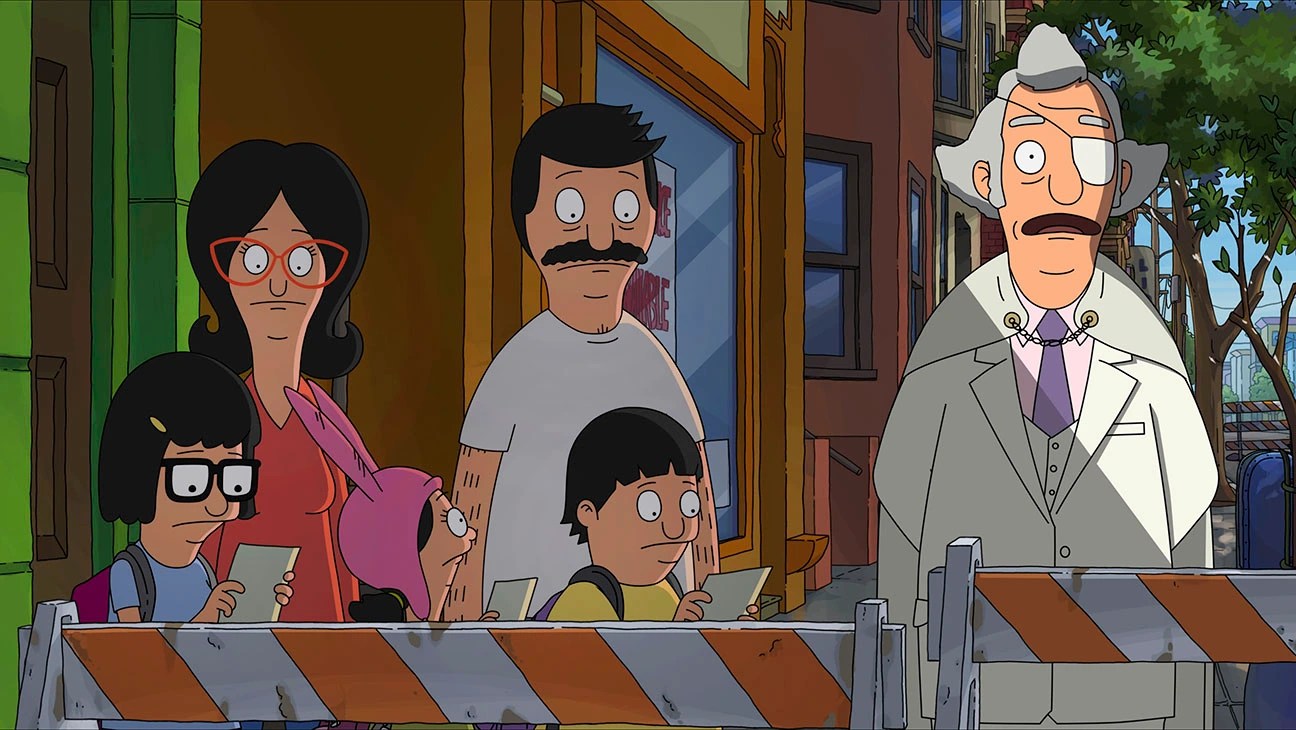
“Bob’s Burgers” makes the journey to the big screen, a dozen years into its TV run, its rat-a-tat banter, goofy production numbers and screwball dilemmas faced with doom and ditzy optimism by its chinless-to-a-one animated cast intact.
It plays like bubbly fan service bon bon to its loyal devotees, the folks who don’t forget what time it’s on every week and don’t have any meaningful boycott of Fox they’d care to adhere to. Then again, maybe they’re bingeing it on Cartoon Network.
As somebody who’s never gotten into it — at least past any given episode’s first commercial break — I found “The Bob’s Burger Movie” a pleasant surprise. They step up the quality of the animation, although that TV cost-saving crutch of having a couple of actors with too-distinctive voices do too many characters gets magnified on a big screen, surround sound and 100 minutes of story.
Once again, the beach town burger joint is in jeopardy. Once again, the dogged Bob (H. Jon Benjamin) is overwhelmed, upbeat wife Linda (John Roberts, the good one, not the democracy-gutting one) is…upbeat if not all that helpful. It’s up to the kids — hormonal eighth grader Tina (Dan Mintz), delusionally dorky Eugene (Eugene Mirman) and their bunny-eared younger ring-leader, nine-year-old Louise (Kristen Schaal) to save the day.
This time, the predicament involves a sink hole in front of the shop, a bank loan due, their dismissive eye-patched landlord (Oscar winner Kevin Kline) and a skeleton found at the bottom of said sinkhole.
The plot’s cartoon cute and sitcom silly, and it’s perfectly serviceable. But it’s the characters and their rapid RAPID fire exchanges, comebacks and zingers that are the special sauce on this “Burger.”
Louise is mocked at school for her bunny ears, called a “baby,” and thus must act extra tough, and publicize the hell out of her own toughening up efforts. She will go INTO the sink hole, because “you know what they say.”
“‘Babies’ come OUT of holes, they don’t go IN them!”
The landlord might be placated by the right amount of begging.
“I’m of TWO minds…and by that I mean I’m DRUNK.”
The corpse Louise encounters buried in that sinkhole was plainly “Murdered to death and buried to death by a murderer and a buryer!”
And she freaks out when she accidentally swallows one of the skeleton’s teeth. Brother Gene takes pity on her.
“You can’t HANDLE the tooth!”
To find out whodunit, the kids will have to cut school and visit “CarnyOpolis” — the neighborhood where the local tourist trap hustlers congregate.
There’ll be chases, cliffhangers, songs and dances among the carnies, but also duets of longing and hope by Bob and Linda, and intrepid efforts by their most loyal, loving customer — blue collar Teddy (Larry Murphy).
“I can’t LIVE…if living is without you!”
No, it’s not particularly cinematic. It’s not a must that you catch this on the big screen. But if you’re a fan of the show, or have the faintest inkling that you could be one, you should. It’s not deep or all that sophisticated. Yet it’s always quick, and often damned funny.
“What’s THIS thing?”
“Ah yes, my old organ.”
“Your WEINER?”
Rating: PG-13 for rude/suggestive material and language
Cast: The voices of H. Jon Benjamin, Kristen Schaal, Kevin Kline, John Roberts, Dan Mintz, Eugene Mirman, Zach Galifianakis, David Wain, Gary Cole, Nick Kroll, Keegan Michael Key, many others
Credits: Directed by Loren Bouchard and Bernard Derriman, scripted by Nora Smith, Jim Dauterive and Loren Bouchard. A 20th Century release.
Running time: 1:42
I couldn’t resist. I mean, isn’t it adorable that those digitally sense-dulling action beaters The Russo Brothers, of several utterly forgettable Marvel blockbusters, are being promoted as a brand now?
Hahahahahahahaha hahahahahahahaha.
Ryan Gosling, Chris Evans, Ana de Armas and Alfre Woodard are among these stars of this no-expense spares action pic about “wet work” and rival assassins and what not.
Looks like they broke the bank, and no, it doesn’t look Tom Cruise stunt “real.” That’s true Russo Brothers’ brand.
Michael McKean, Rainn Wilson and Larry Wilmore are among the co-stars this June 17 release has to offer.
It’s a true story about a mathematical flaw in a particular corner of the lottery, and a math whiz who exploits it.
Looks cute. Paramount+ has it, as it doesn’t look theatrical.
Probably won’t see it, as Paramount didn’t pitch the trailer and doesn’t usually pitch me their wares. I guess they figure “that with Yellowstone” and “Star Trek” and “Godfather,” they don’t need most critics.
Sharlto Copley co-stars in this safari-gone-wrong thriller, featuring doting dad Idris Elba struggling to save his kids from a monstrous and ever-so-digital lion.
August 19.

 Movie Nation