
A canny eel diving teen gets in the middle of mind games between her strict dad and his rich friend.
This scenic drama with thriller elements opens July 8.
A canny eel diving teen gets in the middle of mind games between her strict dad and his rich friend.
This scenic drama with thriller elements opens July 8.
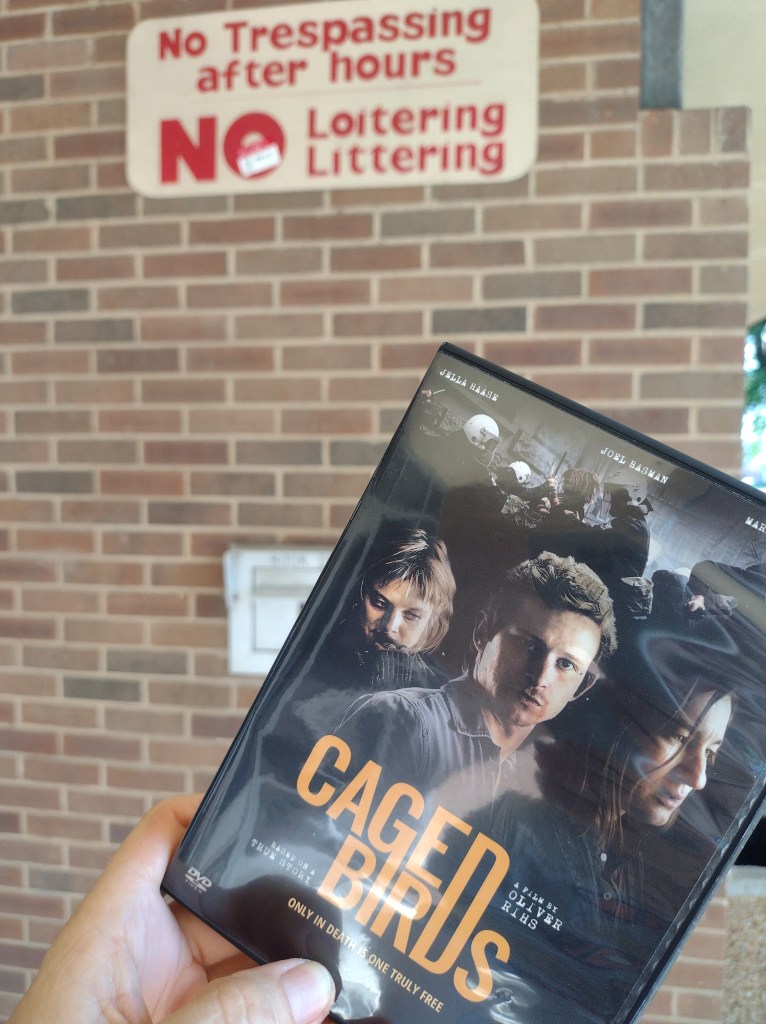
This Swiss drama is about a career criminal — upper class, the worst kind — and the prison/justice system reform activist who became his champion, is a real winner.
And I hope the good folks of the sleepy, aging former textiles-and-tobacco town of Roxboro, N.C. don’t mind reading subtitles.
MovieNation, spreading fine cinema across the land, one DVD and one public library at a time.
Daryl McCormack plays the sex worker brought in for a bit of last gasp adventure, the *Leo Grande” in question?
This one seems audience specific enough to warrant a streaming release, which it is getting via Searchlight and Hulu, where it premieres June 17.
A very interesting turn towards a sort of “true crime” found footage take on a tragedy.

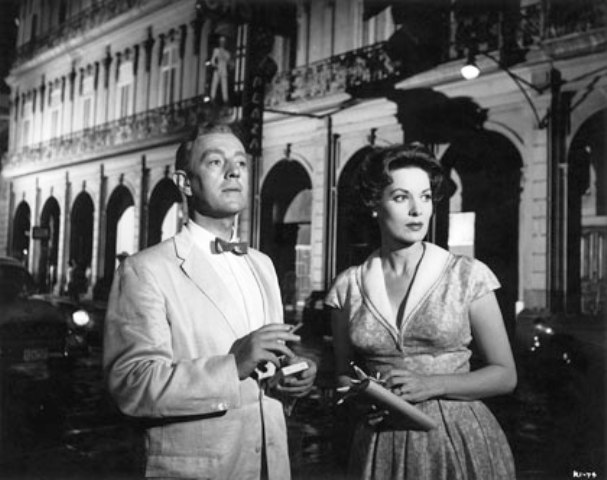
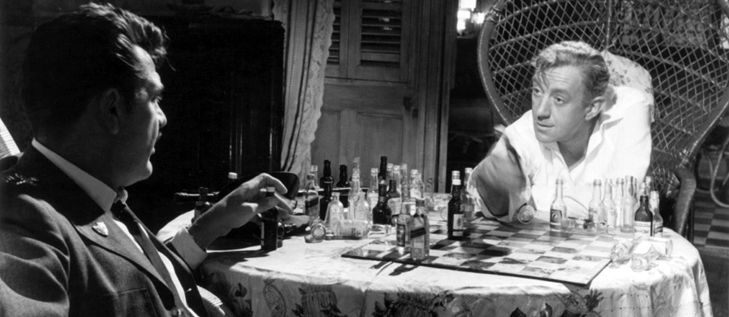

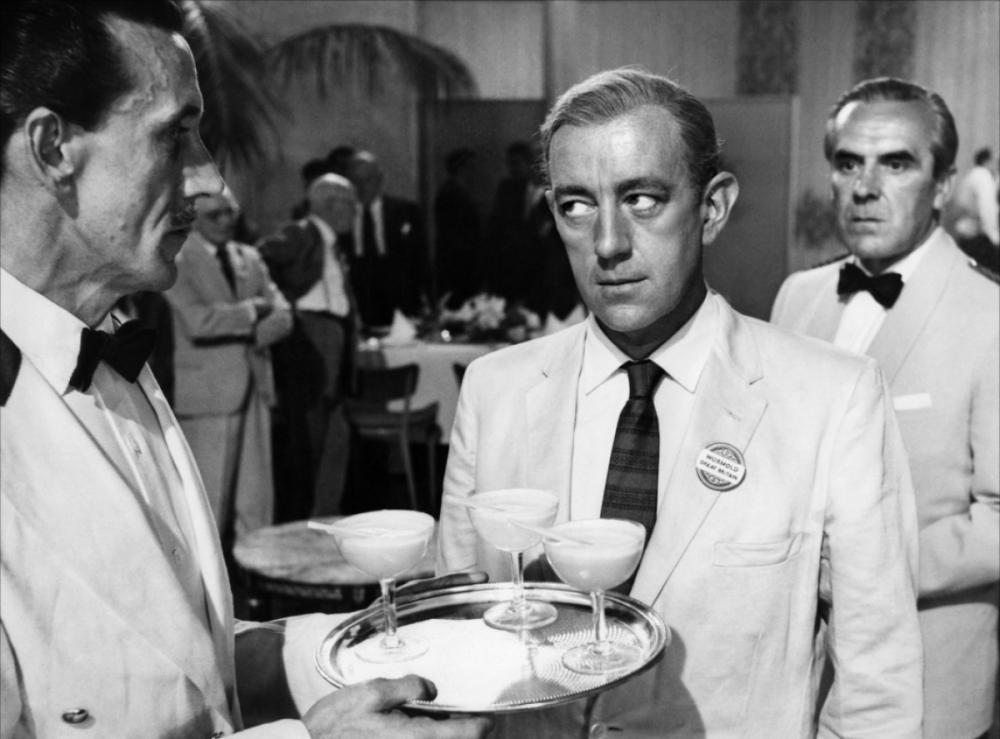
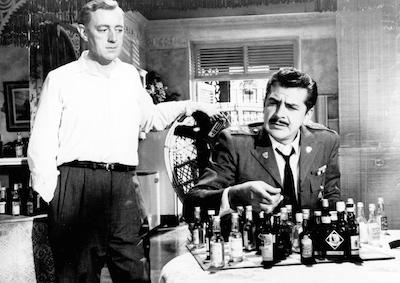
You tend to forget how dark “Our Man in Havana” is.
Carol Reed’s film of Graham Greene’s “comic” spy novel is no “Ugly American,” to be sure, and was never quite as sadistic as the early James Bond movies it was compared to as they came out. But “quite” carries a lot of baggage in that sentence. And the memory is colored by all the versions of “civilian recruited as spy” films inspired by it, especially the screen version of John LeCarre’s homage to “Havana,” “The Tailor of Panama.”
The casting of Alec Guinness, Ernie Kovacs, Burl Ives, Maureen O’Hara, Ralph Richardson and Noel Coward at his drollest certainly lend “Havana” a comical air that sits lighter on the memory than the murders and sinister turn things take.
Spycraft and its misuse is all jaunty and jolly, Guinness properly hapless, Kovacs comically lecherous and menacing and Coward a dapper parody of the overdressed undercover agent, strutting about with cane and hat, often accompanied by a street band (The Buena Vista Social Club in their youth?).
And then the guns, the poison and the “accidents” crop up and the “innocent fun” curdles.
Guinness plays the owner of a vacuum cleaner shop in pre-Castro (the film was finished just as Fidel was seizing power) Havana who faces an absurd barrage of questions from the well-turned-out gentleman (Coward) who shows up in his shop, a fellow countryman who wants something.
No, high end vacuums aren’t in much demand, even among the better off.
“There’s not much electrical power since ‘the troubles’ began.”
Wormold’s a single father whose teen daughter (Jo Morrow) has only known Havana.
“Girls grow up early in the tropics,” Wormold’s old German drinking buddy (Ives) counsels.
“Yes, and she’s even grown an American accent.”
That makes Wormold his upper class customer’s ideal recruit. He’s broke, British, “a patriot” and WWII vet. His daughter’s in Catholic school in a Third World country and he wants a better future for her than Cuba promises — Europe, gentility.
And she’s fallen under the gaze of the sinister, high-living and ruthless police captain (Kovacs, just dripping with comic menace), a man more than twice her age.
Wormold’s “I don’t see how I can possibly be of any use to you” turns to “OK.” He’ll take the retainer, keep an eye and an ear out, “recruit” others to gather intelligence for him.
That’s the grand joke of “Our Man in Havana,” the way the capitalist military-industrial-espionage complex incentivizes crisis, exaggeration and lies. There’s more money in bonuses if Wormold recruits others, more money still if he stumbles across “secret” construction (this was filmed years before the Cuban Missile Crisis). A talented sketch artist like Wormold can “invent” agents and collect their pay, and when the need arises, draw pictures of this unusual facility “in the mountains.”
The film’s funniest acting is Coward realizing that what his over-impressed spy chief (a whimsical and tactless Richardson) says back in London is true of that “facility.”
“Looks a lot like a vacuum cleaner.”
It turns out Wormold is taking advice from his too-understanding pal, Dr. Hasselbacher. Ives was a cute and cuddly folk singer/actor who played some great heavies in the ’50s.
“All you need (to do this spying) is a little imagination,” the good doctor, a researcher in how cheese ages, purrs. “As long as you ‘invent,’ you do no harm.”
And then the kicker — “They don’t deserve the truth.”
It all goes pear-shaped, as the Brits like to say, when people back in Britain, and those who compete with them in the Spy Game of Nations, start taking Wormold’s flights of fancy seriously.
Reed, who knew his way around this sort of skullduggery thanks to “The Third Man,” keeps the threat of violence in the background of this tropically-bright, with shade and shadows, black and white masterpiece (Oswald Morris was the director of photography).
But what’s going on in the foreground can be a hoot. Casting the gay bon vivant Coward, one of the models for his friend Ian Fleming’s James Bond, makes the second “recruiting” scene a raised-eyebrow giggle. They meet in a bar.
“Where is the ‘gents?’ Good. You go in, and I’ll follow.”
Guinness’s Wormold isn’t guileless enough to fall for that, following Britain’s most famous if not exactly “out” homosexual into a men’s room.
Well, what’s the problem? “You’re an Englishman, aren’t you?”
John Wayne’s favorite leading lady O’Hara shows up unannounced as an assigned “secretary” to help Wormold run his (imaginary) spy ring, and maybe protect his daughter from creepy Captain Segura.
As the “chief” back in Blighty sputters on in delight about the intel from “our man in Havana,” we see how even the limited exposure to this double life has turned Guinness’s Wormold into a survivor, even as he’s blithely told of a plan to kill him and given cursory instructions about how that might happen, and the bare basics of avoiding being murdered.
Greene was a novelist the world was ever-so-reluctant to take seriously, and that carried over to his film adaptations as well. But the writer who scripted Reed’s other masterpiece, “The Third Man,” and his director came as close to perfection as movies come with this finely polished (and recently restored) gem.
The jokes are sly and winking and put the amusingly “phobic” in homophobic. Yes, Wormold’s recruited in a men’s room. Yes, one learns to recruit by imitation. But talking a Latin gent into the toilet with you isn’t going to be easy.
The Havana locations, like the post-war Vienna of “Third Man,” seem preserved in amber, a perfect snapshot of Cuba just after Castro took over, before the whole Cold War turn to Russia, U.S. sanctions, Bay of Pigs/Missile Crisis set in.
And Guinness, his “Bridge on the River Kwai” turn from comedy to drama well underway, gives us a leading man who is very much the reactor, accepting much at face value, a character who turns darker still as he perhaps starts to suspect that his daquiri (listen to how he pronounces it) drinking buddy might not be a “doctor” after all.
A timeless time capsule like “Our Man in Havana,” on the page and on the screen, remains a sobering and comically cynical lesson in the affairs of state reaching down into the affairs of tiny, insignificant men and women. And Greene, Reed and their couldn’t-be-better cast beautifully capture the way each player hilariously — and lethally — misuses and misjudges the other.

Rating: “approved” (TV-PG, violence)
Cast: Alec Guinness, Maureen O’Hara, Ernie Kovacs, Burl Ives, Ralph Richardson and Noel Coward
Credits: Directed by Carol Reed, scripted by Graham Greene, based on his novel. A Columbia release, on Tubi, Amazon, other streamers
Running time: 1:51
Jorge Lendeborg, Jenna Ortega and Bella Ortiz are among the stars in this action comedy, coming out July 15.


In the dozen years since his non-starter first feature film, “Virus X,” writer-director Ryan Steven Harris has found his muse. It is his little girl, Haven Lee Harris. He’s made a short with the redheaded moppet, “Every Child is a Dream with Teeth.” And with “Moon Garden,” the editor-turned-writer-director has built a dark and wondrous star vehicle for her.
She plays Emma, a child whose quarreling parents cause a stairway accident that almost kills her. “Moon Garden” is the purgatory she’s trapped in, a “Mommy, I’m HERE!” netherworld of disembodied teeth and stop-motion animated monsters, of faceless demons and Satan-fingered monsters jerking, floating and crawling their way out of toilets, of a concrete rhinoceros that she finds herself riding around in, and of a staticky transistor radio, guiding her via the voices she hears on it.
Mommy (Augie Duke) singing Harry Nilsson’s piercing and poignant “Without You,” a lullaby she’d sing to her child every night, even the ones where she took a shot at bailing out of her unhappy marriage to Alex (Brionne Davis), Emma’s Dad.
“I can’t live, if living is without you.”
Our writer-director hurls a child into horror, but in some ways, she’s too young to know what to be afraid of and what to regard with mere curiosity.
Actors and stop-motion puppets populate this not-quite-afterlife, people dressed-up like Nosferatu, the vampire, a Black man in whiteface giving Emma faint encouragement by plaintively plucking out “With You” on the harp.
Time-lapse sequences capture fruit ripening, dropping and rotting as echoes of her father’s life-lessons advice supposedly guide this four-year-old.
“Every problem has a future…Consider the future. Imagine how to get there.”
The setting for all this is a smokey, steamy steampunk underground, or equally odd Earthly moonscapes as Emma wanders hither and yon, following the radio (supposedly), hearing her parents talk to her “no sign of brain activity” body, passing through smoke and fog and heading towards “the light,” or perhaps just climbing a ladder out of this place and into the next one.
The story is simple, and the narrative still manages to be muddled here and there, especially towards the end.
But “Moon Garden” is a dazzling use of various effects and animation techniques to tell a child’s-eye-view story of purgatory, or something awfully close to it. It favorably compares to the much-more obsessive, and far less interesting, relatable or moving “Mad God.” Seeing this after that decades-in-the-making dystopic horror tale drove home the shortcomings of that obsessive project.
It’s one thing to master the medium and tools of working in it. It’s another matter altogether to turn that mastery into a story work telling, one that doesn’t just impress, it touches and connects.
Thanks to his little muse, Harris has a visually-striking child’s-eye-view of the waiting room for Hell, and an adorable tour guide that we want us to lead us out with her.

Rating: unrated, violence
Cast: Augie Duke, Brionne Davis and Haven Lee Harris
Credits: Scripted and directed by Ryan Steven Harris. A Fire Trial Films release.
Running time: 1:33


There’s a secret language shared by filmmakers and critics, words and phrases that connect an “I’m not sure what I meant” with “I really don’t what know to make of it” when it comes to movies.
The code phrases turn up in reviews and “director’s statements” on obscurant, trippy, diffuse and sometimes pointless films — “Fever dream,” “tactile,” and yes “trippy” give away the game. Nobody, including the person what made it, has a firm grasp on what it’s all about.
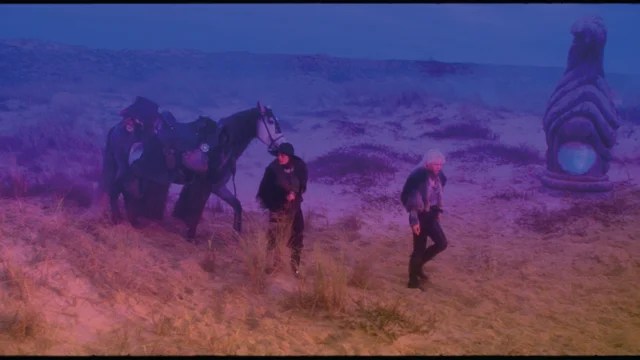
“After Blue,” the latest from Bertrand Mandico of “The Wild Boys,” is an oddly repellent, unfathomably thick homage to the “Barbarella/Zardoz” era of filmed sci-fi. A French lesbian Western with futuristic muskets and horses and desert and beaches and a civilization in decline, it’s got nudity and lurid, dank settings and an almost all-female cast — the planet in question, an Earth colony named “After Blue,” had its menfolk die out.
What it doesn’t have is a coherent story, anything that would drive the narrative and draw the viewer into the filmmakers’ universe, his “fever dream.” It’s all eye candy — 1970s vintage.
Perhaps the key to the picture is the name of the buried-up-to-her-neck outcast who promises to grant the young woman, Roxy (Paula Luna) “three desires” (wishes) if she digs her out.
The armed punk girls “Toxic” Roxy hangs with are all about the cruelty, making threats and then running off to frolic in the surf, leaving the outcast to her fate.
But Roxy is intrigued, and maybe it’s the mostly-buried woman’s (Agata Buzek) name that changes her mind.
“Kate Bush.”
Seriously, that’s what Mandico calls this genie/witch with a (Roxy and we discover) “third eye” where her vagina should be.
The screenplay is filled with “Militia” women hunting the outcast, and others — including Roxy’s hairdresser-mom, Zora (Elina Löwensohn) — asking “How could you dig up Kate Bush?” and “Where IS Kate Bush?” and “What does Kate Bush LOOK like?”
“She’s tall, with one hairy arm.” And she kind of rocks Roxy’s world…until the next peak experience comes along, anyway.
The real Kate Bush, a big deal in British art rock for decades whose biggest U.S. exposure might have been the time Eric Idle got her booked as musical guest when he hosted “Saturday Night Live” in 1978, will no doubt be amused at hearing her name taken in vain scores of times.
Of course, she’d have to shrug off the “You must kill Kate Bush, in your own way” remarks and the like.
The sets and the bloody-minded search for Kate Bush/venture into emptiness vibe of “After Blue” may take those familiar with its antecedents right back to the early ’70s, which was apparently Mandico’s primary goal.
Cryptic interviews/conversations are rendered in gauzy static shots or dull, diffuse voice over narration.
I got nothing out of its vague “history” connecting people with the Earthly origins of their DNA — Polish, Russian, and Scots-accented English are heard, while most of the many lesbians here speak French (with subtitles).
Roxy isn’t finding answers as she and her Mom set out on their quest, with Mom now an armed hairdresser running out of patience with daughter.
“Kate Bush kills daughters, not mothers! Get that through your big fat bleached skull!”
That’s a hairdresser who has crossed the line and broken the code.
But as these folks wander the wastelands, comment on the state of their horses and stop for dips in DIY hot tubs, the pointlessness of it all vexes and irks so much that you almost want Mandico to cross some sort of PC line when Roxy’s “first man” enters the picture.
Almost. But no.
The pointlessness is the point, and there’s zero entertainment value in that, no matter how many critics throw up their hands and use “fever dream” as a reason to cop out, give it a thumb’s up, and move on.

Rating: unrated, violence, sex, gruesome images, nudity
Cast: Paula Luna, Elina Löwensohn, Vimala Pons, Michaël Erpelding and Agata Buzek
Credits: Scripted and directed by Bertand Mandico. An Altered Innocence release.
Running time: 2:08
Yowza.
Nicholas Hoult, Janet McTeer and John Leguizamo also star in this fine dining fall thriller with a horror pedigree.

Of all the promising places “Frank & Penelope” hints at or threatens to take us, how’d they end up at a murderous “sin eater” cult at a combo tow truck service, garage and motel — complete with a tunnel and body disposal pit in the desert southwest?
Veteran character actor turned writer-director Sean Patrick Flanery (now on TV’s “The Boys”) references “Thelma & Louise” directly, “Something Wild” and “Dirty Mary, Crazy Larry” and the like indirectly in this sexualized, infuriatingly-talky and slow genre thriller.
Frank (Billy Budinich) quits his job and catches his wife sexing up another man in their house. That’s how he ends up, dazed, in the alley behind that strip club. That’s how he meets a pole dancer (Caylee Cowan, channeling Melanie Griffith). Where ya’headed?
“Away.”
Me too, once, she says.
But “away’ just don’t show up on Google maps.”
You need to meet “Penelope,” she purrs. And thus another soon-to-be-satisfied customer is lured in, $25 drinks and private dance to follow. Frank is smitten. Penelope, “an act” she puts on, she implies — is good.
But he interrupts her and her boss/”boyfriend” (Flanery) as they’re brawling over her getting-too-friendly with a customer, and how much they’re going to steal off Frank’s credit card.
The scarlet woman this meets her first-ever knight in shining strip club armor.
“If a man don’t fly into a rage, he ain’t in love.
Trade the Prius for a ’68 Super Bee, and they’re off. They’re headed for the “the prettiest road in America,” Frank says, the one from “the last scene in ‘Thelma & Louise.'” Has Penelope ever seen the movie? She’s smitten, or damned good at acting like it.
“I gotta freight train’a love, headed only for him.”
Flanery’s script traffics in truck stop philosophy, con artist speeches and horror movie tropes that long ago turned into cliches.
I swear, there are just four run-down desert motels that turn up in every one of the hundreds of thrillers like thus.
Johnathan Schaech (“That Thing You Do”) plays the latest in a long line of “Appalachian sin eaters,” a white-haired cult king, keeping a handful of minions in line by means hypnotic or even supernatural. He’s going to interrupt Frank & Penelope’s odyssey. Permanently?
Kevin Dillon plays a flirtatious, drawling Texas sheriff who wears jeans on the job.
And horror icon Lin Shaye has a cameo as another “short term” guest in that motel, where patrons check in but don’t check out.
Flanery scripted this, and the big laugh in that is that somebody else had the cheek to claim a “story by” credit for this cut-and-paste-from-other-movies nonsense.
A framing device — we’re learning about the romance of Frank & Penelope through his “journal,” read/narrated by Frank’s nurse (Sonya Eddy). He’s in a coma. That conceit is mercifully abandoned once Flanery realized — belatedly — that it’s rubbish.
Cowan (“Sunrise in Heaven”) is the big find here, giving us a doll-voiced minx with a hardened sex-worker’s shtick and a survivor’s instincts. Penelope works her search for “something that makes my thighs twitch” act on every heterosexual male in range, and turns most into putty.
If only this script had found some place interesting to send her and Frank. If only the ending didn’t scream “We’re outta money/time/etc.” If only this crawling, drawling horror saga had gotten to the damned point and made something out of it.
Rating: R for strong violent content, sexual content, brief nudity, language throughout, sexual assault and some drug use.
Cast: Caylee Cowan, Billy Budinich, Johnathan Schaech, Sean Patrick Flannery, Donna D’Errico, Sonya Eddy, Lin Shaye and Kevin Dillon
Credits: Scripted and directed by Sean Patrick Flanery. A Redbud release.
Running time: 1:53

 Movie Nation