Movie Review: Korean Passengers and Crew face Terror at 30,000 feet — “Emergency Declaration”

There’s no sense sugar-coating this or beating around the bush. The Korean in-flight thriller “Emergency Declaration” laughably steals a lot of over-the-top plot points from “Airplane!” and the trouble-mid-flight thriller that “Airplane!” set out to spoof, 1957’s “Zero Hour!”

There are times when one wonders if this overwrought, overlong, can’t-find-an-ending epic is supposed to be funny, and times we’re sure it isn’t. The knowledge that, “Well, it was seven minutes longer when it opened in Korea” is cold consolation.

And then there’s the filmmaking lore of Rod Serling’s 1966 script for “The Doomsday Flight,” one of the first movies to ever feature a passenger bringing a bomb onto an airliner. It instantly-spawned imitation bomb threats and perhaps even real bombers in the years after it came out and became Serling’s biggest screenwriting regret. He actually had to come out and apologize for it.

“Emergency Declaration,” about a bio-terror attack on a packed jumbo jet, is so plausible and detailed as to make one fear the wrong sorts of folks will see it and follow its “How To” steps, and give everybody one more reason to not get on a jet.

Those provisos aside, this Jae-rim Han picture has its tense moments, its high stakes drama and even a little pathos. The whole isn’t all that, but bits and pieces work.

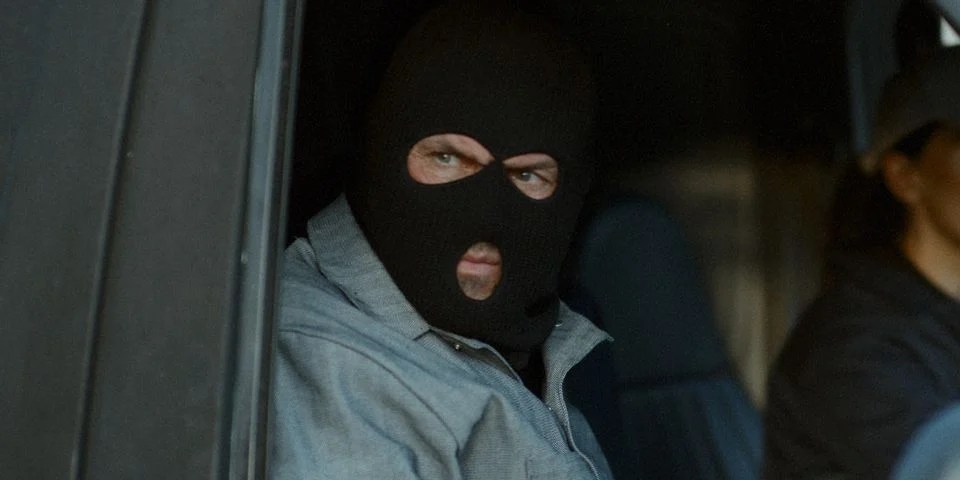
The creep (Si-wan Yim) might as well be walking around Incheon Airport waving a red flag.

“Which plane will have a lot of people on it?” he smirks (in Korean with English subtitles) at the ticket clerk. Her taken-aback look earns an “I’m just curious. Is that a problem?

He approaches a child, asks rude questions of one and all, for instance if this girl’s father (Lee Byung-hun of “I Saw the Devil”) “is divorced,” for instance.

Dad’s alarm bells go off. And they sound louder when he sees that this nut is on their flight to Honolulu with them.

Meanwhile, a police detective (Song Kang-ho of “The Host” and “Parasite”) is the only one in his precinct to take seriously the tip that some “nut” has posted an online video threatening to take down an airliner.

One problem? Anybody here speak good English? That’s the language the creep made the threat in, and while the school kids that live in the same complex speak it well, and thus passed on their tip, the cops are caught flat-footed. Until, that is, they break into the guy’s apartment and discover grim “evidence.”

The best scenes of “Emergency Declaration” are the ticking clock police hunt, and the single dad’s ability to piece together a threat and efforts to raise the alarm once on board the plane. Because in this social media age, SOMEbody on board sees the creep’s threatening video, and while nobody may know the nature of the threat — yet — they can pretty much tell the airport creeper and now fellow-passenger was the young jerk making the video.

That’s a novelty that becomes a running thread through the movie. Ordinary people put the pieces together, and the airline, the government and the police have their hands forced because the media has picked up on what has been crowdsourced into the open.

The attack and efforts to get this plane on the ground, the “secret” that this or that character shares with another, only hold suspense for the second or two it takes for the viewer to recognize the over-used tropes being trotted out here. Eyes will roll.

And that finale takes a marginal thriller that is worth at least a look right down the rabbit hole of “You have GOT to be kidding me.”

It’s one thing to get a chuckle out of a cop whose limited knowledge of the world means he doesn’t know Honolulu is in Hawaii (Song Kang-ho’s specialty is “slow” characters). It’s another to have a jet that’s made an “emergency declaration” hours before somehow conjure up fuel it surely wouldn’t have as the movie makes its socially-relevant points about a world reluctant to risk bringing a pandemic to their piece of terra firma by letting them land.

Thus, a “mixed bag” thriller drifts into Korean soap opera territory, and never returns from it.

And as a sidebar, hey — Well Go USA (the film’s North American distributor) — it’s 2022. Quit cheaping out with white subtitles on movies set inside a white jetliner, or white offices or against pale while skies. YELLOW subtitles are readable, not the washed-out effort you wasted your money on here. Everybody else pretty much figured that out in the ’90s.

Rating: unrated, violence

Cast: Song Kang-ho, Lee Byung-hun, Jeon Do-yeon, Kim So-jin and Si-wan Yim

Credits: Scripted and directed by Jae-rim Han. A Well Go USA release.

Running time: 2:21

Posted in Reviews, previews, profiles and movie news | Comments Off on Movie Review: Korean Passengers and Crew face Terror at 30,000 feet — “Emergency Declaration”

“Classic” Film Review: Charles Bronson’s kinkiest — and he knew it — “Lola,” aka “London Affair” or “Twinky” (1970)

It’s ever-so-hard to type when one is clutching one’s pearls over the shock, the pervy NERVE of it all!

A 38 year-old American novelist living in London has an affair with a 15-16 year-old mini-skirted Mod, and marries her rather than face statutory rape charges?

One has to wonder just whose idea “Lola,” was, a cringeworthy faux satire titled “London Affair” or “Twinky” in various other places it was released?

Director Richard Donner, just a couple of years away from “Superman” stardom, said Charles Bronson pitched him the script. Co-star Susan George was but 19 (and playing 16) when it was filmed, and even though it set the tone for too much of her career, can’t be blamed. It’s when you read the credits of screenwriter Norman Thaddeus Vane (“Taxi Dancer” and “Club Life”) and hear he was a “frequent contributor” to Penthouse Magazine, that it becomes pretty obvious where this originated.

A dabbler in light porn thought he’d have a go at a lightweight “Lolita.” And it being the tail end of the Swinging Sixties, drive-in friendly American International Pictures thought “Why not?” What’s shocking about it, all these decades later, is that Honor Blackman, Trevor Howard, Robert Morley, Lionel Jeffries and Jack Hawkins signed on for a wink-wink scene or two.

It really was a different universe back then. But watching Bronson — who was 48 when it was filmed — one can see “This isn’t the best idea for paying for a trip to London” in his tentative, “What am I DOING?” performance.

The jig is up over morning breakfast one day at Lola’s family’s posh townhouse, when her little brother rats her out to her parents (Honor Blackman, Michael Craig). It’s not just the sexed-up “banned in England” pulp fiction of Scott Wardman that’s she hiding. It’s her diary, where she talks about all the boys she wrote “F” next to, and the affair with the man more than twice her age that she confesses.

Mum prattles from “Where are the DIRTY bits, darling?” about the smutty novel Lola’s reading, to outrage. Dad fumes about the publishing house, bringing Wardman up on charges. But it gets WORSE.

“He’s AMERICAN!” Contact the Home Office to have this man deported!

Lola, all bangs and beret, la-di-dah bicycles her way to her lover’s flat, and in the midst of a childish come-on, lets drop the details of how their “secret” got out — drip by infantile drip.

Whatever status having an older lover earned her with her libidinous classmates, however much her lecherous creeper grandfather (Trevor Howard) approves, there’s going to be hell to play.

But these scenes, while saying as much, don’t really convey concern, alarm or shame. Cringeworthy or not, attempted “Swinging Sixties” satire, different era and all that or not, this is a very badly-written and acted movie.

A police visit and Wardman’s all-too-quick summoning of the phrase “statutory rape” have them half-scrambling for a way out. “We could get married,” she chirps. “Illegal, here,” he grumps. “Not in SCOTLAND,” she counters, probably the best “joke” of the movie. And off they go.

The comedy is all of the oversexed sitcom variety, “Love, American Style” era bubble baths and bantering about “I love that kid,” literally.

They move to New York where Wardman gets bad advice from his not-prudish-but-incredulous lawyer (Orson Bean) and not-wholly-shocked reactions from his parents (Kay Medford, Paul Ford).

Lola, played as a cross between “Lolita” and “Candy” — naive, childish but sexually mature — is blind to the leering real estate agent and tone-deaf to everyone else’s reaction to this sexualized child in their presence.

Bronson, almost to his credit, never gets past “tentative” and the sense that someone is standing off camera with a gun pointed at him, forcing him to try this “hip” and “sexy” riff on a conservative generation’s view of an oversexed generation behind them.

“I make naughty, uncool moves with a 16 year-old girl and suddenly my life’s upside down!”

Under any title, in any of its many different running time edits, “Lola” is a terrible movie — not Woody Allen “Manhattan” perverse and damning. Just bad. But it’s one of five movies Bronson had released that year, so at least we know that nobody put a lot of thought into it at any stage of production.

Bronson, a fine actor, would curdle into the gnarled old inner city avenger of the “Death Wish” movies. George has gone on to enjoy a long career, although “Straw Dogs” would be the rare high point, and “Dirty Mary, Crazy Larry,” “Die, Screaming Marianne,” “Mandingo” and the like were her lot for years after “Twinky.”

And Donner would finally break free from the TV directing that was his bread and butter for years before and after “Lola” to become a maker of blockbusters (“Superman,” “The Omen”), “Goonies” and “Lethal Weapon” movies.

As with much of the satire and attempted satire of the ’60s and early ’70s, what we see when we look back on movies like “Lola” is how very much a man’s world it was — in cinema and in the culture these films rolled out in. “Statutory Rape” and the joke “15 will get you 20” may have been punchlines, but they don’t let any man in the creation or decision-making chain here off the hook. The law was on the books because the culture had realized, decades before, that this was wrong.

And while finding the “cutting edge” was as hard then as it is now, trying to step lightly when leaping over it was never a good idea. You either go “Candy” or go “Lolita,” or go home.

Rating: Would you believe GP, or PG?

Cast: Charles Bronson, Susan George, Orson Bean, Honor Blackman, Trevor Howard, Paul Ford, Jack Hawkins, Robert Morley, Michael Craig, Lionel Jeffries, Barney Martin and Kay Medford.

Credits: Directed by Richard Donner, scripted by Norman Thaddeus Vane. An American International release on Tubi, Amazon, other streamers.

Running time: 1:17/1:38

Posted in Reviews, previews, profiles and movie news | Comments Off on “Classic” Film Review: Charles Bronson’s kinkiest — and he knew it — “Lola,” aka “London Affair” or “Twinky” (1970)

Movie Review: Holy Horror in a Public Restroom — “Glorious”

One gimmick is about all your average 79 minute horror movie can manage, but at least that one trick is kind of promising in “Glorious.”

Fresh-off-a-breakup Wes (Ryan Kwanten) polishes off a long drive, a purge and an alcoholic binge with an encounter with a disembodied voice in a stall at a highway rest area. The voice claims to be a deity, and it sounds a lot like J.K. Simmons.

We’ve all seen “Whiplash.” We know that’s a voice you take seriously. Well, take is seriously after a “What’s a god like you doing in a place like this?” joke. Or two.

“The universe has a FAVOR to ask!” The God Simmons (not his real name) booms.

“What is it? Does the universe need help moving?”

Joking aside, Wes finds himself trapped in a toilet in BFE with something supernatural, as well as his own issues — grief, regret, guilt and loneliness among them. He’s not getting out of there without paying a price.

What sounds like a pretty good– if glib — student play (we see four characters, and hear a fifth) plays as a modestly interesting, sometimes artfully gory drama in this Rebekah McKendry film, a story whose allure lessens the longer that one “gimmick” takes to run its course.

If we’re thinking theological, and “Glorious” certainly aims for that, we’ve got Wes trying to get out, maybe hoping to exercise some free will or simply running from whatever demons he brought into that toilet with him.

Some of us can see what’s coming, which isn’t a deal-breaker as far as making “Glorious” watchable. What’s required here is that the characters keep us engaged until the payoff or twist or grim or happy resolution. What would be nice is if we feel something/anything for any given character.

I have to say this chatty, pseudo-existential screenplay didn’t get me there, with no performance —- Sylvia Grace Crim plays the girlfriend, seen in flashbacks — pulling me in and only one character coming close to being someone I could identify with. And he used to play Peter Parker’s boss.

Yeah, critics have “god complexes.” So sue me. But “Glorious?” I could take it or leave it.

Rating: unrated, graphic violence, profanity, alcohol abuse

Cast: Ryan Kwanten, Sylvia Grace Crim, Tordy Clark, André Lamar and the voice of J.K. Simmons.

Credits: Directed by Rebekah McKendry, scripted by Joshua Hull, David Ian McKendry and Todd Rigney. A Shudder (ug. 18) release.

Running time: 1:19

Posted in Reviews, previews, profiles and movie news | Comments Off on Movie Review: Holy Horror in a Public Restroom — “Glorious”

Today’s DVD donation? “Dona Flor and her Two Husbands” comes to rural NC

Racy for its day, and still seriously ribald today, this 1976 classic from Brazil has been restored and re issued by Film Movement. Here’s my review of this comical “troubled marriage” farce.

Person County, N.C. and its library system win this donation from MovieNation, spreading fine cinema over the mostly rural Southeast, one film and one red county library at a time.

Posted in Reviews, previews, profiles and movie news | Comments Off on Today’s DVD donation? “Dona Flor and her Two Husbands” comes to rural NC

Movie Preview: “Oppenheimer” teaser?

No they’re not showing us much. Yet. One year out from release, the hype continues apace.

Posted in Reviews, previews, profiles and movie news | Comments Off on Movie Preview: “Oppenheimer” teaser?

Classic Film Review: Nicholson directs a social satire in basketball shorts — “Drive, He Said” (1971)

The mid-60s into the early ’70s were the golden age of film satire, or so my grad school professors insisted. And Oscar-winner-to-be Jack Nicholson was right in the thick of it — “Easy Rider,” “Head,” “Five Easy Pieces,” “Carnal Knowledge.”

So it shouldn’t be a shock that the man, a star on the rise, should take his first shot at directing a film during this “Lolita/Doctor Strangelove/Magic Christian/M*A*S*H/The Loved One” heyday.

The meanest take on “Drive, He Said,” a social-unrest-on-campus tale centered around college hoops, is that Jack made a deal with the devil to film it. All those decades of appearances at Lakers games? Atonement for the sh—y basketball the cinema’s favorite reprobate and most beloved hoops fan put on film here.

Jesus, Jack.

The premise is that a star playing for “Ohio” something-or-other university — actually “University of Oregon” because they filmed it in Eugene and used U-O colors — has a sort of existential crisis thanks to the Vietnam War, the “love the one you’re with” open marriage sexuality and the generational values clash he faces as he decides what to do with his life.

Hector (William Tepper) is tall, talented and Jewish, and an older Nicholson might have made some sort of “Great Hebrew Hope” joke about this, as NBA-bound Jewish players averaged about one a generation (aka Larry Brown), even back then.

Hector’s having an affair with a highly-strung faculty wife (Karen Black) whose half-clueless husband is played by a better writer than anybody else involved in this, Robert Towne (“Chinatown”).

And Hector’s got a radical roommate (Michael Margotta) making him question the values system he has to embrace to keep playing a game that could make him rich, sooner rather than later. Roomie Gabriel wears his hair in a headband, Army fatigues in solidarity with those deserting and stages the sort of Political Theatre stunts that would never fly in our mass-shooting-bloodied day and age.

In the opening sequence, Gabriel and his fellow revolutionaries pull a temporary armed and uniformed takeover of the gym, mid-game, and make their statement.

“Clawing your way to the top is but a myth. Also, it’s bad for your fingernails!”

Bruce Dern plays the wound-up, always-shouting coach who is trying to keep his star motivated and us from noticing that this rube’s never watched a game in his life. He might as well be speaking “minion” with the gibberish that comes out as instructions or play-calling that he maps out in the locker room.

“C’mon! This isn’t VIETNAM!”

Improvised? Good guess.

Nicholson, one of two credited screenwriters, can’t quite get this struggle-for-Hector’s-soul dichotomy to work, so he throws a lot of male full frontal nudity — and remember, Karen Black’s in this, so turnabout is fair play — and the odd killer set piece at us to keep us distracted.

“Streaking” was all the rage, back then, remember. Who knew male nudity would disappear from American cinema for generations?

Gabriel’s day at the draft board goes every bit as haywire (sometimes hilariously so) as you’d expect. And that faculty wife fling only has a couple of ways to end. Finding an alternative to those is one of “Drive, He Said’s” many non-starters.

Look for future “Hill Street” Blue Michael Warren as a teammate of the “rah rah game jive” dismissing sort, and a young David Ogden Stiers as an NBA or ABA owner leaning on Hector to sign and make them both some money. Young Cindy Williams is here, just around the time George Lucas was deciding she was “American Graffiti” incarnate.

Towne isn’t the only filmmaker playing a part on camera. Future indie magpie Henry Jaglom plays a student. And the guy playing a game’s broadcast announcer is named “Gittes.” Coincidence?

There’s a very-much-of-its-time gritty, grey vibe about “Drive, He Said” now — whose title has as much to do with driving a car or ambulance as it does with driving down the lane in basketball, a phrase that must have seemed like speaking in tongues to simple, happy, faking-it Bruce Dern. Viewed today, the picture feels off-the-cuff, an exercise in throwing this or that against a wall and seeing what sticks.

Satires of that day occasionally degenerated into that. See “Christian, Magic” or “Duck, Love Lord a.”

But the pieces of that period that endure all have a subtext and a sly cunning about them which this movie, no matter how many sets Nicholson had already been on by then, never manages.

Rating: sex, violence, full front nudity, profanity

Cast: William Tepper, Karen Black, Michael Margotta, Robert Towne, Michael Warren and Bruce Dern.

Credits: Directed by Jack Nicholson, scripted by Jeremy Larner, Jack Nicholson (and supposedly) Terrence Malick. A Columbia Pictures release now on Tubi, Amazon, etc.

Running time: 1:35

Posted in Reviews, previews, profiles and movie news | Comments Off on Classic Film Review: Nicholson directs a social satire in basketball shorts — “Drive, He Said” (1971)

Movie Preview: Ana de Armas goes “Blonde” for the first trailer to her Marilyn Monroe movie

Bobby Cannavale and Oscar winner Adrien Brody are among the co-stars in this Netflix take on MM’s later life.

Netflix? They wrote some big checks. Is the accent right, or close enough? Or has the shrinking streamer service thrown more good money after bad?

Sept. 28.

Posted in Reviews, previews, profiles and movie news | Comments Off on Movie Preview: Ana de Armas goes “Blonde” for the first trailer to her Marilyn Monroe movie

Movie Review: Koreans repel the Japanese in the 16th Century Naval epic, “Hansan: Rising Dragon”

“Hansan: Rising Dragon” is a Korean naval war epic that takes us into the actions — before and during a series of sea battles in the 1590s — of Korea’s great naval genius, Admiral Yi Soon Shin.

It’s a sprawling and dense period piece with a fleet’s worth of characters moving from bases and fortresses, to land campaigns, shipyards, fractious war councils and battles on board armored galleys. Here, all that is boiled down to the bloody chess game and military innovations of competing admirals — the Japanese “Wae” invader Wakizaka (Byon Yo-han) and the “righteous” defender of Joseon (the Korean peninsula dynasty), Yi Soon Shin (Park Hae-il).

For a Westerner, think of it as being more “300: Rise of an Empire” than John Woo’s Chinese “Red Cliff” epic. It’s a CGI-assisted old-fashioned flag waver filled with chaotic combat in which the day is always saved by the sudden lifting of this fog, the shocking arrival of that surprise fleet or the out-of-nowhere cannon balls that forestall the certain doom ready to befall this or that brave, patriotic Korean.

The phrase “It’s a TRAP!” (in Korean, with English subtitles) erupts so often I half-expected “Star Wars” Admiral Ackbar to make his presence known. But he’s here in spirit.

Set during the most perilous phase of the Imjin War, we learn that the Wae — fresh from staging the largest seaborne invasion in history (to that point) are on the brink of total conquest of the Korean peninsula, with only cunning Admiral Yi Soon (sometimes spelled “Sun”) Shin and his fleet of galleys in the country’s southern region standing in their way.

The “secret weapons” of this conflict are the the Koreans‘ “turtle ships,” covered galleys called Geobukseon with bronze dragon head rams in their bows which terrorized the Japanese, whose smaller galleys — some of them armor plated, had enough to deal with in fighting the bigger, more heavily-built Panokseon galleys that were the main Korean combat vessels.

Much of the movie has this admiral strategizing with his subordinates to figure out the weaknesses of the other side. Covered “turtles” may have spikes on their backs to prevent boarding, but are blind to what they’re charging into. The Koreans didn’t try to rapidly reload their cannons. They used their superhuman rowers to spin the ship around to bring a fresh broadside of cannons to bear on the enemy after each volley. The Japanese schemed to exploit these weaknesses with their smaller, quicker, more lightly-armed and far more numerous galleys, which sought to board the enemy and win the fight with samurai wielding their katana swords.

There are spies and saboteurs, and the war councils threaten to dissolve into infighting blood feuds — especially among the hotheaded Japanese warlords.

All of which are just the preliminaries leading to an epic sea fight, an Asian version of the Greco-Persian Battle of Salamis with enemies in rowing galleys battling among the rocks and narrow passages of a strait littered with islets and islands.

Only those deep into naval history — or Korean history — will have heard much about these titanic struggles in the seas off Korea, or be all that interested in a movie about it. There’s a reason the West has never produced a proper epic about the Battle of Lepanto, Europe’s last great galley battle, which thwarted the Ottoman Turks from pouring into central Europe and Italy and happened over 20 years before the Battle of Hansan Island. This sort of overpopulated war picture is complex and expensive to put on the screen, makes for seriously cluttered storytelling and has limited appeal, being about mostly-forgotten pieces of history.

Leading up to its Big Action Finish, “Hansan: Rising Dragon” is an oft-unwieldy film, struggling to keep the many fields of conflict and layers of intrigue straight.

Technically, writer-director Kim Han-min shows off period-appropriate firearms, armor, tactics and hardware, and galleys scooting through the water like Jetskis. There was a lumbering, slow-motion nature to this two thousand year era in combat, with the ships too heavy to move without armies of enslaved (in the Middle East and West) rowers. The number of two-man oars dipping into the water here could never propel these vessels at those speeds, something “Hansan” ignores for the sake of fast action.

See “Ben-Hur” for examples of why that makes no sense. And remember, the Spanish Armada battles of just a few years before (1588) had already turned Europe away from labor-intensive rowed galley combat close to shore and to sailing galleons, caravels and later frigates and ships of the line fighting it out under sail.

But “Rising Dragon” still makes a fascinating film version of a “further reading” history lesson, a reminder of the historical enmity between Korean and its avaricious, warlike neighbor and why Koreans in the film and in the modern day regard this as a “battle of the righteous against the unrighteous.”

Rating: unrated, violence

Cast: Park Hae-il, Byon Yo-han

Credits: Written and directed by Kim Han-min, based on the graphic novel “Yi Soon Shin.” A Well Go USA release.

Running time: 2:09

Posted in Reviews, previews, profiles and movie news | Comments Off on Movie Review: Koreans repel the Japanese in the 16th Century Naval epic, “Hansan: Rising Dragon”

Movie Preview: Stallone takes a late-life stab at superheroing — “Samaritan”

MGM and Sly get into the unkillable superhero business with Sylvester Stallone in this “Death Wish” vengeance-driven thriller, Aug. 26.

Posted in Reviews, previews, profiles and movie news | Comments Off on Movie Preview: Stallone takes a late-life stab at superheroing — “Samaritan”

Movie Preview: A South American country reminds us how you prosecute traitors — fearlessly, and swiftly — “Argentina: 1985”

Coming soon to Prime Video, a legal thriller with the highest stakes possible.

Posted in Reviews, previews, profiles and movie news | Comments Off on Movie Preview: A South American country reminds us how you prosecute traitors — fearlessly, and swiftly — “Argentina: 1985”