Movie Review: Navigating life and love right after college requires that you “Cha Cha Real Good”

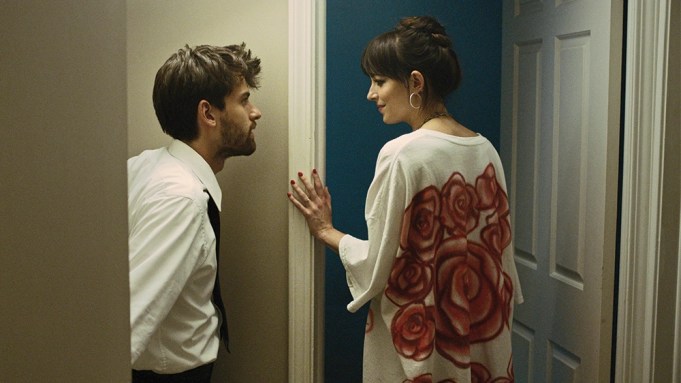
For “Cha Cha Real Smooth,” writer, director and star Cooper Raiff conjures up an idealized version of “the perfect big brother,” his character’s best possible self. Andrew is romantic, smart, witty, at home in his own skin and damned mature for his age — 22.

I mean, come on. Nobody is this sweet.

Raiff’s follow-up to “Sh**house” also overstays its welcome, drifts onward for too long after its climax. A fella’s got to learn when to drop the mike.

But there’s something special about a “feel good” movie that earns those warm fuzzies.

It’s a post-grad dramedy built on two premises — “Memories aren’t going anywhere.” And growing up is hard, and can hurt.

Andrew is an aimless Tulane grad who lives with his mother (Leslie Mann), adoring little brother (Evan Assante) and Mom’s new beau, Greg (Brad Garrett), almost the only guy in the movie Andrew openly despises.

He had a dream, of going to Barcelona with his Fulbright Scholar girlfriend, taking a job with a non-profit. But she went without him and he’s stuck minding the store at Meat Stick, a food court monstrosity that could only exist in New Jersey.

That changes the night he’s charged with taking brother David to a bat mitzvah. Something in Andrew’s genes, personality or upbringing drives him to “rescue” this party. A “swarm of Jewish mothers” see him coaching the DJ, cajoling the boys, then the girls and the mothers onto the dance floor, a life-of-the-party leading the party into the light.

A new profession is thrust upon him — “party starter.”

That’s not what “Cha Cha Real Smooth” is about, even though it takes its title from the “Cha Cha Slide,” even though there are birthday parties and bar and bat mitzvahs enough to keep Andrew busy in this frustrating, drifting summer after college. The film’s about what Andrew does in that guise.

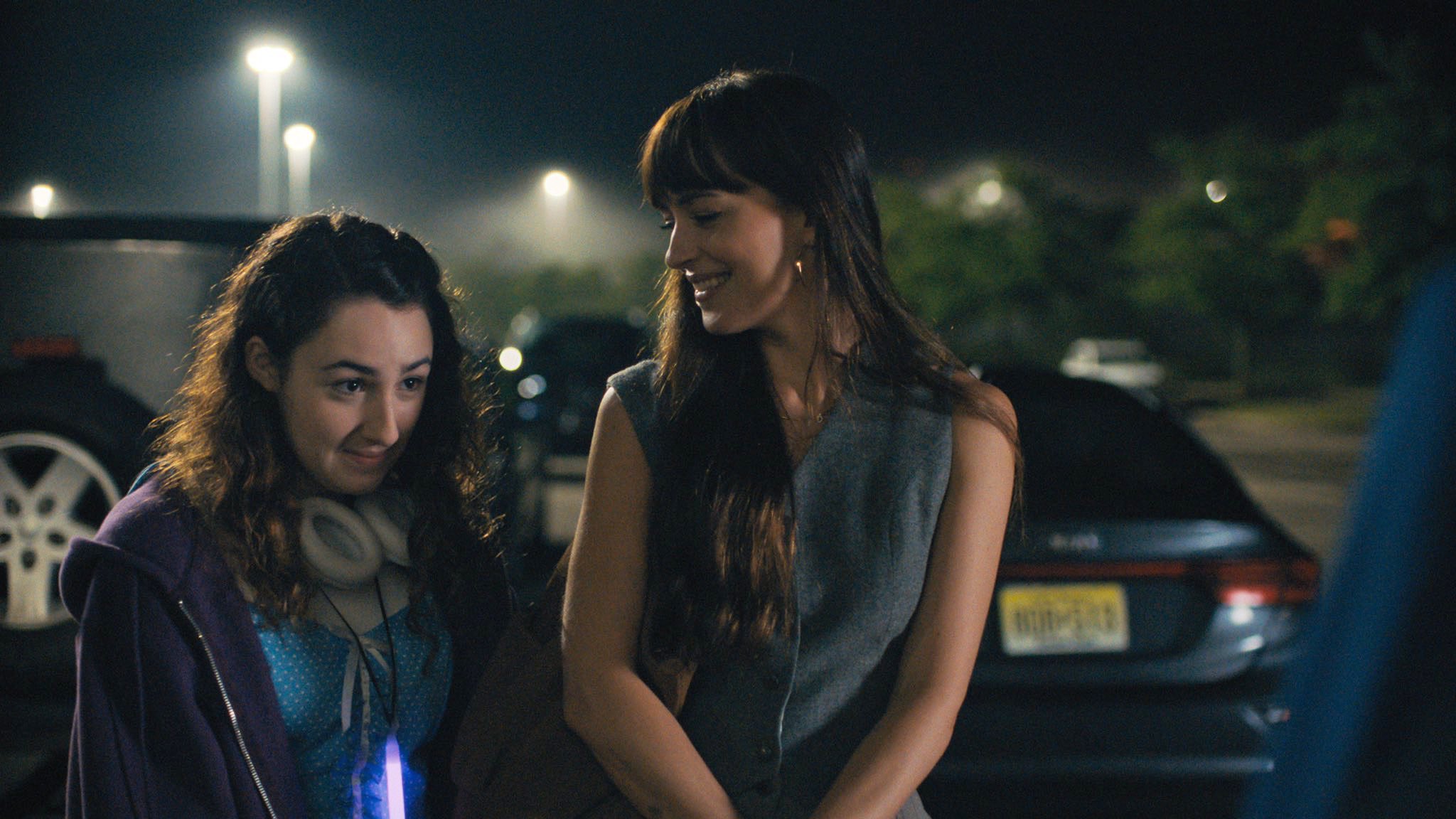
He takes an interest in autistic teen Lola (Vanessa Burghardt), and even convinces her social-outcast mom (Dakota Johnson) that he can talk the on-the-spectrum Lola onto the dance in an instant. Everybody is charmed by Andrew, nobody more than Domino, that quiet, beautiful sad-eyed mother.

Over the course of that summer, he adds this relationship to all the others in his life. We see Andrew drink too much, have a fling with a high school classmate (Odeya Rush), hear him coaching his kid brother through a “first kiss,” and learn everybody’s secrets, and secret hurt.

What’s most impressive about “Cha Cha Raal Smooth” isn’t Raiff’s riffing, his character’s offhanded charm and his semi-“smooth” cha cha moves. It’s the deft way he lets the viewer figure things out.

His mom has a back-story, and Mann is wondrously touching in just a few scenes. Domino also has a story, and Johnson’s quiet, kittenish shtick takes on a sensitivity that she’s rarely played on screen.

Andrew’s relationship with one mother connects him to the other, with or without the “feelings” we know will get in the way.

He makes mistakes, and can even be flippant and cruel. But he never gives us a moment to question his values. Hating “bullies” is a given.

Any gripes I have with this Apple TV+ gem (June 17) are wiped down and wiped off in a third act is upbeat and as emotionally satisfying as any dramedy-emphasis-on-comedy this year.

Whatever he gets wrong — “Memories” do fade with age and are taken away from you, that extended ending is a bust and who names their daughter “Domino?” — “Cha Cha Real Smooth” delivers its core message with a deft touch.

Growing up is hard. And we should all be so lucky as to have a brother, friend or lover as compassionate and interested in helping us through it as Mr. Smooth — Andrew.

Rating: R, profanity, some sexual content, alcohol abuse

Cast: Cooper Raiff, Dakota Johnson, Vanessa Burghardt, Evan Assante, Odeya Rush, Brad Garrett and Leslie Mann

Credits: Scripted and directed by Cooper Raiff. An Apple TV+ release (June 17)

Running time: 1:49
Posted in Reviews, previews, profiles and movie news | Comments Off on Movie Review: Navigating life and love right after college requires that you “Cha Cha Real Good”

Netflixable? “Trees of Peace” remembers enduring the unendurable amidst the Rwandan Genocide

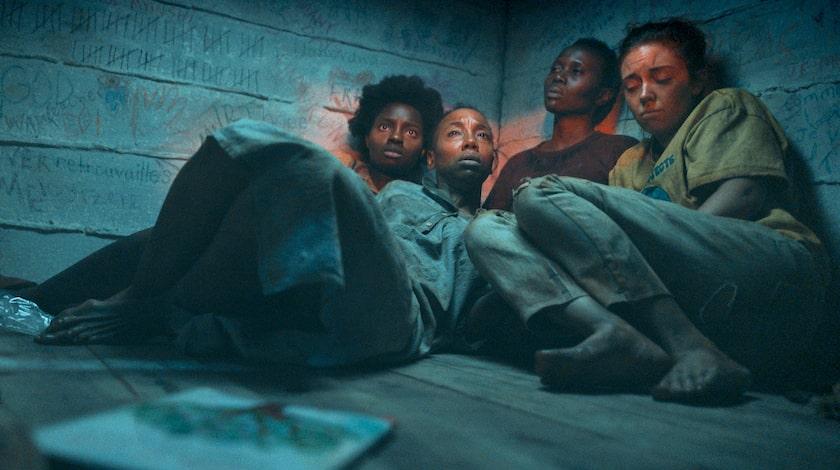
“Trees of Peace” is about four women, holed up in a basement, trying to survive the Rwandan Genocide of 1994, four strangers trapped in a single room, with little light, food or water for days that stretch to weeks and months.

Screenwriter Alanna Brown makes her writer-director debut a compact, tense, well-acted and quietly gripping “inspired by true events” story of endurance, even if it traffics in the conventions of such dramas.

In cinematic shorthand, it is “Hotel Rwanda,” with its story and characters packed into Hitchcock’s “Lifeboat.”

Rwandan actress Eliane Umuhire narrates the story as pages from a journal her character, Annick, keeps while hiding from the Hutu violence against the minority Tutsis, and against “moderate” Hutus like her and her teacher-husband Francois.

“I can feel my spirit eager for the long sleep,” she wrote, just to document how these four women came to be there in case the seemingly-inevitable happens.

Sister Jeannette (Charmaine Bingwa) and a coed, Peyton (Ella Cannon), a volunteer from an American non-governmental organization, are teachers at a nearby school. Mutesi (Bola Koleosho) is a traumatized woman who saw her family slaughtered, rescued by the others as they locked the hidden cellar door behind them to wait out the mayhem.

Brown cannot avoid working within the conventions of the broader genre that this sort of tale operates under. The first pronouncements from Annick to the others — they are in the basement of her house, with her husband upstairs, trying to keep his loyalties and their presence hidden — are spoken with an irony the viewer appreciates.

“We are safe.” ” They’ll be in hiding in this basement “just until tomorrow.” And “Francois will give us everything we need.”

Nope. Not likely. And sure, that’ll happen.

They will be tested by their ordeal, each revealing “secrets” eventually and personality flaws almost instantly. Brown and her actresses succeed in making these characters more than “types,” but you can see the archetype each plays, just beneath the surface.

Brown layers the soundtrack with the constant noise of life and death going on just outside of the lone ground-level window that connects them with the world. Gunshots and shouting, trucks and the barked orders to “find the cockroaches” are heard, and every so often, the “thk thk thk” of machetes hacking the flesh of a screaming victim.

Among the women, shared paranoia gives way to testy confrontations, hallucinations and dreams heightening their plight, with mutual mistrust all they have to wake up to.

Brown never comes close to transcending the formula this film is made under. But the players, the myopic setting and narrowly-focused screenplay ensure that “Trees of Peace” is a good example of how and why this formula is still around. It endures because it works.

Rating: TV-MA, violence

Cast: Eliane Umuhire, Charmaine Bingwa, Ella Cannon and Bola Koleosho

Credits: Scripted and directed by Alanna Brown. A Netflix release.

Running time: 1:38

Posted in Reviews, previews, profiles and movie news | Comments Off on Netflixable? “Trees of Peace” remembers enduring the unendurable amidst the Rwandan Genocide

Documentary Review: Lady Riders on the Range cope with cattle in “Bitterbrush”

A hundred years of poetry, art and pop culture have painted over the hard and lonesome work of the cowboy. The reality, we’re often reminded, isn’t John Wayne/Marlboro Man romantic. It’s just another dirty. solitary job that most people wouldn’t want to do.

Michael Burton’s song, “Night Rider’s Lament,” made famous by Jerry Jeff Walker, is the rare country/western ballad that gets at something closer to the truth about this long-celebrated, long-dying vocation.

“Why do you ride for your money
Tell me why do you rope for short pay
You ain’t a’gettin’ nowhere
And you’re losin’ your share
Boy, you must have gone crazy out there.”

The new documentary “Bitterbrush” reminds us of the grinding, isolating nature of the work — poorly-paid and increasingly rare in the bargain — and that the innate poetry poetry in the image of those who do it. A cowboy, stooped by the days and years in the saddle, surveying the hilly, sagebrush-covered open range, is as iconic an image of America as there is.

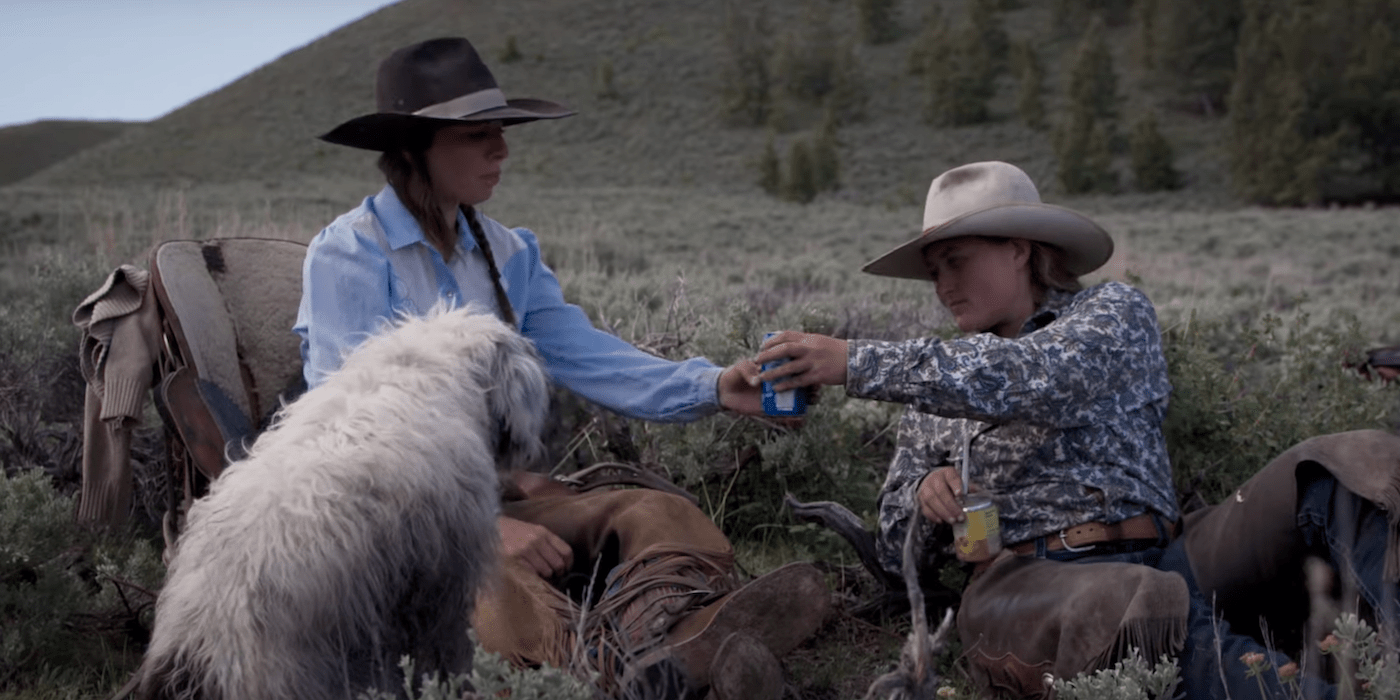
Even when the cowboys are cowgirls. Not that the two-woman team of range-riders in Emelie Mahdavian’s intimate film ever call themselves that. Young Colie and Hollyn talk of “cowboying,” loving the idea of telling their children about their cowboying days, sometime down the road. We have no doubt they’ll romanticize these years, just like everyone else.

Mahdavian and her small crew are never seen in this cinema verite/fly-on-the-wall documentary. They don’t interview their subjects. They just follow the women’s routine, from loading up the truck with dogs and the trailer with (less willing) horses, move into a Spartan mountain cabin and spend their seemingly media-free months getting up at dawn, riding the range, rounding up strays and tending to livestock on the high ground summer-into-winter grazing in the foothills of the northern Rockies.

There are no special effects, there’s little drama — just a sick cow here, a new horse to be “broken” there. What we hear them talk about is mundane, cussing the cows, noting this new ride “isn’t the best” horse, but he goes where I point him.”

They’re never sentimental or even particularly gentle with the livestock, or the seven dogs they keep and who work with them, and in the one time we sense they’re talking to the filmmaker, they describe as “not pets, except in a few cases. But they earned it.”

But there’s something primal about how gorgeous Aspen trees are after the first dusting of snow in the fall, about the unhurried nature of long days in the saddle, time measured in weeks and months with little thought about the next freelance job that they’ll need to replace this one.

“I don’t want to be working for just a house my whole life,” Colie says, summing it all up for Hollyn, who ponders the trailer life she and her beau, Elijah, will be starting their family in.

The only back-story we hear is how both came from cattle families, how they were treated differently than their parents’ sons, that Hollyn has that fellow cowboy boyfriend and Colie is a pretty serious Christian.

Scoring her picture with classical piano sonatas emphasizes the uncluttered beauty of the setting, in contrast with the work. Like a lot of “cowboying” documentarians, Mahdavian is content to sketch in these lives and simply observe two women at their jobs. She leaves the uncertain economics and ever-shortening future facing those who do it, even the way they do it (a single off-road four-wheeler, how many ranchers manage cattle these days, is see), to the imagination.

That’s where “Bitterbrush” resides, in the cowboying of memory and legend, a grueling gig of man-or-woman-handling beasts in glorious, simple solitude and some of the last unspoiled scenery in America.

Rating: unrated

Cast: Hollyn Patterson, Colie Moline

Credits: Directed by Emelie Mahdavian. A Magnolia release.

Running time: 1:30

Posted in Reviews, previews, profiles and movie news | Comments Off on Documentary Review: Lady Riders on the Range cope with cattle in “Bitterbrush”

Movie Preview: Brace yourself for “Paws of Fury: The legend of Hank”

Michael Cera and Samuel L Jackson in the same (animated) movie? Sequel?

Shut the front door!

July 15.

Posted in Reviews, previews, profiles and movie news | Comments Off on Movie Preview: Brace yourself for “Paws of Fury: The legend of Hank”

Movie Preview: In the Korean Underworld, debts are “Paid in Blood”

Sure, Well Go USA picks these films up for North American distribution. But in the rest of the world, the label putting the film in theaters or on home video says it all.

“Hi-YAH!”

Love that, even though the martial arts of this one are more of the “chuck chuck chuck” of knives entering flesh.

July 26 from Well Go and…Hi-YAH!

Posted in Reviews, previews, profiles and movie news | Comments Off on Movie Preview: In the Korean Underworld, debts are “Paid in Blood”

Classic Film Review: “Cairo Station” (1958), a landmark Egyptian thriller now Netflixable

Egyptian cinema — born shortly after the Europe and Hollywood’s film emergence, was already mature enough to produce its “Golden Age,” in the 1950s. That’s the era when it produced its first international screen icon, the great Omar Shariff.

Youssef Chahine was the Egyptian filmmaker who popularized Shariff and brought him to the attention of the world and David Lean (“Lawrence of Arabia”). Chahine was already a veteran director when he directed and took the the villainous lead in his gripping potboiler, “Cairo Station.”

The film is a vivid black and white slice of life at Cairo’s Ramses Station in the late 1950s, with classes mixing and mingling in the secular Arabic state. Chahine shows us this hustle and bustle parade of traditionally clad and more religious rural folk, riding the (British built) rails back to their small towns and villages and Westernized sophisticates with their sports coats and cleavage, shorter hemlines and rock’n’roll tastes boarding for Alexandria and ocean liners that would take them abroad.

The few films of Chahine I’ve seen have a lot more in common with Carol Reed (“The Third Man”) and Hollywood noir specialists than the great artist and social observer Satyajit Ray, his Third World cinema contemporary over in India. Chahine liked melodrama and action and a little sexual sizzle. King Farouk or President Nasser, Chahine worked his way towards “lurid” and probably got his closest to that with the sexy and twisted “Cairo Station.”

Chahine, his camera chasing dancing around passengers as the men with shop stalls or carts make and sell juices or coffee, the female soft-drink peddlers with their buckets of bottles evade the cops and the porters bicker over who gets which client with baggage. We are instantly immersed in this milieu — “entrepreneurs” dashing onto stopped (or still moving) trains to sell drinks (and collect the empty bottles), hustlers of every age scampering through an unregulated, unsafe railyard outside the terminal.

The news stand owner Madbouli (Hassan el Baroudi) is our narrator, a man up on the news and gossip thanks to what he sells, but also someone who takes in the passing scene with a studied eye.

Madbouli recalls taking in the “lame” beggar Qinawi (spelled “Kenawi” on the Netflix subtitles), giving him a job hawking papers to travelers.

“How could anyone have foreseen how Qinawi would end up?” he wonders (in Arabic with English subtitles). We know who the villain is, right from the start.

Our filmmaker shows a little vanity, and a lot of Hollywood chutzpah in the way he hides Qinawi’s face, showing him only on the ground on his damaged leg, giving the character the director himself plays a “star entrance” in the best John Ford/Alfred Hitchcock/Orson Welles tradition.

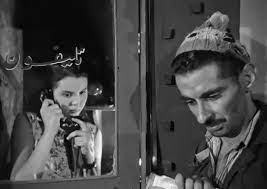
The cause and effect of the screenplay involves showing us Qinawi’s railyard shack, papered with cut-out pin-up girls, and letting us just his guilty-pervy eyes as he finds a new beauty to gawk at, eavesdrop on and lust after.

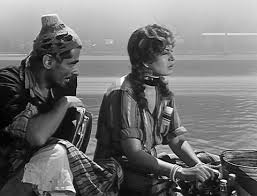
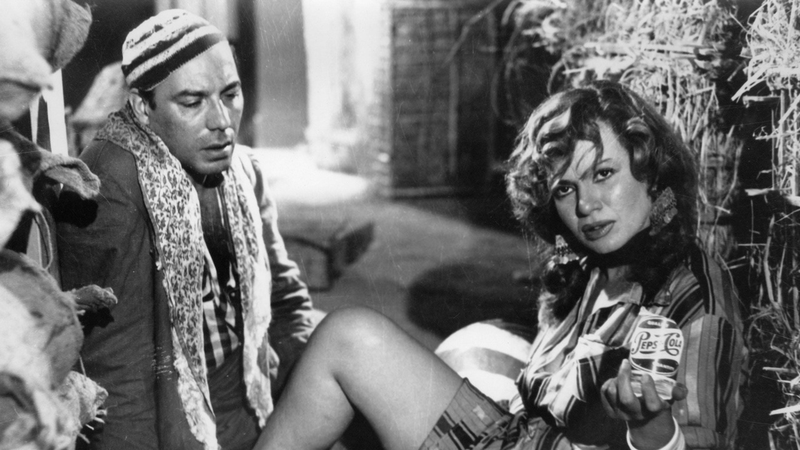
But his heart seems to belong to blowsy, loud and vivacious Hunama, played by Hind Rustum, sort of an Egyptian Anna Magnani or Shelly Winters. Hunama is the loudest, most abrasive of the soft drink sellers. And she’s wondering if the smart, burly porter Abu Siri (Serih, on Netflix, played by Farid Shawqi) might be her man and her ticket out of this hard, dangerous work.

He’s tough enough and clever enough to realize the porters are getting screwed-over by the traditional pecking order that leaves a corrupt unofficial “boss” in charge of who gets to work, taking kickbacks as he does. Abu Siri’s talking “union.”

Qinawi just creeps around in silence, an “Incel” before Incels had the internet. We sense what’s coming, and Chahine underscores the guy’s stalker/serial killer vibe by letting us see the shifting cultural dynamics in play/

The young folks are dressing more Western than ever and listening to Mike & His Skyrockets, a rockabilly combo (with accordion) that jams for the youthful hep cats on the train.

“Newfangled ideas lead straight to old,” old Madbouli mutters. Murder is the effect, a sexualized permissive culture and toxic masculinity — check out the porters catcalling female passersby — is the cause, Chahine suggests.

The suspense comes from what we fear Qinawi will do, and what could happen at any moment at a pre-OSHA railyard this recklessly run. A couple of the stunts were shot in slow motion and played by at regular speed to heighten the danger. But most are not, and it’s easy to see workplace safety regulations weren’t common on Cairo film sets back then.

No “unions” in other words.

The fights range from “stage slaps” to actual rolling tumbles down stone stairs.

And the acting is first rate, with Rustum and Shawqi shining and Chahine practically begging for a straightjacket as Qinawi.

As dated as such films inevitably are, the collaborators here ensure that this 1950s melodrama never feels like an artifact, but merely another era in the passing parade of Egypt’s rough and tumble underclasses, perhaps one less divided by religious conservatism than the Muslim Brotherhood Egypt of today.

Rating: unrated, violence

Cast: Farid Shawqi, Hind Rustum, Youssef Chahine and Hassan el Baroudi

Credits: Directed by Youssef Chahine, scripted by Abdel Hai Adib and Mohamed Abu Youssef (dialogue). A Columbia Pictures release on Netflix, other streamers.

Running time: 1:17

Posted in Reviews, previews, profiles and movie news | Comments Off on Classic Film Review: “Cairo Station” (1958), a landmark Egyptian thriller now Netflixable

“Jurassic World Dominion” — after the credits?

There’s nothing. Go home. Let them clean the theater for the next showing. I stayed. I know.

Posted in Reviews, previews, profiles and movie news | 1 Comment

Movie Preview: Keke Palmer is ON FIRE in this final trailer for Jordan Peele’s “Nope”

Keke, Daniel Kaluuya, Michael Wincott, Steven Yuen, Brandon Perea and Keith David and “aliens” waiting for humans to finally film “the money shot.”

July 22.

Posted in Reviews, previews, profiles and movie news | Comments Off on Movie Preview: Keke Palmer is ON FIRE in this final trailer for Jordan Peele’s “Nope”

Movie Review: Amnesiac mother, her missing child, an exorcist and a hypnotist wonder what’s coming “On the 3rd Day”

Argentine filmmaker Daniel De La Vega runs a lot of standard horror tropes through a South American filter in “On the 3rd Day,” a well-mounted by seriously-unsurprising demonic possession thriller.

When the old man, Enrique (Gerardo Romano) takes a call and loads his “cargo” into his ancient Chevy pickup, because a caller summoned him for “your last trip,” we have an idea of what’s up.

It’s a coffin-shaped box, after all.

When a mother (Mariana Anghlileri) packs her little boy (Octavio Belmonte) in the back seat, we can guess what’s coming. Even the “distraction” that causes the collision, this moment when “worlds collide,” seems pro forma.

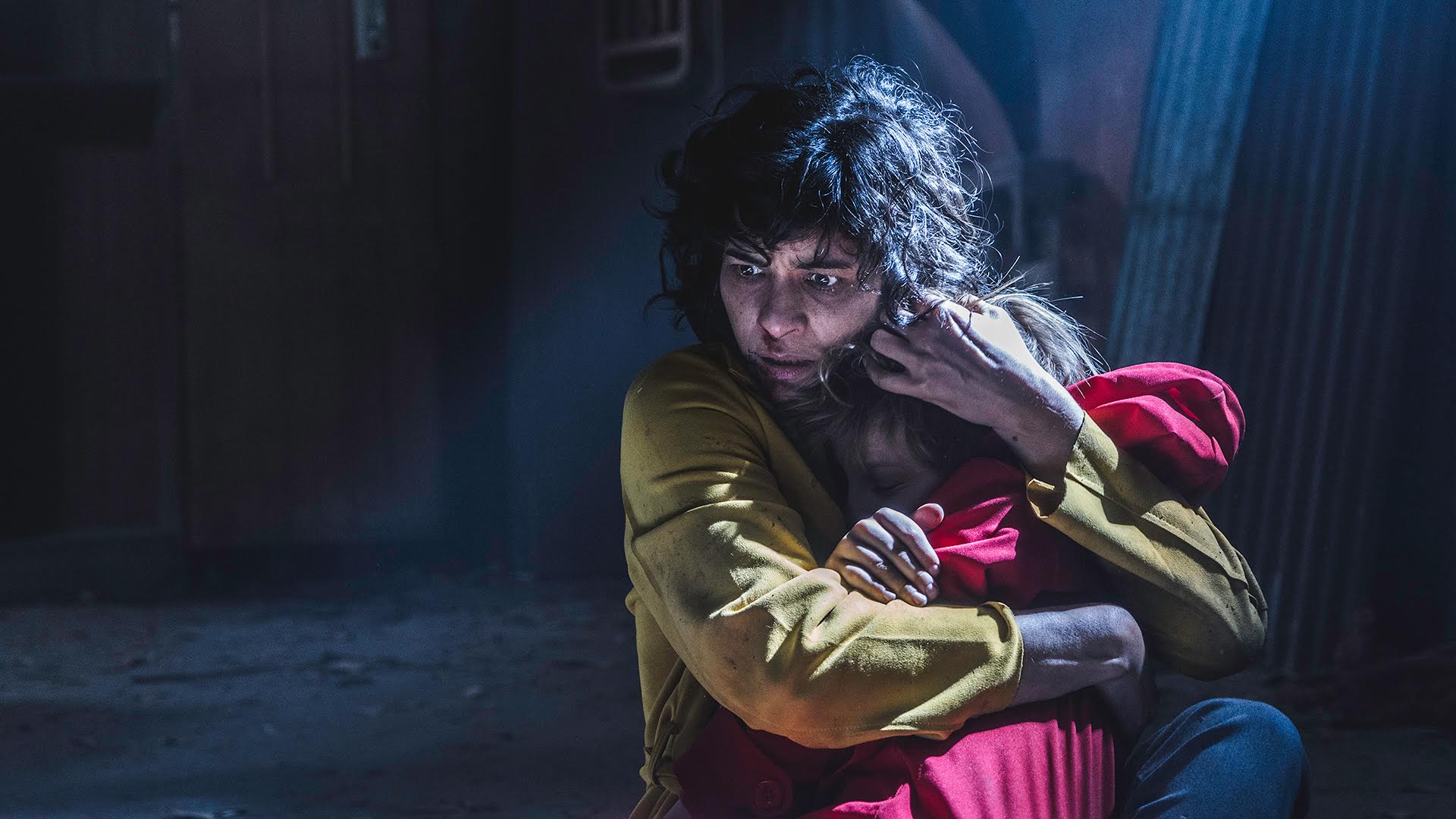
Cecilia wakes up, injured, in an abandoned house. Her boy is missing. It’s only when she makes it to a hospital that she realizes just how much she doesn’t remember, and who else has gone “missing” from that night.

Over the course of what plays as basically one long night (probably not), Cecilia will see visions of her son, in his red raincoat, in mirrors. She will have nightmares.

And others associated with that night will go missing.

The thin Alberto Fasce and Gonzalo Ventura script manages to find time for odd detours — the abuse Cecilia was fleeing, the old couple at the filling station whom she flees to after “escaping” a house where she wasn’t so much imprisoned, but dumped.

The police are introduced and put “on the case” as the missing persons pile up. But that entire story thread leads nowhere in this unthrilling dubbed-into-English thriller.

A couple of “solutions” present themselves to Cecilia’s plight. Does she need a priest, or a hypnotist (Osmar Núñez) to recall what happened and find her boy? Her doctor Lautaro Delgado) opts for the latter, leading to a mesmerizing and often-off-topic session that adds more clutter than clarity to the film.

Director De La Vega throws some spooky effects and seriously conventional “demon” costumes at this utterly generic story, which might have kept its secrets and worked better had mother Cecilia seemed more frantic or old Enrique seemed more conflicted.

But the film’s serious shortcoming is relying on a mystery that we guess instantly, and not serving up any real frights and stylish touches to distract us from the conclusion we see coming early in the first act.

Rating: Unrated, violence

Cast: Mariana Anghileri, Gerardo Romano, Lautaro Delgado and
Osmar Núñez

Credits: Directed by Daniel De La Vega, scripted by Alberto Fasce and Gonzalo Ventura. A Shout! Factory production on Shudder.

Running time: 1:25

Posted in Reviews, previews, profiles and movie news | Comments Off on Movie Review: Amnesiac mother, her missing child, an exorcist and a hypnotist wonder what’s coming “On the 3rd Day”

British cinemas cave to Islamic Fundamentalist Protests of “The Lady of Heaven”

No! NOBODY saw this coming!

The faith-based biographical drama “The Lady of Heaven” has faced sanction and banning, even having its trailers banned, in pretty much the entire Islamic world. Now Muslim protesters, calling it “blasphemous,” have gotten it yanked from cinemas in Great Britain.

This is, of course, a shameful and cowardly act, but quite understandable given the history of Islamic fundamentalist violence against the Free Speech West. Charlie Hebdo, anyone?

Right wing anti-Islamic columnists and newspapers are having a field day over this. British news and websites refer to “Lady” as being “Banned.” No. Cinemas have merely decided it’s not worth the hassle and security issues to show the movie. “Banned” is what happened in the Islamic theocracies of Asia and the Middle East.

It’s even given the much-maligned Catholic Church the license to “Tut tut” the newer Middle Eastern-founded religion, with one British Archbishop declaring it to be Islam’s “Life of Brian” moment.

Yes, Catholic panties were all in a twist over Monty Python’s “Not the Life Story of Jesus” comedy. The Cambridge comics spent a lot of time on the telly (shoving aside the penguin on the telly) defending their movie from the humorless and the “How DARE you!” crowd in the late 70s.

But their movie wasn’t banned. Islam is the world’s only religion that not only hates criticism or careful documentation of the life stories of The Prophet and those surrounding him. They condemn it, sanction it and even draw blood over it.

Sorry, that’s not how things work here in the West, folks.

As somebody who had to cross a picket line to see Martin Scorsese’s controversial film of “The Last Temptation of Christ,” which was sort of America’s Christian “Life of Brian” moment, close examination for religious claims, fact-based debate and criticism are considered fair game.

Many in the West have an eyerolling view of Islam over its intolerance of such questioning. What are these protestors afraid of? Why were those who codified “Thou shalt not depict/question The Prophet” into the Koran or its interpretation hellbent on doing that? What were THEY afraid of?

“The Lady of Heaven,” which I reviewed some while back, takes pains to get around the many restrictions on how Muhammed, his family and the conquest-oriented origins of his faith are depicted. It still manages to lay some blunt facts out there for the faithful to mull over.

How DID Islam turn into what is widely perceived as a violent global patriarchal cult, all but enslaving women in places where its most extreme practitioners hold sway? A movie that suggests the faith has been twisted in some ways, and was grimly-flawed in others by its founders, was sure to stir up debate.

DEBATE is what’s called for, here. And by the way, if you haven’t seen the movie, put down your placard and go home. You’re “condemning” something you have no real knowledge of. If you can’t LET yourself see the movie, ask yourself why that is?

And if you didn’t want to live in a society that values free speech and open debate, why did you emigrate to one?

If the Catholic and Protestant, Jewish and every other religion can grit its teeth and take it, Islamists have to see how insecure and inferior their faith comes off, with adherents losing their collective minds over a movie or ANYthing that suggests that maybe the flawed founder of that faith was human, wasn’t perfect, and that those jockeying for power after his death had venal self-serving intentions.

I can’t recall which publicity house pitched me the movie some while back, but like the filmmakers, I had to bend over backwards to footnote the damned review because while every religion can and should be critiqued, I’m still just reviewing a movie that does that. My main concerns are the quality of the production and the performances and the veracity of its “true story” script.

That Muslim fundamentalists won’t even allow people to see it without threats and protests damns them in the eyes of the world. They come off as childish, intolerant and violent fanatics,

The producers of the film should stream it, let anybody who wants to see it find it online that way. Now that it’s got controversy surrounding it, they should make their investment back. Let the outspoken and superstitious avoid it, if they must. There’s no way to put the Internet genie back in the bottle. Not here in the West, anyway.

If this is a “Life of Brian” moment, the world is watching to see if you actually start the process that “The Lady of Heaven,” a middling, overly-careful hot-button biopic, advocates. What we’re waiting to see is if you finally grow up.

Posted in Reviews, previews, profiles and movie news | Comments Off on British cinemas cave to Islamic Fundamentalist Protests of “The Lady of Heaven”