
C’mon. Who doesn’t love Zoey Deutch?
Dylan O’Brian co stars. Searchlight made this edgy comedy, about an influencer who bends the truth to become “a victim.”
It comes to Hulu July 29.
C’mon. Who doesn’t love Zoey Deutch?
Dylan O’Brian co stars. Searchlight made this edgy comedy, about an influencer who bends the truth to become “a victim.”
It comes to Hulu July 29.


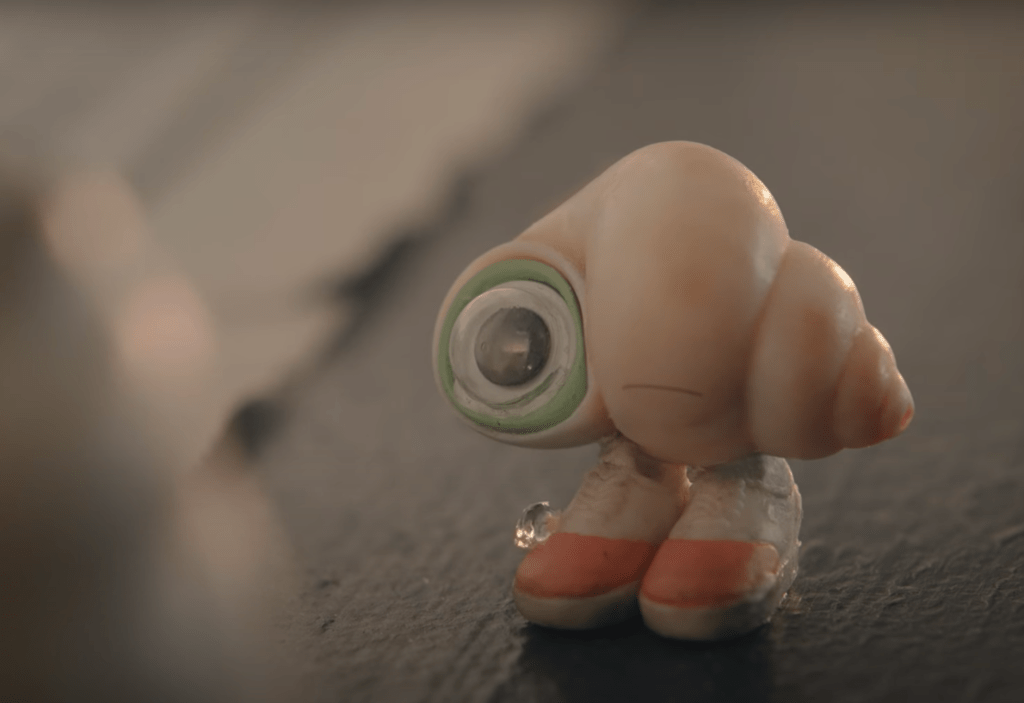

“Marcel the Shell with Shoes On” is a charming little stop-motion animated project built on an Internet/Youtube sensation from long ago. Well, pre-Pandemic anyway.
Dreamed up by Jenny Slate, then freshly-dropped from “Saturday Night Live” for dropping a live f-bomb, and her then-husband Dean Fleischer-Camp, it’s about a one-eyed, talking hermit crab shell with pink sneakers.
The humor is built around mousy-voiced Marcel (Slate, who also does voices of “Bob’s Burgers” and many others) observed coping, adapting and DIYing his way through the human-scaled world, drolly commenting on what he’s experiencing and what he’s observing, always with a child’s understanding.
“Marcel the Shell” starts with the sight gags — a tiny shell showing us his diet, interacting with (stop-motion-animated) bugs and a live Jack Russell terrier, throwing up on a car ride and, once he’s gotten Internet famous, bouncing on a MacBook keyboard, writing or web searching his Youtube videos, marveling at how many people watch this ongoing “documentary” about him.
He interacts with the human whose house this now is, Dean (Fleischer-Camp), who talked Marcel into being interviewed for his documentary. Marcel, sometimes reluctantly, demonstrates ways he gets around, gets things done and improvises transport (he cuts a hole in a tennis ball and rolls around), uses wire-tops from champagne corks to make tables and chairs, etc, and turns a sewing machine into a gadget that tugs on twine that shakes a tree out the window so that he and his grandma can harvest apricots.
“I like myself,” he opines, “and I have a lot of other great qualities as well.”
An aproned woman periodically comes into the house where he lives — “She’s a harbinger of the vacuum.”
His beloved Grandma Connie (Isabella Rossellini) is another shell with shoes, and a more reluctant participant in interviews for the film. She requires some explaining, Marcel figures.
“She’s not really from here. She’s from the garage. That’s why she has the accent.“
That’s the other source of giggles, Marcel’s deadpan humor. A teeny, tiny living shell has to flee things like vacuums and a friendly, curious canine.
“I actually like the concept of having a dog.”
The film tells the story of Marcel wondering where his and Connie’s family and “community” went, and shows us flashbacks of another couple arguing, splitting up, and in the noise and confusion of that, hiding shells — friends and family — must have been whisked away in the move.
That takes this story into something deeper, or at least bittersweet. Marcel is lonely, and he wants his grandma to have that community around her as well. Helped by Dean, he starts the process of searching — via Marcel’s comically childish (and inadequate) clues and Google search ideas.
“Marcel the Shell” takes on an undertone of childhood longing, loss and grief as Dean’s posted videos make The Shell with Shoes famous, but brings Marcel and his Grandma the stress of overzealous fans who find Marcel’s house, while getting them no closer to finding their community.
Maybe Granny’s favorite TV show and TV interviewer, Lesley Stahl, can help.
The back-story to this project — which took years to complete — is that Slate and Fleischer-Camp split up themselves, and yet agreed to carry on with it. That split gives a poignant, wistful undertone to “Marcel” if you know about it coming in.
There’s also the unmistakable sense that this years-in-in-the-making stop-motion tale, built on ideas, jokes, and Internet novelty from a dozen years ago, kind of missed its moment. Twee can have a short shelf life, and once we’ve gotten the Youtube-length-joke the picture loses some of the edge that makes it interesting.
But while “Marcel the Shell with Shoes” might have lost its cutesy, two-person production DIY cachet, he finishes the journey to the big screen with his charm and Slate’s wit intact. What he goes through can be laugh-out-loud weird, and surprisingly touching. And if this film is Marcel’s teeny, tiny curtain call as a cultural phenomenon, it’s a perfectly adorable one.

Rating: PG, some suggestive elements.
Cast: The voices of Jenny Slate and Isabella Rossellini, with Dean Fleischer-Camp, Rosa Salazar, Thomas Camp and Lesley Stahl.
Credits: Directed by Dean Fleischer-Camp, scripted by Dean Fleischer-Camp, Jenny Slate and Nick Paley. An A24 release.
Running time: 1:28

“Swap Me, Baby” is a self-consciously goofy two-handed farce about a mismatched couple about to have a baby.
Their story? He’s “an escort, and the condom broke.”
It’s a stoner “Catastrophe,” for those who remember that Sharon Horgan/Rob Delaney TV series of a few years back — trippier and raunchier if not as sensitive or frankly, as funny.
But for a no-budget “body swap” comedy (“Big,” “Freaky Friday,” etc) made by a German and an American who apparently met making a German TV series, a film so simple that it could’ve been shot during a COVID lockdown, it’s not half bad.
We meet Lily (Kimberly Leemans) and Phillippe (Falk Hentschel) at couples counseling. She’s smart, hyper-organized, if too busy to date. That’s implied because she’s pretty and 30something and she had to hire an escort.
Phillippe, on the other hand, is a porn-stached Frenchman who happily accepts the label “off brand Fabio” as a description. He’s a ditz whose hair is too long, his shorts too short and his attention span nothing to brag about.
Unfiltered red alert warnings from their therapist (Ava Bogle) tell them that their baby has no prayer in this world if they don’t get it — something, anything — together. So Juniper the licensed therapist lets them pick from the solutions provided by this treasure chest (“magic box”) she stores such solutions in. That sends them to this forest “Empathy Getaway.”
Lily has them listening to a “things that can KILL your baby” podcast on the drive up. Phillippe is laid-back, showing off the magic mushrooms he figures they’ll share once they’re “on vacation,” and making plans for Little Phillippe’s future. He could be a musician!
Lily is NOT accepting “Little Phillippe” as a name, and she’s not having the whole music thing.
“You don’wan’ him to be a muuusician, like Broose Springsten or Samuel JackSON?”
Phillippe really works the French accent, and “dumb pretty boy” thing.
They fight until they arrive, fight after they arrive and Phillippe wanders off to be with nature and take his ‘shrooms. And it’s while he’s tripping (distorted images, animated birds and butterflies visit) that the “magic box” makes another appearance, bubbling out of a hot spring. He hasn’t sobered up when Lily shows up, accuses him of stealing the box from the shrink’s office, and sha-ZAM, they’re knocked out wrestling over it.
When they come to, Lily is puzzled to be in a man’s body — Phillippe’s. And Phillippe?
“I always zought ‘aving boobies would be fun. But zey kind of ‘urt!”
The mismatched expectant parents are stuck in each other’s bodies to learn to be better parents. The magic box will spit out clues about things to do. Lily gets this in an instant.
Those are “the riddle in every ‘body swap movie.'” She knows the genre. But as the puzzles and exercises change, her ability to outthink the “riddle” is tested. They’re given a bow and arrow, and a (fake, obviously) rabbit to shoot for food. But even though Phillippe considers himself a manly man — for a Frenchman — being stuck in Lily’s body gives him a big belly and “no upper body strength!”
Lily knows that somehow, they have to work around this and other problems if they’re going to be able to parent this child.
“I should’ve watched the ORIGINAL ‘Freaky Friday! F—–g Lindsay Lohan!”
I got a charge out of the French accent each actor has to attempt once Phillippe is in this body or that one. There’s comical nudity, lots of sexual humor, fart and masturbation jokes that try to get by on “Oh no they didn’t” shock value.
For me, there are more “almost laughs” than actual ones, although the pacing is brisk and the jokes that land zing. The predicted “body swap movie” “lesson learned” sweet moments show up, right on cue, and the picture — giggles or not — just skips by to get to those moments.
But there wasn’t enough funny stuff going on to keep me from getting lost in the novelty of watching the most convincingly pregnant actress I’ve seen on screen wrestle with an “off brand Fabio” out of lust, post-coital munchies, etc.
Was Leemans pregnant when she made this? That big baby bump certainly looks real, and while I can find no news coverage of the co-stars as a couple and having a baby together — neither one is a big name and thus they both live below the gossip sheet headlines — there is this. Well, mazel tov, kids! I think.
It’s a pity “Swap Me, Baby” didn’t dazzle. But no matter how many paying customers see it, you’ve still got something like the ultimate home movie to show your kid, when they’re old enough for (should be) R-rated movies.

Rating: unrated, drug abuse, nudity, profanity
Cast: Falk Hentschel, Kimberly Leemans
Credits: Directed by Caden Butera, scripted by Jesse Lumans. A Scatena and Rosner elease.
Running time: 1:21
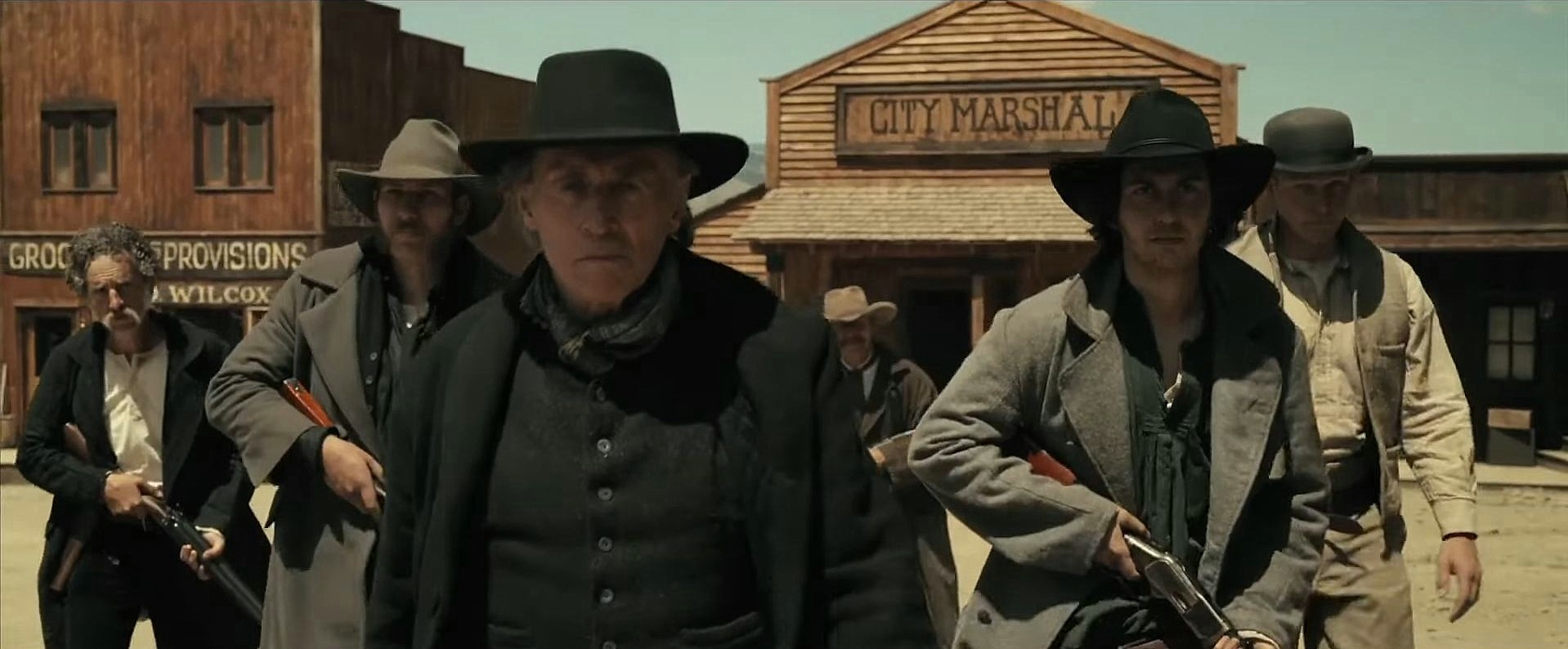
For Western fans who aren’t all that particular about how they get to The Big Shootout, and aren’t that concerned about how pokey the picture is that gets them there, we give you “Murder at Yellowstone City,” a murder mystery set in frontier Big Sky Country.
That Big Shootout? It’s a doozy, with the good guys and gals muttering questions about how good each is with a firearm.
“Good as I needed to be. And you?”
“Better’n I ought to have been.”
That last line kind of fits the movie, which is basically a primo Western filming location in search of a movie. They rounded up a decent cast, an Aussie director who’s made a few films (that recent “Robert the Bruce” outing) and a middling script and had a go.
The results aren’t great. The picture’s predictable except when it’s at its most illogical, and the pacing is slow-footed when it needed to canter. But hell, you throw Thomas Jane, Gabriel Byrne, Scottie Thompson, Anna Camp and Oscar winner Richard Dreyfuss against a saloon wall, you’re going to hit something.
Hanging your plot on Old Spice spokesman/spokesmodel Isaiah Mustafa isn’t the worst gamble ever, either.
There’s a decent backlit shot or two, tidy newly-built recreations of an Old West town, and Mel Elias managed a proper Western score, with lots of diegetic — on set, played live fiddle, piano and guitar tunes. The basics are here, even if they’re not in the most thrilling package.
Mustafa rides in as the stranger in town, a guy who might’ve thought twice about changing directions when he heard the explosion. A miner in the foothills has just struck gold.
But the stranger finds a fellow Shakespeare buff (Dreyfuss) behind the bar in the Miners Saloon, and a pleasant tune from the barkeep’s life partner (John Ales of TV’s “True Story” and “Euphoria”).
“I’d give all my fame for a pot of ale, and safety!”
The sheriff (Byrne) seems like a stand-up guy, a widower with a motherless son (Nat Wolff, last seen in TV’s “The Stand”). And that sheriff even makes sure church is full on Sundays, which suits the preacher (Jane) and his helpmate/wife (Camp of “Pitch Perfect”).
But then the celebrating miner is murdered, “the stranger” is rousted and arrested and the bloodletting has only begun as everybody — from the madam in the brothel (Aimee Garcia) to the Native woman who runs the stables (Tanaya Beatty) — will have to take sides.
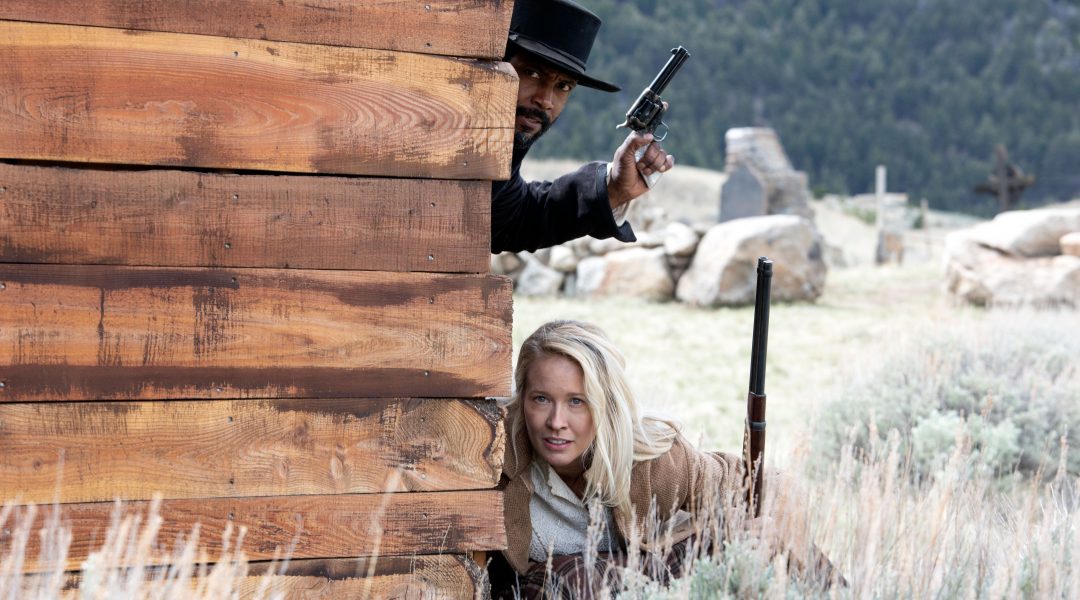
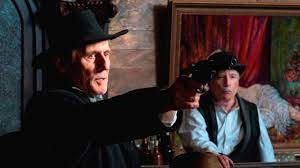
The bit players aren’t remotely on the charismatic and believable level of the leads. Some of the dialogue is just clunky and other bits — every word out of the ex-slave Cicero’s mouth — are eye-rollingly florid.
“What man can know the morrow?”
The “mystery” is one of those that an old hand at the genre will figure out in the first act.
While every Old West town was “New” at some point, the new construction and cleanliness of the bar/brothel and the spotless wardrobes make one wonder if a dry cleaner wasn’t the first business to open here. Nothing looks lived-in or worn.
The scenery is striking, but the digital photography has more of a travelogue tint than anything leathery, dusty or decorated with sagebrush. None of which would call attention to itself had this 90 minute Western murder mystery not slogged along for 2:07.
The producers and screenwriter Eric Belgau had a few novel ideas — gays and African American drifters in the Old West, for starters. But “Murder in Yellowstone City” stumbles most badly in the editing or lack of it, a location-in-search-of-a-Western trapped by the needs to justify dead weight scenes that get fair value out of every big name they needed to cast to get this financed. And once financed, they neglected one last rewrite of the script, because the one they filmed leaves too much of the action in the hands of lesser talents.
Rating: unrated, graphic violence, sex
Cast: Thomas Jane, Gabriel Byrne, Isaiah Mustafa, Alice Camp, Aimee Garcia, Tanaya Beatty, Nat Wolff and Richard Dreyfuss.
Credits: Directed by Richard Gray, scripted by Eric Belgau. An RLJE release.
Running time: 2:07

Everybody has their own threshold of tolerance of or enthusiasm for the dominant streaming service.
If you’re hooked on series, love the online version of water-cooler conversation about “Stranger Things,” “Squid Games,” earlier break-out “Ozark” and the like, you’re probably getting enough out of Netflix.
But if you’re a Taika Waititi fan, you can’t help but notice his series are on Hulu or HBO Max. “Handmaid’s Tale” and a lot of other content is over on Amazon.
And don’t get me started on Disney+ and its Marvel/”Star Wars” content stranglehold.
For me and I dare say a lot of critics, even the hottest series are a time investment whose limited shelf-life — Who reads reviews of a series a month after it’s come out? Six months? Six years? — isn’t worth it.
When I do review such series, I’m consistently out of step with the popular sentiment and TV critic reviews of such shows. Either I’m watching deeper into the series before filing or I have different standards for what I expect out of a “WandaVision” or “The Great” or “Mosquito Coast” or even that damned Baby Yoda thing.
The storytelling style is obvious and annoying, a simple tale padded out for time and cliff-hanging suspense. I simply prefer the more compact, brisk storytelling of movies, which are more like novels and plays. TeeVee seems more soap opera/comic-bookish in terms of The Never-Ending Narrative. Everything is designed to bring the viewer back, to postpone or never-actually-deliver real endings.
You end your show, it’s a “failure,” seems to be the thinking.
And anyway, preferring movies is how I keep running into the wall with Netflix. They’re not making enough or buying enough that haven’t been shown elsewhere to make the streamer worth my trouble.
I looked ahead and saw that Netflix has the Sony production “The Man from Toronto,” with Kevin Hart and Woody Harrelson, an action comedy about a hit-man, the Ryan Gosling Russo Brothers (ugh) actioner “The Gray Man,” and Dakota Johnson’s take on Jane Austen’s “Persuasion.”
That’s it. So I got an early look at “Toronto,” and maybe I’ll renew if “The Gray Man” becomes the first ever Netflix action picture to truly pay off. I liked “Spiderhead,” but every other actioner starring Hemsworth or Theron, Pena or whoever, has been kind of “write these action guys a check and hope for the best” bust.
Dakota Johnson doing Jane Austen! The mind reels.
A LOT of Netflix movies suffer from that “blank check to Hollywood” filmmaking. They’ve been spending money with little genuine “studio” supervision by people who know what makes a good movie. Every studio start-up goes through this.
Another problem is the algorithm that determines what Netflix offers for your viewing pleasure. You watch one Indonesian or South African or Indian or Peruvian movie, because it’s guaranteed to be something neither you nor many others have reviewed, and that’s what they fill your feed with.
One has to dig and dig and dig to find content outside of what they “think” you want. Not just just a film critic problem, but it is what it is. Netflix is always time consuming to browse because it’s trying to outguess you. Ask anybody.
So I’ll take a break, pay more attention to Apple TV, Amazon, Hulu, the major studios and the minor distributors, and see how long it takes for me to miss Netflix again.
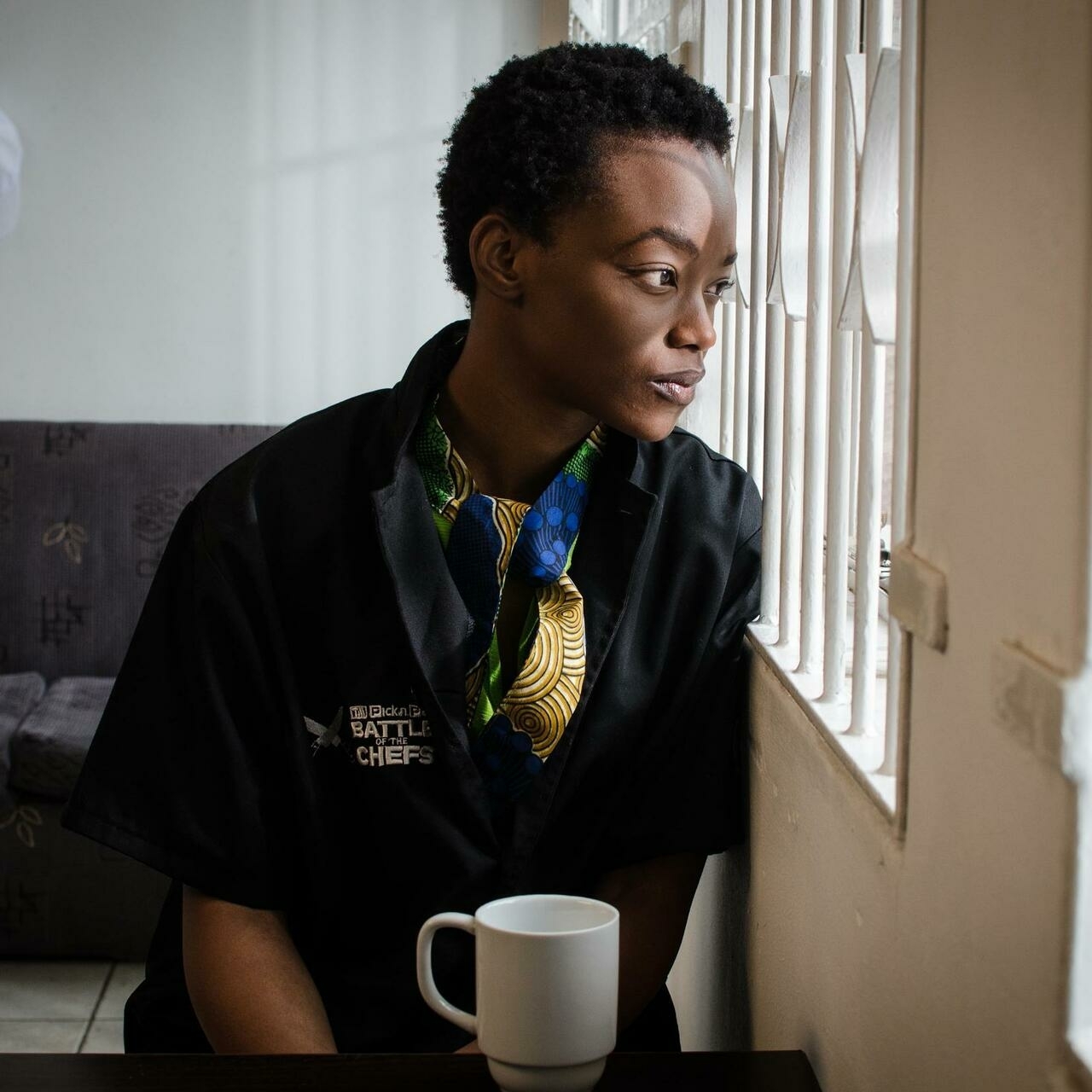
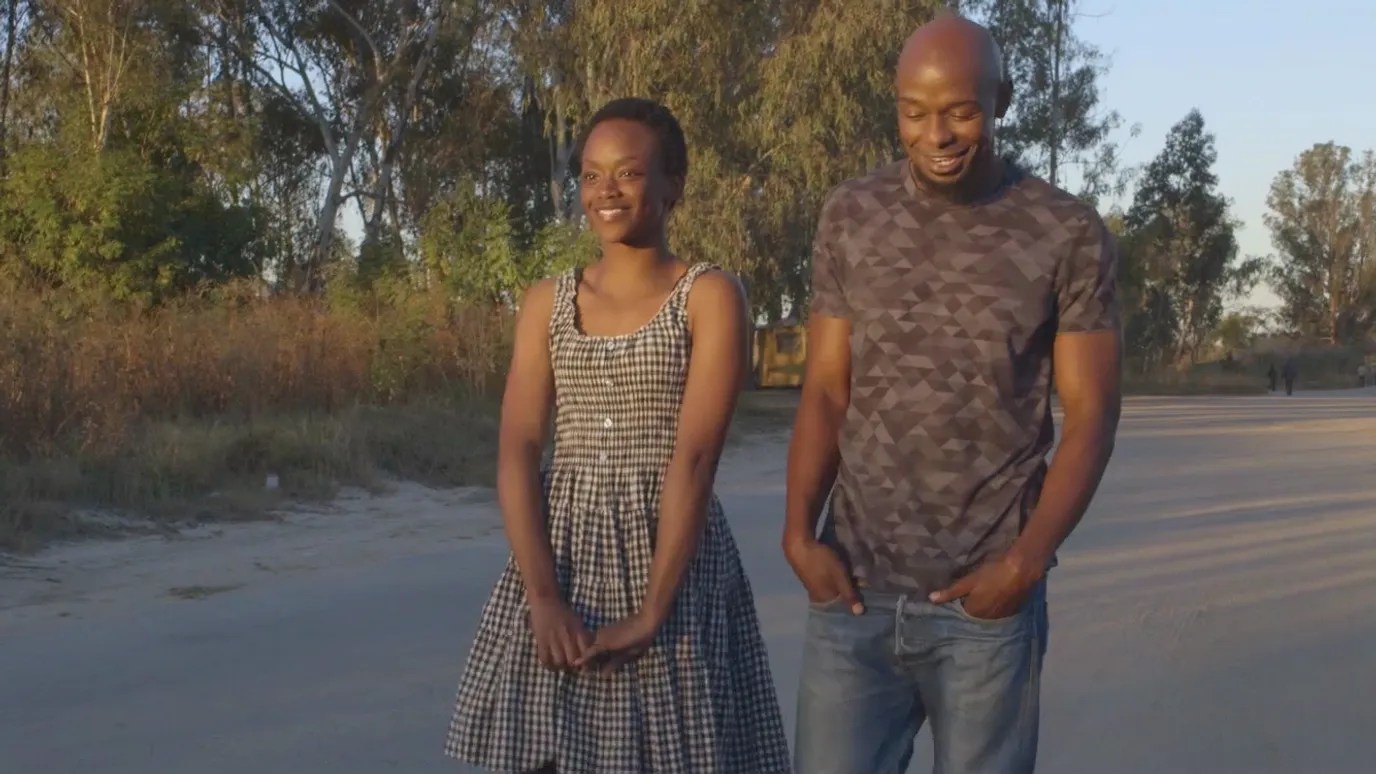
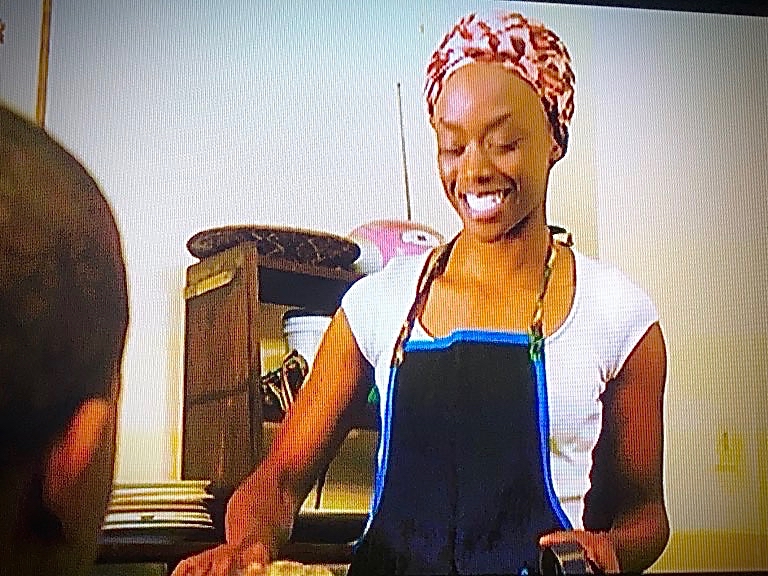
Here’s an Around the World with Netflix first, a rom-com about a cooking show contestant who wants to better her life by winning a TV “Cook Off.”
It’s the first feature film from Zimbabwe purchased and distributed by Netflix, and thus the rarest of peeks into life in the little-filmed country southern African country.. And if it meanders through a formula that’s seriously played-out in the West, at least it serves up from faces, fresh places and fresh foods as it does.
Tendaiishe Chitima plays Anesa, a single-mom and short-order cook. By day, she makes the best sadza in Budiroro, running a dollar stall diner for the demanding Mai Shupi. But as home, her tweenage son Tapiwa (Eugene Zimbudzi) both critiques her food, and times her cooking.
He’s putting her through her paces in daily imaginary run-throughs of her favorite TV show, “Battle of the Chefs.” If you’ve ever seen anything competitive involving Gordon Ramsay, or turned on The Food Network, you’ll recognize the format — lots of frazzled cooks, snooty judges, occasional tears.
They’re holding auditions for the next run of the series in Harare, but Anesu’s always-negative church-goer mom figures her daughter isn’t good for anything and Anesu herself wonders if her cooking isn’t anything special.
But her sassy BFF Charmaine (Charmaine Mujeri) gives her pep talks, and son Tapiwa and her supportive grandma secretly enter her in the auditions, which are for a contest with a $10,000 prize.
That good ol’Yankee greenback, good anywhere.
Anesu finds herself scrambling to whip up fancy, improvised dishes with salmon, eggs and local ingredients and hears herself called “amateurish” for the first time.
But no matter. She’s young and pretty and good enough and her “story” will make a compelling plotline. She wants to “show what single mothers are capable of,” open her own dollar sadza stall and maybe take her boy to see glorious Victoria Falls.
She’s made the cut. A fellow chef, the handsome “Prince” (groan) played by Tehn Diamond takes an interest in her. But what food show or movie rom-com would be complete without a Mean Girl villain? That would be snippy, sneering Milly Ann (Fungai Majaya).
As the story simmers through the usual contest rounds, we learn the connection between Milly Ann and Anesu’s family strife. The Mean Girl married Anesu’s baby daddy. As he’s the preacher’s son, it’s no wonder she never told her Bible-thumper Mama that.
The judges and fellow-competitors on the show are thinly sketched-in, although it’s worth noting that the white Zimbabwean JJ is played by the film’s writer-director, Tomas Brickhill.
The finished film is neither amateurish nor unpolished. The acting is tentative, but convincing enough. What gives it a New-to-Cinema veneer is the thin, obvious plot, bland lighting and tentative editing, which fails to give it much pace and exposes less-experienced actors to dead-spots at the beginning and end of takes. It’s on the level of an attempted Hallmark TV movie that didn’t quite make the cut.
The food is almost as generic and elementary as the production. Hollandaise sauce? The ingredients offered here would make your average foodie grouse. Lots of prepackaged imported supermarket salmon and the like. A bit more cooking of local dishes was called for, and even if one doesn’t have the resources of The Food Network, you’ve got to sex up and jazz up the production of the show within the movie, especially if your film seems designed to travel.
The entire affair plays like an attempt to pander to the North American market. But if we wanted to see a slick wish-fulfillment rom-com about a single mom finding success and love on a cooking show, we’d watch The Hallmark Channel and not bother traveling Around the World with Netflix.

Rating: TV-PG
Cast: Tendaiishe Chitima, Tehn Diamond, Tomas Brickhill, Fungai Majaya, Charmaine Mujeri and Eugene Zimbudzi
Credits: Scripted and directed by Tomas Brickhill. A Netflix release.
Running time:

The longest film I ever reviewed was “La Belle Noiseuse, The Beautiful Troublemaker,” a near real-time Swiss drama about a famous painter whose creative energy returns when he meets the beautiful girlfriend of a young protege. It plays out in a painterly real-time — sketching to drawing to shaping and then painting a finished portrait.
Four hours of watching paint dry is the short review, although it was interesting — up to a point — and featured a beautiful nude in most of its scenes. It’s the movie that made me figure “Maybe the New York Film Festival isn’t my best value as traveling film critic.”
The second through tenth longest films I’ve reviewed are all Indian, starting with #2, “Lagaan,” an epic about an interminable (3:44 running time) 19th century cricket match in which the locals show those British imperialists a thing or two on the cricket grounds, a blow struck for equality 70 or so years before Gandhi and his movement achieved it.
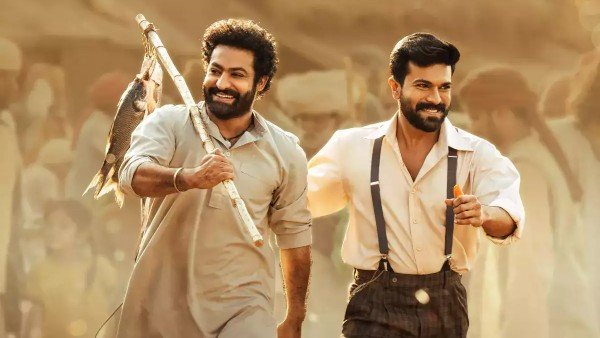
I say that as a preamble to reviewing “RRR,” the popular and gonzo Indian action pic that Netflix has unleashed upon the world. It’s over three hours long, which in itself is no criticism, as that’s a hallmark of Indian cinema in general and films with Bollywood touches (song and dance numbers, including one sung mid-public-flogging) in particular.
Inside or outside of the culture, the excesses are part of the fun, and writer-director S.S. Rajamouli pulls out all the stops on this pipe organ opera of revenge, revolution and ridding India of its racist imperialist oppressors (the Brits).
Wirework stunts, big explosions, scenes stuffed with a sea of extras, “bullet-time” effects adding to the over-the-top feel of the piece, topped by a menagerie of Indian animals CGI’d into the frame.
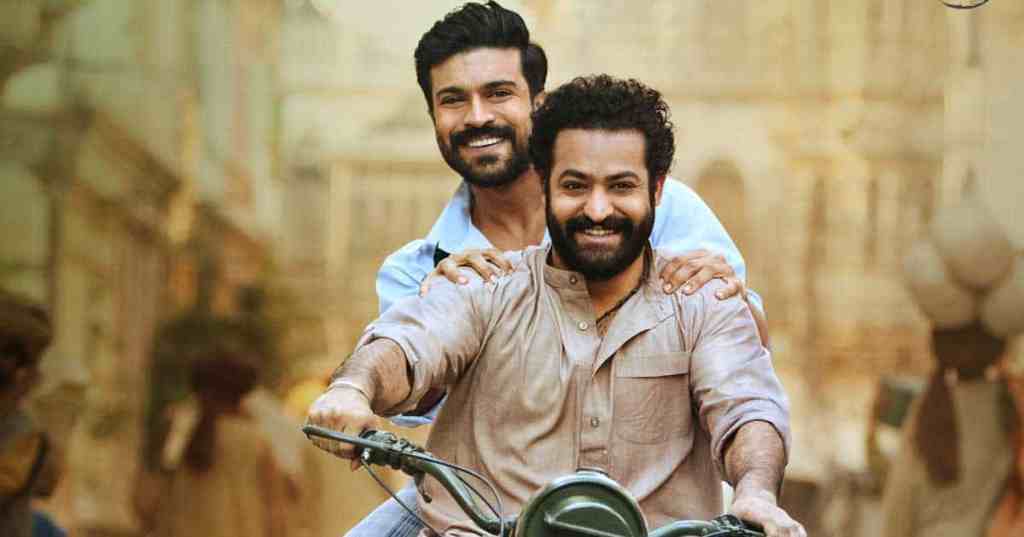
That’s all in service of a tale of kidnapping and murder, rescue and revenge in the 1920s Raj. It’s a classic quest, with two competing super-cut/supermen, played by N.T. Rama Rao Jr. and Ram Charan, brawling and teaming up, enduring horrors and serving justice to scores upon scores of scornful Brits and their armed and uniformed Indian underlings.
The hook? The two unkillable fighters are from opposite sides, with only one of them realizing their competing agendas. Clever.
But the fourth “R” in this title might have been “repetitive,” as this popcorn-or-its-Indian-equivalent action picture runs out of gas an hour before it runs out of movie.
The biggest set-piece among the score or so of them here creates a climax that proves un-toppable. And yet, “RRR” persists. On and on it goes, giving us backstory, making us think this combatant or that one is dead when they aren’t, finding new ways to slaughter His Majesty’s hapless pith-helmeted minions, all of it to free a stolen child (Twinkle Sharma) and avenge earlier deaths.
All of this fictional mayhem is somewhat pointless, except as “wish fulfillment fantasy,” as we know how India really won its independence and became a non-violent revolution example to the world. Gandhi’s ashes must be rolling over in his Ganges grave (one of several places his remains were scattered).
Malli (Sharma), a child of the Gond people, enchants some imperious Brits with her singing and henna tattooing during an official visit. The wife (Alison Doody, imagine the tough time she had in school) purrs to her governor/husband (Ray Stevenson) that she wants to have this little girl “on our mantel piece.”
Coins are dropped, a language barrier exploited, and next thing we know, the child is stuffed into a car, the frantic mother murdered when she protests and one of the kid’s “brothers,” Bheem (Rao) is tracking her, plotting her escape and an apt punishment for the governor who stole her.
It is a time of unrest, one of many in India during its long occupation, and a riot has broken out near an Army post. One agitator, clad in red, seems responsible for an escalation. Only one soldier, Ram (Ram Charan) has the guts to vault the fence, leap into the crowd and literally pummel his way to the man and thrash his way through the teeming thousands to take him into custody.
It’s not overstating the case to say that director Rajamouli — he did the “Baahubali” films — stages one of the epic fights in cinema history with this scene. You think Ram is overwhelmed, think he’s down and maybe even dead, time and again, and up he pops, Superman with a stick, clubbing his way to safety, his man in custody.
But racism means you can’t acknowledge real history, or the deeds of an “inferior” race come promotion time. Ram is passed-over. Given another chance at advancement, he takes on the next job, infiltrating resistance ranks (his mustache transforms into a beard), identifying and arresting this Gond man (Bheem, who disguises himself as Muslim) who is supposedly “hunting” the governor in search of “the missing lamb,” his sister.
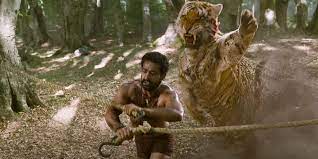
Another set piece lays out just how tough that mission will be. Bheem serves as bait, first for a wolf, then for the tiger he and his brothers trap for sale to get them closer to their real quarry, the governor who stole their sister. Bheem outmuscles the (digital) tiger, because he’s Superman in a loincloth.
A random accident brings the hunter and the hunter-of-the-hunter together. A child is endangered by a train crash, and all it takes is a distant wave between supermen for them to team up on a crazy, Bugs Bunny Physics blazing river rescue.
There are chortles and laughs at the sheer excess of it all, the nutty combinations of stunts, wirework effects and digital touch-ups that make this or that brawl/chase/escape/shoot-out bigger than most anything you’ve seen before.
And there are unintended snickers at the overtly homoerotic (to Western eyes) bond between these two Bollywood beefcakes, grinning and romping through a dance-off with some smartarsed “wanker” Brit who thinks “brown rubbish” can’t dance. A lesson must be taught.
And that sympathetic Englishwoman (Olivia Morris) whose attention might make their hunt for the child easier? Let’s stalk her, sabotage her motorcar and see where that takes us.
It’s all in good, violent fun until it gets to be too much and you realize they’re never going to top their big two-hour-mark throwdown.
That’s when you start to notice that all the dialogue sounds looped and a lot of what we’re seeing is just a reprise of what we’ve seen before, and much of the narrative is just folding back into what we already know or that we don’t need to know as the characters seem perfectly well motivated already.
The performances are good to passable, with the Brits reduced to harrumping stereotypes and the Indians righteous or just misguided or perhaps biding their time.
But it’s the brawls that sell “RRR.” And it’s only when they start to repeat themselves that you realize it’s time to check out, because really, enough is enough.
Rating: TV-MA, a bloody lot of bloody violence
Cast: N.T. Rama Rao Jr., Ram Charan, Alia Bhatt, Ray Stevenson,
Alison Doody, Olivia Morris and Twinkle Sharma
Credits: Scripted and directed by S.S. Rajamouli. A Netflix release.
Running time: 3:07

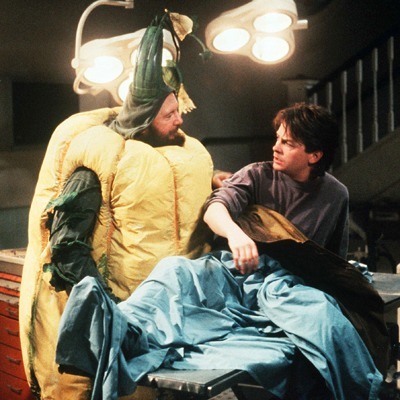
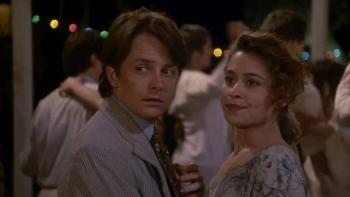
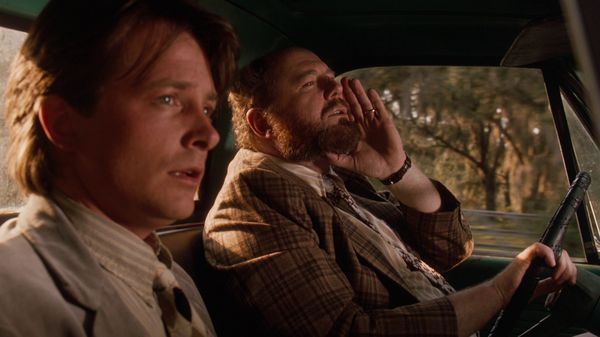

Michael J. Fox had a nice, decade-long run as an “It” star in Hollywood, the Canadian-next-door leading man who got first dibs on a lot of prestige projects.
That wasn’t just due to his TV fame, the sitcom stardom brought by “Family Ties.” His stepping into “Back to the Future” saved the movie, created a franchise, made Universal rich and him one of the most bankable stars of his era.
He took his shot at a Vietnam drama (“Casualties of War”), coming of age as an upper class addict (“Bright Lights, Big City”), an aspiring rocker whose sister (Joan Jett) has her eyes on the prize (“Light of Day”) and comedies and rom-coms of every variety.
But the most endearing and perhaps most enduring of those was the most easygoing. It’s the movie that best let us see how the with-it TV actor always compensated for his lack of height by bouncing along on the balls of his feet, even when he was walking a pig.
“Doc Hollywood” (1991) took a corny and geographically indefensible premise — young surgeon leaves his DC residency for a prestigious LA plastic surgery clinic, and gets waylaid far off the interstate in rural Grady, South Carolina (never understood this pre-Waze navigation) — and threw a LOT of talent at it.
And the result seems literally effortless, with every single bite of low-hanging fruit delivering a grin.
Director Michael Caton-Jones broke out with the British sex-and-spies-and-politics drama “Scandal,” and was fresh off the sentimental World War II aerial combat thriller “Memphis Belle.” Why anybody thought he was right for a “Mayberry” throwback comedy in an idealized Sleepy Time Down South After Integration romantic comedy is its own story.
But the problem-solving exercise the project presented also serves up an Old School Hollywood solution. Upend stereotypical expectations. And employ every comical character actor and bit player you can get your hands on, the older the better.
Fox’s Dr. Ben Stone’s wrecks his vintage Porsche in the middle of BFE, S.C. But the African American garage owner (Mel Winkler, adorable) has got the hook-up on parts. This newfangled inventory aid called the Internet, y’see.
There’s small town chicanery afoot as the stern, self-serving judge (Roberts Blossom, whose credits went back decades and decades) sentences the doc to public service, filling in for their aged curmudgeon small-town sawbones (Barnard Hughes, who’d played a version of this character in a sitcom in the ’70s). The drawling, oozing southern charm mayor (David Ogden Stiers) makes his pitch, the first of many, for Ben Stone sticking around “The Squash Capital of the South.”
The cute single-mom ambulance driver (Julie Warner) isn’t interested in giving him a reason to stay. The entitled local doofus (Woody Harrelson, hilarious in every scene) labels him “Doc Hollywood” and can’t wait for him to breeze on out of there, and the cranky old doctor’s crankier old nurse (Eyde Byrd, a stitch) isn’t that impressed with him either.
But Southern fried socialite Nancy Lee, vamped up by Bridget Fonda, who started her own run of star vehicles right after this yummy turn, is all over the doctor with the Hollywood dream.
Still, it’s the sassy, hard-nosed ambulance driver who turns Doc’s head, and the sparks set off are screwball comedy classic in style, modern in tone.
“I suspect that your version of romance is whatever will separate me from my panties.”
“No, I am just talking about dinner. Wear make-up, put on a dress. Panties are optional.”
Warner wasn’t just the right height to pair her up with Fox (Fonda also had that advantage). She had a touch of “spitfire” about her that shows up in her work, even today.
With the screen packed with “characters,” as if the film was a sitcom pilot trying to introduce everybody (Frances Sternhagen leads a cadre of familiar-faced townsfolk) in the coming series, the script was engineered to give everybody a funny moment.
Doc finds himself “paid” for his services by a family’s “pet” pig. But he needs cash to pay Melvin the mechanic to get the car fixed.
“You want to trade, the pig for the part?”
“If you can part with the pig.”
Sure, there’s pop music on the soundtrack, Patsy Cline singing Willie Nelson’s “Crazy” for a slow dance. But the sight gags are lightly underscored with the jovial wedding music from Prokofiev’s “Lt. Kije Suite,” used in literally dozens of comedies, from Alec Guinness to Woody Allen.
Yet the picture’s engaging, ongoing appeal rests squarely on the shoulders of Fox as straight man. He is personable, even at his big city snobbiest. The exasperating moments of his dilemma — played for broad laughs — just sort of roll off the character who’s maybe lost-his-s–t more than his share of times already. We see the people and the place working on Ben Stone in all the most formulaic and familiar ways. He sees it, too, and damned if he knows what to do about it.
Take the pig for a walk, I suppose.
Fox was headed back to TV shortly after this film outing, and five Emmys suggest that was always his first, best destiny. I recall driving down to Atlanta to interview him shortly before “Doc Hollywood” came out, getting up to leave, and stopping in the door on the way out, overcome by the “Hey, you’re done for the day, wanna grab a beer?” impulse. That’s never happened to me, before or since. That’s TV for you. The “stars” start to seem like people you know, just because of that boob tube’s intimacy.
The film’s giggles carry on right up to the picture’s finale. A perfectly-cast shallow LA aesthetic surgeon cameo, then Harrelson, in an over-the-top bit part, nailing “Cheers” star Ted Danson with one last one-liner, and love and squash triumphing in the end.
It may have been lightly regarded when it came out, but I think you can make the case that “Doc Hollywood,” a throwback comedy even then, stands the test of time better than most any rom-com of its era. And for all the Marty McFly love that’s clung to Michael J. Fox over the decades, this might have been his best outing, the epitome of his appeal and a movie he’ll be remembered for.

Rating: PG-13, a little racy, here and there.
Cast: Michael J. Fox, Julie Warner, David Ogden Stiers, Woody Harrelson, Eyde Byrd, Frances Sternhagen, Mel Winkler, Roberts Blossom, Barnard Hughes and George Hamilton.
Credits: Directed by Michael Caton-Jones, scripted by Laurian Leggett, Jeffrey Price, Peter S. Seaman and Daniel Pyne, based on a novel by Neil B. Shulman.
Running time: 1:44

Jamie Foxx may be an Oscar winner, and an accomplished musician, singer and stand-up, too. But he’d seem an unlikely candidate for a book on fathering.
Not Herschel Walker unlikely. But a party animal, good-time TV and movie star with two daughters by two different women unlikely.
So his book is about what he learned about staying in his kids’ lives, getting along with their mothers, a working class kid raised by his spare the rod (NOT) grandparents who tried to figure out how to not “ruin” or “spoil” his girls, who would grow up rich.
The book’s like Foxx himself, born Eric Bishop in downscale suburban Terrell, Texas. He’s a scamp and owns it, unfiltered and proud of it, and charming and self-effacing enough to pull it all off.
He charts his the ways his grandmother set him up for success — piano lessons, strict discipline, not letting him run with “no count hoodlums” or miscreants he knew, letting his granddad administer the whippings.
“My grandmother taught me that even if I wasn’t married, I had to be a gentleman and take care of mine.” The baby might be unplanned, but committing to “take care of” mother and child, support the children well into adulthood, is simply the right thing to do.
Seems like a no-brainer, but plenty of men don’t grasp it and don’t act like they’ve “got some sense” in such matters. His own, for starters. His grandparents, Estelle and Mark Talley raised him because his mother couldn’t and his father, an ex-con who did not grow paternal by joining the Nation of Islam, wouldn’t.
And he talks about his rise through the showbiz ranks, figuring out stand-up was a gift that could open doors when the piano could not.
But that’s all folded in with fathering advice, which as he points out in the book’s title, the “things My Daughters Taught Me.”
“Dad Rule No. 1, You Gotta Show Up.”
Some of these pearls are #JamieFoxx problems, a tad rich and entitled, like learning that letting your kid tag along to a party weekend in Miami or Vegas, with “Leo” and the other skirt chasers, isn’t the equivalent of spending quality time with them.
Any dad who drags the kids fishing if they don’t like it, to ballgames they’ve lost interest in or what have you might get something from that.
He tells tales about growing up in Terrell, thanks Miss Reese, the teacher who “made a deal” with the class cut-up, who’d taken to disrupting the class with routines he’d memorized from “The Tonight Show” comics. She gave him ten minutes at the end of class on Friday if he’d give her a week of peace.
The best Hollywood anecdote might be the former high school footballer’s memories of trying out for “Any Given Sunday,” getting brushed off by Oliver Stone more than once, an antic, mugging “TV sitcom comic” who got told “You’re no good” to his face.
Foxx dialed it down, got some pals to shoot a little football play-running and on-field trash talking, and Stone was won over.
The fathering stuff? Getting in the faces of boys dating his daughters and not treating them with respect, the warnings about ulterior motives of some such guys, the perils of social media exposure that enables stalkers, may have “rich guy problems” on the veneer. A boyfriend taken on a father-daughter trip to Paris who then ditches a daughter at the Louvre is gonna get some Texas style Black dad threats unprintable here.
But as Corrinne and Anelise never make the scandal sites and rarely even turn up as gossip, even though neither has gotten famous in her own right, despite some serious showbiz dabbling, you have to appreciate the results.
“Act Like You Got Some Sense, and Other Things I Taught My Daughters My Daughters Taught Me.” By Jamie Foxx. 221 pages. Grand Central Publishing. $30.
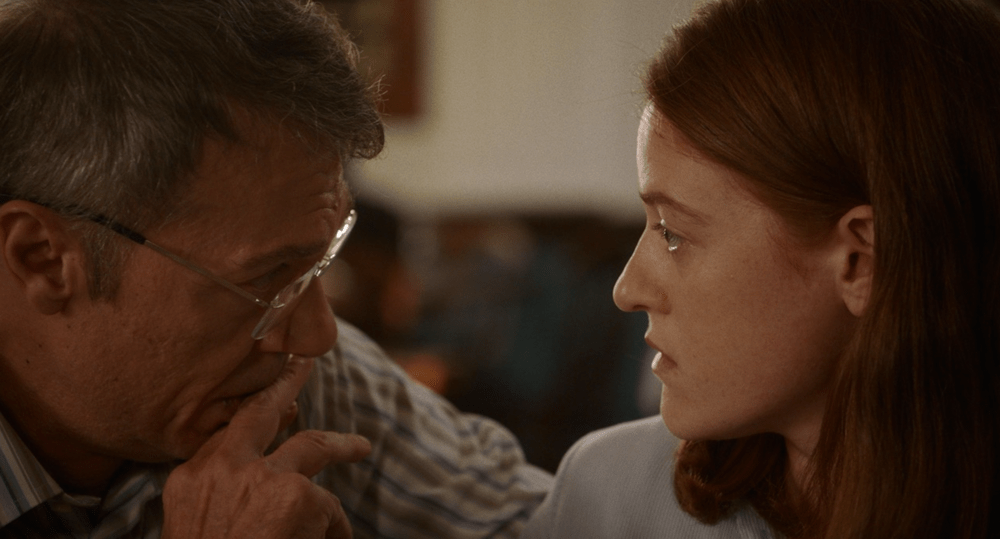
A college age daughter returns to Athens to care for her emotionally-distant, now-infirm father in “Moon, 66 Questions,” the latest teaming of writer-director Jacqueline Lentzou with her on-screen alter ego, Sofia Kokkali (“The End of Suffering”).
It’s a self-consciously-filmed soft-spoken drama about family, family responsibilities and family secrets, and truthfully a rather drab affair where the stakes are low and the emotions kept in check for the most part.
Set in the 1990s, so that we can wonder if there’s any autobiography in Lentzou’s script and so she can show off those ugly home video aspect ratios in “home movies” voiced-over to establish Artemis (Kokkali, also seen in “Digger”) has been away, that she’s not close to her father, that he’s gone through something that traumatized him and contributed to a stroke which is what brought her back and yet that doesn’t move her emotionally.
Paris (Lazaros Georgakopoulus) is going to need care and rehab, and that’s largely going to fall on Artemis — getting him about, encouraging him to try to do things for himself, engaging him in conversation and changing his diapers.
It’s the conversation that seems trickiest, but the only person Artemis complains to about her new burden is her mother (Maria Zorba), strangely absent and refusing phone entreaties to come see him and maybe help.
The movie tips the viewer that something’s up, and we spend the last 80 minutes of the film figuring out what that might be as Artemis hangs with family, frolics with old friends and overhears her grandmother and aunts and uncles interrogate home health-care workers, a “Last Supper” lineup of chain-smoking Greeks kvetching about “language barriers” when most of the people they interview are Bulgarian or Romanian.
Artemis voice-over narrates “on today’s date” snippets, “Cleopatra was born….’Catcher in the Rye’ was published” and the like. Periodically, chapters of the story are marked by a Tarot card — “Strength,” “The Magician,” etc. Cryptic? A bit. Self-conscious? Annoyingly so.
“Moon” doesn’t necessarily make sense, even if the narrative is perfectly easy to follow and just as easy to “decode,” in terms of guessing “the secret.”
Kokkali is front and center throughout, and doesn’t give us a whole lot to latch onto in her characterization. Artemis doesn’t act like a martyr, even if she seems to struggle with what she’s supposed to do to care for this man she was never all that close to.
A couple of scenes interrupt the care-giving and coeds exercising in the pool, cutting up as they act out scenes from movies for Charades or play ping-pong. Artemis gets into her father’s ancient Jeep Grand Cherokee, and after some driving difficulties, rams it into the apartment garage’s wall — hard.
It’s meant to be a cathartic moment of discovery, but all I could think was “DAMN, they didn’t fake that. How’d they get her to agree to do her own stunt in a no-airbag SUV?”
The film handles accounts of the routine in the father and daughter’s days — he’s very dependent, yet she has time for all this other stuff outside the apartment — in unconventional, non-linear ways. Time passes, nurses are questioned, meals are consumed and a not-so-big-secret is revealed that might bring father and daughter closer.
This story may be more personal to Lentzou than I’ve heard — and really, that doesn’t matter as much as what’s actually on the screen. But if so, my heart goes out to her for how dull this stretch of time was in her or her character’s life, even as my teeth grate at her need to recreate that tedium for moviegoers.
“66 Questions?” If you say so.
Rating: unrated
Cast: Sofia Kokkali, Lazaros Georgakopoulos and Maria Zorba
Credits: Scripted and directed by Jacqueline Lentzou. A Film Movement release.
Running time: 1:48


