A marathon movie day ends with a sneak of “Hurry Up Tomorrow”

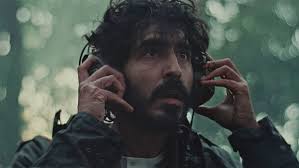
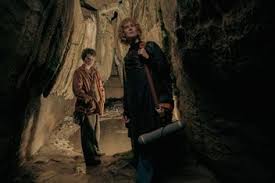
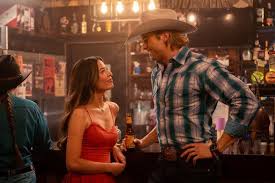
Will it be as good as “Watch the Skies” (review here) or more on a “Surfer” level?

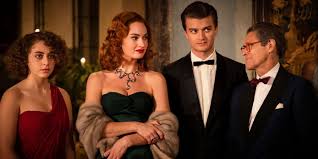
Gotta be better than “Juliet & Romeo.” Then again, maybe not.

Some days, one feels the need to catch up with a few titles high maintenance dogs, farms, aged parents etc. kept you from catching on opening weekend.

One “Clown” I hope to get around to. Sometime. IFC never pitched it my way, alas.

Posted in Reviews, previews, profiles and movie news | Comments Off on A marathon movie day ends with a sneak of “Hurry Up Tomorrow”

Classic Film Review: “Chicken Run” turns 25, an Animated Comedy Classic based on Classic POW Tales

If I hadn’t seen it in a cinema packed with children, I’d have never believed “Chicken Run” was a kids’ film.

The conceit, the jaunty Englishness of it all, the very dated references and the homages are all elements only adults could get.

And yet here it is, an Aardman animated marvel that turns 25 this year and becomes what those of us who saw it in 2000 realized in an instant. It’s a classic.

The “Wallace & Gromit” folks looked at Britain’s decades-long obsession with WWII movies, especially POW tales, and sent them up by turning the POWs into chickens and the “escape” into a high-stakes get-away from an egg farm about to transform into a chicken pot pieworks.

It’s ingenious, twee and jolly good fun all around.

Ginger, voiced by Julie Sawalha (the long-suffering daughter on TV’s “AbFab”), is the plucky ringleader, a hen determined to lead a breakout of the concentration camp known as Tweedy’s Egg Farm. She takes her shot with one “plan” after another, conspiring with the Scottish Mac (Lynn Ferguson) to tunnel, climb the fence or trick her way out, leading dizzy Babs (Jane Horrocks), blunt Bunty (Imelda Staunton) and the rest to freedom.

The huffy old RAF veteran rooster Fowler (Benjamin Withrow) cheers them on and insists on “discipline,” “order” and “morale” in the ranks, “What what?”

But every time she fails, Ginger is tossed into the coal bin, “the cooler,” where she bounces a tennis ball off the walls (Steve McQueen style) awaiting her next release. The Tweedys (Miranda Richardson and Tony Haygarth) can’t kill and eat her. She’s too productive as a layer.

But egg farmer Tweedy has his suspicions.

“They’re organizing! I KNOW it!”

Things are dire enough as it is, with any hen who isn’t laying enough destined for a head-lopping. Then the machinery arrives for Mrs. Tweedy to transform a struggling 1950s egg farm into a profitable chicken pot pie factory.

That’s the perfect moment for a rooster, hurtling overhead, to drop into their laps. If he can fly, he can teach them to, or so the reasoning goes. How does Rocky Rhodes (Mel Gibson) manage it? And can he be trusted? He’s a Yank, after all.

“Overpaid, oversexed and over HERE” Fowler huffs, repeating the best British WWII joke describing U.S. troops in the U.K.

Rocky, the “lone Free Ranger,” is hip, cool, a hustler escaped from a circus and all about entertaining the hens as he leads them through pointless flying lessons, calisthenics and the like.

“Flying takes THREE things — hard work, PERSEVERANCE…and hard work!”

They’ll need the help of some POW camp scavengers, packrats Fetcher (Phil Daniels) and Nick (Timothy Spall). Radio, tools, disco lights? Whatever you need, guv’nah.

The glories of the stop-motion animation of Aardman are the sight gags and slapstick tumbles, and attention to hand-animated details — dizzy Poppy (Horrocks) always figures any hen missing (and dead) just went “on holiday.” We always see her knitting with real wool.

Rocky and Ginger have to survive getting caught in the comically complex chicken pot pieworks machinery. Hens in a panic looks exactly the way you’d expect — sans feathers (hard to make out of plasticine).

And then there’s the Britishness of their best films. Here, they rip off “The Great Escape,” give a nod to “Stalag 17” and remember the punchline to “The Colditz Story,” a famous prison escape story that involved wings.

Vintage “Star Trek” Scottish jokes, a morale-boosting dance to “Flip, Flop and Fly” and Mel Gibson riffing on being a roguish flirt and fraud, with a tendency to get punch “drunk” after tumbles both date the film and give it a timeless nostalgia.

It’s more complex than the simple elegance of the “Wallace & Gromit” films, a chattier, more plot centric version of their escape-prone “Shaun the Sheep” comedies.

And for a film buff, the laughs come quickly and often at all the riffs, references and gentle jabs on Britain, Britishness and the singular obsession with “their finest hour,” especially stories about the ingenuity and (pardon) pluck of those trapped in the clutches of sworn enemies who mean to put an end to them.

Long before the requisite 25 years had passed, the ruling was already in on “Chicken Run,” an “instant classic” if ever there was one.

star

Rating: G

Cast: The voices of Julie Sawalha, Imelda Stanton, Jane Horrocks, Miranda Richardson, Benjamin Withrow, Lynn Ferguson, Timothy Spall, Phil Daniels. Tony Haygarth and Mel Gibson.

Credits: Directed by Peter Lord and Nick Park, scripted by Nick Park, Peter Lord and Karey Kirkpatrick (additional dialogue by Mark Burton and John O’Farrell). An Aardman production, a Dreamworks release on Amazon Prime, other streamers.

Running time: 1:24

Posted in Reviews, previews, profiles and movie news | Comments Off on Classic Film Review: “Chicken Run” turns 25, an Animated Comedy Classic based on Classic POW Tales

Movie Review: Traumatized Artist flees Home, “Bound” by the Family She Leaves Behind

The germ of a halfway interesting story is lost in a cornucopia of cliches and coincidences in “Bound,” an indie drama about fleeing abuse only to wind up in the supportive arms of a slew of open-hearted New Yorkers.

Sure. You can laugh at that. I did.

Writer-director Isaac Hirotsu Woofter’s debut feature is off the festival circuit and facing the real world, where indulgent, confused “fever dream” storytelling, stereotypical characters and a grungy fantasy version of being homeless in New York isn’t as easily forgiven.

It’s kind of a mess, kids.

Alexandra Fate Sadeghian plays Bella, a haunted, traumatized 20something whose dreams of New York art school have been denied her by her drug-using, drug-dealing stepdad, Gordy (Bryant Carroll).

Her abused, drunk-addicted mother (Pooya Mohsen) is too stoned or passive to escape. Finding her hidden acceptance letter to the New York City Art Academy is a final straw for Bella, who packs up her eyeliner and pet chipmunk, shoots her way to freedom and escapes to New York.

She has some crystal meth, which helps her find a “tribe,” if only for as long as that lasts. Impulsive, desperate Bella finds herself broke, homeless, with nothing but her wits to sneak her into places to squat, a job and sustenance.

That “acceptance letter” is pretty much forgotten, BTW. Any metal sculpting she does will be for pleasure or necessity.

Luckily for Bella, traumatized vet Owais (Ramin Karimloo) takes her on as a barrista at his coffee shop. Barmaid/bar manager Marta (Jessica Pimentel) lets her stay, even adopting her squirrel Bandit as a “mascot.”

And clothing clerk and aspiring designer Standrick (Jaye Alexander) is here to look the other way as she shoplifts, and give her the cliched gay BFF advice that the movies have trotted out since the Edward Everett Horton ’30s.

“You need to food. You need sleep. You NEED a new perspective. And you need to stop acting like a b-itch!”

The “plot,” such as it is, reguires chasm-spanning coincidences in order to bring worlds and characters into conflict with one another. Whatever rural Meth Belt America hamlet Bella flees, it’s got to be close enough to New York for Gordy to make regular treks there.

That bar Marta runs? Gordy’s an owner, or at least the face of ownership for shadowy Bigger Fish in the Drug Trade. What’re the odds, right?

The nuts and bolts of surviving homelessness in New York are skimmed over without much regard for reality. And Bella’s back story is more interesting than her present circumstances, despite the dire straits she finds herself in when she resolves to “rescue” her mother from the slob she shot to escape.

The one joke here might be dressing the sexually abusive Gordy in a cap that reads “I (Heart) STDs.”

The dialogue, save for the alternately fiesty and florid declarations of Standrick, is bland. The early scenes work better as we’re forced to piece together the story without much in the way of any dialogue at all.

The players aren’t bad, but this script is thinly developed and kind of slapped together in the editing, which doesn’t help the “coherence” thing.

That’s why “Bound” needs those coincidences and splashes of melodrama. Not that they help all that much.

Rating: unrated, violence, substance abuse, profanity

Cast: Alexandra Faye Sadeghian, Ramin Karimloo, Jessica Pimentel, Pooya Mohsen, Jaye Alexander and Bryant Carroll.

Credits: Scripted and directed by
Isaac Hirotsu Woofter. A Freestyle release.

Running time: 1:41

Posted in Reviews, previews, profiles and movie news | Tagged , , , , , , | Comments Off on Movie Review: Traumatized Artist flees Home, “Bound” by the Family She Leaves Behind

Netflixable? Vince Vaughn invites Staten Island to eat with their “Nonnas”

“Nonnas” is a heaping helping of cinematic Italian-American comfort food, a family rom-com where the romance is in the food and the comedy is in the scrappy little old ladies who prepare it.

Director Stephen Chbosky (“The Perks of Being a Wallflower”) serves up Vince Vaughn at his most sentimental in a Staten Island story of an eatery opened with the idea of keeping the memories of dead loved ones alive through the dishes they brought over from the Old Country.

The “Nonnas” (grannies) of the title are played by the likes of Lorraine Bracco (“Goodfellas”), Talia Shire (“The Godfather,” “Rocky”), Oscar winner Susan Sarandon and Brenda Vaccaro, who dates back to “Midnight Cowboy.” As the cooks recruited by Joe Scaravella (Vaughn) to make the dishes at Enoteca Maria, a restaurant he opens with the inheritance from his beloved mother, this quartet shows us how old school “chemistry” was supposed to work in “80 for Brady,” “The Book Club” and other comedies about groups of ladies of a certain age.

They set the tone for a movie that, like their performances, doesn’t try too hard. “Nonnas” may be predicable and sentimental right up to the edge of schmaltzy. But it never crosses that line because the fractious foursome at the heart of it won’t allow it.

Scenes from the ’70s establish childhood Joe’s attachment to his mother and grandmother, the sort of boy who’d rather hang in the kitchen and watch the magic in action at big family gatherings.

Joe may have grown up to work as a bus mechanic for New York’s MTA, sentenced to doting-son singlehood for reasons we can speculate about. But his heart and his palate belonged to mama. When she dies, he takes the words of his lifelong bestie Bruno (Joe Manganiello) Bruno’s wife Stella (Drea de Matteo) to heart.

“Find something that makes you really happy, that honors her.”

A restaurant was NOT what contractor Bruno had in mind. But Joe spies an abandoned one on Staten Island, home to a colorful Italian street market. And he remembers what his own Nonna said.

“One does not grow old at the table.”

He dives in, out of his depth, with no sane business plan. He recruits nonnas to be cooks by posting an ad “in the List of Craig” (this story has an early 2000s setting). His aunt in assisted living, Roberta (Bracco) will be his fiery Sicilian anchor-cook. Antonella (Vaccaro), the elderly neighbor of Joe’s onetime prom date (Linda Cardellini) is the Bolognese balance to Roberta’s fire. And Teresa (Shire), former cook at a convent, is here to keep the peace.

Who’s on desserts? That would be Mom’s hairdresser/bestie, Gia (Sarandon), who makes cannoli to die for.

The Italian dishes served here are generally more obscure than your standard Italian-American restaurant fare. Risotto Aranchini, zepolle, parmigiano reggiono and capuzzelle are cooked, burnt and debated by the cooks and the restaurateur, who is moved to the edge of tears by the many variations of “gravy” (red sauce) these aged spitfires serve up.

“Don’t cry in front of the teamsters,” is pal Bruno’s advice, as the grand opening of Enoteca Maria (Maria’s Wine Bar) approaches, with a minefield of obstacles — inspections, etc. — facing it.

One of the most charming things about Chbosky’s direction and Liz Maccie’s script is the “Big Night” notion that the story doesn’t need for the restaurant to open and become a wish-fulfillment fantasy smash for “Nonnas” to work. The stumbling, good-hearted attempt, the collision of personalities and the many fish-out-of-water obstacles point to bankruptcy being just as entertaining as a Michelin star finale.

Keep an eye out for the most conspicuous extra in the dining scenes, the older guy with the long, white and unruly hair. That’s Jody Scaravella, whose story inspired the film.

As for other inspirations, look for a co-director and co-star of the classic New York Italian eatery period piece “Big Night” in a chewy cameo.

There’s a slice of many a “food means family” dramedy tucked into this script, from “Big Night” to “The Feast of the Seven Fishes” to “Chef” (starring Vaughn’s old running mate, Jon Favreau) on down through the many courses the Hallmark Channel has served up in the genre.

But the “Nonnas” are the stars and the hook that makes this one work.

Vaughn, dialing down the wise-cracking hipster that became his brand, makes a terrific reactor — to the four “nonnas,” to Mangeniello’s Bruno and Bruno’s “Sopranos” alumna wife — taking every body blow to his character’s dream personally.

Vince Vaughn goes sentimental and makes it all go down easily. Go figure.

Rating: PG

Cast: Vince Vaughn, Lorraine Bracco, Brenda Vaccaro, Talia Shire, Drea de Matteo, Linda Cardellini, Michael Rispoli, Joe Manganiello and Susan Sarandon.

Credits: Directed by Stephen Chbosky, scripted by Liz Maccie. A Netflix release.

Running time: 1:54.

Posted in Reviews, previews, profiles and movie news | Tagged , , , , , , , | Comments Off on Netflixable? Vince Vaughn invites Staten Island to eat with their “Nonnas”

Movie Review: A Ghost Story that Maybe Gives too much away with its title — “The Ruse”

You’ve got a plot that was clever enough to land veteran character actress Veronica Cartwright (“Sideways,” “Alien,” “The Birds”).

Shooting and editing your film, you can’t wait to get to the third act where you can “explain” its cleverness to death.

And then you kind of give away the game by titling your picture “The Ruse,” implying that things are not at all what they seem. Clever.

Writer, director, producer and editor Steven Mena’s latest is a tepid, sleepwalking tale of a home health care nurse (Madelyn Dundon) stuck in a not-that-spooky lakeside house with a haughty, demented and ill-tempered retired orchestra conductor (Cartwright) who is sure her late husband Albert “visits” her.

Was Albert behind the previous nurse’s (Kayleigh Ruller) disappearance? What we’ve seen in the opening scene suggests as much.

But even though Nurse Tracy vanished without quitting or even saying goodbye, Nurse Dale needs the “second chance” this ordeal-of-a-job promises. She’s ever so eager to get back to work after something unfortunate happened on her last assignment.

Her controlling live-in boyfriend (Drew Moerlein) disapproves. She’s ogled by the delivery guy (T.C. Carter) who tries a tad too hard every time he shows up with food or whatever at the remote home in rural Maine. Then there’s this single-dad neighbor, Tom (Michael Steger), who shows up at the darnedest times — in the middle of a blackout thunder storm, for instance — to “just see if you needed help.”

His little girl (Nicola Jeanette Silber) is the only blunt, cards-on-the-table character in this world.

“I give you three days, tops,” she chirps. The place is “haunted,” she insists. She’s seen the “ghost.” And when she leaves, she doesn’t tell Dale “Good bye.”

“Nice knowing you” is the best line in the script.

Cartwright is in fine form as an invalid who boasts of her full life, insults Dale’s underachieving (by comparison) 28 years and has been labeled “OCD” by an earlier nurse, in addition to her respiratory and dementia problems.

But she’s not scary by herself. And this movie slow walks its away through no real jolts at all before backing into a third act built around a rural Maine cop (Michael Bakkensen) who is a regular Sherlock Holmes at leaping to the wrong conclusion, leaping again and tumbling into some solution that he insists the police are entirely too clever to “miss.”

Writer/director Mena (“Bereavement,” “Brutal Massacre: A Comedy”) has made half a dozen films now, and a few people might actually see this one, as it stars Ms. Cartwright.

The production values are good even if the performances surrounding Cartwright are a tad tentative, low-heat and low-energy. And as he edited this, the funereal pacing is on him, too.

Still, if your thriller’s quick enough and cryptic enough, viewers won’t notice it’s not remotely as clever as you thought it was. But when you title your ghost story “The Ruse,” you’ve already given away that.

Rating: R, violence

Cast: Veronica Cartwright, Madelyn Dundon, Michael Steger, Drew Moerlein, Kayleigh Ruller and T.C. Carter

Credits: Scripted and directed by Stevan Mena. A Seismic release.

Running time: 1:40

Posted in Reviews, previews, profiles and movie news | Tagged , , , | Comments Off on Movie Review: A Ghost Story that Maybe Gives too much away with its title — “The Ruse”

Movie Review: “Another Simple Favor” lapses into Long, Laughable and Ludicrous

Whatever dangerous edge 2018’s “A Simple Favor” had is giddily tossed aside for “Another Simple Favor,” a goofy acceptance that bringing these two ladies back for another round of cat lioness and mouse games was never going to be “logical.”

The killer thriller about the mysterious, rich and beautiful changeling Emily (Blake Lively) and her envious, admiring and gullible new “friend” Stephanie (Anna Kendrick) morphs into a farce about an absurd “reunion” arranged by the acquisative social-climber/killer Stephanie outed, outsmarted and put in prison in the first film.

“Another” is a jokey, wisecracking comedy with just the occasional murder, a movie of “true crime” podcasts, a best-seller that isn’t and endless extravagant costume changes — Blake Lively’s “brand” — set against the glories of the gorgeous Italian island of Capri.

Ah, what the hell? It’s almost summer, right? Here’s your “beach read” movie of the season, served up on Amazon because who’d have the patience to sit through this in a multiplex?

A couple of credited screenwriters and our stars keep the banter slicing and sassy and “Simple Favor/Bridesmaids” director Paul Feig guides us from laughs to laughable to ludricrously long in a dramedy that outstays its welcome, and then some.

Single-mom Stephanie got a popular podcast and a book out of that near-death experience with Emily. But when we catch up with her, the book-tour is almost-going-bust. A public reading and book-signing is the perfect place for the woman she knew as “Emily,” but whose real name was “Hope,” a cunning, marry-for-money black widow with a twin named “Faith,” to show up.

“Prison?” Her latest sugar daddy got her out. Hard feelings? Nooo. Not even about the book.

“I feel like you left out all the good parts!”

A little zippy and very public repartee, with a few f-bombs and c-words thrown in because that’s as “edgy” as this mess gets, and Stephanie agrees to be maid of honor for “the woman who tried to murder you.”

One crowded private jet flight to Capri later, Stephanie realizes Emily’s marrying not just Dante (Michele Morrone) and not just money, but into the mob. And with a rival mob in the ceremony, along with a venomous mother of the groom (Elena Sofia Ricci), the ex (Henry Golding) Emily/Hope tried to kill as a drunken, embittered wedding guest, a hapless FBI agent (Taylor Ortega) and the mad mother (Elizabeth Perkins) and sketchy aunt (Allison Janney) of the bride in attendance, things are pretty much guaranteed to turn messy and even bloody.

The comedy is supposed to spin out of a lot of situations and characters, but mainly plucky little Anna Kendrick’s playing of a mousy fish out of water, casually insulted by the insensate rich, under suspicion by many as Emily’s “stalker” and a murder suspect in her own right.

“Crime’s your kink!”

Not to worry. These are the ITALIAN police we’re talking about here.

But Kendrick can land only so many zingers on her own, and while supporting players Janney, Perkins and Alex Newell (playing Stephanie’s literary agent) grasp for giggles, they evaporate like bubbles in wine that’s rapidly going flat.

The picture devolves into random rants, a masturbatory murder in a shower and scene after scene after scene of gorgeous Blake Lively swanning around in the gorgeous costumes of Renee Ehrlich Kalfus.

And whatever interest — and laughs (those HATS) — that holds isn’t enough to distract us from guessing plot twists a dozen scenes in advance or from giggling at how Feig and screenwriters Jessica Sharzer and Laeta Kalogridis stumble through a “How do we END this mess?” debate, one which Feig clumsily slaps on the screen without bothering to edit.

Rating: R, violence, some nudity, almost constant profanity

Cast: Blake Lively, Anna Kendrick, Alex Newell, Michele Morrone, Taylor Ortega, Lorenzo de Moor,
Elena Sofia Ricci, Allison Janney and Henry Golding.

Credits: Directed by Paul Feig, scripted by Jessica Sharzer and Laeta Kalogridis, based on characters created by Darcey Bell. A Lionsgate/MGM release on Amazon Prime.

Running time: 2:02

Posted in Reviews, previews, profiles and movie news | Tagged , , , , , | Comments Off on Movie Review: “Another Simple Favor” lapses into Long, Laughable and Ludicrous

Series Review: Ewan and Charley are Back in the (Motorcycle) Saddle for the “Long Way Home”

One of the distinct pleasures of the streaming TV era is renewed every time old friends Ewan McGregor and Charley Boorman mount up for another epic motorcycling trek in their “Long Way” series.

The latest, “Long Way Home,” plays up their easygoing rapport and personal charm as they travel from Scotland through the Netherlands, into Scandinavia, above the Arctic Circle, and back down via the Baltic states — 17 countries “in our own backyard.”

McGregor, who just turned 54, and Boorman (59 in August) started doing these shows twenty years ago. They’re older and give themselves less of an exploring “challenge” than they did on the arduous and epic “Long Way Round,” in which they motorcycled around the world, through Europe, Siberia and Mongolia and North America, “Long Way Down,” where they ventured south through the Middle East and Africa to South Africa, or “Long Way Up,” where they rode electric motorcycles up to LA from Tierra del Fuego at the bottom of the Americas.

Boorman, an actor and the son of the famous filmmaker John Boorman (“Excalibur,” “Deliverance”), is the more avid biker and the one with many more awful crashes under his belt, and the stitches and metal reinforcements in his busted bones to prove it.

McGregor’s film and series TV career has made him a familiar face around the world squeezes in these jaunts between bigs. You have to wonder what sort of insurance he carries.

Here, the idea is that the two fiftysomethings will ride “tempermental” 50 year-old bikes — McGregor’s vintage Moto Guzzi Eldorado California Highway Patrol cruiser, and Boorman’s more practical (lighter, higher ground clearance) BMW R75/5.

The “Long Way” series is more of a travelogue than any of the similiar “Top Gear/Grand Tour” treks as these two actually meet people, tap into local customs, brush off fame — “You’re in movies, no?” — and cheerfully camp and bike over some of the most striking scenery on Earth.

“Long Way Home” has them camping beside a Dutch windmill, visiting a 900 year-old Viking church, ax-throwing, stripping for a seriously “traditional” Swedish sauna, freezing their bums off in June snow-flurries in “awe” inspiring  Norway, flying up to Svalbard Island, motoring through Finland into Estonia before making their way to France and “home.”

They crack up and crack each other up along the way — “Tick check!” — roughing it and falling over and poking fun like the two old mates that they must be.

“What a strange couple of guys we are,” they say. But not really. They’re just blokes, pals, mates — actors, one more privileged than the other, more “collectors” and “enthusiasts” than guys who can do all their own repairs.

But a few bent frame parts is how they get help from Malmo, Sweden’s “Odd Luck Garage” bikers’ club. Checking out Scandinavian seaweed cuisine is how they meet a couple of traveling musicians busking and gigging around Europe, with McGregor breaking out the ukulele for a little song himself.

They make sure to stop in Copenhagen to visit the world’s largest nonprofit NGO warehouse, a gigantic UNICEF facility (McGregor and Boorman are both celebrity ambassadors for UNICEF), a little righteous plug of the sort you won’t see on those other road trip series.

They pause to chat up Hugo, a Swedish lad of 17 with a low-rider Volvo wagon that’s “learner’s permit” limited to 30km per hour, try a little “day drinking” with jolly German shooting club members, take dips in the Baltic and see the best scenery in Denmark and many of the other places they visit, driving hairpin-turn roads through all sorts of weather.

Every now and then, we get to be impressed by the Rivian electric trucks (barely mentioned in this series, perhaps there was no endorsement deal) that they’ve used as support vehicles since “Long Way Up.” Much of the world learned about Rivians through their “Long Way” exploits.

The production values on these shows has grown more polished over the years, with lots of drone shots peppering this one as they roll up on some guys filming a flight-suit stunt off the walls of a fjord or head farthest north to Spitzbergen, island of “Ice, Snow and Bears.”

There’s little drama — no hint of McGregor’s messy personal life as the shows rattled through a messy divorce — and no “staged” crises juice up the narrative. There’s a sense of leisure in these programs, allowing more immersion in this experience.

And there’s a sentimentality about how these two have stayed close and stayed on bikes as they did. The last couple of series have shared a sort of finality, as if the unspoken “We’re getting too old for this” is a big reason for take off a couple of months for one more (less grueling) 7500 mile ride.

Snippets of their earlier adventures are edited in as Boorman and McGregor reminisce over this magical or comical moment or that past test of man and machine.

“Long Way Home” may let us hope they haven’t read the end of their “road” together. But it may be coming on the time when one or both is ready to switch to from two wheels to three.

Rating: TV-PG, a touch of nudity

Cast: Ewan McGregor, Charley Boorman, David Alexanian, Russ Malkin and Mary Elizabeth Winstead

Credits: Directed by David Alexanian and Russ Malkin. An Apple TV+ release.

Running time: 10 episodes, @:37-:50 minutes each

Posted in Reviews, previews, profiles and movie news | Tagged , , , , , , , , , | Comments Off on Series Review: Ewan and Charley are Back in the (Motorcycle) Saddle for the “Long Way Home”

Netflixable? “Lost Bullet” to “Last Bullet” — a Cars-and-Chaos Franchise Ends

The “Lost Bullet” cops and smugglers franchise, France’s answer to “The Fast and the Furious” films, goes out with fireworks — literally — with “Last Bullet,” a furious and somewhat futile attempt to wrap up all the complications and traffic pileups of the first two films of this trilogy.

It’s hard to keep all the compromised cops, dirty cops, love interests, villains and intrepid survivors of “The Brigade” that set out to crack a Spain-to-France “Go Fast” bikes smuggling ring straight. So in the name of all that’s holy, don’t skip the “summary” Netflix offers as a teaser to this big budget/big effects/big stunts finale.

The first film had an “Oh hell YEAH” attitude — all stunts and chases and fights and action. The second film set out to top the first, furthering the story of an undercover operation gone awry. Piling on plot and killing off characters didn’t do it any favors, but DAMN those chases/that action.

For “Last Bullet,” director and co-writer Guillaume Pierret delivers some of the most expensive and spectacular stunts in recent French film history, which occur in three epic chases involving cars, motorcycles, a helicopter,a semi, assorted Renaults, Peugeots and Mercedes, an armed towtruck and a Brabus customized armor-plated G-wagon.

But the best sequence starts with a three-way throw-down on a Montpellier transit tram.

Our crooked cop-turned-cop killer on the lam Areski (Nicolas Duvauchelle) opens the picture with a couple of hair-raising escapes from assassination in the forests of Germany. Give this guy a motorbike and he’s as good as gone. Give him a chance in a fight and you’re as good as dead.

He flees back to France with ill-gotten cash.

Crooked narcotics bureau honcho Resz (Gérard Lanvin) swaps the captured Alvaro (Diego Martín) for the thief coerced into being a mole inside the smugglers’ gang Lino (Alban Lenoir), who has been imprisoned in Spain.

He lets Lino go? Go figure. This sort of thing happens a lot in this sequel.

Resz keeps his battle scarred dirty cop/fixer Yuri (Quentin D’Hainaut) around to tidy up messes involving Lino, Areski and that bag Areski has with him.

That’s what puts Lino, Areski and Yuri together on that tram. Their throw-down is a fight for the ages, with each using the other two in tag team configuration, or as a weapon hurled against each other.

And that’s before the first big chase, with Areski fleeing on a violently-acquired cop motorcycle and Lino in hot pursuit in a souped-up Alpine through the streets and parks of Monpellier.

Lino gets that Alpine from car customizing whiz Sarah (Julie Tedesco), who ends up providing his lady cop crush Julie (Stéfi Celma) with that G-wagon and himself with an armed-and-dangerous tow truck for the Big Finish.

It takes a bit to recall who is connected to whom, which cops are worth rooting for and which are diabolical.

Some plot points are action cliches — the too-compliant “car” supplier, booby-traps, stashes of cash and the sniveling minion (Charles Morillon) who helps Resz keeps his various criminal plans together.

All the clumsy plot contrivances and laugh-out-loud “No they DIDN’T” crashes and blasts collide in ways that sometimes cancel each other out. It’s more a (somewhat) satisfying “finale” than a logical one. Literally every time bad guys leave others to “finish the job” on this or that character, we know this or that character will amazingly survive it.

But this action climax, silly and over-the-top as it is, is more real stunts and real crashes than your average CGI boosted “Fast/Furious” film. if you’re into the genre and haven’t seen these “Bullets,” by all means do. Just watch them in order because otherwise, “Balle perdue 3” will have you scratching your head between whoops and hollers.

Rating: TV-MA, lots of violence, smoking, profanity

Cast: Alban Lenoir, Stéfi Celma, Nicolas Duvauchelle, Pascale Arbillot, Quentin D’Hainaut, Anne Serra and Gérard Lanvin

Credits: Directed by Guillaume Pierret, scripted by Caryl Ferey and Guillaume Pierret. A Netflix release.

Running time: 1:52

Posted in Reviews, previews, profiles and movie news | Tagged , , , , , | Comments Off on Netflixable? “Lost Bullet” to “Last Bullet” — a Cars-and-Chaos Franchise Ends

Documentary Review: “I Know Catherine, The Log Lady” celebrates a Character and an Actress and her role in The Strange Saga of David Lynch

Here it is, in documentary form, the Greatest “Show Must Go On” Story Ever Told.

Richard Green’s “I Know Catherine, The Log Lady” is a moving appreciation of the long life of a working actress, a woman rendered immortal by her quirkiest role, thanks to the fanatical fans of David Lynch and “Twin Peaks.”

But playwright Robert Schenkkan credits Catherine E. Coulson with inspiring his Pulitzer Prize winning epic play “The Kentucky Cycle.” For years, she was a mainstay of the Oregon Shakespeare Festival, which is where they met..

Coulson spent much of her Hollywood career in demand behind the camera as the rare female focus puller/union camera assistant, with the likes of Nicholas Meyer praising her work on his “Star Trek: The Wrath of Khan.”

And Lynch, who gave her that obituary-headlining role, remembers Coulson’s pivotal place in his life and career. He “discovered” her and others in the cast of actors from the San Francisco troupe “The Circus,” several of whom spent years with him making his debut feature, “Eraserhead,” with Lynch lauding Coulson’s in front of and behind the camera efforts in making the eccentric Lynch the film icon he came to be.

“Twin Peaks” fans will love this documentary for the deep dive into creating that singular character and her place in that show’s mythos. After the show and later “Fire Walk With Me” movie wrapped in the ’90s, Coulson was the fan convention attendee who kept the “Peaks” flame alive through the show’s 2017 revival for Showtime.

But after two acts of friends, neighbors and co-stars like Kyle MacLachlan, Michael Horse and Kimmy Robertson sing Coulson’s praises as the series’ version of “The Oracle of Delphi,” Green focuses on something he teases in film’s opening moments.

Coulson was diagnosed with stage four breast cancer just before the last iteration of “Peaks” went before cameras. She made that her life’s last goal — reuniting with her friend, collaborator and fellow transcendental meditation devotee Lynch to “finish” that saga’s story was her reason for staying alive.

A legion of friends, health care givers, actors and even a helpful journalist and accomodating mortuary representative made that their cause, as well.

There are unpleasant reminders of personal tragedies and assorted unhappy relationships, including an abusive marriage to “Eraserhead” star Jack Nance mixed in with the wide array of “everybody loved her” declarations by co-workers, friends and one ex-husband devoted to her.

But it is the film’s depiction of a gutsy trouper determined to get that last performance in that makes this “Log Lady” appreciation sing.

Lynch talks up the transcendental meditation that they had in common, reflects on death and plays his part in making her dying wish come true. And the viewer hears the death watch stories of those closest to Coulson, wondering how on Earth that final appearance was ever going to come off.

As the cliche goes, this film is both sad and life-affirming in its depiction of end-of-life concerns.

What makes it special is the amusing life-spirit who came to embody “Lynchian” with her inscrutable presence, the way she passed along the cryptic wisdom of her pronouncements — “I do not introduce the log,” which she cradled so inscrutably, and her appreciation of all that her longtime friend David Lynch knew, loved and taught her about “Ponderosa Pine.”

Rating: unrated

Cast: Catherline E. Coulson, David Lynch, Kyle MacLachlan, Timothy Near, Miriam Laube, Michael Horse, William Haugse, Mindy Alper, Deborah Satterfield, Kimmy Robertson, Armando Duran,
Robert Schenkkan, Nicholas Meyer and Mark Frost.

Credits: Directed by Richard Green.

Running time: 1:49

,

Posted in Reviews, previews, profiles and movie news | Tagged , , , , , , , , , | Comments Off on Documentary Review: “I Know Catherine, The Log Lady” celebrates a Character and an Actress and her role in The Strange Saga of David Lynch

Classic Film Review: History, Classism, War Crimes, Australian Character and a Director’s Intent Collide in “Breaker Morant” (1980)

Australian cinema hadn’t made much of a mark internationally before The Australian New Wave hit in the mid ’70s through the very early ’80s.

In a flash, Australian history, culture, character and mores were broadcast to the big wide world through such classic films as “Walkabout,” “The Last Wave,” “Picnic at Hanging Rock,” “My Brilliant Career,” “Mad Max,” “Gallipoli” and “Breaker Morant.”

Stars such as Mel Gibson, Judy Davis, Bryan Brown, Nicole Kidman and Sam Neill rode that wave to Hollywood. And directors burst through, as filmmakers from Peter Weir and Fred Schepisi to Gillian Armstrong and Bruce Beresford became mainstream stars behind the camera, making hits and even blockbusters in Hollywood.

But such filmmakers’ piercing and often askance view of their own culture, via their early films, is what cineastes still gravite towards.

“Breaker Morant” (1980) was Beresford’s big break, a combat film about the largely forgotten “first modern guerilla war,” the Boer War, and a courtroom drama about how such “irregular forces” wars render their combatants capable of inhuman crimes.

“Breaker Morant” was taken as a Vietnam allegory in the U.S. and elsewhere, and as a rallying cry for Australian sovereignty and against English classism and disdain for all things Oz, thanks to a “kangaroo court” court-martial that condemned Australian soldiers serving in South Africa condemned for, as they insisted, “following orders.”

The film, which stretches history to its breaking point in some cases and finds deeper truth in others, looks at how the expediencies of war and the nature of tit-for-tat guerilla conflicts dehumanizes even the humane. But it’s been embraced for something else that’s nakedly obvious to any viewer — nascent Australian nationalism, and Australian victimhood at the hands of the prejudiced empire that sent their “worst” to a country that started life as a penal colony

So Beresford saying “I always get amazed when people say to me that this is a film about poor Australians who were framed by the Brits” seems as patronizing as “Driving Miss Daisy,” which he also directed.

Watching “Breaker Morant” nearly half a century after its release it seems obvious that Beresford and the play and thinly-researched historical novel the film is based on sanitize and heroize a fairly unsavory title character. The immigrant turned horse “breaker,” pathological liar about his background, check-kiting, debt-dodging coward — according to some accounts — was British and insisted on being labeled as such, if that’s any consolation to Australian nationalists who see him as a symbolic hero.

The film is still brilliantly realized on all counts — a period piece of dazzling detail and grimly realized “irregular” combat and summary executions, with terrific, career-making performances by Edward Woodward (TV’s original “Equalizer”), Bryan Brown (“F/X,” “The Thorn Birds”) and Jack Thompson (“Midnight in the Garden of Good and Evil,””The Great Gatsby”).

Woodward has the title role, that of a gruff older lieutenant with a poetic bent. We even see and hear him singing in a flashback that takes him back to his last visit to England.

The narrative is a flashback framed within the trial thrown together by British command in the “dirty war” against the Boers. Three lieutenants, played by Woodward, Brown and Lewis Fitz-Gerald, are accused of shooting prisoners and murdering a German Lutheran missionary. The actual case involved six officers and a wider-ranging set of charges, and the trial’s proceedings were covered up for years after it took place.

Thompson plays the inexperienced Australian solicitor ordered to defend the accused, Major Thomas. He proves up to the challenge, if not able to get around a court-martial triumvirate ordained to convict and shoot these men as quickly as possible as a sop to a possible peace settlement, and as a message to Australians still clinging to their rough and unruly image.

Woodward’s performance allows for moments of fury and florid poetry, and the occasional court outburst in and out of testimony.

“It is customary in a war to kill as many of the enemy as possible,” Morant acidly sneers at his officer class inquisitors.

Not actually a professional soldier, certainly not a career one, Morant (not his real name) is still astute enough to see this as “a new kind of war…We were out on the veldt, fighting the Boer the way he fought us. I’ll tell you what rule we applied, sir. We applied Rule 3-0-3!”

That’s the name and caliber of the British 303 rifle they fought with and used in their firing squads in a “no prisoners” campaign that the accused insist was not just officially sanctioned, but ordered from on high.

It’s no wonder this film was spun as a Vietnam War allegory in the States, with its “whatever works” against a slippery enemy ethics, impulsive reprisals and echoes of My Lai.

The Australian-as-South-African locations recreate the treeless emptiness of a country torn by a war mostly caused by British imperialism, in the person of immigrants pouring in for the gold, cheap land and diamonds and expecting to vote the Dutch and disenfranchised native Africans out of power and say in the region’s future, immigrants backed by invading British armies.

The action is limited, but realistic — even the fictional attack on their garrison that has our three imprisoned soldiers released to fight and save the day, a feature of many a Western.

But what stands out about “Breaker Morant” 45 years after its release is its Australian outrage, the sense that the effete Brits were and are still putting down Oz as a land of brawling, beer-drinking brutes, which cuts at the very core of that hard -and-that-makes-hard-men heritage that’s become a national brand.

And whatever Beresford still says that his breakthrough film is about, that message is but one of several this masterful and sweeping cinematic story sent and continues to send, even as scholars in the intervening years fill in the last blanks of demythologizing the man and that dirty war’s dirty court-martial that was his undoing.

Rating: TV-PG, combat violence, sexual situations, profanity

Cast: Edward Woodward, Bryan Brown, Lewis Fitz-Gerald, John Waters, Vincent Ball, Terence Donovan, Alan Cassell and Jack Thompson.

Credits: Directed by Bruce Beresford, scripted by Jonathan Hardy, David Stevens and Bruce Beresford, based on a play by Kenneth G. Ross and an historical novel by Kit Denton. A New World release on HDNet TV, Amazon, other streamers

Running time: 1:47

Posted in Reviews, previews, profiles and movie news | Tagged , , , , , , , | Comments Off on Classic Film Review: History, Classism, War Crimes, Australian Character and a Director’s Intent Collide in “Breaker Morant” (1980)